Blog

  • Ed Miliband – 2022 Comments on Michael Gove’s Promise to Cut Tax on Energy

    Ed Miliband – 2022 Comments on Michael Gove’s Promise to Cut Tax on Energy

    The comments made by Ed Miliband, the Shadow Climate Change and Net Zero Secretary, on 11 January 2022.

    Broken promises don’t pay the bills.

    Both Boris Johnson and Michael Gove promised to cut VAT on energy bills. But when push comes to shove, when families and pensioners really need support, they’ve broken that commitment.

    While Michael Gove backpedals, Rishi Sunak is missing in action.

    Labour would give families security by immediately cutting VAT on energy bills now – part of our plan to save households around £200 or more, with extra support for those feeling the squeeze the most, paid for by a windfall tax on oil and gas companies facing record profits.

    A Labour government will invest in renewables, nuclear and upgrading homes to solve the long term problem that the Conservatives have created in our broken energy system.

  • Pat McFadden – 2022 Comments on the “Vanishing Chancellor”

    Pat McFadden – 2022 Comments on the “Vanishing Chancellor”

    The comments made by Pat McFadden, the Shadow Chief Secretary to the Treasury, on 10 January 2022.

    Once again, when British families and businesses need support, the Chancellor has pulled a vanishing act and disappeared.

    When the going gets tough, Rishi Sunak goes missing.

    Labour would give families security by immediately cutting VAT on energy bills now – part of our plan to save households around £200 or more, as well as targeted support for those who need it most – with up to £600 in total off their bills.

    Labour has set out a plan. The Chancellor is silent.

  • Shrewsbury Town Football Club – 2022 Statement on Fans Mocking Hillsborough Tragedy

    Shrewsbury Town Football Club – 2022 Statement on Fans Mocking Hillsborough Tragedy

    The statement made by Shrewsbury Town Football Club on 10 January 2022.

    Shrewsbury Town Football Club is disgusted and appalled to see and hear the reports on social media about the vile and offensive chanting and behaviour of a very small minority of our ‘supporters’ yesterday.

    These people do not represent our Club in any way shape or form and we are liaising with West Mercia Police to try and identify those responsible who will in turn liaise with Merseyside Police.

    If any supporters have any information that might assist us in identifying those responsible, they can contact the Club confidentially and we will use the information as part of our investigations with the Police authorities.

  • Lisa Nandy – 2022 Speech on Building Safety

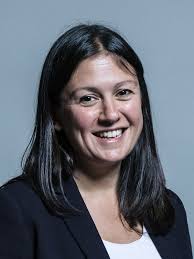
    Lisa Nandy – 2022 Speech on Building Safety

    The speech made by Lisa Nandy, the Shadow Secretary of State for Levelling Up, Housing and Communities, in the House of Commons on 10 January 2022.

    May I thank you, Mr Speaker, for your kind words about Jack Dromey, who should have been with us here today? There is a space over there that I know Jack would have occupied. Back in the 1970s, horrified by the spectacle of a skyscraper in London that lay empty while people slept rough underneath it, Jack was one of those who occupied Centre Point tower in protest. He was never afraid to speak truth to power, and I hope that today marks the start of all of us across the House invoking his spirit.

    Four and a half years after the appalling tragedy at Grenfell, and with a road paved with broken promises and false dawns, hundreds of thousands are still trapped in unsafe homes, millions are caught in the wider crisis, and the families of 72 people who lost their lives are waiting for justice. It is a relief that we finally have a consensus that the developers and manufacturers who profited from this appalling scandal should bear greater costs, not the victims, and that blameless leaseholders must not pay. After a year of hell of the prospect hanging over leaseholders, we welcome the decision to remove the threat of forced loans, but can the Secretary of State tell us what makes him think that he can force developers, who have refused to do the right thing for four years, to pay up? We have been told there is a March deadline and a roundtable, but there is not a plan. If he has one, can we hear it? He will find an open door on the Opposition side of the House, if he has a credible proposal to bring.

    Today the Secretary of State warned developers that if negotiation fails,

    “our backstop…what we can do…is increase taxation on those responsible”,

    but that is not quite right, is it? I have in front of me the letter from the Chief Secretary to the Treasury. May I remind the Secretary of State what it says? He was told that

    “you may use a high-level ‘threat’ of tax or legal solutions in discussions with developers”

    but

    “whether or not to impose or raise taxes remains a decision for me”

    —the Chief Secretary—

    “and is not a given at this point.”

    If I have seen the letter, I am fairly sure that the developers have too. Furthermore, it appears that what the Secretary of State has told the public—that tax rises are the backstop—is not what he has told the Treasury. The letter says that

    “you have confirmed separately that DLUHC budgets are a backstop for funding these proposals in full…should sufficient funds not be raised from industry.”

    That is not what the Secretary of State told the House a moment ago, so can he clear this up? Has the Chancellor agreed to back a new tax measure if negotiations fail, or is the Secretary of State prepared to see his already allocated budgets—levelling-up funding, or moneys for social or affordable housing—raided? Or is his plan to go back to the Treasury, renegotiate and legislate, if he fails in March? If that is the case, it will take months, and there is nothing to stop freeholders passing on the costs to leaseholders in the meantime. Does he even have an assessment of how many leaseholders will be hit with whacking great bills if he delays?

    If the Secretary of State is serious about going after the developers—I hope that he is—why is he not putting these powers into the Building Safety Bill now? The only trick that he has up his sleeve, as he just confirmed to the House, is to ban them from Help to Buy, and we know that the impact of that, though welcome, will be marginal. Can he see the problem? He will also know that there is a gaping hole in what he has proposed. A significant number of buildings have both cladding and non-cladding defects, and leaseholders in them face ruinous costs to fix things such as missing fire breaks and defective compartmentation. One cannot make a building half safe. Given that the Secretary of State recognises the injustice of all leaseholders caught up in the building safety crisis, why is he abandoning those who have been hit with bills for non-cladding defects, and why will he not amend his Bill so that all leaseholders are protected from historical defects in law?

    The truth is that the pace of remediation has been painfully slow. The Secretary of State is now on track to miss the deadline to fix all Grenfell-style cladding by over half a decade, and there are huge delays when it comes to building safety fund applications, so will he get a grip on what is going on in his own Department and ensure that the progress of remediation is accelerated markedly? As he knows, this has been a living nightmare for affected leaseholders, and we owe it to them to bring it swiftly to an end.

    What the Secretary of State has given us today is a welcome shift in tone and some new measures that the Opposition very much hope will succeed, but the harder I look at this, the less it stands up. We were promised justice and we were promised change, to finally do right by the victims of this scandal, and that takes more than more promises. It takes a plan.

  • Michael Gove – 2022 Statement on Building Safety

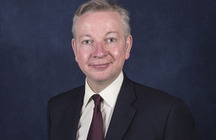
    Michael Gove – 2022 Statement on Building Safety

    The statement made by Michael Gove, the Secretary of State for Housing, in the House of Commons on 10 January 2022.

    With permission, Mr Speaker, I would like to update the House on building safety. Before I do so, I can confirm that I have asked the permanent secretary in my Department to conduct a leak inquiry. It was a matter of considerable regret to me that details of the statement that I am about to make were shared with the media before they were shared with Members of this House, and indeed with those most affected.

    It is worth pausing at the start of any statement to reflect on why building safety is an issue of concern to all of us in this House today. It took the tragedy at Grenfell Tower on 14 June 2017, as a result of which 72 innocent men, women and children lost their lives, to put building safety properly on the political agenda. Families were living in a building that was literally a death trap because of failures of enforcement and compliance in our building safety regime. This Government must take their share of responsibility for those failures.

    Over four years on from that terrible tragedy, it is clear that the building safety system remains broken. The problems that we have to fix have been identified by many across this House, from all parties. I would like at this point to register my appreciation of the work that the late Jack Dromey did on this issue. He was shadow Housing Minister for three years and he did a great deal, both as a trade unionist and as the Member of Parliament for Birmingham, Erdington, to bring to light the plight of those affected by this crisis.

    As we know, there are still a small number of high-rise buildings with dangerous and unsafe cladding that have to be fixed. We know that those who manufacture dangerous products and develop dangerous buildings have faced inadequate accountability so far, and shown insufficient contrition. We also need to ensure that we take a proportionate approach in building assessments overall. There are too many buildings today that are declared unsafe, and there are too many who have been seeking to profit from the current crisis.

    Most importantly, leaseholders are shouldering a desperately unfair burden. They are blameless, and it is morally wrong that they should be the ones asked to pay the price. I am clear about who should pay the price for remedying failures. It should be the industries that profited, as they caused the problem, and those who have continued to profit, as they make it worse.

    Mr Speaker, we will take action on all of these fronts. To ensure that every remaining high-rise dangerous building has the necessary cladding remediation to make it safe, we will open up the next phase of the building safety fund early this year and focus relentlessly on making sure it is risk driven and delivered more quickly.

    We will also ensure that those who profited, and continue to profit, from the sale of unsafe buildings and construction products must take full responsibility for their actions and pay to put things right. Those who knowingly put lives at risk should be held to account for their crimes, and those who are seeking to profit from the crisis by making it worse should be stopped from doing so.

    Today, I am putting them on notice. To those who mis-sold dangerous products, such as cladding or insulation, to those who cut corners to save cash as they developed or refurbished people’s homes, and to those who sought to profiteer from the consequences of the Grenfell tragedy: we are coming for you. I have established a dedicated team in my Department to expose and pursue those responsible. We will begin by reviewing Government schemes and programmes to ensure that, in accordance with due process, there are commercial consequences for any company that is responsible for this crisis and refusing to help to fix it.

    In line with this, just before Christmas, I instructed Homes England to suspend Rydon Homes, which is closely connected to the company that refurbished the Grenfell Tower, from its participation in the Help to Buy scheme, with immediate effect. I also welcome the decision by the Mercedes Formula 1 team and Toto Wolff to discontinue sponsorship from Kingspan, the cladding firm, with immediate effect. The voices of the families of the bereaved and the survivors of the Grenfell Tower were heard, but this is only the start of the action that must be taken.

    We must also restore common sense to the assessment of building safety overall. The Government are clear—we must find ways for there to be fewer unnecessary surveys. Medium-rise buildings are safe, unless there is clear evidence to the contrary. There must be far greater use of sensible mitigations, such as sprinklers and fire alarms, in place of unnecessary and costly remediation work.

    To achieve that, today I am withdrawing the Government’s consolidated advice note. It has been wrongly interpreted and has driven a cautious approach to building safety in buildings that are safe that goes beyond what we consider necessary. We are supporting new, proportionate guidance for assessors, developed by the British Standards Institution, which will be published this week.

    Secondly, we will press ahead with the building safety fund, adapting it so that it is consistent with our proportionate approach. We will now set a higher expectation that developers must fix their own buildings, and we will give leaseholders more information at every stage of the process.

    Thirdly, before Easter, we will be implementing our scheme to indemnify building assessors conducting external wall assessments, giving them the confidence to exercise their balanced professional judgment. We will audit those assessments to ensure that expensive remediation is being advised only where it is necessary to remove a threat to life.

    I will be working closely with lenders over the coming months to improve market confidence, and I have asked my colleague Lord Greenhalgh to work with insurers on new industry-led approaches that bring down the premiums facing leaseholders.

    Further, we will take the power to review the governance of the Royal Institution of Chartered Surveyors, to ensure that it is equipped properly to support a solution to this challenge. Those in the industry who refuse to work with us in good faith to take a more proportionate approach should be clear that our determination is to fix the problem for all those caught up in this crisis.

    Finally, we must relieve the burden that has been unfairly placed on leaseholders. I want to pay tribute to all those across the House who have campaigned so passionately on this subject. They know the injustice of asking leaseholders, often young people who have saved hard and made sacrifices to take their first steps on the housing ladder, to pay money they do not have to fix a problem they did not cause, all while the firms who made a profit on those developments sit on their hands. We will take action to end the scandal and protect leaseholders. We will scrap the proposal for loans and long-term debt for medium-rise leaseholders.

    I can confirm to the House today that no leaseholder living in a building above 11 metres will ever face any costs for fixing dangerous cladding and, working with Members of both Houses, we will pursue statutory protection for leaseholders and nothing will be off the table. As part of that, we will introduce immediate amendments to the Building Safety Bill to extend the right of leaseholders to challenge those who cause defects in premises for up to 30 years retrospectively.

    We will also take further action immediately: we will provide an additional £27 million to fund more fire alarms, so we can end the dreadful misuse of waking watches; we will change grant funding guidance so that shared owners affected by the crisis can more easily sub-let their properties, and encourage lenders and landlords to approve sub-letting arrangements; and in the period before long-term arrangements are put in place, I will work with colleagues across Government to make sure that leaseholders are protected from forfeiture and eviction because of historic costs. Innocent leaseholders must not shoulder the burden.

    We have already committed £5.1 billion of taxpayers’ funding from the Government, but we should not now look to the taxpayer for more funding. We should not ask hard-working taxpayers to pay more taxes to get developers and cladding companies making vast profits off the hook. We will make industry pay to fix all of the remaining problems and help to cover the range of costs facing leaseholders. Those who manufactured combustible cladding and insulation, many of whom have made vast profits even at the height of the pandemic, must pay now instead of leaseholders.

    We have made a start through the residential property developer tax and the building safety levy, both announced last February, but will now go further. I will today write to developers to convene a meeting in the next few weeks, and I will report back to the House before Easter. We will give them the chance to do the right thing. I hope that they will take it. I can confirm to the House today that if they do not, we will impose a solution on them, if necessary, in law.

    Finally, we must never be in this position again, so we are putting the recommendations of the Hackitt review on building safety in law and we will shortly commence the Fire Safety Act 2021. We are also today publishing new collaborative procurement guidance on removing the incentives for industry to cut corners and to help stop the prioritisation of cost over value. We will legislate to deliver broader reforms to the leasehold system, and also bring forward measures to fulfil commitments made in the social housing White Paper. When parliamentary time allows, we will have legislation on social housing regulation so that social housing tenants cannot be ignored as those in the Grenfell community were for many years.

    Four and a half years on from the tragedy of Grenfell, it is long past time that we fix the crisis. Through the measures that I have set out today, we will seek redress for past wrongs and secure funds from developers and construction product manufacturers, and we will protect leaseholders today and fix the system for the future.

  • Lindsay Hoyle – 2022 Statement on Michael Gove’s Department Leaking Information to Media

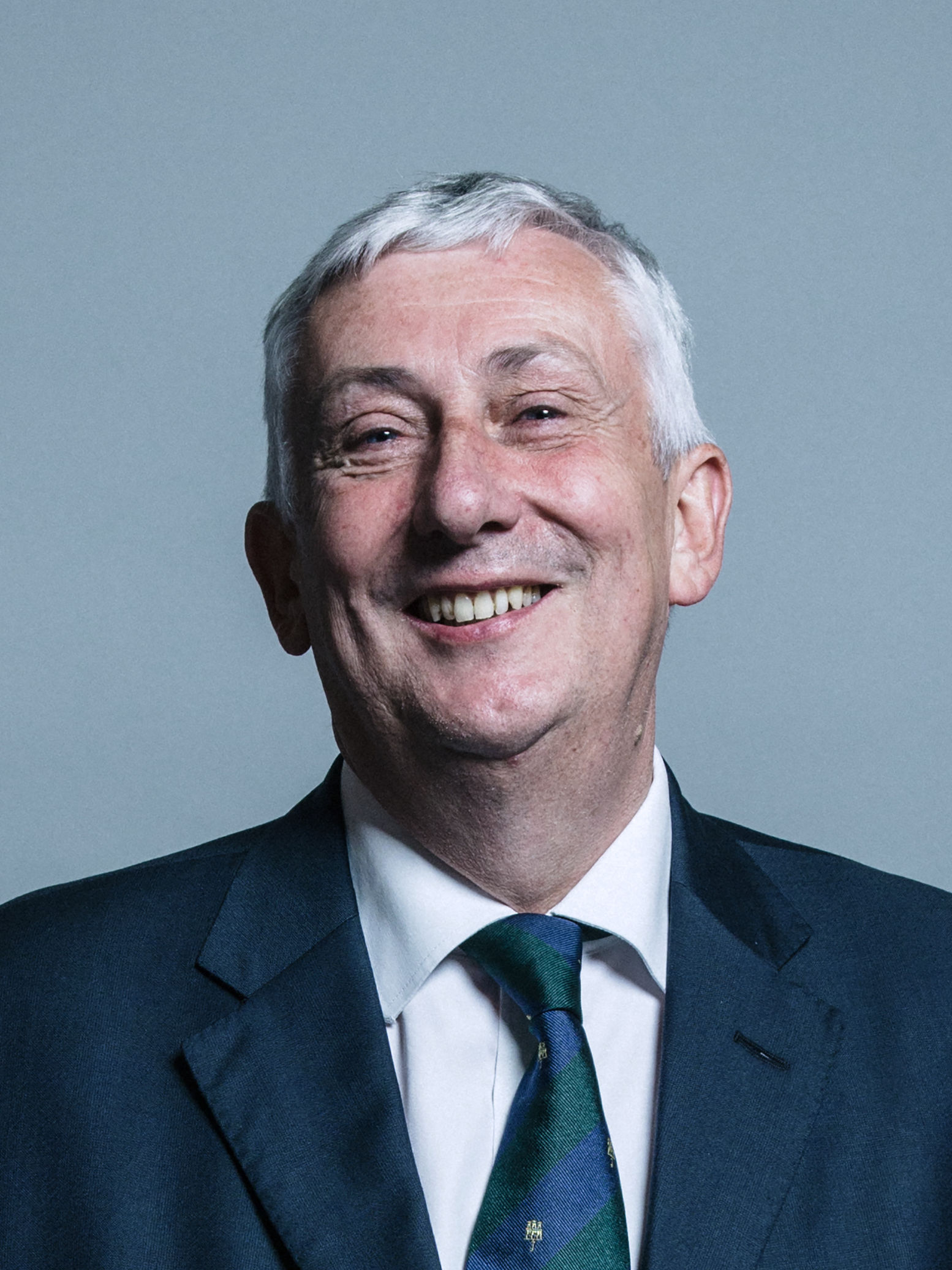
    Lindsay Hoyle – 2022 Statement on Michael Gove’s Department Leaking Information to Media

    The statement made by Lindsay Hoyle, the Speaker of the House of Commons, in the House on 10 January 2022.

    Before I call the Secretary of State to make his statement, I have to express once again my disappointment that important announcements have been made first to the media, rather than to this House. In this case, I accept that issues of market sensitivity meant that announcements had to be made this morning. However, I am told that the announcements were required because of speculation about the policy change over the weekend. That speculation appears to have been substantially accurate, which means that the media appear to have known the details before this House did. If that is the case, I would be grateful if the Secretary of State could confirm that a leak inquiry is to be held.

  • Clive Efford – 2022 Speech on Simon Hinchley-Robson and His Treatment in the RAF

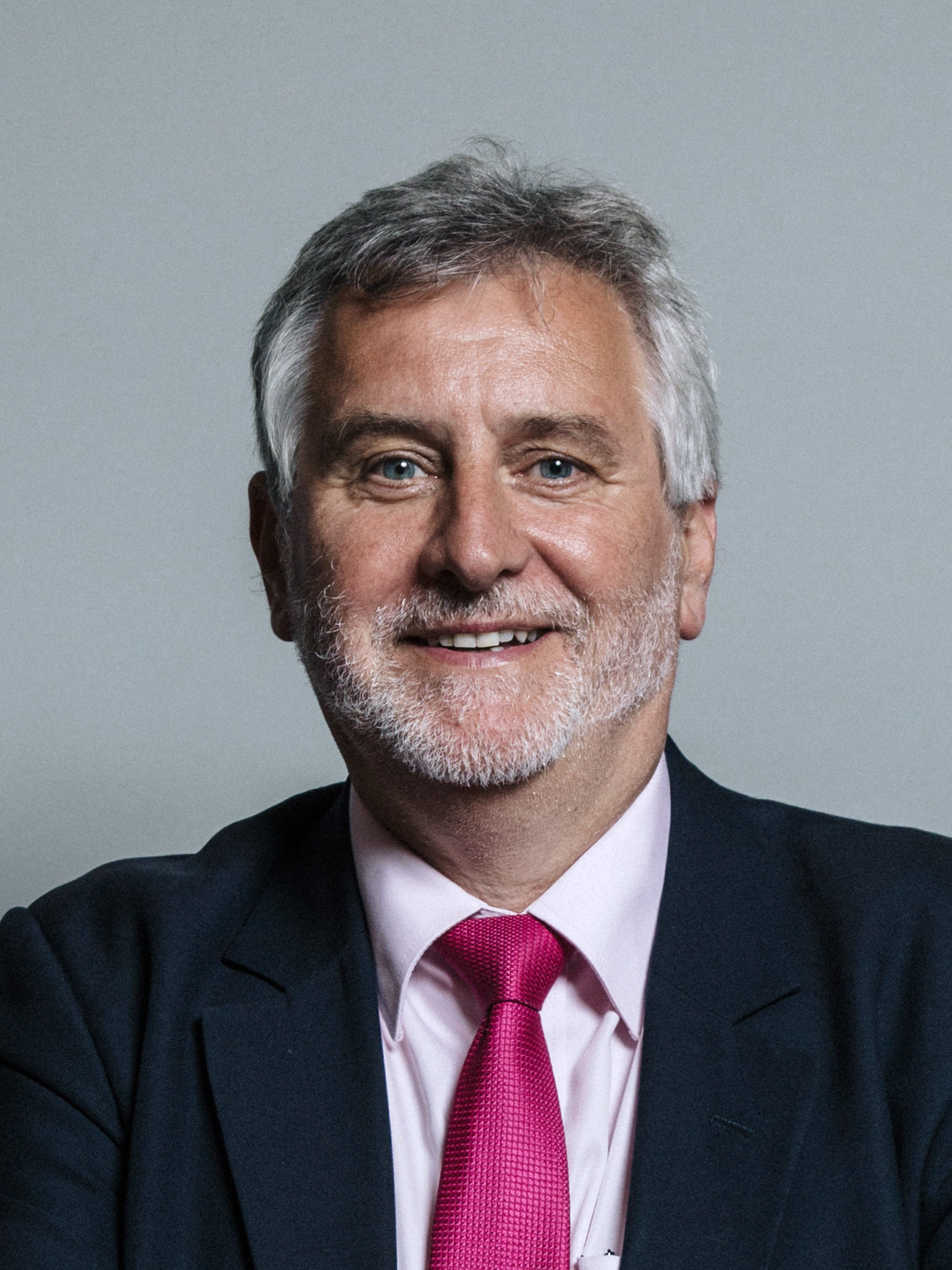
    Clive Efford – 2022 Speech on Simon Hinchley-Robson and His Treatment in the RAF

    The speech made by Clive Efford, the Labour MP for Eltham, in the House of Commons on 10 January 2022.

    Over the last few years, I have been supporting Simon Hinchley-Robson in his pursuit of justice for the way he was treated when he was discharged from the RAF in 1986 for being gay.

    Mr Robson signed up to serve his country for 22 years in the Royal Air Force in 1980. He came from a family with a tradition of serving their country: his brother was in the Army, his father had been in the Navy and his grandparents had served in the RAF. In 1986, while he was serving as a chef at RAF Brawdy, Haverfordwest, Wales, he became ill and was diagnosed by RAF medical staff as having glandular fever. After the diagnosis, he continued to lose weight and then requested a test for AIDS. The doctor who was examining him became extremely angry, and he was transferred to a civilian hospital, where he took the test. After 10 days, he was discharged from hospital back to RAF Brawdy. Immediately on his return, he was arrested by the RAF police—the Special Investigation Branch. The request for the test was taken as an admission that Mr Robson was gay.

    I will read Mr Robson’s own words, which describe what happened to him from the moment he arrived back at RAF Brawdy:

    “What happened next was the most horrendous and awful experience no one should ever have had to endure. I was led to an interrogation room, this, unknown to me, was to be my home for the next 4 days. I was denied food, I was denied sleep and only given small amounts of water.

    I was immediately searched, asked to strip and searched internally. They said that this was procedure. As a young 21-year-old, terrified, what do you think was going through my mind?

    I was asked to list every person in any of the services I had some sort of relationship with, this I refused. On refusing, I was assaulted and again instructed to strip, the medical gloves went on and I was again subject to what I can only say was ‘RAPE’, while I was again internally searched.

    After about 12 hours I was taken, handcuffed, to my billet and the SIB (Special Investigation Branch) then searched all my belongings and personal letters, my mattress was slit open and I was told this was because they were looking for drugs.

    My mail was taken away and read…they said, I was most likely being blackmailed and as such, they needed to make sure Defence secrets were not being passed on”—

    and this is Mr Robson’s emphasis—

    “Hello I am a chef, no access to data, aircraft, secrets etc.

    After this humiliation in front of many camp personnel as I was paraded to my billet, not driven, in handcuffs, and for all to see, I was then taken back to the interrogation room. I was thinking that this was the end, and that would most likely be the end of my career, how wrong I was.

    It was change of shift, and the process started all over again, searched, told to strip, medical gloves on, internal searches again. At this point, I was now convinced this was happening for their…pure sadistic satisfaction, yet I had no recall to complain to any officers in charge as the SIB were a law unto themselves.

    With the change of shift the process started all over again, they wanted names, none were given, and I was slapped for not helping them.”

    I should add here that Mr Robson has explained to me that the shifts changed every four hours, and on every change of shift he was stripped, searched and searched internally. We must ask what the purpose of these searches was. Given that he was in custody all of this time and had no means of obtaining drugs, how could he have anything to hide? What was taking place was a form of torture of Mr Robson for being gay. The question has to be asked: was this sanctioned by the RAF? This seems likely: after all, there was remarkable consistency in the pattern of behaviour between the shifts. How common was it for gay personnel to be abused in this way, or does the Minister believe, as Mr Robson asks, that it was to satisfy the sadistic pleasures of those inflicting the humiliation?

    Mr Robson continues:

    “They pulled out a number of birthday cards and a get-well card. In one it read, ‘Hurry up back to the kitchen Si, Paul is missing you’ with a big smile. This comment refers to a colleague chef, who I didn’t see eye to eye with, it was a joke message.

    The SIB were now convinced he was involved. This person was married was serving overseas in Cyprus with his family and that, would be the next port of call.”

    I should add here that, according to Mr Robson, two members of the Special Investigation Branch were flown to Cyprus to interview this other chef. They interviewed his wife about his sexuality, and they interviewed his primary school aged daughters.

    Returning to Mr Robson’s words:

    “Throughout the interrogation I was handcuffed and treated like a terrorist, how was this allowed to happen in Her Majesty’s Royal Air Force.

    I was a Chef, no access to any classified material unless they wanted the recipes for a lasagne, all this humiliation went on for 4 days, and to their sadistic satisfaction, it wasn’t until the 4th day we had a new female doctor arrive in camp [who] intervened and stopped the interrogation. I was immediately sent home on sick leave to await my discharge.

    I had been spat at, hit, examined by individuals that were plain animals, and all because I had admitted I was Gay.”

    Mr Robson states that officers from the SIB told him:

    “We don’t have gays in HM Royal Air Force”,

    and that they

    “should all be put on an island and nuked.”

    He was also told that he was

    “the lowest level of life.”

    The irony of all this is that, at the end, when he went back finally to sign his discharge papers, which he had to do to avoid going to prison for 18 months, he was required to sign to join the reserves for three years, meaning that, if needed, he could be called up to serve in an emergency.

    At the time that this took place, none of Mr Robson’s family was aware that he was gay. That meant that he effectively lost his job and home and risked being outed. This left him mentally distressed and suicidal. He has told me of others he knows who went through the same treatment, for whom the distress was too much and who went on to take their own lives.

    Mr Robson had signed up for 22 years with the RAF and he considered this to be his life and career. He would have received a full pension and lump sum when he left the service, but instead he receives a minor pension. As a consequence of his forced discharge under threat of being charged and imprisoned, Mr Robson lost his income and the pension that he would have been entitled to.

    Mr Robson made clear what he wants from the Government in a 2018 letter to the then Prime Minister, the right hon. Member for Maidenhead (Mrs May):

    “I want the Government to admit that these interrogations and humiliation of gay people were wrong. I should be compensated for this now that it is accepted that LGBT people can serve in the armed forces.

    I want my pension, as if I had served my full term, is that not rightful thing to do?

    I want a public apology for what I went through and many others and for those who did not have the strength to see it through and took the suicide road.”

    At the time of Mr Robson’s ordeal, the Sexual Offences Act 1967 had ended prosecutions against civilians who were gay. This did not apply to members of the armed forces until 1992. Subsequent decisions of the European Court of Human Rights clearly demonstrate that armed forces personnel were discriminated against and had their rights denied at this time. Many suffered the additional personal and physical abuse that Mr Robson endured, and have had no recognition of their treatment or compensation for the salaries and pensions that they have missed out on.

    I am aware from answers I have received in letters from Ministers that section 10 of the Crown Proceedings Act 1947 was in force at the time of Mr Robson’s discharge and that although it was subsequently rescinded, this was not applied retrospectively. In a recent answer, the then Minister for Defence People, the hon. Member for Plymouth, Moor View (Johnny Mercer), quoted the Limitation Act 1980, section 11 of which provides a three-year period after the date on which the cause of action accrued in which personnel can make a complaint.

    My view is that those regulations cannot be used to deny Mr Robson his right to justice. I would point to the illegal actions of the RAF’s Special Investigation Branch when Mr Robson was in its custody. He was physically assaulted on at least 12 occasions by multiple individuals, he was denied his right to legal representation, and his human rights were violated.

    I would argue that there is no statute of limitation that excuses this criminal behaviour and can prevent Mr Robson from being compensated by the country that he wanted to serve. Although 36 years have passed since Mr Robson was discharged from the RAF, I urge the Minister to go away and reflect on his unacceptable treatment at the hands of the SIB, and, having done so, to accept that the Government are morally bound to compensate him for being denied the chance to serve his country as he had planned, and for the physical torment that he suffered for being gay.
  • Vicky Ford – 2022 Statement on Presidential Inauguration in Nicaragua

    Vicky Ford – 2022 Statement on Presidential Inauguration in Nicaragua

    The statement made by Vicky Ford, the Minister for Africa, Latin America and the Caribbean, on 10 January 2022.

    The steps taken by President Ortega and Vice President Murillo to prevent free and fair elections in Nicaragua were a clear abuse of power. The elections of 7 November 2021 lacked credibility, with opposition figures detained, including seven potential presidential candidates, and a crackdown on fundamental rights and freedoms. Today’s inauguration is therefore not a result of the freely expressed will of the Nicaraguan people and the UK will not attend.

    This increasing authoritarianism must end. The rule of law and the rights of the Nicaraguan people must be respected, and free and fair elections restored.

    The UK calls for the immediate and unconditional release of all opposition leaders and other political prisoners in Nicaragua and for the full restoration of their civil and political rights. We reiterate our call on the regime of Daniel Ortega to fulfil its international obligations, end the repression of independent media, allow for the return of international human rights observers and establish a meaningful national dialogue.

    The UK welcomes the sanctions packages announced by the US and the EU today. We will continue to voice our concerns to the Government, calling for Nicaragua to fulfil its international obligations by respecting the human rights of its citizens and bringing an end to the repression in the country.

  • Rebecca Pow – 2022 Comments about Housing Projects and the Environment

    Rebecca Pow – 2022 Comments about Housing Projects and the Environment

    The comments made by Rebecca Pow, the Environment Minister, on 10 January 2022.

    The pandemic has reinforced how much our homes, communities and outdoor spaces mean to us. Our commitment to protecting and enhancing our natural world can and must go hand in hand with our ambition to build more high quality homes.

    Our plans to make sure new developments better protect and enhance wildlife and nature will create better places for people to live and work, and it will ensure we leave our environment in a better state for future generations.

  • George Foulkes – 2022 Comments on the Personal Conduct of Michelle Mone

    George Foulkes – 2022 Comments on the Personal Conduct of Michelle Mone

    The comments made by George Foulkes, a member of the House of Lords (Baron Foulkes of Cumnock), on 10 January 2022.

    I am concerned that Baroness Mone has not registered her interest in PPE Medpro and also that her action appears to bring the house into disrepute. If Baroness Mone and her husband were involved in the company then it appears to me that she should have registered that as an interest, and she may have breached the rules against lobbying when she referred the company to the government. And with this conduct and her denials in relation to the company, she may have brought the house into disrepute, so I believe the commissioner should investigate.