Blog

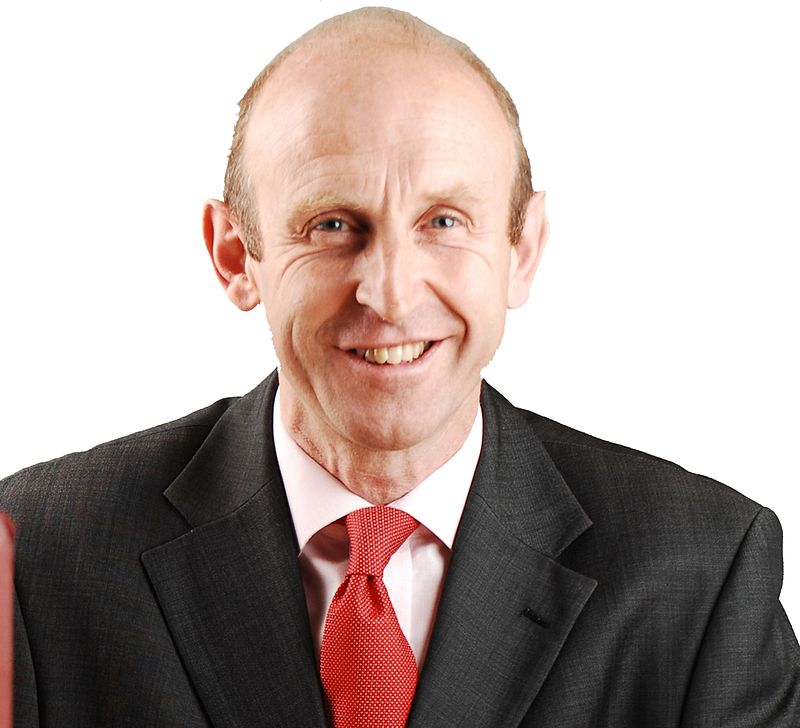
  • John Healey – 2022 Speech on the Situation in Ukraine

    John Healey – 2022 Speech on the Situation in Ukraine

    The speech made by John Healey, the Shadow Secretary of State for Defence, in the House of Commons on 25 April 2022.

    I thank the Secretary of State for his statement. His presence is welcomed this afternoon by the whole House. We know that it is not entirely his fault, but it is nearly seven weeks since he was last able to give us a statement on the situation in Ukraine. That was the day after President Zelensky addressed this House. The Secretary of State said then, as he did this afternoon, that he would keep the House up to date. May I say, on behalf of the public, that we would welcome more regular statements as the Russian war on Ukraine continues?

    Like the Secretary of State, we salute the bravery of the Ukrainian people, military and civilians alike. That bravery is led by President Zelensky personally, but it is typified by the military last stand of the troops at the Azovstal steel plant and by the people’s resistance in Russian-occupied Kherson. We also renew our total condemnation of this brutal Russian invasion of a sovereign country and our determination to see that all those responsible for the mass graves in Mariupol, for the crimes, rapes and assassinations in Bucha and for the civilian bombings in almost every town and city across Ukraine are pursued to the end for their war crimes.

    We welcome the role that the UK is playing and the further UK military assistance to Ukraine that the Secretary of State has outlined today, which has Labour’s full support. He says the UK has provided 5,000 anti-tank missiles and 100 anti-air missiles, but these direct donations are a fraction of the total. Can he tell us the total of such weapons provided so far by western allies? Has the MOD yet signed contracts and started production of replacement next-generation light anti-tank weapons and Starstreak missiles?

    This is the first day of the third month of Putin’s invasion, and it is a new phase, as the Defence Secretary said. What is needed now is no longer old, spare weapons from the Soviet era but the new NATO weapons that Ukraine will need for Putin’s next offensive against Odessa or Kyiv. We need to shift from crisis management in response to the current conflict to delivering the medium-term military support that Ukraine will need. What is he doing to ensure this step change in support?

    Given that 5 million refugees have now left Ukraine, what is the Secretary of State doing to offer the 700 personnel still held at high readiness in the UK for humanitarian help? Is it still the case that the MOD has offered only 140 armed forces personnel to help sort out the shameful shambles of the Home Office’s visa and refugee systems?

    I just got off the tube after visiting NATO’s Allied Maritime Command in Northwood. They took my phone off me, so I did not realise we were having this statement, which is why I am using handwritten notes this afternoon. This is a proud, professional, British-led multinational command, and I pay tribute to it for the work it is doing, day in and day out, to keep us all safe.

    NATO has proved to be such a powerful security alliance because it pools multinational military capacity, capability and cash, with an annual budget of more than $1 trillion, to protect 1 billion people, but Ukraine reminds us that the greatest threat to UK security lies in Europe, the north Atlantic and the Arctic, not in the Indo-Pacific. This reinforces NATO as the UK’s primary security obligation, but the Secretary of State gave us only a paragraph on NATO.

    Our leadership in NATO could be at risk as Britain falls behind our allies in responding to this invasion of Ukraine. More than a dozen European countries are now rebooting security plans and defence spending, but the UK has not yet done either. I therefore urge the Secretary of State to revisit the integrated review, to review defence spending, to reform military procurement and to rethink his Army cuts. We will be dealing with the consequences of Putin’s war for many years to come, and now is the time for longer-term thinking about how the strategy for European security must change.

  • Ben Wallace – 2022 Update on the Situation in Ukraine

    Ben Wallace – 2022 Update on the Situation in Ukraine

    The statement made by Ben Wallace, the Secretary of State for Defence, in the House of Commons on 25 April 2022.

    It is 61 days since Russia invaded Ukraine, and 74 days since my Russian counterpart assured me that the Russian army would not be invading. As the invasion approaches its ninth week, I want to update the House on the current situation and the steps that we are taking to further our support for the Ukrainian people.

    It is our assessment that approximately 15,000 Russian personnel have been killed during their offensive. Alongside the death toll are the equipment losses. A number of sources suggest that, to date, over 2,000 armoured vehicles have been destroyed or captured. That includes at least 530 tanks, 530 armoured personnel carriers, and 560 infantry fighting vehicles. Russia has also lost more than 60 helicopters and fighter jets. The offensive that was supposed to take a maximum of a week has now taken weeks. Last week Russia admitted that the Slava-class cruiser Moskva had sunk. That is the second key naval asset that the Russians have lost since invading, and its loss has significantly weakened their ability to bring their maritime assets to bear from the Black sea.

    As I said in my last statement, Russia has so far failed in nearly every one of its objectives. In recognition of that failure, the Russian high command has regrouped, reinforced and changed its focus to securing the Donetsk and Luhansk oblasts. A failure of the Russia Ministry of Defence command and control at all levels has meant that it has now appointed one overall commander, General Dvornikov. At the start of this conflict, Russia had committed more than 120 battalion tactical groups, approximately 65% of its entire ground combat strength. According to our current assessment, about 25% of those have been rendered not combat-effective.

    Ukraine is an inspiration to us all. Its brave people have never stopped fighting for their lands. They have endured indiscriminate bombardment, war crimes and overwhelming military aggression, but they have stood firm, galvanised the international community, and beaten back the army of Russia in the north and the north-east.

    We anticipate that this next phase of the invasion will be an attempt by Russia to occupy further the Donbas and connect with Crimea via Mariupol. It is therefore urgent that we in the international community ensure that Ukraine gets the aid and weapons that it needs so much.

    As Defence Secretary, I have ensured that at each step of the way the UK’s support is tailored to the anticipated actions of Russia. To date we have provided more than 5,000 anti-tank missiles, five air defence systems with more than 100 missiles, 1,360 anti-structure munitions, and 4.5 tonnes of plastic explosive. On 9 March, in response to indiscriminate bombing from the air and escalation by President Putin’s forces, I announced that the UK would supply Starstreak high-velocity and low-velocity anti-air missiles. I am now able to report that these have been in theatre for more than three weeks, and have been deployed and used by Ukrainian forces to defend themselves and their territory.

    Over the recess, my ministerial team hosted a Ukrainian Government delegation at Salisbury plain training area to explore further equipment options. That was quickly followed by the Prime Minister’s announcement of a further £100 million-worth of high-grade military equipment, 120 armoured vehicles, sourcing anti-ship missile systems, and high-tech loitering munitions for precision strikes.

    However, as we can see from Ukrainian requests, more still needs to be done. For that reason, I can now announce to the House that we shall be gifting a small number of armoured vehicles fitted with launchers for those anti-air missiles. Those Stormer vehicles will give Ukrainian forces enhanced short-range anti-air capabilities, day and night. Since my last statement, more countries have answered the call and more have stepped up to support. The Czech Republic has supplied T-72 tanks and BMP fighting vehicles, and Poland has also pledged T-72 tanks.

    The quickest route to help Ukraine is with equipment and ammunition similar to what they already use. The UK Government obviously do not hold Russian equipment, but in order to help where we do not have such stock, we have enabled others to donate. Alongside Canada and Poland, the Royal Air Force has been busy moving equipment from donor countries to Ukraine. At the same time, if no donor can be found, we are purchasing equipment from the open market. On 31 March, I held my second international donor conference, with an increase in the number of countries involved to 35, including representatives from the European Union and NATO. So far these efforts have yielded some 2.5 million items of equipment, worth more than £1.5 billion.

    The next three weeks are key. Ukraine needs more long-range artillery and ammunition, and both Russian and NATO calibre types to accompany them. It also seeks anti-ship missiles to counter Russian ships that are able to bombard Ukrainian cities. It is therefore important to say that, if possible, the UK will seek to enable or supply such weapons. I shall keep the House and Members on each Front Bench up to date as we proceed.

    The MOD is working day and night, alongside the US, Canada and the EU, to support continued logistical supplies, but not all the aid is lethal. We have also sent significant quantities of non-lethal equipment to Ukraine. To date, we have sent more than 90,000 ration packs, more than 10 pallets of medical equipment, more than 3,000 pieces of body armour, nearly 77,000 helmets, 3,000 pairs of boots and much more, including communications equipment and ear defence.

    On top of our military aid to Ukraine, we contribute to strengthening NATO’s collective security, both for the immediate challenge and for the long term. We have temporarily doubled the number of defensive personnel in Estonia. We have sent military personnel to support Lithuanian intelligence, resilience and reconnaissance efforts. We have deployed hundreds of Royal Marines to Poland, and sent offshore vessels and Navy destroyers to the eastern Mediterranean. We have also increased our presence in the skies over south-eastern Europe with four additional Typhoons based in Romania. That means that we now have a full squadron of RAF fighter jets in southern Europe, ready to support NATO tasking. As the Prime Minister announced on Friday, we are also offering a deployment of British Challenger 2 tanks to Poland, to bridge the gap between Poland donating tanks to Ukraine and their replacements arriving from a third country.

    Looking further ahead, NATO is reassessing its posture and the UK is leading conversations at NATO about how best the alliance can deter and defend against threats. My NATO colleagues and I tasked the alliance to report to leaders at the summit in June with proposals for concrete, long-term and sustainable changes. Some of us in this House knew that, behind the mask, the Kremlin was not the international statesman it pretended to be. With this invasion of Ukraine, all of Europe can now see the true face of President Putin and his inner circle. His intention is only to destroy, crush and rub out the free peoples of Ukraine. He does not want to preserve. He must not be allowed to prevail. Ukrainians are fighting for their very lives and for our freedoms. The President of Ukraine himself said as much: if Russia stops fighting, there will be peace; if Ukraine stops fighting, there will be no more Ukraine.

  • Jonathan Gullis – 2022 Comments on Sending Migrants to Rwanda for Processing

    Jonathan Gullis – 2022 Comments on Sending Migrants to Rwanda for Processing

    The comments made by Jonathan Gullis, the Conservative MP for Stoke-on-Trent North, in the House of Commons on 25 April 2022.

    The people of Stoke-on-Trent North, Kidsgrove and Talke are delighted with this groundbreaking economic and development partnership with Rwanda, which will help to break the business model of vile people smugglers once and for all. Does my hon. Friend share my concern and that of my constituents that the Labour woke warriors are quite happy to stick with the status quo, meaning that more people are going to leave safe mainland France, risking their lives and putting thousands of pounds in the hands of smuggling gangs, which will mean more death in the channel and illegal economic migrants continuing to enter the United Kingdom?

  • Lindsay Hoyle – 2022 Statement on Misogynistic Allegations in the Mail on Sunday

    Lindsay Hoyle – 2022 Statement on Misogynistic Allegations in the Mail on Sunday

    The statement made by Lindsay Hoyle, the Speaker of the House of Commons, in the House on 25 April 2022.

    Before we start today’s business, I want to say something about the article in The Mail on Sunday yesterday about the right hon. Member for Ashton-under-Lyne (Angela Rayner). I said to the House last week, in response to a point of order about a different article, that I took the issue of media freedom very seriously. It is one of the building blocks of our democracy. However, I share the view expressed by a wide range of Members—including, I believe, the Prime Minister—that yesterday’s article, which reported unsubstantiated claims, was misogynistic and offensive. That is what we believe.

    I express my sympathy to the right hon. Member for Ashton-under-Lyne for being subjected to this type of comment, which, in being demeaning and offensive to women in Parliament, can only deter women who might be considering standing for election, to the detriment of us all. That is why I am arranging a meeting with the chair of the press lobby and the editor of The Mail on Sunday to discuss this issue affecting our parliamentary community. I am also arranging a separate meeting—I believe we now have a time this evening—with the right hon. Member for Ashton-under-Lyne.

  • Jonathan Gullis – 2022 Speech on Foster Carers

    Jonathan Gullis – 2022 Speech on Foster Carers

    The speech made by Jonathan Gullis, the Conservative MP for Stoke-on-Trent North, in the House of Commons on 21 April 2022.

    It is a pleasure to serve under your chairmanship in Westminster Hall once again, Mr Robertson. I warmly congratulate the hon. Member for Jarrow (Kate Osborne) on securing this important debate and sharing her personal experience. As Members from across the House have said, it is truly inspiring.

    My partner and I hope one day, when our children are slightly older, to offer a home and an opportunity to young people. For eight and a half years before entering this place, I worked as a head of year, dealing with behavioural and pastoral issues in the secondary education sector, and I had direct contact with some of the fantastic foster carers of the children I was proud to look after. It was an enlightening and warming story. Looking at how to spend money from the budget to invest in those young people and give them exciting opportunities outside the school gates, as well as pushing their learning and educational outcomes, was something that I thoroughly enjoyed.

    I want to focus on the great work that is being done in the constituency I am proud to serve, Stoke-on-Trent North, Kidsgrove and Talke, and across the wider city of Stoke-on-Trent. Since 2019, Stoke-on-Trent City Council has made it very clear that children and young people need to be its No. 1 priority. A complete overhaul is needed, as the challenge in 2019 was, quite frankly, immense. Children’s services in Stoke-on-Trent have never been rated good or outstanding. An Ofsted inspection in early 2019 showed that the situation was dire—that is the only word I can use to describe the quality of services available to more than 1,000 of the most vulnerable young children in our city, who required us to look after them. Children’s services received the worst possible rating of inadequate from Ofsted, and inspectors uncovered multiple failings, which left youngsters at risk of harm.

    Since May 2019, Councillor Dave Evans, who was appointed to the children and young people portfolio, has been working with Councillor Abi Brown, the leader of Stoke-on-Trent City Council, and has made big strides to improve fostering services across the Potteries. Ably assisted by team manager Kate Bailey and recruitment officer Marie Plant, Councillor Evans and his team have radically changed the council’s approach. The council has been pushing hard to get as many organisations signed up to the fostering friendly scheme, the Fostering Network’s programme to encourage employers to support fostering and, in particular, foster carers. Stoke City Football Club, Bet365, Staffordshire police, Stoke-on-Trent City Council and health groups are all now signed up to the scheme. That effort is part of the team’s new approach to running family services.

    To be recognised as a fostering friendly employer, the council has had to demonstrate support for employees, make the workplace friendlier for foster carers to benefit the children in their care, and also make it easier for people to consider fostering. In 2020, the council launched a new fostering friendly policy for all its employees, setting out benefits for any staff member who decides to come forward to become a foster carer. They include flexible working arrangements and paid time off for those going through the foster care approval process. Councillor Evans and his team are urging organisations and businesses across Stoke-on-Trent to become fostering friendly, as part of the push to become recognised as the first fostering friendly city in the United Kingdom.

    Part of the new approach that Stoke-on-Trent City Council is taking is making fostering more visible and spreading the word. Social workers now go to events across the city such as Stoke-on-Trent Pride and the Better World Festival, and they hold coffee shop drop-in sessions. I am pleased to say that the new approach that the council has taken is paying off. Recruitment of foster carers is up, with 33 recruited last year compared to 30 the year before, and the council is now the fifth biggest recruiter of social workers in the country.

    As well as getting more organisations signed up to the fostering friendly scheme and boosting recruitment, Councillor Evans and the team have worked to improve retention of foster carers, which is important as there are more than 1,000 cared-for children in the city of Stoke-on-Trent. Fosterers have been given a stronger voice, with increased representation on the corporate parenting panel to give them a say on key decisions across children’s services in the city. All of this progress has been reflected in Ofsted’s latest monitoring report

    Even the Stoke Sentinel has had to be positive about the turnaround. As Councillor Evans has said, the clearest sign of improvement is that Ofsted has found that children in Stoke-on-Trent are now safe—Ofsted had previously found that they were not. Of course, there is still a long way to go. As I said earlier, the council has never been ranked as good or outstanding for children’s services, but that is the goal, and I am 100% confident that thanks to the new approach adopted by Councillor Evans and his team, when Ofsted carries out its next full inspection this autumn, that goal will be achieved.

    Before I close I want to give the fostering team a shout-out for running the Potters ‘Arf marathon last year, and again this year. This is something I know my hon. Friend the Minister will be proud to hear. Having seen and walked the hills of Stoke-on-Trent, I will not be anywhere near that race, apart from standing on the sidelines and cheering with a cheesy oatcake in my hand. I warmly congratulate all those taking part to raise awareness and money for good causes, and I look forward to cheering the team on.

  • Kate Osborne – 2022 Speech on Foster Carers

    Kate Osborne – 2022 Speech on Foster Carers

    The speech made by Kate Osborne, the Labour MP for Jarrow, in the House of Commons on 21 April 2022.

    I beg to move,

    That this House has considered the recruitment and retention of foster carers.

    It is an honour to serve under your chairmanship, Mr Robertson. I thank the Backbench Business Committee and the supporting Members who made it possible to secure this debate. I also thank the Fostering Network, Home for Good and one of my local authorities, South Tyneside, for organising meetings and relevant briefings for me and my team, which were very useful for this debate. I put on record my thanks to those bodies for their work in championing the overlooked and neglected fostering sector. I am sure all Members present will want to join me in welcoming the Fostering Network and foster carers to the Public Gallery. It is great to see them here.

    One cannot overestimate the important role fostering plays across child protection and safeguarding. In a climate where, over the last 12 years, local authorities have been forced to adapt their operations through cuts to local expenditure, exacerbated by the coronavirus pandemic, the demand for foster carers has never been greater, with many children needing emergency support. That is why I will focus my opening remarks on why the fostering sector and carers need increased recognition and wraparound support from local authorities and independent fostering agencies.

    While the debate is centred on the recruitment and retention of foster carers, we also need to look at the challenges faced by the sector more broadly, and at where we can share experiences of local authorities and constituents to not only platform the sector, but raise its profile and actively encourage people to enter into fostering.

    Margaret Ferrier (Rutherglen and Hamilton West) (Ind)

    The Welsh Government’s initiative Foster Wales has created a network of local authority fostering services across Wales, showing a clear national commitment to the cause. Does the hon. Lady agree that England and Scotland would benefit from a similar national call to action?

    Kate Osborne

    Yes, I agree, and I will refer to a similar point in my speech.

    As I was preparing for this debate and looking at the statistics, two particular facts on recruitment stood out to me. First, the number of initial inquiries to foster is at an all-time high. There were 160,635 initial inquiries from prospective fostering households in the year ending 31 March 2021. In contrast, only 10,145 applications—a mere 6% of initial inquiries—were actually received. Secondly, according to the annual fostering statistics published by Ofsted, the number of foster carers in England has increased by only 4% since 2014, while the number of children in foster care has increased by 11%.

    Those statistics show a crisis in recruitment and retention. Members on both sides must ask why those significant shortfalls in the fostering sector are occurring and what we in this place can do to help to alleviate this recruitment and retention crisis. I believe that we need to champion foster carers, but central to that must be deeds, not just words: we need to make sure that foster carers are fairly paid and respected as workers.

    Set out in its 2021 “State of the Nation’s Foster Care” report, the Fostering Network’s findings on pay are damning:

    “Over a third of foster carers said that their allowances do not meet the full cost of looking after a child.”

    That is certainly something I can give personal testimony of, from my experience as a foster carer before entering this place; it has also been said to me today by some of the foster carers present.

    Secondly, the report notes:

    “Fourteen local authorities reported that their foster care allowances were below the NMA for at least one age group across England. Of these, two were in London, four were in the South East and ten were in the area of the rest of England.”

    While I thank the Children’s Minister for writing to 13 local authorities on the specific issue of the national minimum allowance, that has to be weighted against this Government’s political decision to put the burden of inflation and the cost of living crisis on the backs of ordinary people.

    Janet Daby (Lewisham East) (Lab)

    My hon. Friend is making a meaningful speech, including about her own experiences as a foster carer. She may or may not know that I used to be a manager in fostering, and for as long as I can remember there was an issue with the retention of foster carers and with those carers not being valued enough. Does my hon. Friend agree that the severe cuts to local government funding have had an indirect impact on the support that social workers can offer foster carers, which in turn has an impact on their ability to continue fostering and how they can look after, or manage the welfare of, a child?

    Kate Osborne

    My hon. Friend is absolutely right: we cannot keep taking money out of local authorities and expect them to still deliver the same level of services. The impact, unfortunately, is felt by the children and young people who are in the fostering system or child services.

    The financial pressures and stresses felt by carers, highlighted by the Fostering Network’s research, are only set to get worse. The Nationwide Association of Fostering Providers believes that the Government should urgently make a pay award to foster carers, both within local authorities and independent fostering agencies, to preserve and protect this precious resource for children and young people in need. This would be an important signal to foster carers that the Government really do value their contribution.

    Another critical issue that we have to be aware of is the responsibility local authorities and IFAs have in providing vital—often emergency—wraparound support for foster carers and their families. I put on record my thanks to South Tyneside Council, one of my local authorities, for its progressive outlook in prioritising this area. First and foremost, we have to recognise that each child currently being supported through fostering services has different and complex needs, which must be met from the first moment that child comes under the care of their carer. That is why South Tyneside’s model of training carers to degrees, whereby they can be matched with the child best suited to their level of training—a model that is in the best interests of all parties and, most importantly, those of the child or young person—is highly commendable. In this, it is vital that children are kept as close to the local authority as possible. This approach means that at crisis point there is no delay in support, and any crisis has a better chance of being mitigated, as tailored, traumatic and therapeutic support can be accessed quickly.

    Rachel Hopkins (Luton South) (Lab)

    My hon. Friend is making a powerful speech on this important issue. Regarding the role of local authorities and the point about funding, does she agree that the crisis with children’s social workers and the shortage that we have is exacerbating the problems, and will impact on the very commendable operating model she is talking about?

    Kate Osborne

    I absolutely agree with my hon. Friend. As has been said, the funding that is being taken out of the system means that, unfortunately, we are not continuing to provide the support that is needed, in terms of both social workers and the many other people who are involved in children’s care.

    The system South Tyneside Council has in place means that if a breakdown occurs between the child and foster family, the local authority is accountable, thus upholding the fostering standards to improve outcomes. With such support mechanisms in place, more people will be encouraged to become foster carers.

    However, we must recognise that South Tyneside’s model relies on factors for which the responsibility lies truly at the feet of Government Ministers. The cuts to local authorities over the past 12 years, along with the present day record levels of children needing emergency foster care mean that my local authority, like most others, must turn to independent fostering agencies to plug the gap. The money local authorities have to spend from Government grants, council tax and business rates has fallen by 16% since 2010. That means that local authorities have an increasingly limited capacity to respond to significant inflationary pressures.

    While I respect the work that members of IFAs do to alleviate the pressure felt by local authorities, those agencies have the ability to add another complex, unnecessary layer between the child and the local authority, meaning that when crisis hits, unnecessary delays, which are detrimental to all involved, are often hard to avoid. In South Tyneside Council, 50% of children are placed into IFAs.

    We also need to break down the popular perceptions of fostering, which undermine the diverse and varying shapes that it can take. Fostering should not be compared with adoption, although it often is. We need to break through the perception that fostering is a means, whereas adoption is the end, because one size does not fit all. We also need to recognise that circumstances in the lives of carers can change. The value of a carer fostering one child needs to be recognised as the same as a carer who may foster many children.

    Finally, we need to appreciate that, more often than not, foster carers can be thrust into a situation at extreme short notice. Their presence in the safeguarding process can often be to provide emergency care.

    Tulip Siddiq (Hampstead and Kilburn) (Lab)

    My hon. Friend is making a powerful speech. The House is always at its best when Members draw on their personal experience and my hon. Friend’s speech shows that she knows what she is talking about. I add my thanks to Fostering Network, who I have worked with a lot in the past and who I have found to be incredibly helpful.

    I want to pick up on black, Asian and minority ethnic foster carers and children from BAME communities. BBC analysis shows that two thirds of councils in England have a shortage of BAME foster carers, but 23% of children on the waiting list are from BAME backgrounds. Black boys are left longest on the waiting lists. I wondered whether my hon. Friend might comment, and I hope the Minister will also pick up on that point.

    Kate Osborne

    That point came up in my meeting with the head of children’s services in my local authority. As my hon. Friend says, we are desperately short of BAME foster carers.

    Often children arrive into foster care with nothing apart from the clothes they are wearing. The responsibility lies firmly with the fostering family to pick up from there, otherwise the child would have nothing.

    What do we need from the Government? I would like the Minister to look at and seriously consider the Mockingbird strategy as adopted by South Tyneside and many others, and to listen to best practice from my and other local authorities. I hope we will hear more on that today from other Members.

    The Mockingbird model is based on the idea of an extended family. The strategy focuses on a fostering hub, where satellite carers work in sync to provide specialist and centralised care to children along with real-time support for those satellite carers. Mockingbird means intervention can take place without the need to necessarily remove children completely from their support network, should an emergency occur. Depending on circumstances, the programme can be adjusted to include birth families and adoptive families, and to provide support for independent living, while giving assurance to foster carers and those in care that a secure and close support network is at hand.

    I also want the Minister to listen to the recommendations set out by the Fostering Network, which with others is calling for a fully funded national fostering strategy, a national fostering leadership board and a national register of foster carers. In addition, the Government need to carry out a comprehensive review of the minimum levels of fostering allowance, using up-to-date evidence to ensure foster carers are given sufficient payment to cover the full cost of looking after a child.

    There is no one quick fix to address the issues relating to the retention of foster carers. The themes of carers feeling unsupported, making a financial loss and not being treated as workers would lead to a high turnover rate and chronic difficulties in recruitment in any workforce. I hope that today’s debate acts as an opportunity to address Members’ concerns from their constituencies and encourages the Minister to put recommendations in place.
  • Liz Truss – 2022 Comments on Re-Opening of Embassy in Ukraine

    Liz Truss – 2022 Comments on Re-Opening of Embassy in Ukraine

    The comments made by Liz Truss, the Foreign Secretary, on 22 April 2022.

    The extraordinary fortitude and success of President Zelenskyy and the Ukrainian people in resisting Russian forces, means we will shortly be re-opening our British Embassy in Kyiv. I want to pay tribute to the bravery and resilience of the embassy team and their work throughout this period.

  • Boris Johnson – 2022 Statement Made in India

    Boris Johnson – 2022 Statement Made in India

    The statement made by Boris Johnson, the Prime Minister, in India on 22 April 2022.

    Good afternoon, before turning to the topic of visit we have had, the fantastic visit we’ve had here in India, I just want to say something about the latest situation in Ukraine.

    Because I know everyone is deeply concerned about events, the barbarism we have seen, that barbarism by Vladimir Putin in the Donbas region, and in particular his brutal offensive against Mariupol, which is why yesterday I announced we would be sending more artillery and doing everything possible to help the people of Ukraine defend themselves those areas.

    And at the same time, the extraordinary fortitude and success of President Zelenskyy and the Ukrainian people in resisting Russian forces in Kyiv, means that I can today announce shortly, next week, we will re-open our embassy in Ukraine’s capital city.

    I want to pay tribute to those British diplomats who remained elsewhere in the region throughout this period.

    The United Kingdom and our allies will not watch passively as Putin caries on this onslaught.

    And what I think we’ve seen here in New Delhi is one of the world’s oldest democracies, and the largest democracy, sticking together. And confronting our shared anxieties about autocracies and autocratic coercion around the world and acting together to make our countries safer and more prosperous.

    Our new and expanded Defence and Security Partnership will enable India to strengthen its own domestic defence industry as well as protecting vital shared interests in the Indo-Pacific.

    Our collaboration on energy security – including our new offer on offshore wind, the new UK-India Hydrogen Science and Innovation Hub and our joint work on solar power – will help to reduce our collective dependence on imported hydrocarbons in favour of cheaper, more sustainable home-grown renewables.

    And our Global Innovation Partnership will help transfer climate and energy-smart innovations to developing countries across the wider Indo-Pacific.

    As we deepen the partnership between our countries, we won’t just make our people safer, we’ll make them more prosperous too, creating new jobs, driving up wages, and driving down prices for consumers, all of which will helps with the cost of living.

    And our partnership with India is particularly powerful in achieving these things because India is an incredible rising power in Asia, with one of the fastest growing economies in the world – already worth £2.25 trillion – and set to be the world’s third largest economy by 2050.

    India is also our biggest partner in the Indo-Pacific, which is increasingly the geopolitical centre of the world, with two-thirds of humanity, and a third of the global economy – and that share is rising every year.

    Indian investment already supports almost half a million British jobs, and with a population bigger than the US and the EU combined, there is so much potential for us to take our trade and investment to a whole new level.

    On this visit alone we’ve secured new deals worth £1 billion, creating more than 11,000 jobs.

    And perhaps most significantly of all, we’re using our Brexit freedoms to reach a bi-lateral Free Trade Agreement, and today Prime Minister Modi and I told our negotiators to get it done by Diwali in October.

    This could double our trade and investment by the end of the decade, driving down prices for consumers, and increasing wages across the UK by as much as £3 billion.

    So what we have been getting on with here is getting on with the job of delivering on the priorities of the British people, deepening a friendship with a nation with whom we have profound ties of culture, language and kinship, while making both our countries safer and our economies stronger.

  • Nadhim Zahawi – 2022 Speech at the Natural History Museum

    Nadhim Zahawi – 2022 Speech at the Natural History Museum

    The speech made by Nadhim Zahawi, the Secretary of State for Education, on 22 April 2022.

    Hello everyone,

    I hope that you are as thrilled as I am to be standing in this incredible hall, in one of the most famous museums in the world.

    I really do feel very honoured to be with you.

    None of us can be in any doubt just how critical climate change has become.

    I want to thank all of you, and my colleagues from parliament but also my team, Minister Walker who’s led on this project, and are already doing so much to reverse the damage, to put our planet on a safer, more sustainable course. We will continue, I pledge to you, that we will continue to work tirelessly with you and of course to listen, listen to you, teachers, leaders, and of course young people themselves who are shaping much of what we do in the department.

    But while the scale of the challenge is great, there is still much that we can do now and we are already making sure happens.

    This is not, I think, a time for doom and gloom. This is a time, as Phoebe just reminded us, for positive action.

    The entrepreneurial, that can-do, Bear Grylls spirit in this country can make all of us, certainly me, much more confident that we will win this fight.

    At COP 26… it was the first time that I was able to bring together fellow ministers of education to a COP gathering. Environment Ministers coming together for that summit and I hope to build on that at COP27 in Egypt and COP28 in the United Arab Emirates. It was a proud moment to be able to announce how we are putting climate change and sustainability at the heart of education.

    Today we see the proof of those words of that with the final version, I hope, of the Sustainability and Climate Change Strategy that we announced.

    Young people have to be given a reason to believe that they can change the world for the better. If you give them the facts about a situation, it gives them the levers to change it for the better. And that will, I hope, give them hope. That move from anxiety to agency. We want them to be fired up by determination and not cast into despair.

    So how are we going to do this?

    Well, I announced two important measures at COP that we will be launching this autumn. The National Education Park, the education estate is the size of Birmingham, and we’re going to link it up so that students all around the country, and I hope that other countries, the Italian Minister when I shared this with him immediately thought this was something we could hopefully build together. They can do geospatial mapping, and they can see through sharing videos how they can rewild the education estate, as I know the Natural History Museum is determined to do here as well. This is alongside, The Climate Leaders Award. Both of these are going to shift the dial in how we approach sustainability in education.

    It shouldn’t come as a surprise to anyone that young people are already very committed to a greener, more sustainable planet and I want to do everything to continue and to back them in this encourage this passion.

    One of the most exciting announcements in our strategy is to capitalise on that passion and to extend learning about the natural world.

    So we will introduce a natural history GCSE, giving young people a real chance to develop a deeper knowledge and understanding of our amazing planet.

    We want to inspire the next generation of David Attenboroughs, on the day he was recognised by the United Nations for his work in preserving our wonderful planet, it really is a privilege to be here, and of course the future scientists and tech entrepreneurs who will preserve and protect our planet who will make the leaps we need to keep our world safe.

    We are also taking steps to extend teachers’ skills and new professional development support, so that they can be confident in the classroom in teaching about climate change and sustainability.

    We’re going to speed up carbon literacy training throughout our education communities, so that by 2025 every nursery, school, college and university can put in place a climate action plan.

    But innovation and green growth will not flourish unless we deliver a workforce with the right skills to make them a reality.

    It is not enough to simply hope that talented people find green career pathways, we need to build these career pathways and provide those people, who want to join in this endeavour with the skills they need to fulfil that career in the future.

    This strategy sets out how we are rapidly skilling, reskilling and upskilling our workforce for green jobs.

    For example, there are a wide range of green apprenticeships already up and running from nuclear desk engineers, wind turbine maintenance and research scientists.

    By September 2023 students will be able to apply for a T Level – a T Level is a fusion between an A Level and an apprenticeship and I am determined to make them as famous as A Levels – in agriculture, land management and production.

    We have already promised that all new schools and colleges are going to be net zero in operation and of course resilient for a 2oC temperature rise. It means that our school building standards will be the best in the world.

    We are committed to building four new schools and one college using this innovative technology, so that one day all our schools can be built in this way, from natural materials.

    I would urge you to have a look at our wonderful Gen Zero prototype– we’ve brought a portion of the prototype that we had at Glasgow, here to the Museum tonight. Have a look at it, it really is a remarkable piece of engineering and design.

    Future generations will judge us on how we responded to this challenge. This strategy shows how we will not let them down.

    Education is how we will equip young people with the future agency to make real difference, with the skills they need to look after this precious Earth.

    Education is how we unlock the unlimited potential of the next generation to make that difference.

    We must not, and I am determined, that we will not, give in to despair.

    Together, I know that Phoebe and her generation can do this, and they have our full backing.

    Thank you.

  • Liz Truss – 2022 Statement on Support for Low Income Countries

    Liz Truss – 2022 Statement on Support for Low Income Countries

    The statement made by Liz Truss, the Foreign Secretary, on 22 April 2022.

    The UK and our partners have secured the largest ever World Bank financial commitment to low income countries around the world.

    It will provide $170bn over the next 15 months with $50bn delivered by the end of June, supporting countries faced with economic hardship as a result of Russia’s invasion of Ukraine.

    Russia’s bombardment across Ukraine has brought exports from the world’s breadbasket almost entirely to a halt, leading to steep price rises and jeopardising livelihoods across the globe.

    Through this support we are standing together with the most vulnerable countries in the face of Russian barbarism. The UK has led by stepping up our support through the World Bank, including nearly $1bn in loan guarantees so the Bank can lend more to Ukraine without taking resources away from rest of world.

    Despite Russia’s refusal to take responsibility for its actions, the UK and World Bank partners this week have delivered for the people of Ukraine and for the wider world.