Blog

  • Nigel Huddleston – 2022 Statement on Voluntary, Community and Social Enterprise Funding During Pandemic

    Nigel Huddleston – 2022 Statement on Voluntary, Community and Social Enterprise Funding During Pandemic

    The statement made by Nigel Huddleston, the Parliamentary Under-Secretary of State for Digital, Culture, Media and Sport, in the House of Commons on 28 April 2022.

    The Department for Digital, Culture, Media and Sport has today published a report evaluating the impact and delivery of the £750 million of Government funding to support voluntary, community and social enterprise organisations during the covid-19 pandemic. The report will be placed in the Libraries of both Houses. The report can also be found online.

    This emergency covid-19 funding package aimed to ensure that the VCSE sector could continue its vital work supporting the country during the coronavirus outbreak, including meeting increased and changing demand due to the pandemic. The package was one of several delivered by DCMS to support sectors through the pandemic, including the culture recovery fund and sport survival package, which have been assessed separately with evaluations to be published in due course.

    This funding was disseminated to organisations via various funding streams such as the big night in, the community match challenge and the winter loneliness fund. These in turn awarded grants to over 14,000 organisations delivering myriad activities, including encouraging social connection and tackling loneliness (59%); providing information and advice (44%) and supporting people’s mental health (38%).

    The grants reached an estimated 21.5 million service users. Common positive outcomes achieved for people and communities included improved mental health and wellbeing (70%); more opportunity for social contact (62%); and reduced experiences of loneliness (58%).

    The evaluation found “strong evidence” that the funding package had achieved its aims. Nearly all grant holders (97%) that used funding to cover core costs reported that the funding had helped their financial health during the pandemic, with nearly half (46%) saying it had helped a great deal. Some 13% of grant holders said that, without the funding, they would have had to close or stop services (with the funding, this only happened in 1% of cases).

    The funding allowed around 40% of grant holders to maintain or recruit new volunteers, with some 12,000 new volunteers being mobilised, just from those organisations who completed the survey. This had positive outcomes for volunteers themselves, with 93% reporting more than one positive outcome from volunteering, and 63% saying that they would be certain to continue.

    The majority of grant holders (76%) also reported that they found the process of applying for grants to be “straightforward and proportionate”. They found the flexibility to use the money for core costs beneficial given the uncertainty of the pandemic.

    The report also outlines eight recommendations based on the lessons learnt from this funding package which the Government will carefully consider.

  • Nadine Dorries – 2022 Statement on the Broadcasting White Paper

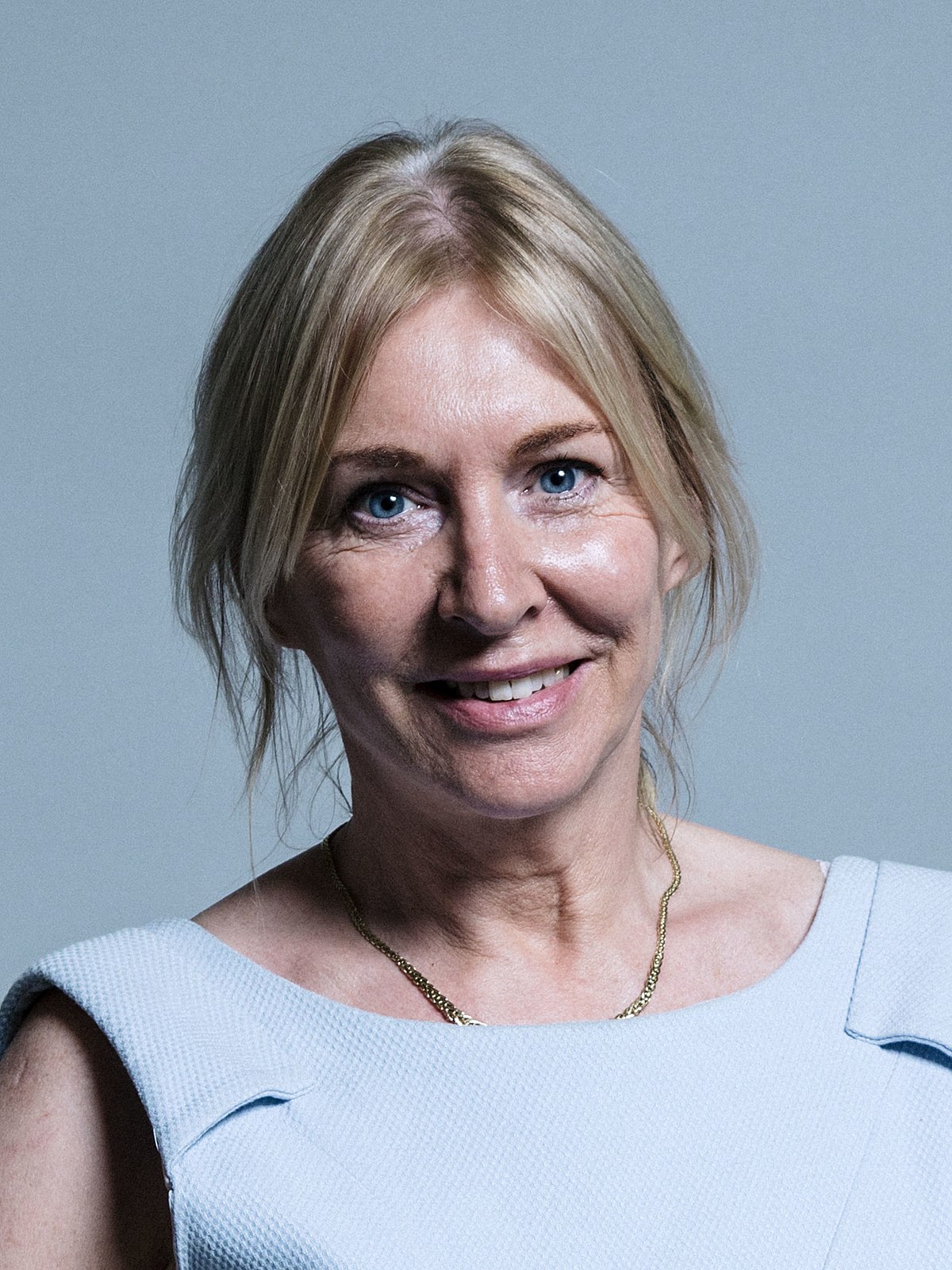
    Nadine Dorries – 2022 Statement on the Broadcasting White Paper

    The statement made by Nadine Dorries, the Secretary of State for Digital, Culture, Media and Sport, in the House of Commons on 28 April 2022.

    Our TV and radio industry is the envy of the world. Production studios across the country are booming, and British-made shows like “I May Destroy You” and the “Great British Bake Off” are celebrated all over the globe.

    Our public service broadcasters (PSBs) are absolutely central to that success. Sitting at the heart of our broadcasting system, they help to develop skills and talent across the country; they drive growth right across the creative industries; and they deliver distinctive, instantly recognisable British content that you would not find anywhere else.

    But broadcasting has changed dramatically over the past few decades. The last time broadcasting regulation was overhauled, in 2003, Netflix was a DVD rental business. Today, it is one of several American streaming giants offering viewers a daily selection of new content—from Amazon Prime to Disney+ to Hulu to Apple TV and beyond. Viewers increasingly watch programmes on their laptops, phones or smart TVs, choosing what to watch, and when to watch it.

    In this new broadcasting world, the competition for audience share is fiercer than ever. In recent years, as streaming services have enjoyed a 19% rise in subscribers, the share of total viewers for “linear” TV channels like the BBC and ITV has fallen by more than 20%.

    The Government are focused on ensuring British broadcasters can not only hold their own in this fight, but also flourish in projecting the best of British across the world. Today, I am therefore publishing a White Paper that proposes major reforms to the sector that will update our analogue rules, and enable our broadcasters to thrive in the streaming age.

    The White Paper contains a number of key proposals.

    First, we want to ensure that in a world of smart TVs and online platforms, our PSBs continue to receive the exposure they deserve. On a traditional TV, our PSBs are given “prominence”: they hold exclusive rights to the first five channels on every television set in the UK. We plan to update those rules for the digital age, by passing legislation that will ensure public service content is always carried and easy to find on all major platforms—including on smart TVs and Fire sticks.

    Secondly, while the UK boasts a vibrant and diverse broadcasting system, we need to ensure consumers are protected in this fast changing landscape. We are therefore proposing a new video-on-demand code that will hold streaming services to similar standards as traditional broadcasters like the BBC and ITV—particularly when it comes to protecting audiences from harmful material.

    We also plan to overhaul and simplify the complicated public service remit so that our PSBs can focus on the things they do best—such as creating distinctively British programmes and providing impartial and accurate news.

    We are also proposing reforms to the listed events regime, so that PSBs have exclusive rights to bid first for the crown jewels of the sporting calendar—including the FIFA World Cup and Wimbledon.

    Finally, over the past year we have been carefully considering the future of one broadcaster in particular: Channel 4.

    Channel 4 is a key part of our national, economic and cultural life. Since the broadcaster was established in the early 1980s, it has more than fulfilled the original aim for setting it up—shaking up the TV schedules with original, disruptive programming and boosting our independent production sector. In the last few decades, the independent production sector has grown six-fold—from a £500 million industry in 1995 to £3 billion in 2019.

    But the broadcasting world around Channel 4 has changed immeasurably during that same period. Like every other broadcaster, it now faces huge competition for audience share— and many of its competitors have incredibly deep pockets. Streamers such as Amazon Prime spent £779 million on UK original productions in 2020—more than twice as much as Channel 4.

    In addition, Channel 4 faces a series of unique challenges. Challenges that other public service broadcasters with different ownership models do not face. While other WSPSBs such as the BBC and Channel 5 have the freedom to make and sell their own content, Channel 4 has no in-house production studio and its ownership model restricts it from borrowing money or raising private sector capital. It is left almost entirely reliant on advertising revenues. Those revenues were already shifting rapidly online. As seen last week, the competition is only set to heat up now that Netflix has confirmed it intends to enter the advertising market.

    It is our view that, under its current form of ownership, Channel 4’s options to grow are currently restricted, with fewer options to invest and compete. Those are serious challenges, and anyone who chooses to dismiss them is burying their head in the sand.

    As a responsible Government, we are prepared to acknowledge those challenges head on, and do what is needed to protect one of our most important broadcasters not just today, but in the years to come.

    The Government therefore believe it is time to unleash Channel 4’s full potential, and open the broadcaster up to private ownership—while, crucially, protecting its public service broadcasting remit.

    The sale of Channel 4 will not just benefit the broadcaster. Channel 4 was originally established to help boost independent production and it has been successful in that mission—so successful in fact, that we face a new and very positive challenge: production studios across the country are booming. They are so in-demand, in fact, that we need more and more people to work in them. I therefore intend to funnel some of the proceeds of the sale of Channel 4 into addressing that new challenge, and giving people up and down the UK the skills and opportunity to fill those jobs—delivering a creative dividend for all.

    I want Channel 4’s next chapter to be one in which it goes above and beyond what it has already done regionally, and plays a starring role in levelling up our creative industries.

    But the sale of Channel 4 is just one part of a major piece of broadcasting reform. As set out in the White Paper I am publishing today, it is a reflection of the transformation that broadcasting has undergone in the last few years—and the need to make sure that our PSBs can keep pace with those changes.

    Our TV and radio industry is already the envy of the world. Today, we are giving British broadcasters the backing and support they need to rule the airwaves for years to come.

    In connection with the above, my Department has made the following documents available on gov.uk:

    “Up next—the government’s vision for the broadcasting sector”

    https://www.gov.uk/government/publications/up-next-the-governments-vision-for-the-broadcasting-sector

    “Decision rationale and sale impact analysis for a change of ownership of Channel 4”

    https://www.gov.uk/government/consultations/consultation-on-a-change-of-ownership-of-channel-4-television-corporation/outcome/decision-rationale-and-sale-impact-analysis-for-a-change-of-ownership-of-channel-4

    “Government response to the consultation on a potential change of ownership of Channel 4 Television Corporation”

    https://www.gov.uk/government/consultations/consultation-on-a-change-of-ownership-of-channel-4-television-corporation/outcome/government-response-to-the-consultation-on-a-potential-change-of-ownership-of-channel-4-television-corporation

    “Government response to the consultation on audience protection standards on video-on-demand services”

    https://www.gov.uk/government/consultations/audience-protection-standards-on-video-on-demand-services/outcome/government-response-to-the-consultation-on-audience-protection-standards-on-video-on-demand-services

    “Government response to the Digital Radio and Audio Review”

    https://www.gov.uk/government/publications/digital-radio-and-audio-review/government-response-to-the-digital-radio-and-audio-review

    I will also deposit copies of these documents in the Libraries of both Houses.
  • Jacob Rees-Mogg – 2022 Statement on U-Turn on Import Controls from EU

    Jacob Rees-Mogg – 2022 Statement on U-Turn on Import Controls from EU

    The statement made by Jacob Rees-Mogg, the Minister for Brexit Opportunities and Government Efficiency, in the House of Commons on 28 April 2022.

    When the UK left the European Union, we regained the right to manage our own borders in a way that works for Britain. This includes how we manage imports into our country from overseas. British businesses and people going about their daily lives are being hit by rising costs caused by Russia’s war in Ukraine and in energy prices. It would therefore be wrong to impose new administrative burdens and risk disruption at ports and to supply chains at this point. The remaining import controls on EU goods will no longer be introduced this year, saving British businesses up to £1 billion in annual costs.

    Instead the Government are accelerating our transformative programme to digitise Britain’s borders, harnessing new technologies and data to reduce friction and costs for businesses and consumers. This is a new approach for a new era, as Britain maximises the benefits of leaving the EU and puts in place the right policies for our trade with the whole world.

    Introducing controls in July would have replicated the controls that the EU applies to its global trade. This would have introduced complex and costly checks that would have then been altered later as our transformation programme is delivered. The challenges that this country faces have underlined that this is not the right thing to do for Britain.

    No further import controls on EU goods will be introduced this year. Businesses can stop their preparations for July now. We will publish a target operating model in the autumn that will set out our new regime of border import controls and will target the end of 2023 as the revised introduction date for our controls regime, which will deliver on our promise to create the world’s best border on our shores.

    This new approach will apply equally to goods from the EU and goods from the rest of the world.

    It will be based on a proper assessment of risk, with a proportionate, risk-based and technologically advanced approach to controls. This includes the single trade window which will start to deliver from 2023, the creation of an ecosystem of trust between Government and industry, and other transformational projects as part of our 2025 borders strategy.

    The controls that have already been introduced will remain in place.

    Specifically, the following controls which were planned for introduction from July 2022 will now not be introduced:

    A requirement for further Sanitary And Phytosanitary (SPS) checks on EU imports currently at destination to be moved to Border Control Post.

    A requirement for safety and security declarations on EU imports.

    A requirement for further health certification and SPS checks for EU imports.

    Prohibitions and restrictions on the import of chilled meats from the EU.

    The border operating model will be updated to reflect this and a copy will be placed in the Libraries of both Houses in due course.

  • James Cleverly – 2022 Statement on the Humanitarian Situation in Afghanistan

    James Cleverly – 2022 Statement on the Humanitarian Situation in Afghanistan

    The statement made by James Cleverly, the Minister for Europe and North America, in the House of Commons on 28 April 2022.

    Afghanistan’s humanitarian crisis remains severe. This is despite the massive response mounted since August 2021 preventing the UN and aid agencies’ worst fears from being realised over the winter. Afghanistan faces acute hunger, over 6 million people have been internally displaced and millions of children are out of school. The UK continues to be at the forefront of the humanitarian response in Afghanistan. It remains a priority for the Prime Minister, Foreign Secretary and Ministers of State.

    We have delivered on the Prime Minister’s commitment to double assistance for Afghanistan in 2021-22, delivering humanitarian assistance to over 6.1 million people. Working with aid agencies, we disbursed £286 million, including £17 million for support to Afghan refugees in the region. A full breakdown appears in the annexes attached. All our humanitarian assistance is going to UN agencies and other experienced international partners.

    On 11 January 2022, the UN launched an appeal for $4.4 billion for 2022, the largest humanitarian appeal on record, reflecting the magnitude of the humanitarian challenge ahead. The UK was at the forefront in responding to this and on 31 March, alongside Qatar, Germany, and the UN Office of Co-ordination of Humanitarian Affairs, the UK co-hosted the 2022 Afghanistan Pledging Conference, where $2.4 billion was pledged.

    On 30 March, the Foreign Secretary announced the UK pledge of £286 million for 2022-2023, the second highest commitment to the humanitarian response plan for Afghanistan to date. This commitment reflects the UK’s enduring commitment to the people of Afghanistan.

    HMG officials continue to press the Taliban to respond to international concerns, including the protection of human rights, and especially the rights of women and girls. We regularly make it clear to the Taliban that the provision of humanitarian assistance requires, among other things, a lack of interference with humanitarian operations, unconditional access for female aid workers, and the full access of women and girls to services.

    We have also worked with the World Bank, United Nations, and United States of America to find solutions which will allow international NGOs to access currency in Afghanistan. In January we successfully worked with the Asian Development Bank to make $405 million available and on 1 March the World Bank Board agreed to make the remaining $1 billion in the Afghanistan reconstruction trust fund available for health, education, livelihoods, and food security.

    The UK also played a key role in pressing for a resolution establishing a humanitarian exception under the UN Afghanistan sanctions regime. In line with UN Security Council 2615 the UK has passed legislation to provide an exception from the assets freeze against listed members of the Taliban solely for the provision of humanitarian assistance and other activities to support basic needs. This will save lives and reduce the impediments faced by humanitarian agencies in reaching those most in need.

    On 17 March, the UK supported a UNSC resolution renewing the mandate of the United Nations Mission in Afghanistan (UNAMA). This provided UNAMA with a robust and flexible mandate to facilitate humanitarian aid delivery, engagement with the Taliban, human rights monitoring and reporting, and a strengthened focus on gender mainstreaming throughout UN activities.

    In addition to providing humanitarian assistance, we are also looking to the medium and longer term. The provision of basic services, such as health, education and livelihoods, remains critical to prevent a worsening of the humanitarian crisis. We continue to explore solutions for their delivery and support payment of front-line delivery workers, with support to any service predicated on access to that service by all.

    The Foreign Secretary committed to putting women and girls at the heart of the UK’s response to Afghanistan. The Taliban have imposed unacceptable restrictions on women’s ability to move around freely, to work, and to access education. Despite statements that schools would open for all students, the Taliban rescinded this commitment and announced on 23 March that all girls’ schools from 6th grade upwards will remain closed until further notice. The UK, alongside international partners, have called on them to reverse this decision.

    There are increasing restrictions on freedom of expression including media censorship and harassment of journalists. Members of religious and ethnic minority groups and LGBT+ continue to be attacked and to suffer discrimination. We are working with aid agencies to prioritise those most at risk, including households headed by women and people with disabilities, and ensure that marginalised groups have equal, safe and dignified access to assistance and services.

    Ministers and officials continue to engage with a wide range of Afghans, including representatives from civil society, religious and ethnic minorities and women activists. Lord Ahmad regularly meets with prominent Afghan women to hear their concerns and consult on the UK’s approach to Afghanistan, most recently on 24 March when he held a round-table event with Afghan female leaders.

    There is regular parliamentary engagement on the humanitarian situation in Afghanistan, including the recent meeting of the All-Party Parliamentary Group on Afghanistan on 21 March. Lord Ahmad briefed Parliamentarians ahead of the UN Afghanistan Pledging Conference on 22 March.

    The attachment “Afghanistan – Humanitarian Situation” pdf can be viewed online at: http://www.parliament.uk/business/publications/written-questions-answers-statements/written-statement/Commons/2022-04-28/HCWS799/.

  • Lee Rowley – 2022 Comments on Supporting High Energy Usage Businesses

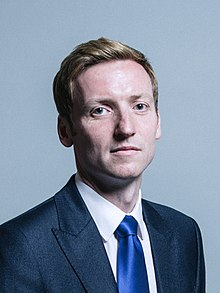
    Lee Rowley – 2022 Comments on Supporting High Energy Usage Businesses

    The comments made by Lee Rowley, the Industry Minister, on 29 April 2022.

    We want to keep the UK at the forefront of manufacturing, helping our energy intensive industries remain competitive and sustainable for the long term, and continuing to power our economy with thousands of jobs across the country.

    We are not only extending our support through the compensation scheme, by offering a greater level of compensation to eligible firms, we are delivering more relief from electricity costs for these industries.

  • Kevin Foster – 2022 Statement on HM Passport Office Backlogs

    Kevin Foster – 2022 Statement on HM Passport Office Backlogs

    The statement made by Kevin Foster, the Parliamentary Under-Secretary of State for the Home Office, in the House of Commons on 27 April 2022.

    Prior to the pandemic, HM Passport Office routinely processed approximately 7 million passports each year. Over the last two years the necessary restrictions on international travel meant only 4 million people applied for a British passport in 2020 and 5 million in 2021. This left about 5 million unrenewed passports.

    In 2022 many of the customers who delayed their application are returning. We expect this year to deal with 9.5 million British passport applications and have been planning for this. Throughout the pandemic, HM Passport Office prepared to serve an unprecedented number of customers. Alongside technical solutions, staffing numbers have been increased by 500 since last April and we are in the process of recruiting a further 700. These preparations ensured passport applications could be processed in record numbers, last month seeing the highest total for any month on record, with HM Passport Office completing the processing of over 1 million applications, 13% higher than the previous record output.

    Inevitably, however, faced with this level of demand applications will take longer. Consequently, in April 2021 guidance was changed to clearly advise customers to allow up to 10 weeks to get their passport, in recognition that a surge would arrive as international travel returned. The vast majority of applications continue to be processed within 10 weeks; in fact, over 90% of applications were issued within 6 weeks between January and March 2022, despite the much-increased demand. HM Passport Office also provides an expedited service where an application from the UK has been with it for longer than 10 weeks; 42 applications have been expedited under these criteria since 31 March.

    With greater volumes of applications which are in the system for longer, levels of customer contact have inevitably risen. We recognise that difficulties in contacting HM Passport Office will cause concern for those wanting assurances about their applications. In response, the provider of the passport advice line, Teleperformance, has been urgently tasked to add additional staff as its current performance is unacceptable.

    To finish, the team at HMPO are dealing with record numbers of applications and delivering a record level of output to match this. Their hard work will enable millions of British citizens to enjoy a holiday abroad this summer, and I thank them for that.

    Yvette Cooper

    From listening to the Minister we would think that actually everything is all right, but my constituents fear their honeymoon may now be wrecked because their passports have not arrived even though they applied in plenty of time, and we have had cases of people cancelling jobs, parents trying to get a holiday for a sick child waiting since January, and huge and long delays by the Passport Office and the contractor, TNT. The message today on the one-week fast-track service is “System busy, please try again later”, and the online premium service has no appointments anywhere in the country. So people cannot get urgent travel such as to go to funerals or to urgent events.

    The Minister has said more passports are being processed, which is clearly welcome, but it is not enough. The increase in demand this year was totally predictable. In 2020 and 2021, the Home Office was asked what it was doing to plan, but people are already losing holidays, trips to see loved ones and thousands of pounds that they have spent in good faith because of the lack of planning at the Passport Office and at the Home Office, which is in danger of becoming a “Stay-at-Home Office” instead for people this summer. So what grip does the Minister have on this? Is it going to get better or worse over the next two months? How many passports have already been delayed by longer than the 10-week wait, and how many does the Minister think will be delayed by more than 10 weeks over the next month or two?

    On staffing, what is the percentage increase compared with before the pandemic? Is it true that the Minister tried to recruit 1,700 staff and got only 500? When will the fast-track services be reopened? What is his advice to a family who are planning to go on holiday in 10 weeks’ time, in July? Do they have any chance of getting their passport, or should they be trying to cancel right now? The problem is that there is a pattern here: delays in the Passport Office, in Ukraine visas, and in basic asylum cases. The Prime Minister said that the answer may be to privatise the Passport Office, but why do Home Office Ministers not just get a grip instead?

    Kevin Foster

    It is quite interesting to hear all the claims of how predictable all this was. I am struggling to remember the number of times anyone on the shadow Front Bench predicted any of this over the last year or two. I welcome their recently found interest in the Passport Office.

    To give some numbers, as of 1 April, there are over 4,000 staff in passport-production roles and, as I say, we are in the process of recruiting another 700. I would also make the point again that 90% of applications were completed within six weeks, and the service standard is 10 weeks. My advice to anyone who is looking to go on holiday this summer is exactly what I said the other day: get an application in now.

    We are making a range of efforts. Staff are working weekends; overtime is being incentivised. We are certainly confident that we will not need to change the 10-week target, but as I have said, this is a record level of demand and a record output, far in excess of what we have seen before. We will expedite the applications of those who have compelling and compassionate reasons to travel, such as funerals or family ill health.

    We know there are challenges. The teams are working hard to deal with them. [Interruption.] I hear comments about staying at home, but I have not heard a great deal of support from the Labour party for the work of the Minister for Government Efficiency in getting people back into the office, but I am sure that he will welcome the comments we have just heard.

    As we see on so many occasions, we are hearing lots of complaints from the Opposition but we are not hearing any solutions or plans. Having just heard from Captain Hindsight, it is no surprise that we are now hearing from Lieutenant Rearview.

    Mr David Jones (Clwyd West) (Con)

    My constituent, Mr Neil Jones, made an application for a passport at the end of February for his holiday, for which he is due to depart at the end of May. He sent his passport by ordinary pre-paid post—not by recorded delivery, unfortunately—and he was told by the Passport Office that it had never arrived. He then made a further application with a lost passport form, which has not been dealt with. He finds it almost impossible to speak to any representatives of the Passport Office, and he is under considerable stress as a consequence.

    My hon. Friend says that the Passport Office is doing its best and that he recognises the difficulties, but I heard this morning that the Prime Minister has threatened the Passport Office with privatisation. May I suggest to my hon. Friend that he should not shy away from that? If the work can be done more efficiently by the private sector, for goodness’ sake, enlist the private sector.

    Kevin Foster

    Just to be clear, a range of private contractors are already involved in the passport process. The bit that is not undertaken by a private contractor is the decision itself. The customer advice line is run by Teleperformance, a private company. As I have already described, its performance is unacceptable and we are engaged with it.

    There is already quite extensive use of the private sector in the process. To be fair, Thales and others have stepped up in the record output that we now require, which is far beyond what would have been expected in a month two or three years ago. The private sector is already being used in the vast majority of the processes in the Passport Office.

  • Lucy Powell – 2022 Speech on Channel 4 Privatisation

    Lucy Powell – 2022 Speech on Channel 4 Privatisation

    The speech made by Lucy Powell, the Labour MP for Manchester Central, in the House of Commons on 27 April 2022.

    The sell-off of Channel 4 is an important matter for Parliament, yet instead of a statement we had announcement by tweet during recess, and now we hear that a White Paper is to be published tomorrow, when we will not be here and there will not be an opportunity for statements. Where is the Secretary of State to defend her policy today? It is a pattern, and it is a disgrace. Nothing screams rudderless Government like fixating on the governance of Channel 4 while people’s energy bills are going through the roof. It did not even make the list of pretty bad ideas discussed at yesterday’s Cabinet.

    Why sell off Channel 4, and why now? Is it because there is an overwhelming clamour from the public? The Government still have not published the 60,000 consultation responses, but my understanding is that the vast majority were against any sale. Is it to help level up the country? Given that Channel 4 commissions half its budget outside London, creating a pipeline of talent across the nations and regions, and stimulating the creative economy in places such as Leeds, Glasgow and Bristol, of course it is not. Is it to create more British jobs in our world-leading creative industries? The Minister and I both know that the likely buyers are going to be the big US media companies, looking for a shop window for their own content. That will mean fewer British-made programmes for British audiences and fewer British jobs. Any UK bidder could lead to less competition, and of course they would be looking at economies of scale.

    Is it to support the independent production sector? Channel 4 is currently, uniquely, a publisher-broadcaster, allowing start-ups and independents to retain the value of their own programmes, helping them grow and export. No buyer is going to continue with that model. That is why the UK independent production sector is so overwhelmingly against the sell-off. Or is it to save the Treasury money? I know that the Secretary of State was a bit confused about this in front of the Select Committee, but Channel 4 does not cost the taxpayer a single penny. Indeed, its profits are all reinvested in British jobs and programming.

    The Secretary of State says the sell-off is needed to help Channel 4 compete with the likes of Netflix and Amazon. The truth is it will be gobbled up by them. She says the sell-off will generate a pot of up to £1 billion for her to dish out in grants, but Channel 4 already invests that amount here, commercially, each and every year. She says she will protect the essence of Channel 4 in a new remit, but I thought that was the straitjacket she wanted to free it from. The truth is that the sell-off just does not stack up, and the Secretary of State is running scared of Parliament. In fact, it is going to clog up Parliament for months to come because she has no mandate to do it and there is widespread opposition to it on her own Benches.

    I can only conclude that this is a deliberate distraction from partygate, a vendetta against Channel 4 news coverage, or another act of cultural vandalism. Channel 4 is a great British asset, owned by the public, that does not cost them a penny. It commissions award-winning British programmes owned by the small independent sector. That is why Margaret Thatcher invented it, and that is why the Government are wrong to sell it off.

  • Julia Lopez – 2022 Statement on Channel 4 Privatisation

    Julia Lopez – 2022 Statement on Channel 4 Privatisation

    The statement made by Julia Lopez, the Minister for Media, Data and Digital Infrastructure, in the House of Commons on 27 April 2022.

    Our TV and radio industry is one of our great success stories, and public service broadcasters such as Channel 4 are central to that success. Our PSBs sit at the heart of our broadcasting system, delivering distinctive, high-quality content and helping to develop skills, talent and growth across the entire country.

    However, the broadcasting world has changed beyond recognition in recent years. Rapid changes in technology and the rise of American streaming giants such as Netflix, Amazon Prime and Disney+, not to mention YouTube and social media platforms, have transformed audience habits. Viewers can watch what they want, when they want, on their laptop, phone, smart TV or Fire stick. As a result, while streaming services have enjoyed a 19% increase in subscribers in recent years, the share of total viewers for linear TV channels such as the BBC and ITV has fallen by more than 20%.

    The Government are determined to protect the role of PSBs in our nation’s economic, cultural and democratic life, and to make sure that they remain at the heart of our broadcasting system no matter what the future holds. Tomorrow, therefore, we will be publishing a White Paper that proposes major reforms to our decades-old broadcasting regulations—reforms that will put traditional broadcasters such as the BBC, ITV and Channel 4 on an even playing field with Netflix, Amazon Prime and others, and enable them to thrive in the streaming age. We will set out the full details of our proposals when the White Paper is published.

    It is important to understand that the sale of Channel 4 is just one part of that major piece of reform. Like the rest of the White Paper, it is a reflection of the transformation that broadcasting has undergone in the last few years and the need to make sure that our PSBs can keep pace with those changes.

    Channel 4 has done a fantastic job in fulfilling the original mission that it was set by the Thatcher Government: to spur independent production and deliver cutting-edge content. The independent production sector has exploded in the last few decades, growing from a £500 million industry in 1995 to an industry of approximately £3 billion in 2019. However, since it was structured to address the challenges of the 1980s, there are limits to Channel 4’s ability to adapt to the 2020s and beyond.

    Channel 4 now faces a new set of challenges. It faces huge competition for audience share and advertising spend from a wider range of players, many of whose deep pockets have been driving up production costs. Streamers such as Netflix spent £779 million on UK productions in 2020, more than twice as much as Channel 4. While other PSBs, such as the BBC and Channel 5, have the freedom to make and sell their own content, Channel 4 has no in-house studio and relies almost entirely on linear television advertising spend at a time when those revenues are rapidly shifting online.

    Under its current form of ownership, Channel 4 has few options to grow, invest and compete. The Government believe that it is time to unleash the broadcaster’s full potential and to open Channel 4 up to private ownership and investment—crucially, while protecting its public service broadcasting remit. We believe we can sell Channel 4 to a buyer who will fund emerging talent and independent and impartial news, and invest in every corner of the UK.

    We intend to use the proceeds of the sale to tackle today’s broadcasting challenges. As I said, our independent production sector is thriving. Only 7% of its revenue comes from Channel 4. The much bigger challenge we face is a shortage of skills. Our film and TV studios are booming. We need to give people the skills to fill the jobs in them, so we will reinvest the proceeds of a Channel 4 sale into levelling up the creative sector and giving people in left-behind areas the training and opportunity to work in the industry.

    The sale of Channel 4 will not just benefit the broadcaster; it will deliver a creative dividend for the entire country. As I said, the future of Channel 4 is just one part of our wider reform of the entire broadcasting sector, and I look forward to providing the House with the full details shortly.

  • Dominic Raab – 2022 Statement on Terrorism in Prisons

    Dominic Raab – 2022 Statement on Terrorism in Prisons

    The statement made by Dominic Raab, the Deputy Prime Minister, in the House of Commons on 27 April 2022.

    In accordance with section 36 of the Terrorism Act 2006, Jonathan Hall QC, the independent reviewer of terrorism legislation (IRTL), has prepared a report on terrorism in prisons which was laid before the House today.

    Today, I am publishing our response to the IRTL’s report, setting out how we are implementing the changes that he has recommended. This will also be published on gov.uk.

    I welcome the IRTL’s review of terrorism in prisons, and thank him for carrying out such a detailed and thorough review. His findings present an invaluable opportunity for us to assess progress and further strengthen our approach in prisons, covering areas including terrorist risk behaviour, governor accountability, separation centres, joint working and legislation.

    In his report, the IRTL acknowledges the significant improvements made to the counter-terrorism system since the horrific terrorist attacks in 2019-20 at Fishmongers’ Hall, Streatham, Reading and in HMP Whitemoor. We have already strengthened the law through the Terrorist Offenders (Restriction of Early Release) Act 2020 and the Counter-Terrorism and Sentencing Act 2021, putting an end to the automatic early release of terrorist offenders and introducing tougher sentences for the most serious terrorist offences. We have also invested in our ambitious step-up programme which provides a step change in our counter-terrorism capabilities through a raft of improvements including a joint intelligence hub to boost information sharing between security partners, a counter-terrorism assessment and rehabilitation centre to research, implement and evaluate rehabilitative interventions, and overhauling our counter-terrorism training offer to frontline staff.

    These measures are critical to strengthening our approach to fighting terrorism in prisons, but we are determined to go further. That is why I have accepted 12 of the IRTL’s recommendations, partially accepted another, and in some areas propose going beyond them.

    We will invest an additional £1.2 million over three years to create a new separation centre and high-risk casework team. The specialised team will ensure that decisions to place prisoners in separation centres are taken in an effective and targeted way, in order to avoid the dissemination of poisonous ideology, prevent terrorist recruitment, and more generally protect the public.

    We will also invest £6.1 million over three years to create a new close supervision centre unit with an extra 10 cells, increasing our capacity by 20%. These will hold some of the most violent men in the prison system who pose a significant risk of harm to our staff and other prisoners.

    We have collaborated widely in considering each of Jonathan Hall’s recommendations, and I am grateful to the Home Secretary and partners across the criminal justice system for supporting this work. We honour the victims, families and communities that have been traumatised by terror by doing all we can to prevent future atrocities.

  • Jacob Rees-Mogg – 2022 Statement on the Efficiencies and Value for Money Committee

    Jacob Rees-Mogg – 2022 Statement on the Efficiencies and Value for Money Committee

    The statement made by Jacob Rees-Mogg, the Minister for Brexit Opportunities, in the House of Commons on 27 April 2022.

    The Efficiencies and Value for Money Committee, established at the request of the Prime Minister and chaired by the Chancellor, is meeting for the first time today.

    At the Committee, the Chancellor will launch his plan for protecting the taxpayer which will drive efficiency, effectiveness, and economy across Government. This efficiency drive will ensure that Government Departments justify their projects with clear value for money and will challenge departments that are not delivering.

    As part of this plan, the Government are developing a new counter-fraud body which will tackle economic crime across the public sector. The new authority will be funded with £25 million, as announced by the Chancellor in the spring statement. The authority will bolster the existing Government counter-fraud function, based in the Cabinet Office, to create the new Public Sector Fraud Authority (PSFA), which will jointly report to HM Treasury.

    The new authority will be staffed by fraud experts and backed by cross-Government data analytics tools. It will focus on increasing counter-fraud performance across the public sector. This data driven focus on countering fraud is in line with business best practice and will improve fraud prevention and the pursuit of fraudsters for both the opportunistic individual and organised economic crime.

    The efficiency drive will also include reviews that scrutinise the work and effectiveness of public bodies, aiming to identify a minimum of 5% savings for each organisation, and doubling the NHS efficiencies target.

    The full membership of the Efficiencies and Value for Money Committee, confirmed today, is the right hon. Steve Barclay MP (Chancellor of the Duchy of Lancaster), the right hon. Oliver Dowden CBE MP (Minister without Portfolio) and the right hon. Michael Ellis QC MP (Minister for the Cabinet Office and HM Paymaster General). The Committee is chaired by the Chancellor and is deputy co-chaired by Simon Clarke (Chief Secretary to the Treasury) and myself.