Blog

  • John Glen – 2022 Statement on the Public Works Loan Board Lending Limit

    John Glen – 2022 Statement on the Public Works Loan Board Lending Limit

    The statement made by John Glen, the Economic Secretary to the Treasury, in the House of Commons on 11 May 2022.

    The Public Works Loan Board (PWLB) is a HM Treasury lending facility to local government. The PWLB passes on central Government’s lower cost of borrowing to local authorities to support their delivery of housing, local infrastructure, service delivery and local regeneration. It also helps local authorities to manage their cash flow in a predictable and cost-effective way.

    Today, I wish to announce an important step the Government are taking regarding the ongoing effective management of the PWLB.

    I will shortly commence section 112 of the Finance Act 2020, amending the National Loans Act 1968 to increase the overall PWLB lending limit from its current level of £95 billion to £115 billion. This will allow the PWLB to make an additional £20 billion of advances to local authorities across England, Scotland, and Wales, continuing to fund essential local projects that will support the delivery of local infrastructure, housing, and service delivery.

    The lending limit was previously raised from £85 billion to £95 billion in October 2019. Heightened local authority lending, as highlighted in reports produced by the Public Accounts Committee (PAC) and National Audit Office (NAO), has driven the need to implement this further increase. The ongoing increase in lending largely reflects local authorities’ continued investment in their capital programmes and the expansion of their delivery of services through capital expenditure. The PWLB provides critical support for local authorities through accessible, low-cost lending, and it is important that this access is maintained. I note the action taken by my right hon. Friend the Secretary of State for Levelling Up, Housing and Communities to address instances of excessive risk, which will safeguard the proper and proportionate borrowing and investment provided by the PWLB.

    The PWLB remains the best source of accessible, low-cost borrowing for local government. By extending the overall lending limit, the Government are strengthening their commitment to supporting local government delivery of key local priorities.

  • Paul Scully – 2022 Statement on Low-income Workers and Exclusivity Clauses

    Paul Scully – 2022 Statement on Low-income Workers and Exclusivity Clauses

    The statement made by Paul Scully, the Parliamentary Under-Secretary of State for Business, Energy and Industrial Strategy, in the House of Commons on 11 May 2022.

    I am pleased to announce the latest steps the Government have taken to better protect and support low-income workers as we look to build a high-skilled, high-productivity, high-wage economy.

    The UK’s flexible and dynamic labour market has always been the envy of the world. It gives businesses the confidence to create jobs and invest in their workforce, whilst giving workers more choice over who they work for, and how often.

    This Government want to put more power into the hands of individuals and businesses to find and create work that suits their personal circumstances. Today we are confirming our intention to widen the ban on exclusivity clauses, ensuring the lowest-paid workers have the freedom to boost their income through extra work if they wish.

    Exclusivity clauses, which restrict staff from working for multiple employers, were banned in zero hours contracts in 2015. Since then, the number of people on zero hours contracts with a second job has risen, and more workers have been able to take advantage of the opportunity to boost their income. Our latest reform will build on the success of those changes.

    The Government proposals will widen the ban on exclusivity clauses which restrict staff from working with multiple employers, to those whose income is below or equivalent to the lower earnings limit at £123 a week. An estimated 1.5 million workers are earning on or below £123 a week and the new reforms will ensure that workers in this group that have exclusivity clauses have the freedom to top up their income with extra work if they choose.

    While not everyone will want a second job, the reforms will remove any barriers that currently prevent those who want to do so, and give workers more flexibility over when and where they work to best suit their personal circumstances such as childcare or study.

    As well as supporting workers to increase their income, the reforms will also benefit businesses by widening the talent pool of job applicants to those who may have been prevented from applying for roles due to an exclusivity clause with another employer, and also helps businesses to fill vacancies in key sectors like retail and hospitality. The reforms will support low-paid workers to make the most of new opportunities where demand is growing.

    The reform will be delivered through new secondary legislation which will be laid before Parliament in due course. It follows a consultation launched by the Government in December 2020, where the majority of responses agreed with the approach to extend the ban to contracts where the workers’ guaranteed weekly income is below or equivalent to the lower earnings limit of £123 a week.

    Additionally, many responses to the consultation highlighted the impact that covid-19 has had on job security and the decrease in guaranteed working hours for many people. Extending the ban to those earning below or equivalent to the lower earnings limit will therefore enable workers who have been moved to reduced hours contracts due to the pandemic to increase their income by taking on additional work if they wish.

    The Government also announced its commitment to publishing employment status guidance, making it easier for individuals and businesses to understand which employment rights apply to them.

    This Government have been absolutely clear that we will do whatever we can to protect and enhance workers’ rights, and give businesses the confidence to create jobs and invest in their workforce. These reforms will put more power into the hands of individuals and businesses to find and create work that suits their personal circumstances.

  • Mims Davies – 2022 Comments on New Jobcentres

    Mims Davies – 2022 Comments on New Jobcentres

    The comments made by Mims Davies, the Minister for Employment, on 12 May 2022.

    We know how much value people get from being in work, both financially and in boosting their confidence and wellbeing, which is why we’ve increased our local DWP Jobcentre support across all communities.

    I was delighted to officially open the additional new JCP site in Brighton Queens Square today alongside my DWP colleague, Baroness Stedman-Scott. It was great meeting our Work Coaches and colleagues from Instant who have been integral in getting our new sites up and running and fitting out these new modern environments to make a positive difference to the lives of so many people.

    This opening marks the completion of our expansion programme with 194 additional Jobcentres now open across Great Britain to support the impact of the pandemic and help people progress. We are getting jobseekers into the record number of vacancies while also supporting those in low paid work to be able to increase their hours, to earn more and move forward in their career.

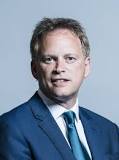
  • Grant Shapps – 2022 Comments on the Dartmoor Line

    Grant Shapps – 2022 Comments on the Dartmoor Line

    The comments made by Grant Shapps, the Secretary of State for Transport, on 12 May 2022.

    The huge success of the Dartmoor Line shows that when you get the service right the public will respond with increased demand.

    This is one example of the bright future in store for our railways as we begin to reform the sector in the run-up to the creation of Great British Railways. Put the customer first and you’ll get the results.

  • Michael Ellis – 2022 Speech to the Inaugural UK-EU Parliamentary Partnership Assembly

    Michael Ellis – 2022 Speech to the Inaugural UK-EU Parliamentary Partnership Assembly

    The speech made by Michael Ellis, the Minister for the Cabinet Office, at the inaugural meeting of the UK-EU Parliamentary Partnership Assembly on 12 May 2022.

    Introduction

    I am delighted to be here at this inaugural meeting of the UK-EU Parliamentary Partnership Assembly, which of course couldn’t come at a more critical moment for European democracy.

    This forum is an important part of the governance that supports the new UK-EU relationship, but it is also a link between democratic representatives and the people that we serve. I hope that the following couple of days will provide an opportunity for Parliamentarians across the English Channel to exchange ideas on how we can get the most out of our new relationship – to the benefit of course of our respective citizens and businesses. Ukraine

    Because right now, in Europe, as we all know, there is another parliament which has continued to meet even as rockets and artillery shells fall around it.

    And today, members of Ukraine’s Parliament, the Verkhovna Rada, are representing fellow Ukrainians and carrying out the functions of Ukrainian democracy.

    They have continued to meet throughout Russia’s illegal invasion, even as Russian troops occupied the outskirts of the capital Kiev, even as their members trained to use weapons to defend their city. So it is all the more vital that our collective support for Ukraine – parliament to parliament, has been included on the PPA’s agenda.

    The European Parliament’s resolution on the 1st of March, calling for defensive weapons for Ukraine and punitive sanctions against Moscow, led the call on many of your governments to act. The UK Parliament has also been united in support of our action on Ukraine, and the UK has worked closely with the EU to take that action, including:

    six waves of punitive sanctions against the Russian economy, cutting off funding for its war effort;

    military, humanitarian and economic assistance for Ukraine; and

    measures to reduce our reliance on Russian hydrocarbons.

    These are significant steps, but we must be prepared to go further. And the UK will be working with our international partners to ensure freedom and democracy are strengthened through a network of economic and security partnerships around and across the globe.

    Trade and Cooperation Agreement

    While Putin has sought to sow division among Western alliances, the war in Ukraine has instead drawn the UK and EU together. That is welcome after the inevitable strains which the change in constitutional relationship brought since 2016. We see the EU as an essential partner in a global alliance of shared values – and we want success for the Union and we hope the EU wants that for us too.

    And our Trade and Cooperation Agreement has now been operating for a year and a half. And our economic relationship is generally working well. The TCA – the world’s largest zero-tariff, zero-quota FTA – is helping businesses adjust to the new commercial environment.

    And the governance of the TCA is running smoothly. The Partnership Council, and all of the Specialised Committees, successfully convened last year. And through these channels, we have ensured effective implementation of the agreement and we’ve engaged in technical discussions on matters ranging from intellectual property to road transport.

    And where we have identified issues regarding compliance for example, or opportunities to reduce unnecessary barriers to trade – such as EU import restrictions on SPS products or the VAT and debt protocol – we have used these committees to formally register our concerns.

    And some positive steps have also been taken by both sides outside of the structures of the TCA. Data adequacy decisions have been adopted for example.

    We have concluded bilateral aviation agreements on all-cargo rights with 19 EU Member States.

    And the UK as COP president continues to engage closely with Commission Executive Vice-President Timmermans on climate change priorities.

    And while these positive steps are welcome, we have also faced some challenges on the TCA. And it’s right to say that two stand out in particular.

    We are deeply disappointed that the EU countries continue to delay formalising the UK’s participation in Horizon Europe (and Copernicus, Euratom Research and Training). There is no practical reason for this delay – the EU is not fulfilling the commitments they made when the TCA was agreed. It is frankly disheartening that a number of countries have now successfully associated to Horizon, including for example Israel and Kosovo, while the EU continues to delay the UK association. And this is purely political – the EU have drawn links to the Northern Ireland Protocol, an entirely separate issue. And the EU’s approach is putting long term collaboration – on what are shared challenges – at risk.

    Now we have done literally everything that is required on our side – all that is required is for the EU to complete its formal processes, and to give its delegates in the Specialised Committee a mandate to agree to adopt draft Protocols that were agreed under the TCA. The UK stands ready to become a significant financial contributor to Horizon, and that would be for the benefit of UK and EU scientists, researchers and business alike – and it is the EU which is preventing this.

    Now, the greatest challenges we face, like tackling global pandemics, reaching net-zero or finding new sources of energy, they all require cooperation across our borders.

    Whatever our other disagreements, holding back the ability of UK and EU scientists to work together benefits no one and sends an unfortunate message about the politicisation of cooperation, which risks making it harder frankly for third countries to rely on cooperation with the Union. So we continue to press the EU to resolve this issue, but have been clear that we cannot wait forever; we will be ready to deliver domestic alternatives. Now the second area, we need to accelerate the development of new efficient electricity trading arrangements which were due to come into force last month. The UK has set out its significant concern about these delays and remain clear that we expect this work to proceed at pace. Efficient electricity trading will catalyse the development of renewables in the North Sea – supporting our shared net zero ambitions and plans to reduce reliance on Russian hydrocarbons.

    So I welcome the fact that both of these points will be considered by the PPA over the coming two days. And Her Majesty’s Government will consider carefully any recommendations this forum may wish to put to the Partnership Council.

    Withdrawal Agreement

    Now the UK and EU have worked closely together on implementing the Withdrawal Agreement since 2020 of course, and there have been positive examples of good cooperation, including on agreements related to the Sovereign Base Area in Cyprus and in Gibraltar.

    Citizens’ Rights continue to be a priority for the UK Government. We take our obligations very seriously and we have implemented the arrangements we agreed under the Withdrawal Agreement and we have done so in good faith. The EU Settlement Scheme has been an overwhelming success, with over 6.5 million applications and almost 5.8 million grants of status made so far. The Government’s approach to the Settlement Scheme is long standing and there is no ‘legal uncertainty’ for EU citizens in the UK. Whilst cooperation with the EU has been constructive, the UK continues to hold some concerns. Outstanding issues include ongoing reports of UK nationals facing difficulties accessing their rights in declaratory Member States, non-compliant resident processes, insufficient safeguards and a lack of detail on appeals processes. These issues are having a concrete impact on the lives of UK nationals in Member States, and we call on the EU to take proactive and immediate action to resolve those issues.

    On Northern Ireland, our overriding priority has been, and continues to be, preserving peace and stability. The situation as it stands, following the election, is clearly undermining the Belfast Good Friday Agreement and creating an unacceptable situation in Northern Ireland.

    Peace in Northern Ireland is based on respect between all communities, and it’s based on the consent of those communities – current arrangements with the EU are undermining that. We will not allow this to continue, we must fix the domestic impact of the Protocol, we must stabilise the situation in Northern Ireland and form an Executive – thereby protecting the Belfast Good Friday Agreement.

    The current situation with the Protocol is not working – it has created a two tier system where people in Northern Ireland are not treated the same way as everyone else in the UK.

    I want to take this opportunity to be clear about a few things. Firstly, we have never actually proposed scrapping the Protocol and we do not intend to – because there will always have to be a treaty governing the UK-EU relationship in respect of Northern Ireland. However we do need to see significant changes to it. We believe in the founding objectives of the protocol – to protect the Belfast Good Friday Agreement, to ensure Northern Ireland remains an integral part of the UK and the UK internal market, and to provide assurance to the EU that the single market is protected. But clearly, in its current form, the Protocol is not delivering on those internal objectives.

    Now, ladies and gentlemen, we have engaged in negotiations with the European Union in good faith. Vice President Šefčovič has tried to find solutions within the narrow mandate he has been given. But I regret to say that it is our clear view that the European Union’s proposals would take us backwards from where we are today. It’s therefore hugely disappointing that the EU have confirmed that they will never change their mandate, and because of that, the situation is now very serious.

    We have gone out of our way to ensure none of our proposals risk undermining the integrity of either the EU or the UK’s single market. We have created new systems to provide the EU with commercial data they have been asking for – giving them confidence no goods are being smuggled into either market.

    And we will continue to talk with the EU, but we will not let that stand in the way of protecting peace and stability in Northern Ireland. As both the Prime Minister and Foreign Secretary have made clear, we will take action to protect the Belfast Good Friday Agreement if solutions cannot be found.

    Conclusion

    From the Palace of Westminster to the Verkhovna Rada – many parliament buildings across Europe, ladies and gentlemen, have been repaired or rebuilt from damage in wartime. This building here stands as a testament to the peace Europe has largely enjoyed for most of our lifetimes.

    As that peace is threatened by Putin, and it is all the more vital that parliamentarians work together in defence of our shared democratic values.

    Whilst these past years have not been easy for UK-EU cooperation – perhaps unavoidably so – I think these recent months have been a reminder that there is a bigger picture. And in that geopolitical bigger picture the UK and EU are not only natural, but we’re essential partners.

    We will, of course, have differences of view, as we do today on the Northern Ireland Protocol, where we are asking the Union as friends and allies to understand our primary responsibility to protect the peace and stability of our country. But there is far more that does and should unite us.

    And I very much hope that this inaugural meeting of the UK-EU Parliamentary Partnership Assembly can make progress on these issues, and show that we elected representatives can be the driving force of a new era of UK-EU partnership. To benefit all of the people we proudly represent. Thank you very much.

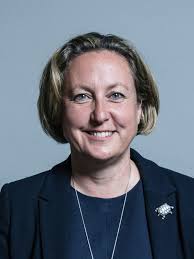
  • Anne-Marie Trevelyan – 2022 Comments on Visit to Burleigh Pottery

    Anne-Marie Trevelyan – 2022 Comments on Visit to Burleigh Pottery

    The comments made by Anne-Marie Trevelyan, the International Trade Secretary, in Stoke on 12 May 2022.

    It is great to see British businesses exporting across the world thanks to our brilliant free trade agreements. Businesses who export are support higher paying jobs, and help grow the economy across the UK.

    Seeing Burleigh succeed shows the high demand for quality British products, and I will continue to champion great British exporting success stories in every sector.

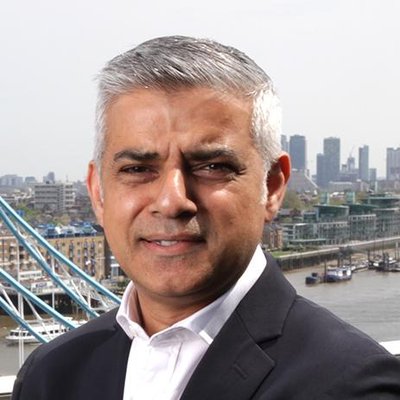
  • Sadiq Khan – 2022 Comments on Visit to Silicon Valley

    Sadiq Khan – 2022 Comments on Visit to Silicon Valley

    The comments made by Sadiq Khan, the Mayor of London, on 10 May 2022.

    I’m delighted to be in Silicon Valley today to bang the drum for even more investment in London by American tech companies.

    London is already the number one destination for American tech companies to expand, showing we are an unrivalled destination for businesses to invest in. It is great news that even more leading US tech companies have unveiled plans to invest in and create new jobs our capital, and I want to invite businesses from across the sector and beyond to set their sights on London.

  • Charlie Falconer – 2022 Comments on His Appointment as Chair of London Drugs Commission

    Charlie Falconer – 2022 Comments on His Appointment as Chair of London Drugs Commission

    The comments made by Charlie Falconer, the Chair of the London Drugs Commission, on 12 May 2022.

    I’m honoured to have been appointed chair of the London Drugs Commission. It is a real opportunity for there to be a thorough look at the effectiveness of our drugs laws and policy on cannabis. We need rigorously to identify what is the best approach to reduce harm to our communities. A national debate is long overdue. We aim to make recommendations to bring about effective and lasting change.

  • Sadiq Khan – 2022 Comments on Appointment of Charlie Falconer as Chair of London Drugs Commission

    Sadiq Khan – 2022 Comments on Appointment of Charlie Falconer as Chair of London Drugs Commission

    The comments made by Sadiq Khan, the Mayor of London, on 12 May 2022.

    I am delighted to announce that Lord Charlie Falconer QC will be the chair of the first-ever London Drugs Commission. As a widely respected QC and former Justice Secretary, Lord Falconer brings decades of experience.

    The illegal drugs trade causes huge damage to our society and we need to do more to tackle this epidemic and further the debate around our drugs laws. That’s why I am here today in L.A. to see first-hand the approach they have taken to cannabis.

    We must learn from others when considering our approach, and by examining the latest evidence from around the world and the world-class research from UCL, Lord Falconer and the Commission will make recommendations to improve our approach to cannabis to help tackle drug related crime, protect Londoners’ health and reduce the huge damage that illegal drugs cause to our communities.

  • Trudy Harrison – 2022 Comments on Zero Emission HGVs

    Trudy Harrison – 2022 Comments on Zero Emission HGVs

    The comments made by Trudy Harrison, the Transport Minister, on 11 May 2022.

    Our road freight industry is one of the most efficient in the world and contributes over £13 billion to the UK economy each year.

    But we must accelerate our journey towards our net zero goals, and we’re committed to leading the way globally on non-zero emission road vehicles.

    Our ambitious plans will continue to ensure food is stocked on the shelves and goods are supplied while eliminating fossil fuels from HGVs and making our freight sector green for good.