Blog

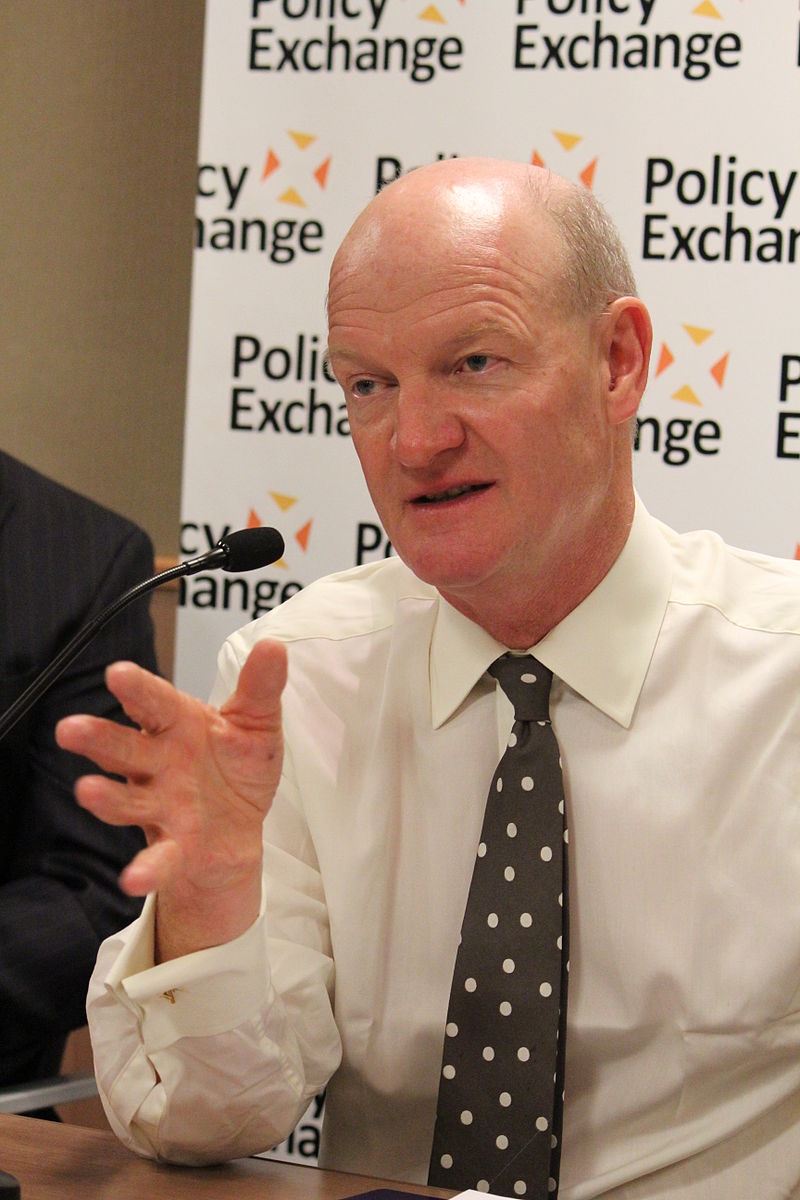
  • David Willetts – 2010 Speech at the HEFCE Annual Conference

    David Willetts – 2010 Speech at the HEFCE Annual Conference

    The speech made by David Willetts at the HEFCE Annual Conference at the Royal College of Physicians in London on 21 October 2010.

    Good afternoon.

    It has been a crucial ten days for the development of higher education in our country. I am very grateful to HEFCE for this opportunity to set out how the Coalition Government sees things now. But my debt – our debt – to HEFCE goes much further than that. Alan Langlands brings sagacity and stability – qualities we need in such a turbulent world. Tim Melville-Ross makes an excellent contribution as chairman and I am delighted to announce that Tim has agreed to serve as Chair of the Board of HEFCE for a further three years.

    The Browne Report is up there with Lionel Robbins’ report of 1963 and Ron Dearing’s report of 1997 as a serious, paradigm-shifting publication. We will not necessarily accept all of it, but many experts have already recognised its quality – with praise coming, among others, from the vice-chancellors of Leicester, Imperial and the Open University. It has also been praised by our leading papers. Perhaps I can quote their words as if on a billboard outside a West End theatre: “genuinely radical”, the Financial Times; “sophisticated” and “persuasive”, Daily Telegraph; “attempting to uphold a core set of policy principles that should be broadly supported”, the Guardian.

    There are lessons we can take from those two great reports which preceded Browne. Robbins has gone down in the history books as the report which drove university expansion. But the key driver of that expansion was decisions already taken on student finance following the Anderson Report of 1960. It is right that we should look at university reform and finance together, rather than separately – while of course recognising that finance is only one aspect of a university’s mission, and that the social and moral purposes of higher education are its bedrock.

    I was actually my Party’s higher education spokesman when Dearing came out. And I remember the shock we all felt when David Blunkett effectively tore up Ron’s report the day before it was released; instead of considering Ron’s proposals, he announced an alternative package. That crucial mistake is one reason for the turbulent and messy history of university policy ever since.

    We are not going to repeat that mistake. There will be a very careful process of deliberation in light of the Browne Report. So my reactions today on some of the broad outlines of John Browne’s report are necessarily provisional, as we consult in the weeks and months ahead.

    There are some decisions, however, that can’t wait. We do need to set out in the next few weeks the way forward for graduate contributions and student support if we are going to have any chance of implementing changes for the Autumn of 2012. Many prospective students will visit universities and decide on their applications in the Summer of 2011, and so they need to know the likely costs by then, and how the Government will help them to meet those costs. In turn, universities have explained to me that their prospectuses – with information on graduate contributions – will go to print in April 2011. It is rather like A. J. P. Taylor’s thesis that train timetables determined the outbreak of the First World War: once the presses begin rolling, everything is fixed.

    This means that amendments to regulations governing the current fees structure and student support need to happen sooner rather than later. Prompt decisions will mean we can then implement in regulations the commitments we make. We hope to bring proposals on regulation of graduate contribution levels to Parliament before Christmas. Following Lord Browne’s proposal to introduce a real rate of interest on contributions, we will also need to seek an early opportunity to make the limited changes to primary legislation on that specific issue, and also update repayment regulations to enable a more progressive system.

    We are keen to hear the views of the sector on the wider issues that Browne considered, such as governance and regulation, private providers, and student number controls. In fact, we are already listening, and more lengthy consultation here will tease out the ramifications. We aim to publish a White Paper in the Winter and then – Parliamentary time permitting – hope to introduce a broader higher education bill perhaps later on in this current, extended session.

    The central proposition in Browne is this – that the bulk of the teaching grant which is currently distributed to universities via HEFCE should be replaced by spending power placed directly in the hands of students, who will be lent money to pay for their university education. Students will not, of course, have to find any money of their own for tuition during their time at university, but they will make contributions subsequently as graduates. That is the big shift in the funding of higher education put forward by the Browne report and endorsed by the Coalition. Vince and I both believe it is the right way forward. It both delivers a big saving in public spending – reflected in yesterday’s spending review – and reforms the financing system so that it is shaped by the preferences of students. This new model is what lies behind the Chancellor’s statement yesterday.

    We have said in the spending review that the overall resource budget for HE, excluding research funding, will reduce from £7.1 billion to £4.2 billion – a 40 per cent, or £2.9 billion, reduction – by 2014-15. By far the greatest part of that reduction flows from our acceptance of the approach presented by Lord Browne – that, starting from the 2012/13 academic year, we will start to reduce HEFCE teaching funding, and institutions will be able to replace it, if they can attract students to their courses, with funding flowing via the graduate contribution scheme. Obviously, the details of this will vary between different institutions, and will be affected by the decisions we quickly need to make about the fee regime.

    The spending review also contained several assumptions about efficiency, both within the public sector, and for bodies to which the public sector contributes significant funding. My own department is facing a 40 per cent headline cut in its administration costs. It is not for us to say precisely what efficiency savings a university should make, but crucial areas to look at will be pay and pensions, procurement and shared services. I know most of you already have plans in train here.

    I know that you will have many detailed questions about higher education funding for 2011-12 and beyond, which, you will understand, we are not yet in a position to answer. As usual, we will send a grant letter to HEFCE, with more details, around the turn of the year.

    I know too that people in this room will have anxieties about the shift in spending, but I have to ask what the alternative is. Given the fiscal crisis and the pressure that we are under, there is no option of carrying on as we are. We would have had to do something – even the previous Labour Government had set out £600 million of cuts over a shorter time scale, albeit with no indication of how they were to be delivered. One possibility would have been a big reduction in the unit of resource per student, threatening the quality of the student experience. Alternatively there could have been a big reduction in student numbers, depriving thousands of young people of a crucial step on the ladder of opportunity. A third option was a pure graduate tax, which would risk a brain drain with its incentives for people to study or work abroad. The graduate tax also breaks the link between student and university. There is an excellent guide to these problems and more: a report from December 2003 called “Why not a pure graduate tax?”, published by the last Labour Government.

    These options, therefore, all have enormous disadvantages. Lord Browne’s considered approach, which we endorse, actually shows a pathway towards a positive and viable future for higher education – a way through the “valley of death” to which Steve Smith has often referred.

    The HE system that we develop between us must be as fair and as progressive as possible. In the current economic climate, therefore, we simply cannot afford a fiscal subsidy to the wealthiest families. Looking at the Browne proposals, the Institute for Fiscal Studies found that the poorest 30 per cent of graduates would be better off than now, while only the richest 30 per cent of graduates would have to pay off their loans in full.

    The figures we end up with may not be quite those. But broadly, that is the right approach. In fact, we in the Coalition have set ourselves the task of improving on Browne and coming up with proposals that offer even more help for students from the poorest backgrounds but without unfair penalties on success. I have to say to the strongest universities that they have not been successful enough in improving access to young people from disadvantaged backgrounds.

    Back in April, Sir Martin Harris duly noted that, collectively, universities have made clear progress on widening participation. But he concluded that the participation rate among the least advantaged 40 per cent of young people at the top third of most selective universities “has remained almost flat” since the mid-1990s. The Government is committed to good universities, but it is equally serious about social mobility. The two must go hand in hand. And I hope you will recognise the strength of feeling within the Coalition that one of the non-negotiables in all this is that universities must deliver on broadening access. The challenge is to achieve this with imaginative and equitable policy – not with clunky quotas or crude social engineering. I believe we can do it.

    We can do it by focussing on three key groups: young people at school and college, students with modest incomes at university, and graduates with low earnings. We will offer them a fairer deal which applies at all three stages: routes for people to get into university, from school, college and through other avenues; increased support for students from poorer backgrounds while they’re at university; and better support for people on low incomes once they have graduated.

    In his important speech last Friday, Nick Clegg pledged £150 million of government money for a national scholarship scheme to improve access for students from families of modest means. It will be fair, affordable, and make a real difference to some of the poorest students. At the same time, it will not add to the burden of regulation on institutions or duplicate arrangements under the more generous and coherent student support system that’s being developed as Browne recommended. I will be inviting the National Union of Students, Universities UK, the Office for Fair Access, the Sutton Trust and other interested parties to help us design a scheme for both young and mature students.

    The second stage involves a more generous maintenance package for students from poorer backgrounds, details of which we hope to announce shortly. We are looking closely at the Browne recommendations for a more generous maintenance grant, supplemented by a more generous loans package. It would be a great achievement to increase maintenance levels on a progressive basis, with more generous grant than now, even in these austere times. If the Coalition Government can deliver this as proposed by Browne, then the obligation on universities to deliver their side of the bargain on access will be even greater.

    Improving the deal for part-timers is a key part of broadening access. For the first time, part-time students will – as Browne proposes – be eligible for loans to cover the full cost of their tuition, on the same basis as full timers. I see this as a genuine milestone – something that neither Robbins nor Dearing tackled. It is a vital part of creating a more responsive and diverse HE sector.

    The third stage is fairness for graduates. We will reform graduate contributions, by increasing the threshold at which people begin to repay loans, and by introducing a positive interest rate. It is crucial for the Coalition that contributions should be related to ability to pay without making the mistake of the pure graduate tax and losing the link with the actual cost of a university education. We specifically asked Lord Browne to address the issue of progressivity and he has come up with ingenious and practical proposals which we intend to work with. We can see the case for setting the income threshold for repayments at £21,000, as Browne suggests – way above the present £15,000 – with nine per cent of salary payable above that threshold.

    As for terms on early repayment, the arguments have become rather muddled thanks to a misleading report in the Guardian and some rather sloppy work by the Social Market Foundation which does not appear to understand that money in the future is worth less than money now. We are examining this issue carefully. There is a feeling that it would be unfair if the better-off could reduce their payments by paying early. But for many people with modest earnings, the delay in repayments at a less than commercial interest rate is an advantage, not a disadvantage.

    This, then, is the direction in which the Coalition Government is heading. Even while public spending is being reduced, we are seeking more progressive outcomes than at present. As the Institute of Fiscal Studies commented, “The proposed reforms to student support and graduate repayments would be a welcome development if they were to be adopted. By continuing to provide up-front cash support for the full amount of fees and for living costs, the system should preserve access to higher education regardless of family background.”

    There are, of course, some very difficult issues around fee caps and the levy. For Lord Browne, there is – in theory – no upper limit to fees. He would argue that, provided admissions are needs blind and provided that the Exchequer doesn’t take on any of the risk of high loans, the problem is resolved. But we understand the very strong concern about the level of graduate contributions.

    Lord Browne’s proposed levy to avoid any Exchequer subsidy for loans has also aroused quite a lot of concern across the sector. It means that as soon as universities raise their fee above the threshold level, they face a rapidly rising levy which can drive their fees up even higher in order to reach a given level of income. Another objection, for example, is that a levy could become an obstacle to philanthropy if the upfront payment of fees via donors were to attract it. If you didn’t have a levy, however, there would be a need for some sort of upper cap. We recognise there are arguments for a lower rate for the levy, or for not having a levy at all and sticking with a fee cap instead.

    We have not reached a final decision on the levy and the fee cap, but there is an interesting feature within the current arrangements for higher education funding, which consist of a basic cap of £1,310 and a higher rate cap of £3,290. It would be possible to set new levels for each, with stringent conditions on access which any institution would have to meet before setting a graduate contribution at the higher rate.

    The key legal condition, of course, is access and progression – enforceable by OFFA. There is still a dangerous temptation for universities to blame failings in the widening participation and fair access agendas on schools – instead of dealing with the world as it is. We can’t just sit on our hands and wait for schools to be reformed – although that must happen. Universities must act now, and we would look carefully at the conditions that OFFA demands.

    There is also an important question around teaching quality. This is where I think the sector is most in danger of losing contact with its supporters. On the one hand, we should naturally expect high standards of teaching in all publicly-funded institutions. On the other, universities who wish to charge more for undergraduate courses need to produce compelling evidence as to what the extra money would buy in terms of better teaching, contact time and services for students. And it is legitimate for students to ask why the finance reforms introduced under the previous government failed – in some cases – to deliver improvements to their educational experience.

    In a reformed system, students will expect a better experience in return for higher contributions as graduates. If we are to win the argument for reform, universities must demonstrably respond to the perception that some students are being short-changed. We must do better and we will. This is one of the reasons why I attach so much importance to supply side reform. Competition is a great driver of improvement. We want to see innovation and a diverse range of choices for students – two-year courses, for instance, and more vocational degrees. In speeches we have made in recent months, both Vince Cable and I have challenged the traditional model of three-year degree courses for 18-year-olds away at college, and especially championed part-time learning. It is for you rather than us to carry through reform, but now is the time to identify anything in the arrangements for public financing or regulations which would stifle these options.

    I am also aware of substantial concerns within the sector about Lord Browne’s proposal on controlling student numbers via UCAS tariff points. This is an especially thorny problem: maintaining macro control over student numbers while leaving micro freedom to individual institutions. John Browne’s is an imaginative solution, but has raised questions about practicalities. And it is important that we do not deter mature students, for example, who may have not achieved academic success at school – which is why he suggests a second admissions route separate from UCAS points. But running two separate systems creates a new set of problems. Meanwhile UCAS is doing important work looking at how their points system could be reformed. There is a lot more work to do in this whole area before any changes are implemented.

    Some people have also raised doubts about the idea of a single council which incorporates HEFCE, OFFA, the QAA and the OIA. The Coalition is instinctively attracted to any proposals which reduce the number of such bodies, but we need to tread carefully. The OIA’s special role as an alternative way of resolving disputes without going through the courts does require independence. The QAA, of course, is not a Government quango – it is jointly owned and sponsored by the HE sector with HEFCE, and any changes need to be discussed with the sector. Clearly, we need to think through all this carefully. We won’t rush into any decisions. But Lord Browne, as so often, does have a powerful logic behind his central argument. HEFCE has, in effect, operated as the regulator of the sector through its power to make grants. As the relative size of these grants falls, so the regulatory role comes out into the open more. This must be must be used with care and discretion. But clearly, a key role is going to be in broadening access. What we’re also seeking to do, of course, is reduce regulation and external intrusion into higher education, in favour of greater freedom and autonomy.

    My own current thinking is that merging HEFCE and OFFA would be sensible once funding to universities is channelled through students rather than through HEFCE. I assure you, though, that the institutional landscape will not change before the academic year 2012/13; it would require legislation, and therefore Parliamentary approval. In the meantime, I can announce that I have reappointed Sir Martin Harris as Director of the Office for Fair Access for a further 12 months. His experience will be invaluable as we work more on improving access.

    I can also announce the appointment of Ed Smith – a HEFCE board member – as the new Chair of the Student Loans Company. The processing of student loan applications has gone well this year. Figures published today show that 94 per cent of approved applicants had their full entitlement available to them when they arrived on campus. We owe Deian Hopkin, Ed Lester and their team a substantial vote of thanks. This is a transformation, compared with last year’s appalling performance.

    I also want to take this opportunity to thank the National Student Forum – and its chair, Maeve Sherlock – for its contribution to improving the student experience over the past three years. The Forum has published its final report today, which again provides some excellent material for universities to consider together with their student bodies. It is this active partnership, often at a detailed course level, which can vastly improve the knowledge and skills of undergraduates, as well as helping institutions to fulfil their missions. We will continue to listen to students and make sure that we understand their varied concerns and priorities.

    The other main news from the Chancellor yesterday concerned funding for science and research. It is good news for HEFCE’s QR funding and Higher Education Innovation Fund, and good news for the Research Councils and National Academies.

    It is proof that this Government recognises the fundamental role of science and research in rebalancing the economy and restoring economic growth. Despite enormous pressure on public spending, the overall level of funding for science and research programmes has been protected in cash terms. And as we implement the efficiency savings identified by Bill Wakeham, we should be able to offset the effects of inflation – thus maintaining research funding in real terms.

    There has also been a great deal of pressure to maintain flexibility in government spending. A stable investment climate for science and research – as we all know – allows universities and research institutes to plan strategically, and gives businesses, public services and charities the confidence to invest in the research base. I am delighted to confirm, therefore, that the ring-fence for science and research programmes has therefore been maintained.

    Across the country, we have excellent departments with the critical mass to compete globally and the expertise to work closely with business, charities and public services. This £4.6 billion settlement for science and research should mean that we can continue to support them.

    We must, though, continue to develop an assessment framework that combines recognition of the highest levels of research excellence with reward for the impact it has on the economy and society. HEFCE is making good progress with the Research Excellence Framework, in partnership with many academics from across the spectrum of disciplines. I too have had lively discussions with academics on this, and look forward to seeing the results of the pilot exercise later this year.

    We are also continuing to support capital investment where it is a high priority. We have allocated £69 million over the spending review period, in partnership with the Wellcome Trust, to the next phase of the Diamond synchrotron in Oxfordshire to support ground-breaking research in the life, physical and environmental sciences. And the Department of Health is joining my department, University College London and medical charities to fund the UK Centre for Medical Research and Innovation. The Department of Health will put £220m into this important venture that will accelerate the translation of basic research into care for patients.

    The Government is committed to getting business and universities working more closely together. I am therefore working with HEFCE to reform Higher Education Innovation Funding (HEIF) to increase the rewards for universities that are most effective in business engagement. Some exciting ideas have emerged from the community about how to improve the effectiveness of university IP management. We will explore with HEFCE the opportunities to release this potential.

    To conclude, let me make three final points.

    The first is to repeat that we are determined to manage the process of transition carefully – avoiding disruption unless it is a necessary aspect of reform. That is why the spending review savings will be focused towards the second half of the spending period. Indeed, I believe that higher education, as well as research, should be able to maintain overall levels of activity throughout this time of austerity.

    The more important point, though, is that, despite the risks associated with any change, the reforms we undertake will improve higher education in the long run. Those institutions which attract more students and pull in businesses seeking to boost the skills of their employees will be able to grow. They will reap the rewards of good teaching that students and employers recognise and value. They will be able to innovate, to make the most of greater autonomy, to pursue their institutional missions, including research.

    And thirdly, although this speech has inevitably had to focus on finance and organisation, Vince and I never lose sight of the sheer inherent value of the intellectual activity that happens within our universities. Any structure and any government department is just there to serve this greater good. Our changes have to fit with and reinforce the core values of higher education, that motivate those who devote their lives to it.


  • Liz Truss – 2022 Statement Following the UN Human Rights Chief’s Report on Xinjiang

    Liz Truss – 2022 Statement Following the UN Human Rights Chief’s Report on Xinjiang

    The statement made by Liz Truss, the Foreign Secretary, on 1 September 2022.

    The report by the UN High Commissioner for Human Rights provides new evidence of the appalling extent of China’s efforts to silence and repress Uyghurs and other minorities in Xinjiang.

    It includes harrowing evidence, including first-hand accounts from victims, that shames China in the eyes of the international community, including actions that may amount to crimes against humanity.

    This includes credible evidence of arbitrary and discriminatory detention, torture, sexual and gender-based violence, violations of reproductive rights, and the destruction of religious sites. UN Member States must now be given the opportunity to consider the report fully.

    The UK has already led international efforts to hold China to account at the UN, imposed sanctions on senior Chinese government officials, and announced measures to help ensure no UK organisations are complicit in these violations through their supply chains.

    We will continue to act with international partners to bring about a change in China’s actions, and immediately end its appalling human rights violations in Xinjiang.

  • PRESS RELEASE : Specialist schools programme – Michael Gove announces changes

    PRESS RELEASE : Specialist schools programme – Michael Gove announces changes

    The press release issued by the Department for Education on 20 October 2010.

    The Secretary of State has today announced changes to the specialist schools programme. Funding for specialist schools, including for High Performing Specialist Schools (HPSS), will be mainstreamed from April 2011. This funding, approximately £450 million for 2010-11, is not being removed from the schools system and will continue to be routed to schools through the Dedicated Schools Grant.

    The Government is also announcing that schools will no longer be required to designate or re-designate as specialist, removing this bureaucratic burden. Currently they must demonstrate that they meet a range of benchmarks set by DfE.

    From April 2011 the Department will therefore no longer fund the Specialist Schools and Academies Trust (SSAT) and Youth Sports Trust (YST) to support schools through the designation and re-designation process and run networks of specialist schools. For this financial year, the total grant for the specialism programme for the SSAT is £13 million, and for the YST it is £2.5 million.

    You can read Michael Gove’s letter to Elizabeth Reid, Chief Executive of the Specialist Schools and Academies Trust, below:

    Elizabeth Reid
    Chief Executive
    Specialist Schools and Academies Trust
    16th Floor, Millbank Tower
    21-24 Millbank
    London SW1P 4QP

    October 2010

    Since my appointment I have been reviewing existing policies and programmes in the context of the priorities that the coalition Government has set, including the Specialist Schools and High Performing Specialist Schools programmes. My aim is to ensure that the Government enables school leaders to achieve the best for the pupils and parents they serve. I know that many school leaders attest to the value of specialism as a catalyst for school improvement and as a means of developing a distinct character and ethos for their schools. The Specialist Schools and Academies Trust has been instrumental in the creation of the near-universal specialist system which now exists. I am grateful to you and your predecessors, and to all SSAT’s directors and staff, for your tireless commitment to raising standards in our schools.

    Now that specialism is so firmly established I believe that the time has come to remove the Government imposed prescription that has built up around the programme and to give school leaders greater freedom to make use of the opportunities offered by specialism and the associated funding. This is part of my wider commitment to trust school leaders to take decisions in the best interests of the pupils and parents they serve. Of course, Academies are already freed from centralised control and are not constrained in their choice of specialism or required to undergo designation or re-designation. I look forward to an increase in the number of schools and academies enjoying these and other Academy freedoms.

    In particular, I have decided that from April 2011 funding for specialism should no longer take the form of a dedicated grant, so that all schools can decide how to develop their specialisms in the light of the total resources available to them. Schools will not be required to designate or re-designate. I should stress that funding is not being removed from schools: money currently paid as specialist schools grant will continue to be routed to schools through the DSG. This is in line with the approach set out in the Department’s consultation on the Pupil Premium, which envisaged the mainstreaming of dedicated grants wherever possible.

    I have also decided not to fund the current range of HPSS options after March 2011. Again, the funding will remain with the frontline. Our best schools will continue to be able to take on system leadership roles and support others to improve, and I am looking to expand the opportunities and financial incentives available to them. Academy status already offers a route for outstanding schools to support others as does becoming a National or Local Leader of Education. I intend to set out further plans in the White Paper which is due to be published later in the autumn. Of course, I would expect locally driven collaborations to continue to develop and flourish.

    I appreciated the opportunity to discuss the future of the specialist schools programme with SSAT’s National Headteacher Steering Group. Members of the Group spoke with passion about the benefits of the programme and I hope that I can continue to rely on the advice of the Group about how those benefits might be realised in a changed environment.

    The Department’s grant funding agreement with SSAT, which covers support for the specialist schools programme, expires at the end of this financial year. The then Minister of State for Schools wrote to you in May 2009 explaining that the Department would to go through a competitive process in order procure any similar services in future. At this point we have no plans to commission centralised support for specialism. Officials want to discuss with SSAT the management of grant funded activities over the remainder of the financial year in the light of the changes outlined above. And I know that the schools, which spoke so eloquently about the value they place on your work, will continue to support you as willing subscribers to your services.

    MICHAEL GOVE

  • PRESS RELEASE : Joint Statement of the Syria Contact Group – September 2022

    PRESS RELEASE : Joint Statement of the Syria Contact Group – September 2022

    The press release issued by the Foreign Office on 1 September 2022.

    The United Kingdom joined representatives of the Arab League, Egypt, the European Union, France, Germany, Iraq, Jordan, Norway, Qatar, Saudi Arabia, Turkey, and the United States in agreeing to:

    Reaffirm our commitment to reaching a political solution to the Syrian crisis consistent with UN Security Council resolution 2254, including continued support for implementing and sustaining an immediate nation-wide ceasefire, the Constitutional Committee, free and fair elections, the end of arbitrary detention, and the release of all those unjustly held.

    Reiterate the need to create secure conditions for the safe, dignified, and voluntary return of refugees and internally displaced persons, consistent with UNHCR standards; and support the provision of sufficient and sustainable aid to the displaced and their host countries and communities until such conditions are in place.

    Note with concern the continuing threat posed by Daesh and reiterated our commitment to the mission of the Global Coalition Against Daesh, and to the fight against terrorism in all its forms and manifestations.

    Call on all parties, in particular the government-nominated bloc, to resume meetings of the Syrian-led and Syrian-owned Constitutional Committee under UN auspices in Geneva and to advance an inclusive political solution that will protect the territorial integrity, unity, and sovereignty of Syria and the rights and dignity of all Syrians.

    Reiterate that there is no military solution to the Syrian crisis and reaffirmed our continued support of UN Special Envoy Geir Pedersen and his tireless efforts to advance a UN-facilitated political process consistent with UNSC resolution 2254.

    Remain deeply concerned about the dire humanitarian situation in Syria and the ongoing suffering of the Syrian people. We emphasized the importance of continuing to provide life-saving and early recovery humanitarian assistance across Syria through all modalities, including expansion and extension of the UNSC resolution 2642 cross-border aid mechanism, for which there is no alternative that can match its scope and scale.

    Furthermore, underline the necessity to continue to press for accountability for all atrocities and international crimes perpetrated in Syria, including the use of chemical weapons, as well as to press for a full accounting of the missing.

  • PRESS RELEASE : Department for Education spending review 2010

    PRESS RELEASE : Department for Education spending review 2010

    The press release issued by the Department for Education on 20 October 2010.

    The schools budget will increase in real terms in each year of the Spending Review period. But economies in other areas mean that there will be a total real reduction in Departmental resource spending of 3% by 2014-15. Following on from the decision to halt Building Schools for the Future (BSF), capital spending will be reduced by 60% in real terms by 2014-15. The average annual capital budget over the period will be higher than the average annual capital budget in the 1997-98 to 2004-05 period.

    £ Billions
    2010-11 2011-12 2012-13 2013-14 2014-15
    Resource DEL1 50.8 51.2 52.1 52.9 53.9
    Capital DEL  7.6  4.9  4.2  3.3  3.4
    Total DEL 58.4 56.1 56.3 56.2 57.2
    1 In this table, Resource DEL excludes depreciation

    This will be supported through the following measures:

    • We will increase funding for the schools budget by £3.6 billion in cash terms by the end of the Spending Review period – this is a 0.1% increase in real terms in each year. Along with greater freedoms and flexibility for teachers and schools, this will ensure schools can meet the demographic pressures they face, and deliver a £2.5 billion pupil premium. This will support the educational development of disadvantaged pupils, and provide incentives for good schools to take on pupils from poorer backgrounds.
    • Because the Government recognises that a good early years education is critical to later achievement, we will be maintaining 15 hours of free childcare a week for all 3 and 4 year olds, and extending it to all disadvantaged 2 year olds. It’s also why Sure Start will be protected in cash terms including investment in Sure Start health visitors.

    There will be a 60% reduction in real terms in capital spending over the Spending Review period. Following the decision to end the wasteful BSF programme there will be enough funding to meet demographic pressures and to address maintenance needs. The independent review of education capital will ensure that the Department for Education’s capital budget is allocated in the most cost-effective way and targeted where there is most need. Over the Spending Review period there will be a total of £15.8 billion of capital spending. The average annual capital budget will be higher than the average annual capital budget in the 1997-98 to 2004-05 period.

    We have had to prioritise in order to ensure that funding is maintained on frontline services that are critical to helping us build a world-class education system, and we are determined to protect the most vulnerable children and young people in society. We are therefore streamlining our funding grants to generate better value for money but ensuring that targeted support remains available to those who need it most. For instance, we are:

    • Ending Education Maintenance Allowances, which have deadweight costs of around 90%, saving £0.5 billion, and replacing them with targeted support for those who face genuine financial barriers to participation;
    • As we move towards full participation by 2015 we will secure reduction in individual unit costs;
    • Within the schools budget, procurement and back office savings will allow at least £1.0 billion to be invested directly on frontline teaching while the public sector pay freeze will free up an additional £1.1 billion;
    • Ending and rationalising a range of centrally directed programmes and instead streamlining funding for the most vulnerable children and families in a new Early Intervention Grant to ensure local authorities have greater flexibility.
    • To ensure funds are rightly prioritised on frontline education and children’s services, we are committed to making a 33% reduction in real terms by 2014-15 from the Department’s administrative budget. This will be achieved by closing NDPBs, reducing headcount, reducing the costs of the DfE estate and cutting non-essential expenditure.

    In addition, the Department for Education will be adopting ideas suggested through the Spending Challenge process to improve efficiency across Whitehall. These include selling surplus Government equipment through an online e-auction site, and working with the Efficiency and Reform Group to cut costs by centralising the Department’s procurement of commonly used goods and services.

    The Department has a number of next steps in order to set out how the school system and children’s services will be reformed and how the education spending settlement will be spent. These include a Schools’ White Paper, a Special Educational Needs and Disability Green paper, further announcements about allocating voluntary sector grants, and confirmation of LA allocations for schools and early years provision. We will announce further programmes and further bureaucracy we intend to end in the next three months.

    Secretary of State, Michael Gove said:

    The size of the deficit means we have had to make tough decisions. There will be many savings across the Department but the Coalition Government is committed to improving education for all. That’s why we’re protecting the frontline, handing power to teachers and introducing a pupil premium for the poorest.

  • PRESS RELEASE : Pupil absence figures for autumn 2009 and spring 2010

    PRESS RELEASE : Pupil absence figures for autumn 2009 and spring 2010

    The press release issued by the Department for Education on 19 October 2010.

    Latest statistics for autumn term 2009 and spring term 2010 together show a decrease in overall and persistent absence rates in both primary and secondary schools compared with autumn term 2008 and spring term 2009.

    Authorised absence rates decreased in both primary and secondary schools. Unauthorised absence rates increased in primary schools and decreased in secondary schools.

    Schools Minister Nick Gibb said:

    The small fall in the overall absence rate in all schools, and in unauthorised absence in secondary schools, is very welcome but the level of absenteeism in schools is still too high. It is crucial that children are not missing out on valuable lessons that could leave them vulnerable to falling behind.

    The Government is committed to tackling the underlying causes of absenteeism, raising academic standards and ensuring every child can meet their potential, regardless of their background.

    We are putting in place a series of measures to raise standards of behaviour, put teachers back in control of the classroom and ensure pupils understand that the authority of their school can extend beyond the school gates. We need to ensure that all pupils have the basic skills of reading, writing and maths before they leave primary school so they can cope with the new challenges of secondary school.

    We are also introducing the first ever pupil premium to ensure pupils from disadvantaged backgrounds benefit from the same opportunities as their more affluent peers.

  • PRESS RELEASE : Nick Clegg announces £7 billion ‘fairness premium’ for disadvantaged children

    PRESS RELEASE : Nick Clegg announces £7 billion ‘fairness premium’ for disadvantaged children

    The press release issued by the Department for Education on 15 October 2010.

    Deputy Prime Minister Nick Clegg has today given a speech setting out the Coalition Government’s approach to fairness and social mobility. He has announced £7 billion funding for a ‘fairness premium’, which will give all disadvantaged two-year-olds an entitlement to 15 hours a week of pre-school education and also to deliver a pupil premium for disadvantaged children.

  • PRESS RELEASE : Careers profession task force report – Towards a strong careers profession

    PRESS RELEASE : Careers profession task force report – Towards a strong careers profession

    The press release issued by the Department for Education on 15 October 2010.

    The Careers Profession Task Force has today published its report, Towards a Strong Careers Profession, setting out its vision for high-quality careers education, information, advice and guidance.

    The report’s recommendations are designed to uphold common professional standards and help raise the status and integrity of career guidance in this country. The report calls on careers professionals to work together to provide a strong and unified voice, to show professional leadership and to take responsibility for transforming careers advice for young people and their parents, who rightly expect excellence in the services they receive.

    The task force was chaired by Dame Ruth Silver, DBE FCGI MA Dip Ed, Chair, the Learning and Skills Improvement Service, who said today:

    I was delighted to be asked to chair the Task Force on the Careers Profession. This is a subject close to my heart, having devoted my own career to supporting young people and adults to make the most of their talents. I saw first hand as Principal at Lewisham College, where a professional culture pervaded everything we did, the critical role of career guidance in helping all members of the local community to succeed.

    We owe it to all young people to give them the best possible support in making decisions about their future learning and work.

    John Hayes, Minister for Further Education, Skills and Lifelong Learning, said:

    This report highlights the importance of maintaining and strengthening a motivated, quality careers profession. We know that high-quality careers advice is crucial in helping young people make the right choices about their future careers and supporting vulnerable young people to overcome barriers to entering employment, training or higher education. This was also highlighted by Lord Browne this week in his report.

    I welcome the Careers Profession Task Force report. Its findings and recommendations will inform the plans we are making to bring together guidance for young people and adults in an all-age careers service. I will take the opportunity to reflect further on the report when I speak on the future of careers advice at the Institute for Careers Guidance conference in November.

  • John Hayes – 2010 Speech to the Institute of Directors

    John Hayes – 2010 Speech to the Institute of Directors

    The speech made by John Hayes, the then Education Minister, to the Institute of Directors on 29 September 2010.

    Thank you David and good morning everyone.

    Group Training Associations England’s role in ensuring that GTA’s collective potential is harnessed right across the country is evident from the audience in front of me. That contribution is of enormous value in helping us to deliver the skills outcomes that will be so vital for the prospects of this country and its people.

    I know that the work of the GTAs has not been sufficiently recognised in recent years by the Government and its agencies. I know, too, that this neglect cannot be allowed to continue.

    Many GTAs have been established for half a century and they consistently deliver successful programmes of work based learning with above average completion rates. They offer, moreover a very special learning experience and have been developing and delivering outstanding training to industry for over forty years. The fact that GTAs are governed by and influenced by employers helps to ensure that you deliver meets real business needs.

    I’m particularly glad to see that some of your apprentices have been invited along this morning and are making their own contribution to your conference. Indeed, the truest measure of the success or failure of our work will be found in how well-equipped or otherwise today’s young people will be in future years to face the shifting challenges of life and work.

    To be successful in that, we must create a radically new model for workplace training with Apprenticeships at its heart and with partnership between Government, employers and individuals as its motive force.

    I’m sure that these young people are already well aware that, these days, none of us can afford to let our knowledge and understanding stand still because the world around us never stands still. They have grown up in an age that is driven by technology to an unprecedented degree. For them, it’s not just the ubiquity of mobile phones that appears normal, but also the fact that the latest model becomes obsolete almost as soon as they’re taken out of the box.

    But the need to come to terms with change doesn’t just apply to the young. As the years pass and we grow older, the world somehow seems to change more quickly than it used to. So we must carry on learning new things in order to adapt to it. That’s not always easy.

    For those of us who have reached, let us say, a very early middle age, the pace of change, like one of the new Boris bikes in London, can seem giddying, especially when we realise that it’s something we can’t stop or even slow down.

    For many it’s hard sometimes not to feel, like Dicken’s Mr Dombey, that “the world has gone”. Tradesmen are not the same as they used to be, apprentices are not the same, business is not the same, business commodities are not the same”.

    There are, however, compensations. If experience has perhaps taught many of us not only that change is not always for the better, then it has probably also shown, as Euripides wrote, that “there is in the worst of fortune the best of chances for a happy change”.

    That’s a thought to which anyone here who’s worried about the forthcoming Spending Review, about which I’ll have more to say later, might do especially well to hang on.

    But we can also take comfort from the fact that not all insights are modern, and that there remain truths which are immutable.

    Take, for example, the earliest and probably most-imitated of all great public speeches, the funeral oration, given by Euripides’ contemporary and countryman, Pericles. In it, he said that the best memorial is “graven not on stone but in the hearts of men”.

    If that remains as true today as it was two and a half thousand years ago, and I’ve no doubt it does, then young people like those here today and the changes that learning is making to them now, and will continue to make in the future, are the most important monument to the work that many of the rest of us here this morning do.

    Of course, I fully accept that it’s important to have figures in a ledger to show we spend the public’s money with which we are entrusted wisely and that we do good for the many and not just the few.

    Indeed, that’s something on which my friends at the Treasury tend to insist. And they have little alternative as they deal with the consequences of a decade in which the Government spent money it did not have with as much regard for financial prudence as a boatload of drunken sailors.

    The struggle to turn that situation around goes right across Government, and the contribution that the skills system must make its contribution. That is clear from my Department’s Strategy for Sustainable Growth, in which we have set out, among other things, the role that skills must play in creating the conditions needed to reduce the deficit and stimulate growth.

    And that’s one reason why we have promised to re-shape the Apprenticeships programme to ensure that it provides more high-quality training opportunities. We have already begun to deliver on that promise by redeploying £150 million to provide an extra 50,000 places.

    We are also taking an overdue look at how the costs of Apprenticeships and other forms of workplace learning are divided between Government, employers and individuals.

    Hard times always focus people’s attention on the balance-sheet. But at the same time, if numbers were the only reliable indicator of worth, John Nash, in whose astonishing building we find ourselves this morning, would be in the debit rather than the credit column. He would have gone down in history as an apprentice who failed to complete his training rather than as an architect who, by marrying opulence with good taste, changed the face of Britain.

    No. Real success for us must lie in the difference that the new knowledge and skills that learners acquire will make to their lives and to Britain as a whole. And not just at work but at home, too.

    It will lie in the contribution, both economic and social, that learning emboldens them to make in their local communities and in the part they play, individually and collectively, in creating a bigger, more open and more humane society.

    It will lie, perhaps most significantly of all, in the tradition of taking pride in knowledge and skills that they will in turn pass on to the next generation.

    And whatever the challenges we have to cope with, however different the skills landscape may look on the far side of the Spending Review, the objectives towards which we work and our determination to reach them must remain.

    The most important objective of all is to make Apprenticeships the primary, though I must stress not the only, means for people to gain skills in the workplace. GTAs have demonstrated over the decades their ability to work with employers to provide different forms of skills training as part of a wide programme of workforce development.

    But the primacy of Apprenticeships does not necessarily mean that they can be allowed just to continue as they are. They can, and should, be improved.

    Change is coming to how we educate adults, whether it’s in the classroom, in the community or at work. Some of that change we choose and it will be change for the better. Some is forced upon us by circumstances and we’ll have to make the best of it that we can.

    But this is an area that has never stood still.

    It’s certainly true that apprentices are not the same as they were even a few years ago, never mind in the Victorian era which many people still see as the golden age of apprenticeship.

    If memory serves me right, the conditions in which apprentices worked for much of the nineteenth century were determined by the Health and Morals of Apprentices Act of 1802. And the young learners who are with us this morning might like to reflect on some of the more humanitarian changes that this put in place.

    For example, it required apprentices to be given an hour’s religious instruction every Sunday and to attend church at least once a month. In my view, that’s a rule whose time might well come again. But that’s a fanciful thought, not a Government policy.

    So, too, could that of the even older, Elizabethan statute under which any apprentice guilty of “default” – which would be subject to whatever punishment the local mayor or justice of the peace thought appropriate.
    Apprenticeships have certainly changed over the many centuries during which this form of training has existed. And they will continue to adapt to the modern world’s changing training needs.

    Yet as with so much else, their essence has not changed. Above all, they remain perhaps the most effective way of passing on complex practical skills that has ever existed.

    And that’s why, even when money is short, the Government is committed to increasing the supply of Apprenticeships, and improving the quality of the training offered, to make them better suited to the needs of employers and learners alike.

    Indeed, we believe that the current Apprenticeships programme could be improved significantly in three main areas.

    First, many of you know from your own experience that British employers currently face a workforce with insufficient skills at intermediate technician and associate professional level, which are critical to many industries on which our future growth potential will depend and to our international competitiveness.
    I know that’s something on which you’re due to hear more from KPMG later on today.

    For the Government’s part, we want to create a clearer ladder of progression in the Apprenticeships Programme. There should be greater emphasis on progression to Level 3 and beyond.

    And this is why we are committed to expanding, in particular, the number of Apprenticeships available at more advanced skills levels. The Apprenticeship programme, newly refocused to prioritise progression to Level 3 and higher will help deliver the technician- level skills on which the jobs and industries of the coming decades will depend.

    Second, we wish to establish more firmly what the appropriate contribution for employers to make towards Apprenticeships should be. You can help in that because Group Training Associations are already a concrete example of how public -private learning partnerships can work successfully.

    The wealth of evidence on the return to both employers and individuals from investing in skills provides a compelling argument in this respect.

    Third, we want to make it easier for businesses of all sorts to take on apprentices and gain access to the benefits they bring. It is important that employers take up these opportunities and offer Apprenticeship places to secure a new generation of highly skilled employees and we will be encouraging them to do so. Group training models have an important role to play in this.

    For example, small businesses are the cornerstone of our economy and high quality training opportunities like Apprenticeships are key to supporting their growth and success. And group training models mean that we can reach more small and medium sized employers.

    In the past, many small businesses have been discouraged by the administration and the costs and risks of employing Apprentices. Group Training Associations help spread these costs and risks and create new jobs and training opportunities.

    This approach means smaller businesses, who may not have felt able to offer Apprenticeships before, can get on board. Group Training Associations help employers and apprentices alike, providing greater security for the Apprentice and flexibility for the employer.

    For further education, like everything else, the seasons are changing. But to make the most of, in Keats’ words, this time ‘of mists and mellow fruitfulness’ we must both reap the harvest provided by the hard working, dedicated staff within the sector, and prepare the ground for a new beginning.

    Securing a bountiful future will involve making difficult choices. I believe that we can deliver more and save money. But we will only achieve cost effectiveness by challenging the orthodox assumptions about what skills are for, how they are funded and what role Government should play.

    This is why I’m pleased to tell you that we’re bringing in-house the expertise of UKSkills, the charity responsible for championing skills and recognising home-grown talent through awards and competitions. UKSkills’ activities and staff will be transferred to the Skills Funding Agency who will lead a coherent annual programme of competitions and awards to promote skills and apprenticeships, in partnership with the devolved administrations. A highlight will be the WorldSkills 2011 international competition, which is being hosted by the UK in London in October 2011 and will see over 50 counties participate in over 30 skills competitions. My thanks go to UK Skills for their work to date.

    As for the future, I am determined to ensure our decisions are the result of proper consultation.

    That is why one of our first acts in Government was to publish two consultations on the future direction of skills policy and the simplification of skills funding. If you have not done so already, there is still time for you to contribute your views and your experiences.

    We will publish the results of this work after the Spending Review and set out at that stage the detail of how we intend to change and reorganise our learning and skills priorities.

    However, I want to go as far as I can – within these constraints – now, which is why I also want to announce that I am asking the SFA today to review urgently what additional financial support they can find to support the invaluable work of GTAs. I want them to find ways to help you reinvigorate your network. Furthermore, I have asked, when we met this morning, for GTA England to identify more ways in which Government can support further the work of GTAs. We will do all we can.

    Today, our country needs change and progress in equal measure. I know that you will support me in my mission to ensure that it gets both.

    Thank you.

  • PRESS RELEASE : Key role for apprenticeships

    PRESS RELEASE : Key role for apprenticeships

    The press release issued by the Department for Education on 29 September 2010.

    Mr Hayes outlined the changes to apprenticeships in a speech to the Group Training Association (GTA) England in London.

    He said:

    “The truest measure of the success or failure of this Government’s commitment to apprenticeships will be found in how well-equipped today’s young people will be in future years to face the shifting challenges of life and work.

    “To be successful in that, we must create a radically new model for workplace training with Apprenticeships at its heart and with partnership between Government, employers and individuals as its motive force.”

    Mr Hayes said the Government would reform the apprenticeships system by:

    • Expanding the number of apprenticeships on offer
    • Taking a firm approach in establishing what the employer contribution to Apprenticeship programmes should be
    • Making it easier for businesses to access apprenticeships.

    The Government announced in May that £150 million from the Train to Gain budget would be redeployed to provide an extra 50,000 apprenticeship places.

    Another £50 million from Train to Gain has been allocated for college building projects.

    Consultations

    Mr Hayes reminded the sector to have their say via the two consultations launched in July. They include:

    UKSkills merged

    Mr Hayes also announced in the speech that UKSkills, an independent charity which promotes skills, is to become part of the Skills Funding Agency. Activities and staff will be transferred across to the Agency as part of the merger.