Blog

  • Oliver Locker-Lampson – 1932 Speech on Goods Made by Forced Labour

    Oliver Locker-Lampson – 1932 Speech on Goods Made by Forced Labour

    The speech made by Oliver Locker-Lampson, the then Conservative MP for Birmingham Handsworth, in the House of Commons on 15 March 1932.

    I beg to move,

    “That leave be given to bring in a Bill to prohibit the importation of goods made by foreign forced labour.”

    It is the fate of hon. Members who have been for some time in this House to find how difficult it is to catch those two most elusive elements—the eye of the Speaker and the ear of the House. I have suffered as a victim in this pursuit for many years, and I therefore welcome the opportunity of the Ten Minutes Rule under which a Member may ask leave to bring in a Private Bill and speak for a matter of 10 minutes only after Question time. The Bill which I wish to ask leave to bring in is to prohibit the importation of goods made by foreign forced labour.

    I do not wish to approach the issue in a controversial spirit. It seems to be a question, not merely of politics nor of state craft, but of ethics, as well as of economics, and also a question of honour as well as of trade. I should like to bring in the Bill and see it carried and voted for by every Member of the House. Briefly the position is that at the moment goods are being imported from Russia at debauched prices for four major reasons. First of all, the Russian State itself is the trader unlike any other State in the world, secondly, the Russian State has expropriated property in Russia and is therefore free of any capital commitments, thirdly, the laws against sweating in Russia are very indifferent and lastly the Russian State is allowed to use political prisoners in order to make its goods and to carry them. Therefore you have four exclusive causes operating for cheapness in goods coming from Russia which do not operate in any way in England or in any country under the Union Jack. I may be told at the outset that I am not correct when I say that goods are made by forced labour in Russia. On the last occasion upon which this issue was discussed in this House Mr. Taylor, who was then a Member of the House, got up and categorically denied that fact. I am not required to-day to prove it, for in an admirable book since produced by the Noble Lady the Member for Perth and Kinross (Duchess of Atholl), on page 173, will be found Mr. Stalin’s own speech at the Economic Conference, delivered in June of last year, in which he says that:

    “He could offer very little hope of relief for the worker, and admits that the peasant can no longer be recruited voluntarily for industry.”

    Therefore, I am not required to prove my case in that respect. I would, however, point out that none of the causes referred to operate in England. We have not in this country expropriated property. [Interruption.] The hon. Member must wait until he has a chance of doing so. We have not any form of convict labour except in our prisons, and we look upon convict labour so badly there, that we do not allow the goods made by convicts in our prisons to come into competition with goods made outside. Lastly, we have in this country laws against sweating. It may be that our laws against sweating are insufficient and that a lot may have to be done in that respect. I would say to the hon. Member who laughed when I mentioned sweating, that he and those who sit with him on the Labour benches are the chief champions, according to themselves, of anti-sweating laws, and are always telling us that trade unions will have nothing to do with sweating. Moreover, they are always claiming for themselves the privilege of caring most for the worker and desiring to make conditions better than they are. I would ask them, therefore, to remember those professions and put them into operation to-day by voting against the sweating of Russian labourers.

    Why are the Government treating Russia better than England? Why should British traders be penalised in order to allow in goods which are not only stolen but sweated out of the life’s blood of poor prisoners and convicts? Our fight for freedom is a great and traditional one. We entered the Great War mainly to win what we all believed was a fight for liberty. For generations we have fought slavery. It was voices in this House of Commons that sounded the death knell of slavery years before the United States of America put a stop to it. It was our citizens, 300,000 of them, over 100 years ago, who went without sugar three years rather than buy sugar grown under slave conditions in the West Indies. Who were those people who refused to buy sugar grown under slave conditions? We would call them Socialists to-day.

    I would invite the Socialists to remember that fact, and I would ask every Socialist whether he can accommodate his conscience to not voting for this Bill. It is an odd fact that there is, so far as I know, no Socialist voice raised at any time against the introduction of these tainted goods into this country, and yet the Labour party is loudest in its professions of great international ideals. Moreover, Socialists are always preaching the solidarity of the workers of the world. I would like them to remember that fact to-day and to ask themselves whether they like Russian peasants to go starving in order that Englishmen may be full. I would like them to look into their own hearts and see whether or not they can go on perpetuating conditions which are a traffic in human flesh and blood.

    I shall be expected before I sit down to offer a remedy. I may be told that it is impossible for our Government to place an embargo upon these Russian goods. I am aware that it is very difficult for the present Government to withdraw recognition from Russia, but there are two ways in which His Majesty’s Government could act. They are faced with a Government, the Soviet Government, which preaches the brotherhood of man with bombs, bullets and imprisonments. I would suggest two courses. I would invite His Majesty’s Government to ask the League of Nations to take action in Russia. I ask them to invite the League of Nations, which likes to interfere in the affairs of other countries, to interfere in Russia. They interfered in the case of Liberia, where there is slavery. Liberia is a member of the League of Nations, it is true, whereas Russia is not, but I would point out that America, which the League of Nations first approached, is not a member of the League of Nations. If the League of Nations could take action in respect of a small country like Liberia, why should they not take action in respect of Russia? Why should they not send a commission to investigate on the spot? If there is nothing wrong in labour conditions in Russia, why should the Soviet Government object to a commission of investigation? Lastly, I would suggest that the House should carry this Bill and refuse any longer to sell our birthright as freemen for a mess of Bolshevist pottage.
  • Thomas Moore – 1932 Speech on the Slaughter of Animals

    Thomas Moore – 1932 Speech on the Slaughter of Animals

    The speech made by Thomas Moore, the then Scottish Unionist MP for Ayr, in the House of Commons on 1 March 1932.

    I beg to move,

    “That leave be given to bring in a Bill to provide for the humane and scientific slaughter of animals; and for purposes connected therewith.”
    The title of the Bill which I am asking the leave of the House to introduce today is not unfamiliar to me or to many of my older colleagues—[HON. MEMBERS: “Agreed!”] I am sorry that I cannot accept the suggestion of hon. Members, although it is very kind of them. There are one or two important announcements in connection with the Bill which I wish to make, and which, I hope, will facilitate its further passage upstairs to Committee. I apologise for taking up the time of the House under the Ten Minutes Rule, but there are one or two points which have guided me in making this selection. It is not with any view to getting publicity for the Bill or for myself. The Bill does not need publicity. It has received it all over the country. There are three points. The first is that there are over 200 new Members in the House of Commons who know little or nothing, possibly, of the slaughter of animals. The second is, that there will be no opportunity for a Second Reading Debate, and therefore I wish to put before Members the reasons why I should like, not only to get the First Reading of the Bill, but an undertaking that I shall get the Second Reading at a later date without discussion, so that the Bill can go upstairs to Committee, where we shall be able to thrash out any minor points which may arise. I will not even take up my full 10 minutes, so hon. Members need not get upset.

    I introduced a. Bill about four years ago, but on account of the fact that we had some doubts as to whether England was a sufficiently progressive country to try out the experiment, we limited its application to Scotland. The Bill in due course passed into law, and it has been working for three years to the satisfaction of those who kill, and to the even greater satisfaction of those who eat. In view of that success, I introduced the Bill last year. It received its Second Reading, after a full and exhaustive Debate lasting an entire day, without a Division. It went upstairs and got halfway through Committee when the unfortunate national crisis arose, so that the animals as well as the rest of us had to suffer from the crisis. After that all our efforts were brought to nought, and so to-day I am presenting the Bill again. I hope that after all the knowledge and experience gained upstairs in Committee and discussions with Members of the House of Commons, I shall have no difficulty in inducing my hon. Friends to give me what I want.

    For the benefit of new Members, I will briefly explain what we desire to do. We want to ensure that all animals killed for human food are slaughtered by a mechanical instrument and also that all animals killed in knackers’ yards are slaughtered by the same mechanical instrument instead of by the present barbarous and inhumane method known as the pole-axe. At the present time 500 local authorities out of 1,500 have voluntarily adopted the Ministry of Health model by-law making the mechanical killer compulsory. Thousands of practical butchers have voluntarily adopted the same method. The Bill is supported by leading scientists, many of whose names I mentioned last year, including such eminent men as Lord Moynihan and Sir Bernard Spilsbury, by the veterinary profession headed by that distinguished official Professor Hobday, by all the women’s organisations, and by all humane and progressive butchers. I have in my office to-day some thousands of signatures to a petition launched by the Council of Societies for Animals which expresses the desire of the world and his wife to have this system adopted and to have the recalcitrant local authorities and butchers brought into line with those who are more progressive. The Bill is promoted by that great society, the Royal Society for the Prevention of Cruelty to Animals, and that fact should be a sufficient guarantee that it is good in its intentions.

    When the Bill was promoted last year every newspaper in the country, headed by the “Times,” had leading articles advocating that this long overdue reform should take place. Not only were hon. Members affected by their assurances, but they were also affected in their pockets by the Bill of last year. Last year a very considerable tax was put upon hon. Members, because their mail bags were very heavy. Therefore, in these days of national economy it would be well, even on that ground, that the Bill should be passed without delay. The Bill is a national one. It cuts across no party interests. There are no party issues involved. No Members of the Cabinet need fear a twinge of conscience about supporting the Bill. No one need fear being suspected of the paternity of the child. One of the most important reasons for my speech and one which my agricultural friends will welcome as a concession, relates to pigs. Pigs were included in the last Bill, and during the Second Reading and Committee Debates attacks were made upon that provision. Therefore, I have decided, in order to facilitate the passage of the Bill, to withdraw pigs from its scope. I do that because many of my hon. Friends fear that the agricultural industry or the pig-breeding industry might be hurt. I also do it because we are making experiments with a system of electric stupefaction which may revolutionise the whole of the pig-killing process.

    I desire to introduce the Bill line by line similar to the Scottish Act, which has been working successfully for three years. Last year it was stated that there are 16,000,000 animals involved in this question of slaughter annually. Owing to the attitude of the local authorities and butchers who have adopted humane methods of slaughter 4,000,000 animals have been relieved from suffering under the old system, but there are 12,000,000 animals which are still affected annually. By our action in this House we can show that we are determined finally to remove that stigma from our national conscience. The present Minister of Agriculture was Secretary of State for Scotland when the Scottish Bill was introduced. He gave us wonderful support then, and he can back up everything that I have said. I believe the present Secretary of State for Scotland would be prepared to do the same thing, because he has seen the Act working in Scotland and knows of its success. I believe the present Minister of Health would be delighted also to speak in favour of the Bill, knowing how well his model by-laws have worked. I leave the matter in the hands of my hon. colleagues, who will see that justice is done to suffering animals.

    Question put, and agreed to.

    Bill ordered to be brought in by Lieut.-Colonel Moore, Mr. Buchan, Countess of Iveagh, Mr. Lansbury, Mr. Macpherson, Sir Rennell Rodd, Miss Lloyd George, Sir Hugh O’Neill, Sir Stafford Cripps, Sir Ernest Graham-Little, Sir William Davison, and Sir Robert Gower.

  • Geoffrey Mander – 1932 Speech on the Disarmament Conference

    Geoffrey Mander – 1932 Speech on the Disarmament Conference

    The speech made by Geoffrey Mander, the then Liberal MP for Wolverhampton East, in the House of Commons on 17 February 1932.

    I desire to call attention to a matter of which I have given notice to my right hon. Friend the Secretary of State for Foreign Affairs, one in which a great amount of interest is taken in this country, and not in this country alone. I raise it in no spirit of hostility, but in order to give the Government an opportunity of making clear to the public exactly what the position is. The question concerns the appointment of Lord Cecil as a member of the British delegation to the Disarmament Conference. It has come as a great surprise and a shock to many people in this country to discover that he has not found it possible to accept the invitation extended to him.

    I venture to say that on this matter Lord Cecil occupies an almost unique position in the country. In very wide circles, in all three parties, Conservative, Liberal and Labour, he is regarded as the leader of the peace and disarmament movement in the country. More than that, for years past he has represented successive Governments on the Preparatory Commission of the Disarmament Conference. He has worked right through the technique and the details for a number of years past, and from that point of view is as well fitted as any living individual to be there to assist, to advise and to conduct negotiations. He knows the whole technique, he knows the personalities of the different individuals with whom one comes into contact there, and he knows exactly how far one could go in this, that, or the other direction. It is difficult enough to hope for the success of a Disarmament Conference when one finds the machinery of the League of Nations functions rather feebly in the case of open aggression, when there may be a tendency arising in the world once more to regard treaties as only scraps of paper. In those circumstances, I am sure it would be the desire of everybody in the House and the country to see the British delegation as strong as it is possible to make it.

    What are the facts so far as they are known to the public? We know that Lord Cecil has been invited to be a member of the Delegation, and that he has not been able to accept, and the reason given by the Lord President of the Council in this House the other day, as I understood it, was that Lord Cecil felt that he would be of more assistance outside the Conference. If a person is not in accord with the policy of a certain group, he naturally would not feel very useful inside that group. It rather makes one wonder and ask questions to get information as to what exactly is going on inside. It is clear from the statements made at the Geneva Disarmament Conference, both by the right hon. Gentleman the Foreign Secretary and by Lord Cecil, that there is a certain divergence of view. The statement of the Foreign Secretary, if he will permit me to say so, seemed to me to be in a great many respects a most admirable statement. All I would say about it is that I hope that it does not represent the last word on what the Government might be prepared to do, after negotiation with other Powers. Lord Cecil in his statement did go a good deal further. I do not know that in the long run there would necessarily be any complete divergence of view. I hope not. I hope that in due course it may be possible—and I trust that the Foreign Secretary will be able to make some indication of this kind tonight—that, although Lord Cecil is not able at the moment to join the Delegation, he is not without hope that at some later stage of the proceedings he may be brought in to the great satisfaction of all people in this country who are keen on this movement and on the promotion of the interests of the Conference.

    There is only one other word I would say, that is that if it became known—and there is a chance of this in the minds of people in this country—that Lord Cecil was unable to serve the country in this capacity because he was out of sympathy or in disagreement with the policy of the Government, I feel, in all seriousness, that it would do as much as anything to damage the prestige of this Government as a truly national Government.

  • John McGovern – 1932 Speech on Rent Controls for Shops and Homes

    John McGovern – 1932 Speech on Rent Controls for Shops and Homes

    The speech made by John McGovern, the then Labour MP for Glasgow Shettleston, in the House of Commons on 10 February 1932.

    I beg to move,

    “That leave be given to bring in a Bill to provide for the reduction and control of rents of houses and shops.”

    A similar Bill to this was introduced by my former colleague, Mr. Campbell Stephen, the late Member for Camlachie, on the 2nd December, 1930, and later received a Second Reading in this House, and I am asking the House again to endorse a Bill of that description. I may say at the outset that I am rather disappointed that the Government have not seen fit to bring in such a Bill themselves, seeing that they profess to believe in sacrifices being made equally by all sections of the population. I can assure the Government that, if they bring in a Bill embodying the principles of the Bill that I am proposing, I will not ask the House to proceed further with my Bill.

    In asking that there should be control of these houses and a reduction of rents, the reduction I have in mind is a reduction to what was in operation previous to the Act of 1920, which gave power to make certain increases. The powers of the Act of 1920 were given because of the fact that an increase had taken place in the cost of building materials and labour, and also in the cost of the materials and labour involved in the repair of these properties, but the reason for that has practically disappeared. I have before me a chart from the National Federation of Building Trades Employers, in which they show that the pre-War costs of house-building were almost similar to those of to-day. A very considerable drop has taken place, and I suggest that that is a reason why these reductions and control should take place.

    There are probably hundreds of thousands of houses in this country which have been decontrolled, and people are compelled to pay the high prices charged by the house-owners. I think that these houses ought again to be brought under control, because of the fact that we have, in tenements and houses next door to one another, such disparities in charges as 20s. per month for a controlled house and 30s. per month for a decontrolled single-apartment house. I suggest that, as the reason for these increases has passed away, sacrifices ought now to be made by the landlords of this country. During this period wages have fallen to the ex-extent of almost £900,000,000 per year, every section has been asked to make its sacrifice, and we find the same rates prevailing in 1932 as were operating in 1920. I would remind the House that millions of people are being asked to bear burdens which have become almost intolerable and unbearable. With the reductions in unemployment benefit and in wages and salaries, and the application of the means test, it is not justifiable to expect that these people should pay the same rates as were paid in 1920.

    I also ask that small shops in working-class areas should be brought under control, and that some reduction should take place in regard to them, because many of these shopkeepers, with the reduced purchasing power of the people in their areas, are also quite unable to bear this burden, and we find them day after day being summoned to the Courts because they are unable to pay their way. On the other hand, hundreds of thousands of people in this country are being summoned to the Courts, and many are being evicted, because they cannot pay the rents that are being demanded. I ask the House again to endorse this proposal of control and reduction, in the interests of equal sacrifice by all classes.

    May I remind the House, in regard to cuts, that the much despised German Government brought in in the Reichstag two cuts in the rents of working-class houses? When they asked for reductions in wages and in unemployment benefit, they jointly applied a reduction in working-class rents. Surely we are not entitled to expect at this time of day that an unemployed man with a, wife and one child who is in receipt of 21s. 3d. should be compelled to pay to a landlord in some cases eleven shillings to twelve shillings out of that miserable pittance. The House would be doing well and would be passing one of the most important Measures that have been undertaken if it gave a First Reading to this Bill and gave it a quick passage through its further stages to ease the burden of millions of human beings who, I am sure, would endorse the action of Members as being one of a very humane character.

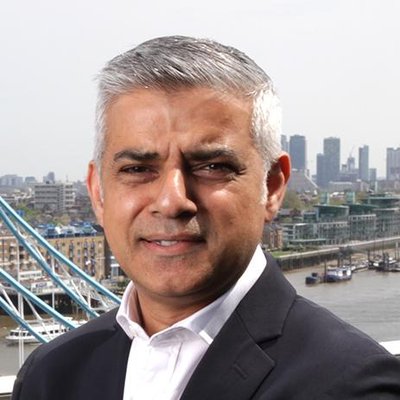
  • Sadiq Khan – 2022 Comments on Affordable Homes in London

    Sadiq Khan – 2022 Comments on Affordable Homes in London

    The comments made by Sadiq Khan, the Mayor of London, on 13 May 2022.

    I am delighted to be able to announce that record-breaking numbers of genuinely affordable homes are being built in London. Fixing the housing crisis is an enormous challenge, but these latest figures show that even in the face of the pandemic, Brexit and soaring construction costs, we are continuing to turn the tide.

    I would like to thank councils, housing associations and the wider London housing sector for their work in helping us to continue building a better, more affordable London for everyone.

    We have once again exceeded our annual targets, but we still have a mountain to climb. I urge the Government to recognise the progress we are making in London and to provide the additional funding for housing we need to go even further and faster.

  • Boris Johnson – 2022 Statement on the Death of Sheikh Khalifa bin Zayed Al Nahyan

    Boris Johnson – 2022 Statement on the Death of Sheikh Khalifa bin Zayed Al Nahyan

    The statement made by Boris Johnson, the Prime Minister, on 14 May 2022.

    I am deeply saddened to hear of the death of His Highness Sheikh Khalifa bin Zayed Al Nahyan, President of the United Arab Emirates and ruler of Abu Dhabi.

    He was a wise and respected leader who will be missed enormously. Through his work as President and Sheikh he has made a personal contribution to regional stability and conservation which will long be remembered. I know that the long and deep ties, which unite our countries, will continue and through our cooperation and friendship, we can ensure peace, prosperity and justice in the world.

    I would like to offer my sincere condolences to the people of the United Arab Emirates.

  • G7 – 2022 Joint Statement on Russia’s War Against Ukraine

    G7 – 2022 Joint Statement on Russia’s War Against Ukraine

    The joint statement made by the G7 Foreign Ministers on 14 May 2022.

    We, the G7 Foreign Ministers of Canada, France, Germany, Italy, Japan, the United Kingdom, the United States of America, and the High Representative of the European Union, are steadfast in our solidarity with and our support for Ukraine as it defends itself against Russia’s unjustifiable, unprovoked and illegal war of aggression, a war in which Belarus is complicit. We are committed to helping Ukraine, a democracy and a UN member, uphold its sovereignty and territorial integrity, to defend itself and resist future attacks or coercion, choose its own future and prosper.

    In the presence of the Foreign Ministers of Ukraine and Moldova, we underscore Ukraine’s sovereignty, territorial integrity, independence and right for self-defence under the UN Charter. This war of aggression has reaffirmed our determination to reject outright attempts to redraw borders by force in violation of sovereignty and territorial integrity.

    We are providing significant humanitarian assistance to Ukraine and its neighbours to meet urgent protection and other lifesaving needs. We continue to make substantial financial and economic support available to Ukraine to strengthen the resilience of its economy. We reaffirm our commitment to support Ukraine, including in the reconstruction of the country, and call on all partners to join our efforts to ensure support for Ukraine in meeting its immediate humanitarian and financial needs and for Ukraine to rebuild its future. We will pursue our ongoing military and defense assistance to Ukraine as long as necessary.

    We reiterate our demand that Russia put an end to the war it started unprovoked and to end the tragic suffering and loss of life it continues to cause. We also continue to call on Belarus to stop enabling Russia’s aggression and to abide by its international obligations. We urge full compliance with international humanitarian law, allowing and facilitating rapid, safe and unimpeded humanitarian access as well as the humanitarian evacuation of civilians safeguarding evacuees’ freedom to choose their destination. We call on Russia to immediately comply with the legally binding order of the International Court of Justice of 16 March 2022 and to abide by the relevant resolutions of the UN General Assembly and stop its military aggression – to cease fire, and immediately and unconditionally withdraw its troops from the entire territory of Ukraine within its internationally recognised borders.

    Russia has violated the UN Charter, undermined the fundamental principles of the European security architecture as enshrined in the Helsinki Final Act and the Charter of Paris and will have to face consequences for its actions. We reject any notion of spheres of influence and any use of force that is not in compliance with international law. We will never recognize borders Russia has attempted to change by military aggression, and will uphold our engagement in the support of the sovereignty and territorial integrity of Ukraine, including Crimea, and all states. We condemn as irresponsible threats of use of chemical, biological or nuclear weapons or related materials by Russia and reiterate that any use of such weapons would be met with severe consequences.

    Russia’s war of aggression against Ukraine as well as its unilateral actions restraining Ukrainian agricultural exports, are leading to steep price rises in commodity markets and the threats we are now seeing to global food security. As global markets suffer from Russia’s war of choice by rising food and commodity prices, thus affecting the lives of people around the world and exacerbating existing humanitarian and protection needs, we are determined to contribute additional resources to and support all relevant efforts that aim to ensure availability and accessibility of food, energy and financial resources as well as basic commodities for all. We call on Russia to cease immediately its attacks on key transport infrastructure in Ukraine, including ports, so that they can be used for exporting Ukrainian agricultural products. We will address the causes and consequences of the global food crisis through a Global Alliance for Food Security, that is to be launched officially at the G7 Development Ministers meeting, and other efforts in close cooperation with international partners and organisations beyond the G7. We will closely cooperate with international parters and organisations beyond the G7, and, with the aim of transforming political commitments into concrete actions as planned by various international initiatives such as the Food and Agricultural Resilience Mission (FARM) and key regional outreach initiatives, including towards African and Mediterranean countries.

    We underscore that our sanctions and export controls against Russia do not and will not target essential exports of food and agricultural inputs to developing countries and to this end include measures to avoid any negative consequences for the production and distribution of food. We reaffirm our commitment to protect the most vulnerable countries and people suffering from Russia’s war against Ukraine and its global repercussions.

    We condemn and will systematically expose Russia’s policy of information manipulation and interference, including disinformation which it employs to justify and support its war of aggression against Ukraine and which deliberately aims at manipulating public opinions domestically and worldwide with a view to covering its responsibilities in the ongoing war. We will continue to work together to address this manipulative behavior, in particular within the G7 Rapid Response Mechanism, and promote the exercise of freedom of opinion and expression and access to reliable information from free, pluralistic and independent media, notably on the war and its consequences for the world.

    We stand united against Russia’s violation of the UN Charter and other fundamental principles of international law. We condemn in the strongest terms the ongoing attacks killing and wounding civilians and non-combatants, the systematic targeting of critical infrastructure and the extensive harm to healthcare personnel and facilities, as well as conflict-related sexual and gender-based violence in Ukraine. We will continue to support the ongoing investigations into violations of international law, including violations of international humanitarian law, and human rights violations and potential war crimes and crimes against humanity committed in Ukraine. We support investigations by the Prosecutor of the International Criminal Court, the Prosecutor-General of Ukraine, and other national prosecutors who are able to establish jurisdiction under national law. Further, we fully support the Commission of Inquiry mandated by the UN Human Rights Council, the UN Human Rights Monitoring Mission in Ukraine and efforts of civil society organizations to investigate violations and document potential war crimes. We commit to providing investigative support, technical expertise, funding and other assistance to work towards ensuring the accountability of those who are responsible for the atrocities and crimes committed.

    A number of countries have shown solidarity and provided safe haven for those who have fled from Russia’s war of aggression. We particularly commend Moldova’s remarkable efforts in hosting so many refugees, both in relative and absolute terms. Through the Moldova Support Platform launched in Berlin on 5 April and other formats, we will support Moldova to meet short-term needs and its longer-term development and reform programme. We express our concern regarding the recent attempts to destabilise the Transnistrian region and emphasize our support to Moldova’s stability, sovereignty and territorial integrity.

    We reaffirm our determination to further increase economic and political pressure on Russia, continuing to act in unity. We will do so, as underlined by G7 Leaders on 8 May, by imposing coordinated further restrictive measures on Russia‘s economy and financial system; by further targeting Russian elites including economic actors, the central government institutions and the military, that enable President Putin to lead his war of choice; and by isolating Russia from our economies, the international financial system, and within global institutions. We will broaden our sanctions measures to include sectors on which Russia has a particular dependence.

    We commend partners that have aligned with us, and encourage others to adopt measures to increase the cost of the war for Russia by isolating it, and Belarus for its support, from the global economy, and to prevent sanctions evasion, circumvention and backfilling. We will listen to and work with partners around the world through increased outreach to mitigate any impacts to their own economies caused by Putin’s war, and pledge our support in mitigating the costs.

    We will expedite our efforts to reduce and end reliance on Russian energy supplies as quickly as possible, building on G7 commitments to phase out or ban imports of Russian coal and oil. We will accelerate the energy transition and enhance energy efficiency in the context of the accelerated phasing out of our dependency on Russian energy, in accordance with our climate objectives and energy security imperatives, thereby steadily reducing foreign currency flows into Russia and restricting the financial means available to fund Russia’s war machinery. We will ensure that we do so in a timely and orderly fashion, and in ways that provide time for the world to secure alternative supplies.

    We deplore the domestic repressions in Russia and Belarus against independent media, civil society, the opposition and citizens who peacefully express their disapproval of Russia’s war against Ukraine. The Russians and Belarusians deserve better: They should be able to make full use of fundamental human rights, most basically the right to decide their own fate and the fate of their countries. We, the G7, are not at war with Russia or the Russian people. The Russian decision to attack Ukraine was taken by leaders who reject democratic responsibility. We lend our support to those who have fallen victim to repression. We reaffirm the right of Russians and Belarusians to seek, receive and impart fact-based information from free, pluralistic and independent media and condemn the Russian government’s and Belarusian regime’s recourse to censorship and other methods of hampering Russians’ and Belarusians’ access to independent media, including through restrictions on access to the internet and social media platforms.

    We condemn actions perpetrated by Russia, which compromise the safety and security of nuclear material and facilities in Ukraine and consequently pose serious risks to human life and the environment. We underline our full support for the efforts of the IAEA and its Director-General to ensure the nuclear safety and security of, and the application of safeguards to, nuclear material and facilities in Ukraine. We call on Russia to immediately withdraw its forces from Ukraine’s nuclear facilities and to return full control to legitimate Ukrainian authorities. We reiterate that the IAEA must be able to access all nuclear facilities in Ukraine safely and without any impediments.

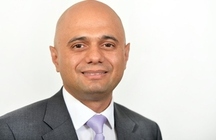
  • Sajid Javid – 2022 Comments on Freezing Prescription Charges

    Sajid Javid – 2022 Comments on Freezing Prescription Charges

    The comments made by Sajid Javid, the Secretary of State for Health and Social Care, on 15 May 2022.

    The rise in the cost of living has been unavoidable as we face global challenges and the repercussions of Putin’s illegal war in Ukraine. Whilst we can’t completely prevent these rises, where we can help – we absolutely will. This is why I am freezing prescription charges to help ease some of these pressures and put money back in people’s pockets.

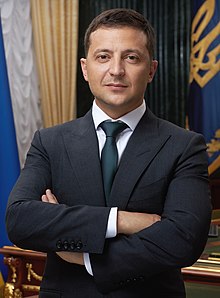
  • Volodymyr Zelenskyy – Speech to G7 Leaders

    Volodymyr Zelenskyy – Speech to G7 Leaders

    The speech made by Volodymyr Zelenskyy, the President of Ukraine, on 8 May 2022.

    I would like to thank you for the invitation. Mr. Chancellor, thank you.

    I am thankful to all the respected leaders for this opportunity and for the fact that it is happening today, on this day exactly. This is a powerful support for our state.

    Dear friends!

    We are meeting on this day in such a format to determine what needs to be done to stop Russia’s war against Ukraine.

    Today, May 8, is a key day of remembrance for all the victims of World War II, for the fragility of peace and the inadmissibility of any anti-humanist regimes. But what is remembrance for others today, for our people is, unfortunately, just news, every day.

    Just yesterday in the village of Bilohorivka, Luhansk region, a Russian bomb killed 60 people. Civilians. They were hiding from shelling in the building of a regular school, which was attacked by a Russian air strike.

    To do so is to imitate precisely the evil that the Nazis brought to Europe. The missile strikes at Odesa and our other cities are an imitation of how the Nazis tried to bomb and destroy European cities by bombardment.

    The deportation of more than 500,000 Ukrainians to Russia and the so-called “filtration camps” set up by Russian troops in the occupied territories of Ukraine are imitations of the deportations and concentration camps that the Nazis organized in Europe.

    Every day our people see and die from what must have been left in the distant past. What definitely shouldn’t have returned to Europe 77 years after.

    But, unfortunately, I state: it’s back. That is why the solidarity of the whole free world has returned. That is why such historical concepts as “Lend-Lease” and “Marshall Plan” have returned. I am grateful to the United States and our European colleagues for these initiatives. That is why we are reunited in an anti-war coalition to save democracy and freedom in Europe, to guarantee peace and security. I am grateful to you for this solidarity and for this unification.

    But what do we need now to gain victory in defending freedom? Freedom of Ukraine and the whole world?

    First of all, weapons.

    I am grateful to you for the defensive assistance we have already received. Because, as in World War II, the fate of freedom is decided on the battlefield. So Ukraine must get all the weapons and all the defense equipment that will help defeat tyranny. In particular, the M142 HIMARS, M270 MLRS and other weapons that Ukraine has requested from your powerful states.

    If we had them, we would have been able to save many people. In all those cities, in all those communities that fell victim to the Russian occupiers, like Bilohorivka, which I mentioned at the beginning, or Mariupol.

    The second is sanctions.

    Ukraine will always be grateful to you for unprecedented sanctions in the interests of peace. But the war still continues. Hence, a special international group of experts chaired by Michael McFaul and Andriy Yermak has developed an Action Plan to strengthen sanctions on Russia for this war. It is necessary – I beg you – to implement these sanctions and at least give your feedback.

    No export-import operations with Russia! As long as Russia is spending the money it has earned on destroying freedom in Ukraine and throughout Europe. The democratic world must be principled in defending itself.

    We need to look for ways to influence those politicians and those companies that help Russia circumvent sanctions. For example, we transport oil to Hungary through our pipeline. And the politicians of this country not only block the supply of fuel to our territory, but also try to slow down every sanction step against Russia, including the oil embargo. The free world must not allow itself to be manipulated.

    Also, all Russian officials, law enforcement officials and, importantly, judges who work for tyranny must be on the sanctions list. They are not there yet.

    Every Russian war criminal must be brought to justice and convicted through international cooperation.

    Visa restrictions are also needed for Russian citizens so that they do not use the free world for entertainment and shopping. Everyone must fight against tyranny, not adapt to it.

    The third important point is financial support for Ukraine now and post-war reconstruction.

    Just as the Marshall Plan played a historic role in rebuilding Europe and creating new conditions for development and growth after World War II, a similar Plan is needed and it is needed now. For the world to see that freedom wins not only on the battlefield, but also in life.

    As long as the war continues, we need $ 5 billion to $ 7 billion a month in support. When the war is over, we will have to rebuild everything destroyed by Russia for a sum exceeding $ 600 billion.

    This is a lot for our state. This is not possible for Ukraine. But this is possible for you. And it’s not just expenditures for you.

    Financial assistance to Ukraine and assistance with post-war reconstruction is the prevention of much greater losses of the free world in the future.

    Russia wants to move on to Europe, and all the potential aggressors in the world, who also want to ruin the lives of their neighbors, are looking to see if Russia succeeds now and if they are able to repeat it.

    We must organize the work on the reconstruction of Ukraine after the war so that the best experience of democratic countries can be applied with maximum efficiency.

    In particular, we invite the friends of Ukraine to join the reconstruction, taking patronage over the regions, cities or industries in our country that have suffered from the war, that are destroyed. For example, the United Kingdom has already been invited to take patronage over the restoration of the de-occupied Kyiv region.

    And today, given Germany’s presidency in the G7, I propose to apply the format of cooperation that has shown its effectiveness in the unification of the German state.

    When it is clearly set who is involved in the restoration and reintegration of the normal life of each region, each city, each community it guarantees efficiency.

    Such cooperation will strengthen economic and technological ties in Europe and will benefit not only our country, but also your countries, your regions and your companies.

    I am also grateful to the European Union and the United Kingdom for their decision to abolish tariffs and quotas on our trade. This is a powerful step in support of our state and freedom in general. And this is the decision that would be fair to expect from our other partners.

    I appeal to all participants of the G7. It is time to remove bilateral barriers in trade.

    Everything I have said now is, in fact, elements of one question.

    The question is how long this war will last and how much destruction, how many victims Ukraine will suffer.

    We must do everything we can to end the war as soon as possible with the victory of freedom. For the longer the war, the greater the benefits of tyranny and the greater the loss of freedom. And not only in Ukraine, but throughout Europe.

    The lives of more than ten million people in Ukraine who have become IDPs have already been destroyed. But the world is also on the verge of a food crisis because of Russia’s actions. The Chancellor also spoke about this now. So how many more millions of lives will be lost in dozens of countries in Africa and Asia as a result of food shortages and political chaos that will follow rising food prices?

    We need an effective tool for the world’s food security. And we propose to create it.

    If we have an Organization of grain exporting countries that respect international law, value democracy and strive to protect human rights, including the right to life and guaranteed well-being, we will be able to provide food stability and a historic victory over famine.

    Ukraine is ready to present all the details of this proposal at the appropriate working level.

    Friends!

    I commend the efforts of each of you. I am grateful to each of you for the weapons, sanctions and support. But I’m sure you realize that we need more weapons, more sanctions, more support to guarantee the protection of freedom. And to fix security for decades by concluding a relevant effective agreement with clear guarantees for Ukraine.

    I offer your states – the world’s largest democracies – to become guarantors of security for Ukraine. Because this is what guarantees security for the whole center and east of Europe. Therefore, guarantees the confidence of your people that freedom always wins.

    Thanks again to every country, to every leader present.

    Thank you for your attention!

    Glory to Ukraine!

  • Volodymyr Zelenskyy – 2022 Speech to National Council of the Slovak Republic

    Volodymyr Zelenskyy – 2022 Speech to National Council of the Slovak Republic

    The speech made by Volodymyr Zelenskyy, the President of Ukraine, on 10 May 2022.

    Dear Mr. Speaker of the National Council!

    Dear Mr. Prime Minister!

    Dear parliamentarians!

    Dear journalists!

    Dear Slovak people!

    Pozdravujem Vás s Kyjiva!

    It is an honor for me to address you today. And I want to start with words of gratitude for all the help that Slovakia has given to Ukraine. We greatly appreciate your defense support. And your determination in this support, which proves that you realize that freedom without force is just a fantasy and nothing more.

    It would be good if some other countries in Europe and the world learn this from you.

    We appreciate your solidarity with Ukraine at the level of the European Union. This was the case before February 24, when Russia launched a full-scale war and so it is now.

    Last year, we, with your President, Ms. Zuzana Čaputová, signed a Declaration of Recognition of the European Perspective of Ukraine. The significance of that step has now only grown stronger.

    Russia’s war against our state is not only an attempt to seize our land, subdue our people and erase Ukrainian identity.

    Russia went to war in fact against all of united Europe, starting with Ukraine. This war is actually being waged by Russia against each of the states that want to live freely and choose their own future. That want to choose which unions to be in, who to be friends with and how to trade.

    This war is against the very project of a common alliance based on common values on our continent.

    What are these values? Respect for life, human rights, inviolability of borders and freedom.

    The Prime Minister of Slovakia, Mr. Eduard Heger, was one of our first foreign friends to visit the suburbs of Kyiv and see with his own eyes what the Russian occupiers have done there.

    Last week, Bucha and Borodyanka were also visited by your colleagues from the Slovak Parliament. They also saw with their own eyes what evil Russia is carrying.

    Thousands of crimes by Russian occupiers against civilians have been recorded in the Kyiv region alone.

    Murders, torture, abductions, looting and robberies have been reported. It is recorded that the occupiers tried to destroy everything that is connected not only with the Ukrainian national idea, but also simply with culture.

    What is the point of shelling and destroying schools in the area where the occupiers entered? They even destroyed schools! What does this mean? That we are at the epicenter of the confrontation of two ideas: the European democratic idea that the freedom and life of everyone matters and the cruel tyrannical idea that only a person who can subdue other people matters.

    That’s what we need to stop together. Everyone in Europe. Because if we don’t stop it, Russian troops will repeat the crimes they committed in Bucha and Borodyanka on the land of every state they can reach, in particular on the territory of your state.

    So the first and foremost tool to win this confrontation is weapons. And I can say on behalf of all our people that Ukrainians will always remember how Slovakia gave our country at a crucial time what really helped us. And there is potential to continue this cooperation, in particular, in the issue of aviation – aircraft, helicopters.

    You know, our flag, which is now very often seen by all Europeans in their cities – I am grateful to them – it reflects our fertile land – fields of yellow wheat. And also our beautiful blue sky. We have people to defend our land. But in the skies we need more support, including yours.

    The second tool is sanctions against Russia. Together with the use of effective weapons by our Armed Forces, sanctions create a truly reliable protection for the European idea.

    Because if the source of aggression weakens, life becomes more secure for everyone in Europe.

    The European Union is now agreeing on the sixth package of sanctions against Russia. And this is the required package, including the energy restrictions that are provided for in it. I understand that this is a challenge for you and some other countries. For Slovakia, the issue of Russian oil and the possibility of its replacement is not a matter of immediate action. We understand everything.

    But I want to give you, as our friends, one Ukrainian example. To make you better understand us.

    For a long time, Russian politicians have been fighting for the supply of Russian gas to Ukraine.

    They offered various supposedly profitable options – completely non-market, cheap and convenient, especially for Moscow. They offered to get a political decision from us about a larger volume of supplies and an easier scheme of payment for Russian gas.

    Not so long ago, Ukraine was one of the biggest sales destinations for Gazprom. What did it lead to?

    Ukraine depended not only on Russian gas, but also on Russian political decisions. And any attempt to move at least to market conditions in supply ended in gas wars, and ultimately in a bonded gas agreement, which posed a direct threat to our sovereignty.

    Ukrainian politicians have also been playing for a long time with the issue of placing the Russian Black Sea Fleet on the territory of Ukraine – in our Crimea.

    In particular, they talked about the conditions of the so-called lease for the fleet, linking the gas issue to this. It seems that there may be some benefit to the state from the feigned discount on Russian gas when the Russian fleet remains on Ukrainian territory.

    While this fleet was just a cover to capture a territory. An umbrella for issuing passports to our people by Russia – our people in Crimea. For propaganda and creeping annexation, which could only be completed by the invasion, and it happened in 2014.

    That’s what happened in our history. And this is what I advise all our friends, who may become at least one percent more politically dependent on Russia, to avoid.

    We were the first to see Russia breaking agreements when it simply stopped liking them. We saw Russia turn commercial ties into a chain to keep another state close to it.

    The Russian Black Sea Fleet was used to capture Crimea. And now it is blocking the sea for us and firing missiles at our peaceful cities.

    Well, Russia is trying to use gas now to have the entire European continent obedient.


    Ladies and Gentlemen!

    Dear Slovak people!

    Ukraine has gone through the mistakes that our friends can learn. Russian energy is not just a commodity. It should be abandoned, especially oil, because it’s really a question of freedom. Yes, protecting freedom has a price.

    And the third aspect I would like to talk about today. This is the future of the European Union. Russia’s attempts to blackmail, split and weaken Europeans clearly show that all of us on the continent must respond with even greater unity. Even greater integration. Even with greater joint protection of our values. This is an important element of the very force that makes freedom not just a fantasy.

    Even more unity in Europe is possible only in one case – if Ukraine right now, in the conditions of war, gets a real opportunity to move faster to the European Union.

    The issue of granting EU membership candidate status to Ukraine in June this year is a matter of protecting the entire European project.

    As well as the issue of economic support for Ukraine. It is impossible to fight without the economy. And Russia is doing everything to destroy our economy. As an example, most of the Russian missiles that hit Ukrainian land hit the economic infrastructure.

    Therefore, the priority is to establish alternative routes for our exports, in particular, through the territory of Slovakia. And greater financial support for Ukraine from the European Union.

    And I ask you to be our voice in the European Union when it comes to defending the relevant positions from the destructive doubts of those who value freedom less than you.

    After more than two months of the full-scale war, Ukrainians, together with all our friends on the European continent who have shown solidarity in defending freedom, have proved that Moscow will never be able to repeat what it did in 1968 and all other attempts to spread tyranny.

    By the way, this is how I interpret the decision to award me your State Award of Alexander Dubček. I am grateful for it.

    But to really fully respond to the mockery of freedom then, in 1968, and to the attempts to mock freedom now, we still have to fight.

    We must strengthen our unity and put pressure on Russia until we see that victory has been achieved.

    I know that a donors’ conference will be held in Bratislava in June to activate assistance for Ukraine.

    I am grateful to everyone who participates in its organization, including the GLOBSEC think tank. And I believe that we will be able to discuss specific projects to restore normal life in different regions of Ukraine at this Bratislava site.

    Because the more actively we cooperate, the more we put pressure on Russia. And the more we strengthen European unity, the clearer the contours of our victory are.

    Our victory.

    Thank you, Slovakia!

    Glory to Ukraine!