Blog

  • Sarah Olney – 2022 Speech on Achieving Economic Growth

    Sarah Olney – 2022 Speech on Achieving Economic Growth

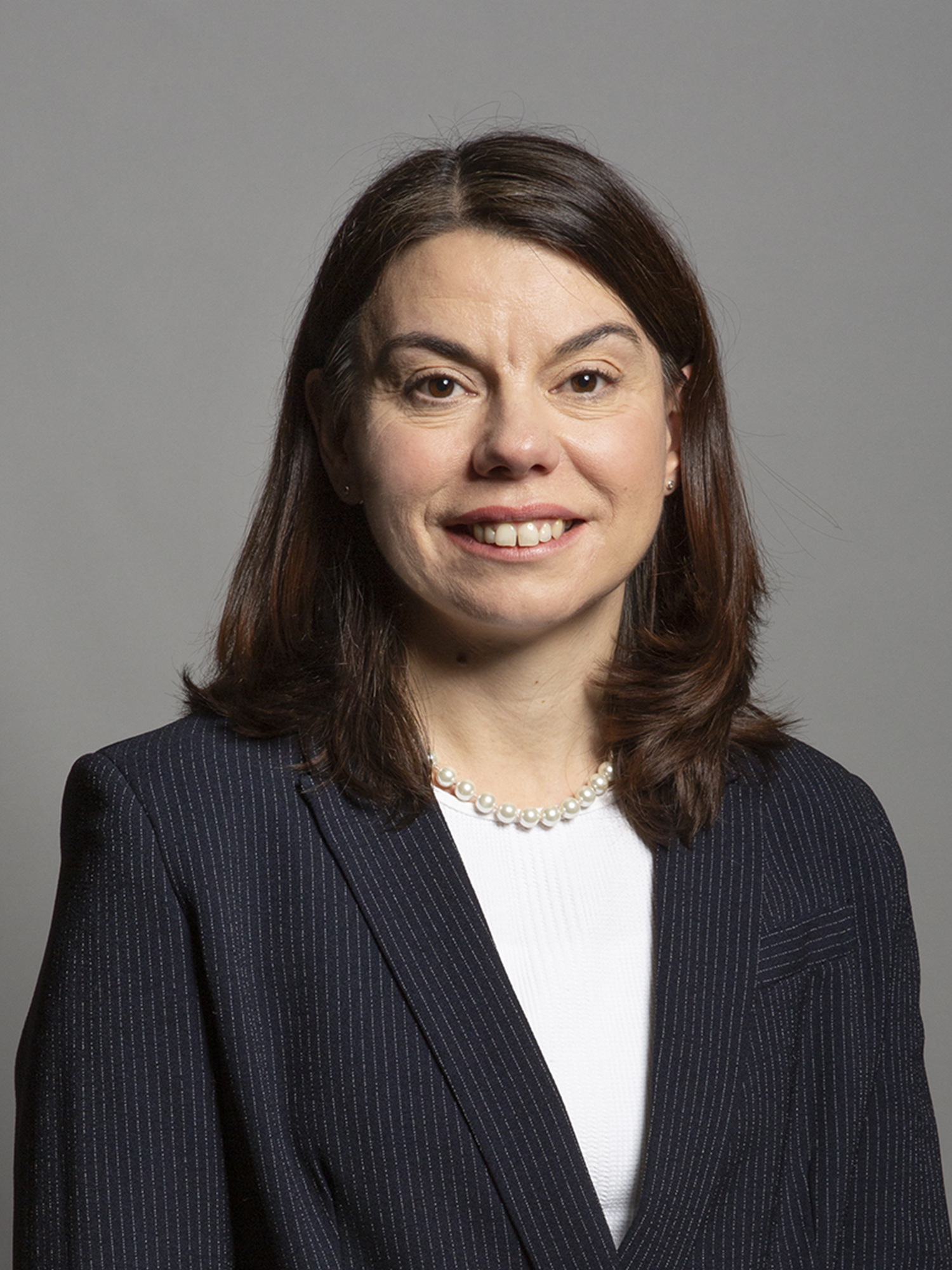
    The speech made by Sarah Olney, the Liberal Democrat MP for Richmond Park, in the House of Commons on 18 May 2022.

    It is a pleasure to speak in this Queen’s Speech debate, just as it was a pleasure to see Her Majesty yesterday at the opening of the Elizabeth line, our new railway line through London. As the right hon. Member for Ashford (Damian Green) has mentioned, it has overrun on both time and budget, but the small upside is that Her Majesty got to open the line that bears her name during her jubilee celebrations.

    The line itself, with its innovation and infrastructure, the opportunity it has provided for thousands of young people to develop their skills and the level of ambition it shows for economic growth in this country, is actually a much better tribute to Her Majesty than the speech delivered in Parliament in her name last week. We are here today to talk about how that speech achieves economic growth, and I am afraid to say that there was really very little in it at all. I think we all know and accept that economic growth, particularly at this time, is absolutely vital to support not just our small and medium-sized businesses, but all the organisations that support employment and entrepreneurship across this country.

    Yesterday, we saw the unemployment figures at their lowest levels since 1974. Conservative Members, not least the Prime Minister earlier today, have highlighted that that is a good thing, which it undoubtedly is. However, we also saw that, for the first time ever, there are more vacancies across the UK economy than there are people looking for work. I think we have to look at the serious implications of that, because it is going to be a real brake on growth. If we cannot fill those vacancies and businesses cannot get people into the skilled jobs they need to push forward, grow, create opportunities and provide economic growth, that is really going to hold this country back. So it is quite a serious issue as well as being some cause for celebration, as some people have said.

    One thing to highlight—everyone has been saying this—is that we are now facing 9% inflation. That means wage growth, but greater wage growth acceleration in the private sector than in the public sector, as I am seeing in my constituency. I was on a visit to Kingston Hospital the other day, and I was told that its biggest issue right now is being able to discharge patients out of hospital and back home. However, it cannot discharge patients because it cannot get them care packages, and it cannot get them care packages because people do not want to work in care for very low wages when they can get better wages working in hospitality or retail. So we need to concede that there is perhaps a dark side, as it were, to the unemployment figures, and that is really going to inhibit growth.

    Another thing we are beginning to see is that we are not trading to the extent of some of our partners across the world. According to the OBR, the UK has become a less trade-intensive economy. By the fourth quarter of 2021, UK exports remained around 12% below pre-pandemic levels, and trade as a share of GDP has fallen by around 12% since 2019—2.5% more than any other country in the G7. The Government pledged in the Queen’s Speech to

    “continue to champion international trade, delivering jobs across the country and growing the economy”,

    yet trade is declining and there is no determined plan for growth. They have talked about their free trade agreements with Australia and New Zealand, but we have highlighted on several occasions the potentially negative impact that they will have on British farming, and I do not think that the British Government are really listening to the concerns of farmers on this issue.

    In my constituency of Richmond Park, businesses are telling me about the multiple barriers they face to trade that are having a direct negative impact on their ability to grow. A very successful and popular restaurant in Richmond town centre called Don Fernando’s has closed after 32 years because of myriad issues, not least the high cost of importing the food and drink from Spain on which it relied to deliver its high-quality Spanish cuisine. A drinks company has had complications with customs checks, with a complete lack of support or advice from HMRC, which left its goods in quarantine for almost three months. Obviously, any kind of food and drinks trader cannot operate when facing such delays and with fresh food or drinks being kept for that length of time. The Government really need to get on board with some of the issues being thrown up by Brexit red tape and customs checks, and they really need to work hard to unlock some of these problems if they want to support our small and medium-sized enterprises.

    I want to highlight my disappointment that there was not more in the Queen’s Speech about insulation. We have talked a lot today about fuel prices, and that is a very real anxiety for many households across the country. We all know that one way of tackling that is to get to grips with some of our very poor housing stock, which obviously our low-income families are particularly impacted by. We need to see a great deal more from this Government to support households, particularly social housing tenants and their housing providers, to improve insulation and so improve energy efficiency in our housing. If we really got to grips with that now and launched a big drive right across the country, particularly for low-income families, think of the difference we could make when those fuel bills really begin to rack up in the autumn and winter. We could do that if we were really serious about it.

    This is about not just the fuel bills our constituents are facing now and are dreading in the winter, but the Government’s net zero commitment, because we want to reduce carbon emissions and households are a serious contributor to them. We really need to get to grips with that issue if we are to meet our net zero commitments. I was interested to find that there are 1,690 installer businesses that meet the requirements to participate in Government schemes. There is such a great opportunity here for improving innovation, entrepreneurship and skills training right across the country, and the Government need to put some serious money and some serious thought into that as soon as they possibly can.

    Finally, like other Members, I really welcome the mental health Bill, but I want to see a lot more from the Government to recognise the scale of the issue. The No. 1 problem in my constituency is access to health services of all kinds, and I am hearing concerns from constituents about dentistry, surgical procedures and GP appointments, but my experience is that the most critical issue is access to mental health services. The impact on our children of the pandemic and lockdown has been profound, and we are failing them if we do not get to grips with that impact. That impact is felt by our very youngest citizens, who were deprived of some of their early years of schooling and have so much socialisation and learning in a classroom to catch up on, and who face separation anxiety from their parents, as well as our teens and young adults, who have spent some of their critical socialising years in their bedrooms and are finding it difficult to reconnect with everyday society, especially as they move from school to whatever they are moving on to. They are finding it hard to move to university, training, further education or employment because they have missed out on some of that critical development.

    I want to see the Government do a great deal more. I have multiple cases of constituents waiting for treatment. I have a young girl aged just 12 who was referred to children and adolescent mental health services in March 2021. Thirteen months later, she is still awaiting treatment. Her parents are absolutely desperate. She has been hospitalised twice and repeatedly sent home from school due to suicide attempts. Schools are under increased pressure and are struggling to cope with complex mental health needs and the sharp rise in those presenting higher levels of risk. The Liberal Democrats are calling for a dedicated qualified mental health professional in every school to provide first-level support for young people and also to help teachers struggling to deal with this issue.

    There are multiple ways in which we need to respond to the challenges of our current economy and society, and I am afraid to say that the Queen’s Speech has failed in all these things. I urge the Government to do more on these issues.

  • Harriett Baldwin – 2022 Speech on Achieving Economic Growth

    Harriett Baldwin – 2022 Speech on Achieving Economic Growth

    The speech made by Harriett Baldwin, the Conservative MP for West Worcestershire, in the House of Commons on 18 May 2022.

    It was interesting to listen to the hon. Member for Rhondda (Chris Bryant). Although I will not be joining him in the Lobby this evening to vote down the entirety of the Queen’s Speech, including the economic crime and corporate transparency Bill, which is what he is choosing to do, I will say that he made his points forcefully and well. However, I endorse the Chief Secretary’s comments when he ran through the range of important Bills that are included in the Queen’s Speech.

    We were all shocked and taken aback today by the headline rate of inflation reaching 9%. It is a sobering moment, which many hon. Members have noted, so I start by saying that I think our Chancellor has been an unlucky Chancellor. He has had to face a pandemic, he has had to face war, and now, due to the consequences of that evil war, he has to face the inflation that is harming everyone in the United Kingdom in their pocket. None the less, I believe I am right in saying that my constituents feel very lucky that they have had this Chancellor throughout these difficult challenges, because he was so quick to provide help during the pandemic. The furlough scheme, the small business income support scheme and the culture recovery fund, to name just three, were gratefully received by constituents during the pandemic, and it is thanks to his plan for jobs that yesterday we saw the foundation of what we all want to achieve through economic growth: quite remarkably low unemployment in this country—the lowest since 1974.

    There were other remarkable things in yesterday’s jobs announcements, such as a record high number of vacancies. I think I am right in saying that it is the first time the number of vacancies has exceeded the number of jobseekers in this country. The plan for jobs has worked well, as has the help the Chancellor gave throughout the pandemic, so today, as we face this high inflation rate, we are in a position to say that we have a strong job market.

    It is also worth noting that this month marks the 25th anniversary of the independence of the Bank of England. I will strike a consensual note by saying that that was a really good policy decision. We must all reiterate the importance not only of the Bank of England’s independence, but of its achieving the 2% inflation mandate. It is incredibly important to our constituents that we have low inflation to form the foundation for achieving economic growth.

    It might surprise Opposition Members to hear this, but I think a windfall tax—

    Stephen Kinnock (Aberavon) (Lab)

    Is a great idea.

    Harriett Baldwin

    Well, I think a windfall tax that helps the lowest-income households is the right approach, and that is the approach that the Government are already following. There is already a windfall tax on the oil and gas sector: whereas most corporations in this country pay 19% corporation tax, those in the oil and gas sector pay 30% corporation tax and 10% windfall tax on top of that. There has been a windfall to the Chancellor from the price of oil and gas having risen so much, and he has rightly spent that windfall on people in the lowest-income households. Just this week, people in council tax bands A to D in my constituency will receive a £150 cash grant in their bank accounts. In a couple of months’ time, in July, there will be a hike in the national insurance threshold that will put a further £330 a year into the pockets of those who pay national insurance. We have also heard about the £200 to smooth the impact on household bills.

    I would urge every pensioner in this country on a low income to check whether they are entitled to pension credit. There are 850,000 pensioners in this country who are not claiming the pension credit they are entitled to. Can we all agree that we should encourage our constituents to claim that? It not only gives them extra cash, but means they get other benefits. There is the household support fund, which has been doubled to £1 billion. I would direct any of my constituents struggling with bills who reach out to me to ask about that fund. There is also the warm home discount, which has been increased and its eligibility has been widened. These measures are important and targeted at the lowest-income households, unlike a 5% across-the-board cut in VAT on fuel bills that would most benefit those who live in the biggest houses.

    In conclusion, it does not matter how much bad luck the world has thrown at us—I think the Chancellor has been unlucky—because by doing the right thing, we can make the luck that will be a strong foundation for achieving economic growth.

  • Chris Bryant – 2022 Speech on Achieving Economic Growth

    Chris Bryant – 2022 Speech on Achieving Economic Growth

    The speech made by Chris Bryant, the Labour MP for Rhondda, in the House of Commons on 18 May 2022.

    Five thousand one hundred and fifty-six people were admitted to hospital between September last year and February this year with malnutrition in England alone. That is more than in the whole of 2010. The number of people being admitted with scurvy has doubled in the past 10 years, and we are meant to be the sixth, or sometimes the fifth, wealthiest country in the world. We have inflation running at 9%, and for the poorest families it is at 10.9%, because more of their money is spent on food and on energy, where inflation is higher. They are getting a rougher deal than anybody else. That is my constituents.

    The Government answer so far is £200. They call it a gift, but it is not; it is a loan. It actually puts up next year’s bills by even more. We also have the more than £1,000 cut from universal credit. The hon. Member for Harwich and North Essex (Sir Bernard Jenkin) is absolutely right: of course we should be restoring the £20 a week on universal credit, and we have to do more for pensioners who are on fixed incomes as well.

    The Government have said, “Get a better paid job”—oh yes, it is easy, isn’t it, just getting a better paid job—or they have told us, “Get a different job”, or, “Get more hours.” Well, it is just not that simple, especially if someone has caring responsibilities. Incidentally, one of the cheapest deals that the Government get is free carers in the country. The Government say, “Shop more carefully for value brands.” Do Ministers honestly not understand how ordinary people do their shopping every week? That is what they have been doing for ages, and they are not deciding which brand; they are deciding whether to buy anything at all.

    Drive around on a bus all day just so that you do not have to pay the electricity bill—that seemed to be the Prime Minister’s answer just before the local elections. Now his new version is to cut the civil service by 91,000. Well, I guess there will be even fewer people sorting out the Passport Office. I do not know about anybody else’s, but my office is inundated with people saying, “I’ve got to go to a funeral”, or “I’ve got to go to a wedding”, or, “I’ve got a holiday that’s been planned and I won’t get any of the money back if I don’t have my passport by next Thursday, and I put the application in more than three months ago.” I am sorry, but cutting civil servants by 91,000 does not always go well. The one that really amuses me is the Prime Minister’s latest version, which is, “Let them eat foie gras.” We are allowed to have foie gras because apparently it is not Conservative to stop people maltreating animals so as to get a more exciting diet.

    I do not think this is a Gracious Speech. It is so flimsy, it barely counts as a gracious intervention, to be honest. It is so threadbare, it barely covers the Government’s dignity. It is nothing more than a letting out of air. It is a tired sigh, a long yawn, a tedious exhalation, a great big meh of a Queen’s Speech.

    There is no plan, no project, no leadership, no ideas, no programme for Government in here. Some of the so-called Bills are little more than glorified clauses. Great Governments give us really significant legislative programmes—measures such as the Reform Act, the abolition of slavery Act, the NHS Act, the minimum wage Act. What do we get here? The Harbours (Seafarers’ Remuneration) Bill. Of course it is good, but in relation to P&O this is the definition of slamming the door shut after the horse has bolted. Why is there not a proper Bill that would ban fire and rehire in its totality?

    There is a load of “Groundhog Day” Bills that were promised in last year’s Queen’s Speech and we are apparently meant to have completely forgotten, such as the High Speed Rail (Crewe—Manchester) Bill, which was promised last year but never happened, and the Product Security and Telecommunications Infrastructure Bill for 5G, which was also promised last year but never happened. I am really keen on the Bill to counter state threats, because we need to update the laws on espionage in this country, but that too was promised last year and never happened.

    Mark Fletcher (Bolsover) (Con)

    Will the hon. Gentleman give way?

    Chris Bryant

    I will not, because I am looking forward to hearing the hon. Gentleman’s speech later. I am sure it will be absolutely magnificent.

    There is also a mental health Bill that was promised last year and still has not come into being. A long overdue Bill is the Economic Crime and Corporate Transparency Bill. I have been arguing for such a Bill for a long time. In 2018, there was an opportunity to introduce all the measures that I guess we might have by the end of this legislative Session, but Companies House still says on its website, “Companies House does not verify the accuracy of the information filed.” So when we read that Boris Johnson Ltd was dissolved on 5 January 2021, we do not know whether that is true. We might like it to be true, but we do not know whether it is. Nor, for that matter, do we know for sure that Big Boris’s Bouncing Bonanza Ltd was dissolved on 1 February 2022. It is listed on Companies House, but we do not know whether it is true.

    Where is the Bill on seizing assets? It is great that we freeze assets of those who are sanctioned for their participation, involvement or engagement in Putin’s regime, but there is no provision to seize assets, which is what we really need to do and which other countries are doing.

    There are all the twaddle Bills—complete and utter twaddle. My favourite is the Human Rights Bill, which either will be compliant with the European convention on human rights, in which case it is completely and utterly useless, or will not comply with the European convention, in which case it will presage the UK departing both the convention and the Council of Europe and is therefore an act of self-harm.

    Then there is the Northern Ireland protocol Bill. I am really looking forward to the day when someone in the Government finds out who actually signed the Northern Ireland protocol. That is going to be a really good day. This is what I worry about: we have been preaching, quite rightly, to Vladimir Putin and President Xi about abiding by international law, yet barely a few years after we signed up to a treaty, we want to tear it up. The only person who is laughing about all this is President Putin.

    We have the Bill to privatise Channel 4, coming from a Culture Secretary who did not know that Channel 4 does not receive public funds, who did not know that Channel 5 has always been a private body, and who told the Salvation Army magazine The War Cry,

    “I am not an MP for any reason other than because God wants me to be… I am just a conduit for God”.

    I have to say I worry about people like that bringing in legislation.

    I do not think that this Queen’s Speech addresses any of the problems of my constituents. They are choosing between heating and eating, they worry about whether they will be able to pay the rent, they worry about their family—and we still have not addressed any of the issues in the NHS. I had cancer three years ago, and I was told that I probably had less than a year to live. I know how important early diagnosis is. At the beginning of covid, we had a 4.4 million backlog of people waiting for surgery; we now have a 6.1 million backlog, and still I see no answer to how they can get the treatment they need to save their lives. That is why I say this is a meh.

  • Bernard Jenkin – 2022 Speech on Achieving Economic Growth

    Bernard Jenkin – 2022 Speech on Achieving Economic Growth

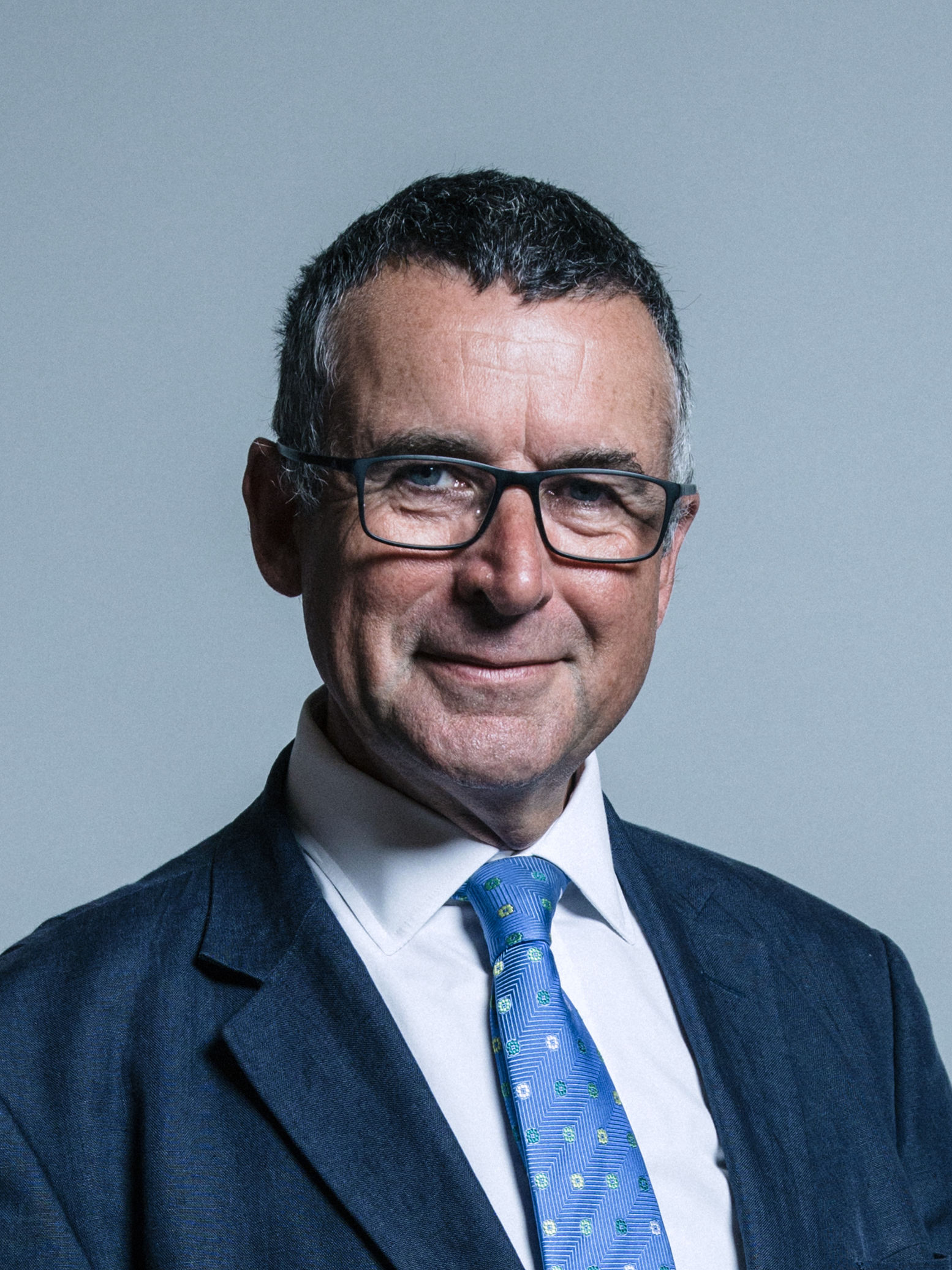
    The speech made by Bernard Jenkin, the Conservative MP for Harwich and North Essex, in the House of Commons on 18 May 2022.

    It is appropriate that I am following the quite passionate speech by the hon. Member for Nottingham East (Nadia Whittome) about the conversion therapy Bill. I broadly welcome the Queen’s Speech and the Government’s legislative programme. I was always in favour of some kind of legislation about conversion therapy, but the more I have looked at the issue, the less and less happy I am that there should be such a Bill, not because I am in favour of conversion therapy, but because I cannot see that legislation is either necessary or desirable. I am ready to be proved wrong, but I can think of no coercive behaviour that it would ban that is not already illegal. This Bill will be used to stoke exactly the kind of bitter disputes about transsexuality that we need to resolve before we legislate next in this field. Again, I am happy to be proved wrong—let us see the Bill—but we could have done with some pre-legislative scrutiny of such a Bill.

    Richard Graham (Gloucester) (Con)

    Although conversion therapy and, indeed, hedgehogs are both fascinating subjects, in terms of achieving economic growth, does my hon. Friend agree that what the Government are doing on levelling-up funds and bringing investment that can act as a catalyst for further investment in great small cities such as Gloucester will help to create jobs, footfall and retail—all the things that people in our country value—in order to have the opportunities to bring about that growth?

    Sir Bernard Jenkin

    I am most grateful to my hon. Friend for that intervention, but we should recognise that these issues of conversion therapy and transsexuality are very important to certain sections of society. They need to be addressed, but we need to be sure that we address them in the right way.

    Geraint Davies

    Will the hon. Gentleman give way?

    Sir Bernard Jenkin

    I will, but I do not want to give way too often because we are not time-limited.

    Geraint Davies

    Some years ago, I brought forward a Bill on the regulation of psychotherapists, which recommended banning conversion therapy. There was a conference that 100 conversion therapists attended, so this is a widespread and abhorrent practice. Does the hon. Gentleman agree that those who say that transsexuality should not be included seem to be those who think that people would go through the process of becoming a transwoman in order to rape another woman? There are a lot of male rapists out there. It seems to be a lot of effort for someone to have their head kicked in by other men. Transgender people should be included in the Bill.

    Sir Bernard Jenkin

    I had not intended to make a great speech about this subject. I note the point that the hon. Gentleman has made and I wish to move on.

    I welcome the forthcoming legislation to protect the Belfast/Good Friday agreement. I say to the right hon. Member for Leeds Central (Hilary Benn), who spoke a few moments ago, that perhaps we agree a great deal about the future of the Northern Ireland protocol. The question is whether we can make it happen unless we have some legislation coming down the track as well, because the EU has not changed its mandate.

    I want to concentrate today on much more immediate challenges. Covid supply chain disruption persists in many parts of the world, notably China, and now we have Russia’s dreadful war against Ukraine, which frankly has shattered the geopolitical order that we have become used to for decades. We all used to believe in what the Germans called, “Wandel durch Handel”—the mistaken faith that nations that trade together would never go to war with each other. President Putin has smashed that confidence.

    Business and Governments are reducing their exposure to dependency on all autocratic regimes. That is throwing globalisation into reverse, creating massive price increases and shortages. Poorer nations are acting to keep their food affordable for their own people. For example, India has just banned wheat exports, following Indonesia, which banned palm oil exports. We have an acute, growing and potentially far greater energy supply crisis in Europe. Europe cannot continue to rely on supply from Russia. This crisis requires a vast reorganisation of Europe’s energy supply and trading arrangements, and this massive adjustment will take years and is unprecedented. Only major food and energy producers in the world, such as Canada and the US, will avoid the worst kind of recession.

    At least the United Kingdom can produce some of our own gas and oil and can continue to expand renewables, but why are we pumping our surplus gas out to Europe this warm spring to fill EU storage capacity, when we should be filling our own? The Government shut it down, and we need to reopen our gas storage capacity as quickly as possible. I fervently hope that we can achieve net zero by 2050 without excessive cost. The Government are right to see gas as the essential transition fuel, but why import gas when we can produce our own more cheaply?

    Meanwhile, we must all recognise the cost of living crisis—yes, crisis. Even before today’s shock rise in CPI to 9%, the Commons Library had given me striking projections for the effect of this crisis on households. The full-year cost of just energy and food prices will rise by well over £1,000 a year for the lowest 20% of households by income and by £1,500 a year for pensioner households. A summer package to rescue the most vulnerable households is needed to avoid real financial distress and personal anguish and to support the economic demand of the most vulnerable households, or we will be creating possibly a worse recession than is already expected.

    I welcome the suggestion in The Times today that the Government are considering a package. The spring statement represented peacetime thinking. Like after the unforeseen covid crisis, the Treasury must adapt to this unexpected war in Europe and accept that this new global energy and economic crisis also requires a very substantial policy response. I have to say that is far greater than the £3 billion package that the Labour party has offered us, though I do not subscribe to the rest of its fiscal profligacy.

    I suggest that the £20 uplift in universal credit should immediately be restored. The abolition of VAT on domestic fuel would abolish a regressive tax that hurts the poorest households the most. We can do that now we are outside the EU. The Government should abolish the green levies on energy bills and fund them from the Exchequer, as recommended by Professor Dieter Helm. The Government should provide pensioners and poorer families with the confidence they can afford to stay warm. We should double the warm home discount and treble the winter fuel payment.

    This package would cost not £3 billion, but £13.5 billion from July in this current tax year, but that is still less than the recent tax increases we have seen, and it is about 0.6% of GDP and affordable. Now or later, we should also consider relief for middle-income households. The lower 40% of households will feel severe stress from energy and food costs alone. We could start reindexing tax thresholds, or more, and that would have the advantage of incentivising work and productivity.

    I have watched Governments—and Oppositions, I think we saw it today—blindsided by their own commitment to outdated thinking and policies of the past. There is no excuse for another such episode. My right hon. Friend the Chief Secretary is right to sound cautious, but we can see what is coming, and I am confident that this Government will act as they must.

  • Nadia Whittome – 2022 Speech on Achieving Economic Growth

    Nadia Whittome – 2022 Speech on Achieving Economic Growth

    The speech made by Nadia Whittome, the Labour MP for Nottingham East, in the House of Commons on 18 May 2022.

    This is a Queen’s Speech that provides mediocre answers to the wrong questions. The Government acknowledge that there is a cost of living crisis, but they do not want to do anything about it. They acknowledge that there is a housing crisis, but they are not willing to control rent so that people can afford to live in their homes. They acknowledge that energy is expensive. But do they want to talk about meaningful price caps? Do they want to talk about retrofitting or insulation? Did they vote in favour of a windfall tax to lower bills when they had the opportunity yesterday? No, no and no.

    This is a Government who tell us they want action on the climate crisis, and then, when a protest movement comes along to demand just that, introduce legislation to have them sent to jail. They want to invest, they tell us, in the future. But the Conservatives have been in power for 12 years and they have cut the public sector to shreds. Wages will be lower in 2025 than they were in 2008, when I was 12 years old. Since they came to power, the number of people on zero-hours contracts has risen more than fivefold. All of this happened on their watch—and are they going to reverse it? No.

    In 2010, the Trussell Trust handed out 48,000 food parcels. Last year, it handed out 2.1 million. Meanwhile, Britain gained a record number of billionaires, between them owning £597 billion—about triple the annual operating budget of the NHS. That is the dynamism of the market for you—the kind of dynamism that makes an elderly lady sit on the bus all day to keep warm because she cannot afford to heat her home. We need a publicly owned energy system that delivers cheap, green energy; an above-inflation rise in the minimum wage; at least the restoration of the £20 universal credit, but really a reversal of all the benefit cuts since 2010; and rent controls.

    Finally, I would like to address the disgrace of explicitly excluding trans people from the so-called ban on conversion therapy. Once again, the Government acknowledge that there is a problem, but will they extend the protection of the law to those who need it most—young trans people, half of whom have attempted suicide by the time they reach the age of 26? No. So transphobic parents will still be able to hire someone to psychologically abuse their child in an attempt to stop them being trans, and this practice will still be perfectly legal. What kind of message does that send to young trans people fighting to survive? We need a Government who are on the right side of history, but instead we have a Government of pound-shop authoritarians made on the playing fields of Eton and in the Daily Mail’s wildest dreams. They know there is a problem, but what they cannot do is recognise the truth—that the problem is them.

  • Chris Grayling – 2022 Speech on Achieving Economic Growth

    Chris Grayling – 2022 Speech on Achieving Economic Growth

    The speech made by Chris Grayling, the Conservative MP for Epsom and Ewell, in the House of Commons on 18 May 2022.

    Thank you very much, Madam Deputy Speaker; I will endeavour to fulfil that.

    The right hon. Member for Leeds Central (Hilary Benn) is right about conciliation, but it is noticeable that the European Union is preventing the United Kingdom from participating in Horizon Europe, while allowing the Israelis to do so. That does not feel to me like an awful lot of good will from their side, and that is to be regretted.

    I rise to support the Queen’s Speech. As we focus on economic growth, these are extraordinary and difficult times for our economy. We have had in this country to deal with an unprecedented series of problems, and so have our Ministers—something the Opposition often forget as they throw brickbats at them.

    We now know from the World Health Organisation that the Government and the country handled the tragic circumstances of the pandemic pretty well. Many countries suffered and so did we, but we were far from being the bad performer that has been suggested. We also forget the continued impact of the pandemic in China, where there are severe lockdowns still. That is causing an economic ripple effect that contributes to the inflation problems we face. The sad reality is that when oil prices, food prices and the cost of household energy soar, those things are outside the control of any individual Government and there are few Governments that can wave a wand and solve them.

    I am pretty supportive of much of what this Government have done and how they have gone about dealing with the range of issues that have arisen, but I make one simple point to the Minister and his colleagues: we cannot achieve growth by over-taxing our economy. The decisions that have been taken on tax have been taken, but the direction of travel needs to change, and soon.

    We also need to step up our incentivisation of investment. If we are to deal with the huge energy challenges this country faces, we must do more. That means continuing our dramatic progress on wind and solar power; it means, I suspect, looking again at tidal energy and it means developing hydrogen. It must be said that we would be in a much more difficult position if this Government and the coalition Government before them had not placed such emphasis on renewables. That was clearly the right thing to do. However, we also need more domestic production of gas. There are those who say we should stop all fossil fuel projects now. I take completely the opposite view.

    As the world rightly moves away from coal, something needs to take its place. Countries that have been dependent on coal are not suddenly going to make a complete switch to renewables or zero-emission nuclear power stations overnight, so gas, which is the cleanest of the fossil fuels, must be a short-term priority for us. Indeed, it is the move away from coal in parts of Asia that started the gas price surge in the first place. It is pretty clear that the world does not at the moment have enough gas for the transition to net zero, particularly as we deal with the consequences of the war in Ukraine, so we will see prices continue to remain high unless we deal with supply issues.

    That is why it makes absolute sense—the Government are right to be supporting this—to have additional extraction of gas from the North sea. Frankly, we would be in dereliction of our duty if we did not look again at the potential to use shale gas to help us through. To those who say, “No more UK production”, I just say this: the emissions from a tanker of gas from Qatar are roughly twice those of a similar consignment from the North sea. I want to cut emissions. I also believe that we need a steady transition to net zero by 2050—but it is a transition. Burning fuel that generates twice the emissions makes no sense. Gas is a key part of our transition to net zero, and the more it can be produced in the UK, the lower our emissions will be. We also need to move rapidly on nuclear, and I welcome the Government’s commitment to that as well. We cannot achieve net zero without it.

    Let me turn to the environment and conservation. If I have a disappointment in this Queen’s Speech, it is that the legislation on conservation I was hoping for has slipped beyond this Session. I hope that my right hon. Friend the Minister for Brexit Opportunities and Government Efficiency, who is in his place will make sure that it comes back in the next Session. We urgently need to take forward the progress we have made but also to put in place a modernised framework for wildlife protection in this country. For example, it makes no sense to have expansive protections in place for newts, which are numerous here, but not for creatures such as the hedgehog that have declined so much. I have pushed for the hedgehog to have greater legal protection and I look forward to this happening in the next Session, at least. But there are steps that can be taken now. When the levelling-up Bill comes before the House, I will table an amendment, if the Government have not already acted, to require a full wildlife survey of every development site, and if vulnerable species are found, there should be a legal duty to relocate them to an appropriate habitat elsewhere. No more should we tolerate developers cutting down all the trees on the site and clearing all the foliage, turning it into a wasteland, before they have even applied for, let alone secured, planning consent. We need growth, and we need more houses, but a cavalier approach to local wildlife cannot be the consequence.

    In this Session I will continue to push Ministers to go further and faster on bottom trawling in marine protected areas. We have made a start in the first few areas, but there is much further to go. This is a really important of protecting our ecology. Having stronger environmental protections in our seas is one of the benefits that is deliverable now that we have left the European Union. It would not have been possible while we were still EU members.

    Turning to broader issues on conservation, I applaud Ministers for the work they are doing internationally, and particularly what Lord Goldsmith is doing to support the Congo Basin. The leadership of my right hon. Friend the Member for Reading West (Alok Sharma) on COP26 and its aftermath has been exemplary. One of the key moments of the coming Session will be the negotiations at the Convention on Biological Diversity summit this year. I want the UK to play a key role in delivering what is needed—a renewed international drive on species protection and habitat restoration. WWF estimates that the amount of degraded land internationally where deforestation followed by over-farming has taken place is the size of South America. If we are going to tackle climate change, protect endangered species and deal with a global food shortage, we need to start recovering this land, restoring it for wildlife in some areas or properly managed agriculture in others, with a particular focus on creating sustainable livelihoods for the people in those areas. Our Ministers need to make sure that we set a path towards those goals as we finish our year of COP presidency and take part in the CBD discussions.

    There is a lot to do in terms of a growing economy, the move towards net zero, and doing our bit internationally to secure a proper future for all our environments. I am glad to support a Government who, in my view, have made a good start, but there is still a lot to do.

  • Hilary Benn – 2022 Speech on Achieving Economic Growth

    Hilary Benn – 2022 Speech on Achieving Economic Growth

    The speech made by Hilary Benn, the Labour MP for Leeds Central, in the House of Commons on 18 May 2022.

    This morning, the Foreign Secretary said:

    “We are in a very, very difficult economic situation”.

    We all recognise that that is true. Although there are some things that no Government can control, I encourage Ministers to reflect a little more on some of the difficulties that they have brought upon themselves and British business.

    In his speech, the Chief Secretary to the Treasury somehow neglected to mention the fact that our goods trade with the European Union since January 2021 has had to contend with red tape, bureaucracy and costs, including transport costs, which the Government have dumped on British business via the deal that they concluded. We know that we have small and medium-sized companies that are struggling to export to the EU. The right hon. Member for Ashford (Damian Green) talked about the importance of the cultural sector, but we know that musicians and performing artists face visa applications and customs declarations, which they find incompatible with trying to tour in Europe.

    We know that farmers are suffering from a shortage of labour. On Monday, when I was in Kent—I am co-convenor of the UK Trade and Business Commission—I talked to a fruit farmer. He said that, last year, he could not pick 8% of his crop. What has he done this year? He is reducing the amount that he plants. What does that do for British food security? It has benefits for other countries that are growing more, but it is making it harder for British farmers to grow more here.

    While businesses are having to cope with all that cost, the Government have for the fourth time postponed checks on EU businesses exporting into the United Kingdom, so they face less of the checks and costs that the Government have just dumped on to British businesses. The Office for Budget Responsibility, as Members will know, says that the UK has,

    “missed out on much of the recovery in global trade”.

    According to Her Majesty’s Revenue and Customs, the number of UK businesses exporting goods to the EU fell by an astonishing 33% last year compared with the year before. That is mainly small businesses that have said, “We can’t be bothered with all of this. We’re giving up exporting.” How does that help economic recovery?

    Kevin Hollinrake

    The right hon. Gentleman is making a strong point, and I am not a remoaner in any shape or form, but of the Bank of England’s evidence to the Treasury Committee this week, the evidence from the Governor of the Bank of England, his written evidence or the minutes of the Monetary Policy Committee meetings on the labour shortages the UK faces, not a single one mentioned Brexit. Why does the right hon. Gentleman think that is? Is it not the case that we must confront the brutal facts if we are going to solve some of these problems?

    Hilary Benn

    I can only report what I was told by the farmer on Monday. He has relied over the years on workers who have come from eastern Europe, and he says, “They’re just not coming in the same numbers, and that’s why I can’t pick my crops.” That is the point I am making.

    Harriett Baldwin

    The right hon. Gentleman had the pleasure, as I did, of having lunch with some senators who were visiting here from France. I believe he was at the very conversation where they said how difficult it was for them too to find seasonal agricultural workers, because of the disruption caused by the pandemic.

    Hilary Benn

    Undoubtedly, disentangling the impact of the pandemic and other factors is continuing work; the Office for National Statistics makes that point when it publishes the statistics. However, there is no doubt at all that the change in the visa regime being operated by the Home Office now is having an impact on British farmers, and that was the point I was trying to make. I long for the day when these things—

    Matt Rodda (Reading East) (Lab)

    Will my right hon. Friend give way?

    Hilary Benn

    Very quickly, because of the time constraints.

    Matt Rodda

    My right hon. Friend is making an excellent point. I have been given the same feedback by small businesses. Does he agree that there is also a serious connection between the rising cost of food and the lack of labour for British farms, and that that particular area could be driving inflation?

    Hilary Benn

    There is no doubt that if we put more costs, bureaucracy, red tape and increased transport costs on businesses, prices will increase. That is one of the ways businesses cope. Those things need to be sorted out but, as long as there is no trust between the European Union and the United Kingdom, it is frankly not going to happen.

    The principal cause of that distrust is the stand-off over the Northern Ireland protocol, which is the other issue I want to raise. We have two problems. One is that the Northern Ireland Government is not functioning and the second is that the Northern Ireland protocol is not working. The Good Friday agreement and the power-sharing and peace it has brought cannot be jeopardised by trade problems caused by the protocol.

    It is extremely tempting to dwell on the miserable history of how we got here—how the Prime Minister moved from promising that he would never put a border in the Irish sea to promptly doing so when he became the occupant of No. 10, and then to describing it as “a great deal” for Northern Ireland—but, in all honesty, the Prime Minister’s failings and inconsistencies are not a reason to inflict damage on Northern Ireland or on the British economy when so many people are struggling.

    We all knew that leaving the European Union would create difficulties over Ireland. The only thing everyone agreed on—practically the only thing—was that there could be no return to a hard border. That is why the most important part of the protocol talked about goods at risk, and this is at the heart of the debate: goods at risk, having entered Northern Ireland, of going into the European Union, as opposed to goods that are going to stay in Northern Ireland. That was never defined, and the joint committee was given the task of dealing with it.

    We have a stand-off at the moment. In one way, that stand-off could just be extended and extended and the Government could continue to prolong the grace periods—unlawfully, as per the protocol—with the EU starting legal action and staying it while they try to negotiate. That is one way of dealing with it. In fairness, the EU moved on medicines, and I praise Maroš Šefčovič for that. He changed EU law to allow NHS patients in Northern Ireland to get NHS medicines, which is pretty obvious really.

    I said to Mr Šefčovič on Thursday, when he appeared before the Parliamentary Partnership Assembly, “Thanks for doing that, but if you can move on that, can you not move on other things as well?” We all know the list of remaining problem areas: seed potatoes, parcels, guide dogs, supermarket deliveries to shops, organic food and divergence on the use of titanium dioxide, an ingredient in cakes and ice cream that I was not previously aware of. The EU proposals would provide more checks and problems than the current stand-off, and it is important to recognise that.

    I say to the Government, as I said to the Foreign Secretary yesterday, that threatening to disapply the protocol will not work. In the end, it will result in retaliation. If retaliation results in further obstacles to trade or, heaven forbid, a trade war, that will make the cost of living crisis even worse. We have a real war in Europe going on; we do not need a trade war with our biggest trading partner.

    At the same time, the EU needs to understand that it has to move to help to bring this crisis to an end. If one takes those supermarkets that sell only to shops in Northern Ireland, what exactly is the risk to the integrity of the single market from a sandwich, a cake or a chicken—I speak as a vegetarian—that is bought in a supermarket in Strabane or Belfast? Can anyone point, in the 16 months the grace period has operated, to a single example where the integrity of the single market has been damaged? I am not aware of any. There is a problem with divergence, but I hope that a way of mutually recognising each other’s food production standards arrangements can come.

    In conclusion, this crisis arises from a practical problem and it requires a practical solution. That is what politics is meant to deliver. That is our job. We need patient diplomacy and negotiation that takes as its starting point the purpose of the rules—they are there for a purpose—rather than the rules themselves and applies that to the unique and particular circumstances of Northern Ireland. Could we have less squabbling and more cool heads? Could we have less escalation and more conciliation? My message to both sides in the partnership council is a simple one: “You’ve got the power to deal with this. Sort it out.”

  • Damian Green – 2022 Speech on Achieving Economic Growth

    Damian Green – 2022 Speech on Achieving Economic Growth

    The speech made by Damian Green, the Conservative MP for Ashford, in the House of Commons on 18 May 2022.

    It is a pleasure to follow the hon. Member for Glasgow Central (Alison Thewliss).

    I rise to support many of the Bills in the Queen’s Speech. In particular, I wish to support the contention that slow growth is the long-term bane of the British economy, going back many decades, so I wholeheartedly welcome the fact that the Chancellor has made raising productivity, and therefore growth, his main task. The urgency of the task is only amplified by the scary inflation that we are currently experiencing. He is absolutely right to emphasise that as the central purpose of his chancellorship. In his excellent opening speech, the Chief Secretary made the point that there are three pillars to the Chancellor’s approach. I was going to mention five; I hope the number having gone up so quickly is not another sign of rapidly rising inflation.

    On top of the pillars that the Chief Secretary mentioned, I would add and commend the idea, which was in the Queen’s Speech, of spreading economic activity and opportunity all across the country. If all the UK was as productive as London and the south-east, UK GDP would be boosted by some £180 billion—as the hon. Member for Glasgow Central (Alison Thewliss) mentioned, many figures flying around today, but that is a very significant and simple one. We would all—all over the country—be significantly richer if we could make the less productive parts of the country as productive as the most productive parts. Therefore, those bits of the levelling-up Bill that are about spreading activity and opportunity are central to the success of our economic policy over the next couple of years. We may wish to return to the planning parts of that Bill in a later debate.

    Skills, as the Chief Secretary to the Treasury mentioned, are essential, so I very much welcome the Schools Bill. School education is about much more than preparing for economic life, but consistently higher standards in our schools will give us a more productive workforce, and therefore greater wealth and, in the end, more leisure time. It is one of the bases on which we need to build not just a healthy society, but a healthy economy.

    Science and technology, which my right hon. Friend did not mention, is the other element that I would add. Again, successive Governments, going back more than half a century—as far back as Harold Wilson—have emphasised the need to harness science more effectively to give us a long-term advantage in a competitive world. One thing we have learned over those many decades is that it needs to be done in a focused way. In that regard, the genetic technology Bill is particularly welcome. It covers one specific, but hugely important, area in which we ought to have an international advantage and that we should wish to exploit.

    My right hon. Friend mentioned infrastructure. In a week in which we have seen Crossrail operating, we should all celebrate the fact that we can, even if slightly belatedly, build grands projects in this country. I hope that the transport Bill, when we see the details of it, will encourage not just Government activity but innovation, which is hugely important and the fifth point that my right hon. Friend mentioned. Innovation is the most difficult thing to legislate for. It requires an attitude of mind, a culture, that grows from a tax system that encourages risk taking, an education system that provides the necessary skills, and the opportunities for people to make a difference, particularly in their own area.

    Nadia Whittome

    On that point, does the right hon. Member agree that climate education in schools—from primary through to secondary and vocational courses—is essential if we are to meet our legally binding targets of net zero by 2050?

    Damian Green

    I am sure that, like me, the hon. Lady spends a lot of time visiting schools in her constituency. I am struck not only by the standard of teaching in that area, but by the enthusiasm and engagement of young people on that issue, which is very important.

    I am afraid, however, that the Government’s legislative proposals threaten to take us in the wrong direction in another innovative sector in which Britain is world class: the creative industries. Any Government would want to support, encourage, and, above all, listen to those industries when considering the future, but in that regard I have reservations about the media Bill. The Government’s own White Paper on broadcasting, “Up Next”, which was published last month, says:

    “The UK’s creative economy is a global success story, and our public service broadcasters (PSBs) are the beating heart of that success. They produce great British content loved across the UK and the world over. The government wants it to stay that way.”

    Good, so do I, and so do millions of people who value the BBC, Channel 4, as well as ITV and Channel 5; they all do a good job. What worries me, looking at the White Paper and the announcements made, is that the Government’s warm words are not matched by sympathetic actions. Let us take Channel 4 first. The Government had a consultation. There was an overwhelming desire to keep the ownership situation as it is, and that was ignored. In ignoring the consultation, the Government have argued that Channel 4 needs borrowing powers so that, in the end, it does not have to rely for borrowing on the state. Channel 4 has come up with a suggestion for a joint venture that would enable it to stay with its current ownership regime, but still access private capital. That was ignored. Instead, the Government insist on carrying on with privatisation.

    If we care about a successful sector—the creative sector is successful and the many small businesses that make programmes for Channel 4 are particularly successful—we should listen to it when it tells us how best to strengthen it for the future. As a Conservative, I find it extraordinary that we have a Conservative Government who are saying, “The gentleman from Whitehall knows best” and that they are deciding how best to run this part of the sector, ignoring the small businesses that make it up. I thought that listening to small business was a core Conservative aim, but we seem not to be doing so.

    Let us go from the abstract to the concrete. If this legislation goes through, which I hope it does not, Channel 4 could be bought by a big US player, in which case let us look in five years’ time at how much quirky, different, and innovative UK-based content is being made for Channel 4, particularly as it happens outside London and the south-east, outside the traditional broadcasting areas. It is also possible that ITV will buy it, which will mean a reduction in competition in the TV advertising market. Again, speaking as a Conservative, I thought that competition was one thing that we believed in and wanted to encourage.

    Beyond Channel 4, the Government plan to move onto the BBC. They are rightly consulting on the future funding of this hugely important national institution, but it is slightly difficult to take a consultation seriously when, at the outset, the Secretary of State has announced her conclusion, which is that the licence fee has had its day. It is an arguable position, but it is unarguable that it makes the whole consultation look like a sham. The Digital, Culture, Media and Sport Committee, of which I am a member, looked at this issue last year and, broadly speaking, concluded that for all the disadvantages that it has—we know what they are—the licence fee was the least bad option for the coming years. Let us have a proper debate on this hugely important and complex issue, and not a sham consultation where the verdict has been given before the evidence has been considered. Again, let us listen to the voices of those who have made our creative sectors such a big economic contributor to the country and something to be really proud of in modern Britain.

    In conclusion, there is very much that I welcome in the Queen’s Speech, but I hope the Government will listen on some issues, because, otherwise, there is a danger of stifling growth in one of our best economic sectors. Britain needs a thriving creative sector and the creative industries need a Government who will support and nurture them by creating a regulatory climate in which they can thrive, creating jobs and wealth, and also experiences and memories that the British people will share with each other. I am sure that this House will help the Government achieve that end.

  • Alison Thewliss – 2022 Speech on Achieving Economic Growth

    Alison Thewliss – 2022 Speech on Achieving Economic Growth

    The speech made by Alison Thewliss, the SNP MP for Glasgow Central, in the House of Commons on 18 May 2022.

    Today is National Numeracy Day and there will be a lot of figures flying about this afternoon. It often makes me think that it would be helpful in this place if we were allowed to do as they do in the US Senate and have great big charts we can point at to make these debates easier for people to follow. But the Bank of England’s predictions on GDP growth, thankfully for the Government, are quite easy to illustrate—they are pretty much a flat line. The cost of living crisis and Brexit continue to hold back growth, and opportunities for more sustainable, inclusive growth, conscious of our climate obligations presented at the COP26 summit in my constituency last year, are being squandered. It is not so much a Union dividend as a stagnant economy. It does not have to be this way.

    We need to recognise that the endless pursuit of GDP growth at any cost destroys communities and the planet. Growth should be inclusive and should prioritise policies that tackle inequalities, contribute to net zero and provide high-quality jobs. Investing in green technologies, in insulating and retrofitting homes, and in improving public transport would all be a good start, but no Bills in the Queen’s Speech get close to that ambition. In Scotland, the SNP has put wellbeing at the heart of our economic strategy. It is through wellbeing and fair work that we can deliver higher rates of employment and wage growth, reduce poverty, and improve outcomes for disadvantaged families and communities.

    I was proud to serve on the Scottish Government’s Social Justice and Fairness Commission, which, prior to the pandemic, set out some of the direction of travel. Last week, the Scottish Government announced the establishment of a new centre of expertise in equality and human rights, which will see the Scottish Government working with leading experts to address economic inequality, building on the principle that a fairer economy is a stronger economy.

    Post pandemic, we are presented with a clear choice over whether to lead or to lag behind other successful and more equal economies while we recover from covid, deliver net zero, tackle structural inequalities and grow the economy. The UK Tory Government have chosen to ignore the problems and to lag. The UK economy is now forecast to be the worst-performing G7 economy next year. This week, we had more of the Chancellor’s sleight of hand on Twitter, in using a scale on a graph that makes less than 1% in GDP growth look good. It is not that good, so the Government should stop pretending that it is, and it is in no small part a consequence of their policy choices.

    There has been no clear economic strategy from the UK Tory Government, yet the policy choice that looms over all things, from the Northern Ireland protocol disputes to manufacturing and labour supply, is Brexit. There is no doubt that global forces are posing huge challenges now, but these have been compounded by Brexit, the daftest of all economic policies. By December 2021, leaving the single market and customs union had reduced UK goods trade by 14.9%. Analysis by the Centre for European Reform shows that UK exports have taken a larger hit than imports. Pushing through that Brexit cliff edge in the middle of a pandemic, and masking the economic damage regardless of the economic cost, is an act of great economic self-sabotage. GDP growth in the UK is only about half the EU average since the Brexit referendum.

    Chris Grayling rose—

    Alison Thewliss

    I will certainly give way to the right hon. Gentleman if he can explain why there is a benefit of Brexit when we see only economic harm.

    Chris Grayling

    I ask the hon. Lady to correct the record. If she looks at the website of the Office for National Statistics, she will see that the opposite of what she is saying is the case. In fact, UK imports from the European Union have fallen, whereas UK exports to the EU have recovered. It is not clear why that is, but that is what the ONS says and I hope she will go away, read that website and correct the record.

    Alison Thewliss

    That goes to my point that we can make all kinds of statistics show all kinds of things. But what we hear from food producers in Scotland is that it is very difficult for them to get their high-quality exports to the European markets, and that is a direct choice with Brexit. We have also seen it become easier for EU goods to get into the country and more difficult for UK goods to get out—these mad policies have caused all kinds of difficulties.

    We face weak growth in 2023 in comparison with not just the G7, but most of the world, as well as higher inflation by far than anywhere in the eurozone. Figures today that put inflation at 9% are shocking, and it is only May. Some of that inflation rate has come about via the Government’s choice—and it was a choice—to increase VAT back to 20%. Given the rampant energy costs, it is certain that more price rises are yet to come.

    Last week, Adam Posen, the president of the Peterson Institute for International Economics, told the Treasury Committee that in his view, a

    “substantial majority of the inflation differential for the UK over the euro area is due to Brexit”.

    That is a choice by this Government that is making things harder for people in these islands. It is an act of self-harm supported not only by the Tory idealogues, of course, but now by the Labour Front-Bench team, who apparently want to make Brexit work, against all good reason and good evidence, and against the 62% of people in Scotland who voted to remain in the EU. Earlier in the week, when I asked Ministers about the benefits of Brexit, they pointed out freeports in Teesside, which will not have huge benefits for my constituents, that is for certain.

    Martin Docherty-Hughes

    I do not want to labour the point, but when it comes to freedom of movement, if people want to make Brexit work, perhaps the easiest way is to make the Northern Ireland protocol cover the whole of the United Kingdom of Great Britain and Northern Ireland.

    Alison Thewliss

    My hon. Friend makes an interesting suggestion because, of course, Northern Ireland has benefited from that.

    Investment in our communities has taken a direct hit from the loss of European structural funds. The UK Government’s shared prosperity fund will see Scotland allocated £32 million in 2022, £55 million in 2023 and £125 million in 2024—but even that third year of funding will deliver less than Scotland received before Brexit.

    Sir Bernard Jenkin rose—

    Alison Thewliss

    If the hon. Member would like to explain to me why Scotland deserves less now than it had before Brexit, I will take his intervention.

    Sir Bernard Jenkin

    Would the hon. Lady like to explain to the House how much harder it would be for business and what it would do to living standards in Scotland if Scotland followed the SNP’s suggestion and left the United Kingdom, with a border across the middle of Great Britain?

    Alison Thewliss

    There are multiple benefits to Scotland being independent, and the greatest one would certainly be not having to live with policy choices made by this Government, for whom none of our people voted.

    The Scottish Government have calculated that £162 million per year would be needed to replace the European regional development fund and European social fund, and that increases to £183 million per year when LEADER funding and the EU territorial co-operation programmes are added in. That means there is a significant shortfall for organisations and projects that are already operating with significant challenges from the pandemic and the cost of living crisis. Of course, many such organisations, which fund projects such as bridges and green infrastructure, and retrain those who have lost their job or are far from the labour market, were contributing significantly to economic growth. Without the money to replace them, the areas and people involved will struggle to make progress, just as Bloomberg suggests is already happening with the flawed Tory levelling-up fund.

    Before the pandemic, investment was stagnant because of the drawn-out uncertainty of Brexit and an unnecessary commitment to leaving the customs union and the single market. The harm to the economy and to people’s pockets could have been lessened had different choices been made. There has been a lot of talk about the Northern Ireland protocol, but the reality is that Manufacturing Northern Ireland has found that the issue is largely with GB suppliers that are unwilling to send to Northern Ireland, while EU supply chains have recovered. There has been a 28% increase in sales with the EU and manufacturing jobs in Northern Ireland are now growing four times faster than the UK average.

    The Bills mentioned in the Queen’s Speech do nothing to redress the damage caused by Brexit. James Withers from Scotland Food & Drink said:

    “Had the war in Ukraine not happened, we were already facing energy bills rising, a world waking up from a pandemic…Brexit for sure has made nothing better, but has made a number of things a lot worse.”

    Mr Withers also pointed to the labour market being in disarray. This UK Tory Government’s obsession with limiting immigration is causing untold harm to our growth prospects. Yesterday, the Office for National Statistics noted that around half a million people have left the labour market completely since start of the pandemic, and we do not know whether they will come back. Meanwhile, vacancies are running at a record high of 1.295 million. Who will fill these jobs? The Government have absolutely no answer to that. All these vacancies are already having an impact: surveys by the British Chambers of Commerce have found that companies cannot fulfil orders because of a lack of staff, as well as soaring material costs. Perpetuating the hostile environment is bad economics as well as morally dubious politics. It is not a recipe for growth: it is a recipe for self-inflicted economic catastrophe.

    Precious little in the Queen’s Speech will help with the spiralling cost of living crisis and soaring energy prices. The April 2022 price cap was already 75% higher than one year ago. Miatta Fahnbulleh of the New Economics Foundation said that

    “the government said its priority was…to help people with the cost of living crisis…Yet we had 38 bills that will barely have an impact on that agenda.”

    Whether people are in work or out of work, the money in their pockets is being eroded every single day by inflation. The UK Tory Government could choose to put money into people’s pockets. They could introduce an emergency Budget to make sure that the least well-off—those who are really struggling, those who need support with their energy bills to get by—are supported. The SNP Government have uplifted the benefits in their control by 6%; there, again, the UK Tory Government lag behind. People are seeing the money that they receive eroded every single day.

    The UK Government should be converting the £200 heat now, pay later loan into a grant. As the chief executive of ScottishPower has said, they should be increasing that grant substantially—he says to £1,000—to help people with their energy bills. Such is the magnitude of the increase in people’s costs. The UK Government should scrap the regressive national insurance tax hike, which is a tax on jobs at the worst possible time; reverse the £1,040 cut to universal credit; and support those on legacy benefits, who have seen very little from this Government. They should also introduce a real living wage—a living wage for all that people can actually live on—rather than their pretendy living wage, which is not even available to all ages, with age discrimination baked in. They should also look at removing VAT on energy bills, which is a significant cost.

    The Government have been raking it in: additional money that they did not expect has come in through the taxation system, as set out in the spring statement, and that will increase every day as VAT receipts come in and inflation soars.

    As a proportion of income, the rise in the cost of living for poorer families is nine times larger than it is for the richest 5%. Institute for Fiscal Studies figures suggest that although inflation today is at 9%, for the least well-off it is just shy of 11%. The impact of such inflation on people can sound a bit abstract when we talk about percentages here and there, but the Child Poverty Action Group has calculated that with inflation running at 9%, the value of someone’s universal credit falls by £790 per year. That is a lot of money to the people who receive that benefit and the Government should be doing more about it.

    All the way through the supply chain—from those growing crops and those processing and transporting food, to those stacking it on the shelves, to those cooking their tea and putting it on the table—costs are increasing. Businesses are being pushed to the very limits to absorb the costs and it cannot continue for much longer.

    When I watch Treasury Ministers in this place, it is hard for me to hide my frustration, because they have all the levers that my colleagues in Holyrood do not have, yet not one iota of the ambition or imagination. There is so much that they could do to invest in people and communities, to work towards the promise of COP26 and to build a fairer, more just and more equal society—to grow, but in a way that leaves no one behind. We cannot rely on the Conservatives or Labour—both are now Brexiteer parties—because Scotland wants to take its place in the world. We want to be part of something and to be connected, rather than to rely on the tiny ambitions of this Government. People in Scotland are yearning for a Government with the powers to do better by their people; I hope they will soon get the chance to vote for that in an independence referendum.

  • Simon Clarke – 2022 Speech on Achieving Economic Growth

    Simon Clarke – 2022 Speech on Achieving Economic Growth

    The speech made by Simon Clarke, the Chief Secretary to the Treasury, in the House of Commons on 18 May 2022.

    It is a privilege to respond to this debate on behalf of the Government. I have to say that I thought that was an uncharacteristically poor speech by the shadow Chancellor, and one that failed to rise to the magnitude of the moment. In the shadow of the pandemic and with war on our continent, everyone understands that these are challenging times and that people are anxious about the future. The measure of a Government of any colour is the determination and imagination with which they respond to the challenges of the day. We responded quickly and comprehensively to the greatest challenge of our generation at the outset of the pandemic. Looking forward, we are helping to create the conditions for economic growth by investing in skills, helping businesses to grow and building the infrastructure that provides the backbone of every economy around the world. The crucial thing—the reason that today’s debate is so important—is that we focus on that growth, and this Queen’s Speech does just that.

    Let me begin by noting that overall our economy has proved very resilient. Last year the UK was the fastest-growing economy in the G7. Growth in the first quarter—[Interruption.] If Opposition Members listened, they might learn something. Growth in the first quarter was stronger than in the US, Germany and Italy, and pushed output to 0.7% above its pre-pandemic level at the end of 2019. The IMF forecasts that the UK will be the second-fastest growing G7 economy this year, and that, after other economies have caught up as they recover more slowly from the pandemic, we will have the fastest growth in 2025 and 2026.

    Far from the dire forecasts about unemployment in 2020 being realised, we see that unemployment has fallen back to just 3.7%, which is below pre-pandemic levels and the lowest since 1974. The fact that 12 million jobs and incomes were protected during the pandemic, that unemployment is now lower than before the pandemic and that we were the fastest-growing economy in the G7 last year is all thanks to the careful economic stewardship of my right hon. Friend the Chancellor and this Conservative Government.

    Mike Amesbury (Weaver Vale) (Lab)

    Given that inflation is now at 9%—I think that that is a 40-year high—does the Minister regret abandoning the triple lock and putting so many pensioners into poverty?

    Mr Clarke

    As I will set out during my remarks, we have to be very careful, in setting our tax and welfare policies, that we do not worsen the very problems we are trying to manage. That is an important dynamic that we have to hold in balance as we seek to set fair offers on all these subjects.

    It is still little more than two years since the onset of the pandemic and, as the Prime Minister told the House this week, its impact has been enormous, with the largest recession on record requiring a Government response amounting to nearly £400 billion. As the House well knows, the Government moved heaven and earth to support our economy, doing things that only weeks earlier no one could ever have expected us to even need to do, and those efforts worked. Human nature being human nature, it is easy to take it for granted when disaster is avoided, but there was nothing inevitable about this. The House and this country owe my right hon. Friend the Chancellor our thanks for steering us through the situation in such strong condition. The challenges we face now are global in origin and impact. We are seeing inflation as a consequence of the unsteady and tentative unlocking of the global economy post-pandemic. One need only look at cities such as Shanghai to see how disrupted the global supply chains currently are. This is particularly concentrated in fields such as energy and food.

    Mr Tanmanjeet Singh Dhesi (Slough) (Lab)

    I am glad that the right hon. Gentleman is saying that the Chancellor and his Ministers are moving heaven and earth to help the good British people, but would he agree that certain individuals also moved heaven and earth to give out billions of pounds’-worth of crony covid contracts to companies connected to Tory donors and friends? Who could forget, for example, that 11 PPE contracts were dished out to a pest control company, and that £252 million ended up going not to a PPE specialist but to a company specialising in offshore and foreign currency trading? Does he agree that, had those individuals not moved heaven and earth for those particular companies, the good, hard-working British people would not be in such a predicament now?

    Mr Clarke

    It is important to set out a number of facts about this situation, because it is the subject of repeated misrepresentation. The first thing to say is that 97% of all PPE that was purchased by the Government was fit for use. Secondly, we obviously had to proceed at enormous speed, given the exigencies of the pandemic, to procure that PPE. Those on the Opposition Benches were leading the charge on that. To the hon. Gentleman’s point about some of the sources that were being advocated, I would remind him that the shadow Chancellor herself recommended that we sought PPE from a historical re-enactment clothing company as part of the proposed solution. The point I would make is that there was a desperate situation and we responded to it at pace. Where there has been fraud against the Exchequer, I am as clear as any Minister and any Member of this House that we should pursue it, and we are funding a dedicated taxpayer protection taskforce from HMRC with £100 million to do exactly that.

    Chris Bryant (Rhondda) (Lab)

    I understand that lots of countries in the world have been through similar problems and also have a cost of living crisis, but can the Minister explain why the British Government are being so miserly when Greece, which has a similar set of issues and has been through much more difficult economic times in the past 12 years, is managing to meet 80% of the additional costs of fuel bills this year for the poorest households?

    Mr Clarke

    One has to set in context the action that each Government take against their particular situation and the particular economic options open to them, including the impact on taxes, of which we are acutely aware. This Government have consistently shown that we will rise to the challenge. Anyone who says that £22 billion is miserly is simply misreading the economic reality in a way that speaks volumes about the Labour party’s wider approach to budgeting responsibly and managing our public finances to protect the most vulnerable in society and the services on which they rely.

    To return to the situation as it stands today, the Bank of England has said that it expects inflation to peak at just over 10% in the fourth quarter of this year, before returning to target over the following year. The reality is that high global energy prices and supply chain pressures are pushing up prices in economies across the world, including in the United Kingdom, and that has been significantly worsened by Russia’s invasion of Ukraine, which has injected so much uncertainty into the economic outlook.

    We are monitoring the data very closely. I do not dispute that these challenges are a setback to our recovery and are having a significant impact on the cost of living, which was the subject of yesterday’s debate led by the Chancellor. However, last year’s strong rebound in growth put us in a good underlying economic position, with half a million more people on the payroll now than before the pandemic, and with GDP above pre-pandemic levels.

    As we heard yesterday, the Chancellor understands the effect of inflation on households and is providing support worth £22 billion this year to ease those pressures. He will keep all those issues under close review and we will bring forward a programme of measures at such time as they will make the right difference in a targeted way, but we must be careful not to fuel the very challenges that we are working to overcome, be that inflation or the size of our public debt.

    We will spend £83 billion on debt interest this year. We must, and we will, manage the public finances responsibly because we must not saddle future generations with our debt and because we want to reduce the burden of personal taxation.

    Sir Bernard Jenkin (Harwich and North Essex) (Con)

    Will the Chief Secretary to the Treasury confirm the nature of that £83 billion figure? Is it a cash demand on the Government, or is a substantial part of it rolled over so that we do not need to pay and it is merely attached to index-linked bonds?

    Mr Clarke

    Some of it falls due as cash payments and some of it is rolled over. The reality is that, when we are running an £83 billion interest payment on an annualised basis, we will not be in a position to maintain market confidence unless we set out a sustainable trajectory to address it. A sustainable solution cannot be to borrow our way out of the situation; it must be to grow our economy and to create high-skilled, high-waged jobs, and we have a comprehensive plan to do so. That is the choice we have made as a Government and it is absolutely the right one.

    Geraint Davies

    The Chief Secretary to the Treasury mentioned that there are 500,000 more people on payrolls, but he neglected to say that that does not include self-employed people. Will he confirm that, according to the Office for National Statistics, there are, in fact, 444,000 fewer people in work than before the pandemic, not, as he implied, half a million more?

    Mr Clarke

    There are half a million more people on payrolls, and I was very clear about that. The headline unemployment rate is 3.7%, which we should celebrate. It is a genuine public policy success and contrasts starkly with the situation we inherited in 2010. I, certainly, am determined to continue supporting it by making sure our economic policy is the right one.

    The Labour party has only one answer to every problem: spending more. It has made, by our calculations, £418 billion-worth of spending commitments, while setting out precisely how £8 billion would be funded. The scale of spending that Labour would undertake is vast, but what concerns me, and should concern us all, is the lack of seriousness with which Labour considers how to fund its commitments. That is the luxury of being in opposition, whereas in government there is no ducking away from the big challenges with which we are grappling.

    Achieving economic growth is not as simple as putting one’s foot down on the accelerator. It is a far subtler and more balanced enterprise that includes multiple carefully weighed decisions that are designed to mutually reinforce each other over time.

    Mark Pawsey (Rugby) (Con)

    Does the Chief Secretary to the Treasury agree that the private sector is our economy’s engine of growth? Businesses are getting up, working hard and developing the growth, jobs and prosperity this country needs. We cannot rely on the state to do everything. Private businesses must be supported.

    Mr Clarke

    My hon. Friend is exactly right. He is always a fantastic advocate for the car industry in his part of the midlands. We need to make sure that the engine of growth is able to fire, and our plan for growth, published last year, sets out how we will increase investment in the three pillars of growth: infrastructure, skills and innovation.

    Martin Docherty-Hughes

    On business opportunities, specifically for small and medium-sized business, the National Institute of Economic and Social Research basically is pouring cold water on the Government’s bunkum on the benefits of Brexit for the economy, so I wonder whether the Chief Secretary to the Treasury agrees or disagrees, when it comes to small and medium-sized businesses that need people in the country now, not trained 10 years down the line, that links with the EU through trade and potential labour market mobility have benefited Northern Ireland. Does he agree or disagree?

    Mr Clarke

    I am clear that we were right to implement the majority decision of the people of this country to leave the European Union. The Procurement Bill is designed precisely to make sure that small and medium-sized businesses can access the benefits of public procurement in a way that works to their considerable benefit.

    We have made excellent progress against our plan for growth: a landmark capital uplift in the spending review I chaired last autumn; the creation of the UK Infrastructure Bank led by my hon. Friend the Economic Secretary; more funding for apprenticeships and skills training; a big injection of public investment in R&D; and the launch of the UK-wide Help to Grow scheme.

    I want to see us go further by looking at innovative supply-side solutions to problems, particularly in delivering the homes people need, in ensuring people have access to the services they need and in carefully managing the risk of inflationary spirals. As my hon. Friend the Member for Rugby (Mark Pawsey) alluded to, this is all about creating the conditions for private sector growth. In his Mais lecture earlier this year, the Chancellor set out his plans to create the conditions for that growth by supporting a culture of enterprise through a focus on capital, people and ideas, and the Government have already taken steps to encourage business investment, including through the super-deduction.

    On expenditure incurred between 1 April 2021 and the end of March 2023, companies have the right to claim 130% capital allowances on qualifying plant and machinery investments, allowing them to cut their tax bill by up to 25p in every £1 they invest, making our capital allowances regime one of the most competitive anywhere in the world.

    The power of our private sector is also seen in our tech industry, in which there was more than £27 billion of investment in 2021. The UK sits alongside the United States and China as one of only three countries in the world to have produced more than 100 tech unicorns. The UK boasts a thriving start-up scene, with a new tech business launching every half an hour throughout 2020.

    Kevin Hollinrake

    I declare my interest on this point.

    The Chief Secretary to the Treasury talks about investment in private sector businesses. Equity investment is vital. The enterprise investment scheme and the seed enterprise investment scheme are fundamental to private sector investment in businesses, and they are due to expire in 2025. Will he announce from the Dispatch Box today that the schemes will be extended?

    Mr Clarke

    My hon. Friend tempts me. In all seriousness, we are acutely aware of this issue. Indeed, I have had meetings on it this week, and the Economic Secretary is looking at it very closely. We want to make sure we have the right investment climate to support the kind of activity to which my hon. Friend the Member for Thirsk and Malton (Kevin Hollinrake) alludes.

    As the Prime Minister told the House last week, we need the legislative firepower to fix the underlying problems in our energy supply, housing, infrastructure and skills, which are driving up costs for families across the country. The Queen’s Speech will help us to grow the economy, which is the sustainable way to deal with our cost of living challenges, and will ensure that we deliver on the people’s priorities. The Bills it outlined will do so in many different ways.

    Every corner of the country can contribute to, and enjoy, economic growth, which is why we created the UK Infrastructure Bank, the establishment of which will be completed by the UK Infrastructure Bank Bill. The bank will be explicitly tasked with supporting regional and local economic growth and helping to tackle climate change as it goes. With £22 billion of capacity, it will be able to support infrastructure investment and level up the whole United Kingdom, in turn boosting private sector confidence and unlocking a further £18 billion of private investment.

    The energy security Bill will build on the success of the COP26 summit in Glasgow, reduce our exposure to volatile global gas markets, and deliver a managed transition to cheaper, cleaner and more secure energy, all while we continue to help with energy costs right now, through a £9 billion package, an increase to the warm home discount and the £1 billion household support fund.

    I have already alluded to the importance of skills. We have achieved plenty on that already, but we are far from done. Everyone, everywhere should be encouraged to fulfil their potential. The higher education Bill will help to ensure that our post-18 education system promotes real social mobility, putting students on to pathways along which they can excel. It will give them the skills they need to meet their aspirations, in turn helping to grow the economy.

    Meanwhile, a bonanza of Brexit Bills, led by my right hon. Friend the Minister for Brexit Opportunities and Government Efficiency, mean that we will continue to seize the benefits of our departure from the European Union, and create a regulatory environment that encourages prosperity, business innovation and entrepreneurship. Regulations on businesses will be repealed and reformed and it will be made easier to amend law inherited from the European Union.

    I alluded earlier to the Procurement Bill, which will make public sector procurement simpler, providing opportunities to small businesses that for too long have been out of their reach. New procedures will improve transparency and accountability and allow new suppliers to the market to bid for future contracts.

    Another benefit to Brexit is the freedom with which we can now negotiate entirely new trade arrangements with partners around the world. The Trade (Australia and New Zealand) Bill will enable the implementation of the United Kingdom’s first new free trade agreements since leaving the European Union, spurring economic growth through our trading relationships, creating and securing jobs across this country. Well may Opposition Front Benchers snipe, having spent years trying to prevent our exit from the EU. Conservative Members know that we have honoured our contract with the British people, which is ultimately why we are in government to deliver on those opportunities and they are in opposition.

    Part of having a growing economy is of course about investors knowing that we are one of the safest and most reliable places in the world to do business. The economic crime and corporate transparency Bill will send that message out loud and clear, cracking down on illicit finance that costs the economy and the taxpayer an estimated £8.4 billion a year, and strengthening our reputation as a place where legitimate businesses can create and grow jobs.

    The final Bill to which I will draw the House’s attention today is the financial services and markets Bill. The UK now has a unique opportunity to assess whether it wants to do things differently, to ensure that the financial services sector has the right rules and regulations for UK markets and to further enhance a system that is already the envy of the world. The Chancellor and the Economic Secretary have been outspoken in expressing an ambitious vision for a sector that can contribute so much to this country: more open, more innovative and more competitive. The financial services and markets Bill represents further progress towards making that vision a reality, establishing a coherent, agile and internationally respected approach to financial services regulation that is specifically designed for the UK, removing red tape, promoting investment and giving our financial services regulators new objectives to ensure a greater focus on growth and international competitiveness.

    That is a full and ambitious agenda, supporting and encouraging economic growth in many mutually reinforcing ways across the entire country. We continue to keep the wider situation under review, including the impact of Russia’s illegal invasion of Ukraine. But, crucially, our focus is on the best solution of all: a growing economy supporting high-wage, high-skilled jobs.

    The Prime Minister told the House last week that our ambition is to

    “build the foundations for decades of prosperity, uniting and levelling up across the country”.—[Official Report, 10 May 2022; Vol. 714, c. 17.]

    That is what the public rightly expect and that is where our collective efforts will be focused in this parliamentary Session.