Blog

  • Taiwo Owatemi – 2022 Speech on Achieving Economic Growth

    Taiwo Owatemi – 2022 Speech on Achieving Economic Growth

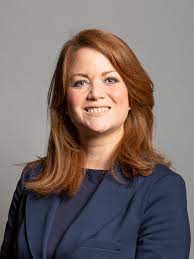
    The speech made by Taiwo Owatemi, the Labour MP for Coventry North West, in the House of Commons on 18 May 2022.

    Today, I wish to focus on three key issues. The first is the cost of living crisis, which is the No. 1 issue facing the country. My constituents in Coventry North West have suffered months of sky-rocketing fuel bills, soaring inflation and hikes at the petrol pump. Sadly, this has been met by a carefree response from this Conservative Government whose policies are pushing many below the poverty line.

    The crisis has been hitting my constituents hard since last summer, yet the Government are still not adequately supporting them. When I surveyed hundreds of my constituents recently, a massive 88% said that they did not expect their income to keep up with rising energy bills. Despite that, none of the 38 Bills outlined in the Queen’s Speech offered any specific or effective measures to tackle the cost of living crisis. That is why the Government must accept Labour’s plan to introduce a windfall tax on gas and oil companies that have reported record profits, and that would go a long way to providing a cut to energy bills of up to £600 per household. The Government must finally wake up to the urgency of the crisis on the ground.

    Secondly, I wish to speak about planning rules and new housing developments, and the impact that they are having on certain communities. Across the communities of Holbrook, Allesley, Keresley, and Eastern Green in my constituency of Coventry North West, many of my constituents have real and heartfelt anxieties about the impact of large-scale new development and its devastating impact on greenbelt land.

    For years now, I have heard constituents warning that the current planning rules are not fit for purpose. They say that they currently serve developers’ greed and do nothing to address the needs of local people and those who are most impacted. In Coventry, this means that the wrong type of houses are being built. They are built in the wrong part of the city and, eventually, are sold at an unaffordable price. From start to finish, the system is a mess and it is broken. Tens of thousands of new homes have been imposed on my city of Coventry in recent years, against the wishes of residents and their elected councillors.

    Equally, the rules concerning new developments do nothing to guarantee that new homes will come with the necessary added infrastructure. That means that large-scale housing developments are being built without the necessary infrastructure, such as decent public transport, good-quality broadband connectivity, improved roads, green spaces, and extra local services, such as schools and GP surgeries.

    What we have heard so far from the Queen’s Speech goes nowhere near reaching the key issues affecting my constituents. What we have are mere gestures towards a more democratic planning system, which will not fix the problems in Coventry or elsewhere across the country.

    My final issue concerns healthcare and the future of our beloved NHS. Our NHS is struggling to keep up with increased and more complex demands, and it is finding it increasingly difficult to clear the backlog created by the pandemic. Let us look at our ambulance service as an example. In the west midlands, ambulance services are receiving more 999 calls than at any time in history, and yet, simultaneously, our region is facing crippling ambulance shortages. In my own city of Coventry, just days ago, a woman suffering from a heart attack had to wait two-and-a-half hours for the ambulance to show up. That is heartbreaking and it cannot go on. However, this is only part of the problem. Health services in the community are at breaking point following the failure of successive Conservative Governments to recruit more GPs and to roll out additional GP surgeries. Every morning, dozens of my constituents have to wait on the phone line, often for up to an hour, just to try to book an appointment with their GP. Too often, when they finally get through to somebody at their surgery, they find that all the appointments are booked up or that the next available appointment is not for weeks.

    Frustratingly, although the Government have already admitted that they will fail to fulfil their pledge to recruit 6,000 extra GPs by 2024, and although those shortages are making life exceedingly difficult for many of my constituents, there was nothing announced in the Queen’s Speech to tackle this health crisis. Labour, however, has a very clear plan. We would make reducing waiting times and boosting staffing numbers in our NHS a top priority in government. Until this Government understand its importance, the problem will not go away.

    One subject that was outlined in Queen’s Speech was women’s health, but, like so many other critical issues, it got empty words and no concrete promises. Many women continue to face appalling healthcare inequalities. For example, more than half a million women face horrendously long waiting times for gynaecology care.

    The Government have repeatedly promised to prioritise addressing women’s health issues with a long-awaited women’s health strategy. However, they have failed again and again to deliver that strategy. It was meant to be delivered by Christmas last year, but that never happened, and we are still waiting for it five months later. If the Government genuinely want to do right by women’s health, they must urgently publish a comprehensive and intersectional women’s health strategy. Until then, they will continue to fail in their duty to provide world-class healthcare to every woman in this country.

    This Tory Government have been in power for over 12 years now, and they appear to have entirely run out of energy and ideas. Whether on the cost of living crisis, housing or healthcare, the Government are first to deliver a soundbite, but last to deliver the lasting changes that the people of this country need. This Queen’s Speech should have been the opportunity to address some of the many complex challenges that we face. Instead, it was yet another demonstration of the Government’s disinterest in delivering for my constituents in Coventry North West. They, and the people of this country, deserve so much better.
  • Anthony Browne – 2022 Speech on Achieving Economic Growth

    Anthony Browne – 2022 Speech on Achieving Economic Growth

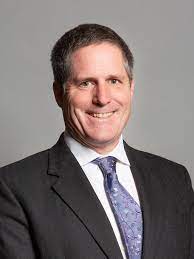
    The speech made by Anthony Browne, the Conservative MP for South Cambridgeshire, in the House of Commons on 18 May 2022.

    It is a pleasure to take part in this debate, which has ranged over the entire Queen’s Speech in the past four hours. It has been interesting to hear Opposition Members make the case both for tax rises and for tax cuts, and I enjoyed the case made on the lack of desirability of economic growth. I am in the camp where economic growth is largely a good thing, although this is not without some reservations in certain circumstances.

    I serve on the Treasury Committee, where we take evidence from a range of different economists the whole time. The good news is that the UK economy is fundamentally strong. However, we have had too low growth for too long, and we are facing unprecedented challenges, as many people have mentioned. We have had a pandemic and a war, and before that we had a global financial crisis. Someone described the Chancellor as the “unlucky Chancellor” and that is absolutely true, as he has faced greater challenges than any Chancellor since probably the second world war, but he has dealt admirably with the challenges thrown at him. We have inflation at a 40-year high, which is causing a lot of challenges to a lot of households, as we have been hearing this afternoon. But that it not purely a UK thing; it is a global inflation crisis.

    I wish to put on record my continued support for Bank of England independence. The Governor of the Bank of England appeared before the Treasury Committee earlier this week, and various media reports questioned that independence, saying, “This shows that the Bank of England cannot be trusted with inflation.” That is not true. Monetary policy was never suited to and never aimed at dealing with the current global supply shock—it is not the right tool. That does not mean that the system we have for the Bank of England is not working. It has worked very well over the past 25 years and the way to judge it is whether it brings inflation back in the next year or two to the 2%.

    One mystery in economics at the moment, as we find in our Treasury Committee hearings, is how well the economy is going. Two years ago, when the pandemic started, we had all these apocalyptic—that word has come back into fashion—forecasts about the economy and how we were going to have the deepest recession ever, and that unemployment would go back up to 1980s levels of 3 million or so. As various Members have mentioned, however, unemployment is now at a historic low—it is at its lowest since 1974. For the first time ever, we have more vacancies than people who are unemployed and claiming benefit. We need to work hard to make sure that those unemployed people get into those vacancies. Obviously, we still have a big budget deficit, but that is getting managed down, and taxes are heading up. I am with my right hon. Friends the Members for Epsom and Ewell (Chris Grayling) and for Gainsborough (Sir Edward Leigh) on the case they made that taxes are too high and should come down. That must be the medium-term trajectory.

    A lot of this afternoon’s debate has been about the cost of living. I do not want to reiterate a lot of the points that have been made, so I will focus on the title of the debate, “Achieving economic growth”. There are reasons for that; a lot of the problems we face as a country could be solved by higher economic growth. It leads to higher incomes, which helps with the cost of living, and to higher tax receipts, which helps with funding tax cuts. That is why I welcome the Government’s drive to promote economic growth. I keep saying that their priority should be, “Growth, growth, growth”. The Chief Secretary highlighted the Government’s strategy of improving skills, infrastructure and innovation, and I fully support that. Obviously, many of the measures needed to promote economic growth are fiscal—they are related to taxes—and are reserved for a Budget rather than a Queen’s Speech. For example, in the spring statement the Government outlined their ambition to use tax cuts to promote business investment. Those measures will be enacted in the autumn Budget, which is welcome.

    Many measures in the Gracious Speech will drive up national productivity in the medium or longer term. The education reforms and investment in skills that others have talked about, the transport improvements, and the reforms to the planning system will all help to promote economic growth. I want to focus, though, on the Bills that are aimed directly at businesses, about which not many people have talked. There are 38 Bills in the Queen’s Speech and many of them relate directly to businesses or specific industries.

    The digital markets, competition and consumer Bill is most welcome. The almost duopolistic grip of Google and Facebook on electronic advertising is not good for businesses, competition, innovation or consumers. Google frequently reforms its algorithms in ways that are detrimental to ordinary businesses that rely on online advertising. They are forced to pay for expensive adverts if they want to reach their customers. Google also sets itself up in competition with businesses in a way that shows a clear conflict of interest and that damages innovation. For example, Google directs those who search “cheap flights to New York” to its own flight-comparison service rather than to independent companies such as Skyscanner or Expedia.

    The Government are absolutely right to give the Competition and Markets Authority powers to protect consumers, ensure the integrity of digital markets and stop market abuse by dominant players. It is, though, a fiendishly complex policy area, and the law will work only if the new digital markets unit in the CMA is properly funded and can offer competitive salaries for highly skilled staff, so that they are not immediately poached by industry—in the same way that the Financial Conduct Authority can offer sufficient pay to make sure its staff are not lured away by the City.

    The UK Infrastructure Bank Bill is long overdue. I used to work at Morgan Stanley investment bank, which does a lot of infrastructure finance, and not only is it often very complex, but there are limits to the risks that any private bank can take on in respect of massive projects. The power of the state is needed to arrange suitable financing. When I worked at City Hall in London, I was involved in sorting out the finance for Crossrail—or the Elizabeth line, as it is now known—and I really look forward to riding it next week. London was lucky to have the highly skilled finance team at Transport for London to help to arrange the financing for that £20 billion project, but most infrastructure projects do not come with such pre-formed finance teams. We need to leverage different forms of finance, including by attracting private investment, and there is a clearly defined role for the UK Infrastructure Bank, but, as with the digital markets unit and Bill, the proof will be in the delivery. It is essential not only that the UK Infrastructure Bank can operate independently from political pressures, but that it is funded so that it can attract high-quality staff.

    On the non-domestic rating Bill, the business rates system is a massive source of complaints—often justified—from businesses and needs to be modernised. The Bill will do that, but let me float one little thought. A cap on business rates of 10% of a company’s declared turnover would help start-up companies and a lot of smaller businesses without damaging the revenue received from larger companies. I am sure the devil will be in the details, but it is worth the Treasury considering that.

    On the genetic technology Bill, such technology is very big in my constituency—I probably have more genetic and genomic companies locally than any other constituency. The Bill is a huge opportunity for us, and it is quite possibly a Brexit opportunity, too. It is about not genetically modified organisms but gene editing, which is very different. It is about speeding up the breeding that happens naturally.

    We should have introduced an electronic trade documents Bill before. I cannot believe it requires legislation, but it will slip through Parliament quickly.

    My hon. Friend the Member for Rugby (Mark Pawsey) mentioned the audit reform Bill—I think he has been the only one to do so. Everyone in finance knows that there is a major problem with auditing. It has always been in the “too difficult” box, the “too complex” box or the “I just don’t understand it” box. Thank God it is now being addressed, because we need that Bill to stop the series of scandals that have happened as a result of bad auditing.

    On the Procurement Bill, I was heavily involved in procurement when I worked at City Hall, and the EU rules on public sector procurement that we inherited were horrendously over-engineered to stop abuse across 28 different countries with 28 different procurement cultures and so on. They are a severe constraint on an effective and efficient public sector—often, the Government cannot deliver what they want because of procurement rules—and we absolutely need to streamline them.

    Finally, the financial services and markets Bill is a huge piece of legislation. We have looked at it a lot in the Treasury Committee, and I look forward to taking part in the debates on it when it comes to the House. It is the UK’s dirty secret that we had far more influence on the EU’s financial services legislation than any other EU member. That legislation is therefore not that bad overall, but compromises were often made, which meant that in a lot of ways it is not appropriate for a global financial centre such as the UK. We can make many reforms to it that will help our global competitiveness.

    There are real issues for Parliament here. It is right to give regulators more powers, absolutely, rather than relying on everything being in primary and statutory legislation, but that means that regulators must have more effective scrutiny. Parliament is not currently set up to do that, and we need to agree on how we can more effectively hold financial regulators to account.

    Overall, the Queen’s Speech has a very wide package of measures to promote business, help consumers and drive up economic growth, and I strongly recommend it to the House.

  • Margaret Ferrier – 2022 Speech on Achieving Economic Growth

    Margaret Ferrier – 2022 Speech on Achieving Economic Growth

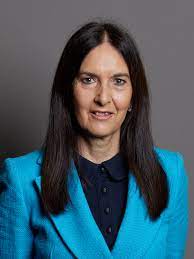
    The speech made by Margaret Ferrier, the Independent MP for Rutherglen and Hamilton West, in the House of Commons on 18 May 2022.

    The Queen’s Speech presents the Government of the day with an opportunity to stand back, take stock and realign their priorities. There are aspects of the new legislative programme that are welcome, and aspects that are less so. Most concerning are the things that are missing from it altogether. I will start with levelling up. Regardless of any personal views we might hold about the intricacies of the agenda or how it is implemented, I am sure that most of us would agree that the principle of targeted and meaningful local investment is not a bad thing. Each one of us could point to projects in our constituency that not only deserve such investment but would return it tenfold.

    There is an enormous patch of derelict land at Shawfield in my constituency that had been vacant for decades. Opportunity was wasted because the land suffered from the big problem that, until recent years, nobody had the patience or the vision to invest the time and money to fix its contamination with hexavalent chromium, a carcinogenic chemical—anyone who has seen the movie “Erin Brockovich” will know how dangerous it is.

    Remediating the site will cost tens of millions of pounds. Clyde Gateway, a publicly backed community regeneration project that reinvests its profits in new projects, has taken on this mammoth task. It has already remediated huge amounts of land, but the majority of the site is still unusable. The location is perfect, and Clyde Gateway has already proved with its redevelopment of remediated land that it is profitable. The site would serve as an excellent hub outside the Glasgow city centre boundary for businesses and residents alike. I have even heard rumours that the Cabinet Office has looked at some of the remediated land to house its offices.

    The project is a no-brainer, and I hope it is successful in bidding for the levelling-up fund. It will transform the local economy, but it needs vision and funding. Through my extensive conversations with the executive director of Clyde Gateway over the years, I have found that funding streams such as the levelling-up pot pose their own challenges. Although it is vital to ensure that public money is not frittered away, being too prescriptive stifles the ability to access and use the money to its fullest potential. I encourage the Government to consider how different project types, such as Shawfield, might be even more successful and economically beneficial to communities if their funding streams have more flexible criteria. Of course, the most important thing is to make sure that the levelling-up fund is distributed equitably across the four nations to projects that will bring the most economic value.

    I am glad to see the Government finally bring forward plans for community access to cash, an issue on which I have bored Treasury Ministers to tears, as the most vulnerable in our communities are the most reliant on physical cash. Although we have accelerated our progress towards low reliance on cash over the past two years, it remains essential to protect cash and restore ease of access.

    I look forward to the proposals on the sustainability of the ATM system, making sure all ATMs are free to customers without risking the affordability of maintenance for providers. I am also interested to see more of the measures on consumer rights and protections and the economic crime Bill, which is increasingly crucial at a time when people have less, if any, disposable income.

    I spoke last week about Safe Hands funeral plans and the devastating impact of the company’s collapse on victims who face losing thousands of pounds they simply cannot afford to lose. I agree that strengthening this area of our statute book is essential. We need strong reform of limited partnerships and the role of Companies House, although I reserve judgment on the efficacy of the Government’s proposals until the details become clearer.

    I am also eager to see the energy security Bill. It is high time—to be honest, it is too late—that the Government addressed the price crisis that is hitting households so hard. Over the past few months, this issue has been high on the list of reasons for constituents to seek support from my office. It has been so frustrating to see the Government offer so little to help the millions who are struggling to keep up. It is not just households, either: there is currently no price cap for businesses, and smaller businesses are finding themselves at real financial risk. The Government advertise themselves as the party of business, so they must do more to back up that claim.

    There are quite a few Bills that we need to see in detail as soon as possible, including the Brexit freedoms Bill to address retained EU law, the Bill of Rights and the national security Bill.

    I said I would return to the things that are missing from the Queen’s Speech, and I will focus on a big one. This year’s Queen’s Speech skirted neatly around the very large elephant in the room—an elephant that, for some reason, the Government are determined to ignore. At the very least, they do not want to make eye contact with it, perhaps because they know that, at the end of the day, they can leave the metaphorical room. Everyone else though—our constituents, the taxpayers and voters—is stuck in that room, eye to eye with the elephant, every single day. The room gets tighter, conditions worsen and the walls are constantly closing in. There is no sunlight and, seemingly, no escape. The Government failed to adequately account for the single biggest, most immediate and pressing crisis this country is facing: the cost of living. We are all acutely aware of it, and colleagues on Benches across the House will agree that we are fortunate that we do not feel it in quite the same way as many of our constituents do. The only way to achieve economic growth is to invest in our people. The Government are not doing enough of that, and that is incredibly short sighted.

  • Mark Fletcher – 2022 Speech on Achieving Economic Growth

    Mark Fletcher – 2022 Speech on Achieving Economic Growth

    The speech made by Mark Fletcher, the Conservative MP for Bolsover, in the House of Commons on 18 May 2022.

    In respect of what the hon. Member for Swansea West (Geraint Davies) said about democracy, one would think that in the current circumstances we would be incredibly careful. We cherish our democracy in this country. Our institutions are strong. Democracy, freedom and the rule of law run through the core of this country, and hearing him observe so flippantly that democracy is under attack, or, earlier, hearing the hon. Member for Paisley and Renfrewshire South (Mhairi Black) suggest that we are descending into something close to fascism—only seconds after saying that words matter—is extremely frustrating.

    Mhairi Black

    Will the hon. Gentleman give way?

    Mark Fletcher

    I am afraid the hon. Lady did not give way to me, so I am going to return the favour.

    The Queen’s Speech set out some of the things that we have needed to do for a long time for the purpose of economic growth. I am thinking particularly of the Levelling-up and Regeneration Bill, which offers several solutions for Bolsover, Derbyshire, and the east midlands in general. That part of the country has struggled since its former industry, coalmining, has diminished. What we have needed for a long time is a new economic settlement. Behind the figures relating to our local economy we see a great many low-skilled and low-wage jobs, and we are not reaching the potential that we have as a region. According to one of the most indicative statistics, the investment going into the east midlands, whether private or public, is much lower than the investment going into other regions.

    One option that the Levelling-up and Regeneration Bill presents us with is a devolution settlement. Over the last two years in this Parliament, I have been lucky enough to be Parliamentary Private Secretary to the Secretary of State for Business, Energy and Industrial Strategy, and I have had insights into how various colleagues engage with Ministers here. One of the most striking things has been that regional Mayors work. They work as a way in which the private sector and the Government can engage with a particular area and help to bring investment, jobs, skills and education to it.

    Unfortunately, the east midlands is fighting with one hand tied behind its back when it comes to competing with London, Manchester, the west midlands, South Yorkshire and Teesside. It is undoubtedly true that the Mayors of those areas are having a huge impact; they are becoming household names across the country. Anyone who wants to invest in the east midlands will have to speak to at least one county council, at least one district council and almost certainly the local enterprise partnership, which becomes cumbersome. Anyone who wants to invest in the west midlands can ring Andy Street’s office, and that is a much easier process. Andy Street can then pick up the phone and talk to whoever he needs to talk to. Within this Queen’s Speech and this Bill, we can find various ways for powers to descend to our regions, and that will empower us to create more economic growth locally.

    Another thing that I am pleased to see in the Queen’s Speech, again in the Levelling-up and Regeneration Bill, relates to planning. For too long, there has been frustration that when housing comes to Bolsover, either it is through a salami-slicing approach of adding five or six houses to a village or it is a huge new estate that does not get the investment in the public services that need to come with it, such as a GP surgery or local school. We have a problem in that demand for those public services has gone up. The outline for the planning reforms is very strong, and if we are looking at levelling up an area such as Bolsover, we need to improve education and skills levels. We need to be able to bring skilled jobs to the area; we need affordable, quality housing; and we need to be able to bring in infrastructure that is fit for the 21st century.

    There is an admirable line on public transport, which is that the Government would like to get the rest of the country’s transport connectivity much closer to the standard of London’s. I do not expect Bolsover to get an underground system any time soon, but I suggest to the Transport Secretary that we would accept just a few new bus routes that actually work and that run beyond 7 o’clock in the evening. I admire the emphasis on ensuring that we have public transport, because the groups most impacted by a lack of it are the elderly, students and younger people, and those on low incomes. It is hard to generate economic growth without good public transport.

    I am looking forward tremendously to the Schools Bill, because there are many positive things in it, but one of my great frustrations is that we have no post-16 education in Bolsover. That requires everybody to travel out, but our bus services are not fit for purpose.

    I will end on this, Madam Deputy Speaker, because unlike some others, I will stick to six minutes. I very much welcome the conversion therapy Bill. The Government will know that I think it needs to go further, and I hope that that will happen. A number of colleagues have fought incredibly hard to ensure that this issue remains on the agenda, and I doff my cap to them because this is incredibly important and something that we should put an end to in the 21st century.

  • Geraint Davies – 2022 Speech on Achieving Economic Growth

    Geraint Davies – 2022 Speech on Achieving Economic Growth

    The speech made by Geraint Davies, the Labour MP for Swansea West, in the House of Commons on 18 May 2022.

    It is a pleasure to follow the hon. Member for Hertford and Stortford (Julie Marson). Today, we listened again to the Prime Minister telling us that we had a strong economy, yet when Labour left office only 26,000 people a year were going to food banks and now there are 2.6 million—100 times as many. We heard that 500,000 more people are in work than before the covid pandemic, but according to the ONS there are 444,000 fewer people in work—the Prime Minister conveniently missed out the self-employed. He said, “We are the low-tax party,” but taxes are now at a 50-year high and the Chancellor increased taxes by £40 billion last year. The tax share of GDP is at a level not seen since Attlee, when we were coming out of the second world war and we needed to charge such taxes.

    Inflation is at a 40-year high. There is a departmental freeze on spending, so there are savage cuts across the board. [Interruption.] I see the right hon. Member for North East Somerset (Mr Rees-Mogg)—the Minister for Brexit opportunities and Government inefficiency—chattering away, living up to his title in the delivery of inefficiency. The truth is that inflation, ironically, is helping the Government’s revenues. They have a four-year freeze on personal allowances and tax thresholds, which means a creeping increase in tax as people sink into tax thresholds and allowances go down in real terms. They are planning a cynical attempt to drop tax before the next election in 2024 or 2025. That will be gobbled up by that inflationary clawback. People will think that they are getting a tax cut, but will lose twice the amount.

    Is there an alternative? The answer, of course, is yes, and the evidence is that in the 10 years to 2008, when Labour was in power, the economy grew by 40%. We did not just give the proceeds away; we used them to double investment in the health service, double investment in education and bring millions of young people and pensioners out of poverty. We bequeathed a debt-to-GDP ratio of 45%; it is now 90%, so the share of debt has doubled. The Institute for Fiscal Studies has said that, if our trend of growth had continued, people would be £11,000 better off than they are today. They would be much more resilient to the global shocks that we have all seen, including Ukraine and covid.

    There has been catastrophic mismanagement since 2010. It started with Osborne’s austerity, which simply did not work: it just drove down growth, because people were expecting that they might be one of the 400,000 people he said he was going to sack. We then had the stupidity of hard Brexit, when we decided that we would all be outside the single market. There is no move now for product realignment or a minimum amount of worker movement to allow lower-cost market access, which is what businesses want, so a third of businesses that have been exporting to the EU now say that they will not do it at all.

    We have a low-growth, high-cuts, high-tax, wage-cutting Government—a complete failure. I appreciate that a windfall tax is not the complete answer, but let us understand what a windfall tax is. The oil companies worked on a marginal profit that was quite healthy; then, all of a sudden, Putin invaded and there was an escalation in the price and a massive profit over the cost of production that the companies did not do anything to deserve. That is Putin’s profit, and people here deserve it to help them through the hard times that we are going through because we are imposing sanctions. Sanctions, of course, take time; the IMF says that sanctions will cut the Russian economy by 8.5%, but they will not stop a Russian tank. The war needs to be won to sort the situation out, but that is another story.

    We certainly need to increase productivity, but the reality is that the Chancellor’s ambition is to bring investment per child in education by 2024 up to Labour’s 2010 levels. Our young people need to be invested in now.

    There is talk of everyone having to go back to the office. Indeed, the Minister—that man sitting on the Front Bench—has said, “We have all got to go back to work in the traditional way.” However, a study by the Office for National Statistics shows that there would be a considerable increase in productivity and a delay in retirements if people were allowed to work from home. In particular, women, carers and people looking after families could work flexibly. Furthermore, people being at home for one day in five would take 20% of the traffic and 80% of the congestion off the roads, so we would spend less on roads and it would be carbon-friendly.

    This whole approach to productivity, green investment, and cognisance of those matters, is completely ridiculous. Macron, along with Italy and Germany, has asked why we cannot take a more collaborative approach to trade with Britain—and, indeed, bring in Ukraine, because it shares the same values. All we are doing is starting a trade war on the back of the very sensible arrangement that Ireland should be in the single market to protect it. That is what the Government agreed and that is what should continue to operate.

    Apart from the economic catastrophe, to which there is a clear solution, I fear that there are attacks on the fundamental rights of democracy. The Queen’s Speech contains all this stuff about reducing the power of an independent judiciary. Obviously the Government are very angry with Miller because the judiciary in that case gave us a vote on the Brexit deal, and they are very angry with the judiciary for allowing democracy to be reconvened after the Prime Minister had tried to abandon it for a long period. The composition of the Supreme Court has been changed and seven of its key decisions have been reversed. It has been intimidated by the media, and by Ministers sitting there slagging it off—particularly, the Lord Chancellor who is supposed to defend it. The average tenure of a Lord Chancellor is now one and a half years; it used to be four years. The Lord Chancellor used to be a senior judge, or a member of the judiciary who was respected, rather than someone who just wants to proceed to the next ministerial position. Our independent judiciary is under attack, our rights are under attack, and our democracy is under attack.

    I respect what the hon. Member for Paisley and Renfrewshire South (Mhairi Black) said about the rolling authoritarianism that we see in the contexts of poverty, the economy, and the democracy that we fundamentally are. We are better than this. We deserve better than this. We do not want low growth, large cuts and low wages; we want high growth, and a fairer and stronger economy in the future. Let us roll forward and deliver that—with a Labour Government.

  • Julie Marson – 2022 Speech on Achieving Economic Growth

    Julie Marson – 2022 Speech on Achieving Economic Growth

    The speech made by Julie Marson, the Conservative MP for Hertford and Stortford, in the House of Commons on 18 May 2022.

    It is a pleasure to speak in this debate and to support the legislative agenda that the Government set out in the Queen’s Speech. When Harold Macmillan was asked what the greatest challenge facing a statesman was, he famously responded, “Events, dear boy, events”. During my entire time in this place, we have been buffeted by extraordinary, frightening events, not least for our constituents up and down the country, including in my constituency. There has been fear of the health consequences of the global pandemic, as well as its economic consequences on lives and livelihoods, and the pandemic is still having an impact across the globe, notably in China. The effect on supply chains of the covid resurgence in China, including in Shanghai, is also having a devastating economic impact.

    We have had to face Russia’s evil and unjustified invasion of Ukraine. Not only have we rightly imposed sanctions, which the whole House supports, but the invasion itself has had an economic impact. The Governor of the Bank of England warned this week at the Treasury Committee of the “apocalyptic” prospects for food prices. He also said clearly that 80% of the causes of inflation was due to global factors. That makes Government intervention very difficult. This is a very challenging time and the cost of living crisis is very challenging for any Government who face it. They are being buffeted by global events.

    After listening to some very fine and impassioned speeches from Opposition Members, I cannot help but remember that, if things had gone differently, and if they had had their way, the leader talking to our NATO allies and shepherding this country through these economic and security crises would have been the right hon. Member for Islington North (Jeremy Corbyn) and we would have had a Chancellor who brandished the little red book in this Chamber. So thank goodness—I believe this very strongly—that it is a Conservative Government who have been shepherding this economy and country through unprecedented, back-to-back crises over the past few years and who will continue to do so.

    This Government, in shepherding and controlling the economy, have enabled us to support lives and livelihoods for the past few years to the tune of £400 billion. They continue to support people in need with a package currently of £22 billion for measures that include reducing fuel duty, raising national insurance thresholds, increasing the national living wage and others.

    The heroes of the pandemic were our doctors, nurses and key workers. The future heroes in this global crisis will be the business owners, the workers in businesses and those who are innovating and starting new businesses. As I see it—I have said this before in the Chamber—that is where the Government’s role is that of a groundsman. It is about setting the pitch and conditions for our bowlers and batsmen to be able to respond to the difficult balls and to knock the easy balls out of the park. I see the context of this Queen’s Speech as one where, as the groundsman, we put in place those conditions, so that our players can play the best game available.

    As the Chief Secretary set out, that means dealing with skills, innovation and infrastructure. All those measures are included in the Queen’s Speech: the Levelling-up and Regeneration Bill; the Brexit freedoms Bill; proposals on data reform and financial services to support our critical venture capital industry; the UK Infrastructure Bank Bill; and the higher education Bill. This is a consistent, thought-through package of legislation that will deal with the global and domestic challenges in the years ahead. I absolutely commend it to the House.

  • Mhairi Black – 2022 Speech on Achieving Economic Growth

    Mhairi Black – 2022 Speech on Achieving Economic Growth

    The speech made by Mhairi Black, the SNP MP for Paisley and Renfrewshire South, in the House of Commons on 18 May 2022.

    For a party that prides itself on the economy, the Tories have a shocking record of running it. Our economy has the slowest growth in the G7. We have greater regional inequality than almost any other developed nation. Food banks now do the job of Government in providing for families—families that are more often than not in work.

    The Government could start solving this crisis by providing solutions, such as closing tax-avoidance loopholes or creating a windfall tax for energy companies. Instead, we get endless Bills paying lip service to a manufactured culture war. The priority is not the economy. It seems to be things like protecting freedom of speech, yet the Tories are the ones who banned schools in England from using sources that are not overtly pro-capitalist. They are cracking down on freedom of assembly and protest. They are privatising Channel 4, when the Culture Secretary did not even know that Channel 4 receives no public money, so the argument is not financial. When we consider, as the hon. Member for Rhondda (Chris Bryant) touched on earlier, that the Culture Secretary was once a key focus of a Channel 4 documentary about the influence that Christian fundamentalism has on UK politics, it becomes even more concerning that this decision is political and personal. It is not professional.

    Most terrifying of all, however, is that the Government literally want to get rid of the Human Rights Act. That begs the question: for whom do they think rights have gone too far? Do they know how scary it is to sit at home and wonder if it is you—is it your rights that are up for grabs? We have witnessed Windrush. Our economic strategy is to open our doors to the rest of the world when we need their hard work and then chuck them out 50 years later without a word’s notice. We tell our own citizens that their safety cannot be guaranteed in Rwanda, but we are perfectly happy to ship asylum seekers, people fleeing war and persecution, over to Rwanda as though they are cattle to be dealt with by someone else and despite knowing that the plan costs more than it will ever save.

    This is just little England elites drunk on the memory of a British empire that no longer exists. We have the lowest pensions in Europe and the lowest sick pay. We pretend the minimum wage is a living wage when it is not. We miss our own economic targets time and again. We are happy to break international law. We are turning into a country where words hold no value.

    Over the last 12 years, I fear we have been sleepwalking closer and closer to the F word. I know everyone is scared to say it for fear of sounding over the top or being accused of going too far, but I say this with all sincerity. When I say the F word, I am talking about fascism—fascism wrapped in red, white and blue. You may mock and you may disagree, but fascism does not come in with intentional evil plans or the introduction of leather jackboots. It does not happen like that. It happens subtly. It happens when we see Governments making decisions based on self-preservation, based on cronyism, based on anything that will keep them in power, when we see the concentration of power while avoiding any of the scrutiny or responsibility that comes with that power. It arrives under the guise of respectability and pride, which will then be refused to anyone who is deemed different. It arrives through the othering of people and the normalisation of human cruelty. I do not know how far down that road we are. Time will tell, but the things we do in the name of economic growth—the warning signs are there for everyone else to see, whether they admit it or not.

  • Paul Howell – 2022 Speech on Achieving Economic Growth

    Paul Howell – 2022 Speech on Achieving Economic Growth

    The speech made by Paul Howell, the Conservative MP for Sedgefield, in the House of Commons on 18 May 2022.

    I am pleased to follow the hon. Member for Bolton South East (Yasmin Qureshi), but I am sorry that she, like others, has chosen to misrepresent my hon. Friend the Member for Ashfield (Lee Anderson). I suggest that she goes and listens to what he actually said.

    I am pleased to be able to speak in support of the Queen’s Speech on our final day of debate, when we have the opportunity to discuss achieving economic growth. I spent my entire career in manufacturing businesses before becoming an MP in 2019, and I firmly believe in the power of economic growth and investment to change towns and the lives of people in them. In order to do so, it is important to encourage both the physical and human assets that are necessary to sustain an economic ecosystem.

    It is also critical that the Government support our people through the cost of living challenges. I am confident that our Chancellor will deliver on that in cohesion with his Cabinet colleagues. I note that earlier in the debate the hon. Member for Leeds West (Rachel Reeves) indicated that 33% of people would benefit from Labour’s windfall tax proposal to the tune of £600, yet the right hon. Member for Wolverhampton South East (Mr McFadden) has apparently said that the rest would also get £200. So while they indicate that there would be £3 billion in tax receipts, they propose to spend £8 billion. They either disagree with each other or it is classic Labour maths and misrepresentation.

    Yasmin Qureshi

    In my opinion we are facing a cost of living crisis. I do not care whether it costs £3 billion or £8 billion; the Government need to bring out the money to look after those people.

    Paul Howell

    Of course the Government need to look after those people, and the Chancellor will do that cohesively with the rest of the Cabinet, but we must focus on the importance of resilience, particularly for our national assets. The past two years have demonstrated the fragility of supply chains and the risk of geopolitical instability affecting consumers in the UK. We need to increase the use of some of our new-found Brexit freedoms to ensure that nationally strategic assets are kept in British hands.

    Economic growth and levelling up go hand in hand. As co-chair of the all-party parliamentary group for “left behind” neighbourhoods, I am convinced that we cannot have the latter without the former. That is why, when making spending decisions, the Treasury should emphasise creating new business clusters in left-behind areas. For that to happen, we need a skilled workforce in the area. That is why I think that, of all the Bills in the Queen’s Speech, the one that will have the greatest economic impact on areas with historically lower levels of economic growth will be not any of the legislation sponsored by BEIS or the Treasury but the higher education Bill.

    The north-east is already on the right track. My constituency is fortunate enough to be surrounded by five universities, all of which do excellent work. To the north of Sedgefield, Northumbria University has done particularly well recently, leaping from No. 50 to No. 23 in the latest research excellence framework ranking. Together with Durham University, it is well on the way to creating a northern research powerhouse, which is further enhanced by the complementary provisions of Newcastle, Sunderland and Teesside universities. The Bill seeks to improve standards in education generally, and the aspect that I am most excited about is the lifelong loan entitlement, guaranteeing four years of post-18 study, which will allow more career flexibility for those who have not undertaken any further or higher education. It will ensure that they have the chance to get an education to work in skilled industries. We also need to enhance the broader opportunities for people through supporting T-levels and engaging more university technical colleges such as UTC South Durham in Newton Aycliffe as well as ensuring that opportunities exist for those who have had further education in the past but now want to redirect their talents.

    One of my primary focuses for delivery is speaking up for the businesses in Sedgefield, whether they are the extraordinary science-led businesses in NETPark, substantial employers such as Gestamp, Hitachi, Crafter’s Companion and 3M in Newton Aycliffe or the myriad smaller enterprises in the Aycliffe industrial estate and spread around in places such as Trimdon, Chilton, Fishburn, Wingate, Wheatley Hill, Thornley and Ferryhill. They all matter, and they all need encouragement. On Friday, I will be talking at the “make your mark” awards at Aycliffe business park, meeting businesses that I have seen before such as Husqvarna, Stillers, Ebac, Roman and Gestamp as well as the newcomers, the apprentices, the innovators and the environmentalists. We have such variety and diversity, and we need to encourage each and every one of them. They need to know that the Government’s strategy supports them, and delivering infrastructure such as bringing the train station back to Ferryhill and tax breaks for capital investment are all part of the mix.

    Clusters rarely develop organically; they are usually the result of a strategy that co-ordinates investment in an area. Those strategies must consider the appropriateness of sectoral support as well. For example, as part of our drive to reach net zero by 2050, the Government are rightly keen to support investment in electric vehicles. An EV strategy, for example, must therefore support new businesses looking to work on EVs and help existing companies to adapt their current output to them. While I will always support further inward investment, considering how much expertise and jobs the established companies tend to have, the Government would do well to focus their primary efforts there.

    Another part of the strategy is led by the Under-Secretary of State for Business, Energy and Industrial Strategy, my hon. Friend the Member for Mid Norfolk (George Freeman), with his focus on science and innovation. I encourage him in his support of the north-east space hub as part of a co-ordinated national approach to space. I direct him in particular to the asset base that we have in Sedgefield when he considers promoting the semiconductor industry. We have everything from II-VI, which is a major manufacturer, through to Evince, Filtronic, Kromek, INEX, Isocom, Northern Space and Security and PragmatIC in our interrelated clusters in the areas of advanced material electronics, resilient communications and space. The development of clusters to support UK resilience founded on existing platforms of enterprise can be transformational in levelling up places such as Sedgefield.

    While the Minister has been to NETPark, he and his colleagues would be very welcome to visit more of this extraordinary supply chain. That would also enable them to see the fabulous cultural offers demonstrated in the outstanding County Durham bid for city of culture and the proposed levelling-up bid that would enhance the living environment for so many in Newton Aycliffe. I encourage our pragmatic Chancellor and innovative Prime Minister to deliver on those Bills and to remember Keynes, who said:

    “What do you do when the facts change? I change my mind.”

    We are in an ever-changing world, and we need to remain as flexible as possible.

  • Yasmin Qureshi – 2022 Speech on Achieving Economic Growth

    Yasmin Qureshi – 2022 Speech on Achieving Economic Growth

    The speech made by Yasmin Qureshi, the Labour MP for Bolton South East, in the House of Commons on 18 May 2022.

    I was very disappointed by the Gracious Speech as it failed to deal with a number of things that really matter to my constituents and, I believe, to the country at large. First and foremost, and we have heard this mentioned many times today, the cost of living crisis is clear: inflation is nearing 10%, economic growth has been revised down, we have the slowest recovery in the G7, interest rates are up and real wages have fallen below 2008 levels. The impact of that on my constituents and people across the country is huge. They are having to choose between heating and eating. That phrase has been used quite a lot today, but these choices are real, not imagined, as some Conservative Members like to suggest.

    The Government are refusing to help those people. Why? I am not trying to be controversial, but perhaps, fundamentally, it is because certain people in the Government do not care and hold ordinary people in contempt. Why do I say that, and where did this rot start? In 1995, the current Prime Minister penned an article in The Spectator claiming that working-class men are

    “likely to be drunk, criminal, aimless, feckless and hopeless”.

    Did he stop there? No, he said that the children of single mothers are

    “ill-raised, ignorant, aggressive and illegitimate”.

    It is a bit like the pot calling the kettle black.

    One may ask whether perhaps the Prime Minister is just one bad apple—wrong! The current Deputy Prime Minister, the Secretary of State for Business, the Home Secretary and the Foreign Secretary co-authored a pamphlet in 2011 that claimed

    “the British are among the worst idlers in the world.”

    I would like them to come to Bolton South East and tell that to the care assistants, the cleaners and the retail workers, who are often working more than 50 hours a week on the minimum wage just to make ends meet, and see their reaction and what they have to say.

    On the morning round a few days ago, a Home Office Minister said that people can move to “a better-paid job” or “take on more hours” to address the crisis. In my constituency, there are not many better-paid jobs and everyone is already working more than they need to do. Then we had the hon. Member for Ashfield (Lee Anderson) claiming that people can cook meals for 30p and implying that poverty was a choice. Well, as somebody who cooks quite regularly, I can tell him that we cannot get a meal for 30p, even when we are cooking at home. Many people in my constituency of Bolton South East have written to me feeling very insulted and saying that they cannot actually afford to use their oven because of energy costs. I say that, frankly, it is insulting to my constituents.

    There is, however, another option—a real plan to fix the cost of living crisis. In the first three months of this year, Shell made £5 billion in profit and BP £7 billion. Those profits have been made through the charges paid by us, the consumers. The Labour party has constantly pushed for a windfall tax on oil and gas companies—calls that have so far fallen on deaf ears—to fund a real support package for working families, rather than the £150, which is a loan that people will have to repay. We have also suggested that VAT on energy bills should be removed for the lowest paid and that the universal credit allowance should be increased. I know that the Government think the universal credit allowance is somehow a benefit for those not working, but many of those receiving it are working, yet their pay is so low that they still need to rely on state benefits. The £20 a week reduction in the universal credit allowance has affected £14,000 of my constituents—people for whom this is very important benefit. We have also asked for the warm home discount to be expanded, which would also help by keeping energy bills down.

    Matt Rodda

    My hon. Friend is making an excellent and heartfelt speech, which I am sure the whole House is listening to intently. Does she agree that part of the problem is that many of our poorest constituents live in some of the worst-insulated houses and that we urgently need to tackle this problem?

    Yasmin Qureshi

    That is absolutely right, and their situation is exacerbated by that. Often they also have damp in their homes, which has not been sorted out. Yet the Government refuse to act and say there is no money, but we know that they wasted £39 billion on track and trace, when the same system in France cost only about £3 billion to roll out. So the money is there if there is the will to use it.

    There was also nothing in the Budget to deliver better infrastructure, trams and trains in my constituency. There was nothing about building more social housing and affordable housing, in particular by using brownfield sites to meet housing shortages. The Government say they are interested in renewables and tackling climate change, yet real investment—which the Labour party has also argued for—could create good jobs and eventually reduce our dependence on energy supplies from other countries, as the Ukraine war has shown the need for.

    This was a missed opportunity to deal with many issues, including first and foremost the cost of living crisis. The Government have refused to do that. As far as I am concerned, they really do not care about my constituents.

  • Kate Griffiths – 2022 Speech on Achieving Economic Growth

    Kate Griffiths – 2022 Speech on Achieving Economic Growth

    The speech made by Kate Griffiths, the Conservative MP for Burton, in the House of Commons on 18 May 2022.

    I refer Members to my entry in the Register of Members’ Financial Interests.

    It is a pleasure to speak in this debate on the Gracious Speech in the year of Her Majesty’s platinum jubilee. I welcome the focus on strengthening the economy and achieving economic growth that this Queen’s Speech provides after the huge impact of the covid pandemic on all sectors of the economy.

    Levelling up local infrastructure is key to securing economic growth, and I welcome the steps the Government are taking to invest in our nation’s infrastructure and transport links. Burton and Uttoxeter sit within the manufacturing heart of the country, and the A50-A500 corridor is home to both national and global brands, including JCB, Toyota, Nestlé, Rolls-Royce and many more. They rely on that vital link for connecting to international markets and trade around the globe. To support economic growth, new jobs and better connectivity for business and for my constituents, vital improvements are needed to this corridor.

    Recently, Midlands Connect published its “The Road to Success” report, outlining suggested developments to the corridor that would create over 12,000 jobs and generate £12 billion for the economy. With the improvements, commuters driving on the central section of this corridor, where the junction at Uttoxeter has been identified as a priority element of the strategy, would be likely to get back 3.5 working days a year by 2050. As the project champion for the improvements to the A50-A500 north midlands manufacturing corridor, I look forward to continuing to champion the project with Ministers, and making the case for the economic growth that these improvements will bring to my constituency and the wider economy.

    As well as improving infrastructure, it is vital that we continue to level up our towns, so I welcome the Government’s continued commitment to this important strategy. I was delighted that Burton was awarded £23.8 million from the towns fund to deliver transformative regeneration for the town. This includes reconnecting the town centre to the River Trent, making it an attractive location to visit, live and do business. I am also pleased that we have the chance to submit a bid for the second round of the levelling-up fund, complementing the town deal investment and completing the transformation of the High Street for generations to come. I look forward to the outcome of the local consultation and discussions about how we can continue to level up Burton and Uttoxeter, and I hope that as a priority 1 area the town’s bid will be received favourably as it seeks to deliver on that vision of levelling up.

    Of course, one of the key industries in Burton and Uttoxeter is the brewing sector, and I was pleased to welcome Staffordshire-based businesses to Parliament recently, ahead of Staffordshire Day, to promote fantastic local businesses and producers. They included Molson Coors, which recently invested £25 million in its Burton site, which is a sign of its commitment to continued innovation in the great brewing town of Burton. Breweries and the wider hospitality sector have been hit very hard by the impact of the pandemic and the current rise in the cost of living. During the pandemic, the Chancellor reduced VAT on hospitality goods and services, which was of huge benefit to businesses in my constituency. However, disruption to these businesses is still being felt, and I would take this opportunity to urge the Government to reconsider the proposal of the Long Live the Local campaign for a permanent hospitality VAT rate of 12.5%. That could generate an additional turnover of £7.7 billion and an additional 286,850 jobs over 10 years.

    I welcome this Queen’s Speech and the Government’s ongoing commitment to levelling up and supporting economic growth, and I look forward to continuing to support opportunities for investment across Burton and Uttoxeter, such as the vital improvements to the A50-A500 corridor, that my constituents elected me to deliver.