Blog

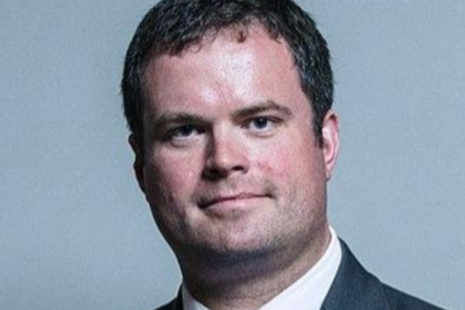
  • Kevin Foster – 2022 Statement on Changes to Immigration Rules for Ukrainian Children

    Kevin Foster – 2022 Statement on Changes to Immigration Rules for Ukrainian Children

    The statement made by Kevin Foster, the Parliamentary Under-Secretary of State for the Home Department, in the House of Commons on 20 July 2022.

    My right hon. Friend the Home Secretary is today laying before the House a statement of changes in immigration rules.

    The changes reflect amendments to the Homes for Ukraine sponsorship scheme to allow children who are not applying with, or to join, their parent or legal guardian in the UK to qualify for a visa.

    As the Government announced on 22 June 2022, these changes are designed to ensure, where a Ukrainian parent or legal guardian confirms it is their child’s best interests for the child to come to the UK without them, there is a route for them.

    In these cases, the sponsor will need to give a greater commitment to support the child for three years or until the child turns 18 (so long as the sponsorship lasts at least six months), whichever is soonest. The local authority will conduct safeguarding checks and pre-approval of the sponsor before the visa application can be made, and there will need to be parental consent which, in line with the Ukrainian Government’s requirements, will need to be certified by an authority approved by the Ukrainian Government.

    There have already been applications from children travelling without their parents. These applications were on hold while the Government carefully worked through the challenges around allowing children to travel without a parent. On 15 July the Home Office published a concession to the immigration rules to allow these cases to be prioritised once they have the necessary approval from the local authority.

    We have also introduced an additional safeguarding requirement to ensure if a sponsor is not approved by the local authority under the Homes for Ukraine scheme, they cannot sponsor the same or another child under this scheme or the Ukraine family scheme.

    The Homes for Ukraine scheme will be opened to new child applicants applying without their parents or legal guardians on 10 August.

  • Priti Patel – 2022 Statement on Immigration and Border Control

    Priti Patel – 2022 Statement on Immigration and Border Control

    The statement made by Priti Patel, the Home Secretary, in the House of Commons on 20 July 2022.

    Today will see the publication of two documents supporting the Home Office’s strategy for the future border: “An Independent review of Border Force” (CP 700) and the “New Plan for Immigration: Legal Migration and Border Control” strategy statement (CP 706). These documents have been laid before both Houses today and will be made available on gov.uk.

    The strategy statement sets out our ambition for transformational change for everyone using our systems and crossing the UK border. We will deliver a fully end-to-end digital customer experience which will bring benefits to all.

    This is an ambitious plan in which we will continue to deliver a world-leading legal migration and border system. The plans we have set out in this strategy statement are essential for a streamlined, digital system which responds to customer needs and enhances the security of the UK. Our flagship permission to travel scheme will mean that it is easier for our friends to come to and contribute to the UK, but harder for those not using legal means to come here. We will be more easily able to tackle problems upstream and know more about those who use the system to come here.

    I would like to thank Alexander Downer for his work in conducting the BF review and all those who have been involved. The recommendations in this report are our commitment to a package of reforms for Border Force so it can continue to respond to emerging threats, keep our border secure, and ease the passage of legitimate travellers and goods across our border in a world that is very different from when Border Force was formed a decade ago.

    The publication of the strategy and report on the BF review is a pivotal step in achieving the vision for the future of the border which will increase public confidence that we are improving the efficiency and effectiveness of the UK border and making it more secure to tackle future challenges.

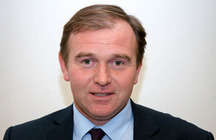
  • George Eustice – 2022 Statement on Improving Water Quality

    George Eustice – 2022 Statement on Improving Water Quality

    The statement made by George Eustice, the Secretary of State for the Environment, Food and Rural Affairs, in the House of Commons on 20 July 2022.

    Improving water quality is a Government priority. We are the first Government to take such substantial steps to restore our water environment, from setting in motion the largest water company infrastructure project ever to reduce discharges from storm overflows, to seeing the largest fines in history placed on water companies. We have provided new funding to the Environment Agency to increase farm inspections to at least 4,000 inspections a year by 2023, and we are launching future farming schemes that will reward farmers and land managers for actions to reduce run-off, such as introducing cover crops and buffering rivers. This is reinforced by our proposed Environment Act 2021 targets to reduce the key sources of river pollution.

    We are today launching a further package to tackle nutrient pollution, which is a significant problem for our freshwater habitats and estuaries. Increased levels of nutrients (especially nitrogen and phosphorus) can speed up the growth of certain plants, disrupting natural processes and devastating wildlife.

    While we have taken substantial steps, this is taking time to make an impact on the ground and we must go further. At present some 27 catchments, and several of our internationally important water bodies and protected sites, are in unfavourable status due to nutrient pollution. In accordance with complex and bureaucratic EU-derived domestic legislation and case law, local planning authorities can only approve a plan or a project if they are certain it will have no negative effect on the site’s integrity. Natural England, in its statutory role as an adviser on the natural environment, has advised a total of 74 local planning authorities on the nutrient impacts of new plans and projects on protected sites where those protected sites are in unfavourable condition due to excess nutrients. They have issued tools and guidance on an approach called “nutrient neutrality” to mitigate the impact of nutrient pollution so that development can go ahead. However, there is still a gap in the ability of LPAs and developers to find mitigation quickly and effectively.

    In order to drive down pollution from all development in the relevant catchments, we will be tabling an amendment to the Levelling-up and Regeneration Bill. This will place a new statutory duty on water and sewerage companies in England to upgrade wastewater treatment works to the highest technically achievable limits by 2030 in nutrient neutrality areas. Water companies will be required to undertake these upgrades in a way that tackles the dominant nutrient(s) causing pollution at a protected site. We are also using feedback from the recent “call for evidence” to water companies to identify where these upgrades could be accelerated and delivered sooner. Our proposed Environment Act target to tackle wastewater pollution across the country will still see upgrades brought in elsewhere, on a slightly longer timeframe.

    In the meantime, we know the impact of new housing is a small proportion of overall nutrient pollution, but mitigation requirements have a significant impact on overall house building. This amendment will improve water quality and in doing so will support house building to continue in areas affected by nutrient pollution. We want these improvements to be factored in for the purposes of a habitats regulation assessment.

    Wastewater treatment upgrades will reduce a significant source of nutrient pollution, helping to recover these crucial habitats, which will thereby reduce the level of mitigation required by individual developers when legislation comes into force.

    Supporting mitigation

    Building on our initial package of support announced in March 2022, I will issue a ministerial direction to support Natural England to establish a nutrient mitigation scheme.

    Natural England will develop the scheme, working with the Department for Environment, Food and Rural Affairs and the Department for Levelling Up, Housing and Communities. DEFRA and DLUHC will provide funding to pump prime the scheme: this is intended to front-load investment in mitigation projects, including wetland and woodland creation. This will then be recouped through a simple payment mechanism where developers can purchase “nutrient credits” which will discharge the requirements to provide mitigation. Natural England will accredit mitigation delivered through the nutrient mitigation scheme, enabling LPAs to grant planning permission for developments which have secured the necessary nutrient credits. Wetlands and woodlands will also provide biodiversity enhancements to areas and promote public access to nature across England helping to deliver on our levelling up missions for pride in place and wellbeing.

    Natural England will deliver the scheme by establishing an “accelerator unit”, with the support of DEFRA, DLUHC, the Environment Agency and Homes England. The previous announcement of £100,000 funding from DLUHC for affected areas will help support delivery of the scheme. We will open the scheme to all developers while ensuring that small and medium enterprises are prioritised, given the difficulties they can face in securing mitigations due to access to funds and skills. This scheme will not be a requirement but an option to discharge mitigation requirements more efficiently. We recognise that there are a number of private markets and local planning authority-led nutrient mitigation schemes that are already being established. Natural England will be working closely with these providers to ensure they do not crowd out private markets, and will ensure that the national scheme dovetails with these markets and provides additional support as needed. We will announce further details in the autumn when the scheme will launch, and in the meantime, Natural England will be in touch with local authorities and developers.

    Our amendment will support the delivery of the tens of thousands of homes currently in the planning system, by significantly reducing the cost of mitigation requirements. The mitigation scheme will make delivering those requirements much easier for developers.

    Longer term, we continue to progress proposals to reform the habitats regulations so that impacts on protected sites are tackled up front, focusing on what is best for bringing sites back into favourable status. Recovering our protected sites is critical to meeting the Government’s ambitious environment commitments, including our apex target to halt the decline in species abundance by 2030. Through this work we can improve water quality, biodiversity and our wider environment while also enabling sustainable development.

    Planning

    We understand the concerns that some local planning authorities have around the impact of nutrient neutrality on their ability to demonstrate they have a sufficient and deliverable housing land supply.

    We will make clear in planning guidance that judgments on deliverability of sites should take account of strategic mitigation schemes and the accelerated timescale for the Natural England’s mitigation schemes and immediate benefits on mitigation burdens once legislation requiring water treatment upgrades comes into force. DLUHC will revise planning guidance over the summer to reflect that sites affected by nutrient pollution forming part of housing land supply calculations are capable of being considered deliverable for the purposes of housing land supply calculations, subject to relevant evidence to demonstrate deliverability. It will be for decision takers to make judgements about impacts on delivery timescales for individual schemes in line with the national planning policy framework.

    The roll-out of advice in relation to nutrient pollution to additional catchments in March, and for those already caught by the issue, resulted in a number of planning permissions having been granted prior to the nutrient neutrality issue being raised, but where a post-permission approval is still required (reserved matters approval or discharges of conditions). I am aware of views that the habitats regulations assessment provisions do not apply to subsequent stages of outline approval, and while we know the following will be disappointing to the developers whose sites are affected, it is important to ensure there is clarity on how the assessment provisions should operate.

    The habitats regulations assessment provisions apply to any consent, permission, or other authorisation, this may include post-permission approvals; reserved matters or discharges of conditions. It may be that habitats regulation assessment is required in situations including but not limited to:

    where the environmental circumstances have materially changed as a matter of fact and degree (including where nutrient load or the conservation status of habitat site is now unfavourable) so that development that previously was lawfully screened out at the permission stage cannot now be screened out; or

    development that previously was lawfully screened in but judged to pass an appropriate assessment cannot now do so because the mitigation (if any) secured is not adequate to enable the competent authority to be convinced of no adverse effect on integrity of the habitats site.

    DLUHC will therefore also update the planning practice guidance on the application of the habitats regulations assessment in this regard, and consider any further additional revisions as necessary over the summer.

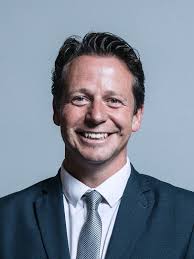
  • Nigel Huddleston – 2022 Statement on the Independent Review of Destination Management Organisations

    Nigel Huddleston – 2022 Statement on the Independent Review of Destination Management Organisations

    The statement made by Nigel Huddleston, the Parliamentary Under-Secretary of State for Digital, Culture, Media and Sport, in the House of Commons on 20 July 2022.

    The Government are today publishing their formal response to the independent review of Destination Management Organisations (DMO) which was undertaken by Nick de Bois (Chair of the VisitEngland Advisory Board) and published in September 2021. The DMO review was commissioned in March 2021 by the then Secretary of State for Digital, Culture, Media and Sport, my right hon. Friend the Member for Hertsmere (Oliver Dowden), and myself as the current Minister for Sport, Tourism, Heritage and Civil Society.

    The DMO review is an important component of the UK Government’s post-covid tourism recovery plan, which can be summarised as securing a swift recovery to pre-pandemic tourism volumes and visitor expenditure before building back better towards a more productive, innovative, resilient, sustainable and inclusive visitor economy, with the benefits of tourism spread across every nation and region of the UK.

    England’s DMOs have an important role to play both in the recovery of the sector from covid-19 and achieving the Government’s Levelling Up objectives. Their role is not only to market and promote England’s unique, amazing and varied visitor offer, but also to work with local businesses as they recover, to attract new investment, and to help England deliver a more sustainable, data-driven, resilient and accessible industry. For this to happen, DMOs need to be at their best, and we need to address long-running concerns about the structure, funding models and fragmentation of England’s DMO landscape.

    Mr de Bois was given the task of surveying the DMO landscape in England—tourism being a devolved responsibility within the UK. He was asked to evaluate the current system, with a view to making recommendations on whether there may be a more efficient and effective model for supporting English tourism at a local and regional level and delivering the government’s policy agenda.

    Mr de Bois submitted his report last summer, and we published it in September 2021. This response addresses Mr de Bois’ recommendations and outlines the actions that are going to be taken forward in the current spending review. The DMO review made 12 recommendations in total, six of which are directed at the Government, four at DMOs themselves, and one each for local enterprise partnerships (LEPs) and local authorities. I am pleased to say that we will be accepting the majority of his recommendations.

    A new accreditation system will be introduced over the 2022-23 financial year, with VisitEngland receiving new funding for implementation. By creating a new ‘national portfolio’ of accredited, high-performing Local Visitor Economy Partnerships we will reduce fragmentation and bring coherence to the current DMO landscape. It will make it clearer to public and private actors who to engage with in order to support the regional visitor economy—as well as to prospective visitors looking for information about English destinations. We are proposing to change the name of DMOs to Local Visitor Economy Partnerships (LVEPs), to capture the wider strategic focus on the visitor economy and the breadth of activity and relationships they will establish to support the local visitor economy.

    The Government also commit to a pilot of Mr de Bois’ recommendation of a tiering model including multi-year core funding in a region of England. That will give one top tier LVEP, or collection of LVEPs—known as a Destination Development Partnership— a firm foundation to engage in a wide range of destination management type activities as well as prompt increased private sector investment. The response sets out the criteria upon which the Department for Digital, Culture, Media and Sport (DCMS) and VisitEngland will decide where the pilot is run.

    A targeted pilot will ensure we support those areas with most potential to develop their visitor economies, help achieve the Government’s Levelling Up objectives and align with the devolution commitments set out in the Levelling Up White Paper. A pilot will allow the Government to collect evidence to understand how effective the proposed model can be, and to support any future funding considerations.

    Up to £4.05 million—£1.35 million per year—has been allocated towards the DMO review implementation. The ambition is for a successful pilot to enable roll out of the multi-year funding nationally, however this is subject to future spending rounds and therefore, not guaranteed.

    I will place a copy of the Government response in the Libraries of both Houses.

  • Kwasi Kwarteng – 2022 Statement on the Department for Business, Energy and Industrial Strategy

    Kwasi Kwarteng – 2022 Statement on the Department for Business, Energy and Industrial Strategy

    The statement made by Kwasi Kwarteng, the Secretary of State for Business, Energy and Industrial Strategy, in the House of Commons on 20 July 2022.

    BEIS has been committed to improving the business environment and delivering upon the pillars of the plan for growth. We have a plan to secure more domestic energy, support people with the cost of living now, grow the economy and raise wages by reindustrialising our industrial heartlands and unleashing innovation, and accelerate great British science. At the same time, we recognise the power of the private sector and have taken steps to boost enterprise by making the UK the best place in the world to start, grow and invest in a business.

    We have seen a significant increase in the global wholesale price of gas as a result of covid-19 aftershocks coupled with Putin’s illegal war in Ukraine, which has led to pressure on business and family budgets.

    Tackling the cost of living to help families keep more of their own money:

    Raising the national minimum wage and national living wage, giving a full-time worker a £1,000 a year pay rise. Uprating the national living wage has provided a pay-rise for about 2.5 million UK workers. This included the largest ever uplift of a £1,000 a year pay rise for full time workers aged 23 and over.

    Helping now with the cost of living by ensuring families receive at least £400 of their electricity bills this winter. Our energy bills support scheme grant payment will take £400 off family electricity bills.

    Increasing support this winter with at least £250 additional support for most vulnerable. The warm home discount (£150), winter fuel payments (between £100 and £300) and cold weather payments (£25/week), which ensure that the most vulnerable can heat their homes over the colder months.

    Protecting the energy price cap, insulating families from the significant increase in wholesale gas prices. The energy price cap also currently shields 22 million consumers from being overcharged by suppliers. The cap will remain in place until at least the end of this year, ensuring consumers pay a fair price for their energy.

    Shielding the public from rip-offs and boosting competition. Draft legislation will be published this autumn to give the Competition and Markets Authority (CMA) enhanced powers to tackle bad business practices, including making it illegal to pay someone to write or host a fake review and making it easier for consumers to opt out of subscriptions.

    Pioneering British science to cure cancers and develop technologies so people have better lives:

    Establishing the Advanced Research and Invention Agency (ARIA) to improve people’s lives through state-of-the-art technologies. ARIA will support high-risk, high-reward research and projects which support transformative change, including securing £800 million (by 2025/26) at the spending review, agreeing key principles with devolved authorities and setting out ARIA’s independence.

    Securing biggest ever research and development budget. We have secured £39.8 billion of R&D investment supporting our commitment to ensure total R&D investment reaches 2.4% of GDP by 2027.

    Strengthening the UK vaccine ecosystem to ensure resilience against covid-19 and other future health emergencies. The Vaccine Taskforce has already invested over £395 million in UK manufacturing infrastructure and skills. We have ambitious plans to invest more alongside industry to secure our domestic vaccine resilience. Areas of focus include mRNA capability and investments which will strengthen the resilience of the UK’s vaccine supply chains.

    Developing cures for disease, diagnostics and other life-saving research. With DHSC we are committing up to £200 million to healthcare research, diagnostics and manufacturing, building on our world leading covid-19 vaccination programme.

    Setting out our visions for the UK to be a global hub for innovation by 2035. We will do this by working with private business, reforming our existing R&D institutions and supporting seven technology families from quantum computing to artificial intelligence.

    Building a world-leading UK space sector. We have published the national space strategy backed by £1.75 billion and aligned civil and defence policy for the first time. Through our part owned OneWeb satellite system, we have seen the launch of multiple waves of UK satellites. We also invested £20 million in specialised technology to support the James Webb telescope launch, marking a significant step in space discovery and our understanding of the universe.

    Boosting British manufacturing and reindustrialising our former heartlands to drive long-term growth:

    Delivered two gigafactories, bringing back manufacturing to Britain. We have announced funding for two major gigafactories in the UK using the automotive transformation fund. Envision AESC based in Sunderland and Britishvolt in Blyth, Northumberland, will have a total capacity of over 40GWh, create over 3,500 direct jobs, as well as 1,000s more in the supply chain and will see over £2 billion of private sector investment in the region. We have also helped secure Ford’s investment of £230 million in production of electric vehicle components at Halewood.

    New support for energy intensive industry to protect it for the future. We have announced a three-year extension to EII compensation scheme in the British energy security strategy and more than doubling the budget. This goes alongside our consultation on “other” energy support measures to reduce electricity prices to improve competitiveness for these industries.

    Commenced the National Security and Investment Act protecting British industry from hostile activity. This gives the Government greater powers to protect our national security by screening and, if necessary, intervening in investments and other acquisitions of control over sensitive entities and assets in the UK economy.

    Taken significant steps to begin to compensate postmasters who have suffered as a result of the appalling Horizon IT failings. This has included announcing that Government will provide funding for interim compensation payments of up to £100k ahead of full funding for eligible postmasters whose Horizon-related convictions have been quashed. We have also announced £19.5 million interim compensation for the “GLO” group of postmasters who exposed the Horizon scandal—to be followed as soon as possible by final compensation.

    Securing Britain’s energy to ensure more cleaner, cheaper energy is generated in this country:

    Accelerating domestic energy independence through the British energy security strategy (BESS). The BESS and the Energy Security Bill includes support for household energy affordability and efficiency, new and ambitious commitments on nuclear and renewable energy, and setting out the role of the North sea in our low-carbon transition, including delivering our £1 billion commitment to carbon capture and storage clusters by 2030.

    Largest-ever renewable energy auction providing 11 GW of great British electricity, with wind power coming in cheaper than ever. Earlier this month, we secured a record 11 GW of renewable energy through the biggest contracts for difference round yet—enough to power around 12 million homes.

    Rebuilding Britain’s proud nuclear sector. We have passed the Nuclear Energy (Financing) Act 2022, which will unblock obstacles and cut costs. We are also investing in the sector through the £120 million Future Nuclear fund, £100 million for Sizewell C (in addition to driving forward negotiations), £120 million to develop small modular reactors. We have also established Great British Nuclear, a landmark moment in Britain’s nuclear history, to ensure we deliver multiple new projects this decade.

    Securing strong domestic oil and gas extraction. We have given the UK’s oil and gas sector clarity about the role hydrocarbons will play in our energy need with an upcoming new licencing round, backed by the North sea transition deal we will ensure jobs are protected and technologies developed.

    Kickstarted UK hydrogen industry with capital and revenue support as well as world-leading legislative framework. Over the last year, we published our hydrogen strategy and investor roadmap and launched a net zero hydrogen fund worth up to £240 million to nurture the UK’s world leading hydrogen economy. The Energy Security Bill also provides a legislative framework for our hydrogen business models.

    Denying Britain’s enemies access to funding by ending Putin’s revenue streams. We also committed to end the use of Russian oil and coal power by the end of 2022 and are working with allies to support then away from use of expensive fossil fuels.

    Backing other renewable technologies to build stronger domestic supply chain. We have provided a £60 million boost for floating offshore wind projects, supported entrepreneurs to find innovative ways to reduce expensive fossil fuel dependence through the energy entrepreneurs fund, and ringfenced £20 million per year for tidal stream electricity.

    Worked with our colleagues across Government to deliver the UNFCC COP26 summit in Glasgow in November 2021 to move 90% of the global economy to net zero. This followed the publication of our heat and buildings and net zero strategies, which laid out a clear path to decarbonise all sectors of the UK economy and achieve net zero by 2050. The summit was attended by 120 world leaders and over 40,000 registered participants. The resulting Glasgow climate pact increases the likelihood of delivering the Paris commitment 1.5 degree scenario.

    Since publishing the “The Ten Point Plan for a Green Industrial Revolution” in November 2020, we have landed £22 billion of inward investment into home-grown clean technologies, and estimate to have created around 68,000 green jobs.

  • Kwasi Kwarteng – 2022 Statement on the Recovery Loan Scheme

    Kwasi Kwarteng – 2022 Statement on the Recovery Loan Scheme

    The statement made by Kwasi Kwarteng, the Secretary of State for Business, Energy and Industrial Strategy, in the House of Commons on 20 July 2022.

    I am tabling this statement for the benefit of hon. and right hon. Members to bring to their attention the details of the extension to the Recovery Loan Scheme (RLS).

    RLS is facilitated by the Government-owned British Business Bank and delivered through its delivery partners. Under the extension, lenders will offer facilities of up to £2 million to support businesses that would otherwise be unable to access the finance they need, or would only be able to do so at a higher rate of interest. There will be a £6 billion cap on the aggregate value of loans provided through the scheme for the first two years.

    The extension covers the period from 1 August 2022 to 30 June 2024. Under the extension, the following changes will come into force:

    The maximum amount of external finance available will be £2 million per business in Great Britain; for businesses in scope of the Northern Ireland Protocol, the maximum amount will be £1 million per business.

    The requirement for businesses to certify that they have been affected by the covid-19 pandemic will no longer apply. To lend through the scheme, lenders will be required to certify that they would not have been able to offer a facility to the business on their normal commercial terms, or that they would have only been able to do so at a higher interest rate.

    Personal guarantees will be permitted, but not required, for facilities under £250,000—as has been the case to date for facilities above £250,000. This brings the scheme in line with standard commercial practice in business lending. Principal private residences may not be used as security under any circumstances.

    Otherwise, scheme parameters are unchanged. As previously:

    The minimum facility size will be £25,001 for loans and overdrafts and £1,000 for asset and invoice finance.

    Businesses will be required to meet the costs of interest payments and any fees from the outset.

    Businesses who have made use of the previous coronavirus loan schemes will be able to access the scheme.

    Given the above, the maximum contingent liability for lending up to the £6 billion cap on the scheme is £4.2 billion.

    I will be laying a Departmental Minute today containing a description of the liability undertaken.

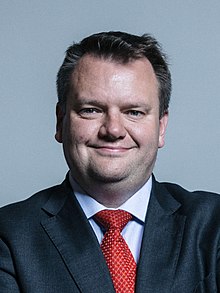
  • Nick Thomas-Symonds – 2022 Speech on the UK-Australia Free Trade Agreement

    Nick Thomas-Symonds – 2022 Speech on the UK-Australia Free Trade Agreement

    The speech made by Nick Thomas-Symonds, the Labour MP for Torfaen, in the House of Commons on 19 July 2022.

    I am grateful for the granting of today’s urgent question and I congratulate the hon. Member for Totnes (Anthony Mangnall) on securing it.

    The Government’s failure to make adequate parliamentary time available for a debate on this trade deal is completely unacceptable and a clear breach of promise. Lord Grimstone wrote in May 2020:

    “The Government does not envisage a new FTA proceeding to ratification without a debate first having taken place on it”.

    The Select Committee has, rightly, been scathing about the way the Government have handled scrutiny on this issue and about their premature triggering of the 21-day CRaG process without full Select Committee consideration being available to Members. Today’s clear rejection of an extension to the CRaG process is, yet again, unacceptable behaviour from the Government.

    The truth is that Ministers are running away from scrutiny. Might Ministers be running away because of the Select Committee’s report stating they lack a “coherent trade strategy”? Or might the Government be hiding from scrutiny because of the chaos at the Department itself? Members do not have to take my word for it. Yesterday, the Secretary of State was saying of her own Minister of State for Trade Policy, the right hon. Member for Portsmouth North (Penny Mordaunt), that there has been a

    “number of times when she hasn’t been available which would have been useful and other Ministers have picked up the pieces”.

    That is her own Minister. Maybe the Under-Secretary of State for International Trade, the hon. Member for North East Hampshire (Mr Jayawardena), is one of the Ministers who has been picking up the pieces. Or might Ministers be hiding because of the lack of progress in their trade policy, with no comprehensive trade deal with the US in sight?

    There are profound consequences for our agricultural sector from the Australian deal that Ministers should be open about and accountable for. Is it any wonder that Australia’s former negotiator at the WTO said:

    “I don’t think we have ever done as well as this”?

    To put it quite simply, when are Ministers going to stop running away from their own failure?

    Mr Jayawardena

    I think that, actually, we have a very good deal that the Government should be proud of and which will benefit the British people. As I said—perhaps the right hon. Gentleman was not listening—this will increase trade with Australia by 53%, boost our economy by £2.3 billion and add £900 million to household wages in the long run. In fact, £132 million of exports already go from Wales to Australia. We want to boost that even further to benefit the people of Wales and his constituency.

    As for what my noble Friend Lord Grimstone said, processes for the other place are a matter for the other place. It is clear that the Labour party is so focused on process that they are not focused on securing the benefits for the British people of Brexit.

  • Ranil Jayawardena – 2022 Statement on the UK-Australia Free Trade Agreement

    Ranil Jayawardena – 2022 Statement on the UK-Australia Free Trade Agreement

    The statement made by Ranil Jayawardena, the Parliamentary Under-Secretary of State for International Trade, in the House of Commons on 19 July 2022.

    I have been asked to reply. Our Anglo-Australian trade deal will play an important role in levelling up the United Kingdom. It is expected to increase trade with Australia by 53%, boost the economy by £2.3 billion and add £900 million to the wages of hard-working households across our country in the long run. Her Majesty’s Government have stated on a number of occasions that the agreement will be ratified only once it has passed its statutory scrutiny period under the Constitutional Reform and Governance Act 2010 and, in addition, the necessary implementing legislation must have passed.

    Her Majesty’s Government have made extensive additional scrutiny commitments, which include allowing a reasonable amount of time for the Select Committees to produce reports prior to the statutory scrutiny period under CRaG. We further set out that, for the Australia deal, this would be a period of at least three months. In actual fact, double the amount of time has now been provided: the agreement has been available for scrutiny for over six months. I should also point out that, before starting CRaG, Her Majesty’s Government published two reports to support scrutiny: the independent Trade and Agriculture Commission’s report on 13 April, and the Government’s own report under section 42 of the Agriculture Act 2020 on 6 June. Both reports were provided to the relevant Select Committees prior to publication to support their scrutiny work.

    Her Majesty’s Government have now started the CRaG process, following this six-month scrutiny period, which was in addition to the statutory period provided for by CRaG. By the end of the CRaG period on 20 July, the treaty will have been under the scrutiny of this House for over seven months. The House will undoubtedly have benefited from reports from three separate Select Committees—the International Trade Committee, the Environment, Food and Rural Affairs Committee, and the International Agreements Committee in the other place.

    In addition, the agreement can only be ratified once Parliament has scrutinised and passed the implementing legislation in the usual way. The agreement requires primary legislation, and the Trade (Australia and New Zealand) Bill is currently before the House of Commons and will have its Second Reading in due course. This legislation will be fully scrutinised and approved by Parliament in the usual way. I should point out that we expect Australia to conclude its parliamentary process before we do. Therefore, any delay to our process slows the deal’s economic benefits from being felt across Britain.

    Let me say this to my hon. Friend: he knows that my brief usually covers other markets, but the principles remain the same. In my view, it is important to strike the right balance between the scrutiny of trade deals and bringing them into effect in a timely way so that our consumers and businesses can reap their full rewards. I believe that the balance is right, and that this House and my Department should continue to harness the power of trade to create jobs, boost wages and secure prosperity.

    Anthony Mangnall

    Thank you, Mr Speaker, for granting this urgent question on the Australia free trade agreement. The UQ is supported by the whole International Trade Committee and the Chair, the hon. Member for Na h-Eileanan an Iar (Angus Brendan MacNeil), who cannot be with us but is here in the guise of his favourite Scottish export spirit—whisky, of course. The Chair of the Select Committee and I have very different perspectives on the Australia free trade agreement, but despite that we both wholeheartedly believe in the need for scrutiny in this place of that agreement.

    This is the first wholly new trade agreement that we have signed since leaving the European Union, but unfortunately it has not had the scrutiny it deserves. On 8 October 2020, the then International Trade Secretary, who is now the Foreign Secretary, said that

    “we will have a world-leading scrutiny process, comparable with Canada, Australia, New Zealand and Japan. That will mean the International Trade Committee scrutinising a signed version of the deal and producing a report to Parliament, a debate taking place and then, through the CRaG…process, Parliament can block any trade deal if it is not happy with it.”—[Official Report, 8 October 2020; Vol. 681, c. 1004.]

    I ask the Minister whether the Government are still committed to that point of principle. The Minister for Energy, Clean Growth and Climate Change, the Minister for Farming, Fisheries and Food and the Secretary of State for International Trade have made those commitments to right hon. and hon. Members of this House, and we deserve our say on a trade agreement that makes a significant difference. On the Australia free trade agreement, the Government began the 21-day CRaG process before the International Trade Committee had even produced its report and even before the Secretary of State had come before us to defend the agreement in the first place. The Government refused to grant the Committee’s request for 15 sitting days between the publication of the section 42 report and triggering CRaG, thus denying us more scrutiny. As I have already said, the Government have failed to provide a Minister in good time and good order. In relation to the first report the Committee wrote on this, the Secretary of State was asked eight times to come before the Committee to discuss the agreement. She only did so a week and a half ago. The Government have failed to provide a debate and a vote on the agreement, so will the Minister, as the Liaison Committee and many other Members across the House have asked, delay ratification for the further 21 days and allow us to have a proper debate on this issue? Will he ensure that every future free trade agreement is signed and drawn through the CRaG process, as you have suggested, Mr Speaker? Will he ensure that Ministers are made available to discuss trade agreements ahead of time?

    We are asking for nothing that we have not been promised at the Dispatch Box. It is time we are given that.

    Mr Jayawardena

    We have a system that compares very well with other parliamentary systems around the world. We will not be extending the CRaG period, given the extensive scrutiny time that Parliament has had—as I set out earlier, seven months by the end of the period—and we will not be able to offer a debate. The Secretary of State said that she felt the agreement could benefit from a general debate, but that is a matter for business managers in this House. The Labour party was very keen to have another debate yesterday, which took a whole day of parliamentary business from this House.

    The section 42 report is there to inform the scrutiny period, not create an additional scrutiny period above and beyond CRaG. We published that report on 6 June. As my hon. Friend says, it was sent to the International Trade Committee, the Environment, Food and Rural Affairs Committee and the International Agreements Committee in the other place on 27 May to ensure they had ample time to consider the report. There is a balance, as I say, between ensuring sufficient time for robust scrutiny and ensuring agreements come into place quickly. I think we have got that balance right.

    On CRaG, the Constitutional Reform and Governance Act 2010 was introduced by the Labour party. It gave the opportunity for parliamentary disapproval of treaties statutory effect and it gave the House of Commons the power to block ratification. Members across the House will know the answer to that. I am more than willing to set out the process, but in the interests of time and allowing people to come in I shall sit down for now.

  • Kevin Hollinrake – 2022 Speech on the Supply of Drugs to Children

    Kevin Hollinrake – 2022 Speech on the Supply of Drugs to Children

    The speech made by Kevin Hollinrake, the Conservative MP for Thirsk and Malton, in the House of Commons on 19 July 2022.

    I beg to move,

    That leave be given to bring in a Bill to make the offence of supplying or offering to supply a controlled drug aggravated when the person to whom the drug is supplied or offered is under 16; and for connected purposes.

    As John F. Kennedy once said:

    “Children are the world’s most valuable resource and its best hope for the future.”

    Society recognises our special duty to protect children, and to ensure that those who bring them harm feel the full force of the law. The Supply of Drugs to Children Under 16 (Aggravated Offence) Bill, or Leah’s law, intends to change the law to make clear that no person under the age of 16 can consent to taking illegal substances, and to ask our judges to impose tougher sentences on those who supply drugs to our children. That will have the dual effect of keeping young people safe and acting as a deterrent to those who callously target children.

    To outline why this change is long overdue, let me explain the tragic background to the Bill. In May 2019, 15-year-old Leah Heyes from Northallerton was sold MDMA by two friends. She took the substance in a car park and died shortly after, tearing the life of her family and community apart. The unimaginable was exacerbated by the fact that the young adults who sold Leah the drugs received custodial sentences of 21 and 12 months respectively. The two ended up serving a paltry six months each.

    At 15, Leah was, in the eyes of the law, just a child when her life was cruelly cut short. Quite rightly, society and the law offer greater protections and special consideration to children. As we know, it is illegal to sell alcohol or cigarettes to, or to have sex with, somebody under the age of 16, and somebody under that age cannot consent to sex. Even beauty salons that allowed under-18s to use sunbeds would be committing a specific offence against children. When it comes to the supply of drugs, one would think that we would offer our children greater protection against those who seek to exploit their innocence, but we do not.

    It is an offence under section 4 of the Misuse of Drugs Act 1971 to supply a controlled drug to any person, but that blanket approach to sentencing does not protect those who need it most. There is clear disregard shown, and a callousness, in knowingly deciding to put a child’s life in danger, yet when it comes to dealing drugs, there is not a greater penalty applied for doing that. Although there are statutory aggravating factors—for example, when an offender uses a child to deliver drugs, or supplies drugs on or in the vicinity of school premises during or close to school hours—those do not apply when someone sells drugs to children such as Leah; it is a huge gap in the law.

    Although the tragedy of drug-related death is not limited to children, adults are seen by law as having legitimate agency and the capability to make their own choices. In other areas, however, the law recognises that children do not have that capability. Given the added peer pressure in this age of social media, children are particularly impressionable and vulnerable targets. It cannot be right to class a child’s agency as being the same as an adult’s when it comes to something as damaging as drugs. We know that county lines drug gangs target young people, who in turn go on to supply drugs to their peers. Profits pile up for the dealers, and the cycle continues.

    Although case law has established law that targeting vulnerable individuals or children in order to supply them with drugs could be examples of aggravating features, that approach is not mandated by a specific piece of legislation, and that is what Leah’s law would do. This would not be an unconventional approach to drugs sentencing. Certain states in Australia recognise the differentiation, and in Tasmania, New South Wales and South Australia, there are specific offences for the supply of drugs to under-16s.

    Since Leah’s death, her mother, Kerry Roberts, has tirelessly championed the case for Leah’s law—that is why I am standing before the House now. Kerry is watching today, and I thank her for raising awareness of the issue. She does not want her daughter’s death to be in vain, and for that the whole House will have nothing but admiration. Although Kerry is not my constituent, drug-related crime among young people affects each and every one of us in Parliament, and I fully intend to help her campaign succeed. If we ensure that just one person thinks twice about selling drugs to an under-16-year-old, save just one child’s life, or create just one better start in life, it would make the Bill, and all Kerry’s crucial work, worth while.

    I do appreciate that the Government are carrying out a great deal of work on restricting drug supply and working with charities and agencies, but the reality is that the global fight against drugs is a massive undertaking and this will take many, many years to solve. We must deter these perpetrators from preying on our children. We can start to tackle this issue on behalf of all the families whose lives have been devastated by drug crime. It speaks volumes that the Leah’s law petition garnered 10,276 signatures, but it is disappointing that the Government’s response thus far is that they are not going to act on this. I did, however, have a very constructive meeting with the Minister, so I hope that position will change soon.

    It is simple; I am asking the Government to think again and support my Bill to make it a specific offence to supply drugs to those aged under 16, ensuring that this crime carries a harsher sentence. I will continue to work with Leah’s mother and with Ministers to make this campaign a reality.

  • Peter Kyle – 2022 Speech on the Northern Ireland Protocol Bill

    Peter Kyle – 2022 Speech on the Northern Ireland Protocol Bill

    The speech made by Peter Kyle, the Labour MP for Hove, in the House of Commons on 19 July 2022.

    It is a pleasure to speak under your chairmanship once again, Mr Evans.

    I shall start by responding to a point made by the right hon. Member for East Antrim (Sammy Wilson). To clarify, the Labour party and I voted against the protocol when it was before the House. In fact, we walked through the Lobbies together on this issue. I am surprised he does not remember such a memorable occasion—it is quite a rarity, it must be admitted. I hope that when he comes to speak, he will correct the record, because we have a good relationship. It is one that I value and that I hope will continue.

    Sammy Wilson

    For the record, will the hon. Gentleman tell us the stance of his party on the protocol today?

    Peter Kyle

    First, I am slightly disappointed that the right hon. Gentleman did not take the opportunity to correct the record from his previous intervention.

    My stance and that of the Labour party on the protocol is very clear: it needs to evolve, to change and to be improved, and that should be done by all lawful means. This Bill is not lawful. Of course, the right hon. Member for Maidenhead (Mrs May), the former Prime Minister, said on the Floor of the House just a few days ago that in her opinion it was unlawful. We heard from a former Attorney General in the last day of debate that he felt it was unlawful.

    For that reason, the Labour party believes that although we voted against the protocol in the first place, now that it is in domestic statute and part of an international treaty, the responsible thing to do is to negotiate a way forward. What we cannot do is repeat the debates of previous days. We need to stick to the clauses before us. Today, we are talking about—

    Ian Paisley

    Will the hon. Gentleman give way?

    Peter Kyle

    Of course I will give way, but I will not rehearse the debates of the previous two days.

    Ian Paisley

    I appreciate the hon. Gentleman’s giving way. The issue of lawfulness, which he put on the agenda today, has to be addressed. The Northern Ireland Affairs Committee is the only Committee to have taken evidence on the lawfulness, or otherwise, of the protocol under international law. For the record, it was stated:

    “no, it does not violate international law. It does not violate the protocol.”

    I have heard people who should know better saying that it does, but I am afraid they are wrong. They are obviously not international lawyers. The evidence given to this House by the emeritus professor of public international law at the University of Edinburgh, who advises the Government and the Opposition, says that it does not break the law. Why does the hon. Gentleman persist with this inaccurate point?

    Peter Kyle

    Again, I will not repeat the debate from the first day of Committee, when all those issues were explored in detail. It is a shame to hear the hon. Gentleman say that of the former Prime Minister, the right hon. Member for Maidenhead, whom I know he respects. She said in the House that she asked herself three questions:

    “First, do I consider it to be legal… Secondly, will it achieve its aims? Thirdly, does it…maintain the standing of the United Kingdom in the eyes of the world? My answer to all three questions is no.”—[Official Report, 27 June 2022; Vol. 717, c. 63.]

    Stephen Farry

    Will the hon. Gentleman give way?

    Peter Kyle

    I am going to move on, because we need to stick to the clauses before us. I will give way once, but I promise, Mr Evans, that I will then crack on with the business before us.

    Stephen Farry

    Hopefully it will be a very helpful intervention. Does the shadow Secretary of State agree that it is important for Members to reflect fully on the evidence that was given to the Northern Ireland Affairs Committee? The last time the hon. Member for North Antrim (Ian Paisley) made reference to it, at least one of the people who gave evidence expressed concern, along with other international lawyers, that what was said did not fully reflect the subtlety of the arguments put before the Committee, which were not as simplistic as the hon. Gentleman said.

    Peter Kyle

    I am very grateful for that intervention. For the record, I think that all the interventions I receive here are helpful. They are certainly in the spirit of the debate that this place exists for. I believe that the hon. Gentleman is right, and I am grateful to him for setting the record straight so that we can move forward.

    Today, we are considering clauses 7 to 11, which deal with the dual regulatory regime the Government want to set up for Northern Ireland. Amendment 28 would require a Minister to carry out an economic impact assessment and a consultation before making any regulations for a dual regulatory regime. Some parts of the Bill indicate that the Government have been listening to problems that businesses and consumers in Northern Ireland are facing. In those areas, the Labour party is clear that the EU must show more flexibility to deliver the progress that businesses in Northern Ireland need.

    However, in proceeding with the dual regulatory regime, the Government demonstrate that they are ignoring the voices of most businesses. We saw that in the Government’s press release about Second Reading. It revealed, alarmingly, that the Government had only just begun

    “a series of structured engagements with the business community, to discuss and gather views on the detailed implementation of the Bill.”

    That had happened in recent days—not recent weeks, months or years, but in recent days. Businesses I know that are taking part in the process have asked for a commitment from the Government that they will publish the results in a report. I hope that the Minister will give that assurance from the Dispatch Box today.

    Instead of taking the time to develop a policy that works for businesses, the Foreign Secretary is doing what the Government have done from the start: they have been so preoccupied negotiating with the various factions in their own party that they neglect to engage meaningfully with the stakeholders and partners who are the only ones able to unlock the progress our country needs.

    Declan Billington, the chief executive of John Thompson and Sons animal feed manufacturers and co-chair of the Northern Ireland Food and Drink Association, said, when asked for his assessment of the proposals,

    “I cannot actually answer the question because when I say, ‘Lift the bonnet under the bill and show me the detailed policies that we can engage with,’ I hear conversations about co-design and, therefore, I cannot benchmark.”

    This is absurd. Instead of coming up with serious proposals, the Government are simply asking businesses to do the hard graft for them. In a damning assessment, the trade expert Sam Lowe described the proposed dual regulatory regime as

    “a solution looking for a problem: it is near-impossible to find a business in Northern Ireland advocating for it.”

    There are many reasons businesses are not calling for a dual regulatory system. High on the list is the shift in the burden of responsibility for ensuring that goods do not enter the EU off the Government agencies and on to the 75,000 individual Northern Ireland businesses. That might work for retailers, but exporters and businesses with highly integrated all-island supply chains see it as an almost existential threat. Again, the Government have been clear that their preferred outcome for the protocol is a negotiated solution. Such unserious proposals undermine the common ground in other areas.

    The dissent in Tory ranks complicates the situation further. Several prominent Conservatives, including the Attorney General, have said that they want the dual regulatory regime to be scrapped in favour of mutual enforcement down the line. The irony of asking for mutual enforcement is that it requires absolute trust between the UK and the EU. It would take serious negotiation and deep good faith to achieve it. It is pure fantasy to think that we can get there with this Bill, which unilaterally rewrites the agreement we have.

    Hilary Benn

    Will my hon. Friend give way?

    Peter Kyle

    It would be a pleasure.

    Hilary Benn

    The dual regulatory regime raises more questions than it answers. If I understand the Government’s position correctly, a firm can decide to operate under one regime or the other. Say, for the sake of argument, that UK regulation banned a particular ingredient for a food product, but it was not banned by the EU. Is it my hon. Friend’s understanding of the Government’s proposals that it would be legal for a firm in Northern Ireland to sell that product with the banned ingredient in the rest of the UK, so long as the company claimed it was operating under EU rules?

    Peter Kyle

    I am always very grateful to my right hon. Friend for his interventions in these debates; they always add a great deal. He has, with his forensic mind, picked a situation that shows one of the many absurdities thrown up by this Bill. It will, in practice, mean a huge amount of complexity for businesses across Northern Ireland and elsewhere. Some businesses will find it impossible to answer the questions he has raised, and will be deterred from trading on current terms, simply because they are worried about infractions from one of the markets or the other, or indeed about how the two interact. That is an area that I will move on to.

    I listened with great interest to the exchanges with Northern Ireland Members a few moments ago about the dairy trade, and to the interventions by the hon. Member for North Antrim (Ian Paisley). I am straying into the same territory now as I quote the representative body for the dairy sector. I encourage all Members to read the written evidence that the Dairy Council for Northern Ireland submitted to the Northern Ireland Affairs Committee just last week. This is a hugely important industry for Northern Ireland. There are over 3,200 dairy farming businesses there, which contribute at least £1.5 billion a year to the economy. It is very good to know that the hon. Member and his family are part of that success for Northern Ireland.

    In the words of the Dairy Council,

    “The NI Protocol Bill represents a threat to the IoI”—

    the island of Ireland—

    dairy value chain through the proposal for a Dual Regulatory Regime…which will open the potential for products used on dairy farms in the production of milk to be imported from GB without having to adhere to EU standards.

    The IoI dairy value chain operates on the basis that NI and RoI milk are produced to the same EU standards”.

    It also stated:

    “Annually around 800m litres of milk, about one third of total NI production, moves to RoI for processing. NI does not have sufficient processing capacity to process all the milk produced in NI, so anything that damages or limits the dairy value chain would have serious consequences for the NI dairy sector.”

    At present, Northern Ireland vets issue certification that the Republic of Ireland vets accept for each consignment of milk.

    Ian Paisley

    Will the hon. Member give way?

    Peter Kyle

    After I have made this point, I will, because I am always interested in the hon. Member’s views on this issue.

    What the Government are proposing would impose additional layers of bureaucracy to prove that every step of the milk processing complied with EU standards. This would be disastrous for the dairy industry; it would require segregation of milk at every stage and push the sector into negative growth in Northern Ireland.

    Ian Paisley

    On that technical point, as the hon. Member will accept, the protocol is an example of red tape being used to tie up commerce. Given what he has just said, does he accept that a commercial opportunity is being set aside, and farmers are not being allowed to take it?

    Peter Kyle

    The hon. Member talks about what I said, but all I did was quote the words of the Dairy Council for Northern Ireland; I was not expressing my views. When I talk about an industry in Northern Ireland, I of course try extremely hard to listen to the people on the frontline who represent that industry. Of course I take into consideration his experience, and the frontline experiences of his family.

    My amendment 28 says, “Let’s listen to those on the frontline and get the Government to do an assessment before we do something that could have radical consequences for the sector.” I understand that the hon. Member has first-hand experience of talking to people, and of living in a family of people, who are affected by this. Expert opinion fed to me contradicts that view. What is the logical conclusion? Before we move forward with a set of regulations that could ride roughshod over the dairy industry in Northern Ireland, let us take the time to make an assessment. We should have an impact assessment, lay it before the House, and debate it before we pass a law that could radically impact the industry.

    Sammy Wilson

    The hon. Member has to be very careful in listening to bodies that claim to be representative of an industry; those at the top of the body very often have their own agenda. Let us look at the logic of his argument. A third of Northern Ireland’s milk goes for processing in the Irish Republic. In other words, some businesses in the Irish Republic are dependent on an awful lot of milk, which they cannot produce in their country, from Northern Ireland. If we have a system of dual regulation that ensures that the milk is as safe tomorrow as it was yesterday, and as safe after the Bill goes through as it was before the Bill, does he not think that businesses and Government in the Irish Republic will accept that Northern Ireland milk is essential for those industries, and so would not seek to put a barrier in its way?

    Peter Kyle

    The point I am making is quite clear. There is a difference of opinion here, and I think it is unwise to reject out of hand the representative body for the dairy sector in Northern Ireland. Let us engage with that. I have been very respectful of the right hon. Gentleman’s view, but I make the point that that was the second intervention from him, and I did ask him to correct the record in relation to his previous intervention, when he said something that was categorically untrue about my voting in the past. I hope that when he makes his next intervention he will do the right and honourable thing, which is to correct the record unequivocally and recognise that I voted in the polar opposite way to the way that he said I did.

    The best way for us to resolve these issues is to have an independent assessment of the impact on different sectors that might be negatively affected—or certainly affected—by the legislation. It would be irresponsible not to, because there is such a difference of opinion.

    Stephen Farry

    Talking of putting things on the record, would the shadow Secretary of State join me in standing up for the credibility of Mike Johnston, who leads the Dairy Council for Northern Ireland? I stress that no one here has any evidence whatsoever that he has any motivation other than standing up for the interests of his industry.

    Peter Kyle

    I am certainly very grateful for the intervention, and to the witness for giving the benefit of his insight, wisdom and experience to a Select Committee of the House—insight gained from his membership of his organisation. All submissions to this place are welcome, and must be received in the spirit in which they were given to the House. However, it is the role of Government to deliver, and I urge the Government and Ministers to deliver in the way that has the least chance of negatively impacting a sector as important as the dairy sector in Northern Ireland. We are talking about the dairy sector, but it is just one of many sectors that could be negatively impacted if the Government get the implementation of the Bill wrong.

    The Dairy Council for Northern Ireland estimates that processing all the milk that Northern Ireland produces would take three years and up to £250 million of investment. Let us be clear that we are debating a proposal that would cripple a part of the economy that supplies basic consumer goods and is working well. The proposals would take a wrecking ball to this key sector in the middle of a cost of living crisis, wreaking havoc on businesses and driving up prices. It would be a different debate if the Government were saying that they are introducing a dual regulatory regime because they do not want Northern Ireland to have dual market access any more, and this was the first step towards that, but that is not what Ministers are saying.

    On Second Reading, the Foreign Secretary said that this regime

    “cuts the processes that drive up cost for business”—[Official Report, 27 June 2022; Vol. 717, c. 40-41]

    and allows business to choose which market they want to use. That is the exact opposite of what businesses are saying that a dual regulatory regime would achieve in practice. It is self-explanatory that moving to a dual regime would lead to more administration. The clue is in the name: dual regulation, under a dual regime, means double the number of processes that a business could encounter.

    Sir Jeffrey M. Donaldson

    I fear the shadow Secretary of State is approaching this on the premise that the dual regulatory system will be compulsory. As I understand the Government’s proposal, it is for each business—and sector, indeed, if it so wishes—to decide whether it wants to opt in or opt out of this system. Businesses and sectors could decide to opt into the UK system only or the EU system only, or both. The idea that every business and sector will have to adopt both sets of regulations is simply not true.

    Peter Kyle

    I am grateful for the intervention. I make two simple points: first, I used the word “could” encounter, not “would” or “be compelled” to encounter. Secondly, let us take a business that might be operating in both markets. It would be forced to undertake the bureaucracy required by both markets. He says that is optional. Of course it is, but it is not optimal if a business that is operating perfectly contently and successfully—perhaps even growing, and creating more wealth, opportunity and jobs in Northern Ireland—wants to withdraw from one of the markets just to avoid the paperwork. It would not be forced; I understand that. It would be voluntary, but let us not kid ourselves that withdrawing from one of the markets simply to avoid bureaucracy or red tape would not have any impact on jobs, prosperity and wealth in Northern Ireland.

    Sir Jeffrey M. Donaldson

    Northern Ireland does not operate in a vacuum. A business in my constituency is no different from a business in the hon. Gentleman’s constituency. If a business in his constituency wants to sell goods in the EU single market, is the hon. Gentleman suggesting that that business can apply British standards, even if they are different from EU standards, and sell those goods in the EU without complying with EU standards? Of course not. Businesses in Northern Ireland have to make commercial decisions. If they want to sell goods to the EU, they must comply with EU standards. If they want to sell goods in the UK, they must comply with British standards. That is the way the commercial world works. That is the way it is regulated. Let us not pretend that we are creating a new regime here for Northern Ireland businesses, and that if we want to sell goods both in the UK and the EU, we need only one set of standards. That is not the case.

    Peter Kyle

    I am not quite sure where to start with that intervention. The right hon. Gentleman suggests we take the instance of my community in Hove and Portslade, on the sunny Sussex coastline. If businesses there are exporting to the EU, then of course they have to do all the additional red tape that has been imposed by the particular Brexit deal negotiated by this Government, but they do not have to do so if they are selling locally. This is the problem we have at the moment: we are suggesting a dual regime for the domestic Northern Ireland market, so it is not the same. Those who trade within Sussex—there is such fantastic produce grown, compiled, sold and retailed there—would not expect to have two regulatory regimes forced on them in Sussex. I do not think we should conflate exporters with those who produce for the domestic market. That is the problem we face in Northern Ireland; producers there are certainly being forced, in that situation, to make a choice. I am not suggesting that anybody is being forced to trade under both regimes. They can unilaterally decide to withdraw from one of the markets and perhaps downscale their business. But let us move on.

    Hilary Benn

    I am very grateful to my hon. Friend for giving way; he is being most generous. The argument has been put by the Minister and others in the Chamber that businesses in Northern Ireland would be entirely free to choose whether they use one regulatory system or the other, but according to the explanatory notes, clause 11

    “allows a Minister to prescribe whether the dual regime should no longer apply to a specific class of regulated goods. It also provides a power for a Minister of the Crown to modify the different regulatory routes available in Northern Ireland.”

    In other words, the Government are taking for themselves the power to turn off the choice that they advocated that businesses should have, as an argument for voting for the proposals.

    Peter Kyle

    Again, my right hon. Friend makes a fundamental point about the weakness of the Bill. It is basically a one-sentence Bill. Paragraph (a) in clause 1 states that the Bill

    “provides that certain specified provision of the Northern Ireland Protocol does not have effect in the United Kingdom”.

    That is the heart of the Bill. The rest of the Bill is, as he says, powers for Ministers to act as they will into the future. That is a fundamental problem. We have heard time and again throughout the passage of the Bill that it repatriates the most enormous powers not to British traders and not to the regions of Britain and Northern Ireland, but to Ministers directly. It creates huge uncertainty. As I said earlier, businesses recognise that they cannot prepare, because they do not know how Ministers will implement the powers they have into the future. At the moment, all they are saying is that they want those powers to make use of as they see fit.

    Let us move on. If goods in Northern Ireland can be made to GB standards or EU standards, a Northern Ireland manufacturer with a presence in both markets could find themselves having to make goods to both standards because of customer demands. That will all have to be administered by a combination of Westminster and Stormont. There is also the issue of allowing businesses to continue to have market choice. According to the Northern Ireland Business Brexit Working Group, the biggest issue with a dual regulatory regime is that it causes significant reputational risks to Northern Ireland exports sold into the EU market, which could damage access. Our amendment 28 is simple. It would require the following:

    “Before making regulations under this section, a Minister of the Crown must carry out an economic impact assessment of the proposed regulations, and conduct a consultation on the proposed regulations with any stakeholders whom the Minister of the Crown considers appropriate.”

    A report on those exercises would then have to be laid before Parliament. It should not be controversial to ask the Government to do that before proceeding with proposals which could have such a devastating impact on businesses in Northern Ireland.