Blog

  • PRESS RELEASE : NZ and UK must maintain Pacific climate focus says UK Minister

    PRESS RELEASE : NZ and UK must maintain Pacific climate focus says UK Minister

    The press release issued by the Foreign Office on 16 August 2022.

    • Tackling climate change and biodiversity loss in the Pacific remains top priority says UK Minister,
    • The UK will welcome NZ agritech companies next month to build new research, science and innovation links.
    • Speech on last day of visit to Australia, Vanuatu and New Zealand – to boost ties with the UK’s Pacific partners.

    Tackling climate change and biodiversity loss in the Pacific should remain a top priority for the UK and New Zealand, says a visiting British Foreign Minister.

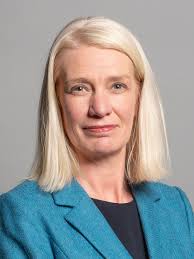
    At the British High Commission in Wellington to an audience of diplomats, policy-makers and academics, Amanda Milling, the UK Minister for Asia and the Middle East, welcomed New Zealand’s pledge to reduce carbon emissions to net zero by 2050.

    On the last day of her tour to Australia, Vanuatu and New Zealand, she also underlined the joint UK / New Zealand commitment to deliver on the Glasgow Climate Pact, which pledges to cut emissions and limit global warming to below 1.5°C.

    Tackling climate change and biodiversity loss in the Pacific should remain a top priority for the UK and New Zealand, says a visiting British Foreign Minister.

    At the British High Commission in Wellington to an audience of diplomats, policy-makers and academics, Amanda Milling, the UK Minister for Asia and the Middle East, welcomed New Zealand’s pledge to reduce carbon emissions to net zero by 2050.

    On the last day of her tour to Australia, Vanuatu and New Zealand, she also underlined the joint UK-New Zealand commitment to deliver on the Glasgow Climate Pact, which pledges to cut emissions and limit global warming to below 1.5°C.

    Minister for Asia and the Middle East, Amanda Milling said:

    I heard first-hand in Vanuatu about the impacts of climate change in the Pacific, and the importance of supporting Pacific Island countries to build resilience.

    The UK and New Zealand are working with partners to ensure those countries can access climate finance, and that Pacific Island voices are heard.

    The Minister’s visit to the region – to boost diplomatic and trade ties with the UK’s vital Pacific partners – follows COP26 President Alok Sharma’s tour last month to Australia, New Zealand and Fiji, and the meeting of Prime Ministers Boris Johnson and Jacinda Ardern in London on 1 July 2022.

    At that meeting, the leaders signed a new research, science and innovation arrangement which will see both countries share expertise and develop new technologies, including in the fields of agriculture and climate-change.

    As part of this agreement, the Minister announced the UK will welcome some of New Zealand’s most advanced agritech companies next month to build new links, with some of the UK’s leading firms visiting New Zealand on a similar mission in November.

    On the UK’s recent trade deal with New Zealand, Minister Milling said:

    We are also looking forward to our free trade agreement entering into force and watching our trade with New Zealand soar. But this about so much more than business opportunities. It’s about the participation of indigenous people and women in trade. And it’s about a greener deal; bolstering commitments to the Paris agreement and Net Zero, while encouraging investment in low-carbon tech.

    Finally, on Ukraine, Minister Milling thanked New Zealand for its support in standing against Russia’s illegal invasion of Ukraine arguing Putin has “thrown the international rules out of the window, shattered global stability and stamped on the principle of territorial sovereignty.”

    She went on to add that: “We must ensure that Putin loses, and that Russian aggression is never again allowed to shatter peace, freedom and democracy in Europe.”

    While in New Zealand, Minister Milling visited Auckland, the Waikato and Wellington. She met Aupito William Sio, Associate Minister of Foreign Affairs and Minister for Pacific Peoples in Aotearoa New Zealand, to discuss the challenges for Pasifika; Te Taumata, MFAT’s Māori engagement group, and the Foreign Affairs, Defence and Trade Committee.

    She also attended a memorial for the former Māori Queen, Dame Te Atairangikaahu and visited several businesses in the Waikato, promoting the recently signed UK-New Zealand Free Trade Agreement.

    Further Information

    • The UK is helping Pacific nations and others to protect the marine environment and reduce poverty through our £500m Blue Planet Fund. This will directly support delivery of the region’s 2050 Strategy for the Blue Pacific Continent.
    • At COP 26, the UK announced £274 million for a new ‘Climate Action for a Resilient Asia’ programme across the Indo-Pacific. This will support up to 14 million people to adapt to global warming.
    • The UK also pledged £40 million to help Small Island Developing States become more resilient, including in the Pacific in November 2021.
    • The UK and New Zealand are working with partners to ensure those States can access climate finance, and that Pacific Island voices are heard. This includes collaborating with Fiji to address concerns raised through the Taskforce on Access to Climate Finance.
  • Amanda Milling – 2022 Speech at the British High Commission in New Zealand

    Amanda Milling – 2022 Speech at the British High Commission in New Zealand

    The speech made by Amanda Milling, the Minister for Asia and the Middle East, at the British High Commission in New Zealand on 16 August 2022.

    Tēnā koutou katoa. It is wonderful to be here in New Zealand.

    I’ve spent the last week meeting people across Australia, Vanuatu and New Zealand, experiencing the incredible hospitality of the Pacific family. It’s been great to see first-hand how we’re working together on shared challenges and opportunities. And I’ve enjoyed meeting so many people, from Ministers to scientists, businesspeople and people of the land.

    Although we are half a world away from my home in Cannock Chase in the English Midlands, you might be interested to hear that my local area has a very meaningful link to New Zealand. As some of you may know, there was a large military base called Brocton camp at Cannock Chase during the First World War. It became a training centre for the New Zealand Rifle Brigade in 1917, getting soldiers ready for the horrors of battle on the Western Front. There’s an Anzac Day service there every year to honour those brave troops, and it’s my great privilege to attend it as the local Member of Parliament.

    Those New Zealanders fought shoulder-to-shoulder with the British to defend the freedom, democracy and human rights that our nations cherish. Those shared values, and the friendship between our countries, remain just as strong today. But today, once again, democracy is under attack. Autocrats and despots are trying to undermine the values that guide our way of life. And a trio of challenges – pandemic, conflict and climate change – are destroying lives and livelihoods.

    These challenges can only be addressed by countries working together. So the hand of friendship stretching across the oceans between our nations is as important today as it has ever been. I’d like to reflect on just a few aspects.

    Firstly, tackling climate change and biodiversity loss is a top priority for the United Kingdom and New Zealand. We have both pledged to reach net zero by 2050. We both demonstrated our leadership and ambition at COP26. And we stand united in our commitments to deliver on the Glasgow Pact and keep 1.5 alive.

    Along with mitigation efforts and net zero commitments, we know that adaptation finance is crucial to help people cope with the impacts of climate change. That’s why the UK has committed more than £11 billion over five years to support developing countries. And I look forward to seeing New Zealand’s new climate finance strategy published soon, following your $1.3bn commitment.

    I heard first-hand in Vanuatu about the impacts of climate change in the Pacific, and the importance of supporting Pacific Island Countries to build resilience. The UK is helping Pacific nations and others to protect the marine environment and reduce poverty through our £500m Blue Planet Fund.

    At COP 26, we announced £274 million for a new ‘Climate Action for a Resilient Asia’ programme across the Indo-Pacific. This will support up to 14 million people to adapt to global warming. We also pledged £40 million to help Small Island Developing States become more resilient, including in the Pacific.

    The UK and New Zealand are working with partners to ensure those States can access climate finance, and that Pacific Island voices are heard. This includes collaborating with Fiji to address concerns raised through the Taskforce on Access to Climate Finance.

    The UK and New Zealand are also united in our desire to boost the resilience of the Indo-Pacific region. This is a key focus of British foreign policy, on climate but also on trade, security, science and more.

    Together with New Zealand, we will work ever-more closely to support security and stability in the region, co-operating with our partners, including the Pacific Islands Forum. Our countries took a hugely positive step in June when we launched Partners in the Blue Pacific along with the United States, Japan and Australia. We also have a clear interest in peace and stability across the Taiwan Strait.

    Along with our G7 partners, the UK expressed concerns over recent threatening actions by China – in particular, live-fire exercises and economic coercion. These risk unnecessary escalation. We do not support any unilateral attempts to change the status quo, and we call on China to resolve cross-Strait differences by peaceful means.

    Meanwhile the historic ‘Research, Science and Innovation Arrangement’ that our prime ministers signed last month will strengthen collaboration between the UK and New Zealand. Together, we will share expertise and develop new technologies – including in the fields of agriculture and climate-change.

    The UK will welcome some of New Zealand’s most advanced agritech companies to our shores next month, to build new links. Some of our own leading firms will head here on a similar mission in November. This is just the first of many exchanges that, I am sure, will lead to some fantastic new initiatives.

    On trade, the UK is glad of New Zealand’s support as we seek to join the Comprehensive and Progressive Agreement for Trans-Pacific Partnership. This is a brilliant opportunity to deepen our access to the massive consumer markets of the Asia-Pacific region. And it’s a fantastic way to boost prosperity here, and at home, as we all seek to bounce back from the pandemic.

    We are also looking forward to our free trade agreement entering into force and watching our trade with New Zealand soar. But this is about so much more than business opportunities. It’s about the participation of indigenous people and women in trade. And it’s about a greener deal; bolstering commitments to the Paris agreement and Net Zero, while encouraging investment in low-carbon tech.

    Just as importantly, our countries are equally committed to promoting and protecting the international rule of law through the trading system. Together, we will support a global system that’s free from aggression and economic coercion, where the sovereignty of nations is protected, regardless of their size.

    On that note, I cannot end without talking about Putin’s unprovoked, illegal war in Ukraine. He’s thrown the international rules out of the window, shattered global stability and stamped on the principle of territorial sovereignty. The United Kingdom and New Zealand continue to stand with Ukraine. We must ensure that Putin loses, and that Russian aggression is never again allowed to shatter peace, freedom and democracy in Europe.

    So we will carry on co-ordinating on sanctions to raise the costs for Russia – targeting its economy as well as its elites to cripple Putin’s war machine. And we will stand firm in our security and defence collaboration.

    Our Five Eyes intelligence-sharing arrangement is a key part of this, to promote and defend our interests in cyber space, quantum computing, artificial intelligence and more.

    Early this year, UK and New Zealand defence forces worked together to assist Tonga following the volcanic eruption.

    In May, New Zealand deployed military personnel to the UK, to train Ukrainian soldiers to help defend their country. And I welcome yesterday’s announcement that this support will be extended, with additional New Zealand teams deploying over to the UK. And that brings me back to where I started – with New Zealand troops on British soil, standing up for freedom, democracy and sovereignty.

    More than a hundred years have passed since those New Zealand boots trod the paths of Cannock Chase, but our countries still stand together, just as we did then. Yes, we face a great many challenges. But there is also a great deal to be hopeful about, as we look to the future.

    I can’t wait to see what we achieve together.

    Tēnā koutou, tēnā koutou, tēnā koutou katoa.

  • PRESS RELEASE : An expansion of the truce is in the interests of all parties and the Yemeni people

    PRESS RELEASE : An expansion of the truce is in the interests of all parties and the Yemeni people

    The press release issued by the Foreign Office on 15 August 2022.

    Statement by Ambassador James Kariuki at the Security Council briefing on Yemen.

    Thank you President and thanks to Special Envoy Grundberg and Ms Mudawi for their briefings.

    On behalf of the United Kingdom, I would like to pay tribute to Mr Grundberg’s continued leadership, which has been critical to securing this two-month extension to the truce, a significant achievement by the UN and the parties. For the Yemeni people, it means an additional two months of relative peace, and the chance to keep benefitting from the confidence building measures.

    Fuel prices for ordinary Yemenis have been seriously eased thanks to the delivery of 720 thousand metric tons of oil into Hodeidah Port during the last four months. Yemenis have been accorded renewed freedom of movement thanks to the commercial round-trip flights out from Sana’a.

    While the extension of the truce is welcome, we recognise and we’ve heard about today the challenge of the two months ahead. We urge the parties to continue their constructive engagement with the UN Special Envoy and to abide by their commitments. Continued cooperation and an expansion of the truce is in the interests of all parties, and the Yemeni people.

    Only peace will solve the humanitarian crisis. Despite the truce’s tangible benefits to Yemeni civilians, rising global commodity prices and a dearth of humanitarian funding has meant continued suffering for Yemenis. World Food Programme analysis in June showed some of the highest levels of inadequate food consumption ever recorded in Yemen. This cycle, shortage of funding will lead to 3 million fewer Yemenis receiving the rations they need. The funding deficit is undermining the humanitarian response and, without further disbursement of funds from donors, the crisis will only deepen and undermine the benefits of the truce. And, indeed, without humanitarian access, no amount of funding can serve those in need. The people of Yemen deserve to live peacefully, without the looming threat of famine.

    While we welcome the progress associated with the truce, the threat of a spill from the FSO SAFER continues to loom over Yemen and the region. Action must be immediate, as non-intervention will result in environmental and humanitarian catastrophe. The UK was pleased to announce on July 18th a further £2 million pledge to the UN operation, but we urge colleagues to urgently bridge the £20 million gap and commit funding immediately before it is too late.

    Thank you.

  • PRESS RELEASE : Minister for Europe’s meeting with Azerbaijani Ambassador, 15 August 2022: statement

    PRESS RELEASE : Minister for Europe’s meeting with Azerbaijani Ambassador, 15 August 2022: statement

    The press release issued by the Foreign Office on 15 August 2022.

    Following a meeting with Azerbaijani Ambassador to the UK Elin Suleymanov, the Minister for Europe, Graham Stuart said:

    “Today I spoke to Azerbaijani Ambassador Elin Suleymanov following a serious security incident at the Azerbaijani Embassy in London on 4 August. I emphasised the importance that the UK government attaches to the security of all diplomatic missions in the UK, and expressed my deep regret that the event took place.

    The UK has a longstanding tradition of support for the right to freedom of expression, but this must be exercised through peaceful and lawful demonstration.”

  • PRESS RELEASE : UK Chancellor announces joint taskforce to solve the delivery of equivalent support to £400 Energy Bill Support Scheme in Northern Ireland

    PRESS RELEASE : UK Chancellor announces joint taskforce to solve the delivery of equivalent support to £400 Energy Bill Support Scheme in Northern Ireland

    The press release issued by the Treasury on 15 August 2022.

    • The Chancellor announced a new joint taskforce comprising of officials from UK and NIE who will be responsible for driving forward a solution over the coming weeks to ensure people of NI get support as soon as possible.
    • The scheme will reduce every household’s energy bills by £400, to help families with the rising cost of living.
    • Attendees agreed the taskforce would look at all ways for the UK Government to deliver this support in Northern Ireland, working with the Executive and Regulator to make sure it arrives as swiftly as possible.
    • Attendees agreed a shared objective in getting payments to households as quickly as possible, and the need to work collaboratively on the most effective mechanism.
    • They agreed to a regular schedule of meetings until this issue is resolved.

    Chancellor Nadhim Zahawi said:

    “We need to keep the momentum up to get equivalent energy support to people in Northern Ireland and that’s why today I’ve launched a joint taskforce to present practical delivery options back to Ministers. No option is off the table.

    We’ve got our noses to the grindstone, we’re making progress, and we have a shared objective with Minsters in Northern Ireland to get this off the ground as soon as possible.”

    Further information

    The attendees of today’s meeting were:

    • UK Chancellor of the Exchequer, Nadhim Zahawi
    • Chief Executive of Utility Regulator, John French
    • Northern Ireland’s Minister for the Economy, Gordon Lyons
    • Northern Ireland’s Minister for Communities, Deidre Hargey
    • Permanent Secretary, Northern Ireland Department of Finance, Neil Gibson
    • Officials from both the Northern Ireland Executive and central United Kingdom administrations
  • PRESS RELEASE : New trading scheme cuts tariffs on hundreds of everyday products

    PRESS RELEASE : New trading scheme cuts tariffs on hundreds of everyday products

    The press release issued by the Department for International Trade on 15 August 2022.

    The UK is using its post-Brexit powers to launch one of the world’s most generous trading schemes with developing countries today.

    The International Trade Secretary Anne-Marie Trevelyan has launched the new Developing Countries Trading Scheme (DCTS), which will extend tariff cuts to hundreds of more products exported from developing countries, going further than the EU’s Generalised Scheme of Preferences.

    This is on top of the thousands of products which developing countries can already export to the UK duty-free [and will mean 99% of goods imported from Africa, for example will enter the UK duty free].

    The scheme means that a wide variety of products – from clothes and shoes to foods that aren’t widely produced in the UK including olive oil and tomatoes – will benefit from lower or zero tariffs.

    The Developing Countries Trading Scheme ensures that British businesses can benefit from more than £750 million per year of reduced import costs, leading to more choice and lower costs for UK consumers to help with the cost of living.

    Secretary of State for International Trade Anne-Marie Trevelyan said:

    “As an independent trading nation, we are taking back control of our trade policy and making decisions that back UK businesses, help with the cost of living, and support the economies of developing countries around the world.

    UK businesses can look forward to less red-tape and lower costs, incentivising firms to import goods from developing countries.”

    The DCTS covers 65 countries across Africa, Asia, Oceania and the Americas including some of the poorest countries in the world.

    It removes some seasonal tariffs, meaning more options for British supermarkets and shops all year round. For example, cucumbers, which can’t be grown in the UK in the winter, will now be tariff-free during this period for the majority of countries in the scheme.

    The scheme also simplifies complex trade rules such as rules of origin – the rules dictating what proportion of a product must be made in its country of origin. This makes it easier for businesses like family-owned textile business DBL Group from Bangladesh to export, encouraging developing countries to play a larger role in the global trade community.

    Mohammed Jabbar Managing Director of DBL Group said:

    “These new rules will be a game changer for us. They mean we will be able to source our cotton from many more countries than we could before, which will make the business more competitive and our supply chains a lot more resilient.”

    This work is part of a wider push by the UK to drive a free trade, pro-growth agenda across the globe, using trade to drive prosperity and help eradicate poverty.

    This drive includes a new initiative called Platinum Partnerships, designed to grow trade between the UK and selected lower and middle-income Commonwealth countries and reduce dependency on aid. The partnerships will strengthen two-way green trade and investment, helping countries’ adaptation to climate change.

    The Prime Minister also recently announced a new Trade Centre of Expertise, which will bring together the best of British expertise to support partner governments, giving them the tools they need to more actively participate in the global trading system.

  • PRESS RELEASE : Disappointing that Straw is distorting the words of the Indian Prime Minister

    PRESS RELEASE : Disappointing that Straw is distorting the words of the Indian Prime Minister

    The press release issued by Vote Leave on 12 November 2015.

    Responding to BSE Executive Director Will Straw’s assertion that Indian Prime Minister Narendra Modi has said that ‘Britain is stronger, safer, and better off’ in the EU, Vote Leave Communications Director Paul Stephenson said:

    “Prime Minister Modi made clear that the UK is India’s most important ally in Europe. We have good reasons to believe that this will continue to be the case if we left the EU.

    The EU has consistently failed to get a free trade deal with India – when we Vote Leave this will be much easier to achieve.

    It is disappointing that Will Straw is distorting the words of the Indian Prime Minister during an official visit to this country.”

    Key stats on UK-India trade

    In 2014, India sold the UK £1.576 billion more than the UK sold India. If the UK leaves the EU, it will be in India’s interest to trade on as favourable terms with the UK as possible (Source: ONS, Pink Book 2015, link).

    Over the last decade, the total value of trade between the UK and India has increased by £14.058 billion in cash terms, or by 156% (Source: ONS, Pink Book 2015, link).

    The EU has failed to negotiate a free trade deal with India. Negotiations started in 2007 but show no sign of concluding (Source: BBC, link).

    According to a 2013 EY survey, ‘companies in Asia are even more positive about renegotiating the UK’s relationship with the EU. Fully two-thirds (66%) of Asian respondents say a lower degree of EU integration would make the UK a more attractive location for FDI, against 25% who think it would make the UK less attractive’ (Source: EY, (2013), p. 35, link).

    What Will Straw said:

    “India’s Prime Minister, Narendra Modi, is the latest in a string of world leaders to say that Britain is stronger, safer, and better off in Europe. President Obama, President Xi Jinping, and now the Indian Prime Minister have all unambiguously underlined the value to the UK economy of our place in the EU.

    Not only is Europe a crucial springboard for Britain to trade with countries like India, but nearly half of the UK’s trade goes to other EU countries and more than 3 million jobs in Britain are linked to our trade with other EU countries. Why would we risk all of that by leaving?”

    What Prime Minister Modi said:

    “As far as India is concerned, if there is an entry point for us to the EU, that is the UK and that is Great Britain. If we have economic co-operation with any country, then the economic co-operation is with the UK. Yes, we are going to other EU countries as well, but we will continue to consider the UK as our entry point into the EU.

    The United Kingdom is the third largest investor in India behind Singapore and Mauritius. India is the third largest source of Foreign Direct Investment projects in the United Kingdom. Indians invest more in Britain than in the rest of the European Union combined. It is not because they want to save on interpretation costs, but because they find an environment that is welcoming and familiar.”

  • PRESS RELEASE : Downing Street blunders into revealing David Cameron’s abandoned EU commitments

    PRESS RELEASE : Downing Street blunders into revealing David Cameron’s abandoned EU commitments

    The press release issued by Vote Leave on 11 November 2015.

    In a major strategic blunder, David Cameron’s top aides have revealed that the Prime Minister has abandoned 15 commitments he made to the British people on the EU.

    In a ‘rebuttal document’ hurried out last night, Number 10 attempted to expose ‘mistakes’ by Vote Leave. But their panicked attack has revealed David Cameron’s 15 abandoned commitments on the EU.

    Commenting, leading Vote Leave supporter Bernard Jenkin MP said:

    ‘David Cameron made a number of key commitments as part of a programme for fundamental change in the UK’s relationship with the EU. These were in Conservative Party manifestos and other key statements which we were led to believe would be the policy of the Government. But these commitments to the British people have now been abandoned.

    ‘The renegotiation package does not represent any substantive change at all in the UK’s relationship with the EU. It is telling that the Prime Minister’s top team thinks that his commitments were “mistakes”.

    ‘The Prime Minister led us all in opposition to the Lisbon Treaty, because we are against EU taking more and more control. Now he is suggesting that we should vote to stay signed up to all the provisions of Lisbon that we opposed, wherever it is taking the UK in the years to come. But he has kept his promise of a referendum.

    ‘Yesterday’s letter was a defining moment. It is now all too clear to Conservative Party members and to the country: if you want to take back control over how laws are made in this country, over how much we pay to the EU and our relationships with the rest of the world, you need to Vote Leave.’


    How Downing Street revealed the Prime Minister’s 15 abandoned commitments

    Abandoned Commitment 1
    We said: ‘Securing treaty change before the referendum. In January 2015, the Prime Minister said his plans ‘do involve … proper, full-on treaty change’ (The Guardian, 4 January 2015, link).’

    Downing Street said: ‘We have not ruled out treaty change’

    In fact: A treaty that has not been ratified before the referendum will have the same legal status as an unsigned contract. The Prime Minister used to talk about securing treaty change before the referendum. In January 2014, he stressed the importance of this to ensure his proposed changes to EU welfare rules: ‘To change that you’ve either got to change it with other European countries at the moment or potentially change it through the Treaty change that I’ll be putting in place before the referendum that we’ll hold on Britain’s membership of the EU, by the end of 2017.’ Another commitment abandoned by David Cameron – as revealed by Downing Street.


    Abandoned Commitment 2
    We said: ‘In 2005, Cameron stated that “our aim should be to take back control of employment and social regulation”.’

    Downing Street said: ‘This was never part of our renegotiation. David Cameron made this statement before he was even Leader of the Conservative Party’

    Broken manifesto pledge. This isn’t just something David Cameron said before he became leader of the Conservative Party – the 2010 Conservative manifesto stated: ‘We will work to bring back key powers over legal rights, criminal justice and social and employment legislation to the UK.’ Another commitment abandoned by David Cameron – as revealed by Downing Street.


    Abandoned Commitment 3
    We said: ‘In 2009, Cameron promised to “limit … the European Court of Justice’s jurisdiction over criminal law to its pre-Lisbon level” (BBC News, 4 November 2009, link).’

    Downing Street said: ‘This was never part of the renegotiation – and is a quote four years before the Prime Minister first set out his renegotiation and referendum agenda in his 2013 Bloomberg speech.’

    In fact: David Cameron promised to make this change in the 2010 Conservative manifesto, which said: ‘We will work to bring back key powers over legal rights [and] criminal justice … to the UK’. Another commitment abandoned by David Cameron – as revealed by Downing Street.


    Abandoned Commitment 4
    We said: ‘In November 2014, the Prime Minister claimed that “we want EU jobseekers to have a job offer before they come here” (BBC News, 28 November 2014, link).’

    Downing Street said: ‘We are already delivering this, and it was never part of the renegotiation. We have already ensured that EU migrants will not be able to claim Universal Credit while looking for work, and if those coming from the EU haven’t found work within six months, they can be required to leave unless they have genuine job prospects.’

    In fact: The Prime Minister stated clearly in November 2014 that ‘EU migrants should have a job offer before they come here… My very clear aim is to be able to negotiate these changes for the whole EU… If negotiating for the whole EU should not prove possible, I would want to see them in a UK only settlement’. However, as the ECJ made clear in 1991, article 45 of the Treaty of the Functioning of the European Union ‘entails the right for nationals of Member States to move freely within the territory of the other Member States and to stay there for the purposes of seeking employment.’ Another commitment abandoned by David Cameron – as revealed by Downing Street.


    Abandoned Commitment 5
    We said: ‘The Conservative European Parliamentary Manifesto of 2009 said that: “The European Parliament must end its absurdly wasteful practice of meeting in Strasbourg as well as Brussels”.’

    Downing Street said: ‘We have never mentioned this in the context of renegotiation. The UK government and Conservative MEPs have consistently argued this case in a campaign, which is gaining traction.’

    In fact: This is another example of Downing Street admitting that a manifesto promise won’t be honoured. If, after six years, Number 10 says this campaign is only ‘gaining traction’, shouldn’t the Government be doing something bolder to end this ridiculous situation which costs taxpayers over €100 million a year? Another commitment abandoned by David Cameron – as revealed by Downing Street.


    Abandoned Commitment 6
    We said: ‘The Conservative Party Manifesto of 2015 stated that “We will push for further reform of the EU’s Common Agricultural Policy”. Mr Cameron did not mention agriculture in his speech.’

    Downing Street said: ‘we have never mentioned this in the context of the renegotiation’.

    In fact: David Cameron used to argue that the EU needed ‘fundamental, far-reaching change’. British farmers – and consumers, who pay over the odds thanks to the EU’s Common Agricultural Policy – will note that the Prime Minister does not think the CAP is part of the ‘fundamental change’ the UK needs. Even the EU-funded ‘Agra Europe’ report which came out last month conceded that, outside the EU, ‘consumers would gain from lower food prices’. Another commitment abandoned by David Cameron – as revealed by Downing Street.


    Abandoned Commitment 7
    We said: ‘The Conservative Party Manifesto of 2015 pledged “further reform of … Structural Funds.” Structural funds were not mentioned in Cameron’s speech.’

    Downing Street said: ‘We … have never mentioned this in the context of renegotiation.’

    In fact: Number 10 are making it clear that they do not intend to honour an explicit manifesto pledge. Another commitment abandoned by David Cameron – as revealed by Downing Street.


    Abandoned Commitment 8
    We said: ‘The UK can be permanently outvoted by the Eurozone. The UK has extremely little influence inside the EU’s institutions.’

    Downing Street said: ‘We have already managed to achieve safeguards against Eurozone caucusing, negotiated by the Prime Minister, such as over the bail-outs, have had lasting effect’ (sic).

    In fact: These safeguards only apply in the European Banking Authority (EBA) – not the Council of Ministers, where the key decisions are made and the Eurozone has a permanent majority. And the safeguards in the EBA are limited: EU law states that only one non-euro member state needs to approve a measure once those states fall below four in number – something that is likely to happen in the next four years. Moreover, these rules only apply to decisions under secondary legislation, and could be abolished by the Eurozone using its permanent majority. George Osborne himself admitted in his speech in Berlin last week that the EU had broken its promises on the bail-outs, and this will remain the case so long as article 122 of the Treaty on the Functioning of the European Union allows the Eurozone caucus to force the UK to bail out insolvent Eurozone states. Another commitment abandoned by David Cameron – as revealed by Downing Street.


    Abandoned Commitment 9
    We said: ‘Without treaty change, the EU can carry on breaking its promises to non-Eurozone countries – as the PM and Chancellor know.’

    Downing Street said: ‘We have not ruled out treaty change and we have already secured safeguards against Eurozone caucusing e.g. on banking rules.’

    In fact: Again, the ‘safeguards’ the Government have secured are very limited (see abandoned commitment 8 above). The UK has no protection against Single Market laws affecting banks which pass through the Council of Ministers where the Eurozone has a permanent majority. Number 10’s response shows that they are not pushing for changes to voting procedures in the Council. Another commitment abandoned by David Cameron – as revealed by Downing Street.


    Abandoned Commitment 10
    We said: ‘The Prime Minister claimed that more regulations will be repealed this year than during the whole of the previous Commission. In fact, the size of the EU’s acquis is growing. According to the EU’s Eur-Lex database, the number of EU legislative acts in force has grown by almost 1,000 over the past year – from 22,139 acts on 1 October 2014 to 23,072 on 9 November 2015.’

    Downing Street said: ‘We continue to press for a lighter regulatory budget.’

    In fact: The Conservative manifesto for the 2014 European elections promised to ‘Cut red tape to reduce the costs to all businesses by at least £1 billion by 2019.’ There is no sign that the Government is still pushing for a £1 billion reduction – getting the EU to increase red tape at a slightly slower rate is not the same as a cut. The Government acknowledges that it has such little influence in the EU that it can’t even secure all of the minor reforms recommended by its own Business Task Force two years ago. Another commitment abandoned by David Cameron – as revealed by Downing Street.


    Abandoned Commitment 11
    We said: ‘The only way to stop ever-closer union is to end the supremacy of EU over British law. The phrase “ever closer union” was only inserted in the Maastricht Treaty at the UK’s request as part of the Major Government’s claims that it had put the brakes on federalism. Changing it would not alter how the ECJ interprets and creates EU law. The ECJ invented the concept of the supremacy of EU law – it was not in the original Treaties. The only way to end this is to Vote Leave.’

    Downing Street says: ‘The constitutional phrase “Ever Closer Union” has been interpreted politically and legally to mean closer integration. The Court makes use of the preamble of the Treaties – where the phrase ‘Ever Closer Union’ is located – to make its rulings.’.

    In fact: The 2015 Conservative manifesto promised: ‘No to a constant flow of power to Brussels. No to unnecessary interference.’ In his Bloomberg speech of 2013 David Cameron argued that ‘we need fundamental, far-reaching change’ with the EU. In order to stop the ECJ transferring more powers from Member States to the EU, much more radical changes are needed than just removing the reference to ‘ever closer union’. When the ECJ invented the principles of the supremacy and direct effect of EU law over fifty years ago, it did not even refer to these three words – tinkering with them does not come close to the ‘fundamental, far-reaching change’ the Prime Minister promised. Another commitment abandoned by David Cameron – as revealed by Downing Street.


    Abandoned Commitment 12
    We said: ‘Cameron promised in 2014 that “if an EU jobseeker has not found work within six months, they will be required to leave” (BBC News, 28 November 2014, link). Yet as the ECJ ruled in September this year, “Union citizens who have entered the territory of the host Member State in order to seek employment may not be expelled for as long as they can provide evidence that they are continuing to seek employment and that they have a genuine chance of being engaged.” Today, the Prime Minister ignored that ruling and claimed he had achieved his objective.’

    Downing Street said: ‘This claim is misleading. The ECJ judgment that Vote Leave refers to actually endorses our plan.’

    In fact: The ECJ judgment makes clear that jobseekers cannot be ‘required to leave’ – as the Prime Minister promised in November 2014 – ‘for as long as they can provide evidence that they are continuing to seek employment and that they have a genuine chance of being engaged’ (full judgment here). This confirms a 1991 judgment interpreting article 45 of the Treaty on the Functioning of the European Union. Expelling all jobseekers after six months can only therefore be achieved by Treaty change. Number 10 no longer says all jobseekers ‘will be required to leave’, merely that ‘they can be required to leave unless they have genuine job prospects’. Another commitment abandoned by David Cameron – as revealed by Downing Street.


    Abandoned Commitment 13
    We said: ‘Sir Jeremy Heywood has reportedly told the Prime Minister that his proposal to ban EU migrants from claiming tax credits in the UK for four years will be deemed illegal under EU law (BBC News, 4 November 2015, link).’

    Downing Street said: ‘This is speculation. Our proposal is to ensure EU migrants cannot claim welfare for four years.’

    In fact: It’s interesting to note that Downing Street does not deny that the Cabinet Secretary has said this. The European Commission was quick to say yesterday that this key promise is incompatible with EU law. In his speech yesterday, David Cameron made clear that he is ready to drop the plan: ‘I understand how difficult some of these welfare issues are for other Member States. And I am open to different ways of dealing with this issue.’ Another commitment abandoned by David Cameron – as revealed by Downing Street (and the Cabinet Secretary).


    Abandoned Commitment 14
    We said: ‘Any deal the Government negotiates will be meaningless without treaty change before the referendum.’

    Downing Street said: ‘The 1992 Edinburgh Agreement, which the Danish government secured, proves the opposite; it gave Denmark opt-outs that were legally-binding. Twenty three years later these opt-outs still hold. We have not ruled out treaty change.’

    In fact: In 2014 David Cameron promised that there would be Treaty change before the referendum. Now Number 10 reveal that they are not looking at Treaty change until after the vote – when any EU member state can veto our changes. Vote Leave research has shown that key promises in the 1992 Edinburgh Agreement were broken by the EU. The Agreement declared that the provisions of the Maastricht Treaty on EU citizenship did ‘not in any way take the place of national citizenship’ and that the question of whether a person possessed the nationality of a member state ‘will be settled solely by reference to the national law of the member state’ . However, the EU has since reneged on this agreement – in 2001 the ECJ declared that ‘Union Citizenship is destined to be the fundamental status of nationals of the Member States’. In 2010, the ECJ held that a decision to deprive someone of national citizenship was a matter of EU law and that member states can no longer automatically strip citizenship from people who acquire it by deception. Another commitment abandoned by David Cameron – as revealed by Downing Street.


    Abandoned Commitment 15
    We said: ‘David Cameron has watered down his commitment to a “complete opt-out” from the Charter, which is not even mentioned in his letter today. In 2009, Mr Cameron called for “a complete opt-out from the Charter of Fundamental Rights” – now all he is proposing is a fudge.’

    Downing Street said: ‘We are tackling this by enshrining in our domestic law that the EU Charter of Fundamental Rights does not create any new rights.’

    In fact: Number 10’s promises of domestic legislation are as credible as Tony Blair’s claims the Charter would have the same legal status as ‘The Beano or The Sun’. Their response is also legally inaccurate. It is firmly established that EU law is supreme over UK law – as spelled out in section 2 of the European Communities Act 1972. The UK’s so-called ‘opt-out’ from the Charter of Fundamental Rights (Protocol 30), is meaningless – as the European Court of Justice made clear in 2011. The UK Supreme Court has since ruled that the EU Charter of Fundamental Rights has ‘direct effect’ in UK law. Putting the text of this Protocol into UK law will make no difference. Since 2009, the ECJ has used the Charter to create ‘the right to be forgotten’ and to create new prisoner voting rights. Any attempt by the UK to say that the Charter doesn’t apply in the UK will be deemed illegal by the ECJ and the UK will be subject to fines and damages as a result. Either way, it is much less than the ‘complete opt-out’ that David Cameron promised in 2009. Another commitment abandoned by David Cameron – as revealed by Downing Street.
  • PRESS RELEASE : Osborne’s living wage to undercut Cameron’s plans to restrict EU migrant benefits

    PRESS RELEASE : Osborne’s living wage to undercut Cameron’s plans to restrict EU migrant benefits

    The press release issued by Vote Leave on 11 November 2015.

    The Government has committed to reduce in-work benefits for EU nationals during their first four years in the UK. If implemented, the Government argues the UK would become a less attractive destination for those looking to improve their living standards. This policy is intended to reduce inward migration by reducing the ‘pull factors’ that encourage EU migrants to move to the UK.

    Owing to a lack of joined up thinking in Government, however, the plan will be completely undercut by George Osborne’s new ‘living wage’. The UK will therefore remain an extremely attractive destination for EU migrants, regardless of whether the Government succeeds in its plan to limit the benefits.

    If the Government is able to negotiate a way to restrict benefits for EU migrants, the living wage would still increase the take-home income of the lowest earning EU benefits claimants with no dependants by £57.99 per week or £3,015.48 a year by 2020 (when compared to forecasts for 2020 if the UK had not introduced the living wage). This almost entirely undercuts the reduction in take-home income for single earners with no dependants that the Government is proposing.

    If the Government is not successful in negotiating a deal to limit benefit claims by EU migrants the pull factors will become even stronger than they are now. For a single earner with no dependants their take-home income would increase by £134.23 per week or £6,979.96 a year by 2020 (when compared against 2020 forecasts that don’t have the living wage). This is an increase of more than 60% compared to the results the Government hoped to achieve when it set out its plans to limit EU benefits.

    Sir Jeremy Heywood – the UK’s most senior civil servant – has warned that David Cameron’s proposed restrictions to migrant benefits are likely to be illegal under EU law. This means they are very unlikely to survive a challenge in the European Court of Justice.

    Following the Government’s own logic this suggests that the combination of the Government failing to achieve the four year restriction to benefits for EU migrants and the introduction of the living wage, will lead to the number of EU migrants rising rather than falling.

    Commenting, Vote Leave Communications Director Paul Stephenson said:

    “People are worried that high levels of immigration from Europe are putting our NHS, schools and housing supply under pressure. David Cameron wants to change that and make the UK less attractive to migrants by restricting the benefits they can claim here.

    But George Osborne’s living wage will completely undercut David Cameron’s EU negotiation. It means that the UK will be just as attractive to many migrants as it is now. If, as the Cabinet Secretary has warned, Mr Cameron fails to achieve EU benefit restrictions, the situation will get even worse.

    The living wage is a great thing for many workers in the UK but it looks like George Osborne did not consider what impact it would have on David Cameron’s plans to restrict EU immigration before he announced it. It is clear that the only way we can get back control over immigration is if we Vote Leave in the upcoming referendum.”

  • PRESS RELEASE : Cameron will get his demands because they are trivial

    PRESS RELEASE : Cameron will get his demands because they are trivial

    The press release issued by Vote Leave on 8 November 2015.

    Commenting ahead of the PM’s speech this week and the letter on EU renegotiation, Vote Leave Campaign Director Dominic Cummings said: “We expect Cameron to get what he’s asking for but what he’s asking for is trivial.

    ‘The public wants the end of the supremacy of EU law and to take back control of our economy, our borders, and our democracy. The only way to do this is to vote leave. No. 10 is panicking because people can see the renegotiation is a dishonest gimmick.”

    The fact that David Cameron is sending this letter is itself a concession. He was forced into doing so after EU leaders complained that the renegotiation could not happen without the Prime Minister setting out his demands in a letter. Senior figures across Europe have been frustrated by the slow pace of his negotiations – with exasperation coming to a head at the European Council meeting in October:

    Martin Schulz, the President of the European Parliament, complained: ‘The UK government raised the problem of the referendum … It is up to the Cameron government to make proposals. It is not up to us’ (quoted in The Guardian, 15 October 2015, link).

    Jean-Claude Juncker, the President of the European Commission, said no real progress had been made by mid-October: ‘I can’t say that huge progress has been achieved. I can’t say that nothing has been achieved. But to tango it takes two,’ said on 14 October: ‘And so we have to dance and our British friends have to dance’ (quoted by Reuters, 16 October 2015, link).

    Angela Merkel told the Bundestag the following day that it was up to the UK to ‘clarify the substance of what it is envisaging’ (quoted in The Independent, 16 October 2015, link).

    Charles Michel, Prime Minister of Belgium, said: ‘It is time for Mr Cameron to put his cards on the table’ (Press Association, 16 October 2015, link).

    ‘Senior EU officials and diplomats said that a substantive political negotiation at December’s summit will only be possible if Britain delivers clear, written proposals to Brussels and the 27 other national governments by early November’ (Reuters, 16 October 2015, link).

    The Government’s negotiations are already running behind schedule. As Charles Grant, Director of the Centre for European Reform, said in June: ‘Cameron hopes to clinch a final deal in December’ (26 June 2015, link). Philip Hammond told reporters as recently as 22 September: ‘When I’ve had a few glasses of champagne I think there might be agreement at the December European Council, a package and we can move forward’ (The Daily Telegraph, 22 September 2015, link). But following the exasperation of EU leaders in October, and David Cameron’s forced announcement that ‘the pace will now quicken’, it is clear that the December Council will only be a ‘substantive discussion’.

    The Government didn’t want you to see this letter. At the Downing Street press briefing where it was first announced that the Prime Minister would be sending this letter to President Tusk, it was made clear that the letter would remain confidential, not made available to Parliament and the public. It was only after Sir William Cash – Chairman of the European Scrutiny Committee – objected, that Number 10 confirmed that the letter would be made public (Bill Cash’s blog, 19 October 2015, link).

    Any deal will be meaningless without treaty change before the referendum… Any new deal which is dependent on a treaty change is liable to be struck down by the EU’s courts after the referendum. The European Court of Justice has previously held that a political declaration of the European Council which limits rights under EU law ‘has no legal significance’ unless and until it is incorporated into EU law (R v Immigration Appeal Tribunal, Ex parte Antonissen [1991] 2 CMLR 373, 400). Any treaty changes that the UK might be promised ahead of a referendum could be vetoed after the vote by any one of the 27 other EU member states, several of which may have to hold referendums under their own constitutions. A treaty that has not been ratified before the referendum will have the same legal status as an unsigned contract.

    … as the Cabinet Secretary warned this week. Sir Jeremy Heywood has reportedly told Ministers that their proposal to ban EU migrants from claiming tax credits in the UK for four years will be deemed illegal under EU law (BBC News, 4 November 2015, link).

    But the Government cannot promise that it will achieve that before the referendum. Following his speech in Berlin earlier this week, George Osborne admitted that some of the Government’s demands would need treaty change but was unable to say when this will happen. Although he admitted that ‘the changes we are seeking will require treaty change,’ all he could say on timing was: ‘how that is delivered and when that is delivered is of course subject to the negotiation’ (BBC News online, 3 November 2015, link).

    The Prime Minister has already shelved nine out of ten of his demands. Vote Leave research has shown that 92% of David Cameron’s pledges to change the EU look like they will not be delivered by his EU renegotiation – either because they have been dropped, or because they require treaty change. (See the full Vote Leave research paper here). This includes black-and-white promises on crucial parts of the UK’s relationship with the EU, such as the Prime Minister’s promise in 2009 to negotiate ‘a complete opt-out’ from the EU’s Charter of Fundamental Rights (David Cameron, speech on the EU, 4 November 2009, link).