Blog

  • Robert Hudson – 1948 Speech on Oil Supplies

    Below is the text of the speech made by Robert Hudson, the then Conservative MP for Southport, in the House of Commons on 11 May 1948.

    As I said in the Second Reading Debate on the Petrol Bill last week, we thought that as discussion on the Bill was bound to be very narrow it would be for the convenience of hon. Members on all sides if we put down the Vote of the Ministry of Fuel and Power on as early a Supply Day as convenient; to enable us to discuss both the questions of policy connected with petroleum and petroleum products and also the administration of the Department. I will cover certain aspects and other points will be illustrated by my hon. Friends.

    I will deal first with the record of the Ministry regarding fuel oil and, in particular, the conversion from coal to oil. Their record in this respect is typical. It is a history of panic, followed by order, counter order and disorder. The Committee will remember that in August, 1946, industrialists were asked to convert from coal firing to oil firing. As an inducement a rebate of 1d. per gallon on fuel oil was offered. This rebate was confirmed in the Finance Bill, 1947. The pressure by the Government on industrialists increased during 1946 and 1947 and was accentuated during the panic which arose out of what we always regarded as the unnecessary fuel crisis of 1947. The conversion involved the firms concerned in heavy capital outlay which was bound to increase costs of production. It also involved considerable quantities of steel and considerable engineering manpower, both of which we have been told on numerous occasions are short and constitute bottlenecks. The Government were warned by practical persons of experience of the difficulties ahead. They were told that there was a shortage of tankage and oil storage in the country and that other similar shortages were bound to cause difficulties and result in delay.

    It is quite clear—and it should have been clear at the time—that a policy of this kind was justified only if it was certain that adequate supplies of oil would be available for running those oil firing installations after conversion had taken pace. The pressure to convert continued until the middle of 1947, but difficulties in the supply of oil began to multiply and industries failed entirely to get any adequate guidance from the Government. They could get no assurance that, if they converted, supplies of fuel would be made available. No definite guidance was given to industries, even in the speech of the Minister shortly before Christmas 1947; yet, as the Committee will remember, by that time the basic ration had already been abolished for several weeks on the plea of the shortage of dollars. Apparently what was done by the Government was to order a survey, but we have had no indication, of course, of the instructions given to the Government officials who conducted that survey. What is quite clear is that in more than one case the impression was given to the industrial concern that the difficulties in the supply of oil were likely to prove only temporary.

    No clear lead has even yet been given by the Government, and the situation today is that some firms have installed conversion machinery and have no fuel, others have installed conversion machinery and can get fuel, some are still going ahead with conversions and others are now reconverting back to coal with the approval of the Ministry. No one has any idea what the Government’s policy is on this matter, and it is quite clear that uncertainty of this nature is bound to do industrial harm and hamper our efforts to increase the export trade. I hope, therefore, that the Government will give us a clear statement in the reply to be given to this Debate. What we should like to know, and what the country is entitled to know, is what is the estimate of the availability of fuel oil today, next year and the following year.

    As illustrating the lack of certainty which prevails, I would only remind the Committee that the original estimate was 2 million tons of fuel oil to 3 million tons of coal, that the figure rose to 2½ million tons when the Government panicked in the winter of 1947, and that since then estimates as high as 5 million tons or even 6 million tons have gained currency. Which of these figures is correct, and is there any prospect of any firm commitment to supply oil? What policy do the Government recommend should be followed in the case of the three classes of firms concerned—that is the firm which has already completed conversion, the firm which is still engaged in conversion and the firm which is planning to convert? We should be glad of some information from the Government on that.

    What is the excuse put forward by the Government for the shortage of oil in this country? It is that there has been a great increase in world consumption, and more particularly in consumption in the United States. It is quite true that the increase in consumption in the United States in the two recent years was equivalent to the total consumption in this country. It is equally true today that the total consumption in the United States is at least as great today as the total world consumption before the war. We admit that, but the question we are entitled to ask, and it is the question which the Government have never really attempted to answer, is why was this increase not foreseen. The Parliamentary Secretary, in answer to a Question on 6th April, said that despite the big increase per head in the United States the percentage increase in this country was even greater. That did not happen from one day to another. The Government must have seen that an increased percentage of consumption was taking place in this country, and it was only reasonable to presume therefore that a similar condition would prevail in the United States. What is the use of planning in these circumstances?

    We are told that the increased consumption in the United States could not have been foreseen, but if rumour is to be believed many Ministers today have attached to them personal economists, and if rumour is again to be believed the unfortunate civil servants of many Departments spend a great deal of their time trying to pursuade the economic “boyfriends” of Ministers that their information and views are not as well-founded as they think. Assuming that there is some reason for the existence of these “boy friends,” surely it is to foresee the type of increase which has, in fact, taken place in the United States? Two deductions can inevitably be drawn from the history of the last two months. Firstly, that in oil, as in so many other cases, the Government are far more concerned in trying to explain what are their difficulties than in devising solutions to these difficulties. Secondly, that in pre-war days people in private enterprise who made such a gross error in calculating and forecasting, as has obviously been made by this present Government, would have lost their jobs in a very short time.

    At the risk of introducing some old controversies, I should now like to say a word or two about the basic petrol ration. We on this side have never believed that the abolition of the basic ration was necessary. We believe that the decision was taken in a panic, and we believe that as a result of what has happened since the Government now realise they made a serious mistake. We regret, that while trying somewhat to relieve that mistake by the institution of a standard ration, they have accompanied it with a scheme which inflicts gross injustices on holders of E and S coupons. The abolition of the basic ration was justified by the Government at the time on the grounds that we were short of dollars.

    We all agree that dollar expenditure, in the circumstances in which we find ourselves, has to be reduced as far as possible, but, having said that, it still remains true that within the global figure of dollar expenditure we have to decide how many dollars should be allocated to this that and the other import, and in deciding what is the amount of dollars to be allocated to any particular import we have to balance the advantages and the disadvantages, both to the individual and to the national economy as a whole. We believe that if such factors are taken into account as loss of tourist trade, damage to the hotel industry, the inflationary effect of the loss of revenue, the expense involved in setting up the machinery for supplementary rationing, the inconvenience to the public and the unfair discrimination which has resulted as between the one user and the other, the balance lies rather towards disadvantage than to advantage.

    The Government have made a great deal of play about the black market and the influence of the black market on the consumption of petrol in this country. I believe, in view of such figures as have been published, that that argument is nothing more nor less than a smokescreen. Because taking the figures of the Russell Vick Report, if I interpret them aright, the result is as follows: it was estimated that when the basic ration was in existence about 160,000 tons of petrol a year went into the black market, and it is now estimated that in spite of the abolition of basic petrol there is still a leakage in the order of 100,000 tons.

    That would appear to mean that people who had basic petrol were using something of the order of 60,000 tons of petrol from the black market. The total basic ration was 800,000 tons. I suggest that 60,000 in relation to 800,000 tons was not such a figure as to justify the abolition of the basic ration and the inconvenience to which the community has consequently been put. What the Government ought to have done, if they believed that the black market was really serious, was to introduce measures such as we have been discussing during the past week; not now and not last January, but 18 months ago. Then they would have secured, if the figures are correct, a considerable reduction of dollar expenditure.

    Our complaint is that the administration of the issue of supplementary coupons is rigid and unimaginative. I do not wish to delay the Committee by quoting a number of incidents, particularly as I have no doubt that hon. Members on every side of the House will be able to give instances which have come to their notice in their constituencies. I should like, however, to cite two cases. The first is that of a war widow with a semi-invalid mother, a father who is ill and not likely to recover, and a small child. In order to try, in the reduced family circumstances, to eke out her widow’s pension this lady decided to start again in the profession of architect in which she had been employed before the war. She began to practice from her own home. She could not afford to buy a car herself. Her mother has a car and a microscopic allowance of petrol. The lady asked for a small allowance in order that she might save time in the journeys she had to take in her professional capacity. She was told that there were adequate public services and that there was no ground for granting her application. Hon. Members will readily realise that she is able to devote only three hours a day on the average to her profession. The rest of her time is naturally fully taken up looking after her mother, father, and child. If she had to rely upon the public services her journeys would take two hours per day out of the three that she can devote to her profession, leaving her one hour a day. In fairness to the Minister I am bound to say that in a large proportion of the cases which I have brought to his personal attention he has been able, after having the cases investigated, to see his way to some extent to meet the request, and that this is a case in point.

    I wanted to cite this case and I wanted to be sure of my facts, but the actual letters had been sent to the Ministry. I sent my secretary round to the Ministry yesterday to ask whether I might have the letters back because I wanted to use the case in my speech today. My secretary was told that if she waited a short while she could have them back. She waited, and eventually she received the letters together with a further letter signed by the right hon. Gentleman, granting the lady a small allowance, for which I am most grateful to the right hon. Gentleman. Not having a “police state” mind I am quite sure that this was purely a coincidence, and a happy conjuncture which caused the letter from the right hon. Gentleman to be just ready to be signed by him so that it might be delivered with such promptitude to my secretary. The only reflection which has occurred to me has been that when the Bill which we were discussing yesterday becomes law, and if ever the right hon. Gentleman is accused of having red petrol in his car, that defence may not be the sort that would be accepted by a hardhearted magistrate.

    The other case is that of the assistant to a county architect. He has to travel about the country, as will be readily understood. He has to travel to see about maternity homes, hospitals and similar institutions. One of his disabled colleagues has a small car. The county authorities authorised the architect to apply for a small allowance of petrol to enable him to run his friend’s car upon official business. The application was turned down. So important were the duties of this architect regarded by the county authorities that they gave the architect permission to hire a taxi for the use of him and his assistant on their necessary journeys.

    I will give the House particulars of what has happened. A typical journey I am told is about 64 miles a day. If the architect had been given petrol the total cost to the county would have been 13s. 5d. per day. The total charges for the taxi for the same day amounted to £2 0s. 11d. The car that the architect would have used is an 8-horsepower and would have used very little petrol. The taxi is 12-horsepower, using much more petrol. We have been told of the need for conserving manpower. If the architect had been given a modest allowance of petrol he would have left the car wherever he was and there would have been no waste of manpower. In fact, the taxi man has had to wait, and has in fact waited for 4¾ hours a day. The net result of this admirable administration by the right hon. Gentleman’s Department, is that the county has had to pay at least twice as much, much more petrol has been used, and the taxi man’s time has been wasted hanging about all day. That is the sort of administration which the right hon. Gentleman has produced and to which we object.

    I will turn now to the new scheme announced by the right hon. Gentleman in April. As we understand the matter, owners of E and S coupons will have no ration in future for their unfettered use, or rather the amount will be deducted from the total of their E and S coupons. The right hon. Gentleman is in a dilemma. He either assumes that the holders of E and S coupons have been breaking the law up to now and have been using their petrol for their own purposes, in which case his action encourages them, ex post facto; or else he assumes that they have not been breaking the law and have used their petrol for proper purposes, in which case he is inflicting grave injustice upon them by reducing their E and S coupons. No wonder they are angry.

    The same thing applies to members of public bodies like rural district and county councils, hospital committees and so on. They all find that because they have been patriotic in the past by licensing their cars and using them on public business with their E and S coupons, they are to be deprived of the amount of petrol for their own unfettered use which their neighbours are to get. The right hon. Gentleman made a plaintive complaint the other day that nobody loved him. Surely the right hon. Gentleman can realise that practically every motorist—a large number of the public are motorists—believes that these regulations, restrictions and rationings are neither necessary nor reasonable and that the administration of them is unduly harsh. It is only reasonable that the right hon. Gentleman is not as popular as he apparently thinks he ought to be.

    What about the future? What is to be the position in three or four years time, because that is equally as important as is the position today, and what are the Government doing about the future? Are we to have panic measures such as we have seen in each of the last three years during each of the years of the remainder of the Government’s life. In a speech on 8th April the right hon. Gentleman prophesied that there was to be a world shortage of petroleum, which he attributed to three factors. He said firstly, that the United States demand is growing; secondly, that there is and is going to be a shortage of tankers; and thirdly, that there is a shortage of refining capacity. What are the Government doing about each of these three factors? I am bound to say that their record so far on each of them is pretty lamentable.

    It is often asked, in this connection, why, when we produce so much oil from sterling sources, we have to go to dollar sources; why do we have to buy American or dollar oil when production from companies under British control is far greater than our annual consumption in this country? The Lord Chancellor gave some figures the other day. He said that petrol production from British controlled companies amounted to 8 million tons a year. He gave the consumption for the United Kingdom as being 3,800,000 tons, that of the sterling area 5,600,000 tons, and foreign trade consumption as 2,900,000 tons, making a consumption of 12,300,000 tons, as against a production of 8 million tons, and he said that we had to provide the balance from dollar sources.

    Those figures are very impressive. We should like to know this afternoon, as I am sure the British public would like to know, whether they are justified. Is the present scale of supplies which we make available to sterling countries and others outside the sterling area justified today? Is it right that so much petrol should go to other countries at our expense, when in England the basic ration has been abolished to the ordinary everyday motorist. Take the the item of 2,900,000 tons for foreign trade. I understand that it is made up as follows: for hard currency countries, 1,600,000, to soft currency countries, such as France, 450,000 tons; and to semi-hard countries—perhaps the Minister or Under-Secretary, in replying, will be able to explain what this rather nice phrase “semi-hard currency countries” means—850,000 tons.

    The fact remains that there are very few countries, so far as I can discover, to which petrol is going at our expense, where restrictions are anything like severe as they are here. In Australia the basic ration is from six to 14 gallons a month, in Eire from eight to 12 gallons. In Denmark, one of the countries concerned, I believe that no rationing system exists, nor is there a rationing system in Belgium and Luxembourg. One certainly does not exist in Egypt and Ceylon. It is quite true that it is desirable in our present circumstances to export as much as we possibly can, and to reduce the dollar expenditure to the maximum possible extent. But we in this Committee are entitled to question the desirability of continuing, at a time when British motorists are so drastically restricted, to provide suplies of petrol to countries who pay for them very largely merely by running down their sterling balances. I query very much indeed whether the Government have adequately investigated this problem, and have done all that they can to see that if we are to provide petrol at our expense, the consumers in the country to which the petrol is provided should be subjected to something like the same restrictions as those to which we are subject in this country.

    I turn to the Middle East. Can we have any estimate from the Government—I presume that they have made one—of the effect of the recent troubles in Palestine on Haifa, for example? I understand that the Haifa refinery was turning out something of the order of 4 million tons a year—a quantity equal to five times the basic ration in England—and that it is being closed down. What is to happen to that refinery, and to the new pipe line? We shall also be glad to know, and I think we are entitled to the information, what is the forecast by the Government of the effect of E.R.P. and the Marshall Plan? Are the American Government to continue to provide us in this country with petrol and oil products in order to enable us to continue to export those products to other countries?

    Finally, I come to the question of refineries. The right hon. Gentleman referred to the shortage of refinery capacity as one of the limiting factors in the next few years. What are the Government doing about refineries? There are two main developments. There is the big refinery at Abadan, the biggest in the world, which requires continual enlargement. There are plans on foot for the erection of some four new refineries in this country. Oil, and especially refined oil, is one of the best methods of obtaining dollars in hard currency that this country can possibly have. Therefore, we on this side of the House believe that the increase of refinery capacity in this country and in Abadan should be given top priority. We should like to know whether there is truth in the rumours we hear that both the planning and the construction of these new refineries and the extension at Abadan are being held up by shortages of steel. If that be the case, as I believe, we should like to know what quantities of steel are involved, and by how much does the present allocation of steel to these items fall short of what the oil companies regard as reasonable in order to make good our position over the next three or four years?

    The Government have hitherto refused to issue any figures of our steel allocation. The Ministry of Fuel and Power gave us a coal budget with estimates of the allocation of coal to different industries, the domestic demand, etc. This was extremely valuable and not only helped us in this House to get a better idea of the matter but also helped the country at large. Will the Government do the same thing in regard to steel, and if not why not? We are told that steel is the main bottleneck and yet we are refused any information. We believe that refinery priority should be right at the top of the steel allocation list. When we look around we see not far from here Government buildings being erected which must take appreciable quantities of steel. The country cannot in those circumstances believe the Government’s views about steel shortages.

    I have said enough to show that the Government record to date so far as oil and oil products are concerned is one of failure. I do not blame the present Minister for the whole of that. After all, he inherited a pretty mess from his predecessor. There is no doubt that coal under nationalisation has a heavy load of responsibility to bear for our present difficulties in regard to oil. By its failure to produce plentiful supplies of coal for domestic industry in the winter of 1946 and the spring of 1947 it intensified at the most inopportune moment possible the home and industrial demand for oil supplies, and by its failure to expand our export trade on anything like an adequate scale, it seriously aggravated a difficult foreign exchange situation. Too late now the man mainly responsible has publicly confessed the failure of his plans. The present Minister, however, must bear a large share of the responsibility for the fumblings and failures of his own term of office. In the light of that miserable record he need not be surprised that he is not loved by all.
  • George Thomas – 1947 Speech on the Loyal Address

    Below is the text of the speech made by George Thomas, the then Labour MP for Cardiff Central, in the House of Commons on 22 October 1947.

    I hope the hon. Lady the Member for South Aberdeen (Lady Grant) will not mind if I do not follow the course she has taken. During the Debate yesterday, the right hon. Member for Warwick and Leamington (Mr. Eden) made certain comments to which I would like to make reference. He said that the international situation at the present time is indeed a sombre one. He bemoaned—and I agree entirely with him—that the relationships between Eastern Europe and the West are not so good as they were. But then he went on to refer to my hon. Friend the Member for Gateshead (Mr. Zilliacus) and hon. Friends who accompanied us on a visit to Eastern Europe during the past month. We have heard from time to time in this House a great deal about the “iron curtain,” and it astonished me that the right hon. Gentleman, who is usually so fair and courteous in his statements, should be so anxious to seek to discredit hon. Members before their stories could be heard. Apparently, to travel to America is quite all right; to travel to France is quite all right, but merely to visit Eastern Europe is in the eyes of the right hon. Gentleman an offence in itself. An hon. Member opposite says “Hear, hear.” Why should we bemoan the lack of information from Eastern Europe, if at the same time we seek to cast venomous scorn on hon. Members who go there to see how people are living?

    Mr. Eden (Warwick and Leamington) I do not wish that there should be any misunderstanding. I do not think that could have been put on record. I never suggested that hon. Members should not go to Eastern Europe. I have been there a good many times, and I think it a very good thing that hon. Members should go. What I was objecting to was the use made in Warsaw by foreign Press agencies of an attack on His Majesty’s Government by hon. Members who are supporters of the Government.

    Mr. Thomas I am grateful to the right hon. Gentleman for making his position clear, but he did say that we were Communist in all but name. The right hon. Gentleman made that statement, and I suggest it would be quite as realistic, and quite as courteous, for me to refer to some of his hon. Friends, not as Communists, but by a far more ugly name in the minds of the people of this country. I think no advantage is gained by seeking to adopt that line.

    During our visit to Eastern Europe eight Members of this House were privileged to meet four Prime Ministers, to meet the heads of the trade union movement, to meet Foreign Secretaries, and to meet people with whom it is important that this country should have an understanding. Have we now reached a position when relationships between Eastern Europe and Great Britain are so bad that for an hon. Member merely to visit there, and to say what he has seen, becomes a crime? So much for the love of freedom of speech and movement, of which we hear so much. The outstanding features of Eastern Europe as I saw them were, first, that there is a tremendous enthusiasm for reconstruction. When we realise that we are dealing with a people who suffered destruction on a scale far greater than anything we had, fortunately, in this country, and when we realise that they suffered Auschwitz, Belsen and Buchenweld——

    Mr. Michael Astor (Surrey, Eastern) And the Soviet.

    Mr. Thomas I do not see the point of the interruption, but this much is true, I hope—that no one in any part of this House will seek to take away from what was done by any of our honourable allies during the war. I am not seeking to take away the credit of anyone. We are dealing with people who suffered deep wounds and whose economic life was entirely destroyed, but they have somehow managed to find among their people an enthusiasm which we would welcome among our working people in this country. I believe it is fair to say that without American dollars, without aid at all, they are getting on with the job, and the humblest worker in Europe knows his plan, and this is where we, too, might gain advantage from looking at Eastern Europe. Whilst this little island country has given much to the world in other days, she too can learn much from other countries that have experienced this rebirth of spirit, as it were, on the Continent of Europe I believe we ought to learn from them the lesson that every worker in every factory ought to know what his part of the plan is, and he ought to be given his target. In the whole of industrial activity a target should be set and general enthusiasm aimed toward that end.

    Another outstanding feature I found in Eastern Europe was that amongst people everywhere there is a deep and anxious fear concerning the possibility of another war. I found it among the ordinary folk. I found a fear due to Press reports which they read, and Press cuttings from abroad. We are sometimes told in this country that the people there cannot find out what is happening beyond the iron curtain. My hon. Friends and I were kept well in touch with what was happening outside merely by reading the Press. One of my hon. Friends could read in each of the Slav languages; I could not, but I trust my hon. Friend. In the Slav papers there were reported all the important events of the world outside. There is a tremendous fear in Europe about Germany being strengthened at the expense of the victorious countries, which in their victory lost almost everything except their spirit. We were reminded that the average income for Europe as a whole is 450 dollars per head per year; for Poland it is 250 dollars per head; but the proposed income for Germany under the American proposals for reconstruction there would be 650 dollars per head per year, which would give to her a surplus of which she would have to get rid. The great question over there is whether we should once again allow that country so to establish her industrial and economic machine that she can be a menace to the nations that are around her. We might regard that question as rather pedantic in view of the state of desolation in Germany at the present time, but if we had had our 4½ millions lost in Auschwitz alone, and if we were living next door to Germany, I suggest that we might take a more realistic view of that question.

    All of us are anxious at this time not only about the international situation but about our economic affairs at home, and I am convinced that the international deterioration finds adequate reflection in our economic crisis here at home, that there is a link between the two, for Eastern Europe can provide much of what we need, without any dollars having to be paid. The trade agreement which was in a state of negotiation between Soviet Russia and ourselves broke down, and both Governments have now expressed their earnest desire for the resumption of those negotiations. How crazy it is that when both countries stand to gain, and both Governments say quite openly that they want to resume negotiations, that some formula should not be devised. I believe that we have a right to ask His Majesty’s Government if indeed in the negotiations with the Soviet Union it was possible for us to obtain timber and grain without having to provide dollars, and, if there is a difficulty that with our less planned economy we are unable to provide definite dates for delivering our equipment, whether there should not be a tightening up of controls and a greater measure of planning in order that we, too, might meet our side of any agreement which might be entered into.

    I am convinced that the way for this Government to tread at this time of crisis is not to have less Socialism, but more. I believe that our economy needs far greater planning, for it is pathetic if we are sending our experts to negotiate with other countries only to find that they are unable to give specific dates for delivery when other countries can put their finger on definite dates and definite quantities. We could be having grain, lumber and tobacco without any attempt being made to dictate to us our internal domestic policy here at home, without any attempt to control the way of life of Britain, or to say that steel should not be nationalised, or any other issue of that sort, but on a basis of mutual understanding. I am convinced that it is possible now for us to reach an agreement.

    I am bound to refer to the war of nerves to which this nation has been subjected in connection with the Marshall plan. We have had dangled before us like a carrot the promise of help, only to have it disappear every now and then, and then it is brought back, and we are told “You must take the report back, alter it, improve it.” All this tends to reduce our prestige in the eyes of the world to that of a very small Power indeed. I am one who believes that this nation must realise that whilst co-operation with America is highly desirable and necessary, co-operation with Eastern Europe is equally desirable and equally necessary to our own survival. We cannot allow political prejudices of any sort or personal bias to stand in the way of assistance to our nation at the present time. I believe that if a real gesture is made now, the way of life for our people can be made easier and the standard of life might be more assured, because it is possible—I reiterate that it is possible—for us to have from over there things of which we stand badly in need. The capital goods which we make we cannot sell to America; they are ready to sell to us. The only market we can find is either our great Empire or Eastern Europe. I advise His Majesty’s Government to look there.

    I cannot sit down tonight, in this Debate on the Address, without a reference to my Socialist comrades in Greece. At the present time while we here, and His Majesty’s Government, are in friendly relationship with the Government in Greece, thousands upon thousands of people are exiled to the Ægean Sea, to the little islands there. People are dying — 465 political executions have taken place, women as well as men amongst them. Numbers of people in Greece are being sentenced without trial, and though their name be not Petkov, surely their lives are just as precious? I do not want so say anything about the Petkov trial. I am not trying to be unreasonable about that. If he did not have a fair trial, I am sorry I do not know enough about it, but I do know something about what is happening in Greece.

    I know that although they are about 2,000 miles away from us, they are human beings. They fought with us, and it is those who were on our side during the war who are now in the prison camps, and those who collaborated, not all, it is true, but there are known collaborators with the Nazis, who are in power at the present time. What a farce we make of democracy if we say that we are supporting democracy by supporting what is happening in Greece today. It is a slur upon our national name that we, with a rich tradition for helping democracy everywhere, with our care for humble people, should today turn our backs upon our friends and take the bloodstained hand of some people who in the days of the war were prepared to work with the security battalions of the Hitler regime. I trust that in this coming year we may look to His Majesty’s Government for words about what is happening in Greece as strong as they have used about Petkov.

    If we are to be indignant, let us be indignant for small people as well as for the leaders of great parties. Let us realise that this House can give to the world a moral tone by denouncing the awful tyranny, the secret arrests, the beatings up, and the judicial murders that are taking place in Greece. I would point out to the right hon. Gentleman that these murders cannot even be called judicial murders, for they have nothing about them that smacks of a fair judicial trial.

    I know that I have spoken with some feeling. The reason is that I have seen what has happened to comrades in Greece. Almost every person who gave me any hospitality or who had any dealings with me in Greece has suffered. Within a month of my departure from that country, they were away in exile or fleeing from the hands of the gendarmerie. [An HON. MEMBER: “I am not surprised.”] I am not surprised that the hon. Member does not seem to be disturbed. When I think of those people, I think of family people. I sat at the family table with them and they discussed the glories of English history. They were friendly towards us. They spoke with pride of Byron and of Gladstone. We cannot let these people down. I say to His Majesty’s Government that we should recognise that our Imperial position and our strategic routes are better protected by a friendship with the great mass of the common people than they can be by a friendship with the handful who hold power at the moment simply because the American and British Governments are behind them. If the support of America and Britain were withdrawn, the Government in Greece would not last for a fortnight, and the whole world knows it. So much for this Government which is said to represent the free people of Greece. I leave these suggestions to the House, and I earnestly trust that His Majesty’s Government will bear in mind that at this critical time in our economic distress we can find a way of regaining our strength, keeping our independence and freeing ourselves from a state of being pensioner upon another great country in the world, by looking to the common peoples of Europe.

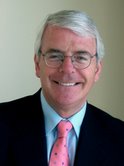
  • Sir John Major – 2016 Speech in Bristol on EU Referendum

    johnmajor

    Below is the text of the speech made by Sir John Major, the former UK Prime Minister from 1990 until 1997, in Bristol on 22 June 2016.

    This is the last day we have left to try and persuade the British people to remain in the EU.

    As Prime Minister, European rows upset many of my ambitions. I should wish to leave …. and yet I passionately believe that our jobs, homes, savings and family life will be safer and more secure if we remain in the EU.

    Of course I understand there is concern over the current level of immigration – I stress current. I understand it – the PM understands it. But leaving the EU is no solution. To try and solve a short-term problem by doing so is to risk a far greater longer-term impact on our prosperity and place in the world.

    If we were to leave, we would be seriously diminished as a country. I don’t want a Broken Britain without influence. And that is what we risk.

    Throughout this campaign I – and others – have been accused of “scaremongering”. Of running a “Project Fear”. What a grotesque travesty of the truth.

    So many respected bodies have pointed out the risks – and the Remain campaign has a duty to inform, correct myths and untruths – and to warn. That is Project Reality.

    That is our responsibility. If we had failed in that – and if the British people vote out and all the things we have warned of come to pass – they would be fully entitled to say: “Why on earth did no-one ever tell us it would be like this?”

    The British people will make their own choice tomorrow – but I do not want to sit on my rocking chair in a few years’ time wishing I had done more to lay the truth on the line …

    Of course being a member of the EU can be frustrating. Sometimes deeply frustrating. No-one knows that better than me – and the PM – for both of us have sat around that top table for many years.

    But the benefits of being inside the EU are real and by far outweigh any downsides: our international prestige, influence, security, wellbeing are all enhanced inside Europe.

    As I stand here beside a still very youthful and energetic PM … I am very much aware that I represent the “grey” vote – actually, I think I’ve probably represented that for many years …..

    But this is an important point: many people my own age – and older – remember the last referendum in 1975. Many say “We voted IN then – but we never voted for this ….. we never voted for what we have now ….. this is my chance to reverse that … to get out of Europe”.

    I understand that sentiment, but would put another one to them: our country, Europe – and the wider world – is a very different place than it was in 1975. The world has moved on – and we have had to move with it. Who would have imagined that China would become so economically dominant? Who would have imagined that the communist Soviet Union would collapse, and that wall of division – of hate – between the East and the West would be torn down? Who would have foreseen the Global Market?

    Our country is as free as any in the world. We take freedom for granted. Political freedom. Freedom of movement. And these are not one-way freedoms: our children and grandchildren think nothing of hopping onto Eurostar and heading off to Paris for a weekend break. Or travelling around Europe with a backpack earning money to pay their way …. why should such freedoms be denied to others?

    Our nation is instinctively compassionate, open-hearted, generous-spirited, fair-minded and tolerant. We balk against hatred and extremism. We are fiercely patriotic – but not nationalistic.

    And it is patriotic to work with others to ensure our security; to improve our economic wellbeing; to carry British influence and British values around Europe and the world. The optimistic patriot looks outwards and forwards – not inwards and backwards.

    I am at an age when I often look back. But I owe it to my children and my grandchildren to look forward.

    And it is because I want the very best for their future – and for the future of your own children and grandchildren – that I wish to remain in the EU.

    I want their futures to be safe. Secure. I want them to enjoy the freedoms that I have enjoyed. I want them to know prosperity not austerity. I want them to feel compassion for those in genuine need. I want them to reject hatred and violence – and to live in a country that does so too.

    For these and many other reasons, we cannot – must not – pull up the drawbridge on our own country, and shrink back into ourselves. We need to be a strong voice, with a strong influence inside the EU and on the global stage.

    If we leave, Europe would lose the country with the best performing economy; one of only two countries with a military capability and nuclear capacity; and the country with the longest, deepest and widest foreign policy reach.

    And how ironic it would be if Britain – the nation that once, by her steadfastness saved Europe – were to end up as the architect of disarray across Europe.

    If our nation does vote to leave – we must respect their decision.

    But, if they vote to leave on the basis of half-truths, untruths and misunderstandings then – pretty soon – the gravediggers of our prosperity will have to account for what they have said and done.

    But that will be of no consolation. For we will be out. Out for good. Diminished as an influence on the world. A truly Great Britain, shrunk down to a Little England.

    This is not how our island story should go.

    Tomorrow – millions of our fellow citizens can save our country from a mistake we will live to regret … for a very long time to come.

  • David Beckham – 2016 Comments on EU Referendum

    Below is the text of the comments made by David Beckham on 21 June 2016.

    “I’m passionate about my country and whatever the result of Thursday’s referendum, we will always be Great. Each side has the right to their opinion and that should always be respected whatever the outcome of the European Referendum.

    I played my best years at my boyhood club, Manchester United. I grew up with a core group of young British players that included Ryan Giggs, Paul Scholes, Nicky Butt and the Neville Brothers. Added to that was an experienced group of older British players such as Gary Pallister, Steve Bruce and Paul Ince.

    Now that team might have gone on to win trophies but we were a better and more successful team because of a Danish goalkeeper, Peter Schmeichel, the leadership of an Irishman Roy Keane and the skill of a Frenchman in Eric Cantona.

    I was also privileged to play and live in Madrid, Milan and Paris with teammates from all around Europe and the world. Those great European cities and their passionate fans welcomed me and my family and gave us the opportunity to enjoy their unique and inspiring cultures and people.

    We live in a vibrant and connected world where together as a people we are strong. For our children and their children we should be facing the problems of the world together and not alone.

    For these reasons I am voting to Remain”.

  • Baroness Stowell – 2016 Speech in Tribute to Jo Cox

    Below is the text of the speech made by Baroness Stowell in the House of Lords on 20 June 2016.

    My Lords, Jo Cox was clearly a remarkable woman. I never met her. Tragically, the first thing I knew about her was that she had been killed. We are shocked that a young woman in the prime of her life has been stabbed and shot dead in the streets of a town like Birstall on a Thursday lunchtime. We are sad that a husband has lost his wife and two young children will never see their mother again, and we are horrified because Jo was a Member of Parliament who was killed by a constituent while she was going about her work serving the people of Batley and Spen.

    We have learned a lot about Jo over the past few days. None of us could fail to be impressed by her dedication and commitment both before and since entering Parliament. She was a woman who clearly cared about other people. She had travelled far, had wide horizons and she thought big. For me, what is most moving has been hearing what was clearly a woman with a passion for the world say in her maiden speech how proud she was to come from Yorkshire and to be representing the place where she had grown up and the people she had grown up among. The impression she gave this stranger, listening to her for the first time, was that Jo Cox was a woman who knew who she was, and I really like that.

    We are not just paying tribute to Jo Cox today, we are standing in solidarity and shoulder to shoulder with the other House of Parliament. The House of Commons has lost one of its own in the most dreadful of circumstances. It is not the first time. Over the past 40 years, we have lost Airey Neave, Robert Bradford, Anthony Berry and Ian Gow at the hands of IRA terrorists. One of them, Robert Bradford, was holding a constituency surgery at the time of the attack and his caretaker was also killed. Thankfully, Stephen Timms survived a violent attack by a constituent, as did the noble Lord, Lord Jones, when he was the MP for Cheltenham, although tragically the noble Lord’s assistant was killed in that attack. But Jo Cox is the first MP to be killed in the line of duty by a constituent.

    Today, as Leader of this House and on behalf of all noble Lords, I would like to pay tribute to all Members of the other place, our elected colleagues who follow their vocation to improve things for the benefit of those they represent. Their route to Parliament is rarely easy and it can take them years. It is usual for them to have to accept failure many times before being selected to represent their party, hopefully in a winnable seat and often not before they have had to stand and lose in a hopeless one. Those who do make it work tirelessly for their constituents, not just here in Westminster, but every week in their constituencies. But as the last election showed, dedicated or not, MPs can be unceremoniously rejected if the electorate is fed up with their party at large.

    The British people deserve the best public servants to represent them in Parliament. Jo Cox was clearly a great public servant for her constituents. Thankfully, in that respect she was far from alone. Marking her death, tragic and unfair as it is, presents at least one opportunity for the sake of good democracy, and it is this: for those of us who know how hard MPs work, to raise awareness of their commitment to the people they represent.

    On behalf of the whole House, I offer my sincere condolences to Jo’s husband, children, parents, sister and to all her family and friends. On behalf of the Conservative Party in this House, I offer all of our colleagues on the Labour Benches our deepest sympathies for the loss of their dear friend. Finally, on behalf of the House of Lords, I offer our condolences and respect to our colleagues in the other place.

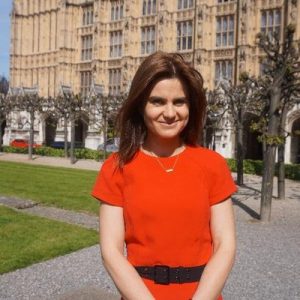
  • Jo Cox – 2015 Maiden Speech in the House of Commons

    jocox

    Below is the text of the maiden speech made by Jo Cox in the House of Commons on 3 June 2016.

    Thank you, Mr Speaker; it is a great privilege to be called to make my maiden speech in this most important of debates, and I congratulate many others who have made outstanding maiden speeches today.

    I am sure that many right hon. and hon. Members will claim that their constituencies consist of two halves or numerous parochial parts; I am another in that respect, and Batley and Spen is very much that kind of constituency. It is a joy to represent such a diverse community.

    Batley and Spen is a gathering of typically independent, no-nonsense and proud Yorkshire towns and villages. Our communities have been deeply enhanced by immigration, be it of Irish Catholics across the constituency or of Muslims from Gujarat in India or from Pakistan, principally from Kashmir. While we celebrate our diversity, what surprises me time and time again as I travel around the constituency is that we are far more united and have far more in common with each other than things that divide us.

    My constituency is also home to Fox’s Biscuits and Lion Confectionery, so I am sure you will not think it an indulgence, Mr Speaker, if I describe Batley and Spen as a constituency with an industrial heart wrapped in a very rich and pleasant Yorkshire landscape—geographical, historical and cultural.

    The spirit of non-conformity is as prevalent now in my part of west Yorkshire as it was in the time of my two immediate predecessors, Mike Wood and Elizabeth Peacock. They were both known for offering their own brand of independent, non-conformist service, albeit in very different ways. I intend to maintain that established tradition in my own unique style.

    Of course, Batley is a town that has sent Labour MPs to this place for the best part of a hundred years. One of them, Dr Broughton, is of course famously credited with bringing down a Government, so I respectfully put the right hon. Members on the Front Bench opposite on notice. The Spen valley has a far more chequered political history, alternately sending Labour and Conservative MPs here to Westminster for much of the 20th century. Nothing made me prouder on 8 May than to be sent to this place with an increased Labour majority, proving again that in my neck of the woods non-conformity is what we do best.

    As I have already alluded to, we make things in Batley and Spen; we do so now, just as we did historically. Batley and Spen has a high proportion of people working in manufacturing, and we can boast the full range of industries, including high-skilled, precision engineering. We manufacture all sorts, from beds to biscuits, and from carpets to lathes. We also have some of the best fish and chips in the country, and some of the best curries in the world.

    However, what many of our businesses are lacking is confidence: confidence to expand; confidence to borrow; confidence to grow; and the confidence to fuel a real economic recovery that benefits everybody, offering decent jobs, paying decent wages and bridging the skills gap. Key to changing that situation is a fundamental shift in attitude towards regional economic regeneration. It is time to give city and county regions the powers and resources they need to promote growth, and I will happily work with all of those who are genuinely committed to building an economic powerhouse in the north. This agenda has to have at its centre a commitment to connect towns and villages in constituencies like mine to thriving city hubs, and to deliver a financial offer in the forthcoming July Budget that gives this worthy goal a real chance of success. Yorkshire folk are not fools: talk about devolving power to cities and regions, while simultaneously stripping them of the resources to deliver and subjecting northern councils such as Kirklees to the harshest of cuts, is not compatible with a worthy commitment to building a northern powerhouse to drive growth and prosperity.

    Businesses in my constituency want help to address the skills mismatch at local level which leaves employers with staff shortages and young people without jobs. They want access to reliable sources of finance, including a network of local banks. They want to connect to a regional infrastructure that works for them, not rail price hikes of more than 126% and endless delays to key transport projects such as the electrification of the line from Manchester to Leeds. Many businesses in Yorkshire want the security and stability of Britain’s continued membership of the European Union, a cause I look forward to championing passionately in this place and elsewhere.

    The key question is: will the Government’s actions match their northern powerhouse rhetoric? HS2 is not the only acid test. There are two bigger challenges. First, will the Government really devolve all the powers and decisions that could and should be taken locally and regionally? My test will be this: if there is a compelling reason for this to be a national decision then so be it; if not, it should be devolved. Secondly, will the Government really take the whole range of their decisions—on transport, research and development, planning, education and skills—in the interests of rebalancing the economy and growing the north?

    I am Batley and Spen born and bred, and I could not be prouder of that. I am proud that I was made in Yorkshire and I am proud of the things we make in Yorkshire. Britain should be proud of that, too. I look forward to representing the great people of Batley and Spen here over the next five years.

  • Eilidh Whiteford – 2016 Speech in Tribute to Jo Cox

    Below is the text of the speech made by Eilidh Whiteford, the SNP MP for Banff and Buchan, in the House of Commons on 20 June 2016.

    Today, this House is united in grief. In Jo Cox we have lost a respected and treasured colleague and friend, and on behalf of SNP and Plaid Cymru MPs and the people we represent, I want to pay tribute to a remarkable woman whose passion, determination and dedication characterised the short time she was with us, and rubbed off on those around her.

    I was lucky enough to know Jo long before either of us was elected to Parliament, when we both worked for Oxfam. Jo was an inspired and inspiring colleague. When we first met, Jo, still only in her twenties, was already heading up Oxfam’s advocacy office in Brussels, lobbying to make trade fair for developing countries, and she was a joy to work with.

    Jo was incredibly talented. She was very smart, focused and driven, but it was the way she worked with others that really marked her out: she was supportive, inclusive and generous, and she radiated positive energy. Jo really was a bright star who helped others to shine. She could have done anything with her life, but she chose to spend it helping others and making the world a better place.

    Inevitably, over the last few days I have been sharing memories of Jo with many of our former Oxfam colleagues, some of whom worked far more closely with her on a daily basis than I did. I want to share with the House just a few of the things they said, because they sum up well the sort of person Jo was before she entered Parliament and the values that she brought with her. One of her friends says:

    “Jo brought energy, fun and an absolute focus on wanting to improve the lives of those living in poverty. She was determined to make Governments do more to end the conflict in Darfur and protect civilians. She embodied what it meant to be a true humanitarian.”

    Another says:

    “The wonderful thing about Jo was how much she genuinely cared—for those around her and for those far away. She was not afraid to wear her heart on her sleeve.”

    Another friend describes her as:

    “A massive bundle of brains and energy—a woman who radiated friendly warmth and intellect.”

    Almost everyone I have spoken to has mentioned how connected Jo was to her Yorkshire roots. As one friend observed:

    “She was proud of where she was from, but rightly saw no contradiction between that and caring about the lives of people on the other side of the world.”

    We often witnessed that here in Parliament too, where Jo fought with equal resolve for refugee children fleeing Syria and the children in her own constituency growing up in poverty. I like to think that it was those deep, strong roots in her own Yorkshire community that enabled Jo to branch her arms around the world with so much love. She was proud of Yorkshire; Yorkshire should be immensely proud of her. I laid white roses for Jo at the vigil in Aberdeen on Saturday organised by Lewis Macdonald MSP and Dame Anne Begg, but I know that Jo’s friends and former colleagues have been holding memorials for her in countries all over the world.

    The last time I saw Jo was at the Macmillan Cancer Support parliamentary tug of war event just a couple of weeks ago. The conventional wisdom is that height and weight are distinct advantages in tug-o-war. [Laughter.] Jo had neither of those attributes: her stature was quite possibly the only thing about her that was diminutive. Nevertheless, there she was pulling for the women MPs’ team with every ounce of her strength and every fibre of her being, and with sheer, dogged determination. That is how I want us to remember her: this strong, brave, determined woman giving her all with absolute commitment. I want to remember Jo Cox for how she lived, not how she died. I want her to be a symbol of the politics of hope, not the politics of fear.

    This Parliament is a lot poorer for Jo’s passing, and we in the SNP and Plaid Cymru extend our sincere condolences to her colleagues and friends in the parliamentary Labour party. Jo’s constituents in Batley and Spen have been robbed of an outstanding and dedicated MP—the person they chose, democratically, to be their voice in this place.

    To Brendan, Cuillin and Lejla, and the Leadbeater family: we know your loss is immeasurable and that your lives have been changed irrevocably. We hold all of you in our hearts. I hope that in time, when they are older, Jo’s children will come to understand more fully just how much their brilliant, beautiful mother was able to contribute to humanity in her short, purposeful and well-lived life. Jo, those of us who knew you will never forget you. I hope you rest in peace.

  • Holly Lynch – 2016 Speech in Tribute to Jo Cox

    Below is the text of the speech made by Holly Lynch, the Labour MP for Halifax, in the House of Commons on 20 June 2016.

    This is the hardest speech I will ever give. However, it was not difficult to write because there was so much that I wanted to say. Jo Cox, the hon. Member for Batley and Spen, was the very best of us. She may have been small, but in politics as in life, she packed a punch that was simply beyond measure. She came into this place with such passion and energy. From the start, she had a clarity about what she was here to achieve and what needed to change, and she was not going to waste any time in getting on with it. She knew that the people counting on her could not afford to wait.

    Jo’s experiences of working in some of the most dangerous places in the world, caring for some of the most desperately vulnerable, upholding the principles of justice and basic human rights, were reflected in her politics and her character. It meant that when she spoke, people listened. There was a weight to what she had to say and she was not afraid to say it. She had a vision of a world better than the one that has taken her from us.

    Characteristically, Jo would work across the Benches to build support for change in the most collegiate way. That has been reflected in the tributes paid to her.

    When the new 2015 intake of Labour MPs arrived in Westminster in May last year, our then acting leader, my right hon. and learned Friend the Member for Camberwell and Peckham (Ms Harman), told us:

    “Every day you are an MP is a day that you can make a difference.”

    Nobody embodied that sentiment more than Jo.

    With friends and colleagues, Jo would speak candidly about the challenges of balancing a young family with the pressures of being a diligent and effective Member of Parliament. I was both Jo’s friend and Jo’s Whip, which should have been a difficult balance to strike, but it was not. That is not to say that she was the easiest person to whip as she knew that certain late night votes were not as important as being there to put her children to bed and to tuck them in.

    Jo managed to reconcile being a hero of our movement with being incredibly down to earth. People only had to hear Jo speak to know that her roots were firmly in Batley and Spen. She was a daughter of Yorkshire and she fought tirelessly for those who had put their faith in her.

    Like all of us, I will remember Jo in many different ways. She spoke of her predecessor, Dr Broughton, in her maiden speech, alluding to the fact that he had been credited with bringing down a Government, and she put Government Front Benchers on notice with a smile that we all came to know and love. Although they laughed it off at the time, I would not be at all surprised if they had become increasingly nervous once they began to realise just how formidable she was.

    I will also remember Jo in the voting Lobbies in her cycling kit and trainers, leaving us all wondering where she found the energy. I remember hearing about the trials and tribulations of the kids recently having chicken pox. I remember regional news following her as a newly elected MP and capturing the moment when one of the kids lost their shoe to the Thames and Jo had to try to retrieve it, all before starting the day. I will remember her warmth, her spirit and her laugh.

    Those of us from my intake who had the pleasure of Jo’s company as she hosted an event to mark our first year in office last Tuesday will be eternally grateful for those treasured memories and the chance to all be together one last time.

    My hon. Friend the Member for Redcar (Anna Turley) told me that she will remember Jo as a comet: burning brightly, lighting up the dark, awe-inspiring, giving off sparks of heat, light and positive energy wherever it goes. I cannot think of a better way of describing her.

    Jo was the heart and soul of the Labour Benches and we are heartbroken. We loved her every day and we will miss her every day. She inspired us all and I swear that we will do everything in our power to make her and her family incredibly proud.

  • Cheryl Gillan – 2016 Speech in Tribute to Jo Cox

    cherylgillan

    Below is the text of the speech made by Cheryl Gillan in the House of Commons on 20 June 2016.

    Jo Cox was a politician who spanned continents and political parties. Among other causes, she campaigned alongside many of us on behalf of people with autism. With her death, we have lost a powerful advocate.

    When I came into this House in 1992, I sat alongside the first woman MP for Batley and Spen, Elizabeth Peacock. She held her surgeries for 14 years in the Birstall library, and she exchanged letters with Jo when Jo was still at school. Like all of us, she has been shocked to the core by this tragedy. She asked me to say that the attack on Jo was an attack on our democracy and on the very basis of our Government and political system. She will mourn the loss of an outstanding friend in politics.

    Jo’s family will mourn her as irreplaceable. We will mourn a woman of talent and humanity, a rising star and a bright light, whose voice may now be extinguished but whose spirit, which epitomises our democracy, will not be forgotten. It will inspire not only her children but many generations of politicians still to come

  • Stephen Kinnock – 2016 Speech in Tribute to Jo Cox

    Below is the text of the speech made by Stephen Kinnock, the Labour MP for Aberavon, in the House of Commons on 20 June 2016.

    Jo and I have been friends for over 20 years, and we have had a wonderful 12 months sharing an office since our election last May. Jo used to use my cupboard as a wardrobe, and I will never forget her dashing around in her cycling gear, grabbing her clothes and shouting something over her shoulder about her latest project or campaign. She often brought her lovely children into the office with her, and if I was lucky I would get a dinosaur drawing or a chance to read them a story. They are wonderful kids, who are truly bathed in love.

    The murder of Jo Cox was a national tragedy, but we must also remember the unspeakable personal suffering that it has caused. Jo’s family have lost a loving mother, wife, daughter and sister. The fearless Jo Cox never stopped fighting for what is right. She gave voice to the voiceless. She spoke truth to power. She exemplified the best values of our party and of our country: compassion, community, solidarity and internationalism. She put her convictions to work for everyone she touched—for the people of Batley and Spen, for the wretched of Syria and for victims of violence and injustice everywhere.

    On Thursday, Jo was assassinated because of what she was and because of what she stood for. But out of the deep darkness of Jo’s death must now come the shining light of her legacy. So let us build a politics of hope, not fear; respect, not hate; unity, not division. I can only imagine Jo’s reaction had she seen the poster that was unveiled hours before her death—a poster on the streets of Britain that demonised hundreds of desperate refugees, including hungry, terrified children, fleeing from the terror of ISIS and from Russian bombs. She would have responded with outrage, and with a robust rejection of the calculated narrative of cynicism, division and despair that it represents, because Jo understood that rhetoric has consequences. When insecurity, fear and anger are used to light a fuse, an explosion is inevitable.

    In the deeply moving tribute that Brendan Cox made last Thursday, he urged the British people to unite and fight against the hatred that killed Jo. It is the politics of division and fear, the harking back to incendiary slogans and the rhetoric of “Britain First” that twists patriotism from love of country into an ugly loathing of others. We must now stand up for something better, because of someone better. In the name of Jo Cox and all that is decent, we must not let this atrocity intimidate our democracy. We must now work to build a more respectful and united country. This is our time to honour the legacy of the proud Yorkshire lass who dedicated her life to the common good and who was so cruelly taken away from us in the prime of her life. Jo Cox, we love you, we salute you and we shall never forget you.