Blog

  • Nick Gibb – 2011 Speech to the HMC Deputy Heads Conference

    Nick Gibb – 2011 Speech to the HMC Deputy Heads Conference

    The speech made by Nick Gibb, the then Education Minister, on 7 June 2011.

    I’m absolutely delighted to be here today and I’m grateful to you for inviting me.

    First, because we have much in common. As Minister of State, rather than Secretary of State, I too am a fully paid up member of the ‘deputy club’.

    And secondly, because I’m a huge admirer of what the independent sector has achieved.

    While the state sector has, over the last half century, fallen victim to the vicissitudes of passing educational fads and ideology, the independent sector has remained steadfast to high quality, well-rounded education based on clear evidence of what works best for children and young people.

    HMC schools don’t just set the benchmark for every other school in this country, private or state, to aspire to.

    Their excellence is recognised all over the world.

    And as I saw on a visit to King Edward’s School in Birmingham in January, that success is rooted in independence, freedom and autonomy.

    The independence to develop strong teaching and curricula which maintains academic rigour across the board.

    To adopt high quality, internationally recognised qualifications like the IB or the iGCSE.

    And to use outstanding artistic, sporting and pastoral provision, to create broad-minded young people, ready to thrive in an ever-changing world.

    Our reform programme is based on the same principles of independence – that teachers and professionals know best how to run schools.

    Everything we’re doing is about giving the best state schools the same autonomy to get on with the job – without Whitehall dictating day-to-day details.

    And so today, I also want to set out how the independent sector and its leadership teams can play a part in raising standards across our education system.

    Unashamedly, we want to replicate the best of what the independent sector does – learning and applying the lessons from its success.

    But to do that properly, we need to draw directly on the excellence, ethos, and proven track record – what my predecessor, Lord Adonis, called the “educational DNA” of the independent sector.

    I was pleased to see that that the title of this conference – Meeting the Challenges – suggests independent schools are not resting on their laurels.

    Because the education system is facing some of its toughest challenges in decades.

    How do we meet the demands of business, universities and society to compete in a fast-changing, unpredictable global economy?

    How do we use early years’ provision and schools to drive social mobility?

    How do we drive up standards in the state system in the face of tighter public spending?

    Our White Paper last November, The Importance of Teaching, pointed out that there is much to admire and build on in England’s state education system: hundreds of outstanding schools; tens of thousands of great teachers; academies established and outstripping the rest of the maintained sector.

    But it was also made clear that too many children are still being let down because the system is not fulfilling its potential.

    We’re failing to keep pace with countries with the best education systems – falling back in the PISA international rankings, from fourth to sixteenth in science; seventh to 25th in literacy; and eighth to 28th in maths – meaning our 15-year-olds are two years behind their Chinese peers in maths; and a year behind teenagers in Korea or Finland in reading.

    We’re still not meeting the expectations of employers – with the CBI’s annual education and skills survey just last month finding that almost half of top employers had to invest in remedial training for school and college leavers.

    And we’ve still not closed the yawning attainment gap – which remains unacceptably wide both between rich and poor and between state and private sectors.

    Professor William Richardson’s excellent report for the HMC 18 months ago, showed the top ten universities’ increasing reliance on the independent sector – with 40% of all students on strategically important courses like engineering, science, maths and languages, drawn from private schools.

    And last year’s A-level results also showed a fifth of all entrants in chemistry, physics, maths and biological sciences and almost a third in further maths were independent school pupils.

    But as a nation, we can’t carry on relying on the seven per cent of young people the independent sector educates, to provide such a high proportion of future generations of scientists, engineers, medics or linguists.

    The key to both social mobility and a mobile economy is to realise the potential, ability and talent of young people from all backgrounds.

    That’s why we’ve introduced the English Baccalaureate.

    The Russell Group has been quite clear about the core GCSE and A-level subjects which equips students best for the most competitive courses – English; maths; the three sciences; geography; history; classical and modern languages.

    So the E-Bacc is designed to open up those same subjects to tens of thousands of state pupils currently denied the opportunity.

    We need to take clear action.

    It is a major concern to us that nine out of ten state pupils eligible for free school meals are not even entered for the E-Bacc subjects – and just 4% actually achieve it.

    It is a concern that the proportion taking a modern foreign language GCSE has slipped from 79% a decade ago to just 43% last year – and little more than a third when you take out independent schools.

    And it cannot be right that no pupil was entered for any of the single award science GCSEs in 719 mainstream state schools; for French in 169; for geography in 137; and for history in 70.

    The most academic subjects must not become the preserve of independent schools.

    They should be open to every single student, regardless of background.

    In the modern world, there is nowhere to hide for any school leaver. Jobs can be transported across international borders in a nanosecond. The pace of technological change means that new industries are evolving in the space of months not decades.

    So it is no longer good enough to judge state education simply by how much we spend or against rigid, centrally arbitrated targets – we need to raise our game.

    Our reform programme draws on the clear and consistent evidence base from the leading education systems around the world.

    PISA, OECD, McKinsey and others tell us that despite most developed countries doubling or even tripling their education spending since the mid-1970s, outcomes have varied wildly.

    Because it is not how much they’ve spent on education that counts most. It is how they spent it.

    The strongest systems recruit and develop the best teachers. They have strong leadership. They have internationally benchmarked curricula, assessments and qualifications. And above all, they give schools and professionals freedom to flourish.

    That’s why we are getting rid of much unnecessary, cumbersome bureaucracy that bedevils state schools – slimming down the National Curriculum; scrapping the Self Evaluation Form; focusing Ofsted inspections on teaching; closing down quangos; and cutting the overly complex Admissions Code and hundreds of pages of statutory guidance.

    But we want to go further.

    We want to complete the last government’s unfinished business when it comes to academies.

    We’ve enabled every single state primary, secondary and special school to become independent, autonomous institutions. Free to decide how to use their budgets. Free to vary pay and conditions. Free to decide the length of the school day. Free to offer qualifications in their pupils’ best interests.

    Academies have already proved a force for good in turning around underperforming schools in some of the most deprived areas. Mossbourne in Hackney; the Harris chain across south London and Burlington Danes in Hammersmith are now watchwords for the best of what the state sector can achieve.

    Just as your success is rooted in independence, the evidence is emerging that these early academies’ independence has driven up standards in neighbouring state schools – as new research from the LSE showed last month.

    We’re allowing good state schools to convert to academy status and the demand to do so has far exceeded our expectations.

    It took five years to open 15 City Technology Colleges and four years to open the first 27 Academies.

    But 1244 schools have applied to become an academy in the last 12 months and 430 have already converted – a rate of more than two every school day. A third of all secondary schools are either now academies or in the process of converting. And hundreds more are in the pipeline.

    This is a fundamental shift away from government and towards teachers and professionals.

    Academies are now reforming in ways never foreseen when the programme started a decade ago:

    • established multi-academy chains like Harris and ARK are raising standards in areas failed educationally for generations.

    • the first special schools are going through the application process.

    • the first generation of specialist technical academies are now opening – offering high-quality, work-based vocational education.

    • the door is now open to Further Education and Sixth Form Colleges and alternative provision to become academies through the current Education Bill before Parliament.

    • the first free schools are now set to open from September – and hundreds more coming through.

    Independent schools have already played an important part – acting as lead academy sponsors like Dulwich, Wellington and Canford; co-sponsoring like Marlborough, King Edward School, Bryanson and Tonbridge; or being active educational partners like Malvern, Winchester, Uppingham and Oundle.

    Organisations like ULT, Girls’ Day School Trust, Haberdashers’, Woodard Schools and the Skinner’s Company oversee joint families of academies and independent schools.

    And some have actually converted to the state sector like Birkenhead High School; William Hulme’s Grammar School; Belvedere Girls’ School; and Bristol Cathedral Choir School.

    But as the brakes come off the programme, scores more opportunities are opening up for the independent sector; HE and FE; charities; and business to play a greater role.

    Because crucially, we haven’t forgotten the programme’s roots – to turn round our most challenging, underperforming schools.

    Children only get one shot at education. So we’re clear that we will not hesitate to intervene in weak schools which are letting down parents and pupils.

    And that’s why we’ve appointed Dr Liz Sidwell, the Chief Executive of Haberdashers’ Aske’s Federation, as our new Schools Commissioner.

    Few in education have her track record or experience. And she hasn’t been shy in challenging local authorities and heads to come up with robust improvement plans – brokering academy arrangements; recruiting sponsors; enthusing heads and governors to go for academy status; promoting free schools to prospective proposers; and expanding our existing pool of sponsors significantly.

    Many schools in the independent sector have already established successful partnerships with neighbouring institutions through the Independent State School Partnership scheme. And we want that sort of collaboration to continue through the new national network of Teaching Schools; our Education Endowment Fund; and the National and Local Leaders of Education programme.

    But I believe that formally sponsoring, founding or partnering an academy must be the next logical step for many more independent and state schools.

    Because as academies become the norm in every single part of the system, how the best institutions are judged in the public’s eyes will also change.

    We have a clear expectation that the strongest state schools converting to academies should partner the weakest.

    And I hope that same expectation can apply in the independent sector too.

    Providing an opportunity for the sector to spread its unique ethos, culture and thinking to tens of thousands more children whose parents can’t afford school fees.

    Concepts like Brighton College’s plans for a consortium of independent and state schools to establish a sixth form college in East London to get gifted students to top universities.

    I know some schools have been hesitant to come forward. I understand those who may feel that the independent sector has enough on its plate – with many parents fighting hard to afford fees and many smaller schools striving to keep their heads above water in the current economic climate.

    But many independent schools were born out of a moral drive to help the poorest. That same moral purpose underpins our reforms – to give every single child, of whatever background, the opportunity to make the most of their talents.

    Mr Chairman, in the 12 months that I’ve had the privilege to hold the position of Minister of State for Schools I have done all I can to reduce regulation on the independent sector and I hope we can go further still.

    We’ve recognised the iGCSE in the performance tables – including from this year the Edexcel iGCSE – and we’ve made our admiration for what the sector has achieved clear at every opportunity.

    We all have the same goals when it comes to raising standards throughout the education system and I look forward to continuing to work with HMC and the independent sector to help achieve those goals.

    Thank you.

  • Judith Blake – 2022 Tribute to HM Queen Elizabeth II (Baroness Blake of Leeds)

    Judith Blake – 2022 Tribute to HM Queen Elizabeth II (Baroness Blake of Leeds)

    The tribute made by Judith Blake, Baroness Blake of Leeds, in the House of Lords on 9 September 2022.

    I thank the Lord Speaker for the opportunity to pay tribute to Her Majesty the Queen today. Like my noble friend Lady Taylor, I am very conscious of the powerful, heartfelt and sincere speeches that have led the debate. I am sure that we are all very grateful for that. I know that all our thoughts are with the members of the Royal Family at this time of deep sadness and loss. I join everyone in sending my condolences to them.

    Over my lifetime, the Queen visited my home city of Leeds on many occasions. My memories go back, as so many have said do theirs, to lining a route as a schoolgirl to watch the royal car pass. I have to say that I will never forget the trauma of my sister losing her flag at the key moment as the car was just about to pass. In fact, I think she is still traumatised more than 60 years later. Even at that very young age, I recognised the enormous significance of Her Majesty’s visit and her interest in our part of the United Kingdom.

    It was my great privilege, 10 years ago this summer, as deputy leader of Leeds City Council to invite the Queen and Prince Philip to launch the Child Friendly Leeds initiative—a central pillar in the city’s improvement journey in children’s services. The Queen, at the same time, reopened the newly refurbished City Varieties—I am sure your Lordships all know the venue of “The Good Old Days” fame. We had a brilliant cast of young people performing fearlessly for her on stage.

    My personal duties included escorting the Queen and Prince Philip from the building in a newly installed glass lift on the outside of the building: what could possibly go wrong? I have to say, I did feel some trepidation at the task, but both the Queen and Prince Philip put me at me ease instantly, and Prince Philip was particularly fascinated by the mechanics of the new lift. Sadly, I was unable to enlighten him on the finer workings of the mechanisms.

    We walked down to Briggate—the main pedestrianised shopping street in Leeds—and I will never forget the roar of delight that hit us as we turned the corner to find both sides of the street thronged with hundreds and hundreds of children from every primary school in Leeds. It was simply breathtaking. I saw, first-hand, how they both interacted with the children and particularly how Prince Philip was assiduous in supporting the Queen so that every child felt included. It was a real pleasure to see them working so naturally and engagingly, talking to so many children and young people; I have never seen so many floral tributes, cuddly toys—you name it—all of the gifts that the children wanted to give to the royal couple. Those children and young people will never forget that day, and I know how much it has inspired them over the years.

    We will always remember the Queen’s extraordinary sense of duty and her commitment to people and communities the length and breadth of the country. Her depth of knowledge concerning organisations and backgrounds to events that she attended was simply astounding, revealing her intense interest in the people she was meeting. I think it was this attention to detail that helps explain why she is so well respected and loved by so many people across the country.

    I am grateful for the opportunity to say an enormous thank you for the Queen’s life, her service, her sense of duty and her extraordinary contribution to public life across the world over the 70 years of her reign.

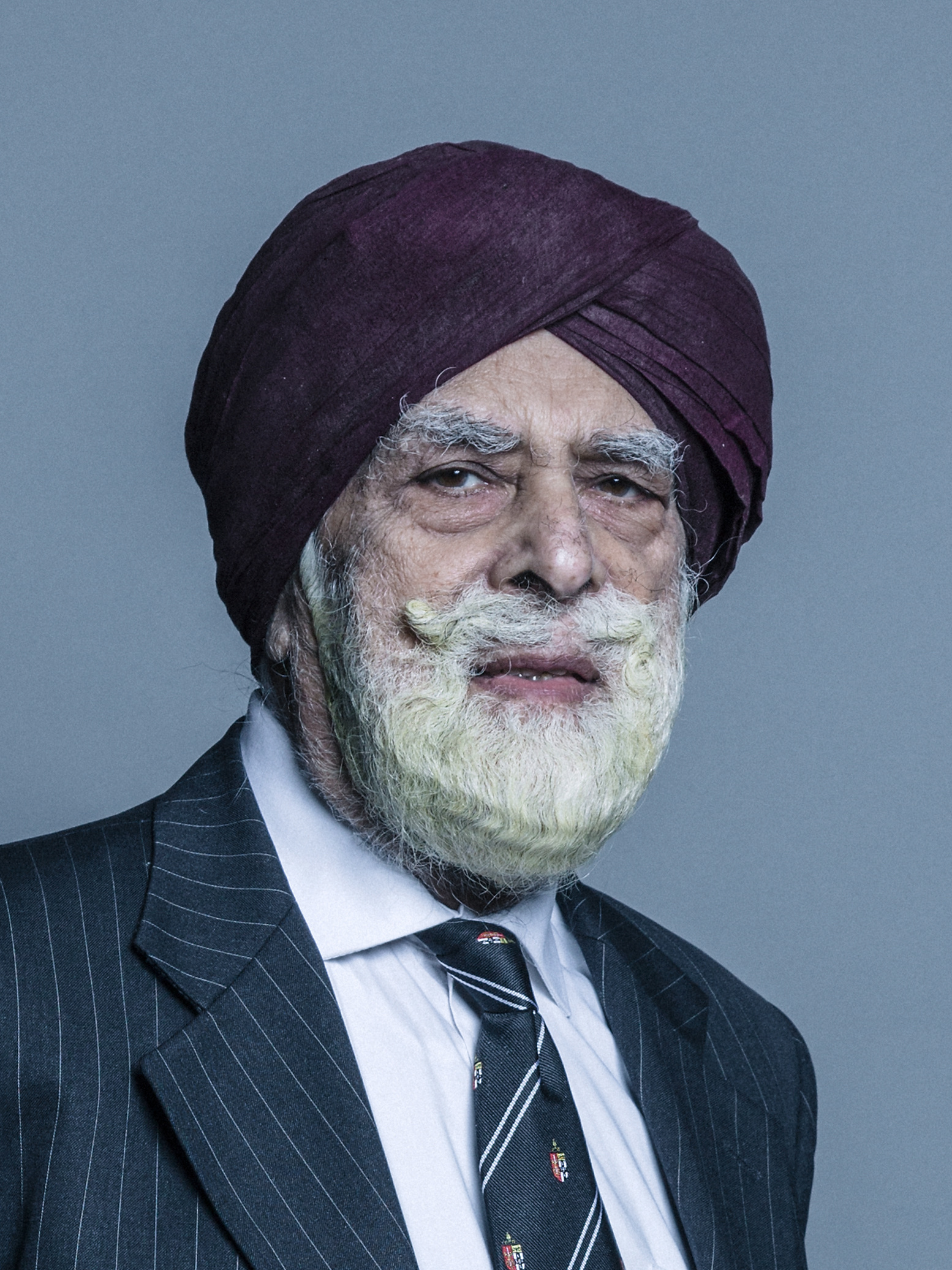
  • Indarjit Singh – 2022 Tribute to HM Queen Elizabeth II (Lord Singh of Wimbledon)

    Indarjit Singh – 2022 Tribute to HM Queen Elizabeth II (Lord Singh of Wimbledon)

    The tribute made by Indarjit Singh, Lord Singh of Wimbledon, in the House of Lords on 9 September 2022.

    My Lords, on behalf of myself and the wider Sikh community, I too want to pass on our sense of loss and sorrow on the death of Her Majesty the Queen. Her passing marks a moment of great sorrow and reflection for us all. As has been said, her life was one of selfless and unparalleled service to her subjects, conducted with both dignity and humility throughout her 70-year reign.

    I have had the good fortune of meeting the Queen on several occasions and being invited to lunch at Buckingham Palace and admiring her wit, wisdom and depth of knowledge. I recall the privilege of accompanying Her Majesty during her first visit to a gurdwara in Leicester in 2002. I remember standing on the steps as the car drew up and the Queen got out a little nervously. Then she saw me and said with a broad grin, “I know him.” It is measure of the high esteem in which she was held by the Sikh community that, in that small gurdwara, after the visit we needed a large truck to take away the many bouquets and posies of flowers.

    It was during her Golden Jubilee celebrations that the Queen made it clear that she was the sovereign for all her people and that our different religions show that God’s love extends in equal measure to the whole of humanity—a resonant echo of Sikh teachings that show the important commonalities between our different faiths. I have been taking part in the annual Commonwealth Day service for many years. One year, it was suggested that the service move away from Westminster Abbey, which allows contributions of different faiths, to another church which did not. The Queen very promptly said, “If you do that, I won’t come.”

    Her Majesty’s commitment to the service of others, contribution to society and humility in all she did are qualities that Sikhs aspire to embody in their lives. Sikhs will always remember her with love and affection.

  • PRESS RELEASE : New Chair of Ofqual – Amanda Spielman [June 2011]

    PRESS RELEASE : New Chair of Ofqual – Amanda Spielman [June 2011]

    The press release issued by the Department for Education on 7 June 2011.

    Education Secretary Michael Gove recommends that Amanda Spielman becomes the new Chair of Ofqual and Chief Regulator of Qualifications and Examinations.

    Michael Gove said:

    Amanda is an extremely talented and hugely experienced individual whose skills are perfectly suited to this high-profile post. I am delighted she is keen to take the role. She will make sure Ofqual is a strong regulator which holds our exam boards to account and ensures our qualifications are as rigorous as the best in the world.

    Amanda Spielman said:

    Ofqual has an extremely important role in our education system. I am honoured to be considered for the role and I hope to ensure that it sustains its focus and rigour, in maintaining standards and in the regulation of awarding bodies.

    Ms Spielman is research and development director of the academy operator ARK Schools, where she is also responsible for legal, governance and regulatory matters. She was a member of the Sykes review panel commissioned by Michael Gove to review the school assessment system. She is also a chartered accountant and spent more than 15 years in private equity, mergers and acquisitions, and corporate strategy in the UK and the US for Kleinwort Benson, Mercer Management Consulting and Nomura International Principal Finance Group.

    The previous Chair and Chief Regulator was Kathleen Tattersall, who left her post last year. In the interim, deputy chair Sandra Burslem has taken on many of the responsibilities, supported by the chief executive, Glenys Stacey. Ms Spielman, whose appointment is subject to confirmation by Her Majesty at the next Privy Council meeting, is due to start at Ofqual later this summer. The education select committee has waived its right to hold a pre-appointment hearing.

  • PRESS RELEASE : More than 1,200 schools apply to become academies [July 2011]

    PRESS RELEASE : More than 1,200 schools apply to become academies [July 2011]

    The press release issued by the Department for Education on 3 June 2011.

    As of today:

    • 1244 schools have applied to be an academy since June 2010
    • 831 of these applications have been approved
    • 430 have already converted and are open.

    The total number of open academies, including those opened under the previous government, now stands at 704. This is an increase of 46 since the last month.

    Outstanding schools were invited to apply for academy status from June 2010. This offer has since been extended to special schools and any other school that is performing well.

    Strong schools that convert to academy status are expected to support other local schools that could benefit from improvement.

    Academies are free from local and national government control. They are able to focus their time and resources on meeting the needs of their pupils and school, rather than answering to local or national politicians and bureaucrats.

  • PRESS RELEASE : New admissions code – a fairer and simpler system [May 2011]

    PRESS RELEASE : New admissions code – a fairer and simpler system [May 2011]

    The press release issued by the Department for Education on 27 May 2011.

    • New admissions code: more places in good schools, a fairer and simpler system
    • New Chief Schools Adjudicator appointed

    Together the two current codes stretch to more than 130 pages and impose more than 600 mandatory requirements on admissions authorities (local authorities, governing bodies or Academy Trusts). The process is complex, confusing, costly and unfair. The current Admissions Code and Appeals Code undermine parental choice.

    The proposed changes would see two new codes created. Together the two slimmed-down documents will contain around half as many requirements.

    The proposals would:

    • increase the number of good school places available by making it easier for popular schools to take more pupils
    • improve the current in-year applications scheme so fewer children face delays in finding a new school. (In-year applications happen when a child moves to a new area during the academic year)
    • give priority to children of school staff when a school is over-subscribed, if the school wishes, making it easier for schools to recruit teachers and other staff
    • strengthen the military covenant by allowing children of armed forces personnel to be admitted to infant classes even if it takes the class over the 30-pupil limit
    • allow twins and other multiple-birth children to be admitted to infant classes even if it takes the class over the 30-child limit
    • ban local authorities from using area-wide “lotteries”
    • reduce bureaucracy by requiring admissions authorities to consult on admissions arrangements every seven years (rather than every three years) if no changes are proposed. (They would still need to consult when they wanted to change their admissions arrangements).

    The consultation also asks whether Academies and Free Schools should be able to prioritise children receiving the pupil premium, as announced in the Schools White Paper last year.

    A raft of unnecessary prescription will also be removed from the draft Appeals Code to make the process cheaper and less burdensome. The consultation suggests:

    • Parents will have at least 30 days to lodge an appeal against primary or secondary school decisions. The current 10-day limit forces parents to appeal quickly. In the last school year for which figures are available (2008/09), more than a quarter of all appeals lodged (24,550 out of 88,270) were not taken forward, wasting time and money.
    • The rule that currently bans appeals from being heard on school premises will be overturned. At the moment admissions authorities have to make costly, taxpayer-funded bookings of hotels or conference rooms.
    • The regulation for admission authorities to advertise for lay appeal members every three years will be cut.
    • The new admissions process will be more open than before. Currently only a very restricted list of people can object to admissions arrangements they believe are unfair. In future anyone will be able to object. The draft code is also clear that local authorities will retain the power to refer any admissions arrangements they believe are not complying with the code to the Schools Adjudicator.

    Education Secretary Michael Gove MP said:

    The school system has rationed good schools. Some families can go private or move house. Many families cannot afford to do either. The system must change. Schools should be run by teachers who know the children’s names and they should be more accountable to parents, not politicians. Good schools should be able to grow and we need more of them.

    The Admissions Code has been bureaucratic and unfair. You shouldn’t have to hire a lawyer to navigate the school system. We are trying to simplify it and make it fairer. We want to cut the red tape that has stopped good schools expanding. We want to make various specific changes to help servicemen and teachers. Together with our other reforms, these changes will help give all children the chance of world-class schools.

    Michael Gove today also announced the appointment of Dr Elizabeth Passmore as the new Chief Schools Adjudicator and stressed the importance of her role in the new system.

    Subject to the passage of the Education Bill, the Adjudicator will be able to consider admissions objections about all maintained schools and Academies. If the Adjudicator finds admissions arrangements are unlawful, they must be changed immediately by the admissions authority.

    Michael Gove said:

    I am delighted to announce Dr Elizabeth Passmore as the new Chief Schools Adjudicator. She brings a wealth of experience to this post and will be a strong advocate of ensuring that our school admissions system is fairer, simpler and easier for all to understand. She will also be firm with those schools or local authorities who do not comply with the Code.

    Michael Gove also paid tribute to the current Chief Schools Adjudicator, Dr Ian Craig. He said:

    I would like to place on record my deep appreciation for the rigour and hard work, as well as the professionalism and diligence, that Dr Craig has brought to this post. He has been an outstanding Chief Adjudicator since his appointment in 2009. I know he and Dr Passmore will work well to ensure a smooth handover.

    Dr Craig said:

    It has been a great privilege to act as Chief Schools Adjudicator and to have had the opportunity to bring greater equality and fairness to the schools admissions system. I am grateful for the support that the Secretary of State and his Ministers have shown me since they took up office and know they listened to my advice, as evidenced when they agreed Academy-related objections should be heard by my office, a change now being effected through the Education Bill.

    I am pleased at the publication of a new Code for consultation today. Reducing the complexity and making it easier for parents to understand without removing the safeguards for vulnerable groups is essential to our admissions system. I would like to offer my congratulations to Dr Elizabeth Passmore on her appointment to this crucial role. I know that she will do an excellent job and I will be delighted to offer her any support necessary during the transition until she takes up her post substantively later this year.

    Dr Elizabeth Passmore said:

    It is an honour and a privilege to be appointed to the post of Chief Schools Adjudicator, particularly at such an exciting time in view of the provisions in the Education Bill around extending the remit of the Adjudicators to consider objections to the admission arrangements of Academies and Free Schools. I welcome the consultation on the Codes and hope the greater simplification and transparency of the Codes will make the system easier for schools, local authorities and especially parents to navigate and make a greater reality of choice, but without losing any of the essential safeguards.

    I would like to pay tribute to the outgoing CSA, Dr Ian Craig, for all the good work he has done and for his great commitment to a fairer schools system that meets the needs of all, not just the few.

    Rob McDonough, headteacher at West Bridgford School in Nottinghamshire, said:

    I very much welcome the direction of change. Through greater school autonomy, and the academies programme which will positively impact upon standards, I do believe this will increase the supply of good school places for parents.

    Keith Reed, chief executive of the Twins and Multiple Births Association (TAMBA), said:

    We are very supportive of the work that is being done to make the school admissions system simpler and more family-friendly. In particular, we are delighted that the new Government has taken on board our suggestion to add twins and multiple-birth children to the list of infant class size exceptions. This change should make a massive difference to the families of children of multiple births.

    The consultation starts today and lasts 12 weeks. Given the challenge of simplifying such a complex system and the potential for changes to have unintended consequences, this consultation is particularly important. Following the consultation period, the draft codes will be laid before parliament. The new codes will not affect the next admissions round (for entry in September 2012) but will take effect for the September 2013 intake.

  • PRESS RELEASE : Schools to get more power to manage teachers [May 2011]

    PRESS RELEASE : Schools to get more power to manage teachers [May 2011]

    The press release issued by the Department for Education on 24 May 2011.

    The Department for Education today announced plans for significant reductions in the bureaucracy that controls how schools manage teacher performance and deal with poorly performing teachers.

    The current system for teachers’ performance management is set out in the Education (School Teacher Performance Management) (England) Regulations 2006. These regulations are complex, detailed and prescriptive, telling schools what to do at every turn. The overall system fails to respect the professionalism of headteachers and teachers and makes it harder for schools to manage vital processes, such as how staff are trained and rewarded.

    The existing School Staffing Regulations (2009) require governing bodies to have “capability procedures”. Schools are expected to follow a complex “model capability procedure” for dealing with poorly performing teachers.

    But the performance management arrangements and capability procedures were developed separately and this has created further complexity, overlap and duplication.

    Ministers, therefore, have today published plans to cut this bureaucracy. The proposed changes will make it easier for schools to manage teachers and deal effectively with the small number of poorly performing teachers. They will:

    • introduce simpler performance management regulations, which set a few basic requirements, remove many restrictions (including the so-called “three hour observation rule”), and leave other decisions to schools
    • introduce an optional new model policy for schools that deals with both performance and capability/disciplinary issues
    • allow poorly performing teachers to be removed in about a term, a process that now often takes a year or more
    • clarify that staff illness need not bring disciplinary processes to a halt
    • scrap about 60 pages of unnecessary guidance.

    These proposals are now subject to a 12 week statutory consultation. It is expected that the new arrangements for dealing with underperforming teachers will come into effect from September 2011. Revised regulations for performance management will be published in September 2011 and take effect in 2012.

    Recent research for the Sutton Trust shows that heads and teachers support the aims of these proposals. More than half (57%) of those surveyed in November 2010 agreed or strongly agreed that there was not enough freedom for schools to dismiss poorly performing teachers. Less than a quarter (21%) disagreed or strongly disagreed.

    Michael Gove MP said:

    We have a great generation of headteachers and teachers. We want to help them to do their jobs even better. We want to make it easier for schools to provide teachers with the training and professional development they need to fulfil their potential and to help their pupils to do the same.

    Heads and teachers also want a simpler and faster system to deal with teachers who are struggling. For far too long schools have been trapped in complex red tape. We must deal with this problem in order to protect the interests of children who suffer when struggling teachers are neither helped nor removed. Schools must be given the responsibility to deal with this fairly and quickly.

    Brian Lightman, General Secretary, Association of School and College Leaders said:

    ASCL welcomes this consultation which has the potential to reduce bureaucracy and streamline processes whilst retaining and strengthening important principles of fairness and transparency The vast majority of school staff are extremely hard working and set themselves high professional standards. Appraisal enables staff and school leaders to identify training needs and implement appropriate programmes of continued professional development.

    In the relatively small number of cases where performance is unsatisfactory in spite of the formal and informal support that has been provided, it is essential for the benefit of the students that capability procedures can be implemented swiftly without the current constraints over timescales.

    Russell Hobby, General Secretary of the NAHT, said:

    These proposals will be generally welcomed by school leaders. Headteachers need the ability to move on the relatively few weak teachers present in our schools, and want to be able to do this fairly and without delay, to the benefit of pupils and, ultimately, staff. Both bureaucracy and delays are unfair to all involved.

    Managing performance is an essential part of development for school staff. It ensures identification of training needs to allow staff to grow and also, where areas need attention, enables appropriate support to be provided. If, despite that support, the level of performance is still not satisfactory, then it is essential that this is dealt with quickly and fairly.

    Darran Lee, Executive Principal to the Learning Federation and headteacher at Medlock Valley and Mills Hill Schools said:

    These new proposals provide greater flexibility for school leaders to develop approaches that meet the needs of their school and secure the very best teaching for our children.

    The merging of performance management and capability policies into one will ensure a continuum of support and challenge, removing duplication and overlap in procedures. This will enable leaders to take action more quickly when teaching is below expectations.

    Ivan Ould, Chair of the National Employers’ Organisation for School Teachers, said:

    We welcome the Secretary of State’s proposal to simplify the performance management arrangements for teachers. In particular we welcome the introduction of a clearer relationship between performance management and capability procedures in order to address cases, where teachers are falling below the standards which are expected of them as part of the employment contract, in a more appropriate and timely manner.

  • PRESS RELEASE : New plans allow schools to employ overseas teachers more easily [May 2011]

    PRESS RELEASE : New plans allow schools to employ overseas teachers more easily [May 2011]

    The press release issued by the Department for Education on 23 May 2011.

    Despite having undertaken training to achieve equivalent teacher training qualifications, qualified teachers from America, Canada, Australia and New Zealand still have to undertake further training and assessment before they are deemed ready to teach in schools in this country.

    Michael Gove has today announced that the government intends to make changes so that teachers trained in these countries will be able to teach in our schools automatically. We will consult on how best to achieve this change later in the year. Speaking in Parliament today he said:

    One of the aims of my department is to make sure that the most talented people possible are teaching our children and it is already the case that teachers from the European Economic Area can teach in our schools.

    Today I want to extend that freedom to teachers from the Commonwealth countries such as Canada and New Zealand and Australia and I hope that other Commonwealth countries like South Africa, Jamaica and Singapore can join in due course.

    Research looking at international teaching qualifications shows America, Australia, Canada and New Zealand have teacher training systems that are equivalent to those in the UK. Ministers therefore will be amending the relevant regulations to recognise the qualifications held in these countries. This will allow well-trained teachers from these countries to work in schools as if they held qualified teacher status.

    The school or local authority sponsoring the teacher will have to continue to check the suitability of the teacher including their qualifications and any necessary background checks. In addition they will still have to meet existing immigration criteria set out by the UK Border Agency (UKBA).

    The proposed changes are subject to a statutory consultation and could come into effect from early 2012. Ministers have also commissioned further research to see if the same changes could be applied to teachers from any other countries in future.

  • PRESS RELEASE : Tim Byles, CEO of Partnerships for Schools announces he is leaving the agency [May 2011]

    PRESS RELEASE : Tim Byles, CEO of Partnerships for Schools announces he is leaving the agency [May 2011]

    The press release issued by the Department for Education on 19 May 2011.

    Tim Byles, CEO of Partnerships for Schools, is to leave his post after nearly 5 years.

    The Secretary of State for Education, Michael Gove, would like to thank Tim Byles for his work, especially his contribution to the government’s successful reforms on academies and free schools.

    Michael Gove said:

    I would like to thank Tim Byles for the commitment to public service he has shown over the last 5 years. I would like to wish him the very best in everything he does after his departure from Partnerships for Schools.

    Ruth Thompson, former Director General of Higher Education at the Department of Business, Innovation and Skills, has been appointed as interim Chief Executive of Partnerships for Schools.

  • John Hayes – 2011 Speech on Recidivism

    John Hayes – 2011 Speech on Recidivism

    The speech made by John Hayes, the then Education Minister, at Prospero House in London on 18 May 2011.

    This speech is about recidivism. It’s about the frightening fact that 39 per cent of offenders re-offend. Countless extra crimes in every part of Britain. It’s about the £13 billion a year that costs the community. It’s about the broken lives of the parents, wives and children of those who go on breaking the law. And it’s about all the extra victims of those crimes. For all of them, things must change.

    The poet of the Parisian underclass, Victor Hugo, wrote that “He who opens a school door, closes a prison”.

    Perhaps that’s as true literally as he meant it metaphorically.

    Education can certainly save people from ignorance, from want, from frustration and from a whole host of other obstacles that would otherwise stop them leading a truly fulfilled life. But there are also countless examples, of how education can rehabilitate those whose lives have already taken the wrong turning.

    Just as in Hugo’s time, skills like those people can learn by taking an Apprenticeship can make the difference between a life on the right side of the law and a life trapped in the damaging cycle of reoffending and reimprisonment.

    Of course, however hard we try, we will never manage to rehabilitate all prisoners successfully. But we are nonetheless entitled to ask why, despite all the money and effort that we put into prisoner education and other forms of rehabilitation, reconviction rates remain so high.

    Like many of you, I watched the BBC’s recent documentary about The Clink prison restaurant. I was struck not only by what a great initiative this is, training young offenders – very much on the Apprenticeships model – for careers in the catering industry on release, but also by how well it exemplified some of the problems that bedevil our efforts to rehabilitate.

    For every youngster who seized the second chance they were being offered, there were several who could not seem to bring themselves to do so.

    If there were awards for most inspiring and most depressing television programme of the year, the story of The Clink would stand a good chance of winning both.

    But those of us who believe in the power of learning to accomplish social and personal good are surely duty-bound to ensure that prisoner education contributes as much as it possibly can to helping those who come out of prison to stay out of prison. That, most think, means delivering what’s needed to get and keep a job.

    Ensuring that even prisoners with very low skills, including the basics of literacy and numeracy needs, are shown a clear ladder of achievement to attain the skills they will need after release to hold down a job in the outside world.

    That’s in their interest, in their potential victims’ interest; it’s in all our interest.

    It also means ensuring that the skills towards which prisoners are guided are those employers need, especially in the localities into which they will be released.

    In essence, this is what the strategy we are publishing today seeks to do. It emerges from a lengthy review process and I want to take this chance to thank everyone who has contributed to it, including many of you.

    When you read it, you’ll see that some parts of the strategy address issues that are specific to prisoner education, such as the problems with disruption to learning that can occur when someone moves between prisons during their sentence. Others are familiar outside as well as in prisons.

    These include the disillusionment and demotivation that learners can often feel if they work hard to acquire new skills which do not, in the end, help them to find a job.

    I’ve no doubt that all of you will welcome some parts of the strategy. I’m equally certain that some of you will find others very challenging. But the thing that matters most is that we emerge with a system that fills those prisoners who are ready to be rehabilitated with enthusiasm for what learning and skills can do to help them. This is about changing lives by changing beliefs. What thousands of Britons who get on the wrong side of the law believe about themselves, their responsibilities, their duties, their futures.

    Many of today’s prisoners are behind bars because they think, for them, only crime pays. No-one amongst the many people they have come across in their chaotic lives has set their feet on the ladder that climbs from basic and foundation skills upwards to the skills that could make them employable and bring them a decent life by lawful means.

    That ignorance – that fear of failure – is the ultimate form of captivity.

    In future, I want everyone who is released from prison to come out with the realistic opportunity to find a job that leads to an honest and productive life. This matters to all of us: because of the costs involved; because of the number of victims created; because of the number of lives ruined if we don’t do better. There is an ongoing tragedy of lost souls within those parts of our communities at the bedrock of Broken Britain. The cohesive societies which we all want to see can only be built by individuals, families and social networks enriched by purposeful pride.

    Achieving what society deserves will take a lot more than money. But the first principle of our reform programme must be to ensure that what money we have goes where it is most needed and will do most good.

    Which means finding new ways in which to organise how we deliver offender learning so that it has greatest effect and to ensure that this is mirrored more closely by the way we allocate resources.

    For example, we will be trialling outcome incentive payments to give colleges and other providers a greater stake not just in delivering learning successfully, but that the learning goes on to have a positive impact on the prisoner.

    We will also be prioritising forms of training like preparation for Apprenticeships that are known to deliver the best results for individual and are attractive to employers.

    To help with that, we’re going to base the new structure on the clusters of prisons within which prisoners routinely move. That will go a long way towards addressing the problem of interrupted courses that I mentioned, as well as bringing more coherence to the system overall.

    This reorganisation will make it necessary to re-procure offender learning contracts. I understand that this is a worrying development for some of you, and I can assure you that we gave it very careful thought.

    The retendering process will allow us to strengthen the arrangements to assess prisoners’ prior attainment at the start of their sentences, ensuring that learning needs are met by the right training programmes. Our aim will be put in place arrangements that mean all prisoners are assessed using robust and consistent methods.

    Equally importantly, this will ensure that prisoners with learning difficulties and disabilities are identified. That will allow their needs to be met by drawing together the dispersed funding that currently supports them to produce a fund that offers support to learners in a way that more closely matches what their peers in FE colleges would receive.

    As a general rule, we will shift learning delivery towards the end of prisoners’ sentences, linking it firmly to the demand for skills in the labour markets into which prisoners will be released. At the same time, we will strengthen links with employers – again, the shared investment that employers and the Government make in training an apprentice can help here – as will employment support and the Department of Work and Pensions’ Work Programme.

    Making all that work will need a lot of effort, a more intensive focus for training on labour market needs and closer relationships with prospective employers. We will need in particular to build stronger relationships between the Probation Service, Jobcentre Plus, colleges and independent training providers to ensure that the needs of offenders in the community are considered as business plans are developed.

    I know that many British employers are every bit as far-sighted as the American Malcolm Forbes, who famously said that he cared not what an applicant to his company had done in the past, whether in Sing Sing prison or at Harvard, but what they could do in the future. The challenge is to make sure not only that released prisoners have something to offer prospective employers that shows that they could have a future with their businesses, but also, wherever possible, that a relationship with those employers has been established before release.

    To complement these links, it will be important to make sure that the advice and guidance that prisoners approaching release receive is both realistic and relevant. So we will use the planned merger of the prison careers information and advice service into the National Careers Service to join up advice arrangements in and out of custody.

    To increase the range and relevance of learning, we will also provide the skills training needed to support work opportunities in prison; And we will continue to provide an informal adult and community learning offer, including the arts, to support those who will be in prison for a long time, or for whom an immediate focus on work is unrealistic.

    The primary focus of learning provision must be on quality, with those responsible for delivering the service and for its outcomes accountable to their local partners. The role of Heads of Learning and Skills in prisons will need to change to support this.

    Clearly, prison Governors must also have a decisive role in shaping the skills offer in their establishments. In making these changes, we will encourage the engagement of charities, the private and voluntary sectors and social enterprises to make sure their capacity and expertise is utilised.

    At present, our prisons are full to overflowing. And part of the reason for that is that for far too many offenders, the prison gates are a revolving door.

    It may be that part of coming to terms with malevolence – a signpost of the journey back to virtue – is “to measure time by throbs of pain, and the record of bitter moments”. But there comes a point in almost any sentence when retribution must be tempered by rehabilitation.

    Crime is not an ill to be treated, but the result of decisions to be lamented. Nevertheless, lamentation is fuelled by regret and regret feeds hope; the promise of something better. Release must hold a prospect that is sufficiently bright to make reoffending unattractive. For most prisoners, that means gaining the skills and support necessary to find and hold down a decent job.

    Our strategy, some details of which I’ve described briefly this morning, is designed to accomplish that difference in outlook and expectation, leading to a determination to change life for the better … and to ensure that, for as many ex-offenders as possible, release is followed not by re-arrest, but by re-employment and reintegration into normal, law-abiding society.

    I said at the start that this speech was about recidivism, about the costs of crime in terms of money and in terms of the damage to society. The changes we will introduce are tough and far-reaching. They are honest in intent and central to the battle against reoffending.

    The plain, robust view that prisons should be workshops – and that, through the acquisition of skills, those there will become good citizens, should imbue all that we do.

    With your help and support, I believe that ambition is within our grasp.

    Thank you.