Blog

  • PRESS RELEASE : More than 1,000 volunteers sign up to suicide prevention badge scheme [October 2022]

    PRESS RELEASE : More than 1,000 volunteers sign up to suicide prevention badge scheme [October 2022]

    The press release issued by Cornwall Council on 8 October 2022.

    In its first year, more than 1,000 volunteers have signed up to a scheme to support people in Cornwall who are having suicidal thoughts.

    The news comes as the county prepares to mark World Mental Health Day on Monday October 10.

    The ‘Orange Button Community Scheme’ launched last September with the aim of creating a community of advisors who could be approached by anyone struggling with their mental health.

    The idea is to make people who have already received mental health and suicide prevention training more visible to those who need help.

    Hundreds receive training each year – for example through workplace schemes – but there used to be no way for a member of the public to identify who has been trained, and therefore who to approach for advice and support.

    By wearing a distinctive orange button, these trained volunteers are easily recognisable to people having suicidal thoughts wherever they are, for example at work, in shops, pubs, cafes, libraries or just on the street.

    The orange button signifies that the wearer knows how to listen, isn’t afraid to hear the word ‘suicide’, and will not judge them. Although they cannot offer counselling, they can signpost individuals to the right support services.

    A year on, a total of 1,092 people have signed up to be an orange button wearer – and in that time they have helped dozens of people.

    Sophie Alway, an Orange Button wearer from Falmouth, lost her daughter Georgia to suicide in 2020. She then set up the charity Georgia’s Voice which aims to reduce the rate of suicide among young women by making them realise they are not alone.

    Sophie said: “I decided to become an Orange Button wearer so that people who are struggling would know I was a safe person to approach, that would listen without judgement and help with signposting to relevant support.

    “It has been a positive experience and even if people don’t know what the orange badge is for they will often ask, so it often opens conversations and raises awareness that way.

    “I have had several people approach me asking for help, all of whom I have been able to signpost.”

    Sophie recalled one elderly man in particular who came into her shop in a very bad way.

    “He was drinking heavily and arrived in tears,” she said. “He had recently lost a loved-one to suicide and I mostly just listened. He was too overwhelmed at the time to take in any information, so we agreed he would come back and I would provide him with some in a few days, which he did. I signposted him to a local men’s mental health support group, a grief support group, and an alcohol misuse charity. A few months later he came back in to say thank you and I hardly recognised him! He had bright eyes and a smile on his face; he had accessed the right support, was alcohol free and in employment again!”

    The Orange Button scheme is led by Cornwall Council and NHS Cornwall and Isles of Scilly Integrated Care Board (ICB).

    Statistics show the rate of suicide deaths in Cornwall and the Isles of Scilly is consistently higher than the national average.

    Paula Chappell, Public Health Practitioner and suicide prevention lead in Cornwall’s Public Health team, said:

    “It’s great news that so many people have embraced the Orange Button scheme and we’re delighted with its success.

    “Every single death represents an individual tragedy and a devastating bereavement for family and friends. The impact also extends into the wider community and to all services involved, with an estimated 135 people affected by each suicide. So anything that can help prevent this is hugely important.”

    Cllr Dr Andy Virr, Portfolio Holder for Adults and Public Health at Cornwall Council, added:

    “In recent years, less than a third of people who died by suicide had contact with mental health services in the year before their death, highlighting the need for members of communities to learn active listening skills and know where to find signposting information to share.

    “There is still a lot of stigma around suicide and mental health in general so schemes like Orange Button are vital to support people who might be suffering in silence in our communities.

    “The more we can break down those barriers and empower people to speak openly and honestly about their feelings, the better for everyone.”

    Tim Francis, Associate Director of Strategic Commissioning: Mental Health, Learning Disability and Autism at NHS Cornwall and Isles of Scilly ICB said:

    “It’s truly fantastic to see just how many people are stepping forward to train, and then offer themselves up to support others who may be struggling or reaching out for a conversation.

    “This is an example of an idea which has become a reality, and one which represents a tangible commitment to a community of support and compassion. Wouldn’t it be great to see the Orange Button worn in every village or town and organisation large or small across our counties of Cornwall the Isles of Scilly?”

    For more information check out the Council’s Orange Button webpage.

    If you are worried about your own or someone else’s mental health call the Cornwall and Isles of Scilly 24/7 NHS mental health response line on 0800 038 5300. It’s free to access by anyone, any age, any time, day or night.
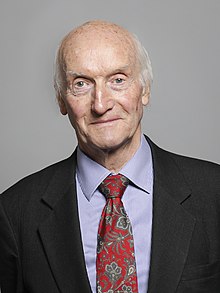
  • John Shipley – 2022 Tribute to HM Queen Elizabeth II (Baron Shipley)

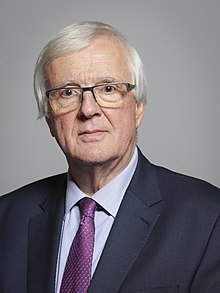
    John Shipley – 2022 Tribute to HM Queen Elizabeth II (Baron Shipley)

    The tribute made by John Shipley, Baron Shipley, in the House of Lords on 10 September 2022.

    My Lords, like many, I remember watching the Queen’s Coronation in 1953 on a small black and white television. As we have heard, the world today is very different from the world of that post-war period. But, although it has changed dramatically, the values of our society have remained constant, as our new King reminded us last night. The Queen promoted those values through her absolute commitment to parliamentary government, through her dedication and sense of service, through her loyalty and through her resilience.

    Among her many achievements, two stand out for me. First, she was our Head of State, with a clear constitutional role. She was an extremely successful Head of State, understanding the requirements and limitations of the role. But, in truth, she was something more: she was the head of our nation. She reflected us—our country, our people and our society—and she knew when to provide support, such as in the recent pandemic. She had the gift of being able to bring people together—witness her visits to Germany and Ireland and the symbolic importance that those visits had.

    Secondly, when she sensed a need for change, she made it happen—for example, in managing our transition from Empire to the Commonwealth, whose current strength owes so much to her leadership, as we have heard. She became the most widely travelled Head of State in the world, which I feel is a tribute to her resolution to build the Commonwealth.

    Her Majesty visited my home city of Newcastle upon Tyne on many occasions to undertake official engagements. I remember her opening Eldon Square shopping centre on her Silver Jubilee in 1977 and distributing the royal Maundy money in St Nicholas Cathedral in 1990. She opened several of Tyneside’s major infrastructure projects, such as the Metro and the A1 western bypass. She also opened our new city library and the Great North Museum. In Gateshead in recent years, she opened the Gateshead Millennium Bridge and Sage Gateshead. I was present at many of these visits and several things stood out: her genuine interest in what she was seeing, her desire to learn from those she was meeting and, when she did walkabouts in the city centre, the happiness with which she was greeted by the thousands of people who had made the journey to welcome her. I remember their cheering, the flags and the flowers, which always made for a memorable occasion.

    When her father died, the Queen promised to devote her life to the service of our country, but, as the King pointed out last night, it was her personal commitment that defined her life. It was not just a promise; it was 70 years of personal commitment. So we express our profound sorrow on Her Majesty the Queen’s death. We thank her for her lifetime of service and achievement. To our new King, we express our loyalty and support.

  • Michael Berkeley – 2022 Tribute to HM Queen Elizabeth II (Baron Berkeley of Knighton)

    Michael Berkeley – 2022 Tribute to HM Queen Elizabeth II (Baron Berkeley of Knighton)

    The tribute made by Michael Berkeley, Baron Berkeley of Knighton, in the House of Lords on 10 September 2022.

    My Lords, I will talk about music, but will concentrate largely on animals, which were so loved by our late Queen, as we have already heard from all around your Lordships’ House. It is a great honour and privilege to be able to pay tribute to such a much-loved monarch.

    I was fortunate to serve on the committee for the Queen’s Medal for Music and repeatedly saw how the Queen embraced nervous recipients and talked at length, putting them at ease and making them feel comfortable. They were all charmed. On one occasion, sitting next to Her Majesty during a fiendishly difficult piano piece with fistfuls of notes, we remarked how three hands would really be useful. The soloist departed, came back to take a bow and stumbled as she came on to the stage. There followed the observation: “Three feet would be good too.”

    From three feet, to four: the royal corgis, of which we have heard much—they would expect nothing less—were always put to dutiful use. We have heard examples of it. It is quite a clever use of these animals. I make no excuse for repeating a story some noble Lords will already have heard. On my BBC Radio 3 programme, “Private Passions” and in his book, the war surgeon David Nott recalled how, returning from Syria and in a state of terrible post-traumatic stress, he was placed next to the Queen at a lunch at Buckingham Palace.

    Her Majesty said, “Tell me about things in Aleppo now.” David was in such a completely paralysed state that he found himself unable to speak. Sensing his hurt, the insightful monarch summoned a footman to fetch the biscuit tin. She passed the tin to David, who, momentarily, in his confusion, thought this was a royal command to eat one of the dog biscuits. He then realised that he was being invited to feed the aforementioned quadrupeds. As, now distracted, he did so, the Queen touched his hand, saying, “Now, that’s better, isn’t it?” Her Majesty had, through her insight, rescued and relaxed him and set free his tongue.

    The Queen had a much-loved red Labrador called Sandringham Sydney. As chairman of the Royal Ballet governors, I had to write an annual report to our royal patron. I could not resist naughtily adding a handwritten postscript:

    “On another matter, arguably of less national importance, I have a red descendant of Sandringham Sydney who has produced puppies and my brother-in-law is so besotted with his puppy that he dreamed he put him down for Eton.”

    I had two letters back. One rather formally acknowledged the Royal Ballet report, but the other was clearly revelling in the concept of putting a dog down for Eton. I loved the idea that my missive was replied to with two compartmentalised communications—the formal and the humorously canine. From then on, whenever I met Her Majesty, the problems of preserving and continuing that red colour through the work of the Sandringham kennelman would be a welcome byway from the usual niceties of retrograde inversion and music that perhaps were a little difficult to comprehend on occasion.

    Let us move on to another favoured creature. It is a great sadness to me personally that my brother-in-law, Michael Bond, did not live to see Paddington Bear—his creation—charm the nation and Her Majesty. Was not that sequence a wonderful example of the great sense of fun that Her Majesty had? Her sense of mischief and delight in the absurd, which she bequeathed to her children, underlined her ability to connect with people and laugh at the unforeseen.

    Finally, has not the Queen somehow continued her benevolent influence, as parliamentarians here and in the other place have, in my humble opinion, risen above themselves to make such eloquent and moving tributes? So too did our new King, Charles III, passionately. Long live the King.

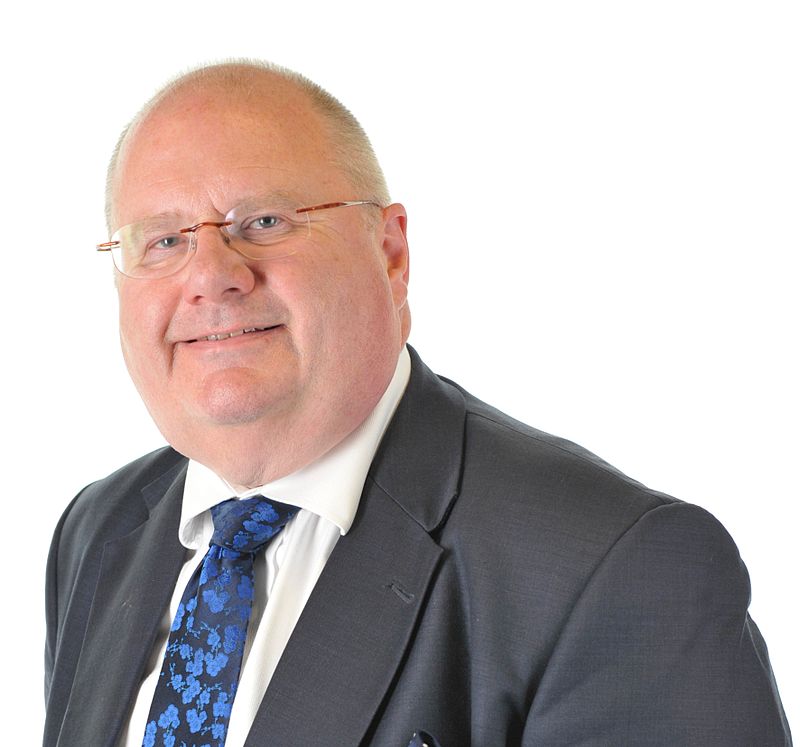
  • Eric Pickles – 2022 Tribute to HM Queen Elizabeth II (Lord Pickles)

    Eric Pickles – 2022 Tribute to HM Queen Elizabeth II (Lord Pickles)

    The tribute made by Eric Pickles, Lord Pickles, in the House of Lords on 10 September 2022.

    My Lords, as a schoolboy, I read The Queens and the Hive by Dame Edith Sitwell. The book describes the court of Queen Elizabeth I. There is a description of her Privy Council, towards the end of her reign, facing fear and confusion over what a change of sovereign would mean. Even the oldest counsellor on the Privy Council had known only one monarch. The Privy Council of Good Queen Bess was much smaller than the one I joined in 2010, but I can sympathise with the dilemma. I have just celebrated my 70th birthday but on the day I was born, the Queen was already on the Throne. She is the only monarch I have ever known; my grandparents’ generation would live through six different sovereigns.

    The late Queen was born into a turbulent world. Britain was recovering from the First World War, the Russian civil war was barely over, European royal families were dropping like ninepins and revolution was everywhere. We know that this story ends happily, but it was not preordained. Our country could easily have slipped into becoming a republic. It did not because of the way the monarchy adapted to the modern world. Admittedly, the modern monarchy was built on her grandfather’s good sense and her father’s example of public service, but the modern monarchy is now built around her late Majesty’s sense of duty and service; it is in her image.

    Her late Majesty led by example and was keen to push good causes along. I have had personal experience of this latter point. In 2005 she became the patron of the Holocaust Memorial Day Trust and stayed for a full 10 years. His Majesty King Charles III replaced her as patron when he was the Prince of Wales. He has proved to be equally enthusiastic and generous with his time. I should declare I am the vice-president of the Holocaust Memorial Day Trust.

    Her late Majesty learned about the horrors of the Nazis as a teenager. She had a deep appreciation of the importance of survivors. In 2015, 70 years after the liberation of Auschwitz, she reminded us:

    “Many refugees and survivors of the camps and ghettoes found a home in the United Kingdom and have given us their energy and commitment.”

    To the surprise of many at a Holocaust memorial event in 2005 at St James’s Palace, she broke with royal protocol to mingle with survivors. We have a description of what happened from a friend of many in this Chamber, the late Rabbi Lord Sacks:

    “One of her attendants said that he had never known her to linger so long after her scheduled departure. She gave each survivor—it was a large group—her focused, unhurried attention. She stood with each until they had finished telling their personal story.”

    At this reception, the Roma and Sinti were included for the first time; two Romany survivors were presented to Her Majesty.

    In 2015, Her late Majesty visited Bergen-Belsen, where 50,000 prisoners were murdered by violence and neglect. She was accompanied by her beloved husband the Duke of Edinburgh. They walked together among the mounds of the mass graves. There was no pomp or ceremony of any kind. The BBC movingly described them as

    “just a couple from the wartime generation taking their time to reflect and to pay their respects.”

    On the visit, the royal pair met one of the liberators of the camp, the former pilot Captain Eric Brown. The Queen asked him what sorts of scenes greeted the British troops when he arrived. He said:

    “I told her this was just a field of corpses … She was listening very carefully. I would say she was quite affected by the atmosphere here.”

    For many survivors, the Queen and the Royal Family are synonymous with the welcome they received in the UK. Let one of them speak for them all. Joan Salter MBE said:

    “I came to the UK as a child survivor of the Holocaust in 1947 and I remember the excitement surrounding the Queen’s coronation. For someone who came from so much upheaval and trauma, the Queen has been an important symbol of wisdom and stability for me.”

    Many of us could say the same thing.

    Our late Queen now rests in the arms of the Almighty. She may do so with the certainty that her legacy of duty and service is safe and secure. God save the King.

  • Donald Anderson – 2022 Tribute to HM Queen Elizabeth II (Baron Anderson of Swansea)

    Donald Anderson – 2022 Tribute to HM Queen Elizabeth II (Baron Anderson of Swansea)

    The tribute made by Donald Anderson, Baron Anderson of Swansea, in the House of Lords on 10 September 2022.

    My Lords, la reine est morte, vive le roi. We have had such a wealth of personal stories illustrating the humility of Her Majesty, her warmth and her faith. My own immediate memory, alas, is of shame to me. I was sitting next but one to her at a Commonwealth conference in Westminster Hall when, alas, my mobile phone went off and I was the subject of a well-deserved regal stare, which stayed with me for a very long time.

    Historians will see the last week as the end of an era, the like of which we shall not see again. The new King faces formidable tasks. He will have little difficulty in improving on the record of Charles I and Charles II, but he will have extreme difficulty in following in the footsteps of his beloved and late mother, in spite of his unprecedentedly long apprenticeship. For a person with strong and controversial views, many of which I share, he will have difficulty in not airing them in public but will seek inspiration from the discretion of his late mother and her serene sense of duty. Where she did have strong views, the only ones she could express in public related to horses, family and her corgi dogs.

    One feature which has been mentioned, particularly by the noble Lord, Lord Alderdice, was that the late Queen was a great reconciler. If we think back to the 2011 visit of Her Majesty to Dublin, no politician could have achieved what she did at Croke Park and in Dublin Castle when she put a veil over all the troubles of the past and paved the way for a much warmer relationship with our cousins in the Republic of Ireland. History will certainly see her as one of the greatest monarchs—possibly the greatest, as the noble Lord, Lord Cormack, said, suggesting that perhaps she should be named “Elizabeth the Great”. As a Welshman, I much prefer the precedent of Hywel Dda—Hywel the Good. Perhaps, given her many superlative moral qualities, “Elizabeth the Good” might be a far better title for her. She was part of the glue keeping together the Commonwealth and our union, both of which are suffering the possibility of great turbulence in the future.

    I recall that in 1986 I was at Lancaster House when the Commonwealth was in danger of dividing over apartheid and South Africa. It was her own role which helped to heal that. She was so sure-footed in allowing her views on South Africa and apartheid to be aired not publicly but through intermediaries, who made clear her own concerns about the future of the Commonwealth.

    The Crown is a symbol of our unity as a United Kingdom. It is conceivable that over the next decade or so there will be unprecedented strains on the position of Scotland— and possibly of Wales—within the union, and of course also in the Commonwealth. Ireland may indeed be reunited as an island over that period, and it will require great skill by the new monarch to navigate a path to meet these many challenges.

    I notice my noble and learned friend Lord Morris of Aberavon is here and know of the role he played at the investiture in 1967 in Caernarfon Castle. As a Welshman who also attended, I recognise the role which the late Queen played in the life of the Principality. I rejoice that we have a new Prince of Wales and hope that he will follow well in the footsteps of his predecessor, the current King. The late Queen won the hearts of the people of Wales with the human sympathy she showed in the tragedy of Aberfan, as my noble friend Lady Andrews said so well.

    At a time of great solemnity, perhaps I might introduce a moment of levity which illustrates at the same time the depth of love for the Queen in my own native Swansea. It happened during a royal celebration—it was probably the Golden Jubilee—when there were many street parties with flags and bunting all around. One good lady on a council estate had painted her house red, white and blue. I stood alongside her on the pavement, looking at her house, and she said to me gravely, “Mr Anderson, we may not pay our rent but we are loyal.” That perhaps summed up part of the view in those parts.

    We recognise that we owe a great deal of gratitude to the late Queen for her life of service, including her service to Wales. She will live for ever in our memories as a pillar of faith. Her belief in God allowed her to view all the events of the day in the perspective of eternity. What an example, which we trust King Charles will now follow. We will stand alongside him as he faces many challenges. May God’s blessing be upon him. Long live the King.

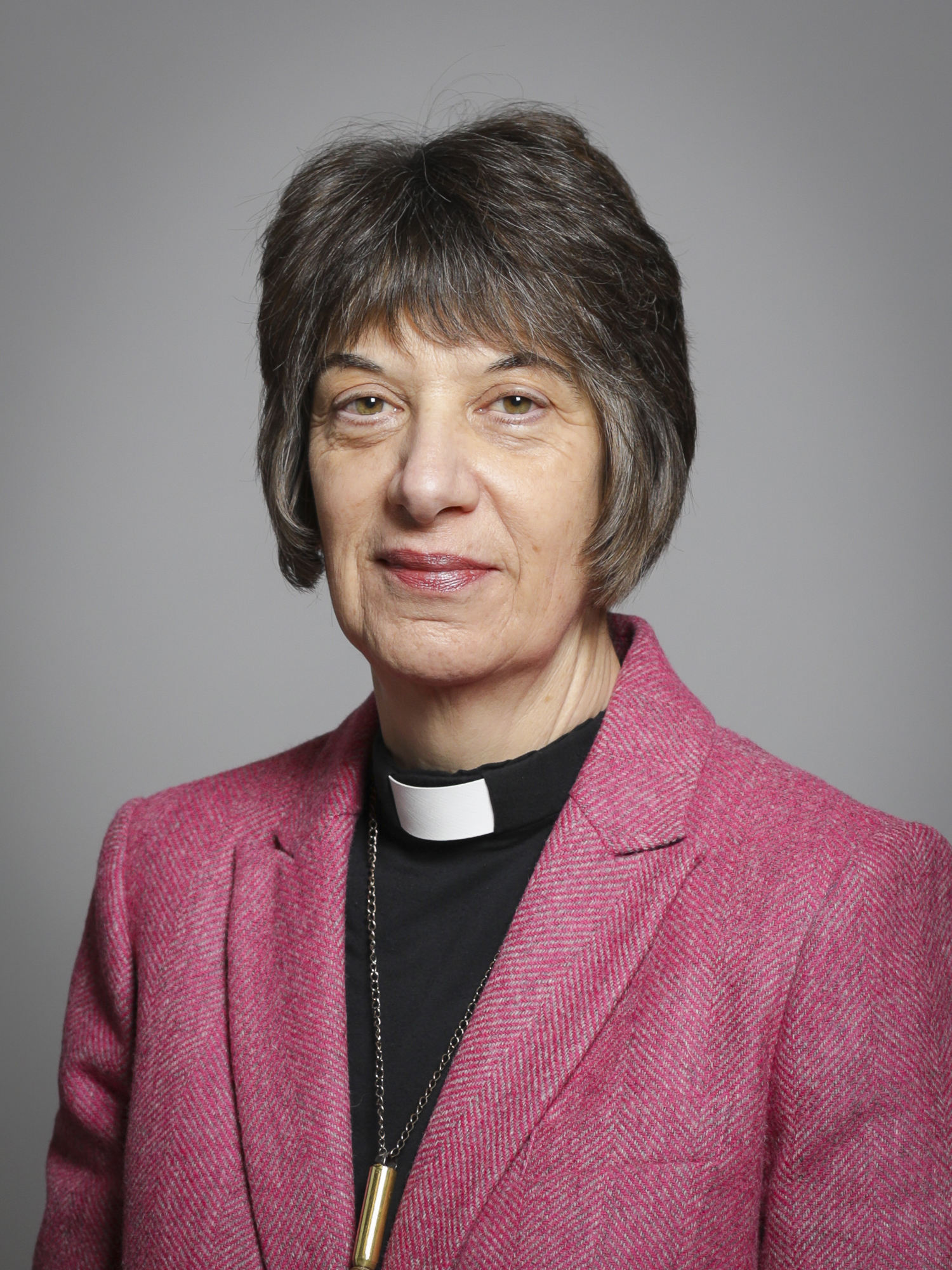
  • Rachel Treweek – 2022 Tribute to HM Queen Elizabeth II (Lord Bishop of Gloucester)

    Rachel Treweek – 2022 Tribute to HM Queen Elizabeth II (Lord Bishop of Gloucester)

    The tribute made by Rachel Treweek, the Lord Bishop of Gloucester, in the House of Lords on 10 September 2022.

    My Lords, we have heard many wonderful tributes to Her late Majesty Queen Elizabeth II. Like others, I want to give thanks for her life of service, love and humility, rooted in her faith in Jesus Christ. I am delighted that the most reverend Primate the Archbishop of York mentioned those jigsaws and those barbecues in winter. The right reverend Prelate the Bishop of London, in a moving and poignant way, mentioned the experience of paying homage. I want to add one slightly amusing story to the wealth of tributes that relate to paying homage because, as has been said, our late Queen had an amazing smile and a great sense of humour.

    As with all diocesan bishops, after I was announced as Bishop of Gloucester, I went to Buckingham Palace to pay homage. I was the first female diocesan bishop she had ever received and there was a certain amount of fluttering before the doors opened about whether I should curtsy or bow, wearing my robes. Just before we went in when, as usual, the Bible was being carried in on a cushion open at the verse I had chosen, I was told that I would be asked to kiss the Bible at the appropriate moment. There were a few moments of anxiety as I said, “I can’t possibly do that”, and some anxious glances as if there was some deep theological reason why I would not kiss this amazing Bible. I simply said, “I’m wearing lipstick”; that had never been experienced before. I was told simply to put my nose into it, which is what I did.

    After the formalities of paying homage, she immediately put me at my ease and, as we chatted, spoke to me about being the first female diocesan bishop. Rather amusingly, she said that her husband Philip wondered what on earth my husband would do, and indeed what the husbands of other bishops would do. I found that rather amusing because I thought of all people in the country who should know what the husband of a bishop would do, one was the Duke of Edinburgh.

    At this time of huge loss and mourning, I give such thanks to God for a life well lived—a life of faith and love. I recall the verse I chose that day of paying homage was from the Gospel of John, and it is one that the Queen lived. In Jesus Christ’s words to his followers: “Abide in me”. She did and she does. May she rest in peace and rise in glory. God save the King.

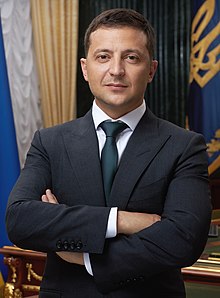
  • Volodymyr Zelenskyy – 2022 Speech to 2BS FORUM in Montenegro

    Volodymyr Zelenskyy – 2022 Speech to 2BS FORUM in Montenegro

    The speech made by Volodymyr Zelenskyy, the President of Ukraine, on 8 October 2022.

    Dear friends!

    Mr. Presidents!

    Thank you for this opportunity to address the members and guests of your security forum.

    Security is a key issue of our time. And, without exaggeration, everything depends on what answer we offer now.

    Not only our state institutions, our sovereignty, borders, and political system depend on it. It is literally about life. About peace for all of us.

    For the first time in many decades, we found ourselves in such conditions when we have to defend the right to life for our nations. Not just one or another living conditions, not just one or another concept for life in Europe or in certain regions, but life itself.

    Russia’s war against Ukraine is only a harbinger of what can await any state on our continent or in other parts of the world that this aggressor can reach.

    And I am grateful to everyone who understands the meaning of Russian aggression and helps us – us as ourselves.

    So, analyzing the elements of the Russian war against our state and the specific steps of the aggressor, we can draw conclusions about what forms and methods of protection we need for the sake of security.

    The first is unity. This is the foundation. This is something that should always be not only formally, but also in essence. Not only at summits, but also in deeds. Not only with those with whom you are used to cooperating, but with everyone whose values are common and whose way of life is freedom.

    Russia is afraid of our unity. So it goes to great lengths to break it.

    But we are only strengthening our unity. And therefore, we cannot be conquered by Russia. Neither Ukraine, nor Montenegro, nor any other state of the free world.

    Where real unity is achieved, there will be peace. Just as it will be in Ukraine.

    The second is democracy. This is our character. We can see that the current leaders of Russia have an obsessive desire to break the principle of democratic change of power in all countries regarding which they have aggressive ambitions.

    They do not recognize the results of elections and people’s movements when they lose influence because of them. And they try to stage coups or corrupt the political process when they choose a puppet to represent their interests. We have to strictly oppose this.

    All European states must dismantle any Russian networks of influence. So that there is no spread of misinformation, corruption and criminal politics. It is no less important for the Balkans than for our part of Europe.

    The third is independence. We should recognize the obvious at all levels in Europe and the world: Russia is not a threat to one, but to everyone. Therefore, everyone must achieve complete independence from Russia, so that it cannot turn dependence on it into shackles: economic dependence, energy dependence, political dependence – any.

    The fourth is weapons. It sounds a little unusual in Europe, but now we see what kind of war Russia can make literally out of nothing.
    Russia can block the sea for a country it wants to capture. It can burn cities and villages. It can arrange missile terror.

    Look at the intensity of the war we are now waging for our defense. Take a look – and you will be able to estimate the amount of weapons that may be needed for defense in such a war, if Russia turns the territory of another country into a battlefield.

    No matter how difficult it may be, we must ensure for Ukraine now, so that we can restore peace to all its citizens, and for Europe after this war such a volume of weapons, such a power of weapons, that Russia will never again have the desire to destroy peace.

    And the fifth point is responsibility. For many years, the head of Russia and his entourage have felt complete impunity.

    They destroyed democracy in their country. And they began to destroy everything around Russia. They are used to stealing what they like and buying those who were supposed to protect the national interests of this or that state from them.

    They started a war against Ukraine in 2014 because they felt that they would not be punished for it. The war against Georgia showed them this.

    They carried out a full-scale invasion of Ukraine on February 24, because they do not believe that the world will be able to hold them accountable not just for the crime of aggression against a sovereign state, but for any crime imaginable.

    So to bring them to justice is to guarantee long-term peace after this war. The inevitability of punishment is one of the key principles of criminal justice. And we must apply this principle to the Russian leadership as they deserve it.

    Ladies and Gentlemen!

    Dear friends!

    We must strengthen our alliances and cooperation. We must get rid of all kinds of dependence on Russia.

    We must ensure that we have sufficient weapons and effectiveness to provide full protection in the air, on land, at sea, and in cyberspace – in this war that Russia is already waging against Ukraine, and in any new war if Russia wants to expand hostilities now or to repeat the aggression in the future.

    By the way, all this is taken into account in our proposals for updating the security architecture of Ukraine and Europe, which we presented. And I ask all of you to familiarize yourself with the draft Kyiv Security Compact, which can become a fundamental prerequisite for peace in Eastern Europe.

    And, finally, punishment for aggression.

    Sanctions against Russia are mandatory. They should not just act, but regularly be intensified so that the aggressor state does not have time to adapt. I am grateful to everyone who supports such a policy!

    And I am grateful to everyone who works together with us to ensure that every Russian murderer and torturer receives a legal punishment.
    I have no doubts about the victory of Ukraine. We can restore peace and freedom to the entire Ukrainian territory. The successes of our warriors on the frontline prove this.

    But I want to be able to say that I do not doubt the complete security of Europe and each of our nations after this war. This is also possible. We know the right answers to the key question of our time, and therefore there will be peace.

    I thank you for your attention!

    Thank you for your support!

    Glory to Ukraine!

  • PRESS RELEASE : Housing order introduced in Norfolk, Suffolk and parts of Essex to protect poultry and captive birds [October 2022]

    PRESS RELEASE : Housing order introduced in Norfolk, Suffolk and parts of Essex to protect poultry and captive birds [October 2022]

    The press release issued by the Department for Environment, Food and Rural Affairs on 8 October 2022.

    New legal requirement for all bird keepers in these hotspots to keep their birds indoors and to follow stringent biosecurity measures.

    Mandatory housing measures for all poultry and captive birds in Norfolk, Suffolk and parts of Essex are to be introduced from 00:01 on 12th October, following a decision by the United Kingdom’s Chief Veterinary Officer.

    The housing order legally requires all bird keepers in these hotspots to keep their birds indoors and to follow stringent biosecurity measures to help protect their flocks from the disease, regardless of type or size. Bird keepers are advised to consult the interactive map to check if they are impacted and should then read the new regional AIPZ with housing measure declaration which sets out the requirements in Norfolk, Suffolk and parts of Essex.

    The Chief Veterinary Officer is now encouraging all bird keepers in the affected regions to use the next five days to prepare, including taking steps to safeguard animal welfare, consult their private vet and expand housing where necessary.

    The new housing measures build on the strengthened biosecurity measures that were brought in as part of the Avian Influenza Prevention Zone (AIPZ) last month, covering Norfolk, Suffolk and parts of Essex. The AIPZ means that all bird keepers need to take extra precautions, such as restricting access for non-essential people on site, ensuring workers change clothing and footwear before entering bird enclosures and cleaning and disinfecting vehicles regularly to limit the risk of the disease spreading.

    Over the last year, the United Kingdom has faced its largest ever outbreak of avian influenza with over 160 cases confirmed since late October 2021. The introduction of the housing measures comes after the disease was detected at 16 premises in the affected areas since the beginning of September, as well as several reports in wild birds.

    The United Kingdom’s Chief Veterinary Officer Christine Middlemiss said:

    We are seeing a growing number of bird flu cases on commercial farms and in backyard birds across Norfolk, Suffolk and Essex, and expect the risk to continue rise over the coming months as migratory birds return to the UK.

    We are now taking further action to help protect flocks from this highly infectious and devastating disease. Keepers in these hotspots must continue to follow strict biosecurity standards to protect their flock, and should use the next few days to prepare and move their birds indoors.

    The housing measure means bird keepers in the affected area must:

    • housing or netting all poultry and captive birds
    • cleanse and disinfect clothing, footwear, equipment and vehicles before and after contact with poultry and captive birds – if practical, use disposable protective clothing
    • reduce the movement of people, vehicles or equipment to and from areas where poultry and captive birds are kept, to minimise contamination from manure, slurry and other products, and use effective vermin control
    • keep records of mortality, movement of poultry and poultry products and any changes in production
    • thoroughly cleanse and disinfect housing on a continuous basis
    • keep fresh disinfectant at the right concentration at all farm and poultry housing entry and exit points
    • minimise direct and indirect contact between poultry and captive birds and wild birds, including making sure all feed and water is not accessible to wild birds
    • prevent access by poultry to ponds and watercourses and ensure that birds are kept in fenced or enclosed areas

    The UK Health Security Agency continue to advise that the risk to public health from the virus is very low and the Food Standards Agency advice remains unchanged, that avian influenzas pose a very low food safety risk for UK consumers. Properly cooked poultry and poultry products, including eggs, are safe to eat.

    The regionalised housing measures will remain in force in Norfolk, Suffolk and parts of Essex until further notice.

    A regional AIPZ without housing measures remains in force in Cornwall, Devon, Isles of Scilly and parts of Somerset.  The need to introduce mandatory housing measures as part of the AIPZ in force in the south west or further national AIPZs with or without housing will be kept under regular review as part of the government’s work to protect flocks.

    Keepers should report suspicion of disease in their birds to APHA on 03000 200 301. Keepers should familiarise themselves with our avian influenza advice.

    Defra has also set out practical guidance to support land managers, the public and ornithological and environmental organisations in their response to the growing threat of avian influenza to wild birds. The ‘Mitigation Strategy for Avian Influenza in Wild Birds in England and Wales’ sets out how these groups, together with the government and its delivery partners, can mitigate the impact of avian influenza on wild bird populations whilst protecting public health, the wider environment and the rural economy.

  • Anne McIntosh – 2022 Tribute to HM Queen Elizabeth II (Baroness McIntosh of Pickering)

    Anne McIntosh – 2022 Tribute to HM Queen Elizabeth II (Baroness McIntosh of Pickering)

    The tribute made by Anne Caroline Ballingall McIntosh, Baroness McIntosh of Pickering, in the House of Lords on 10 September 2022.

    My Lords, I am afraid it is very hard to know where one comes in the pecking order in this debate, so I apologise to anyone who feels that I have stepped ahead of them.

    The impact of Her late Majesty’s death has been immense, as we have heard in this debate and beyond. We are all diminished, shocked and thrown off balance by the loss of such a key figure in our life, the life of the nation and indeed the world. Our thoughts are with her family and especially with His Majesty the King, who is assuming his onerous new role at a time of great personal sadness. His first address to us all was profoundly affecting. For me, as he spoke those words from the end of “Hamlet”, in my head I heard the opening chords of another farewell, doubtless familiar to many of your Lordships: the “Angel’s Farewell” from Elgar’s setting of Cardinal Newman’s “The Dream of Gerontius”:

    “Softly and gently, dearly-ransomed soul,

    In my most loving arms I now enfold thee”.

    The King, who I believe has long understood the consoling power of great art, will need our love as well as our allegiance as he takes up his duties.

    I was born in the reign of King George VI and, indeed, attended his lying in state in 1952 when I was a very small child. I am not entirely sure why my father thought it appropriate to bring one so young to queue on Westminster Bridge in the February fog, and to be honest I do not remember much about it, but I am glad I have the photograph to prove that I was there.

    What I absolutely remember is going over a year later to the pub in our village to watch Her late Majesty’s coronation on television. I had never seen a television before. The screen was tiny and the room was hot and crowded, but none the less the grandeur and magic of the ceremony came through clearly. Although I have watched it many times since, that first impression stays with me of a radiant young woman at the centre of a magnificent piece of theatre embarking on a lifetime of service—and, my word, what a lifetime it turned out to be.

    I shall speak very briefly, because much that needed to be said has already been said, mostly by the noble Baroness, Lady Bull, about the Queen’s relationship with the arts, particularly with the theatre, where she was closely involved with the two organisations with which my I spent most of my professional life: the Royal Shakespeare Company, of which she was patron from the granting of its royal charter in 1961 until her death, and the Royal National Theatre, where she was recently succeeded as patron by the Duchess of Cornwall, now Queen Consort. Her Majesty’s patronage was hugely important to those organisations, as indeed it was to the whole cultural sector, which benefited so much from her interest and support.

    I was privileged to meet her several times. I was going to share an anecdote, as so many noble Lords have done, but in the interests of brevity I have decided not to. Maybe there will be another time; noble Lords will just have to wait and see. What I wanted to say is that monarchy must be performed, as Shakespeare knew very well. I think Her Majesty was one of the great performers of our age. She famously said, “I have to be seen to be believed.” She knew that convincing performance is never about faking or pretending; it is about embodying truth. Throughout her life she had an unfailing capacity to understand exactly who she needed to be in every different circumstance, from great occasions of state through to taking on, as we have heard referenced so many times, an animatronic bear, and completely upstaging him with quietly impeccable comic timing.

    She knew how to scale up and to scale down. She understood the diversity of her audiences and could adapt to their different needs while remaining always essentially herself. This ability was partly a natural gift, certainly, but also, as with all great performers, the result of meticulous preparation and unremitting hard work. As we saw, Her Majesty never stopped working at it right up until the end. She was and will remain an example to us all. May she rest in peace.

  • PRESS RELEASE: Andriy Yermak discusses security assistance to Ukraine with chair of Bundestag defense committee [October 2022]

    PRESS RELEASE: Andriy Yermak discusses security assistance to Ukraine with chair of Bundestag defense committee [October 2022]

    The press release issued by the President of Ukraine on 7 October 2022.

    Head of the Office of the President Andriy Yermak held a meeting with the chair of the German Bundestag’s defense committee, Marie-Agnes Strack-Zimmermann, who is in Ukraine on her second visit since the beginning of the full-scale Russian invasion. The main topics of the negotiations were: the need for the strongest possible international reaction to Russia’s illegal attempts to annex Ukrainian territories, as well as ways to strengthen defense assistance to our state from Germany.

    At the beginning of the meeting, Yermak briefed Strack-Zimmermann in detail on the situation at the front and thanked her for her decisive support of Ukraine in the conditions of Russian aggression. The Bundestag defense committee chair’s sharp condemnation of the cynical Russian farce with pseudo-referendums and attempts to join the territories of Ukraine, which are null and void from the international legal point of view and which will not have any impact on the complete restoration of the territorial integrity of our state, became important.

    The parties noted the European Union’s approval of the eighth package of sanctions and agreed on the need to further increase sanction pressure on the aggressor state, as well as its complete international isolation.

    The parties focused on the defense cooperation between Ukraine and Germany. Yermak expressed his gratitude to Strack-Zimmermann for a clear position in providing our country with heavy weapons by Germany, including Marder armored fighting vehicles and Leopard tanks, to strengthen the potential of the Armed Forces of Ukraine in resisting the full-scale Russian invasion, as well as air defense systems to defend Ukrainian skies from missile terror of Russia.

    It was stated that to implement its revanchist plans in Europe and the world, Russia uses all possible tools, resorting to energy, nuclear, radiation and other forms of blackmail. The armed occupation and attempted seizure of the Zaporizhzhia NPP by Russia, which threatens a disaster of a planetary scale, was given as an example.

    The parties noted the importance of proper implementation of the grain export initiative and the need to continue it despite obstacles from the Russian Federation.

    There was an exchange of views regarding the planned important international legal measures, as well as Ukraine’s initiatives at the UN.

    The head of the President’s Office and the chair of the Bundestag committee discussed the practical mechanisms of inter-parliamentary cooperation between Ukraine and Germany, in particular at the level of the defense committees.

    Strack-Zimmermann said that more than 80% of the population in Germany supports Ukraine, and expressed her belief in maintaining such a high level of solidarity between German society and our state.