Blog

  • Carl Bildt – 2022 Statement on Russian Attack on Ukrainian Civilians

    Carl Bildt – 2022 Statement on Russian Attack on Ukrainian Civilians

    The statement made by Carl Bildt, the Co-Chair European Council on Foreign Relations, on Twitter on 10 October 2022.

    It looks as if Russia is randomly attacking the city center of Kyiv. Two immediate consequences: a new wave of refugees and a new discussion on air defence for Kyiv and Ukraine.

  • Mykhailo Fedorov – 2022 Statement on Russian Attack on Ukrainian Civilians

    Mykhailo Fedorov – 2022 Statement on Russian Attack on Ukrainian Civilians

    The statement made by Mykhailo Fedorov, the Vice President of Ukraine, on 10 October 2022.

    Russia continues its cruise missiles terror. Again destroyed resident houses in Zaporizhzhia. Morning attacks on Kyiv city center, people burnt in their cares on the way to work. Set of explosions in Dnipro. Russia is terrorist state, this should be recognized officially.

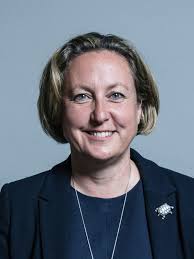
  • Anne-Marie Trevelyan – 2022 U-Turn on Free Rail Travel for Veterans on Remembrance Day

    Anne-Marie Trevelyan – 2022 U-Turn on Free Rail Travel for Veterans on Remembrance Day

    The statement made by Anne-Marie Trevelyan, the Secretary of State for Transport, on 9 October 2022.

    I have ensured that the Rail Delivery Group has issued new guidance to confirm free travel for military and veterans for Remembrance Day.

    To travel, just present your MoD ID card or evidence that you are a veteran, such as Veterans Railcard, to railway staff.

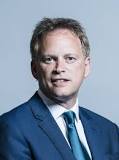
  • Grant Shapps – 2022 Comments on Greg Hands Becoming Appointed as Trade Minister

    Grant Shapps – 2022 Comments on Greg Hands Becoming Appointed as Trade Minister

    The comments made by Grant Shapps, the Conservative MP for Welwyn Hatfield, on Twitter on 9 October 2022.

    Great appointment. No one is more experienced and knowledgeable than Greg Hands on Trade. A welcome addition back to Liz Truss Government.

  • Oleksiy Kuleba – 2022 Statement on Russian Attack on Ukrainian Civilians

    Oleksiy Kuleba – 2022 Statement on Russian Attack on Ukrainian Civilians

    The statement made by Oleksiy Kuleba, the Governor of Kyiv, on 10 October 2022.

    The air attack continues, I ask everyone to remain calm and stay in shelters. Air defence works in the region. There is information about downed objects. I emphasise that the air alert is still ongoing. Don’t ignore it and stay in cover. Do not photograph or film landing sites or damaged infrastructure. People’s lives depend on it. Let’s hold on.

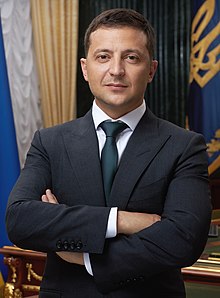
  • Volodymyr Zelenskyy – 2022 Statement on Russian Attack on Ukrainian Civilians

    Volodymyr Zelenskyy – 2022 Statement on Russian Attack on Ukrainian Civilians

    The statement made by Volodymyr Zelenskyy, the President of Ukraine, on 10 October 2022.

    They are trying to destroy us and wipe us off the face of the earth. Destroy our people who are sleeping at home in Zaporizhzhia. Kill people who go to work in Dnipro and Kyiv. The air alarm does not subside throughout Ukraine. There are missiles hitting. Unfortunately, there are dead and wounded. Please do not leave shelters. Take care of yourself and your loved ones. Let’s hold on and be strong.

  • David Shaw – 1988 Speech on Strike of Seamen

    David Shaw – 1988 Speech on Strike of Seamen

    The speech made by David Shaw, the then Conservative MP for Dover, in the House of Commons on 30 March 1988.

    As I understand it, the new clause is about whether it is safe to have an industrial dispute on board ship. The seamen to whom I have spoken believe that it is safe and I hope that when my hon. Friend the Minister replies he will say whether the Government believe that that is the case. It is noteworthy that this new clause is amending an Act that has been in existence under both Conservative and Labour Governments.

    I believe that the Floor of the House is the wrong place to raise an industrial dispute between a company and—

    Mr. Robert Hughes Will the hon. Gentleman clarify what he said at the beginning of his speech about it being safe to have an industrial dispute on board ship? As the law stood and as our new clause has made clear, an industrial dispute can take place only when the vessel is safely moored at a berth.

    Mr. Shaw I accept that, but the key issue is not whether it is safe for the men and for the officers, but for any passengers who may or may not be on board or anyone in the port area involved with that ship. I trust that my hon. Friend the Minister will comment upon that. I believe that that is the important question and I have no doubt that the public share my concern.

    I do not believe that the Floor of the House is the right place to raise an industrial dispute that has severely affected my constituency in the past three months. I believe that such a course of action could inflame the dispute and make matters worse rather than improve the situation. When the hon. Member for Aberdeen, North (Mr. Hughes) spoke about the industrial dispute, I trust that he was not seeking to make matters worse because that would be the greatest tragedy of the dispute.

    The seamen have put a strong case to me with regard to safety. I was sorry that the hon. Member for Aberdeen, North did not say much about safety. I believe that there are important issues concerning the safety of the crew, passengers and all those involved in putting ships to sea.

    Mr. Robert Hughes rose—

    Mr. Shaw I did not seek to intervene in the hon. Gentleman’s speech, and I should like to continue.

    I fervently hope that an agreement is reached in the dispute. I have no vested interest in an agreement not being reached, unlike some other hon. Members. My interest in representing my constituency is that such an agreement should be reached as soon as possible and that it will not only be of benefit to the seamen and to officers, but of benefit to the public, the passengers and the company. Surely that must be good for everyone.

    Such an agreement must be safe for the seamen and for the passengers. It must also be fair. A number of seamen have said that an agreement with the officers may be unfair in relation to their agreement. Any agreement reached must be fair to the seamen and to the officers—both agreements should stand side by side.

    During the speech of the hon. Member for Aberdeen, North I was extremely upset. He said that he wanted to be fair to the company, but I do not believe that anything he said was fair to the company. I hold no brief for the company, but I hold a brief for the constituency of Dover.

    Dr. Godman Declare your interest.

    Mr. Shaw I have only a constituency interest.

    I have a brief that requires everyone to be given a fair hearing, so that it is in the interests of the seamen to go to sea and of the company to run the ships. If either side is given an unfair advantage over the other, the other will withdraw from the negotiations, which is not satisfactory.

    The hon. Member for Aberdeen, North gave profit figures of more than £100 million. He should look at the company results of Townsend Thoresen and Sealink. The turnover of each of those companies is only slightly more than £100 million, but their profits are considerably less. In the meetings that I have had with seamen they have not suggested that profits were so high.

    The hon. Member for Aberdeen, North talked about the problems of the Channel tunnel being deferred until 1993. The Channel tunnel company has just raised £5 billion. The company and the seamen must be able to compete in 1993 against a project for which I hold no brief, which I do not like and which I have been against since 1973. Many Opposition Members voted for the Channel tunnel, which was appalling enough. Not only will it come into being in 1993 but there is a real risk that duty-free sales will be lost. We in Dover must face these facts.

    It is no good saying that we can wait until 1 January 1990, or until 1 July. In Dover, the local authority, the shipping companies and the seamen have to plan today for the future. We cannot delay.

    Without balanced argument and discussion on both sides, the company will be forced into a political debate, rather than a discussion based on common sense. People should have the opportunity to get together; all parties in Dover need to get together. The company needs to be able to survive and trade successfully and the seamen and officers should be able to work in reasonable conditions and reasonable safety. Speeches that bash any side in the dispute will get us nowhere.

  • David Shaw – 1988 Speech on the Budget

    David Shaw – 1988 Speech on the Budget

    The speech made by David Shaw, the then Conservative MP for Dover, in the House of Commons on 17 March 1988.

    I welcome the Budget because throughout the 1970s—the start of my working career—I witnessed an economy which went from stop-start to start-stop. The 1970s began with economic growth, but ended in decline. Towards the end of the 1970s, world opinion of us was at an all-time low. Far worse than that, however, was the attitude of the Labour Government towards the Health Service in 1976. The National Health Service suffered badly under Labour, but last November my right hon. Friend the Chancellor announced that £1.1 billion more would be put into it next year.

    Many things are wrong with the National Health Service. There are no satisfactory performance indicators by which to monitor its efficiency. Numbers of administration staff are still rising; on figures that I have seen, it appears that there are more administrators in the National Health Service than in the health service of the United States. I welcome the Government’s review, therefore. The Government’s approach has to do with value for money, not blank cheques.

    My right hon. Friend the Chancellor gave us all good news about the economy in his Budget speech. He said, among other things, that manufacturing exports were up by 8.5 per cent. and that unit labour costs hardly rose last year, which shows that there is more efficiency and success in the economy.

    Mr. Battle rose—

    Mr. Shaw I shall not give way. There are others wishing to speak.

    The figures that were announced today should no longer be known as the unemployment figures but as the employment and job vacancy figures. In February alone, 86,000 more jobs were created. There are now 260,000 registered vacancies, which—it is well known—are only a third of total vacancies.

    I was delighted with my right hon. Friend’s other announcements of success. He said that we had had six years of sustained economic growth, achieved through tax cuts. We have had six years of sustained increases in public expenditure and of real increases in National Health Service funding. That could only come about through managing the economy successfully. However, I suggest to the Minister that the Government have had one economic failure—they have not yet convinced the Opposition that there is no such thing as a free lunch.

    Mr. Corbyn The hon. Gentleman has them all the time.

    Mr. Shaw The Budget was about increasing personal responsibility and putting people’s incomes under their own control. It was also about home and share ownership. I am delighted that there are now 9 million shareholders in the country, a number which the Government proposals should increase. The benefits of privatisation are not only to widen ownership but to increase the profits being earned by the privatised companies to levels higher than they earned in the public sector. As a result of those profits, more taxes are paid to the Exchequer than when the companies were in the public sector. The privatised companies are also better at providing consumer services than they ever were in the public sector.

    Budgets are about income and how much the Government take away in taxation. I welcome the proposals on the taxation treatment of wives. For more than 200 years that treatment has been unfair. For much of that time the tax on marriage has been excessive. When I got married, I was charged more by the Inland Revenue on my marriage than my wife’s wedding ring cost.

    There are lower taxes for everyone in the Budget. Some will ask, “Why not more lower taxes?” About 750,000 people have been removed from tax altogether and some us might ask, “Why not a million?” The staff nurse who has had a 2.5 per cent. net pay increase as a result of tax deductions is a case in point. Some will ask why she should not be given a 3 per cent. reduction. I want more tax reductions.

    As for the famous business man that almost every Labour spokesman has mentioned, one must ask why the Opposition hate success. Why do Opposition Members hate the people who create jobs and who earn money overseas and bring it back to this country? Why do they hate successful business men who manage companies here and abroad and who bring profits and dividends to this country? The Opposition hate, and will always speak against, success. We should not lose sight of the massive contribution that the higher rate taxpayers have made to the country under the Government. When in government, the Labour party tried to squeeze them until the pips squeaked, but they raised only £800 million from the higher rate taxpayers. Under this Government, higher rate taxpayers pay £3,800 million a year which, even after the reduction of £1 billion, will still be about three times as much as Labour managed to get from them by the end of their years in office. I believe that next year the higher rate taxpayers will still be paying as much as this year because, with the tax cuts, they will be earning more, going in for fewer tax avoidance schemes, putting less money into pension plans and more into creating jobs and new businesses.

    We are going to remove many of the technical requirements that have been holding some share option schemes back, but they have not exactly held back share ownership in this country: 1,500,000 people are now in such schemes. We now have a true capital-owning democracy. I am pleased to say that some of those 1.5 million people are in my constituency. Many secretaries, typists and shop floor workers there are part of share option schemes and have done well out of them.

    I was also delighted by the abolition of yet another tax—capital duty. I have been involved for some time in my business career with helping to raise equity finance for companies and businesses, and capital duty was a considerable expense that hit those companies’ receipts right at the start of their new expansion phases. It came in just as the equity finance was being raised, and has proved extremely disadvantageous over the years.

    I wish to draw attention to the business expansion scheme, in which I worked for some time raising money for very small businesses. It has been a success, not as a means of helping the rich to avoid taxes as Opposition Members say—according to one report, more than 20 per cent. of the people who invest in the business expansion scheme pay tax at the standard rate—but in helping 2,200 small businesses, many of them having raised less than £100,000.

    However, there has been one thing wrong with the business expansion scheme. Indeed, four years ago I brought this to the attention of my right hon. Friend, who was then a Treasury Minister and is now the Secretary of State for Social Services. In a paper which is no doubt gathering dust in the Treasury, but which perhaps might have been brought out recently, I pointed out that we should cap the business expansion scheme. I am delighted that the Government are now to do so at £500,000 for any one company.

    However, I draw the attention of my hon. Friend the Economic Secretary to the Treasury to articles in today’s newspapers and to representations that have been made to me that that policy, as announced, could be unfair. There are several prospectuses out at the moment for the purpose of raising money under the business expansion scheme. The case of one small company has been brought to my attention. Although only about £600,000 is being raised to help expand the business and to create more jobs, that company may lose the whole of the money subscribed for shares because it may not he able to close the issue. That company has had to spend between £70,000 and £100,000 in legal and advisory fees, which will be lost if the issue cannot be closed. The problem of costs is caused by the Financial Services Act 1986, which is correct and proper in protecting shareholders but which has made more expensive the legal and professional advice that is required for the issue of prospectuses. I hope that my hon. Friend will be able to consider that, if the date of the issue of a prospectus is after Budget day, then that date could be the closing date for investment under the business expansion scheme being limited to £500,000 or so. I would advise him that some relief is needed on this point.

    I realise that time is getting on and conclude by saying that I welcome the Budget and the tax changes that have been made. This Budget is about increasing the number of jobs in our economy and the prosperity of individuals and businesses. I believe that the nation will be a lot better off with the many years of sustained economic growth that lie ahead of us because of this Budget.


  • David Shaw – 1988 Speech on Enterprise

    David Shaw – 1988 Speech on Enterprise

    The speech made by David Shaw, the then Conservative MP for Dover, in the House of Commons on 4 March 1988.

    Nevertheless, it is welcome that a few Opposition Members have turned up. During the debate on the coal industry the other day they were notable by their absence.

    Not only did Britain lose products and opportunities; it lost new products. It lost the opportunity to develop the video equipment industry, and many new areas of business. There were problems with both the management and the work force. In some British companies there were five or six canteens. I used to go round some of those companies and compare them with the American subsidiaries operating in Britain which had only one canteen and in which the management were on the shop floor. The management were interested in what was going on. There was a complete contrast in attitudes between British companies and American subsidiaries operating over here. Fortunately, however, much of that is changing.

    We now do not have management and work force problems to the same degree, except when they are raised by Opposition Members. We have staff and personnel problems because management is beginning to recognise, and has recognised for some time, that management and work force in Britain have the same objective — to produce more goods.

    It is important that in this interesting debate we recognise that throughout Britain there is a lack of training. The Government have done quite a lot to encourage training in business. However, we still have problems which are highlighted by Mr. Robb Wilmot, former chief executive of ICL, who pointed out that one Korean company has more management graduates in it than there are in the whole of the United Kingdom. That means that we do not have the management skills or the background of management training that we need. I know that the Government will do much to develop that.

    I should like to pay tribute to my hon. Friend the Under-Secretary of State for Industry and Consumer Affairs who has advocated the cause of British industry, and improvements in design and quality control. I am pleased that my right hon. Friend the Prime Minister has joined us. It is only appropriate that I should say that one of my friends recently attended a conference where my hon. Friend the Minister was speaking. He said to me, “Who is this man Butcher? The Government should wheel him out more often as he is a really good speaker.” In clothing design and other industries, Britain excels. At one time I acted as financial adviser to one business lady in the design sector. She constantly said to me that she had never been trained at design school to understand business, but she built up a business that employs some 50 people. We can imagine how large that business could have been if she had been trained in business skills.

    I conclude by drawing attention to the fact that the Government are encouraging the improvement of design manufacturing skills. Productivity has increased rapidly. The Government, through the enterprise initiative White Paper, will help further to develop the quality and marketing skills of British industry. We have come a long way since the problems of the 1970s. We have proved that it is not vast sums of money being put on the table in investment grants that improve British industry. We have proved that it is improved by the right economy, by reducing taxation, by encouraging our business men to succeed and by being more competitive against foreign competitors.

    All those skills that we are encouraging and all the improvements that we are trying to achieve in British industry are no good unless British industry earns profits. Opposition Members fail to understand the importance of profits. Profits are important because today’s profits, this year’s profits, provide the cash for next year’s investment, and investment in plant and machinery is extremely important for the country. Without more investment in plant and machinery, we cannot succeed and we cannot compete against overseas companies.

    I hope that the Government will continue doing what they have done to date so that there will be more improvement and investment in the people who are important in British industry and in new plant and equipment. I know that we will continue to achieve new production records as a result of the Government’s initiatives.

  • David Shaw – 1988 Speech on Coal Mining

    David Shaw – 1988 Speech on Coal Mining

    The speech made by David Shaw, the then Conservative MP for Dover, in the House of Commons on 2 March 1988.

    As we are talking about deficits, it is appropriate to ask why there is such a deficit in the turnout of Labour Members. I understand that 46 Labour Members have coal mines in their constituencies, yet not even 50 per cent. of them are present. Even Arthur Scargill had a 50 per cent. turnout, although it is questionable whether that turnout was given some encouragement by the more physically well built of his supporters.

    The poor attendance of Labour Members proves that the Opposition do not support the coal industry, and that it is dependent on its one main supporter — the Government. The Government have put over £,4.6 billion into the coal industry. Investment is at record levels, and by the next general election virtually all the plant and machinery in use in the British coal industry will have been bought by money given by the Government. I hope that as miners go to work in 1991 they will appreciate that it is the Government who have provided them with the tools to do their work.

    I am concerned about productivity at the Betteshanger coal mine in my constituency. It is a pity that it produces only 1.8 tonnes per man shift, compared with the national average of 4 tonnes. I know that the coal is of good quality, and I believe that most, if not all, of the miners want to keep the pit open. I know that many of them will work hard to keep it open.

    What we do not want is the disruption that has caused deficits in the past. That disruption and those deficits were caused by the attitude of the last Labour Government. It is worth noting the problems facing that Government, and the way in which they tackled them, in relation to deficits at that time. The right hon. Member for Chesterfield (Mr. Benn) once said: I have never found the NUM in any way unreasonable where closures are necessary because of exhaustion or because pits are out of line in economic terms.”—[Official Report, 4 December 1978; Vol. 959, c. 1015–16.] The NUM certainly was not unreasonable to him because, as Secretary of State for Energy, he closed 32 pits, and two Labour Governments closed 295 pits between them. The present Government have increased deficit grants, because the present Government have shown a commitment to right the wrong of previous Governments. They have shown a commitment to the coal industry and the coal miner. I hope that the message is now clear: that the miners should show a commitment to the Government.