Blog

  • Alicia Kearns – 2024 Speech on Planning, the Green Belt and Rural Affairs

    Alicia Kearns – 2024 Speech on Planning, the Green Belt and Rural Affairs

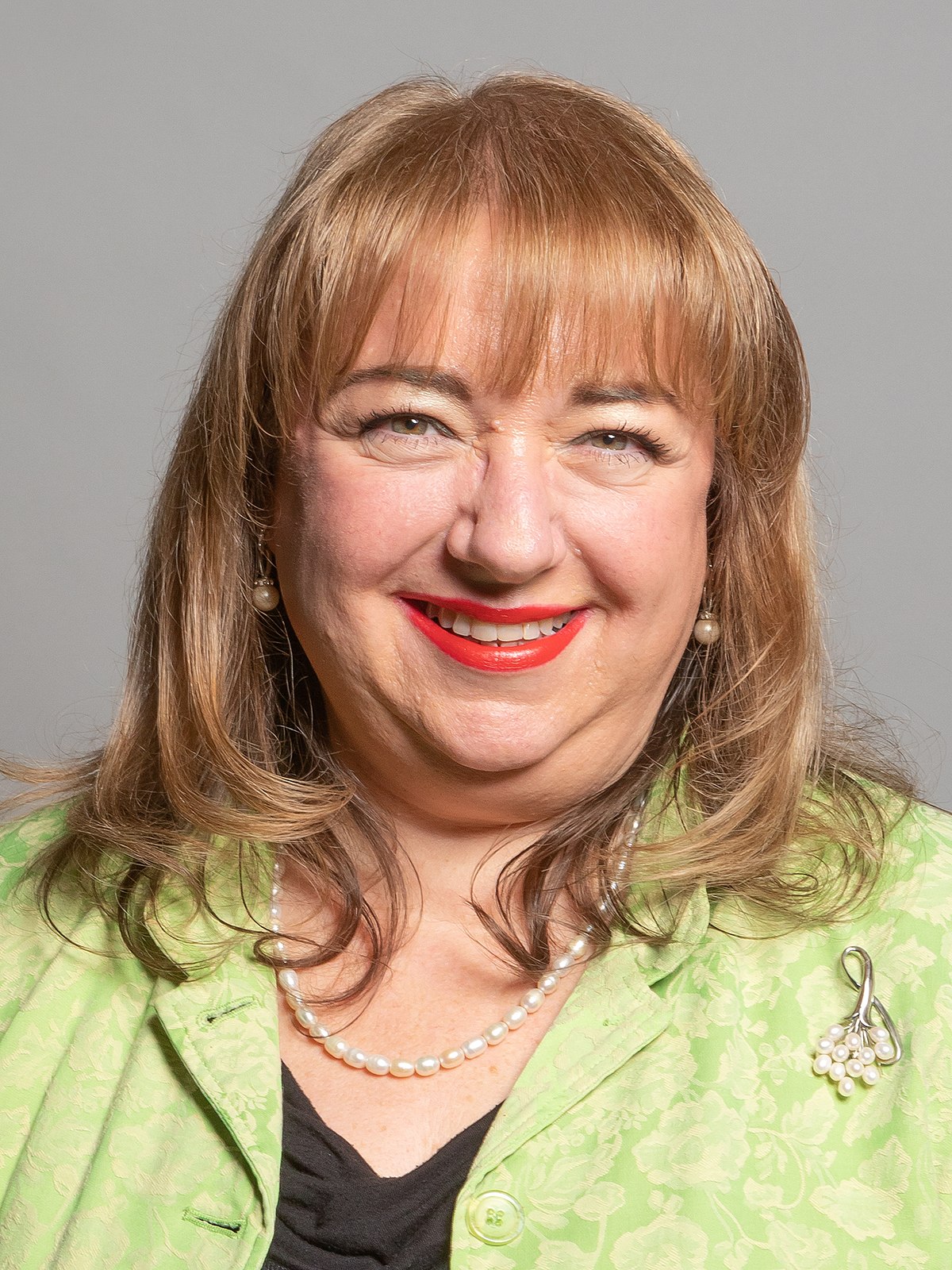
    The speech made by Alicia Kearns, the Conservative MP for Rutland and Stamford, in the House of Commons on 19 July 2024.

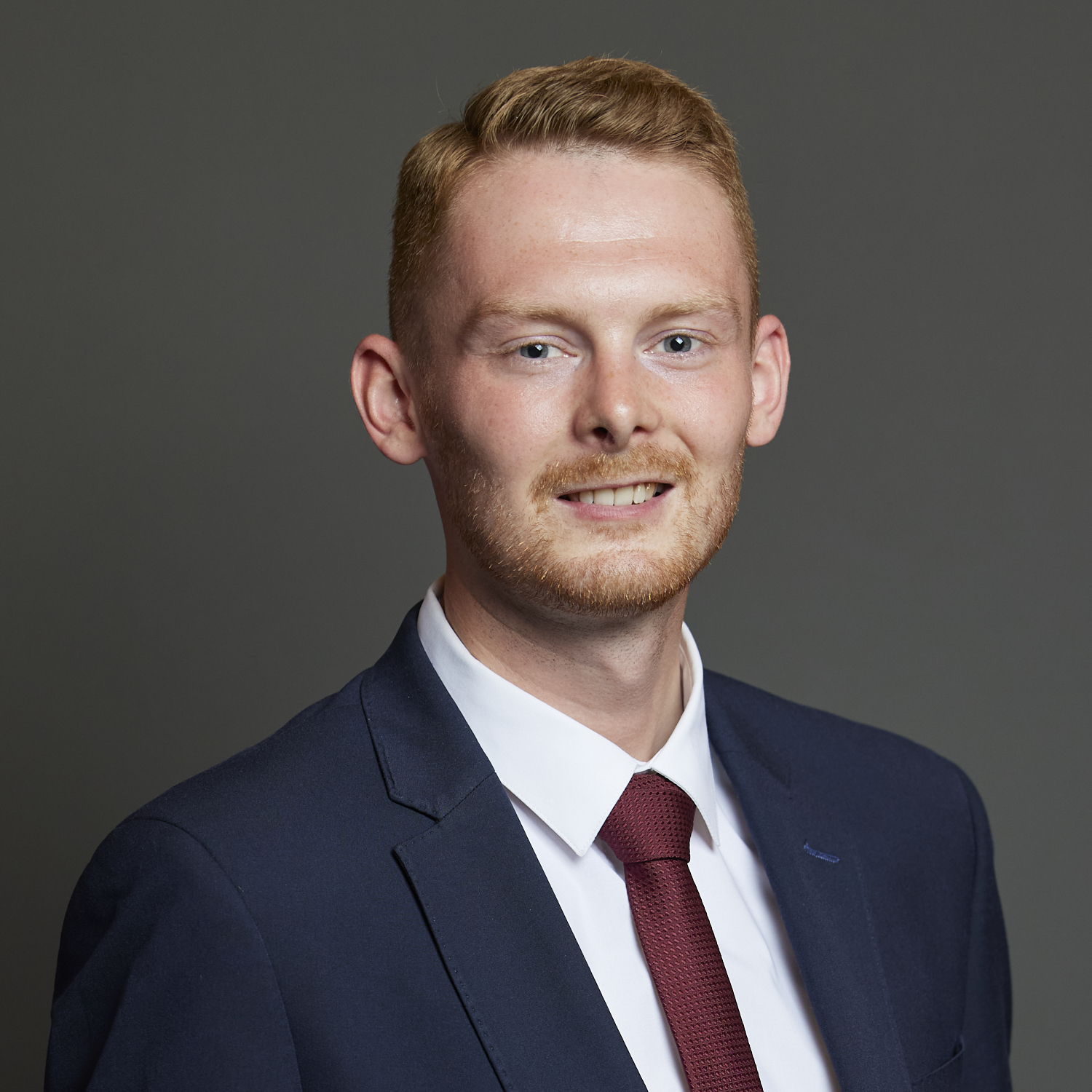
    I join the House in thanking His Majesty the King and Her Majesty the Queen for their dedicated service and continued example to us all. I welcome all the new Members to this place and I congratulate the hon. Member for Middlesbrough South and East Cleveland (Luke Myer) on his maiden speech.

    It is a great privilege to be returned to this House, having served the people of Rutland and Melton for four years. However, I am returned to represent the wonderful people of Rutland, Stamford and the Harborough and South Kesteven villages. I would like to take a moment to reflect on the new communities I serve, because it may not be known that service runs deep in south Lincolnshire.

    In world war two, our communities on their own raised enough money for a Spitfire to fight for our country. It is also in our communities where the apple dropped for Sir Isaac Newton in 1687. And a long, long time ago, Bytham castle was known to have a Lady Alicia, the lady of Bytham. I suspect I shall not be getting that title. [Interruption.] I bless you all! It is also home to Easton walled gardens, a place President Franklin D. Roosevelt described as

    “a dream of Nirvana…almost too good to be true.”

    So it is no surprise that Stamford’s honey stone streets, whose patterns have essentially remained the same since Saxon times, often grace the pages of the best places to live in this country. It was also a filming site for “Pride and Prejudice”, “The Da Vinci Code” and “Middlemarch”. Most recently, Grimsthorpe castle was home to “Bridgerton”.

    Somewhat uniquely for a parliamentary seat, Rutland and Stamford sits across three counties, Leicestershire, Rutland and Lincolnshire, so I have my work cut out for me. What unites us is the rural landscape and traditions we share: our rural way of life embodied in the fields, farms and natural environment we are blessed to inhabit and hope to bequeath to the next generation. But protecting our green and pleasant lands is not about sentimentality. Our rural environment is the true workhorse of our country. Lincolnshire and Rutland alone produce 30% of the UK’s vegetables, 18% of our poultry, 30% of our turkeys and 20% of all English wheat. We are the agriculture super-producer of our country.

    Yet the King’s Speech offered very little for us. It continued in the same vein as the Labour party manifesto, which did not mention the word “rural” even once, by ignoring the concerns of rural communities and ignoring farmers. It has put forward a different approach to development, setting out centralised powers for Westminster to impose projects on the countryside and stripping away the voice of local people. The consequences of that approach were apparent last week when the Secretary of State for Energy Security and Net Zero imposed three mega solar plants on communities, two of which sit within Lincolnshire and Rutland.

    During the last Parliament, I consistently opposed the Mallard Pass solar plant and was dismayed to see the Secretary of State wave it through after only three working days in the job. Yesterday, he referred to himself as a “super-nerd”. I would never question his self-classification, but I do question how somebody could read over 3,000 pages of quasi-judicial documentation in just that time, while also getting to grips with a new Department. That perhaps explains why he missed or ignored the fact that even the Planning Inspectorate told him to turn down one of those applications.

    There are well-documented links between Uyghur forced labour and the primary developer behind Mallard Pass. Labour has said it wants a renewal in public life and a focus on public service, but I ask where the sense of duty is to responsible and considered governance when decisions are made, frankly, for a propaganda announcement to say what the Government have done in their first seven days—decisions that solely affect Conservative-voting communities. Together these three solar plants will remove 6,000 acres of good-quality agricultural land, the land that feeds our country and powers our nation.

    I want to delve more into the issue of slave labour. For years I have spoken out against what is taking place in Xinjiang. This House—including the new Secretary of State for Energy Security and Net Zero—voted to declare what was taking place a genocide. In opposition, Labour promised that should they become the party of government they would not only declare it formally a genocide, but would take the Chinese Government to court—I look forward to updates on that activity—but in government they have decided to carpet our countryside with solar panels produced by the blood of Uyghur slave labourers. The company behind the Mallard Pass, Canadian Solar, was found by our Foreign Office to have the highest complicity in Uyghur forced labour. It has been sanctioned by the United States Government for its

    “ongoing campaign of repression against Muslim minority groups”.

    This is a company whose representative rang my office and asked what I wanted to drop my opposition. Is that a company that we want operating on our land?

    Dame Karen Bradley (Staffordshire Moorlands) (Con)

    I congratulate my hon. Friend on her speech. Does she agree that there would be full support on the Conservative Benches for measures to ensure that the supply chain for solar panels does not include slave labour?

    Alicia Kearns

    I agree entirely with my right hon. Friend, who has an incredible history as one of the greatest parliamentary advocates for tackling slave labour.

    Will the Minister apologise, on behalf of the Secretary of State for Energy Security and Net Zero, to the 32 anti-slave labour non-governmental organisations that opposed the Mallard Pass development. Will he apologise to the British people for signing over thousands of acres of prime agricultural land to such a company, and will he apologise to the 3,400 people whose petition I presented in the Chamber, with the highest number of wet signatures ever presented in this Parliament? Does he accept that the loudest statement made last week was not that we stand four-square behind renewables in this place but that we are giving the green light to all companies complicit in Uyghur slave labour to flood our country with bloodied solar panels? This Government are happy to go green on blood labour, and I will not stand for it.

    Very briefly, in respect of rural economies, I want to express my absolute opposition to the Government’s intention to charge VAT on independent schools. There are 10 in my communities that employ more than 2,000 people and are attended by well over 1,000 children with special educational needs. Furthermore, one in five of my constituents who are military personnel or veterans send their children to those schools. This is ideology and dogma, and there is also no plan to support our comprehensive schools.

    Tom Tugendhat (Tonbridge) (Con)

    My hon. Friend is, again, making a very fine speech. She is talking not only about pressure on those families, but about any other families who will then see those children going to the state schools in the area.

    Alicia Kearns

    My right hon. Friend is, as usual, on point. In Rutland alone there are only three places for new children in year 9. Where are these children going to go? Why are the Government punishing parents who want the best for their children? Before Labour Members try to suggest that I am an out-of-touch Tory, let me point out that my children go my local comprehensive, just as I did. However, I recognise that this is wrong for our country, wrong for our local education system, wrong for our military families, and wrong for those who rely on employment in our local schools. It is dogma once again, and I expected better.

    The Government have shown a degree of good grace and maturity in adopting some of the previous Government’s Bills for their agenda. It is a sign of political strength for a Government to acknowledge that other parties have good ideas, and to adopt them during their time in power. May I suggest that, in order to fill the blanks in their rural policy, the Government should look at ours? They should announce a £1 billion increase in the farming budget over the course of this Parliament. There should be reformed planning rules to support farming infrastructure. The introduction of legally binding food security targets should be at the heart of what the Government do, and they should recognise how much rural communities contribute to our communities. We provide the food that we eat, we offer an escape and access to nature, and we act as custodians for traditions stretching back deep into our history. I will work every single day for my communities, and I hope that the Government will see sense and do the same.

  • NEWS STORY : James Nelson of Victoria Road, Horwich, Bolton Sentenced to Prison for Violent Disorder

    NEWS STORY : James Nelson of Victoria Road, Horwich, Bolton Sentenced to Prison for Violent Disorder

    STORY

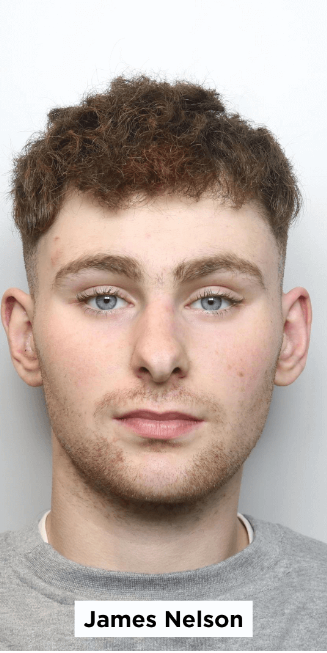
    James Nelson, aged 18, of Victoria Road, Horwich, Bolton has been sentenced to two months in prison for his involvement in the rioting in Bolton town centre at the weekend. He pleaded guilty to violent disorder and received what is thought to be the first prison sentence issued for those involved in the recent spate of rioting.

  • NEWS STORY : BBC News Article by Eben Leonard Changed Following Misreporting

    NEWS STORY : BBC News Article by Eben Leonard Changed Following Misreporting

    STORY

    The BBC has said that they have reviewed and changed an article written by Eben Leonard, a BBC journalist, which claimed that a pub had asked customers to leave because they were singing in Welsh. The BBC issued a statement saying:

    “Having reviewed the report, the headline was amended to make it clear that customers in the pub were asked to leave because they were singing loudly, not because they were singing in Welsh. A passage was also added to the piece to explain this change.”

    The article, which was on the front page of the BBC News on-line, caused the pub to suffer a number of negative reviews and hatred on-line. The BBC apologised for the article.

  • Luke Myer – 2024 Maiden Speech on Planning, the Green Belt and Rural Affairs

    Luke Myer – 2024 Maiden Speech on Planning, the Green Belt and Rural Affairs

    The maiden speech made by Luke Myer, the Labour MP for Middlesbrough South and East Cleveland, in the House of Commons on 19 July 2024.

    Having listened carefully to the debate on His Majesty’s Gracious Speech, I am grateful for this opportunity to make my first speech in this Chamber. It is a privilege and an honour to represent the communities of Middlesbrough South and East Cleveland, where I was born and raised. Much of this debate has sought to pit rural and suburban against each other, but as a representative of both, I know that we can deliver for both, and that is precisely what I expect this Government to do.

    Distinguished predecessors have represented my seat. In maiden speeches, politicians often say that they stand on the shoulders of giants, but rarely is it so true as in my case. My predecessor, Sir Simon Clarke, was a giant not only in physical terms but within his party, particularly in his admirable zeal for planning reform—an issue on which he campaigned and stood up to his own party. It is fitting that today’s debate places such emphasis on those reforms. This Government are committed to building the homes and infrastructure that this country needs. Measures such as the planning and infrastructure Bill will start to create the jobs and growth that we need. I will push for Teesside to be at the heart of that work.

    If the House will permit me, I would like to pay tribute to two other predecessors from my party. First, Tom Blenkinsop, who some in the House will remember, not only served his party and constituency but served his country in the Royal Military Police. Dr Ashok Kumar, who was mentioned by my hon. Friend the Member for Stockton North (Chris McDonald) in his maiden speech, was my MP growing up. He was a tenacious constituency MP, whose model I hope to follow. Ashok once said that our constituency is a microcosm of British society. He was right. It is not particularly left or right wing, but it is full of decent people who want the best for their families.

    Our identity is complex. Officially, we are in the north-east, but we are also proudly in Yorkshire, as part of the historic North Riding. We have been called Cleveland and Langbaurgh, and today we are told that we are in the Tees Valley. Whatever we call it, our home is an incredible place. My constituency sits between wildly different landscapes at each point of the compass. To the north, we find the beach, where the North sea fret washes out over the seafront at places like Skinningrove. To the south, we leave the beautiful market town of Guisborough and meet the vast, wild purple of the North York moors. To the east are the rolling fields of East Cleveland—rural North Yorkshire at its best. There are proud villages and towns from Loftus to Lingdale, Skelton to Stanghow, and Brotton, where I grew up. I am proud to be our constituency’s first MP from the villages, and I hope to serve them well.

    To the west, we find suburban south Middlesbrough, home to many working families and, in Marton, to the birthplace of one of this country’s greatest explorers, Captain James Cook. If we venture further, those communities give way to the towering chimneys and snaking pipes of industrial Teesside, once the beating heart of Britain’s economy—the “infant Hercules” as Gladstone called it. It is home to a 300-year economic relay race from one major industry to another: first fishing and agriculture, then coal, then iron and steel, and then chemicals. The saying on Teesside is, “We built the world.” Steel forged in Teesside furnaces found its way into the Sydney Harbour bridge and spanned the Victoria falls. When Churchill’s war Cabinet met in their underground bunker not far from here or when the ball hit the net at Wembley, it all happened under structures of Teesside steel.

    Today, we are perfectly positioned for the green jobs of the future. We already produce around half the country’s hydrogen. With the right industrial strategy, we can create jobs in hydrogen, carbon capture and storage, and clean power—wind, nuclear and solar—and in our port. If our engineering capabilities are harnessed, we can lead the world again. Legislation such as the Great British Energy Bill, the Crown Estate Bill and the planning and infrastructure Bill can deliver that.

    Teesside is more than just a place; it is the people. Like steel, Teesside is an alloy—a meld of the different communities that shaped us, from the miners and the Methodists to the labourers who came from Ireland, ironworkers from Wales, sailors from Japan, Jewish refugees from the pogroms of Europe, trade unionists, chemical workers, and so on. These are the small and disparate atoms that Teesside took on and blended into our culture, strengthening it into something solid and secure, bonded together with values of fairness, respect and a collective responsibility to look out for the community. We see that today in so many local community organisations, from the Guisborough Bridge Association and East Cleveland Good Neighbours to the eco-shops we see in Marton, Coulby Newham and other places.

    We know what it is like to experience economic hardship; we now have levels of poverty and destitution that have not been seen in decades. When times get tough, it is easy to fall into the habits of division and blame. It is much harder to take that common pain and channel it into a common purpose, but that is what Teessiders do best. It was there in times of economic shock, whether from globalisation or the global pandemic. It was there in the floods and the food banks. The instinct, the base code of the people of Teesside, is to come together and look out for those in need—community in the face of adversity. That is our spirit, embedded like ironstone deep in our culture—the unbowed and unbroken spirit of the infant Hercules. That is what we are about. And with the powers set out in these Bills, the devolution to take back control of services and the investment in the jobs of tomorrow, we can once again drive prosperity on Teesside and prosperity across Britain, rebuilding our communities and rebuilding our country.

  • Wendy Morton – 2024 Speech on Planning, the Green Belt and Rural Affairs

    Wendy Morton – 2024 Speech on Planning, the Green Belt and Rural Affairs

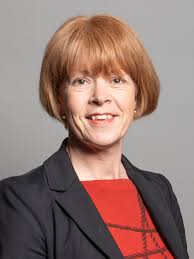
    The speech made by Wendy Morton, the Conservative MP for Aldridge-Brownhills, in the House of Commons on 19 July 2024.

    It is a pleasure to be in the Chamber today, and I congratulate all new and returning Members on their election successes. It is an honour to be back in this place and to be called to speak in this debate on the King’s Speech. I start by thanking my constituents in Aldridge-Brownhills for returning me to this place for a fourth time. I thank the residents of Pheasey Park Farm, Park Hall, Nether Hall and Orchard Hills for returning me for the first time following the boundary changes.

    There is much to consider in this King’s Speech, and rest assured that I will welcome those elements that benefit my constituents. However, my job on the Opposition Benches remains to get the best for my constituency and my constituents. Where the Government’s legislation and plans harm my constituency, I will stand up and be my constituents’ voice and fight for their interests. That brings me nicely on to the areas that I wish to raise today.

    Starting with housing, we need homes, but we need the right homes, built in the right places and with the right infrastructure to support them and their communities, and we need local decision making. What we do not need to see is swathes of houses—the wrong homes, in the wrong mix and in the wrong place, driven by top-down mandatory targets. That is not nimbyism, but common sense. That is why I have always advocated for a brownfield-first approach, because the minute the green belt is released, that is it. When it is gone, it is gone forever, taking away the integrity of our communities and the sense of amenity and belonging, which we all believe are vital.

    It concerns me that while Government Members say they will prioritise brownfield sites—they have coined this phrase “grey-belt land”—to meet their target, they are also telling local authorities to identify areas with green-belt collars to build on. That surely is wrong. It simply risks nibbling away at our green belt until it is gone.

    The definition of green belt, in case we need a reminder, is that it is a buffer zone between towns and between towns and countryside. It is a planning tool to prevent urban sprawl. In the case of my constituency, it prevents us from being subsumed into the suburbs of a greater Birmingham. The green belt is not a nostalgic vision, but a future vision for future generations. The former mayor, Andy Street, had a vision for it. It is thanks to him, his leadership and his brownfield-first approach that we have seen 16,000 new homes built and thousands of jobs created on brownfield land, which has benefited many, including those in the Walsall borough. We need to see more of that approach. Surely we should build out the brownfield sites first before we release any green belt, with more financial incentives for land remediation funds.

    We also need to understand what the new Government mean by “grey belt”. Is it simply another grey area? I, for one, sincerely hope not. One specific area that I seek clarity on is the new powers for compulsory purchase. I hope that can unlock some of the brownfield sites. In my constituency, there are some small derelict sites—often pubs in town centres—so let us look at working with local communities to unlock some of them.

    Communities also need transport. It is inherently linked to communities and is key to jobs and opportunities. The Government have set out that they will get Britain moving, but I am deeply concerned, to put it mildly, that the new Labour Mayor of the West Midlands has said that he will review the decision for a train station in Aldridge. What has happened to the money that the former mayor Andy Street and I secured for that project? In the absence of any confirmation that it will be completed on time by 2027, within the budget allocated, I can only assume that the new mayor has no intention of delivering the project. It is 65 years since Aldridge had passenger trains. Today we have the track, freight trains and the land for a car park. Various partners are already working on it. It might not be a big deal to Mayor Parker, but it certainly is to the residents of Aldridge and to me.

    I am conscious of time, but I want to touch briefly on crime and justice, as they matter to my constituents. Communities need police officers and police stations. I will continue my campaign to keep Aldridge police station. With a “for sale” board appearing recently at Sutton Coldfield, it is time for the Labour police and crime commissioner to come clean about his intentions for Aldridge police station. We need our police station as a base for our local bobbies, to increase the safety of our residents and to support our communities.

  • NEWS STORY : Josh Kellett of Southcroft in Washington Pleads Guilty to Involvement in Riots

    NEWS STORY : Josh Kellett of Southcroft in Washington Pleads Guilty to Involvement in Riots

    STORY

    Josh Kellett, aged 29, of Southcroft in Washington has pleaded guilty to violent disorder as part of the rioting that took place in Sunderland at the weekend.

    Detective Chief Inspector Graeme Barr, of Northumbria Police’s Major Investigation Team (MIT), said with reference to Kellett and two other rioters that “they should be ashamed of their actions and I am pleased that they have been convicted at court. A comprehensive investigation is well underway as we look to identify those responsible for the disorder and ensure they are faced with the full force of the law. We will continue to pursue every investigative avenue in order to bring justice against those involved, and further activity is planned.”

    The court heard that Kellett, who is also known as Josh Major, was wearing a balaclava but was caught because of his distinctive tattoos and he had been videoed throwing rocks at police officers. Kellett was remanded in custody and will be sentenced later in the month.

  • Keir Starmer – 2024 Statement on Rioting and Attacks on Police

    Keir Starmer – 2024 Statement on Rioting and Attacks on Police

    The statement made by Keir Starmer, the Prime Minister, on 4 August 2024.

    I utterly condemn the far-right thuggery we have seen this weekend.

    Be in no doubt: those who have participated in this violence will face the full force of the law.

    The police will be making arrests.

    Individuals will be held on remand.

    Charges will follow. And convictions will follow.

    I guarantee you will regret taking part in this disorder.

    Whether directly or those whipping up this action online, and then running away themselves.

    This is not protest. It is organised, violent thuggery.

    And it has no place on our street or online.

    Right now, there are attacks happening on a hotel in Rotherham.

    Marauding gangs intent on law breaking. Or worse.

    Windows smashed.

    Fires set ablaze.

    Residents and staff in absolute fear.

    There is no justification – none – for taking this action.

    And all right-minded people should be condemning this sort of violence.

    People in this country have a right to be safe.

    And yet, we’ve seen Muslim communities targeted.

    Attacks on Mosques.

    Other minority communities singled out.

    Nazi salutes in the street.

    Attacks on the police.

    Wanton violence alongside racist rhetoric.

    So, no, I won’t shy away from calling this what it is:

    Far-right thuggery.

    To those who feel targeted because of the colour of your skin…

    Or your faith…

    I know how frightening this must be.

    I want you to know this violent mob do not represent our country.

    And we will bring them to justice.

    Our police deserve our support, as they tackle any and all violent disorder that flares up.

    Whatever the apparent cause or motivation we make no distinction.

    Crime is crime.

    And this government will tackle it.

    Thank you.

  • Sharon Hodgson – 2024 Speech on Planning, the Green Belt and Rural Affairs

    Sharon Hodgson – 2024 Speech on Planning, the Green Belt and Rural Affairs

    The speech made by Sharon Hodgson, the Labour MP for Washington and Gateshead South, in the House of Commons on 19 July 2024.

    It is a pleasure to follow the hon. Member for Gordon and Buchan (Harriet Cross), who made an excellent maiden speech, which I enjoyed. I also have to mention the excellent maiden speeches from my north-east colleagues, my hon. Friend the Member for Cramlington and Killingworth (Emma Foody)—she represents a new constituency—and my hon. Friend the Member for Bishop Auckland (Sam Rushworth). I look forward to hearing more from them in the weeks, months and years to come.

    Having entered the House 19 years ago, I am honoured to have once again been elected to serve my constituents in Washington and Gateshead South—another new constituency name. It is fantastic to see so many new faces around the estate, and my door is always open if new Members, or indeed old ones, want to pop in for a bit of advice, a cup of tea, or just to see a friendly face.

    This King’s Speech ushers in a new era of government—one based on service of the people, and focused on building back trust in politics, which is greatly needed, by, as stated in the King’s Speech, adhering to

    “the principles of security, fairness and opportunity for all.”

    We will start that process by bringing in legislation to transform the rights of every worker in this country. As a trade unionist, I believe that workers must have the right to access trade union representation, as well as the repeal of the disastrous minimum service levels legislation, which failed to protect public service users and workers alike.

    We will ban all exploitative zero-hours contracts that leave people in uncertain and unstable employment. We will definitively ban fire and rehire practices, which my hon. Friend the Member for Brent West (Barry Gardiner) led the way on tackling with his excellent private Member’s Bill, which sadly did not make it. We will protect workers’ wellbeing by ending short-notice shift cancellations, and we will introduce the right to switch off, so that workers can enjoy a healthier, structured work-life balance—I think we could do with a bit of that sometimes as well. Finally, we will establish rights such as paternity pay and the right to challenge unfair dismissal as rights from day one. The basic rights of a worker are not a reward earned after years of service; they are rights from day one.

    The Government have already got the ball rolling, building on the excellent work of former Labour Governments to truly deliver devolved power. It was excellent to see that, just days after moving in, the Prime Minister welcomed all Labour and Conservative metro mayors—thankfully, they were mostly Labour—to Downing Street to discuss how to kick-start growth in all parts of the country. Nine times out of 10, local knowledge is superior to departmental control, so it is only right that we bring power back to communities.

    Among the mayors invited to meet the Prime Minister was our excellent new Mayor of the North East, Kim McGuinness, who I have worked with in my long-running campaign to reopen the Leamside line and extend the metro to Washington. I am sure that Members have all heard me say this, but Washington is one of the largest towns in the UK without a direct rail link. [Interruption.] It is. We see wasted opportunities, with people unable to travel easily for work, school or university or even to see loved ones. To quote the former Conservative Member for Sedgefield, with whom I co-chaired the Leamside line all-party parliamentary group, “Without physical mobility, there can be no social mobility”—now that he is not here, I am going to nick that line. I am pleased that, with a Labour Government and a Labour mayor, that project will at long last become a reality.

    I grew up in a council house, and my family was totally reliant on social security. Free school meals were a lifeline for us, but I know that, in many ways, it is more important to have a warm, safe and secure house; that is what saved my family more than anything else. That is why, throughout this general election campaign and when I was listening to the King’s Speech, I was so pleased to see Labour’s commitment to building 1.5 million new homes—not just houses, but social and affordable housing—based on five key principles that will enable those houses to turn into secure homes, and those homes to turn into stable and thriving communities.

    We will also deliver for our children, with policies intended to tackle childhood health and obesity head-on. Our plans to deliver free breakfast clubs in every primary school in England will ensure that kids can start school with a meal in their bellies, ready to learn. But we know that child feeding does not start and end with the school day, so we will also tackle the crisis of youth nutrition outside school by restricting the advertisement of junk food and the sale of high-caffeine energy drinks to children—both things I long called for when I was shadow Minister for public health for four years, and shadow Minister for children and families for four years, and as the chair of the all-party parliamentary group on school food from 2010. I could not welcome these developments more fervently. We cannot shy away from protecting our children’s health, which is why I also welcome our tobacco and vapes Bill—carrying on the work of the former Government, I have to say—to phase out smoking. That will ensure that our children live a healthier future.

    As we look to the coming years of our Government, I am excited not only to see these policies, and more, come to fruition and deliver the change that this Government were elected to bring, but to work with Members across the House to deliver these things together, because we need them for the benefit of all our constituents.

  • Harriet Cross – 2024 Maiden Speech on Planning, the Green Belt and Rural Affairs

    Harriet Cross – 2024 Maiden Speech on Planning, the Green Belt and Rural Affairs

    The maiden speech made by Harriet Cross, the Conservative MP for Gordon and Buchan, in the House of Commons on 19 July 2024.

    Thank you for calling me to speak, Mr Deputy Speaker. It is an honour to follow the hon. Member for Cramlington and Killingworth (Emma Foody)—she is clearly very proud of her roots and of what she has achieved in the area. It is lovely to follow another girl from the north-east—although in my case it is the north-east of Scotland.

    It is an incredible honour to be elected to this place to serve the great people of Gordon and Buchan. Having moved homes many times in my lifetime—more than I can remember—from Yorkshire to Ireland to Scotland and many times in between, I have seen my fair share of houses, but I can definitely say that this one will take the most getting used to. As Members are all aware, you are not a true Scottish MP if you do not proclaim that your constituency is the most beautiful, so: from the beaches of Balmedie and Newburgh through the fertile farmland of Formartine, Garioch, Huntly and Turriff, to the heights of the Correen hills and the Bennachie range, Gordon and Buchan has it all. I can tell Members in all seriousness that it really is the most beautiful constituency, and not just in Scotland but in the whole of the UK.

    Those of us who are blessed to live north of the Watford gap know that there is a direct correlation between how far north you get and being approachable and determined, having a dry sense of humour and being great company. As such, I am also delighted to say that I am the Conservative Member with the most northerly constituency.

    First, I must reflect on my predecessors, beginning with the most recent Conservative Members from the two former constituencies that have now been combined to make Gordon and Buchan: Colin Clark in Gordon and David Duguid in Banff and Buchan. Both Colin and David were embedded in our rural communities. They are unwavering champions for our region, in particular being loud, constructive and prominent voices for our farmers, fishermen and distilleries, and for the energy sector. I also want to take the opportunity to wish David Duguid and his family all the very best in his ongoing recovery.

    It would be wrong of me not to mention Malcolm Bruce, now Baron Bruce of Bennachie, who served Gordon for 22 years up until 2015. It is a show of the mark that he left on the area that his name was mentioned to me on the doorsteps many times during this election campaign, always very fondly. Finally, the former SNP Member for Gordon and my immediate predecessor, Richard Thomson, has long served the people of Gordon and Buchan and of Aberdeenshire, both in this place and on Aberdeenshire council as both leader and opposition leader. While he and I will not pretend that we see eye to eye on the means, we both agree that we want the very best for our special corner of Aberdeenshire, now and in the future.

    Much was achieved for Gordon and Buchan and the north-east of Scotland in the last Parliament. I wish to draw attention to the north-east investment zone, an £80 million investment in our region made as part of the last Conservative Government’s levelling-up agenda. It is a real investment in our area’s growth, development and potential—an investment in our future. The north-east shines with energy in every way. Indeed, the energy sector is what first brought my family to Inverurie, the largest town in Gordon and Buchan, 50 years ago this year. My grandfather, having been medically discharged from the Navy, never lost his love of service or the sea, so he channelled that love into creating in Aberdeen the International Association for Safety and Survival Training, whose courses are still used today by each and every offshore worker in our oil and gas sector. I am sure that if he were still here today he could give me some sound advice on surviving in this place.

    The energy sector powers Aberdeenshire, from direct jobs and high-skilled employment to the associated services and hospitality sectors that rely on it. To the people of Gordon and Buchan and the north-east of Scotland, the debate on the future of the oil and gas sector is not really about energy security, markets or net zero; it is about our jobs and our livelihoods. It is about knowing that we have secure employment for the years to come and that our children will not have to move away to start their career, or that the bottom will not fall out of our local economy. I cannot imagine that any hon. Member would sit here and allow their constituency’s key employment sector to be run down or conceded, and I will not do that either.

    Our rural communities are the beating heart of Gordon and Buchan. Indeed, three quarters of the land in the constituency is classed as agricultural, a fifth is forestry and only 2% is thought of as built up. If someone drops a pin on a map, it is more likely to land in a field or forest than on a house. Before being elected, I worked as a rural surveyor, meeting farmers across Aberdeenshire, many of whom I am now proud to call my constituents. As intimidating as it might be being on the Opposition side looking across at the Government Benches, that is nothing compared with sitting at a farmhouse table trying to tell farming clients that no, their farm is not worth three times what they think it is worth or that their worse-for-wear heifer will not get top figures at next week’s sale.

    I am delighted that my first contribution in the House is in this rural affairs debate. I know, and my constituents know, that rural living is unique, rewarding and, in my opinion, far superior to urban life. We also know that it is not all about green fields, welly boots and labradors, idyllic as that might sound. The reality is locals waiting in villages such as Fyvie, Auchleven and New Deer for the only bus of the day, which never arrives. It is the only healthcare facilities for many miles closing down. It is children having to move away to build their career. It is poor-quality, unsuitable roads. Or it is the lack of housing, or houses without gas, poor broadband and no phone coverage.

    We in the UK quite rightly hold our rural landscapes up in lights: our green and pleasant lands, which bring ecological benefits as well as much-needed tourism to remote areas. But rural communities are not there solely to be an escape or plaything for others; they are where my constituents make their homes and livelihoods, and where they grow up and grow old. We need tailored policies for our rural communities that help industries such as farming and food and drink producers, and the numerous small and medium-sized enterprises across Gordon and Buchan that bring so much not just to the immediate area but to the region and to the UK as a whole. Yes, we are less densely populated and yes, understandably, we have less choice in services and on where to find work, but we have no less aspiration.

    I am proud to have been sent here by the people of Gordon and Buchan to represent them, to fight for them, and always to keep their interests at the top of the agenda.

  • Keir Starmer – 2024 Statement on Rioting

    Keir Starmer – 2024 Statement on Rioting

    The statement made by Keir Starmer, the Prime Minister, on 1 August 2024.

    This week – we are a nation in shock.

    A country coming to terms with an attack so inexplicably vile…

    That fear is an understandable reaction.

    Our first thoughts of course are with the families at the heart of this…

    Their pain is unimaginable.

    And so I call on everyone to give them and indeed the wider community at Southport…

    The space to grieve.

    And time for the authorities in Merseyside…

    To do their job.

    There will be a time for questions.

    And we will make sure that the victims and families in Southport…

    Are at the heart of that process…

    That’s the very least that we owe these families.

    But we also owe them justice.

    So while there’s a prosecution that must not be prejudiced…

    For them to receive the justice that they deserve…

    The time for answering those questions is not now.

    And I remind everyone that the price for a trial that is prejudiced…

    Is ultimately paid by the victims and their families.

    Who are deprived of the justice that they deserve.

    Let me turn now to the actions of a tiny, mindless minority in our society.

    Because in the aftermath of this attack

    The community of Southport had to suffer twice.

    A gang of thugs, got on trains and busses…

    Went to a community that is not their own…

    A community grieving the most horrific tragedy…

    And then proceeded to throw bricks at police officers.

    Police officers who just 24 hours earlier…

    Had been having to deal with an attack on children in their community.

    Their community.

    And make no mistake…

    Whether it’s in Southport, London – or Hartlepool…

    These people are showing our country exactly who they are.

    Mosques targeted because they are Mosques.

    Flares thrown at the statue of Winston Churchill.

    A Nazi salute at the Cenotaph.

    And so I’ve just held a meeting with senior police and law enforcement leaders…

    Where we’ve resolved to show who we are.

    A country – that will not allow understandable fear…

    To curdle into division and hate in our communities.

    And that will not permit, under any circumstances…

    A breakdown in law and order on our streets.

    Because let’s be very clear about this.

    It’s not protest.

    It’s not legitimate.

    It’s crime…

    Violent disorder.

    An assault on the rule of law and the execution of justice.

    And so on behalf of the British people…

    Who expect their values and their security to be upheld…

    We will put a stop to it.

    I want to thank all of the police officers, across the country…

    Who have already, as they so often do…

    Stood up to intimidation and violence in the past few days…

    And indeed, throughout the summer.

    And let me be clear – the meeting this afternoon was not about pointing the finger of blame…

    That is not how this Government of Service conducts its business…

    Because it doesn’t work.

    Rather – this was a meeting to pull together our response…

    A response both to the immediate challenge…

    Which is clearly driven by far-right hatred.

    But also – all violent disorder that flares up.

    Whatever the apparent cause or motivation – we make no distinction…

    Crime is crime.

    And so – to that end…

    I can announce today, that following this meeting…

    we will establish a national capability, across police forces…

    To tackle violent disorder.

    These thugs are mobile…

    They move from community to community…

    And we must have a policing response that can do the same.

    Shared intelligence…

    Wider deployment of facial recognition technology…

    And preventive action – criminal behaviour orders…

    To restrict their movements…

    Before they can even board a train…

    In just the same way we do with football hooligans.

    And let me also say to large social media companies and those who run them…

    Violent disorder clearly whipped up online…

    That is also a crime.

    It’s happening on your premises.

    And the law must be upheld everywhere.

    That is the single most important duty of Government…

    Service rests on security.

    And we will take all necessary action…

    To keep our streets safe.