Blog

  • PRESS RELEASE : Mayor’s ‘allyship training’ to empower young Londoners to take a stand and help prevent violence against women and girls [November 2022]

    PRESS RELEASE : Mayor’s ‘allyship training’ to empower young Londoners to take a stand and help prevent violence against women and girls [November 2022]

    The press release issued by the Mayor of London on 8 November 2022.

    • Mayor invests £1million in new education toolkit – available to every secondary school in London – to help them recognise and tackle sexist and misogynistic behaviour.
    • The innovative resource forms part of the Mayor’s public health approach to tackling violence against women and girls (VAWG) and builds on the success of his  #HaveAWord campaign which urges men and boys in particular to play their part.
    • Mayor’s multi award-winning #HaveAWord campaign film to be shown in schools to encourage young men and boys to identify, call out and stand up against sexist behaviour.

    The Mayor of London, Sadiq Khan, has today announced that a new ‘allyship training’ package will be available to every secondary school in London to educate and empower young Londoners to take a stand and help prevent violence against women and girls (VAWG).

    Lessons on building healthy relationships, calling out sexism and discussions on attitudes and behaviours towards women and girls will feature in interactive workshops funded by the Mayor in the capital’s secondary schools. This ‘allyship training’ is part of the Mayor’s wide ranging public health approach to ending the epidemic of VAWG.

    Today the Mayor visited Rokeby school in Newham to see first-hand how the VAWG prevention toolkit is helping boys understand why their words and attitudes towards women and girls matter.

    Every single one of London’s secondary schools, colleges, community groups and faith groups will be able to access the VAWG prevention toolkit – which is now online and funded as part of Sadiq’s [Khan] record investment of more than £100million* in tackling violence against women and girls.

    The Mayor will also be writing to every secondary school in London to inform them about the VAWG prevention toolkit and encourage teachers to use it from today.

    This is the first toolkit for schools focusing on healthy relationships and tackling misogyny to be launched by a Mayor and this latest announcement builds on the success of the award-winning #HaveAWord campaign which launched earlier this year and encouraged men to reflect on misogynistic behaviour and call it out when they see it. The Mayor’s new VAWG prevention toolkit will take this a step further and is designed to empower the next generation of Londoners, including young boys, to stand up and prevent violence against women and girls.

    The new toolkit will be delivered by teachers and supported by specially trained workshop leaders from Tender – an arts and education charity that acts to end abuse by engaging with young people in healthy relationships education. The workshop leaders will provide online support to secondary school teachers in London to deliver sessions, which are designed to educate all young people about the real impact of mistreating women empowering them to spot and challenge sexist and misogynistic behaviour. They will also be on hand for advice and support related to the toolkit.

    The Have A Word campaign film – which asks men of all ages to reflect on how they can help tackle violence against women and girls – will now also be shown to students and discussed in schools across London as part of the new VAWG prevention toolkit. The multi award-winning short, which has already been viewed more than 15 million times, will be used as part of the action by the Mayor to ensure the next generation of men are positive allies against VAWG and feel confident, educated and empowered to call out sexist, misogynistic behaviour and attitudes.

    The Mayor’s latest action is part of his refreshed strategy to tackle violence against women and girls and comes as NSPCC research shows that a third of all sexual abuse that children experience is committed by other children – with the majority of abuse from teenage boys to teenage girls [1]. Latest ONS figures also reveal that police-recorded sexual offences increased to their highest level over the last 12 months [2] and it is still tragically the case that in the UK, a violent man kills a woman every three days.

    The toolkit will also be made available in schools already committed to delivering a new £2 million programme funded by the Mayor of London’s Violence Reduction Unit (VRU) to tackle school exclusions and help young people better develop healthy relationships. The VRU’s inclusive and nurturing programme begins in 70 schools in seven boroughs across London with the highest rates of suspensions, children in need, persistent absenteeism and domestic violence incidents. It is centred around the importance of healthy relationships and skilled practitioners will deliver targeted domestic abuse education and training for pupils, teachers and staff.

    The Mayor of London, Sadiq Khan, said: “In London and across the country we face an epidemic of violence against women and girls. As well as taking action against the perpetrators of violence, I’m determined that we do more to prevent and end the violence and misogyny too many women face on a daily basis.

    “That’s why today I have launched a new VAWG prevention toolkit that will be available to every secondary school in London to help teach our next generation of men about becoming allies and building positive and healthy relationships with the women and girls they see and interact with every day.

    “We must put the onus of responsibility on men and boys to change the way they perceive, treat and talk about women if we are going to truly fix the problem of violence against women and girls and build a safer, fairer London for everyone.”

    Susie McDonald, Chief Executive, Tender, said: “As a charity that has been acting to end abuse by engaging with young people in healthy relationships education since 2003, we know that there has never been a more pressing time for children and young people to learn about healthy relationships and gender equality.

    “Schools create the perfect environment in which young people can learn about these issues in a safe, non-judgemental and age appropriate way. But for teachers, it is essential that they feel confident and equipped with the correct knowledge and skills to deliver this type of education. Therefore Tender is delighted that this toolkit will be accessible to schools across London.

    “The toolkit offers teachers lesson plans, ideas for exercises and information to deliver teaching that is accurate and addresses difficult and sensitive subjects in an accessible, proactive and positive way.”

    Jo Doyle, Headteacher, Rokeby School, said: “Rokeby School has worked alongside Tender since 2018. Throughout our partnership, in each healthy relationship project and during the RE:SET programme, we have been committed to preparing our boys to be active citizens and allies to ending violence against women and girls.

    “We are incredibly proud to be one of the UK’s first Healthy Relationships Champion Schools and will continue to promote the importance of healthy relationships across the school and in the wider community. We will always Dare To Be The Best”.

    Dr Mary Bousted, Joint General Secretary, National Education Union, said: “The NEU welcomes this new toolkit. Our members have identified preventing sexual harassment and violence against women as a key professional concern and so we are pleased to see this practical support from the Mayor of London.

    “Our own research identified that sexism and sexual harassment begins early We know prevention work to change attitudes to gender inequality and address violence against women and girls works and offers the next generation a chance to be the change they want to see in the world.”
  • PRESS RELEASE : Mayor of London demands mortgage support for homeowners as rates spiral [November 2022]

    PRESS RELEASE : Mayor of London demands mortgage support for homeowners as rates spiral [November 2022]

    The press release issued by the Mayor of London on 7 November 2022.

    • More than a quarter of London homeowners say they will struggle to meet mortgage payments this winter
    • 400,000 London mortgages are up for renewal between now and December 2023

    The Mayor of London, Sadiq Khan, has called for immediate action to protect lower-income homeowners who are increasingly at risk of losing their homes because of rising mortgage costs. New YouGov polling for City Hall reveals that one in four (26 per cent) of Londoners think they will struggle to meet mortgage payments in the next six months.

    The Mayor is calling for the same level of support seen in the aftermath of the global financial crisis, which avoided the high level of home repossessions seen in the early 1990s crash. Inflation is at a 40-year high and interest rates are being raised to the highest level for 14 years, meaning urgent action is needed to protect Londoners from potential homelessness.

    City Hall analysis of Bank of England data from 2021, the latest available, suggests that more than half of Londoners who had fixed term mortgages at that time face their deals ending by the end of 2023. This equates to around 400,000 households who could soon be facing dramatically higher mortgage costs due to increased interest rates. The average rate for a two-year fixed-rate deal rose to 6.53 per cent on 18 October 2022, the highest rate since August 2008.

    The Resolution Foundation estimates that the impact of rising interest rates will translate into an additional annual cost of £8000 a year by late 2024 across all households in London whose mortgage costs are going up

    The cost-of-living crisis is already fuelling a rise in homelessness in London with the number of people seen sleeping rough in London increasing by a quarter in the last year. More than half of the people spotted sleeping rough were doing so for the first time, amounting to 1,844 people – a rise of 35 per cent on the same period last year.

    Sadiq [Khan] believes this situation is so serious that the Government should now implement measures similar to those put in place following the 2008 financial crisis and at the beginning of the COVID-19 pandemic. As the households affected vary greatly in their circumstances, the Government should:

    • Reverse the cuts to the Support for Mortgage Interest scheme –  In 2018 this was changed from a grant to an interest-bearing loan and required a nine month wait for those who fall on hard times and need to rely on benefits. The scheme is designed to help protect claimants on qualifying benefits with mortgages from repossession when out of work, retired or sick by contributing towards the interest payments on the claimant’s mortgage and certain home loans. Given the scheme is currently only available to those on certain benefits, as the cost of living crisis worsens, the Mayor believes ministers should also explore making this support available to low-income homeowners not in receipt of benefits but who are now facing unsustainable mortgages payments.
    • Reinstate the Mortgage Rescue Scheme in England which was abolished in 2014 and which is currently only available in Scotland (under the title of the Home Owners’ Support Fund) – This scheme targets households within certain income bands and makes two options available: the Mortgage to Rent scheme allows households to stay in their home by selling it to a social landlord and living there as tenants, and through the Mortgage to Shared Equity scheme, the Government buys a stake in the property, which means that households carry on being the owners but they pay a mortgage for a reduced amount.
    • Reinstate mortgage payment holidays – Learning from the recent experience of dealing with the financial fall-out from COVID-19, sometimes households need a short-term break from mortgage commitments due to illness, the loss of a job or another sudden change in circumstances. Payment holidays were put in place at the beginning of the pandemic so that households could have the option not to make payments or to make reduced payments for a period of time. The Government should work with lenders to ensure that this is done in such a way that it does not affect people’s credit scores nor future lending decisions.
    • Consider reinstating the Homeowners Mortgage Support Scheme to further support struggling homeowners who are not in receipt of benefits – This scheme helped homeowners who were experiencing a temporary reduction in income and struggling to pay their mortgages by allowing them to defer part of their mortgage payments for up to two years. The scheme was launched in the wake of the 2008 financial crisis but ended in 2011.

    The Mayor of London, Sadiq Khan said:

    “Many London homeowners already face sizable monthly mortgage payments, alongside rising costs and stagnant wages. With re-mortgaging rates now hitting levels not seen in more than a decade due to the economic chaos created by this government, it is essential that ministers act to ensure Londoners do not pay the price by losing their homes.

    “The measures I’ve set out today would be the right and proportionate approach to tackling a problem that is only going to become more significant and dangerous the longer ministers ignore it.”

    Paula Higgins, Chief Executive of HomeOwners Alliance said:

    “One thing is clear – the shocking mortgage rate trend alongside surging food and energy costs spells a gloomy winter for homeowners, with those on lower-incomes particularly hard hit. We need a government plan to support these households coming off fixed-term mortgages and this needs to be communicated sooner rather than later to reduce their financial anxiety.  We support the mayor’s call for action and remind homeowners struggling with increased rates that they are not alone. Their first port of call should be to speak to their lender about options, such as extending the mortgage term to reduce monthly payments, reducing what you pay for a short period, mortgage holidays or changing temporarily to interest-only payments.

  • Pauline Latham – 2022 Speech on the West Balkans and the Council of Europe

    Pauline Latham – 2022 Speech on the West Balkans and the Council of Europe

    The speech made by Pauline Latham, the Conservative MP for Mid Derbyshire, in the House of Commons on 16 November 2022.

    It is a pleasure to serve under your chairmanship for the first time, I think, Ms Nokes. I congratulate my hon. Friend the Member for Henley (John Howell) on securing this really important debate and all Members who have contributed so far.

    I want to make two short points about the western Balkans and the Council of Europe. The first is based on worrying political developments in the western Balkans, and the second on my visit to Bosnia in February and the report of the International Development Committee on atrocity prevention, which was published following that visit.

    As right hon. and hon. Members know, the Council of Europe is the leading body supporting human rights on the European continent. Although we are no longer members of the European Union, we remain at the heart of the rights-based union of the Council of Europe, including through the delegations from this House and the other place, ably led by my hon. Friend the Member for Henley, that we send to the part-sessions of the Parliamentary Assembly.

    As my hon. Friend set out, however, the Council of Europe has been worryingly slow to act in relation to recent developments in the region, which I know from first-hand experience still experiences political instability following the troubles of the 1990s. Indeed, political instability in the region is increasing: there has been violent unrest in Montenegro, concerns about the Dayton peace accord, which ended the Bosnian conflict, and a freeze in negotiations between Kosovo and Serbia over Kosovan independence.

    These are very worrying times, and the influence of what is taking place in Ukraine is keenly felt. That is why the Parliamentary Assembly of the Council of Europe, at its October meeting, called for the EU to increase the speed and urgency of its enlargement process to the western Balkans. Without urgency on the part of the EU, the European vision may lose its appeal to those nations, and they will be at risk of Russian aggression, as we saw in Ukraine. That would be a shame, as the steps being taken by the western Balkan nations in pursuit of EU membership are incredibly positive. They include Bosnia’s 2022 laws banning female genital mutilation and forced marriage. I support the Council of Europe’s motion calling on the EU to increase the impetus accorded to the accession process for the western Balkans, and I hope the EU leadership will take that on board to help prevent further instability in the region.

    My second point relates to the Council of Europe’s role as a guardian of human rights on the European continent and atrocity prevention. The International Development Committee’s report on preventing atrocities, “From Srebrenica to a safer tomorrow: Preventing future mass atrocities around the world”, highlighted that in addition to a Government strategy on atrocity prevention, multilateral international action is absolutely crucial in safeguarding the population from some of the horror of events such as Srebrenica in Bosnia in July 1995, and more recently the reported war crimes of Putin’s forces in Ukraine.

    The Council of Europe must not be understated; it must be prepared to be outspoken on any issues of atrocity prevention, not only through the influence of the European Court of Human Rights, but through the Parliamentary Assembly and the Committee of Ministers. I hope the Minister will comment on how the Council of Europe can bring its influence to bear on the conflict in the field of atrocity prevention. This is a crucial moment, and the Council of Europe must not delay or hesitate.

    This vast and hugely important subject cannot be dealt with thoroughly in the 90 minutes assigned to us. I hope the Minister will give consideration to the two points I have raised. First, the UK must exert what influence we can on the EU in support of the Parliamentary Assembly of the Council of Europe resolution from October, encouraging more integration for the western Balkans. Secondly, I would be grateful if the Minister and my hon. Friend the Member for Henley could confirm that all parts of the Council of Europe will be particularly active in atrocity prevention in Ukraine, following the recommendation from the IDC report about acting multilaterally.

  • Martin Vickers – 2022 Speech on the West Balkans and the Council of Europe

    Martin Vickers – 2022 Speech on the West Balkans and the Council of Europe

    The speech made by Martin Vickers, the Conservative MP for Cleethorpes, in the House of Commons on 16 November 2022.

    It is a pleasure to serve under your chairmanship, Ms Nokes. I congratulate my hon. Friend the Member for Henley (John Howell) on securing this debate. It has been an extremely well-informed debate, and it appears that virtually everyone around the Chamber has been to the western Balkans over the course of the last few months.

    I serve as the Prime Minister’s trade envoy to the western Balkans. I want to focus less on the political perspective and more on the main element of my brief, which is trade. It is a means not just of growing economies, but of ensuring peace and harmony within those sometimes troubled states. It is clear that we have both a strategic and a financial interest in being close partners with this part of the world. As the trade envoy, I am tasked with encouraging and supporting the growth of business links between the UK and the region. To do so, I work with a wide range of organisations in both the public and the private sector.

    As a region with relatively young democracies and market economies, it is to some extent characterised by a legacy of nationalism, ethnic tensions, protectionism and territorial rivalries. Some businesses may consider the region full of significant business challenges, such as bureaucracy, corruption and political instability. However, each country in the region is committed to tackling those issues head on, and improving the business environment. Progress is varied from country to country, and there are setbacks. However, the general direction is positive and strides are being made with Governments across the region, and they ought to be congratulated for their efforts.

    Of course, as states hopeful of EU membership, each Government in the region are astutely aware of the need to continue making the necessary reforms to eventually achieve that aim. There is much that the Council of Europe can do to step up its assistance to those nations in improving their application of the rule of law, tackling corruption, ensuring media freedom and putting reforms in place across the Executive, the legislature and the judiciary. That would also help them in joining other international organisations, including the Council of Europe.

    As my hon. Friend the Member for Henley remarked, reconciliation is a key theme in the region and is essential to realising the goal of being admitted to the various international organisations. Numerous divisions exist both between and within states in the region; naturally, they are highly emotive and difficult to move on from. That is an area where the Council of Europe can play a significant role. Conflict resolution is difficult but essential. That means that those who have done wrong must be held accountable for crimes and prosecuted.

    In some countries—Kosovo, in particular—the UK has not sufficiently focused on the trading relationship, instead preferring to support the country in state building and security issues. Other European countries, as well as the USA, have been quicker to capitalise on the opportunities. In other countries, such as Albania, our focus has dwelt on combatting organised crime. Given the direct impact that has on the UK, it is crucial that we address those matters and work together to resolve them. In doing so, we must remember that it is just one small aspect of what should be a wide-ranging and mutually beneficial relationship.

    I want to address that particular issue in more depth. We will all be aware of the headlines in recent weeks. As my hon. Friend the Member for Shrewsbury and Atcham (Daniel Kawczynski) has highlighted, we have had protests in Parliament square relating to the channel boat crossings. I will say directly to the Albanian people, particularly those who live, work and contribute here, that the UK values their contribution. Most Albanians are here legally and contribute significantly to our society. The vast majority are law abiding and integrate well, maintaining strong relationships within their diaspora. Sadly, there are criminal gangs who exploit them; we are familiar with that. We enjoy a long history with Albania, and we ought to be able to overcome the present difficulties by working together to tackle the minority who are involved in drug trafficking and other crimes.

    Those difficulties can be overcome through measures such as the mutual readmission agreement, which has already seen over 1,000 Albanian foreign national offenders returned. However, both of our countries need to do more. Fortunately, that is possible due to the strong and wide-ranging relationship we share with Albania as a close NATO ally, a partner in the UN and a vital partner in ensuring Europe’s collective security.

    I suggest to the Minister that now would be a good time for her Department, in co-operation with the Department for International Trade, to launch a major initiative to encourage UK businesses to look more seriously at the opportunities that exist in Albania in particular, but also in the wider region. As has been said, those countries are losing their young people at an enormous rate. If we could do more to establish businesses there, the long-term effect would be to encourage those young people to stay in their home country. That would also, of course, be beneficial to our country as well.

    I can see, Ms Nokes, that you are urging me to conclude. Yesterday, my hon. Friend the Member for Henley urged me to increase my contribution!

    Caroline Nokes (in the Chair)

    I would like to get Mrs Latham in, please.

    Martin Vickers

    I will wind up by saying that a great deal can be done to extend our trading relationship. I urge the Minister to work with her colleagues in other Departments to enhance our relationship, and as trade envoy I will certainly do my part to assist.

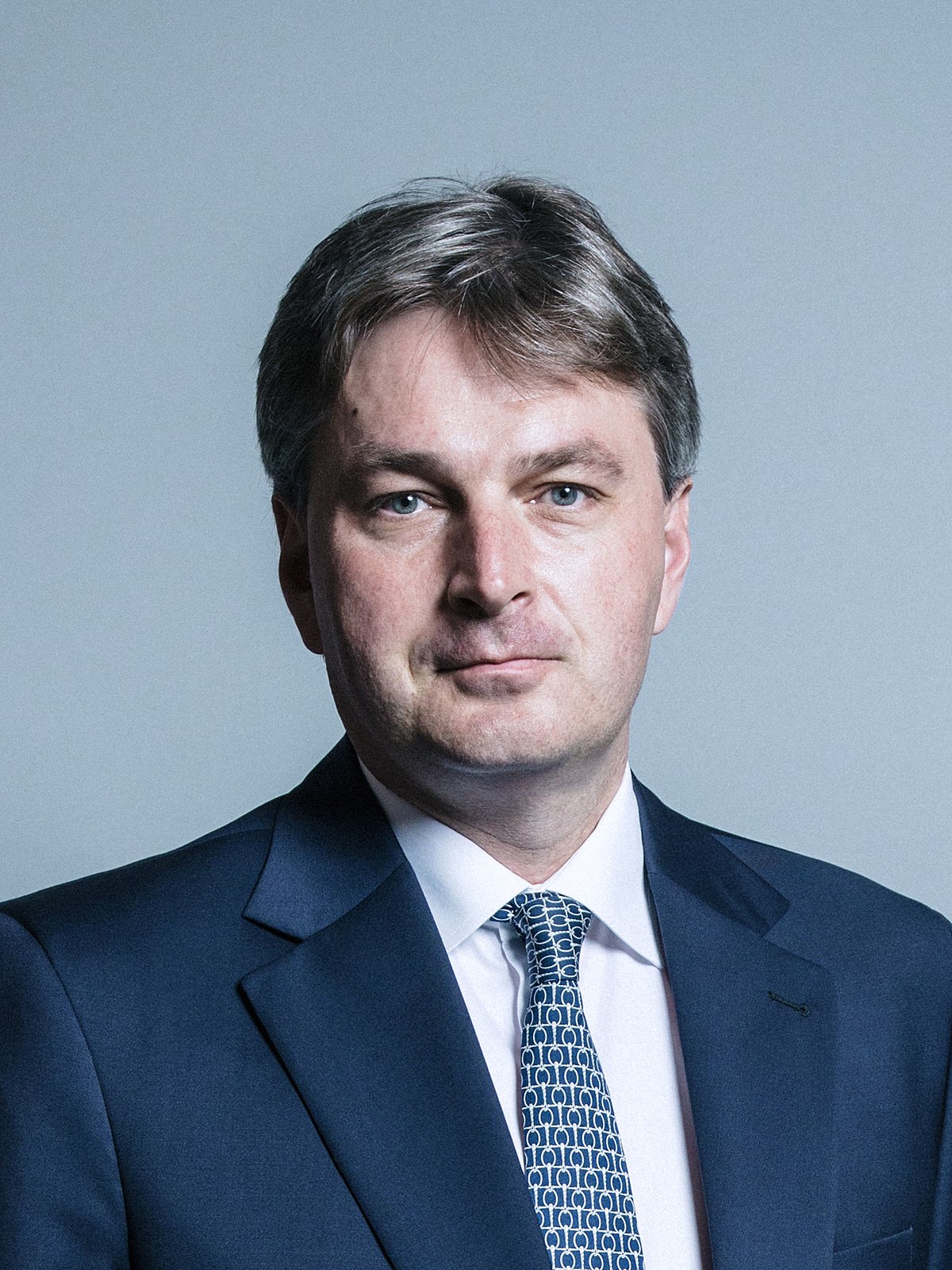
  • Daniel Kawczynski – 2022 Speech on the West Balkans and the Council of Europe

    Daniel Kawczynski – 2022 Speech on the West Balkans and the Council of Europe

    The speech made by Daniel Kawczynski, the Conservative MP for Shrewsbury and Atcham, in the House of Commons on 16 November 2022.

    In the brief time that I have, I will focus my comments purely on our relations with Albania, a country that I visited earlier this year with my hon. Friend the Member for Cleethorpes (Martin Vickers), who is the chairman of the all-party parliamentary group on Albania. I pay tribute to him for his professionalism in conducting that trip and in managing the APPG.

    There is no doubt that there is growing controversy over illegal crossings over the English channel, but how we treat the existing Albanian diaspora here in the United Kingdom is very important and a key indicator of how we develop our relations with Tirana.

    I am the sole Conservative Member of Parliament who was born in eastern Europe—I was born in Poland—so our relations with central and eastern Europe, including the Balkans, are of particular interest to me. I remember coming to this country for the first time, escaping communism with my family in October 1978, as a six-year-old child. I remember the tremendous warmth, kindness and hospitality that we were shown when we came to this country for the first time. That is what characterises British people and this country. That is what we are known for around the world—the way in which we treat people of different faiths, religions, backgrounds and other characteristics.

    When Poland joined the European Union in 2004, there was a huge movement of people from that country to the United Kingdom. I remember that at the time the BBC and others whipped up hysteria about the huge numbers of Poles coming to this country, so much so that as I went around the United Kingdom meeting members of the Polish diaspora, I saw and heard evidence of racist attacks, abuse and intimidation of those hard-working Poles who had come to this country to contribute. It was because of the narrative that had been created by the media, by the BBC and by the newspapers. I felt so passionately at that time that I went on “Newsnight” and on Radio 4, and I challenged the media about their conduct, asking why they were focusing so much on people from one specific nation.

    Of course we want to control migration, of course we want to control our borders, and of course we want to ensure that migration works in the interests of the United Kingdom. But if history has taught us one thing, it is that focusing on one particular type of people, or on a particular nationality, is a very dangerous thing for any society. And to blame that one particular group of people for the ills and difficulties that the nation is going through is the thin end of the wedge, and something that history has taught us repeatedly is extremely problematic.

    I believe that Albanians in the United Kingdom are facing the same pressure that the Poles went through in the early 2000s—actually, perhaps even more so. I have come across cases in my constituency of Shrewsbury of young children of Albanian origin being bullied at school and experiencing racist abuse. Last week, I met Albanian citizens on Westminster bridge who were peacefully demonstrating and holding up their Albanian flags and saying, “I’m a carpenter”, “I’m a nurse”, “I’m a doctor”, “I’m a schoolteacher”, and, “We’re here and we’re contributing to the United Kingdom. We love this country. And yet the media portrays us all as criminals and part of some nefarious type of nationality that is here purely to take advantage of the British and to be criminals.”

    I was very moved and touched by what I heard on Westminster bridge from those hard-working people. The demonstration that I saw last week on Westminster bridge is very different from how the event was characterised in The Mail on Sunday, which tried to portray those demonstrators as a marauding mob, hell-bent on creating violence. That is not what I saw on Westminster bridge. People like Mr Farage, who try to whip up this sort of anti-Albanian hysteria through the pages of The Mail on Sunday, should be very careful about what they are doing.

    I want to raise a radio interview that my right hon. Friend the Member for North Thanet (Sir Roger Gale) had with Jeremy Kyle. For me, Jeremy Kyle is the epitome—the personification—of that vilification and that “baying to the mob” mentality. He tries to create division and tension in order to sell his agenda and vilify this diaspora. I was proud of my right hon. Friend when he described Jeremy Kyle’s comments as “emotive, corrosive, offensive drivel”. I agree with him entirely. To characterise a whole nation in that way is wrong.

    We all want to destroy the business model of criminal gangs, but we must not pick on the Albanians. I urge the Home Secretary to focus on the task ahead of her, and to be careful with the language that she uses. Certainly, some of the Albanian residents that I met on Westminster bridge expressed concern to me about the characterisation of them by certain politicians in this House. I recognise and celebrate the helpful contribution of Albanians.

    Finally, my constituent, Arlinda Ballcaj, has joined Shrewsbury Conservatives; she does a tremendous amount of work to help me with my local party in Shrewsbury. She was the first citizen of Albanian origin to stand for Shrewsbury Conservatives as a council candidate. I am very proud of her. Unfortunately, she lost the seat. When I sat down with her, we both cried about the vilification that she came under, the racist abuse that she received and the conduct of some of the other candidates towards her. It was an emotional experience. I do not want any candidate to go through that sort of abuse. I very much hope that all of us in this House bear in mind my key message today: let us tackle the criminal gangs, but let us be very careful about how we treat the Albanian diaspora. They are here, and in the main they are hard-working, decent people who make a tremendous contribution to the United Kingdom.

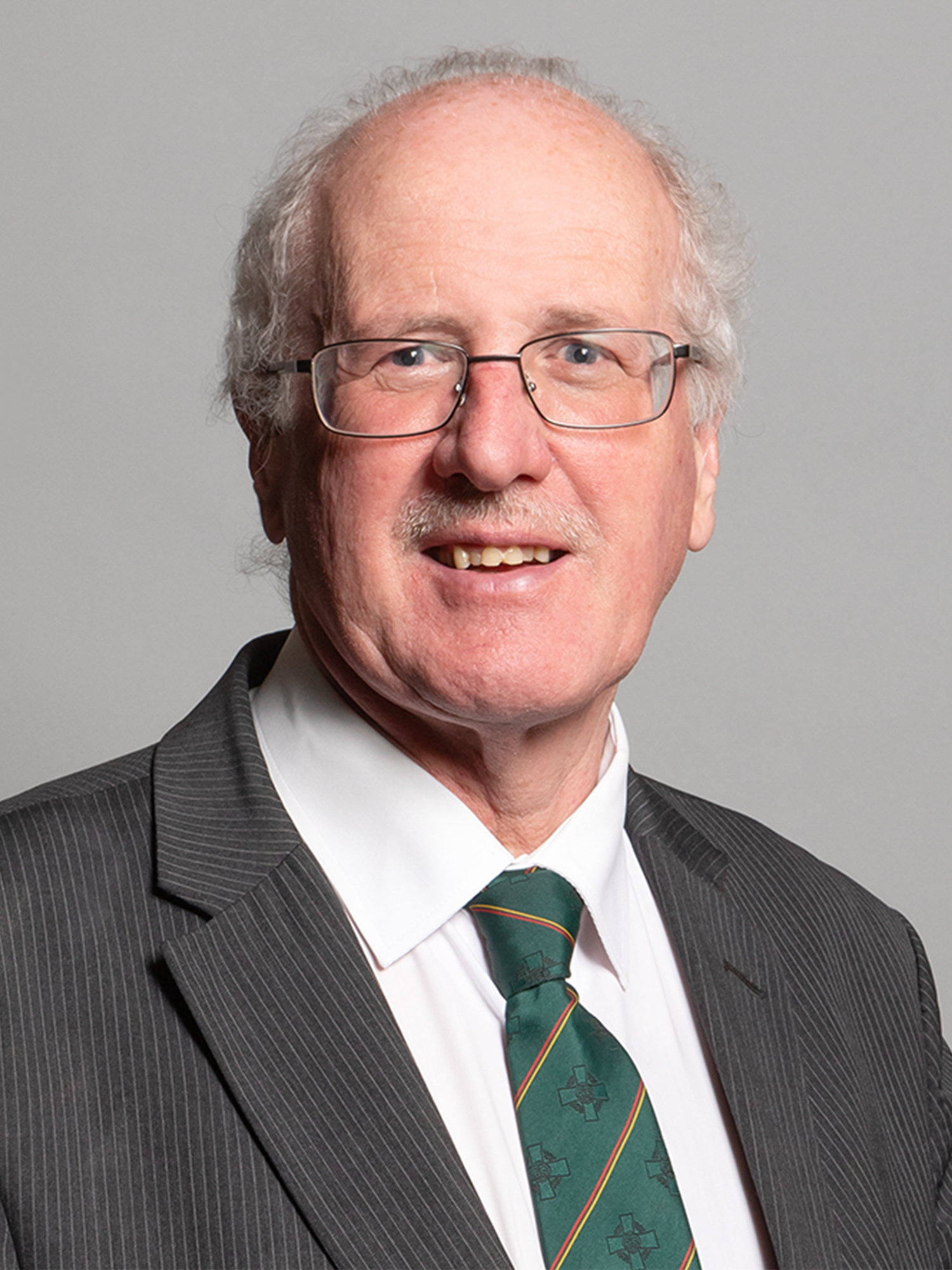
  • Jim Shannon – 2022 Speech on the West Balkans and the Council of Europe

    Jim Shannon – 2022 Speech on the West Balkans and the Council of Europe

    The speech made by Jim Shannon, the DUP MP for Strangford, in the House of Commons on 16 November 2022.

    It is a pleasure to serve under your chairship, Ms Nokes. I thank the hon. Member for Henley (John Howell) for leading the debate and for his consistent and sterling efforts as leader of the UK delegation to the Council of Europe. I think we all believe that that delegation is in good hands. If I had the opportunity, I would vote for the hon. Gentleman, and I know others would as well.

    Although the UK is no longer a member of the European Union—I am proud to be a Brexiteer—we do our best through the Council of Europe to uphold human rights, democracy and the rule of law. I am my party’s spokesperson for human rights and equality issues across the world, whether they be in Europe, the middle east or elsewhere.

    I sincerely thank the right hon. and gallant Member for Beckenham (Bob Stewart) for his contribution. I have heard it before but it does not make it less powerful to hear it again. We are all aware of his courage, his bravery and his dedication to the peace and stability of the Balkans. He did it in uniform, and I give my thanks—indeed, all our thanks—to him for that. He is a dear friend; he knows that. We think very highly of him.

    The debate is especially important as the last time we debated the issue was back in February, at the start of Russia’s invasion of Ukraine, and we have since seen the devastation that has occurred as a result. The UK has always been a leading force in the Council of Europe, ably championed by the hon. Member for Henley, in holding Putin to account, so it is great to be here to discuss the protection of other small states.

    On 13 December last year, the former Prime Minister, the right hon. Member for South West Norfolk (Elizabeth Truss), met the Foreign Ministers of the six west Balkan states of Albania, Bosnia and Herzegovina, Kosovo, Montenegro, North Macedonia and Serbia. The hon. Member for Henley referred to Turkey as well. I have a deep interest in Turkey, particularly because of its human rights abuses. The fact that it suppresses and discriminates against ethnic minorities and those of other religious viewpoints is something we have to highlight, and I am glad that the hon. Member continues to do that.

    Margaret Ferrier

    With the dangerous rhetoric about religion heightening in Bosnia and Herzegovina, does the hon. Member agree that protecting freedom of religion across the region must be a key priority, particularly as some neighbouring countries look to join the EU?

    Jim Shannon

    I certainly do. I know the Minister will respond positively. She knows that I have a deep interest in that issue. As the chair of the all-party parliamentary group for international freedom of religion or belief, it comes up all the time, and I will go on to speak about it. The hon. Member for Henley referred to fit and healthy single males who seem to be leaving Albania with regularity to come to the United Kingdom. I am not against any person who wants to emigrate, but do it legally through the system. Don’t jump on a boat and come across.

    I watched a TV programme last week that looked at a village in Albania. The village previously had a population of around 1,000, but it was down to less than 100. Those left behind were elderly people and children—not many children at that—because they are all coming across. When it comes to Albania, maybe the Minister could give some indication of what discussions there have been through the Council of Europe and what the Council will do to ensure that people do not come across in these increasing numbers.

    Bob Stewart

    I thank my good friend for allowing me to intervene on him. A good role for the Council of Europe that has not been mentioned is convening a conference to try to sort out a Dayton 2—a new approach to Bosnia. If the Council of Europe is so flipping powerful, it should actually convene this conference and get on with it. All these words and elections are meaningless if the country is broken because of its constitution, which is non-existent and frankly is a cockshy.

    Caroline Nokes (in the Chair)

    Mr Stewart, please can you think about the language you use in this Chamber?

    Bob Stewart

    Ms Nokes, I am so sorry.

    Jim Shannon

    The emotion of the occasion perhaps got the better of the right hon. Gentleman. I wholeheartedly support—with the exception of the last couple of words, of course—what he says. We have stated on multiple occasions that the UK is committed to the western Balkans and to the defence and promotion of freedom. The west has proven instrumental in ensuring support for the west Balkans’s call for greater Euro-Atlantic integration with the United States for both economic and cultural prosperity.

    One major factor posing great concern is Russia. I spoke on this issue last time, and we have truly seen the utter malice and evil that Russia has subjected Ukraine to since we last spoke on the issue. The Kremlin has repeatedly demonstrated that the Balkan states are a conducive environment to push back against the west, especially the USA. Putin’s regime has refused to accept Kosovo’s independence, attempted a brazen attack against Montenegro and committed covert attacks to target arms supplies that were destined for Ukraine. Russia is clever when it comes to subversion and in its violence, brutality and wickedness. When we look at these things logically, Russia has absolutely nothing to offer the west Balkans. These countries are in desperate need of prosperity and greater stability, and there is no comparison between the Council of Europe and the corrupt regime of Putin. That is the real threat in the Balkans.

    Part of the Berlin process is to ensure that nine EU member states, along with the west Balkans and the UK, engage with the six Balkan Administrations to promote regional co-operation and integration agendas between EU and non-EU states. I know the hon. Member for Henley is trying to do that through his leadership. Through the Council of Europe, we care much about striving for democracy and promoting fair elections. No smaller state should be subject to violent extremism. The ongoing war in Ukraine has been devastating, and the United Kingdom has a role as a western ally to help Balkan states preserve companionship and autonomy. It has been clear that Serbia has moved closer to Russia by not imposing sanctions on the Administration. We have to look at what we can do to impress on Serbia the importance of making efforts to distant itself from Putin.

    I will conclude, as I am very conscious that others want to speak. The UK works very closely with Governments in the Balkans region to support internal reforms and the rule of law. I wish for that to continue. I call on our Government—my Government—and the Minister who is in Westminster Hall today to ensure that there are ongoing conversations and support for the future of the western Balkans. I thank them—the Minister and the Government—as well as the Council of Europe, and in particular the hon. Member for Henley, for their work and achievements thus far.

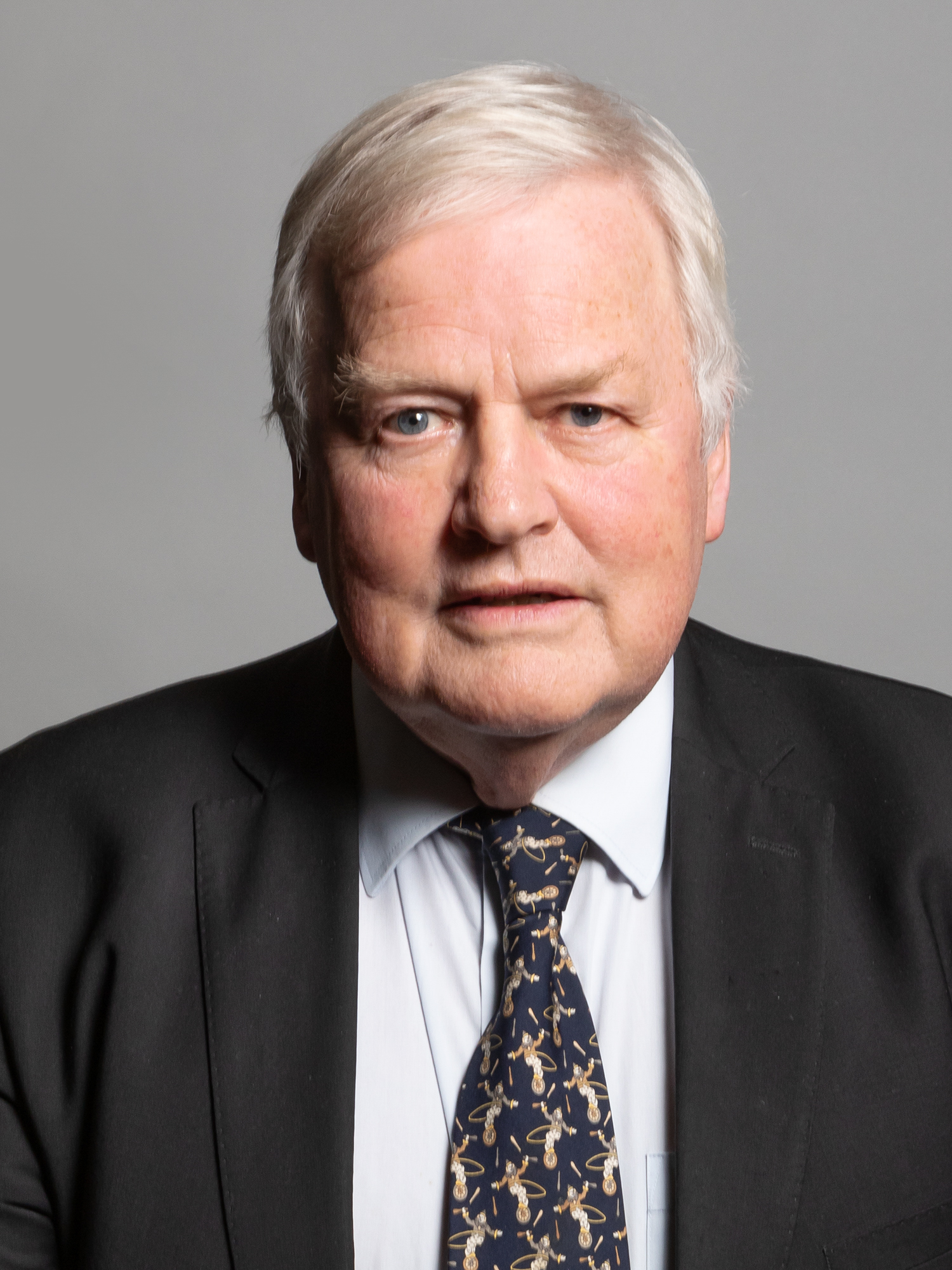
  • Bob Stewart – 2022 Speech on the West Balkans and the Council of Europe

    Bob Stewart – 2022 Speech on the West Balkans and the Council of Europe

    The speech made by Bob Stewart, the Conservative MP for Beckenham, in the House of Commons on 16 November 2022.

    Without doubt, the crucible and cockpit for all crisis in the western Balkans is Bosnia. This country has 3.2 million people, ethnically south Slav in nature, but split into three basic religions. Muslims make up 51%, and they are often called Bosniaks. Eastern Orthodox people represent 31%—often called Bosnian Serbs. Roman Catholics represent about 15%—normally called Bosnian Croats.

    In 1992, the Bosnian Serbs attacked their neighbours, seizing large tracts of land, which they ethnically cleansed of non-Serbs. As the war went on, the Croats and Muslims also carried out their version of ethnic cleansing. An estimated 2 million people were driven from their homes. In September 1992, the United Nations authorised the deployment to Bosnia of a protection force, UNPROFOR. The UN troops were often called peace- keepers, but actually that was not their role. There was no peace to keep in Bosnia and UNPROFOR did not have the mandate to enforce it either.

    Although several British Army observers, medics and liaison staff were already on the ground in Sarajevo and elsewhere, Britain’s main contribution to UNPROFOR was a battle group based on the 1st Battalion, the Cheshire Regiment and a reconnaissance squadron of the 9th/12th Lancers. Around 2,400 troops deployed under Operation Grapple, which is what it was called, in November 1992, and I led it.

    Our military has been directly involved in Bosnia since then, and 59 service personnel have lost their lives trying to help the country, among them my escort driver, Lance Corporal Wayne Edwards, and my interpreter, Dobrila Kalaba, who was deployed by us although technically not in the Army. Both were shot in the head, and I was shot in the leg. It did not seem to make much difference to me—I am still here—but I am very sad about the other two. Unsurprisingly, therefore, I have a deep personal connection to Bosnia, which I retain to this day.

    The war, which started in 1992 when I was first there, continued until the massacre of Srebrenica in July 1995 and ended with the Dayton peace accords in 1996. That stopped the fighting and established a triumvirate of uneasy power sharing between the three major sides: Bosnian Serbs, Bosnian Croats and Bosniaks. Dayton was supposed to last only a few years until politics could be adjusted to make Bosnia a somewhat democratic and viable state, but the Dayton arrangements have become the status quo, and they are simply cracking at the seams.

    The Bosnian Serbs in so-called Republika Srpska are seriously threatening to break away, and the Bosnian Croats are also making similar growling noises. If that happens, almost all authorities on the region believe we could easily see the renewal of civil warfare in Bosnia. Between 1992 and 1996, approximately 200,000 people were killed in that war and, as I have mentioned, 2 million people were displaced. That tragedy must not be repeated.

    I believe that we, the British, are in a good position to influence what goes on in Bosnia. Our reputation there is quite high as a result of the actions of our soldiers over the years, as well as the continued interest that we hold in the country—witness the fact that Sir Stuart Peach is the representative there, and a good one too. In my experience, the one thing Bosnians respect is good, motivated and professional soldiers on the ground, who know what they are doing. I do not suppose that it will come as a surprise to colleagues that I believe that we could go in there again.

    Currently, we have very few military forces on the ground there and we do not contribute to the so-called EUFOR, the European Union Force in Bosnia and Herzegovina, which is utterly and completely useless and does nothing but wander around the country, but we have a few staff officers at the nascent NATO headquarters recently established there. It would be a hugely significant signal if we were to send a British battle group to Bosnia under NATO command. I suggest that should happen, and soon.

    My interest in Bosnia has not waned over the years. I have been there twice this year and will return again on 8 December. As my friend, the hon. Member for Rochdale (Tony Lloyd), has already mentioned, it is a tragedy that 170,000 people left Bosnia last year. They were mainly youngsters. Consider that 170,000 as a percentage of the population of 3.4 million. They are heavily bleeding the people who could be the future of Bosnia. Those people would not be leaving if they believed they had a future, so we, the British, who have invested so much in the country and have paid a blood price, should do all in our power to help that country of decent people sort itself out.

  • Tony Lloyd – 2022 Speech on the West Balkans and the Council of Europe

    Tony Lloyd – 2022 Speech on the West Balkans and the Council of Europe

    The speech made by Tony Lloyd, the Labour MP for Rochdale, in the House of Commons on 16 November 2022.

    It is a pleasure to serve under your chairmanship, Ms Nokes. I congratulate my hon. Friend the Member for Henley (John Howell) —I use that term advisedly—on opening the debate. His stewardship of the UK delegation to the Parliamentary Assembly of the Council of Europe is exemplary, and I join him in his endorsement of the roles of those who help us here in the UK Parliament.

    If we look at the west Balkans as a region—the hon. Member for Henley is right to say that we need to take a strategic view of the whole region—some things are common. Not everywhere has all of these features, but nevertheless one of the depressing things is to travel anywhere in the western Balkans and talk to young people, most of whom will say that their ambition is to leave. They do not generally want to leave for the UK, by the way; they normally want to go to Germany. The fact that young people have no hope or faith in the future is such a mark of what is going wrong. There are those of us who heard that message not so long ago in Bosnia-Herzegovina, but it is a common view across the region. It matters to us as the UK in narrow, national terms, but it matters to us in any case if we hold the view that a well-ordered world is in the interests of the United Kingdom. There are issues such as combating corruption and ensuring that the rule of law is underpinned by judges who are free of the taint of corruption. Those things matter and it is in our interest to ensure that we are part of a process that brings them together.

    In the relatively short time I have, let me make one central point. At the moment, a battle is taking place that can be defined in national terms, or by groupings of nations. That is whether the Council of Europe and the European Union pull together and challenge the baleful influence of Moscow and, to a lesser extent, the growing presence of China in the western Balkans. Certainly, the influence of Moscow is almost entirely that of disruptor, through their friends in Belgrade as well as directly.

    That matters because a disrupted western Balkans can descend into the kind of events that we have seen in the past. It is very difficult. Nobody would have predicted the violence that took place in the Balkans in the past, not many years before the region was plunged into chaos. I do not want to be overly dramatic, but when Mr Dodik talks about independence or secession for Republika Srpska in Bosnia and Herzegovina we have the basis of a major challenge. An independent Republika Srpska’s armed force could lead to all manner of things, the like of which we should not contemplate. We have an interest, in any case, in the good governance of the region. That catastrophic view would not apply in most other countries of the region, I am glad to say, but we do have to challenge, both intellectually and practically, the role that Moscow and Belgrade seek to play in the region. That is one point I want to establish.

    Many good things are taking place. Going back not that long ago, few people would have predicted that Albania would be a serious candidate for European Union membership, or North Macedonia, yet both those countries should be on a faster track into the European Union. It is always difficult, post Brexit, for UK politicians, even ones like me who were opposed to Brexit, to make the case for the European Union to take action. We need our friends in the EU to recognise that an EU that pretends to have the door open but in practice slams it pretty firmly shut is playing into the hands of the disruptors in the region, and those who already have the kind of despair I described among the younger generation and simply want to leave their countries.

    There are some practical things we need to do. We need to work together, the Council of Europe with the European Union. That must underwrite everything that we do. There is no room for competition between the two bodies; we should be joined in everything that we do. That is fundamental, because it is about providing stability and the practical support that the hon. Member for Henley described. It is also about providing something else: the sense that there is a direction of travel that takes people to a better future.

    In the end, the big prize is to say to the younger generation, which includes some very talented people, that their future is in their own countries in the region, to build that better west Balkans. If we can begin that process with sincerity and practicality, we can make a material difference. I know the region a little from over the years, but there are people in this room who know it a lot better than I do and I want to listen to what they have to say.

    I will say this, though: the western Balkans matters to the United Kingdom. Perhaps it is not our principal area of activity at the moment, but one of the real tragedies of how we all operate is that today’s crisis is Ukraine, yesterday’s was Afghanistan and the day before it was wherever. The western Balkans was once that crisis that we thought was so important, and all our energies were directed there. As a Minister, I lived through the crisis in Kosovo, and we cannot go back to those days. The region is too important for us, so we have to make sure it is on all our agendas, not simply for today, but for the indefinite future. I thank the hon. Member for Henley once again for introducing the debate. It is an important debate that we need to remain fixed on.

  • John Howell – 2022 Speech on the West Balkans and the Council of Europe

    John Howell – 2022 Speech on the West Balkans and the Council of Europe

    The speech made by John Howell, the Conservative MP for Henley, in Westminster Hall, House of Commons on 16 November 2022.

    I beg to move,

    That this House has considered the West Balkans and the Council of Europe.

    It is a pleasure to serve under your chairmanship, Ms Nokes, and a great pleasure to move the motion. I want to begin by saying that I have recently returned from a visit to Bosnia-Herzegovina, where I observed the presidential and parliamentary elections on behalf of the Council of Europe. It left me with a deep impression of a troubled state where nothing gets done. I will come back to that in due course.

    First, I wish to thank three people: George Papandreou, the former Prime Minister of Greece, who has produced a solid paper on the Europeanisation of the western Balkans. I am grateful for his sharing of the information that he collected, even though his paper remains too European Union-centric in its overall thrust. The second person I want to thank is Sandy Moss, our permanent representative in Strasbourg. Thirdly, I thank the Parliamentary Assembly of the Council of Europe secretariat in London, which does so much for us, and particularly the work of Nick Wright, its leader who is with us today.

    The western Balkans covers a number of countries, including Albania, Bosnia- Herzegovina, North Macedonia, Serbia and Kosovo. Most of those countries are members of the Council of Europe and have also applied to join the EU.

    Margaret Ferrier (Rutherglen and Hamilton West) (Ind)

    I know the hon. Gentleman is a member of PACE and I thank him for the updates on his work there. Does he agree that the Council of Europe has a key role to play in normalising bilateral relations in dispute resolution in the region?

    John Howell

    I thank the hon. Lady very much for her question. That is a large part of what my speech is about. The Council of Europe has a pivotal role in the area in being able to take forward the sort of agenda that she has outlined. I am grateful to her for raising that.

    The granting of candidate status to Moldova and Ukraine has not gone down well with the western Balkans states. We can all understand why. It has been seen for what it is: a political act that has left the western Balkans high and dry. It is seen as being driven by political expediency in view of the dreadful war in Ukraine. It has left a growing disenchantment with membership of the EU and with the EU itself, which will do nothing to increase peace in the region or provide stability, despite the agreed commitment to the shared values of human rights, democracy and the rule of law—the three principal values of the Council of Europe. That should have given the Council of Europe the inside track in working with the western Balkans to establish those values as the norm.

    Despite calls over the years for the Council to take the initiative in the region, very little has been done. I will return to that. A catalysing activity for the region is the war in Ukraine. The influence of Russia in the region is enormous. As a starter, it has big strategic influence in energy, banking and real estate. Some of the countries support the sanctions that have been imposed on Russia. Albania, Kosovo, Montenegro and North Macedonia have done so. Bosnia-Herzegovina and Serbia have not. Serbia has signed a new three-year gas contract with Russia. We should note, too, that Russia is Serbia’s biggest supplier of arms—all sobering thoughts in a European context. The influence of Russia can therefore be seen to be felt very widely across the whole region.

    In addition, two other players have a key role. Turkey’s activities have by and large been benign and focused on enhancing co-operation.

    Dr Rupa Huq (Ealing Central and Acton) (Ind)

    The hon. Gentleman is making an excellent and timely speech, and I praise his stewardship in leading parliamentarians on the Council of Europe. His mention of Turkey reminded me that there are elections in that country next year. Does he agree that the Organisation for Security and Co-operation in Europe also does sterling democracy-extending work in the Balkans and more widely in election monitoring? He mentioned Bosnia—he and I were observing the elections in Sarajevo last month—but such work extends to America, where I was election observing. The organisation also had border scrutineers in Ukraine during the lead-up to war. Does he further agree that its work has been vital?

    John Howell

    I thank the hon. Lady for her comments, and it was a great pleasure to see her in Bosnia-Herzegovina where she was representing the OSCE. That was very much a joint mission to observe the elections, and I agree that the OSCE has a lot to offer, but today I shall concentrate on the relationship with the Council of Europe and what the Council can do, which perhaps has a longer-lasting effect in the region.

    Turkey can play a role for good in the region and it has done much good work, but the second country that has a role to play there is Iran, whose activities cannot be described as beneficial. Iran, for example, is widely believed to be behind the attempted vote rigging that occurred in Bosnia-Herzegovina when the hon. Lady and I were there observing the recent elections. That vote rigging attempt was stopped, but it showed what Iran can do.

    What can the Council of Europe do in the western Balkans? One of the key elements on which the Council should be concentrating is the rule of law, which is a principle that embeds all others. Furthermore, there are two broad areas where the Council has the edge over the EU, the first of which is developing and enhancing civil society across the region.

    Without civil society, there can be no enduring and fundamental championing of the rule of law. We need a civil society that can be taken seriously and not just be one of those complainers. It needs to be active in promoting aspects of society such as good human rights. That is just the sort of area that the Council is trying to establish in Russia, although it faces great difficulties, but it should be much easier to achieve that in the western Balkans. That means programmes providing assistance and watertight governance, and ensuring that the systems—the Governments—accept the role that civil society can play.

    Secondly, there is the broad area of concentrating on bringing the systems used by Governments more in line with the rule of law across Europe. Where are the extensive training programmes for the judiciary and its independence? I am aware of the Regional Rule of Law Forum for South East Europe, hosted by the AIRE—Advice on Individual Rights in Europe—Centre and Civil Rights Defenders, which has brought together some of the judges of the Court of Human Rights and the Venice Commission to establish best practice, but we need much more of that.

    Where is the work with the Administrations to enable them to be willing to invite civil society into the reform process? Where is the work to increase the political will to do something about these issues, which will either increase democracy or provide a conflict with it that needs to be resolved? Where, too, is the ancillary but essential work of ensuring that the media are free?

    Those are activities in which the EU is not, I am afraid, 100% active, but where the Council of Europe should be and could be. That requires a Council of Europe secretary-general who is prepared to roll up her sleeves and get out into the countries to sort out those programmes. Sadly, that is one component of the Council that is currently lacking. Instead, it has put three countries —Albania, Bosnia-Herzegovina, and Serbia—under monitoring procedures by the Parliamentary Assembly of the Council of Europe, while Montenegro and Macedonia have just come out of monitoring.

    Margaret Ferrier

    The hon. Gentleman mentioned that he recently observed elections in Bosnia and spoke at the Council of Europe about the aftermath of the Dayton agreement. Does he feel that the worsening situation in Bosnia-Herzegovina can be remedied?

    John Howell

    The hon. Lady seems to have read my speech, because she is anticipating some of the points that I will make later. I made that point at the Council of Europe and I am happy to make it later if she does not mind waiting a few more minutes until I get to that part of my speech.

    Kosovo has been caught up in internal Council of Europe committee meetings and wrangling for a long time. Monitoring can play a great part in helping countries move forward with their reforms, including established countries such as France, the Netherlands and even the UK—I am the monitoring rapporteur for Turkey—but the amount that can be done through monitoring, as opposed to active programmes, is limited. It is not a big stick to tell the countries what they have done wrong; it is much more about bringing PACE’s substantial resources to bear to help the country put right weaknesses that might have occurred in its human rights, rule of law or democracy.

    How, for example, does PACE monitoring deal with political instability? If anyone thinks that political instability does not arise in that region, they should just look at two countries. We as a delegation are actively helping Kosovo to overcome the difficulties that it faces and become a full member of the Council of Europe, against Serbia’s objections which, of course, are backed by Russia.

    Bosnia-Herzegovina contains Srebrenica—the site of a massacre of more than 8,000 Bosniak Muslim men and boys, which has been classed in the international courts as genocide. It might be thought that there is little to argue about, but Serbs do not accept that it was genocide, and Bosnia-Herzegovina has a mixed population.

    Reconciliation, which is crucial for peace and security, requires an end to conflicting narratives about the past and a more vigorous prosecution of war crimes. That too is where civil society and the Council of Europe can play a key role. The council must not allow such disputes to fester while we put programmes in place, and we need good conflict resolution activity. If I were secretary-general of PACE—this is not a bid for election, although I am happy to entertain offers—I would seek to develop that area. It requires people with special skill and faith that the countries can come right.

    The hon. Member for Ealing Central and Acton (Dr Huq) will agree that the general elections we observed in Bosnia and Herzegovina were generally well run and free. The polling booths, although sometimes a little eccentric—one was in someone’s front room—were generally well run. The only incident, to which I have already referred, occurred when those running a polling station turned up to open it with bags of polling forms that had already been completed.

    A major problem, however, was that only three or four people were allowed in the polling booths at any one time. The queues stretched right out into the open air at times, because it took an average of 30 minutes for someone to vote because there were four very large, folded voting papers to read before they could identify their preferred candidates. It took that time to manage the paperwork. That is largely a result of the solution produced by the Dayton accord, which created an unsustainable constitutional system for the country. Sure, people were no longer voting with a gun pointed at them, but that cannot be the answer for the future. It cannot go on like that. Having three Presidents means that nothing ever gets decided. With a strong Muslim community, the country is divided into separate constitutional entities, all of which are threatening—at one time or another—to resign the country, such as the Republika Srpska. The high representative has already said that the country is

    “facing the greatest existential threat of the post-war period”,

    and its links with Russia are strong. It is a crazy and unsustainable situation. I congratulate Bosnia-Herzegovina on setting up such a large election-monitoring activity with both the OSCE and the Council of Europe, and other western organisations.

    I have mentioned Kosovo. We as a delegation are actively supporting Kosovo, and have already offered to help it to become a full member of the Council of Europe. It can take its seats, but not vote, thanks to the work that we as a delegation did to encourage that as the first step for membership. I understand that our enthusiasm for Kosovo is the position of the UK Government as well.

    It is difficult to comment on Albania without a comment on its Prime Minister. I have met Edi Rama, and did not find him to be the most conducive man for accepting the activities of the Council of Europe. We are aware of the number of Albanians, certainly the number of Albanian single men, who are coming across the channel, but Albania needs to make lots of progress on reforms to the judiciary and against corruption.

    The big problem with Serbia is normalising its relationship with Kosovo and aligning its foreign policy away from Russia to a western, normal perspective. These both mean a lot of work, and a great deal of rethinking. It is interesting that the EU sees the help of the Council of Europe as crucial for enlarging the EU to include the western Balkans. It is essential for the UK too, but we should not try to do it alone at this stage. The UK should use my delegation to put pressure on the Council of Europe to take a more active role in the region and step up to the plate. It is not a question of money either; the Council of Europe Development Bank is able to help with the investment. We need a strategic approach, looking at the region as a whole. The question of migrants is a big factor in this, but we must move away from the narrow confines of nationalism and xenophobia, and the Council of Europe can play a major role in that.

  • PRESS RELEASE : Fight against international wildlife crime stepped up [November 2022]

    PRESS RELEASE : Fight against international wildlife crime stepped up [November 2022]

    The press release issued by the Department for Environment, Food and Rural Affairs on 18 November 2022.

    • UK Government pushing for further protections for endangered species including pangolin and sharks on the global stage
    • Move comes just weeks ahead of crucial UN Convention on Biological Diversity

    The fight against international wildlife crime received a boost today with the announcement of new funding for the International Consortium’s Vision 2030, a long-term vision of working towards a world free of wildlife crime.

    The government is pledging £4m of new funding for the International Consortium on Combatting Wildlife Crime (ICCWC). The announcement has been made at the Convention on International Trade in Endangered Species of Wild Fauna and Flora (CITES) in Panama, where the UK government is pushing to secure stronger protections for some of the world’s most threatened species such as pangolins and requiem sharks. Ongoing pressures, including legal and illegal international trade, continue to threaten their survival.

    CITES is an international agreement between governments that protects over 38,000 wild plant and animal species from the impacts of international trade. Wildlife crime undermines efforts to ensure that international trade is legal and sustainable. Since 2010, the ICCWC, with their collective expertise and extensive experience, has been delivering essential work to eradicate this vile trade.

    The new funding will go towards the next phase of ICCWC programming and will help fight wildlife crime by increasing the detection, disruption and detention of criminals. Transnational criminal networks profit from illegal trade, causing serious security implications for many countries and regions.

    Environment Secretary Thérèse Coffey said:

    We want to keep protecting our most endangered plants and animals. This £4 million of funding going to the ICCWC will help tackle criminals and stop this vile trade.

    The UK is showing global leadership on conservation and proposing stronger protections for a range of rare species at this summit such as pangolins and sharks. We will also be driving global efforts to secure a post-2020 global biodiversity framework at the UN Convention on Biological Diversity in Montreal next month.

    The UK is demonstrating global leadership on conservation and sustainable use at CITES CoP 19, advocating for:

    • Better protection of 54 species of shark to help shield them from overexploitation in the fin trade.
    • Strengthening commitments to protect pangolins, the most trafficked mammal in the world, through cooperation and demand reduction measures.
    • Improving CITES implementation for agarwood to assist in conservation efforts.
    • Upholding the ban on international commercial trade in ivory and rhino horn, managing ivory stockpiles, and ending trade in live African elephants to non-range states.
    • Enhancing CITES’ role in relation to reducing the risk of zoonotic disease emergence, tackling the illegal trade in CITES species, better engagement of indigenous people and local communities.

    Welcoming the additional funding as an endorsement of ICCWC’s work, CITES Secretary-General, Ivonne Higuero, said:

    We’re grateful to the United Kingdom of Great Britain and Northern Ireland for this important contribution to support the efforts of CITES Parties to combat wildlife crime. It is a vote of confidence in the coordinated work being done by ICCWC partners to put an end to this scourge affecting our planet and its people.

    The 19th meeting of the Conference of the Parties has acknowledged and welcomed the excellent work with Parties conducted under the Consortium and the development of the ICCWC Vision 2030. This funding means more Parties will be assisted by the Consortium to further strengthen their capabilities in the decade to come.

    Poaching and the illegal wildlife trade (IWT) has been estimated to be worth up to £17 billion a year. It fuels corruption, creates instability, impacts economic development and deprives some of the world’s poorest communities of sustainable livelihoods. For some of the most endangered species – like pangolins, succulents and turtles – the illegal wildlife trade is the gravest threat to their future.

    This funding will provide for a range of training courses, tools, services and capacity building activities, designed to strengthen criminal justice systems and support co-operation among countries exposed to the threats of wildlife trafficking.