Blog

  • Alicia Kearns – 2022 Parliamentary Question on Prime Minister Meeting Xi Jinping

    Alicia Kearns – 2022 Parliamentary Question on Prime Minister Meeting Xi Jinping

    The parliamentary question asked by Alicia Kearns, the Conservative MP for Rutland and Melton, in the House of Commons on 17 November 2022.

    Alicia Kearns (Rutland and Melton) (Con)

    Dialogue is never weakness, so will my right hon. Friend tell us when he intends to reschedule his meeting with Xi Jinping? It is not an endorsement of the Chinese Communist party, but an opportunity to set out our red lines, particularly on the hostile actions we have seen on UK soil in the last month. We need shortly to see a strategy from the Prime Minister on China.

    Will the Prime Minister also inform the House what progress on isolating Russia was made at the G20 with India and other nations that are not as aligned with us on Ukraine, because they are key to global stability and ending bloodshed?

    The Prime Minister

    I thank the Chair of the Select Committee on Foreign Affairs for her excellent question. She is absolutely right about the importance of dialogue, and she will have heard what I said to the Leader of the Opposition about dialogue. We are in the process of refreshing our integrated review, and no doubt our approach to China will be a part of that. In the meantime, she is right that dialogue also offers the opportunity for us to raise issues of concern, and to defend our values and interests—particularly with regard to areas such as Hong Kong—which we will continue to do as the opportunity arises.

    My hon. Friend is right to point out the position of those non-aligned countries. We should all take enormous comfort from the fact that the G20 communiqué was agreed; it was substantive, comprehensive and contained strong language of condemnation about Russia’s aggression. That was by no means assured just a week or so ago, and it speaks to the feeling in the international community —something I saw across the G20 table as many, if not almost all, countries took the opportunity to say something about Russia’s actions, and joined us in condemning it. There is always work to do and we will continue to have that dialogue with those partners.

  • Keir Starmer – 2022 Speech on the G20 Summit in Indonesia

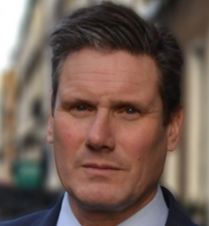
    Keir Starmer – 2022 Speech on the G20 Summit in Indonesia

    The speech made by Sir Keir Starmer, the Leader of the Opposition, in the House of Commons on 17 November 2022.

    I thank the Prime Minister for an advance copy of his statement.

    What should have been a summit focused on global economic recovery and delivering clear commitments on climate change was sadly overshadowed by the unjustifiable actions of Russia and its illegal war in Ukraine. Civilian infrastructure was targeted across Ukraine and a war of aggression rumbled on as world leaders tried to reach agreement.

    Whatever the outcome of the investigation into the missile incident in Poland, it is a stark reminder of the danger that Russia’s unjustifiable war has brought to the border of our NATO allies. We must remain vigilant and united in our opposition to this pointless and brutal conflict. As I have said many times from this Dispatch Box and to the Prime Minister personally, whatever other differences we may have across the House—and there are many—when it comes to the defence of Ukraine, we stand as one.

    On behalf of Members across the House, I send our condolences to those killed in Poland. Poland’s measured reaction to the incident and the calm heads that have prevailed over the past two days are welcome. I listened carefully to what the Prime Minister said about that and I agree with him that no country can be blamed for defending itself. We need to get to the bottom of this. Obviously, the investigation is ongoing, but when does the Prime Minister expect those investigations to be finalised?

    Russia is losing this war, so I welcome the G20’s communiqué, which set out:

    “Most members strongly condemned the war in Ukraine”.

    Has further support for Ukraine been discussed among western allies? What efforts are taking place to open a diplomatic road map to rid Ukraine of Russian troops and bring an end to the conflict?

    It is crucial that we work to find international unity to further isolate Putin. That will include working with China. We do not underestimate the challenges that China poses to global security and we must defend the human rights of the Uyghur and democracy in Hong Kong, but our approach must be measured, and it is in our interest to work with China on the climate crisis, trade and, most importantly, isolating Putin. I was glad to see constructive dialogue on those issues between President Biden and President Xi. Does the Prime Minister believe that the summit marks a change in west and China relations, and are his Government now taking a different approach from his predecessor to British-China relations?

    After a decade of low growth in this country, it is crucial that we open new trade opportunities. The Prime Minister said that he had met Prime Minister Modi, when a future UK-India trade deal was discussed. That deal has previously been put in doubt by his Home Secretary, who indicated that she would not support it. Labour does support a trade deal with India, which we believe can bring new opportunities to promote and create new jobs here in Britain. Will the Prime Minister tell us when he now expects the deal to be completed, and whether measures on visas will be included in the overall deal? If so, can he guarantee that his whole Cabinet will actually support it? Will he also tell us whether in his meeting with President Biden, the UK-US trade deal was discussed—or can we assume that this deal now has no prospect of being delivered any time soon?

    Lastly, may I ask the Prime Minister whether the Northern Ireland protocol was raised by either US or EU colleagues? Failure to make progress is hurting British research, development and trade, all at a time when we need to remove barriers for British business. Fixing this issue could lead to a better relationship with our biggest trading partners, an opportunity for our scientists and exporters, and an end to the past two years of unnecessary fights and division; so when is the Prime Minister going to deliver?

    Our international alliances have never been so crucial, for global stability and our own stability. We on the Opposition side of the House know that standing up to Russia’s aggression will require further sacrifices, but we must make those sacrifices because taking no action is not an option. The message from all of us must be clear: Ukraine will win and Putin will lose. Democracy and liberty will defeat imperialism again.

    The Prime Minister

    Let me start by thanking the right hon. and learned Gentleman for his words about the situation in Ukraine and Russia, and for his condemnation of the Russian aggression and steadfast support for the position of the Government and, indeed, the whole House on Ukraine.

    The right hon. and learned Gentleman was right to ask about the further support that we will be providing. He will know that we have provided £1.5 billion in economic and humanitarian support for Ukraine, alongside, obviously, the military assistance. We are hosting a reconstruction conference in the UK next year, and there is an ongoing dialogue about what further support the Ukrainian Government need from us and others. In the short term, we are in the process of providing 25,000 pieces of winter equipment for the brave Ukrainian soldiers, but also funds to help restore some of the damage done to Ukraine’s energy infrastructure, which I know have been warmly welcomed by President Zelensky.

    Let me briefly turn to some of the right hon. and learned Gentleman’s other questions. On China, I very much supported President Biden in his meeting with President Xi. President Biden and I discussed that meeting at length. I believe that our approach is entirely aligned with that of the United States, and indeed our other allies such as Canada and Australia. Of course China poses significant challenges to our values, our interests and indeed our economic security. It is right that we take the necessary steps to defend ourselves against those challenges, but it is also right to engage in dialogue when that can make a difference in solving some of the pressing global challenges that we all collectively face.

    The right hon. and learned Gentleman asked about Northern Ireland. I have discussed this issue with my European counterparts and, indeed, with the President at various meetings, not just at the G20. I remain committed to finding a solution to the challenges posed by the protocol. It is clearly having an impact on families and businesses on the ground in Northern Ireland. The people of Northern Ireland deserve to have a functioning Executive, particularly at a time like this, and that is something that I will devote my energies to bringing about. So far I have had very constructive relationships and discussions about this issue with both the President and our European counterparts, including the Taoiseach last week.

    On trade, the broad, overarching comment I would make to the right hon. and learned Gentleman is that when it comes to trade deals, whoever they may be with, what I will not do is sacrifice quality for speed. I think it is important that we take the time to get trade deals right. Of course this Government believe wholeheartedly in the power and the benefits of free trade, which is something that we will champion around the world.

    I discussed the free trade agreement with India, and both the Prime Minister of India and I committed our teams to working as quickly as possible to see if we can bring a successful conclusion to the negotiations.

    The priorities of the US are in a lot of different areas, but with regard to trade—the President and I discussed this—we are deepening our economic relationship. The United States is already our single largest trading partner. We are doing more with individual states to broaden our trade relationships, and we have seen recent action on tariffs with regard to steel, aluminium and agricultural exports. All of that is good for the UK economy.

    Of course, we are in the process of some exciting conversations about joining the comprehensive and progressive agreement for trans-Pacific partnership. That is real evidence of our country’s commitment to the Indo-Pacific region, and is supported by the Prime Ministers of Canada, Australia and Japan. I hope that we can bring those negotiations to a conclusion in the near future.

    Lastly, my reflections on the summit and on attending COP are that the United Kingdom is at its best when we are an engaged and active member of the global community —when we are standing up for our values, defending our interests, spreading prosperity, and alleviating poverty and suffering. I am pleased to have had conversations with so many leaders over the past couple of days that confirmed to me that they very much welcome the UK’s support in achieving all those objectives, and that is what this Government will set about doing.

  • Rishi Sunak – 2022 Statement on the G20 Summit in Indonesia

    Rishi Sunak – 2022 Statement on the G20 Summit in Indonesia

    The statement made by Rishi Sunak, the Prime Minister, in the House of Commons on 17 November 2022.

    With permission Mr Speaker, I would like to make a brief statement on the G20 summit in Indonesia, but first I want to address Russia’s missile attacks on Ukraine this week.

    On the very day that I and others confronted the Russian Foreign Minister across the G20 summit table with the brutality of his country’s actions, and on the very day that President Zelensky addressed the G20 with a plan to stop the war, Russia launched over 80 separate missile strikes on Ukraine. The targets were innocent people and civilian infrastructure; the aim, to cast the population into darkness and cold. Once again, Russia has shown its barbarity and given the lie to any claim that it is interested in peace.

    During the bombardment of Ukraine on Tuesday, an explosion took place in eastern Poland. The investigation into this incident is ongoing and it has our full support. As we have heard the Polish and American Presidents say, it is possible that the explosion was caused by a Ukrainian munition which was deployed in self-defence. Whether or not this proves to be the case, no blame can be placed on a country trying to defend itself against such a barrage. [Hon. Members: “Hear, hear.”] The blame belongs solely to Russia.

    I spoke to President Duda yesterday to express my sympathy and pledge our solidarity. I also spoke to President Zelensky on a joint call with Prime Minister Trudeau to express our continued support, and I met my G7 and NATO counterparts at the sidelines of the G20. We will help our Polish allies to conclude their investigation and we will continue to stand with Ukraine in the face of Russia’s criminal aggression.

    The Bali summit took place amidst the worst economic crisis since 2008. The G20 was created to grip challenges like this, but today’s crisis is different, because it is being driven by a G20 member. By turning off the gas taps and choking off the Ukrainian grain supply, Russia has severely disrupted global food and energy markets. The economic shockwaves will ripple around the world for years to come. So, together with the other responsible members of the G20, we are delivering a decisive response.

    Almost all G20 members joined me in calling out Russia’s actions, declaring that

    “today’s era must not be one of war.”

    We will work together to uphold international law and the United Nations charter, and we will act to protect our collective economic security. The G20 agreed to use all available tools to support the global economy and ensure financial stability. That means international financial institutions mobilising more resources to support developing countries, it means continuing to call out those who exploit their lending power to create debt traps for emerging economies, and it means tackling the causes of rising inflation head on, including by delivering fiscal sustainability.

    We pledged our support for the UN-brokered deal to keep grain shipments moving in the Black sea. I am pleased to say that that deal has now been renewed. Two thirds of Ukraine’s wheat goes to developing countries. With famine looming, it is desperately needed and Russia must uphold its part of the deal.

    We agreed action to improve energy security by accelerating the transition to clean energy. We launched a new just energy transition partnership with Indonesia, which will unlock billions in private finance for new green energy infrastructure. Finally, we committed to maintain free markets and free trade and to reform the World Trade Organisation.

    Yesterday, I held my first meeting with President Biden. We pledged to redouble our support for Ukraine and to continue deepening our co-operation, including on energy security and managing the challenges posed by China. I met Prime Minister Modi, when we reviewed progress on our forthcoming free trade agreement. I discussed our accession to the comprehensive and progressive agreement for trans-Pacific partnership with the Prime Ministers of Japan, Canada and Australia, and I met almost every other leader at the summit, with the exception of Russia.

    In each of those discussions, there was a shared determination to restore stability, deliver long-term growth and drive a better future—one where no single country has the power to hold us back. In just a few moments, my right hon. Friend the Chancellor will build on those international foundations when he sets out the autumn statement, putting our economy back on to a positive trajectory and restoring our fiscal sustainability.

    By being strong abroad, we strengthen our resilience at home. We will continue to support Ukraine, we will continue to stand up for the rule of law and the fundamental principles of sovereignty and self-determination, and we will build a global economy that is more secure, more stable and more resilient, because that is what the gravity of the moment demands and that is how we will ensure that our country emerges from this crisis stronger than it was before. I commend this statement to the House.

  • Mel Stride – 2022 Statement on State Pension and Benefits Rates

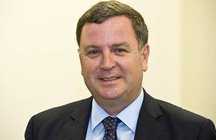
    Mel Stride – 2022 Statement on State Pension and Benefits Rates

    The statement made by Mel Stride, the Secretary of State for Work and Pensions, in the House of Commons on 17 November 2022.

    The Social Security Administration Act 1992 places an annual statutory duty on the Secretary of State to review the rates of state pensions and benefits after consideration of trends in price and earnings growth in the preceding year. I have now concluded this review for the tax year 2023-24.

    I have decided that state pension and benefit rates should increase in line with the consumer prices index (CPI) for the year to September 2022. This means that they will increase by 10.1% from 10 April 2023.

    I will deposit the full list of the new rates in the Libraries of both Houses in due course, but I am pleased to announce here the increases to some of the largest benefits. The full rate of the new state pension will increase from £185.15 to £203.85 a week. The basic state pension will increase from £141.85 to £156.20 a week. The standard minimum guarantee for a couple in pension credit will increase from £278.70 to £306.85 a week. The enhanced rate of the daily living component of personal independence payment will increase from £92.40 to £101.75 a week. The universal credit standard allowance for a couple where one or both are over 25 will increase from £525.72 to £578.82 a month; the limited capability for work and work-related activity amount will increase from £354.28 to £390.06 a month; and the child element for those born on or after 6 April 2017 will increase from £244.58 to £269.58 a month.

    This decision will increase expenditure on state pensions and pensioner benefits by £13 billion in 2023-24 compared to no change in these rates for the same period. It will meet the Government’s manifesto commitment to apply the triple lock to the new and basic state pensions. It will also extend CPI protection to those who rely on the standard minimum guarantee in pension credit at a cost of £700 million above the statutory minimum requirement.

    The decision will also increase expenditure on reserved non-pensioner benefits by £9 billion in 2023-24 compared to no change in these rates for the same period. This includes benefits for those with additional disability or care needs and increases to universal credit which provides essential support to people on the lowest incomes while they seek work, seek progression in work, or are unable to work.

    In view of the exceptional situation that currently pertains with respect to fuel costs, I have also decided to freeze the standard fuel cost deductions in housing benefit, rather than increase them in line with the normal convention of the fuel element of CPI.

    I can also confirm that the local housing allowance rates for 2023-24 will be maintained in cash terms at the elevated rates agreed for 2020-21.

    I have also completed my periodic statutory review of the levels of the benefit cap which, since 24 March 2022 and under Section 96A of the Welfare Reform Act 2012, I am obliged to undertake at least once every five years. I have concluded that each of the four benefit cap levels should be increased in line with CPI for the year to September 2022. This means that they will increase by 10.1% from April 2023. The annual benefit cap levels will therefore increase as follows:

    to £25,323 for couples and lone parents in London and £22,020 for the rest of Great Britain

    to £16,967 for single people without children in London and £14,753 for the rest of Great Britain.

    Social security is a transferred matter in Northern Ireland.

  • PRESS RELEASE : Energy UK responds to Ofgem’s review on supplier support for vulnerable customers [November 2022]

    PRESS RELEASE : Energy UK responds to Ofgem’s review on supplier support for vulnerable customers [November 2022]

    The press release issued by Energy UK on 22 November 2022.

    Responding to Ofgem’s review of how energy suppliers are helping vulnerable customers this winter and beyond, Energy UK’s Director of Advocacy, Dhara Vyas, said:

    “Identifying and supporting vulnerable customers is already a top priority for retail suppliers, and many go above and beyond as demonstrated in our good practice summary of our vulnerability commitment.

    “This includes setting up and training dedicated teams, providing millions of pounds in customer support funding, partnering with charities and third parties and encouraging people to sign up to the Priority Services Register.

    “Our members have responded swiftly to Ofgem’s review – including providing additional documentation to demonstrate where processes were already in place, and will continue to look at all the ways they can make sure people get the help and support they need.”

    ENDS

    Read examples of suppliers going above and beyond to support vulnerable customers in our Vulnerability Commitment Good Practice Summary report.

    Energy UK’s Vulnerability Commitment

    12 energy retail suppliers covering 80% of the market have signed up to Energy UK’s Vulnerability Commitment, committing to drive continuous improvement in support for customers in vulnerable circumstances

    The Commitment is designed to go above and beyond existing licence obligations and includes requirements to implement specific training for frontline staff, assign a dedicated board-level or equivalent Vulnerability Champion and undertake consumer research to ensure the company’s approach to supporting vulnerable customers is informed and up-to-date.

    Each year, an independent expert panel assesses each supplier’s performance against the Vulnerability Commitment under the criteria of accessibility, collaboration and innovation.

    More information about the Vulnerability Commitment is available here.

    Additional support for customers

    • Despite rising costs, and increased pressure, energy suppliers continue to increase the support they provide to customers, including additional funding for customers in fuel poverty.
    • All major retail suppliers have their own funds, independently managed by fund administrators or in partnership with consumer bodies like Citizens Advice.
    • Suppliers in the UK provide discretionary support of around £54 million on top of the more than £1 billion in mandatory schemes they deliver every year.
    • These mandatory schemes are to help people struggling with energy bills. This includes the funding for the Energy Company Obligation (ECO) and the Warm Home Discount (WHD).
    • Suppliers have a range of support for customers which they put into place at the beginning of the Covid-19 pandemic, and have committed to continuing including:
      • Payment holidays
      • Restructured payment plans
      • Credit advances to customers on pre-payment meters
    • Recognising that a growing number of customers will require support, many suppliers have increased customer service resource, from hiring more front-line advisors to setting up dedicated affordability support teams.

    More examples from each supplier are available here.

  • NEWS STORY : Ofgem Names 17 Energy Companies Failing Consumers

    NEWS STORY : Ofgem Names 17 Energy Companies Failing Consumers

    STORY

    Ofgem, the Government regulator for the energy industry, has named seventeen companies that it states are failing consumers. A spokesperson for the regulator said:

    “From eligible customers who are missing out on free gas safety checks through to companies not identifying vulnerable customers to be offered obvious support on the Priority Services Register, this robust review has highlighted that suppliers need to do more to support consumers.”

    The companies causing the most concern were named as:

    Good Energy, Outfox, SO Energy, TruEnergy, Utilita, E (Gas & Electricity), Ecotricity, Green Energy UK, Octopus and Shell.

    A spokesperson for Energy UK, the trade association for the energy industry, said:

    “Our members have responded swiftly to Ofgem’s review – including providing additional documentation to demonstrate where processes were already in place, and will continue to look at all the ways they can make sure people get the help and support they need.”

    RESOURCES

    Ofgem Press Release

    Energy UK Press Release

    EXTERNAL NEWS LINKS

    BBC News Story

  • PRESS RELEASE : 17 energy suppliers need to do more to help vulnerable customers this winter [November 2022]

    PRESS RELEASE : 17 energy suppliers need to do more to help vulnerable customers this winter [November 2022]

    The press release issued by Ofgem on 22 November 2022.

    Today (Tuesday 22 November 2022), energy regulator Ofgem has published findings into the third of its series of ‘deep dives’ into how energy suppliers are helping customers this winter and beyond.

    Ofgem is committed to driving service standards up for consumers, and, this latest review, which looks specifically at how suppliers treat ‘Customers in a Vulnerable Situation’ has considered information submitted by 17 of the biggest domestic energy suppliers, detailing how the companies are:

    • Identifying and recording customers in a vulnerable situation, and if they are adding them to the ‘Priority Services Register’, which offers additional support to customers in need
    • Making free gas safety checks available to eligible customers
    • Ensuring vulnerable customers on prepayment meters are identified and supported
    • Providing useful information appropriate to customer needs

    Since Ofgem’s initial assessment and ratings were formed, many suppliers have already responded positively based on the feedback from the review. All the action taken from all the Market Compliance Reviews so far can now be seen collectively.

    Findings showed that, although some good practice was identified, all suppliers need to make further improvements, with the key findings being:

    • Severe weaknesses were found in five suppliers – Good Energy, Outfox, SO Energy, TruEnergy, Utilita
    • Moderate weaknesses were found in five suppliers – E (Gas & Electricity), Ecotricity, Green Energy UK, Octopus and Shell
    • Minor weaknesses were found in seven suppliers – British Gas, Bulb, EDF, E.ON, Ovo, Scottish Power and Utility Warehouse.

    Suppliers have engaged positively with the process and, since receiving their indicative ratings in October, are taking swift action to make the improvements needed. This open and cooperative approach to improving protections for vulnerable customers is welcomed by the energy regulator.

    Neil Lawrence, Director of Retail at Ofgem, said:

    “From eligible customers who are missing out on free gas safety checks through to companies not identifying vulnerable customers to be offered obvious support on the Priority Services Register, this robust review has highlighted that suppliers need to do more to support consumers.

    “We welcome the cooperation from suppliers and action taken so far, and, although we are seeing some very good practice in parts of the industry, we can see there is still much more to be done.

    Most suppliers take the protection of vulnerable customers seriously and several good initiatives to support customers have been launched recently. While it’s encouraging to see the engagement on this Market Compliance Review, with some improvement actions already taking place, we’ve seen a number of failings across the board which need to be urgently addressed. It’s going to be a very challenging winter for everyone, and customers must be confident they are getting the help and support they need.

    My message to suppliers today is simple- be proactive. Help your customers to know what support is available, and then deliver it.”

    Some good practice was also identified as part of the review, with some suppliers offering ‘cash grants towards energy bills’ for customers, and many energy companies signing up to Energy UK’s Vulnerability Commitment.

    Ofgem communicated the ratings to all suppliers earlier this month and, since then, has started compliance engagement on the areas for improvement. The regulator will be keeping a close eye on the actions taken to close the gaps identified through this assessment and will consider enforcement action under its Enforcement Guidelines where necessary.

    On the back of this latest review, and supported by Ofgem’s ongoing ‘energy aware’ winter campaign, customers can also check if they are eligible for extra support on the Priority Services Register by visiting www.ofgem.gov.uk/EnergyAware or by contacting their supplier directly.

    The next market review, expected at the start of next year, will look at customer service.

  • Chloe Smith – 2022 Statement on Standing Down at Next General Election

    Chloe Smith – 2022 Statement on Standing Down at Next General Election

    The statement made by Chloe Smith, the Conservative MP for Norwich North, on 22 November 2022.

    I have been honoured to be Norwich North’s MP. It’s a fantastic job for a fantastic place, and it’s a particular privilege to be able to represent Norwich and Norfolk where I come from.

    I am grateful to the thousands of Norwich citizens who placed their trust in me so many times. I would also like to thank my team of volunteers who work so hard alongside me to help the community, and who have been so supportive, including during tough personal times.

    I hope I’ve been able to make a difference, locally and nationally. In 2024, after 15 years of service, it will be the right time to step back, for me and my young family.

  • Michael Gove – 2022 Statement on the Levelling Up and Regeneration Bill

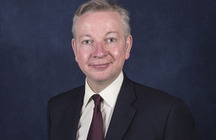
    Michael Gove – 2022 Statement on the Levelling Up and Regeneration Bill

    The statement made by Michael Gove, the Secretary of State for Levelling Up, Housing and Communities, in the House of Commons on 17 November 2022.

    The Levelling Up and Regeneration Bill contains important powers to drive local growth, empower local leaders to regenerate their areas and ensure that everyone can share in the United Kingdom’s success. It underscores this Government’s continuing commitment to levelling up and securing better outcomes for communities. Yesterday I tabled a number of Government amendments which strengthen the Bill and deliver on our manifesto commitments.

    Strengthening devolution within England is a key component of levelling up. The amendments make it clear that there is no possibility of district councils in two-tier authorities having their functions taken away from them and given to combined county authorities. The amendments also enhance powers for mayors to manage their key routes networks to increase transport connectivity, and will enable stronger partnership working between police and crime commissioners and local government by removing a perceived barrier to commissioners participating in local government committee meetings.

    Levelling up also means improving access to high-quality and affordable homes across the country, and doing so in ways which meet the needs and expectations of local people. The planning reforms in the Bill will give communities more control over what is built, where it is built, and what new buildings look like, as well as greater assurance that the infrastructure needed will be provided. These reforms create stronger incentives to support development where it is needed.

    The reforms are based on five key principles. First, delivering high-quality and beautiful buildings, restoring a sense of community and pride in place. Secondly, enabling the right infrastructure to come forward, boosting productivity and spreading opportunities. Thirdly, enhancing local democracy and engagement by empowering local leaders, increasing accountability and giving communities a stronger say over development. Fourthly, fostering better environmental outcomes. And fifthly, allowing neighbourhoods to shape their surroundings, empowering communities to restore local pride in place.

    It is vital that the places we build are beautiful, durable and sustainable. I am already taking steps through the Bill to ensure that every local authority has a design code which can set high standards that reflect local views. National policy has also been strengthened to make it clear that development which is not well designed should be refused. I will announce more details shortly about how the Office for Place—our new body which will uphold high aesthetic standards in architecture—will support authorities in this important work.

    Development must also be accompanied by the infrastructure needed to support it. Alongside the proposals for a more streamlined and non-negotiable infrastructure levy which are already contained in the Bill, our amendments will introduce powers to allow piloting of community land auctions. These would give local planning authorities new powers to capture value from land when it is allocated for development, which can then be used to enhance local infrastructure and services.

    Strengthening local democracy is central to levelling up, and local communities rightly expect that permissions which they have democratically approved should be delivered. The amendments that I have laid add to the tools that local planning authorities can use to monitor and challenge slow delivery: by requiring developers to report annually on build-out of housing permissions, and giving them the power to decide whether to entertain future applications made by developers who have previously failed to build out existing planning permissions.

    I am also firmly committed to enhancing our natural environment while enabling sustainable growth—and will further update the House on my plans to do so in due course. We are also creating a power for the Secretary of State to give new charging powers to certain statutory consultees so that they have greater resources to engage more quickly with nationally significant infrastructure projects.

    We are giving local people more opportunity to shape their neighbourhoods by introducing an amendment setting out the full range of powers needed for street votes, giving residents the ability to vote for additional housing where they feel it is appropriate on their street. I have also tabled an amendment implementing a recommendation from Richard Bacon’s review into the self and custom-build sector, removing an ambiguity around the statutory duty to permission land for self and custom-built housing; providing further opportunities for those who wish to build or commission their own home, and for the small and medium-sized builders who are often part of this process, enabling communities to deliver the homes they want.

    Levelling up and restoring pride in place means we want to make communities feel safe where they live. That is why our commitment to repeal the Vagrancy Act has always been dependent on the simultaneous introduction of modern replacement legislation to ensure police and other agencies continue to have the powers they need to keep communities safe and protect vulnerable individuals. The responses to the consultation provide a useful basis to inform the shape of future replacement legislation, and we will publish the Government response to the consultation in due course. For now, we will remove the placeholder clause from the Bill and we will not be bringing forward replacement legislation in the Levelling Up and Regeneration Bill. In the meantime, this Government have made the unprecedented commitment to end rough sleeping within this Parliament. We remain steadfastly committed to that goal.

    Other amendments which have been laid make a number of technical improvements to the Bill. This includes making sure that development corporations can, where they are designated, take on certain supplementary planning functions where appropriate, so that their powers to drive regeneration and development are effective and up to date. The amendments also clarify the powers introducing high-street rental auctions, to make it harder for those landlords who are sitting on empty premises to avoid their property being subject to an auction, and make sure these powers can address the blight of empty high street shops. We will also make sure that regulations for the compulsory purchase regime in clause 150, which require authorities to comply with data standards, will be subject to the negative parliamentary procedure. The amendments also add a “pre-consolidation” clause to the Bill. This technical measure will enable the future consolidation of over 40 different Acts relating to planning and compulsory purchase law, making it much easier to access and understand for all users of the system.

    This Bill represents a significant opportunity to give local leaders new powers to reinvigorate their communities and spread opportunity across our country. I look forward to the further discussions that will take place as we take it forward.

  • Robert Halfon – 2022 Statement on Higher Education Investigations

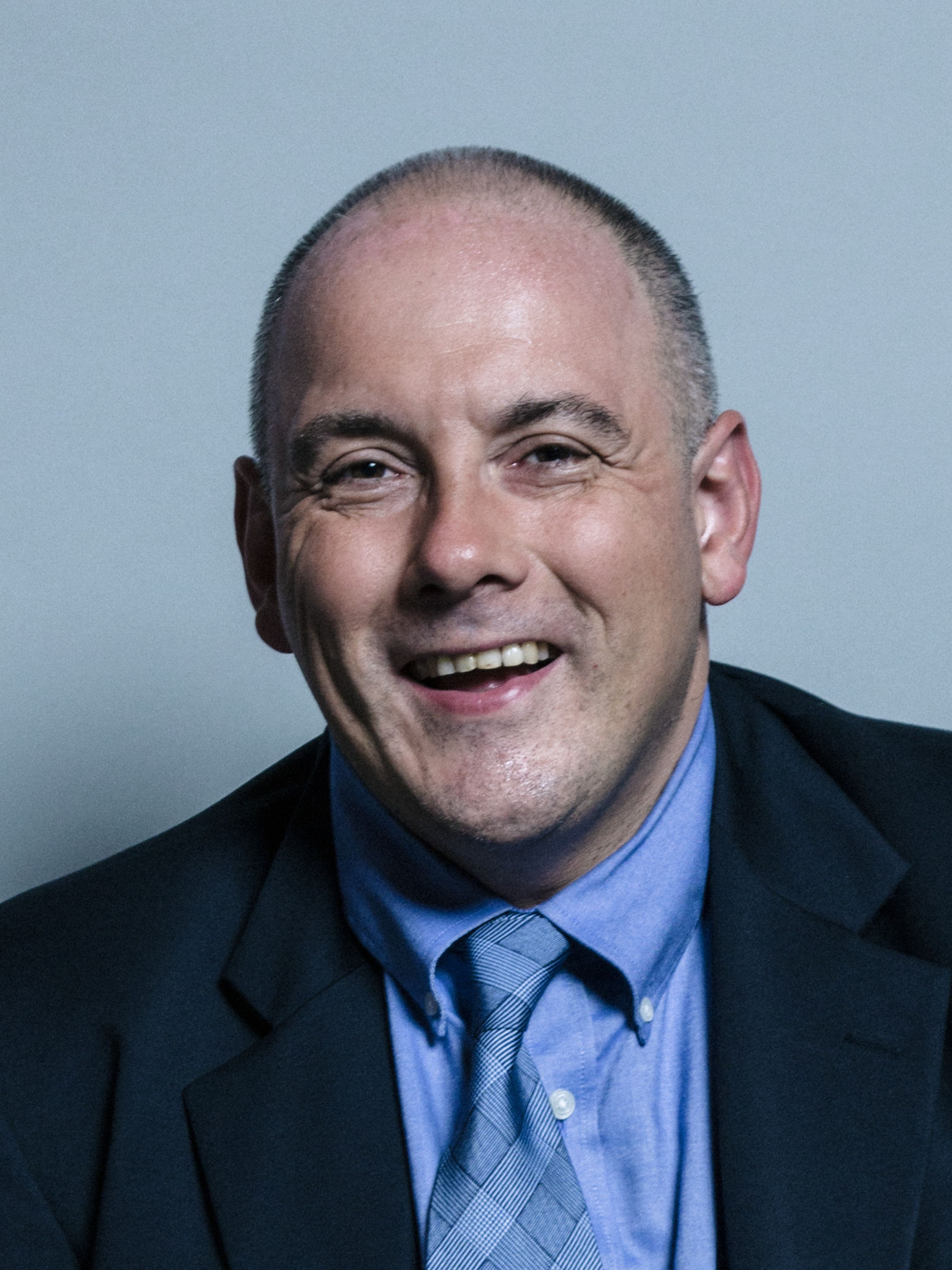
    Robert Halfon – 2022 Statement on Higher Education Investigations

    The statement made by Robert Halfon, the Minister of State at the Department for Education, in the House of Commons on 17 November 2022.

    Today I am laying regulations under section 71 of the Higher Education and Research Act 2017. These regulations will enable the Office for Students (OfS) to charge a fee for the investigation of providers’ compliance with quality and other requirements, where the investigation results in certain regulatory action or specified outcomes. These regulations will come into effect on 8 December 2022.

    Improving the quality of higher education is a manifesto commitment, and one of my highest priorities. This Government are committed to ensuring that students and the taxpayer see returns on their investment and receive value for money. Accordingly, my Department is working with the OfS to implement a rigorous regime of investigations and in-person inspections that ensures robust action is taken where quality conditions of registration have been breached, or are at risk of being breached. I am also committed to ensuring the majority of providers, which are not in breach of the regulatory conditions, experience minimal regulatory burden.

    The OfS will identify providers for investigation using a range of information sources, including outcomes data, student notifications, and other monitoring. My predecessor asked the OfS to put “boots on the ground” where necessary, and investigate universities where there are concerns about the quality of provision. These investigations will examine a range of quality matters, including whether courses are sufficiently up to date and academically challenging; whether students receive enough face-to-face engagement; and the extent to which providers secure positive outcomes for students.

    Where the OfS finds that a provider’s performance just is not good enough, it may choose to take enforcement action. This could involve a sanction such as a monetary penalty or, if necessary, even go as far as the removal of a provider from the register. This work will effectively tackle pockets of poor-quality provision, and ensure all students, regardless of their background, can benefit from high-quality, world-leading higher education.

    In order to fund this regime sustainably, as well as deter against the growth of poor-quality provision, these regulations will allow the OfS to charge a fee for the investigation of providers’ compliance with quality and other requirements, where the investigation results in certain regulatory action or specified outcomes, such as the imposition of a specific ongoing condition of registration. Doing so will help to ensure that the costs of investigations will fall on those responsible for their necessity, and that those in good standing face a more proportionate regulatory burden than would be the case if we did not lay these regulations.