Blog

  • Charlotte Nichols – 2022 Speech on Burning Trees for Energy Generation

    Charlotte Nichols – 2022 Speech on Burning Trees for Energy Generation

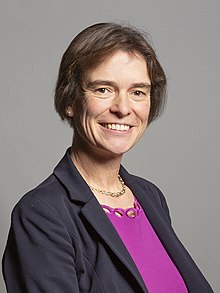
    The speech made by Charlotte Nichols, the Labour MP for Warrington North, in Westminster Hall, the House of Commons, on 6 December 2022.

    I am glad to be here with you in the Chair, Mr Gray, and I commend the hon. Member for North Devon (Selaine Saxby) for securing this important debate.

    I do not agree with much that the former Chancellor, the right hon. Member for Spelthorne (Kwasi Kwarteng), says, but I could not have put it better than him when he stated that importing US-made wood pellets to be burned for energy is “not sustainable” and “doesn’t make sense”. Rather than talk about biomass, I would rather call it what it is: burning imported forests. It is increasingly clear that this method is expensive, causes pollution and encourages deforestation. At a time when we are waiting for the Government’s delayed consultation on the technical screening criteria that underpin which technologies will be classified as green under the UK taxonomy—and, indeed, for a biomass strategy—it is important that we state clearly that biomass is not a green option at all.

    Drax power station is the single largest source of CO2 emissions in the UK. Its entire justification is that the pollutants it releases are matched by equivalent plant and tree regrowth. Some biomass options, such as burning chicken manure, can swiftly be classed as carbon neutral because they would have swiftly decayed anyway, but replenishing burned trees and forests takes many years—even decades. The operating assumption that the trees are replaced as they are destroyed is a false accounting trick. In effect, it greenwashes a destructive and polluting process that will take us dangerously past the ecological tipping point.

    Drax burns 27 million trees a year. The Department for Business, Energy and Industrial Strategy plans to burn 120 million trees a year by 2050. That is far more than the amount of chicken waste that will be burned and will take much longer to replace. By comparison, the New Forest has 46 million trees; that shows the scale of the importation the process requires. It will add to the carbon cost before the wood is even burned. The wood itself is especially harmful: the Intergovernmental Panel on Climate Change says that burning wood creates 18% more CO2 than burning coal.

    We increasingly recognise the damage that centuries of deforestation have done to our planet, environment and biodiversity. The Government’s net zero strategy envisages a bioenergy with carbon capture and storage technology that depends both on burned trees regrowing immediately and on the carbon released being captured from Drax’s chimneys. If both were possible, accountants could tally these as negative emissions, but the calculations do not adequately weigh the costs of deforestation and transport or the opportunity cost of other energy alternatives. It is foolish to lean on an energy source that depends on the mass importation of raw materials from thousands of miles away, especially when doing so is likely to drive up the commodity price of the wood involved.

    One of the dangers of investing in such technology is that it may spur other countries to follow suit, which will mean even more rapid deforestation. Biomass is already the most expensive renewable power source, and Drax has received £6 billion in renewable subsidies. Analysis by the climate and energy think-tank Ember found that retrofitting Drax so that it can capture and store the carbon burned would cost the UK taxpayer an estimated £32 billion—more than the cost of building the Sizewell C nuclear reactor. As an unashamed champion of the nuclear sector, and as chair of the all-party parliamentary group on nuclear energy, I would far rather see investment in nuclear, which is a greener, more reliable technology of the future.

    Our energy and environmental needs are great, while our resources are limited. Rather than relying on a monopoly supplier of this polluting and expensive technology, we should promote reforestation, not just replenishment, and invest in truly green energy sources such as nuclear, hydrogen and other renewables. Will the Minister commit to ending the double bookkeeping of the carbon savings of biomass? Will he confirm that if the numbers do not add up, biomass will not be part of the green taxonomy and Drax’s contract will not be renewed?

  • Selaine Saxby – 2022 Speech on Burning Trees for Energy Generation

    Selaine Saxby – 2022 Speech on Burning Trees for Energy Generation

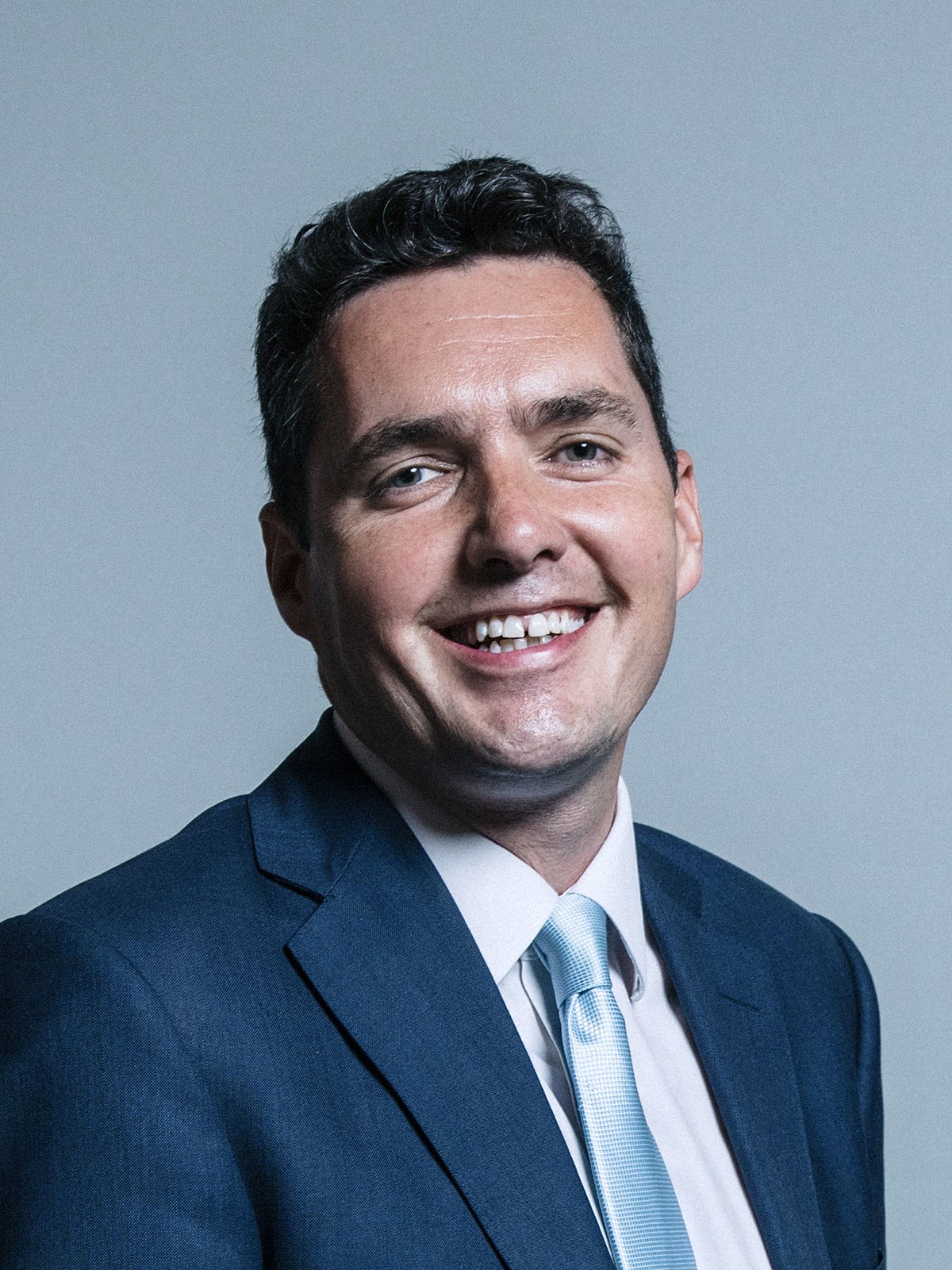
    The speech made by Selaine Saxby, the Conservative MP for North Devon, in Westminster Hall, the House of Commons on 6 December 2022.

    I beg to move,

    That this House has considered the sustainability of burning trees for energy generation.

    It is a pleasure to serve under you in the Chair, Mr Gray. I thank the Backbench Business Committee for finding time for this important debate.

    In my mind, today’s debate is about changing scientific understanding as we decarbonise our energy supply. The burning of wood as a renewable energy source has been adopted by the UK and the EU as a sustainable option to replace coal. In the UK, we subsidise the use of biomass to generate energy by £1 billion. However, in recent years, scientists and industry have raised serious concerns about the actual benefit of burning wood for energy. I secured this debate so that we can have a discussion about how taxpayers’ money is being spent and whether, at this time of global energy disruption, we are investing in the best forms of energy generation for our planet and for our energy security.

    Biomass became prominent when coal-fired power stations were converted into biomass power stations. That was subsidised to aid the phase-out of coal and originated at a time when biomass was cheaper than renewables such as wind and solar and had perceived additional benefits, such as providing consistent, reliable power. Now, however, Drax is the UK’s biggest single-point source of carbon dioxide emissions. Because of the technology installed, the power station must run predominantly on wood pellets and has only limited capacity for non-woody biomass such as energy crops and organic waste.

    The whole lifecycle emissions of CO2 per kWh are 41 grams for solar, 11 to 12 grams for wind and 948 grams for coal. For forest biomass, they are 1,079 grams. That is far from the assumed carbon-neutral outcome. The UK produces roughly 12% of its energy from biomass and 3% from coal. The UK’s carbon emissions have not dropped at the same rate as our reduction of coal would indicate. The reality is that more carbon is being put into our atmosphere currently than when we were burning coal.

    The difference between the idea that burning wood for energy is renewable and the reality comes from two misrepresentations. Both come about from the wrong approach to the accounting for the carbon output. The emissions from cutting down trees are attributed to the land-use sector rather than the energy-generation sector. As we import the majority of our wood pellets, we are exporting our carbon emissions. Although that may look good, it does not achieve anything, as we all share our atmosphere and the effects that carbon emissions cause.

    The Intergovernmental Panel on Climate Change allows such zero-rating of emissions based on the idea that every tree will be replanted and its replacement will harness the same level of carbon as its predecessor; unfortunately, that has proven not to be the case. Many studies have shown that the carbon payback times for forest biomass are decades or centuries away, depending on the type of forest cut down to produce the wood pellets.

    We are entering a crunch point in our work to limit the effects of climate change, with tipping points in the melting of sea and glacial ice, sea-level rises, ocean acidification, permafrost melt and the Amazon biome. We do not have the time to wait decades or centuries for the carbon to be reabsorbed and sequestered; nor does such an approach fit in with the goal of carbon neutrality by 2050.

    Trees only grow in their carbon-storing potential as they age. There is a very minimal decline in their efficiency as they photosynthesise and store CO2 from the atmosphere, but that decline is far outweighed by their sheer size and capacity. A study carried out by 38 researchers across 15 countries measured 400 species across six continents. It found that 97% of trees grew more quickly as they aged and absorbed more carbon year on year. If a tree’s diameter grows 10 times as large, it will undergo a hundredfold increase in leaf mass and an increase in leaf area of between fiftyfold and a hundredfold.

    Our forests are still the largest remover of carbon, and one study found that, across forests of all ages and types around the world, half the carbon is stored in the largest 1% of trees when measured by diameter. As trees age, they also store more carbon in the soil, so we are looking at not just our canopy but the carbon stored in the earth itself, much as we need to consider our peatlands and the blue carbon stored in the seabed.

    The other issue with the accounting of emissions from the burning of biomass for energy is the carbon associated with the supply chain for sourcing the wood pellets required. The industry sources wood pellets from North America, eastern Europe, the Baltics and, historically, Russia. Covid and the war in Ukraine have significantly disrupted supply chains and put more pressure on available forests. Drax sources most of its wood pellets from North America. A BBC “Panorama” documentary has cast doubt on the claim that it just uses waste wood and has suggested that primary forests are harvested and timber- quality wood burned as biomass.

    The Dogwood Alliance in Mississippi has been tracking the logging of forests in the south-eastern United States and the conversion of whole trees into wood pellets. The south-east is one of the most biodiverse areas of the United States, and another downside to the burning of wood for energy is the fact that such older and more mature forests are home to a greater diversity of flora and fauna. The wood pellets are shipped to the United Kingdom on enormous vessels that are in transit for 21 days. Drax receives 17 wood pellet deliveries a day, and the plant operates 24 hours a day, six days a week. The energy required to transport the pellets adds to their lifecycle emissions and uses up the very fossil fuels the pellets are supposed to replace.

    This is not an attempt to discredit one company; it is about us better understanding what is going on in the name of renewable fuels and asking that a more rigorous analysis of the carbon cost of this form of power production be fully conducted—at one level, it makes sense because trees grow back—before we assume that we really are moving to a lower-carbon-generating fuel supply and that any subsidy that supports that reflects the true carbon cost of what is supposed to be carbon neutral.

    I want to raise concerns about the industry’s efforts to store more carbon in an attempt to deliver negative emissions and remove carbon from the atmosphere. Although that is a laudable goal, and the bioenergy with carbon capture and storage—BECCS—system is included in the United Kingdom’s net zero pathway, it is important to note that it is based on the flawed accounting that calls burning biomass carbon neutral. It involves a number of risks and barriers.

    BECCS is the process of capturing and permanently storing underground the carbon emitted by biomass energy generation. The carbon capture rate is not 100%. Research from Chatham House indicates that it is about 76%, and energy needs to be expended to maximise capture. The options are to maximise power generation or to maximise carbon dioxide capture.

    The process would also be incredibly expensive—power stations are seeking new subsidies to develop BECCS, and it is projected that it would require £31.7 billion over 25 years, which is equivalent to £500 per person in the United Kingdom—and incredibly land hungry. It would require an area roughly 1.5 times the size of Wales to grow enough bioenergy crops to meet BECCS demand. That is 17% of the United Kingdom’s arable land.

    Recently, global events have shown how important a reliable food supply is, and the United Kingdom must not reduce its domestic production of quality produce. There is already the challenge of finding the right balance of land for farming, living, energy production and industry, so using such a large percentage of our land for a form of expensive and unsustainable energy generation would be the wrong approach.

    The Climate Change Committee has called on the Government to support domestic biomass supply to meet expected carbon-removal requirements for the industry; however, is that the answer? The United Kingdom is about to face a severe shortage of wood and is one of the least densely forested countries in Europe, at only 13% of land area. The idea that rather than using that wood in industry we should burn it flies in the face of the basics of reducing emissions. At the heart of what we are aiming to do is reducing our use of virgin products, reusing where possible and recycling where not, and looking at using such products for energy generation only once they have become waste.

    When we log forests for wood products, the carbon remains sequestered for however long those products last—possibly decades or longer. I declare an interest as chair of the all-party parliamentary group for the wood panel industry. The industry is a UK success story, with gross value added in excess of £850 million per annum and an ability to meet 65% of the UK demand for wood panel products. It supports approximately 7,500 jobs across the UK and has an average salary of £36,000, which is significantly above the UK average. The industry has made great strides in supporting our net zero by 2050 targets and has had some success with efficient and carbon-negative processes.

    The wood panel manufacturing sector uses more than 25% of the 11 million tonnes of wood delivered from UK forestry every year. The rise of the wood fuel sector, which itself consumes about 25% of the UK annual wood basket because it is subsidised, has distorted the market and created shortages in domestic supply. Manufacturing operations rely on the sustainable supply of wood materials such as forest roundwood and thinnings, sawmill products, and recycled wood, supplies of which are increasingly restricted, given the fact that the UK will reach peak wood availability in the early 2030s, followed by a forecast sustained drop soon after. We need to plant more trees, especially if we carry on relying on biomass for our energy generation.

    The closure of the renewable heat incentive scheme to new entrants in 2021 was a welcome decision. Now is the time to transition to future support schemes that most strategically target taxpayers’ money and ensure a level playing field for all wood users. Will the Minister ensure that when the biomass strategy is released it does not contain a new tariff-based incentivisation scheme similar to the renewable heat incentive? Will he also clarify whether biomass is supported by the contract for difference subsidies? In 2020, the Government announced that they would exclude coal-to-biomass conversion projects from future rounds, starting with allocation round 4.

    Wera Hobhouse (Bath) (LD)

    Does the hon. Lady agree that it is extraordinary that the biomass industry is asking for a combined CfD that would combine biomass production and carbon capture and storage?

    Selaine Saxby

    I agree that that is part of the confusion in the entire strategy; we need urgent clarification. In AR4, dedicated biomass with combined heat and power were eligible to compete, although no contracts were awarded. The announcement of AR5, which starts in March 2023, has not come with any clarity on whether biomass will be eligible for that round.

    The Government have done great work as we transition to net zero by 2050, but further investment in biomass is clearly the wrong strategy. It not only continues to contribute carbon to our atmosphere when we can now invest in significantly cleaner energy, but takes away from flourishing British businesses and exports our problems overseas. When the biomass strategy is released, I hope that the mounting evidence will be considered and that we can continue to increase investment in more sustainable energy sources rather than pursuing this path.

    James Gray (in the Chair)

    I am advised that the fire alarm that may have to occur does not affect Westminster Hall, and our debate can therefore continue as planned.


  • Huw Merriman – 2022 Statement on the A1 Northumberland-Morpeth to Ellingham Development Consent Order

    Huw Merriman – 2022 Statement on the A1 Northumberland-Morpeth to Ellingham Development Consent Order

    The statement made by Huw Merriman, the Minister of State at the Department for Transport, in the House of Commons on 6 December 2022.

    I have been asked by the Secretary of State for Transport, my right hon. Friend the Member for Forest of Dean (Mr Harper) to make this written statement. The statement confirms that it has been necessary to extend the deadline for the decision for the A1 Northumberland – Morpeth to Ellingham Development Consent Order under the Planning Act 2008.

    Under section 107(1) of the Planning Act 2008, the Secretary of State must make his decision within three months of receipt of the Examining Authority’s report unless exercising the power under section 107(3) to extend the deadline and make a statement to the House of Parliament announcing the new deadline.

    The Secretary of State received the Examining Authority’s report on the A1 Northumberland – Morpeth to Ellingham Development Consent Order application on 5 October 2021. The current deadline for a decision is 5 December 2022, having been extended from 5 January 2022 to 5 June 2022 by way of written ministerial statement of 15 December 2021 and then to 5 December 2022 by written ministerial statement of 6 June 2022.

    The deadline for the decision is to be further extended to 5 September 2023—an extension of nine months. The reason remains as that set out in the written ministerial statement of 6 June 2022.

    The decision to set a new deadline is without prejudice to the decision on whether to give development consent for the above application.

  • Michael Gove – 2022 Statement on the Planning System

    Michael Gove – 2022 Statement on the Planning System

    The statement made by Michael Gove, the Secretary of State for Levelling Up, Housing and Communities, in the House of Commons on 6 December 2022.

    I will be making further changes to the planning system, alongside the Levelling Up and Regeneration Bill, to place local communities at the heart of the planning system.

    I will set out more detail on the following approach in an upcoming National Planning Policy Framework prospectus, which will be put out for consultation by Christmas.

    Community Control

    I will retain a method for calculating local housing need figures, but consult on changes. I do believe that the plan-making process for housing has to start with a number. This number should, however, be an advisory starting point, a guide that is not mandatory. It will be up to local authorities, working with their communities, to determine how many homes can actually be built, taking into account what should be protected in each area—be that our precious Green Belt or national parks, the character of an area, or heritage assets. It will also be up to them to increase the proportion of affordable housing if they wish.

    My changes will instruct the Planning Inspectorate that they should no longer override sensible local decision making, which is sensitive to and reflects local constraints and concerns. Overall this amounts to a rebalancing of the relationship between local councils and the Planning Inspectorate, and will give local communities a greater say in what is built in their neighbourhood.

    Local Plans

    We will end the obligation on local authorities to maintain a rolling five-year supply of land for housing where their plans are up-to-date. Therefore for authorities with a local plan, or where authorities are benefitting from transitional arrangements, the presumption in favour of sustainable development and the ‘tilted balance’ will typically not apply in relation to issues affecting land supply.

    I also want to consult on dropping the requirement for a 20% buffer to be added for both plan making and decision making—which otherwise effectively means that local authorities need to identify six years of supply rather than five. In addition, I want to recognise that some areas have historically overdelivered on housing—but they are not rewarded for this. My plan will therefore allow local planning authorities to take this into account when preparing a new local plan, lowering the number of houses they need to plan for.

    Places with existing plans will benefit from the changes above, as they will be free of five-year land supply obligations provided that plan is up to date. However, I am aware that those with local plans at an advanced stage of preparation will not benefit from these changes so I will also put in place transitional arrangements. Where authorities are well-advanced in producing a new plan, but the constraints which I have outlined mean that the amount of land to be released needs to be reassessed, I will give those places a two year period to revise their plan against the changes we propose and to get it adopted. And while they are doing this, we will also make sure that these places are less at risk from speculative development, by reducing the amount of land which they need to show is available on a rolling basis—from the current five years to four.

    I will increase community protections afforded by a neighbourhood plan against developer appeals—increasing those protections from two years to five years. The power of local and neighbourhood plans will be enhanced by the Bill; and this will be underpinned further through this commitment. Adopting a plan will be the best form of community action—and protection. Furthermore, we will clarify and consult on what areas we propose to be in scope of the new national development management policies, and we will consult on each new policy before it is brought forward by the Government. National development management policies will also not constrain the ability of local areas to set policies on specific local issues.

    I will consult on the detail of proposals increase planning fees, including doubling fees for retrospective application where breaches of planning have occurred, as soon as possible. I will also consult on a new planning performance framework that will monitor local performance across a broader set of measures of planning service delivery, including planning enforcement.

    Build Out

    I already have a significant package of measures in the Bill to ensure developers build out the developments for which they already have planning. I will consult on two further measures:

    on allowing local planning authorities to refuse planning applications from developers who have built slowly in the past; and

    on making sure that local authorities who permission land are not punished under the housing delivery test when it is developers who are not building.

    I will also consult on our new approach to accelerating the speed at which permissions are built out, specifically on a new financial penalty.

    Character of a Developer

    I have heard and seen examples of how the planning system is undermined by irresponsible developers and landowners who persistently ignore planning rules and fail to deliver their legal commitments to the community. I therefore propose to consult on the best way of addressing this issue, including looking at a similar approach to tackling the slow build out of permissions, where we will give local authorities the power to stop developers getting permissions.

    Brownfield First

    The new infrastructure levy will be set locally by local planning authorities. They will be able to set different levy rates in different areas, for example lower rates on brownfield over greenfield to increase the potential for brownfield development. That will allow them to reflect national policy, which delivers our brownfield first pledge by giving substantial weight to the value of using brownfield land.

    I will consult to see what more we can do in national policy to support development on small sites particularly with respect to affordable housing and I will launch a review into identifying further measures that would prioritise the use of brownfield land. To help make the most of empty premises, including those above shops, I am reducing the period after which a council tax premium can be charged so that we can make the most of the space we already have. I will also provide further protection in national policy for our important agricultural land for food production, making it harder for developers to build on it.

    The Housing Market

    I intend to deliver a new tourist accommodation registration scheme as quickly as possible, working with DCMS, starting with a further short consultation on the exact design of the scheme. I will also consult on going further still and reviewing the Use Classes Order so that it enables places such as Devon, Cornwall, and the Lake District to control changes of use to short term lets if they wish.

    I have also asked the Competition and Markets Authority to consider undertaking a market study. I believe the case is clear for it to take this forward, but respect its independence as it comes to a decision.

    These reforms will help to deliver enough of the right homes in the right places and will do that by promoting development that is beautiful, that comes with the right infrastructure, that is done democratically with local communities rather than to them, that protects and improves our environment, and that leaves us with better neighbourhoods than before.

  • Michael Gove – 2022 Statement on Onshore Wind Development

    Michael Gove – 2022 Statement on Onshore Wind Development

    The statement made by Michael Gove, the Secretary of State for Levelling Up, Housing and Communities, in the House of Commons on 6 December 2022.

    By the end of this year, the Government will undertake a technical consultation on the national planning framework for onshore wind development in England. That consultation will conclude by the end of March next year.

    The Government recognise the range of views on onshore wind. We believe that decisions on onshore wind are best made by local representatives who know their areas best and underpinned by democratic accountability. To deliver this, and our commitments in the British Energy Security Strategy, we will consult on a more localist approach that provides local authorities more flexibility to respond to the views of their local communities.

    Through consultation with local authorities, communities and businesses, we intend to make changes to the National Planning Policy Framework by the end of April 2023 so that:

    Permission is predicated on demonstrating local support for the project and satisfactorily addressing the project’s planning impacts as identified by local communities, learning from best practice and using new digital engagement techniques.

    Local authorities can demonstrate their support for certain areas in their boundaries to be suitable for onshore wind to enable us to move away from the overly rigid requirement for onshore wind sites to be designated in a local plan.

    In the consultation, we also want to consider how the planning framework best:

    Supports communities to have a say on the necessary infrastructure to connect wind farms to the grid.

    Encourages the upgrading of existing wind farm sites.

    We will also consult on developing local partnerships for supportive communities who wish to host new onshore wind infrastructure in return for benefits, including lower energy bills.

    Legislation from the Conservative Government in 2016 ensured that all onshore wind applications are considered by local councils rather than through the Nationally Significant Infrastructure Projects regime. This will continue to be the case.

    We recognise the concerns expressed by local communities on the appropriate siting of onshore wind farms, which is why the Conservative Government in 2015 strengthened planning protection.

    We should continue to ensure our valued landscapes are protected, particularly National Parks, Areas of Outstanding Natural Beauty and the Green Belt. This will continue to be the case, and the combination of robust national and local planning policies will give sufficient weight to be able to rebuff unwanted speculative ‘development by appeal’.

  • Gillian Keegan – 2022 Statement on Capital Spending for Educational Establishments

    Gillian Keegan – 2022 Statement on Capital Spending for Educational Establishments

    The statement made by Gillian Keegan, the Secretary of State for Education, in the House of Commons on 6 December 2022.

    Today, I am confirming £500 million of additional capital funding for schools, sixth form colleges and Further Education colleges to help improve energy efficiency this financial year.

    This comprises £447 million for schools and sixth form colleges and £53 million for FE colleges to spend on capital improvements to buildings and facilities, prioritising works to improve energy efficiency. The Department has published guidance for schools and colleges on sensible steps for reducing energy use and small-scale works to improve energy efficiency, which can be implemented quickly to make a difference through the colder months and beyond.

    Schools and colleges will be allocated at least £10,000 of additional capital funding, with further funding allocated in proportion to size. Primary schools have been allocated an average of approximately £16,000 and secondary schools an average of £42,000. An average group of FE colleges will be allocated £290,000. Schools and colleges can decide how best to invest the capital funding on energy efficiency measures. Where they judge this is not appropriate based on local circumstances, they have discretion to spend this on other capital projects.

    The funding will be made available to FE colleges and designated institutions, as well as schools already eligible for Devolved Formula Capital (DFC) allocations in financial year 2022-23. This includes eligible maintained nursery, primary, secondary and special schools, academies and free schools, pupil referral units, non-maintained special schools, sixth form colleges and specialist post-16 institutions with eligible students.

    This funding comes on top of £1.8 billion of capital funding already committed this financial year for improving the condition of school buildings. In addition, the School Rebuilding Programme will rebuild or refurbish buildings at 500 schools and sixth form colleges over the next decade. The allocations are also on top of the £1.5 billion investment in upgrading the FE college estate through the FE Capital Transformation Programme, the more than £400 m of capital funding provided so far for T Levels providers, and the £150 million allocation of capital funding for colleges announced on 29 November.

    The Government understand that like families and businesses across the country, schools and FE colleges are facing challenges with rising prices due to inflation. Significant increases to school revenue funding will help schools to manage these higher costs, with core schools’ funding—including funding for both mainstream schools and high needs—increasing by £4 billion in financial year 2022-23 compared to the previous year. The autumn statement 2022 confirmed that this Government will protect the per pupil funding levels committed to at spending review 2021 in real terms, providing an additional net increase in the core schools budget of £2.0 billion in both 2023-24 and 2024-25. This brings the core schools budget to a total of £58.8 billion in 2024-25. This additional funding will be used to support both mainstream schools and local authorities’ high needs budgets.

    Overall funding for the FE sector is increasing with an extra £1.6 billion in 16-19 education in 2024-25 compared with 2021-22. This funding has come with stretching deliverables to transform our technical education offer—including T-levels, and extra provision to support education recovery to enable learners to catch up from the pandemic.

    Schools, FE colleges and education providers are also benefiting from the Energy Bill Relief Scheme. This will reduce how much schools and other providers need to spend on their energy, and give greater certainty over budgets over the winter months.

  • PRESS RELEASE : Putin made a grave miscalculation when he chose to invade Ukraine – UK statement to the OSCE [December 2022]

    PRESS RELEASE : Putin made a grave miscalculation when he chose to invade Ukraine – UK statement to the OSCE [December 2022]

    The press release issued by the Foreign Office on 7 December 2022.

    Ian Stubbs (UK delegation to the OSCE) says Russia has attempted to distract from failures on the battlefield with a campaign of lies, threats and propaganda.

    Thank you, Mr Chair. At the Ministerial Council last week, Russia’s Ambassador delivered familiar false narratives about confrontation. I would like to again highlight the irony of this coming from a country which has invaded Georgia in 2008, illegally annexed Crimea in 2014 and then launched a full-scale invasion of Ukraine on 24 February this year.

    Since that fateful day, the Kremlin and our Russian colleagues in this room have attempted to distract from failures on the battlefield with a campaign of lies, threats and propaganda. They have concocted increasingly ridiculous false claims and made allegations of an epic scale which do not stand up to the scantest of scrutiny. But no amount of threats and propaganda can hide the fact that Ukraine is winning this war, nor can it hide the appalling litany of atrocities and devastation left behind in the areas from which Russian forces have retreated.

    Against the backdrop of this sustained onslaught of disinformation, it is perhaps timely to consider what the last nine months has demonstrated: that Putin made a grave miscalculation when he chose to invade a sovereign neighbour.

    On land, the Russian Battalion Tactical Group (BTG) concept, a major part of Russia’s military doctrine for over 10 years has proved a failure. Poor logistics, agility, training, equipment, maintenance, discipline and leadership have all contributed to abject failure. Over the last three months, Russian forces in Ukraine have largely stopped deploying the BTG concept.

    In the air, Russia has failed to achieve air superiority. In recent months, the number of sorties conducted by Russian tactical combat aircraft over Ukraine has reduced significantly. Russian aircraft now probably conduct tens of missions per day in contrast to a high of up to 300 per day in March 2022. It has now lost over 60 fixed wing aircraft in the war.

    At sea, Russia’s failure to conduct effective force protection has left its Black Sea Fleet dangerously exposed with devastating consequences. The vulnerability of its ships and submarines is evident from their significantly reduced operational footprint.

    In response to his military failures, Putin has sought to punish the Ukrainian people. He and his military leadership’s attacks on civilians and civilian infrastructure aim to spread terror and deprive families of shelter, light, and heat as we enter winter. They are particularly cruel acts of vengeance, resulting in widespread humanitarian suffering across Ukraine. However, the effectiveness of Russia’s attack on Ukraine’s electricity distribution grid as a strategy has likely been blunted given that Russia has already expended a large proportion of its suitable missiles against tactical targets.

    Putin and his military leaders have also doubled-down on their failed strategy of blunt-edged attritional warfare. He and his Generals have sent thousands of Russia’s own citizens to their deaths, poorly trained, poorly equipped and poorly led. More continue to be sent to the battlefield to provide numbers and mass in place of fighters and effective leadership.

    But the failures of Putin’s horrendous adventurism are becoming increasingly apparent to the Russian people. Recent polling suggests that Russian public support for the so-called “Special Military Operation” is falling significantly. Data which was reportedly collected by Russia’s Federal Protective Service indicated that 55 percent of Russians favour peace talks with Ukraine, with only 25 percent claiming to support continuing the war. This contrasts with polling in April 2022 where around 80 percent of Russians claimed to support the conflict.

    The persistent and institutional poor decision making by the Kremlin is having a terrible impact on the Russian people – more needless deaths; more grieving families; more defeats; more demoralised troops; more discontent; and more isolation. Putin is creating a legacy which millions of young Russians did not choose and did not vote for, but will be forced to bear the cost of for years to come.

    Mr Chair, yesterday marked Ukrainian Armed Forces Day. For the brave men and women of the Armed Forces of Ukraine it was also the 285th day they have been fighting to defend and protect their homeland from a brutal and barbaric invader. We do not underestimate the continuing threat posed by the Russian Federation but, in time, there will be cause for Ukraine to celebrate. Ukraine will continue to demonstrate their resolute courage, determination and enduring moral strength as they fight to liberate more of their homeland. Ukraine’s sovereignty, territorial integrity, and independence will be fully restored. The UK and the international community will remain steadfast in our support – we will stand by Ukraine for however long it takes. Thank you.

  • Volodymyr Zelenskyy – 2022 Statement on the Situation in Ukraine (08/11/2022)

    Volodymyr Zelenskyy – 2022 Statement on the Situation in Ukraine (08/11/2022)

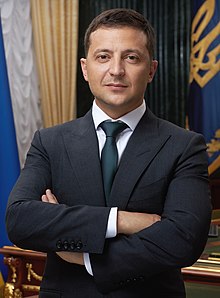
    The statement made by Volodymyr Zelenskyy, the President of Ukraine, on 8 November 2022.

    Good health to you, fellow Ukrainians!

    I’ve just spoken with Benjamin Netanyahu, the leader of the bloc that won the elections in Israel. I congratulated him on victory. We discussed the main aspects of relations between our states.

    I think it is clear to everyone what Ukraine emphasizes and what security emphasis Israel makes. I believe that we can significantly strengthen our states, especially since the threats to us are related.

    Today, the occupiers struck more than 50 settlements in our country. Donbas, Zaporizhzhia, Kherson region, Mykolaiv region, Kharkiv region, Dnipropetrovsk region… Missiles, aviation, MLRS.

    We respond everywhere. We have the necessary results – another Russian aircraft was shot down.

    We also received new systems that significantly strengthen our air defense. The protection of the Ukrainian sky is, of course, not one hundred percent, but we are gradually moving towards our goal.

    As of today, we can say that the recent escalation of Russian missile and drone terror has only resulted in the world responding – responding with new aid to Ukraine. We will do everything so that as many countries as possible join this aid.

    In general, along the front, our forces are in a state of active defense – in some parts of the east and south, we are gradually pushing back the enemy. We are gradually moving forward.

    The Donetsk region remains the epicenter of the greatest madness of the occupiers – they die by the hundreds every day. The ground in front of the Ukrainian positions is literally littered with the bodies of the occupiers…

    And some of the Russian military started to think about what was happening. They “complained” to the governor of their region – Primorsky Krai – about colossal losses. And this governor, comrade Kozhemyako, predictably lied in response: he says that the losses are “far from being such”.

    Not such… And what kind are they?

    From Vladivostok to Pavlovka, Donetsk region, it is more than 9 thousand kilometers. But he is sure that the losses “are not such.” The governor, probably, can better see from there how many soldiers from his region are sent for slaughter and in what way. Or he was simply ordered to lie. Ordered from Moscow.

    This is how the order to lie about Russian losses crosses thousands of kilometers. And even the bodies of most of those killed will not be brought back to some Vladivostok. But I am sure that Governor Kozhemyako will come out and explain why not everyone arrived, not everyone from those “not such” returned.

    You can avoid this not by complaining to some wimps, but by your own opinion. And not in Telegram, but in public. Not by a complaint, but by a fierce protest. Not somewhere under the blanket, but on the streets. Against those in Moscow.

    Or by surrendering to Ukrainian captivity. This is how you can survive as well.

    Decision regarding some Ukrainian enterprises was announced today. This decision was dictated by military necessity and was agreed upon at the Staff of the Supreme Commander-in-Chief. Five strategic enterprises were forcibly alienated for wartime needs – Motor Sich, KrAZ, Ukrnafta, Ukrtatnafta and Zaporizhtransformator.

    Some of them hardly worked. Now all of them will work. For defense. This is the repair and production of equipment, provision of the defense forces, and restoration of our infrastructure. A complex task that can be accomplished only through the system of military-state management.

    I do not rule out other similar decisions either.

    I delivered an important international address today. Climate summit in Egypt. A very significant event, a very representative gathering. Dozens of state leaders and heads of government.

    The main thing for us is to inform the world about the ongoing Russian aggression, about the destabilizing influence that Russia exerts. When the world is focused on combating war, energy and food crises, the destruction of customary international relations, the climate agenda is clearly suffering. And the destruction of the climate cannot somehow be put on hold…

    Therefore, anyone who is serious about the climate agenda should also be serious about the need to immediately stop Russian aggression, restore our territorial integrity, and force Russia into genuine peace negotiations.

    Into such negotiations, which we have repeatedly proposed, and to which we always received insane Russian responses with new terrorist attacks, shelling or blackmail.

    Once again – restoration of territorial integrity, respect for the UN Charter, compensation for all damages caused by the war, punishment of every war criminal and guarantees that this will not happen again. These are completely understandable conditions.

    Today I signed the decree on awarding our heroes. 396 Ukrainian servicemen were honored with state awards.

    Thank you to everyone who fights for Ukraine!

    Thank you to everyone who works for our victory!

    Thank you to all our partners who help us defend freedom!

    Glory to Ukraine!

  • Volodymyr Zelenskyy – 2022 Statement on the Situation in Ukraine (07/11/2022)

    Volodymyr Zelenskyy – 2022 Statement on the Situation in Ukraine (07/11/2022)

    The statement made by Volodymyr Zelenskyy, the President of Ukraine, on 7 November 2022.

    Good health to you, fellow Ukrainians!

    Today I spoke with President of the European Commission Ursula von der Leyen. It was a very productive conversation. Working conversation. We have got confirmation from the President regarding macro-financial support for Ukraine – until the end of this year and next year. The scope and details of this program will be presented by our European friends already in the upcoming week.

    We also talked about assistance in restoring our energy sector and energy infrastructure. I am also grateful for the full support of our efforts to preserve the grain export initiative.

    Of course, increasing pressure on the Iranian regime was discussed today with Mrs. Ursula von der Leyen. Its complicity in Russian terror must be punished. And we will bring this issue not only to the level of our traditional partners. The whole world will know that the Iranian regime helps Russia prolong this war, and therefore prolong the effect of those threats to the world provoked precisely by the Russian war. If it was not for the Iranian supply of weapons to the aggressor, we would be closer to peace now. And this means closer to a complete solution to the food crisis. Closer to solving the cost of living crisis. Closer to stabilization at the energy market. Closer to reliable security against radiation blackmail, which Russia does not give up. Therefore, absolutely everyone who helps Russia prolong this war must bear responsibility for the consequences of this war along with it.

    Today, the occupiers used Iranian attack drones again. There are downed ones. But, unfortunately, there are also hits.

    We also understand that the terrorist state is concentrating forces and means for a possible repetition of mass attacks on our infrastructure. First of all, energy. In particular, for this, Russia needs Iranian missiles.

    We are preparing to respond.

    But also, please note: more and more often there are reports that not a single Kalibr carrier has gone on combat duty in the Black Sea. This is a significant result, which was ensured by our defenders. The smaller the Russian Black Sea fleet, the safer it is in the Black Sea. And there will definitely be a day when we will announce that we have provided Ukraine with full protection from the Russian threat both at sea and in the sky. I am sure of it.

    Very fierce Russian attacks in the Donetsk region continue. The enemy suffers serious losses there, but despite everything, despite any losses, he continues to drive his mobilized soldiers and mercenaries to their deaths.

    I thank all our warriors who withstand this terrible pressure, who remain steadfast and heroically defend our positions.

    And I especially want to single out today the fighters of the 79th separate airborne assault brigade for their bravery and heroism during the defense in the Avdiivka direction.

    I also thank everyone involved in eliminating the consequences of Russian terrorist attacks in Kharkiv, Zaporizhzhia, cities and communities of the Dnipropetrovsk region, and Mykolaiv. We will definitely drive out the occupiers, we will definitely guarantee the safety of all our cities, all our communities.

    As of this evening, stabilization blackouts continue in Kyiv and six regions. More than 4.5 million consumers are without electricity. Most of them are now in Kyiv and the Kyiv region. It’s really difficult.

    During the week, I had several special meetings with government officials, representatives of energy companies and regional administrations regarding probable scenarios in the energy sector. We consider each scenario in detail and prepare appropriate actions.

    No matter what the terrorists want, no matter what they try to achieve, we must endure this winter and be even stronger in the spring than we are now, be even more ready for the liberation of our entire territory than now.

    Every month we have to set difficult goals and, passing through them, become even stronger.

    Glory to all who fight and work for our victory!

    Gratitude to everyone who helps!

    Glory to Ukraine!

  • Volodymyr Zelenskyy – 2022 Statement on the Situation in Ukraine (06/11/2022)

    Volodymyr Zelenskyy – 2022 Statement on the Situation in Ukraine (06/11/2022)

    The statement made by Volodymyr Zelenskyy, the President of Ukraine, on 6 November 2022.

    Dear Ukrainians, I wish you health!

    I held another meeting of the Staff of the Supreme Commander-in-Chief Staff today – it was quite long, three hours. We analyzed the situation on the front line in great detail – in all directions, on the energy front, the situation on the borders. The Commander-in-Chief, commanders, head of intelligence, Prime Minister, Minister of Defense, head of border guards delivered reports. We know what the enemy is preparing for. We will respond and continue to liberate our land.

    Everything related to the defense forces supply support was also analyzed thoroughly. These are equipment, ammunition, communication, winter uniforms.

    Countermeasures against missile and drone terror were considered separately – there are already quite significant results in this, the percentage of shooting down has become higher, but there is still work to be done. We must ensure full protection of the Ukrainian sky and will continue to do everything possible and impossible for this.

    In the coming weeks, we expect good news regarding air defense and anti-missile defense for Ukraine.

    By the way, today there were messages from Iran, from official representatives. There they decided to admit that they did supply drones for Russian terror. But even in this confession they lied.

    We shoot down at least ten Iranian drones every day, and the Iranian regime claims that it allegedly gave little and even before the start of the full-scale invasion. Only during one day yesterday, 11 Shahed drones were destroyed. We know for sure that Iranian instructors taught Russian terrorists how to use drones, and Tehran is generally silent about it.

    And if Iran continues lying about the obvious, it means that the world will make even more efforts to investigate the terrorist cooperation between the Russian and Iranian regimes and what Russia is paying Iran for such cooperation. There will be no such thing in the modern world that any of the terrorists or their accomplices will remain unpunished.

    The situation on the front line did not undergo significant changes during the day. The greatest brutality of the occupiers, as before, is focused in Donetsk region. But constant fighting continues in other parts of the front as well – this is more than one thousand kilometers of the line of combat clashes.

    Today, I would like to pay particular attention to the National Guardsmen who defend our state in Luhansk region as part of the defense forces. In particular, the soldiers of the 27th Pechersk Brigade of the National Guard, who, together with units of the Ground Forces, very effectively erase enemy equipment and the occupiers. Thank you guys!

    We are doing everything so that you and all other soldiers have even more opportunities to chase the enemy. And the next weeks will be very important from this point of view – we are working extremely closely with our partners to get more tanks, more “armor,” more artillery for Ukraine.

    I would also like to mention our border guards – those who continue strengthening the borders in Sumy region, Chernihiv region and Kharkiv region despite constant Russian shelling and provocations. In some border areas of our country, terrorists use mortar fire and there is a constant threat of rocket attacks almost every day. Thank you, guys, for your persistence and endurance!

    This week it was possible to ensure the continuation of the operation of the grain corridor in the Black Sea. According to the results of seven days, 28 vessels carrying more than 800,000 tonnes of foodstuffs left the ports of Odesa, Chornomorsk and Pivdenny. The destinations are Egypt, Libya, Morocco, Algeria, Oman, Turkey, China and Ethiopia. Moreover, the ship to Ethiopia with 30,000 tonnes of wheat on board was chartered by the UN Food Program. And this is a typical list of countries that consume most of our agricultural exports.

    It was the example of the grain export initiative by which we showed that the world is capable of guaranteeing stability despite any threats posed by Russia. The world did not succumb to Russian blackmail, key actors acted decisively, and as a result, the aggravation of the food crisis was avoided. This is one of the most significant international results of the entire autumn. When the world is united, terrorists stand no chance.

    Another proof of the power of real world unity is the work of our charity platform UNITED24. Today is exactly six months after its launch.

    Nearly $220 million received in donations from millions of people of more than hundred countries. Drones, helicopters, demining machines are being bought for Ukraine, in particular the very effective Armtraс machines, dozens of ambulance vehicles that are already used in the frontline areas. Star ambassadors joined the project: Andriy Shevchenko, Elina Svitolina, Oleksandr Usyk, Demna, Liev Schreiber, Mark Hamill, Imagine Dragons, Barbra Streisand, Scott Kelly and Timothy Snyder.

    I thank every UNITED24 donor and ambassador, the project team and everyone who helps us defend ourselves against Russian terror!

    And, by the way, next week we will launch another fundraising direction – we will raise funds for a fleet of marine drones. I think absolutely everyone understands what this is and what it is needed for, and I am sure that millions of people will support this direction in our defense. Everyone has already seen how it works. And this is only for the protection of our marine water area, we claim nothing that does not belong to us.

    Glory to all who fight and work for Ukraine!

    Glory to every our hero!

    Glory to Ukraine!