
Blog

  • HISTORIC PRESS RELEASE : Gordon Brown Launches Pre-Budget Report consultation tour, setting new Targets to help lone parents get into work [October 2000]

    HISTORIC PRESS RELEASE : Gordon Brown Launches Pre-Budget Report consultation tour, setting new Targets to help lone parents get into work [October 2000]

    The press release issued by HM Treasury on 9 October 2000.

    Gordon Brown today launched his Pre-Budget Report Consultation Tour by announcing a ‘new world of opportunity and choice for lone parents’ and setting an ambitious target to get the number of lone parents in work in the UK up to the levels of other countries.

    He outlined new figures showing that:

    • 100,000 lone parents have moved from welfare to work since 1997;
    • after decades of rising numbers of lone parents on benefit, the numbers have fallen from 1,015,000 in May 1997 to 910,000 in May 2000 with further falls expected this year taking the proportion of lone parents in work to 50 per cent;
    • 150,000 lone parents have received help through the NDLP, with over 55,000 moving into work directly through the New Deal for Lone Parents;
    • 228,000 childcare places have already been established. With the planned and new money announced today by Margaret Hodge, new places will cater for 1.6 million children by 2004;
    • there are 100,000 (25 per cent) more lone parents claiming WFTC than claimed Family Credit, the benefit it replaced. And 90,000 lone parents receive the childcare element of WFTC, compared with 47,000 who claimed the childcare element of Family Credit.

    But the Chancellor said that there is much more to do, since lone parents in the UK are much more likely to be out of paid work and in poverty than elsewhere. Whilst the new figures show an increase in the proportion of lone parents in work from 44 per cent in 1997 to almost 50 per cent today, the UK still lags behind other countries in the ?league table? of international comparisons of the numbers of lone parents in work:

     Country  Lone mothers in work  Married mothers in work
     France  82 per cent  58 per cent
     Germany  67 per cent  57 per cent
     Sweden  70 per cent  80 per cent
     USA  60 per cent  64 per cent

    Furthermore, the figures show the UK has:

    • low overall lone parent employment rates;
    • relatively low full-time employment rates (about 20 per cent compared to around 70 per cent in France and 50 per cent in the US);
    • a large, and negative, difference between the employment rates of lone mothers and couple mothers. (Latest figures show almost two-thirds of married mothers are in work in the UK).

    More recent figures have shown the UK employment rate climb toward 50 per cent and the US figure is now around 70 per cent.

    The Chancellor stressed that the biggest changes are yet to come, with:

    • today’s launch by Margaret Hodge of an expansion of child care places to match the already announced expansion;
    • second, new and improved arrangements for the Working Families Tax Credit ; the under-16s child credit in WFTC increased from £21.25 to £25.60 in June this year.  With this change the maximum WFTC available for a lone parent with two children increased by £450 a year. A new £4.2m advertising campaign is to be launched this month;
    • third, the new £1.5bn Children’s Tax Credit for up to 5 million families; and
    • fourth, new pilots for the new Choices programme. This new programme, supported by the National Council for One Parent Families, was announced in Budget 2000 in recognition of the fact that for some lone parents moving into work is a process, not an overnight event.  Under this scheme, which is being piloted this month and will be available nationwide from April 2001, lone parents can choose between:
    • going into education or training, where they will receive an extra premium of £15 per week to help with the cost of studying;
    • taking a ?mini-job? of less than 16 hours, with help to pay childcare costs in  the first year and a being able to keep the first £20 of their wages without affecting their Income Support;
    • taking a job of 16 hours a week or more, and applying for the Working Families Tax Credit, which will give them a guaranteed income of £155 per week for 16 hours or more and £214 for 35 hours or more. They will also get help with childcare costs through the Childcare Tax Credit.

    There is no requirement to take up work or undertake training, though lone parents whose children are over 5 will be required to come in for a discussion about the possibilities.  Those with younger children can volunteer for the programme if they wish.

    The Chancellor said:

    “We want to see a sea change in the opportunities available to lone parents. We want a new world of opportunity and choice for lone parents.

    We want to give lone parents real choices, enable them to move from welfare to work and get them and their children off benefits and out of poverty. Our new package of help with child care, extra support through the Working Families Tax Credit and initiatives like Sure Start will help more lone parents combine a job with the vital work of bringing up children and get the number of lone parents in work up to US levels.

    This Government is on the side of working mothers and working families, helping them to combine paid work with the vital job of bringing up children.  We are working to give them a real choice, helping them with record increases in child benefit, the Working Families Tax Credit and the new Children’s Tax Credit, a £1.5 billion tax cut for up to 5 million families. We’re tackling child poverty, giving families and mothers genuine choice by making work – the best route out of poverty – pay.

    We have looked at alternative proposals for a transferable tax allowance. Under such a scheme, a family with two children on £15,000 a year would receive £965 a year. With the Working Families Tax Credit, the same couple would receive not £965 but £2,200 a year.

    Scrapping the WFTC and the New Deal for Lone Parents would deny lone parents the choice of whether to work and would leave millions of children and their parents in poverty.

    Over a million low and middle income families would lose more than £24 a week if the WFTC were scrapped.”
  • HISTORIC PRESS RELEASE : Brown sets out Multi-Million pound programme to Bridge the Digital Divide [October 2000]

    HISTORIC PRESS RELEASE : Brown sets out Multi-Million pound programme to Bridge the Digital Divide [October 2000]

    The press release issued by HM Treasury on 11 October 2000.

    Chancellor Gordon Brown today welcomed a new multi-million pound initiative as an essential step in bridging Britain’s digital divide, and said it would it be the first in a series of measures that will achieve the Government’s aim to put computers and the Internet within the reach of everyone.

    The initiative, the details of which will be announced by Education Minister Michael Wills, will wire up the poorest communities, provide computers to every resident who wants one, and offer on-line services and free on-line learning. And one of the UK’s highest unemployment areas will be the first wired up community in a public private partnership to give every household a computer.

    The new scheme has three aims:

    • To bridge the gap between those with computers and those without, ensuring no-one is left out of the internet revolution;
    • To boost opportunities to work and train in the poorest and most deprived communities; and
    • To put the UK at the forefront of the IT revolution, as part of meeting the Prime Minister’s pledge to ensure everyone has access to the Internet by 2005.

    Speaking at the UK Internet Summit today in London, Mr Brown revealed new and disturbing figures showing that whereas one in two of the richest families are now on the Internet, only one in twenty of the poorest families are linked up.

    He outlined a plan to wire up some of Britain’s poorest communities, and offer on-line services and free on-line learning in IT skills.

    The first community to benefit will be Kensington in Liverpool, which has high levels of poverty and unemployment three times the national average, together with a range of other problems. It will be wired up in a unique partnership between a range of organisations including ICL and Gardner Systems firms, which will offer free computers to every resident in the pilot area.

    9 more communities to benefit from the initiative will be announced at a later date.

    Other measures to cross the digital divide include:

    • 1,000 learndirect centres by spring 2001 – 600 are open now; and 1,000 ICT learning centres by 2001 – last month the first 616 ICT learning centres were announced.
    • Both learndirect and ICT learning centres are part of the ?UK Online? brand – by the end of 2002, the aim is for there to be 6000 UK Online centres across England;
    • on-line basic skills training free of charge for the unemployed;
    • tax free loans of computers from employers to employees;
    • the Foyer Federation, which provides housing and jobs training for out of work young people, is in partnership with ICL and NTL creating 50 UK online centres in Foyers across the country;
    • in Brighton, a joint UK online/Big Issue centre will help homeless people to find a job by giving them access to computers and their own email addresses;
    • charities in Hampshire are bringing laptop learning to the housebound; and
    • testing new forms of provision for rural as well as urban areas – for example a mobile unit driving around rural Dorset.

    Gordon Brown said:

    “It is the determination to bridge the digital divide that makes us adopt such a innovative approach. Our aim is not just that people can access new technology, but that they also have the skills to make the most of that technology – hence our decision that the UK online centres include both ICT learning centres and learndirect centres, where we will provide a whole new network of computer learning, so that the whole of Britain is equipped for the information age.

    The £15 million Computers Within Reach initiative which Education Secretary David Blunkett is leading will provide up to 100,000 recycled computers to low income families. Today, Education Minister Michael Wills is announcing the first wave of 35,000 computers.

    In addition, Michael Wills is proposing to wire up some of the country’s most deprived communities, where the digital divide is most apparent.

    This project involves a ,10 million investment in 10 innovative pilot schemes to wire up communities – bringing homes on line and linking them to their own community web with a single portal with links to local service. This will help overcome the barriers people may face in accessing employment, education and local services, and it will give many the opportunity, for the first time, to use the Internet.

    Today Michael Wills will announce the first pilot in Kensington, Liverpool, an area with unemployment at three times the national rate and few families with computers – but within the pilot area, all homes will be eligible.

    And to ensure the pilot works to the advantage of everyone, the first 2000 of the 35,000 computers ready for loan will be made available to the residents of Kensington free of charge.”

    Mr Brown continued:

    “A high unemployed area will therefore be the first to benefit from the most modern of technology, with not just some, but everyone, equipped for the challenges of the future.  This is only the first of 10 pilots in a project that if successful we will attempt to extend to many more areas which need it.

    The principle behind it – that no-one should be excluded from the benefits of the IT revolution, and that the digital divide can be bridged.”

  • HISTORIC PRESS RELEASE : Financial Services Authority – Appointment of managing director to the board [October 2000]

    HISTORIC PRESS RELEASE : Financial Services Authority – Appointment of managing director to the board [October 2000]

    The press release issued by HM Treasury on 19 October 2000.

    The Treasury is seeking applications for an additional Managing Director to the Board of the Financial Services Authority. Advertisements will appear in the national press from 19 October onwards. The text of the advertisement is attached.

    The new post will have direct responsibility for the Consumer Relations Division, the regulation of insurance and investment firms, retail investment policy, training and competence issues and product regulation.

    Announcing the new post, Economic Secretary Melanie Johnson said:

    “This is a major appointment. The new Managing Director will have a key role in raising public awareness of the financial system and ensuring that consumers have the information they need to make appropriate choices about financial services products.

    “The Government regards this as a key element in the success of its regulatory reforms. Appointments will be made in line with the guidance on Appointments to Public Bodies issued by the Commissioner for Public Appointments.”

    NOTES TO EDITORS

    1.  The Board of the Financial Services Authority is appointed by the Treasury.

    2.  The current Financial Services Authority Board is listed below. It comprises the Chairman, the non-executive Deputy Chairman, two Managing Directors and ten non-executive Directors.

    Sir Howard Davies, Chairman Joined the Board in July 1996 and became Chairman in August 1997

    Stewart Boyd QC, Deputy Chairman Joined the Board in March 1999. Called to the Bar, Middle Temple in 1967 and appointed Queen’s Counsel in 1981

    Moira Black CBE, Joined the Board in December 1998. Chairman, Consumer Communications for England. Vice-Chairman of the University of North London. A non-executive director of the North West London Hospitals NHS Trust. A trustee of the Royal Botanic Gardens

    David Clementi, Joined the Board in September 1997. Deputy Governor (Financial Stability) of the Bank of England

    Michael Foot, Managing Director Head of Financial Supervision. Joined the Board in June 1998

    Deidre Hutton CBE, Joined the Board in December 1997. Vice Chairman of the National Consumer Council. Chairman of the Personal Investment Authority Ombudsman Bureau

    Gillian Nott OBE, Joined the Board in December 1998. Chairman of Baronsmead VCT plc. Director, Foreign and Colonial Pacific Investment Trust Ltd. Trustee of Understanding Industry

    Keith Oates, Joined the Board in February 1998. Non-executive Director of British Telecommunications plc. Non-executive Director of Diageo plc, where he chairs the Audit Committee

    Christopher Rodrigues, Joined the Board in December 1997. Chief Executive of the Bradford & Bingley Building Society. A non-executive Director of Energis plc

    Dr Shamit Saggar, Joined the Board in December 1998. Reader in Government at Queen Mary & Westfield College, University of London. Board member of the National Consumer Council. A non-executive member of the Whittington Hospital NHS Trust. A Governor of the Peabody Trust. Member of the Advisory Council, Institute of Citizenship

    Sir Robert Smith, Joined the Board in December 1997. Vice Chairman, Deutsche Asset Management. BBC National Governor for Scotland. Chairman of the National Museums of Scotland.

    Stephen Thieke, Joined the Board in December 1997. Chairman of the RiskMetrics Group.

    Phillip Thorpe, Managing Director Head of Authorisation, Enforcement and Consumer Relations. Joined the Board in June 1998.

    Keith Whitson, Joined the Board in December 1998. Group Chief Executive of HSBC Holdings plc. He is also a director of the group’s major subsidiaries in the UK, Hong Kong, USA, Canada and Argentina.

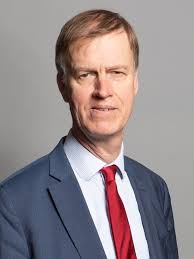
  • HISTORIC PRESS RELEASE : Stephen Timms announces ´Watermark´ contract to reduce the public sector´s water bills [October 2000]

    HISTORIC PRESS RELEASE : Stephen Timms announces ´Watermark´ contract to reduce the public sector´s water bills [October 2000]

    The press release issued by HM Treasury on 19 October 2000.

    A new water-monitoring database system aimed at saving energy and providing the public sector with benchmarks and targets for lower water consumption has the potential for huge savings, Stephen Timms, Financial Secretary to the Treasury,  announced today.

    The Watermark project, a sophisticated Government model for tracking the usage of water and effluent services by the wider public sector, will enable savings to be made on future water bills principally by reducing consumption and the adoption of meters across the estate.

    Speaking in London about the new project at a Water Companies conference, Stephen Timms said:

    “We all need to work towards conserving energy and water consumption and to reduce CO2 emissions.  This is essential if we are to meet our environmental targets and improve our energy conservation methods.  The potential for savings for the taxpayer are immense.

    As a first step to increasing awareness and filling the huge knowledge gap across the public sector on how it uses water, we must have a better insight into such usage and to understand how better to manage consumption. To manage this spend more effectively and to reduce water consumption, benchmarking and management information is essential.

    This contract is the first step towards providing a computerised database which will allow quick and easy data analysis of the water consumption.  This will provide departments with meaningful management information to allow better control and planning of expenditure.”

    Peter Gershon, Chief Executive of the Office of Government Commerce (OGC), set up to improve procurement best practice across Government, said:

    “There is a clear potential for the OGC to enter into strategic partnerships with suppliers in the area of energy conservation and to assist departments deliver best value for money in the public sector’s commercial activities.   I am delighted to be supporting a project that could bring real gains to the public sector and to be supporting the Greening Government Operations Strategy which seeks to reduce water consumption.”

    The current £600m spend on water services by the wider public sector – central government and local authorities – is expected by the end of the Watermark study in April 2002 to have the potential to deliver savings of up to 10% each year on the total spend in this area.  This equates roughly to around £30m for central government and £30m for local authorities.

    It is estimated that ninety per cent of the potential savings projections could be achieved through improving greater understanding and awareness of reducing water consumption, including less wastage, and addressing greening issues including wasted energy such as pumping and wasted hot water.  The ten per cent could be derived from implementing correct metering where rateable charges exist.  Some capital spend may be required in this area.

    Currently DfEE, DETR, DSS, HM Treasury, HMP Prison Service, Ofwat, Inland Revenue, Police Authority for Northern Ireland, Rutherford Appleton Laboratories (NDPB) the Environmental Agency and The Metropolitan Police are involved with the Watermark project.

    It is estimated that there will be some potential for some savings before the Watermark contract comes to an end in April 2002.  Much will depend on how quickly departments react to the benchmark data they receive.

    The Watermark project is funded through the Government’s Invest to Save Budget and is managed by The Buying Agency (TBA), an executive agency of the OGC.  The contract worth £250,000 is for the provision of  Watermark’s computerised database and is with Energy Metering Technology (EMT), a specialist energy consultancy. Watermark is supported by the Department of the Environment (DoE), Transport and the Regions (DETR) and the Department for Education and Employment (DfEE).

    The OGC will, through its remit, provide central Government procurement departments and agencies with a new drive to improve performance so helping them to deliver best value for money in their commercial activities.  The OGC is currently on track to deliver £1 billion value for money procurement gains across the public sector in meeting its £1 billion target over three years.

  • Stephen Timms – 2000 Speech at the Treasury Watermark Event

    Stephen Timms – 2000 Speech at the Treasury Watermark Event

    The speech made by Stephen Timms, the then Financial Secretary to the Treasury, on 19 October 2000.

    I am very pleased to be here today at the launch of the watermark project. Watermark is a valuable step in many areas of Government policy, and demonstrates very well our approach to projects. The system will be a valuable tool to departments and agencies in monitoring their water use, the first step towards using water more efficiently. But this does not just mean Government will spend less on water, it will also bring environmental benefits.

    And the way in which we are achieving this is also a step forward. The project is being taken forward as a partnership with the private sector, after a tough tendering process where the Office of Government Commerce and The Buying Agency have demonstrated the value they can add by joining-up procurement across Government departments. So the Watermark project represents a step forwards for both evidence-based policymaking and for joined-up Government.

    I would like to talk today about how Watermark affects both the environment and value for money, and about the benefits it will bring for both the Government and the Water industry.

    Environment

    This Government is rightly very concerned about the environment. The accelerating pace of social and economic change puts more pressure on both global and local environment than ever before, and minimising the adverse impact we make is a huge challenge for all of us: Government, companies, and individuals.

    So this Government has put the environment at the heart of its’ policymaking, and at the heart of our operations. Governments’ role is not just to set the framework within which companies and individuals can work to reduce their impact on the environment, it is also for Government to lead from the front in our own operations, and to set an example of how it is possible to reduce our environmental impact in the way we do our business.

    And our commitment to the environment is not just within Britain. The UK has signed up to integrated environmental protection policy in Europe, and we have signed up to the Rio declaration on Environment and Development, which requires us to reduce or eliminate unsustainable patterns of production and consumption. And we have not only signed up to the Kyoto agreement to reduce climate-changing emissions, but have set ourselves the target of exceeding the Kyoto requirements.

    So to meet both these commitments, and to meet our objective of  identifying significant environmental impacts of their departments, and develop strategies to reduce them, we have introduced the Greening Government campaign. We want Government to operate sustainably, and to make sure this happens, we have put in place a system of targets for Government departments. Every department has a ‘Green Minister’, and as the green minister for the Treasury, I am  responsible for sustainability within the department. Through the Green Ministers, every Government department has been set challenging targets to deliver sustainability in key policy areas. There are a large number of work programmes underway across Government to deliver on these priorities, and Reducing water consumption is a particular priority within those programmes. To monitor our performance against these targets, we are developing integrated systems and appraisal tools.

    Value for Money

    The Government is one of the largest water users in Britain, with over 5 million public sector workers, and 33,000 schools in UK. There are also Over 4,700 properties the government estate of varying size and age, which makes managing the use of water in them a very complex exercise.

    The public sector spends in the region of £600m on water and effluent services each year, so managing the Governments? use of water is a concern for the taxpayer as well as an important issue for the environment. And we believe Government can make significant savings in the amount of water it uses.  Assessment has shown we have inefficiency in our management and performance, by maybe as much as 10%. If this is true, we could save £60 million a year throughout Government, and significantly reduce pressure on the environment.

    An added bonus to the enormous water saving potential is the reduction in the energy required to process and deliver water to the end user, reducing both the energy costs of the public sector, and carbon emissions into the atmosphere.

    So we are considering the feasibility of Government- wide, or even public sector- wide targets for water consumption. But there is currently a huge knowledge gap across the public sector in how it uses water. The public sector needs to have a better insight into such usage to understand how better to manage consumption. And so before we can set any target, or even assess the scale of what we could achieve, we need a reliable measure of our water consumption across the Government, and detailed benchmarking and management information for the whole of the public sector.

    Invest to Save

    So because of the benefits which could come from better management of public sector water consumption, both for the environment and for the taxpayer, Government has awarded The Buying Agency, now a part of the Office of Government Commerce, funds from the Invest to Save budget, to develop and introduce a centralised electronic monitoring system for water services. The pilot project, named Watermark, is now up and running and will produce its first benchmarks by end of January 2001. This contract is the first step towards providing a computerised database which will allow quick and easy data analysis of the water consumption.  This will provide departments with meaningful management information to allow better control and planning of expenditure.

    Once target performance indicators have been set using the data from the Watermark scheme, participating departments and agencies will be able to validate their water bills and consumption rates against the best in their class and then take action if variances are found. Watermark will be a powerful tool for identifying and spreading best practise in water management across Government.

    It is already a good example of joined-up government, with many different departments and agencies participating.

    And in the longer-term, once deregulation of the water industry takes place,  OGC will be in a much stronger position with this information to hand to enter into strategic partnerships with suppliers to reduce costs for the public sector and bring a better deal for the taxpayer.

    The Water Industry

    The data gathered by Watermark will not only be valuable to Government, it will also be very useful to the water companies. The system will capture a large amount of data, and this data will be available to water companies through the website.

    While it is true that Watermark will help the public sector to reduce consumption, it will still be a valuable tool for water companies. It will help reduce water waste in the public sector, and that will reduce pressure on our water resources, though given the weather of the past few weeks, we seem to have more than we can use.

    The data Watermark produces will allow better management of water at both ends of the pipe, it will allow the industry to identify high-consumption users and develop better customer profiles, so as to better plan for demand, and it will make it easier to identify leaks.

    Over the last few years, Government has been working closely with the water industry to help it to be more efficient, and to develop assessment of the environmental consequences of its activities. And as a result of this work, OFWAT have set targets to reduce leakage in 2001-2002 by a further 4% from their 2000-2001 levels.

    And effective management of water will become more important to water companies as the industry becomes more competitive, so the Watermark project has a great deal to offer both sides, and I hope water companies will support and participate in the scheme, so we are all able to use the data it gathers more effectively.

    Conclusion

    We all have a lot to gain from the success of the Watermark project: Government, taxpayers, and water companies alike, and it is important that we work in partnership to make the project a success.

  • HISTORIC PRESS RELEASE : Gordon Brown sets new Productivity Challenge for Employers and Workers [October 2000]

    HISTORIC PRESS RELEASE : Gordon Brown sets new Productivity Challenge for Employers and Workers [October 2000]

    The press release issued by HM Treasury on 19 October 2000.

    Chancellor Gordon Brown today launched a new challenge to employers and workers to exploit this moment of hard-won economic stability to close the productivity gap with Britain’s main competitors. He called on employers and workers to tackle the key barriers to higher productivity growth: restrictive practices, low skills, resistance to innovation and under-investment.

    Speaking in London to the Confederation of British Industry, Gordon Brown urged employers, employees, investors and others to work together to address the productivity challenge:

    “I want to concentrate our attention on the moment of opportunity our hard won stability is now giving to our country. How we can build upon that hard-won monetary and fiscal stability to bridge the 35 per cent productivity gap with our competitors.

    If we are to seize and not squander this hard won moment of opportunity, we must challenge each other – investors, managers, workforces, educationalists – that we should, without complacency, address and overcome the old British problems which many consider to be short-termism and under-investment, inadequate skills, resistance to change and to new technology, and over complacency and a failure to benchmark the best.

    So this is my challenge. I can tell you today what Government can and will contribute: stable policies will continue so there will be no sudden lurches in tax or spending policy, no irresponsible pre-election sprees, no irresponsible wage increases that will put youth jobs or any jobs at risk, no relaxing our fiscal rules.

    We will play our part in creating the best competitive environment and investing in the potential of our people and I will address these issues in the coming Pre-Budget Report.”

    The Chancellor went on to outline the challenge he is setting today:

    “I believe as a country we can do far, far more. We cannot bridge the gaps, however, without a broader drive from managers and workforces across the country to solve together productivity problems which each cannot solve on their own.

    I have called on the Presidents of the CBI and TUC, the Director General of the CBI, and the General Secretary of the TUC to invite a positive response from unions and managements in regions and in sectors to address some of our old problems and together work through an agenda for economic reform. In short, whether we can remove all the old barriers to employment and prosperity for all.

    I propose that, to tackle the productivity issue, the CBI should work with the TUC, educationalists and others to meet the challenge I have set out.”

  • HISTORIC PRESS RELEASE : Gordon Brown Launches National campaign for working families [October 2000]

    HISTORIC PRESS RELEASE : Gordon Brown Launches National campaign for working families [October 2000]

    The press release issued by HM Treasury on 23 October 2000.

    Chancellor Gordon Brown and Paymaster General Dawn Primarolo will today urge working parents to apply for Working Families Tax Credit (WFTC), as they launch a major new publicity campaign and publish new figures showing 2.2 million children are now better off as a result of WFTC.

    The mould-breaking £5 million WFTC national advertising campaign – which will run for a month – features parents and families who have actually been claiming the WFTC, and spells out the degree to which they have benefited as a result.

    At the launch in London today, Mr Brown showed that:

    • Over 1.1 million families are already receiving the WFTC – 300,000 more than claimed Family Credit (FC) at its peak;
    • 2.2 million children are living in those 1.1 million households, compared to 1.68 million children in families claiming FC at its peak;
    • On average each family is receiving over £76 a week;
    • On average each family is £30 a week better off than they would have been under Family Credit.

    Mr Brown said:

    I’m urging Britain’s families to ring the freephone response line – 0800 5975976 – and check whether they’re eligible for the WFTC. Over 3 million families have already done so.

    I want every eligible family to know about it, claim it and receive it – making work pay more than benefits is a major way to tackle child poverty.

    There is an estimated one million job vacancies in the economy and WFTC makes work pay and has taken a million children out of poverty. The next step is to take the second million out of poverty, and we’ll be bringing forward proposals to do this during the next Parliament.

    We’ve brought in a range of measures to help parents combine work with the vital job of bringing up children, but we know there’s much more to do. WFTC gives families a real choice, helping them move from welfare to work, getting off benefits and out of poverty. Scrapping WFTC would deny working families – couples or lone parents – that choice of whether to work, and would leave millions of children and their parents in poverty.

    WFTC shows that this is a Government on the side of Britain’s hard-working families.

    Paymaster General Dawn Primarolo said:

    WFTC means that working families will no longer need to apply to the social security office to take home a living income. It provides generous help with childcare and ensures that every child has the best start in life.

    Alongside initiatives like the New Deal, Sure Start and the new Children’s Tax Credit, WFTC is providing new opportunities for millions of families in the UK.

  • HISTORIC PRESS RELEASE : Betty Boothroyd appointed to Three Hundreds of Chiltern [October 2000]

    HISTORIC PRESS RELEASE : Betty Boothroyd appointed to Three Hundreds of Chiltern [October 2000]

    The press release issued by HM Treasury on 23 October 2000.

    The Chancellor of the Exchequer has today appointed the Right Honourable Betty Boothroyd to be Steward and Bailiff of the Three Hundreds of Chiltern.

  • HISTORIC PRESS RELEASE : Enterprise and Wealth are the key to continuing prosperity – Gordon Brown [October 2000]

    HISTORIC PRESS RELEASE : Enterprise and Wealth are the key to continuing prosperity – Gordon Brown [October 2000]

    The press release issued by HM Treasury on 24 October 2000.

    Chancellor Gordon Brown today welcomed the innovative approach the Social Investment Task Force has taken to revitalising Britain’s poorest communities.

    The report’s five key recommendations set out how £1 billion of private finance can be investment into the UK’s most deprived areas. The report highlights enterprise and wealth as being vital to building sustainable communities that will provide long-term growth for the future.

    Responding to the report at the launch in London the Chancellor said:

    “This is the time to bring jobs and enterprise to those areas of the country that have not yet fully participated in the economic recovery.

    “I understand that the story of economic improvement is not a story of improvement for everyone, that there are still too many people left out of the British success, and that while more people are in work that ever before, there are still pockets of high unemployment in every region of the country.

    “We are determined to make sure that everyone who is able to work has the chance to do so. The aim must be to build a working economy in every community of the country. In tackling the employment and enterprise problem in the high unemployment areas, we will not return to the old ways, which have failed.

    “We believe that in the new economy we will succeed in creating an economy with employment opportunity for all when we create an economy with enterprise open to all.

    “So in the Pre-Budget Report in a few days time we will propose how investment and venture capital can raise the rate of business creation and growth, and for the whole country show how we are prepared to reward enterprise – for example, through capital gains tax reform and small business tax incentives – to show that the entrepreneurial culture is open to all.

    “We will build on the report’s recommendations. The report sets out a five-point programme of action which would deliver £1 billion of new investment in businesses in deprived areas:

    • first, a new community investment tax credit to encourage private investment in under-invested communities;
    • second, a community development venture fund with matched funding from Government;
    • third, more detailed disclosure by the banks of their lending activities in under-invested communities;
    • fourth, more flexibility for charitable trusts and foundations to invest in community development projects; and
    • fifth, more support for community development financial institutions.

    Outlining why this problem needed to be tackled, the Chancellor stated:

    “In Britain the overall rate of business start-ups is less than half that in the US, and in high unemployment areas we do much worse. There is significant variation in the rates of business creation across regions. Last year, small business VAT registrations were six times higher in high employment areas than in low employment areas.

    “And there is also variation within regions – here in Newham there are only 39 VAT registrations per 10,000 adults but in other areas of London the number is much higher – for example, 108 in Kensington and Chelsea and 146 in Camden.

    “If the 100 areas with the lowest rates of business creation performed as well as the average areas, they would together create nearly 18,000 new businesses.

    “Our new approach to regeneration is about building on the potential strengths of local people – encouraging new dynamism, not the old dependency; backing success, not the old subsidies. In this approach, there are three pillars:

    • First, in every areas we want to build an enterprise culture not for the few but open to all;
    • Second, in the high unemployment areas, we want to encourage private investment flows and new businesses;
    • Third, as we create more job opportunities, we want to tackle all the barriers that people face in getting into work.

    “This is the time to say to every corporate leader in our country, take a look at investing in our high unemployment areas. They offer business new choices, new recruits and new markets. It is good for business and good for growth.

    “I believe we can work together – Government, business leaders and local communities – to deliver our aim of enterprise and employment opportunity open to all in every region, every town, every community in Britain.”

    NOTES TO EDITORS

    The Social Investment Task Force, led by Ronald Cohen, was set up in February 2000. It was independently manage by the UK Social Investment Forum in partnership with the New Economics Foundation and the Development Trusts Association. HM Treasury had an observer role. The members of the Taskforce were:

    Ronald Cohen, Chair, Apax Partners and Co

    David Carrington, Chief Executive, PPP Healthcare Medical Trust

    Ian Hargreaves, journalist and academic

    Philip Hulme, Chairman, Computacenter

    Geraldine Peacock, Chief Executive, Guide Dogs for the Blind

    Joan Shapiro, former Executive Vice President, South Shore Bank, Chicago

    Tom Singh, Managing Director, New Look

    The Task Force’s report is titled “Enterprising Communities: Wealth Beyond Welfare.”

    The Task Force report was launched by Ronald Cohen at Community Links, Newham, East London. It is a major charity and has run a wide range of community projects over the last 21 years. In 1999, more than 25,000 people benefited from its projects, run by over 450 volunteers in 60 key sites.

  • HISTORIC PRESS RELEASE : Gordon Brown offers UK participation in IMF/World Bank financial sector assessment programme [October 2000]

    HISTORIC PRESS RELEASE : Gordon Brown offers UK participation in IMF/World Bank financial sector assessment programme [October 2000]

    The press release issued by HM Treasury on 25 October 2000.

    At today’s Montreal meeting of the G20 group of countries, Chancellor of the Exchequer Gordon Brown has offered UK participation in the IMF/World Bank Financial Sector Assessment Programme (FSAP).

    The Financial Sector Assessment Programme is an important innovation. An IMF/World Bank team takes an independent look at a country’s financial sector and its regulation. It assesses the sensitivity of the financial sector to macro-economic shocks and compare the country’s financial regulation with international best practice. This process will underpin and improve global financial stability, so it is important that all kinds of countries – emerging markets and world financial centres – take part in the process.

    Gordon Brown said :

    “With Sir Howard Davies, Chairman of the UK Financial Services Authority, I am offering UK participation in the Programme. The FSA is working towards implementation of a new regulatory framework under the Financial Services and Markets Act 2000. This will create a fully-integrated cross-sector framework for financial regulation.

    I am confident that UK financial regulation is amongst the best in the world. Nevertheless, the UK financial sector is also amongst the most important in the global financial system. We will therefore welcome the opportunity of participation in the Program”.