
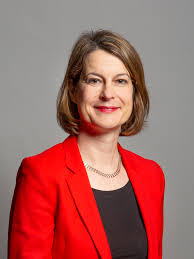
The speech made by Helen Hayes, the Labour MP for Dulwich and West Norwood, in the House of Commons on 25 June 2026.
I beg to move,
That this House has considered Windrush Day 2026.
I am grateful to the Backbench Business Committee for allocating time for this debate. Windrush Day is on 22 June, the anniversary of the arrival of HMT Empire Windrush at Tilbury docks. The Windrush has become a symbol of a period in our history when many people came to the UK from the countries of the Commonwealth. I am grateful to Arthur Torrington, who co-founded the Windrush Foundation with his dear friend, the late Samuel Beaver King, for his work documenting the history of the Windrush. Later this week, everyone will be able to read Arthur’s new book, “Windrush Myths and Misconceptions”, which I highly recommend.
The Windrush began its voyage in Port of Spain, Trinidad, on 20 May 1948. It made a number of stops in the Caribbean, including at Kingston in Jamaica. We do not know everything about the passengers on the Windrush, in part because the ship’s manifest records limited information, and in part because there were a number of service personnel on board who, for security reasons, were not recorded on the manifest. We know that there were at least 1,067 passengers on board, probably considerably more. The Commonwealth passengers on the Windrush travelled straightforwardly on British passports, knowing that they had the right to come to the UK, the place they called the mother country.
The passengers were a diverse group with differing levels of income, different reasons for travelling, and a range of skills and occupations. Among them were 66 Polish refugees. Not all the passengers were coming to look for work. Some were visiting the UK as tourists, and at least one was coming to watch a relative who was competing in the 1948 London Olympics. Upon their arrival, around 230 of the passengers were provided with temporary accommodation in the Clapham Common deep shelter, from where some of them came to Brixton and found work and accommodation. That gives my constituency a proud and direct relationship with the Windrush, recognised in the naming of Windrush Square in the heart of Brixton.
One of the passengers was Sam King, an RAF airman who had served during the second world war. He returned to the UK on the Windrush and regarded the voyage as historic. He made great efforts to ensure that it would not be forgotten, keeping in touch with his fellow passengers and, from 1968, bringing them together to commemorate anniversaries. Sam King became known as Mr Windrush, and started the tradition of Windrush Day, long before it became a national day recognised by the Government in 2018. Sam King achieved many things in his life, including working with Claudia Jones to found the Notting Hill carnival. We are immensely proud in my constituency that he became the first black mayor of Southwark.
HMT Empire Windrush entered our narrative as a symbol for a whole cohort of people who came from the Commonwealth to live in the UK from approximately 1948 to 1971. They became known as the Windrush generation, and we have a debt of gratitude to them. Toggle showing location ofColumn 563They came here to contribute, founding businesses, working in our NHS and transport systems, helping to rebuild our country from the ruins of the second world war. They enriched our culture and national life through food, music and faith communities, and they helped to forge the identity of modern Britain.
Members may have seen the “Windrush Untold Stories” exhibition that has been installed in the Portcullis House atrium for the whole of June. The exhibition features beautiful portraits of 18 individuals who are all either members of the Windrush generation or their descendants. They include: the Reverend Michael King, son of Sam King; the late Clovis Salmon, wheelmaker and documentary maker, who lived in my constituency; and Dawn Hill CBE, one of the founders of the Black Cultural Archives. Each portrait has a QR code, through which people can listen to the subject telling their story. I encourage anyone who has not yet done so to listen to the stories. They are moving, humbling and inspiring. They capture perfectly the courage, grit, determination and passion of the Windrush generation, alongside some of the pain that members of that generation endured. I pay tribute to Ros Griffiths, who initiated the “Windrush Untold Stories” exhibition; Amit Lennon, who took the photographs; and the Empathy Museum, which gathered the stories and produced the exhibition. I look forward to celebrating Windrush Day with Ros at the Big Caribbean Lunch on Windrush Square in my constituency this weekend.
However, our celebration of the Windrush generation is not a sentimental thing. Despite their commitment and contribution, members of that generation faced terrible racism, hostility and hardship, from the signs in the windows of rental properties that read, “No Blacks, No Dogs, No Irish”, to the workplace racism, and eventually the Home Office scandal, which broke in 2018. The Windrush scandal saw the citizenship of those who had come here on British passports—whether before or after the British Nationality Act 1948—being denied their citizenship, often with utterly devastating consequences.
Eight years on from the scandal coming to national attention in the media, there is still work to be done to secure justice for its victims. I pay tribute to the former Minister for Migration, my hon. Friend the Member for Feltham and Heston (Seema Malhotra), for the work she did to rebuild trust with many of the victims of the Windrush scandal. She reformed the compensation scheme and resourced the Windrush unit in the Home Office, resulting in an event that many would never have thought possible: the holding of a Windrush conference in the Home Office itself, which was attended by many elders of the Windrush generation and many victims of the scandal.
But there is still considerable work to do. Research by JUSTICE and the University of Sussex has found that claimants to the compensation scheme received an average offer of £11,400 when they applied for compensation by themselves, but an average of £83,300 for the same cases once they had legal representation. Such disparity is completely unacceptable, and it must be addressed. There are still victims who do not trust the Home Office to administer the scheme, and who have not come forward to apply for the compensation to which they Toggle showing location ofColumn 564are entitled. There are still individual cases—including at least one that I have been made aware of in detail—in which people are being denied their status, based on an inaccurate understanding of history.
We should not mark this year’s Windrush Day without reflecting on the fact that political parties in our country are now seeking to rewrite the definition of Britishness as being based on ancestry alone. They are trying to create a false and completely unacceptable distinction between native Brits and non-native citizens, focusing implicitly on whiteness. This is a divisive, abhorrent and, most importantly, completely inaccurate articulation of Britishness, and we must reject it with all our strength. In recent weeks, the stoking of racist hatred and division has resulted in long-term residents of Belfast being hounded out of their homes based on the colour of their skin, in a sickening echo of the “No Blacks, No Dogs, No Irish” signs that greeted many of the Windrush generation. It is making many black and brown Britons feel anxious and fearful in their own communities. It is shameful and it is wrong.
We do not have different categories of British citizen; we just have citizens of many different backgrounds, all together. We are one United Kingdom, with more in common than divides us. People come to citizenship through a range of routes—some by birth, and some by naturalisation. We are diverse, but we are all equal in status. Our task as citizens is to live well together in our communities and have respect for each other, to contribute to our society in the ways that we can, and to build places in which all our children and grandchildren can thrive.
I pay tribute to all those who work to preserve the history of the Windrush generation, to educate people about it and to campaign for justice. In particular, I want to mention Arthur Torrington and the Windrush Foundation; Bishop Desmond Jaddoo and the Windrush National Organisation; Garrick Prayogg and Justice for the Windrush Generations; Sir Patrick Vernon, who I was delighted to see knighted in the King’s birthday honours this month; Ros Griffiths; the Windrush Justice Clinic; the Black Cultural Archives in my constituency; and Dr Les Johnson and Denize Ledeatte at the Windrush Museum.
I want to make a number of asks of the Minister. Will she take seriously the need for support for victims of the Windrush scandal who apply to the compensation scheme, and work with the Home Office and the Ministry of Justice to ensure that they have access to funded legal support? In the light of concerns that the scheme is not on an equal footing with others, such as the infected blood compensation scheme and the Post Office/Horizon scandal compensation scheme, will she work with the Home Office to commission an independent review and address any disparities? Will she raise with the Home Office the calls for the scheme to be made fully independent from the Department responsible for the scandal?
Will the Minister start work to plan for the 80th anniversary of the arrival of HMT Empire Windrush in 2028 so that commemorative and celebratory events like the Big Caribbean Lunch can take place across the country? Will she consider calls to deepen our celebrations by having a Windrush Month or a national Windrush motion, to embed Windrush history further within our civic life? Will she provide support for recording and Toggle showing location ofColumn 565preserving the oral histories of members of the Windrush generation, as has been done for the “Windrush Untold Stories” exhibition? Those stories are powerful, and they have an important role to play in educating people about our shared history.
As part of that work, will she support the campaign by Sir Patrick Vernon and others to raise the anchor of the HMT Empire Windrush from the Mediterranean seabed, so that this important symbol of resilience and hope can be restored and used as an opportunity to tell this story? Finally, in the light of the abhorrent narratives on immigration that are currently gaining currency in our politics, will she commit to do everything possible to ensure that the Government’s policies always reflect and celebrate our rich and complex identity as an island nation to which people from all over the world have always come to make their home, including through upcoming legislation on immigration?
The story of the Windrush generation is remarkable in so many ways. Most importantly, however, it is part of the story of us. It is an integral and interwoven part of the history of our country and our identity as a nation, and we must never forget it.