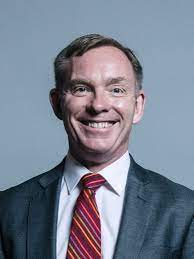
The speech made by Chris Bryant, the Minister for Trade, in the House of Commons on 24 February 2026.
Let me be clear from the outset: we support this motion. Frankly, it is the least we owe the victims of the horrific abuse that was perpetrated by Jeffrey Epstein and others—abuse that was enabled, aided and abetted by a very extensive group of arrogant, entitled and often very wealthy individuals in this country and elsewhere. It is not just the people who participated in the abuse; it is the many, many more who turned a blind eye, out of greed, familiarity or deference. To my mind, they too were complicit—just as complicit—and I welcome the reckoning that is coming to them now.
I doubt there is anyone in this House who is not shocked and appalled by the recent allegations. Colleagues and many civil servants have told me their own stories of their interactions with Mr Mountbatten-Windsor, and they all betray the same pattern: a man on a constant self-aggrandising and self-enriching hustle; a rude, arrogant and entitled man who could not distinguish between the public interest, which he said he served, and his own private interest. I remember him coming to visit the Sea Cadets in Tonypandy. They were delighted and excited to meet a member of the royal family, but he insisted on coming by helicopter, unlike his mother, who came twice to the Rhondda and by car. He left early, and he showed next to no interest in the young people. That is, of course, not a crime, nor is arrogance—fortunately, I suppose. [Laughter.]
Of course, we knew much of what is now in the public domain a very long time ago. It is all very well for some of us to say, “If only we had known then what we know now,” but I am afraid that doesn’t wash with me. We did actually have plenty of warning. I called on the then Prime Minister David Cameron to dispense with the services of the then Duke of York in this Chamber on 28 February 2011 because of his close friendship with Saif Gaddafi—Gaddafi was just referred to—and the convicted Libyan gun smuggler Tarek Kaituni. I was rebuked by Speaker Bercow for doing so because
“references to members of the royal family should be very rare, very sparing and very respectful”—[Official Report, 28 February 2011; Vol. 524, c. 35.]
I did not disagree with that ruling, nor would I ever disagree with a ruling from the Chair, as you know, Mr Speaker.
Mr Speaker
Ahem!
Chris Bryant
I heard that.
Gregory Stafford (Farnham and Bordon) (Con)
He wants your job! [Laughter.]
Mr Speaker
Keep going, Chris.
Chris Bryant
I am taking your advice, Mr Speaker: I am just ignoring that.
Over the next few days back in 2011, I repeatedly called for Andrew to be sacked in the public domain—on television, on radio and in newspaper articles—citing his relationship with Jeffrey Epstein, the mysteriously excessive £15 million paid for his Sunninghill home and many other issues besides. I am afraid the wilful blindness of far too many at that time was absolutely spectacular, and it still angers me. The then Prime Minister, the then Home Secretary and many others in government defended Andrew time and time and time again. I was repeatedly told off, both in the Chamber and outside it.
The broadcaster John Humphrys actually told me on the “Today” programme on 7 March 2011—I think Members will be shocked by this—that Jeffrey Epstein was “not quite a paedophile”, drawing a distinction between sexual abuse of pre-pubescent and other children. Dominic Lawson, writing in The Sunday Times on 11 March, defended Andrew and made the same distinction between Epstein’s involvement with teenage girls and paedophilia, since, as he put it,
“none of the girls was pre-pubescent”,
although he did at least admit that both were “sordid and exploitative”. I gently suggest that that is the least of what we have seen.
Let me be absolutely clear. All of this happened after the photograph of Andrew with his arm around Virginia Giuffre was published in The Mail on Sunday on 27 February 2011—it is after the allegations, not before.
Wendy Chamberlain (North East Fife) (LD)
I entirely agree with the Minister on the abhorrence of the comments made in the media back then. Does he agree that we still have a degree of that problem now, because often in the media we talk about “under-age girls” when actually we are talking about children, and we should ensure that when we talk about Epstein’s crimes, we talk about the children who were involved?
Chris Bryant
I agree 100%. I think we should also be referring to statutory rape, because that is what it is. Statutory rape is no better than any other kind of rape. It is rape—end of story.
Colum Eastwood (Foyle) (SDLP)
The Minister is speaking very powerfully about this issue and has one of the strongest track records in standing up on these types of issues. I have asked that the Government release the files concerning Andrew Mountbatten-Windsor, or whatever his new name is, when he was a trade envoy. That request has been refused. Can the Minister review that decision and ensure that, in the new spirit of openness and transparency, those files are open for all to see?
Chris Bryant
I completely respect my hon. Friend. He has made that point several times, not only in the Chamber but also to me privately, and I agree with him: that is the direction of travel we are going in, which is why we agree with the Humble Address presented today. We are not standing in the way, and we will do everything we can to comply with that as fast as we possibly can. I will come on to a couple of caveats a bit later, but I just want to pursue the point about what we knew in the past.
The right hon. Member for Kingston and Surbiton (Ed Davey) rightly said that Paul Flynn had a debate on 4 May 2011, to which he responded, standing in for the Minister responsible. However, Paul Flynn initiated another debate, on 17 March in Westminster Hall. It was granted to him by the Backbench Business Committee, which had been set up relatively recently. Because he was finding it very difficult to make any of the allegations that he wanted to make because of the rules of the House, he concluded that
“there really is no point in continuing”.—[Official Report, 17 March 2011; Vol. 525, c. 156WH.]
The then Deputy Leader of the House, David Heath—who was another Liberal Democrat member of the Government at the time—made the point, which I think has been made by both Mr Bercow and you, Mr Speaker, that if there were a “substantive motion”, such comments could be made. It would be necessary to find a means of tabling such a motion, like the one that we are discussing today.
Following that, Paul Flynn tried to secure a substantive motion, but managed to secure only a motion for an Adjournment debate, on 4 May. He struggled again, and this is what he said:
“The Speaker would quite rightly abide by the rules of the House and tell me that I was not allowed to make any derogatory statements that might affect the envoy, his personality or his name. It is an illustration of how demeaned we are as politicians and Members of Parliament that I am allowed to make any points about the damage that is done only in an oblique way, by discussing the effects of the holder of the office, his role and the comments that are being made.”—[Official Report, 3 May 2011; Vol. 527, c. 647.]
Of course he was angry: he was furious. He wrote a great book about being an MP, which I commend to all hon. Members.
As the right hon. Member for Kingston and Surbiton knows, he responded to that debate. He said:
“I, for one, believe that the Duke of York does an excellent job as the UK’s special representative for international trade and investment. He promotes UK business interests around the world, and helps to attract inward investment.”
He continued at some length, and concluded:
“He has made a valuable contribution in developing significant opportunities for British business through the role, and continues to do so.”—[Official Report, 3 May 2011; Vol. 527, c. 649-650.]
Let me say gently to the right hon. Gentleman that if he had followed the debates in the public domain at the time he would, I think, have known better than to make those comments.
Ed Davey
The Minister knows that I apologised for making that comment, having taken a brief from someone else. I really wish that I had not uttered those words, because I am thinking about the victims, and I have praised the Minister for the role that he took. I hope he will acknowledge that two months after that debate Andrew left the role, and it was right that he did. I was not privy to those discussions, but the Government did get rid of him.
Chris Bryant
Yes, he left his post in, I believe, July 2011. It could not have come soon enough for many of us, and it is a regret to many that the Government were not able to listen faster and act faster at that time.
What this whole sorry saga shows is that deference can be a toxic presence in the body politic. Of course we always seek to respect others, and we look for the best in others. There is another instance in that Adjournment debate that illustrates the generosity that we often show. The right hon. Member for New Forest East (Sir Julian Lewis), whom I told that I was going to raise this, and who is a gentleman to his fingertips and always a very magnanimous fellow, asked:
“Does the Minister agree that one reason why the Duke of York has considerable credibility is his distinguished record as a former member of the Fleet Air Arm who gave valuable service in the Falklands war? That shows a degree of commitment over and above any inherited responsibilities that he might be considered to have.”—[Official Report, 3 May 2011; Vol. 527, c. 650.]
Of course I understand the point that the right hon. Member was making back then, but the fear is that when deference tips over into subservience it can be terribly dangerous, because the victims are not heard, respected or understood in the same way as those with grand titles, and that—as the right hon. Member for Kingston and Surbiton said—has implications for this House. The conduct of business in the House is entirely a matter for you, Mr Speaker, interpreting “Erskine May” and the Standing Orders with the Clerks. I only repeat the words of Paul Flynn in 2011, when he denounced what he called
“censorship on hon. Members discussing an issue of great importance”.—[Official Report, 17 March 2011; Vol. 525, c. 156WH.]
I know that you too, Mr Speaker, would want to denounce such censorship.
Let me issue one caveat about the motion. The Government will of course comply with the terms of the Humble Address in full—as I have said, we support the motion—but, as the House will know, there is a live police investigation of the former Duke of York following his arrest on suspicion of misconduct in public office. The House will also be aware that following that arrest on 19 February, Buckingham Palace issued a statement on behalf of the King. His Majesty emphasised that
“the law must take its course”,
and that the Palace would provide its
“full and wholehearted support and co-operation”.
The statement concluded with a commitment that His Majesty and the royal family would continue in their duty and service to the nation, and I am sure the whole House will support that sentiment.
As the police have rightly said, it is absolutely crucial that the integrity of their investigation is protected, and now that these proceedings are under way, it would be wrong for me to say anything that might prejudice them. Nor will the Government be able to put into the public domain anything that is required by the police for them to conduct their inquiries unless and until they are satisfied. I am sure that the right hon. Member for Kingston and Surbiton will agree with that point.
Sir Edward Leigh (Gainsborough) (Con)
I agree with everything that the Minister is saying, but what is worrying quite a lot of us, in relation not just to Andrew Mountbatten-Windsor but to Mandelson, is that because of the ongoing police investigations and because the wheels of justice grind exceedingly slowly, it may be years before we see any of these papers. I would like an assurance from the Government that—notwithstanding what the Minister has just said about the police investigation—they will do their utmost to ensure that there is full transparency, because scandals are made much worse by any sense of a cover-up.
Chris Bryant
I could not agree more. I want to ensure that we move as fast as we possibly can, but I also want to ensure that justice happens, and I do not want to do anything that would undermine the police investigations. I hope that the police will be able to move as swiftly as possible, and we will certainly co-operate with them as swiftly as possible. It is worth bearing in mind, however, that most of the documents that might be envisaged are 25 years old—some are a bit more recent—they may be substantial in number, and many will be in hard copy. I hate to add to the right hon. Member’s fears about the speed with which things may happen, but I think we all want to ensure that we do all this in a proper fashion.
Layla Moran (Oxford West and Abingdon) (LD)
May I ask for some clarification in respect of the police investigations? The Minister may have noted the intervention made by Gordon Brown on Sunday, when he asked constabularies to consider widening the probe on the basis of files that had been released as part of the data dump. I appreciate that the Minister will not be able to comment on what those police forces are planning to do or not to do, but one of the questions that have arisen is whether all Departments, including the Ministry of Defence and the Department for Transport, would co-operate fully with them in relation to anything that they might need. Can he assure me that every single Department, without fear or favour, will give them whatever they need if they wish to widen the investigation?
Chris Bryant
We will do two things. First, we will seek to comply with the Humble Address as soon as we possibly can, given the caveat that I have already issued about the police investigation. Secondly, we will ensure that every single part of Government co-operates entirely with Thames Valley police and with any other police forces, in respect of whatever they may be investigating. It is not for me, as a Minister, to instruct the police on what they should or should not investigate, or to point them in one direction or another. Former Prime Ministers have a different set of responsibilities. So the hon. Lady is right: I do not want to undermine the investigation, but I also do not want to delay it in any way.
Tessa Munt (Wells and Mendip Hills) (LD)
Will the Minister give way?
Chris Bryant
I do not want to give way to every single Liberal Democrat Member, but I will, of course, give way to the hon. Lady.
Tessa Munt
I thank the Minister greatly. Does he agree that it is timely, right now, for the Government to press ahead with the Public Office (Accountability) Bill? Amendment 23, which is blocking everything at the moment, seems to present a way through, and to ensure not only that we have transparency and openness but that the Government, and other Members of the House, can be assured that anything that is subject to matters of intelligence or security—and, indeed, matters relating to the police investigation—will not be released. There is an answer in the Government’s hands, and I know not why they are waiting and waiting and waiting to get this sorted out.
Chris Bryant
The hon. Lady might have to repeat what she thinks the answer that thus far evades me might be.
Tessa Munt
I could talk to him about the whistleblowing Bill and the independent office of the whistleblower. People should be able to reveal what they know and should tell the truth. It is shocking that we have to have legislation to tell people to tell the truth, but all this falls under the same remit: people should be free to declare exactly what they know, papers should be released, and there should be an independent High Court judge—that is what happens at the moment and that is what is in amendment 23—who says what may and may not be released.
Mr Speaker
May I suggest that we shorten interventions, rather than make speeches?
Chris Bryant
I return to what I said earlier: we will put everything into the public domain when we can. I do not want to do so at a time that would make it impossible for the police to secure the proper processes that they need to be able to carry out. I am not sure that adding an intervening person helps that process, but I would be happy to listen, Mr Speaker, if the hon. Lady catches your eye later on in the debate. With the leave of the House, I will respond to the debate as well, so I will be happy to answer lots of questions.
Daisy Cooper (St Albans) (LD)
Will the Minister give way?
Chris Bryant
Oh, all right.
Daisy Cooper
Specifically on this point, I am grateful that the Minister is willing to comply with the terms of this motion and that he is trying to manage expectations about the speed with which the Government may act. None the less, he will know that there will still be some members of the public who will view that with some suspicion and alarm, worried that the Government might be trying to long-grass it or put it in the too-hard basket. Will the Minister commit, either now or by the end of the debate, to the Government regularly updating this House so that Opposition parties do not repeatedly have to bring Ministers to the House to answer urgent questions? Will he agree to set out, by the end of the debate, how often the Government would intend to inform the House in regular updates?
Chris Bryant
I am happy to commit to updating the House as often as I possibly can in a way that is informative to the House. The hon. Lady is quite right, however, that I am slightly trying to manage people’s expectations about timeliness, partly because of the quantity of material and partly because there is a live police investigation and I do not want to jeopardise that.
Jim Allister (North Antrim) (TUV)
Will the Minister give way?
Chris Bryant
I will in a moment.
If there are things that are embarrassing to the Government, who cares? I want to make sure that we end up getting the proper justice that is necessary for the victims, and that means that we have to have a proper police procedure. If there are charges brought, that has to go through a judicial process as well and I do not want to undermine that. I am very happy, both privately and publicly, to update the House when I have anything possible to say.
I am trying to get to the end of my speech. People normally like it when I get to the end of my speech—[Hon. Members: “Hear, hear.”] I have united the House, Mr Speaker, but I will give way to the hon. and learned Member for North Antrim (Jim Allister).
Jim Allister
I understand the concern about not treading upon the police investigation, but surely that investigation is about the conduct of Andrew Mountbatten-Windsor in the role, whereas this Humble Address is about the appointment and the process of appointment. Is there not a distinction there, which means that this Humble Address of itself should not unduly impede any police investigation or be hindered by it?
Chris Bryant
If the hon. and learned Gentleman does not mind, I will quite happily explain to him outside the Chamber precisely why I disagree with him. Again, if I were to explain more fully in the Chamber, that might not be very helpful to either the police or the criminal process. I am happy to explain to him outside the Chamber and I think he might come back in and agree with me.
Mr Speaker
He might not.
Chris Bryant
I think he might. Just sometimes, he agrees with me, but not very often. Small mercies and all.
I want to make it absolutely clear to the House that the former Duke of York’s role as a special trade representative was very different to the one performed by the Government’s current trade envoys. That is often confused in the public discussion. Today, trade envoys are appointed by Ministers with a formalised set of rules of conduct, they are unpaid and they work with my Department on attracting and retaining inward investment, while supporting UK firms to take full advantage of new trade opportunities. They are all Members of either this House or another.
I have recently emphasised to all those trade envoys the importance of maximising the programme’s impact and ensuring that it aligns completely with the goals of our trade and industrial strategies. They are under the same obligations as Ministers in adhering to departmental restrictions, guidelines and confidentiality clauses, which are the same ones outlined in the ministerial code. In sum, trade envoys play an important role in boosting economic growth, delivering our industrial and trade strategies, and helping British businesses to export. I will stress this again: the role held by Andrew Mountbatten-Windsor was not a trade envoy position as we would understand it today. I am enormously grateful to today’s trade envoys who go beyond the call of duty in promoting UK plc. Andrew Mountbatten-Windsor’s role was a separate one entitled UK special representative for international trade and investment.
There is unanimous agreement across this House that those who may be guilty of misconduct in public office should face the full force of the law. That applies to everyone, regardless of who they are or how they were appointed. This was a point made by my right hon. and learned Friend the Prime Minister prior to the news of Andrew Mountbatten-Windsor’s arrest. One of the core principles of our constitutional system is the rule of law. That means that everyone is equal under the law and nobody is above the law.
I share the anger and the disgust expressed by many at the alleged behaviour of Andrew Mountbatten-Windsor. What we are seeing now is a full, fair and proper process by which this issue is investigated by the police and in that investigation they will, of course, have the Government’s unwavering co-operation and support. Sometimes it feels to many members of our country that there is one rule for the rich and famous and another rule for the rest of us. Actually, there is only one rule: the rule of law.