Category: Transportation

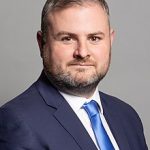
  • Andrew Stephenson – 2022 Statement on the A1: Morpeth to Ellingham

    Andrew Stephenson – 2022 Statement on the A1: Morpeth to Ellingham

    The statement made by Andrew Stephenson, the Minister of State at the Department for Transport, in the House of Commons on 6 June 2022.

    I have been asked by my right hon. Friend, the Secretary of State (Grant Shapps) to make this written ministerial statement. This statement confirms that it has been necessary to extend the deadline for a decision for the A1 in Northumberland – Morpeth to Ellingham Development Consent Order under the Planning Act 2008. The extension is in light of the written statement made by the Secretary of State on 26 May 2022 regarding the Union Connectivity Review, [HCWS62].

    The proposed development comprises the widening of approximately 12.8 miles stretch of the A1 between Morpeth to Ellingham with approximately nine miles online widening and approximately 3.8 miles of new offline highway. The Secretary of State received the examining authority’s report on 5 October 2021 and the original deadline for a decision was extended from 5 January 2022 to 5 June 2022 following a written ministerial statement laid on 15 December 2021 to allow for further consideration of environmental matters.

    The deadline for a new decision is 5 December 2022.

    The decision to set a new deadline is without prejudice to the decision on whether to grant development consent for the above application.

  • Andrew Stephenson – 2022 Comments on the Golborne Link

    Andrew Stephenson – 2022 Comments on the Golborne Link

    The comments made by Andrew Stephenson, the HS2 Minister, on 6 June 2022.

    HS2 is a once-in-a-lifetime project that will transform travel across the entire UK as we know it and serve millions of people for hundreds of years to come and it’s absolutely vital that we get this right from the outset.

    Removing this link is about ensuring that we’ve left no stone unturned when it comes to working with our Scottish counterparts to find a solution that will best serve the great people of Scotland.

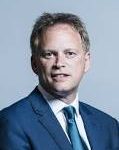
  • Grant Shapps – 2022 Comments on Aviation Delays

    Grant Shapps – 2022 Comments on Aviation Delays

    The comments made by Grant Shapps, the Secretary of State for Transport, on 1 June 2022.

    Today’s meeting was a chance to hear from airports and airlines first-hand what went wrong this week. The scenes we’re witnessing at airports are heart-breaking, with holidaymakers missing out on their first trips abroad after the pandemic.

    We’re grateful to those airlines and operators who have continued to deliver good services despite the current pressures and we recognise that not all operators have been affected in the same way.

    I also understand the resourcing strains on the aviation sector but it does not excuse poor planning and overbooking flights that they cannot service. The companies who have seen the most disruption need to learn from those who ran services smoothly.

    We will continue to monitor the situation closely to make sure consumers don’t lose out from any further disruption.

    Both myself and the Aviation Minister have made the changes needed to allow the sector to prepare for summer, but now we need industry to do their bit.

    We have been crystal clear – run services properly and according to schedule or provide swift, appropriate compensation. We do not want to see a repeat of this over the summer – the first post-COVID-19 summer season – and will be meeting again in the coming weeks to understand the progress that is being made.

  • Robert Courts – 2022 Statement on the Strategic Framework for Aviation

    Robert Courts – 2022 Statement on the Strategic Framework for Aviation

    The statement made by Robert Courts, the Parliamentary Under-Secretary of State for Transport, in the House of Commons on 26 May 2022.

    The Government have today published “Flightpath to the Future”—a strategic framework for the future of aviation, focusing on the next 10 years.

    This strategic framework highlights Government’s continued commitment to the sustainable growth of the aviation sector, recognising the vital importance of aviation to the UK. From supporting economic growth to creating jobs across the UK, aviation adds huge value to our nation. It also has an essential role to play in the personal value it provides to individuals and businesses, providing connections all around the world.

    The aviation sector has faced unprecedented challenges during the covid-19 pandemic, and recovery is an essential part of our plan for the future. In March the UK became the first major economy in the world to remove all covid-19-related travel measures and restrictions for all passengers entering the UK. This is a really important milestone and marks a turning point for aviation in our journey back to pre-pandemic normality.

    The publication of “Flightpath to the Future” recognises the importance of looking ahead for aviation. It takes into account the importance of supporting sector recovery, while also recognising the range of opportunities and challenges facing aviation over the medium term. From making the most of Brexit and trade opportunities to embracing new technologies and decarbonising the sector, the next 10 years will play a defining role in the future of UK aviation.

    “Flightpath to the Future” sets out the Government’s key priorities, including a 10-point plan for delivery. The 10-point plan focuses on how we can achieve our ambition of creating a modern, innovative and efficient sector that is fit for the future. The Government are committed to working closely with the aviation sector to build back better and greener than ever before, with an ambition of retaining our position as one of the strongest aviation sectors in the world.

    An essential aspect of this will be close engagement between the Government and the sector, building on positive engagement that has been fundamental during the pandemic. Alongside publishing the “Flightpath to the Future”, the Government are therefore also launching an Aviation Council, focused on supporting the implementation of the commitments established through this strategic framework. The council will be jointly chaired by the Minister for Aviation and an industry representative, and will include representatives from across the whole sector, a range of Government Departments and the devolved Administrations.

    Our 10-point plan for the future of UK aviation covers the following areas:

    Enhancing global impact for sustainable recovery

    1. Recover, learn lessons from the pandemic and sustainably grow the sector

    2. Enhance the UK’s global aviation impact and leadership

    3. Support growth in airport capacity where it is justified, ensuring that capacity is used in a way that delivers for the UK

    Embracing innovation for a sustainable future

    4. Put the sector on course to achieve jet zero by 2050

    5. Capture the potential of new technology and its uses

    Realising benefits for the UK

    6. Unlock local benefits and level up

    7. Unleash the potential of the next generation of aviation professionals

    8. Make the UK the best place in the world for general aviation

    Delivering for users

    9. Improve the consumer experience

    10. Retain our world-leading record on security and safety with a world-leading regulator

    Implementing the 10-point plan will play an important role in meeting Government and sector ambitions for the future of aviation. The Government recognise that the sector is currently in the early stages of recovery, and there are a number of challenges ahead. We will work hand in hand with the whole aviation sector to implement the commitments set out in the flightpath and ensure a bright future for UK aviation.

    We have a real opportunity not only to see passenger demand return, and the sector flourish again, but to modernise and create a greener, more sustainable sector for the future—a sector that leads the way internationally on key issues, be that learning lessons from the pandemic, delivering jet zero or embracing the opportunities presented by aviation innovation. The UK will continue to have one of the strongest aviation sectors internationally, including always putting consumers first, and having the safest and most secure sector in the world.

    I have deposited copies of “Flightpath to the Future” in the Libraries of both Houses.

  • Grant Shapps – 2022 Statement on the Opening of Crossrail

    Grant Shapps – 2022 Statement on the Opening of Crossrail

    The statement made by Grant Shapps, the Secretary of State for Transport, on 24 May 2022.

    As iconic as its namesake, the Elizabeth line is a beacon of British success, not just for this marvel of engineering but for the enormous benefits it brings to the entire nation with £42 billion for the UK economy and 55,000 jobs just 2 of many.

    London’s transport network is its lifeblood and the £9 billion we’ve contributed to make the Elizabeth line a reality is once again testament to our unwavering support for this marvellous city, its inspiring people and the millions of visitors it attracts every year.

  • Boris Johnson – 2022 Comments on Public Transport Plans

    Boris Johnson – 2022 Comments on Public Transport Plans

    The comments made by Boris Johnson, the Prime Minister, on 24 May 2022.

    As the Elizabeth Line opens to the public, we know it’s not just Londoners that will reap the rewards, but the whole country – because better transport grows the economy, levels up opportunity and creates jobs.

    Just last week, official figures showed that under this Government unemployment has fallen to the lowest level in nearly half a century, just 3.7 per cent – which shows our drive to get people into jobs is working.

    And we’re going further and faster to ensure that by investing in infrastructure right across the UK, our massive transport projects will get the nation firing on all pistons again as we recover from the pandemic.

  • Andy Street – 2022 Comments on 50th Anniversary of Spaghetti Junction

    Andy Street – 2022 Comments on 50th Anniversary of Spaghetti Junction

    The comments made by Andy Street, the Mayor of the West Midlands, on 24 May 2022.

    Spaghetti Junction has become an iconic Brummie landmark so it’s only right that we celebrate its 50th anniversary.

    At the time of its inception, it was actually considered a real engineering feat. So much so that my grandfather used to take me to visit whilst it was being built.

    Over the years, it has played an important role in enabling goods, people and business to flow in and out of the region and will no doubt continue to do so for many years to come – not least in the year we play host to the Commonwealth Games.

  • Trudy Harrison – 2022 Speech on Transport

    Trudy Harrison – 2022 Speech on Transport

    The speech made by Trudy Harrison, the Parliamentary Under-Secretary of State for Transport, in the House of Commons on 19 May 2022.

    It is my absolute pleasure to close this debate and I welcome the spirited contributions from hon. Members on both sides of the House. It is clear that transport elicits strong feelings across the House, and indeed across the country—and rightly so. The frequency of people’s local bus or train services, the road congestion that poisons our air and slows our economy, and the ability to walk or get on a bike safely all affect not just our quality of life, but the quality of our life chances.

    Transport links connect us to economic opportunities, education and training. We know that talent is distributed right across this great country, so we must ensure that opportunity, which is often enabled by transport, is also realised. The Government want to deliver world-class low-carbon transport infrastructure across the country, because that is how we will level up and reduce the inequalities that have persisted for too long. The Minister of State, Department for Transport, my hon. Friend the Member for Pendle (Andrew Stephenson), outlined the significant transport investment that the Government are already making, as well as our ambitious plans for reform. He described the measures that are essential for building back better and fairer.

    I will set out how we are reducing transport emissions, which are our largest contributor of greenhouse gases and make up 27% of our total UK emissions. The Government have made world-leading pledges: we want all new road vehicles to be zero emission in the next two decades, from the largest HGVs to the smallest motorcycles. Electric vehicles are key to that ambition, along with general electrification, sustainable fuel and hydrogen production.

    The transport Bill, which was announced last week, will help to drive an electric vehicle revolution and deliver 10 times the number of public charging points by 2030. It will give us powers not only to ensure that local authorities plan and deliver EV charging, but to address private charging, including for those living in multi-occupancy buildings.

    Ian Paisley

    If all the charging points that are being demanded are delivered, will there be sufficient capacity in electricity production to charge and drive those vehicles? My fear is that there will not, so we will need other solutions as well as electricity.

    Trudy Harrison

    The generation of electricity is a matter for the Department for Business, Energy and Industrial Strategy, with which I work closely on exactly that point. The Prime Minister has set out that all electricity generated in this country will be low carbon in future, which is also incredibly important.

    We already have one of the largest charging networks in Europe with 30,200 publicly available charge points, of which 5,400 are rapid.

    Gavin Newlands

    Will the Minister give way?

    Trudy Harrison

    I am sorry; I cannot.

    With EVs being cheaper to own, run and maintain than their petrol and diesel equivalents, which means that drivers can save hundreds of pounds by going electric, it is no wonder that their market share has doubled compared with last year.

    The future is not just electric; it is also active. The Government are committed to ensuring that half of all journeys by 2030 are cycled or walked. That commitment will be delivered by the first dedicated Government cycling and walking body, Active Travel England. Its role will be to ensure that walking and cycling is the easiest choice for local journeys, to help design the right infrastructure and, ultimately, to usher in a golden age of active travel. I thank the hon. Members for Putney (Fleur Anderson) and for Canterbury (Rosie Duffield) and others for their enthusiasm for active travel.

    We are certainly not wasting any time. Only last week, we announced a £200 million investment to boost the take-up of cycling and walking. One hundred and thirty-four schemes will create new footways, cycle lanes and pedestrian crossings across 46 local authorities outside London. Nineteen authorities, including in Nottinghamshire, Hull and Manchester, will receive funding to develop the “mini Holland” feasibility studies. We will also accelerate the take-up of electric cycles by offering short and long-term loans.

    Active travel is one of the best returns on investment decisions that the Government can make. It makes us healthier, saves the NHS up to £1 billion a year, reduces congestion on our roads and makes our economy more efficient. It is a zero-carbon way to travel, cleaning up our air and reducing emissions. We saw that happening in the pandemic and that is why we are investing £2 billion in our active travel fund. We are determined to ensure that the recent rise in cycling and walking is not a passing fad.

    Hon. Members have raised important themes throughout the debate. The subject of electric vehicle charge points was raised by the hon. Members for Erith and Thamesmead (Abena Oppong-Asare) and for Richmond Park (Sarah Olney). As I have said, we plan to have 10 times the amount of EV charge points, as was set out in our EV infrastructure strategy.

    Several Members raised the levels of rail service across the UK, including my hon. Friend the Member for Newbury (Laura Farris), who also celebrated Crossrail’s opening. That was great to hear. My hon. Friend the Member for Hyndburn (Sara Britcliffe) championed SELRAP to join Yorkshire and Lancashire together over 13 miles of newly instated railway, which was a problem from the Beeching cuts. My hon. Friend the Member for Hertford and Stortford (Julie Marson) also raised the rail service.

    To ensure that people could get to where they needed to be during the pandemic, the Government committed £16 billion of support throughout the pandemic to keep rail services running. Demand continues to recover. We are working with operators to ensure that services are fit for the future, carefully balancing cost, capacity and the performance that passengers rightly expect to see on their railways.

    In the Wakefield and Yorkshire area, Members will, I am sure, be aware of the £830 million awarded to the West Yorkshire Combined Authority under our city region sustainable transport settlement. That will help to strengthen public transport across the area.

    A number of Members asked about bus services. I commend the consistent and fantastic championing of Wrightbus by the hon. Member for North Antrim (Ian Paisley). I have had the joy of visiting it in Ballymena, including only last week at a heavy goods vehicle launch, where we committed to a £200 million zero-emission road freight programme. Other Members, including one from Southend city, my hon. Friend the Member for Southend West (Anna Firth), and my hon. Friend the Member for Harrogate and Knaresborough (Andrew Jones), also mentioned the importance of buses. We have provided more than £2.5 billion in new funding to support improvement of bus services, and are on track to meet our commitment of £3 billion for bus service transformation.

    Members have noted the level of fares on rail and bus networks. Regulated rail fares increased in line with inflation—by 3.8%—on 1 March. As in 2021, we temporarily delayed the fares increase, enabling passengers to purchase tickets at last year’s prices throughout January and February 2022. The spending review settlement agreed last autumn will see the Government invest £360 million in rail fares, ticketing and retailing, delivering a major overhaul of the way in which rail travel is bought and paid for. Last year, we also announced new flexible season tickets, which are helping to reduce the cost of rail travel for commuters.

    I pay particular tribute to my hon. Friend the Member for West Dorset (Chris Loder). He is a real champion of the rail industry but he also mentioned freight and the work that we are doing with freight operators up and down the country. I also pay tribute to my hon. Friend the Member for Dover (Mrs Elphicke) for how she champions her area and the way she manages the balance between local, national and international interests.

    Many Members are concerned about the cost of living. As the Minister of State, my hon. Friend the Member for Pendle outlined, we recently launched the Great British rail sale, available throughout the network and across a wide number of routes, including cross-border journeys with Scotland and Wales. Those tickets support business and commuter markets and help to drive leisure demand. That promotes local economies at destinations in scope, which receive a boost from the increased activity. More than 1.3 million tickets were sold in the sale, offering about £7 million-worth of savings for passengers.

    My hon. Friend the Member for Bexhill and Battle (Huw Merriman) is the most fantastic advocate and champion. He scrutinises our work but also supports the changes that we need to make. We are providing more than £525 million for zero-emission buses in this Parliament, and we have supported the funding of nearly 2,000 zero-emission buses in England so far.

    In conclusion, we cannot begin to tackle some of the most pressing challenges, be they the cost living, levelling up or climate change, without a world-class transport system. We were elected to be a reforming Government, unafraid to make the big decisions to shake up our transport industry so that it drives economic growth. That is exactly what we are doing, across road and rail, sky and sea, delivering world-class infrastructure, ambitious reform and record investment.

  • Tan Dhesi – 2022 Speech on Transport

    Tan Dhesi – 2022 Speech on Transport

    The speech made by Tan Dhesi, the Labour MP for Slough, in the House of Commons on 19 May 2022.

    It is an absolute honour to respond on behalf of Her Majesty’s Opposition in this extremely important debate on transport. We have heard insightful contributions from so many Members. The shadow Transport Minister, my hon. Friend the Member for Ilford South (Sam Tarry), who opened the debate along with the Minister of State, Department for Transport, the hon. Member for Pendle (Andrew Stephenson), referred to transport deserts, the decimation of bus routes, especially for rural areas—indeed, many Conservative-controlled councils are complaining—and, despite the inadequate funding from Government, the incredible work being done by the Labour metro Mayors.

    I fully agree with the Chairman of the Transport Committee, the hon. Member for Bexhill and Battle (Huw Merriman), on the future-proofing of the aviation sector, especially after industry pleas for support during the pandemic were largely ignored by this Government. I also agree with him on the need for investment in sustainable fuels to decarbonise transport. I also agree—there is a lot of harmony breaking out—with the SNP spokesman, the hon. Member for Paisley and Renfrewshire North (Gavin Newlands), on the need for electric vehicle charging infrastructure, because the Government are missing out on their targets. Indeed, there is the anomaly of VAT at 20% for public charging points, compared with 5% for home-charging points like mine. In essence, that is a tax on the less well-off, because those who cannot install a point in their apartment or home miss out.

    The former Rail Minister, the hon. Member for Harrogate and Knaresborough (Andrew Jones), spoke of the difficulty his constituents face in getting to work on time because of the cuts to rail services and the need to simplify fares. The hon. Member for North Antrim (Ian Paisley) spoke about the importance of the Government supporting pioneering and innovative technology, such as that for hydrogen buses and, indeed, the need for regulation of e-scooters. The hon. Member for Newbury (Laura Farris) spoke of her damascene conversion after having experienced the Elizabeth line preview. Indeed, she does a great deal of excellent work as co-chair of the all-party parliamentary group on the western rail link to Heathrow, along with my good self, and the need for that infrastructure project to finally be realised.

    My hon. Friend the Member for Erith and Thamesmead (Abena Oppong-Asare) spoke about the need for ambition, such as Crossrail being conceived and pushed through by the last Labour Government. She also spoke about the need for more proactiveness on providing on-street vehicle charging points. The hon. Member for Hyndburn (Sara Britcliffe) spoke about restoring local railway lines, especially after the Beeching cuts. My hon. Friend the Member for Canterbury (Rosie Duffield) spoke very eloquently about rural connectivity, or the lack of it, which then has a devastating impact on the mental health of those individuals who are cut off from other communities, about the cuts that have been inflicted on school buses and about the rising cost of school bus passes.

    The hon. Member for Dover (Mrs Elphicke) spoke about HS1 and the issue that there are still no services from Kent to continental Europe. We all agree with her on the diabolical behaviour of P&O Ferries. The hon. Member for Richmond Park (Sarah Olney) spoke about the need for regulation of rickshaws and the failure of this Government on step-free access and levelling up, after having reneged on manifesto promises on the HS2 eastern leg and Northern Powerhouse Rail.

    The hon. Member for West Dorset (Chris Loder) spoke about the need to stop endless consultations on highway projects. My hon. Friend the Member for Putney (Fleur Anderson), who is a champion on the need to clear the logjam to end the Hammersmith bridge closure, spoke about the work of the all-party parliamentary group for cycling and walking and the need to integrate cycling with rail. The hon. Member for Southend West (Anna Firth) spoke about the need for more investment in electric buses and mending potholes. The hon. Member for Hertford and Stortford (Julie Marson) spoke about the need for green solutions such as the local HERT scheme. The hon. Member for High Peak (Robert Largan) —we perhaps saved the best till last—lamented the reduced timetables.

    Many Members have spoken about the upcoming transport Bill and the need for infrastructure investment in places such as Stockport and Bradford, as championed by my hon. Friends.

    In my closing remarks, I will focus on rail, for which the backdrop to today’s debate is sadly bleak. The 2010s can only be described as a disastrous decade for rail, with fares rising twice as fast as wages, cuts to rail services up and down our country, and a Government set to miss their commitment to decarbonising the railways not by a few months or a few years, but by more than 40 years. Despite the Tory rhetoric of investment and expansion, the Government’s actions on rail speak far louder than their words.

    Put simply, compared with 12 years ago, passengers travelling by rail pay twice as much for a lot less. Wages across the UK have stalled, with weekly median earnings increasing by just 23% since 2010, and households budgets have been squeezed by the pressing cost of living crisis, so how does the Minister expect people to be able to keep up with such brutal hikes? The Government’s solution appears to be the Great British rail sale, which was touted as offering huge savings on many off-peak inter-city routes. Unfortunately, however, even that is a sham, as Labour has found suggestions that those discounts would apply to a mere 1% of all journeys taken. It is nothing more than a gimmick, as rail unions, rail staff and passengers have pointed out, so no wonder it has been relabelled as the “Great British rail fail”. The future of our railways should not be short-term sales and political stunts but a permanent, affordable, efficient and green network.

    Given the steep cost of travelling on our railways, passengers might have expected to experience an equally steep improvement in services. Sadly, that has not been the case. The Government are looking to make things worse with their plan to impose a 10% cut on operators, which is already being felt by communities across our country, with more than 19,000 pre-pandemic services yet to return. Last week, the shadow Transport Secretary, my hon. Friend the Member for Sheffield, Heeley (Louise Haigh), was at a school in Bradford where the consequences are stark. Cuts to rail services will mean that hundreds of pupils will be forced to wait for hours after school or take an unreliable and lengthy rail replacement service on West Yorkshire’s already clogged-up roads. In Wakefield, too, there will be a staggering four-hour gap between 6 am and 10 am in some services, which will make it impossible for students and workers to travel.

    In the midst of all that, the Transport Secretary is, frankly, missing in action. He jetted off to an overseas conference without notifying Mr Speaker rather than answer questions on the real disruption that families face. He and the Government should stop washing their hands of any responsibility in the middle of a climate crisis and a cost of living crisis. It is senseless to force people off public transport while simultaneously cutting them off from jobs and opportunities.

    Laura Farris

    Will the hon. Gentleman give way?

    Mr Dhesi

    I would love to take an intervention, but Madam Deputy Speaker has said that I have only nine minutes, and I want to get all this off my chest.

    It is time for the Government to step up and stand up for local communities with a commitment to restoring services to pre-pandemic levels and a genuine plan of how to get there. Right now, they are brazenly breaking the promises that they made to communities. Just three months ago, they claimed that they would protect and improve services on existing lines, that they would not neglect shorter-distance journeys and that levelling up could not wait, yet passengers are suffering the consequences of those broken promises. Ministers may claim that cuts have been made because there has been no increase in passenger numbers, but that is simply not true. In Yorkshire alone, we are told that passenger numbers have surged back to more than 90% of pre-pandemic levels, so cuts on that scale will force passengers on to crowded and congested services.

    The truth is that under the Conservatives, passengers are paying more for less. When the Minister comes to the Dispatch Box, will she tell us what plans the Government have to bring back those lost services and provide passengers with a future in which rail travel is better value for money? I hope she will ensure that their manifesto commitments are upheld.

    Madam Deputy Speaker (Dame Eleanor Laing)

    Before I call the Minister, I would like to make it clear that I have observed, in case no one else has, that neither the Minister who opened the debate nor the shadow Minister who opened the debate are present for the wind-up speeches. That is unacceptable and it is discourteous to the House. I would not like to think that any new Members would take that as acceptable behaviour, so I make the point clearly and positively that if someone has opened a debate or taken part in a debate, they must be here for the winding-up speeches. That is a simple matter of courtesy. It is not some archaic old-fashioned rule, or me being difficult on a Thursday afternoon, but a matter of courtesy, and it is quite appalling that neither of those hon. Gentlemen are here.

  • Robert Largan – 2022 Speech on Transport

    Robert Largan – 2022 Speech on Transport

    The speech made by Robert Largan, the Conservative MP for High Peak, in the House of Commons on 19 May 2022.

    I want to talk about a few different issues. The first, which a lot of other Members have touched on, is reduced rail timetables as a result of covid. That is still significantly affecting communities across much of High Peak, particularly in places such as Glossop, New Mills, Buxton and Whaley Bridge, where we are seeing significant reductions in timetables that Northern has said are still due to covid staff shortages. The latest timetable reduction it has announced will continue all the way until at least December, which is very disappointing. The situation is especially difficult in the Glossop, Hadfield and Dinting area, where there are also major roadworks going on for 20 weeks on the main road out of town. The fact that those things are both happening at once is causing a lot of problems locally. There is a real need to get the full timetable back. Over 2,000 local commuters have so far signed my petition calling for Northern to restore it, so I hope we can get it back as soon as possible.

    The second issue is the transport Bill that is coming forward and the Great British Railways reforms to try to sort out the fragmented franchising problems and get a better passenger experience across the country. I whole- heartedly welcome that.

    In a similar vein, I also welcome the fact that Andy Burnham, the Mayor of Greater Manchester, is finally starting to pursue bus franchising, five years after being given the powers by the Government. That is a very positive move and I support him in that. Given that Derbyshire County Council has just been given a significant sum of money by the Government to do bus improvement on our side of the border, it is important for those cross bus routes between Greater Manchester and Derbyshire that we get that right and work together properly so that we can see improvements, in particular restoring the 236 bus and the X57 buses, which have been lost, and trying to get a much-needed direct bus service through to Tameside Hospital from Glossop.

    Next, I will talk about what is at the heart of transport, which is the desperate need to get transport right to fix the productivity gap in our economy. The Government rightly spend an awful lot of money and have put a lot of time, focus and effort into skills, and that is spot on, but in much the same way that record sums of funding into the NHS will never be enough until we fix the social care system, huge sums of money into skills will never be enough until we get connectivity and transport right. Much of the work I have been trying to do is about trying to bring employers together, whether that is the High Peak jobs and apprenticeships fair or the High Peak apprenticeship exchange, which I have been setting up. A huge issue that comes back from so many employers is that they cannot recruit, simply because people cannot get to those locations—they cannot get to college or where they want to work on time for 9 am.

    All the money and effort going into apprenticeships and skills will not be enough unless we make the connectivity work, too. That is particularly important for addressing regional inequalities. Quite a few Members have mentioned Crossrail and the Elizabeth line opening, which is fantastic—it is a brilliant scheme—but we really need to see that in other parts of the country. The shadow Minister, the hon. Member for Ilford South (Sam Tarry), who represents a London-based constituency and is not in his place, referred with slight distaste on his lips to having once ridden a bus in Manchester. For those Members who do not have the pleasure of representing somewhere in the north and midlands, the disparity between transport is absolutely enormous, and that is key to fixing the productivity gap. So many people are arriving late to work, or stressed and exhausted or are having to leave early as getting to work is so difficult, because the transport links are so poor. Fixing that is essential. How do we do that? It is about that focus on infrastructure and improving our transport.

    The Government have done a lot of good things. Our bit of the Northern Powerhouse Rail project—the upgrade of the Manchester to Sheffield route with the Hope Valley line, where construction is already under way—will make a huge difference to passengers in such places as New Mills, Chinley, Edale, Hope and Bamford, but we also need to connect that up with bus services and active travel, which is why I am so pleased that just this month we have approved £120,000 of funding for the “Travelling Light” project for Hope Valley Climate Action, which I have been supporting. That will really help join things up, too.

    At the same time, we need to get it right when it comes to road. Buses go on the road network, and if we are moving towards electric vehicles and low-emission vehicles, we have to get our road network right. We have the money committed and the contract signed for the Mottram bypass, which has been promised for more than 50 years. We need to get on and build it, and then build the second phase of that bypass around Tintwistle, too. Hopefully we can get that; I am very optimistic.

    It is all well and good talking about improving rail, but whole swathes of rural areas have no access to rail. I have two examples I want to flag quickly. One is Chinley, where there is no step-free access. We have an “Access for All” bid that has just gone in, and I would love to see Transport Ministers come to the village and see just how important that is, because there is currently no step-free access in either direction. The second—I regularly get accused of being like Cato the Elder for mentioning this in almost every speech I make—is the desperate need to build Gamesley station. It is one of the most deprived areas anywhere in the country. It has very low car ownership. It was promised a station back in 1968 when it was built, and it was never put in. That station is badly needed to regenerate one of the most deprived areas. It would completely transform life chances for the residents there.

    There are lots of positive things that the Government are doing, but there needs to be a much greater focus on delivering transport infrastructure, improving rail services and integrating it all together so that the smaller villages and areas that do not have their own stations can also access it.