Category: Transportation

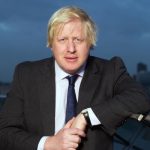
  • Boris Johnson – 2022 Answers at Liaison Committee (Fuel Duty)

    Boris Johnson – 2022 Answers at Liaison Committee (Fuel Duty)

    The answers given by Boris Johnson, the Prime Minister, at the Liaison Committee held in the House of Commons on 6 July 2022.

    Huw Merriman: Turning to another area of policy that perhaps needs to change, at the moment 4% of the Exchequer’s revenues come from motoring taxes. Those will plummet to zero when we all drive electric vehicles. Are you serious about getting a new form of road pricing policy in place to fill that hole? If not, how will it be filled?

    The Prime Minister: Road pricing is something that we will eventually have to consider. I’m not attracted to it. I seem to remember that I successfully campaigned to remove the western extension of the congestion charge in London.

    Q89 Huw Merriman: I am not talking about road charging in that way; I am talking about—as we do at the moment—charging people per mile they drive, because that is what fuel duty does. You will have to replace that.

    The Prime Minister: I see what you mean—for electric vehicles as well, so that you charge a mileage.

    Q90 Huw Merriman: Yes, something along those lines.

    The Prime Minister: It is certainly the case that we will need a substitute for fuel duty.

    Huw Merriman: This comes back to my point about policy delivery, because—

    Chair: I am astonished. This is imminent. We are introducing electric cars.

    Q91 Huw Merriman: May I finish, Sir Bernard? For three months, Prime Minister, No. 10 has had a recommendation for a working body just to look at this, because something has to fill the 4%. The Treasury signed off on it, and for three months it has been sat in No. 10. One week, I am told somebody has signed it off; the next week, someone else has looked at it and stopped it, and it is stuck. My question is: the inertia inside No. 10—perhaps because of the events that we will go on to talk about—

    The Prime Minister: Nonsense.

    Q92 Huw Merriman: You say it’s nonsense, but it is a nonsense that we have been waiting three months just for someone to sign off on something that fills 4% of the Exchequer—that is the nonsense. Do you not agree that something should be done? If you can’t do it, do you think that perhaps someone else could come in and run it properly?

    The Prime Minister: This No. 10 was actually the first Government in Europe to set a timetable for moving away from internal combustion engine cars by 2030.

    Q93 Huw Merriman: I know. That is why you should follow through on the consequences of it.

    The Prime Minister: We have been moving at blistering speed. We are looking at all fiscal proposals to replace fuel duty, and I am happy to come back.

    Q94 Huw Merriman: You’re not. You are actually currently sitting on all proposals.

    The Prime Minister: I cannot believe that the Treasury is showing the slightest hesitation or reluctance to find a new way of taxing motorists.

    Q95 Huw Merriman: That is my point. The Treasury signed off on it. No. 10 then insisted on looking at it and has sat on it for three months. I think Andrew Griffith is currently the one who has now said, “No, I don’t like this.” We are therefore stuck, having thought we had cleared all the hurdles.

    The Prime Minister: I will take it up with Andrew.

    Q96 Chair: I was shadow Transport Secretary in 2000, and road charging was seen as the future then. Successive Governments have dodged it, but why is your Government dodging it when you are already abandoning the revenue stream from hydrocarbons?

    The Prime Minister: Sir Bernard, why do you think we necessarily are? We have got to find a way of filling the gap left by fuel duty.

    Q97 Chair: You have actually got a target for eliminating fossil-fuel cars, but you have not got any plan in place to replace the revenue.

    The Prime Minister: I think it highly unlikely that the Treasury will let any opportunity go to substitute revenue from motoring. What we want to do is, for the purposes of the environment, to encourage the take-up of low-carbon vehicles, and that is why the fiscal strategy is framed as it currently is. That is what we are doing for the time being.

  • Boris Johnson – 2022 Answers at Liaison Committee (Airport Delays)

    Boris Johnson – 2022 Answers at Liaison Committee (Airport Delays)

    The answers given by Boris Johnson, the Prime Minister, at the Liaison Committee held in the House of Commons on 6 July 2022.

    Huw Merriman: In the six minutes I have, Prime Minister, I want to talk to you about transport policy delivery—if you’re focused. I want to talk about rail, air and also road. Starting with rail, do you have all of the policy, and legal interventions and levers, that you need to end this rail strike?

    The Prime Minister: Thanks very much, Huw. I call on the union barons and the railway companies to sort this out. I think that they should be able to do it. And I think that, yes, we probably do need a few more tools.

    Q80 Huw Merriman: Specifically, what would they be?

    The Prime Minister: I think that you could have minimum service levels; you could have ballot thresholds. And as you know, we are bringing in—I think we have already brought in—the provision for agency workers where that is necessary.

    Now, that is not going to fix problems like train drivers; you are not going to get agency workers to drive a train. But the argument that I would make is that you need to modernise.

    Q81 Huw Merriman: Let me again just focus on the levers, because I think that in the Conservative manifesto there was a line that said, “Only the Conservatives could get Brexit done”, a few more things, “and stop passengers being held hostage by the unions.” And that was with the introduction of that policy of minimum service levels. Yet that hasn’t been introduced.

    The Prime Minister: It has not, but—

    Q82 Huw Merriman: And people are being held hostage, which might be your view. Why did you not bring, with an 80-seat majority, that legislation through before the strikes started?

    The Prime Minister: That is a very good question. And—

    Q83 Huw Merriman: And the answer is?

    The Prime Minister: And the answer is: we should have done it. The trouble was that we had a lot of covid stuff to deal with and I’m afraid it got pushed to the right, and I regret—

    Q84 Huw Merriman: I thought you might say that, although there have been other things we have been able to do, notwithstanding covid. Okay, let me move on to airports. There has been massive disruption to the airports—people having their holidays cancelled at the last minute. Why wasn’t more done to stop airlines from putting more flights in place than they had the bandwidth of staff to deal with?

    The Prime Minister: Well, the airlines should not be abusing passengers in the way that they have been, and I think there should be greater protections. But I think the—

    Q85 Huw Merriman: But again, this is all, “There should be”. My question is: why hasn’t there been?

    The Prime Minister: Because basically, we were trying to get any airlines flying at all. I mean, Diana has asked a very good question about passports, where we’re putting huge numbers of people to try and speed up the delivery of passports. We had a situation in which no airlines were moving at all. And we had to put £8 billion—as you will remember, Huw—into supporting the airline industry.

    Q86 Huw Merriman: Indeed. But Gatwick, for example, has controlled the number of flights that will be able to fly out during July and August, because they can see the airlines are trying to fly at 2018 levels. They could see the number of staff coming on, so they have taken action. Other airports haven’t necessarily. The regulator—the Civil Aviation Authority—doesn’t have the power, up front, to implement these types of policies. Shouldn’t it have that power?

    The Prime Minister: I am willing to be persuaded that it should.

    Q87 Huw Merriman: Because when we put a report on that basis, the recommendation was rejected by Government on the basis that there wouldn’t be a proposal to give the regulator up-front powers to take action, including to help with compensation. Perhaps we can push him a bit more on that, if you are behind it—

    The Prime Minister: Huw, I am going to have to look into what more powers we might need to take to get the airlines to behave responsibly towards their passengers. But I think the experience of the public is pretty wretched at the moment for all sorts of reasons, and they need to do much, much better.

  • Trudy Harrison – 2022 Statement on the Second Cycling and Walking Investment Strategy

    Trudy Harrison – 2022 Statement on the Second Cycling and Walking Investment Strategy

    The statement made by Trudy Harrison, the Parliamentary Under-Secretary of State for Transport, in the House of Commons on 6 July 2022.

    In 2017, the Government published the first ever statutory cycling and walking investment strategy, which covered the period between 2016 and 2021.

    The first report to Parliament on the delivery of the strategy and on the progress made towards meeting its objectives was published in February 2020. Much has changed since then, including the publication of “Gear Change: a bold vision for cycling and walking” in summer 2020, and the new commitment to £2 billion of additional funding over this Parliament—the largest amount of dedicated spending ever committed to increasing walking and cycling in England. To date we have created Active Travel England, led by Chris Boardman, and are providing local authorities with funding to deliver 134 first-rate schemes to develop new footways, cycle lanes and pedestrian crossings across England.

    Today, I am publishing the second statutory cycling and walking investment strategy—CWIS2—which covers the period between 2021 and 2025. The strategy includes new and updated objectives, including doubling cycling, increasing levels of walking across the community, and walking to school, while also setting out the funding in place to achieve these. It includes the projection that a total of nearly £4 billion will be invested in walking and cycling over the CWIS2 period, delivering new and improved walking and cycling routes across England and behaviour change programmes.

    Alongside this, I am laying before Parliament the second report to Parliament on the progress made in delivering CWIS1. This shows that good progress was made in delivering the 26 actions outlined in CWIS1, including the delivery of the Cycle Ambition Cities programme and a range of behaviour change programmes. It also highlights that more than twice as much funding was invested into walking and cycling schemes over the CWIS1 period than was originally anticipated when CWIS1 was published in 2017. It also outlines the progress we have made on other measures, including those set out in the Gear Change plan. Both CWIS2 and the report to Parliament are publicly accessible online through the www.gov.uk website. A copy of CWIS2 will be placed in the Libraries of both Houses.

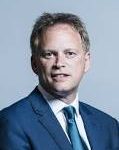
  • Grant Shapps – 2022 Statement on the Headquarters of Great British Railways

    Grant Shapps – 2022 Statement on the Headquarters of Great British Railways

    The statement made by Grant Shapps, the Secretary of State for Transport, in the House of Commons on 5 July 2022.

    Today, 5 July 2022,1 am announcing the shortlist of the most suitable potential locations for the national headquarters of Great British Railways (GBR), which will go forward to a consultative public vote to be held online and by post.

    The confirmed list of shortlisted towns and cities is:

    Birmingham

    Crewe

    Derby

    Doncaster

    Newcastle upon Tyne

    York

    I announced on 4 October 2021 that a competition would be run to identify the headquarters for GBR, to be located outside of London. This was launched on 5 February 2022 and was overseen by the GBR Transition Team (GBRTT). Prospective local authorities were asked to submit a short Expression of Interest to GBRTT by Wednesday 16 March.

    GBRTT received 42 applications and has analysed their suitability against the published set of criteria for the national headquarters. The selection criteria are:

    Alignment to Levelling Up principles

    Connected and easy to get to

    Opportunities for GBR

    Value for money

    Railway heritage and links to the network

    Public support

    GBRTT will launch a public vote today that will give the public the opportunity to express their views. The vote is consultative and will be used to test public support for each shortlisted location, allowing the people that the railway serves the chance to have their say.

    Ministers will then make a final decision on the headquarters’ location based on all information gathered and against the above criteria, with a final decision expected later in the year.

    The new national GBR headquarters will be supported by a number of new regional headquarters across the country, putting decision-making and investment at the heart of communities that use those railways day to day.

    The Government are committed to levelling up, delivering jobs and investment beyond the capital. The national headquarters will be at the heart of the rail network and provide strategic direction for the running of GBR. Based outside London, it will bring a number of high-skilled jobs to the winning location.

  • Grant Shapps – 2022 Statement on Government Support for the Aviation Industry

    Grant Shapps – 2022 Statement on Government Support for the Aviation Industry

    The statement made by Grant Shapps, the Secretary of State for Transport, in the House of Commons on 30 June 2022.

    The majority of UK flights continue to be on time and without disruption. However, some passengers have faced significant disruption, which has also occurred in the aviation sector across Europe and globally. The outcome for too many consumers has been unacceptable.

    I have made it clear to the sector that they need to operate services properly and according to schedule or provide swift, appropriate compensation. I have already announced a one-off amnesty on airport slot rules, enabling airlines to plan ahead and avoid last-minute cancellations.

    I expect airlines to use this one-off amnesty now to ensure they are giving consumers certainty by offering schedules they can deliver. By the end of the slot handback period, I expect airlines to be offering services they are confident of delivering, and I will continue to seek reassurances from them that this is the case.

    We have been extensively engaging with industry at ministerial and official level since the beginning of the year. As part of this engagement the aviation Minister established a weekly strategic risk group. This brings together CEOs from airports, airlines and ground handlers to work through the issues ahead of the summer.

    Today, I am setting out all of the 22 measures the Government are currently taking to support the aviation industry, including: to help recruit and train staff; ensure the delivery of a realistic summer schedule; minimise disruption; and support passengers when delays and cancellations are unavoidable. The Government recognise that these issues are primarily for industry to solve, but this series of targeted measures will support their efforts.

    The measures are:

    Ensure industry deliver a realistic summer schedule

    1. We and the Civil Aviation Authority (CAA) have set out five specific expectations to the industry to deliver a successful summer operation:

    1. Summer schedules must be reviewed to make sure they are deliverable;

    2. Everyone from ground handlers to air traffic control must collaborate on resilience planning;

    3. Passengers must be promptly informed of their consumer rights when things go wrong and—if necessary—compensation in good time;

    4. Disabled and less mobile passengers must be given assistance they require;

    5. Safety and security must never be compromised.

    2. We have introduced new regulations on airport slots give airlines the tools to ensure that schedules are manageable and reduce flight disruption over the summer peak.

    3. We have strengthened industry-Government working, by establishing a new weekly strategic risk group, chaired by Ministers and attended by airline, airport and ground handler CEOs to ensure they are prepared for summer and can meet the schedules.

    4. We have established a weekly summer resilience group with airline, airport and ground handler operational directors to help them work through their pinch-points in the aviation system as they emerge and work collaboratively on solutions.

    5. We have established a joint Home Office and Department for Transport ministerial border group to identify and prepare for high levels of demand at the UK border.

    6. We have worked with the major airlines and airports to get weekly updates and assurances to Government that they can run their schedule of summer flights.

    7. We are working with international partners, neighbouring countries and EUROCONTROL, to ensure that disruption is minimised through co-ordinated planning and cooperation across airspace boundaries.

    8. We are undertaking a review of the ground handling market to seek out opportunities to improve quality and consistency of service.

    Supporting passengers

    1. We will launch a new aviation passenger charter, a one-stop guide for passengers informing them of their rights, responsibilities and what they can reasonably expect of the aviation industry when flying.

    2. We have worked with the CAA and industry to publish and promote guidance for passengers as part of a joint campaign of activity to communicate things they need to know and do when travelling by air this summer, helping to speed up processing time and reduce queues and delays.

    3. We have written to airlines to remind them of their legal responsibilities in providing information, care and assistance, refunds, and compensation.

    4. We are working with the CAA reviewing airlines current practices to ensure legal responsibilities in providing information, care and assistance, refunds, and compensation are being met and encouraging best practice.

    5. We intend to strengthen consumer protection for air passengers such as additional enforcement powers for CAA, our proposals are set out in the aviation consumer consultation.

    6. The CAA has written to airports to set out their plans for additional measures to improve provision of assistance to disabled and less mobile passengers and support the sector by providing guidance.

    Supporting industry to recruit, retain and train staff

    7. We changed the law so industry has more flexibility to train staff and allow them to deploy staff quickly and flexibly while maintaining security standards.

    8. We are launching a Generation Aviation campaign, working with industry to promote awareness of aviation careers and increase the number of people applying for jobs in the sector.

    9. We are working with the CAA to launch a £700,000 skills funding competition this autumn to support outreach across the sector and raise awareness of aviation careers to young people.

    10. We have launched the aviation skills recruitment platform to support skills retention and recruitment in the sector.

    11. We are building partnerships with colleges and universities to ensure students are attracted to and prepared for a career in aviation—and to support this we have launched the Talentview Aviation platform to connect students to aviation sector employers.

    12. We are working with the Department for Work and Pensions to promote aviation roles and recruitment via job centres and training for jobs coaches.

    13. We are delivering our Reach for the Sky outreach programme, supported by our aviation ambassadors to promote diversity, inclusion and accessibility in the sector.

    14. We introduced the airport and ground operations support scheme (AGOSS) to support commercial airports and ground operators with fixed costs, through £161 million in grants.

    There have been calls for a seasonal worker scheme to allow EU workers to fill vacant roles in our aviation sector. However, the Government are clear that more immigration is not an obvious solution. The aviation sector’s issues are not confined to the UK. Disruption is happening across the EU and in the USA due to staff shortages, and the Government are committed to building a robust and dependable domestic aviation industry, launching the aviation skills retention platform to help develop and hold onto UK workers. Similar schemes in other sectors experiencing shortages, such as the HGV sector, have not been widely used and have not significantly contributed towards a solution. Building a resilient, well-paid British workforce will prove a far more effective, sustainable and long-term solution.

    The Government have taken action to support the industry, now the sector itself needs to take the appropriate steps to ensuring they deliver realistic summer schedules, work together as an ecosystem, and put the consumer first.

  • Grant Shapps – 2022 Statement on the European Train Control System

    Grant Shapps – 2022 Statement on the European Train Control System

    The statement made by Grant Shapps, the Secretary of State for Transport, in the House of Commons on 29 June 2022.

    I am pleased to announce over £1billion investment in the East Coast Digital Programme, which aims to introduce the European Train Control System (ETCS) to the Southern section of the East Coast Mainline.

    European Train Control System, also known as digital signalling, brings signalling onto a screen in the train’s cab. This provides drivers with continuous real time information, for example maximum allowable speeds, and removes the need for line-side signals. Trackside sensors are retained to track the train on the network and support adaptive decision making, through assessing and understanding that particular train’s characteristics such as speed and braking distance. This investment will fund the fitment of trains and lineside technology on the stretch of line from London King’s Cross to Stoke Tunnel, just North of Peterborough, as well as the integration of this technology into the network and its operating companies.

    This will be the first deployment of European Train Control System on a mixed-use mainline in the UK rail network, increasing punctuality and reliability for both passenger and freight services across the whole line. Trains will be able to run closer together safely, enabling more services to run on the same stretch of track. Fewer signalling failures and faster recovery from any delays will make the service more reliable for the customer.

    This programme of work presents a unique opportunity to enable a positive step-change in technology on the network, with a move away from systems of signalling that emerged from Victorian times, and towards a high-performing digital alternative. As the rail sector continues to recover from the pandemic, it is vitally important that capacity and reliability are both increased in a financially viable way as demand returns.

    This large upfront investment in the rail sector also presents an opportunity for savings in the long run, as maintenance of these assets is more affordable across the whole life of the signals. Furthermore, this programme will create approximately 5,000 highly skilled jobs in the rail industry.

    Initial enabler projects have already begun, including the fitment of trains and some infrastructure on the Northern City Line, with works to continue through the 2020s.

    This major investment is symbolic of this Government’s ongoing commitment to modernising our railways, making them fit for the 21st century. Deployment of this innovative technology for the first time on a mixed-use mainline in the UK will deliver improvements for the user, support the creation of a financially sustainable railway and also grow and level up the economy by delivering an upgrade to this vital economic artery which stretches along the spine of this country.

  • Grant Shapps – 2022 Statement on the Road Safety Investigation Branch

    Grant Shapps – 2022 Statement on the Road Safety Investigation Branch

    The statement made by Grant Shapps, the Secretary of State for Transport, in the House of Commons on 29 June 2022.

    I wish to inform the House that my Department has today published its response to the Government consultation on establishing a Road Collision Investigation Branch.

    This Government are committed to improving road safety and reducing the number of people who are killed or seriously injured on our roads each year. I am pleased to announce that the Government intend to bring forward new measures to enable the creation of the branch, which, following discussions with stakeholders, will be named the Road Safety Investigation Branch.

    This independent, safety-focused branch will learn the lessons from road collisions and other incidents, including those involving self-driving vehicles, by carrying out independent investigations and making recommendations to prevent future incidents, make our roads even safer and save lives across the country. The branch will also provide vital insight into safety trends related to new and evolving technologies, which will help to ensure road safety policy keeps pace with new developments.

    We expect to include measures to enable creation of the branch in the forthcoming Transport Bill.

  • Trudy Harrison – 2022 Speech on Hammersmith Bridge

    Trudy Harrison – 2022 Speech on Hammersmith Bridge

    The speech made by Trudy Harrison, the Parliamentary Under-Secretary of State for Transport, in the House of Commons on 28 June 2022.

    I congratulate the hon. Member for Putney (Fleur Anderson) on championing Hammersmith bridge once again, and on securing the debate. I also note the contributions by the hon. Members for Hammersmith (Andy Slaughter), and for Richmond Park (Sarah Olney). I have listened carefully to them, and I appreciate that the subject is of keen interest to their constituents. I understand the impact of the bridge’s closure to motor vehicles on many of the people in constituencies around Putney, and throughout south and west London.

    As the hon. Member for Putney is aware, the bridge is owned by the London Borough of Hammersmith and Fulham and, as such, the borough has the responsibility for maintaining the bridge. The decisions on its repair lie with the borough. The bridge is a unique wrought iron structure, and has served generations of Londoners for nearly 200 years. It is deeply concerning that the bridge has had to close, first to motor vehicles in 2019 and then to all users in 2020. Of course the safety of those using the bridge was and remains the greatest priority. That is why my Department has done everything in its power to assist the London Borough of Hammersmith and Fulham and Transport for London with the project, and to facilitate the full reopening of the bridge to all users, including motor vehicles.

    I turn to the progress that has been made and some of ways that we have assisted. In 2019, we established the Hammersmith bridge taskforce, led by Baroness Vere of Norbiton, and it has met several times. The taskforce brings together all the key stakeholders whose input is required to deliver successful outcomes for pedestrians, cyclists, river traffic, and, eventually, motorists. The taskforce has been instrumental in organising stakeholders to work together in developing a clear course of action to enable the bridge to open.

    The hon. Member for Richmond Park (Sarah Olney) asked about the prior information notice that was issued by Hammersmith and Fulham. That PIN was issued on 25 May, with a deadline of 10 June. It was then extended to 15 June. Meetings with interested parties are taking place over the next few weeks to gauge interest and to seek feedback on the proposals. This is a crucial step in the process, and in developing an understanding of the market’s appetite and of the options being considered by the London Borough of Hammersmith and Fulham.

    On the timelines, since the establishment of the Hammersmith bridge taskforce, the project has made significant progress. Thanks to Government funding—some £4 million was provided on 31 October 2020—the bridge was able to reopen on 17 July 2021, albeit on a limited and controlled basis, to pedestrians, cyclists and river traffic. The next stage of the project—reopening the bridge to motor vehicles—is under development by the London Borough of Hammersmith and Fulham. Providing a schedule for full reopening is part of the development process. Whether to impose tolls is a decision for the London Borough of Hammersmith and Fulham. We expect the borough to engage with residents as it deems appropriate, so that it can understand any implications, as the hon. Member for Richmond Park set out.

    Sarah Olney

    Can the Minister bring any influence to bear on her colleague in the other place, Baroness Vere, so that she reconvenes a taskforce that will enable the whole issue of tolls to be properly, widely and publicly discussed with the relevant stakeholders?

    Trudy Harrison

    I will now set out exactly what is happening. Much good progress is being made. Following the complete closure of the bridge in 2020, the Department for Transport provided £4 million of taxpayers’ money, which enabled a comprehensive investigation of the overall structure and condition of the bridge. Through that investment, we had pretty much world-leading engineers working to develop a complete picture of the issues facing the bridge. Those works determined that the bridge was in a better condition, thankfully, than first thought, and that led directly to the bridge reopening, albeit on a temporary and controlled basis to pedestrians, cyclists and river traffic.

    Andy Slaughter

    I am in a state of despair, listening to the Minister. The cost of reopening this bridge could be £160 million. Hopefully, it will be less, but it is of that order. It is about the same as building a whole new Thames bridge, and it is fantasy for the Minister to say, “The Government are providing £4 million,” and “The Government have done this or that.” All the initiative so far has been taken by Hammersmith and Fulham Council—whether that is on the memorandum of understanding, on the proposals for the cheaper Foster COWI bridge, or on the stabilisation work—to get the bridge open permanently again to pedestrians. This is a strategic route through London. The Government must step up to the plate. I know that this is not in the Minister’s brief, but please could she take this issue seriously? It is affecting hundreds of thousands of people all across London and the south-east.

    Trudy Harrison

    I reject the characterisation of my Department as not taking this seriously. The hon. Gentleman will know that when one is potentially spending more than £100 million on a new bridge, much consideration and engineering knowledge will need to go into things such as a review by the Case for Continued Safe Operation Board. The board monitors the condition of the bridge, and has enabled it to stay open to pedestrians, cyclists and river traffic. I am relieved to say that since that reopening, no further closures on safety grounds have been necessary.

    The commitment to this project did not stop at the initial £4 million investment—not at all. In the TfL extraordinary funding and financing settlement of June 2021, we committed to sharing the cost of reopening the bridge. We have committed to that funding with the London Borough of Hammersmith and Fulham and TfL. We reiterated that commitment in a subsequent settlement, agreed in February 2022. That commitment ensures that the Government will fund up to one third of the cost of opening the bridge to pedestrians, cyclists, river traffic and—depending on those costs—buses and motor vehicles as well.

    The first part of that commitment has already been delivered. Earlier this year, the Department approved the full business case from LBHF for the stabilisation works on the bridge. Those works will ensure that the bridge will remain open to pedestrians, cyclists, and river traffic permanently, with no risk of further temporary closures due to unsafe conditions.

    The approval of the business case was a condition of the Government’s releasing their third of the funding for stabilisation. I am pleased to say that in May this year, my Department provided the borough with almost £3 million to allow the works to progress unimpeded by financial concerns. That brings the total investment to date to nearly £7 million.

    It is thanks to the excellent work and diligence of my Department, TfL and the London Borough of Hammersmith and Fulham that the works are already well under way. At long last, the residents of this part of London can see tangible progress being made. The borough is now managing the works, and will be providing my Department with regular updates on progress.

    The next stage is to strengthen the core and renovate other structurally significant parts of the bridge. The strengthening phase of engineering works will build on stabilisation works; on its completion, the bridge can open to all users, including buses and motor vehicles. LBHF is required to submit a further business case to my Department and to TfL; in that business case, we would expect to see that the proposed method of strengthening is viable, offers value for money and minimises disruption to current users of the bridge. That is essential. The business case will also set out the final cost estimate for strengthening the bridge and, once approved, will allow my Department to release its third of the funding.

    Fleur Anderson rose—

    Trudy Harrison

    Sorry; unfortunately, I cannot give way due to time. All three parties will work together over the coming months to ensure that an HM Treasury Green Book-compliant business case is developed and submitted for approval as soon as possible.

    In closing, I re-emphasise that reopening Hammersmith Bridge to all users is and remains a Government priority. Restoring full access to this vital south-west London artery will improve the lives of thousands of residents, commuters and businesses who have, as we have heard this evening, been long deprived of a convenient route across the Thames. I also restate my Department’s commitment to funding up to one third of the cost, on approval of an appropriate business case.

    I thank hon. Members for their contributions, and for their dedication in highlighting the issues that the continued closure of the bridge causes for their constituencies and others in the surrounding area. I reassure them that we are working tirelessly to deliver the full opening of the bridge.

  • Fleur Anderson – 2022 Speech on Hammersmith Bridge

    Fleur Anderson – 2022 Speech on Hammersmith Bridge

    The speech made by Fleur Anderson, the Labour MP for Putney, in the House of Commons on 28 June 2022.

    Thank you for calling me, Mr Deputy Speaker, and I thank the Members who are present for this important Adjournment debate.

    Here I am again, and talking about Hammersmith bridge again. It has been closed to vehicles for three long years, and that closure is still having a huge impact on the everyday lives of residents in Putney, Roehampton and Southfields, and much more widely across south-west London.

    I last held an Adjournment debate on the closure—and, hopefully, the reopening one day—of the bridge in April 2021, and I have raised it in the House several times since then. Since that debate there have been welcome stabilisation works to make the bridge safer, and it has reopened to pedestrians above and river traffic below. However, I am here again because there has still been no agreement on the building of a temporary vehicle bridge, on any date by which the restoration of the bridge will be complete, or on when—and residents are crying out “When?”—the bridge will fully reopen. I hope to hear much better news from the Minister this time than last time, and I know that plenty of people in Putney and across south-west London are listening to the debate and also want those answers.

    The Government have been dragging their feet, and the taskforce has had no task and no force. Responding to my last debate, the then Parliamentary Under-Secretary of State for Transport, the hon. Member for Redditch (Rachel Maclean), simply said:

    “The buck stops with Hammersmith and Fulham.”—[Official Report, 14 April 2021; Vol. 692, c. 442.]

    That was a very disappointing end to the debate. I will be describing all that Hammersmith and Fulham Council is doing now, because it is the council that is responsible for the bridge, and explaining why it is the Government who need to do more.

    It is Hammersmith and Fulham Council that made the assessment of the danger in the first place, has made the business case for the stabilisation works and funded those works up front, and has drawn up the memorandum of understanding between the council, the Government and Transport for London, the three parties that will be responsible for the funding. However, Transport for London does not have the funds to restore the bridge because of reduced fees and other payments as a result of covid, so it comes down to the Government. What have the Government done, what will the Government do, and when will the bridge reopen?

    Let me first say something about the impact of the closure. It has resulted in between 500 and 4,000 vehicles a day coming through Putney High Street. Local residents complain constantly of increased travel times for journeys by bus and car, of increased congestion and pollution and of accidents on the roads, especially involving children near the schools on the most affected roads.

    We want more safe cycle routes in Putney, and in Wandsworth we have one of the highest “propensity to cycle” ratings. However, the increased traffic and traffic jams make cycling more dangerous and put people off cycling. In meetings that I have held with potential cyclists, most people say they feel that Putney Hill, Putney High Street and Putney Bridge are very dangerous roads. That in turn means worse air quality, because if there are fewer cyclists on the road there are more vehicles, which add to the congestion. As you will know, Mr Deputy Speaker, each year more than 4,000 Londoners die prematurely as a result of air pollution, and more than 500,000 people in London boroughs suffer from asthma and are vulnerable to toxic air.

    Recently, for Clean Air Day, I undertook readings using an ultra-fine particle counter—lent to me by Imperial College—along Putney High Street and the Lower and Upper Richmond Roads, the main diversion routes from the bridge. The readings were exceptionally high, even from inside homes along those roads. Residents have shown me the black soot that builds up in their homes, and companies tell me about the impact that the poor air quality is having on their business.

    The Putney Society is concerned about this as well, and it has sent me the following statement about the impact of the bridge closure:

    “Congestion is at an all time high with roads leading towards Putney Bridge clogged up before 7 am in the morning, with traffic jams continuing well into the evening. Prior to the Bridge closure in 2019 Putney already suffered from one of the most polluted High Streets in the country. And despite positive measures such as the introduction of cleaner buses and the ULEZ zone, our pollution levels continue to exceed UK legal limits, in part because of additional traffic resulting from the Bridge closure. Around 60 constituents die prematurely each year because of this pollution, and we now face the prospect of this continuing for several more years until Hammersmith Bridge is fully repaired.”

    The statement continues:

    “The extra traffic has affected thousands of people. Aside from the impact of pollution on residents’ health, children and students have suffered disrupted journeys to their school or college; workers, especially those travelling from Roehampton, have faced significantly lengthened bus journeys and businesses have had delayed deliveries. And the most vulnerable people, who require access to healthcare, whether appointments or vital emergency treatment, face delays in getting an ambulance or reaching nearby hospitals. Why? Because ambulances can no longer take a short hop across the Bridge to Barnes or beyond but now spend much, much longer in traffic”.

    Andy Slaughter (Hammersmith) (Lab)

    My hon. Friend is making an excellent speech, particularly in drawing attention to the fact that the closure of Hammersmith bridge is having a sub-regional and regional effect. It is much wider than just the immediate locality. Does she find it surprising that the Government have dragged their feet all the way along the line on this, first by asking Hammersmith to find all the funding, then £64 million and now a third of the cost, which is more than double what they would propose for similar schemes? Does she agree that until the Government are prepared to take their responsibilities in this matter seriously, we are not going to see progress?

    Fleur Anderson

    I absolutely agree with my hon. Friend. We have just had a debate on Government failure, and this is Government failure 101. Not keeping a major transport route open in our capital city and letting it stay closed for so many years—and who knows how much longer—is a Government failure. They need to step up with the funding, and I will be outlining more information about that.

    Hammersmith bridge is a very unusual bridge, and this is why it requires special attention from the Government. It is a grade II listed structure and part of Great Britain’s engineering heritage. It is also one of the world’s oldest suspension bridges, and only five years younger than the Brooklyn bridge in New York. It is unique, having been built out of cast iron, wrought iron and wood. No Government, surely, would allow the Brooklyn bridge to stay closed, so why let Hammersmith bridge do so? It has suffered from over seven decades of deterioration and corrosion. This corrosion, along with the fact that the bridge was designed for the needs of the 19th century, is what makes Hammersmith bridge one of the most expensive bridges in Britain to repair. When warnings of its possible imminent collapse forced its closure, I perfectly understood that the engineers faced huge challenges.

    Transport for London has estimated that the repair bill could be between £141 million and £161 million. By comparison, the cost of repairing other Thames bridges is far smaller. For example, Chiswick bridge cost £9 million to repair, and Albert bridge cost £9.7 million. In those cases, Transport for London largely funded the works, paying between 85% and 100% of the costs. The responsible council was not left to foot the bill in the way that Hammersmith and Fulham Council is being asked to do. The bridge is a special case, both historically and financially, and it needs a different funding package from the Government.

    Overall, there needs to be a change in bridge policy in London. Lambeth Council has five bridges, but is responsible for none of them. Southwark bridge and London bridge are managed by a trust. Two railway bridges are managed by Network Rail, but Hungerford railway bridge is managed by Westminster. The policy is all over the place. I think it might be time to look at the inequity of bridge responsibilities in London, because it is clear that the system is failing us over Hammersmith bridge. But we are where we are, and there is currently an agreement that the Government, Transport for London and Hammersmith and Fulham Council will fund it.

    The Mayor of London has repeatedly sought to meet the Transport Secretary to discuss this and a range of London transport funding issues, but these requests have all been refused. Twenty meetings with Transport for London have been cancelled by the Department for Transport or the Treasury since the last TfL funding deal was agreed. The last time the Transport Secretary and the Mayor of London spoke and discussed Transport for London funding was on 30 May 2021. That is shocking to hear, as Londoners are being let down by this Government. We need them to work with the Mayor, and I hope to hear more of that from the Minister later. We are talking about a national transport route, and the Government must lead the way in funding and reopening it. If a toll is going to be made necessary because the Government will not fund the bridge, has the impact on Putney residents been factored into that business case?

    What has Hammersmith and Fulham Council done? Can we say that the buck stops with it? Last November, the council submitted a full business case to the Department for Transport for the stabilisation works, at a cost of £8.9 million, which was £21 million less than the TfL stabilisation plan, so this is a major saving to the taxpayer. To speed up the repair programme, the council decided in December to make the cash available up front, rather than wait for the DFT and TfL governance processes to sign off their shares, as that process is simply too cumbersome. That enabled works to begin several months early. The DFT did not sign off on its one-third share until 22 March this year, many months later, showing that the Government are dragging their feet. The phase 1 stabilisation programme was able to get under way on site in February. It will stop the risk of collapse and prevent future closures to pedestrians, cyclists and river traffic, which I, of course, welcome. On 7 March, Hammersmith and Fulham Council signed off a further £3.5 million investment so that it could crack on with all the essential expert studies required to obtain Government and TfL funding through the full business case. That includes essential concept design work, geotechnical studies, crowd loading assessments and traffic modelling. I understand that the council and the DFT officials are working together on completing the business case, but when will that be done? Will funding be ready to go as soon as that is completed and approved, so that we do not have any more delays?

    The latest investment of £3.5 million by the council to deliver those essential studies has again been paid for by the council up front, rather than having to wait for the DFT and TfL governance processes to kick in. This signing off of money, at its own risk for the council, in order to expedite bridge works is a situation that the council says cannot continue. I understand that the impasse is now the memorandum of understanding, which would confirm the one shares payable for the council, the DFT and TfL, but that it has not been signed. The latest draft version was sent by the council to the DFT on 14 September 2021, but it has not yet received a response from Ministers or their officials. So I hope that I will not hear, “The buck stops with Hammersmith and Fulham Council” from the Minister again. The Government need to recognise the huge impact of this closure on people in Putney and beyond, and they need to take far more proactive and urgent action.

    I shall finish with some questions for the Minister. When is the next meeting of the taskforce? When will Secretary of State sign the memorandum of understanding to enable the next phase of the works to continue as fast as possible? What is the hold-up on that? Has an assessment of the impact of a proposed toll, or of any other financial proposals, on routes through Putney been carried out? Would the Government consider underwriting the full works? When will the building of the temporary bridge start? How long will it take? Is there a deadline from Ministers for the completion of this project, as we would certainly like to see that there is and that it is as soon as possible? I ask again, and I will keep asking, what have the Government done, what will they do and when will Hammersmith bridge reopen?

    Mr Deputy Speaker (Mr Nigel Evans)

    Sarah Olney has asked permission from the mover of the motion and the Minister to make a short contribution in this debate. Both have agreed and I have been informed.

    Sarah Olney (Richmond Park) (LD)

    Thank you very much, Mr Deputy Speaker. I thank the hon. Member for Putney (Fleur Anderson) for securing this debate and I thank the Minister and you for allowing me to contribute briefly to it. As I am sure everybody knows, the closure of Hammersmith bridge has had an enormous impact on my constituents. I wish to raise two issues, following on from the excellent speech of the hon. Member for Putney outlining the situation. The first is that on 25 May 2022, the London Borough of Hammersmith and Fulham issued a prior information notice, announcing its intention to seek external funding for its third of the cost of strengthening Hammersmith bridge. As the hon. Lady asked, does that mean tolls? We are desperately seeking further information on that important point from the Department. I am not against tolls. If they are required to get the bridge open, there may be public support for that in Richmond Park, but it needs detailed consideration by all parties, including the London Borough of Richmond upon Thames. Any tolls would weigh heavily on my residents, and we need a full exploration of all the factors. For instance, would tolls mean that people continue to use Putney and Chiswick bridges and avoid Hammersmith bridge and the tolls? Tolls are not unknown on London bridges, but not within the lifetime of anyone here.

    My residents would also want to know who will have to pay the tolls. Might there be exceptions for Richmond residents, or will the exceptions just be for buses and emergency vehicles? We need more information. I urge Baroness Vere, the Minister responsible, to reconvene the taskforce so that the issues can be urgently discussed by local stakeholders, including the London Borough of Richmond upon Thames.

    The hon. Member for Hammersmith (Andy Slaughter) made the point about the strategic issue involved. In Richmond, planning permission for housing developments, school place planning and healthcare planning are being affected. Will my residents have access in the long term to services, including schools and healthcare, on the north side of the Thames? It is really urgent. We know that jointly Transport for London, the Department for Transport and the London Borough of Hammersmith and Fulham are committed to reopening the bridge, but without the funding to do so, their commitment is not worth very much. When it comes to five and 10-year planning for education and healthcare, we do not know whether services on the north side of the Thames will be accessible to people in Barnes. That is a real issue for parents who are thinking about schooling for their children. Will they be able to cross the bridge and access schools in Hammersmith and further afield? I thank the hon. Lady for bringing the debate to the House, and you, Mr Deputy Speaker, for allowing me to contribute.

  • Grant Shapps – 2022 Statement on TFL Funding Extension

    Grant Shapps – 2022 Statement on TFL Funding Extension

    The statement made by Grant Shapps, the Secretary of State for Transport, in the House of Commons on 27 June 2022.

    Following my statement to the House on 25 February, I am updating the House on a short extension of the current Transport for London (TfL) funding settlement that was due to expire on 24 June 2022, by 19 days, to 13 July. This has been agreed by the Mayor of London.

    Since the start of the pandemic, we have supported the transport network in London with nearly £5 billion funding through extraordinary funding settlements for Transport for London. We have recognised the reliance of London’s transport network on fare revenue, and Government continue our commitment to mitigating loss of fare revenue because of the pandemic.

    This extension to the current funding settlement is necessary in part due to the unsatisfactory progress made by TfL on its conditions, including pensions. Resolving these issues is an integral part of setting TfL on the path to financial sustainability, and Government stand ready to engage constructively to reach a resolution. This extension ensures that they receive due attention, as well as allowing time for both sides to consider a longer-term capital settlement.

    Government are committed to supporting London’s transport network as we have since the start of the pandemic, and is in discussions with TfL on a longer-term settlement. By rolling over the provisions of the existing agreement, the extension provides continued support to Transport for London and certainty to Londoners while we work with Transport for London on their emergency funding needs.

    Support to Transport for London has always been on the condition that Transport for London reaches financial sustainability as soon as possible and with a target date of April 2023. Government continue to press the Mayor of London and Transport for London to take the decisions needed to put the organisation on a sustainable footing. I will update the House at my earliest opportunity on the details of any longer-term capital settlement.