Category: Trade

  • Kemi Badenoch – 2022 Statement on UK-Gulf Co-operation Council Free Trade Agreement Negotiations

    Kemi Badenoch – 2022 Statement on UK-Gulf Co-operation Council Free Trade Agreement Negotiations

    The statement made by Kemi Badenoch, the Secretary of State for International Trade, in the House of Commons on 13 October 2022.

    The first round of negotiations for a free trade agreement (FTA) between the United Kingdom (UK) and Gulf Co-operation Council (GCC) took place between 22 August and 29 September. The negotiations were conducted virtually.

    In this round of negotiations the UK and GCC discussed their objectives for the FTA, and exchanged technical information. Technical discussions were held across 29 policy areas over 33 sessions. In total, more than 100 UK negotiators from across Government took part in this round of negotiations.

    An FTA will be a substantial economic opportunity, and a significant moment in the UK-GCC relationship. Government analysis shows that, in the long-run, a deal with the GCC is expected to increase trade by at least 16%, add at least £1.6 billion a year to the UK economy and contribute an additional £600 million or more to UK workers’ annual wages.

    Both sides have committed to secure an ambitious, comprehensive and modern agreement fit for the 21st century.

    The Government remain clear that any deal will be in the best interests of the British people and the UK economy. We will not compromise on our high environmental and labour protections, public health, animal welfare and food standards, and we will maintain our right to regulate in the public interest. We are also clear that during these negotiations, the NHS and the services it provides is not on the table.

    The Government will keep Parliament updated as these negotiations progress.

  • Grant Shapps – 2022 Comments on Greg Hands Becoming Appointed as Trade Minister

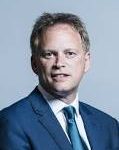
    Grant Shapps – 2022 Comments on Greg Hands Becoming Appointed as Trade Minister

    The comments made by Grant Shapps, the Conservative MP for Welwyn Hatfield, on Twitter on 9 October 2022.

    Great appointment. No one is more experienced and knowledgeable than Greg Hands on Trade. A welcome addition back to Liz Truss Government.

  • Kemi Badenoch – 2022 Comments on Selling Lamb to the United States

    Kemi Badenoch – 2022 Comments on Selling Lamb to the United States

    The comments made by Kemi Badenoch, the Secretary of State for Trade, on 8 October 2022.

    Seeing our world-class lamb back on American menus is fantastic news for our farmers. Now they can sell to a consumer market of over 300 million people, which support jobs and growth in a vital British industry.

    It also shows our two nations working together to remove barriers and boost trade, building on recent resolutions on steel tariffs, and whisky exports.

  • Anne-Marie Trevelyan – 2022 Speech to Conservative Party Conference

    Anne-Marie Trevelyan – 2022 Speech to Conservative Party Conference

    The speech made by Anne-Marie Trevelyan, the Secretary of State for International Trade, in Birmingham on 4 October 2022.

    Conference, thank you.

    It’s wonderful to be back here with so many of you in Birmingham this year.

    Speaking to you today from the heart of the West Midlands – it serves as a powerful reminder that this region was the crucible from which much of the modern world was built.

    As the Mayor, Andy Street, is tireless in saying as he promotes this wonderful region.

    The infrastructure that powered that growth can still be seen today, and we are giving it a new 21st century boost.

    Less than a mile away from here, I visited Curzon Street – one of the first train stations built in the UK. It has facilitated passengers and freight for over a hundred years.

    Designed by Robert Stephenson – one of Newcastle’s finest exports, providing designs and inspiration for constructions around the world – it took 20,000 workers nearly five years to build.

    Today, 27,000 workers have spades in the ground, with so many of them working to reopen and transform stations. These will serve at the heart of our newest high-speed railway delivering additional capacity for the network, drawing in huge investment into the region – and of course, helping the whole country and our economy to grow.

    From land to sea, the UK also has a historic leadership in underwriting prosperity and trade.

    Shipping continues to drive the global economy today, just as it has done for millennia.

    Our seas are by far the most important arteries for global trade, carrying over 95% of all goods.

    But while our maritime industry normally conducts its business beyond the public gaze, recent events have thrust global supply chains into the spotlight-and in particular, the importance of resilient and secure shipping routes.

    At Transport, we are charged with ensuring the security of all networks that move goods, people and information around the world, and that underpin our way of life and our economy.

    We have seen Putin weaponise food by trying to crush the economic and humanitarian criticality of Ukraine’s agricultural economy.

    In blockading those Ukrainian ports, Putin has prevented the export of global grain supplies.
    Our maxim is to ensure the UK is and remains the most secure and reliable nation to trade with globally.

    Because at a time when Russian aggression is disrupting established trade routes,

    it has never been more important for the international community to come together and protect global shipping.

    So, we will work with all our partners to ensure maritime trade and travel continues to operate safely, securely and sustainably, right around the world.

    Now Conference, there is an elephant in the room today.

    We cannot ignore that nine out of ten train services were at a standstill last Saturday – with further strikes planned tomorrow and this coming Saturday.

    While our priority, our overwhelming objective, is to grow our economy and tackle the rising cost of living, we also have to deal with rolling strike action.

    Strikes disrupt everyday life for everyone and slow down our prospects for growth.

    The more quickly we can resolve these disputes, the sooner all our efforts can be spent on getting our economy motoring at full speed.

    Despite soaring international energy prices, the war in Ukraine and the continued global impact of COVID, we are taking the necessary action to help families and businesses.

    We can only do this through growth and having the infrastructure that makes this possible.

    We want to transform the rail industry to make it sustainable for the next 100 years.

    The very last thing our country needs right now is more damaging industrial disputes.

    My message to the trade union membership is simple: please take your seats at the negotiating table and let’s find a landing zone which we can all work with.

    Punishing passengers and inflicting damage on our economy by striking is not the answer.

    As a former Trade Secretary, I know something about making deals.

    And I can tell you, there is a deal to be done between the unions and our train operators. It’s a deal that will require compromise. So I want to see positive proposals to bridge the differences.

    As part of these, I am asking industry to launch consultations on reforming our ticket office provision across the country.

    The way we buy everything from groceries to holidays has transformed over the last decade. Online shopping is increasingly the norm, and all our favourite retail stores are using the latest self-service tech, making the in-store experience quicker and smoother, with fewer queues and more convenience.

    We’re seeing the same trend on the railways with a huge increase in online ticket sales – today, only 12% of transactions take place at ticket offices. We need to be looking at ways to move with the trend and support our customers in the most effective way possible.

    There will be some stations where the ticket office will be important to the running of the station. In other areas rail employees may be better in front of the glass helping passengers in other ways.

    This is not about cutting jobs – this is about putting the passenger at the heart of the Railway.

    We all want the same outcome – to modernise the railway so that customers can choose rail as their preferred travel method with confidence and with ease.

    I hope Union leaders together with employers will work with us to deliver the much-needed changes and resolution, so that together we can grow the economy for everyone.

    Conference –

    Just as coal power and steam propulsion powered a global revolution in growth and development – which transformed everything from medicines to transport and brought prosperity across the world – we are at the tipping point of another revolution that has the potential to transform.

    The way that all our modes of transport are powered is changing at pace.

    Hydrogen fuels. Net Zero Emission Vehicles. Sustainable Aviation Fuels. Green shipping corridors.

    Those markets that change first, and have the potential to grow fastest, will go the furthest. We want UK Business to lead the way on this new clean growth revolution.

    That’s why we are investing record amounts in our roads, in our railways and future green transport solutions, to provide the conditions that will make sure business can grow on the back of clean transport.

    Building the vital connections that will open up access to jobs, education and housing across the whole of the United Kingdom.

    This Government is unashamedly going for growth.

    Growth is key to delivering jobs, higher wages and more money to invest in world class public services.

    A key part of achieving that growth is keeping our promises and delivering for the people.

    Speaking as the Member of Parliament who has campaigned for dualling the A1 – a road improvement first promised in 1992 – and was elected on that promise, delivering on our promises is firmly on my mind.

    The A1 is just one example.

    The A303 is another. One of the main gateways to the South West, it acts as a bottleneck to growth. So we are committed to getting these road solutions delivered.

    Delivery is the key.

    Something my fantastic ministerial team are focussed on.

    Kevin Foster – is taking on the challenge of modernising our Railway.

    Katherine Fletcher – will deliver the Roads the Prime Minister has asked me to accelerate, which the Chancellor announced in his Growth Plan.

    Baroness Vere – will work to decarbonise the aviation industry.

    Lucy Frazer who will be working on the Future of Transport, making it fit for a modern world.

    And our Parliamentary Private Secretaries Marco Longhi, Anthony Browne, and Damian Moore in the Whips Office are going to help us stay on track.

    As a rural constituency MP, one of the most common issues that gets raised with me is the state of my local roads. Indeed – I became very popular overnight with many colleagues who have constituents raising similar issues with them.

    That’s why we have set aside a pothole fund to repair 10 million potholes a year.

    So motorway or local street, this is a government which will invest so that our country can grow. We are a team that is determined to get spades into the ground at pace.

    Conference, we’ve got a lot to do – it’s time to Get Britain Moving.

    Thank you.

  • Kemi Badenoch – 2022 Speech at the Atlantic Future Forum in New York

    Kemi Badenoch – 2022 Speech at the Atlantic Future Forum in New York

    The speech made by Kemi Badenoch, the Secretary of State for International Trade, in New York on 28 September 2022.

    Thank you and good afternoon everyone.

    How wonderful it to be at the Atlantic Future Forum.

    This a superb event organised by the Royal Navy and our teams from the Department for International Trade, the Ministry of Defence and of course the Foreign, Commonwealth and Development Office.

    It is particularly poignant being on HMS Queen Elizabeth given the events of the last few weeks.

    To say it’s been emotional would be an understatement. For everyone in the UK, young or old Her Late Majesty had been ever presence of force in British Life. Many of us here were more than her subjects we were Her Majesty’s Ambassadors, Her Majesty’s Civil Service, Her Majesty’s Armed Forces, Her Royal Navy, Her Government.

    Our late sovereign was also, of course, a stateswoman, who devoted herself to deepening the special relationship.

    So it is a particular privilege to stand on this vessel which she named at Rosyth Dockyard 8 years ago, as we begin the Carolean age in the service of His Majesty.

    And talk about an important aspect of the US and UK’s shared future and by that I mean…our economic partnership.

    I lived briefly in the US, and learned very quickly that Americans and New Yorkers especially, like to cut to the chase.

    So, I’m going to get straight to the point:

    Right now, there’s a global growth slow-down underway.

    And if you’ll forgive the pun, we need all hands on-deck to get the world economy’s wheels spinning again.

    And that’s why in the UK we’re going for growth in a big way. And in fact some of you may have heard some major reforms we announced on Friday, to achieve this:

    But before I go into what we are doing, it would be odd not to address the elephant in the room.. and the financial instability in markets over the last few days.

    You would by now have heard the Bank of England taking short-term measures to provide stability – as is their job.

    My colleagues, including the Chancellor, continue to work very closely with our institutions to support them in their aims while maintaining their independence. And we must look at all of this in the context of the fundamentals, which are that the UK economy is strong and we have a plan – a Growth Plan to cut taxes, promote enterprise and cut red tape for business.

    So what are some of the things we’re doing?

    We’re keeping corporation tax at the lowest in the G20 at 19% not cutting keeping.

    We’re creating low tax investment zones around the country, to make it quicker and easier to build and get things done because the regulatory environment has not kept pace with our economic needs.

    We’re accelerating critical infrastructure projects in sectors like transport, energy, and telecoms…to ensure we invest in our future and deliver for the next generation.

    We’re also going to be spending 3% of GDP on defence by 2030. Something I know looking at all of the uniforms in the room is especially relevant to all of you here today.

    We’re rolling out significant financial services reforms that will make the UK an even better place to do business and much more.

    There is radical change happening on our side of the Atlantic. It’s the kind of radical change that we’ve not seen for 40 years.

    We know it is bold.

    We know it comes with risk.

    But in these volatile times, every option, even the status quo is risky.

    And the Prime Minister, my predecessor but one in my role as Trade Secretary gets trade and knows that our global economic relationships have got to be at the heart of this work.

    Right now, US-UK trade is booming. Sadly, not enough people know this or hear the message enough. So I want to make sure they do and I’ll continue to bang the drum.

    But it’s the investment story that’s even more interesting.

    Increasing numbers of American firms are realising that backing the UK is a great move.

    I could make your eyes glaze over by trotting out an endless list of statistics! Don’t worry I’m not going to do that today

    ….. but the numbers speak for themselves:

    US businesses already invested £479 billion pounds into in our economy –To put that figure into context it’s more than Sweden’s annual GDP.

    Every day just under 1.5 million Britons go to work for an American firm.

    And in the year to March alone, American investment created 27,000 British jobs.

    I know to some extent I’m preaching to the choir here.

    Because I don’t have to look far around this room to spot businesses that are boosting their UK operations.

    In fact, Lockheed Martin and Raytheon, are just some of the American firms here today that have said they will do precisely that. And we look forward to working with them.

    Undoubtedly, factors like good infrastructure, our legal system and a lack of red-tape, are part of the UK’s attraction.

    But there’s another reason too. We are fast becoming the world’s innovation destination.

    Just like Manhattan, we’re an island full of dynamism and ingenuity.

    We’re the nation with big ideas.

    We’re Europe’s unicorn factory.

    And the first quarter of this year our tech start-ups attracted more global investment than anywhere bar the US…..and partnerships between UK and American firms are pushing forward progress…..

    For instance, there’ s a really interesting story taking place right now involving a firm in Cambridge called PhoreMost and a business named Polaris Quantum Biotech from North Carolina.

    Together, they want to cut the time it takes to create cancer therapies. That’s not only a great business partnership, it’s literally a life-saving collaboration.

    But I want to do even more to make sure American ambitions collide with British ideas or vice versa.

    So here’s my elevator pitch. The UK is pro-ambition, pro entrepreneur, pro-growth and home to top-flight talent fizzing with extraordinary ideas.

    And we are more determined than ever before to turn the country into the place to come if you want your business to succeed.

    Of course, we mustn’t pretend everything is perfect or easy. We know that, sometimes trading our way to growth can be more difficult than it needs to be.

    But it’s because the US and UK are close that we can fix problems wherever we find them.

    Look at the way we recently solved the Section 232 tariff dispute on UK steel and aluminium exports and reached an understanding on the Airbus-Boeing dispute.

    Very soon, Americans will be able to pick up a leg of Welsh lamb at their local store for the first time in decades, after a long-standing rule was removed.

    That’s obviously big news for British farmers. And it’s arguably even better news for Americans who get to tuck in on some of the finest grass-fed lamb in the world…

    And, of course, we’re delighted that bourbon is fully back on the drinks menu, in Britain, following the Section 232 resolution.

    I know that behind the scenes we’re working hard to resolve issues and make it quicker, easier and cheaper for our firms to do business.

    The UK also sees the huge potential to develop our relationships with individual states as another huge opportunity.

    In May, under the stewardship of my predecessor, Anne-Marie Trevelyan, who is also here today, we signed a Memorandum of Understanding on trade and economic cooperation with Indiana – a state that already buys $1.4 billion worth of UK goods every year.

    North Carolina followed in July.

    And I know the DIT team is working hard on continuing Anne Marie’s legacy with me and securing more this year…so watch this space.

    Given we’re anchored not far from the Statue of Liberty, I want to end by saying a few words about trade as a force for progress and a force for good.

    Free markets and fair trade are very personal to me.

    Too many people trot them out as cliches and platitudes, but a world without these freedoms is not just poorer it’s also more dangerous.

    I grew up in Nigeria. And I saw first-hand what happens when a nation can’t trade or worse embraces protectionism.

    Not long ago, the government there banned rice and tomato not tomayto tomato imports to support local industry. The result was not a boom in production, but supply shortages, price rises and people smuggling in tomatoes like they were diamonds.

    I will never forget the sight of my mother a university professor stuffing her suitcase with Tesco Value Rice when she visited me in London because it was cheaper there than back home for her.

    One of the many reasons I’m so frustrated by the trope that Brexit was the UK retreating from the world, is because it is completely untrue. I voted to leave the European Union and I saw Brexit as a once in a generation opportunity for the UK to embrace the world and trade was and still is at the heart of that.

    So I want to make sure that we use our freedoms to build better and fairer trading relationships with emerging economies.

    When trade is open and free and everyone plays by the rules, we will win and developing countries gain an alternative to authoritarian regimes.

    But at a time when weaker economies are being exploited by those who don’t share our values, it’s not enough to talk about why free and fairtrade matters, we need to show why too.

    Last month, my department launched the Developing Countries Trading Scheme. It’s one of the most generous initiatives of its type in the world and it’s going to give a boost to businesses in 65 countries by cutting red tape and lowering tariffs.

    It’s early days but I’m already hearing how the scheme is giving entrepreneurs in countries like Bangladesh the opportunities they need to grow their businesses. And closer to home, I’m very much focused on exploring how trade can support the reconstruction of Ukraine.

    Of course, the UK-US trading relationship couldn’t be a better illustration of capitalism’s power to influence, unite and act as a counter to protectionism and authoritarian regimes.

    And We’re already using trade to tackle some of the biggest issues facing the world.

    At last year’s G7 we renewed our Atlantic Charter; originally signed by Churchill and Roosevelt pledging UK and US economic and security collaboration.

    Through our Future of Atlantic Trade dialogues, we’re working on critical issues, such as developing and diversifying our supply chains in response to the war in Ukraine and the pandemic.

    We’re deepening our ties in the Indo-Pacific through our AUKUS pact.

    Our response to the Indo Pacific region’s rapid growth and China’s growing assertiveness, is another shared challenge.

    And I know we’re both committed to opposing economic coercion, and the unfair trade practices that choke competition and penalise countries that follow the rules.

    President Ronald Reagan once said: ‘Free trade serves the cause of economic progress and it serves the cause of world peace.’

    And the UK-US economic partnership is the clearest possible example of why free trade and free markets are not just integral to our growth but to the freedoms we share.

    Next month, we’ll mark the 75th anniversary of the General Agreement on Tariffs and Trade – the forerunner of today’s multilateral system.

    Our nations helped to forge that deal after WW2, following long negotiations.

    At GATT’s heart was an acknowledgement that free and fair trade would be key to our future.

    Again today, we face unprecedented challenges.

    Again, at times, we may have differences…

    But just like the American and British teams who gathered round the negotiating table three quarters of a century ago.

    I know we are committed to deepening our transatlantic economic partnership.

    Building our businesses’ bonds of commerce.

    And demonstrating, unequivocally, how through free trade we can together create a better world. Thank you.

  • Kemi Badenoch – 2022 Statement on Trade Negotiations with Israel and Canada

    Kemi Badenoch – 2022 Statement on Trade Negotiations with Israel and Canada

    The statement made by Kemi Badenoch, the Secretary of State for International Trade, in the House of Commons on 23 September 2022.

    The first round of United Kingdom-Israel free trade agreement negotiations took place between 12 and 20 September.

    In parallel, the third round of United Kingdom-Canada free trade agreement negotiations commenced on 12 September and concluded on 16 September.

    Following the death of Her late Majesty Queen Elizabeth II, these rounds proceeded, with appropriate adjustments.

    The round of negotiations with Israel was conducted in a hybrid fashion; a small group of United Kingdom officials travelled to Jerusalem for in-person discussions, with further officials attending virtually from the United Kingdom. During this initial round, talks focused on gathering insights on key interests and priorities across policy areas as well as building a shared understanding of each other’s initial positions. Technical discussions focused on 29 policy areas in over 50 sessions.

    A new agreement with Israel—with services and innovation at its heart—will build upon our existing trade and partnership agreement. It will cement our relationship with a rapidly growing economy and take our trading relationship to the next level. It will support United Kingdom jobs, and update outdated trade rules, unleashing our high-tech innovative economies.

    The negotiations with Canada were conducted in a fully virtual format. Technical discussions were held across 26 policy areas across over 50 separate sessions.

    Talks focused on reaffirming the United Kingdom’s positions, having tabled and presented text across the majority of chapters in the previous round. The United Kingdom’s negotiating team made progress on understanding areas of policy convergence and divergence with Canada. They agreed text where possible and in the United Kingdom’s interests and objectives to support economic growth.

    The negotiations continue to reflect a shared ambition to secure a progressive deal which looks to build on the United Kingdom-Canada trade continuity agreement, and strengthens our existing trading relationship, already worth over £21 billion in 2021.

    We are clear that any deals we sign will be in the best interests of the British people and the United Kingdom economy. We will not compromise on our high environmental and labour protections, public health, animal welfare and food standards, and we will maintain our right to regulate in the public interest. We are also clear that during these negotiations, the NHS and the services it provides are not on the table.

    We are working towards holding a second and fourth round of negotiations with Israel and Canada respectively in due course.

    Parliament will be kept updated as these negotiations progress.

  • Nick Thomas-Symonds – 2022 Comments on Inability to Deliver Trade Deal with the US

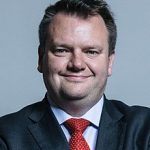
    Nick Thomas-Symonds – 2022 Comments on Inability to Deliver Trade Deal with the US

    The comments made by Nick Thomas-Symonds, the Shadow Secretary of State for International Trade, on 20 September 2022 in response to comments made by the Prime Minister.

    Admitting there is no prospect of a US trade deal is damaging for UK growth and breaks the Conservative manifesto promise.

    This is an embarrassment for Liz Truss-the blame lies squarely at her door, as a former Foreign and International Trade Secretary.

  • Liz Truss – 2022 Comments on Inability to Deliver Trade Deal with the US

    Liz Truss – 2022 Comments on Inability to Deliver Trade Deal with the US

    The comments made by Liz Truss, the Prime Minister, on 20 September 2022. The comments were made before boarding a plane to the United States.

    There aren’t currently any [trade] negotiations taking place with the US and I don’t have an expectation that those are going to start in the short to medium term.

  • Jonathan Evans – 2002 Speech on US Tariffs on Steel

    Jonathan Evans – 2002 Speech on US Tariffs on Steel

    The speech made by Jonathan Evans, the then Conservative MEP for Wales, on 13 March 2002.

    This week in Barcelona the European Council will gather to seek to build upon the Lisbon Process. At that meeting, we will be pressing for more action to be taken on deregulation, and for more liberalisation, ensuring that we learn the lessons of employment flexibility. There are those of us who have felt, ever since we have arrived in the European Parliament, that there is a lot of rhetoric in this place about free trade, but also a great deal of protectionism with Member States here in Europe.

    The entire agenda in Europe of taking forward a uniform competition policy and bearing down on state aid is geared towards ensuring that we have free trade. In these circumstances, those of us who count ourselves as the best friends of the United States are hugely disappointed by the action that the US President has taken. It is not putting it too strongly to say that, in a sense, we feel betrayed by it.

    I do not link this to our support for the United States following the events of September 11. The events of September 11 were so horrific that they should not be linked with any sort of agreement in any other policy area. But for those of us who have been pointing to the United States as an example of a deregulated and liberalised economy, it has been a shattering blow to see the way in which President Bush, faced with the difficulties that his steel industry is encountering, has gone for protectionism.

    What is even worse is to read in the Financial Times today a justification of this action from Robert Zoellick, the US Trade Representative. I feel sorry for Mr Zoellick, whom again we would regard as a friend of British Conservatives, because I must say that article destroys any credibility that he had in terms of discussion of trade issues.

    The US representatives watching this debate need to know that, while we may have heard from the usual suspects in terms of anti-Americanism, those of us who are friends of the United States feel very badly let down indeed.

  • Anne-Marie Trevelyan – 2022 Statement on the Department for International Trade [September 2022]

    Anne-Marie Trevelyan – 2022 Statement on the Department for International Trade [September 2022]

    The statement made by Anne-Marie Trevelyan, the then Secretary of State for International Trade, in the House of Commons on 6 September 2022.

    Since the House adjourned for the summer recess, the Department for International Trade has made good progress on a number of areas. This statement provides Parliament with an update on progress with Ukraine reconstruction, the UK’s trade negotiations with India, negotiations towards accession to the comprehensive and progressive agreement for trans-Pacific partnership, and the developing countries trading scheme.

    Ukraine reconstruction

    At the end of July, following a competitive procurement process, we appointed Mott MacDonald and Crown Agents on a 12-week programme to act as Ukraine reconstruction industry advisors to the joint UK-Ukraine Infrastructure Taskforce. They will provide technical and logistical assessments, work with our counterparts in country to identify and prioritise current and future reconstruction projects, and provide technical support to the joint taskforce. At this stage the joint taskforce will focus on the Ukrainian Government’s immediate priorities—rapid replacement of essential housing and bridging infrastructure damaged by the conflict. Successful delivery of these projects is likely to support the Ukrainian economy and unlock new, larger mutually beneficial opportunities for UK businesses and Ukraine in later stages as we continue to support its post-conflict recovery and reconstruction. To ensure we can deliver the most effective reconstruction solutions through the infrastructure taskforce, we will work in close partnership with our brilliant UK businesses to unleash their full potential. UK Export Finance remains open for business in Ukraine with £3.5 billion of financial capacity available for UK exporters and Ukrainian buyers, subject to Treasury approvals.

    Comprehensive and progressive agreement for trans-Pacific partnership

    The first in-person accession working group following the United Kingdom’s application to join the comprehensive and progressive trans-Pacific partnership took place in Tokyo, 24 to 28 July 2022.

    The UK team negotiated market access with CPTPP parties in the following areas: goods, services and investment, Government procurement, financial services and temporary entry.

    Negotiations will continue over the course of the autumn with planning currently underway for the next round of talks. The Government will ensure that membership of CPTPP is achieved on terms that work for UK businesses and consumers.

    Joining CPTPP offers numerous benefits to the UK. It will provide greater market access for British goods and services to one of the world’s largest free trading areas, with a combined GDP of £9 trillion in 2021. Reductions in tariffs and investment barriers will give UK firms increased opportunities to a growing market.

    Beyond the immediate economic opportunities there is a significant geostrategic case for joining CPTPP. Membership will demonstrate that the UK is a global leader in free and rules-based trade. It will further establish the UK’s commitment to deeper engagement within the Indo-Pacific region in support of increased security and prosperity.

    CPTPP will help the whole of the UK capture the benefits of global trade opportunities, by supporting jobs, wage growth and the levelling-up agenda. The Department’s preliminary analysis from the CPTPP scoping assessment suggests that every nation and region of the UK could be set to benefit from CPTPP membership.

    The Government will keep Parliament updated as these negotiations progress.

    UK-India trade negotiations

    The fifth round of UK-India free trade agreement negotiations took place between 18 and 29 July 2022. The negotiations, at official level, were conducted in a hybrid fashion, with some negotiators in a dedicated Indian negotiations facility, and others attending virtually.

    Technical discussions were held across 15 policy areas over 85 separate sessions, with detailed draft treaty text discussions.

    In addition, intense negotiations have continued throughout the summer, again in a hybrid fashion, with India hosting UK negotiators and the UK also hosting Indian officials.

    We are continuing to work towards the target, as set out by both Governments on 22 April 2022, to conclude the majority of talks by the end of October.

    The Government will keep Parliament updated as these negotiations progress.

    Developing countries trading scheme

    On 16 August 2022 we launched the developing countries trading scheme. The scheme is a major milestone in growing free and fair trade with 65 developing nations that are home to more than 3.3 billion people. It is one of the most generous trade preferences schemes in the world and has been designed to boost trade with developing countries, helping them to grow and prosper. It delivers on commitments in the integrated review and international development strategy to harness the power of trade to support long-lasting development and it benefits the UK through reduced import costs, greater choice and improved economic security.

    The developing countries trading scheme demonstrates that, as an independent trading nation, the UK can go beyond what we were able to do as a member of the EU. It introduces more generous, less bureaucratic trading rules that reduce tariffs, simplify rules of origin and simplify the requirements to access better tariff rates. It has been designed to boost jobs, drive growth and make supply chains more resilient.

    Developing countries in the scheme collectively export over £20 billion of goods to the UK each year, such as t-shirts from Bangladesh, flowers from Ethiopia and bicycles from Cambodia. The developing countries trading scheme reduces import tariffs on these products and thousands more, saving businesses and consumers in the UK over £750 million per year and helping to tackle the cost of living.

    The developing countries trading scheme proposals have been shaped by a public consultation held between July and September 2021. Responses were received from a broad range of stakeholders, including businesses and non-governmental organisations and overall supported a simpler, more generous developing countries trading scheme. A summary of consultation responses has also been published:

    https://www.gov.uk/government/consultations/designing-the-uk-trade-preferences-scheme-for-developing-nations.

    Key aspects of the developing countries trading scheme include:

    Least developed countries continue to get tariff-free trade on everything but arms and ammunition and now benefit from more generous and simplified rules of origin, making it easier for them to participate in regional and global supply chains serving the UK.

    Low income and lower-middle income countries benefit from more tariff reductions and removals. Nuisance tariffs and some seasonal tariffs have been removed.

    Goods from India and Indonesia that are competitive in the UK domestic market are excluded from the scheme.

    Eight countries immediately benefit from more generous tariffs as access to these tariffs is now based purely on economic vulnerability and not on the ratification of international conventions.

    Powers to suspend countries from the scheme have been expanded. For the first time, climate change and environment related obligations are included in the grounds for suspension as well as those relating to human rights and labour rights.

    For more detail on the new scheme and how it differs from the UK generalised scheme of preferences which it replaces, please see the comprehensive Government policy response:

    https://www.gov.uk/government/publications/developing-countries-trading-scheme-dcts-new-policy-report.

    The developing countries trading scheme will come into force in early 2023, giving businesses time to prepare for greater UK market access.