
Category: Speeches

  • Andy Burnham – 2013 Speech to The King’s Fund

    andyburnham

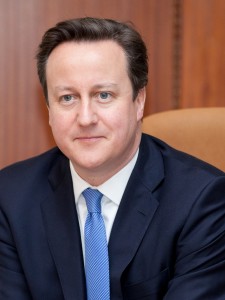
    The below speech was made by the Shadow Secretary of State for Health, Andy Burnham, on 24th January 2013 to the King’s Fund.

    Today I open Labour’s health and care policy review.

    For the first time in 20 years, our Party has the chance to rethink its health and care policy from first principles.

    Whatever your political views, it’s a big moment.

    It presents the chance to change the terms of the health and care debate.

    That is what One Nation Labour is setting out to do.

    For too long, it has been trapped on narrow ground, in technical debates about regulation, commissioning, competition.

    It is struggling to come up with credible answers to the questions that the 21st century is asking with ever greater urgency.

    I want to change the debate by opening up new possibilities and posing new questions of my own, starting with people and families and what they want from a 21st century health and care service.

    For now, they are just that – questions. This is a Green Paper moment – the start of a conversation not the end.

    But what you will hear today is the first articulation of a coherent and genuine alternative to the current Government’s direction.

    It is the product both of careful reflection on Labour’s time in government and a response to what has happened since.

    Everything I say today is based on two unshakable assumptions.

    First, that the health and care we want will need to be delivered in a tighter fiscal climate for the foreseeable future, so we have to think even more fundamentally about getting better results for people and families from what we already have.

    Second, our fragile NHS has no capacity for further top-down reorganisation, having been ground down by the current round. I know that any changes must be delivered through the organisations and structures we inherit in 2015.

    But that can’t mean planning for no change.

    Those questions that the 21st century is bringing demand an answer.

    When the modern condition means we are all living with higher levels of stress, change and insecurity, how do we give families the mental health support they will need and remove the stigma?

    How will we ensure we are not overwhelmed by the costs of treating diseases linked to lifestyle and diet?

    And how can we stop people fearing old age and have true peace of mind throughout a longer life?

    Huge questions that require scale and a sense of ambition in our answers.

    When a Labour Opposition last undertook this exercise, the world looked very different. But it had to be similarly ambitious.

    People were waiting months and years for hospital treatment, even dying on NHS waiting lists.

    So Labour set itself the mission of rescuing a beleaguered NHS which was starting to look as if it was on the way out.

    A big ambition and, by and large, with help of the professions, we succeeded.

    We left office with waiting lists at an all-time low and patient satisfaction at an all-time high; a major turn-around from the NHS we inherited in 1997.

    But that doesn’t tell the whole story.

    I can trace the moment that made me think differently, and challenge an approach that was too focused on hospitals.

    In early 2007, my sister-in-law was in the Royal Marsden dying from breast cancer.

    After visiting one night, she called me over and asked if I could get her home to be with her four children.

    I told her I thought I would be able to.

    But, after a day of phone calls, I will never forget having to going back to Claire and say it couldn’t be done.

    And I was a Minister who knew how the system worked, so what chance have families who are at a low ebb and don’t know where to start?

    As a Government, we were talking about choice. But it was a painful discovery for me to find we were unable to deliver to this most fundamental of choices.

    Concerns about the way we care for people in the later stages of life, as well as how it is paid for, has built and built over recent years.

    Stories of older people neglected or abused in care homes, isolated in their own homes or lost in acute hospitals – disorientated and dehydrated – recurred with ever greater frequency.

    I have thought long and hard about why this is happening.

    It is in part explained by regulatory failures and we will of course learn the lessons emerging from the Francis Report as part of this policy review.

    Changes in nursing and professional practice may also have played a part.

    But, in my view, these explanations deal with the symptoms rather than the cause of a problem that goes much deeper.

    My penny-drop moment came last year when I was work-shadowing a ward sister at the Royal Derby.

    It was not long after the Prime Minister had proposed hourly bed rounds for nurses.

    I asked her what she thought of that. Her answer made an impression on me.

    It was not that nurses didn’t care any more, she said. On the whole, they did.

    It was more that the wards today are simply not staffed to deal with the complexity of what the ageing society is bringing to them.

    When she qualified, it was rare to see someone in their 80s on the ward after a major operation.

    Now there are ever greater numbers of very frail people in their 80s and 90s, with intensive physical, mental and social care needs.

    Hospitals hadn’t changed to reflect this new reality, she said, and nurses were struggling to cope with it.

    They were still operating on a 20th century production-line model, with a tendency to see the immediate problem – the broken hip, the stroke – but not the whole-person behind it.

    They are geared up to meet physical needs, but not to provide the mental or social care that we will all need in the later stages of life.

    So our hospitals, designed for the last century, are in danger of being overwhelmed by the demographic challenges of this century.

    And that is the crux of our problem.

    To understand its roots, it helps to go back to the 1948 World Health Organisation definition of health:

    “a state of complete physical, mental and social well-being and not merely the absence of disease or infirmity.”

    A simple vision which stands today.

    But, for all its strengths, the NHS was not set up to achieve it. It went two thirds of the way, although mental health was not given proper priority, but the third, social, was left out altogether.

    The trouble is that last bit is the preventative part.

    Helping people with daily living, staying active and independent, delays the day they need more expensive physical and mental support.

    But deep in the DNA of the NHS is the notion that the home, the place where so much happens to affect health, is not its responsibility.

    It doesn’t pay for grab rails or walk-in showers, even if it is accepted that they can keep people safer and healthy.

    The exclusion of the social side of care from the NHS settlement explains why it has never been able to break out of a ‘treatment service’ mentality and truly embrace prevention. It is a medical model; patient-centred, not person-centred.

    But, in reality, it’s even worse than that.

    For 65 years, England has tried to meet one person’s needs not through two but three services: physical, through the mainstream NHS; mental, through a detached system on the fringes of the NHS; and social, through a means-tested and charged-for council service, that varies greatly from one area to the next.

    One person. Three care services.

    For most of the 20th century, we just about managed to make it work for most people.

    When people had chronic or terminal illness at a younger age, they could still cope with daily living even towards the end of life. Families lived closer to each other and, with a bit of council support, could cope.

    Now, in the century of the ageing society, the gaps between our three services are getting dangerous.

    The 21st century is asking questions of our 20th century health and care system that, in its current position, will never be able to answer to the public’s satisfaction.

    As we live longer, people’s needs become a complex blur of the physical, mental and social.

    It is just not possible to disaggregate them and meet them through our three separate services.

    But that’s what we’re still trying to do.

    So, wherever people are in this disjointed system, some or all of one person’s needs will be left unmet.

    In the acute hospital ward, social and mental needs can be neglected. This explains why older people often go downhill quickly on admission to hospital.

    In mental health care settings, people can have their physical health overlooked, in part explaining why those with serious mental health problems die 15 years younger than the rest of the population.

    And, in places, such is the low standard of social care provision in both the home and care homes, barely any needs are properly met.

    What, realistically, can be achieved from a home care service based around ten-minute slots per person?

    On a practical level, families are looking for things from the current system that it just isn’t able to provide.

    They desperately want co-ordination of care – a single point of contact for all of mum or dad’s needs – but it’s unlikely to be on offer in a three-service world.

    So people continue to face the frustration of telling the same story over again to all of the different council and NHS professionals who come through the door.

    Carers get ground down by the battle to get support, spending days on the phone being passed from pillar to post.

    So far, I have spoken about the experience of older people and their carers.

    But the problems I describe – the lack of a whole-person approach – holds equally true for the start of life and adults with disabilities.

    Parents of children with severe disabilities will recognise the pattern – the battle for support, the lack of co-ordination and a single point of contact.

    CAMHS support at the right time can make all the difference to a young life but is often not there when it is needed.

    Children on the autistic spectrum are frequently missed altogether.

    The mantra is that early intervention makes all the difference. But it is rarely a reality in a system that doesn’t have prevention at its heart.

    If we leave things as they are, carers of young and old will continue to feel the frustration of dealing with services which don’t provide what they really need, that don’t see the whole-person.

    They won’t provide the quality people want.

    But nor will they be financially sustainable in this century.

    For One Nation Labour, this is crucial. Protecting the institutions that bind us together, like the NHS – the expression of what we can achieve together when everyone plays their part.

    Right now, the incentives are working in the wrong direction.

    For older people, the gravitational pull is towards hospital and care home.

    For the want of spending a few hundred pounds in the home, we seem to be happy to pick up hospital bills for thousands.

    We are paying for failure on a grand scale, allowing people to fail at home and drift into expensive hospital beds and from there into expensive care homes.

    The trouble is no-one has the incentive to invest in prevention.

    Councils face different pressures and priorities than the NHS, with significant cuts in funding and an overriding incentive to keep council tax low.

    So care services have been whittled away, in the knowledge that the NHS will always provide a safety net for people who can’t cope. And, of course, this could be said to suit hospitals as they get paid for each person who comes through the door.

    In their defence, councils and the NHS may be following the institutional logic of the systems they are in.

    But it’s financial madness, as well as being bad for people.

    Hospital Chief Executives tell me that, on any given day, around 30 to 40 per cent of beds are occupied by older people who, if better provision was available, would not need to be there.

    If we leave things as they are, our DGHs will be like warehouses of older people – lined up on the wards because we failed to do something better for them.

    But it gets worse. Once they are there, they go downhill for lack of whole-person support and end up on a fast-track to care homes – costing them and us even more.

    We could get much better results for people, and much more for the £104bn we spend on the NHS and the £15bn on social care, but only if we turn this system on its head.

    We need incentives in the right place – keeping people at home and out of hospitals.

    We must take away the debates between different parts of the public sector, where the NHS won’t invest if councils reap the benefit and vice versa, that are utterly meaningless to the public.

    So the question I am today putting at the heart of Labour’s policy review is this: is it time for the full integration of health and social care?

    One budget, one service co-ordinating all of one person’s needs: physical, mental and social. Whole-Person Care.

    A service that starts with what people want – to stay comfortable at home – and is built around them.

    When you start to think of a one-budget, one-service world, all kinds of new possibilities open up.

    If the NHS was commissioned to provide Whole-Person Care in all settings – physical, mental, social from home to hospital – a decisive shift can be made towards prevention.

    A year-of-care approach to funding, for instance, would finally put the financial incentives where they need to be.

    NHS hospitals would be paid more for keeping people comfortable at home rather than admitting them.

    That would be true human progress in the century of the ageing society.

    Commissioning acute trusts in this way could change the terms of the debate about hospitals at a stroke.

    Rather than feeling under constant siege, it could create positive conditions for the District General Hospital to evolve over time into a fundamentally different entity: an integrated care provider from home to hospital.

    In Torbay, where the NHS and Council have already gone some way down this path, around 200 beds have been taken out from the local hospital without any great argument as families have other things they truly value.

    Unlike other parts of England, they have one point of contact for the co-ordination of health and care needs.

    Occupational Therapists visit homes the same day or the day after they are requested; urgent aids and adaptations supplied in minutes not days.

    If an older person has to go into hospital, a care worker provides support on the ward and ensures the right package of care is in place to help get them back home as soon as possible.

    Imagine what a step forward it would be if we could introduce these three things across England.

    For the increasing numbers of people who are filled with dread at the thought of mum or dad going into hospital, social care support on the ward would provide instant reassurance.

    It is a clear illustration of what becomes possible in a one-service, one-budget world with prevention at its heart.

    If local hospitals are to grow into integrated providers of Whole-Person Care, then it will make sense to continue to separate general care from specialist care, and continue to centralise the latter.

    So hospitals will need to change and we shouldn’t fear that.

    But, with the change I propose, we can also put that whole debate on a much better footing.

    If people accept changes to some parts of the local hospital, it becomes more possible to protect the parts that they truly value – specifically local general acute and emergency provision.

    The model I am proposing could create a firmer financial base under acute hospitals trusts where they can sustain a back-stop, local A&E service as part of a more streamlined, re-modelled, efficient local healthcare system.

    So A&Es need not close for purely or predominantly financial reasons, although a compelling clinical case for change must always be heard and we would never make the mistake of a blanket moratorium.

    I am clear that we will never make the most of our £120 billion health and care budget unless hospitals have positive reasons to grow into the community, and we break down the divide between primary and secondary care.

    It could see GPs working differently, as we can see in Torbay, leading teams of others professionals – physios, Occupational Therapists, district nurses – managing the care of the at-risk older population.

    Nerves about hospital take-over start to disappear in a one-budget world where the financial incentives work in the opposite direction.

    NHS hospitals need the security to embrace change and that change will happen more quickly in an NHS Preferred Provider world rather than an Any Qualified Provider world, where every change is an open tender.

    I don’t shy away from saying this.

    I believe passionately in the public NHS and what it represents.

    I think a majority of the public share this sentiment.

    They are uncomfortable with mixing medicine with the money motive. They support what the NHS represents – people before profits – as memorably celebrated by Danny Boyle at the opening ceremony of the Olympic Games.

    Over time, allowing the advance of a market with no limits will undermine the core, emergency, public provision that people hold dear.

    So I challenge those who say that the continued advance of competition and the market into the NHS is the answer to the challenges of this century.

    The evidence simply doesn’t support it – financially or on quality grounds.

    If we look around the world, market-based health systems cost more per person not less than the NHS. The planned nature of our system, under attack from the current Government’s reforms, is its most precious strength in facing a century when demand will ratchet up.

    Rather than allowing the NHS model to be gradually eroded, we should be protecting it and extending it as the most efficient way of meeting this century’s pressures.

    The AQP approach will not deliver what people want either.

    Families are demanding integration. Markets deliver fragmentation.

    The logical conclusion of the open-tender approach is to bring an ever-increasing number of providers on to the pitch, dealing with ever smaller elements of a person’s care, without an overall co-ordinating force.

    If we look to the US, the best providers are working on that highly integrated basis, co-ordinating physical, mental and social care from home to hospital.

    We have got to take the best of that approach and universalise it here.

    But there are dangers of monopolistic or unresponsive providers.

    Even if the NHS is co-ordinating all care, it is essential that people are able to choose other providers. And within a managed system there must always be a role for the private and voluntary sectors and the innovation they bring.

    But let me say something that the last Labour Government didn’t make clear: choice is not the same thing as competition.

    The system I am describing will only work if it is based around what people and families want, giving them full control.

    To make that a reality, we want to empower patients to have more control over their care, such as dialysis treatment in the home or the choice to die at home or in a hospice.

    We will work towards extending patients’ rights to treatment in the NHS Constitution.

    This would mean the system would have to change to provide what people want, rather than vice versa.

    The best advert for the people-centred system in Torbay is that more people there die at home than in any other part of England.

    When I visited, they explained that they had never set out to do that – a target had not been set – but it had been a natural consequence of a system built around people. A real lesson there for politicians.

    So an NHS providing all care – physical, mental and social – would be held to account by powerful patient rights.

    But, as part of our consultation, we will be asking whether it follows that local government could take a prominent role working in partnership with CCGs on commissioning with a single budget.

    This change would allow a much more ambitious approach to commissioning than we have previously managed.

    At the moment, we are commissioning health services. This was the case with PCTs and will remain so with CCGs.

    The challenges of the 21st century are such that we need to make a shift to commissioning for good population health, making the link with housing, planning, employment, leisure and education.

    This approach to commissioning, particularly in the early years, begins to make a reality of the Marmot vision, where all the determinants of health are in play. Improving PH will not be a fringe pursuit for councils but central to everything that they do.

    But it also solves a problem that is becoming increasingly urgent.

    Councils are warning that, within a decade, they will be overwhelmed by the costs of care if nothing changes.

    They point to a chart – affectionately known as the ‘graph of doom’ – which shows there will be little money for libraries, parks and leisure centres by 2020.

    One of the great strengths of the one-budget, Whole-Person approach would be to break this downward spiral.

    It would give local government a positive future and local communities a real say.

    The challenge becomes not how to patch two conflicting worlds together but how to make the most of a single budget.

    To address fears that health money will be siphoned off into other, unrelated areas, reassurance is provided by a much more clearly defined national entitlement, based around a strengthened NICE, able to take a broader view of all local public spending when making its recommendations.

    It won’t be the job of people at local level to decide what should be provided. That will be set out in a new entitlement. But it will be their job to decide how it should be provided.

    That would provide clarity about the respective roles of national and local government, too often a source of confusion and tension.

    But I want to be clear: nothing I have said today requires a top-down structural re-organisation.

    In the same way that Andrew Lansley should have refocused PCTs and put doctors in charge, I will simply re-focus the organisations I inherit to deliver this vision of Whole-Person Care.

    Health and Well-Being Boards could come to the fore, with CCGs supporting them with technical advice.

    While we retain the organisations, we will repeal the Health and Social Care Act 2012 and the rules of the market.

    It is a confused, sub-optimal piece of legislation not worthy of the NHS and which fails to give the clarity respective bodies need about their role.

    This approach creates the conditions for the evolutionary change towards the Whole-Person vision rather than structural upheaval.

    At a stroke, those two crucial local institutions – council and hospital – have an alignment of interests and a clear future role to grow into.

    But the same is true for social care.

    At present, it is trapped in a failing financial model.

    The great attraction of the Whole-Person approach, with the NHS taking responsibility for coordination, is that it will be in a position to raise the standards and horizons of social care, lifting it out of today’s cut-price, minimum wage business.

    Social care careers would be more valued and young people able to progress as part of an integrated Whole-Person workforce.

    Of course, the change we aspire to, particularly in social care, won’t come by simply changing structures. It will need a change of culture including leadership, training, working in teams, better information and seeing patients and families as partners in achieving better health and care.

    So Whole-Person Care is the proposal at the heart of Labour’s health and care policy review which is formally launched today.

    It will be led by Liz Kendall, and will run alongside Diane Abbott’s separate Public Health Policy Review. Over the next six months, we will be holding events in all parts of England seeking views on two central questions.

    First, do you see merit in this vision of Whole-Person Care and support the proposals for the full integration of health and social care?

    Second, if you do, how far down this path of integration do you think we should go?

    The fact is that, even if we move to a fully integrated model, and shift resources from hospital to home, it won’t be enough to pay for all of one person’s care needs.

    We need to be very clear about that.

    So this opens up the question of the funding of social care.

    It is the case that, with the shift of resources out of hospital, more preventative social care could be provided in the home and, in all likelihood, better standards of social care offered, as we have seen in Torbay.

    For instance, we have already proposed that this should include people on the end-of-life register. It would also include provision for those with the highest needs and at risk from going into hospital.

    But rather than leave this unspecified, people need to know exactly where they stand. Currently, council care provision is the ultimate lottery.

    In a single system, it would be right to set for the first time a clear entitlement to what social care could be provided and on what terms, as part of a national entitlement to health and care.

    That would help people understand what is not covered – which is very unclear to people at present.

    But the question arises: what is the fairest way of helping people cover the rest?

    At present, beyond the £23,000 floor, care charges are unlimited.

    These are ‘dementia taxes’: the more vulnerable you are, the more you pay.

    As cruel as pre-NHS or US healthcare.

    No other part of our welfare state works in this way and, in the century of the ageing society, failure to resolve how we pay for care could undermine the NHS, the contributory principle and incentives to save.

    Some people might ask why they should save for retirement, when the chances of it all being washed away increase every year?

    In this century, we can’t carry on letting people go into old age with everything – home, savings, pension – on the roulette table.

    So there is a political consensus that the status quo is the worst of all possible worlds and it needs to change.

    We agree about the need to find a fairer way of paying for social care, but not on what that system should be.

    The Government have begun to set out their version of Andrew Dilnot’s proposals.

    A cap, not of £35,000 but over the £50,000 Dilnot recommended, and possibly up to £75,000.

    This is better than the status quo.

    But we all know that setting a cap of up to £150,000 for a couple is not a fair solution.

    For Labour, it fails a basic One Nation test.

    Offering some protection to the better off, but doing little to help a couple in an average semi in the Midlands or the North.

    But it also fails a sustainability test.

    By failing to address the shortfall in council budgets, it leaves people exposed to ever-increasing care charges and more likely to pay up to the level of the cap.

    This won’t feel like progress to many.

    So, as part of Labour’s policy consultation, we will ask for views on other ways of paying for social care.

    We will only have a solution when all people, regardless of their savings and the severity of their needs, have the chance to protect what they have worked for.

    There are two basic choices – a voluntary or all-in approach – and, at this stage, we are seeking views on which path people think we should take, building on the foundations of a fully merged health and social care system.

    Both would represent a significant improvement on the status quo, but both present significant difficulties in terms of implementation.

    Andrew Dilnot’s proposed cap and means-test would help everyone protect their savings.

    It would mean people only pay as much as they need to, but, in the worst case scenario, could stand to lose a significant chunk of their savings.

    If people support this option, we would be interested in hearing views on how it could be funded.

    One of the problems with the voluntary approach is it assumes the continuation of two care worlds – one charged for, the other one free-at-the-point-of-use – with all its complexity.

    So it is right to ask whether we can move to an all-in system, extend the NHS principle to all care.

    This would mean asking people to pay differently for social care to create a level playing field on how all care is provided.

    But it would only work on the all-in principle and that is its major downside: all people would be required to contribute, rather than just those needing care.

    People’s exposure to care costs in an all-in system would be significantly lower. But, as with any insurance system, people might pay and never end up using the service.

    As with the voluntary option we would be interested in hearing people views on the pros and cons of the all-in principle and options for how this could be done.

    It is an open question whether a broad consensus can be found on funding social care on either a voluntary or all-in principle.

    But Labour is clear that this must not stand in the way of progress now to get much more for people from what we currently spend on health and care.

    To Beveridge’s five giants of the 20th century, the 21st is rapidly adding a sixth: fear of old age.

    If we do nothing, that fear will only grow as we hear more and more stories of older people failed by a system that is simply not geared up to meet their needs.

    A One Nation approach to health and care means giving all people freedom from this fear, all families peace of mind.

    Whole-Person Care is a vision for a truly integrated service not just battling disease and infirmity but able to aspire to give all people a complete state of physical, mental and social well-being.

    A people-centred service which starts with people’s lives, their hopes and dreams, and builds out from there, strengthening and extending the NHS in the 21st century not whittling it away.

    A service which affords everyone’s parents the dignity and respect we would want for our own.

    There will be many questions which arise from what I have said today.

    I don’t yet have all the answers.

    But that’s why Labour is opening this discussion now.

    It’s an open invitation to anyone who has anxieties about what is happening to the NHS right now to help us build a genuine alternative – integrated, collaborative, accountable.

    I don’t want to do the usual politician thing of pulling a policy out of the hat at the time of the next manifesto that takes people by surprise.

    Instead, I want to involve as many people as I can in shaping an alternative they can believe in.

    The task is urgent because the NHS is on the same fast-track to fragmentation that social care has been down.

    The further it carries on down this path, the harder it will be to glue it back together.

    Unlike the last Election, the next one needs to give people a proper choice of what kind of health and care system they want in the 21st century.

    That’s why I started by saying it’s time to change the terms of the debate and put more ambition into our ideas.

    Labour is rediscovering its roots and its ability to think in the boldest terms about a society that cares for everyone and leaves no-one behind.

    People need One Nation Labour to be as brave in this Century as Bevan was in the last.

    That’s the challenge and we will rise to it.

  • Andy Burnham – 2012 Speech to Labour Party Conference

    andyburnham

    Below is the text of the speech made by Andy Burnham to the 2012 Labour Party conference.

    Conference, my thanks to everyone who has spoken so passionately today and I take note of the composite.

    A year ago, I asked for your help.

    To join the fight to defend the NHS – the ultimate symbol of Ed’s One Nation Britain.

    You couldn’t have done more.

    You helped me mount a Drop the Bill campaign that shook this Coalition to its core.

    Dave’s NHS Break-Up Bill was dead in the water until Nick gave it the kiss of life.

    NHS privatisation – courtesy of the Lib Dems. Don’t ever let them forget that.

    We didn’t win, but all was not lost.

    We reminded people of the strength there still is in this Labour movement of ours when we fight as one, unions and Party together, for the things we hold in common.

    We stood up for thousands of NHS staff like those with us today who saw Labour defending the values to which they have devoted their working lives.

    And we spoke for the country – for patients and people everywhere who truly value the health service Labour created and don’t want to see it broken down.

    Conference, our job now is to give them hope.

    To put Labour at the heart of a new coalition for the NHS.

    To set out a Labour alternative to Cameron’s market.

    To make the next election a choice between two futures for our NHS.

    They inherited from us a self-confident and successful NHS.

    In just two years, they have reduced it to a service demoralised, destabilised, fearful of the future.

    The N in NHS under sustained attack.

    A postcode lottery running riot – older people denied cataract and hip operations.

    NHS privatisation at a pace and scale never seen before.

    Be warned – Cameron’s Great NHS Carve-Up is coming to your community.

    As we speak, contracts are being signed in the single biggest act of privatisation the NHS has ever seen.

    398 NHS community services all over England – worth over a quarter of a billion pounds – out to open tender.

    At least 37 private bidders – and yes, friends of Dave amongst the winners.

    Not the choice of GPs, who we were told would be in control.

    But a forced privatisation ordered from the top.

    And a secret privatisation – details hidden under “commercial confidentiality” – but exposed today in Labour’s NHS Check.

    Our country’s most-valued institution broken up, sold off, sold out – all under a news black-out.

    It’s not just community services.

    From this week, hospitals can earn up to half their income from treating private patients. Already, plans emerging for a massive expansion in private work, meaning longer waits for NHS patients.

    And here in Greater Manchester – Arriva, a private bus company, now in charge of your ambulances.

    When you said three letters would be your priority, Mr Cameron, people didn’t realise you meant a business priority for your friends.

    Conference, I now have a huge responsibility to you all to challenge it.

    Every single month until the Election, Jamie Reed will use NHS Check to expose the reality.

    I know you want us to hit them even harder – and we will.

    But, Conference, I have to tell you this: it’s hard to be a Shadow when you’re up against the Invisible Man.

    Hunt Jeremy – the search is on for the missing Health Secretary.

    A month in the job but not a word about thousands of nursing jobs lost.

    Not one word about crude rationing, older people left without essential treatment.

    Not a word about moves in the South West to break national pay.

    Jeremy Hunt might be happy hiding behind trees while the front-line of the NHS takes a battering.

    But, Conference, for as long as I do this job, I will support front-line staff and defend national pay in the NHS to the hilt.

    Lightweight Jeremy might look harmless. But don’t be conned.

    This is the man who said the NHS should be replaced with an insurance system.

    The man who loves the NHS so much he tried to remove the tribute to it from the Opening Ceremony of the Olympic Games.

    Can you imagine the conversation with Danny Boyle?

    “Danny, if you really must spell NHS with the beds, at least can we have a Virgin Health logo on the uniforms?”

    Never before has the NHS been lumbered with a Secretary of State with so little belief in it.

    It’s almost enough to say “come back Lansley.”

    But no. He’s guilty too.

    Lansley smashed it up for Hunt to sell it off with a smile.

    But let me say this to you, Mr Hunt. If you promise to stop privatising the NHS, I promise never to mispronounce your name.

    So, Conference, we’re the NHS’s best hope. Its only hope.

    It’s counting on us.

    We can’t let it down.

    So let’s defend it on the ground in every community in England.

    Andrew Gwynne is building an NHS Pledge with our councillors so, come May, our message will be: Labour councils, last line of defence for your NHS.

    But we need to do more.

    People across the political spectrum oppose NHS privatisation.

    We need to reach out to them, build a new coalition for the NHS.

    I want Labour at its heart, but that means saying more about what we would do.

    We know working in the NHS is hard right now, when everything you care about is being pulled down around you.

    I want all the staff to know you have the thanks of this Conference for what you do.

    But thanks are not enough. You need hope.

    To all patients and staff worried about the future, hear me today: the next Labour Government will repeal Cameron’s Act.

    We will stop the sell-off, put patients before profits, restore the N in NHS.

    Conference, put it on every leaflet you write. Mention it on every doorstep.

    Make the next election a referendum on Cameron’s NHS betrayal.

    On the man who cynically posed as a friend of the NHS to rebrand the Tories but who has sold it down the river.

    In 2015, a vote for Labour will be a vote for the NHS.

    Labour – the best hope of the NHS. Its only hope.

    And we can save it without another structural re-organisation.

    I’ve never had any objection to involving doctors in commissioning. It’s the creation of a full-blown market I can’t accept.

    So I don’t need new organisations. I will simply ask those I inherit to work differently.

    Not hospital against hospital or doctor against doctor.

    But working together, putting patients before profits.

    For that to happen, I must repeal Cameron’s market and restore the legal basis of a national, democratically-accountable, collaborative health service.

    But that’s just the start.

    Now I need your help to build a Labour vision for 21st century health and care, reflecting on our time in Government.

    We left an NHS with the lowest-ever waiting lists, highest-ever patient satisfaction.

    Conference, always take pride in that.

    But where we got it wrong, let’s say so.

    So while we rebuilt the crumbling, damp hospitals we inherited, providing world-class facilities for patients and staff, some PFI deals were poor value for money.

    At times, care of older people simply wasn’t good enough. So we owe it to the people of Stafford to reflect carefully on the Francis report into the failure at Mid-Staffordshire Foundation NHS Trust.

    And while we brought waiting lists down to record lows, with the help of the private sector, at times we let the market in too far.

    Some tell me markets are the only way forward.

    My answer is simple: markets deliver fragmentation; the future demands integration.

    As we get older, our needs become a mix of the social, mental and physical.

    But, today, we meet them through three separate, fragmented systems.

    In this century of the ageing society, that won’t do.

    Older people failed, struggling at home, falling between the gaps.

    Families never getting the peace of mind they are looking for, being passed from pillar to post, facing an ever-increasing number of providers.

    Too many older people suffering in hospital, disorientated and dehydrated.

    When I shadowed a nurse at the Royal Derby, I asked her why this happens.

    Her answer made an impression.

    It’s not that modern nurses are callous, she said. Far from it. It’s simply that frail people in their 80s and 90s are in hospitals in ever greater numbers and the NHS front-line, designed for a different age, is in danger of being overwhelmed.

    Our hospitals are simply not geared to meet people’s social or mental care needs.

    They can take too much of a production-line approach, seeing the isolated problem – the stroke, the broken hip – but not the whole person behind it.

    And the sadness is they are paid by how many older people they admit, not by how many they keep out.

    If we don’t change that, we won’t deliver the care people need in an era when there’s less money around.

    It’s not about new money.

    We can get better results for people if we think of one budget, one system caring for the whole person – with councils and the NHS working closely together.

    All options must be considered – including full integration of health and social care.

    We don’t have all the answers. But we have the ambition. So help us build that alternative as Liz Kendall leads our health service policy review.

    It means ending the care lottery and setting a clear a national entitlement to what physical, mental and social care we can afford – so people can see what’s free and what must be paid for.

    It means councils developing a more ambitious vision for local people’s health: matching housing with health and care need; getting people active, less dependent on care services, by linking health with leisure and libraries; prioritising cycling and walking.

    A 21st century public health policy that Diane Abbott will lead.

    If we are prepared to accept changes to our hospitals, more care could be provided in the home for free for those with the greatest needs and for those reaching the end of their lives.

    To the district general hospitals that are struggling, I don’t say close or privatise.

    I say let’s help you develop into different organisations – moving into the community and the home meeting physical, social and mental needs.

    Whole-person care – the best route to an NHS with mental health at its heart, not relegated to the fringes, but ready to help people deal with the pressure of modern living.

    Imagine what a step forward this could be.

    Carers today at their wits end with worry, battling the system, in future able to rely on one point of contact to look after all of their loved-one’s needs.

    The older person with advanced dementia supported by one team at home, not lost on a hospital ward.

    The devoted people who look after our grans and grand-dads, mums and dads, brothers and sisters – today exploited in a cut-price, minimum wage business – held in the same regard as NHS staff.

    And, if we can find a better solution to paying for care, one day we might be able to replace the cruel ‘dementia taxes’ we have at the moment and build a system meeting all of a person’s needs – mental, physical, social – rooted in NHS values.

    In the century of the ageing society, just imagine what a step forward that could be.

    Families with peace of mind, able to work and balance the pressures of caring – the best way to help people work longer and support a productive economy in the 21st century.

    True human progress of the kind only this Party can deliver.

    So, in this century, let’s be as bold as Bevan was in the last.

    Conference, the NHS is at a fork in the road.

    Two directions: integration or fragmentation.

    We have chosen our path.

    Not Cameron’s fast-track to fragmentation.

    But whole-person care.

    A One Nation system built on NHS values, putting people before profits.

    A Labour vision to give people the hope they need, to unite a new coalition for the NHS.

    The NHS desperately needs a Labour win in 2015.

    You, me, we are its best hope. It’s only real hope.

    It won’t last another term of Cameron.

    NHS.

    Three letters. Not Here Soon.

    The man who promised to protect it is privatising it.

    The man who cut the NHS not the deficit.

    Cameron. NHS Conman.

    Now more than ever, it needs folk with the faith to fight for it.

    You’re its best hope. It’s only hope.

    You’ve kept the faith

    Now fight for it – and we will win.

  • Andy Burnham – 2011 Speech to Labour Party Conference

    andyburnham

    Below is the text of the speech made by Andy Burnham to the Labour Party conference in Liverpool on 28th September 2011.

    Conference.

    What do you think of my home city?

    Brilliant isn’t it?

    So welcome to Liverpool – or at least it was Liverpool last time I checked, before the Boundary Commission came along.

    I’ve had a great week.

    It started with a goal at the annual MPs versus Press football match.

    Last year, Ed Balls and I were rivals.

    This year we were united up front together – and, he must be doing a good job, because if you’ve seen the photos, there was certainly no ‘squeezed middle’.

    But it’s not all been good news.

    Recently GQ voted me the fourth worst-dressed man in Britain.

    My brother said at least it showed I was trying to fit in with teachers.

    In this job, there’s one thing you notice.

    How, on an almost daily basis, people who didn’t go to state schools, and don’t send their children to them, pop up in the media to tell us all how awful they are.

    Is there any country in the world which runs down its schools, its teachers and its young people in the way we seem to do?

    Well, Conference, at least let us put that right today.

    Will you join me in thanking our teachers, dinner ladies, support staff, lollipop ladies whose utter devotion to our children makes England’s schools amongst the best in the world?

    And let us all thank inspirational heads like Yvonne Sharples and Andrew Chubb for what they do to lift aspirations in places where life is hardest.

    And let me thank my brilliant team – Kevin Brennan, Sharon Hodgson, Iain Wright, Toby Perkins and Stella Creasy.

    Today, Labour reaches out beyond its own closed circle and I want to welcome all the members of the public and young members who join us today.

    My home city is much stronger for 13 years of a Labour Government.

    These days, the people hiring taxis are the Yellow Tories – sent packing for propping up a ruthless Tory Government cutting this Council’s budget by over £100 for every person who lives here.

    And, yet, take heart from this.

    Liverpool’s Labour Leader – Joe Anderson and his team have found a way to keep building new schools for the people of this city.

    A lesson for Gove and his Tories: never, ever underestimate the people of this city.

    Streetwise, self-confident – but always the city of the underdog, as its blue half will show in Saturday’s Merseyside Derby.

    On some issues, though, we stand together.

    For 22 years, this city has borne the deepest scars imaginable when 96 of its sons and daughters didn’t come home from an FA Cup semi-final.

    As it sought answers, obstacles were thrown up and insults added to injury.

    Perhaps we could have done more.

    But, with Gordon’s support, Labour made the historic commitment to disclose all public documents through the Hillsborough Independent Panel.

    Conference, I ask you and our Party to stand with those Hillsborough families until they have finally prevailed in their dignified campaign for truth and justice.

    Nothing matters more to me on a personal level.

    That’s because my own family story is bound up with the ups and downs of Liverpool.

    And, in that story, a vivid illustration of Ed’s Promise of Britain.

    In the 60s and 70s, my grandad drove a lorry around these docks for Tate & Lyle. Could he ever have imagined that his grandson, a former Cabinet Minister, would stand on these very same docks addressing this Conference?

    We’ve all come a long way.

    But, in the cold light of this century, it suddenly feels much harder for young people who don’t have much, to dare to dream.

    As traditional industries have declined, so too have the ladders-up they once provided.

    And today young people face agonising choices. It’s not easy to take on the cost of a degree when you know that you’re expected to work for free to get on.

    But if things weren’t hard enough, they just got a whole lot harder.

    They’ve launched an all-out attack on aspiration, on the hopes and dreams of ordinary kids.

    Before the Election, David Cameron looked young people in the eye. He said he’d keep the Education Maintenance Allowance.

    What kind of man does that, leaving thousands of young souls cut adrift?

    Cameron the Conman, that’s who.

    What kind of man destroys England’s careers service with youth unemployment at record levels?

    And what kind of man chooses this moment to make young people pay with their life chances.

    All across England, you can hear the sound of falling aspiration. And it’s terrifying.

    Tony Blair said his priorities were education, education, education.

    And because of what he did we can now go further: aspiration, aspiration, aspiration.

    In this challenging century, we will be the party for families who want to get on in life, who want better for their children.

    Labour will give every child a path in life. Put hope in every heart.

    Walk into any primary school in England and you will see the change we made.

    University opened up to thousands – and the greatest increase amongst the poorest children.

    But we need to go further and yesterday Ed laid down that challenge.

    Let’s face up to one thing, though.

    As a country, we haven’t focused anything like enough on the opportunities for the 50% or more of kids who don’t plan to go to university.

    Young people who want to head towards work or an apprenticeship are left to fend for themselves.

    At 13, 14, 15, too many children lose their way because they can’t see where school is taking them.

    That’s wrong and I want to put it right.

    Young people on the university path know what is expected if they are to make the grade.

    I want young people who aspire to apprenticeships to have the same clarity, ambition and sense of purpose.

    I want them to be able to find out and apply for them in exactly the same way as people apply for university.

    So let’s look at a national UCAS-style system for apprenticeships, raising sights, rewarding those who work hardest, giving all children hope and a goal in life.

    A 21st century school system where employers have more influence on what subjects children take.

    A 21st century school system based on the solid principle that hard work will be properly rewarded.

    Truly comprehensive education for the 21st century: giving every child a clear path; putting hope in every heart.

    With new ideas like this, Labour is facing up to the challenges of today.

    By contrast, the government’s approach to education reminds me of the film ‘Back to the Future.’

    Remember it?

    It starred a man called Michael who was trapped in the 1950s.

    Here we are in 2011 and we have the spectacle of a Tory Education Secretary promoting Latin and Ancient Greek over Engineering, ICT and Business Studies.

    I want as many children as possible to take the subjects in the English Baccalaureate.

    But they are not right for everyone.

    And yet the message is clear – any school or student who doesn’t succeed is second best.

    As we have heard today, there is a growing grassroots rejection of Mr Gove and his elitist and divisive policies.

    If we just shout from the sidelines and wait for the next election, too many young lives will be written off.

    So we need an alternative.

    A curriculum that sets high ambitions for everyone in English and Maths.

    A curriculum that gets young people ready for the modern world where they can expect to have around 10 job changes and will need different skills and qualities to succeed.

    Not segregated routes between academic and vocational education but a true Baccalaureate.

    A unified programme of study geared to the needs of the 21st century: stretching the brightest, yes, but giving all children a relevant route and a solid qualification behind them.

    This is Labour’s vision.

    Supporting the development of the Modern Baccalaureate, drawing on the example of the Welsh and International Baccalaureates, as an alternative to Gove’s backward-looking vision.

    He is stuck in the past and obsessed with structural changes.

    He throws money at his favoured schools – free schools and academies – and treats the rest as if they don’t matter.

    A man with a plan for some schools and some children, not all schools and all children.

    He cancels new schools in areas of greatest need to build new ones in wealthier areas.

    And make no mistake – Gove’s academies are not Labour’s academies. We focused on areas of real need; he gives more to the best-performing schools.

    In this free-for-all, with a weakened admissions code and all schools judged by the English Baccalaureate, vulnerable children will lose out.

    Back to the 1950s. Two-tier education and selection by the back-door.

    A new generation of grammars and secondary moderns.

    We shouldn’t judge any school by its structure or status. We should judge them by their values and achievements.

    Free schools and academies can embody the comprehensive ideal.

    But Conference, make no mistake, that ideal is under attack.

    And if I believe in anything I believe with all my heart in what it stands for: all backgrounds together, learning to see life from all sides, aspirational for everyone.

    These comprehensive values should be as intrinsic to this party’s DNA as the values of the NHS.

    We must reform it now for new times, meeting the aspirations of every family and our country and fulfilling the Promise of Britain.

    So that’s our mission.

    Comprehensive education for the 21st century.

    Rewarding hard work.

    Stretching the brightest.

    Putting hope in every heart.

  • Andy Burnham – 2011 Speech to NASUWT Conference

    andyburnham

    Below is the text of the speech made Andy Burnham, the Shadow Education Secretary, to the 2010 NASUWT Conference.

    Good afternoon.

    It’s great to be with you – even if it is as the first Labour Shadow to address you for some time.

    What a difference a year makes.

    The only positive is that gives me the first real opportunity for fifteen years to step back, refresh and rethink Labour education policy for new times.

    I intend to use it properly.

    So today I want to talk to you about the principles that will underpin my approach to that important task.

    I might not have been an Education Minister. But I do have a few strong views about education and real passions which go to the heart of why I am in politics.

    I need your help and ideas in building on the best of what Labour achieved in Government and developing a genuine alternative to the current direction of travel

    Of course, there were things we didn’t get right. That’s why Labour needs time to reflect.

    But we can’t afford to have our heads in the clouds. And this brings me to my second theme for today.

    An attack has been launched on state education in England.

    Structures that have underpinned a successful school system for decades – fair admissions, national standards, local planning – are being swept away.

    It’s a whirlwind – an unseemly rush to reform with no consultation, no pilots, no evidence.

    A reckless ideological experiment designed to break a successful school system and turn it into a free-for-all.

    A plan for some children and some schools, not all children and all schools.

    An unforgiveable gamble with the life chances of our children.

    So much change has been thrown at the system at once in the last 12 months at once that it’s been hard to stand back and make sense of it all.

    Today, I want to put all the pieces together.

    I want to show what’s at stake.

    I want to explain how the combined effect of the erosion of fair admissions and the promotion of a narrow, academic curriculum will create an inevitable drive towards an elitist, two-tier school system – a new generation of grammar schools and secondary moderns.

    England is sleepwalking into a new era of selection and segregation in our schools – and it’s time to raise the alarm.

    Tories in Government have forgotten that they didn’t win an outright mandate from the public for right-wing reforms to our public services.

    As for Mr Clegg … well what can you say?

    I was campaigning in Sheffield the other day. On one doorstep, I was saying how hard it was to work with them now as I had no idea what Mr Clegg stood for.

    Quick as a flash this bloke said: “I know what Clegg stands for. Mr Cameron, when the PM walks into the Cabinet room.”

    What I do know is that Mr Clegg has put the Lib Dems’ name to an Education Bill – every single word of which contradicts a motion passed at his Party’s annual conference.

    So it falls to us to remind them.

    Let’s do that by launching a joint campaign today to change that Bill – and put down a clear marker against the drive towards an atomised, competitive, divided education system

    Just as the Government has been forced into retreat on NHS reform, if we fight together for what we believe in we can preserve a semblance of a state education system for the next Labour Government.

    I will explain later how we might do that.

    But, first, Labour’s policy review.

    I have two clear tests for an education policy: will it help all school be good schools? Will it help every child to be the best they can be?

    I’m proud that, in Government, Labour made demonstrable progress towards these goals.

    Our schools saw a decade of improvement: more teachers, smaller classes, a stronger, more professional workforce, more classroom support, better school buildings and ourdoor play facilities, modern ICT, better discipline, better sport and arts.

    Per pupil funding was finally brought up to the European average, 4,000 schools were rebuilt – and, as a result of all these things, standards rose.

    In 1997, one in two schools were below the basic benchmark. By 2010, that was just 1 in 40 schools. 80% of secondary schools and 90% of primary schools had good or outstanding behaviour.

    It’s a record Labour can be proud of – but I know it simply wouldn’t have been possible without our partnership with you.

    So, on behalf of the Labour Party, I would like to thank this union for all that is has done to champion comprehensive state education, and show how constructive social partnership can work for all to improve standards in our schools.

    Your contribution to this revolution was recognised last year when Ed Balls launched the Teachers’ Guarantee at this conference last year.

    It was an expression of our trust in the professionalism of teachers – and our desire to support you to have the greatest impact on the learning, well-being and development of your pupils.

    And I can say today that I will carry forward that principle into our policy review.

    Mr Gove talks about the importance of teaching – as if nothing happened in 13 years.

    Just as they have sought to re-write history on the economy, so they have deployed a barrage of selective facts to decry the achievements of our children, our teachers and our schools in the last fifteen years.

    The fact is that last decade saw teaching transformed – from a profession demoralised and undervalued to the top destination for Oxbridge graduates.

    40,000 more teachers, 120,000 more teaching assistants. The best generation of teachers ever, according to OFSTED.

    This was achieved not by Government alone but by partnership and constructive dialogue on the things that matter to teachers, by being fair on pay and pensions.

    In Government – and in partnership with NASUWT – Labour took tough decisions on pensions to make them more affordable and viable.  Together, we were able to improve long-term sustainability and reduce the risk to the taxpayer and retain the principles of equity and flexibility.

    I hope even people who did not agree with us on everything will recognise that as a more honourable way of working that unilaterally deciding to increase employee contributions in advance of the Hutton Report.

    The Government have made a mockery of partnership. So I understand why teachers are angry. Pension affordability is one thing. But permanent changes in the name of deficit reduction – particularly when the banks are getting a tax cut – are quite another.

    When it comes to schools, parents rightly expect all avenues to be explored before other action is taken. But the onus is very clearly on the Government to rebuild trust and negotiate a fair settlement.

    More broadly, Gove’s free-for-all in teachers pay and conditions will mean his rhetoric about teaching will never match up to the reality.

    I know from my experience in the NHS that you build stronger and more stable public services with social partnership and national pay frameworks.

    That will remain at the heart of Labour’s approach to education and is what I mean when I talk about building on the best of what we did in Government.

    But we didn’t get everything right. And I know we won’t move on unless we acknowledge and face up to those things.

    During the Labour Leadership election, I said I regretted the fact that, at times, Labour didn’t seem sufficiently proud of its comprehensive schools. I shuddered the day they were labelled ‘bog-standard’ – a huge disservice to the sheer variety and quality of what goes on in our schools.

    For someone coming in new to education policy, the depth of negativity in the media towards our schools is quite striking.

    I’m sure that there can’t be another country in the world that talks down its schools, its teachers, its qualifications and its young people in the way we seem to do.

    So I will champion the school system that did a good job for me – and is doing its best for my children in difficult circumstances.

    A second area where I think we need to reflect is in how we make policy.

    At times we allowed the London context exerted an undue influence on the formulation of national policy.

    We didn’t always get the balance right between national targets, on the one hand, and school and teacher autonomy on the other.

    We didn’t focus enough on improving opportunities for the half of kids unlikely to go to University.

    Politicians of all sides like to polish messages for the pushiest parents, leaving teachers are left to deal with the reality of trying to create schools that work for everyone.

    I can see how this has led to a disconnect between politics and the teaching profession.

    I want to address this in Labour’s policy commission on 0 to 19 education which is now underway.

    Today I issue the warmest of invitations to you all to play a part in it.

    Through Chris, I would like to hear your thoughts and ideas, on where we got things right in Government, where there is further to go, and where a changing world demands new approaches.

    I want our policy review to look at clear entitlements for on-going professional development, giving teachers the opportunity to update their skills and specialisms.

    I want to teaching to be seen as a high-status profession on a par with medicine and law.

    I want to see a culture that means it is as unacceptable for a student to be failed in the classroom as it is for a patient to be failed in the consulting room.

    Turning the best generation ever of teachers into the best teachers in the world should be a national mission in the coming decades. It matters for our children, our communities, and the long-term prosperity of our country.

    The big challenge I have set the Commission is to rethink comprehensive education for this century, showing how it can embody aspiration and achievement in schools and colleges across the country. I want it to do that by making sure all policy recommendations are firmly based on evidence, not whim or prejudice.

    Some right-wing commentators who think these two statements are incompatible, that the evidence doesn’t support what they call an outdated orthodoxy.

    Since I took on this job, I have spoken of my unshakeable belief in the comprehensive ideal. Immediately, this drew a lazy characterisation that I was therefore in favour of levelling down; that I was anti-choice and diversity.

    I am none of those things. I support parent and student choice, diversity of provision in schools, the promotion of academic excellence and high achievement.

    My mission is to show how they are entirely compatible within a truly comprehensive system. Indeed, that is the only way we will help all children be the best they can be.

    So let me refer some of those commentators to some authoritative evidence:

    “Systems that show high performance and an equitable distribution of learning outcomes tend to be comprehensive, requiring teachers and schools to embrace diverse student populations through personalised educational pathways.

    “In contrast, school systems that assume that students have different destinations with different expectations and differentiation in terms of how they are placed in schools, classes and grades often show less equitable outcomes without an overall performance advantage.”

    It comes from last year’s PISA report. Michael Gove is fond of quoting PISA. But, interestingly, not this bit.

    He doesn’t refer much to this bit either:

    “Countries that create a more competitive environment in which many schools compete for students do not systematically produce better results.”

    Nor this:

    “Most successful school systems grant greater autonomy to individual schools to design curricula and establish assessment policies.”

    PISA identifies three ingredients of a successful schools system: autonomy over the curriculum; collaborative rather than competitive; and comprehensive in terms of intake.

    I will base Labour’s policy on these solid foundations. And, this brings me to my second theme.

    I will show how Mr Gove is going in precisely the opposite direction on each of the three – to a more prescriptive, competitive and socially-segregated system.

    The current Secretary of State has two qualities in abundance which are a lethal mix in any minister: incompetence and ideological zeal.

    He doesn’t care much for detail or evidence – probably because it doesn’t support the ideological experiment he is inflicting on our children.

    There is no evidence that the Free Schools policy will drive up standards. In fact at worst, as experience in Sweden suggests, they will have a negative impact – not just on standards but on social cohesion.

    Michael Gove doesn’t mention Sweden much now, and prefers to points to the US and charter schools as his inspiration.

    Yet, here too, academics at Stanford University found that fewer than one in five charter schools outperformed comparable state schools and over a third were doing “significantly worse”.

    That is why I call his policy direction a reckless gamble with standards.

    My summary of the first 12 months of this Government’s education policy is a sorry story of broken promises, incompetence and wrong-headed reforms.

    They said they would protect Sure Start – but cut the funding and removed the ringfence.

    They said they would keep the Education Maintenance Allowance – but scrapped it at the first opportunity.

    They said it would be wrong to dismantle school sport partnerships – but they have.

    And crucially, they said they had found more resources for schools, that the Pupil Premium would be additional to the schools budget.

    Labour is publishing new figures today which show that the rhetoric simply doesn’t make the reality – the schools budget will fall every year for three years and per pupil funding is cut.

    Thousands of teachers at risk of redundancy. 700 local communities who have seen school building projects cancelled are watching money being poured into Free Schools.

    With mainstream schools facing harsh cuts, local communities must be allowed to judge whether this is the best use of resources – but the Free School programme is shrouded in secrecy.

    You deserve better than this. Children, families, communities – all deserve better than this.

    Where is the fairness in an approach to education where public money is used as bait to lure schools into an ideological experiment?

    Labour’s academies programme was focused on turning around schools in the most deprived areas.

    This Government has perverted it into a purely ideological programme with no plan for how it will drive up standards – an uneven playing field where money follows ideology not need.

    The Government have fallen straight into the trap of believing that making structural changes will automatically deliver improved standards.

    Unfair pressure is being piled on schools to change status. Consultation in some cases is cursory. And, disgracefully, Education Ministers put pressure on schools to sideline the voice of this trade union.

    All this from a Government which preached freedom and autonomy.

    In fact, they are more centralising, top-down and prescriptive than we ever were.

    Mr Gove wants to tell communities what kind of schools they must have and students what subjects they must study.

    So much for student and parent choice.

    Parents should have influence over local schools. But the Education Bill says communities can only have one kind of new schools – a new-style academy or Free School.

    The English Bacc is forcing a narrow academic subject selection on schools and students.

    All this leaves Government promises of autonomy and localism in tatters – and observers scratching their heads at a Secretary of State in danger of collapsing under the weight of his own contradictions.

    What guarantees do parents have about standards in this free-for-all – where schools to open in any building, with unqualified teachers, bypassing the National Curriculum?

    Isn’t there a real risk that new schools will destabilise existing good schools?

    So it’s to put down a marker against this dangerous experiment.

    Instead of obsessing over structures, which are meaningless to many parents, we will be seeking to amend the Bill to secure what really matters to them.

    Will my child have a fair chance of getting into a good school? Will they have good teachers?

    Labour will seek to preserve local admissions forums to support the rights of parents at local level to have fair access to schools of their choice.

    And we will safeguard standards by seeking to amend the Bill to ensure that all publicly-funded schools employ qualified teachers, requiring free schools to be covered by the same requirements regarding teaching qualifications as other schools.

    Simple, common-sense amendments that give children and parents guarantees and protection from the worst of Gove’s free market madness.

    I hope all those who have misgivings about this Government’s direction of travel will rally round the campaign to amend the Education Bill.

    These amendments won’t solve everything – but they will send a clear message to the Government that they can’t break up our school system without a fight.

    A fair school system is under threat from the combination of two things: changes to school governance – where schools are their own admission authorities; and the introduction of a narrow academic English Baccalaureate as a measure of performance.

    The English Bacc provides an incentive to focus on some students rather than others and sidelines vocational learning.

    Michael, you can’t design an entire school system around the requirements of the Russell Group.

    The danger is that, in a highly competitive system, schools will greater power over admissions will prioritise students likely to succeed under the English Bacc – creating a selective system by the back door.

    I came into politics to challenge elitism in education. And I’m now ready to give this Government the fight of its life to save the kind of school system I believe in.

    Conclusion

    My own journey in life took me from a Merseyside comprehensive in the mid-1980s to Cambridge and then to the Cabinet.

    It has shown me the best and worst of our education system and society.

    Doors never open for some young people because they are never given the confidence to knock on them.

    I joined Labour in the mid-80s because that I wanted to challenge it and I’m proud of the progress we made in Government: more young people leaving school with decent qualifications; more people staying on; more people going to university.

    Today, I’m more fired up than ever because I see history repeating itself and all this hard-won progress thrown into reverse.

    When the Government trebled tuition fees, it filled me with despair. I could almost hear the sound of falling aspiration in my constituency.

    And when I hear a Prime Minister say it’s OK to hand out life chances and plum jobs on the dinner party circuit, it reminds me why I’m I do the job I do.

    For all the progress we have made as a society, it remains the case that the postcode of the bed you are born in pretty much determines where you end up in life and what chances you have.

    I know that a two-tier school system, no EMA and trebled tuition fees will reinforce that, stacking the odds against those who have least.

    So the stakes couldn’t be higher.

    I want an education system that is an engine of true social mobility, that helps all children be the best they can be.

    If this is your vision too, let’s fight for it together before it is too late.

  • Andy Burnham – 2011 Speech to Demos

    andyburnham

    Below is the text of the speech made by Andy Burnham, the Shadow Education Secretary, to Demos on 12th July 2011.

    When I was given this job, I said I wanted to rethink comprehensive education for the 21st century.

    Today I will set out my vision for what that means in practice.

    My thinking has been shaped by discussions in Labour’s Schools Policy Review and I am grateful to the experts on the group for their insights, and pleased that we are joined by one of them today – inspirational former primary school head, Richard Gerver.

    I would also like to thank Demos and Microsoft for hosting us today, and Mike Baker for agreeing to chair this event.

    My experts have told me one clear home truth: for too long, politicians have been labouring under old and out-dated assumptions about education and schools.

    Having begun in denial, I am now able to admit they are right.

    So, as Secretary of State for Education, I would look to build a school system in England based on three clear principles:

    First, where hard work is properly rewarded and all young people have something to aim for beyond school.

    Second, where we reach every single child, by judging schools on the difference they make for every individual student – including how far schools stretch the brightest

    Third, where learning is made relevant to life today, building the character and qualities young people will need to succeed in 21st century

    Reward, reach, relevance – these will be my 3Rs to guide schools reform in the 21st century.

    I will seek endorsement for them from Labour’s Annual Conference as part of a report of the schools policy review.

    It sounds simple. But, as I want to explain today, a school system that truly lives and breathes these ideas will be different than it is today.

    And, if it is to be a reality, it’s the political debate about education that urgently needs to enter the 21st century.

    My son starts secondary school in September.

    Last week, we attended the induction evening with other parents.

    The head began by asking us not to judge what we were about to hear by our own time at school.

    Schools today were preparing young people for a very different world than the 1980s, he said.

    Our sons and daughters could expect to have at least 10 different jobs throughout their career.

    Unlike their grandparents, who did specific jobs in large industries, they will most likely work in smaller companies. They will need to be all-rounders, able to adapt quickly to new situations.

    It is more likely that they will be employers as well as employees.

    With all this in mind, he said, thinking only about exam results would be to miss the point.

    Facts and content are not all that matters as some of our children will work in industries we don’t yet know about.

    Success in the 21st century will depend on young people’s ability to be resourceful, adaptable, self-confident, creative and self-managing.

    Good presentation and people skills will be essential, as will critical thinking.

    As I sat listening to this, I was struck by two things: first, how it echoed what I had been hearing from my experts on the policy review; second, how I wished I could get him before the House of Commons to make this speech.

    Most MPs, myself included, base their views on education on their own school days and what life was like in the 60s, 70s or 80s.

    As the outside changes rapidly, schools remain frozen in time in the minds of most MPs.

    But, since the Election, it’s got worse.

    Under the Coalition, thin king about education has headed backwards at breakneck speed – following the script of a 1980s film.

    You may remember it. It starred a man called Michael, who was trapped in the 1950s.

    Back to the Future probably would have been a better title for Michael Gove’s White Paper.

    Learning facts by rote to pass exams – names of rivers, Kings and Queens – is relentlessly promoted above instilling the essential qualities young people will need to navigate the modern world.

    It’s hard to understand the thought process that can conclude that the way forward for England’s schools in the 21st century is to bring in a new ‘gold standard’ measurement system that values Latin and Ancient Greek above Engineering, Business Studies or ICT.

    And, in a world of work that gets more complicated by the day, what do ministers do?

    They drop the requirement for work-related learning at Key Stage 4 and allow the Careers Service to melt away before our eyes.

    It’s a wholly inadequate response.

    By setting out an alternative vision today, I hope to refocus the education debate away from the Government’s obsession with structural reform and back on more fundamental questions.

    What are schools for? What do employers want from them?

    This is where I start from.

    Employability is important, but it’s not all that matters. Schools have to be about values and citizenship too.

    Somewhere along the line, as well as being stuck in the past, politicians have lost this broad view of education.

    Schools should build strong and prosperous communities in which all young people are ready and able to fulfil their potential – as citizens, employees, employers, mums, dads, carers and neighbours.

    This is my answer to the question ‘What are schools for?’

    But I don’t know what the Government thinks.

    Instead, we see a blizzard of activity focused on changing school structures without any clear vision of what makes the 21st century school.

    The Government urgently needs to correct this and to show how its structural reforms will deliver its vision.

    Failure to do that risks making its own reform programme an irrelevant sideshow: change for its own sake, a numbers game, rather than focusing schools on the job in hand of rising to the big economic and social challenges of this century.

    I am optimistic about our future, but right now our schools look stuck in the last century and government changes are sending them backwards not forwards.

    If current policy stays unchanged, I have great fears for where we’ll be in 10 years time.

    The lethal combination of the narrow English Baccalaureate and a free-for-all in schools risks cementing an impression that has been building for the last 20 years: a production-line approach to education where schools are stressed-out exam factories teaching to regurgitate facts u nder pressure rather building rounded characters.

    Schools have no choice but to focus on what they’re told.

    As the Secretary of State told the Commons yesterday, there has been an increase in the number of young people learning Latin in state schools.

    I’m not sure it’s the cause for celebration he seems to think it is.

    I have nothing at all against bright young people choosing Latin at GCSE. But what I suspect is happening is that schools are steering children towards EBacc subjects and the effect of this is that it is limiting choices for all children within the school.

    But I certainly can’t celebrate a system that encourages a focus on the top 30% of students at the expense of the rest.

    It leads me to ask: What has this Government got against creativity? What have they got to say to the 70% of children who are unlikely to opt for EBacc subjects?

    I think it’s inevitable that the effect will be a school system that sift s into two levels – schools that do well under EBacc and those that don’t.

    This risks taking us back to the 1950s: a two-tier system where technical or practical is second-best, our education system is divided, and a generation of children failed.

    England urgently needs an alternative to this out-dated thinking.

    We need an education policy that is both forward-looking and reasserts the broad view of education.

    So here are my emerging ideas about how to build a school system based around the three principles I mentioned at the beginning.

    First, a system where hard work is properly rewarded, by giving all young people something to aim for – building on our success in expanding university and apprenticeship places.

    The education debate in England urgently needs to be re-balanced.

    As Demos has rightly identified, politicians of all parties over a long period of time have let down the 50% or more of young people not planning to go to university.

    Because most went to university, there is a tendency to think exclusively about A Levels and the university route, exams and qualifications.

    Our school system has traditionally provided great clarity to young people on university route, as to what they need to do to secure a place.

    Young people outside that route have had nothing like the same clarity and have been expected to make their own way.

    Unless that changes, our school system will continue to cater for some children, not all children. We won’t rise to the big challenges of this century, which are different to the last.

    When we started school, our generation had more certainty and structure.

    On the whole, people knew university was a realistic possibility – and affordable – if they met the required standard.

    For those planning to enter work, trainee schemes operated by large industries were in much more plentiful supply. Entry requirements for them were well understood.

    Today, there is still clarity about what it takes to go to University – even if that is a receding possibility for many young people.

    But, with the demise of large industry, there is nowhere near as much clarity for young people who want to get good vocational qualifications that will take them towards skilled work.

    And this problem will only get bigger, as young people switch off from higher education.

    I think this is taking the country in the wrong direction, as university education gives people the all-round versatility and confidence they will need for the modern world.

    But, if we are to avoid a lost generation, we must urgently rethink what we are offering as a society to young people not planning to go to university.

    When they start school, all young people need to feel they have something to aim for.

    If they don’t have a clear sense that school needs is leading somewhere and giving them a path in life, the risk will be that we see young people switching off at school in greater numbers as the EBacc is not what they want and other courses will have the distinct feel of being second-best, an afterthought.

    So what to do?

    I want all young people to have a solid opportunity to aim for at 18 – be it a University place or apprenticeship.

    But, if we want to instil the right values in our young people, it can’t be about handing everything on a plate.

    So I believe this points to developing a new social contract with young people.

    When starting school, the message to all young people should be clear: if you put in the hours, and if you meet the required standard, you will gain a solid, prestigious qualification which will open up a good opportunity for you beyond school.

    This means we will need good-quality apprenticeships in much more plentiful supply than there are today, and much clearer information and structure for how they access them.

    For instance, why isn’t there as much clarity over applying for apprenticeships as there is for applying to universities?

    Could we build up the system John Denham introduced into a true UCAS-style system where the best opportunities go to those who work hardest?

    Delivering this change will be about building on what we did in Government, but taking it to a new level.

    Labour saved apprenticeships from near-extinction.

    We more than quadrupled the number of places in our 13 years in government and had plans for further big expansions of public sector apprenticeships.

    If the path towards an apprenticeship was as clear as the path towards university, more young people would see the relevance of their education and understand that hard work would be rewarded.

    This is why the current shambles around the careers service is so damaging. The school and college leaders’ union, ASCL have said that 2 million young people could mi ss out on careers advice due to government mismanagement.

    A social contract for young children of the kind I am talking about will be essential to preventing the terrifying prospect of lost generations throughout this century.

    But it will also build a society based on the right values.

    In the eyes of the public, Labour in government started to lose an association with hard work and the idea that the way to get on in life is to put in the hours.

    At times, we created an impression that opportunities would be provided regardless of people’s willingness to grab them.

    A society based on responsibility means firmly planting at the heart of our school system the idea that hard work will be rewarded.

    This takes me to my second principle – a school system that reaches every single child, where there is an incentive to stretch every child.

    Labour made huge progress at every stage of children’s development.

    Sure Start brought a whole-family approach to education and helped bring children to primary school ready to learn.

    Primary schools were our great success story. But it’s from 11 to 19 that the picture is more mixed.

    I’ve been reflecting on what we got right and wrong.

    In 1997, inheriting a system with 50% of schools failing to give a third of kids basic standards in English and maths meant we needed to get a pretty firm grip at the centre.

    Our National Challenge benchmark of 5 A*-C at GCSE was the right measure for the time and helped us to turn around over 1,000 failing schools.

    But sticking with it for as long as we did brought two problems with it: first, it judged schools by how well they did with some children, not all children; second, it did not provide sufficient incentive to stretch the brightest, to turn Cs in Bs, Bs into As, and As into A*s.

    The new Government has made great play of the fact that it is continuing Labour’s approach – but with added fervour and intensity.

    This is a debatable claim. But it is true to the extent that the current Government are now in grave danger of cementing into the system some of the flaws in Labour’s approach.

    I believe there will always be a need for some measure of absolute standards in our schools.

    But in Government we were beginning to move away from 5A*-Cs as a headline measure, because we knew that any ‘threshold’ standard like this would focus attention at the borderline and not incentivise schools to focus on every child.

    We can’t turn off the flow of data, and the more information we have about our schools, the better. But we can control how politicians handle and react to that data.

    By making the English Bacc their headline performance measure for schools the Government has ensured that turning grade Ds into Cs will remain a core focus for schools.

    Having promised to end top-down targets, schools are being plac ed in a vice-like grip – not just the EBacc but also a tougher 5 A to Cs floor target.

    Labour’s policy review is looking at whether it is possible to reform league tables so that schools are judged by the difference that they make with each individual learner.

    We will now do further work on developing a simple measure –using CVA or VA as a starting point – that is well understood, trusted by parents and supported by the profession.

    If we get it right, it could align the political imperative to measure how schools are doing with the professional vocation of teachers to make a difference for every child.

    It would be a simple expression of what should be the mission of every school: pushing every pupil to be the best they can be, with a clear incentive to put no limits on how far we stretch the brightest.

    But we will only do that if we also enact my third principle and create a system where learning is made relevant to life today, building t he character and qualities young people will need to succeed in 21st century.

    Schools need to give young people need relevant answers to the challenges in their lives.

    They need forward-looking courses of study, with links to the world of world, that don’t just focus on facts and knowledge but instil the essential qualities they will need to get on in a changing world.

    Relevance is an important concept in education – but not one that features in current Ministerial thinking.

    We mustn’t trap ourselves in the out-dated thinking that learning falls into clear categories: the academic or vocational, the theoretical or the practical, the brain or the hands.

    Many subjects, like medicine or engineering, are a mixture of both.

    We can both stretch young people academically – for example, by offering triple science at GCSE – whilst also promoting practical or vocational learning, like the Engineering Diploma. It’s not a choice between the two, as the Government seems to suggest.

    Employers and universities are united and clear in what they want from schools – young people strong in the basics and displaying what they call ‘employability skills’ – like self-management, team working and problem solving.

    And they want to see more young people with specialist knowledge in science, technology, maths and engineering.

    So it follows that we need a school system that instils those essential qualities, builds strong characters and encourages independent learning.

    It is clear that a content-driven curriculum alone will not develop the attributes that employers and universities say they are looking for.

    We need to look at how we ensure all young people have the opportunity to develop the knowledge and attributes they need for the modern world.

    I think we need to look at two areas first.

    First, is there a case for setting out a minimum entitlement for all children – a binding statement of rights in a world where the education system is more fragmented and some schools narrow their focus?

    It could build on our pupil and parent guarantees, scrapped by this Government.

    Like the right to one-to-one catch-up if a child fell behind in the basics.

    Like the opportunity to study triple science at GCSE, or to learn a language at primary school.

    Increasing the life chances of children from poorer families in a century where social networks and family connections are becoming more important means giving them access to the same breadth of opportunities as children from better-off families that broaden horizons.

    It’s not just about academic opportunities. There is a real fear that sport, cultural opportunities and work experience become random again and the preserve of those whose families can organise opportunities.

    These are the things that develop confidence and character.

    In my view, every child should have the chance to experience qualified coaching and competitive opportunities in a range of sports.

    Just as I would like to see every child experience a creative and cultural education – with opportunities to learn a musical instrument, to act in a play, to develop confidence in public speaking.

    Sport and arts are the things that can turn on a light inside many children, helping them achieve more in their core academic studies.

    And if we are truly to raise aspirations for every child, we need to be far more ambitious about work-related learning.

    Employers have a right to say that schools are turning out young people lacking in the skills they are looking for.

    But they also have a responsibility to get involved in schools and help them develop those skills.

    Experience of the workplace is essential if we are to broaden the horizons of our most deprived children.

    We know that when young people organise their own work experience, a form of social reproduction takes place and they end up experiencing the type of work their families are involved in.

    You don’t often find working class kids spending two weeks in a law firm if they have to organise it through their own connections.

    Rather than scrapping the requirement, we should have a much more ambitious view where the worlds of law, finance, media and politics are opened up to young people from less well-connected families.

    Third sector organisations like Future First and the Education and Employers Taskforce are helping schools to build the networks that they need to offer these opportunities in their local communities.

    But minimum entitlements alone will not be enough. We also need a radical rethink of the 14-19 curriculum so that we can give young people a relevant and engaging path from school to work.

    Looking back, Labour missed a moment in 2006, with the publication of the Tomlinson Report.

    We had a chance to reshape the curriculum and the work of schools – relevant, rewarding, built around the strengths and interests of every child – but failed to take it.

    I want to go back to the principles of that report but update it too.

    We stand a better chance of engaging all young people if we can offer them relevant options at 14.

    English and maths must always be at the core of a young person’s education, and no one should be forced to specialise before they are ready. But they should be able to if they are.

    Last week, I visited the JCB Academy and saw students following a programme of study that they had chosen – and that they clearly found highly relevant and engaging.

    The Engineering Diploma that JCB Academy offers mixes high quality academic and practical learning, and can help open the doors to apprenticeships and university.

    But, importantly, it doesn’t close any doors – the head teacher told me that if, at 16, one of their students decided they wanted to study medicine, there would be no reason why they couldn’t. The school will score zero on the English Baccalaureate.

    Instead of closing down their choices, as the English Baccalaureate does, I think we should open them up – so young people can follow the pathway that is right for them and develop their talents, be those are academic, technical, linguistic or creative.

    I think we need to look at introducing a true Baccalaureate, like the International Baccalaureate: a broad programme of learning that lets all young people choose the path that suits them best but gives all the solid, prestigious qualification age 14-19 that is valued by employers and universities that I was talking about earlier.

    If we are to do this successfully, it will demand more of our teachers.

    Standing in front of a class and teaching kids to memorise facts isn’t easy.

    But it might seem more straightforward than developing a relevant programme of study that speaks to every child and equips them with not only the knowledge, but also the essential attributes, they will need to succeed in the modern world.

    Luckily, we currently have the best generation of teachers ever. I want to make it a national mission in the coming decade to build the best teaching workforce in the world.

    That’s why I am asking if there’s a case for working towards making teaching a masters-level profession, following the example of the best school systems around the world.

    Only with the highest-quality, most professional teaching workforce in the world will we be able to deliver an education system that rewards hard work, reaches every child and is relevant to the modern world.

    This emphasis on access to CPD for teachers could be linked to the introduction of a professionally-led licence to teach.

    A more relevant 14 to 19 curriculum will also mean changes for our schools.

    I want to see every local area develop exciting and engaging new post-14 pathways, working with employers and post-16 providers.

    The implication of this is two major changes from current policy: first, a continuing and important planning role for the local authority in education; second, an education system where collaboration between schools, rather than hand-to-hand combat, is the driving force.

    Education is essentially a collaborative activity: the more people share thoughts and ideas, the more they learn. But the market model doesn’t recognise this: it encourages schools jealously to guard the best of what they’ve got; and will produce winners and losers, where young people get trapped in struggling institutions.

    My vision is to open up the best that every area has to offer to all children.

    A refocused 14-19 curriculum might also mean at 14 that we spend more time bringing the very brightest children together from schools a cross a local authority area, so they can learn from each other and we can give them a clearer idea of what is required on the Russell Group or Oxbridge path.

    A system that is “comprehensive and collaborative”: not a rose-tinted view of education but, according to PISA, the defining characteristics of the world’s best education systems.It is about facing future challenges, not a vision of education stuck in the past.

    It is about instilling essential qualities rather than focusing solely on facts and exams.

    It is about finding a route through for every child, not just the top 25%.

    If we don’t do these things, we are facing a century when there is a real risk that social mobility will go seriously into reverse.

    The British Promise that Ed Miliband has spoken of – where children have greater life chances than their parents – will only be a reality if we can bring our schools into the 21st century.

    Preventing a lost generation and wasting the talents of our young people is one of the great challenges of our times.

    As university gets more expensive, EMA withdrawn, and old structures break down, it will be those kids without connections, and family networks, who fail to get on.

    I came into politics to challenge that.

    And its why today I put forward my vision for comprehensive education in the 21st century: relevant, rewarding, aspirational for all.

  • Andy Burnham – 2010 Speech to Labour Party Conference

    andyburnham

    Below is the text of the speech made by Andy Burnham to the 2010 Labour Party Conference.

    Conference.

    You’ve been so good to me this week.

    It’s not every day that you lose a leadership election and your team goes bottom of the league.

    I am proud of my campaign. I said in my own words what I felt needed to be said.

    But I am proud of our new Leader too – the spokesman for a new generation and our next Prime Minister.

    Conference, you know me now. I will give him all my support to make that happen.

    But I can’t deny that we didn’t have our disagreements on the campaign trail.

    Picture the scene – early Sunday morning, on the train to the Cardiff hustings, Ed and his team were sitting in our reserved seats.

    It’s fair to say that, if we’d known then what we know now, we probably wouldn’t have turfed him out!

    But he’s right – a new generation is ready to lead Labour forward.

    We are more united than any other time in our history.

    We are ready to rise to the big challenges of our time, drawing inspiration from Labour’s post-war generation.

    The way older people have to pay for care today is as great an injustice as health care before the NHS.

    A cruel ‘dementia tax’ where vulnerable people empty their bank accounts and surrender their homes – not the British way, but as brutal as American healthcare.

    And it’s about to get a whole lot worse.

    David Cameron’s cuts to councils will put half a million older people at risk – left alone without help, piling yet more pressure on family carers, paying even more out of their own pockets.

    Ending the injustice of the ‘dementia tax’ in this century of the ageing society will be for Labour a cause as great as any that has gone before.

    A National Care Service free at the point of use – paid for by a care levy – will give peace of mind to everyone in later life and let them protect what they’ve worked for.

    It will be for Labour in this century what the NHS was for us in the last – proudly proclaiming our values to the world, showing how they can build a better and fairer society.

    A big, inspiring idea in the best traditions of our Party – that’s the way to Reconnect Labour.

    But it means rediscovering the courage of our convictions.

    Thank God Nye Bevan wasn’t the kind of man who worried about what the Daily Mail might say. If he was, we might never have had an NHS.

    So, going forward, let’s worry a bit less about what the media might say and do what we know to be right.

    Bevan called the NHS: “a real piece of socialism”.

    Today, it is Britain’s most cherished institution.

    But it is now facing the biggest attack in its 62-year history.

    A White Paper out of nowhere that will unpick the very fabric of our NHS and turn order into chaos.

    They are the wrong reforms at the wrong time – and a bad deal for patients.

    Before the Election, Mr Cameron said his priority could be summed up in three letters: NHS.

    Barely a week went by without a photocall alongside NHS staff.

    No mention of the bombshell he was about to drop on them.

    My message today to the Prime Minister is simple: you can’t pose as the friend of the NHS on one day and rip it to pieces the next.

    People will not forgive you for it.

    You have no mandate for the break-up of a successful NHS.

    Patients aren’t asking for it.

    GPs and NHS staff don’t want it.

    The public did not vote for it.

    I say to you today – put these dangerous plans on hold.

    Give the NHS the stability it needs.

    If you don’t, get ready for the fight of your life – and the public will be on our side, not yours.

    You made promises to patients and NHS staff – we won’t let you betray them.

    Conference, on some things, though, David Cameron has been true to his word.

    Do you remember how in the Election he promised to look out for the ‘Great Ignored’?

    Well, to be fair, he has. Nick Clegg could not have had a warmer welcome into the Tory fold.

    And it’s hard to ignore Nick now, isn’t it?

    Nick, if you don’t mind, a bit of advice: your tie doth protest too much. The yellower it gets, the more you look and sound like a Tory.

    That’s today’s Liberal Democrats: Tories in yellow ties.

    But I’m told the Lib Dems are happy with this new image. In fact, they’ve already picked a campaign song for the next Election to promote it.

    It’s a remake of a classic love song based on the Tory tree logo.

    It’s called: ‘Tie a yellow ribbon round the old oak tree’.

    Now we all know Nick likes the spotlight. But, incredibly, he is planning to sing the key lines himself in a very personal appeal to his friend David:

    ‘So tie a yellow ribbon round the old oak tree

    It’s been three long years, do ya still want me?’

    But, Conference, this is a tear-jerker. Nick goes on to open up his heart about his fear of rejection on campaign trail:

    ‘If I don’t see a yellow ribbon round the old oak tree –

    ‘I’ll stay on the bus (he must mean his battle bus), forget about us, put the blame on me.’

    Make no mistake, Nick.

    If you and your MPs nod through the break-up of the NHS, we will put the blame on you.

    Not just us – but the seven million people who voted for you too.

    They didn’t vote for this.

    You didn’t tell them you would allow your friend Dave to carve up the NHS – a service which is today the envy of the world.

    In June, a respected international think tank gave this verdict on the NHS: the 2nd best health care system in the world and top on efficiency.

    Conference, feel proud of that – the final word on Labour’s NHS.

    No-one can take it away from us, however much they try to re-write history.

    But it’s all at risk. 13 years of careful work – staked on the roll of a dice. A 1000-piece jigsaw thrown up into the air.

    It makes me want to weep.

    Before the ink was barely dry on a Coalition Agreement which promised ‘no more top-down reorganisations of the NHS,’ we get the biggest and most dangerous ever.

    A epic U-turn from a Government fond of pious statements on restoring trust in politics.

    What changed, Mr Cameron? I think shell-shocked NHS staff deserve an answer.

    But patients deserve answers too.

    It’s our job, Conference, to tell them what this plan means.

    Waiting times getting longer again with the scrapping of our maximum 18-week wait – and our cancer targets.

    They deride them as ‘process targets’.

    But with cancer, process equals time, and time saves lives.

    Patients facing that familiar Tory choice in healthcare – wait longer or pay to go private – as the private patients’ cap is lifted

    A postcode lottery writ large, with up to 500 GP groups making different decisions.

    Vulnerable patients – people with mental health problems, rare conditions or complex needs – left without the guarantees and certainty they need.

    For staff, it means the end of national pay structures which bring stability to the system.

    I was proud to make the public NHS my preferred provider. But now staff have no guarantees that they’ll be working in the NHS in five years time.

    These reforms have nothing to do with what is best for the NHS – and everything to do with ideology.

    It is nothing short of scandalous to spend up to £3 billion on a political experiment with our NHS at a time when every single penny is needed to maintain jobs and standards of patient care.

    They are an attack on the N in NHS – a frightening vision of a fragmented health service, where markets rule, competition trumps cooperation, private sector giants outbid the NHS and profits trump patients.

    No wonder morale is at rock bottom.

    Tens of thousands of decent, hard-working PCT staff have been told they are simply expendable.

    It’s no way to treat loyal people who helped put the NHS back on its feet.

    I tell them today that I value your contribution and the country should too.

    We have GPs wondering when they signed up to become the managers of markets and multi-million pound budgets.

    Ian spoke for many when he said: “Don’t destroy what we’ve spent many years building up.”

    Lansley says listen to GPs – well it’s about time he did the same. If the Royal College of GPs and the BMA can’t support your plans, something is seriously wrong.

    A chorus of protest – from patients, nurses and now even GPs – is rising across the country.

    It is aimed at a Tory Party that voted 51 times against the NHS.

    It’s never been safe in their hands and it’s not safe now.

    So, Conference, let the message go out from here today that we’re getting ready for the battle of our lives.

    People need to know that their beloved NHS will never be the same again if this madcap plan goes ahead.

    I call on all of you to sign up today.

    Put your name on Labour’s Defend Our NHS petition and recruit friends to do the same.

    Let’s build an army of NHS defenders in every community in the land.

    Let’s take the fight for a universal, public NHS to every street and doorstep.

    Let’s give heart to those demoralised NHS staff, who do so much for us all, that Labour will stand up for them and defend what they believe in.

    And let’s show this arrogant Government the might of this Labour movement when it fights as one.

    To those who say we can’t win – 16,000 people have already proved you wrong.

    We saved NHS Direct.

    And well done John Prescott for that.

    Conference, we can and must win.

    We will win.

    Because the public will be willing us on.

    They didn’t vote for this.

    Mr Cameron, you have picked the wrong fight.

    We are a resurgent Labour Party – and nothing matters more to us than the NHS.

    It is the best thing about Britain today.

    Labour’s finest achievement.

    Conference, defend it with everything you’ve got – and get ready for the fight of our lives.

    Thank you.

  • Andy Burnham – 2010 Speech to Age UK Social Care Conference

    andyburnham

    Below is the text of the speech made by the former Secretary of State for Health, Andy Burnham, on 10th March 2010.

    When I became Health Secretary last year, I put reforming care for older and disabled people at the top of my priority list.

    I have to admit there have been days since when I’ve had cause to question the wisdom of that decision.

    This issue, as we all know, is a political minefield and I’ve asked myself more than once whether I’d bitten off more than I could chew.

    But, as difficult as it gets, I am absolutely determined to see it through.

    That’s because, though real improvements have been made, our social care system remains fundamentally unfair – as harsh as healthcare provision in the days before the NHS.

    And my conviction to do something about it was forged from seeing my own grandmother – a proud Scouse lady – laid low emotionally and financially.

    I have a strong sense of the injustice here and there’s no point being in politics if you’re not prepared to act on those instincts when you have the chance.

    So I can say today that I am resolved on two things: first, that I will bring forward proposals for a National Care Service in a White Paper this side of the Election; second, that I still want to build as much political consensus around it as I possibly can.

    With that in mind, I think it is a positive thing that we’re gathered here today and that all three parties are back in the same room. I’d like to thank Age UK for making it possible.

    As well as revealing our differences, I hope today’s debate might also surprise people by revealing more consensus between the parties than they might think.

    First, all parties seem to agree that reform is now urgent, and that the Green Paper has achieved the aim I set for it of building unstoppable momentum for a fundamental reform bill in the next Parliament.

    Second, that the idea of a National Care Service – replacing today’s local lottery with national assessment and national entitlement – has been broadly accepted.

    Third, there is also emerging consensus that payment must be based on a partnership between the individual and the state and be fair across the generations, as a cross-Party commission concluded this week.

    Fourth, that in its design, the National Care Service should provides care which is personal, preventative and integrated with other services.

    As we look to build further consensus, I have been listening and reflecting on what has been said during our Big Care Debate.

    Some felt the Green Paper didn’t say enough about carers and I think that’s a fair criticism. The White Paper will say more about how the National Care Service will help carers cope, by providing them with better support when they need it.

    People also raised questions about benefit reform. On Attendance Allowance, the Age Concern manifesto states that ‘any reform…must retain its essential features’. I agree. And I will ensure that the White Paper reflects this.

    So far, so good. But from here it gets harder as we talk about how to pay – with claims of taxes of one kind or another.

    The problem with this politically-charged debate is that it ignores the fact that today we have the cruellest tax of all – a dementia tax, as the Alzheimer’s Society puts it, where the more vulnerable you are, the more you pay.

    We know that eight out of ten people will develop a care need as they got older. So we know we are likely to have to pay something for our care but no-one knows how much. It’s a cruel lottery where people are forced to gamble with their homes and savings.

    The need for reform is not in doubt. The question is how to pay for it.

    The broad choice is between a voluntary and compulsory system. There are pros and cons with each.

    A voluntary funding option would provide more choice, but with low take-up. It would come at a greater cost to the individual, and the question is: can it be made affordable to all? I think of my constituents in Leigh when I ask that question. Our Green Paper put the cost of this at £25,000.

    A compulsory option would be more affordable and provide care on NHS terms – free at the point of use when it is needed – but it would take choice away from the individual.

    So that’s the basic question that the Government is still considering.

    For me, the crucial test of any proposed solution is that it must be within the reach of all people and affordable to everyone.

    It will only be lasting solution if everyone is able to get the peace of mind that comes from knowing your care needs are covered. And any solution must help all people to protect what they have what they have worked for so it can be passed on – nobody should have to lose their home to pay for their care.

    If we fail to act now, the unfairness will only increase as we all live longer.

    And the problem now affects many more families and many more communities as today’s generation of pensioners are the first real home-owning generation.

    They are looking to us work together to find the solution and we must not let them down.

  • Andy Burnham – 2010 Speech on the National Care Service

    andyburnham

    Below is the text of the speech made by the then Secretary of State for Health, Andy Burnham, on 30th March 2010.

    Ladies and gentlemen, good afternoon. It’s a great pleasure to be here, and to welcome you all.

    For carers, for older people, for people with disabilities, for families and communities, for everyone who has campaigned for a better deal for those in need of care and support – for all of us – this is a momentous day.

    When William Beveridge wrote the founding document of the welfare state in 1942 he set out the five ‘giant evils’ of want, disease, ignorance, squalor and idleness, that as a society we would work join together to overcome.

    Now, as we all live longer, thanks in no small part to the NHS, a sixth giant has emerged – fear of old age.

    The social care system is the only remaining part of our welfare state that is not organised on a collective basis. And as a result, over the years we have seen too many vulnerable people and their families struggling to cope, often losing everything to pay for care.

    But today, once and for all, we say – no more.

    I want to thank all of you for everything you’ve done to help us get to this point and in particular Imelda Redmond and the Care and Support Alliance. I’d also like to thank a wonderful man – Phil Hope the Minister for Care Services. And to thank David Behan, Sally Warren, and their team, and so many others. It has been a tremendous effort. And when the road has become rocky – which at times it has – I’ve been spurred on by your commitment.

    This has become a personal mission for me – forged by my own family’s experience, by memories of my mother fighting for better care for her mum.

    There is a historic wrong here, which we have to put right.

    For the sake of the generation entering care now, and for generations to come, we have to put in place a fair, affordable and lasting solution.

    And that is why, today, I am confirming that the government is committed to the principle of creating a National Care Service.

    A service that is comprehensive, fair for all, and free for everyone when they need it.

    A service that completes the vision of the welfare state – that sees only the individual and their needs, and not their ability to pay.

    A service that promises not just more support for carers, for older people and for people with disabilities, but peace of mind for all.

    The White Paper we are publishing today sets out how we will build this new service.

    The case for change

    And it’s been a long journey to get us here today.

    Improvements have been made over recent years. But there are still too many people whose experience of the system is defined by frustration, poor quality and neglect – and often by a wearying battle to get the help they need.

    Too often the system can be confusing and unresponsive. Different services don’t always work together, and there is a postcode lottery, as people with the same needs receive different levels of care depending on where they live.

    The fact is our care system was designed for a different era. It cannot cope with the challenges of today, let alone the demands of tomorrow.

    The Big Care Debate

    We recognised the scale of the challenge in last year’s Green Paper, Shaping the Future of Care Together. And because this is an issue that affects everyone we launched the Big Care Debate. It soon became the largest ever consultation on care and support in England.

    Over 68,000 people took part – including many of you. We have published the independent summary of the consultation alongside the White Paper.

    And it confirmed much of what we thought about the current system. In one response someone said:

    ‘There are a great number of people who do not understand what to do or where to go. I myself have spent 12 months looking and only by accident found what I was looking for.’

    That’s no way to serve some of the most vulnerable people in society.

    But we’ve listened – and our White Paper has been shaped by what people told us.

    We set out three options. 35% of people supported a partnership approach. 22% an insurance approach. But the most popular option, with 41% support was a comprehensive approach.

    We’re responding to that desire for real change – for fundamental reform of the system. That’s what today is all about.

    The National Care Service

    The new, National Care Service will offer high quality care and support for all – whoever you are, wherever you live in England, and whatever condition leads you to need that support.

    Like the NHS, everyone will contribute and everyone will get their care for free when they need it.

    It will support families, carers and communities, and ensure that everyone is treated with dignity and respect. No-one will be forced to give up their home or their savings to get care – ensuring everyone peace of mind.

    And the National Care Service won’t just make people into passive recipients of care handed out by an unresponsive system. It will provide more personalised care that is focussed on keeping people well and independent, enabling them to stay in their home if that is where they want to be. It will give people choice and control over their own care and their own lives.

    Rather than being told what services they are going to receive, people will have a personal budget if they want one, giving them power over how their care and support entitlement is spent.

    We’ll take common sense steps to make people’s lives easier – like joining-up referral processes for social care and attendance allowance.

    We’ll ensure that different parts of the system work better together, with a new duty for NHS bodies and local authorities to deliver integrated care.

    And we will provide a better deal for those unseen and unsung heroes of our care and support system.

    In this country today millions of people – on every street in every town – are providing care at home for a loved one.

    These everyday heroes are the mark of a civilised society – but in truth we are not serving them today as well as they are serving us.

    The National Care Service will provide better support for carers through clearer and more accessible information – and it will give them the peace of mind that their loved one will receive high quality care and support under the new service.

    We can’t, in any situation, replace the loving support that carers give – and nor would we ever wish to. The National Care Service has to be built on that bedrock, to enable us to help everyone.

    Funding

    We all have a stake in these issues. Eight in ten of us will need care as we get older. And, of course, no-one knows how much care they will need or how much they will have to pay.

    That’s because we currently have – as the Alzheimer’s Society described it – a dementia tax, where the vulnerable pay more, where people can see tens or hundreds of thousands of pounds wiped out by the costs of care. People are having to deal with the loss of their homes, their savings and every ounce of their financial security, at the very time that their family is going through a period of terrible emotional stress.

    To make the National Care Service work, everyone will have to make a contribution.

    But because of this, care and support will be free for everyone when they need it – and the costs of covering everyone’s care needs will be reduced.

    This means people of all incomes will get peace of mind in old age and be able to protect everything they have worked for. Like the NHS before it, it will end the catastrophic costs of care.

    And it will promote social mobility, because it will help to protect people’s homes and savings – helping lower-income families keep their foothold on the property ladder.

    So at the start of the next Parliament we will establish a commission to reach a consensus on the best way of financing this system. The commission will determine the options which should be open to individuals so that people can have choice and flexibility about how they contribute.

    That’s what you told me at the Care and Support Conference in February. I hope you recognise much of what is in the White Paper today.

    We expect that people will continue to pay for the accommodation costs for residential care. However, we will introduce a universal deferred payment system, so no one has to sell their homes in their lifetime in order to pay for residential care.

    We will also keep the current system of Attendance Allowance and Disability Living Allowance. The National Care Service should be built on these foundations. The benefits of the current system will be replicated in the new service – and I am happy to confirm that today.

    Delivering the National Care Service

    Building the new National Care Service will be one of the biggest changes to the welfare state since the creation of the NHS.

    It is a major reform and it can’t be completed overnight. So we will build the new service in three stages, and we will establish a National Care Service leadership group to co-ordinate the implementation of the new service.

    The first stage is to implement the Personal Care at Home Bill, which is before the House of Commons this evening. This Bill enables us to guarantee that those with the highest needs will receive free personal care in their own home.

    It also establishes intensive reablement services in every community to help people retain or regain their independence and confidence after a crisis or the first time they need care.

    During this stage we will also continue to implement the reforms to the system that are already delivering benefits – such as in tackling dementia or supporting carers.

    And the fact that this Bill is before the Commons tonight should give you all encouragement that this is not just words – the action starts right now.

    The second stage, during the next Parliament, will be to start to build the National Care Service, including creating the commission on funding for the Service.

    To ensure that the Service has a proper legal basis, we will introduce a National Care Service Bill, which will set out the duties of the Secretary of State and local authorities to provide care to those who need it.

    We will abolish the postcode lottery by establishing in law the point at which someone becomes eligible for state support.

    And from April 2014, people will receive their care free if they need to stay in residential care for more than two years, again removing the fear of catastrophic costs and protecting people’s assets and savings.

    These two stages will together mean the most vulnerable in society – those with the highest needs – are protected from very high care costs wherever they may need care.

    The third and final stage of reform, after 2015, will be the introduction of the comprehensive National Care Service – establishing once and for all a system that is fair and free at the point of need for everyone.

    Conclusion

    There’s no doubt this is an ambitious goal.

    In creating a comprehensive National Care Service we are setting out to change, forever, the story of our welfare state.

    But that, simply, is the challenge for this generation.

    Some six decades ago when my predecessor, Nye Bevan, was moving the NHS Bill in the House of Commons, he said it would ‘lift the shadow from millions of homes’.

    It did lift the shadow – and that reform has lit the nation ever since.

    Looking to the future, I believe the National Care Service can do the same.

    And in closing, I’d like to ask you to go out and make that argument.

    If you believe this is the right reform for older, vulnerable and disabled people in this country please join us in making that argument for fundamental reform.

    I believe we have an opportunity to make a change and we all need to come together to seize it – to create a National Care Service and to protect our citizens now and for the rest of this century.

    Thank you very much for listening.

  • Andy Burnham – 2009 Speech to the Labour Party conference

    andyburnham

    Below is the text of the speech made by the then Health Secretary, Andy Burnham, at the 2009 Labour Party conference.

    Conference.

    Let me start by getting one thing straight – for people at home, I give you the original and only Party of the NHS.

    We made it.

    We saved it.

    Our greatest success.

    And make no mistake – the coming election is a fight for its future.

    To be a Labour Health Secretary is a huge privilege, and I know I have a responsibility to you all to celebrate Labour’s NHS every day until polling day.

    But I had an interesting start to the job with a flu pandemic declared in my first week.

    Say what you like about that Alan Johnson but you have to admit his political timing is immaculate!

    Alan did a great job in leading the NHS to the strongest position in its history, building on the work of Patricia, John, Alan and Frank.

    But, the real debt of thanks we all owe is to NHS staff.

    We saw their remarkable resilience as they helped the country cope with the first wave of swine flu, and I know we can count on them again to pull us through a challenging winter.

    Conference, please join me in showing our appreciation of them.

    Recently, I had my own personal reminder of the value of our NHS.

    Two weeks ago, my Dad had a heart bypass at Broad Green Hospital in Liverpool.

    It was stressful for all my family, but his care quite simply could not have been better.

    So good in fact, we’ll have him looking after the grandkids again in just a few days.

    The NHS is helping thousands of people like my Dad get more out of life.

    Today, people wait weeks for a heart bypass operation.

    Under the Tories, it could be over a year.

    Just pause on that for one moment, and think what it means.

    How many poor sods never made it off those shameful Tory waiting lists?

    How many went so far downhill that life was never the same again?

    That’s the difference that Labour has made.

    On our watch, 33 000 fewer deaths from heart disease each year – not statistics, but people living longer thanks to the NHS and every single one of them someone’s mum, dad, gran or granddad.

    Conference, these are the things that matter.

    Human and social progress on a grand scale.

    When times are tough, and you wonder whether politics is worth all the hassle, you should think about these changes and stand proud.

    Because we collectively made health our priority, lives have been saved.

    Labour’s great success – an NHS no longer second-class but Britain’s best-loved institution.

    Newspapers haven’t fixed the NHS; it’s Labour wot won it.

    In 1997, it had sunk so low that some doubted its survival. Amazingly, some still do.

    When I first heard talk of a ’60 year mistake’, I thought – that’s good, at least someone from the Tories is owning up to how bad waiting times used to be.

    But no: a slip of the mask; right-wingers so addicted to running down our NHS that they’ll get on a plane to America to do it.

    Conference, let’s send a message back to the likes of Mr Hannan:

    There is only one 60-year mistake, Daniel, and it’s your party’s abject failure since 1948 to give the NHS the money or backing it deserves.

    Tories don’t change their spots.

    What they change is their tune when they want to get elected.

    You all remember what happened the last time a Tory leader said the NHS was safe in their hands  She left it in intensive care.

    And now, without a hint of irony or apology, the Party of the NHS.

    When I look out here today, I know every Labour soul I see has spent a lifetime sticking up for the NHS.

    Next week, when Mr Cameron looks out on his own conference, how many of the faces staring back will shift in their seats if he repeats his claim.

    Picture the scene – the gathered ranks of the so-called ‘Party of the NHS’.

    More private health care insurance under one roof that at the British Banking Association’s AGM.

    Your sales-speak doesn’t ring true to me, David.

    I remember in July 2002, when you and I were new MPs.

    You walked through the ‘No’ lobby in the commons to vote against more money for the NHS: funding the Wanless review had said was vital.

    Answer me this: where would the NHS be today if you had won that vote?

    It is strong today because Labour backed up its words with actions.

    When we say the NHS is safe in our hands, we mean it.

    But, Conference, our job is not yet done.

    I have to admit, we still get patient complaints.

    For instance here’s a story from the Burton Mail earlier this year…

    Waiting times at Burton’s Queens Hospital have fallen so much that patients are complaining that their treatment is too fast.

    The NHS is a good service today, yet our ambitions for it go higher.

    In the next decade, our mission must be to take it from good to great, more preventative and people-centred, keeping people well and out of hospital, empowering them to choose what they know is best for them and where they want to be treated.

    So, starting with cancer services, let’s show what a great NHS could look like with a new phase of radical reform, not imposed but built around patients and led by staff.

    We bank our progress by making our 2-week urgent referral target a permanent right.

    But then we go further.

    Too many cancers are found too late.

    So the next push in our battle against cancer will be to switch money into early diagnosis.

    By giving GPs direct access to ultrasound and MRI scans, and working towards a one-week right to get the results, up to 10,000 lives can be saved every year.

    It’s a question of priorities – but money spent up front means less spent in hospitals on prolonged and invasive treatment for advanced cancers.

    David Cameron says he will scrap our cancer guarantees.

    Conference, we have a job to do.

    The Tories hate to talk of the detail of their NHS policies.

    That’s why, in every conversation, on every doorstep, we must expose the real choice for patients.

    A great NHS will take this principle of earlier intervention into other areas such as mental health, heart disease, Alzheimer’s and dementia, and Gillian Merron and I will bring forward a prevention strategy later this year.

    Labour compassion with hard-headed realism about the new financial climate.

    Let’s be clear – the era of large catch-up funding growth is over.

    Taxpayers have well funded the NHS and now rightly expect more for their money.

    That’s why we need an unprecedented productivity and efficiency drive – saving £15 to £20 billion over the next four years, the money we need for new NHS priorities.

    A big ask, but what a prize.

    If it’s to be done with care, we need to give the service time to plan. And, as Mike O’Brien has said, we prioritise front-line services at all times.

    But we also need a cleverer way of driving reform.

    We don’t want to impose top-down solutions on staff.  They will have the chance to rise to the challenge.

    Ann Keen and I will work with the health trade unions, through our social partnership forum, to empower staff – because they are always the best agents of change.

    But a great NHS will see things always through the eyes of its patients and that’s why our reform journey must accelerate.

    I cannot see why families shouldn’t register with the GP practice that suits them best.

    So, I’ve said we’ll abolish GP practice boundaries within a year.

    Too often, hospitals can tick all the boxes that Whitehall demands but miss what matters most to the public – how they are spoken to, how clean the hospital is and yes, how much it costs to park the car.

    So, from now on, I intend to link the way hospitals are paid to quality and patient satisfaction rates to get real focus on what matters to people.

    Success is not just about getting the big things right,  it’s about getting the little things right too.

    When people are coming in to hospital, the last thing they want to worry about is keeping the car parking ticket up-to-date. But, for families of the sickest patients, the costs can really rack up.

    It’s not right if some people don’t get visitors every day because families can’t afford the parking fees. And yet we all know that having friends and family around helps patients get better more quickly.

    I am clear we will make year-on-year savings from back-office costs and I want to see some of those benefits coming back directly to patients and their families.

    Conference, we can’t do it overnight. But, over the next three years, as we can afford it, I want to phase out car parking charges for in-patients, giving each a permit for the length of their stay which family and friends can use.

    A move symbolic of an NHS at all times on the side of ordinary people.

    And the NHS will only fulfil its potential when it has a stronger partner in social care.

    Phil Hope has done great work, with personal budgets and more help for carers.

    But the care system is a cruel lottery, where those whose needs are greatest face the biggest costs – the same unfairness that the NHS set out to end.

    Families face the pain of seeing loved-ones decline, whilst fighting a daily battle with the system to get help and seeing everything they have worked for whittled away.

    It’s the biggest social unfairness of these modern times.

    Politicians have ducked reform because the options are tough. But to leave alone, letting people fend for themselves, means we fail another generation of older people – the post-war generation soon to reach 70, who unlike their parents, own their homes outright.

    I don’t want that for my parents, nor anyone else’s.

    Nor am I proud of a system where the majority of care workers – who do some of society’s most crucial jobs – earn only around the national minimum wage.

    Conference, we can do better than this.

    Yesterday, the Prime Minister placed social care centre stage for the coming election and Labour’s big idea – the National Care Service.

    A fairer and better quality care system, where everyone gets some help, where staff are properly rewarded, giving peace of mind in retirement.

    A great NHS working alongside a new National Care Service – that’s a vision worth fighting for.

    Just as President Obama shows courage by trying to create a fair healthcare system, so we must take this moment to create a fair social care system.

    The country looks to Labour – no-one else will do it.

    There’s only one Party of the NHS.

    And that’s us.

  • Chris Bryant – 2013 Speech to the IPPR

    Below is the text of the speech made by Chris Bryant, the Shadow Home Office Minister, to the IPPR at the Local Government Association on 12th August 2013.

    INTRODUCTORY REMARKS

    I am very grateful to both the LGA and the IPPR for hosting today’s event.

    Local government has been at the forefront of many of the issues I shall be talking about today and Sarah Mulley at the IPPR has done a vital job in informing the debate on the centre left of British politics.

    So, thank you.

    I want to talk about what I believe is a distinctive view that we in Ed Miliband’s Labour Party take of one of the key issues in British politics.

    I hope to do three things: first, look at the value and the challenges that immigration has brought and continues to bring to the UK; second, lay out where I think the Government is getting hold of the wrong end of the stick; and third, suggest some areas that Labour believes need to be addressed in making migration work for everyone, especially in relation to the labour market, the EU, sham marriages and the push factors in international migration.

    GROUND RULES 

    But before I do that; the last three weeks have shown yet again that immigration can be an emotive topic, so I want to start with some basic ground rules.

    First, whilst I don’t think anybody is seriously in doubt that immigrants have made an enormous contribution to this country, people, including migrants themselves, quite rightly expect to have their legitimate concerns about immigration taken seriously.

    I realise that for some time people thought that Labour believed anyone who ever expressed a concern about immigration was racist.

    So let me be absolutely clear. Yes, racists have sometimes polluted this debate and we should always be alive to the dangers of prejudice, but Labour have concerns about immigration, about the pace of migration, about the undercutting of workers’ terms and conditions, about the effect on the UK labour market.

    We have concerns about how we can help migrants to this country integrate better.

    And we have profound concerns about the Government’s policies on immigration.

    That is why both Ed Miliband and Yvette Cooper have made important speeches on immigration in this last year.

    True, Labour made mistakes on immigration.

    When we came to power in 1997 we had to tackle the complete chaos in the Asylum system, when just fifty members of staff were dealing with 71,000 asylum applications every year.

    Labour created the position of Immigration Minister to bring real focus to these issues right across government.

    But although we were right to introduce the points based system in 2008, we should have done that far earlier.

    And when the new A8 countries joined the EU we were so focused on economic growth that when Germany, France and Italy all put in transitional controls on new EU workers, we went it alone.

    The result? A far higher number of people came to work here.

    Let me say what Labour will not do.

    We will never engage in a Dutch auction on immigration with other parties, nor an arms race of rhetoric, nor a tasteless attempt to out-tough anyone else, nor attempt to ape the language of the far right, nor make promises that we simply cannot meet.

    Because Labour, like the rest of Britain, values the contribution migrants have made to the UK. Just look at our history.

    The very idea of inviting commoners to parliament came not from an Englishman 650 years ago, but from Simon de Montfort, who was French.

    Britain’s list of Nobel Prize winners owes much to those who came to these shores as foreigners, Dennis Gabor, inventor of the holograph, born in Hungary, Maurice Wilkins of DNA fame, born in New Zealand, and Ernest Rutherford, the father of nuclear physics, also from New Zealand.

    Or our literature laureates.

    Kipling might be the quintessence of Edwardian Britishness, but he was born in India, George Bernard Shaw was Irish, Elias Canetti was born in Bulgaria, Doris Lessing was born in Iran and brought up in Rhodesia, V S Naipaul was born in Trinidad, T S Eliot came to study here as an American and stayed and even Winston Churchill had an American mother.

    The French Huguenots who built the London silk market from scratch in the eighteenth century, the likes of Mary Seacole who nursed our troops in the Crimean War, the Afro-Caribbeans who came in the First World War to work in the munitions factories of the North West, or as part of the Windrush Generation to fill gaps in the post-war Labour market, the Poles or the Indians who fought with us in the forties, the Italians who came to work in our mines in the nineteenth century, the Indians who work today in our burgeoning IT and gaming industries, the eastern Europeans who have picked our crops or kept our hotels running, have all played a part in building modern Britain.

    And any country that tries to turn its back on the get up and go energy and the cultural vitality that migrants can bring to an economy, is likely to lose its place in the world.

    There would be a particular irony if Britain, who sought to build the world’s railways, who exported its ideas, its bureaucracy and its people in the millions in the nineteenth and twentieth century, were to become a nation closed to international business just as the rest of the world is becoming more mobile in the twenty first century.

    That is not to say that the effects of migration are always positive.

    Nobody can doubt that being a foreigner in another land can be tough. When I was a curate in the 1980s our Churchwarden was Ellie Hector. She told me that when she first arrived from St Vincent people in church would refuse to sit next to her, which is why the story of Ruth meant so much to her. She could recite her words to Naomi off by heart ‘whither thou goest, I will go; and where thou lodgest, I will lodge: thy people shall be my people, and thy God my God: Where thou diest, will I die, and there will I be buried.’ Literature and history are full of stories of aliens suffering in a foreign land and you only have to think of the miseries inflicted through human trafficking, with men and women caught in fifty shades of modern-day slavery, to see that of course migration is a matter of concern to people of the left and now more than ever. International travel, multinational business, worldwide trading, these are facts of modern life and set to grow. With them will com e new challenges if we are to tackle cross border crime, ensure community cohesion and build an immigration system that maintains a strong outward facing economy and guarantees fairness for all.

    Human trafficking alone is very much a live concern.

    So what does Labour think? We start from some basic principles: It is the duty of government to protect our borders; It is right to protect the British taxpayer and public services; Britain must retain its strong reputation for international business; just as we welcomed those fleeing persecution in Nazi Germany so we have a moral duty to harbour those under genuine threat of persecution and torture. And above all, any immigration policy must have fairness at its heart, fairness to those already settled here and those who arrive as migrants, fairness so that nobody is exploited, nobody is trafficked, nobody is squeezed out, nobody can jump the queue and those who work hard are fairly rewarded.

    THE GOVERNMENT’S FAILINGS ON IMMIGRATION

    Let me deal with the Government’s record, not because we want to oppose for the sake of opposition – indeed we have supported several government measures to tackle low skilled immigration and remove foreign criminals – but because the last few weeks of vanman style gimmicks have both left a nasty taste in the mouth and have suggested that the government have got the wrong end of the stick.

    More interested in finding voters lost to UKIP than in removing illegal immigrants, they have resorted to gimmicks that have not impressed anyone.

    So in the same month as Britain was rightly complaining to Spain about border delays with Gibraltar, we learnt that France had complained officially to the UK about 4 km queues to get into Britain thanks to British staff shortages. Just a month after Theresa May told the Commons that the ratio of police Stop and Searches compared to arrests was far too high, the Home Office refused to state how many hundreds of people had been stopped by immigration officers compared to arrests in what looked to many like a racial profiling exercise. And whilst poorly worded and tasteless ad vans were touring London begging illegal immigrants to hand themselves in, we learnt that the Home Office has not been finger-printing migrants stopped at Calais or Coquelles for three years and has not followed up 90% of its intelligence leads on illegal immigration.

    In short, the government’s immigration policy adds up to cheap and nasty gimmicks rather than serious proposals or practical measures to tackle illegal entry.

    Yet the government would have you believe that they are getting on top of immigration. You will have heard the government boast in recent weeks that it has cut net migration by a third since 2010. Leaving aside the fact that the figures the government relies on have been dismissed by the Conservative led public accounts committee as not fit for purpose, we need to look more closely at this supposed success. Actually the government has persuaded more British nationals to leave the country, dissuaded more British nationals from returning and cut the number of international students coming to study here, especially from India and China. Even the Prime Minister is beginning to think that is an own goal, which is why he has had to beg Indians to keep coming here to study. The worldwide foreign study market is worth approximately .5 trillion – and is growing. International students pay their own way, they inject cash into the local economy. They add to the experience of college or university and they are more likely to do business with Britain later. Yet if the Conservatives have their way they will further cut student numbers by 56,000 by 2015.

    It is not their only failure. Who can forget Theresa May’s summer of madness, which first of all saw the checks at British ports cut back dramatically, and then reintroduced in a panic, without the necessary resources to cope. The end result was border queues stretching all the way back to the planes.

    That kind of administrative chaos is becoming the May hallmark, though. The Home Office had promised to clear its huge backlog of cases by Christmas 2012. That deadline passed 8 months ago, but the backlog is actually increasing and best estimates reckon that it will take 37 years to clear. What is more, both tier 2 and tier 4 visas now take over 50% longer to process in country than they did in 2010, and the number receiving an initial response within the Home Office target of 4 weeks has fallen by 49%. Businesses expecting a quick turnaround on a simple visa are effectively being turned away.

    Procurement is yet another case of May-style chaos. Labour started the eborders scheme in 2007 and planned to have it covering all journeys by the end of next year, as an essential part of counting people in and out. The Coalition agreement said it would be in place by the end of the parliament. Yet no contract has been signed, the government is still in court with Raytheon and there is no prospect now of even agreeing a date for it to be in place.

    The same goes for the Cyclamen contract. This is what guarantees protection from nuclear fissile material at our ports. The kit is in place. The portals have been built, but when I visited Southampton and hull docks, they were still not in use, apparently because the government still hadn’t signed the contract

    I fear that we will see an endless run of gimmicks through to 2015. Gimmicks like the Home Office briefing that there would be a £3,000 bond payable for anyone intending to visit from one of five countries, which was immediately dismissed by the PM’s spokesman.

    But such tactics do nothing for community cohesion, for national security or for the reputation of British politics. That’s why I believe there is a better way of conducting this debate over the next 20 months, one that deals with voters’ concerns, not fabricated ones.

    ONE NATION LABOUR’S PLANS

    Since I took on this job I have listened to voters in a wide range of constituencies and from a wide range of backgrounds. Pensioners in Lancashire who described themselves as white British. Asian women in the East End. Floating voters in Pudsey. Councillors from all parties in Boston in Lincolnshire. I have heard understandable concerns about the availability of local jobs and the effects on wages, terms and conditions. And I’ve heard some great urban myths. That every migrant is given a car when they arrive here.

    Often people have raised questions of integration. As one who spent five years of his childhood living in Spain, and quickly learnt Spanish so as to be able to talk to the other children in the street, I heartily agree that a good standard of English should be a prerequisite for studying or living here. Of course that’s not always easy. Look at how poorly British migrants living overseas integrate. But we can and should expect migrants here to learn English, which is why it must make more sense for local authorities to spend money on English courses rather than translation services.

    The biggest complaint I have heard, though, from migrants and settled communities alike, is about the negative effects migration can have on the UK labour market.

    And I agree.

    Even good British companies have been affected by the impact of low skilled migrant workers.

    Take Tesco. A good employer and an important source of jobs in Britain. They take on young people, operate apprenticeships and training schemes and often recruit unemployed or disabled staff through job centres.

    Yet when a distribution centre was moved to a new location existing staff said they would have lost out by transferring and the result was a higher proportion of staff from A8 countries taking up the jobs.

    Tesco are clear they have tried to recruit locally. And I hope they can provide more reassurance for their existing staff. But the fact that staff are raising concern shows how sensitive the issue has become.

    Some companies have found themselves far more heavily affected.

    Next PLC recruited extra temporary staff for their South Elmsall warehouse for the summer sale – last year and this year.

    South Elmsall is in a region with 9% unemployment and 23.8% youth unemployment.

    Yet several hundred people were recruited directly from Poland. The recruitment agency Next used, Flame, has its web-site, www.flamejobs.pl, entirely in Polish.

    Now of course short term contracts and work are sometimes necessary in order to satisfy seasonal spikes in demand.

    But when agencies bring such a large number of workers of a specific nationality at a time when there are one million young unemployed in Britain it is right to ask why that is happening.

    It’s not illegal for Agencies to target foreign workers. But is it fair for them to be so exclusive? Is it fair on migrant workers who can find themselves tied into agency accommodation deals? And is it good practice for the long term health of the economy when so many local young people need experience and training?

    Next also say they have tried to recruit locally. But I want to see more companies providing assurances and demonstrating what they are doing to train and recruit local staff – particularly the young unemployed – even for temporary posts, rather than using agencies that only bring workers in from abroad.

    And I want to see the Government to take action – working with companies – to make sure they can recruit more local young people, qualified to to the job.

    Some sectors of the economy have been far more heavily affected than this.

    Hospitality, care and construction all have consistently high levels of recruitment from abroad. And far too low levels of training for local young people.

    Now, many employers say they prefer to take on foreign workers. They have lots of get up and go, they say. They are reliable. They turn up and they work hard.

    But I’ve heard examples from across the country where employers appear to have made a deliberate decision not to provide training to local young people but to cut pay and conditions and to recruit from abroad instead, or to use tied accommodation and undercut the minimum wage.

    It may be the case, as some have argued, that many young people discount hospitality or care industries as beneath them, but in many other countries a job in a hotel is not a dead end or a gap year stopgap but the start of a rewarding career. Tourism is one of our largest industries and yet I have heard horror tales of hotel management deliberately cutting hours of young British workers and adding hours to migrant workers who do not complain about deductions from earnings that almost certainly take people below the minimum wage. This is all the more pernicious at a time of high youth unemployment, yet there was not a single prosecution for breaching the National Minimum Wage in the first two years of this government.

    So yes, we need British employers to do their bit – working to train and support local young people, avoiding agencies that only recruit from abroad, and shunning dodgy practices with accommodation or to get round the minimum wage. Every business I have ever spoken to that has made that kind of investment has found it has paid dividends in terms of a lower turnover of staff, greater staff loyalty and enhanced brand loyalty in the community.

    But we also need Government to act.

    They should be ensuring school leavers are equipped with the skills they need for work, including the 50% who don’t choose to go to university; that employers are given more control over the funding for training and skills; and by ensuring that young people who have been unemployed for longer than a year are guaranteed a job – so that no young person is allowed to fall completely out of touch with the world of work.

    They should also be working with the care, hospitality and construction sectors to deliver more employer training and apprenticeships.

    And Government needs to improve enforcement too.

    We need to make it easier to bring prosecutions; Labour will double the fines for minimum wage breaches and for illegal employment of illegal migrants; And because local authorities are far better at knowing what is going on locally, we will give them the power to enforce the minimum wage.

    Unscrupulous employers should not be allowed to recruit workers in large numbers in low wage countries in the EU, bring them to the UK, charge the costs of their travel and their substandard accommodation against their wages and still not even meet the national minimum wage.

    That is unfair. It exploits migrant workers and it makes it impossible for settled workers with mortgages and a family to support at British prices to compete.

    But we also need a government that sees as one of its central aims the eradication of poverty wages and is determined to work with industries like tourism and hospitality to build an even stronger, better motivated, better skilled local workforce. I fear that the two parties that opposed the very introduction of the National Minimum Wage will never be able to tackle this.

    And we will introduce mandatory registration of commercial landlords, so that nobody is forced to live in substandard accommodation and no employer/landlord can circumvent the minimum wage. I have seen two bedroom flats turned into pits for nine men with a 24 hour rota for the beds. I have seen fast food outlets with a shack for employees to live in, beds in sheds. And it’s wrong. It’s exploiting migrants and undercutting local workers all for a quick buck.

    THE EU AND FREE MOVEMENT OF WORKERS

    It is not just British national law that needs to change. I am a passionate supporter of the UK’s membership of the EU, and it is a fact that the British use their rights to travel and work elsewhere in the EU more than any other nationality, but as Yvette Cooper pointed out in her speech earlier this year, we need to argue for longer term reform of how the free movement of workers operates. That means that the EU itself should consider migration in the round and rather than always axiomatically try to encourage greater mobility, analyse some of the complex problems. It also means, as Yvette said, that ‘we should be working within Europe to get the sensible reforms we need to make migration fair for all’.

    I won’t reiterate the points Yvette has already made about family benefits or about the habitual residence test, nor will I deal today with the wider aspects of free movement, but I do want to point to three very specific concerns that Labour have.

    First, I have a concern that the ID cards issued in some countries that are used to travel into the UK are far from secure. Italian cards are issued not by the state but by the local authority and are often not fit for purpose. The immigration officers at Heathrow tell me Greek ones are particularly easy to fake. We should work with EU colleagues to improve the standards of all such ID cards used for crossing borders.

    Secondly there is the problem of vehicles driving in the UK without tax or insurance. The government estimates that there were 15,000 foreign vehicles on UK roads illegally. Of these, only four were caught and not one was prosecuted. These vehicles not only represent a threat to public safety and lead to UK drivers losing out in an accident with an uninsured vehicle, but also mean a loss of £3 million in revenue. The government must do more to enforce the existing law.

    Thirdly, there is a significant loophole in the law around marriage. Any UK national who wants to sponsor a foreign national spouse into the UK has to prove that they will not have recourse to public funds. The government set the income hurdle for proving that last year at £18,600. Many thousands of couples and families have been effectively separated by his new rule and the government is at loggerheads with the courts over the threshold figure. However, if another EEA national, for instance a Spaniard or an Italian, marries a non EEA national, there is no requirement for them to meet the £18,600 threshold. They can get married either at home or in the UK and they can both live here without any further need to prove their income.

    All three of these issues need concerted EU action and our government should be seeking reform in these areas.

    SHAM MARRIAGES

    But there is another problem. Because registrars have told me that they are concerned about the growing incidences of sham marriages, which has partly arisen because when you close down one route it is likely that people will use another. But also because the way marriage law interacts with immigration is simply not fit for purpose. Understandably, registrars do not see themselves as immigration officers. They see their job as facilitating marriage.

    When Labour was in government we tightened up the rules, so anyone wishing to marry in this country who is subject to immigration control has to use one of the 76 qualified register offices. They give 15 days notice of their intention to marry and the notice is published on the register office board. If the registrar has concerns, they send a Section 24 notice to the Home Office, although several senior registrars have said to me that there is a reluctance to invoke this power.

    Bizarrely, those notices of intention to marry cannot be passed to the Home Office, whose officers literally have to inspect all the register office notice boards. Yet any investigation has to be complete within the 15 days.

    What is more if one man gives notice to marry several different women in different register offices, the register service IT system will not flag this up as a duplicate.

    So, I am proposing several changes. First, the Home Office should have real-time online notification of all notices of marriage where one or other person is under an immigration control. Second the notice period should be extended to either 20 or 25 days. Third, if the Home Office detects any anomalies the period can be extended to 60 or 90 days, during which the Home Office can do full and proper investigations. If the marriage does prove to be sham the person under the immigration control would be removed.

    PUSH FACTORS

    This brings me to one final point. Politicians on the right regularly refer to pull factors that supposedly affect migration, but there is much less talk in the UK of the push factors that lead people to leave their homes, including war, violence, famine, disease and natural disasters. We need to redress that. After all, it is only natural that people want to stay at home, in their home country and it is in everyone’s interests for us to help them do that.

    Look at one specific aspect – environmental refugees. Some of the most populous cities in the world including Mumbai, Calcutta, Shanghai, Ho Chi Minh City and Guangzhou are heavily exposed to coastal flooding. In 2010 extreme weather displaced millions in Malaysia, Pakistan, China, Sri Lanka and the Philippines and the United Nations estimates that in 2008 20 million people were displaced by climate change, compared to 4.6 million by virtue of internal conflict or violence. So, if we get climate change wrong there is a very real danger we shall see levels of mass migration as yet unparalleled. Take the Carteret islands off Bougainville, which is part of Papua New Guinea and therefore the Commonwealth. The islands are disappearing under the rising ocean. An evacuation of the islanders started in 2011. They are the first permanent environmental refugees. They may be few in number, 2,500 or so, but repeat that for every low-lying city round the world and you can imagine that the UN estimates of 200 million such refugees, more than the total number of worldwide migrants today, may be about right.

    That is yet another reason why tackling climate change and maintaining the commitment to International Development is so key to Labour.

    CLOSING

    Immigration is rarely a standalone policy. It affects and is affected by the economy, by cultural expectations, by climate change and by welfare policies. Nor is it a monolith. The number of British nationals leaving or returning to the UK are a part of the equation. And I would argue that the international student market is one in which we should be hoping to grow our share not slash it.

    The government may well resort to a string of cheap and nasty gimmicks to give the impression of activity over the next two years, but Labour will put forward serious proposals to tackle illegal entry, to end exploitation, to encourage integration, to strengthen the economy and to protect the taxpayer.