Category: Speeches

  • David Cameron – 2016 Speech in Davos

    davidcameron

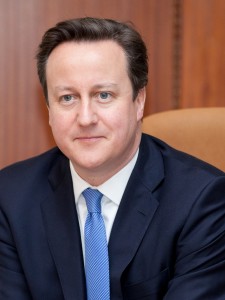
    Below is the text of the speech made by David Cameron, the Prime Minister, in Davos, Switzerland on 21 January 2016.

    Thank you ladies and gentlemen for that welcome. It’s very good to be back in Davos. It’s good to be back being able to report on a British economy that is growing at more than 2% last year and this year. A British economy where we’ve taken an 11% budget deficit that I inherited in 2010 and we’ve cut it by 2 thirds. And to report back on a British economy where we’ve created, since I’ve been Prime Minister, 2.3 million more people in work.

    Yesterday we announced that there are more people in work in the British economy than ever before in our history and more women in work than ever before in our history. So we’ve got some economic challenges that, of course, everyone is talking about here in Davos, but we’re going to continue to deliver the strong and resilient economy that we were elected to deliver.

    And it’s good to be back in Davos with a new political mandate. We held an election and I have a mandate, a majority government, with a mandate to complete the job that we set out in terms of our economy. A mandate to deliver security for the people who elected us and for the British people as a whole. But also crucially a mandate to deliver reform in Europe and to put the question of Britain’s place in Europe and answer that question comprehensively during this Parliament. And that’s what I want to speak about today before trying to answer your questions.

    And I want to be absolutely clear about the aim that I want us to achieve. I want to be clear about what needs to change in order to make that happen and I want to be clear about the debate that I think we need to have, including business and non-governmental organisations and others who care about this issue.

    So let me start with the aim. My aim is absolutely clear. I want to secure the future of Britain in a reformed European Union. I believe that is the best outcome for Britain and the best outcome for Europe. Now, some people ask me, ‘Well, why are you holding a referendum?’ Let me explain why I believe this referendum is so crucial. For years Britain has been drifting away from the European Union. The European Union has become increasingly unpopular in Britain. And added to that, the succession of politicians, after treaty after treaty after treaty has passed, have promised referendums, but never actually delivered them. And I think it’s absolutely essential to have full and proper democratic support for what Britain’s place should be in Europe and that’s why we’re holding the referendum.

    And we also need the referendum in order to address the concerns that people have in Britain about Europe. The idea that there is too much rule‑making and bureaucracy. The idea that this could become too much of a single-currency-only club. The idea that Europe is really about a political union, a political union that Britain has never been comfortable with. So I believe holding the referendum, answering these questions, but with the end goal of securing Britain’s place in a reformed European Union, can give Britain and can give Europe the best of both worlds.

    Now let me explain what it is that I think needs to change. And I’ve set out the 4 things, the 4 areas that I think are so crucial. And just want to run through them. First of all, it is about competitiveness. When I look at the single market of 500 million people, I think it is an absolute thrilling prospect. This is a quarter of the global economy. But we have to be frank when we look at Europe’s single market. We’re still lagging behind America in technology; we’re lagging behind in productivity. We could be doing so much more to add to the competitiveness of our businesses and our economies rather than taking away from it.

    And that’s why what I want to see, what I believe we will see, is clear measures to cut the bureaucracy that there is in Europe and to cut the rule‑making. I want to see clear measures to complete the single market in digital, in services, in energy which will be of huge benefit to countries like Britain, but right across Europe in terms of jobs and prosperity.

    And crucially, I want to see Europe sign trade deals with the fastest-growing parts of the world. For instance, our trade deal with Korea has been fantastically successful for Korea, but even more successful actually for the countries of the European Union. And people will want to know in Britain that the European Union is signing trade deals as fast as and more significant than we could ever sign on our own. So I want to hardwire competitiveness into the European Union so it benefits countries; not just Britain, but I think it will benefit all of Europe and that’s why I think it’s important that we put this on the table.

    Now the second area I want to see change is I want to make sure that this organisation is good for those countries that are members of the eurozone, but also good for those countries, like Britain, that don’t want to join the euro. Because the truth is this: for many, many years, and in Britain’s case, I suspect forever, the European Union is going to have more than one currency. And we should be frank about that. And let me be clear: I want the eurozone to succeed. The eurozone is our biggest trading partner. I don’t want to stand in the way of things that need to be done to make the eurozone a success. Indeed, I would encourage eurozone members to take those necessary steps. But in a sentence, what we need is an organisation that is flexible enough so that you can be a success if you’re not in the euro, or a success if you are in the euro, and fair rules between the two.

    Let me give you just one example of what I mean. During last summer, in order to help with the Greek situation, there was a moment when the eurozone countries were going to spend money out of a fund to which Britain contributes, to help bail out Greece. That’s completely unacceptable, to use the money of a non-eurozone state to solve a eurozone crisis. Now, we fixed that problem, but frankly we shouldn’t have to fix problems like that on an ad hoc basis. What we need is a clear set of rules and principles, so that if you’re not in the eurozone, you suffer no disadvantage, you’re not discriminated against, and there’s proper fairness between the systems. I think that is achievable, and again, I think that will be good for Britain, but I also think it will be good for all the countries of the European Union, whether they are in the eurozone or not.

    Now the third area I think we need to see change, change for Britain, but again I would argue, good change for Europe, and that is in the area of sovereignty. Britain has never been happy with the idea that we are part of an ever-closer political union. We’re a proud and independent country, with proud, independent, democratic institutions that have served us well. We’re also bound up in the European continent, of which we are an important part, and we need to get that relationship right. And sometimes people think Britain is a very reluctant European. And I would say, no. If you look at things like completing the single market, you will find no more dedicated a country than Britain to get the job done. If you look at issues like coming together on foreign policy challenges to make sure we take robust action, it was Britain that led the charge on sanctions against Russia because of its actions in Ukraine. It was Britain that led the charge on making sure we had those crucial sanctions against Iran that helped to bring Iran to the table that brought about that non-nuclear deal. So we’re not reluctant in that sense, but if Europe is about ever-deepening political union, with ever-deepening political institutions, then it’s not the organisation for us. So I want to be absolutely clear that we want to carve Britain out of the idea of a closer union. We will be enthusiasts for the economic cooperation, for foreign policy cooperation, for working together on challenges like climate change, but we’re never going to be comfortable in something that insists that Britain should be part of an ever‑closer union. We’re not comfortable with that, and we need to sort that out.

    The fourth and final area is perhaps the most difficult of all, and that is this issue of migration and welfare. Now Britain is, I would argue, one of the most successful multi-racial, multi-faith, multi-ethnic democracies anywhere on Earth. We are a very diverse nation, a very diverse and successful nation, but the pressures that we face from migration in recent years have been too great. Our population is growing anyway, even before this migration is taken into account, but the figures are simple. Today, net migration into Britain is running at 330,000 a year. That means adding as many as 3.5 million people to our population across a decade. And that’s what the concern is about. It’s not a concern about race, or colour, or creed. It’s a concern about numbers and pressure. And it’s the British people’s number one concern. And I don’t think for one minute they’re being unreasonable having this concern, indeed I share this concern because the pressure on public services, the pressure on communities has been too great. Now, of course, we need to do more to control migration from outside the European Union, and we’re doing that. But we do need to look at the situation within the European Union. Now I want to be clear: I support the idea of free movement. Many British people take advantage of free movement to go and live and work in other European countries. But I think where this has gone wrong is that the interaction of our welfare system with free movement has actually set up very large pressures on our country, and that is what needs to change.

    And that is why I put on the table the idea, the proposal that you should have to live or work in Britain for 4 years before you get full access to our in‑work benefits system. Because the way it works today – because Britain has a non-contributory system, one you can access straight away – you can train as a nurse in Bulgaria, and actually it would pay you to come and work in manual labour in Britain because of our top‑up welfare system. And in the end, that isn’t really right for Bulgaria and that isn’t really right for Britain.

    And I think, when enthusiasts for the European Union look at this issue, they should stand back and look at the facts and the figures. When the founding fathers of Europe came together, did they ever really believe that a million people were going to move from Poland to Britain, or that 1 in 20 Lithuanians would make their home in Britain? Now, those people make an incredible contribution to our economy, and I welcome that, but the scale of the movement, the scale of the pressure, is something that we need to address. And I think, when in Europe we look at the issues we face today – whether it’s the migration crisis, whether it is the issues that Britain’s putting on the table – it would be far better to address these issues, to try and solve these problems, rather than try and look our electorates in the eye and say we’re simply not going to listen to what you’re doing.

    So what I’ve tried to set out is 4 things; not outrageous asks that can’t be achieved, but 4 practical sets of steps that, if achieved, would actually answer the concerns that Britain has about Europe.

    Now, let me just say a last couple of words on the debate I think that we need to have on the timing of how this should work, and what I believe the end point of all this should be.

    Now, in terms of the timing, I very much hope that we can, with the goodwill that is clearly there, reach an agreement at the February European Council; I would like that. I want to confront this issue, I want to deal with it, I want to put that question to the British people in a referendum, and go out and campaign to keep Britain in a reformed European Union. If there is a good deal on the table I will take it, and that’s what will happen.

    But I do want to be very clear: if there isn’t the right deal, I’m not in a hurry. I can hold my referendum at any time up until the end of 2017, and it’s much more important to get this right than to rush it. But of course, I think it would be good for Europe and good for Britain if we demonstrated that we can turn the goodwill that there is into the actions that are necessary to put this question beyond doubt, and get the answer from the British people.

    Now, in terms of the debate I think we need to have, obviously the politicians are going to play a big role in this debate, and I hope to play a big role myself. But I hope that business, NGOs and other organisations won’t hold back. I would say: don’t hold back right now. Even though the question isn’t settled, I think that if business backs my reforms – if you want to see the competitive Europe; if you want to see the flexible Europe; if you want to see a Europe where you can be in the eurozone and win or out of the eurozone and win – I would argue: get out there and support those things.

    I think it’s important that with this, which is such a massively important generational question for Britain and for Europe, the sooner you can start to look at your own businesses, and come up with the examples and the ideas about the benefits, and the problems, that there are with Europe, the more that you are able to help to explain and set the context for this vitally important question for Britain and for Europe.

    Now, where do I hope this all ends? Well, let me just say this: even if I’m successful in getting this reform package and holding this referendum, and Britain decides to stay in a reformed Europe, at no stage will you hear me say, ‘Well that is perfection; this organisation is now fixed.’ There are many things that are imperfect about the European Union today, and there will be many things that will be imperfect about the European Union even after this negotiation. We do need reform in Europe: to make sure Europe works for the countries of Europe, for the peoples of Europe, for the businesses of Europe; for all the people who want to work and have security, and get on and make something of their lives. The reform will not be finished.

    Second thing I’d say about the end of all this, is you’re never going to hear me say that Britain couldn’t succeed outside the European Union. Britain is the fifth largest economy in the world. We’ve got a huge amount of talent and resources and brilliant people and we’re members of many important organisations in our world. I’m never going to talk Britain down, but I think the question is not: could Britain succeed outside the European Union? The question is: how will we be the most successful? How will we be the most prosperous? How will we create the most jobs? How will we help the most number of livelihoods in our country? And how will we keep our country the most secure? Those are the questions that, to me, are absolutely vital.

    Now the end of all this, for me, I think, is quite simple: that there is an enormous prize for Britain and for Europe if we can achieve these reforms and win in this referendum. And it will be having that single market of 500 million people; having that sense of cooperation and working together on common problems and recognising that when a country like Britain has problems and issues that need to be addressed, we get out there and sort them out and address them. And to British people I would say, there is the prospect of the best of both worlds. And let me explain by that what I mean by that.

    Britain’s membership of the European Union is already different to many other countries, for important reasons of history and politics and our approach to certain issues. And by the best of both worlds I mean that we will be in the single market, and benefitting from that, but not in the single currency, keeping our own currency, the pound; that we’ll be benefiting from being able to travel and move around Europe, but we will maintain our own borders. We never went for the approach of taking down our borders and we never should, and in my view, we never will. And we’ll have more of the best of both worlds because we would be part of an organisation where we can bring benefits to it and benefits to us, but we would not be part of an ever-closer union. We would be absolutely clear that, for us, Europe is about independent nation states coming together to cooperate, to work together for their mutual benefit, but it is not an ever-deepening political union which the British people do not want and would not sign up to. I think that is a huge prize. I think that is a prize worth fighting for; it’s a prize worth negotiating for; if necessary, it’s a prize that we will have to be patient in order to achieve, but it’s a prize I’m determined to deliver in this, my second term as Prime Minister. Thank you.

    Question

    As it stands with the renegotiation deal, has the EU moved at all in terms of demands on immigration? And, as it stands right now, would you accept it? Because the French Prime Minister [inaudible] on it this morning.

    Prime Minister

    Well look, I would say we’ve made good progress. I mean some people said to me – first of all, people said before the election, ‘You’ll never actually legislate on the referendum. That’s just a promise that a politician won’t keep.’ Well we’ve kept our promise and it’s the law of the land. The next thing people said is, ‘Well, you’ll never actually get a proper renegotiation going, that won’t be possible.’ Well there is the proper renegotiation going and already it’s made very good progress. Are we there yet? As my children say when we’re driving to some long lost destination, no, we’re not there yet but I think there is the prospect, there is the possibility of getting these issues sorted by the February Council, if there’s goodwill and real movement on all sides. So I think it is achievable, it is doable, but we are certainly not there yet but I’m satisfied that my European partners and everyone is working hard to get this done.

    And the crucial thing is not whether I’m happy with the deal now. Of course I’m not happy, we haven’t done it yet, but the crucial thing will be: is there a deal that I think answers the questions that the British people have put? That’s the question and we’ll know that in February. And, as I say, if there’s a good deal on the table, I’ll take it, and I will campaign for that with everything I’ve got. But if there isn’t, I’m patient.

    Question

    Prime Minister, you couldn’t have chosen a more receptive place to give this speech about staying within the EU. I mean, I can’t imagine there’s anyone in this audience, or indeed in Davos in general, who is in favour of Brexit. But doesn’t that underline the gap between what you have in places like Davos, and in places like Brussels, where people do believe in internationalism? And then what a lot of people are feeling in the UK: they feel disenfranchised, they feel there’s a big distance from what is being decided here and what they’re feeling in their pockets, both with the EU and with the economy. What do you say to them?

    Prime Minister

    Well, what I would say to everybody is the same thing; I don’t make one speech in Davos and another speech if I’m in rural England. I say the same thing, which is: if we can get the right deal, it’s right to stay in a reformed European Union. And if we don’t, then I rule nothing out, because you’re right, there is a disconnection. People feel that they want a European Union that is on their side. They want one that is going to help business, jobs and prosperity in our country. They want one where you don’t have to join the single currency, but your interests are protected. They want one which understands that the pressure of migration in Britain recently has been too high. Now I would say these aren’t purely British issues and British problems. I think you’re much better in politics – rather like in business, if you’ve got issues you need to resolve, have a strategy and a plan to resolve them, rather than just pushing them away and hoping they’ll go away.

    Now that is my approach, and I think that is one that I’m grateful my European colleagues have answered the need for these changes, but I think if we make these changes, it will actually bring Europe closer to people and it shows that this is an organisation that’s flexible enough to solve problems that people have.

    And I think we’re going to need more of that frankly, if we look at what’s happening with the Syrian refugee crisis. Again, we’re going to need to look at new answers. And I think that’s going to be crucial to demonstrate that Europe is flexible enough to respond to people’s concerns.

    Question

    Prime Minister, I think most people completely agree about your reform agenda and the British option. But don’t we also have to stress a little bit about the common values within the European Union? That together we can do things, not just economically, but on security, like the sanctions against Russia which you were at the forefront of that we couldn’t do by ourselves and that actually, does quite a lot of good in the European Union.

    Prime Minister

    I only had half an hour, so I gave you the speech about the 4 things that need to change. But there are 2 things I’d add to what you’ve said. First of all, you know, Britain is a country that has incredible connections, relations with all of the other European nations in the European Union. And there’s a lot that we have in common. You know, we believe in democracy, in tolerance, in rights, in freedoms, and those things, we are better able to promote if we try and promote them together.

    And while, when you sit in the European Council, as I’ve done 43 times, I think, there are times when you can have frustrations and arguments, but you never forget that this is group of countries that used to fight each other and kill each other, and have actually now come together in a common endeavour based around some values that we in Britain are very proud of, in terms of committing to democracy and freedom and rights and all the rest of it.

    The second thing I would say is that, I think, for many, Europe has, in Britain, has been principally an economic argument – and there are very strong economic arguments, including the ones I put across today. But I think in recent years, there are quite strong security arguments too. When you’ve got Russia acting as it did, destabilising Ukraine and trying to re‑write the borders of Europe; when you’ve got, in the Middle East, the death cult of Daesh, and the terrorist threat that we see on our own streets and in our own cities, then actually there is a strength and safety in numbers.

    There is an important element of working together against these foes, not just in terms of a solidarity that we should show to each other as we face down these threats, but there are also some practical steps. You know, we’ve recently got the victory of having proper passenger name records in Europe, so when people get on planes between European countries and try to come to Britain, we can find out where they bought the ticket, what credit card they used, whether they might be linked to some problem organisation, all the rest of it. That action makes us safer.

    And you know, I would just say, I think for years, many in Britain thought, well, the economy – that’s connected to the European Union. Security, that’s about NATO and our partnership with America, and the Five Eyes intelligence partnership. I think that view is still valid – those things are absolutely vital. But actually, there are things that we can do with European partners in terms of finding out when criminals are crossing borders, being able to chuck them out of our countries when they come, having better intelligence in the exchange on terrorism, and facing up to some of the threats that we face in our world.

    So I think there is a security argument – a strong security argument – but all these things are going to rely on us getting an agreement to the problems and the issues that I’ve put on the table. And as I say, I don’t think any of the things I put on the table are impossible to achieve. I’m a practical person. I don’t want to go into a negotiation with 8 things I want and settle for 4; I’m very practical. These are the things that we need to fix. And I think we’re on our way to fixing them, but we haven’t got it sorted yet.

    Question

    Prime Minister, I wonder what you’d say to your critics who suggested this is a dangerous and cavalier question to be asking [inaudible] going on [inaudible] you know, terrorism, to the refugee crisis, to the [inaudible] global economic recovery.

    Prime Minister

    Well, I’m a believer in democracy. I’m a believer that my authority comes from the people who elect me. And I set out very clearly, three years ago, that it was time for a renegotiation; it was time to put this question beyond doubt, and hold that referendum. I set out that proposal. I talked all round Europe about it. I put it in my manifesto. The British people elected me on that basis, and I’m going to deliver exactly what I promised. And I think, in the end, think how Europe has changed since we last had a vote in 1975. You know, the single currency has been a huge driver for change in Europe. Now we’ve got to show that you can have that driver for change that’s going to change what the single currency countries do. And frankly I think they do need closer integration and more steps and measures to make a success of that currency. But Britain is not going to join that currency. If we’re going to work inside this organisation, we need the relationship between the two fixed.

    As I say, I don’t think you do your country, or indeed Europe, a service by pushing these issues to the margin and hoping they go away; I think the right thing is to confront them by having a strategy, by having a plan, by working with your partners, by being very clear about what you’re going to do, and then going out there and doing it. I think we’re well on the way to doing that and I will accept the judgement of the British people when I put that question before them.

    But I’ve always felt, many people in Britain are – so we’ll just hold a referendum. Just have – you know, put it in front of the people now. I would argue that’s a terrible choice to put to people: stay in an organisation that has got flaws and faults and need to be sorted out, or leave altogether. I want to put the question in front of the British people, here is a reformed European Union, and a European Union that’s addressed specific challenges that Britain’s put on the table. Now you can choose between staying in that or leaving. That’s what we’re doing. So I would say it’s the opposite of what my critics would suggest. I’d say it’s a very carefully thought through plan, and one that can bring great benefits not just for Britain, but for Europe.

    Question

    Prime Minister, you said that migration is the most important issue for the British people. If there is no deal on welfare curbs for immigrants from the EU into Britain, is there no deal at all?

    Prime Minister

    I’ve always said we need to have action on all 4 of the areas I’ve identified, and so this migration welfare question is absolutely crucial. People want to see progress on that.

    I made 4 promises in the election on this front. I said that if people came to Britain, came to Britain from Europe, looking for a job, they couldn’t instantly access unemployment benefit. We’re well on the way to fixing that; you don’t get the benefit for the first 6 months.

    The second thing I said is that if after 6 months you can’t find a job, then you have to return to the country you came from. This is a freedom of movement to work, not a freedom of movement to claim. And we’re well on the way to achieving that. The third thing I said is you can’t come to Britain, leave your family at home, and get British levels of child benefit. And again, I think we’re well on the way to solving that one. The fourth thing I said is that you should have to wait 4 years before you get full access to our in‑work welfare system.

    And as I’ve said, that proposal remains on the table. I know that some other countries have difficulties with it. I’ve said that if there are alternatives people can come up with that are equally potent and powerful and important, I’m prepared to look at them. But we do need action on this front if we’re going to get the reform that Britain needs, that Europe needs, and bring this question successfully to a conclusion.

  • David Gauke – 2016 Speech on Economic Security

    davidgauke

    Below is the text of the speech made by David Gauke, the Financial Secretary to the Treasury, in London on 20 January 2016.

    Good evening. It’s a pleasure to be here with you tonight.

    In my office in Whitehall there’s a framed cartoon, showing a man leaving the house in the morning to go to work. His son calls after him: “Have a great day at the Treasury, Dad. Be brave. Try not to cry.”

    Well, I can assure you that as a lifelong Ipswich supporter I’ve had to build up a fair bit of bravery over the years.

    But I think that cartoon is illustrative of two aspects of my job as a Treasury Minister since 2010.

    First, that the Treasury is a department which has been … how shall I put this … not always the most loved department, within as well as outside Whitehall.

    And second, that the past six years have seen us operating under exceptionally difficult conditions.

    The reasons for this are relatively simple. Even in good economic times, it tends to be the Treasury who says “sorry, no, we can’t afford to do this”.

    That’s part of the normal tension of government. If you have the power of the purse, then it’s also you who has to exercise restraint in using that purse.

    But the situation in May 2010 was anything but good economic times. We were a country living well beyond our means, borrowing one pound for every four we were spending, and lacking a credible plan to turn that situation around.

    Because we had not been sensible during the boom years, the 2008 financial crisis caught us unprepared. The tide went out and it turned out that we were the ones who were skinny dipping.

    It fell to the Treasury to sort it all out.

    Today, I will talk about how we went about that task. But before I do that, I’d also like to talk a little about the philosophy behind our actions.

    A defence of the free market economy

    When I became an MP in 2005, there was a certain degree of consensus about the right way to run an economy.

    We had moved away from the polarised arguments of the 70s and 80s and had, more or less, agreed on certain fundamentals.

    For instance, that the big state doesn’t have all the answers.

    That in normal times, a country shouldn’t spend more than it earns.

    That excessive tax acts as a disincentive.

    That it’s businesses who drive national growth.

    That more power to the centre doesn’t necessarily mean greater efficiency.

    That before distributing wealth, you have to create it.

    And that the free market has, by and large, been an overwhelming force for progress.

    It seemed, for a while, as if the planned economy versus free market argument had been won – and I’m sure that the very visible collapse of the Soviet Union hammered the final nail in the coffin.

    I’m not so sure that’s the state of political discourse today.

    We’ve seen a lot of people in recent years come out against those fundamentals.

    We’ve started hearing the old calls for greater taxes on the highest earners, renationalisations, and trade protectionism.

    Now of course, it’s legitimate – indeed important – for all policymakers to take a step back and ask themselves “are our policies delivering for the people of this country”.

    But there is a reason why we study history: to learn from the follies and successes of the past.

    Time and again, it has been proven that the free market, and private-sector driven growth, and taxation which encourages ambition, and a State which accepts it can’t do everything, does lead to national prosperity.

    We have the system we have because it works. Other systems, to put it bluntly, historically haven’t worked. And in the modern, interconnected world we live in, they are even less likely to work.

    If you remove the disincentives for doing well – whether that’s for individuals or companies – then those individuals or companies will simply move away and take their aspirations elsewhere.

    And when a country stops doing well, it is only a matter of time before the people living in that country begin to suffer. Inevitably, those who have the least are hit the hardest.

    In other words, it’s not a game. Livelihoods – and indeed lives – depend on the government of the day getting the economy right. Aside from the defence of the realm, there is no more important task for a government to do.

    What that means is that you cannot use the economy as some sort of a safe space in which to try out abstract theories. That is for the university debating society. We have the fifth biggest economy in the world to run.

    When I entered the Treasury in 2010, alongside George Osborne and the rest of the ministerial team, we had one ambition: to pull Britain’s economy back from the brink, and to set it on a path to recovery.

    That meant restoring stability; reining in excessive spending; and putting in place the right policies and incentives for growth.

    So I’d like to talk a little more about how we created, and implemented, our strategy for economic success.

    In the 1970s, one of the then Chancellors’ private secretaries casually remarked to a journalist that “I have no idea what a deficit is”.

    These days, I can assure you that everyone in the Treasury knows what a deficit is!

    Reducing the deficit is the task we were asked by the British electorate to do – and it’s the task we have to keep a relentless focus on.

    Back in 2010, we inherited a deficit of £153bn, which was around £5900 for every household in Britain.

    We’ve made a huge amount of progress since then; but even this financial year, we are still having to borrow £3,300 for every household in the land.

    That’s simply a reflection on the size of the ship we’ve had to turn round.

    The good news is that we are succeeding. We have a credible path for deficit reduction, backed by the independent Office for Budget Responsibility, which will take us into running a surplus in the 2019/2020 financial year.

    Perhaps equally importantly, public sector net debt is set to fall every year, from 82.5% of GDP this year to 71.3% in 2020-21.

    That’s important for two reasons:

    First, because it gives us room for manoeuvre in exceptional economic times. If the situation is such that an additional stimulus is required from Government spending, then we’ll be able to afford it.

    And second, because servicing the interest on debt diverts funds from where they could be better used.

    It’s an experience familiar to anyone who has put too much on a credit card!

    Servicing our public sector debt cost us over £45 billion in the last financial year. That is more than we spend on schools or defence. And that’s in an era of extremely low interest rates.

    It won’t come as a surprise to many in this room that making cuts in public spending is never a pleasurable activity.

    Even if you do believe there are things the state shouldn’t be doing…

    Even if you do believe that subsidies can cause harm as well as good…

    There is little fun in standing up and announcing spending cuts!

    Yet it is necessary. That is why in the first year of Government we carried out a comprehensive spending review. We followed that up in 2013. And, following the election last May, we repeated the exercise.

    “Do more with less” has been the mantra.

    A significant part of the savings were simply due to making better use of our existing resources – pooling functions, harnessing technology, cutting down on our use of external consultants wherever possible.

    Part of the savings came from reducing the cost of government – in particular, making the Civil Service a more cost-effective organisation.

    Some of the savings came from reductions to the welfare bill – which, under the Blair and Brown administrations, had been allowed to expand to unsustainable levels.

    And some of the savings came from reviewing capital projects which weren’t providing adequate value for money.

    I chose the word “review” specifically, because it’s easy to categorise spending cuts as simply saying “take this off the shopping list”.

    In reality, it is much more complicated than that. The conversation will typically be along the lines of “Are we doing this project in the most cost-effective, joined up way? Is it the most important thing to be doing right now? Could we be more innovative about how we fund or design it? Is there a cheaper option that could achieve the same outcome?”

    In many ways, that is the point of what we do in the Treasury. Believe it or not, the first guide to how to run the UK economy was written over 800 years ago, in 1178. It says: “The highest skill at the Exchequer does not lie in calculations, but in judgements on all kinds”.

    The central “judgement” involved in public spending is where to cut – and where to invest.

    Everyone knows that if you don’t water a plant enough, it will wither away.

    Conversely, give it too much and it won’t do very well either.

    But what works in the desert doesn’t work in the paddy field.

    The same rules apply when it comes to government spending.

    There have been significant areas where we have maintained spending or actually increased it.

    Health and schools are the most major areas in terms of cash – but there are many others. National security. Police. Science and research. Energy innovation. Transport. Overseas aid. Pensions.

    We’ve made it a priority to improve the quality of our infrastructure, and reverse the decades of underinvestment our roads and railways suffered from.

    Above all, we have never shied away from investing in things that will improve our national growth.

    If keeping hold of the purse strings is the first function of the Treasury, then the second is pulling the levers for economic growth.

    So today I’d like to talk about three specific levers.

    The first of these levers is the taxation system.

    That’s my particular field, as Minister responsible for tax.

    Our policy is extremely straightforward. We know that one of the best ways of attracting talent to your economy is through competitive taxes. And that one of the best ways of making sure that talent goes elsewhere is by making your taxes too high.

    It’s not rocket science – but it’s astonishing how often people forget this basic principle.

    Further to competitive, low taxes, there’s one other things which helps businesses prosper, drives job creation, and supports economic growth: the certainty of having a fair and properly working tax system in place.

    Low taxes; fair rules which are followed. Those are the two principles we’ve followed since 2010.

    Back then, our rate our rate of corporation tax was 28%; and it was a fact that one of the factors pushing businesses away from the UK was our tax regime.

    So, even at a time of deficit reduction, we made it a priority to cut the corporation tax rate.

    Since 2010 we have cut it from 28% to 20%. These cuts will save businesses £10 billion a year from 2016.

    This was part of a range of pro-business reforms, including the introduction of the Patent Box, and reform of R&D credits to make them more generous.

    We’re going further along the same route, so that by 2010 the rate of corporation tax will be 18%, the lowest in the G20.

    These cuts will benefit over a million businesses.

    They will help attract more overseas investment.

    And they will help support UK businesses, allowing them to retain more of their profits and use that money to invest in plant and machinery or to hire more people.

    We’ve increased the level of the Annual Investment Allowance to eight times what it had been previously.

    And, to provide the stability and certainty that businesses need, we have committed to publish a Business Tax Roadmap in March this year, setting out the government’s tax plans for the rest of the parliament.

    The second lever you can pull is more of a diplomatic one: opening yourself up to some of the world’s fastest growing and most exciting economies.

    Over the years, this has been a nation that has reaped the rewards of being open to the world around us.

    The benefits of free trade have been proven time and again. And it’s not just businesses who benefit: the evidence suggests that an increase in our trade to GDP ratio is associated with an increase in per capita income.

    So if we want to secure our economic success, then it’s important to be active all over the world – with the fastest-growing economies in Asia; with the United States; as well on our doorstep, with the nations of the European Union.

    That’s what we’ve been doing over the past six years: building partnerships and signing deals with India, China, and the Far East; making London a Western hub for renminbi and Islamic finance; and helping our world-leading financial services sector gain business worldwide.

    And, closer to home, we’ve consistently called for, and proposed, measures to improve the EU’s competitiveness: from a Capital Markets Union to a free trade agreement between the EU and the US, giving British businesses improved access to a market six times the size of our own.

    The third lever is putting in place policies to improve our national productivity, one of the key drivers of a nation’s prosperity.

    For too long, we have had a so-called “productivity gap”, between our economy and that of countries such as Germany and the United States.

    There are no easy solutions to the productivity gap. It is due to a large number of factors – some of them negative; some of them, such as our record levels of employment, positive.

    But there are actions we can take to resolve the problem – and, for the first time, last year we published a Productivity Plan setting out precisely how we do that.

    I’ve already mentioned our national infrastructure, and the problems caused by the fact that for several decades, we failed to invest enough in it.

    We’re now turning that around – indeed, we’ve committed to spend £100bn on infrastructure over the course of this Parliament…

    We’ve set up a National Infrastructure Plan with an infrastructure delivery pipeline…

    We’ve published a specific plan for the skills we need…

    And, so we can look more clear-sightedly at the future, we’ve also set up the National Infrastructure Commission, to take a long-term, depoliticised approach to major projects. It will set out its initial ideas in time for the March Budget.

    Improving our national infrastructure will also help deliver a key part of our long-term economic plan: regional rebalancing.

    London and the South East has been an enormous economic success story over the past few decades. But as the cricketers in this room will know, you can’t rely on just the one batsman if you want to field a world-class side.

    Our ambition is therefore to enable cities outside London and the South East to display equally impressive growth – and help the country’s economic recovery.

    Michael Heseltine showed the way forward back in the 1980s, when he said government policies for cities such as Liverpool needn’t be one of managed decline.

    Today, that’s what we mean by the Northern Powerhouse: a combination of more funding and greater devolution, to help cities in the North reach their fullest potential.

    We’re particularly interested in developing capability in areas where a competitive advantage can be created.

    One example is science and innovation, where some of the most exciting developments are happening in Northern cities. Manchester, for example, is home to the new supermaterial graphene – and we’ve supported the National Graphene Institute in Manchester with almost £40 million of funds.

    Great transport created the first Northern Powerhouse nearly 2 centuries ago. And it can create the second one today – which is why we’re investing £13billion in transport in the North over the course of this Parliament, including the creation of Transport for the North, a new, dedicated body.

    Alongside that, we’re putting in place a new and exciting programme of regional devolution – not just in the North, either, but across the country.

    As a government, we wholeheartedly believe that the best decision making often happens at the regional or even the local level.

    That shouldn’t come as too much a surprise, perhaps; because when local decisions are made at the local level, they tend to be made by people who know the area extremely well, and have the greatest incentive to implement policies effectively. It is, after all, their patch. We should work with that rather than against it.

    So the offer we made to local leaders was as follows:

    If you want that greater responsibility, if you can live with that greater accountability, if you have an ambition for what your city can achieve, then we will look at giving you those powers.

    These powers could be quite significant: control over major budgets; managing housing, health, and skills; running city-wide transport networks.

    Giving those levels of powers away carries a risk, of course. That is why we asked leaders to demonstrate that they were are capable of implementing that ambition, and could live with the increased responsibility.

    So if a large city wants control over major powers and budgets, it must have a directly elected, executive person covering the whole metropolitan area, in the form of a Mayor – just like many of the world’s greatest cities, including London.

    Already, we’ve signed some exciting deals with a host of regions including greater Manchester and Cornwall, and many more discussions under way.

    We’re clear that this is not just a programme for the North. There should be no monopoly on Powerhouses – we want a Western, Midlands and Southern Powerhouse too.

    Because if all regions can mirror the tremendous success of London and the South East, then that will be a long-term gamechanger for the British economy.

    So there is still a lot to do over the course of this Parliament. But we shouldn’t forget quite how far we have come over the past 5 ½ years.

    With growth leading the G7, record levels of people in work, living standards and wages rising, our economy is truly delivering for the British people.

    We made the tough decisions and we’ve been getting the results.

    But good times in the future aren’t a given. Worldwide, there are still plenty of risks out there.

    They are risks we have to insulate ourselves against – and the best way we can do that is to make sure we have our own house in order, start running a surplus and reducing our debts, and continuing to create economic security.

    The worst thing to do, right now, would be to throw away the fruits of our hard work.

    I spoke earlier about the resurgence of voices asking us to do exactly that.

    We’re not going to – because this country’s economic security is much too important.

    What we will do is continue down the path we took in 2010:

    One which gets us living within our means as a nation;

    One which helps people and businesses prosper, expand, and create growth;

    And one which will make the UK fundamentally stronger, and more able to withstand any storms in the global economy.

    It hasn’t been an easy path in the past, and it may not be an easy path in the future either.

    But that makes it all the more important to stick to it.

    Thank you – and I’d be delighted to take some questions.

  • Nicky Morgan – 2016 Speech at Floreat School

    nickymorgan

    Below is the text of the speech made by Nicky Morgan, the Secretary of State for Education, at Floreat School in Wandsworth, London on 21 January 2016.

    Thank you for that kind introduction. It is a pleasure to be here.

    And it is a pleasure to be hosting the Department for Education’s first character symposium, alongside Floreat Education and Lord O’Shaughnessy – pioneers of what excellent character education looks like.

    It’s inspiring to see so many people debating this issue so passionately.

    I know that Major Tim Peake has tweeted about this symposium all the way from the International Space Station – so that’s definitely a badge of honour!

    As the Prime Minister said in his life chances speech just last week, our aim in politics should be: “To give every child the chance to dream big dreams, and the tools – the character, the knowledge and the confidence that will let their potential shine brightly.”

    So this government has made it clear that character matters.

    And, as many of you will know, the development of character and mental wellbeing are personal priorities of mine.

    As a backbench MP I called for a debate on mental health in the main House of Commons chamber for the very first time and was privileged to lead that debate in 2012.

    I was the first Secretary of State to give a minister specific responsibility for mental health – a role Sam Gyimah is carrying out with distinction.

    And let me thank Edward Timpson, the minister in my department responsible for character, for his considerable work on this – I know you will hear from him later.

    Good character is welcomed by schools, by businesses and by parents alike. It impacts both on educational outcomes and life chances, and I have seen first hand the impact it can have.

    Just last week I attended an event being held by the Transformation Trust which gives disadvantaged young people the chance to participate in character-building activities which they otherwise wouldn’t have access to.

    I heard from 2 young women, Camila and Rihanna, both only 18 years old, who were articulate, ambitious and accomplished.

    They were the embodiment of the impact character education can have on young people.

    For too long, character has been seen as ‘soft’ and ‘a nice thing to do’.

    I am pleased to say that the debate is shifting and there is greater awareness than ever before of just how important this is.

    I firmly believe character education prepares our young people for life in modern Britain, regardless of their background or where they grew up.

    A truly one-nation government cannot accept that only some people deserve the opportunities that will help them to get on in life.

    Every single child deserves that chance.

    And we’re not promoting character on a whim.

    Evidence clearly shows that character matters.

    Carole Dweck’s work at Stanford, Angela Duckworth’s work on Character Lab, as well as the evidence collected by the Early Intervention Foundation, all point to success being closely linked with character.

    This is evidence showing that developing excellent character traits in young people can help them to realise their true potential.

    People often ask what we mean when we talk about character.

    For me character traits are those qualities that enhance us as people: persistence, the ability to work with others, to show humility in the joy of success and resilience in the face of failure.

    Character is about being self-aware, playing an active role within communities. It’s about selflessness and self-discipline as well as playing a full role in society.

    It’s fair to say that’s a long list of traits!

    But that goes to the very heart of this debate – there is no one clear definition of character.

    There is no one easy list of boxes to tick.

    We don’t want to set down rigid guidelines on this because character isn’t a one-size-fits-all concept.

    It isn’t just one thing.

    It’s a combination of the traits that set people apart so they can achieve their dreams.

    Business leaders – big and small – tell us time and time again that character is a key component to success.

    And we welcome a diverse approach to teaching character.

    Our reforms over the last 6 years in education have been about liberating schools to innovate and have the freedom to deliver what really works.

    We want schools to choose how best to deliver character education in ways that suit their pupils, their teachers and their communities.

    We’ve heard this morning from Janet, and the inspiring work done here in Floreat to instil these traits in their pupils.

    We’ve also heard from Ali about the difference the ReachOut mentoring programme has had on his life, and from Danielle – who spoke about the determination that has helped her achieve her goals both academically and in sport.

    One of the other myths I’m keen to dispel is that character education, and academic attainment are mutually exclusive. Far from it.

    For me, they are 2 sides of the same coin.

    Consider for a moment the student who reads aloud for the first time and gets tongue tied – will they rush to do it again without encouragement?

    What about another who is asked to recite times tables in front of their class and gets stuck – will they fall over themselves to repeat the exercise?

    Probably not.

    But with character comes the confidence and determination not to be beaten.

    It’s that attitude that says “dust yourself off and try again”.

    We know that some of the best schools are already prioritising good character education.

    Whenever I go to visit schools – and I’ve visited my fair share – I always make a point of asking what they do to promote character, mental health and wellbeing.

    And at the Department for Education my officials talk to those schools doing it well – to understand the key to their success. And the one thing I’ve heard over and over again is that the best schools embed character in everything they do – from their ethos, to their curriculum, to the extra-curricular activities they offer.

    Oakthorpe Primary School in Derbyshire has developed an ethos that’s focused around reciprocity, reflection, resourcefulness and resilience.

    Haywood Academy in Stoke-on-Trent offers a range of character-building activities through motivational speakers, army cadet units and theatre programmes.

    I have had the pleasure of visiting the Birmingham University Free School where character education runs through everything they do, as well the Goldbeaters Primary School in London, where we launched the On the Front Foot programme with elite rugby coaches.

    And also Redhill School in Stourbridge where students are encouraged to play a positive role in the life of the school and the wider community through fundraising, work experience and sports.

    Pupils were invited to speak at the Conservative Party Conference and talk about why character education matters to them – and let me tell you, they received one of the biggest standing ovations of the day.

    I want every single pupil to benefit from that kind of character education.

    That’s why we are building the evidence base so we can develop the best approaches and make sure all schools have access to this information.

    That’s why we will provide an online digital platform where teachers can share best practice about character education, evaluate new ideas and find online professional development materials – as well as sharing their own data to build a proper evidence base.

    And we will look to the Character Awards as a gold standard as to what works in character education.

    Today is a celebration of the excellent work already being done. To those schools whose efforts are to be applauded – thank you.

    But also to the businesses who are building lasting partnerships with schools and doing their bit to further the building of character in our young people – thank you, too.

    I think it’s vitally important that businesses take a role here because the character traits we instil in young people should reflect the type of workforce our modern economy wants and needs.

    That includes companies like Barclays, which has developed a Life Skills programme to develop the skills young people need to increase employability, and British Gas, which is supporting the fantastic Duke of Edinburgh scheme.

    We have sought, like no government before us, to bring business people into the education system.

    That’s why we now have businesses sponsoring schools, becoming governors and offering work experience.

    We want this relationship between business and education to continue to go from strength to strength.

    That is why we will be launching, as the Prime Minister set out, a new business mentoring programme, led by the Careers and Enterprise Company.

    I know their chief executive, Claudia Harris, is here today and will be leading the conversation on how we can make sure all young people develop the skills they need to thrive in the workplace.

    And that’s just one of the many conversations happening today.

    We want to give you the opportunity to influence our thinking on character and, ultimately, our policies.

    So we’ll be asking for your views on how we can work with voluntary and charitable sector organisations to really expand this agenda.

    And there are plenty of avenues for our young people to go down in the pursuit of character building.

    For example, the National Citizen Service, which gives children the chance to benefit from character education no matter their background, and no matter where in the country they live.

    We want every child to be able to access this, and that’s why the Prime Minister announced we’ll be expanding funding to the programme by more than a billion pounds so that 60% of 16 and 17 year olds will be able to take part.

    We are keen to work with as many partners as possible and make sure that schools can access the best evidence possible.

    Because, as I have said, I want excellent character education to be the norm across schools – so that every single child in every single school knows that they are getting the education they deserve and so that when they leave school, they are truly prepared for the next steps they take.

    I hope you enjoy the rest of your afternoon and I look forward to seeing how we can work together to put character education to the top of the agenda and make sure it benefits all young people.

    Every single child deserves the best education possible, and we owe it to children everywhere to make sure that character is at the heart of that.

    Thank you.

  • William Hague – 2012 Speech on UK-China Relations

    williamhague

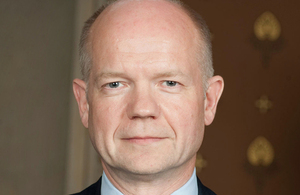
    Below is the text of the speech made by William Hague, the then Foreign Secretary, on China Business Day held at Lancaster House in London on 27 July 2012.

    It gives me great pleasure to welcome you all here just a few short hours before the opening of the London Olympic Games.

    This is the first time I have ever visited a British Embassy without having to leave the country. This historic building was where the independence of Zimbabwe was signed and two G8 summits have been hosted. However today and for the duration of these Games it has been transformed into an Embassy for British Business.

    We are holding 17 business summits over the course of the Olympics, but this is one of only two dedicated to a specific country. This is a signal of the importance we attach to our relationship with China, and the enormous potential that our economic and commercial ties have to benefit the citizens of both our countries.

    Today you can all consider yourselves ambassadors; whether you are visitors, eager to learn more about business in Britain, or representatives of British industry, envoys for the commercial sectors of which we are so justifiably proud.

    This is an opportunity to learn more about what you can offer one another. We hope you will develop relationships that stand you in good stead for the future and are part of the economic legacy of London 2012.

    This year is an important year for UK-China relations. We are celebrating the 40th anniversary of ambassadorial-level diplomatic relations between our countries.

    You could not be here at a more exciting time for London and the United Kingdom as a whole. It marks the culmination of all our efforts since 6th July 2005 when we were successful in our bid for these Olympics; and the years of preparation not just by our organisers and by British governments but by athletes around the world.

    Tonight, at the opening ceremony, we will have the opportunity to share with the world everything that is great about Britain, following the standard that was so impressively set at the Games in Beijing four years ago.

    China has brought hundreds of athletes, coaches and support staff to the UK, who have been based in Leeds for the last four weeks in my native Yorkshire as they prepare for the Games.

    It is an honour to welcome them, and all of you, to Britain.

    Whilst the attention of the world is currently on London, in our international relations Britain is looking East as never before.

    Asia is the engine of the world’s growth and we want to be part of that success, and we have spent our two years in office strengthening our ties with China and many other countries in Asia; opening new diplomatic posts, despatching more diplomats, and making a huge number of visits as Ministers.

    The growth in the Chinese economy is one of the most remarkable achievements in modern history. The Chinese economy is fifteen times larger than it was two decades ago and growth is expected to be around 8% this year. That is an increase in GDP of $580bn.

    Trade between the UK and China is also growing. Last year total exports in goods and services to China increased by 18%. In the first quarter of 2012 in comparison to the same period in 2011 they have increased by a further 12%.

    While those increases are impressive, there is opportunity to do much more. The share of the UK’s total exports that go to China has increased to 3%, but there is considerable scope for more growth; particularly in services, where the UK excels. It is clear that growth will not come from spending by the government or domestic consumers alone. Instead we must look outwards and to the expansion of globe trade as the engine of sustainable global growth.

    In 2010 the Prime Minister and Premier Wen agreed a bilateral trade target of $100 billion, and a goal of 250 more Chinese investment projects in the UK, by 2015 and we must make sure those targets are reached, if not exceeded.

    We want companies from China and across the world to thrive in the UK market. And we want our companies to do the same in China.

    We must continue to build a strong and transparent partnership between our two countries. Our shared interests outweigh our differences and they are growing all the time. We have much to learn from each other and it is a relationship that is mutually beneficial. I am pleased that China has pledged to open up more areas of its economy and encourage foreign investment.

    China’s Five Year Plan outlines some ambitious goals to turn China into an innovative knowledge economy. I hope that policy makers will find ideas to support their goal from within the UK.

    The British Government understands the needs of both our domestic business and those of other nations overseas. That is why we are putting a huge amount of energy, across the whole of Government, in to making the most of the opportunities in a world-wide economy.

    The United Kingdom is already a world-class location for international business. It is a global economic hub, and the most attractive destination for inward investment in Europe.

    But we want to make it an even better proposition for international investors which is why we are aiming to create the most competitive tax system in the G20, with lower corporation tax and no withholding tax, credits for research and development investment and ‘Patent Box’ measures to benefit the most innovative and high-tech firms.

    It is also why we will continue to support open and fair markets, resist protectionism, battle bribery and corruption and take a firm stance in enforcing intellectual property rights to support innovation and growth.

    We foster an open society, where debate and freedom have enabled innovation and creativity to flourish. This has made our creative industries world leaders. Our private sector is open and businesses from all over the world can invest and operate with confidence on a fair and equal basis with all competitors. This transparency is essential for business to thrive and inward investment to grow.

    We have a sound legal system for enforcing contracts, and our infrastructure investment systems should be encouraged and replicated in other developed countries.

    Britain is open for business and this Government is committed to removing the hurdles to trade. That is why we want to ensure that there are fewer barriers to business, less onerous regulation and more free trade. These are the crucial conditions in which a global economy can flourish.

    We are also identifying what the Foreign Office and UKTI can do to support this endeavour. In a time of economic uncertainty we are one of the few nations that are looking to expand their diplomatic network. We are opening eight new British diplomatic Posts in Asia by 2015, building stronger trade and investment, economic, scientific, political and cultural links across the whole of the region.

    We have already seen the gains that that these approaches have made. April saw the launch of the first Renminbi bond outside China here in London. China Investment Corporation recently made a successful investment in Thames Water, and the Agricultural Bank of China formally launched its London subsidiary in February. This is good news for both of our countries.

    As the relationship between our economies grows, Britain can be a springboard for China into European markets, and China’s appetite for British goods and services will only grow.

    At the Olympics in Beijing four years ago China won an impressive 51 gold medals. I am certain that the competition for medals at the Games in London will be fierce. Unlike the pursuit for sporting gold, the pursuit of global economic success is not a zero-sum game but an undertaking where both our nations can win. I hope that we can look forward to achieving that mutual success in the coming years, and may today’s event be both enjoyable and rewarding for you all.

    I hope that you enjoy the games and you have the strongest and warmest welcome possible from the government of the United Kingdom.

  • David Cameron – 2012 Speech with Turkish Prime Minister

    davidcameron

    Below is the text of the speech made by David Cameron, the Prime Minister, and Recep Tayyip Erdogan, the Turkish Prime Minister, on 30 July 2012.

    Prime Minister Cameron

    It is very good to welcome Prime Minister Erdogan here to Number 10 Downing Street. The relationship between Britain and Turkey has always been strong. I have been keen to strengthen it.

    As Prime Minister, it was one of the first countries that I visited. We set some aggressive targets for our trade, exports, imports and investment; I think we are well on track to meet those targets as our relationship deepens.

    It is not just an economic relationship. There is also a very strong political relationship. We continue to support Turkey’s membership of the European Union; we hope we can make good progress with that over the months and years to come.

    We have had good discussions today, and we have spent a lot of our time clearly discussing the appalling situation in Syria and the very real concerns that we have that the regime is about to carry out some truly appalling acts around and in the city of Aleppo. This would be completely unacceptable. This regime needs to realise it is illegitimate, it is wrong and it needs to stop what it is doing. The international pressure against this regime and against Assad is only going to build until he finally goes.

    But a very warm welcome to my good friend and colleague, Prime Minister Erdogan.

    Prime Minister Erdogan

    Let me start by saying that I am very pleased to be in London on the occasion of the Olympics. I am very pleased that my friend David has found the time, in what must be a very busy time for him, to meet and talk to me. I thank him very much for that.

    Of course, relations between Turkey and Britain have always been very strong in the military aspect, politically, in trade, in culture and in economics. Economically speaking, at a time when there are great difficulties in Europe, we have seen our trade grow and rise from $10 billion to $14 billion. This shows that we are well on track of achieving the $20 billion that we have set in our bilateral trade as a target for 2015.

    We are also always very thankful to the UK for the support that your country has given to Turkey in Turkey’s process of accession to the European Union. I would like to take this opportunity to thank you, your country and your nation, for this support.

    Of course there are many important developments in the world and we have had time to discuss some of them. The most important, which we have seen arise more recently, is the situation in Syria where what is happening is very important and very dangerous. There is a regime there that kills and massacres its own people; we must do what we can together, in the United Nations Security Council and also in the Organisation of the Islamic Countries and the Arab League, to make sure that we can make some important progress in trying to avert this appalling situation.

    There is a build up in Aleppo and the recent statements, with respect to the use of weapons of mass destruction, are actions that we cannot remain an observer or spectator to. Steps need to be taken jointly within the United Nations Security Council, the Organisation of Islamic Countries, the Arab League, and we must work together to try to overcome the situation.

    One last point, I would also like to draw your attention to the situation in Myanmar where we see hunger, we see massacre and a lot of devastation. This is a place where there are a lot of things that no human being should be subjected to. They live in very difficult conditions and we must also make sure that there is peace and freedom everywhere in the world; we must work to achieve that.

    For that, I also hope that the Olympics in London 2012 will be a good opportunity to continue to promote the message of peace. I wish to thank you for your very successful hosting of the Olympics. I would also like to take this opportunity to express the best wishes of the Turkish people to the British people.

  • Henry Bellingham – 2012 Speech on Nigeria

    henrybellingham

    Below is the text of the speech made by Henry Bellingham, the then Parliamentary Under Secretary of State at the Foreign and Commonwealth Office, on 30 July 2012.

    Excellencies, ladies and gentlemen, on behalf of the British Government, it is a great honour for me to welcome distinguished guests from both Nigeria and the UK to London today. I would like to thank His Excellency Mr. Olusegun Aganga for inviting me to attend. May I also thank the Bank of Industry in Nigeria for hosting this important event and in such superb surroundings.

    The Olympics is about bringing different nations together: athletes from different countries; spectators; journalists; entrepreneurs; politicians; business-men and -women. The Olympic spirit is about building understanding and trust across national boundaries.

    In that sense, today’s summit clearly embodies the Olympic spirit. I am delighted to have the opportunity to reaffirm the importance and value that Britain places on its friendship with Nigeria.

    I would like to take this opportunity to warmly welcome you to London during the Olympics. In particular I welcome all of Nigeria’s athletes, and wish them all success – that is except when competing against Team GB!

    I hope that the games will also leave lasting business and commercial relationships.

    Today I shall explain why the United Kingdom cherishes and aspires to nurture our commercial ties with Nigeria, and where we see opportunities for increased bilateral co-operation.

    As some of you may be aware, prosperity is at the heart of this Government’s foreign policy agenda. Since the last general election, the Government has focussed on supporting British companies to invest in, and to export to, new markets. The results have been impressive. British exports are growing and there has been a particular surge in exports to markets outside Europe. The Government has a responsibility to position the economy so it takes full advantage of opportunities away from the Euro zone.

    Just over a year ago, the Prime Minister, David Cameron, visited Nigeria. He was deeply impressed by the commercial drive of the Nigerian economy, and set an ambitious joint goal with President Goodluck Jonathan: to double bilateral trade by 2014.

    One year on, I am confident that we are well on the way to achieving, and possibly surpassing, this ambitious target. Indeed bilateral trade last year was just under £4 billion. In the last year alone British exports to Nigeria grew by 13%. The UK remains in the top five exporters to Nigeria and it remains our second largest market in Sub-Saharan Africa. And the trade is not all one way, Nigerian exports to Britain have also grown substantially during this period, despite global economic challenges.

    Trade is a two way phenomenon. The UK remains an important destination for Nigerian goods and we want to encourage Nigerian exporters to think of the UK as a gateway to the EU market as well.
    Sub-Saharan Africa boasts some of the World’s fastest growing economies and some of the greatest commercial opportunities, both for investment and export. As the most populous nation in Africa with impressive continued rates of growth, Nigeria is a country that remains at the top of our prosperity agenda. A World Bank study forecast that seven of the World’s fastest growing economies will be from Sub-Saharan Africa. Our view is that Africa still does not get enough attention from investors or traders. UK trade with Ireland continues to be greater than our trade with the whole of Sub-Saharan Africa, but the potential for increasing trade with Sub-Saharan Africa is significantly greater.

    Statisticians expect the Nigerian economy to become the largest economy in Africa in the next few years. There are tremendous opportunities in Nigeria, and British companies are well placed to realise them.

    It is clear to see why Nigeria has grown so fast and so consistently in recent times. Last year since I had the fortune to visit Lagos. I was struck by the entrepreneurship and vibrancy of the economy.

    I came back hoping that we in Britain could build even stronger partnerships with Nigerian businesses, harnessing the energy and dynamism that characterises Nigeria today.

    For example, I often refer to the impressive new Eko-Atlantic development. It will be one of the largest and most creative land reclamation projects in the world over the next few years, and there will be numerous opportunities for British business in construction, engineering, architecture, retail and many other sectors.

    Some people associate Nigeria only with the oil and gas sector. Of course, we do work closely with energy firms and are delighted that some of the leading British firms, like Shell continue to do well in Nigeria.

    But although I recognise the immense wealth and potential there, I am keen to ensure that British companies are aware of the many other opportunities that Nigeria has to offer. Take, for example, the boom in consumer goods. Diageo, PZ Cussons and Unilever are firmly established in Nigeria, where they manufacture and market their brands. This demonstrates an investment in skills and people.

    Take too the example of services and skills, which are becoming increasingly exportable to Nigeria. The number of students who choose to study at British universities and then return to Nigeria with newly acquired skills is growing year on year.

    This knowledge exchange is not only of immediate benefit to the higher education system and to those who study here in the UK, but is a long term investment in the flow of skills and peoples between our two nations.

    A strong recent example of collaborative working on ideas and innovation is the successful launch of Nigerian satellites, to provide imagery for mapping, agricultural monitoring and disaster relief programmes works.

    The images will not only assist people in Nigeria itself, but will be of value to governments and business across the region and perhaps globally. NigeriaSat-X was built by engineers from Nigeria’s National Space Research and Development Agency with expert guidance from specialists at Surrey Satellite Technology Ltd.

    The new generation of Nigerian scientists and engineers trained up under the NigeriaSat-X project will continue to support Nigeria’s space programme, ensuring its continued success and sustainability. In total, twenty six Nigerian engineers were located at SSTL’s facilities in Guildford for eighteen months throughout the design and test phases. I am sure there will be further opportunities for co-operation in the future.
    We have been working hard to ensure that the good news about Nigeria is spread across the United Kingdom. Officials at UK Trade and Investment have been lauding the diversity of opportunities to British businesses.

    Just last month UK Trade and Investment hosted a delegation from the Nigerian British Chamber of Commerce at a business promotion event at Lord’s Cricket Ground and last year they organised Nigeria conferences in London and Manchester.

    While events like these can educate and raise awareness in the business community, it is impossible to replicate the value of close cultural links to commercial partnership. There are over half a million people of Nigerian origin living in Britain. They are in a unique position to provide a bridge between our cultures and economies. Small and Medium-sized Enterprises really benefit from their experience and contacts in identifying potential partners for trading and investing in Nigeria. The Diasporas is key for developing people to people relationships.

    So the opportunities for deeper and broader commercial partnerships between the UK and Nigeria are already there. Part of realising those opportunities must involve overcoming potential hurdles and changing perceptions. We are already working to counteract some of the misconceptions that deter businesses from investing in Nigeria.

    Our government is also committed to working with the Nigerian authorities to make the business climate there ever more at-tractive to investors. Improvements in power supply, transportation and legislation that protect business investment can make a real difference to Nigeria’s already impressive growth rates.

    Our Department for International Development, refers to the opportunity to “unleash” the Nigerian economy. By 2015 it will be providing £300 million per year in Development assistance. Its aim will be to unlock the potential already latent in the Nigerian economy, pulling people out of poverty in the process.

    Of course, trade plays the vital role in resolving poverty. It is a vital stimulus for growth, development and productivity. And as has been shown in the markets that have grown fastest over the last fifty years, private enterprise is the real engine of growth – creating wealth far more quickly than the public sector can.

    It is also important that British investors are reassured by a robust legal framework that is conducive to large-scale investment. That legal framework must enforce respect for contracts and due-process. While the perception of commercial risk endures, companies will focus less on the commercial opportunities.

    So the Petroleum Industry Bill is of great significance. It provides a real opportunity for Nigeria to demonstrate to the business community that it is ready and willing to embrace and protect new investments.

    A well crafted Petroleum Industry Bill could set a legal framework that ensures investor confidence in the oil and gas sector. And it could ensure that Nigeria’s immense natural wealth is harnessed and managed for the good of the Nigerian people.

    There has already been a great deal of interest in the Bill. When the Financial Times – an institution not given to hyperbole – refers to legislation as a “game-changer”, then it is a clear signal that prudent action will be widely noticed.

    It is therefore vital that the Bill leads to a law that enhances transparency and visibility in the oil sector. Not only would this will go a long way to countering negative perceptions about the business environment in Nigeria, it would also show Nigerians how, where and for whose benefit the income from their oil wealth is being spent.

    And it would also be an important step in ongoing efforts to raise oil production to four million barrels a day. Nigerian crude, famed for its high quality, could help to diversify the global energy market and further strengthen Nigeria’s reputation as a responsible member of the International Community.

    A recent study by the World Bank, the Ease of Doing Business Index, placed Nigeria just a few places behind other large emerging economies, such as Brazil, India and Indonesia. This bill provides the opportunity to push forwards and establish Nigeria in front of those countries as a leading up-and-coming market in which to invest.

    So, ladies and gentlemen, there is a wealth of opportunities in Nigeria. All of us here today have a role to play in realising those opportunities. While the Olympics may be a competition, trade and investment is not. It is a positive sum game from which we can all benefit. My government is wholeheartedly committed to supporting Nigeria’s rise. I hope that we can all work together to strengthen our political, commercial and cultural relationship for the good of our mutual prosperity.

    The World economy is tough and unforgiving. The UK has no Divine Right to stay as one of the World’s top ten economies. Nor does Nigeria, a strong emerging economy, have a divine right to fulfil its clear potential. It is only through hard work, including through partnerships between our countries, that we will succeed.

  • David Cameron – 2012 Speech at Global Health Policy Summit

    davidcameron

    Below is the text of the speech made by David Cameron, the Prime Minister, on 1 August 2012.

    It’s an honour to join you at such a significant event, especially in an Olympic month when we are welcoming so many people to Britain.

    Before anything else I’d like to thank Ara and Imperial College London for bringing together this stellar group of global clinicians, policy makers, investors and entrepreneurs.

    I would also like to thank in particular Her Highness Sheikha Moza of Qatar, whose home country will be hosting the 2013 Global Health Forum.

    Today, we are here to discuss the consequences of extraordinarily rapid change in health care.

    It’s an area where Britain has an incredibly proud tradition and a proud future, too.

    We’ve always been a leader in medical science.

    Take the structure of DNA discovered by Watson and Crick in Cambridge an achievement being built on today at the world-leading Sanger Institute and the new £650m Francis Crick Institute.

    Or penicillin discovered in a laboratory in St Mary’s Hospital, London and first used to cure patients in Sheffield before going on to change lives around the world.

    Or the first test-tube baby, Louise Brown born in Oldham General Hospital, and celebrating her 34th birthday last week.

    Or the MRI scanner – a British scientist helped invent it, a British company made the first commercial product and now a factory in my Witney parliamentary constituency is a leading producer of scanning magnets.

    It’s a remarkable list.

    Things that were worked on in Britain and which we’ve shared with the world.

    But it’s not just research where we are strong.

    We’ve always been a leader in health care provision, too.

    Our National Health Service was the first to offer care to every citizen, free at the point of use, based on need not ability to pay.

    And we cherish that tradition today.

    I am a champion of the founding goals of our National Health Service in Britain and will always defend its principles even as we improve the way it works, so that is it diverse, flexible and tailored to individual needs.

    And we have always been a leader in working with others to improve health around the globe as well.

    Not just in the developed world, but in countries where for many people health care barely exists.

    For instance we’ve committed to provide £384 million to the Global Fund to Fight Aids, Tuberculosis and Malaria over the next three years.

    And we’re putting £1.5bn into the Global Alliance for Vaccines and Immunisation by 2015, saving an estimated 1.4 million lives.

    So this country has so much to offer the world.

    And that’s why – among all the amazing things happening in London this month – I particularly wanted to speak here today.

    Because event is about encouraging innovation and drawing on the very best, wherever it comes from.

    There’s lots Britain can learn.

    For instance, in Mexico, Medicall Home uses mobile networks to provide primary care to 1 million people.

    In Sichuan Province, China, ‘smart hospitals’ deliver care using remote technologies.

    And in South Africa the Vitality scheme provides direct incentives for people to live healthier lifestyles.

    But there’s so much this country has got to offer, too.

    And so if you suspect I’m here to sell what’s great about Britain – I’m sorry, but you’re right.

    I’m proud of what we have.

    We’ve got great scientists and fantastic universities.

    Amazing life science companies.

    A pro-business culture.

    A national asset in the NHS.

    And a ground-breaking approach to freeing up research data.

    I want you to know about all this, I want you to help invest in all this, I want you to help work with us in all this.

    These are the five key strengths I want us to share with the world.

    Let’s start with Britain’s first, fundamental strength – in science and universities.

    Our scientists have won 34 Nobel prizes for medical research – and counting.

    The Laboratory of Molecular Biology in Cambridge alone has produced 13 Nobel Laureates.

    Our scientists work with the world – nearly half their papers are written with partners abroad.

    They are also counted the most productive of any G8 country and they publish more top research than anywhere outside the USA.

    This great research base is underpinned by one of the strongest university systems in the world, with four universities in the global top 20.

    The UK produces more science, maths and computing graduates than any other country in the European Union.

    And the government I lead has been bold about supporting this.

    We’ve protected the science and health care budget from reductions in spending required in some other areas.

    And we’re reforming university finance to give our world-class research institutions the strengths and freedoms they need.

    Our second key strength is our life sciences sector.

    Pound for pound, it’s the best on the planet.

    It accounts for 165,000 jobs and over £50bn of turnover in this country alone.

    But it’s not just the scale that counts. It’s the unique skills, too.

    Major players such Astra Zeneca and GlaxoSmithKline are headquartered here.

    Global giants like Novartis and Lilly have cutting edge R&D based here.

    And crucially we’ve also got a fantastic base of smaller firms too, leading in innovation.

    Take Oxford Nanopore, who are developing incredible new technology that could radically reduce the cost of sequencing a human genome.

    Or the dynamic and fast-growing companies you find in the Babraham Science Park just outside Cambridge and in other life science hotspots like Liverpool, Oxford and London.

    And right now, innovation like this is vital.

    Because in life sciences, the pace of development is extraordinary.

    Where once a single new drug might serve millions of patients with a range of different conditions now treatments are increasingly targeted at patients with specific genetic characteristics.

    Indeed, it may well be the case that within a decade, the idea of treating major diseases without reference to a patient’s genetic blueprint will be unthinkable.

    The benefits can be huge. But to make the most of them we need to change the way we work.

    That means open innovation, more collaboration with universities and start-ups, and a greater emphasis on data analytics and genomics than ever before.

    We get it.

    I’d like all of you to leave today with the knowledge that the UK is changing fast too.

    And that leads directly to the third strength I want to tell you about.

    In Britain we have got a pro-business government that backs investment in innovation and life sciences.

    Some of this is about building an environment that supports business, instead of holding companies back.

    That’s why we have cut the top rate of income tax why we are cutting our corporation tax rates to the lowest levels in the G20 and why we have hugely generous Research and Development tax credits to support companies that are investing in innovation.

    You will not find a more stable and attractive environment in Europe for business investment than the UK.

    However, I know that companies in the life sciences sector have specific needs.

    So in addition to everything we’re doing to make the UK as business friendly as possible, we’re also taking bold action to support life science investment in particular.

    For the first time we are creating a Patent Box here in the UK.

    The Patent Box means that if a company creates intellectual property in the UK, it will pay a corporation tax rate of just 10% on any profits generated by those patents.

    Let me say that again: 10% corporation tax on patent profits – among the lowest in the developed world.

    GlaxoSmithKline has already announced new investment here in response.

    In March, it confirmed it will invest more than £500m at its sites across the UK, including a new manufacturing facility.

    In the words of Sir Andrew Witty, who spoke earlier, “the patent box has transformed the way GlaxoSmithKline views the UK as a location for new investments”.

    There’s a fourth strength which makes the UK a great place to invest in life sciences.

    Our National Health Service.

    To some, it might seem a bit of a monolith.

    But it gives us a unique capability.

    With patient records for 60 million people, and purchasing power unmatched anywhere else, the NHS is perfectly placed to accelerate life science innovation.

    So I’ve made this task a priority.

    We are bringing in value-based pricing, to encourage innovation and reward the most effective products.

    And ours is the first health service in the world where we have introduced a legal duty to promote research.

    That means we can get new treatments to patients faster than ever before.

    And this adaptability really matters because the life science industry is becoming more open and collaborative with a greater emphasis on partnerships between early stage companies and big pharma.

    We want to help more of those partnerships emerge in the UK.

    That’s why we have created the £180 million Biomedical Catalyst Fund to help British life science start-ups find the risk capital they need to get off the ground.

    This will help ensure that the UK has a fantastic pipeline of early stage companies producing next generation drugs and heath technologies.

    We know that regulations mean it can take a decade or more from the discovery of a drug to getting it to market.

    That’s not good for industry, taxpayers or patients.

    So we are consulting on an early access scheme.

    If patients are in the advanced stage of a disease and if there are no other treatments available they will be able to use innovative medicines much earlier in their development.

    In the technical parlance, the NHS will be able to purchase drugs before they have market authorisation.

    This will mean that as soon as brand new discoveries prove they can be tolerated and beneficial, they will be available to patients who have no alternatives here in the UK more widely than ever before.

    There’s a fifth British strength I’m keen to tell you about, too.

    The way we are going to use the incredible knowledge base offered by the NHS.

    Drug development relies more and more on real-time data.

    The UK is going to be the world leader when it comes to making this kind of data available and we’re going to do this by harnessing the incredible data collected by our National Health Service.

    We are about to consult on changing the NHS constitution so that the default setting is for patients’ data to be used for research unless the patient opts out.

    This will make anonymised data available to scientists and researchers on a scale never seen before.

    And it will help make the UK the best place in the world to carry out cutting edge research.

    I want this research to bring breakthroughs in long-neglected areas like dementia where the burden of the disease is immense but the obstacles to prevention and cure are equally large.

    That’s why I launched a Challenge on Dementia back in March – doubling the dementia research budget and supporting all researchers.

    From those discovering the biological mechanisms of the disease through to the social scientists establishing what helps people live well with dementia.

    It’s this spirit of collaboration and open innovation, nationally and internationally, that has inspired a great new project that I’d like to tell you about today.

    It starts with technology and expertise used to test athletes for drugs at London 2012.

    When the games close, all this incredible equipment and expertise will be used to establish a new Phenome Centre for research into biological markers of health and disease.

    This will take advantage of the extraordinary opportunities that lie in combining genetic data with the results of medical tests on tissues and blood.

    It will allow us to understand the characteristics of disease and how these link into genes and our environment.

    It’s an impressive example of collaboration between top-class research, the NHS and industry.

    It will produce new forms of drugs – and it will lead the world in the development of precision medicine.

    And it’s an example of the way I think the future of health care is headed.

    Around the planet, we are seeing a fundamental shift away from one-size fits all treatments towards a new age of individually-tailored medicine.

    We need to face up to the growing impact of non-communicable diseases, things like obesity.

    And we can only rise to meet these challenges by working together and driving forward innovation.

    That’s my message today.

    Britain is open for business, open for partnership and open to ideas.

    I am determined that this country becomes the best place in the world to invest and innovate in life sciences.

    And I am putting in place the policies to make it happen.

    Thank you for coming, thank you for listening – and enjoy the Olympics.

  • David Cameron – 2012 Meeting with Vladimir Putin

    davidcameron

    Below is the text of the speech made by David Cameron, the Prime Minister, at this meeting with Vladimir Putin, the Russian President on 2 August 2012.

    Prime Minister

    Thank you everyone for coming. It has been very good to welcome President Putin back to Number 10 Downing Street, and to see this steady growth in British-Russian relations.

    We have discussed cooperation over these Olympics and the Sochi Olympics in 2014, which we hope will be a success. We have discussed our commercial relationship, where British exports to Russia have been increasing rapidly over the last two years, and we want to see further growth in trade, investment, and exports.

    We have discussed cooperation in areas such as energy, in addition, and we have also had a discussion about the situation in Syria. While of course there have been some differences in the positions that we have taken over the Syrian conflict, we both want to see an end to that conflict and a stable Syria. We will continue to discuss with our foreign ministers how we can take this agenda forward.

    Today has been about a further strengthening in our relations and having these important dialogues, even in areas where we do not always agree, so that we can understand each other’s positions.

    President Putin

    For my part, I would like to thank the distinguished Prime Minister for the invitation to come to London to meet him, and to attend the Olympic Games.

    I would like to start my statement with congratulations to the United Kingdom, all the nationals of the UK, the distinguished Prime Minister, with regard to the wonderful and unforgettable opening ceremony of the Olympic Games. It was quite a spectacle. It was a wonderful holiday, a wonderful feast presented by you to mankind.

    We will organise the Sochi Olympics, Winter Olympics, in 2014, and while organising such large-scale events very many problems may crop up. This is why we would be quite interested in learning from the experience of our British colleagues.

    We devoted a great portion of today’s conversation to discussing economic issues; during such a dramatic period that the global economy is undergoing, such meetings and such discussions are in demand.

    Last year we had an increase in our mutual trade by 35-40%, and we have agreed today to find new areas, spheres and sectors to promote and enhance our economic, trade and investment cooperation.

    We also spoke a lot about Syria. We made note of the fact that there are some things on which we see eye-to-eye, and we agreed to continue working to find a viable solution on that matter. We agreed to entrust our foreign affairs ministries to go on with that search for a viable solution.

    I thank you for your invitation Mr Prime Minister.

  • George Osborne – 2012 Speech at ICT Olympics Event

    gosborne

    Below is the text of the speech made by George Osborne, the Chancellor of the Exchequer, at the ICT Olympics Event held on 3 August 2012.

    It’s a great pleasure to be here today.

    Thank you all for joining us at Lancaster House for this Olympic trade event.

    We’re here to celebrate the best of British technology and innovation, and to help forge new business partnerships with companies and countries from across the world.

    It was a week ago today that millions of people tuned into the Olympic opening ceremony, and witnessed the wonderful tribute to the British inventor of the World Wide Web, Sir Tim Berners-Lee.

    What a special moment that was.

    Not just because it was great to see Tim’s achievement honoured in such a generous way, though that was certainly the case.

    To me it was so special because of what it said about Britain in 2012.

    It showed that Britain is a country that’s so passionate about technology that an entire section of our opening ceremony was dedicated to the man who created the Web.

    I’m proud that this message was heard around the world last week.

    And it’s a message that I want all of you to leave this event with today.

    Because our passion for technology is not only reflected in our brilliant opening ceremony – it’s reflected in our economy as a whole.

    The statistics speak for themselves.

    Earlier this year, a report by Boston Consulting Group showed that the internet economy was responsible for 8.3% of UK GDP in 2010.

    This is a far bigger share than any other G20 economy.

    The report found that the same is true when it comes to e-commerce.

    13.5% of UK purchases were made online in 2010 and this is projected to rise to 23% in 2016.

    In fact, British shoppers make more purchases online than any consumers in any other country in the world.

    This isn’t just great for retailers, but it also means that a bigger proportion of advertising budgets are spent online in the UK than anywhere else.

    No wonder that the UK web economy is projected to grow at a rate of 11% a year between now and 2016 – a growth rate better than the US or China.

    So it really is no exaggeration to say that the UK is the most “wired” economy on the planet.

    And I’m here to tell you that the British Government is every bit as pro-technology as our economy.

    You really will not find a government anywhere that is more supportive of new technologies, or doing more to back technology entrepreneurs and investors.

    We are pulling out all the stops to ensure that you – the world’s leading investors and technology companies – have everything you need to innovate and succeed right here in the UK.

    Let me explain how.

    First, tax.

    We are making the bold changes to the tax system that businesses and investors need.

    We are cutting the top rate of income tax…

    …Cut our corporation tax to the lowest level in the G20.

    And introduced the most generous early stage investment tax breaks of any country in the world, along with new tax reliefs for animation video games production.

    In my view, this video game tax break is a fantastic complement to our long-term incentives for film production.

    These film tax breaks have brought billions of pounds of investments and thousands of new jobs to the UK, and they are very much here to stay.

    A great example of this investment is the £100m that Warner Brothers has invested to create a world class studio at Leavesden.

    And I’m pleased to be able to reveal today that the first film shot at Leavesden Studio will be a major production starring Tom Cruise and our own London-born Emily Blunt.

    This will create over 500 jobs – many of which will be in digital and special effects.

    This is a great example of how our tax policies are creating the right environment for investment and innovation.

    But we recognise that technology investors in particular have specific challenges and needs, so we have put in place special policies to help.

    Take our Research and Development tax credits, for example, which offer a tax relief of up to 225%.

    In case you didn’t catch that, let me say that again.

    A tax relief of up to 225%.

    So investing £1 million in R&D could mean getting up to £2.25 million back in tax relief.

    No country in the world can match that.

    And we have also introduced a tax incentive we call the Patent Box, which offers a corporation tax rate of just 10% on profits generated from patents created in the UK.

    So if your company is doing R&D and creating intellectual property, there really is no better place in the world to do it than the UK, and no better time to do it than right now.

    These, then, are the tax policies we’ve put in place to support technology entrepreneurs and investors.

    But, even for a Chancellor, tax isn’t everything.

    So let me tell you about some of the other ways that we’re making the UK the best place in the world for technology and innovation.

    We know that top business talent is truly global.

    So we’re rolling out the red carpet for the next generation of technology entrepreneurs by introducing a brand new Entrepreneur Visa.

    This Entrepreneur Visa enables venture capital backed start-ups to move to the UK quickly and easily.

    So if you’re investing in early stage companies outside the EU, you can bring them to London using this targeted Visa.

    We’re not only changing our immigration system, we’re also overhauling the way that ICT is taught in schools.

    For too long, our young people have been taught how to use computer programmes, not how to write code.

    We are putting an end to this, and making sure that our school system is producing the next generation of coders that technology companies need.

    We’re being just as ambitious when it comes to investing in fibre broadband – the fundamental infrastructure of the internet economy.

    Earlier this year, I announced a further £50 million – bringing Govt investment up to £150 million – for ultra fast (80 megabit+) broadband rollout in Britain’s major cities. This is in addition to £530million already committed for superfast broadband in local areas across the UK.

    This investment in super-connected cities will mean that the UK has the fastest internet speeds in Europe by 2018, providing the bandwidth that technology companies need to expand and flourish.

    So right across the board, the British Government is leading the world when it comes to ensuring that our policies are supporting technology and innovation, not holding it back.

    Nowhere is this more true than when it comes to Tech City, the technology cluster in East London, which is home to some of the UK’s most innovative companies, such as Mindcandy, Songkick and Mendeley.

    In November 2010, the Prime Minister launched the Government’s major initiative to support the growth of this exciting cluster.

    Ever since then, we have been pulling out all the stops to help this cluster go from strength to strength.

    We have created a dedicated unit, the Tech City Investment Organisation, which can help global investors and companies come to East London.

    And we are bringing cutting edge research facilities to Tech City to ensure that the cluster isn’t just at the forefront of today’s innovation, but tomorrow’s too.

    Take the Open Data Institute, for example, which is being built in Shoreditch with public and private funding.

    This “ODI” will be an incubator where businesses and researchers can come together to work on innovative new products that take advantage of the incredible power of big data.

    We’re also bringing together two of London’s leading universities, University College London and Imperial College London, to create a Smart Cities research centre in Tech City.

    No wonder that the world’s leading technology companies are beating a path to London.

    Google has opened a seven storey “Campus” in the heart of Shoreditch, housing literally hundreds of start-up entrepreneurs.

    Intel is establishing a cutting edge research facility in East London that will develop new technologies to make 21st Century cities more connected and efficient.

    And the likes of AirBnB, Yammer and General Assembly have made Tech City their European home.

    In the last week alone, we have seen two of the world’s technology giants unveil major new investments in London.

    Facebook has committed to open its first non-US engineering base, right here in London.

    As Facebook software engineer Philip Su put it, “London is a perfect fit for Facebook engineering.”

    And just a few days later, Amazon announced that it is establishing an eight-floor, 47,000 square foot research and development facility in Tech City.

    Why did Amazon choose Tech City?

    In their words, it was because “London is a hotbed of tech talent”.

    I couldn’t agree more.

    And I am pleased today to be able to reveal three major new investments in Tech City.

    First, Vodafone.

    Vodafone is today announcing the creation of a new technology lab and incubation centre in East London.

    Vodafone xone [pronounced Zone] will help bring together Vodafone’s technology experts and VC investors with start-up companies in East London.

    It’s a brilliant example of how large companies can support the growth of the Tech City ecosystem, and we applaud Vodafone for making this far-sighted investment.

    The second new investment in Tech City I can reveal is by Barclays, who are opening a 4,000 square foot space in Shoreditch right next to the Google Campus.

    This “Central Working” hub will be a collaborative space for local entrepreneurs to come together, share ideas and find the support they need to take their company to the next level.

    Barclays estimate that this space will help over 10,000 businesses over the next decade, which will be a huge boost for entrepreneurs in East London and beyond.

    The third and final new investment that I’m pleased to be able to announce is from GREE, one of the world’s largest social gaming companies.

    GREE is today announcing that it will establish a new game development studio in Tech City, making the most of East London’s talent base to create the next generation of video games.

    Taken together, these major investments by Vodafone, Barclays and GREE represent a triple whammy for Tech City.

    Coming so quickly after the announcements from Facebook and Amazon, British technology has hit a purple patch.

    You will not find a country anywhere in the world that is more open to technology more open to investment and more open for business.

    We’re putting in place the right vision and the right policies to help your company succeed right here in the UK.

    That’s why the world’s leading technology companies are beating a path to our shores.

    And that’s why we will continue to do everything we can to help technology investors and entrepreneurs invest, innovate and succeed in the UK.

    Thank you.

  • Nicky Morgan – 2016 Speech at BETT

    nickymorgan

    Below is the text of the speech made by Nicky Morgan, the Secretary of State for Education, at the BETT trade show held at ExCel, London, on 20 January 2016.

    I spoke 2 days ago at the Education World Forum and in opening this session of BETT I officially close the forum until 2017.

    I hope ministers from around the world found it as constructive as I – and my ministers – did and I’m sure we are all looking forward to sharing our ideas again next year.

    It is such a treat to be here at BETT again.

    This showcase of education technology continues to go from strength to strength. There is no doubt that British exports of ICT products are stronger than ever with a more than 5% increase last year alone.

    It’s brilliant to have the best minds from Britain and around the world here and I’m really keen to see some of the stalls when I get the chance to have a walk round.

    Broadband in schools

    I’m excited by the possibilities for the education profession opened up by technology. The creativity and passion of so many in this sector is irresistible.

    But it’s the inevitable nature of it that some ideas will flourish while others fall by the wayside. So whilst we’re not in the business of picking winners we do want to make sure every young innovator in this country has the access to the sector they need.

    That’s why, as part of our long-term economic plan, we’re backing broadband to the tune of £1.3 billion. So that it doesn’t matter where our children are – at home or at school, inner-city academies or countryside schoolhouses – they will have that access.

    Big brains are big brains no matter where they come from.

    I’m concerned much more with where they’re going and if we are serious about being a world leader then we have to nurture all our talent. And this drives to the heart of our mission to spread educational excellence everywhere. Because a one nation government must open doors to all students, of all talents.

    Computing in the curriculum

    I want our next generation to have the skills to compete in the global jobs market. That’s why we have put in place a computing curriculum that gives them the basic building blocks but also seeks to give them specialist knowledge too.

    So we are championing the teaching of coding throughout each key stage. Last month I had the pleasure of attending an Hour of Code initiative at Downing Street where the Prime Minister and I had a tutorial alongside children from Eastlea.

    I won’t say which one of us picked it up quicker! But I will say that getting these foundations in place early on is vital.

    I’ve just had a look at the BBC’s codeable micro:bit computers I saw at Downing Street that day. They are a fantastic way to spark an initial interest in technology in our young people.

    We are committed to world-class computer science qualifications to give our students, as well as employers, the confidence they really need. That’s why computer science is at the heart of the new computing curriculum and I’m pleased to say that our reformed Computer Science GCSE and A level are on a par with the best in the world.

    But I must stress that equipping the future workforce is not a mission for government alone. Employers have a role to play too.

    Last week I visited the Fashion Retail Academy – a vocational college founded and led by giants of fashion retail. They offer courses designed to give students the skills employers really want, including a suite of digital qualifications to complement their more traditional ones.

    It is these kinds of partnerships that will lead Britain to be the very best at vocational training because they are focused on what the economy needs.

    Technology not a substitute

    We have made it clear over the last 6 years in government that knowledge is the key to excellent educational outcomes. A rigorous curriculum, putting the right foundations in place, alongside high quality assessments are the embodiment of that.

    Probably the worst attitude we can take is that access to search engines is somehow a substitute for knowledge.

    It isn’t.

    That’s why we have put in place the EBacc – a core set of qualifications – to ensure that all our children are getting a firm basis of knowledge on which to grow their skills. A set of qualifications that – let’s not forget – include Computer Science as an option.

    The best teachers

    And we’ve made it clear that teachers are our greatest resource because you can’t have an excellent education system without the highest quality teachers at its frontline. Which is why we have committed to bringing the very best candidates into the teaching of Computer Science as well as developing the talent already there.

    The Computing At School Network of Excellence has provided over 56,000 instances of professional development to teachers since the autumn of 2012, in part due to DfE funding and with thanks to funding from our partners in the private sector, such as Microsoft. This includes formal training events, mentoring, coaching, peer observation, peer partnering to develop resources and co-teaching.

    What’s more, with 10 universities now providing regional coordination for the network, the level of support to teachers has doubled year on year. We also know that the professional development teachers receive has a tremendous impact in the classroom.

    Technology as an aid to running schools

    So we see teachers as our greatest resource but there are plenty of ways in which we see technology as an aid. As a starting point there are things that ease the smooth running of school days like capturing data for class registers, attainment and pupil progress. The paper trails that create work for teachers already rushed off their feet and we are keen to see what innovations the sector can come up with on this. Then there is the use of data to better plan technology strategies in schools.

    I know that the British Educational Suppliers Association and Naace have done a really interesting piece of work on this in their ‘Leadership briefing paper’ which seeks to guide system leaders on how to make the best use of the technology they have and make smarter use of other technology, allowing them to plan ahead using previously unavailable evidence and research.

    This advice is being given out for free here at BETT and I hope schools make good use of it.

    Open Standards principles

    While we’re talking about data I should mention our Open Standards principles. Too often it is difficult to get data out of systems used in education without considerable effort.

    As a consequence people re-key information or send similar data to different people using different systems. This wastes money and constrains the power of data. Put simply, systems need to be able to talk to each other better.

    Within our daily lives system integration allows information to flow seamlessly behind the scenes to benefit users. It requires 2 things: a will to improve, and commitment to implementing common standards.

    Common data standards will help us overcome this.

    My department intends to begin prototyping new systems for data collection – data exchange – in 2016. It will implement common data standards and work with the Access 4 Learning Community who have achieved great things locally and internationally.

    This will make it easier for schools to share data with us. It will reduce our data burden on the sector and provide, and enhance both what we know, and how quickly we know it.

    Better system integration should allow education technology firms to enable easier data movement within and between schools.

    Adaptive assessments

    So where do we see technology impacting teaching outcomes?

    One exciting area is assessments. The instant nature of online and computerised testing has obvious potential to lighten teacher workloads as well as collect data. The analysis of that data can be invaluable to teachers and system leaders in their pursuit of excellent educational outcomes. Informing them which parts of the curriculum they are teaching well and signalling where there is room for improvement.

    What’s more is that these assessments are becoming more intelligent, allowing the tests to grow with the students. This is really exciting because it means assessments can be tailored in real time to the needs of students. Benefiting high-performing students by stretching them to the very top of their abilities. And, for lower-performing students, tailoring assessments to shepherd them away from misapprehensions toward more accurate understanding of a given subject.

    There are established market leaders in this area such as GL Assessment and the Centre for Evaluation Monitoring but there are exciting new prospects, too.

    Just last week, the Minister of State for Schools, Nick Gibb, met with a new player in this field.

    Colin Hegarty, an award winning teacher, has created a website which combines maths tutorials and formative assessments. Constantly growing, his website currently has 1000 tutorials and 400,000 questions covering every area of the national curriculum at key stages 2, 3 and 4. The website is already being trialled in 70 schools and Colin Hegarty expects to be able to market it later this year. And this is just one example of the exciting education technology prospects in Britain right now.

    Security and cyber bullying

    So there are plenty of ways in which we see access to technology improving the running of schools as well as educational outcomes. But it isn’t just access our children need. They need that access to be safe and appropriate too.

    And we want parents to have confidence in the way their children are using technology. There are excellent examples at the moment such as the Family First app by Group Call. It uses GPS in mobile phones to help parents keep track of their children’s whereabouts, allowing them to check that they have arrived safely to school, alerting them if they stray from their usual schedule.

    As a parent I think Family First is fantastic example of how we can take technology we are already using and combine it with clever software to make something that really works.

    But we know of the dangers technology poses to our children too. That’s why we announced a consultation in December on measures requiring schools to take the strongest possible action to protect children from harm online – including cyber bullying, pornography and the risk of radicalisation – and teach them about safeguarding too.

    Government is doing all it can to harness technology in this area, including just yesterday launching the Educate Against Hate website. The site offers advice based on our own resources and the work of charities who seek to protect our young people from the influence of radicalism.

    And it isn’t just our children who need to be kept safe online. Anyone who shops or banks online needs to be protected too.

    In Britain cyber security contributes over £17 billion to the economy with a 39% increase in the years 2013 to 2014.

    In November the Chancellor announced a Cyber Security Programme for schools.

    Utilising our homegrown experts, it will use classroom as well as extracurricular activities to instruct and mentor our best young minds to become the cyber security professionals our country really needs and ensure Britain is leading the way in this vital sector.

    It is so inspiring to see the many wonderful innovations on show here today and I hope you all enjoy the rest of BETT 2016.

    This government is excited about education technology and wants to see the sector grow but we are also thoughtful about how it should be used. We see education technology as an aid to excellent schools and excellent teachers, not a replacement for them.

    We believe that in, line with our long term economic plan, education technology must represent good value for money in our education system. Where technology is evidence based and outcome driven – where it really works – we will back it all the way.

    And we believe that all our children can benefit from innovations in technology that will help them develop both the knowledge and the skills they need to succeed in modern Britain and the modern world.

    Thank you.