Category: Speeches

  • Matt Hancock – 2017 Speech on Publishing

    Below is the text of the speech made by Matt Hancock, the Minister of State for Digital, at the London Book Fair on 13 November 2017.

    Good morning, and thank you for inviting me to speak at this important and timely conference.

    The UK publishing industry is unequivocally world-beating. Of the 9 books to have ever sold more than 100 million copies, 6 are by British authors. To top it off, the Nobel Prize for Literature this year was won by British author Kazuo Ishiguro.

    We are here to celebrate that success. And we are here to confront one of the biggest challenges facing publishing: diversity.

    From Harry Potter to Never Let Me Go, publishing is our shop window as a nation. That’s why, more than any other industry, it’s essential that publishing reflects the rich diversity of the British people.

    But diversity isn’t just a social responsibility, it’s an economic one: drawing on the largest possible talent pool makes business sense.

    New ideas come when ideas collide. Ideas collide when people of different perspectives collide. Let us set ourselves the goal so eloquently put by Idris Elba: of diversity of thought.

    There’s still much progress to be made. the most recent DCMS statistics show that only 11% of those working in the Creative Industries are BAME; though this is up 15% on 2015, an improvement more than 2 and half times that of the wider UK workforce.

    Meanwhile, recent events in the entertainment industry serve as a reminder of the importance of building a Creative Industries workplace where all are treated equally and with respect, and opportunities are genuinely equal.

    Significant strides towards diversity and inclusivity in publishing have been made in recent years: HarperCollins’s BAME Scheme, Penguin Pride, Little Brown’s new “inclusive” imprint Dialogue Books, to name just a few. These bold initiatives mark progress on diversity in the publishing industry, and I look forward to seeing their outcomes.

    But it will take more than individual initiatives to make profound and lasting change to the publishing industry.

    I’m delighted PA are bringing industry together around this new Action Plan. The plan addresses a number of potential stumbling blocks to diversity, from unconscious bias to a lack entry level opportunities and strong ambassadorship. Progress on diversity requires us all to do our part: I hope that the PA’s members will do theirs and commit to fully embracing this plan.

    Government is doing its part, too, whether that’s role modelling diversity within the Civil Service through our new Diversity and Inclusion Strategy, or by supporting the Creative Industries sector to diversify through the excellent work of the Creative Industries Council.

    Diversity is a particular priority for me: next year I plan to host the inaugural DCMS Diversity and Social Mobility Forum, scheduled for earlier this year but postponed due to the Westminster terror attack. At the Forum, heads of industry from sport to tech, media to museums will come together to share best practice on diversity. I hope some of you will join me there.

    British people are defined and united by our rich publishing history, of which you are the latest chapter. Yet only by understanding our differences can we truly celebrate what we have in common: our desire to make the UK publishing industry the best in the world.

    Let us take away this thought: we must be confident in that which binds us together, to give confidence to celebrate that which is unique in each person’s heart. Let us set that as our goal. And let us go forward, together.

  • Margot James – 2017 Speech at ScaleUp Institute Review

    Below is the text of the speech  made by Margot James, the Minister for Small Business, on 14 November 2017.

    Thank you all. It is great to be here. I would like to thank our hosts. And I would like to take the opportunity to acknowledge the work that the ScaleUp Institute has done.

    Irene Graham and Sherry Coutu are tireless advocates of scale up businesses, along with their partner organisations, many of which I can see here today.

    The institute undertakes important research, spreads best practice, and provides opportunities for both public and private organisations to come together and share ideas. All of this advances our understanding of how to build an environment where small businesses can become high growth businesses. And I welcome the publication of this review as another step forward for the Institute.

    Everyone in this room will know how important it is that we help people start up and grow their own businesses.

    High growth businesses are vital to the economy – so the more small businesses that can make that leap from start up, to scale up – the better for our economy. And we continue to implement measures that help to make setting up a business as easy as possible.

    We start from a strong position. There were a record 5.5 million private sector businesses at the start of 2016. This is an increase of nearly 100,000 since 2015 and over 1 million since 2010. This is record of success is one of the reasons that we rank third in the OECD for start-ups.

    We are determined to continue that success, just as we are determined to support those business which want to scale up. To this end, we have taken serious action since 2010. British Business Bank programmes are supporting almost £3.5 billion of finance to over 56,000 smaller businesses. We have invested an additional £400 million in the British Business Bank to catalyse later stage venture capital investments by the private sector, which will unlock £1 billion of equity funding in later stage venture capital. We will work with investors to further understand the obstacles firms face accessing capital outside London and the South East.

    We are supporting more companies to innovate through the UK’s R&D Tax Credits scheme. In 2014 to 2015 more than 20,000 companies, including over 18,000 SMEs, claimed nearly £2.45 billion of R&D support. We are working with high growth innovative businesses and new entrants into sectors and markets to help ensure the value these businesses bring is realised.

    We want to support businesses to thrive. High growth businesses in particular make a big contribution to growth and productivity. They also create around one third to a half of all net employment growth amongst established businesses. This is one of the reasons that we want to see more high growth businesses in the UK, but to realise that ambition there is more to do on scale ups.

    The OECD ranks the UK as 13th for scale ups, so we must nurture those businesses with the potential to be high growth, create an environment where they can thrive and, importantly, find them and help them at the right time.

    Soon, we are going to publish our Modern Industrial Strategy. We are facing tough challenges. Growth has not been even across the UK. Prospects for people and businesses vary too much. We have world-class businesses and sectors – but some are not yet achieving their full potential.

    However, great challenges offer great opportunities. Leaving the EU allows us to make fresh choices about how we shape our economy and presents an opportunity to deliver a bold, modern Industrial Strategy. One which builds on our strengths, provides certainty, and stands the test of time, creating a resilient economy ready for the future. Our strategy will enable the UK to work more productively and boost the earning power of people, businesses, places and the nation as a whole.

    Key to all of this is creating an environment in which business can thrive. The UK is already a great place to start and grow a business but we want to build on this. That’s why it is one of the pillars of our Industrial Strategy. We must ensure that businesses across the UK can access the finance and skills they need to grow and we must create the right conditions for companies to invest for the long term.

    As part of this, we want to help promising, growing companies to scale up. As the government’s Scale-Up Champion, I have set up a Scale-Up Task Force to look at the issues preventing businesses from taking action to grow and why those that do are not always achieving their full growth potential, whether in scale or speed.

    I am delighted to see that some of the members of the Task Force are here today. I would like to thank them for the energy, enthusiasm and innovative thinking that they have brought to our discussions so far. It has been a privilege to work with this group and it has given me a renewed appreciation of just how challenging it can be for people who want to transform their businesses.

    The next step will be the publication of Industrial Strategy white paper. A lot of thinking has gone into the development of this paper and not just the work of the Scale-Up Taskforce; people across the country have responded to the green paper consultation.

    There is also the Patient Capital Review, considering the barriers to accessing long term finance, and the Entrepreneurship Review into how we can support businesses to start well and grow. All this work will feed into the white paper, which will reaffirm our commitment to driving business growth and productivity.

    We are already a start-up nation; now, the opportunity is to become a scale-up nation. Let us continue to press on with this agenda. There is a wealth of ideas and support in this room.

    Thank you once again for inviting me and for listening to me. And I congratulate the ScaleUp Institute for the publication of this review.

  • Theresa May – 2017 Speech at Lord Mayor’s Banquet

    Below is the text of the speech made by Theresa May, the Prime Minister, at the Lord Mayor’s Banquet on 13 November 2017.

    My Lord Mayor, My Late Lord Mayor, Your Grace, My Lord Chancellor, Your Excellencies, My Lords, Aldermen, Sheriffs, Chief Commoner, ladies and gentlemen.

    As we meet here tonight, we are approaching a defining moment in the history of our nation and our place in the world.

    It is a period of great change and it will, of course, have its challenges.

    There will be ups and downs along the way. But I believe we should embrace this period with confidence and optimism.

    Not grounded in some article of faith, but with a clear understanding of our strengths as a nation.

    We are the fifth biggest economy in the world, the fifth largest exporter in the world and the top destination for inward investment in Europe. We have the second largest defence budget in NATO.

    We are one of the only countries to deliver our promise to spend 0.7% of Gross National Income on international development. We have the extraordinary reach of our global brands from the Premier League to the BBC World Service; the thought leadership of our outstanding universities, the global finance of this great City of London – and the best of British business in demand the world over.

    And perhaps above all we have that defining British spirit – and the fundamental values of fairness, justice and human rights – to use our influence in the world for good.

    And these same capabilities and values that we bring to the task of leaving the European Union, we will also bring to the wider challenges facing the world today.

    For we meet here at a moment when the international order as we know it – the rules based system that the United Kingdom helped to pioneer in the aftermath of the Second World War – is in danger of being eroded.

    A moment when some states are actively destabilising the world order to their own ends, claiming that the rules and standards we have built, and the values on which they rest, no longer apply.

    When regional instability is driving cross-border threats such as Islamist extremism and fuelling conflicts to which many ask whether the rules based order has an answer.

    A moment when the failure to translate the success of global trade into growth that benefits everyone is weakening support for the free markets and open economies that have driven global prosperity for generations.

    And when the rules of the game for this century are increasingly being shaped by emerging economies and powerhouses in the East.

    So as we reach out into the world and write this new chapter in our national history, the task of a global Britain is clear.

    To defend the rules based international order against irresponsible states that seek to erode it.

    To support our partners in regions of instability in repelling the threats they face and to back their vision for societies and economies that will prosper in the future and play a positive role in the world.

    To harness for a new generation the dynamism of open economies to deliver fair and equitable growth. And in doing so to build a new consensus in support of free markets and fair societies that may be the greatest long-term defence against division, tension and conflict.

    These are the issues I want to address tonight: how government and business working together can secure the future prosperity and security of our nation – and play our part in doing so for the world at large.

    Defending the global system

    Our starting point must be to strengthen the commitment, purpose and unity of those allies and partners with whom we have built this order.

    Central to this must be the enduring strength of our transatlantic partnership and our relationships with our European allies.

    The role of the United States in shaping the global order is as vital now as it has ever been.

    Of course we will not always agree on each and every course of action. But underpinning this relationship is an alliance of values and interests between our peoples which has been a force for good in the world for generations – and must continue to be so.

    The same is true of our relations with our European partners as we leave the EU. For we remain a European nation – our history marked by shared experience, our societies shaped by common values, our economies interdependent, and our security indivisible.

    As I said in my speech in Florence, the UK will remain unconditionally committed to maintaining Europe’s security.

    And the comprehensive new economic partnership we seek will underpin our shared commitment to open economies and free societies in the face of those who seek to undermine them.

    Chief among those today, of course, is Russia.

    In a recent speech President Putin said that while the interests of states do not always coincide, strategic gains cannot be made at the expense of others. When a state fails to observe universal rules of conduct and pursues its interests at any cost, it will provoke resistance and disputes will become unpredictable and dangerous.

    I say to President Putin, I agree. But it is Russia’s actions which threaten the international order on which we all depend.

    I want to be clear about the scale and nature of these actions.

    Russia’s illegal annexation of Crimea was the first time since the Second World War that one sovereign nation has forcibly taken territory from another in Europe. Since then, Russia has fomented conflict in the Donbas, repeatedly violated the national airspace of several European countries, and mounted a sustained campaign of cyber espionage and disruption. This has included meddling in elections, and hacking the Danish Ministry of Defence and the Bundestag, among many others.

    It is seeking to weaponise information. Deploying its state-run media organisations to plant fake stories and photo-shopped images in an attempt to sow discord in the West and undermine our institutions.

    So I have a very simple message for Russia.

    We know what you are doing. And you will not succeed. Because you underestimate the resilience of our democracies, the enduring attraction of free and open societies, and the commitment of Western nations to the alliances that bind us.

    The UK will do what is necessary to protect ourselves, and work with our allies to do likewise.

    That is why we are driving reform of NATO so this vital alliance is better able to deter and counter hostile Russian activity. It is why we have stepped up our military and economic support to Ukraine.

    It is why we are strengthening our cyber security and looking at how we tighten our financial regimes to ensure the profits of corruption cannot flow from Russia into the UK.

    So we will take the necessary actions to counter Russian activity. But this is not where we want to be – and not the relationship with Russia we want.

    We do not want to return to the Cold War, or to be in a state of perpetual confrontation.

    So whilst we must beware, we also want to engage – which is why in the coming months the Foreign Secretary will be visiting Moscow.

    For there is another way.

    Many of us here looked at a post-Soviet Russia with hope.

    Because we know that a strong and prosperous Russia which plays by the rules would be in the interests of the United Kingdom, Europe and the world.

    As a Permanent Member of the UN Security Council, Russia has the reach and the responsibility to play a vital role in promoting international stability.

    Russia can, and I hope one day will, choose this different path.

    But for as long as Russia does not, we will act together to protect our interests and the international order on which they depend.

    Addressing regional instability

    But the international order on which we depend faces other threats, including the challenge of regions where it is the absence of strong states that allows instability and conflict to threaten the global order.

    And nowhere is this clearer than in the Middle East.

    We see the spillover effects of this instability in the challenge of mass migration and humanitarian crises in countries like Yemen.

    And we see it most starkly of all with the threat from Daesh and Islamist terrorism.

    Britain is at the forefront of international efforts in the fight against this terrorism – from the battlefields in Syria and Iraq to tackling the ideologues who fuel the hatred of Islamist extremism. And we will defeat it.

    But the conflicts we see in the Middle East are rooted in a complex mix of economics, demographics, history and sectarian tension.

    In the past we have sought to remake countries or even entire regions at great cost to their people and ultimately to our own willingness to intervene when necessary.

    Of course we must never be paralysed by the myth that armed intervention is doomed to fail. And the UK is not and will not be afraid to deploy its hard power where necessary.

    Indeed this is happening around the world as I speak. From our world leading covert agencies to over a thousand troops deployed in Iraq and Afghanistan, to our Royal Air Force operating in the skies over Syria and Iraq, and our Royal Navy patrolling the waters of the Gulf.

    But as we look to the future it is the strength and stability of our partners that will define the trajectory of the region.

    So if we are to achieve enduring stability in the Middle East, we must make an offer which supports both the long-term security and prosperity of our key partners, and encourages them to be champions of the global order.

    As we are doing in countries from Saudi Arabia to Jordan, we will provide support to help them defend and protect their borders and their cities from external aggression – from terrorists to Iranian-backed proxies.

    We will step up our efforts – together with our European and American allies – to help them not just contain, but solve conflicts in the region. From seeking political solutions in Yemen and Libya, to bolstering a united Iraq and working towards a two-state solution in the Middle East Peace Process.

    As part of this, while we will stand firm in our support for the Iran nuclear deal, we are also determined to counter destabilising Iranian actions in the region and their ballistic missile proliferation, working with the US, France and Germany in particular.

    And drawing on the full capability of government and private sector, we make a long-term commitment to work with our partners as they seek to reform their own economies: from Jordan as it deals with the challenge of refugees from Syria, and which I will be visiting again later this month, to countries across the Gulf undertaking social and economic transformation. For these reforms can present far-reaching opportunities for the people of the region and the wider world.

    As part of these efforts, we will champion steps towards greater rights and openness – insistent on the direction of travel, working with our partners in the region and recognising that each country must find its own path.

    And this credible and coherent offer of support and partnership is a matter of urgency. As we see with the events of the last few weeks, from Lebanon to the GCC dispute, our partners see the threats they face as immediate and are straining for the means to tackle them.

    So it is in all of our interests to get this right: to bring long-term, long-sought stability to the Middle East, ensure these growing economies can play their full role in the global system, and reinforce a rules-based international order.

    Ensuring free markets work for everyone

    And at the same time as dealing with threats to the global order from state and regional instability, we must also step up to the challenge of ensuring that free markets and open economies deliver fair and equitable growth for all.

    As I argued at this Banquet last year, free market economies have delivered unprecedented levels of wealth and opportunity. But they are losing popular support because they are leaving far too many people behind.

    The answer cannot be to turn our backs on the free market economy which – with the right rules and behaviours – is the greatest agent of collective human progress ever created.

    For it is when countries make the transition from closed, restricted, centrally-planned economies to open, free market policies that we see life expectancy rise and infant mortality fall, incomes rise and poverty fall, access to education rise and illiteracy fall.

    Indeed it is open, free market economies which are the only sustainable means of increasing the living standards of everyone in a country.

    So our challenge is to ensure that is exactly what they do.

    That is why, here in Britain, we are building a modern industrial strategy that will help to bring the benefits of our trade to every part of our country.

    It is why we will act as a voice for free trade at the WTO. And also continue our efforts – including as I set out this year at the G20 – to reform the international trading system to ensure that trade is not just free but fair: fair between countries and fair for the poorest countries.

    But as we all know global economic growth is increasingly being driven by emerging economies and powerhouses in the East.

    And Africa’s population growth means its significance will also only increase in the decades ahead.

    So the West cannot write the rules of this century on its own. It is our partnership with the countries of Asia and Africa in particular that will define the course the world takes.

    That is why I have asked the new International Development Secretary to build on the work of her predecessor by making one of her first priorities a review of how the whole of government, together with the private sector, can best support African aspirations for trade and growth.

    It is why we will use our relationships with the Commonwealth, and the Summit here next year, to work with partners in Africa, Asia and beyond in building consensus and taking practical steps towards a global economy that works for everyone.

    And it is why I am also clear that we will continue to increase our investment in Asia.

    I am committed to maintaining the Golden Era of our relationship with China – not just as a vital trading partner but also as a fellow permanent member of the Security Council whose decisions together with ours will shape the world around us.

    And I am committed to deepening our partnerships with countries across Asia, where I believe that Britain’s global offer can have a hugely beneficial impact in ensuring that the region’s potential is fully realised.

    That includes tackling the problems in the region today – such as North Korea, where we have played a leading role in securing sanctions in response to the regime’s outrageous proliferation of nuclear weapons.

    And it includes continuing to step up our efforts to respond to the desperate plight of Rohingyas – brought home to us again on our TV screens so graphically today, with heart-breaking images of young children emaciated and pleading for help.

    This is a major humanitarian crisis which looks like ethnic cleansing. And it is something for which the Burmese authorities – and especially the military – must take full responsibility.

    The UK is already the largest donor in response to this crisis. And we will continue to play a leading role in bringing the international community together – working through the UN and with regional partners to do everything possible to stop this appalling and inhuman destruction of the Rohingya people.

    And beyond the immediate challenges of today, we must also invest now in longer-term security partnerships in Asia, such as those which I have launched with Japan and India over the last year; and which we will look to develop further with countries across the region.

    Role of business

    Lord Mayor, as we look to the future, one of the biggest assets of a global Britain will be our soft power – and crucially that includes British business.

    Where open markets thrive and the rule of law holds sway, British companies prosper. And they take in their DNA a way of doing business that brings not only commercial but wider benefits – of good governance, respect for the law, corporate and social responsibility.

    So as a Global Britain makes its offer to the world, we are also offering the certainty and the confidence of the high standards you set, the framework of rules you follow, the values you live by and the ethos and culture you create.

    You are the bearers of a certain idea of economic order upon which the last century of growth has been based – as I believe the next will be based.

    So you have a vital role to play: to honour the great tradition of your livery companies by meeting that profound responsibility not just to do business – but to advance the values, rules and standards on which good business and global security and prosperity depend.

    To champion the deepest trade links and open markets in Europe – and support a new economic partnership with the EU that will be in all of our interests to ensure Western strength.

    To seek out and secure new markets from the Gulf to East Asia, driving growth and productivity at home, embodying British dynamism and expertise aboard, and giving proof to our firmly held faith in open markets and fair competition as the best route to lasting stability, security and prosperity.

    And I am confident that you can do this.

    For while our partners around the world want our support as a global power, they want something else too.

    They want what you bring. They want expertise. They want reliable partners for the long-term. They want the legal services, the accountancy services and the finance in which this great City of London leads the world.

    Because your engagement and your investments are the ultimate kitemark of confidence – a signal to the world that a country is a credible partner and open for business.

    Conclusion

    So Lord Mayor, these are challenging times. But I am confident that a global Britain has the ability and, indeed, the responsibility to rise to the moment.

    To work together to secure the best possible Brexit deal; a deal that is not just good for Britain and good for the EU – but also strengthens the liberal values we hold dear.

    And to work together to adapt and defend the rules based order on which our security and prosperity depends.

    For this is fundamental to our success, to that of our partners and that of the world.

    So let us step up to the task. And let us do so together – with the confidence and conviction of a truly global Britain.

  • Boris Johnson – 2017 Statement on Nazanin Zaghari-Ratcliffe and Campaign Against Daesh

    Below is the text of the statement made by Boris Johnson, the Foreign Secretary, in the House of Commons on 7 November 2017.

    Mr Speaker, with your permission, I will make a statement updating the House on the campaign against Daesh in Iraq and Syria.

    But I should like to begin by informing the House that I called the Iranian Foreign Minister, Mr Zarif, this morning to discuss the case of Mrs Nazanin Zaghari-Ratcliffe. I expressed my anxiety about her suffering and the ordeal of her family and I repeated my hope for a swift solution.

    I also voiced my concern at the suggestion emanating from one branch of the Iranian judiciary that my remarks to the Foreign Affairs Select Committee last week had some bearing on Mrs Zaghari-Ratcliffe’s case.

    The UK government has no doubt that she was on holiday in Iran when she was arrested last year – and that was the sole purpose of her visit.

    My point was that I disagreed with the Iranian view that training journalists was a crime, not that I wanted to lend any credence to Iranian allegations that Mrs Zaghari-Ratcliffe had been engaged in such activity. I accept that my remarks could have been clearer in that respect and I’m glad to provide this clarification.

    I’m sure the House will join me in paying tribute to the tireless campaigning of Mr Ratcliffe on behalf of his wife and we will not relent in our efforts to help all our consular cases in Iran.

    Mr Zarif told me that any recent developments in the case had no link to my testimony last week and he would continue to seek a solution on humanitarian grounds. I will visit Iran in the coming weeks where I will discuss all our consular cases.

    I turn now to the campaign against Daesh.

    In the summer of 2014, Daesh swept down the Tigris and Euphrates valleys, occupying thousands of square miles of Iraqi territory, pillaging cities, massacring and enslaving minorities, and seeking to impose by pitiless violence a demented vision of an Islamist utopia.

    Daesh had gathered strength in eastern Syria, using the opportunity created by that country’s civil war to seize oilfields and carve out a base from which to launch their assault on Iraq. Today, I can tell the House that Daesh have been rolled back on every battlefront.

    Thanks to the courage and resolve of Iraq’s Security Forces, our partners in Syria, and the steadfast action of the 73 members of the Global Coalition, including this country,

    Daesh have lost 90% of the territory they once held in Iraq and Syria – including Raqqa, their erstwhile capital – and 6 million people have been freed from their rule.

    When my Rt Hon Friend the former Defence Secretary last updated the House in July, the biggest city in northern Iraq, Mosul, had just been liberated.

    Since then, Iraqi forces have broken Daesh’s grip on the towns of Tal Afar and Hawija and cleared the terrorists from all but a relatively small area near the Syrian border, demonstrating how the false and failed ‘caliphate’ is crumbling before our eyes.

    The House will join me in paying tribute to the men and women of the British armed forces, who have been vital to every step of the advance.

    Over 600 British soldiers are in Iraq where they have helped to train 50,000 members of the Iraqi Security Forces and the RAF has delivered 1,352 air strikes against Daesh in Iraq and 263 in Syria – more than any other air force apart from the United States. I turn now to Syria where, on 20 October, the Global Coalition confirmed the fall of Raqqa after 3 years of brutal occupation.

    The struggle was long and hard; I acknowledge the price that has been paid by the Coalition’s partner forces on the ground and, most especially, by the civilian population of Raqqa. Throughout the military operation, the Department for International Development has been working with partners in Raqqa Province to supply food, water, health care and shelter wherever possible.

    On 22 October, my Rt Hon Friend the International Development Secretary announced another £10 million of UK aid, in order to clear the landmines sown by Daesh, restock hospitals and mobile surgical units with essential medicines, and provide clean water for 15,000 people.

    The permanent defeat of Daesh in Syria – by which I mean removing the conditions that allowed them to seize large areas in the first place – will require a political settlement and that must include a transition away from the Asad regime that did so much to create the conditions for the rise of Daesh.

    How such a settlement is reached is, of course, a matter for Syrians themselves and we will continue to support the work of the United Nations Special Envoy, Staffan de Mistura, and the Geneva process.

    I am encouraged by how America and Russia have stayed in close contact over the future of Syria and we must continue to emphasise to the Kremlin that instead of blindly supporting a murderous regime – even after UN investigators have found its forces guilty of using sarin nerve gas, most recently at Khan Shaykoun in April – Russia should join the international community and support a negotiated settlement in Syria under the auspices of the UN.

    Turning to Iraq, more than 2 million people have returned to their homes in areas liberated from Daesh, including 265,000 who have gone back to Mosul. Britain is providing over £200 million of practical life-saving assistance for Iraqi civilians.

    We are helping to clear the explosives that were laid by Daesh, restore water supplies that the terrorists sabotaged, and give clean water to 200,000 people and health care to 115,000.

    Now that Daesh is close to defeat in Iraq, the country’s leaders must resolve the political tensions that – in part – paved the way for its advance in 2014.

    The Kurdistan Region held a unilateral referendum on independence on 25 September, a decision we did not support. Since then, Masoud Barzani has stepped down as President of the Kurdistan Regional Government and Iraqi forces have reasserted federal control over disputed territory, including the city of Kirkuk.

    We are working alongside our allies to reduce tensions in northern Iraq; rather than reopen old conflicts, the priority must be to restore the stability, prosperity and national unity that is the right of every Iraqi.

    A general election will take place in Iraq next May, creating an opportunity for parties to set out their respective visions of a country that overcomes sectarianism and serves every citizen, including Kurds.

    But national reconciliation will require justice, and justice demands that Daesh are held accountable for their atrocities in Iraq and elsewhere. That is why I acted over a year ago – in concert with the Government of Iraq – to launch the global campaign to bring Daesh to justice.

    In September, the Security Council unanimously adopted UN Resolution 2379, a British-drafted text – co-sponsored by 46 countries – that will establish a UN investigation to help gather and preserve the evidence of Daesh crimes in Iraq.

    Every square mile of territory that Daesh have lost is 1 square mile less for them to exploit and tax and plunder, and the impending destruction of the so-called ‘caliphate’ will reduce their ability to fund terrorism abroad and attract new recruits.

    Yet Daesh will still try to inspire attacks by spreading their hateful ideology in cyberspace even after they have lost every inch of their physical domain.

    That’s why Britain leads the Global Coalition’s efforts to counter Daesh propaganda, through a Communications Cell based here in London, and Daesh’s total propaganda output has fallen by half since 2015.

    But social media companies can and must do more, particularly to speed up the detection and removal of dangerous material and prevent it from being uploaded in the first place, hence my Rt Hon Friend the Prime Minister co-hosted an event at the UN General Assembly in September on how to stop terrorists from using the internet.

    The government has always made clear that any British nationals who join Daesh have chosen to make themselves legitimate targets for the Coalition. We expect that most foreign fighters will die in the terrorist domain they opted to serve but some may surrender or try to come home, including to the UK.

    As the government has previously said, anyone who returns to this country after taking part in the conflict in Syria or Iraq must expect to be investigated for reasons of national security. While foreign fighters face the consequences of their actions, the valour and sacrifice of the armed forces of many nations – including our own – has prevented a terrorist entity from taking root in the heart of the Middle East.

    I commend this statement to the House.
  • Andrea Leadsom – 2017 Speech on the UK Youth Parliament

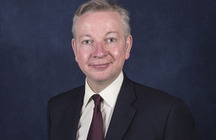
    Andrea Leadsom

    Below is the text of the speech made by Andrea Leadsom, the Leader of the House of Commons, on 10 November 2017.

    Good morning everyone.

    I’m not sure about you, Mr Speaker, but I don’t think I’ve ever seen these benches looking quite so energetic as they do this morning!

    I’m delighted to open this year’s Youth Parliament – a fantastic opportunity for all of you, and I’m sure you will do your regions proud today.

    I would like to start by asking, who here has been told ‘young people don’t really understand politics’, or ‘you’re too young to be interested in politics’?

    Too often, young people are made to feel patronised, or worse still, excluded from politics.

    The Youth Parliament is one of the small ways we can demonstrate that the voices of young people belong in politics, and they belong in this Parliament.

    Mr Speaker has, over the years, been a great advocate for young people, and I feel just as passionately about removing barriers to politics.

    I was delighted that as Leader of the House, the motion on the order paper, which allows the Youth Parliament to sit, went down in my name, and commanded cross-party support.

    It’s that cross-party consensus that, in my role as Leader, I work hard to foster wherever possible.

    As Parliament’s representative in Government, it’s my job to communicate the goings-on of the chamber to the Prime Minister and her cabinet.

    That includes the various requests made or concerns raised by my opposite number and Shadow Leaders – and I’m pleased to say the cut and thrust of the debating chamber does not always reflect the very collegiate working relationship between many of us across parties.

    The second part of my role, representing government in Parliament, is focused on getting legislation through this House. In this session there is a big focus on our Brexit bills, but of course we are also working hard to get our domestic legislation through the House, too.

    My ambition for this Parliament, as Leader of the House, is to prove this is a ‘listening government’.

    I am determined to deliver on the will of the British people, in last year’s referendum, but I recognise that the best way to achieve that is by listening to the views of both parliamentarians and the public.

    The process of legislation for Brexit can be a positive one, that proves we are capable of working together and putting the country above all else.

    In many ways we could learn more from the Youth Parliament, than they can from us.

    Your green benches are more diverse than ours, with a better gender balance, and representatives from a wider range of ethnic and religious backgrounds.

    And we can learn so much from the priorities you have identified for today’s debate. They are not only issues that impact young people, but across society:

    – improving our transport systems
    – work experience hubs – a great idea, which I’m looking forward to hearing more about
    – continually striving to improve LGBT+ rights

    So, I really hope you get a lot out of today – I know we will.

    I’m looking forward to reading Hansard, and hearing your views on these important subjects.

    And finally, I hope you’ll carry on proving that young people aren’t just interested in politics, they are very much a part of politics.

  • Chloe Smith – 2017 Speech in Newry

    Below is the text of the speech made by Chloe Smith, the Parliamentary Under Secretary of State for Northern Ireland, at the Northern Ireland Commissioner for Children and Young People’s ‘Our Brexit Too’ event in Newry on 10 November 2017.

    Thank you very much for inviting me to attend this excellent event today.

    You’ve made it clear to me that there are worries about Brexit, about what it will mean for your families and for your future, and I want you to just take a moment to hear a different perspective.

    I want to tell you about the opportunity of Brexit, about what it can mean for the economy, for jobs, for your university experience and for your future as the next leaders and involved citizens of Northern Ireland.

    Before turning to the subject of Brexit I want to provide a short update on the politics because as those attending will be all too aware it is essential that we see the return of an NI Executive as soon as possible to allow Northern Ireland’s issues to be fully represented at all levels in the negotiation process.

    Despite intensive efforts it has not yet been possible for the parties to reach agreement and as a result the Secretary of State has not been able to bring forward legislation to enable an Executive to form. Crucially, a budget for the current financial year has yet to be set. The consequence of this is that the UK Government and the Northern Ireland Civil Service have assessed that Northern Ireland will begin to run out of resources soon.

    The Government therefore intends for a Budget Bill to be introduced into Parliament on Monday in order to protect the delivery of public services in Northern Ireland.

    The UK Government’s strong preference would be for a restored Executive here in Northern Ireland to take forward its own Budget. So this step is one that the UK Government is taking with the utmost reluctance.

    The UK Government’s priority will continue to be the restoration of devolved government in Northern Ireland. The Secretary of State will continue to work with political parties to encourage them towards an agreement to form an Executive.

    The issue you have spent the day analysing – the decision by the people of the UK to leave the European Union – presents a range of challenges and opportunities.

    I want to stress that in discussions about the future of the relationship between Northern Ireland and Ireland, we have agreed that the Belfast Agreement should be protected in full. That means that if the people here want Northern Ireland want to remain within the United Kingdom, that will continue to be the case.

    The money in your and your family’s pocket will be at the heart of our discussions on Brexit. We are leaving the EU but that does not mean we are turning our backs on our friends and partners in Europe.

    What is also clear is that we are committed to securing a deal with the EU that works for the whole of the United Kingdom, including Northern Ireland. That was clear from the Prime Minister’s speech in Florence recently, and we have made our intentions clear specifically about what we Northern Ireland to the EU in a paper we gave them over the summer.

    At the moment, you can travel from the UK to Ireland without a visa and without a passport. For many decades we’ve had a system called the Common Travel Area. We want this to continue after Brexit, and the EU agrees with us on this.

    We want to uphold the Belfast Agreement in all its parts; avoiding what some people call a ‘hard border’ when goods cross from one country to another. We want to work north-south with Ireland and we want Ireland to work with the UK east-west too. It’s a great relationship at the moment and we want that to continue.

    We have also made excellent progress discussing the citizenship and identity rights provided for in the Belfast Agreement and scoping the North-South cooperation that currently takes place under the Agreement.

    We want there to be free movement of goods, and we want to ensure local businesses that your families may work in here in Newry and across Northern Ireland can continue to trade freely across the border.

    The Government also recognises investors, businesses and citizens in the UK, Ireland, the rest of the EU, and beyond, need to be able to plan ahead. What would be most helpful to people and businesses on both sides, is for us to agree detailed arrangements for what’s called an implementation period, so that people can get used to the changes and things only change once.

    The Prime Minister said in Florence, and again recently in Parliament in Westminster that we want this period of implementation to give businesses and people certainty and time to prepare for the change; and a guarantee that this implementation period will only be for a certain time – two years.

    No-one pretends that leaving the EU is easy, it is not. It will require a period of adjustment for both the UK and the EU, for our businesses and our citizens.

    But the Government respects what people across the UK told them in the referendum on 23rd June last year. We will leave the political institutions of the European Union on 29 March 2019.

    This momentous decision presents challenges, as you will all have seen from the media reports and briefings around issues like citizens’ rights, financial obligations and the land border here in Ireland. But it presents the UK, including Northern Ireland, with opportunities too.

    We have always been an open trading nation, forging alliances across the globe to trade with other people. Since we joined the then-EEC in 1973, we have been part of the trade agreements negotiated on our behalf by the Commission.

    While these have benefited the UK and the EU, they have not always been in the best interests of each and every nation to which they apply. Some will gain more and some will lose more – that is the nature of world trade.

    Leaving the EU provides the UK, for the first time in a generation, the freedom to negotiate trade deals across the globe with any nation we wish to do so.

    Soon, the UK will decide what it is prepared to do to secure the deals it wants.

    There are those who say the UK will lose the benefits it currently has, through the trade deals it is part of now, through the EU. But this overlooks the fact that the UK will have freedom to negotiate new terms with these nations which could be better than the ones we have at the moment within the EU.

    Trade and immigration are two issues that are often seen to go hand in hand. The UK has benefited from immigration, bringing new cultures, skills and ideas to the UK economy. You only need to see here in Newry, which has a high level of immigration, the benefits this has brought to this area.

    We will continue to welcome people to the UK. We need skilled migrants to work across our industries to ensure we have the right people in the right jobs to provide maximum benefit to our economy.

    This is what EU exit allows us to do. To have our own immigration policy. One tailored to the different needs of the economy. One that is flexible and can react when we need more people, and equally when we need fewer.

    Our trading relationship with the EU is also of crucial importance. We have said that we want to see an excellent free trade agreement with the EU. We believe the EU wants the same thing.

    I’m an MP, and along with 649 others I have a vote on laws, one of which at the moment in front of us is called the EU Withdrawal Bill. When that law goes through it means we will have the same rules and regulations governing all of our trade now. Some EU laws will become UK laws.

    This means that both our country and our neighbouring countries will be in the same regulatory position when we leave the EU, providing both the UK and the EU with an excellent opportunity to forge a great trading agreement.

    Put simply, we buy more stuff from the EU than they do from us. So it’s within the EU’s interests to have a great agreement with us that doesn’t punish the UK.

    Obviously, the border down the road from here in Newry is the only actual land border the UK has with an EU country, in this case Ireland.

    This does present some challenges, but there’s also an opportunity, in that Northern Ireland can act as a bridge between the UK and the EU.

    I was about your age when the Belfast Agreement was signed in Belfast between the UK Government and the Irish Government. So much has been done politically, in the economy and in relationships between people of all ages in the past 20 years. We don’t want to lose any of that progress.

    Northern Ireland’s position will mean a slightly different set of rules will apply, to ensure the open border continues as it does now. Is anyone’s dad or mum a farmer? You will know that animal health is really important, and it’s important standards are kept right across the UK and Ireland to make sure our food is safe and our farms are safe. We’re working to make that happen.

    So it’s clear we need specific solutions to the unique circumstances of Northern Ireland and Ireland and that is what we are working towards every day.

    I’m really encouraged by what I’ve heard today. It’s clear everyone here really cares about Northern Ireland, about the EU and about the future. It’s clear many of you wouldn’t have voted for Brexit, but what I want to assure you is that there are hundreds of people in the UK government working really hard every day to make sure we get the best possible Brexit, so when we leave, when you’re a bit older and when you hopefully go to university or into training or a job you will know we have done our very best for you, for your families, and for everyone in this country.

    And maybe one day someone in this room will be giving a speech like this. Maybe you’ll be reflecting on Brexit and what it has meant for Northern Ireland and Ireland. I want to assure you that you will have positive things to say, that there are opportunities ahead and if we all work together, we will make a success of Brexit.

  • Sajid Javid – 2017 Statement on Dorset and Suffolk Local Government

    Below is the text of the statement made by Sajid Javid, the Secretary of State for Communities and Local Government, in the House of Commons on 7 November 2017.

    I should like to make a statement on local government improvement.

    Local government in Dorset

    I am announcing today that, having carefully considered all the material and representations I have received, I am “minded to” implement the locally led proposal for improving local government in Dorset. This was submitted to me in February 2017. In the Dorset area, there are currently two small unitary councils—created in the 1990s—of Bournemouth and of Poole. They are surrounded by a two-tier structure of Dorset County Council and the district councils of Christchurch, East Dorset, North Dorset, Purbeck, West Dorset and Weymouth and Portland.

    I am satisfied on the basis of the information currently available to me that this proposal if implemented is likely to improve local government across the area, establishing two new councils with a credible geography, and which would command local support. The existing nine councils will be replaced by a single council for the areas of Bournemouth, Poole, and that part of the county of Dorset currently comprising the borough of Christchurch, and by a single council for the remainder of the current county area.

    I understand that all the councils in the area are already working together in joint implementation committees. However, further steps are needed to secure local consent, and I hope this announcement will facilitate the necessary discussions to conclude this.

    Before I take my final decision, there is now a period until 8 January 2018 during which those interested may make further representations to me, including that if the proposal is implemented it is with suggested modifications. It is also open to any council in the area to come forward with an alternative proposal. The final decision would also be subject to parliamentary approval.

    Once I have made my final decision on the Dorset proposal, I will also decide whether to implement, subject to parliamentary approval, Dorset councils’ ​proposal for a combined authority to facilitate collaboration on certain matters between whatever councils are to be in place in Dorset.

    Local government in Suffolk

    I am also announcing today that having carefully considered all the material and representations I have received, I am “minded to” implement the locally led proposal I received from Suffolk Coastal and Waveney district councils in February 2017 to merge their two respective councils to become a single, new district council.

    I have reached this decision on the basis that I consider:

    the proposal is likely to improve local government in the area (by improving service delivery, giving greater value for money, yielding cost savings, providing stronger strategic and local leadership, and/or delivering more sustainable structures);

    the proposal commands local support, in particular that the merger is proposed by all councils which are to be merged and there is evidence of a good deal of local support; and

    the proposed merged area is a credible geography, consisting of two or more existing local government areas that are adjacent, and which, if established, would not pose an obstacle to locally led proposals for authorities to combine to serve their communities better and would facilitate joint working between local authorities.

    I intend to assess any further locally led merger proposals that I receive against these criteria.

    Before I take my final decision on this proposed merger there is now a period until 8 January 2018 during which those interested may make further representations to me, including that if the proposal is implemented it is with suggested modifications. The final decision would also be subject to parliamentary approval.

  • David Davis – 2017 Statement on Publication of EU Impact Assessments

    Below is the text of the statement made by David Davis to the House of Commons on 7 November 2017.

    Following the Opposition day debate motion on 1 November, the Government are making arrangements to respond to the motion which called on the Government to provide the Committee on Exiting the European Union with “impact assessments arising from” the sectoral analysis it has conducted with regards to the list of 58 sectors referred to in the answer of 26 June 2017 to Question 239.

    As the Government have already made clear, it is not the case that 58 sectoral impact assessments exist. During the Opposition day debate the Parliamentary Under- Secretary of State told the House:

    “there has been some misunderstanding about what this sectoral analysis actually is. It is not a series of 58 impact assessments.” —[Official Report,1 November 2017; Vol.630, c. 887.]

    I made the same point during my appearance before the House of Lords EU Committee on 31 October and to the House at DEXEU oral questions on 2 November.

    The sectoral analysis is a wide mix of qualitative and quantitative analyses, contained in a range of documents developed at different times since the referendum. It examines the nature of activity in the sectors, how trade is conducted with the EU currently in these sectors and, in many cases, considers the alternatives following the UK’s exit from the EU as well as considering existing precedents. The analysis ranges from the very high level overarching analysis to sometimes much more granular level analysis of certain product lines in specific sectors. The analysis in this area is constantly evolving and being updated based on our regular discussions with industry and our negotiations with the EU. It is not, nor has it ever been, a series of discrete impact assessments examining the quantitative impact of Brexit on these sectors.

    Given the above, it will take the Department, working with other Departments, time to collate and bring together this information in a way that is accessible and informative for the Committee. The Government are committed to providing the information to the Committee as soon as is possible. I have made plain to the House authorities that we currently expect this to be no more than three weeks.

    As Ministers made clear during the Opposition day debate on this motion, there are a number of reasons why the Government believe that it would not be in the public interest for elements of the analysis, at least, to be released into the public domain.​

    The House of Commons has itself recognised that while Ministers should be as open as possible with Parliament, the Government also have an obligation to consider where it would not be in the public interest for material to be published.

    Furthermore, it is important to recognise in some cases there may be confidential or commercially sensitive information in this analysis, and that in many cases this analysis has been developed to underpin advice to Ministers of the negotiation options in various scenarios. It is well understood—as was the case under successive administrations—that such advice to Ministers must remain private.

    I have written to the Chair of the Committee on Exiting the European Union to set out the Government’s position as outlined above. I will also be meeting the Chair to discuss these issues further on 13 November.

  • Robert Goodwill – 2017 Speech at Nursery World Summit

    Below is the text of the speech made by Robert Goodwill, the Minister of State for Children and Families, at the Nursery World Summit on 8 November 2017.

    I’d like to thank Liz Roberts for the invitation to speak to you all here today. Conferences like this are incredibly important, because they bring together a community of experts – all of whom are committed to making a difference to early years education, childcare and social mobility.

    That’s why I want to use this opportunity today to speak to you about this Conservative Government’s vision for the early years, and what it means for the quality and outcomes for all children. Equally important, I want to thank the sector for all that you’ve done so far.

    We all know that the first five years of a child’s life are critically important. They’re the foundation years that shape a child’s development, determine their readiness to learn at school, and they have an indelible influence on a child’s future.

    Evidence shows that high-quality early years provision has a positive and lasting effect on children’s outcomes, future learning and life chances – regardless of the economic circumstances of their parents. Speech and language gaps appear by the age of two and early difficulties with language can affect pupils’ performance throughout primary school.

    This Government is determined to close this gap, improve social mobility and extend opportunity for all. We also want to ensure that the cost of childcare is not a barrier to parents working, through our introduction of 30 hours free childcare for working parents. That’s why we will spend a record £6bn per year on childcare support by 2019/20 – more than ever before.

    Furthermore, evidence shows that a high quality workforce has a major impact on children’s outcomes. We recognise that a well-qualified workforce with the appropriate knowledge, skills and experience is crucial to deliver high quality early education and childcare.

    Indeed, we’ve already taken steps towards improving outcomes, and making childcare accessible and affordable to families across the country. I want to take a little time to talk about some of the things that we’ve achieved together.

    We want every child to reach their full potential, and early language and literacy skills, as well as a child’s wider development, are critical to this. Good attainment in the early years puts children in the best position to start school.

    Already, the latest results from the Early Years Foundation Stage Profile assessment tell us that children’s development is improving. The number of children achieving a good level of development continues to increase year on year – 71 per cent in 2017, up from 69 per cent in 2016; and from 52 per cent in 2013, when we introduced the revised Profile.

    Thanks to phonics reforms, this year, over 154,000 more pupils are on track to be fluent readers than in 2012.

    These improvements are a reflection of the hard work of early years and childcare providers. Now, 93 per cent of all providers – not just those delivering the free entitlements – are rated Good or Outstanding – the highest proportion ever. I am sure you’ll all agree with me that these are fantastic achievements.

    However, not all children start on an even playing field. We’re committed to improving quality and outcomes for all children – regardless of background.

    That’s why, over the course of 5 years, we’ll be spending over £2.5bn on the 15 hours free childcare entitlement for disadvantaged 2 year olds, and investing in the early years pupil premium, worth £300 per year per eligible child, to support better outcomes for disadvantaged 3 and 4 year-olds.

    I’m proud of what we’ve achieved so far, but I know there’s more to do. This Government will continue to focus relentlessly on raising standards and supporting the critical work of teachers and early years providers across the country to ensure that the gap continues to close –as quickly as possible.

    Turning specifically to the subject of accessible and affordable childcare: for those families who want to go back to work or increase their hours, but the cost of childcare just doesn’t make it viable, we’ve delivered on our promise to double the amount of free childcare for working parents of three and four year olds.

    Some parents still spend over a third of their take-home pay on childcare. I recently met a father in Wolverhampton who works as a science technician in a school. He told me his wife was able to work part time and go back to study at university as a result of 30 hours, and that he could not overemphasise how much it was helping them financially and personally.

    30 hours is empowering low-income families. A lone parent earning around £6,500 a year can qualify, giving these families a real helping hand. And of course, low-income families on Universal Credit can receive up to 85 per cent of childcare costs covered, and Tax-Free Childcare is worth up to £2,000 per child per year and up to £4,000 for disabled children.

    The personal testimonies of how 30 hours has been a force for good in families’ lives are backed up by the evaluation of the 30 hours pilot areas, and showed that 78 per cent of parents reported greater flexibility in their working life as a result of 30 hours; whilst nearly a quarter of mothers and one in 10 fathers reported they had been able to increase their working hours.

    As a key part of delivering 30 hours we want to make sure that children with special educational needs and disabilities are able to get the best from it, and our evaluation of early delivery showed that local areas which put support in place were able to successfully deliver 30 hours places for children with SEND.

    We’ve put in place measures to support local areas – for example, our new Disability Access Fund, worth £615 per year per eligible child, and a requirement that local authorities establish a special educational needs Inclusion Fund.

    There’s no doubt that delivering 30 hours, coupled with the implementation of funding reforms this year, has been both ambitious and – I know – challenging. I want to put on record my thanks to the sector who’ve stepped up to the plate, and worked constructively with their local authorities and our delivery partner Childcare Works to help deliver this lifeline for working families.

    Moving on from 30 hours, I want to talk about what we’re doing to strengthen our workforce. It is crucial that employers are at the centre of the process for designing and delivering apprenticeships, training and qualifications. That’s why I’m very grateful to those of you who are working with the department, for example, to develop criteria for more robust level 2 and SEND qualifications for early years practitioners. We’ll be consulting on the level 2 criteria shortly.

    I’m pleased to say that the level 3 apprenticeship standard, designed to support the effective development of early years staff, is nearing completion. It is also fantastic news that a task and finish group of early years stakeholders is about to begin to consider gender diversity in the sector in more depth. We believe a diverse early years workforce, which better reflects wider society, will help to enhance children’s experiences, and I look forward to discussing this with the panel.

    More generally, I want to thank all employers, training providers and sector organisations who are working together – and with us – to further develop this fantastic workforce.

    Looking ahead, there are some important steps that we now want to take, working with you.

    Research shows that five-year-old children who struggle with language are six times less likely to reach the expected standard in English at age eleven than children who have had good language skills at five, and ten times less likely to achieve the expected level in maths. These are astonishing findings. At the Conservative Party Conference in September, we announced new actions to close the word gap further.

    We will provide more funding to help schools strengthen the development of language and literacy in the early years, with a particular focus on reception. As a part of this, we’ll establish a £12m network of English Hubs in the Northern Powerhouse to spread effective teaching practice, with a core focus on early language and literacy as their first priority. We have also opened up the £140m Strategic School Improvement Fund to bids focused on evidence-based ways to improve literacy, language and numeracy during the critical Reception year.

    As you know, parents have a vital role to play in their child’s development. Evidence again suggests that aside from maternal education, the home learning environment is the single biggest influence on a child’s vocabulary at age three. That is why we will use £5 million to trial evidence-based home learning environment support programmes in the North of England, focusing on early language and literacy.

    We firmly believe that these new actions are decisive steps towards equipping children to reach their potential.

    On 14 September, the Department for Education published the Government’s response to the public consultation on primary assessment in England.

    The consultation asked how we could make the Early Learning Goals better as a measure of child development and school readiness. It showed that we need to improve the Early Years Foundation Stage Profile, for example by revising the Early Learning Goals to make them clearer and more closely aligned with teaching in Key Stage 1.

    Thank you to those of you responded to our consultation. Our response as a whole confirms our intention to establish a settled, trusted primary assessment system for the long term.

    We’ll be working closely with schools and early years experts as we implement changes to the Early Years Foundation Stage Profile.

    This will take time – to ensure that we get it right – and we expect any changes to be rolled out nationally in the 2020 to 2021 academic year.

    The Government response also set out plans for a new baseline to be developed as a statutory assessment, ready for introduction in reception by autumn 2020. The prime focus of the assessment will be on skills which can be reliably assessed and which correlate with attainment in English and mathematics at the end of Key Stage 2, and we’ll continue to discuss the detail of the assessment with a wide range of stakeholders as we develop the assessment.

    Finally, I’d like to mention maintained nursery schools. They support some of the most disadvantaged children as well as often providing system leadership – leading on sharing of expertise and developing quality. That’s why, soon after I took on this role, I visited the exemplary Alice Model Nursery School in Tower Hamlets and saw the fantastic work that they’re doing, offering high quality early years education and care.

    We’re committed to supporting maintained nursery schools, and have provided local authorities with supplementary funding of around £60 million a year to enable them to maintain their current levels of funding until 2019-20.

    This will give them stability while we work closely with the sector and others, including the All Party Parliamentary Group on Nursery Schools and Nursery Classes, to develop our plans for the long term. I’m determined to address our shared interests and find the best way forward for maintained nursery schools.

    To conclude, I am very clear that the early years is a critical time that influences outcomes for both children and their families. We have achieved a huge amount, but there is still a lot more to do, particularly to close that attainment gap. And we can’t do it without you – without the expertise and experience assembled in this room and in nurseries, childminders’ homes, schools, local authorities and parents throughout the country.

    I want to thank you for your help in delivering the changes we have made in recent years, and for your support for the changes to come. Together we can continue to improve the early years system to make sure that every child improves their life chances and has real opportunities to realise their potential. Thank you very much indeed.

  • Sir John Major – 2017 Speech on the Responsibilities of Democracy

    Below is the text of the speech made by Sir John Major in Westminster Abbey on 6 November 2017.

    As a boy, in the 1950s, encouraged by close friends, I cut my teeth as a public speaker on a soapbox – across the river in Brixton Market.

    In those early days none of my friends would have imagined that – one day – my soapbox would be upgraded to a lectern in this beautiful and historic Abbey.

    I doubt that I imparted much wisdom from my Brixton soapbox, but I did learn about people. No-one barracked. No-one told me – as surely they could have done – to go away and come back when I knew something about … well, anything.

    Even in a crowded and busy market, some took time to stop and listen or question. No-one seemed to resent me or my views. No-one was hostile, although many must have disagreed with what I said.

    Today – as politics has become more rancorous – I have often thought back to that time, and wondered how we lost that tolerance of opposing views.

    Certainly, tolerance was missing from the EU Referendum Campaign, when honest and thoughtful political debate was abandoned in favour of exaggeration, half-truths and untruths. No-one seemed ashamed or embarrassed by this.

    Indeed, some revelled in it, which suggests that mendacity is acceptable if it panders to a popular prejudice. Then, it is sanctioned by many who know it to be untrue, and welcomed by others whose prejudices are supported by it. And, if delivered with wit and panache, it may even be believed.

    Some of the media reported what was said – even when they must have known it to be improbable (at best) or untrue (at worst). In this way, the Referendum showcased a deterioration in both the conduct and reporting of our politics.

    There will be those who think that my subject, “the Responsibilities of Democracy” is inappropriate for Westminster Abbey – that it is a secular concern, and that the arts and practice of democratic politics are far removed from the higher concerns of the Church.

    They are wrong – as wrong, or misguided, as those who argue that the Church should stay out of politics: it should not. Both Church and State care for the wellbeing of people, and if one institution is failing them, the other has a duty to say so. Two-way constructive criticism, if conducted civilly, is healthy – and no-one should shrink from it.

    In years gone by, the Church was criticised as “The Tory Party at Prayer”. Today, it is often told it is too Left-wing. I doubt the first was ever true; and the charge of Left-wing bias is trotted out whenever the Church talks about poverty.

    But the Church should talk of poverty. So should we all. Poverty is not the sole preserve of the Left. Conservatives from Wilberforce to David Cameron – who made overseas aid to the very poorest a signature policy – have focused upon poverty.

    On occasions such as this there are two kinds of Lecture. One is uplifting and intellectual. It enlivens the conscience and leaves us pondering the higher purpose of Man.

    My purpose is more prosaic. It is to provoke thought about democracy – both generally and in our own country. Democracy is very precious but – how is it performing in a new world that is changing at bewildering speed? Is it doing its job? Is it at risk? Where is it failing? What is its future?

    In many countries, I see a distaste for politics that runs deep. That is a danger to democracy. So, inevitably, my theme – in part – is a cry for action where there is none; and of warning where there is peril.

    What is democracy? It is surely more than electing a government through a universal franchise. Elections are an expression of democracy, but the ballot box alone is insufficient.

    President Putin wins elections – is Russia a democracy? No – it is not. Is Turkey? Is Egypt? Even on the narrowest and meanest of definitions the answer is – No. Nor are many other countries that hold elections hold elections – sometimes rigged – but, voting apart, have few of the attributes of a genuine democracy.

    My worry is that democracy is in retreat; stifled by its own virtues. Democracy operates on consent. That being so, it is slower to make decisions than autocracy or outright dictatorship. Democracy must cajole. Must persuade. Must seek consensus. Not so autocracy.

    This can make autocracy seem more efficient than democracy, more decisive, more able to deliver its promises, more swift to act in crises. The rise of non-democratic China to economic super-stardom is one of the great stories of history, but there is a price to pay for her success.

    The price is a lack of personal freedom for the masses.

    For now, countless millions of Chinese are grateful for that economic improvement. But human nature suggests that as their individual wellbeing grows, they will demand greater personal liberty. If that happens, autocracy must yield – or repress. This choice lies ahead for many countries.

    At the heart of true democracy is liberty under the law. Democratic government must be freely elected for a fixed period in a universal franchise, untainted by coercion.

    There must be checks and balances to its authority. The rule of law must apply. The judiciary must be independent, and there must be a free media, an independent academia, and a functioning Opposition free to oppose without sanctions. Only then can freedom of speech and action be protected.

    But these attributes are merely the trappings of democracy. Democracy in action is more than satisfying the material demands of the majority, or honouring the promises of an election manifesto.

    Democratic government must govern for the future as well as the present. A Governing Party must govern for political opponents who did not vote for them – and may never do so.

    It must govern for the unborn, and the country they will inherit. For minorities. For the wider international community. And all Governments have a responsibility to themselves for the manner in which they govern.

    One has only to set out these responsibilities to see that no Government, perhaps ever, has met this ideal – Government by men and women, not saints, is an imperfect vehicle for perfection. But that does not mean their imperfections should be ignored or accepted.

    Yet, today, they often are, as a disillusioned, disinterested, preoccupied or – in some cases, a cowed or misled – electorate shrug their shoulders and turn away.

    In such a climate, democracy faces a threat from the rise of nationalism. This is not theoretical: in many countries that is a reality. In others, a clear and present danger.

    *******

    In the democratic West, we have come to believe that our liberal, social and economic model of democracy is unchallengeable. It is not. Last year – as the United Nations has reported – 67 countries suffered a decline in political and civil liberties while only 36 had gains. What has happened there can happen elsewhere.

    Over 20 democracies have collapsed during the last two decades, and there is widespread public dissatisfaction in many others.

    Across Europe, nationalism has gained more than a foothold. It begins with a populism that masquerades as patriotism, but morphs into something far less attractive.

    In many countries, nationalist parties have significant support. They can attract true patriots – but are also a political vehicle for those who flavour that patriotism with xenophobia.

    Nationalism is authoritarian. It turns easily towards autocracy or – at worst – outright dictatorship. Nationalists hide their threat under an exaggerated love of country, an unthinking patriotism: “my country, right or wrong”. Its leaders view other countries – and sometimes other races – as inferior.

    Nationalism is suspicious of foreigners. It accuses immigrants of “stealing jobs” or, in some other way, undermining the indigenous population. This has been so for hundreds of years: it is often wrong, and – let it be said in this House of God – un-Christian.

    There is a great difference between nationalism and patriotism. Patriotism is more than pride in country. A mature patriotism concerns itself with the condition of the People, as well as the prestige of the Country. Such a patriotism worries about deprivation, opportunity and incentive.

    It asks itself: how can we spread our wealth and opportunity more evenly around our country? And it is as concerned with the growth of food banks as it is with a shortage of aircraft carriers.

    I now fear for these broad, socially liberal attitudes.

    The financial crisis – less security, low or no growth, and rising taxes – has created public dissatisfaction with the old, albeit fallible, politics. Anger about its shortcomings replaces cool, dispassionate judgement. Despair gives a credibility to promises of easy solutions when – in truth – there are none.

    Our social and economic liberalism may be fallible but it is not some mish-mash of woolly headed do-gooders. It protects individual liberties and human rights. It promotes market freedoms, ownership of property, and freedom of movement.

    We dare not take these familiar values for granted. We need to celebrate them, protect them and practice them: Politics must not become a playground for demagogues.

    *******

    Capitalism and free trade are the bulwark of democracy. They have lifted millions of the poorest people in the world out of poverty. As trade has grown, wealth has grown, literacy has risen, and fatal diseases have been eradicated.

    But free trade is under attack.

    When growth was buoyant, all was well. But, after the financial crash of 2007/8, many workers see global trade as a threat. So do companies exposed to foreign competition.

    There are problems that must be dealt with. Globalisation has distributed its gains unevenly.

    Individuals have gained wealth that Croesus would have envied.

    Global companies have driven out competitors, and become mega-rich.

    But, to protect itself, capitalism must be ethical. If it is not, then opposition to it will grow. Business must confront malpractice and eliminate it.

    Capitalism must reform itself – or Government must make it do so.

    “Anything Goes” capitalism is not acceptable: it can only damage free trade and open markets, and encourage protectionism, less trade, slower growth and greater poverty. If that happens, everyone loses. But those with least will lose most.

    *******

    Our British democracy is seen as honest, not corrupt; and free, not repressive. Our legal system is widely admired and respected. Our elections are acknowledged as fair, not fixed; and Governments leave and enter Office without violence – and within a few days.

    Our Parliament has been a democratic model. As a nation, we can – and should – be proud of all this, and I am … but …I will come to the “buts” in a moment ….

    First, let me say, I’m not among that minority of Britons who disparage our country and side with our critics. I am, and always will be, proud to be British.

    However, having seen our democracy at work – over many years – from the inside, and for the past sixteen as a reasonably informed outsider, not all is as it could be – or should be. We can do better.

    Our present Parliament faces an extraordinary range of complex problems. Brexit – an historic blunder in my own view, although it is not my theme for this evening – will consume the time of this Parliament, and crowd out domestic issues that are crying out for action.

    It would be better were Parliament free to focus its attention on health, social care, housing, education and transport.

    But until Brexit has been resolved – which may take years – few, if any, of these subjects will get the attention they deserve.

    Nor will constitutional issues over Scotland and Northern Ireland; or the social problems of income disparity and the North/South divide – which surely cannot be permitted to continue as it is. All of these – each vital to the future wellbeing of our country – will be secondary to the fallout from last year’s Referendum.

    Let me now turn to that list of “buts”.

    *******

    To cynics, the words “service” and “duty” are old-fashioned, yet they are virtues that deserve praise, not scorn. Our Public Service embodies them.

    The Civil Service is a fundamental engine of our democracy. It has an historic memory, which protects against the errors of the past. It is politically independent. It brings balance to our system of government. And yet, in the last 20 years, it has been undermined by its own masters.

    When things have gone wrong, a small number of Ministers – against all past practice – have blamed the Civil Service for the failure – and not themselves. Political advisers have undermined civil servants and usurped their role. The Freedom of Information Act has hampered the dispassionate advice offered to Ministers.

    Ministers may decide policy, but the Civil Service must deliver it. To do so, it trawls for ideas; delves deep into potential pitfalls; advises; cautions; and prepares legislation.

    It is in our national interest that public service should remain a career that attracts some of the very best brains in our country. We should value it, not disparage it.

    I hope Government will rethink recent practice on special advisers.

    Ministers have a right to non-Civil Service advice. But, as advisers are paid from the public purse, they should be men and women of experience and ability. Many are – but not all. Their role needs redefining. Good special advisers, with expertise and political nous, can make for better government and better liaison with the civil service.

    But, over the years, a handful of advisers have acquired unjustified power that has been misused. At times they have driven wedges between Ministers and their civil servants. Some have been used as attack dogs – on both their political opponents and their colleagues. The culprits were often protected by their Ministers, when they should have been dismissed without ceremony.

    Some advisers – with intellect but little judgement – are easy prey for the media. They are flattered, wined and dined; and the naïve among them talk unguardedly, whilst the more unscrupulous leak stories that create feuds between senior Ministers, and complicate policy.

    Any special advisers that behave in this fashion should go: a “one leak and you’re out” policy would be a worthwhile discipline for the Prime Minister to institute across all Government departments.

    *******

    It is a strength of our democracy that debate on policy is fierce. That is as it should be: policy affects people’s lives. Passions can rise – and sometimes it is right for them to do so.

    But policy disagreement is not only across the floor of Parliament. Too often, members of the same Party are seen as opponents: not “one of us”, to echo an unfortunate phrase from the 1980s, and this leads to rival camps being formed.

    These factions – opposing wings of the same Party – fight one another more vigorously than they do their opponents. This is potentially destructive to the Party system, which is the main operating structure of our democracy. The old political adage: “My opponents are opposite – my enemies are behind”, is currently apt for both our main Parties.

    There is a reason for this. The anti-European Right wish to control the Conservative Party: the neo-Marxist Left wish to dominate Labour. Both are making headway in a battle for the soul of their respective Parties.

    These ideological battles have dangers for our democracy. The rebellious radicals of Right and Left argue for partisan policies that appeal to the extremes of their Party base. As they do so, political divisions widen, consensus shrinks, and a minority of the Party begins to manipulate the majority.

    This is dangerous territory. The malcontents should remember that, without some give-or-take, without some effort at consensus, our tolerant Party system can become ungovernable. In politics, as in life, consensus is wise, not weak; and tolerance is a virtue, not a failing.

    If fringes begin to dominate a political Party, the middle ground of their support will turn away in disgust, as the shrillest voices and the most extreme views begin to dominate debate.

    Where that risk arises, democrats should worry. Indeed, they should do more than worry: they should fight back.

    *******

    Politics has always been a tough trade. It arouses strong feelings, and plain speaking which – sometimes – can turn into abuse. The hard-boiled professional would say: “if you can’t stand the heat, get out of the kitchen”.

    Well, maybe …. but the language and tone of politics matters. It can enthuse or repel. Excite or deflate. Uplift or cast down. Clarify or confuse. Examine the truth … or ignore it.

    In the 1930s, Oswald Mosley used his oratory to stir up violence. During World War II, Churchill – in Ed Murrow’s memorable phrase – “mobilised the English language and sent it to war”.

    In the 1960s, the Conservative Enoch Powell inflamed opinion on immigration – and the Dockers marched in his support.

    Oratory can change public opinion – for good or ill.

    Today, we need it to explain complex policy in a way that is easily understood.

    It is decades since the popular press fully reported speeches in Parliament. The speeches may have been dry, often dull; but, perhaps by osmosis, policy was understood.

    Today’s media world is more complex. The written press can’t be a public service. It is losing readership and fighting for its very existence. In its struggle for survival, it favours sensation – because that’s what sells newspapers. This entertains – but may not inform.

    Many political stories are spiced up by “informed sources”. This is often self-interested malicious comment, and should be read with many a pinch of salt on the side. It may excite and intrigue, but leaves no-one any wiser.

    Television news is more informative, but not always so. Often, interviews are brief and confrontational, and focussed on securing a headline for the next news bulletin.

    Political news programmes have longer interviews and can be a better source of information but they, too, often slip into confrontation.

    In each of the above charades, the electorate is left confused and uninformed.

    We cannot only blame the media. “Spin” and “soundbite” replaced informed argument with meaningless phrases: Labour’s “Tough on crime, tough on the causes of crime”; and the Conservatives’ “Take Back Control” serve as memorable examples of pitch-perfect absurdity.

    They convey nothing. They explain nothing. And they are worth nothing.

    And they can mislead. I once used the phrase “back to basics” and it was taken up to pervert a thoroughly worthwhile social policy.

    A low point was reached when politicians were offered a daily “form of words” to be trotted out in every interview. This is not only undignified, it is self-defeating. As voters hear our elected representatives uttering puerile slogans instead of explaining policy, it is no wonder if respect for them melts away.

    Slogans and soundbites are a deceit. Electors deserve the truth in plain English, not in fairy tales. When trust in our elected representatives falls, democracy fails.

    There are rare occasions when public interest demands “an economy of the truth”; but, in the main, clarity – and honesty – really is the best policy.

    And by honesty, I mean more than simply straight-talking. I mean honesty in facing up to challenges; honesty in acknowledging fears or dangers; honesty in action; and honesty in admitting the limitations of Government. Honesty can be politically inconvenient, but less so than concealing the truth.

    Honesty commands respect. Slogans do not. Soundbites do not. Spin does not. Honesty is essential in a functioning democracy. It is infuriating to listen to interviews where every question is side-stepped, or answered with obfuscation. Such conduct treats the electorate with contempt – and no-one should be surprised if they return the compliment.

    I don’t wish to be prissy about this by suggesting that there was some past, mythical age in which everything was perfect. There certainly wasn’t. I wasn’t. But politicians can do better to serve the electorate – and they must do so.

    *******

    The essence of our democracy is “One Man, One Vote”. But, except in the ballot box, no democracy offers equal influence to every citizen.

    Anthony Trollope, honoured here in Poets’ Corner, wrote in his biography of Cicero:

    “The power of voting was common to all citizens: but the power of influencing the electors had passed into the hands of the rich.”.

    That was, of course, two millennia ago in Ancient Rome, but the same “power of influencing” lingers on in modern democracies. The very rich, if they assert themselves, may be able to influence government.

    In America, big money perverts the system. The sheer cost of their elections – with most of it spent on advertisements attacking their opponents – is enormous.

    A Member of Congress seeking election every two years is perpetually fundraising. Even if donors ask nothing in return for their generosity, it is likely to be in the mind of the politician as he or she considers policy – and it ought not to be.

    In the UK, money is far less damaging to the system, but still manifests itself through Party funding.

    Party funding is an acute dilemma. All political parties must raise money to campaign, to run their organisations, to pay their staff – and none can hope to fund all this through membership subscriptions alone.

    There are only two ways to fund the balance, and neither is attractive.

    At present, the bulk of funding is by wealthy individuals, business, and the Trades Unions. This is bound to give rise to obligations – whether sought or not by the donor – and is intrinsically unhealthy.

    In my experience, many donors are altruistic and give money simply to support their Party; but others may seek to exact a price. Whether that price is a policy promise; an appointment; or an honour – it is undesirable.

    An alternative is more funding through the public purse. This would be deeply unpopular and I share the general distaste for it. Nonetheless, it may be the least bad option.

    A compromise might be more State funding than at present but, in return, a legal limit to donations from individuals or business or Trades Unions. This should be set at a level where no-one could reasonably argue that it influences policy.

    Such a scheme is not perfect. But, on balance, it would be beneficial for our democracy.

    Here tonight, in this magnificent and hallowed place, we are surrounded by the spirits of many historical figures who were elected to represent us.

    Over many centuries. Many generations. Through times of strife and turmoil. Of uncertainty and change. Through times of national crises. Times of celebration. They are commemorated here, for the service they gave to our nation.

    Whatever their political beliefs – they were all elected by the people to serve the people – and it was the people who had the power to dismiss them.

    As a boy, I read what Edmund Burke said:

    “To deliver an opinion, is the right of all men; that of constituents is a weighty and respectable opinion, which a representative ought always to rejoice to hear; and which he ought always most seriously to consider.

    But authoritative instructions; mandates issued, which the member is bound blindly and implicitly to obey, to vote, and to argue for, though contrary to the clearest conviction of his judgment and conscience, these are things utterly unknown to the laws of this land, and which arise from a fundamental mistake of the whole order and tenor of our constitution.”

    I agree with that implicitly.

    As that young boy across the river, I would never have believed that the weight of that responsibility would ever fall upon my own shoulders. It was a privilege, but a burden too – as it is for all those who bear it.

    All must ask themselves:

    – Did I do what I believed to be right?

    – Did I speak up – and not be afraid to speak the truth?

    We are blessed to live in this land. But each and every one of us has a responsibility to keep democracy alive and kicking and never stifle free speech or freedom of action if it is within the law.

    Earlier, I spoke of my soapbox in Brixton, and the tolerance that was shown to me in the salad days of my political life – by many who would have quite reasonably taken an opposite view.

    “I do not like what you say” said Voltaire, “but I will defend to the death your right to say it”.

    Indeed so. That is the responsibility of democracy.