Category: Speeches

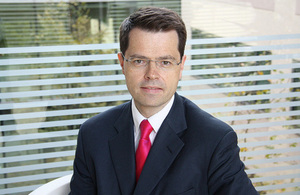
  • James Brokenshire – 2019 Speech at the Local Government Association Conference

    Below is the text of the speech made by James Brokenshire, the Secretary of State for Housing, Communities and Local Government, at the LGA Conference on 2 July 2019.

    Introduction

    When I first started thinking about this speech it is fair to say the world looked a bit different.

    These are unique times.

    So from the start I want to be clear with you all that just because it is difficult for me at this time to be expansive on new approaches or set out fresh policy with concrete certainty, I won’t be holding back on the sense of ambition or gratitude I have for local government.

    Because from the smallest parish to the biggest urban metropolis, from our historic counties to reinventing coastal towns, our communities, in all their glorious diversity, are what make this country so special.

    As such, your work in local government – at the heart of these communities – and our work at MHCLG in backing you is fundamental to Britain’s future.

    That’s why – as I said last year – I’m such a strong believer in local government.

    Now a lot has changed in the past 12 months – with more big changes to come.

    But what has not changed is the significance of local government and my regard for you as the bedrock of our democracy; delivering day in day out for our communities.

    Before I go on, I want to pay tribute to Lord Porter, who after leading the Local Government Association (LGA) with distinction since 2015 is handing over to his successor [Cllr] James Jamieson.

    I’ve gotten to know James well over the last year and I know that I’ll continue to enjoy an excellent relationship with him.

    Albeit, for how long, well that will be for someone else to decide!

    But the sector could not have had a more determined champion than Gary, and is all the stronger for it.

    I pay tribute to you Gary for the contribution you’ve made and the leadership you’ve shown.

    Yes, the fish and chips and everything in between.

    But most profoundly on reform and how I’m proud that we’ve delivered that lift on the housing borrowing cap which you championed to empower councils to get on and build more homes.

    There are no excuses now but I know Gary that whilst you are stepping back from one role you will be stepping up your challenge to see that these new freedoms are harnessed to the fullest extent.

    Thank you Gary for your service, your leadership and for being such an outstanding advocate for the good that local government can do.   And as we look towards new leadership at the LGA I can’t see a better future for this country that doesn’t have local democracy at the heart of it.

    People taking control of their lives and places, striving for better for themselves and those they love.

    For their neighbours, their towns and their cities.

    There is a golden thread that runs through each us, binding us not just together, but to the places we call, and have called, home.

    Local government role in delivering national policies

    And that’s an emotional connection of which local government plays an important part in safeguarding and shaping.

    And this is all the more impressive because local government has a role in this most delicate of things, through to the most robust.

    Because whether we’re talking about big national programmes on housing, transport and infrastructure or maximising local economic growth, the fight against knife crime or revitalising our high streets, it always comes back to strong local leadership.

    I very much appreciate your efforts to support local areas to prepare for Brexit in extremely testing circumstances – preparations that will be central to ensuring all communities stand to benefit.

    And as we mark two years since the still unimaginable tragedy at Grenfell Tower, continuing to keep people in similar buildings safe and, critically, transforming our approach to building safety to ensure nothing like this can ever happen again.

    It’s remarkable to think that local government provides over 800 services to residents and businesses in England – a breadth and volume of responsibilities that isn’t always fully appreciated.

    You have continued to deliver against a difficult backdrop of constrained finances and big demographic shifts and, looking ahead, it’s clear there’s a lot at stake not only for vulnerable groups, but for the whole of our communities.

    Funding and the settlement

    I’m very thankful for everything you’ve done to rise to these challenges and to help reduce our debts and rebuild our economy – a significant contribution that, notably, hasn’t just been about driving efficiencies, but, increasingly, about innovating and improving public services.

    I know this has been far from easy – and that’s why one of my absolute priorities is to deliver a sustainable future for local government.

    This year’s local government finance settlement is an important step towards this – a settlement that provided a real-terms boost in spending, an extra £650 million for social care and which confirmed the government’s continuing approach to addressing negative RSG [revenue support grant].

    Much of your funding; such as retained business rates – which have risen annually in line with the growth in business rates – and council tax is, of course, already locally sourced.

    Underlining our commitment to putting local government truly in the driving seat – answerable not to central government, but to the communities you serve.

    And we remain committed to implementing local government finance reforms, including increased business rates retention, incentives to authorities to help grow local businesses and a new approach to distributing funding.

    I am grateful for your support and input as we continue to advance these significant reforms.

    But it is right that we consider how we implement these reforms. And I recognise your concerns that we cannot wait until the end of the year to provide you with this clarity, with budget preparations and planning for 2020-21 already underway.

    Overall funding available to local government will, of course, be a matter for the Spending Review but I will continue to make a powerful case for you – for local government – as a proud champion of the sector. To see that local government receives the support needed and gains as much certainty as we can as early as we can.

    It is right that we look at the challenges and opportunities you face, and the funding you are currently relying on, including for social care, when we consider what a sustainable settlement looks like for local government for the coming years.

    Green Paper

    It’s clear that growing and evolving challenges demand we go further and that, at this time of great change, look to map the way ahead.

    Look to get local government onto the front foot with a renewed confidence and sense of purpose – which means delivering a new deal for local government.

    This is about funding, yes.

    But it’s also about, I believe, a greater sense of shared responsibility for the difference we can all make for our people and places.

    As someone who saw my father stand in your shoes, I take this responsibility extremely seriously. I know you do too.

    Allied to my pragmatism and my passion for entrepreneurship, innovation and respecting the agency we all have to improve our lives and those around us, it’s why I’m a Conservative.

    And it’s why I’m keen to see us working together more collaboratively to harness this collective responsibility to drive improvement – to get the difficult balance between managing day to day pressures and being dynamic and demanding excellence right.

    That’s why I believe that the next leader of my Party will need to look afresh at the entire ecosystem underpinning local government and acknowledge that role we all have to play – to spot problems earlier, champion best practice and help each other improve.

    Central government, for example, could and should do more to identify and support struggling councils earlier to prevent failure and protect residents.

    The local audit system, too, could and should step up more robustly – not just because it reinforces confidence in financial reporting.

    But because it reinforces service delivery and, ultimately, our faith in local democracy – with potentially far-reaching consequences when audits aren’t carried out properly and fail to detect significant problems.

    That’s why we must heed concerns that have recently been raised by audit quality and whether the audit framework is too fragmented.

    To that end – as many of you will know – I’ve committed to reviewing the audit framework.

    I’m approaching this with an open mind, but our aim must be to ensure the framework helps members, Section 151 officers and chief executives make informed and responsible decisions about improvements.

    I’m also interested in exploring how we can invite greater input from citizens on this as part a more open system.

    I know the LGA – which does so much great work to raise the bar – is also keen to see the sector getting better support.

    Which is why we’ve strengthened the focus on leadership and efficiency this year as part of our £19 million offer to help authorities improve that’s delivered by the LGA.

    Like you, I want councils to excel and am open to your thoughts about what more we can do together to support this.

    I know the New Burdens Doctrine is key to this.

    Authorities must feel confident that the Doctrine is doing its job – fully assessing and funding any new requirements placed on them – something I’ve not hesitated to impress on my Cabinet colleagues.

    And I’m grateful for the LGA’s insight and support to help my department make sure authorities don’t lose out financially.

    To guard against this, it is right we look at the process and assure ourselves that it is fit for purpose.

    This is a conversation we must have with you, and I look forward to hearing what you want to see on this front.

    As I’ve said, it’s in all our interests to see you succeed.

    And by fighting your corner in the Spending Review, by backing you to break new ground, by standing with you to take greater collective responsibility, I’m confident we can deliver the new deal that local government and our communities deserve.

    A deal that resets the relationship between local and central government.

    That sees us adapting, with ever more agility, to face the future with optimism.

    That strengthens the special bond we share with our citizens and renews our democracy.

    I want to see these plans set out in more detail in a Green Paper and welcome your input.

    Troubled Families Programme

    Because there’s so much great work and expertise out there in our authorities.

    And I want us to do much more to celebrate and spread this; to ensure that early intervention and prevention becomes the norm rather than exception – as seen so powerfully in the Troubled Families Programme.   This inspirational initiative that has been helping around 400,000 families facing multiple challenges change their lives by fundamentally changing the way local services are delivered – with services joining up around whole families to overcome problems before they escalate.

    When compared to a similar comparison group, the latest programme evaluation saw:

    the number of children going into care down by a third,

    the number of adults going to prison and juveniles in custody down by a quarter and a third respectively,

    and 10% fewer people claiming Jobseekers Allowance.

    It’s why I’m such a passionate advocate of the Programme and why I want to see a renewed programme for the years ahead.

    Yes, the name may not be right and there are other improvements we can make.

    But the programme is demonstrating the change in people’s lives it is making and we need to get behind it.

    Housing

    Housing is another vital area where local authorities need to strengthen their ability to deliver.

    This is, undoubtedly, our top domestic priority – the challenge of a generation.

    Whatever else changes, that will not change.

    And as we mark the centenary of the Addison Act, it’s fitting that councils are once again leading the charge to help increase supply to 300,000 new homes a year.

    In doing so, we want to help you maximise the potential the lifting of the HRA (Housing Revenue Account) cap offers by considering how you might boost your capabilities and develop joint ventures. Whether with housing associations and, indeed, the private sector to unlock more sites.

    Ensuring we do reach the full ambition of a new generation of council homes.

    This push also demands we build faster and reduce delays.

    That’s why – as I said last week – we will be publishing an Accelerated Planning Green Paper – to look at how greater capacity and capability within local planning authorities, stronger plan-making, better performance management and procedural improvements can accelerate the end-to end planning process for all.

    Delivery also depends on getting communities on board – communities who are more likely welcome new development when it’s underpinned by the right infrastructure.

    Our £5.5 billion Housing Infrastructure Fund – which aims to unlock new homes in areas of greatest demand – reflects this.

    And, as we get funds out of the door – just this month, in Woking and Truro – this is having an impact.

    Conclusion

    Self-sacrifice, frugality and belief.

    These are virtues we rarely place in the context of public service, preferring instead to talk in pseudo motivational management speak; dynamism, agility, high energy.

    Those words and phrases, however, are not the virtues of human beings. No, they are the characteristics of systems and processes. They are mechanical words.

    And yet, when I see the best of public service, it is the opposite of the machine, it is deeply human. Fundamentally it is an honest and empathetic connection between people.

    A social worker and a vulnerable child. A care worker and their elderly patient. A teacher and proud parents.

    It is in these moments, these connections, that public service becomes more than material, and changes how we feel about ourselves.

    Because public service should lift us all. Those who give and those who receive.

    But it is easy to forget this deeper truth. Easier to fall back on mechanical words, on systems and processes.

    You have had more pressure than most and a greater weight placed on you to help us correct the nation’s finances.

    And for this reason, and others, it is so impressive that in spite of all that, when we meet, you don’t talk in spreadsheets or corporate strategies – well not all of you at least – but in terms of the people you love and the communities you serve.

    I can see, that self-sacrifice, that frugality and that belief in yourselves that you can make a difference.

    When thinking about what I wanted to say to you all, I knew above all that I wanted to say thank you for staying true to those virtues and never losing them.

    Thank you to the councillors who give up their time to represent the communities they serve and thank you to the officers who work so diligently and fairly in supporting to deliver local priorities.

    Now is clearly a time of change.

    A new Prime Minister will be in post shortly and a new government. Such moments provide us with opportunities for that most important of things; renewal.

    An opportunity to ask the bigger and more fundamental questions.

    A renewed opportunity to ask ourselves how we can deliver better, smarter services for the people we serve.

    And as we open this new chapter, be positive about the future for our communities, be positive about the future of our country and the intrinsic and special role that local government has to play.

    Thank you.

  • John Glen – 2019 Speech to Green Finance Summit

    Below is the text of the speech made by John Glen, the Economic Secretary to the Treasury, on 2 July 2019.

    It’s a pleasure to join you for the City’s third Green Finance Summit.

    This event gets bigger every year, which reflects the momentum growing behind Green Finance in the Square Mile, and beyond.

    I’d like to thank Sir Roger Gifford for all he has done to champion this cause as chairman of the Green Finance Initiative.

    It also gives me great pleasure to welcome Dr Rhian-Mari Thomas, the newly appointed CEO of the Green Finance Institute, which is launched today.

    I can’t think of a better person to have at the helm as the Institute charts a bold and exciting course towards low carbon future.

    International leadership

    Today also marks the publication of the government’s Green Finance Strategy.

    Together with the Green Finance Institute, it represents a new and exciting step in the UK’s long history of international leadership on climate change.

    Indeed, this year is an important anniversary in that journey.

    It was 30 years ago this November that Margaret Thatcher spoke at the United Nations, becoming the first major world leader to call for a coordinated global response to the climate challenge.

    Mrs Thatcher may seem like an unlikely heroine of the environmental movement.

    But she was a chemist by background, for whom the facts of ozone depletion, acid rain and rising temperatures were readily apparent.

    And while her legacy in this area, as in so many others, is a matter of continuing debate, there is no doubt that her intervention was significant.

    Before 1989, environmental concerns had been a fringe issue, on the margins of public debate.

    But Mrs Thatcher gave it mainstream political respectability. She planted it firmly on the international agenda, where it has remained ever since.

    It’s a reminder that the UK has always led from the front.

    Yes, we were the first country to industrialise.

    But we were also one of the first countries to sound the alarm, and then one of the first to act by introducing legally-binding emissions reduction targets.

    Getting the economics right

    This leadership continues today.

    Last month, the Prime Minister pledged to end the UK’s contribution to global warming entirely by 2050.

    We are now the first G7 country to legislate for net zero emissions.

    But the scale of this commitment – coupled with the urgency of the challenge – demands we step up a gear.

    Few people doubt the need for far-reaching action.

    The question is what form it should take.

    Some would have us make a choice between growth on the one hand and sustainability on the other.

    The climate threat is so great that it can only be tackled by turning back the clock to simpler times, sweeping away years of social and economic progress in the process.

    I don’t believe it needs to be this way.

    We won’t become greener by making ourselves poorer.

    Quite the reverse in fact.

    This belief is at the heart of the government’s green finance ambition.

    The financial sector has perhaps more potential than any other part of our economy to bring about a greener future.

    It is the City that can bring forward new financial products and services to meet rising demand for sustainable investment.

    It is the City that can unlock capital for renewable energy and other clean technology required to reduce emissions in this country, and overseas.

    And it is the City, with its restless commercial zeal, that will seize the opportunities of clean and resilient growth, and lead us toward a low carbon future.

    The strategy

    The potential is evident today.

    More than 100 green bonds have been listed on the London Stock Exchange.

    Billions of pounds of private and public capital have been raised for renewable energy projects: not just in the UK, but overseas too.

    And on the retail side, some lenders now offer green mortgages for self-build properties and discounted borrowing for home improvement.

    These are encouraging first steps: but the climate challenge, and the climate opportunity, demand we go much further.

    Our Strategy seeks to bring about a complete change in the way the City thinks and acts.

    We must ensure the financial risk and opportunities from climate change are integrated into mainstream decision-making.

    Because let’s be clear: the climate challenge poses an existential risk to the future of the planet and, by extension, our economy too.

    If our financial system is to remain resilient – and relevant – then the City must adapt.

    But while most banks rightly identify climate change as a risk, only one in ten is taking a strategic approach to manage this.

    That’s why the government endorsed the recommendations of the Task Force on Climate-Related Disclosures in 2017.

    The government is leading by example. Publicly-funded financial bodies must include climate-related disclosures in their accounts as soon as possible.

    Hundreds of companies are also disclosing details of how they are mitigating climate risk on a voluntary basis.

    But today I want to go further, which is why I’m calling on all public listed companies and large asset owners to do the same.

    I want to see these disclosures become accepted practice across the financial services sector by 2022.

    I don’t want to resort to legislation straight away.

    But I do expect to see far greater uptake in the coming months from across all industries.

    The government will monitor progress and publish an interim report by the end of 2020, which will inform our next steps.

    And behind the scenes, we will coordinate our approach with the regulators; and I welcome the joint statement today that confirms their shared understanding of climate change risk.

    Skills

    If the City is to change how it works, then it must also be equipped with the tools for a green future.

    A new Green Finance Education Charter will help embed sustainable thinking at every stage of professional development.

    We want the skills and expertise required for this task to have the professional standing they merit.

    Data will be key too – which is why we will take steps to develop the right environmental and data analytics to support climate-related financial disclosures.

    Finally, we cannot act in isolation.

    We must offer leadership, partnership and example to the rest of the world.

    Our aim is for the UK to become the undisputed global hub for green finance.

    This will be driven in part by the Green Finance Institute. But we will bring all the levers of government behind this task.

    This includes ensuring our aid budget supports green investment in the developing world.

    It is the world’s poorest, after all, who will bear the brunt of the consequences if we fail to act.

    We will keep this issue on the agenda at the United Nations, and in all our international dealings.

    And as other nations become alive to the potential of green finance, we stand ready to support them.

    Conclusion

    I’d like to end with a word of thanks to those in government, and the City, who have worked tirelessly over the past few years to drive the green finance agenda forward.

    The publication of the Strategy – alongside the creation of the Institute – is testament to your efforts to date.

    But our Strategy is more than just a document – it’s a call to action.

    And our ambitions are just words unless they are matched by meaningful action and measurable progress, which is why we will review the Strategy and its objectives in 2022.

    Every country, every business, every individual, has a part to play.

    The task is urgent, and vital – but it’s exciting too.

    Because while the challenges of creating a sustainable economy are great, the opportunities are greater still.

    Our efforts today will help determine the prosperity of our country – and the wellbeing of our planet – long into the future.

    The threat is real, the opportunities are growing, and the world is watching.

    So the time for action has come. The City must lead the way.

  • John Butcher – 1985 Speech on English Sewing Ltd

    Below is the text of the speech made by John Butcher, the then Parliamentary Under-Secretary of State for Trade and Industry, in the House of Commons on 11 December 1985.

    I thank my hon. Friends the Members for Derbyshire, West (Mr. Parris) and for Amber Valley (Mr. Oppenheim) for raising this subject. This is the fourth time that this issue has been raised on the Floor of the House. Congratulating my hon. Friends on their tenacity and persistence is very much in order.

    I shall try to deal with the issues that my hon. Friends have raised in the context of regional policy as amended by our review of 12 months ago. I shall go as far as I can within the bounds of commercial confidentiality. This issue has always posed excruciating dilemmas for successive Governments during the past 25 years. My hon. Friend the Member for Derbyshire, West mentioned the strategic industrial point about what a Government do when they are posed with a choice between losing a facility from the United Kingdom entirely by not giving support and using regional policy lo retain work in the United Kingdom. I would welcome a discussion of that, perhaps on the Floor of the House, depending on what my right hon. Friend the Leader of the House does for us soon. The issue preoccupies the Department of Trade and Industry.

    I am grateful to my hon. Friends for providing this opportunity to reply to what they said about assistance to English Sewing Ltd. Perhaps I should start by setting out the facts in so far as I am able within the bounds of commercial confidentiality.

    The basis of the company’s application has been that it has made a commercial decision that it must rationalize ​ its activities in England and Scotland and move to a purpose-built factory if it is to retain its operation within the United Kingdom. I listened carefully to my hon. Friend’s explanation of the company’s view that it was a serious proposition. After long deliberation, the company decided that the most efficient solution would be to extend and improve its existing operations at Newton Mearns and Neilston in Scotland.

    The net effect of the project on employment would be to safeguard a substantial number of the jobs of the company’s employees. My hon. Friends voiced their concern that we in the Department may not have been fully in tune with the workings of the application vis-a-vis our criteria and the subsequent measures adopted by our colleagues in the Scottish Office in their attempt to safeguard jobs within the United Kingdom — but, of course, meaning within Scotland. I can assure my hon. Friends that my Department was consulted throughout the discussions with the company and it may be helpful if I give some further details of the sequence of events.

    The company had approached that Department, having already made a commercial decision that, if it was to retain its operation in the United Kingdom, it would have to rationalise its activities in England and Scotland and move to a purpose-built factory. In fact, at the time when those discussions took place, the United Kingdom’s textile industry as a whole was facing severe difficulties. The British Textile Confederation announced in its annual report for 1982 that the industry’s performance that year, together with that of the previous year, was very depressed. The industry’s production was down by a further 6 per cent. from 1981 levels, and employment fell by 21,000, bringing the cumulative fall in the textile industry alone, excluding clothing, since 1979 to 163,000.

    Many options were seriously considered by the company. After long deliberation, it decided that the most efficient solution would be to extend and improve its existing operations at Newton Mearns and Neilston in Scotland, taking advantage of a building already available in the group close to existing facilities and ideally suited to the project. That decision was not taken lightly by the company, which has an excellent industrial relations record in Derbyshire and a low labour turnover.

    I agree entirely with my hon. Friends in that, having met their constituents only briefly, they gave a clear impression of a work force that was reasonable and highly motivated to do its best for the company and, therefore, for the well-being of the local community. Like my hon. Friends, I was very impressed by the motivation of the representatives of the company who we met this afternoon.

    The company judged it essential, in a fiercely competitive market, to remain cost-competitive if it was to compete effectively with rising imports. The Department of Trade and Industry accepted the company’s view that the project was an industrially and commercially viable solution. To achieve the rationalisation, the company requested financial assistance towards the costs. Without the rationalisation, there was judged to be a very real danger that all the jobs in the company throughout the country would ultimately be lost abroad.

    The application — as are all applications for assistance, but especially those where redundancies are involved—was subjected to the closest scrutiny of its merits, including its contribution to regional development ​ and the national economy. Because of the English job losses involved, my Department was consulted at each stage of the proceedings.

    An offer was made—not as much as the company had asked for, but was negotiated as the minimum necessary for the project to go ahead. I should stress that the decision to offer assistance was considered by the Scottish Industrial Development Board, an advisory body composed of senior industrialists with wide commercial experience, with the specific task of considering, among other things, whether the assistance proposed was necessary to safeguard jobs.

    As my hon. Friends are aware, the Government are committed to maintaining an effective regional policy and a more cost-effective policy to ease the process of change in areas of particularly high unemployment and to encourage new businesses in those areas. In fact, my hon. Friend the Member for Amber Valley recently argued that his constituency should be designated as an assisted area. It is perhaps to his constituency’s advantage that it does not have high enough long-term unemployment to qualify for that form of assistance. I am sure that he would share my rather mixed feelings if it did.

    Unfortunately, and despite my hon. Friend’s admirable advocacy, his representations of that time were not successful. However, I assure him that the most careful consideration went into the decision as to which parts of the country should benefit from regional incentives, the main criterion being the relative annual average unemployment rate.

    Inevitably, the existence of special incentives in the assisted areas means that other areas will be at a comparative disadvantage in the availability of Government assistance. But, as I said earlier, we judged that without the assistance which was offered, those same jobs in Derbyshire would still have been lost. In addition, jobs would ultimately have been lost in several other areas, including special development areas. The company believes that the project was in the best long-term interests of its United Kingdom work force, safeguarding a total of 1,400 jobs.

    It is not the Government’s policy to use public funds simply to shuffle job opportunities round the country, with one area gaining at another’s expense. But especially in areas such as textiles, which must adjust to new circumstances, multi-plant enterprises will inevitably at times carry out rationalisation programmes to enable them to survive in the longer term. It is the task of regional assistance, if it can, to mitigate the effects of such rationalisations on the assisted areas and the country as a whole. The precise scale of plant rationalistation has been and remains a matter for decision by the company. I assure my hon. Friends that I shall ensure that the points they raised in the debate are brought immediately to the attention of English Sewing Ltd.

    It is for the company, having received an offer, to decide whether, if there are new circumstances, it wishes to proceed with the project as originally conceived; but the offer has been made and evaluated. On balance, those who evaluated the offer came to the view that there was a threat that all the jobs available in the company may have been lost to the United Kingdom.

    My hon. Friend the Member for Derbyshire, West asked whether the company might have moved anyway. The advice that I have been given is that the Scottish Industrial Development Board accepted the advice of ​ officials in the Industry Department in Scotland that assistance was needed to make the investment proceed in the United Kingdom rather than overseas.

    My hon. Friend also asked about the net creation of new jobs. I have done my best to extract as much information as I can within the restraints of commercial confidentiality, but the company has undertaken to provide a substantial number of new jobs at the new plant in Scotland and to safeguard more jobs. I cannot reveal the exact number. It is believed that jobs in England are at risk whether or not the new Scottish jobs are created. The information that is in the public domain was printed in the magazine British Business on 29 November, and that information on the grant and the company is all that I can reveal tonight.

    I hope that my hon. Friends, having fulfilled their obligations to their constituents, will at least be reassured that we have considered the matter thoroughly. I repeat my acceptance of their invitation to spend some time in Derbyshire to take a close look at the local economy and to see whether any of the Department’s national schemes can be deployed to tackle some of the economic difficulties of a below average number of unemployed constituents, but which nonetheless are worth an airing in their constituencies.

  • Phillip Oppenheim – 1985 Speech on English Sewing Ltd

    Below is the text of the speech made by Phillip Oppenheim, the then Conservative MP for Amber Valley, in the House of Commons on 11 December 1985.

    I am grateful to my hon. Friend the Member for Derbyshire, West (Mr. Parris) for allowing me to take part in the debate, and I echo my hon. Friend’s gratitude to my hon. Friend the Minister concerning the meeting earlier today. I wish to take part in the debate because although the mills in question are just outside my constituency just over half the work force lives in it. Most people probably agree with the principle of regional assistance as an acceptable form of public expenditure if the money is properly spent, but today we must question whether the money is being properly spent.

    I visit many companies in my constituency and I see many hopeful signs such as new factories and some companies expanding quite rapidly. Unfailingly, however, companies ask me whether they should not go elsewhere to take advantage of the grants on offer. I am told about Department of Trade and Industry regional assistance, the Scottish and Welsh Development Agencies and a plethora of local authority incentives, often in mutual competition.

    That might be all very well if Amber Valley were in the south, but it is not and it has an unemployment problem. The overall rate is 12 per cent. and although in Belper there is slightly less than 10 per cent. unemployment, half the work force at English Sewing comes from my constituency, in parts of which unemployment is more than 16 per cent. I do not blame the Government for that high unemployment as there are many reasons for it, not least the huge growth in the work force in the past three or four years. Moreover, the area is still trying to recover from the loss of 15,000 jobs due to the closure of so many pits by the Labour Government in the 1960s. More recently, new technology has led to job losses in the textile sector and it is clear that there are substantial structural problems.

    All this is made worse and, indeed, almost unbearable by the fact that we are surrounded by areas receiving substantial regional aid—south Yorkshire to the north, Gainsborough to the east, Corby to the south and the west midlands, which qualify for EEC assistance, to the west, all beavering away trying to entice jobs away from the east midlands. It is thus especially galling to see such a blatant case of poaching as English Sewing. The work force has been sold down the river helped on its way by Department of Trade and Industry regional assistance grants. The situation is all the worse in that the work force has been noted for its loyalty. It is a good work force which for many years accepted low wage rises and gave high productivity in return. Moreover, the work force was backed by a responsible trade union which was more interested in the success of the company than in changing the face of society. In return for that loyalty and good service, their jobs are simply being shunted to areas where there is a tradition of militancy. What makes this all the more stupid is that, as a result of this Government expenditure, there will be no net increase in the numbers employed.

    The decision may surprise hon. Members, but it must come as a surprise to my right hon. and learned Friend the ​ Secretary of State for Trade and Industry who, two weeks ago, told my hon. Friend the Member for Derbyshire, West in Trade and Industry Questions:

    “my hon. Friend will be aware that the policy is normally to give assistance only where there is a net increase in jobs.”

    —[Official Report, 27 November 1985; Vol. 87, c. 871.] That is precisely what is not happening with English Sewing Ltd. The pack is merely being reshuffled at the taxpayers’ expense —£1 million of regional assistance grants to be precise. To make matters worse, only a couple of years ago, English Sewing Ltd. was given £300,000 in grants to modernise its mill. On top of all of that, the Government will have to contribute £100,000 towards redundancy costs. How can such expenditure—well in excess of £1 million of taxpayers’ money—be justified, and what is the benefit?

    The area has the advantage of one of the best and most loyal work forces in the country. What assurance can they have that this type of nonsense will not happen again? I blame the last Labour Government to some extent for the anomalies in the legislation, but I have to blame the present Government for not repealing the worst of those anomalies. Local people and taxpayers have got a rotten deal. When the subject was debated one and a half years ago, Ministers assured the House that such nonsense would not be allowed again.

    Well, it is happening. People in Amber Valley can probably survive fairly well without Government grants and handouts, but when their taxes are wasted by financing other areas to take away what jobs we have, they have a right to be extremely angry. I suspect that, in his heart of hearts. my hon. Friend the Minister realises that his Department’s position is untenable and wrong. I therefore urge him to prevent this misdemeanour.

  • Matthew Parris – 1985 Speech on English Sewing Ltd

    Below is the text of the speech made by Matthew Parris, the then Conservative MP for Derbyshire West, in the House of Commons on 11 December 1985.

    I am grateful to you, Mr. Speaker, for allowing me this debate. For my constituents in Belper and Milford the matter is of the utmost importance and something of an emergency. I am also grateful to my hon. Friend the Minister for two reasons. The first is that I am aware that he has just returned from a tiring tour of the north-east and has spent this evening preparing for the debate. We appreciate that.

    Secondly, earlier this evening my hon. Friend saw a delegation of my constituents made up of members of the work force, trade unionists and the leader and members of the county council. They had come to London to talk to him urgently about the problems at East Mill and Milford. My hon. Friend the Member for Amber Valley and I appreciate the way in which our constituents made that trip. They left the shift at work this afternoon and came to London. They have to return immediately and go on to the morning shift tomorrow. That shows us and my hon. Friend the Minister just how strongly they feel.

    They feel strongly because it seems to them and to me that there has been a serious blunder. English Sewing Ltd., a subsidiary of Tootal, is a company with a number of textile mills in my constituency. It also has a dyeworks. It has been in the Derwent valley for many years. It is a profitable, going concern with an excellent record of industrial relations. It intends to modernise its dyeworks. It can either adapt an existing building at Newton Mearns near Glasgow or build an entirely new dyehouse in Derbyshire.

    The managing director has told me that it would be cheaper for them to adapt the building in Newton Mearns and the Scottish Office has offered a grant of £1 million to do that because it is in a development area and because the company would be employing an extra 300 people in Newton Mearns.

    However, it would be putting slightly more than 300 people out of work in my constituency. That seems to be simply transferring unemployment from one part of the United Kingdom to another and does not seem to be creating a single new job.

    My hon. Friends and I support the broad thrust of regional policy. If the intention of the policy is to create new jobs it is right that the money should be channelled towards regions of the country in special need. If the effect of the policy is simply to create unemployment in some areas and employment in others the policy seems to serve no useful purpose. If that is the effect of regional policy I do not support it. I have asked my right hon. and learned Friend the Secretary of State for Trade and Industry, my right hon. and learned Friend the Paymaster General and ​ this afternoon I asked my right hon. Friend the Secretary of State for Scotland, whether that was the intention of regional policy; and they all replied that it was not.

    At the end of the debate I should like to leave one question in the mind of my hon. Friend the Minister. I am aware that it is better not to burden Ministers with too many. It is a simple question to which I should like the answer. What undertakings were given by English Sewing Ltd. as to the net creation of jobs that would result from the works for which it was applying for a £1 million grant? I fully understand that much that the company tell the Government must be commercially confidential. I am not expecting the details of the negotiating hand of the company to be revealed. I think it is right for the Minister to know and for Parliament to demand to know, what undertakings the company has made as to the creation of new jobs if it is applying for Government funds, the purpose of which is to create new jobs.

    I spoke to the managing director of English Sewing Ltd. and he told me a remarkable thing. He said that I was not to worry about the £1 million grant because the company would have moved to Scotland anyway, with or without the grant. If that is so the Government’s money has been wasted. If the Government’s money has caused the company to move it has been misused.

    The managing director also hinted at one further reason, which I think may be at the back of the Department’s mind—it was at the back of his—why the money might be thought to be appropriate. He said that the company was considering transferring all its textile operations out of the United Kingdom and that without the Government funding it might have to consider leaving not only Belper but Scotland.

    I should like to deal with that argument head-on because I think that it is an important one and I hope that it will not be prayed in aid by my hon. Friend the Minister. The proper function of regional policy should not be to provide structural subsidy to sectors of industry facing long-term difficulties that arise from high labour costs relative to labour costs overseas. The tests that I believe applicants should have to satisfy to qualify for regional aid are not and should not be designed to evaluate such problems nor to recommend their solutions. If an area of industry is in structural difficulty it is an industrial structural policy that is needed, not the application of regional policy.

    I want to give my hon. Friend the Member for Amber Valley a little time so I shall say one thing about the work force in Belper in Milford. The British working man and the British trade union movement come in for many knocks in the press, from the House and from the Conservative party, of which I am proud to be a member. Throughout this long, sad episode, however, I have seen one of the best faces of trade unionism and of an English work force. In the Derwent valley we have a strike-free record and a loyal and industrious work force with excellent productivity. The conveners advised the work force that there was no point in taking industrial action but that they should remain loyal to the company to the end. It is a happy work force, and has served the company well for many decades. The trade union has behaved responsibly in bringing the matter to my attention and to that of my hon. Friend the Minister.

    I appreciate that the company has to take commercial considerations into account, but it is important for large companies as well as small companies to look to the ​ proven loyalty of their work force. If a company chooses to look the other way, as English Sewing appears to be doing, it may find that it has made a grievous error.

  • David Hunt – 1985 Speech on Garw Colliery

    Below is the text of the speech made by David Hunt, the then Parliamentary Under-Secretary of State for Energy, in the House of Commons on 10 December 1985.

    First, I must begin by commending the diligence and concern of the hon. Member for Ogmore (Mr. Powell) for his constituency and his skill in securing, albeit at this late hour, a further Adjournment debate on a pit closure in his area. He knows that, whenever a possible pit closure is announced, it must be of serious concern to everybody who cares about the coal industry’s future, but in particular to the local community. If that community is in an area of high unemployment, as is the case with Garw colliery, I recognise that there are special problems. The Government and the National Coal Board recognise the nature of those problems and have gone to enormous lengths to ease any difficulties with which the men or the community may find themselves faced when a pit closes.

    The hon. Gentleman faced me across the floor of the Chamber on a similar occasion on 23 April. The issue that he raised then was St. John’s colliery. Much of what I said on that occasion holds true now, and I make no apologies to the hon. Gentleman for repeating myself.

    Perhaps the House will consider for a moment the general question of pit closures. I have pointed out to the House many times that the closure of individual pits is a matter for the NCB, in consultation with the mining unions. Opposition Members repeatedly and incorrectly allege that the Government are shutting pits in their constituencies. The Government employ no mining engineers and no coal specialists who can take a view on the prospects for a particular pit. That is the role of the NCB, and in the hon. Gentleman’s area it is the role of the director and staff of the south Wales area of the NCB.

    Pits have always closed —330 under Labour Governments in recent years —and in all cases it has been the result of consultation within the industry, not with Government. I admit that, when a pit has been the main employer in a community, as Garw has been for over 100 years, it makes no difference to the people who live there what the complexion is of the Government in power.

    They are concerned for their future, and rightly so. The Government, too, are concerned for their future, but, more than that, we are concerned for the future of the whole coal industry and for the health of the nation’s economy.
    Opposition Members continue to suggest that keeping open uneconomic pits is an answer to unemployment, but it is not. Today’s uneconomic pit is often the exhausted pit of two or three years’ from now, and by keeping open grossly uneconomic capacity the industry harms itself and drains the nation’s resources. What the Government want to see is a healthy coal industry. I remind the hon. Gentleman of the commitment that we have shown to achieving that objective —the massive and record support that we have given the industry in the past six years.

    Despite the longest and most damaging industrial dispute that this country has seen, that support has enabled miners to remain at the top of the industrial pay league. It has ensured that, during a massive and long overdue restructuring, there have been no compulsory redundancies. No man has been forced to leave the industry and those who have chosen to leave have done so on extraordinarily generous terms. That support has led to the creation of National Coal Board (Enterprise) Ltd, which is not only bringing new industries into mining areas but giving men who have worked in the coal industry the chance to make a fresh start, often using their redundancy money in creative and imaginative ways.

    I am glad that the hon. Member for Ogmore referred to the modifications to the colliery review procedure which have been introduced. I am aware that, in the case of Garw, the men have voted to agree to the closure of the pit and to transfer to other pits or accept voluntary redundancy. Nevertheless, had they chosen to oppose the board’s proposals, there is now available a review procedure which, by the inclusion of an independent review body, allows for a completely impartial recommendation to be made on the future of any pit referred to it. Hon. Members will have read in the past few days of the case of Darfield main colliery, itself the subject of an Adjournment debate a few weeks ago. Following a national appeal meeting, a rescue plan put forward by the British Association of Colliery Management was accepted by the board and the pit is to remain open. That stresses and underlines the value of the procedure.

    The hon. Member for Ogmore has asked me to look at the feasibility of preserving Garw colliery and the cost of mothballing. That must be, and is, a matter for the area director and his staff. I do not know whether the hon. Member has raised this matter with the area director but, if he has not, he should do so at the earliest opportunity, because it is for the area director to decide. The hon. Gentleman mentioned that a survival plan was put forward at Garw by the NUM but that the investment envisaged by the plan was said by the area director not to have provided a sufficient return. The NCB has announced investment plans for the south Wales coalfield which show the extent of its commitment to the area. Betws, Abercynon, Penallta, Abernant, Taff Merthyr, Merthyr Vale and ​ Oakdale will benefit this year from investment in high technology. They are pits with extensive reserves, sound geology and good prospects. No doubt men who have voted to accept closure at St. John’s and Garw will transfer to those pits and will have a long career ahead of them producing coal. The area director has confirmed to me today that the men at St. John’s and Garw have been offered any pit of their choice on the south Wales coalfield. Whatever their decision, I wish them well.

    The hon. Member for Ogmore suggested that the area director and the NCB have been devious in the way in which they approached this closure, because they pointed out to the work force that, as a result of paying insufficient national insurance contributions during the strike, some men would not qualify for unemployment benefit if they chose to take redundancy during the next benefit year. That is an incredible accusation, because surely it is the duty of an employer to point out to his employees any factor that might affect their well-being. No pressure has been put on miners to take redundancy, because they can equally choose to transfer to another pit.

    I wish that the hon. Gentleman would put the other side of what is happening in the Welsh coalfield. There has been more investment in this financial year in south Wales ​ than in any previous year, and there is still more investment in the pipeline. There is now record productivity. In the first three months of this year, production losses were £15 a tonne, but now the area director is talking of the coalfield moving to a break-even position in the first quarter of next year. Last week, the highest ever productivity of 2.1 tonnes per man shift was achieved. In addition, in this financial year, averages should be higher than in either of the two years before the strike. This is a marvellous success story for south Wales, and if the trend should continue, therein lies the greatest hope for the future.

    The hon. Gentleman is right to stress the vital role that will be played by the National Coal Board (Enterprise) Ltd. in his area, and the many other areas that are faced with the serious problems caused by pit closures. He will appreciate that many of the issues that he has raised are matters for my right hon. Friend the Secretary of State for Wales, but I shall ensure that the points that he has raised with me —both those that are my responsibility those that are the responsibility and of my right hon. Friend —are dealt with, and he shall receive replies on the points to which I have not had time to reply tonight.

  • Ray Powell – 1985 Speech on Garw Colliery

    Below is the text of the speech made by Ray Powell, the then Labour MP for Ogmore, in the House of Commons on 10 December 1985.

    With the proceedings of the House having continued until a late hour, and petitions then having been presented, I wondered whether we would ever reach this point. I should have liked to raise this Adjournment a week ago, because in the intervening time certain developments have occurred in the Garw valley and at the Garw colliery, where the men, by a majority decision, have agreed to the colliery closing without going through the new review procedure.

    The last debate of this type that I conducted with the Minister was about the St. John’s colliery in Maesteg in my constituency. That was on 23 April last, when the Minister pointed out that he had been born in Wales, in Glyn Ceiriog near Llangollen in north Wales. North Wales is not all that different from south Wales, with the exception of the accent. The Minister will appreciate that it is still necessary for me to put on record, on behalf of the community of the Garw valley and the constituents of Ogmore, the main objections to the conditions that applied to the St. John’s lodge members regarding the restriction on the retention of the colliery.

    The Minister will recall that when I was fighting for the St. John’s colliery, which had a work force of 840, he promised to ensure that the matter went to the new review procedure. I am pleased to say that eventually he carried out that promise, and I thank him for that. Nevertheless, the colliery closed, and it may interest the Minister to know that the director of the coal board in south Wales sent me a letter the day after the miners in Maesteg had taken their decision to permit the colliery to close without going through the new review procedure.

    A number of collieries have closed in my constituency, but never before have I received a letter so quickly from the director as I did on this occasion. It was more instant than instant coffee. The closure was agreed by the men at 4 o’clock in the afternoon, and the director was able to get a communication to me by the following day.

    In Ogmore there have been a number of closures since 1979, including the Caerau, Coegnant and St. John’s colliery in the Llynfir valley, the Wyndham Western colliery in the Ogmore valley and the Ffaldau colliery in the Garw valley. Now, the very last colliery left in the Ogwr borough area, the Garw colliery, is to go. These closures have caused the loss of 2,900 jobs in the mining industry in my constituency since 1979. Indeed, the Garw valley —the No. 4 area of the south Wales coalfield —once supported 12 productive pits.

    I compliment the lodge committee and the work force, who were given a raw deal by the NCB. They were asked to prepare a plan to break even, which had to be operative by March 1986. They were told that from the one coal face in operation they had to produce 7,500 tonnes a week rather than the existing 4,350 tonnes. They prepared a plan last week, and I have with me maps, drawings, estimates and figures that were presented to the NCB in Cardiff, with the backing of the south Wales NUM officials. Mr. Cliff Davies refused to accept that plan, rejected it totally and said that it did not comply with the NCB’s criteria. Why was that criterion used for pits in Wales when it was not used in other NCB areas?

    When the NCB announced its new Strategy for Coal, which wiped out the Plan for Coal, the key factor was production at a price that the market would bear. The NCB says that this means producing at a cost of less than £42 per tonne. Of the 156 pits, approximately 110 cannot meet that criterion, but more significant is the picture in the areas where the NCB is helping the breakaway union to reduce NUM influence.

    Equally significant is the fact that the officials of the breakaway union have not commented on the NCB strategy of drawing a line at £42 per tonne production cost —a policy that will be devastating for NUM members in Nottingham, south Derbyshire, Leicestershire and the midlands.

    I have with me a list of collieries showing production costs per tonne for the last six months under the NCB’s criteria, and this is relevant to the collieries that have closed in the Ogmore constituency in the last 12 months.

    The production cost per tonne at Mansfield was £65·10; at Rufford, £58·02; at Silverhill, £55·29; at Pye Hill, £57·92; at Babbington, £57·01; at Hucknall, £56·32; at Newstead, £53·42; at Cadley Hill, £87·55; at Donisthorpe/ Measham, £70·87; at Wolstanton, £66·73 and at Holditch, £58·68. Yet the Garw colliery was producing coal at £53·65 a tonne and the south Wales NCB decided that the colliery had to close.

    Are the collieries that I have mentioned, which are producing coal at high cost, protected against that criterion because they are encouraging the UDM in those areas? It is important for miners in south Wales to know that. I have not gone into detail about collieries that produce coal at much more than £42 per tonne —I was using them only as a comparison with the Garw colliery.

    I should like to pay tribute to the Garw lodge officials —Mr. John Jones, the chairman, Mr. Berwen Howells, the secretary and Eirfyl Jones, the vice-chairman —for the way in which they have conducted the negotiations, and on their loyalty to the work force. They have consulted the work force in these negotiations, as they did during the 12-month miners’ strike. I would like to pay tribute also to the community of the Garw valley, which gives unstintingly to the miners and assisted them in all possible ways during their fight to retain their collieries.

    In a previous debate on the St. John’s colliery, I told the Minister that most miners in my constituency were not Scargill supporters, but that they were on strike because they believed that it was the only way in which to fight the battle to retain their collieries, their jobs and their families’, friends’and communities future. The predictions made by the NUM in the 12-month strike are coming true in Wales, especially in my constituency.

    The work force of 600 in the Garw valley has been transferred from the pits that have closed in the past six or seven years. Some 400 mining gipsies will again be without work when the colliery closes. They will look for other pits but, in the south Wales coalfield, they are being closed, slowly but surely. There are very few jobs for young people. The youngest person at the Garw colliery is 23, and no young person has been employed in the pit in the No. 4 area for the past six years.

    The plan that I mentioned earlier would have been able to develop massive reserves which the NCB agrees exist in the Rhondda Fach and Rhondda Fawr seams. The plans were based on the cheapest possible means of developing ​ those seams. It would have taken two years to get to the main seams and cost £7 million, but the plans were rejected utterly, with little thought for miners in the Garw valley.

    As it is the last in the area, would it be possible to mothball the colliery? It could be used as a tourist attraction as the Garw, Ogmore and Llynfir valleys lend themselves to the tourist industry. It could also be used some time in the future as access to an abundance of coal in seams that are acknowledged by the NCB and others to be readily available. What would it cost to maintain a colliery such as Garw so that it might be used in future? I appreciate that there might be problems with gases from other collieries, but could the Minister consider it? If he cannot give me an answer tonight, perhaps he will reply later.

    I would like to be able to say that we will give something to people at Garw. The work force and the community have suffered as a result of 100 years of despoliation by owners and the NCB. I ask the Minister to consider the feasibility of preservation and not to seal off those vast reserves of coal, which are a national asset.

    Having referred to the pressure on the work force of Garw colliery and the reason why they accepted the decision, I shall quote just two paragraphs from a memorandum written by area director Cliff Davies to the manager of the St. John’s colliery on 11 November. He said:

    “I am becoming increasingly concerned that men who wish to take voluntary redundancy at St. John’s Colliery will be caught by the DHSS and RMPS rules and will suffer severe financial penalties. As you are aware, unless the men are off our books by 2nd January, 1986, the penalties will be triggered. The time available to us to process such redundancies is fast running out.

    The same concern applies to men who are awaiting redundancy at collieries to which St. John’s men will transfer. If we delay much longer, these men too will be caught by the DHSS and RMPS rules.”

    That meant that if the miners were not prepared to accept redundancy by 2 January 1986 —and the same criterion applies to miners at the Garw colliery —they would lose substantial sums of money and face 12 months loss of unemployment benefit. As they had already lost 12 months work without any pay at all, that would not have been a matter of great concern to them if there were any future for the colliery or the miners working there, but they have been browbeaten by all and sundry and especially by the Government and MacGregor and their understudies in the industry. That is why the miners took a majority decision to agree to closure.

    That valley, in which 8,000 people reside, is full of trees and spoilt only by the NCB tips. The only employment in the area is with Offrex Rexel, which has a predominantly female work force of 500 at Llangeinor, Sweetex which employs 40 women part time and Flextank, which has a mainly male labour force of 200.

    My constituents therefore ask or special consideration and the restoration of special development status to the area. The NCB should reinstate the area to its past beauty, make it safe, ensure that subsidence problems are resolved and prepare sites for factory development. The Government should give special consideration to the loss of £250,000 in rates to the local authority as a result of just two pit closures.

    The loss of jobs is of even greater significance in an area of such high unemployment. In the Maesteg area, male unemployment was 24 per cent. before the St. John’s colliery closure. It has now escalated to nearly 40 per ​ cent., with further increases due to washery closures. The same will apply to the Garw colliery and the Ogmore valley.

    My last point is equally important. What I said in the debate on 23 April about the effects on the community needs to be repeated today. The Minister replied:

    “The hon. Gentleman has mentioned the Margam project several times in the House and blamed the Government for not bringing it forward fast enough. The board has now received planning permission from West Glamorgan county council to build a colliery at Margam, which would employ about 650 people. However, the board has yet to make a final decision on whether to proceed with the project. If it decides to proceed, the next step will be to refer it to the Secretary of State.” —[Official Report, 23 April 1985; Vol. 77, c. 853.]

    In an article published in the Western Mail on 24 April 1985, the reporter, David Lewis, said that Mr. Philip Weekes, who was then the South Wales NCB area director, had announced that the NCB was to develop the Margam mine. I should like to know why this project that was promised by Mr. Weekes is not yet in being. I hope that the Under-Secretary of State for Energy will press the NCB to develop this mine. I understand that it contains the best coking coal in the world and that acid rain is less likely to be a potential hazard.

    Finally, I attended yesterday in the House a coalfield communities campaign reception. The campaign is supported by 69 of the 100 local authorities in coalfield areas, including my authority, the Ogwr borough council. I hope that the Under-Secretary of State will look at the document that was presented yesterday by the coalfield communities campaign to a number of hon. Members and consider its arguments about the decline in communities as a result of colliery closures.

  • Conal Gregory – 1985 Speech on Dangerous Imported Goods

    Below is the text of the speech made by Conal Gregory, the then Conservative MP for York, in the House of Commons on 9 December 1985.

    With 13 shopping days left before Christmas this is a timely occasion to debate the importation of consumer goods, many of which are dangerous. Each year about 7,000 people in Great Britain die in home accidents—more than are killed on the roads. An estimated 3 million sustain injuries which require medical attention. This is too high a toll in human suffering and cost to the community. A proportion originates directly through the use of dangerous imported consumer goods.

    I appreciate that the consumer has certain safeguards through regulations under two statutes. The Consumer Protection Act 1961 imposes safety requirements on prescribed goods and or requires that they be accompanied by specific warnings or instructions. Examples are the Toy (Safety) Regulations 1974/1367, which require that toys shall not have sharp edges or spikes and that there is no possibility of children swallowing glass eyes from a toy’s face; the Pencils and Graphic Instruments (Safety) Regulations 1974/226 which require that pencils and paint on pencils should not contain more than a certain amount of lead; and the Babies’ Dummies (Safety) Regulations 1978/836 which set safety standards.

    Under the Consumer Safety Act 1978 goods can be required to conform to certain standards and persons can be prohibited from supplying goods which are not considered to be safe or which do not meet certain safety requirements.

    Two examples of appropriate legislation under the Act are the Novelties (Safety) Regulations 1980/958 and the Novelties (Safety) (Amendment) Regulations 1985/128, which prohibit persons from supplying balloon kits containing benzene, tear gas capsules, and so on, and the Food Imitations (Safety) Regulations 1985/99 which prohibit persons from supplying toys, erasers, and so on, which look like food, smell like food or flowers, or taste like food.

    I appreciate that prohibition orders have been introduced under the 1978 Act, such as the Toy Water Snakes (Safety) Order and the Expanding Novelties (Safety) Order, but they cease to have effect after 12 months unless the Government seek to renew them.

    There is worrying evidence concerning a Japanese novelty known a “Grobots”, “Grobugs” or “Grobeasts” which grow from about one and a half inches long—up to 200 times their size in water. They have become the subject of after dinner conversation in some households. However, if accidentally swallowed by a child, such a toy could cause a serious throat or stomach obstruction requiring surgery.

    A prohibition notice was placed on the importing company on 21 November. That was not exactly speedy, since it was almost a fortnight after the first newspaper report was published.

    That action illustrates the inadequacy of the present arrangements. It closes the door after the horse has bolted. It has not stopped the dangerous product entering the country. It has not stopped its distribution among the trade, or its retail sale. It does not prevent another company from ​ importing the product. If the Expanding Novelties (Safety) Order had been renewed, none of this need have occurred and children would not have been placed at risk

    The penalties are inadequate. Contravention is an offence punishable by a fine up to a maximum of £2,000 and up to three months’ imprisonment. Surely £20,000 or more would be more realistic, taking into account trade profits and the risk to which children are exposed.

    The Department can ban a product, but its name can be quickly changed. It can ban by compositional structure, but analysis takes time. It can also give a general warning. Indeed, the Association of Toy, Stationery and Fancy Goods Wholesalers is operating a code of conduct—a dangerous toys early warning service—for its members and retail customers. Its members and local trading standards departments are notified about toys which are found or thought likely to be dangerous. It immediately informs its members who advise the retail shops. This is admirable, but it lacks legal sanction and—to judge by the way that defective goods enter the United Kingdom before Christmas—it is inadequate.

    I place on record my thanks—which will be echoed throughout the House—to the Yorkshire Post for its investigatory campaign into unsafe imports. It has done a public service by highlighting such dangerous products as illegal toys, cheap, second-hand tyres and household goods.

    I will give some examples; of imported consumer goods on sale, starting with toys. There are bicycles, the front forks of which collapse; a soft toy, filled with small pieces of foam rubber, split and the pieces of foam created a hazard to a child; a mobile telephone with jagged edges on its metal bell; wooden toys with excessive lead in the paint with which they were coloured; a plastic gun, the plastic bullets from which shot through the air with excessive force; a toy crow, the face of which was held on with nails; a zig-zag toy with a sharp spring which trapped the fingers; a cloth doll found to contain a broken machine needle in its head; a teddy bear in a cage with a high lead and chromium content; water snakes from Taiwan which contained contaminated water; dolls with spikes in their heads. I have seen one, the head of which easily came off to reveal a nasty four-inch spike; and a drumming teddy bear from China with loose eyes, sharp edges and a high lead content.

    Toys are not alone, even if they are more topical. Other dangerous consumer goods which the United Kingdom has imported include curling brushes from Hong Kong with poor wiring which made them electrically unsafe; an electrical amplifier from Taiwan which was electrically unsafe; hammers, drills and saw blades from the far east which shattered when used; cosmetics from Taiwan which contained excessive levels of heavy metal; a Rinko Pool filter of Japanese origin which was electrically unsafe and caused one death last year; medical first-aid kits from India which should have contained sterile dressings but were found to be contaminated; a car jack from Taiwan, an estimated 35,000 of which were sold in the United Kingdom, collapsed on a user causing hand injuries, rightly highlighted by the Consumers’ Association. Indeed, that organisation in its current issue of Which? magazine records how two children died through such dangerous imports. In one case, a three-year-old died after swallowing and choking on the wheels of a toy lorry kit ​ from inside a chocolate egg. In another, a nine-month-old baby girl was strangled last Christmas in the elastic of a cot toy.

    A relatively new safety standard for toys has been introduced by the British Standards Institution. It covers the mechanical and physical properties of all types of toys for children up to 14 years old and specific requirements for small toys for children under three years of age. While producers of goods complying with BSI standards attach kite and safety marks to their products, foreign manufacturers and importers do not have to comply with that code.

    In recent days a product named “Snow Flakes” has been brought to my attention. I showed it to the Minister just before the debate began. It is an aerosol container which allows a pine-scented spray to give the appearance of snowflakes. It is dangerous and should immediately be banned because not only is the container inflammable but anything it sprays becomes inflammable. Will I wait another fortnight, until after Christmas, before hearing good news about that? I hope not.

    Yesterday the Mail on Sunday illustrated a toy racing car powered by a live hamster, a form of cruelty which is almost inconceivable. I am pleased to learn that this American product was totally withdrawn from sale this morning.
    I have shown that there is real concern about the range and potential danger of many consumer goods. Nobody wants to be a killjoy at Christmas, but it is clear that the festivities of some will be marred by injury caused by unsafe goods.

    What can be done? The Government explored the possibility in their White Paper on the safety of goods published in July 1984, yet its recommendations have not been put into legislative form. I had hoped that it would be foreshadowed in the Gracious Speech, but it was significantly omitted, although I appreciated the pressure on the business timetable.

    I have, as a result, sponsored an early-day motion, which has the support of 110 right hon. and hon. Members from all parties, this Adjournment debate and a private Member’s Bill. I hope the Minister will say that he will support that measure.

    Surely, the cardinal switch that we should make to protect the consumers is to place the legal responsibility on the importer. He should have the duty of care. We should expect an importer to check the safety of goods before placing an order. For example, an importer of goods with a potentially high lead content should send one off for a laboratory analysis and that evidence should be presented to the Customs and Excise on entry of the goods. The Customs and Excise officer should be able to pass confidential information on to the trading standards officers. Enforcement staff should be able to seize and control dangerous goods.

    I welcome the EEC draft directive on product liability, and the proposal relating to toys in particular. I hope that the Government will take the lead in Europe in this sector. We need to stop dangerous imports from reaching the shops. It is unrealistic to have to wait until a complaint is made following the use of the products. By that time, the goods have been passed through the country. The point of entry is the correct stage to stop these goods, and I hope ​ that this course of action commends itself to my hon. and learned Friend, and that, notwithstanding the pressure on Government time, he will support my endeavours.

  • Denzil Davies – 1985 Speech on the Strategic Defence Initiative

    Below is the text of the speech made by Denzil Davies, the then Shadow Secretary of State for Defence, on 9 December 1985.

    We deplore the agreement which the Secretary of State so hastily signed on Friday with Mr. Caspar Weinberger. We deplore it because it gives total Government endorsement not only to the details of star wars but to the principle and strategy behind star wars. We believe that that project will again escalate the arms race by initiating another quest for nuclear superiority, that it will make the attainment of arms control agreements more difficult and that it has been imposed on NATO without notice—I challenge the right hon. Gentleman to say whether he had notice of President Reagan’s speech setting out the star wars project—consultation or discussion. The project has been trenchantly criticised by the Foreign Secretary and those criticisms have never been answered in the House by Ministers. The agreement has been brought forward without any discussion, debate or endorsement by the House of Commons.

    Is the Secretary of State aware that he was duped on Friday by the Americans? Mr. Caspar Weinberger got everything he wanted—British endorsement of star wars. Perhaps even more importantly, he got endorsement of star wars by one of the major NATO nations, and no doubt that will have consequences. Mr. Weinberger gave nothing at all in return to the right hon. Gentleman. He did not even give the crumbs of commerce because he had no authority, power or guarantee from the United States Congress to do so.

    What has happened to the $1·5 billion which we have been told in the press would come to British industry? How many contracts and how much money shall we get because of the agreement? Will the agreement be endorsed and ratified by the United States Congress?

    What miserable returns have come to British companies from that other office which the right hon. Gentleman’s predecessor set up in Washington to try to get contracts for the Trident programme? Will the paltry sums that the right hon. Gentleman will get under this agreement be even less than those we received in relation to Trident? Is it not a fact that there will be a brain drain of British technologists and physicists to the United States because the security implications will be such that those scientists, as General Abrahamson said, will, have to work for American research teams in California and Texas?

    Will the right hon. Gentleman at least tell the House that he is prepared to deposit this miserable agreement in the Library so that hon. Members can judge its context and then debate the matter in the House?

    The agreement represents a substantial erosion of independence for British defence and foreign policy. The right hon. Gentleman talks about setting up offices, but his Department and the Foreign Office are rapidly becoming the outer offices of the Pentagon and the White House.

  • Michael Heseltine – 1985 Statement on the Strategic Defence Initiative

    Below is the text of the statement made by Michael Heseltine, the then Secretary of State for Defence, in the House of Commons on 9 December 1985.

    With permission, Mr. Speaker, I should like to make a statement on British participation in the United States strategic defence initiative research programme.

    The Government’s policy towards the strategic defence initiative remains firmly based on the four points agreed between the Prime Minister and President Reagan at Camp David in December 1984: that the Western aim is not to achieve superiority but to maintain balance taking account of Soviet developments; that SDI-related deployment would, in view of treaty obligations, have to be a matter for negotiation; that the aim is to enhance, and not to undermine, deterrence; and that East-West negotiation should aim to achieve security with reduced levels of offensive weapons on both sides.

    It was in that context that, at Camp David, the Prime Minister told President Reagan of her firm conviction that the SDI research programme should go ahead as a prudent hedge against Soviet activities in the same field.

    Earlier this year, the United States invited her NATO and certain other allies to participate in the SDI research programme. Following that invitation, we have engaged in detailed discussions with the United States Government on the nature and scope of the research which could sensibly be undertaken by United Kingdom firms and institutions.

    Those complex discussions have now been completed and agreement has been reached on an information exchange programme, on the areas where British companies and institutions have expertise which might form part of the United States-funded SDI research programme, and on the mechanisms to facilitate that cooperation.

    The confidential memorandum of understanding reached between the two Governments safeguards British interests in relation to the ownership of intellectual property rights and technology transfer, and provides for consultative and review mechanisms in support of the aims of the memorandum.

    The SDI research programme goes to the heart of the future defence technologies. Participation will enhance our ability to sustain an effective British research capability in areas of high technology relevant to both defence and civil programmes.

    Now that agreement has been reached on the memorandum, British companies, universities and research institutions have the opportunity to compete on a clearly defined basis for the research contracts which are on offer from the United State Government, as well as to participate in an information exchange programme on a fully reciprocal basis for the mutual benefit of the United Kingdom and the United States.

    To act as a focal point for British participation, and to liaise with the United States SDI participation office, I am establishing immediately within the Ministry of Defence an SDI participation office with representation from other interested Departments. That office will work in the closest concert with British firms and institutions interested in such participation.

    This agreement opens for Britain research possibilities which we could not afford on our own in technologies that ​ will be at the centre of tomorrow’s world. It will bring jobs that would otherwise be created abroad, and I commend it to the House.