Category: Speeches

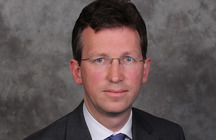
  • Nadhim Zahawi – 2019 Statement on Early Years Education

    Below is the text of the statement made by Nadhim Zahawi, the Parliamentary Under-Secretary of State for Education, in the House of Commons on 2 July 2019.

    Today, I am announcing the allocation of just over £22 million for 66 School Nurseries Capital Fund (SNCF) projects across the country. This investment is part of our commitment to create more high quality school-based nursery provision for disadvantaged children. These innovative projects are intended to test and evaluate approaches aimed at closing the disadvantage gap, deepen our understanding of “what works” and spread best practice throughout the sector.

    I am also announcing the launch of a new campaign called Hungry Little Minds to encourage parents to provide a language-rich home learning environment, which, evidence shows, is crucial for improving early outcomes. The campaign is underpinned by a behaviour change model published by the Government in November and follows the ambition set last July by the Secretary of State for Education to halve in 10 years the proportion of children who finish reception year without the expected level of development in communication, language and literacy.

    These initiatives are part of our work to provide equality of opportunity for every child, regardless of background or where they live, because we know that improving support in the early years is the cornerstone of social mobility.

    Details of today’s announcement are being sent to all SNCF applicants and a list of successful projects will be published on www.gov.uk. Copies will be placed in the House Library. This statement has also been made in the House of Lords.

  • Marion Fellows – 2019 Speech on Unemployment and Autism

    Below is the text of the speech made by Marion Fellows, the SNP MP for Motherwell and Wishaw, in the House of Commons on 2 July 2019.

    I thank the National Autistic Society and the local group Autism Take 5 for their help in preparing for this debate.

    Of those who have been fortunate enough to have received a diagnosis, there are 540,000 people with autism spectrum conditions. Some 433,000 are aged 18-plus, and 107,000 children are currently diagnosed with ASCs UK-wide. Research by the Centre for the Economics of Mental Health sheds light on the impact on the UK economy through lost productivity. This Government emphasise the need for people to move into paid employment and for higher rates of economic activity, but the autistic population is standing out as they are experiencing social and employment exclusion more than any other group. The cost of this is £27.5 billion spent annually supporting people with ASCs, and a 36% loss in employment in that group.

    The World Health Organisation reports a substantial increase in people being diagnosed with autism spectrum conditions. Therefore, we must consider the large number of teenagers now approaching working age. This is significant because people with ASCs experience symptoms that are considered barriers to employment.

    Jim Shannon (Strangford) (DUP)

    I thank the hon. Lady for bringing this subject to the House for consideration. Every one of us in this House and those outside are concerned about it. Does the hon. Lady agree that support and understanding are the key to employment of people with autism, and that the option of free training—something different, and something proactive and positive for people with autism and their employers—should be available to private employers who wish to learn how to get the best from their staff, and ensure that their working environment is safe and secure for all workers?

    Marion Fellows

    I feel privileged that the hon. Gentleman has intervened in my Adjournment debate, and I could not agree with him more. I will come to his point later in my speech.

    Following a survey commissioned by the National Autistic Society, the London School of Economics advises that only 16% of adults with ASCs are in full-time employment, despite 77% of them wanting to work. These figures have remained static since 2007 and are considerably lower than the employment figure for people belonging to other disability categories, which currently sits at 47%. Therefore, those with autism spectrum conditions are disproportionally unemployed.

    We know that employment contributes to our identity and quality of life. Equally, we are only too aware that unemployment has significant individual and societal costs. As a result of these barriers, most people with ASCs who are fortunate enough to gain employment will experience mal-employment, and will most likely be placed in jobs that are a poor job fit for their skillset. This is commonly because the job does not align with individual interests, talents, specific skills or intelligence ​levels. It is common sense that the better the job fit, the more likely people are to succeed. By not addressing this, individuals with ASCs will experience high levels of job turnover, resulting in disjointed employment histories that limit their potential for continuous employment; we know that when applying for jobs, our work history can either facilitate or block our access to being invited for an interview.

    Every adult—with or without a disability—has the right to enjoy employment, and should be able to choose their career without restriction, to work in positive conditions and to be protected against unemployment.

    Martin Docherty-Hughes (West Dunbartonshire) (SNP)

    Does my hon. Friend agree that one of the major concerns for many people relates to workplace assessments and their effectiveness, or ineffectiveness, whether for those with autism or other disabilities? Does she agree that the Department really should consider how it measures the effectiveness of workplace assessments—say, for those with autism—in enabling them to stay in a job for a longer period?

    Marion Fellows

    I thank my hon. Friend for that intervention. He raises a very important point.

    It is recognised that jobcentre staff will encourage an individual to apply for and accept any vacancy. For someone with a fragmented employment history, this quickly becomes accepted as the only route to employment.

    Patricia Gibson (North Ayrshire and Arran) (SNP)

    My hon. Friend is making an excellent speech. Does she agree that we should ask the Government to follow the advice and example of the Scottish Government in creating an autism implementation team to improve outcomes, including in accessing work, for people with autism so that they are supported as they make their way in the world?

    Marion Fellows

    I thank my hon. Friend for her intervention. I do agree. In fact, there are many occasions when this Government could follow the excellent example of the Scottish Government, but in this case it could prove especially fruitful.

    Not all jobs are suitable for individuals with autism spectrum conditions, as a result of their own individual barriers. These are common symptoms of ASCs. It is accepted that ASCs will result in individuals experiencing strong resistance to change and poor social communication and interpersonal skills. They will struggle in acclimatising to new routines and procedures. However, this should not prevent them from accessing employment: it means that we need to change our approach within the workplace.

    Neil Gray (Airdrie and Shotts) (SNP)

    I congratulate my hon. Friend on securing this debate and on the way in which she is presenting her case. As well as the barriers of access to employment that she is speaking about, there are barriers of access for people with autism going about their daily lives in general. Does she agree that Hope for Autism, which is based in Airdrie but serves the entirety of North Lanarkshire, is an example of a specialist local organisation doing fantastic work to help young people with autism, and their families, not just in accessing work but in being able to cope with the barriers that they face?

    ​Marion Fellows

    I thank my hon. Friend. Yes, he is absolutely right. There are so many organisations UK-wide that support and help people with autism, but we need to really concentrate on getting people on the spectrum into employment.

    We need workplaces to become accessible for those with ASCs. I would argue that we need a more holistic approach and acceptance of an individual’s personal preferences and abilities. We must recognise the barriers that some will face when attempting to gain employment. In the first instance, job application forms can be too complex and without clear instructions. Most individuals with autistic spectrum conditions will struggle with deciding whether they should declare that they have an ASC. Again, this is a result of the neurotypical stereotyping that continues to exist today. In other words, people with ASCs are perceived as being very different, and there is no real understanding of the challenges and range of autistic spectrum conditions that exist.

    When someone with an ASC is fortunate enough to be invited for an interview, a variety of factors may impact negatively on their performance, as it might be called, in relation to a neurotypical candidate. It is important to recognise that they will be sensitive to sensory stimuli—bright lighting and so on—that will result in increasing their anxiety before they have even begun the interview. We use the neurotypical as a normative benchmark for interview success, but this needs to change. Interviews measure candidates demonstrating their social skills and having the confidence to maintain a flowing conversation. An interviewer will expect the interviewee to respond to questions quickly.

    However, the language used in questions can be misunderstood. Not everyone interviewing applicants is experienced or trained in interviewing techniques and can all too often ask one question that contains other questions, causing confusion for an individual with an ASC. One common question in interviews is, “Tell me about yourself.” Someone with an ASC will have difficulty in determining what exactly the interviewer wishes to know: it is too open-ended a question. Questions need to be concise and designed to avoid misinterpretation. They will struggle to read between the lines or understand the tone of voice. Many interviews use questions that require hypothetical scenarios and hypothetical answers. People with ASCs are factual thinkers and will find that line of questioning challenging. We also know that someone with an ASC will have problems understanding facial expressions and recognising social cues. It is widely accepted that people with ASCs experience difficulty in adapting to new routines and procedures. They will also struggle with adopting a flexible approach in unexpected situations, so not all jobs will be appropriate environments for them. I have not given an exhaustive list.

    The Government argue that disability support is in place, such as the local supported employment and intensive personalised employment support programmes, but those are generic disability employment programmes, not designed for autism spectrum conditions. We need specialised support that will prove more successful in assisting people with ASCs into employment and maintaining employment. That role should be taken up by Jobcentre Plus. With proper training, jobcentres would be able to support employers who take on those with ASCs.​

    Being employed offers structure and routine, which enhance an individual’s life. If employers need to change their approach to hiring staff and allow a time period for those with ASCs to settle into their roles and environment, that should be done. However, there is very little or no evidence to prove that the Government are taking steps to regulate the situation, in spite of their past commitment to do so.

    What is not being recognised are the attributes that people with ASCs have and can bring to the workforce. About half of those in this population will have higher education, with some educated to PhD level, yet they remain under-represented in senior organisational roles. So many people with ASCs are extremely skilled in maths, physics, computing sciences and engineering, yet they remain discriminated against, with their talents and intelligence being cast aside—all because the Government will not put into practice the recommendations provided by various autism charities.

    The Government are refusing to take the bull by the horns and activate their own strategy and the Equalities Act 2010 to its fullest extent; they would rather tiptoe around autism and claim that they recognise that changes need to be made. Where is the headway on this? People with ASCs are still being excluded and discriminated against. Given their abilities, they have exceptional characteristics as employees, such as honesty, efficiency, precision, consistency, low absenteeism, disinterest in office politics and attention to detail. However, as the hon. Member for Strangford (Jim Shannon) mentioned, the lack of appropriate training and support for employers means that they generally do not see these characteristics—only autism. More often than not, that means that people in the group are forced into entry-level jobs that will not last long, due to their intelligence levels.

    We cannot continue to repeat this vicious cycle with the new generation of workforce. When someone is excluded from the workforce despite their credentials, despite their abilities, despite their intelligence, what are the implications of their being unemployed? They are depression, isolation, anxiety and low self-esteem. The system is not fit for purpose.

    What are the Government planning to do to rectify the situation? They continuously categorise autism spectrum conditions as a “learning disability”. I suggest that being able to achieve a PhD, complete higher education and have expert level skills is not reflective of having such a disability. Not all people with autism spectrum conditions have learning disabilities, and we need the Government to recognise that. We need to stop regarding the autistic and neurotypical ways of thinking as polar and conflicting opposites; they are merely different, with no wrong or right side at play.

    The Autism Alliance has done amazing work in providing the confident autism and neurodiversity toolkit, but it is not being used enough. The difficulties many people with autistic spectrum conditions have may mean that, when they cannot get a job, they have to apply for benefits. Most of my casework is in relation to people requesting mandatory reconsiderations or people being forced to attend tribunals. It is all too obvious that the application forms for benefits such as the personal independence payment and employment and support allowance—

    Martin Docherty-Hughes

    Will my hon. Friend give way?

    ​Marion Fellows

    Yes, certainly.

    Martin Docherty-Hughes

    In relation to PIP and reconsiderations, does my hon. Friend recognise that, as I said to the Minister yesterday, 85% of all considerations were overturned in April 2019? Rather than that type of bureaucracy, we should be investing in the frontline, as my hon. Friend is saying.

    Marion Fellows

    Yes, I completely agree.

    As I have said, most of my casework is in relation to people coming to me as they cannot navigate the benefits system. They find it increasingly difficult, and many in fact just give up altogether. As a caring society, we should not allow that. Applications for PIP and ESA are designed in such a way that they eliminate the neuro-diverse mindset. They are designed by a Government who would have us believe they are using all the toolkits, training, expertise and guidance from the various charities. It is clear that if this were true, more adults would have accessed employment since 2007, and fewer adults would be struggling to navigate the discriminating benefit process in operation. As MPs, we cannot know the number of individuals who have tried to apply for these benefits and not got beyond an application. People may now be homeless, have mental health issues or worse because of how this Government are failing the autistic population of this country.

    I should like the Minister to address these questions. What steps will this Government take to close the autism employment gap? Will the Government commit to ensuring all Jobcentre Plus staff have proper autism understanding training? Will the Government commit to recording autism in the labour force survey so that we can measure progress in the employment of those with autism spectrum conditions?

    Finally, will the Government commit to raising awareness of the autism friendly employer award? This would help many more ASCs into employment. There are other awards that MPs could work towards, too. I am proud to be the first parliamentarian to receive the autism friendly award. It is not hard to make a difference for ASCs, but by raising awareness we, together, can perhaps raise employment levels for this under-represented group of society and harness their undoubted talents for the good of society and of the economy as a whole.
  • Ronnie Cowan – 2019 Speech on Betting

    Below is the text of the speech made by Ronnie Cowan, the SNP MP for Inverclyde, in the House of Commons on 2 July 2019.

    I thank the Secretary of State for foresight of his statement. I appreciate the progress that is being made. Having discussed many of these issues with the Secretary of State and his Department, I genuinely believe that he gets it and is improving the situation, but I would take issue with a number of points. The statement touches on the argument for a mandatory levy, but undermines it by saying that it would take a year to complete. That reminds me of the old adage that my hon. Friend the Member for Falkirk (John Mc Nally) often reminds me of: “When is the best time to plant a tree? Twenty-five years ago.” If we do not start now, we will not be any closer a year from now. Is the Secretary of State suggesting that the gambling companies would withdraw their offer? If not, there is nothing to lose by starting the ball rolling now.​

    What we have now is an unacceptable compromise. Any amount that cannot be guaranteed, cannot be budgeted. If we are to provide education, research and support, it cannot be done piecemeal. We need to employ people, provide training and rent premises, and we need a strategy that can be followed over a five, 10 or even 15-year period. A voluntary levy does not provide such a platform. There is no continuity or security.

    This offer is an attempted pay-off—a bribe—to appease the conscience of the gambling industry, and it takes the heat off. I fear it also allows the UK Government to absolve themselves of their responsibility. It leaves the commissioning of services to organisations favoured by the Gambling Commission, which is funded by the gambling industry. That is not a good model for commissioning harm-reduction services, or education and research.

    Will the Minister review the role of the Gambling Commission and its funding model to make sure it is effectively regulating gambling companies, including by legislating, if necessary, to ensure that responsible working practices are in place?

    The draft statement says:

    “I have met users who have lost more than the UK’s annual average salary on credit cards during one night of gambling online.”

    Are we going to address gambling on credit cards? I see no word on that. It mentions fixed odds betting terminals, for which the maximum stake was set at £2, but let us not forget that the gambling industry was dragged kicking and screaming to the table on that particular one. I hope the same will not be said about harm reduction in years to come.

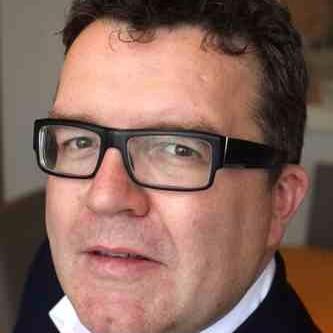
  • Tom Watson – 2019 Speech on Betting

    Below is the text of the statement made by Tom Watson, the Deputy Leader of the Labour Party, in the House of Commons on 2 July 2019.

    The whole House is united in supporting the Lionesses in their game at 8 o’clock tonight. The Opposition believe that we must capture the energy created by women’s football; 10 million people will be watching tonight. That is why we think that the next women’s World cup should be added to the “crown jewels” list of free-to-air sport.

    I thank the Secretary of State for advance sight of his statement. Last September, Labour announced that we would introduce a 1% mandatory levy on gambling companies to pay for research, education and treatment of problem gambling. We stand by that commitment today: only a mandatory levy will do.

    I am glad that the gambling industry has sat up and listened to what we and other campaigners, on both sides of the House, are saying on this issue. Credit where it is due: the big five companies have shown leadership and responsibility, which are sorely lacking in some other parts of the industry. Gambling addiction costs the economy an estimated £1.2 billion a year, yet the amount that the industry currently contributes to treating addiction is paltry.

    The voluntary levy, as it currently operates, asks for 0.1% of gambling yield. That target is never met. The industry turns over £14.5 billion a year, yet contributes less than £10 million a year to GambleAware. Some companies contribute amounts that are, frankly, insulting to the voluntary system. SportPesa, which sponsors Everton, and Fun88, which sponsors Newcastle, gave only £50 each last year. Both are white labels of the company TGP Europe. Best Bets gave £5, while GFM Holdings Ltd gave just £1. Given that there are 430,000 gambling addicts, 55,000 of whom are children, that is completely unacceptable and deliberately insulting to those leading players in the industry who are trying to take responsibility. Will the Secretary of State tell us how he will make such companies take more responsibility if not through a mandatory levy?

    The Secretary of State for Health and Social Care now supports a mandatory levy; Simon Stevens, chief executive of the NHS, supports a mandatory levy; the Gambling Commission supports a mandatory levy; and Gambling with Lives supports a mandatory levy. However, I cannot quite understand from his statement whether the Secretary of State, who has responsibility for this policy area, supports a mandatory levy—does he or not?​

    We in the Opposition believe that a mandatory levy is the only way to provide the structure and consistent funding that a proper system of research, education and treatment needs, and with the NHS at the heart of the process. In the announcement today, the so-called big five have said they will fulfil the 0.1% donation to GambleAware, but where will the rest of the funding go? Who or what will establish the proper clinical models and guidelines for service provision? Can the Secretary of State tell us how the Government will ensure that the money does not just go on the companies’ pet projects?

    After today, we will still have inadequate regulation and a Gambling Act that is outdated and not fit for the digital age. Gambling companies licensed in the UK are sponsoring UK football teams yet operating entirely abroad, behaving irresponsibly and fuelling addiction in countries such as Kenya. Companies are allowing customers to lose tens of thousands of pounds on multiple credit cards in a single sitting. There are companies that bombard customers who try to self-exclude with advertising emails and offers of free bets, then make them sign non-disclosure agreements when they settle.

    The gambling market is broken, and it is up to the Government to fix it. We do not need a voluntary patch, but a full overhaul of rules and regulations. I fear that the Secretary of State and the Government will fail in that task.

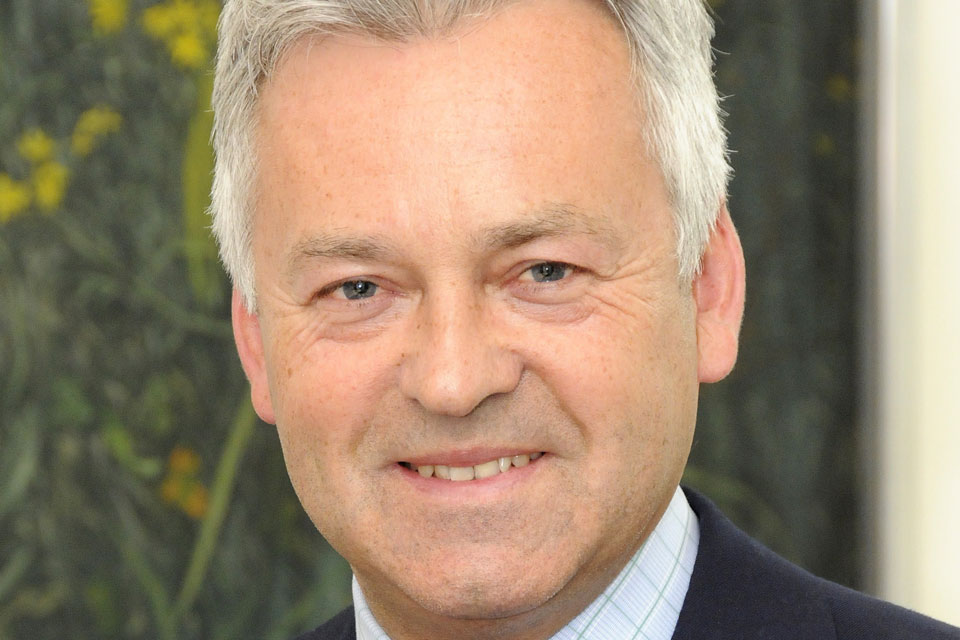
  • Alan Duncan – 2019 Statement on Hong Kong

    Below is the text of the statement made by Alan Duncan, the Minister for Europe and the Americas, in the House of Commons on 2 July 2019.

    For a number of weeks now, the world has been watching massive yet largely peaceful protests in Hong Kong in opposition to the proposed extradition legislation. Unfortunately, a small number of protesters chose to vandalise the premises of the Legislative Council yesterday. Her Majesty’s Government strongly condemn any such violence but also understand the deep-seated concerns that people in Hong Kong have about their rights and freedoms. The vast majority of the hundreds of thousands of people who took part in the 1 July march yesterday did so in a peaceful and lawful manner.

    The UK is fully committed to upholding Hong Kong’s high degree of autonomy and rights and freedoms under the “One country, two systems” principle, which is guaranteed by the legally binding joint declaration of 1984. We reject the Chinese Government’s assertion that the joint declaration is an “historic document”, by which they mean that it is no longer valid, and that our rights and obligations under that treaty have ended. Our clear view is that the Sino-British joint declaration of 1984 obliges the Chinese Government to uphold Hong Kong’s high degree of autonomy, and its rights and freedoms, and we call on the Chinese Government to do so. In respect of the recent demonstrations, the main responsibility for addressing this tension rests with the Government of Hong Kong, including the Chief Executive.

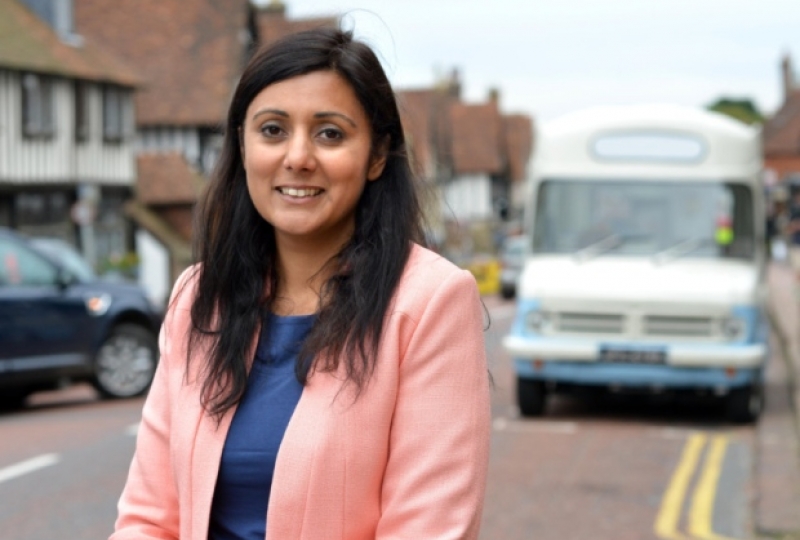
  • Nusrat Ghani – 2019 Statement on Maritime Safety

    Below is the text of the statement made by Nusrat Ghani, the Parliamentary Under-Secretary of State for Transport, in the House of Commons on 2 July 2019.

    I am delighted to inform the House today about the launch of Maritime Safety Week 2019 following the extremely successful inaugural event last year.

    The maritime industry is crucial to the UK economy. It is a simple truth that, if safety were not a priority for the sector, it would rapidly grind to a halt.

    The UK is recognised internationally for its world-class maritime safety framework and already sets the standard in ensuring the wide variety of people who use and enjoy our waters for business or pleasure can do so in safety. It is not only Government who have achieved this reputation, through the work of organisations like ​the Maritime and Coastguard Agency and the general lighthouse authorities, but also sector bodies like the Royal National Lifeboat Institution.

    The marine environment can be dangerous, however, and there is always more that can be done to keep people out of harm’s way.

    Maritime Safety Week aims ultimately to help reduce preventable maritime accidents. The week creates a focal point to recognise the fantastic and innovative work that is already being delivered and the strong partnership between Government and the sector which is vital for further continuous improvement.

    As well as recognising the excellent safety work that already goes on, my key objectives for maritime safety week 2019 are to facilitate the sharing of knowledge, experience and best practice and to focus on some of the challenges which remain. That is why, as well as meeting many of the organisations and individuals who make a difference through their work, I will be hosting a fishing safety MP roundtable this week to consider what more can be done to make the fishing industry a safer one.

    Throughout the week I will be launching new initiatives and announcing new funding in support of maritime safety. Today I will also be publishing the Government’s first maritime safety action plan. This sets out a path for the future of maritime safety work in the UK, makes new commitments and specifies the actions which will be taken to deliver them. The action plan underpins our Maritime 2050 strategy, which I published in January, outlining our ambitious vision for the future of the sector. Copies of the maritime safety action plan have been placed in the Libraries of both Houses and are available on gov.uk.

    Ultimately, I want to reduce the number of preventable accidents in UK waters and Maritime Safety Week 2019 is an important step towards that goal. I invite Members to show their support on social media by sharing our content and using our hashtags for the week—#MaritimeSafetyWeek and #MaritimeSafetyMatters.

    The attachment can be viewed online at http://www. parliament.uk/business/publications/written-questions-answers-statements/written-statement/Commons/2019-07-01/HCWS1679.

  • Jonathan Ashworth – 2019 Speech on the NHS Long-Term Plan

    Below is the text of the speech made by Jonathan Ashworth, the Shadow Secretary of State for Health, in the House of Commons on 1 July 2019.

    I am grateful to the Secretary of State for an advance copy of his statement. I had hoped for a greater sense of urgency from him. He talks about the 100-year anniversary of the Ministry of Health, but this year is the first time in 100 years that the advances in life expectancy have begun to stall, and even go backwards in the poorest areas. Just the other week, we saw that infant mortality rates have risen now for the third year in a row. As this is the first time that they have risen since the second world war, I would have hoped for a greater focus on health inequalities in his statement today, not least because public health services—the services that, in many ways, lead the charge against health inequalities—are being cut by £700 million. Now he says that we should wait for the spending review for the future of public health services, but we do not know when the spending review is. The Chief Secretary to the Treasury has said that it will be delayed, so it could be next year.

    In the past, the Secretary of State has talked about a prevention Green Paper. Will that prevention Green Paper be before the spending review or after the spending review? Will he also tell us whether it is still the intention of the Department to insist that local authorities fund their public health obligations through the business rates?

    At the time of the publication of the long-term plan last year, the then Secretary of State for Health said that we cannot have one plan for the NHS without a plan for social care, yet we still have no plan for social care. We have been promised a social care Green Paper umpteen times. We are more likely to see the Secretary of State riding Shergar at Newmarket than see the social care Green Paper. Where is it?

    The Secretary of State talks about the better care fund revenue increase. May I press him further on that? Is he saying that the clinical commissioning group allocations to the better care fund, which tend to be the bulk of the better care fund, will increase in line with the NHS revenue increase, or is he saying that there will be new money available for the better care fund? Adult social care has been cut by £7 billion since 2010 under this Tory Government, which is why hundreds of thousands of elderly and vulnerable people are going without the social care support that they need. Presumably, we will have to wait for the spending review for proposals on social care.​

    The Secretary of State talks about the workforce. We have 100,000 vacancies across the NHS. We have heard about the interim people plan, but of course we have seen the bursary cut, the pay restraint, and the continuing professional development cut. That plan is all good and fine, but when will it be backed up by actual cash?

    The Secretary of State talks about IT systems and apps—we know that he is very fond of that—but again he gives us no certainty on capital investment. Hospitals are facing a £6 billion repair bill—ceilings are falling in and pipes are bursting. The repair bill designated as serious risk has doubled to £3 billion. When will we have clarity on NHS capital?

    We broadly welcome what the Secretary of State said about mental health, but 100,000 children are currently denied mental health treatment each year because their problems are not designated as serious enough, and over 500 children and young people wait more than a year for specialist mental health treatment. He talks of a fundamental shift, so can he guarantee that clinical commissioning groups will no longer be allowed to raid their child and adolescent mental health services budgets in order to fill wider gaps in health expenditure? On mental health resilience and prevention, only 1.6% of public health budgets is currently spent on mental health, so will he mandate local authorities, when setting their public health budgets, to increase the money they spend on mental health?

    On cancer, we broadly welcome what the Secretary of State has said, but patients are waiting longer for treatment because of vacancies and out-of-date equipment. Today we learned that consultant oncologists with shares in private hospitals are referring growing numbers of patients to those hospitals. Is that not a conflict of interest? When will we see tougher regulation of the private healthcare sector?

    The Secretary of State talked about the clinical review of standards that is being piloted in 14 hospitals, yet those hospitals are not publishing the data. If he wants to abandon the four-hour A&E target, will he insist that those pilot hospitals publish all the data? He did not mention waiting lists. We have seen CCGs rationing treatment because of the finances. We have seen 3,000 elderly people refused cataract removals. We have seen CCGs refusing applications for hip and knee replacements. We have even seen a hospital that until last week was inviting patients to pay up to £18,000 for a hip or knee replacement—procedures that used to be available on the NHS. When is he going to intervene to stop that rationing of treatment, which we are seeing expand across the country because of the finances?

    Finally, there are many laudable things in the long-term plan that we welcome. Alcohol care teams were a Labour idea. Perinatal mental health services were a Labour idea. Gambling addiction clinics, which the Secretary of State announced last year, were a Labour idea. Today he is talking about bringing catering back in-house, which is also a Labour idea. Why does he not just let me be Heath Secretary, and then he could carry on being the press secretary for the right hon. Member for Uxbridge and South Ruislip (Boris Johnson)?

  • Matt Hancock – 2019 Statement on the NHS Long-Term Plan

    Matt Hancock

    Below is the text of the speech made by Matt Hancock, the Secretary of State for Health, in the House of Commons on 1 July 2019.

    Mr Speaker, I would like to update the House on the implementation of the NHS long-term plan and the delivery of improvements to the health service. Today marks the 100th anniversary of the Ministry of Health, founded under the Liberal and Conservative coalition of Lloyd George, and the Department has been staffed by brilliant, impartial civil servants ever since, and is today.

    I can tell the House that on Thursday last the boards of NHS England and NHS Improvement agreed the long-term plan implementation framework. Alongside the clinical review of standards, and the interim workforce plan, published last month, this framework is a critical step in delivering on our 10-year vision for the NHS, and in transforming our health service with the record funding that this Government are putting in. The document sets out the framework within which each of the 300 commitments in the long-term plan will be delivered, and it also sets out the 20 headline commitments and how we will monitor the delivery of the plan. In the past, there have been criticisms that NHS plans have not led to full delivery. We are determined to ensure that the long-term plan fulfils its potential to transform the health service for the better, and I am placing a copy of the implementation framework in the Libraries of both Houses.

    I wish to draw attention to three particular areas, the first of which is cancer care. I thank my hon. Friend the Member for Basildon and Billericay (Mr Baron) for his efforts to ensure that we focus on the vital indicator of cancer survival. The Prime Minister set out the ambition that by 2028 three quarters of all stageable cancers are detected at stage 1 or stage 2. Early detection and diagnosis are essential to the enhancement of people’s chances of surviving cancer.

    Since 2010, rates of cancer survival have increased year on year. However, historically our survival rates in the UK have lagged behind the best-performing countries in Europe. The implementation framework sets out our goal of measuring the one-year cancer survival rates as one of the core metrics for the long-term plan. The one-year survival rate is how we measure our progress in achieving the ambitions set out in the plan. To realise those ambitions and ensure that we do everything we can to give people diagnosed with cancer the best chance of survival, the framework sets out: first, a radical overhaul of screening programmes; secondly, new state-of-the-art technology to make diagnosis faster and more accurate; and thirdly, more investment in research and innovation.

    From this year, we will start the roll-out of rapid diagnostic centres throughout the country, building on the success of a pilot with Cancer Research UK, so that we can catch cancer much earlier. NHS England is further extending lung health checks, targeting areas with the lowest survival rates, and Health Education England is increasing the cancer workforce, which will lead to 400 more clinical endoscopists and 300 more reporting radiographers by 2021. With these steps, our ambition is that 55,000 more people will survive cancer for five years, each year from 2028. Improving the ​one-year survival rate is how we ensure that the NHS remains at the forefront of cancer diagnosis and treatment and continues to deliver world-class care.

    The second area is mental health. The Prime Minister and her predecessor rightly prioritised the treatment of mental health so that we can ensure that mental health finally gets parity with physical health. The £33.9 billion cash-terms settlement, which is the longest and largest cash settlement in the history of the NHS, includes a record £2.3 billion extra in real terms for the expansion of mental health services. The framework sets out how 380,000 more adults and 345,000 more children and young people will get access to mental health support. I pay tribute to the mental health Minister, the Under-Secretary of State for Health and Social Care, my hon. Friend the Member for Thurrock (Jackie Doyle-Price), who has done so much work to put the issue on the agenda.

    We are introducing four-week waiting-time targets for children and young people and testing four-week community mental health targets for adults. The implementation framework refers specifically to the vital improvements to community mental health services that we all know are needed. Those improvements include services for adults living with serious mental disorders, including eating disorders, and for those coping with substance misuse. The framework also sets out how we will create a new workforce of mental health support teams to work with schools and colleges to help to identify young people who need help and reach them faster. In all, it is a fundamental shift in how we treat mental illness and how the NHS will prioritise mental health services.

    The third area that I wish to touch on is people. Three quarters of the NHS budget goes on staff, because people are the most valuable resource that we have in the NHS. We need not only the right numbers but to ensure that staff have the right support. The long-term plan sets out our ambition to recruit, train and retrain the right numbers of staff over the next decade. Last month, Baroness Dido Harding set out the interim people plan, which sets out how we will build the workforce we need and create the right culture, so that doctors, nurses and other NHS staff have the time to care for patients and for themselves.

    Last week, the British Medical Association accepted in a referendum the new agreement with junior doctors that will improve both pay and working conditions. Thanks to the hard work of my predecessor, we are already taking steps to increase the number of clinical training places by opening five new medical schools and increasing the number of routes into nursing through apprenticeships and nursing associates. Last year, more than 5,000 nursing associates started training through apprenticeships. This year, it will be up to 7,500.

    Those are just three of the most vital areas from the 10-year vision for the NHS set out in the long-term plan. Across England, based on the implementation framework, local strategic plans are now being developed and will be brought together as part of a national implementation plan by the end of the year, and all of this will be underpinned by technology. Today sees the official opening of NHSX, the new part of the NHS, which will drive digital transformation to give citizens and clinicians the technology they need and save and improve lives. I am delighted that NHSX has received ​such a warm welcome across the NHS because it has so much potential to transform every part of health and social care for patients and staff.

    The forthcoming spending review will settle budgets for health education, public health and NHS capital investment, and the settlements will feed into the final implementation of this plan. As part of the spending review, we will also review the current functioning and structure of the better care fund, which is rising in line with NHS revenue growth.

    On this the 100th anniversary of the foundation of the Ministry of Health, this framework sets out how we will go about securing the foundations of the national health service into the next century and the creation of an NHS that delivers world-class care for generations to come. I commend this statement to the House.

  • Theresa May – 2019 Speech to Business Leaders

    Below is the text of the speech made by Theresa May, the Prime Minister, in Downing Street, London on 1 July 2019.

    I’m delighted to welcome you to Downing Street and to have this opportunity to thank you for all that you have done to work with government during my time as Prime Minister.

    I believe that business is a force for good. And that your success is fundamental to our country’s success.

    Because it is business that generates wealth and drives innovation.

    It is business that pioneers the industries of the future, secures the investment on which that future depends, and creates jobs and livelihoods for families up and down our country.

    And it is business that can also play a crucial role in helping to meet some of the greatest social challenges of our time from contributing to the sustainability of our planet to generating new growth and new hope in areas of our country that have been left behind for too long.

    That belief in the power of business is why I have sought to do everything possible to make our country one of the most dynamic and business friendly economies in the world.

    It is why I have said that post-Brexit Britain must be an unequivocally pro-business Britain.

    And it is why throughout the negotiations with the European Union I sought to do everything I could to get a deal that would protect the frictionless trade on which so much of your success depends.

    Because your success is not just in your interests. It is in our national interest.

    This belief in the power of business is also why I sought to establish a new way of government and business working together.

    For as you know better than anyone, the success of our economy will depend on how we adapt to meet the challenges of the future.

    And that cannot be done by government or business acting alone. Nor by government trying to tell business what to do.

    But rather by government genuinely listening to business and working hand-in-hand with you.

    That is why I formed five Business Councils split by sector – where we hear your priorities and work with you to create the conditions for growth and investment that can help post-Brexit British business be the most competitive in the world.

    And I would particularly like to thank those of you here who are members of these Business Councils for your time and your contribution to this initiative, which I very much hope will continue in the months and years ahead.

    It is why, as the economy and technology changes, we have looked to work with you to introduce reforms to working practice and workers’ rights in the modern economy.

    And in response to the independent Taylor Review we are delivering the biggest improvements in UK workers’ rights for twenty years.

    We are also working with you to advance changes in corporate governance – because as you know better than anyone, the best of British business is not only about commercial success but about setting the standards globally and bringing wider benefits to the whole of our society too.

    You are making these changes every day – and, indeed, just this evening I was delighted to meet the two workers from Capita who have just become the first employee board members of a major UK-listed company for many years.

    This commitment to working hand-in-hand is also why we created our Modern Industrial Strategy – a strategic partnership between business and government to make the long-term decisions that will ensure the success of our businesses for generations to come.

    This strategy gets the fundamentals right by investing in infrastructure at local and national level. It includes delivering the biggest ever long-term increase in R&D in our history – a 2.4% of GDP target for R&D that is not about a single parliamentary term, but rather a decade-long commitment.

    It invests in equipping people with the skills they need – and the skills business needs – to succeed in an ever more competitive global economy.

    It has a particular focus on the importance of place: making sure that the benefits of trade and growth reach working people – not just in some parts of the country, but in every part of our country.

    And crucially it gets us on the front foot in harnessing the power of the state and the ingenuity of the private sector to solve four Grand Challenges which are enormous areas of potential for growth, jobs and investment across our whole country.

    The challenge of Artificial Intelligence and data – where our Centre for Data Ethics and Innovation will make the UK a global leader in helping to ensure the safe, ethical and innovative deployment of this new life changing technology.

    And where our recent investment of £150 million towards the development of quantum could transform computing, imaging and communications.

    The challenge of Healthy Ageing where our record investment through the NHS Long-term Plan includes a new emphasis on preventing ill-health not just treating it.

    And where we are investing nearly £100 million through our Industrial Strategy Challenge Fund to support the development of technologies that help people grow old independently.

    The challenge of Clean Growth – where we have just become the first major economy in the world to legislate to end our contribution to global warming with a net zero target by 2050.

    And the challenge of the Future of Mobility where tomorrow leaders of our great car industry are meeting here in Downing Street to discuss how we secure its long-term future as we transition to electric vehicles.

    We are already leaders in the design of battery technology as a result of the £1 billion we have invested in supporting the Faraday Institution and the Advanced Propulsion Centre.

    We are also going to build a high speed electric vehicle charging infrastructure nationally. And I have asked the Office for Low Emission Vehicles to lead a review on how we do this – reporting back in the Autumn.

    Because electric vehicles are critical to meeting that net zero target – and in turn have the potential to create thousands of new jobs right across the country.

    We cannot predict the future or guess what technological and scientific breakthroughs might lie just around the corner.

    But we can observe the long-term trends that are shaping change in our world today and we can meet those challenges head on with creativity, innovation and enterprise.

    Already we have more billion-dollar tech companies than anyone in Europe and a faster rate of cloud adoption by businesses than any other country.

    We have recently taken over from America as the world’s top investment destination.

    And I am profoundly optimistic about how much further we can go.

    For in all of these areas and more – this strategic partnership between government and business is helping to prepare our economy for the future.

    It is writing a new chapter in our national story.

    A new chapter where together we are seizing the opportunity to lead the new industries of the future.

    And a new chapter where we are ensuring the benefits of economic growth are more fairly felt in all parts of our country.

    I believe it is critical that this work is sustained and deepened in the months ahead.

    So today is not just about saying thank you for your partnership over these last three years.

    It also about asking you to continue with my successor as Prime Minister with the same commitment and the same spirit of collaboration.

    So that this unique partnership we have built together can go from strength to strength.

    And so together we can harness the power of the state and the ingenuity of the private sector to deliver prosperity and opportunity for all our people – now and for generations to come.

    Thank you for all you’re doing. Thank you for this partnership. Let’s continue working together.

  • Jeremy Wright – 2019 Statement on Betting

    Below is the text of the statement made by Jeremy Wright, the Secretary of State for Digital, Culture, Media and Sport, in the House of Commons on 2 July 2019.

    Mr Speaker, with your permission, I would like to make a statement about today’s announcement on support for those affected by problem gambling.

    While we all want a healthy gambling industry that makes an important contribution to the economy, we also need one that does all it can to protect those that use it.

    Problem gambling can devastate lives, families and communities.

    I have met those who have lost more than the UK’s annual average salary on credit cards during one night of gambling online.

    And parents who are now without a child as a result of gambling addiction.

    Over recent months I have also met representatives from the gambling industry and colleagues from all across the House to discuss what more needs to be done.

    We can all agree that it’s best to prevent harm before it occurs, and to step in early when people are at risk. But we also need to offer the right support for those people who do experience harm.

    We have already acted to reduce the minimum stake on Fixed Odds Betting Terminals to 2 pounds, from 100 pounds.

    We have also tightened age and identity checks for online gambling websites; an important step to protect children and vulnerable people who may be at risk.

    And today five of the biggest gambling companies have agreed a series of measures which will deliver real and meaningful progress on support for problem gamblers.

    This announcement has been welcomed by the Gambling Commission, GambleAware and Gamban.

    These are companies which, together, represent around half of the British commercial gambling industry.

    At the heart of this package is a very significant increase in their financial contribution to fund support and treatment.

    Last year voluntary contributions across the whole industry to problem gambling yielded less than 10 million pounds.

    Now five operators:

    William Hill

    Bet365

    GVC – who own Ladbrokes and Coral

    Flutter – formerly known as PaddyPower BetFair

    Sky Betting & Gaming

    have said that over the next four years they will increase ten fold the funding they give to treatment and support for problem gamblers.

    And in this same period they have committed to spending 100 million pounds on treatment specifically.

    The companies will report publicly on progress with these commitments, alongside their annual assurance statements to the Gambling Commission.

    Last week NHS England announced it is establishing up to fourteen clinics for those with the most complex and severe gambling problems.

    They include where gambling problems coexist with other mental health problems or childhood trauma.

    And it has also been announced that the first NHS problem gambling clinic offering specific support for children is set to open.

    The funding announced today enables a huge boost for the other treatment services that complement specialist NHS clinics, and it will help us to place an increased focus on early intervention.

    I know members across the House have argued for a mandatory, statutory levy to procure funds for treatment and support of problem gambling.

    I understand the argument but of course the House knows that legislating for this would take time – in all likelihood more than a year to complete.

    The proposal made this morning will deliver substantially increased support for problem gamblers this year.

    It may also be said that receipts from a statutory levy are certain, and those from a voluntary approach are not.

    But it is important to stress two things. First that these voluntary contributions must and will be transparent, including to the regulator, and if they are not made we will know.

    Second, the Government reserves the right to pursue a mandatory route to funding if a voluntary one does not prove effective.

    Mr Speaker, this is a clear financial commitment from industry to addressing the harms that can come from gambling.

    But this is not solely about spending money. This is a package of measures spanning a number of different areas, to ensure we tackle problem gambling on all possible fronts.

    Firstly, a responsible gambling industry is one that works together to reduce harm and wants customers to be safe, whichever platform they use or however they choose to gamble.

    The companies already identify customers whose gambling suggests they may be at risk, and they take steps to protect them. Their licences require this. But they will go further.

    We have already seen the successful launch of GAMSTOP, the multi-operator self-exclusion scheme.

    I am pleased that companies have committed to building on this through the greater sharing of data between them to prevent problem gamblers from experiencing further harm.

    Secondly, the five companies will use emerging technology to make sure their online advertising is used responsibly.

    Where technology exists that can identify a user showing problem gambling behaviours, and then target gambling adverts away from that person, they have committed to using it.

    More generally, industry has already committed to a voluntary ban on advertising around live sport during the daytime, which will come into force next month.

    Third, operators have committed to giving greater prominence to services and campaigns that support those in need of help.

    They have pledged to increase the volume of their customer safer gambling messaging…

    To continue their support for the BetRegret campaign, which is showing promising early results…

    And to review the tone and content of their marketing, advertising and sponsorship to ensure it is appropriate.

    These are welcome commitments and represent significant progress in terms of the support that operators give for those impacted by problem gambling.

    But as technology advances, we will need to be even more sophisticated in how we respond.

    The five companies who have proposed these measures today will be working closely with Government, charities and regulators so we can address any new or developing harms.

    I commend the leadership of the five companies who have put them forward.

    They are proposals from some of the industry’s biggest companies.

    And I believe it is reasonable for the biggest companies with the largest reach and the most resources to do more and show leadership.

    But the industry as a whole needs to engage in tackling problem gambling, and we want other firms to look at what they can also do to step up.

    And I repeat, it will remain open to government to legislate if needed.

    So this is not the end of this conversation.

    And we will keep working hard as a Government to make sure we protect users, whether online or in the High Street.

    Mr Speaker, there is still much more to do, but today’s announcement is a significant step forward.

    It means substantially more help for problem gamblers, more quickly than other paths we could take.

    We must and we will hold the companies that have made these commitments to them and we will expect the rest of the industry to match them.

    They will change lives for the better and contribute to the ongoing work we are doing to make gambling safer for everyone.

    I commend this statement to the House.