Category: Speeches

  • Bill Wiggin – 2020 Speech on the Coronavirus Bill

    Below is the text of the speech made by Bill Wiggin, the Conservative MP for North Herefordshire, in the House of Commons on 23 March 2020.

    It is a pleasure to follow the maiden speech of my hon. Friend the Member for High Peak (Robert Largan).

    May I say to colleagues across the House that being angry with the public for what they are doing wrong is no way to proceed? In Fownhope in my constituency, a community that was hit very badly by flooding, we are seeing the most phenomenal community spirit and wonderful behaviour blossoming as people reach out to those who are lonely and self-isolating. Young people are writing to people in care homes to make sure that they feel valued. A wonderful sense of community spirit is shining forth. For me, that is worth so much more than being cross with people who may be getting their self-isolation or shielding wrong.

    I want to talk about the most important thing we have here: our parliamentary accountability. That accountability is a baby worth saving no matter how toxic, dangerous or infectious the bathwater, so two years calls into question the advice the Government have been given. China has had 81,307 cases and 3,254 deaths, yet it has managed to shut down the disease in six weeks from its epicentre—a much more difficult task than we have—with flights still coming in from countries such as Iran three times a day. How is that possible when we are looking at such draconian legislation today?

    It is not necessarily perfect legislation. Under clause 23, which relates to powers on food—I was naturally drawn to it—a person may be required to provide “relevant information” to the authority in subsection (1), and yet subsection (6) states:

    “A requirement under this section may not be imposed on an individual.”

    That does not look quite right, so perhaps the Government could look at that before Report.

    In my last few seconds, I want to reiterate how much the public need to understand that what we are sacrificing, both economically and in terms of our freedom, is worth it if we are protecting the professionals in the health service, local authorities and all the caring services that are reaching out and providing the sort of community that we all hold so dear. I am seeing it every day in my constituency, and I want to make sure we never forget that it is the goodness of the British people that makes all these sacrifices worth it.

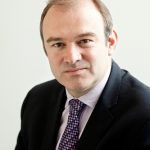
  • Ed Davey – 2020 Speech on the Coronavirus Bill

    Ed Davey – 2020 Speech on the Coronavirus Bill

    Below is the text of the speech made by Sir Ed Davey, the Liberal Democrat MP for Kingston and Surbiton, in the House of Commons on 23 March 2020.

    I would like to begin by thanking everyone who is working hard to keep our country and our world as safe as possible from this dangerous pandemic. Above all, I want to thank the staff of our NHS and our social care sector. We are seeing people face personal risks, and we will forever be grateful for what they are doing.

    In normal times, I and my party would be opposing many of the measures in the Bill with every breath in our bodies. The implications for civil liberties and human rights are profound and alarming, but our society now faces the unprecedented threat of coronavirus, which leaves some of the most vulnerable in our society at serious risk. It seems clear that at least some of the new powers being sought by the Government are necessary to deal with the threat. Nevertheless, our position is that the powers must be used only when absolutely necessary during this emergency, and not for a moment longer.

    Like others, I welcome the Government’s change of heart on the two-year renewal. The six months now proposed is, self-evidently, a significant improvement. Nevertheless, we remain unclear why it is six months rather than three months. There may be good reasons, but it is important that the Government set out why they chose six months. After all, the Prime Minister said just the other day that the peak of the epidemic would be just 12 weeks away, so it is not unreasonable to ask why six months is needed.

    Moreover, we need to look carefully at the review process. When it comes, it should enable amendments to this law, and the other place needs to be allowed to vote on it too. Let me give one reason why a more frequent renewal process should be considered. It relates to the Bill’s provisions on social care. The Bill temporarily suspends the duties on local authorities to meet people’s care needs—from older people to adults and children with disabilities. I am yet to be convinced that those provisions are needed at all. They are some of the most alarming provisions in the Bill. At a time when the most vulnerable in our society need more care, not less, why on earth are people’s rights being reduced? At the very least, such a reduction in rights for the elderly, disabled and mentally ill must be subject to early review and renewal.

    The right hon. Member for South West Surrey (Jeremy Hunt) was right to raise the issue of personal protective equipment and testing. NHS staff who have contacted me are angry and alarmed at the lack of PPE. They do not understand why the distribution system has taken so long and is still failing to provide PPE for so many people. The testing experience in this country compares appallingly with other countries.

    There are other problems with the Bill. Due to the time, I will mention just one: the Bill’s failure to enable the Government to extend the Brexit transition period. ​I know that is politically sensitive and contentious. I know we need to bring our country together after Brexit tore us apart, so I do not seek to reopen the Brexit question, despite what my heart tells me. I raise the Brexit transition period as a practical and real issue. Our economy faces its biggest challenge since the second world war—disruption to business on a scale even greater than would have been caused by the worst-case scenario of a no-deal Brexit. Surely, the Government should think again and allow themselves to extend the Brexit transition period.

    We on the Liberal Democrat Benches will support the Bill tonight, but with a very heavy heart. We hope the Government will come back and allow the House to ensure that we can protect our country against this coronavirus threat but not ditch our civil liberties and human rights.

  • Steve Brine – 2020 Speech on the Coronavirus Bill

    Below is the text of the speech made by Steve Brine, the Conservative MP for Winchester, in the House of Commons on 23 March 2020.

    I echo what a beautiful maiden speech that was from my hon. Friend the Member for High Peak (Robert Largan). I will be rather novel and speak about the Bill. Before I do that, I want to say that the package announced thus far and in the Budget last week was incredibly welcome, but I echo what so many Members have said so far today: we need to deal with the self-employed next, please. Many of my constituents are desperate for the Government’s help.

    I rise to speak in support of the Bill receiving its Second Reading. Nobody wanted to be here, but it is an essential and urgent piece of legislation. We may be discussing the Coronavirus Bill today, but for some it is in large part the pandemic influenza Bill. I was very much involved in that when I was fortunate enough several years ago to be the public health Minister. The legislation will not make covid-19 suddenly vanish, as President Trump bizarrely proclaimed the other day, but it will help the state and our Government do what they have consistently stated is their primary objective, which is to protect the NHS and save lives.

    As the Secretary of State made clear, these are extraordinary times and these measures are being pursued as a result. I, too, have had lobbying this weekend saying that the Bill goes too far and is a disproportionate power-grab by the Government, but it is worth saying that these measures were not dreamt up on the hoof by the Secretary of State over the past week. The “UK Influenza Pandemic Preparedness Strategy 2011” sets out our preparedness for a severe pandemic. It was tested in 2016 through a major three-day exercise called Cygnus, which involved about 1,000 organisations and the devolved Administrations. It demonstrated a number of things that we do well as a country and a number of things that we need to improve upon, one of which was the drafting of the draft pandemic influenza Bill, which forms the basis of the legislation today.

    The scrutiny we are giving this legislation on the Floor of the House is not what we do in normal times, of course, but these are not normal times. Parliament needs to work swiftly and with deftness of touch to match what pretty much everyone else is doing right now. I am satisfied that the legislation is, as was always intended, time-limited. It makes it clear that it is neither necessary nor appropriate for all the measures to come into force immediately. What is more, the lifetime of the Bill, once an Act, can itself be ended early, if the available scientific evidence supports that, and we can extend the lifetime of the Act for a further temporary period if that is prudent.

    I want to home in on a couple of areas. Increasing the health and social care workforce is obviously mission critical, so the Bill introduces new registration powers for the registrars of the Nursing & Midwifery Council and the Health and Care Professions Council. That is absolutely right, but we need to hear from Ministers, ​as mentioned in the impact assessment, exactly how the Department of Health and Social Care plans to engage with the professional regulators to ensure that sufficient infrastructure is in place to allow the policy to be implemented.

    I note the sensible move to allow the early registration of final-year students studying to become nurses, midwives, paramedics and social workers. The Government’s assumption is that all 28,100 of the students estimated to be in their final year in England will be willing to join the register early. What evidence do we have that that is likely to be the case, and are the costs noted in the impact assessment covered so as to give the regulators total confidence that they can get on with this?

    I am pleased that the Department for Environment, Food and Rural Affairs holds responsibility for food supply, as a critical national infrastructure. It of course has to maintain our high standards, working with the Food Standards Agency, but I do not think the legislation goes far enough in protecting stock on the shelves. Like all of us, I have been contacted by hundreds of constituents in recent days, on many different subjects, but a consistent message is that what they are hearing from Ministers and the supermarkets about there being enough food is jarring with what they are seeing on the ground and, more importantly, online when they try to book a delivery slot.

    Of course, the Government are not to blame for the change in our food policy, from the policy of “Dig for victory” of the last century, backed up by local food networks, to the centralised distribution controlled by the big five supermarkets we have now, but how sad it is that we have literally put all our eggs in one basket, and that we are reaping what we have failed to sow now that we need it most.

    Richard Graham (Gloucester) (Con)

    My hon. Friend is making a very good speech on different aspects of the Bill. On his first point, about reassuring the self-employed, does he agree that no single scheme will be able to cover every single situation perfectly, and that the crucial point at this moment is the reassurance that something will be done to help everybody who is self-employed?

    Steve Brine

    Yes, I do agree. I understand why we have to do this through pay-as-you-earn first, because employers are making decisions about job losses this weekend, but I completely agree that we need to hear something from the Prime Minister on that. I understand that he will be addressing the nation this evening—we can probably all guess what is coming—when he could say something reassuring to the self-employed and to sole traders, which would be very welcome.

    Finally, on emergency volunteering leave, the provisions for which are set out in clauses 7 and 8, the unpaid statutory leave that the Secretary of State has mentioned is very welcome. Clause 8 states:

    “The Secretary of State must make arrangements for making payments to emergency volunteers by way of compensation –

    (a) for loss of earnings;

    (b) for travelling and subsistence.”

    Could the Minister tell the House at what level that might sit? There seems to be a norm of 80% for the coronavirus job retention scheme, so are we looking at the same for this? I think it is a smart move, as many of our volunteers come from the older generation, so we have to find a way of filling that gap.​

    We need ruthless, determined, collection action to protect the NHS and to save lives, combined with scientific progress. The Bill is part—only part, I have to say—of that national effort. I have listened carefully to the many voices lobbying us on the Bill over the weekend, but I am comfortable that it is a well-judged piece of legislation that will provide the powers needed to respond to the pandemic and the national crisis that we face.

  • Chris Bryant – 2020 Speech on the Coronavirus Bill

    Below is the text of the speech made by Chris Bryant, the Labour MP for Rhondda, in the House of Commons on 23 March 2020.

    May I warmly commend the hon. Member for High Peak (Robert Largan), who I think made a magnificent speech? He delivered it with simple earnestness and a dignity that will commend him to many Members of this House. It is a sad moment, is it not, when one thinks that being an MP is the most secure job around. He was quite right to say not only what he said about no party having a monopoly on truth—ideological purity rarely does anybody any favours—but what he said about being an independently minded Member. I warmly commend everything that he said.

    However, I completely despair of some of the scenes that I have seen from our fellow citizens over the last few days. The panic buying—the hoarding, frankly—of essential goods, which will therefore be denied to many people who most need them, including our key workers, is a disgrace. It is born out of selfishness and it must stop. People ignoring advice—because somehow or other they think that they will be immune to the disease or that it will only affect some other people—is, again, an instance of massive selfishness, and it really must stop. I am sick and tired of people saying that they know better than all the experts. The number of armchair epidemiologists and virologists in this country seems to have grown dramatically without any evidence of qualification.​

    I hate the idea that there are companies that are actively profiteering in this country. It was a criminal offence in the war and it should be a criminal offence now. I hate the scam merchants who are going round preying on the vulnerable at the moment, which is why it is all the more important that local councils run proper schemes for volunteer forces, so that if somebody knocks at the door, an elderly person can know that they are getting the right person.

    I hate the way that some of our police have been treated in the last few days—spat at and coughed over deliberately, as an offensive weapon as it were, when they have merely been trying to prevent people from gathering, in the way that the Government have been advising. This goes back to what we have been trying to do for the last few years to stop assaults on our emergency workers, and I bet my bottom dollar that there will be more assaults on emergency workers during this process. This must come to an end. We as a nation must show the best side of our humanity, not the worst side of our humanity.

    And I am sorry, but to those politicians in various different countries around the world who have somehow or other tried to dismiss the experts, including those who have dismissed the idea of vaccination over the last few years, I say this: you are dangerous and you must stop it. People will die because of your misinformation.

    This is, of course, a draconian Bill, for two main reasons. First, it suspends lots of protections for individuals, such as who is able to certify a death. I know why the provision is there, but, frankly, the idea that in the end it could end up just being a funeral director certifying a death is worrying, let alone the provisions in relation to sectioning under the Mental Health Act 1983. The Bill also gives Ministers the power to impose significant restrictions, which we all know are draconian. On top of that, the Attorney General rang me—I am grateful for the phone call the other day—

    The Solicitor General (Michael Ellis)

    The Solicitor General.

    Chris Bryant

    All right. Let us stand on these things; they are the ones that matter. The Solicitor General rang me the other day and made the important point that we are suspending, very unusually, the normal process in allowing Ministers to switch powers on and off. All of these things are extraordinary in peacetime.

    There are some things we have to do simultaneously, and they have to happen at the same time. First, there must be a deal for sole traders and the self-employed. I have had people ringing up my office in floods of tears worrying about how they are going to make ends meet over the next few weeks, and they need an answer to that urgently. Undoubtedly, because of the ludicrous misbehaviour of so many of our fellow citizens in the past few days, we will have to move forward with enforced measures. That must happen, but it cannot happen before the Government put in place provisions for sole traders and the self-employed.

    We have to put much more protection in place for our NHS staff. Every single fashion brand in this country, from Marks and Spencer through to Burberry, should be ringing up the Government now to say, “What can we do to provide more personal protective equipment ​for staff?” Many local councils, including my own, have hardly a stitch to give their key workers. We need to give them that protection.

  • Robert Largan – 2020 Maiden Speech in the House of Commons

    Below is the text of the maiden speech made by Robert Largan, the Conservative MP for High Peak, in the House of Commons on 23 March 2020.

    I rise as one the last new Members to give their maiden speech. I had planned to speak on the Budget last week, but I did not feel that a traditional maiden speech full of local anecdotes and questionable jokes was suitable in the current circumstances. Needless to say, the speech that I am giving now is very different from the one I had originally written.

    I had desperately wanted my parents to be able to sit in the Gallery to watch me give this speech today, but my parents are both in their 70s, in high-risk groups, and, frankly, I dare not wait any longer. My dad was ​one of eight children from an Irish Catholic family in Salford. He was the only one to pass the 11-plus and went on to do a wide range of jobs, from being a Shabbos goy to a postman to a trade union shop steward. My mum left school with no qualifications, after having to take care of her younger sisters following the death of her father on her 11th birthday. Despite that, she had a groundbreaking career at the Department of Social Security, helping unemployed people back into work. My parents taught me the importance of public service and doing the right thing. They are the reason I am standing here today. It fills me with more pride than I can ever fully explain that they are able to watch me give this speech, even if it has to be on television.

    I am also very grateful to see the shadow Health Secretary in his place. Like me, he went to Philips High School. For a comprehensive in north Manchester to have produced two Members of Parliament is a very rare achievement indeed.

    When I put myself forward for election, campaigning for improved transport in the north, I could not possibly have imagined making my first speech in a debate such as this. As it turns out, being in this place makes me incredibly fortunate. I stand here with a secure job—for the next four years at least—and a guaranteed salary. That many of my constituents do not have the same security plays heavily on my mind. I am particularly concerned about the self-employed. They do not benefit from the job retention scheme, and many are seeing a big drop in their income. The Government have sensibly brought in protections such as the mortgage holiday and suspension of evictions, but many self- employed people, often with families to support, are understandably worried about the future, so I call on the Government to look urgently at more ways to support them. I realise that that is a simple thing to say and a difficult thing to do. Anybody can be a critic. I know a huge number of people are working day and night, many not seeing their own families, to tackle this pandemic head on. I am sure I speak for the whole House when I say to those people, thank you.

    This crisis is without precedent and we are all navigating without a map. Events are moving in minutes and hours, not days and weeks. That is why this emergency legislation is necessary. We have to give the Government the tools they need to respond quickly to events. But it is also essential that we keep Parliament functioning as best we can, so that we can continue to challenge those decisions and hold Ministers to account.

    The crisis is undoubtedly bringing out the best in the people of High Peak. It is a staggeringly beautiful place, and we are very lucky to live there, but as beautiful as the High Peak is, it is the people who make it so special, and in this crisis they are pulling together, just like they did during the evacuation of Whaley Bridge last year, when the dam at Toddbrook reservoir partially collapsed.

    This time, volunteer groups have sprung up in almost every town and village. Teachers are delivering packed lunches to the homes of children on free school meals. Food banks are working day and night to support the most vulnerable. In many ways, that is what makes the situation so hard. People want to come together and look after each other. Social distancing is counter to our natural instincts, and I do worry about the toll that this isolation is going to take on the nation’s mental health.​

    I come to this place intending to take an independent-minded approach and prepared to criticise my party and the Government when they get things wrong—and they will, as I have no doubt I will too. I am keenly aware that I was elected by the smallest of margins, just 590 votes. People did not vote for me because they agreed with every single line of the Conservative manifesto. Many lent me their vote, often reluctantly, after their pencil hovered over the ballot paper for a long time. So I want to make it clear to the people of High Peak that I am working round the clock, trying my best to represent everyone, no matter who they voted for. I will not get everything right, and I will make mistakes, but I promise that I will always put the High Peak ahead of party politics.

    I want to quickly finish with a note of caution on the limits of power and our ability to achieve the things we hope for. The best intentions can easily get blown off course by events. Far too often, politics is boiled down to a contest between a simple, easy-to-sell magic solution and a nuanced, hard-to-explain truth. The truth is that governing is hard. It involves taking almost impossible decisions between competing lesser evils. There are rarely, in reality, obvious right and wrong choices, so we should be wary of those who are always certain or never change their minds. Ideological purity is a moral maze that many get lost in. For the modern puritan, it is no longer enough to accept that someone disagrees with them. They think that others can disagree with them only because their motives are malign. If our history has taught us anything, it is that we must reject that puritanism. Our greatest reforms—universal suffrage, civil liberties, the NHS—were secured not through ideological purity or confrontation, but by collaboration and taking the view that compromise is not betrayal but a kind of victory.

  • Bill Esterson – 2020 Speech on the Coronavirus Bill

    Below is the text of the speech made by Bill Esterson, the Labour MP for Sefton Central, in the House of Commons on 23 March 2020.

    I entirely agree with the right hon. Member for Chipping Barnet (Theresa Villiers) about the message we should give to our constituents. We have to support health workers as a priority and we have to support all essential workers, and we have to make sure that everything we do delivers that objective. I want to say a few words about information. We need information clarity. One of the problems we have had over the last few weeks has been the change in the information and advice given by the Government and others. What the right hon. Lady has said is exactly right: stay at home, stay 2 metres away from everybody else, wash your hands, and protect those health workers and essential workers so they can look after us. I do think we are going to need more stringent measures, and need them soon.

    I will focus the remainder of my remarks on the financial measures. The Bill references sick pay, but 4.7 million self-employed workers, many of whom have lost their entire work, do not qualify for sick pay, and the same applies to a further 1 million company owners. It is essential that the Chancellor brings forward measures that deliver sick pay, yes, but also a package for our self-employed workers, as the Musicians Union has suggested, which means the real living wage. It has suggested £400 a week initially, and an equivalent 80% figure based on previous years’ earnings. This is to put the self-employed in a similar position to the package the Chancellor suggested for employees on Friday, which I think was a very important step forward.​

    There has to be rent and mortgage provision that does not put people into arrears. It is no good pushing people into debt and making life more difficult. I say these things because if people are not financially secure, they are more likely to make risky decisions and try to go to work, and to act in a way that is counterproductive to achieving the objectives of supporting our health workers and reducing infection.

    Another point put to me by many self-employed workers is that insurance is simply not working. Provision has to be in place for business interruption and for income protection, as those policies are being regarded as not valid by the insurers. I have had many constituents and business organisations coming to me, including the example of a self-employed couple who already cannot put food on the table.

    The other point I want to make is the importance of actions being taken quickly. The Government need to say for employees, as well as announcing the package for employers, exactly how people are to access the funds. How do businesses get the money quickly so they can carry out the income replacement schemes? Given that it will not apply in March, there is a risk that hundreds of thousands of workers will miss out because businesses will not survive. There are additional costs that have to be covered—the costs of rent, insurance and utilities—and many businesses simply will not be able to cover those costs to be in a position to take advantage of the measures announced on Friday. This is about speed of access, making sure the schemes are available and that the cash gets through as quickly as possible, and that does mean this week. I am glad that the Paymaster General is taking notes on these points.

    On the loan scheme that has been announced, the banks are saying that they want personal guarantees. That is going to stop businesses taking out loans, and the loans that might have delivered cover for those other costs are simply not going to be viable for too many businesses. That is another aspect that needs sorting out. There is so much detail that needs attention, and I appreciate that, but the schemes need to be up and running.

    Emergency workers, especially in the health service, need everyone to be able to stay at home. The schemes need to be implemented, and information from the Government needs to be clearer. The Government can now take advantage of advert breaks because the commercial advertisers are not going to be using them. Let us get the information out there on the telly, on the radio and on social media about how people can access these schemes and about staying safe out there. Let us make sure these schemes are in place quickly to look after people in employment and self-employment.

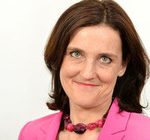
  • Theresa Villiers – 2020 Speech on the Coronavirus Bill

    Theresa Villiers – 2020 Speech on the Coronavirus Bill

    Below is the text of the speech made by Theresa Villiers, the Conservative MP for Chipping Barnet, in the House of Commons on 23 March 2020.

    There can be no doubt that this is an extraordinary Bill for extraordinary times. As others have said this afternoon, when we put our names forward to stand for election to this House none of us must have contemplated the day when we would be asked to back legislation of this kind, but back it we must, and we must do so today.

    It is hard to find the words to comment intelligently on a situation that has been so exhaustively analysed and debated by the media and in every household and workplace the length and breadth of this country and of much of the rest of the world. Let me provide some reassurance: my slightly hoarse tone relates to a condition that I have had in my vocal cords since August, so it is nothing to do with covid-19. If it were, I would be back at home self-isolating.

    Let me express my sympathy and support to everyone across the country who is grappling with this disease, who has had their lives turned upside down by this disease, or who have lost loved ones. I have not experienced anything like this in my 15 years in this place, nor, indeed, in my whole lifetime. It is difficult to point to any crisis as severe as this since the flu epidemic of 100 years ago. Of course there have been many political upheavals, especially in the past four years, but there has been nothing that has had such a direct and dramatic impact on the daily lives of every single occupant of these islands, and there is nothing that has come close to matching the potentially devastating impact on our economy. It is welcome that the Government have announced a wholly unprecedented package of support for jobs, wages, businesses and benefits. The plan to stave off economic disaster is a bigger injection of support into our economy than anything that any Government have carried out in our peacetime history. The consequences will be far reaching. We and future generations will be paying off these debts for many years to come, but as a great Prime Minister once said, “There is no alternative.” I urge the Chancellor and the Government to ensure that the grants, the loans and the other measures get out to the people who need them as soon as possible—not in three months, not in three weeks, but now. We do need to find more to help the self-employed and the freelance workers.

    Of course, it is vital that we do all we can to protect the NHS and social care workers. It is at times such as this that we really appreciate how incredibly lucky we are that the NHS is there for us, and how incredibly ​lucky we are to live in a country that has one of the best healthcare systems in the world, staffed by professionals of outstanding skill and expertise. I want to express my gratitude to every single one of them. If we are to get through this crisis without a massive loss of life, we need to ensure that our NHS staff and our social care staff have the best, most comprehensive personal protection equipment. That means masks that fit properly and equipment that is compliant with World Health Organisation standards.

    We also need to be testing thousands and thousands of our NHS staff so that we can keep them healthy and keep them on the frontline. The commitment to stepping up testing to 25,000 a day is welcome, and I urge Ministers to ensure that NHS staff are first in the queue.

    I have been contacted by care homes who are crying out for a complete ban on care home visits to help them ensure that they can say no to visitors. For the safety of our elderly relatives and the people who look after them, care home visits must stop.

    In conclusion, the next few months will test us in a way that none of us, except for the world war two generation, have ever been tested before. It will be difficult. It will be disruptive. It will be exasperating. It will be, at times, alarming and distressing, but we must as a nation rise to the challenge, and this legislation is part of that. We need a collective effort to keep our loved ones safe from this terrible disease. We must rise to the challenge as previous generations did when they too faced periods of great adversity and hardship. My advice to everyone, and to my constituents in Chipping Barnet, is to stay home, stay safe to protect the NHS and save lives.

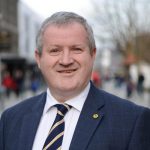
  • Ian Blackford – 2020 Speech on the Coronavirus Bill

    Ian Blackford – 2020 Speech on the Coronavirus Bill

    Below is the text of the speech made by Ian Blackford, the SNP MP for Ross, Skye and Lochaber, in the House of Commons on 23 March 2020.

    It is a pleasure to follow the right hon. Member for South West Surrey (Jeremy Hunt). I do not think he will mind my saying that I cannot think of another time when I have agreed with almost every single word he said. I hope that people listen to his wise words, which come from his experience; there was an awful lot in his speech that was sobering. The way we are conducting this debate and the collegiate style of the contributions from the Secretary of State and the shadow Secretary of State are a testament to the importance of the crisis we are all experiencing. In this national emergency, the desire shared by all our constituents is that we all work together.

    I will begin by saying something that is often repeated, but cannot be said enough. On behalf of all who sit on the Scottish National party Benches, I thank all of those who work in our NHS—our doctors, our nurses and all those in support roles around them who day after day make the choice to go into work, literally risking their own health to save the lives of others. At a time when the fragility of human life occupies the thoughts of us all, their example, their care and their limitless compassion are a source of inspiration and comfort to us all. They are nothing short of heroic. In return, they deserve all our thanks, but even more important, they need all our support. Today we would all do well to keep it in mind that the primary purpose of the emergency legislation is to help them—to help those who work in our NHS across all these islands. They need our help to slow the spread of this virus. They need our help to flatten the curve of infection. They need our help to reduce the pressure on their services.

    In passing these emergency measures, we have to be fully transparent and open. That means being honest about the uncertainty of the timeline ahead. There are few things we can say for certain, but we know we are only in the foothills of this mountainous challenge. There remains a long way to go. We have to be honest that in fighting this virus, we may only be approaching the end of the beginning. No one knows for sure when this will end, but we do know that NHS and governmental action will not be enough on its own. Everyone has a part to play. We can get through this and overcome it only if we all work together.

    On the specifics of the Bill, first, I am pleased to confirm that the Scottish Government have worked constructively with the UK Government on this legislation. It is important to say that, given the context of the last ​few years. It is no secret that there has been a virtual stand-off in other legislation, but the joint efforts and the extensive co-operation on this Bill highlight the extraordinary public health and economic challenges posed by the virus. Passing this legislation is fundamentally about protecting and saving lives. Politics cannot and will not be allowed to get in the way of that.

    The Scottish Government tabled their legislative consent motion, with advice to approve consent, in Holyrood last Thursday. The LCM will now be considered by the Finance and Constitution Committee at Holyrood on Tuesday morning, and will be debated in the chamber on Tuesday afternoon. The urgency of that timeline is, unfortunately, necessary. It is clear, and we accept, that this Bill cannot be scrutinised in the way we would normally wish. The immediacy of the pandemic, and the unprecedented challenges facing Scotland and the rest of the UK, simply does not permit that. The stark reality is that there is simply no time to lose.

    Sir Jeffrey M. Donaldson (Lagan Valley) (DUP)

    There is common cause even between Unionists and nationalists on this issue. The Northern Ireland Assembly will tomorrow give consideration to the legislative consent motion. Does the right hon. Gentleman agree that before this legislation is enacted and enforced, the Government must move swiftly to give the self-employed people whom he and I represent the reassurance they need that they will be supported?

    Ian Blackford

    I am happy to say that I completely agree. My right hon. Friend and I were in meetings with the Prime Minister last Friday morning, and there was a consensus about the economic measures that had to be taken for those who were in employment—one of the reasons being that we were fearful of the potential risks of unemployment if we did not take those measures. I commend the Government for the actions that were taken and the announcements made last Friday afternoon, but there is unfinished business for the self-employed and the unemployed. Collectively, we need to work together to do what we need to do in order to secure the incomes of those we are asking to take action to protect themselves and the rest of us over the course of the coming months. I hope that the Chancellor will be in a position to meet Opposition leaders over the course of the next few hours, and to come to the House tomorrow to tell us all what we are going to do to ensure that we protect the interests of absolutely all our citizens.

    David Linden (Glasgow East) (SNP)

    A number of Glasgow taxi drivers live in my constituency and they are self-employed. Over the weekend and last week, many have taken their cars off the road. May I say to the Government, through my right hon. Friend, that time is really running out? We need the Chancellor to come to the Chamber tomorrow to make it crystal clear that support will be given to taxi drivers and lots of other self-employed people, including those in the wedding industry. The measures that have been brought forward so far are very good, but time is literally running out for self-employed people.

    Ian Blackford

    I agree. I hope that the Minister might make some reference to this issue when she sums up later. We are respectfully saying to the Government: let us work together to ensure that we can offer the financial ​security that all our citizens need, whether we are talking about taxi drivers in Glasgow, or the people who provide bed-and-breakfast accommodation and guest houses in my constituency, whom I am asking to shut their doors. It is important that we provide the financial security that they all need.

    It is impossible to overstate the scale and seriousness of this health and economic emergency. None of us has witnessed or experienced anything like this before. It is no exaggeration to say that the covid-19 threat is the biggest challenge that we have faced since the second world war. That is the frame of mind that all of us should be in. It is for that reason—the extremity of this time—that we welcome the measures in the Bill. They are the measures that we need to fight this virus. The breadth of measures contained in this legislation reflect the enormity of the challenge across these islands. They also include bespoke provisions for Scotland to reflect our different legal system. For the public looking on today, it is crucial that we explain fully the powers that are being discussed and sought, and the reasons for them. They include additional public health measures to assist with the containment or mitigation of the spread of disease.

    Neale Hanvey (Kirkcaldy and Cowdenbeath) (Ind)

    Will the right hon. Gentleman give way?

    Ian Blackford

    Give me some time and I will. The part of the world I live in, the highlands, needs the powers in this Bill if we are to protect our population, and I know that the same goes for the constituencies of many other right hon. and hon. Members, not least the hon. Member for St Austell and Newquay (Steve Double), whom I know has been outspoken on this in the past few days.

    Let me put on the record the challenge we are facing. The Highland Council landmass is 25,656 sq km, and of course that area does not include Argyll, the Northern Isles or the Western Isles. That Highland Council area makes up 32% of the landmass of Scotland and 10.5% of the UK landmass, yet we have one acute hospital, in Inverness. For many, that hospital will be more than three hours’ drive from home. Just think about that. If a hospital in an urban area has an issue with capacity, people can often be transferred to another hospital, but we do not have that opportunity in the highlands, as we have that one hospital. I am asking everyone who is thinking about coming to the highlands to think about that threat to our NHS.

    I have been working with the NHS and talking to the police, and on the back of what we have been witnessed over the weekend I would like, with the forbearance of the House, to read out a press release from the chief executive of NHS Highland yesterday. It stated:

    “As a community we in the Highlands, Argyll and Bute are friendly, welcoming and hospitable to the thousands of visitors we get all year every year. However, we are currently in a situation that has never been experienced before and for the first time we are making a plea for you to stay away.

    We have heard that there are many people using campervans/motorhomes to make their way to the Highlands and Argyll and Bute as a way to self-isolate during this period. Please don’t.​

    National advice is quite clear that we, as a nation, need to stay at home, self-isolate and stop all non-essential travel. This includes using our area as a safe haven.

    We have asked our communities in NHS Highland to do everything they can to stay safe. This includes self-isolating, working from home (where possible), and limiting their contact with the outside world.”

    That is a very clear and a very stark message.

    Neale Hanvey

    This situation is fluid and ever-changing, and I am sure everyone is receiving multiple emails about the changes in their constituencies. My right hon. Friend makes a point about the need to self-isolate. That is an essential part of any infection-control programme, and this is a public health emergency. Constituents have contacted me today to say that their employer, Amazon, is refusing to pay members of staff who have self-isolated unless they can prove that they have had a positive covid-19 test. That is forcing people to make the choice to go into work and not self-isolate. Does he agree that that is reckless behaviour on the part of Amazon?

    Ian Blackford

    That is the height of irresponsibility, and Amazon and anybody else who would behave in that way needs to think again. Of course there are companies that are engaging in best practice. I have had a number of complaints from people in the highlands about those who have not been doing the right thing, but let me thank Highland Experience Tours, which has suspended all its activities and sent its drivers home. The hon. Member for Ilford North (Wes Streeting) mentioned Sykes Cottages, and I have to disagree with what he said, because its behaviour has been absolutely reprehensible. Let me read to Members what Sykes Cottages sent to me on Saturday. It said, “Given concerns surrounding the current outbreak, it is understandable that people want to arrange private accommodation in more remote locations to distance themselves from larger towns and cities. The latest Government advice does not prohibit travel in the UK. We are continuing to provide a service for customers.” That is a service to customers to come from the urban areas; it is deliberately creating the circumstances whereby their customers should come to self-isolate in an area where we have limited public health capabilities. That simply is not good enough.

    I am delighted to say that, under pressure, the site has now relented and is stopping new bookings in the highlands and islands over the next few weeks, but it has sent a considerable number of people up to the highlands who are there today. The site should be delivering immediate advice to all those guests that they should return home to their place of origin.

    I give the same message to those with holiday homes and second homes in the highlands: “Do not come to the highlands. Do not put additional pressure on our public services. We will welcome tourists back to the highlands once this emergency is over, but do not threaten the health of our constituents.” In my district, like in many rural areas, 35% of the population is aged over 65. We have to think about the needs of those living in such areas.

    In addition to the sites I have mentioned, Cottages.com is refusing to allow cottage owners to cancel bookings without a penalty, which is simply not good enough. As this is now in the public domain, I hope all these providers will now think about their responsibilities.​

    As I have mentioned, some providers are behaving more responsibly. HomeAway has guidance on its booking site for giving refunds to those who cancel, but I will read one last email from somebody living in the Lake district:

    “My family and I were due to take up a holiday home rental from the 28th March. We will stay away and remain in the Lake District where we live.

    However you might be interested to learn that the owner of this holiday home, let through HomeAway, is refusing (at present) to cancel my booking, refund my payment of £957 or move my reservation to next year. He maintains that Skye is an ideal place to self-isolate…and as the home is available he is refusing to refund the total of my booking fee.”

    [Interruption.] I can hear an hon. Member shout, “Shocking.” Skye, or anywhere else in the west highlands, is no place for anyone to self-isolate, and I hope this cottage owner, and others who are behaving in such a reprehensible manner, changes their ways.

    Of course, it is not just those who are providing accommodation. Everyone knows about the Harry Potter films and the attractions of the rail line from Fort William to Mallaig. The steam trains, which operate on a regular basis, are due to start on 6 April. What on earth is the Jacobite steam train company thinking? These train trips, along with every other visitor attraction in the west highlands, must close, and they must close today.

    This is my message to anyone thinking of coming to the highlands: “You will be made welcome when this is over but, for the time being, stay at home. If you are in the highlands now, please go home. The Scottish Government have already announced that ferry traffic will be prohibited for those on non-essential journeys, but you have the ability to return home today. Please do so.”

    This Bill includes badly needed powers to allow more health and social care workers to join the workforce. That includes removing barriers to allow recently retired NHS staff and social workers to return to work, as well as bringing back those on a career break and bringing in social work students to become temporary social workers. It has to be said that the number of doctors, nurses and carers already seeking to re-register to help in this emergency has been one of the most uplifting stories of this crisis. The Bill allows that process to become much easier. Its provisions also allow for the relaxation of regulatory requirements within existing legislation to ease the burden on staff who are on the frontline of our response.

    The next few weeks and months need simply to be about saving as many lives as possible. Try as we might to save these lives, unfortunately the truth is that this virus will inevitably end up with many of our people dying before their time. That terrible reality is why it is right that this legislation includes special arrangements and provisions to manage an increase in the number of deceased persons with respect and dignity.

    Finally, something my party has raised repeatedly since the early stage of this crisis is the economic interventions required to help our people though this emergency period. I note that the legislation includes provisions to support the economy, including on statutory sick pay, that are aimed at lessening the impact of covid-19 on small businesses. While we have welcomed many of the measures brought forward by the Chancellor, ​we have put it on record that more needs to be done. The self-employed and the unemployed, whom we talked about earlier, need to be considered. They are under pressure and they need to know that we have got their backs. They need the security of a guaranteed income. We now have an opportunity to overhaul and fix the universal credit system—ending the delays, uprating the level of support and scrapping the bedroom tax. If we are to fight this virus together, we must ensure that everyone is supported equally and that no one—no one—is left behind.

    The emergency and extensive powers in this legislation have rightly raised questions and concerns, many of which we have heard this afternoon. The imposition of measures that will significantly alter individual liberties deserves full and frank scrutiny, no matter the context. We know that the Bill sunsets after two years. However, there are serious concerns over the two-year period and the scrutiny of this measure. I know that aspects of the Bill and amendments to it will be discussed at later stages. I hope that the Government will look carefully at the safeguards of regular reporting, review and renewal if it is required.

    Mr David Davis

    The right hon. Gentleman is making a powerful speech. As he knows, I have an amendment in Committee to change two years to one year. I asked the Health Secretary whether we would be able to amend or delete an element of the legislation at the six-month review; otherwise, we will perhaps be faced with eight good bits of legislation and one or two bits that are doing badly, and we will be forced to vote the whole thing through, rendering it a rubber stamp. Does the right hon. Gentleman agree that either my amendment or a variant of the amendment tabled by the right hon. and learned Member for Camberwell and Peckham (Ms Harman), which would allow us to change the Act, would be a better way forward?

    Ian Blackford

    I agree with the right hon. Gentleman that that would be a very good way forward. It is important that we enact the Bill, but the House must have oversight of it in the period ahead. I commend him for his approach.

    The Scottish Government have pledged to have appropriate reporting on how and when they will use the powers in the Bill. They will embed such reporting and renewal in law. They have stressed that the creation of these additional powers does not mean we will automatically be required to use them. I hope the UK Government follow that lead and give assurances in the remaining stages this evening.

    The emergency powers and the extent of the legislation demonstrate what all of us are faced with. This is not a normal time. Unfortunately, the truth is that none of us will live normally for some time to come. As the First Minister has said, if individuals are continuing to live normally, they need to ask themselves if they are following all the scientific advice. The sheer speed of the spread of this deadly virus has shocked us all. It has naturally made us reflect on the way we live and the vulnerability to which we are all exposed. Equally, it has demonstrated our dependence on one another. We live in an ever smaller world and the major challenges we all face are the same; we can only face them together.​

    The provisions in this legislation are about saving as many lives as possible during the biggest health emergency this planet has faced in 100 years. If we do not take immediate and unprecedented actions, we will be responsible for putting people at risk. If we act fast, we know that we can save thousands of lives. It is as simple and as clear as that. Never has a more important responsibility been placed upon all of us. Saving these lives must be our sole focus.

  • Jeremy Hunt – 2020 Speech on the Coronavirus Bill

    Jeremy Hunt – 2020 Speech on the Coronavirus Bill

    Below is the text of the speech made by Jeremy Hunt, the Conservative MP for South West Surrey, in the House of Commons on 23 March 2020.

    The Health Secretary is not in his place—understandably—but I want to start with a tribute to him. I think I am the only other person in this House who has sat behind his desk, and I can testify that even without a pandemic it takes years off your life. The Health Secretary has made himself exhaustively available. He has worked tirelessly, and no one could have done more or better to prepare the NHS for the crisis we now face. I also want to thank the shadow Secretary of State for the way that he has risen to the challenge of his role. All of us as parliamentarians are proud of the exchanges that we have had this afternoon and on many occasions.

    Ordinarily, our role as MPs is to scrutinise every detail of legislation, to understand it and to try to improve it. There are many questions about this legislation, but we are in a national emergency and every day we delay could cost lives. So I support the Bill 100% and I encourage all colleagues to do the same. A week ago, the Government said we were four weeks behind Italy. That then changed to three weeks behind Italy, and today our mortality rates are just two weeks behind Italy. Our hospitals, especially in London, are filling up. We have had a critical incident at one, and others say they are running out of ICU beds. According to the papers, we have one nurse fighting for her life in an intensive care unit. One London hospital has seven doctors with the virus in just that one hospital. Yet still people are going to shops, parks, beaches and holiday homes as if nothing has changed. It may be too late to avoid following Italy, but to have any chance at all of doing so we must move now to lockdown rules that ban non-essential travel. It is time not just to ask people to do social distancing, but to enforce those social distancing rules—not next week, not this week, but right away. I support the call by the shadow Secretary of State to do that, and it is very important we do so as soon as we possibly can.​

    The Bill can help in two areas. The first is on protective equipment for staff. Last week, Sir Simon Stevens told the Health and Social Care Committee that there were sufficient national supplies of PPE, but there were distribution problems. Since then, I know that the Government have moved heaven and earth to try to resolve those. All hospitals have had deliveries, and I pay tribute to the Health Secretary and everyone in the Department for achieving that, but there is still a lot of concern on the frontline. The main reason for that is because on 6 March Public Health England downgraded the recommendations as to what PPE doctors should use. That appeared to be at odds with World Health Organisation recommendations. I understand that has now been clarified by Professor Keith Willett in a message sent out on Friday that does bring our advice more into line with WHO guidelines.

    Most importantly, the advice now makes it clear that doctors should wear goggles if there is any risk of being sprayed, but obviously doctors would feel vastly more secure with more extensive protection, such as full-length gowns and FFP3 masks. Is not the solution just to order manufacturers to make more of that vital equipment—not just a little more, but massively more? If that needs legal powers, the Bill should give the Government those powers to require every factory that is able to devote itself to the production of that life-saving equipment to do so.

    Numerous doctors have died across the world, including Dr Li Wenliang, the courageous Chinese doctor who first tried to blow the whistle on this virus. Twenty-three doctors have died in Italy. This weekend, France lost its first doctor. None of us wants that here. Given the total determination of the Health Secretary to protect our frontline staff, would he urgently look into whether we need to manufacture more of the highest-grade equipment?

    Dr Murrison

    Does my right hon. Friend share my dismay at my being told just now that masks and PPE that were meant to be delivered to my authority, Wiltshire, tomorrow, will now be delivered on 9 April? I am not sure what the situation is in Surrey, but that seems extraordinary. Does he also agree that it has to be the right PPE—it cannot simply be a paper face mask from B&Q, as we heard earlier? It needs to be appropriate, and people need to know how it works. When they wear it, they are likely to have to work harder, because wearing PPE is not easy or straightforward.

    Jeremy Hunt

    My right hon. Friend knows, as a clinician— and I am concerned—that in our desire to get PPE out we have not understood the vital role that local authorities play in this. Residents in care homes are extremely vulnerable, and their carers need that equipment, so I very much support his concern about that.

    The second area where the Bill needs to do more is testing. A week ago today our strategy changed from mitigation to suppression. I strongly support that change in strategy. Suppression strategies are being followed very successfully in South Korea, Taiwan, Hong Kong, Singapore and China, which appear to have turned back the virus. Here, all our public focus has been on social distancing, but testing and contact tracing to break the chain of transmission are every bit as important, if not more important. Those countries that have turned back the virus rigorously track and test every case and ​every suspected case, then identify every single person with whom a covid-19 patient has been in contact to take them out of circulation. As a result, those countries have avoided the dramatic measures and some of the economic damage that we have seen in Europe.

    South Korea has avoided national lockdown, despite having a worse outbreak than us; Taiwan introduced temperature screening in malls and office buildings, but kept shops and restaurants open—it has had just two deaths. In Singapore, restaurants remain open and schools are reopening, although working from home is discouraged. Again, in Singapore, there have been just two deaths. Ten days ago in this country, we went in the opposite direction, and stopped testing in the community. How can we possibly suppress the virus if we do not know where it is? So far, we have had 281 deaths, tragically. According to the modellers, there is about one death per 1,000 cases, which means that we have just under 300,000 cases in this country. According to the same modellers, the number of cases is doubling every five days, which means that at the end of next week we will have about 1 million cases or more in this country. Unless we radically change direction, we will not know where those 1 million cases are.

    The Prime Minister talked about expanding testing from 5,000 to 10,000 to 25,000, which is welcome. He even talked about 250,000 tests a day, which would be more than anywhere in the world—I welcome that ambition, but ambition is not the same as a national plan, and we have not seen a national plan on testing.

    Munira Wilson

    The right hon. Gentleman may have seen reports today that some care providers are refusing to take patients being discharged from hospitals because those hospitals are unable to test them before discharge. Quite understandably, care homes are concerned about admitting patients who may be carrying the virus, given the other vulnerable people there. Does he agree that as testing is ramped up, not only health and care professionals but patients being discharged should be a priority?

    Jeremy Hunt

    I am very worried about that. A doctor in my constituency told me of exactly the same problem, and of course, the risk is that hospitals then fill up and do not have the space to treat people who urgently need hospital treatment.

    We have an ambition to increase testing to 25,000 tests a day, but at the moment we are still only testing between 5,000 and 8,000 people every day. On Saturday, we tested 5,500, which is no significant increase on a week ago. It is not just South Korea that is testing more than us per head of population—Germany, Australia and Austria are as well. Now is the time for a massive national mobilisation behind testing and contact tracing.

    If we have the antibody test, now is the time to become the first country in the world that says, “We are going to test every single citizen.” Now is the time to introduce weekly tests for NHS and social care staff, to reduce the risk of them passing on the virus to their patients. If the Francis Crick Institute in London is doing any research into anything other than covid-19 right now, it should stop—we need it to be designing tests. If the Sanger Institute in Cambridge is still decoding genomes, it should not be—we need it to process covid-19 tests.​

    And it is not just the science. Contact tracing is manpower-intensive, yet Public Health England has just 280 people devoted to this. We probably need 280 people in every city and county in the country. Every local government official doing planning applications, every civil servant working on non-corona issues and volunteers all should be mobilised in this vital national task.

    As we have heard, testing is vital for NHS staff who are desperate to get back to work. Here is one tweet from a midwife called Katie Watkins, who speaks for so many:

    “I know this is happening all over but had to call in sick for my clinical shift on labour ward today as my husband spiked a temperature last night. I feel fine and yet cannot go to work… Where are the tests for #NHS staff?? I could be helping but instead sat at home.”

    Testing is also vital for the economy. If we are going to have a year of stop-go as we try to protect the NHS if the virus comes back, testing and contact tracing allows an infinitely more targeted approach and way to control the spread of the virus than economic measures that are much more blunderbuss and do much more damage. This Bill could help that by giving the Government powers to require any pharmaceutical company in the country to manufacture tests and any laboratory in the country to process those tests. It could stop the scandal of £375 tests being available to wealthy people in Harley Street when, in a crisis, every spare test should be used by NHS staff to get them back to work.

    This Bill could help with something else being done very successfully in South Korea and Taiwan: the use of mobile phone data. In those countries, they look at the mobile phones of covid patients to identify other phones that they have been nearby when that patient was infectious. That has civil liberty implications, but in this national emergency, being able to do that would save lives, so those powers too should be in the Bill.

    Finally, please do not take my word for it on testing. Dr Tedros Adhanom, the director general of the World Health Organisation, and virtually every epidemiologist at the World Health Organisation makes the same point: it is not possible to “fight a fire blindfolded”; social distancing measures and hand washing will not alone extinguish the epidemic; and

    “our key message is: test, test, test.”

    I know that time is short, but I want to touch briefly on two other issues. Some good points have been made about social care this afternoon. The Bill replaces local authorities’ duty to meet care needs with a power to meet care needs, except when it is a breach of human rights. Bluntly, there may be less provision of social care as a result. We understand in this House why that may be necessary, but if it lasts as long as a year, that will mean more pressure, not less pressure, on hospitals. If there was any lesson from my time as Health Secretary, it is that we need to invest in social care as well as in health. We need to ensure that these new measures do not have the unintended consequence of putting yet more pressure on hospitals that are already on the point of falling over.

    My final point is on mental health. Under the measures in the Bill, someone can be sectioned not by two doctors, but by one, and that doctor does not have to know the patient. I understand why we have to take these measures, but obviously it causes huge concerns in the mental health community that someone could be locked up on ​the say-so of a doctor who does not even know them. I want a commitment from the Government that all cases will be reviewed on the basis of the current procedures as soon as this virus is behind us, and certainly within the first three months.

    I end my remarks with a tribute to frontline staff, not from me, a politician, but from an eight-year-old constituent of mine called Tamsin. She says:

    “I really want thank all the doctors and nurses who are working so hard to look after all the sick people…they are all risking their own lives to try and stop the coronavirus instead of being safe at home. I’m missing my Nana, Gamma and Grampy a lot because they have to be isolated at home but if they get sick they will need the doctors and nurses to help them get better. Doctors and nurses are amazing.”

    Tamsin is right. We must not let them down.

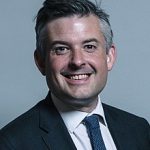
  • Jonathan Ashworth – 2020 Speech on the Coronavirus Bill

    Jonathan Ashworth – 2020 Speech on the Coronavirus Bill

    Below is the text of the speech made by Jonathan Ashworth, the Shadow Secretary of State for Health, in the House of Commons on 23 March 2020.

    May I start by thanking the Secretary of State for his kind words and for the way in which he has continued to keep me updated throughout this process, for the arrangements he has made for us to be briefed by officials and the chief medical officer, for keeping me informed of Government decisions, and for his ongoing engagement on the Bill? I hope that Members across the House understand that when we ask the Secretary of State probing questions, we do so constructively—not ​to undermine him or to create some false dividing line for the sake of political point scoring. This is a frightening time for our constituents and we all have an interest in ensuring that the Government get this right. We want the Government to succeed in defeating this virus.

    I will make a few remarks about where we are with responding to the virus before moving on to some specific comments about the Bill. As always, our thoughts are with those who have lost loved ones to the virus. Again, let me put on record our praise for the extraordinary efforts of our NHS staff and other dedicated public servants. This unprecedented global health crisis tests each and every one of them like never before; we are forever in their debt.

    Today this House is being asked to make decisions of a magnitude that I simply would never have dreamt of only a few weeks ago. I know that no Member came into this place to put powers like this on to the statute book—powers that curtail so many basic freedoms that our forebears fought so hard for, and that so many people today take for granted. But I also know that every Member here will want to do all they can to support all means necessary to save lives and protect our communities in the face of this virus.

    This is a global health emergency the like of which the world has never seen since the Spanish flu outbreak over 100 years ago. Throughout this outbreak, I have said that the virus spreads rapidly, exploits ambivalence and thrives on inequality. The Government have quite correctly sought to promote social distancing as a means of reducing person-to-person transmission of the virus. For the most part, these measures have been on a purely voluntary basis, but I am afraid that too many people are still not following the advice. This weekend we will all have seen the pictures of bustling markets, packed tube trains, and busy beaches and parks. I am afraid that the public health messages are still not being heard loud and clear. Everyone who can be at home should be at home. Everyone who can work from home must do so. This House must also send a clear message to young people—millennials—that they are not invulnerable to the virus; they are at risk too.

    To be frank, we in this House need to adjust our behaviour as well. I love and respect this Chamber, and I think Members will agree that I relish the cut and thrust of robust debate across these Dispatch Boxes. But if other workplaces can use Zoom calls, Skype, conference calling and so on to make decisions, why can’t we? I therefore look forward to the reforms that Mr Speaker is looking into.

    Kevin Brennan

    It would be remiss of me not to thank my hon. Friend and the Secretary of State for the way in which they are both responding to this crisis—even though they are on opposite sides of the House—in the interests of the whole country. The whole House appreciates the way that both of them have conducted themselves throughout this crisis. On the point that he raises, an acquaintance of mine, who is an NHS nurse, asked:

    “Why is the public creating more work for us medical staff and exposing us to the risk of dying?”

    I thank him for giving those messages so clearly, but does he think that there is more that can be done to communicate more effectively to the public what social distancing means in practice and how people should behave given the scenes that we have seen this weekend?

    ​Jonathan Ashworth

    I agree with my hon. Friend. I did note that the Secretary of State talked about the comprehensive public health advertising campaign. We welcome that campaign, but we encourage the Secretary of State to use his offices to see whether that comprehensive campaign can become even more comprehensive. Can we have more adverts on television and more adverts on radio stations? Can we have a leaflet going through every door, explaining what social distancing means, explaining what shielding means? Before this virus took hold, the words “social distancing” and “shielding” were probably not often used in the Chamber, so if they are not words that we are familiar with, we can bet that our constituents are not entirely familiar with them either.

    Mark Pritchard

    The shadow Secretary of State will know Telford and Wrekin very well as he has visited them many times in the past 12 months due to flooding and other issues. I am grateful for his visits despite the fact that he is a member of the Opposition. Is he aware that, today, the Labour-led council made a decision, which I support, to close all the public parks, play areas and open spaces that it runs, and that that in turn will put more pressure on the other open spaces that are not currently run by the local authority? May I encourage him to continue to press the Government to move quicker to this lockdown that we all want to avoid, but that will ultimately save lives.

    Jonathan Ashworth

    I must tell the hon. Gentleman that my attempts to change the political complexion of Telford and Wrekin have completely failed to date, but I am grateful to him for his comments about the Labour council. I think that this is the nub of the matter. I have a point to put to the Secretary of State while he is still in the Chamber. Sadly, it has just been reported on social media that the case fatality figures are continuing to climb and there is some discussion that we are seeing now an exponential growth in line with Italy. I appreciate that there are different demographic issues in different nations, but, clearly, people are concerned that our death rates are increasing at a rate that suggests that we could be heading to an Italian-style situation. We all know what is happening in Italy. The point is that clinicians are warning us that our intensive care bed capacity and our high-dependency unit capacity, could very quickly be overwhelmed. We have already seen a critical incident at one hospital, and no doubt we will see more in the coming days. This is a crisis and it is a crisis that demands an overwhelming Government response.

    Sir Edward Leigh

    It is vital that we have a sense of national unity on this. If it becomes necessary for the Government to impose a lockdown, which I suspect may well happen if people do not change their behaviour, can we rely on the Opposition to support the Government?

    Jonathan Ashworth

    The right hon. Gentleman has rather anticipated my point. Looking at the graphs—and I do caveat this with a recognition that different countries have a different demographic profile—we are now beyond the numbers of fatalities that existed in Spain and France when they announced their stricter enforcement measures and their lockdowns. I do not really like the term lockdown, because it means different things in different contexts, but I think that we broadly understand what we are talking about this afternoon. In answer to the right hon. Gentleman’s point, we, as Her Majesty’s ​Loyal Opposition, do now call on the Government to enforce social distancing and greater social protection as a matter of urgency. I am sorry and disappointed about that, but I am afraid that many people are not adhering to the type of social distancing that we expect.

    Imran Hussain

    My hon. Friend the shadow Secretary of State is absolutely right in what he says, but there are those who are finding it difficult to socially isolate because of the financial circumstances that they find themselves in. There are self-employed taxi drivers, those in the gig economy and others who are sometimes only just getting by in the first place. There needs to be clear financial packages available to put those people on an equal footing so that they can also take up that measure.

    Jonathan Ashworth

    My hon. Friend is absolutely right, and his point has been made repeatedly by my right hon. Friends the Leader of the Opposition and the shadow Chancellor. The challenge of social isolation will not be boredom and fatigue, as some behavioural scientists have suggested; I think the biggest challenge of social isolation will be personal finances, and so on. That is why our proposed measures on sick pay are so important, and it is why we welcomed some of the measures announced by the Chancellor last week, but we think they need to go further.

    Caroline Lucas

    I am grateful to the hon. Gentleman for giving way and for taking the issue of communication more seriously than the Secretary of State. We need leaflets going house to house, and we need them in different languages so that different communities can hear this.

    The hon. Gentleman’s point about a strict lockdown is well made, but I echo what others have said about the importance of guaranteeing economic security to make it much more possible for people to cope with that lockdown, particularly the self-employed who are now struggling so much. Statutory sick pay is not enough for them.

    Jonathan Ashworth

    The hon. Lady is absolutely right. I am proud to represent the great city of Leicester, which is probably the most diverse city in the United Kingdom—every language in the world is spoken there—so I entirely endorse what she says. If we funded local government properly, it would be able to put such measures in place.

    I entirely agree with the hon. Lady’s broader point that if we have to ask people to stay at home, or if we have to force them to do so—we would support the Government if they took that action, and I think they do need to take that action—we would also need to provide them with the economic security they rightly deserve.

    Stephen Doughty

    I thank my hon. Friend for his approach to this issue on a day-to-day basis. I completely support what he says about the need to enforce social distancing, and I know many Members on both sides of the House would do so, too.

    I am struck by the contact I have had with friends in Italy and elsewhere who are, frankly, aghast that we have not moved to tougher measures sooner. Anybody looking ​at the graphs of the situation in Italy would definitely want to avoid it here, so I wholeheartedly support such measures, but they have to come with the economic measures he rightly talks about.

    Jonathan Ashworth

    I totally agree.

    John Spellar (Warley) (Lab)

    There is a lot of talk about income, but it is also about expenditure. I have had many complaints from constituents about prices rocketing, particularly for staples, but it is unclear whether that is the fault of the retailers, the cash-and-carry wholesalers or, indeed, the suppliers. The Competition and Markets Authority is looking into it, but I urge the Government to crack down urgently on profiteering from people’s difficulty.

    Jonathan Ashworth

    My right hon. Friend makes an excellent point, and we are seeing it in my constituency. I have had complaints from constituents about exploitative profiteering, so I hope the Government will come forward with some proposals to stamp it out. It is an absolute disgrace that it is happening at this time of national crisis.

    Siobhain McDonagh (Mitcham and Morden) (Lab)

    May I raise, once again, the issue of housing? Social isolation is great, but it is really difficult for people who happen to live with their family in one room in a deeply overcrowded shared house—sharing a kitchen and sharing bathrooms—as so many of my constituents do, particularly when the kids are off school. There needs to be some thought about letting them out in parks and stuff like that, because they do not have gardens.

    Jonathan Ashworth

    My hon. Friend makes an excellent point. I represent an inner-city seat, and I appreciate that her seat is on the outskirts of London but, none the less, our seats have similar demographics. I know full well that many, many families are living in cramped, small flats. There are intergenerational families living with elderly mums, elderly grandmothers and so on who have various comorbidities and who need to be shielded.

    If we enter a situation in which we force people to stay at home, I hope the Government will look at how to support such families, because it is quite outrageous that, in many parts of the country—especially in London, but also in my constituency—there are flats with families of nine or 10 people sleeping on the floor, and so on, while property developers have flats standing empty. Why cannot we take over some of those empty flats to house some of these very vulnerable families and to help us get through this national crisis?

    Mr David Davis

    I commend the hon. Gentleman for the stance he is taking in this debate. The whole House will respect him for it. The series of interventions that he has just taken demonstrates a wider point: the need for the Government, sadly—and I did not think I would ever say this in this House—to get into intrusive levels of planning that we have never seen before, because every time we have a change in the level of ferocity or intensity of our dictating what the state and society should do, we run into a new set of problems, whether that is crowding on tube trains overwhelming our desire for social distancing, or young mothers with children at home finding it very difficult to get to supermarkets and therefore literally running out of food, which is even ​more fundamental than running out of money. We need to think forward, and I say that because we have seen in Europe—between Germany, Italy and Spain—very similar policy actions but with completely different outcomes. I suspect that it is because of a different approach taken by the German Government and society from that taken by the Italians or the Spanish, and we have to think about that as we go into the next stage.

    Jonathan Ashworth

    The right hon. Gentleman is absolutely right. We are asking people, and are probably on the cusp of probably of forcing people, to radically adjust their behaviour in a way in which we have not been used to for more than 70 years. The last time that we asked people to radically adjust their behaviour was in the second world war. We have generations who are not used to this. We are a society who are used to going where we want, buying what we want, doing what we want and socialising when we want, and clearly, for a lot of people, it is not dawning on them that they will have to change the way they behave. That has huge knock-on effects for how public services will be organised, how the criminal justice system will have to work and how food distribution systems are going to work. It is right that we as parliamentarians continue to ask Government Ministers serious questions about that, but we also have to be aware that we have a responsibility to set an example to the country. We have to socially distance ourselves, so I really hope that the good offices of the Speaker, the Leader of the House and everyone who is involved in House business can quickly find a satisfactory set of procedures for us to continue having our discussions and asking Ministers questions, but not setting the example that we are unfortunately setting today. I am not making any personal criticism of any Member, because it is the situation we are in—we have to debate the Bill today—but we are going to have to hold the Government to account on the far-reaching, extensive powers that they are taking.

    Dr Murrison

    As always, I am listening with great attention to what the hon. Gentleman has to say. Does he agree that part of the problem is that policy has to be based on behavioural science, but behavioural science is one of the most imprecise of sciences? The difficulty is that it is not like chemistry or physics. It means that we have to have a wider margin of error when designing policy, and what that means, in effect, is erring on the side of caution and safety, which I think is the burden of the direction that he is urging on Ministers. In a sense, it is about getting ahead of the curve by bringing in measures that we would all regret. However, if we are going to base policy on behavioural science—it being fairly inexact and difficult to predict, as we have seen over the weekend—we have to have that margin of error and caution, which I think he is recommending.

    Jonathan Ashworth

    The right hon. Gentleman has shrewdly interpreted the stance I am taking. Throughout all this, given the way in which the virus has spread so rapidly, its reproduction rate and the mortality rate, I have always urged the Government to take a precautionary principle approach to every decision that they make. I have been a bit sceptical about some of the behavioural modelling that has been used. Let me give him a quick example. Before the Government banned mass gatherings, we were told by Ministers and officials—I hope that no Minister takes this is a personal criticism; I certainly do not mean it in that way—that there is no point in ​banning a football match with 70,000 people in the stadium, because the person with the virus is not going to infect the other 70,000 people in the stadium and that if we stop them going to the stadium to watch the match, they would all go to the pub to watch it and infect more people there. I am sure he has heard that example.

    I am very proud to represent Leicester City football club, and all the football fans—or a large proportion of them—go to the stadium before the match, and go to the stadium after the match—[Hon. Members: “Pub!”] I beg your pardon, they go to the pub. They go to the pub before the match, and they go after the match—[Interruption.] Some of them do avoid the stadium, actually. I am sure that the right hon. Member for South West Wiltshire (Dr Murrison) sees the point I am making. Some of these behavioural models do not always, it would seem, reflect how humans behave. Given that, Ministers and Governments should follow a precautionary principle at all times. That is why Labour is now urging Ministers to come forward with their plans to enforce compulsory social distancing. There are different models in different countries—we have France, Spain and Italy, New Zealand, where they did it overnight, Greece, and Germany, where, other than families, they have banned more than two people from meeting outside the house—but we think that the time has come for the United Kingdom to go down this line. We would encourage the Prime Minister to come forward with plans for how he thinks that this should apply to the UK.

    Neale Hanvey (Kirkcaldy and Cowdenbeath) (Ind)

    Behaviour is changing, and, unfortunately, some of it is unhelpful. Today, I have had probably one of the most upsetting emails that I have received throughout this time from my local foodbank, which tells me that two of the main supermarkets in the area are refusing to sell it food. The people who get that food from the foodbank have no other means of obtaining food in the midst of this crisis. Does the hon. Gentleman agree that the Government need to speak urgently to the major supermarkets to ensure that foodbanks can secure sufficient supplies for those people who have no other option?

    Jonathan Ashworth

    The hon. Gentleman makes a good point, and I totally agree that that is an absolute disgrace. I hope that the Government will look into that, because although foodbanks should not be necessary in this day and age, we know that they are vital and I hope that the Government can resolve that swiftly.

    I was originally answering the point made by the right hon. Member for South West Wiltshire so long ago: we would support the Government if they came forward with such proposals, but suppressing and defeating the virus is about more than just so-called lockdowns and enforcement. We need more testing, we need more contact tracing and we need more isolation to break the chains of transmission. The World Health Organisation has famously instructed the world to test, test, test—and we agree. Labour has called for testing for the virus to be carried out in our communities on a mass scale, starting with NHS and care staff as a priority. We urge the Government rapidly to scale up testing and we thank all NHS lab staff and PHE staff who are working so hard.

    For example, could the Government consider what is happening in the Republic of Ireland, where there are 35 community testing facilities in operation? They have ​six more planned, and the largest, in Croke Park stadium in Dublin, provides a drive-through service that tests 1,000 people a day.

    Chris Bryant

    I completely agree with my hon. Friend on the need, in particular, to protect all key workers and to therefore make sure that there is testing available for them. Is it not important that at the same time we make sure that path labs have enough resources and capacity to be able to be able, for instance, to do cancer biopsies and get them back to people fast enough, because all those other conditions and diseases that are very time-critical will be just as important?

    Jonathan Ashworth

    My hon. Friend is absolutely right. Path lab and virology labs are under intense pressure, because not only are they being asked to test for covid-19 but they have other testing responsibilities as well, whether that is for HIV, influenza, measles or all the other illnesses that are still circulating and still need to be treated. He makes a very important point.

    I hope that Ministers can update us on testing capacity, because looking at the figures it appears that between 21 and 22 March, we did around 5,500 tests, but the previous day we did 8,400 and the day before that about 8,100. I am told that many labs at hospitals have not been able to start testing or are testing at under planned capacity because there are now supply chain issues with the chemicals that are used and the kits to do the testing. If this is the case, could the Government update the House on what they are doing urgently to procure the testing kits we need, and explain why we are not part of the EU joint procurement initiative on testing kits and other equipment?

    I emphasise the point I have made in this House before that we really need to be testing our NHS staff. Not testing NHS staff puts them at risk and it puts their patients at risk. This weekend, we heard powerful messages from doctors who were literally shouting out for help and telling us they feel like lambs to the slaughter because of failures in the distribution of protective kit and because they are not able to get access to testing. I have heard of GPs—indeed, GPs have got in touch with me directly telling me this going to DIY stores to make their own PPE kit. It has been reported today that one of the healthcare distribution chains has put out a call to DIY stores asking them to donate or hand over their visors and goggles.

    Pharmacists are worried that they cannot get through to CCGs to get appropriate PPE when sick patients are walking through the door daily asking for advice. We have heard stories of community nurses, health visitors and paramedics without PPE. Indeed, The Daily Telegraph reports today about staff at Norwick Park Hospital being forced to wear bin bags because of a lack of PPE.

    The health, happiness and lives of our constituents, and of their loved ones and neighbours, depend on our NHS staff now more than ever. We should not expect our NHS staff to go into battle exposed and not fully protected—lacking the armour they desperately need. If more PPE has been delivered in the last 24 hours, as the Secretary of State indicated, then we welcome that, but to be frank, it should not have taken so long. Our NHS staff deserve every ounce of support we can offer, and on that front, will Ministers also consider binning hospital car parking charges for NHS staff at this time of crisis?​

    Those working in critical services more widely—our police, our careworkers, our postal workers—need appropriate protective clothing too. We urge the Government to ensure that all public services can access the appropriate PPE speedily. For example, in The Sunday Times yesterday, it was reported that flights continue to arrive at Heathrow from Italy, Iran and China. Those flights are obviously coming from hotspots—perhaps Ministers could explain why that is still happening—but what protections are being afforded to airline and airport workers, and what measures are in place for those passengers on arrival? On the tube and on the train, there is real worry that services are being reduced too steeply, causing our key workers to get on to crowded carriages and putting everyone at risk. What assurances can Ministers give us that there is a sufficiency of public transport services to get our frontline workers safely to their workplace?

    Let me turn to some of the specifics in the Bill, and first to the health and social care clauses. On the health clauses—the hon. Member for Twickenham (Munira Wilson) raised this with the Secretary of State—the Bill makes provisions for retired staff and final-year medical and nursing students to rejoin or join the health service for the duration of the pandemic. We understand why, and we welcome this. Can Ministers tell the House, either in response to the debate or in Committee, whether final-year nursing and medical students will be able to return to learning and complete more supported clinical placements, if needed, once the crisis is over? Will Ministers also outline how these students will be fully supported while working during what will undoubtedly be an incredibly stressful time for new doctors and nurses? Will students be properly remunerated for their work, and what protections will be available for retired staff, many of whom could also be in a vulnerable group? I put on record our thanks to those retired staff who have returned to the frontline.

    Some of the most vulnerable people in the country absolutely depend on all of us here to defend their human rights and civil liberties, and they are the ones in receipt of adult social care services. On social care, this Bill makes sweeping changes to the duties that are placed on local authorities. It removes the duty to assess care needs, including on discharge from hospital, so there will be no duty to assess people who may need care or to assess their carers, and no duty to assess some of those with the most severe needs who may be eligible for continuing healthcare. Can Ministers reassure us that this will not mean that carers, disabled people and older people are left abandoned by the state until after this crisis?

    Most significantly, the Bill downgrades the level of support that councils are obliged to provide to older and disabled people. Rather than the current wellbeing measures, councils will now have to provide services where necessary to uphold people’s basic human rights. In short, this means people will only be entitled to receive social care to keep them alive and to uphold their rights to privacy and a family life. Obviously, that is not the vision for social care that we legislated for in 2014, but we all appreciate that these are incredibly difficult times.

    Many older and disabled people, and their families, will be concerned that this will lead to existing care packages being significantly reduced overnight. Local authorities are already struggling to meet statutory needs, and increasing levels of workforce absence will ​only make that harder. None of us wants to see the new legal minimum of support become the default. Where local authorities can provide more comprehensive packages of support, they should, and they should always bear in mind that people who use social care are not simply passive recipients; there are doctors and nurses who rely on social care, as well as teachers, shop staff, food manufacturers and countless other vital professionals. When councils reduce care packages, they must be careful not to end up causing yet more difficulties for staff in crucial services.

    Catherine West

    Does my hon. Friend agree that, since the courts are likely to be stood down, and in a context where disabled people often use them to ensure that their rights are protected, we are in a doubly difficult situation for disabled people and elderly people?

    Jonathan Ashworth

    Absolutely. That is why these particular clauses must be scrutinised so carefully by Members across the House.

    We have tabled amendments to schedule 11. We recognise that there will be difficulties delivering social care over the coming weeks and months, but it should not be possible for local authorities to immediately drop care packages to a lower level. As long as it is reasonably practicable to do so, they should continue to meet people’s care needs. The presumption should always be that services will be disrupted as little as they can be under the circumstances. Nothing in our amendments would stop a local authority cutting back care hours if it had to, but they would mean that disabled and older people could be reassured that any reductions in their care will be a last resort, and that their independence will not be the first sacrifice to be made.

    There are particular concerns about people who live alone or are being held in in-patient units and care homes. We have seen visits to those settings stopped as part of the Government’s shielding approach, and the CQC has halted all inspections, but we know from incidents such as Whorlton Hall that is too easy for abuse to go unnoticed—something the current situation could make worse. How will we ensure that in-patient units and care homes do not become hotbeds of abuse of human rights over the coming months?

    Mr David Davis

    That is precisely why I asked the Secretary of State whether, when we get to the six-month review and renewal of this legislation, we will be able to amend it. If there is oppressive behaviour in one part or another of it while the rest is all very important to the survival of our people, what stance will the Labour party take?

    Jonathan Ashworth

    The right hon. Gentleman is right: we cannot just have a take-it-or-leave-it approach to these things. Tonight, the House will give the Government extraordinary powers, like we have never seen before, and it is right that we parliamentarians are given an opportunity, after the appropriate timeframe, to look at how those powers have been used and hold Ministers to account. I agree with the spirit of the point he makes, although I cannot at this stage—I suppose it may emerge later in the debate—give him a commitment one way or the other on a particular amendment. We will see how the discussions proceed throughout the afternoon, but I certainly endorse the spirit of what he says. As I say, these are extraordinary powers that the House will grant the Government this week.​

    We have tabled a new clause related to schedule 11. We propose that a relevant body, such as the Equality and Human Rights Commission, should be tasked with overseeing the Bill’s impact on the provision of social care. That body would have to report every eight weeks on the operation of these changes and whether they should be amended. It would provide the oversight that is needed to prevent people’s rights from being undermined.

    One of the ways the Bill seeks to free up medical staff is by relaxing the requirements of the Mental Health Act 1983. Specifically, only one medical professional will have to agree to someone’s being sectioned, rather than the two it currently takes. The scale of that change should not be underestimated. No longer will a decision to section a person have to be taken in consultation by two doctors. There will be no requirement for anyone involved to have had prior involvement with the patient. Medical professionals are going to be under huge pressure in the coming months, and mistakes may well be made.

    The Bill says that a decision should be taken on the basis of one signature if requiring a second signature would be

    “impractical or would involve undesirable delay.”

    That seems to be too vague and potentially open to misreading. I hope Ministers can tell us what exactly that means and what safeguards will be put in place to prevent the change from being misused. Our amendments to schedule 7 would narrow the provision so that a second signature could be left off only if acquiring it would mean an undesirable delay. If something is impractical, it will by definition create an undesirable delay. By narrowing the wording in the Bill, we can avoid the potential misuse of powers.

    We propose changes to ensure that private mental health hospitals cannot detain someone solely on the single recommendation of one of their employees. That could create a conflict of interest whereby a doctor comes under pressure to sign a detention authorisation because doing so will provide their employer with income from the NHS. No medical professional should be put under that kind of pressure, and our amendment would ensure that they cannot be. [Interruption.] Is the hon. Member for Bracknell (James Sunderland) seeing to intervene?

    James Sunderland (Bracknell) (Con) indicated dissent.

    Jonathan Ashworth

    The Bill extends to five days from three the length of time for which somebody in hospital can be held waiting to be sectioned. That may seem like a minor change, but for the individual concerned it could make a significant difference. I hope Ministers can reassure the House that the intention should still be to adhere to the timetable set out in the Mental Health Act, with the changes we are discussing to be used only if absolutely necessary.

    Let me turn to some of the proposals on education and schooling. Many parents of children with special educational needs and disabilities will understand the need for flexibility during this difficult time, but they are also extremely nervous that they could see the erosion of the hard-fought-for rights of disabled children and young people, children and young people with special educational needs, and their families. The Bill gives the Secretary of State powers to change section 42 of the Children and Families Act 2014: rather than giving children rights in law, it would only request that public ​bodies take “reasonable endeavours”. That sets a low bar, and we will seek to change that provision to a duty to take all practical steps, which will go much further.

    Let me move on to some of the other issues in the Bill. Others have alluded to concerns that the Bill still does not go far enough in providing people with the incomes that they need to self-isolate. We welcome much of the Chancellor’s statement last Friday setting out plans to support the incomes of workers impacted by the coronavirus outbreak. However, there are still some gaps in the provisions that were offered. Currently, the proposal for income support through the job retention scheme does not include the self-employed and freelancers, whose incomes are increasingly being seriously affected by the coronavirus outbreak. Will the Government today offer assurances to those groups of workers, who do not have a safety net to safeguard and help them through this time?

    We have welcomed the new Government measures to improve access to statutory sick pay for workers. However, the Bill does not extend eligibility to all workers, including the just under 2 million workers who earn less than the qualifying threshold of £118 a week on average. It does not raise the level of statutory sick pay, which is, at £94.25, already the second lowest rate in Europe. We hope the Government will respond on those issues quickly because, as we have continually said throughout this crisis, people should not be expected to make a choice between their health and hardship.

    Nobody should lose their home because of this virus. It is welcome that Ministers have listened to Labour and committed to an evictions ban for renters, but despite the Prime Minister’s promises that the Government would legislate to that effect, no such measures are in the Bill. Some 8.5 million households rent their home from a private, council or housing association landlord in England. Our analysis of Government statistics shows that 6 million renting households have no savings at all and are particularly vulnerable if they lose their job or have their hours cut as a result of coronavirus. To give people confidence and reassurance during this difficult time and to ensure that no renter loses their home as a result of coronavirus, rent needs to be suspended for those adversely affected by the impact of the coronavirus outbreak.

    Like many Members across the House, the Opposition support this Bill with a very heavy heart—heavy not just with the shock and grief that this deadly virus has brought, but given the very real threats that emergency powers of this nature pose to human rights. The Bill contains the most draconian powers ever seen in peacetime Britain—powers to detain and test potentially infectious members of the public, including children, in isolation facilities; powers to shut down gatherings, which could impede the ability to protest against the overall handling of the crisis or against the abuse of the powers themselves. It needs no explanation and very little imagination to understand the huge potential for abuse that such powers and others in the Bill, however well intended and needed, still give rise. Those words will chill every liberal and libertarian instinct of Members across this House, which is why we were grateful to the Health Secretary and the Solicitor General for discussing these measures with us and with my shadow Cabinet colleagues in the rapid preparation stage of this Bill.​

    We have heard many wartime analogies in the press. Many here have talked about Winston Churchill. Of course, Churchill was remembered not only for victory in the war, but for the European convention on human rights at the end of the war. Notwithstanding the anti-Human Rights Act and anti-judicial review grumblings that we have heard in recent times, this Bill comes under the cover of a statement of compatibility under section 19 of the Human Rights Act. Further, the Bill does not attempt to oust the supervisory jurisdiction of the courts. That means that every exercise of Executive power or administrative action under the legislation must and will be measured against human rights and common-law standards. These include necessity, proportionality, rationality, fairness and, crucially, non-discrimination. I thank the Government for that concession on their part and for agreeing, I hope once and for all, that human rights and the rule of law, far from impeding national efforts in time of crisis, should instead guide and inspire them.

    It is important that various measures in the Bill, some interfering with liberties and others deregulating standards, may be turned on and off, as and when needed, by the appropriate Administration under our devolution settlement. It is welcome that the Bill contains a two-year sunset clause, but as we have discussed, two years is a very long time in normal days and longer still in the context of this pandemic. That is why we tabled an amendment last week seeking parliamentary votes on the renewal or revocation of these emergency powers at six-monthly intervals. Indeed, many of us would prefer even more frequent reviews, but given the particular challenge even for Parliament of this crisis, I am glad that the Government seem to have moved some way towards the compromise offered by the Opposition in the constitutional interest.

    Mr Steve Baker

    I welcome the spirit in which the hon. Gentleman is making his speech and also his proposal for a review at six months. I certainly support that, but does he agree that we could also sunset the powers in the Bill after one year and that the Government could then bring forward a Bill—there is plenty of time between now and then—that would go through Parliament about this time next year and make whatever changes proved to be necessary between now and then? Doing that—a six-month review and, after a year, a Bill—would not involve us signing off on two years today.

    Jonathan Ashworth

    As I understand it, our amendment calls for a review every six months, but the hon. Gentleman makes an interesting point, to which I am sure Ministers will respond in Committee, when we get to that point later.

    I hope the Government will be able to explain the differences between their amendment and ours, and to reassure the House that there will not be large exceptions to the six-monthly review, especially in England, which has only this House to hold Executive power to account.

    We have been scrutinising the Bill on behalf of our constituents. None of us came into politics to put a Bill like this on the statute book, and I for one will never rest until the day comes, hopefully not too far away, when I can come to this House and vote to get to get rid of it. But what we have seen in recent months is concerning, if not frightening, all our constituents, and it is right that ​we are taking the powers that we are taking today, although we have to continue to hold Government to account. We will overcome this virus, and when we do, serious lessons will have to be learned. The crisis has exposed the vulnerability of a society in which insecure work is rife, deregulation is king and public services are underfunded. When we come out on the other side, as we will, we have to build a society that puts people first.