Category: Speeches

  • Zarah Sultana – 2020 Speech on the Coronavirus Bill

    Below is the text of the speech made by Zarah Sultana, the Labour MP for Coventry South, in the House of Commons on 23 March 2020.

    This is an unprecedented crisis.

    How this House, the Government and the Prime Minister respond will determine the fate of millions. We are making life-and-death decisions—choices that either save millions of people from poverty or plunge them into it. They are choices about priorities and about what and who is important. They are political choices, and I am concerned about the choices the Government are making. For example, the rich can buy a covid-19 test at private health clinics, but frontline NHS staff are not getting them. That cannot be right. In response to this emergency, we must change our priorities. Public health must come before private profit.

    I welcome the fact that an amendment has been accepted that gives protections to Muslim and Jewish communities, who feared that the Bill would have resulted in forced cremations. I hope that the provisions on those protections are heeded. I have a number of ongoing concerns; given the time constraints, I shall limit myself to three.

    First, even after the passing of the Bill millions of workers—including low earners, the self-employed and workers in the gig economy—will not qualify for statutory sick pay. For the people who do qualify, at £94 a week it is the second lowest rate in Europe. The Secretary of State himself has admitted that he could not live on it, so he should not expect our constituents to. I urge the Government to raise the rate to the equivalent of a week’s pay at the real living wage and extend it to cover all workers.

    Secondly, the Bill will have an impact on disabled people by suspending the duty to meet the needs of disabled people and their carers. It will weaken the duties to meet children’s educational requirements and ​relax the safeguards for detaining people under the Mental Health Act. The virus presents us with huge challenges, but it cannot be an excuse for abandoning disabled people. Ten years of cuts have already drastically eroded disabled people’s rights; coronavirus must not be allowed to hit them hardest, too.

    My third and final point is on migrants’ rights. There are now confirmed cases of covid-19 in Yarl’s Wood detention centre. The virus will cause a health disaster unless the Government release detainees. It is not just migrant detainees who are at risk; in spite of the fact that NHS staff from around the world are on the frontline battling the pandemic, migrants are still being charged for NHS treatment. Adding covid-19 to the exempted conditions does not go far enough. As long as there are charges for some conditions and the NHS is sharing data with the Home Office, migrants will be deterred from seeking medical help when they need it the most. That is unfair and it is a public health risk, so I urge the Government to release detainees from detention centres, suspend NHS charging, end data sharing between the NHS and the Home Office, and make sure that NHS staff and migrants know about it all with an information campaign.

    I will finish by saying this. Crises show us who we are. They show us what we care about, and across the country people are answering. They are reaching out to elderly neighbours they do not know, offering support and reassurance. Strangers are organising food deliveries for vulnerable people they have never met. In cities across the country, networks of support and solidarity are springing up. That is one answer; it is an answer that says we value everyone and that no one should go through this alone or unsupported, but that is not the answer the Government are giving. Instead, they are abandoning the self-employed, neglecting the sick and disabled, letting businesses lay off staff, and leaving sick workers destitute. They are giving millions to profiteering private health companies, while NHS staff do not even get basic protective equipment and are resorting to using bin liners. That is not a response true to our values, so before it is too late, I urge Members: let us rise to the challenge and beat this virus together.


  • Tobias Ellwood – 2020 Speech on the Coronavirus Bill

    Tobias Ellwood – 2020 Speech on the Coronavirus Bill

    Below is the text of the speech made by Tobias Ellwood, the Conservative MP for Bournemouth East, in the House of Commons on 23 March 2020.

    I join others in commending the spirit, tenacity, determination and grit of those on the frontline, not just in the health service, but in the police and other services—the growing team out there who are trying to keep our country together during these difficult times. I commend the Government’s work to provide the necessary medical support through mobilising the NHS at the start, and the economic support for businesses and employees. I also commend their provision of support to 1.5 million of the most vulnerable people in the country.

    This emergency legislation is unparalleled in modern times. It grants enormous powers to the state and is expected to be approved in the shortest of time periods. I very much welcome the Health Secretary’s assurances that the measures in the Bill are temporary, proportionate to the threat, only to be used when strictly necessary and only to remain in place for as long as is required to respond to the crisis.

    As the Bill is being debated tonight, we should remember that the Cobra meeting is taking place. British nationals abroad are being called back to the UK. There is every expectation that there will be either a national lockdown or localised lockdowns. The armed forces have already been mobilised. The Ministry of Defence has had planners in various Departments for a number of weeks, but we should expect to see more of them providing fantastic assistance to a number of agencies across the nation. We must not forget that the armed forces are also preparing their own manpower—that which is needed to watch our backs—because while the national focus is absolutely on the coronavirus, our armed forces have a duty to ensure that we can sleep at night. They protect our skies, shores and seas as well. We must not forget that they have a day job to do, as well as their contribution to the nation. We should remember that this decade was on track to be one of the most dangerous since the cold war. Complex and diverse threats remain out there, ​and a wily competitor will take full advantage of the global turbulence, not least because threats are no longer so much territorial but come from a cyber and digital capacity.

    The Government have focused on their role—on the power of the Government to tackle the crisis—but, as has been repeated again and again in the House, we all can and must play our part in reducing the spread of this deadly virus. Life is not on hold, as some commentators have claimed; we must adjust to a new normal. We must face the reality and understand that life will now be different, not only as we tackle the virus, but afterwards as well.

    The Bill is unprecedented, but if the powers are used to their full, that is because too many Britons continue to ignore the guidelines and are part of the problem, not the solution. The Queen sent more than a message to the nation last week; it was an instruction. Let us change our routine, as the country has done in the past. Everyone must play their part, for the greater good, towards the common goal of saving lives. This is a national crisis—not a national holiday, which some people seem to be taking it as—and every person, authority, business, charity and laboratory must turn their efforts either towards helping to save lives and supporting our NHS, or towards helping us all to adapt to the new normal, because life will not go back to what it was for months or years to come. The world has changed; we must all play our part in the solution.

  • Liam Byrne – 2020 Speech on the Coronavirus Bill

    Liam Byrne – 2020 Speech on the Coronavirus Bill

    Below is the text of the speech made by Liam Byrne, the Labour MP for Birmingham Hodge Hill, in the House of Commons on 23 March 2020.

    I would like to begin where many hon. and right hon. Members have begun, by putting on record our profound thanks to the volunteers and public service workers who have done so much. The definition of the frontline is the point of maximum danger, and there are hundreds of thousands of people who have put themselves in danger to keep the rest of us safe.

    There is one group I would like to single out: the extraordinary group of people at Heartlands Hospital in my constituency who have been working tirelessly to help to keep our city of Birmingham safe. It was Ernest Hemingway who said that the definition of courage is grace under pressure. Well, our volunteers and public service workers are under pressure today like never before. Their skill, their care, their compassion, their grace, and their courage are something that will live in the memory for generations to come.

    There are two issues with the Bill that I want to touch on. Those issues are protections that are needed, but which are missing from the legislation—one on the income side and one on the cost side. On the income side, the challenge now for Her Majesty’s Government is to begin quilting together the patchwork of measures that have been so rapidly put in place. There are five groups whose household income will come under severe pressure very quickly: those who are in work; those who are self-employed; those who are newly sick; those who are newly unemployed; and, of course, those who are having to take parental leave because the schools are now closed.

    The Government have moved quickly to put in place wage subsidies, and that is good and welcome. I add my voice to those who tonight are calling for rapid measures to help the self-employed, but we also need to address three other areas in the income protection system. First, we need to ensure that the rate of statutory sick pay quickly moves up to about £160 a week. It is very difficult for people to live on the extent of the pay cut that they have taken just because they are ill. Secondly, paid parental leave now needs to kick in from day one, and that has to be enforceable as a statutory right. Thirdly, for those now labouring on universal credit, ​that payment has to go up to at least £100 a week. A couple in my constituency with two kids will now be £800 a month below the poverty line if they were having to live on universal credit. That is simply not acceptable, and we are going to have to improve that situation.

    The second protection that is missing relates to costs; I mentioned this earlier in comments I made to the Leader of the House. Some companies are behaving very badly. For example, individuals such as Philip Green laid off thousands of staff before the income protection system kicked in. He should be summoned to the Bar of this House to explain himself. Staff in Topshop are telling me that they are being prohibited from circulating the petition that I have launched to have him summoned here to explain himself. Of course, we also need rapid protection in price regulation. In times of emergency, prices go up. I have been inundated with complaints after Jhoots Pharmacy in my constituency raised the price of Calpol from a couple of quid a bottle to 20 quid a bottle. Markets need morals in times of emergency more than at any other time, and we now need rapid action to put in place the price regulation that I have proposed in new clause 28, which has been widely shared and supported by Members across this House.

  • Adam Afriyie – 2020 Speech on the Coronavirus Bill

    Adam Afriyie – 2020 Speech on the Coronavirus Bill

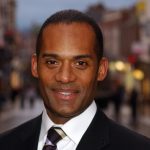
    Below is the text of the speech made by Adam Afriyie, the Conservative MP for Windsor, in the House of Commons on 23 March 2020.

    I would like to put one or two points on the record before the Bill goes through. The first thing that strikes me is that this is an ambitious and aggressive virus, which intends to infect every single one of us, both here in the UK and across the entire globe, unless we do something quite dramatic to stop it. It does not discriminate between rich and poor, old and young, black and white, gay and straight, and it does not discriminate on the grounds of nationality. It does not respect borders, and the pace at which it is covering the globe is something to behold. That is why I very much welcome the legislation, because the pace at which we are delivering these important measures that the Government need to be able to take under Executive action is equally as impressive.

    I have a couple of questions for Ministers. Clearly, I am going to support the measure, as it is necessary that these types of measures go through quickly so that we can respond as a nation. First—I asked this question last week, but did not receive a full answer—why was it felt necessary to introduce a brand-new piece of legislation, as we have the Civil Contingencies Act 2004 on the books? Looking at the Bill, it seems that the measures and powers in it would fit within that Act quite comfortably. I raise that because some of the questions that have been asked today—I am glad that we have seen some compromises—were about accountability and about the timeframe in which the measures will be in force. The Civil Contingencies Act says that if a measure is introduced by a Minister, within seven days Parliament can say something about it. If Parliament is in recess, it can be recalled to within five days deal with any urgent matters.

    I am only flagging that up—I suspect that there are good reasons why a separate piece of legislation outwith the scope of the Civil Contingencies Act was introduced. This is a dynamic and fluid situation, and things are changing, literally day by day. Some of the actions that the Government may rightly need to take may have consequences, some intended, some unintended. For example, last week, we heard about measures that, I suspect, will be incorporated in powers in the Bill relating to pubs, restaurants and clubs being told to close their doors. Without an immediate adjustment, perhaps 1 million to 3 million people would have had no money within a week or so. Thankfully, the Government were able to introduce measures that dealt with that for the majority of those people. I suspect that there will be situations in the weeks ahead where the numbers begin to escalate and we all begin to worry about our sanity, let alone our health. There will be moments when it may be necessary for the military or police services to be on the street, committed to take actions that will surprise us.

    Mr Steve Baker

    Does my hon. Friend agree that all these measures need to be unwound one day, and that Ministers must keep an eye on how they are going to do so?

    Adam Afriyie

    I certainly do, and my hon. Friend has made the point very well. That is the central thrust of what I am saying.​
    One of the key aspects of the virus, and a key reason why it is so aggressive, intrusive, ambitious and quick to move around is that it may well have the ability to mutate. If that were to happen, I should like confirmation from the Government that they have in the Bill the powers necessary to ramp up the actions that they have taken in the wording of the Bill.

    Overall, I very much welcome this piece of legislation, but I should like clarification about why the Civil Contingencies Act was not used, as it was carefully thought through and includes a lot of checks and balances. Secondly, I should also like reassurance that if some of the powers under the Act were deployed on the streets of our country, Parliament would in some way—I know that Ministers are responsive, and the Prime Minister has shown great leadership and is seeking to do the absolute best for the nation—be able to express, even in recess, concerns to which Government Ministers and the Executive could respond quickly, rather than at the end of a six or three-month period, or a two-year period.

  • Caroline Lucas – 2020 Speech on the Coronavirus Bill

    Caroline Lucas – 2020 Speech on the Coronavirus Bill

    Below is the text of the speech made by Caroline Lucas, the Green Party MP for Brighton Pavilion, in the House of Commons on 23 March 2020.

    I very much appreciate the spirit of co-operation and purpose in the Chamber today. We all want the same thing: for the coronavirus outbreak to be over, for people to be safe, and for our public services to be resilient and well resourced enough to cope. I believe that to achieve that, we need today’s legislation, but we also need to speak the truth, which is, sadly, that we have wasted weeks—time that could have been spent ramping up testing, acquiring more protective equipment and ordering more ventilators. This emergency legislation is welcome, but more than anything else, decisive Government action is overdue.

    The UK had the advantage of being able to learn from the experiences of China and other countries, yet to people watching from the outside, we have too often seemed like a nation in denial. We cannot change where we are now, but only by understanding the answers to ​those questions can we ensure that similar errors of forward planning do not cost lives. So let us put that right now with a clearer and stricter lockdown—I agree with the shadow Secretary of State, the hon. Member for Leicester South (Jonathan Ashworth), on that—and, crucially, with the economic security that will make that possible. I echo everything that others have said about the importance of underpinning the livelihoods of those who are self-employed, and crucially—I make no apology for repeating this—we need a much, much clearer, more comprehensive, wall-to-wall public education campaign to underpin all that.

    The message from our health workers could not be clearer: stay home to save lives. We owe them a massive debt of gratitude, but more than that, as MPs in particular, we owe it to them to listen and model the behaviour that we are asking of our constituents. The clearest way to do that is for Parliament to start meeting virtually and voting electronically, rather than putting staff at risk here and risking sending mixed messages to the rest of the country.

    I have three brief points to make about the Bill. The first, on sovereignty and democracy, has been made by many others and I am very grateful that the Government have accepted the amendments to ensure that the legislation will come back to the House after six months, rather than waiting two years. It is crucial that we have the opportunity to correct any mistakes that could easily have been made in the understandably speedy drafting of this very large piece of legislation.

    My second concern is about what is missing from the legislation: from closing detention centres and safely housing those released to allowing asylum seekers to work and have recourse to public funds; and from preventing utility companies cutting off anyone’s water, gas, phones, internet or electricity to putting real pressure on the insurance companies who are hiding behind the definition of notifiable diseases and refusing to pay out to businesses that are forced to close. Powers are needed to make them play fair. The Bill should give local authorities the power to grant council tax holidays and suspend all business tax payments, with central Government meeting the lost revenue. It needs to freeze household and business rental payments across all sectors, again, with compensation for landlords for the lost rent—not just for three months but for as long as is necessary—and to allow for flexible provision for those at risk from domestic abuse, sexual violence and child abuse. Above all. the Bill needs to include those measures to protect people’s incomes, not just their wages.

    So many people in Brighton have raised with me the fact that their concerns have not been covered by the Government’s guarantees so far. As a nation, we are rightly proud of our entrepreneurs, creators and innovators. We need to remember that many of them lack all the legal protections of redundancy and other rights that exist to help employees who are faced with a sudden lack of income. They need to be included in the Government’s scheme. Something like 80% of their average wage needs to be made available to them as well and it needs to happen very fast.

    My last point is simply that, as we go through this crisis, we need to do it in a way that prepares us for the next crisis, which is still there, my friends—the climate crisis. Therefore, the kinds of measures that we put in place—for example, when it comes to choosing which ​businesses we are bailing out—must also be driven by a concern for the climate and ensure that we are supporting the green economy, not the fossil fuel economy of the past.

  • Caroline Nokes – 2020 Speech on the Coronavirus Bill

    Below is the text of the speech made by Caroline Nokes, the Conservative MP for Romsey and Southampton North, in the House of Commons on 23 March 2020.

    There have been some fantastic speeches this evening so far, including from my hon. Friend the Member for High Peak (Robert Largan) who made a stunning maiden speech, but I wish to go back to the words of my right hon. Friend the Secretary of State when he said that the virus impacts most the weak and vulnerable. He is of course right.

    I support the measures in the Bill. They are extraordinary measures that can only be used in extraordinary times, but that is exactly what we are facing. Tonight I wish to speak for the weak and the vulnerable, as hon. Members might expect from the Chair of the Women and Equalities Committee. I have real concerns about how equalities might be impacted and about how those people with protected characteristics for whom we speak might be affected. I draw particular attention to the elderly, who we know are the most impacted by this disease, and their need for care that is appropriate in their own homes at the right time. I speak for the disabled, who of course have the biggest challenges and who desperately need assistance. I appreciate why we have the powers in the Bill, but they must be used proportionately and reasonably.

    I also speak for those from black and minority ethnic backgrounds, and, of course, the Paymaster General, my right hon. Friend the Member for Portsmouth North (Penny Mordaunt), has done some phenomenal work with faith communities, making sure that funerals can be held appropriately for religions. But I would like to point out that it is in the gig economy where we are most likely to find people from a BAME background working: they are also most likely to be young people. They are also most likely to be self-employed, on zero hours or sole traders, and we must be particularly cognisant of the impact the virus will have on those people who we will want—when this horror is over—to be able to bounce back to be the entrepreneurs who will enable our economy to recover from this difficult period.

    I will also, of course, mention women. We know that caring responsibilities fall most heavily on their shoulders. We also know that in areas such as childminding, childminders are not only doing the caring, but of course are providing the support that enables women to go out to work, whether it be in our essential professions at the moment or in all parts of the economy. We must provide support to the childminding sector as well as the early years sector, because when the virus is quashed and we are in a position to rebuild the economy, we will need childminders to enable that 50% of the workforce to go back to work. We have done great work over the past few years in making sure that there are more women in employment, but we have to make sure that it is possible for them when this is over to be able to—

    ​Steve Brine

    That is exactly the point: so many of the early years sector and childminders are self-employed. That is another reason to repeat the point that so many have made today about why we need something for that part of the economy.

    Caroline Nokes

    My hon. Friend is right, so I have managed to fit in the childminding sector and the self-employed in one hit.

    I want also to speak about volunteering and the clarity that is needed. There is a great company in my constituency that runs Kimbridge Barn. That is shut, of course, but the company wants to enable its staff to volunteer, whether in the health service or the care sector, or as delivery drivers—it has many vehicles—but it wants clarity as to whether the 80% of salaries that HMRC will underwrite will be applicable if people are effectively outworking in a voluntary capacity.

    I also draw attention to the comments made by my right hon. Friend the Member for South West Surrey (Jeremy Hunt) about whether local government officers should be considering planning applications at the current time. I would also ask whether they should be implementing or imposing parking fines. Those are all areas of regulation that are undertaken by local authorities that are far from an imperative at the current time.

    I would like to pay tribute in the voluntary sector to both Southampton Voluntary Services and Unity in Test Valley, who have done some brilliant work pulling together volunteer bureaux and making sure that people in the shielded group will have the support from people in the community who can help deliver medicines and essential shopping.

    There is much in the Bill that in ordinary times we would not consider, but I end with one final plea about parliamentary scrutiny. There is as yet no mechanism or ability under Standing Orders for Select Committees such as the Women and Equalities Committee—which has much to scrutinise in the Bill—to meet remotely by video link, by Zoom, by Skype for Business or through any other mechanism. I understand that the Leader of the House will make a statement at some point. I very much hope that he will make sure that, at the very least, the Select Committee structures can work at this time to ensure that measures such as this are held to proper scrutiny, so that we understand how they are impacting on the most vulnerable.

  • Gavin Robinson – 2020 Speech on the Coronavirus Bill

    Below is the text of the speech made by Gavin Robinson, the DUP MP for Belfast East, in the House of Commons on 23 March 2020.

    It is a pleasure to follow the hon. Member for North Herefordshire (Bill Wiggin). When I indicated to some constituents and even members of my family over the weekend that I was coming to London today, they thought I was mad. They think that, collectively, we should not be here. They point to the information that we give out and the leadership that we show and wonder why we are here.

    But when I reflected that my brother, a consultant in the NHS, will be going into hospital to face these acute difficulties on the ward, and that his wife, my sister-in-law, and tens of thousands of members of our national health service—not through bravado or machismo, but because they care—will be turning up to work today and in the days and weeks to follow, I decided that we could do our duty and be here today. It is a tribute to our institutions and our democracy that, even though parts of this legislation will curtail our freedoms, we are here, and it is important that we put on record our gratitude for all those who are stepping up at this time.

    The shadow Secretary of State for Health raised the subject of parking charges at our hospitals. I also want to raise that, because I think it is totally abhorrent that, in the face of such adversity, we are expecting people to not only turn up to work at hospital but pay for the privilege of parking there. I know that all these issues will be devolved and will fall to different trusts and commissioning groups across the country. I want to put on record my appreciation to the Belfast Health and Social Care Trust for its decision to waive parking charges for staff members in all the Belfast facilities. I ask the South Eastern trust, which is responsible for the Ulster Hospital in my constituency, to take exactly the same measure. We need to be supporting people through this.

    When I attended a pharmacy on Friday, it could only be described as a warzone. They asked why they were left without sufficient pharmacists, and in that regard I welcome the extension for new registrants in clause 4. They were saying, “We can’t sell paracetamol. We have run out. You cannot use anti-inflammatories in this situation. Our stores are filled with 100-packs of paracetamol, and yet we are legislatively precluded from breaking them down and giving them to people who need them.” They said, “The Government say that we have a home delivery service to get prescriptions out to those in self-isolation, but it is an unfunded and overstretched service, and our vans run on diesel, not good will.”

    There are huge challenges in every aspect of our society through this crisis that the Bill alone will not resolve, but it is an important first step. I want to place on record my appreciation for not only the Government’s engagement with us over the last week but the substantive nature of the Bill. There is hardly a clause of the Bill that does not replicate provisions for Northern Ireland, Wales and Scotland. Officials have performed a mammoth task over the last number of weeks, and we need to put on record our appreciation to them.

    I want to raise an issue with the Paymaster General, and I hope she will be able to give clarity on two specific points. As she will know, clause 13 covers continuing healthcare assessments and clause 14 covers local authority care and support in England and Wales, while clause 15 ​relates to Scotland. That is the one part of the Bill where I see no corresponding provisions for Northern Ireland. I mention that not to raise concern, but because there are people out there who are advocating on behalf of charities and who have children in a vulnerable situation or with mental capacity issues who feel that that means they will not get the care they need. Can she respond appropriately to that, to alleviate their concerns? Madam Deputy Speaker, I am grateful for the time.

  • Bill Wiggin – 2020 Speech on the Coronavirus Bill

    Below is the text of the speech made by Bill Wiggin, the Conservative MP for North Herefordshire, in the House of Commons on 23 March 2020.

    It is a pleasure to follow the maiden speech of my hon. Friend the Member for High Peak (Robert Largan).

    May I say to colleagues across the House that being angry with the public for what they are doing wrong is no way to proceed? In Fownhope in my constituency, a community that was hit very badly by flooding, we are seeing the most phenomenal community spirit and wonderful behaviour blossoming as people reach out to those who are lonely and self-isolating. Young people are writing to people in care homes to make sure that they feel valued. A wonderful sense of community spirit is shining forth. For me, that is worth so much more than being cross with people who may be getting their self-isolation or shielding wrong.

    I want to talk about the most important thing we have here: our parliamentary accountability. That accountability is a baby worth saving no matter how toxic, dangerous or infectious the bathwater, so two years calls into question the advice the Government have been given. China has had 81,307 cases and 3,254 deaths, yet it has managed to shut down the disease in six weeks from its epicentre—a much more difficult task than we have—with flights still coming in from countries such as Iran three times a day. How is that possible when we are looking at such draconian legislation today?

    It is not necessarily perfect legislation. Under clause 23, which relates to powers on food—I was naturally drawn to it—a person may be required to provide “relevant information” to the authority in subsection (1), and yet subsection (6) states:

    “A requirement under this section may not be imposed on an individual.”

    That does not look quite right, so perhaps the Government could look at that before Report.

    In my last few seconds, I want to reiterate how much the public need to understand that what we are sacrificing, both economically and in terms of our freedom, is worth it if we are protecting the professionals in the health service, local authorities and all the caring services that are reaching out and providing the sort of community that we all hold so dear. I am seeing it every day in my constituency, and I want to make sure we never forget that it is the goodness of the British people that makes all these sacrifices worth it.

  • Ed Davey – 2020 Speech on the Coronavirus Bill

    Ed Davey – 2020 Speech on the Coronavirus Bill

    Below is the text of the speech made by Sir Ed Davey, the Liberal Democrat MP for Kingston and Surbiton, in the House of Commons on 23 March 2020.

    I would like to begin by thanking everyone who is working hard to keep our country and our world as safe as possible from this dangerous pandemic. Above all, I want to thank the staff of our NHS and our social care sector. We are seeing people face personal risks, and we will forever be grateful for what they are doing.

    In normal times, I and my party would be opposing many of the measures in the Bill with every breath in our bodies. The implications for civil liberties and human rights are profound and alarming, but our society now faces the unprecedented threat of coronavirus, which leaves some of the most vulnerable in our society at serious risk. It seems clear that at least some of the new powers being sought by the Government are necessary to deal with the threat. Nevertheless, our position is that the powers must be used only when absolutely necessary during this emergency, and not for a moment longer.

    Like others, I welcome the Government’s change of heart on the two-year renewal. The six months now proposed is, self-evidently, a significant improvement. Nevertheless, we remain unclear why it is six months rather than three months. There may be good reasons, but it is important that the Government set out why they chose six months. After all, the Prime Minister said just the other day that the peak of the epidemic would be just 12 weeks away, so it is not unreasonable to ask why six months is needed.

    Moreover, we need to look carefully at the review process. When it comes, it should enable amendments to this law, and the other place needs to be allowed to vote on it too. Let me give one reason why a more frequent renewal process should be considered. It relates to the Bill’s provisions on social care. The Bill temporarily suspends the duties on local authorities to meet people’s care needs—from older people to adults and children with disabilities. I am yet to be convinced that those provisions are needed at all. They are some of the most alarming provisions in the Bill. At a time when the most vulnerable in our society need more care, not less, why on earth are people’s rights being reduced? At the very least, such a reduction in rights for the elderly, disabled and mentally ill must be subject to early review and renewal.

    The right hon. Member for South West Surrey (Jeremy Hunt) was right to raise the issue of personal protective equipment and testing. NHS staff who have contacted me are angry and alarmed at the lack of PPE. They do not understand why the distribution system has taken so long and is still failing to provide PPE for so many people. The testing experience in this country compares appallingly with other countries.

    There are other problems with the Bill. Due to the time, I will mention just one: the Bill’s failure to enable the Government to extend the Brexit transition period. ​I know that is politically sensitive and contentious. I know we need to bring our country together after Brexit tore us apart, so I do not seek to reopen the Brexit question, despite what my heart tells me. I raise the Brexit transition period as a practical and real issue. Our economy faces its biggest challenge since the second world war—disruption to business on a scale even greater than would have been caused by the worst-case scenario of a no-deal Brexit. Surely, the Government should think again and allow themselves to extend the Brexit transition period.

    We on the Liberal Democrat Benches will support the Bill tonight, but with a very heavy heart. We hope the Government will come back and allow the House to ensure that we can protect our country against this coronavirus threat but not ditch our civil liberties and human rights.

  • Steve Brine – 2020 Speech on the Coronavirus Bill

    Below is the text of the speech made by Steve Brine, the Conservative MP for Winchester, in the House of Commons on 23 March 2020.

    I echo what a beautiful maiden speech that was from my hon. Friend the Member for High Peak (Robert Largan). I will be rather novel and speak about the Bill. Before I do that, I want to say that the package announced thus far and in the Budget last week was incredibly welcome, but I echo what so many Members have said so far today: we need to deal with the self-employed next, please. Many of my constituents are desperate for the Government’s help.

    I rise to speak in support of the Bill receiving its Second Reading. Nobody wanted to be here, but it is an essential and urgent piece of legislation. We may be discussing the Coronavirus Bill today, but for some it is in large part the pandemic influenza Bill. I was very much involved in that when I was fortunate enough several years ago to be the public health Minister. The legislation will not make covid-19 suddenly vanish, as President Trump bizarrely proclaimed the other day, but it will help the state and our Government do what they have consistently stated is their primary objective, which is to protect the NHS and save lives.

    As the Secretary of State made clear, these are extraordinary times and these measures are being pursued as a result. I, too, have had lobbying this weekend saying that the Bill goes too far and is a disproportionate power-grab by the Government, but it is worth saying that these measures were not dreamt up on the hoof by the Secretary of State over the past week. The “UK Influenza Pandemic Preparedness Strategy 2011” sets out our preparedness for a severe pandemic. It was tested in 2016 through a major three-day exercise called Cygnus, which involved about 1,000 organisations and the devolved Administrations. It demonstrated a number of things that we do well as a country and a number of things that we need to improve upon, one of which was the drafting of the draft pandemic influenza Bill, which forms the basis of the legislation today.

    The scrutiny we are giving this legislation on the Floor of the House is not what we do in normal times, of course, but these are not normal times. Parliament needs to work swiftly and with deftness of touch to match what pretty much everyone else is doing right now. I am satisfied that the legislation is, as was always intended, time-limited. It makes it clear that it is neither necessary nor appropriate for all the measures to come into force immediately. What is more, the lifetime of the Bill, once an Act, can itself be ended early, if the available scientific evidence supports that, and we can extend the lifetime of the Act for a further temporary period if that is prudent.

    I want to home in on a couple of areas. Increasing the health and social care workforce is obviously mission critical, so the Bill introduces new registration powers for the registrars of the Nursing & Midwifery Council and the Health and Care Professions Council. That is absolutely right, but we need to hear from Ministers, ​as mentioned in the impact assessment, exactly how the Department of Health and Social Care plans to engage with the professional regulators to ensure that sufficient infrastructure is in place to allow the policy to be implemented.

    I note the sensible move to allow the early registration of final-year students studying to become nurses, midwives, paramedics and social workers. The Government’s assumption is that all 28,100 of the students estimated to be in their final year in England will be willing to join the register early. What evidence do we have that that is likely to be the case, and are the costs noted in the impact assessment covered so as to give the regulators total confidence that they can get on with this?

    I am pleased that the Department for Environment, Food and Rural Affairs holds responsibility for food supply, as a critical national infrastructure. It of course has to maintain our high standards, working with the Food Standards Agency, but I do not think the legislation goes far enough in protecting stock on the shelves. Like all of us, I have been contacted by hundreds of constituents in recent days, on many different subjects, but a consistent message is that what they are hearing from Ministers and the supermarkets about there being enough food is jarring with what they are seeing on the ground and, more importantly, online when they try to book a delivery slot.

    Of course, the Government are not to blame for the change in our food policy, from the policy of “Dig for victory” of the last century, backed up by local food networks, to the centralised distribution controlled by the big five supermarkets we have now, but how sad it is that we have literally put all our eggs in one basket, and that we are reaping what we have failed to sow now that we need it most.

    Richard Graham (Gloucester) (Con)

    My hon. Friend is making a very good speech on different aspects of the Bill. On his first point, about reassuring the self-employed, does he agree that no single scheme will be able to cover every single situation perfectly, and that the crucial point at this moment is the reassurance that something will be done to help everybody who is self-employed?

    Steve Brine

    Yes, I do agree. I understand why we have to do this through pay-as-you-earn first, because employers are making decisions about job losses this weekend, but I completely agree that we need to hear something from the Prime Minister on that. I understand that he will be addressing the nation this evening—we can probably all guess what is coming—when he could say something reassuring to the self-employed and to sole traders, which would be very welcome.

    Finally, on emergency volunteering leave, the provisions for which are set out in clauses 7 and 8, the unpaid statutory leave that the Secretary of State has mentioned is very welcome. Clause 8 states:

    “The Secretary of State must make arrangements for making payments to emergency volunteers by way of compensation –

    (a) for loss of earnings;

    (b) for travelling and subsistence.”

    Could the Minister tell the House at what level that might sit? There seems to be a norm of 80% for the coronavirus job retention scheme, so are we looking at the same for this? I think it is a smart move, as many of our volunteers come from the older generation, so we have to find a way of filling that gap.​

    We need ruthless, determined, collection action to protect the NHS and to save lives, combined with scientific progress. The Bill is part—only part, I have to say—of that national effort. I have listened carefully to the many voices lobbying us on the Bill over the weekend, but I am comfortable that it is a well-judged piece of legislation that will provide the powers needed to respond to the pandemic and the national crisis that we face.