Category: Speeches

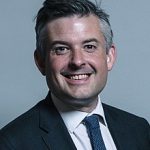
  • Jonathan Ashworth – 2020 Comments in Response to Prime Minister’s Interview

    Jonathan Ashworth – 2020 Comments in Response to Prime Minister’s Interview

    Text of the comments made by Jonathan Ashworth, the Shadow Secretary of State for Health and Social Care, on 24 July 2020.

    This finally puts to bed the Prime Minister’s previous claim his Government ‘took the right decisions at the right time.’

    Boris Johnson has finally admitted the Government has mishandled its response to the Coronavirus. It was too slow to acknowledge the threat of the virus, too slow to enter lockdown and too slow to take this crisis seriously.

    The threat of a second wave is still very real. It is imperative the Government learns the lessons of its mistakes so we can help to save lives.

  • Alison McGovern – 2020 Comments on Reopening of Gyms and Leisure Centres

    Alison McGovern – 2020 Comments on Reopening of Gyms and Leisure Centres

    Text of the comments made by Alison McGovern, the Shadow Sports Minister, on 24 July 2020.

    The chance to get back on the treadmill or in the pool means a lot to so many people who have found it hard to keep themselves active during lockdown.

    The health benefits of exercise are obvious but for many, the gym is also about keeping mentally fit and a big part of their social life.

    The Tories have failed to invest in gyms, leisure centres and other services for years which shows how hollow their newfound commitment to ending obesity is.

  • Bill Esterson – 2020 Comments on Government’s Trade Negotiations

    Bill Esterson – 2020 Comments on Government’s Trade Negotiations

    Comments made by Bill Esterson, the Shadow Minister for International Trade, on 23 July 2020.

    The Government’s approach to its trade negotiations is extremely worrying. The only reason to impose these long-term gagging orders is to prevent the public discovering the reality of what the government is willing to give up to get these free trade deals.

    On a practical level, these NDAs will make it impossible for business and union representatives to consult their members on the implications of specific proposals, and make it more likely that damaging provisions will slip into these trade agreements unchecked.

    Instead of operating in this way, the government should increase the transparency of these trade negotiations, and allow effective scrutiny of what is being proposed, by business, by unions, by civil society and by Parliament. If they have nothing to hide, they have nothing to fear.

  • Justin Madders – 2020 Comments on Weekly Track and Trace

    Justin Madders – 2020 Comments on Weekly Track and Trace

    The comments made by Justin Madders, the Shadow Health Minister, on 23 July 2020.

    The Prime Minister promised we would have a 24-hour turnaround for test results by the end of last month but we are a long way off, with the numbers heading in the wrong direction again this week. How can ministers think it’s acceptable that testing is getting slower rather than faster as promised?

    It is also a worry that we are still seeing so many of the close contacts of people who have tested positive not being reached.

    Ministers need to spell out urgently what they are doing to address these huge holes in the contact tracing system.

  • Jonathan Ashworth – 2020 Comments on the Flu Programme

    Jonathan Ashworth – 2020 Comments on the Flu Programme

    The comments made by Jonathan Ashworth, the Shadow Secretary of State for Health and Social Care, on 24 July 2020.

    Flu, alongside a second Coronavirus wave, could be devastating. That is why Keir Starmer demanded that a comprehensive flu vaccination programme be put in place ahead of the winter, including free vaccinations for the over 50s.

    It’s welcome ministers have listened to Labour but they must offer a guarantee that the programme will be offered to all over 50s this winter. We will do all we can locally and nationally to encourage take-up of the flu vaccine.

  • Gillian Keegan – 2020 Comments on College Collaboration Fund

    Gillian Keegan – 2020 Comments on College Collaboration Fund

    The comments made by Gillian Keegan, the Apprenticeships and Skills Minister, on 23 July 2020.

    I’m delighted to announce the 20 applications that have been successful in securing funding from the College Collaboration Fund.

    Now more than ever, it’s vital that colleges can support their students to gain the skills they need to progress and employers and our economy need to grow. This fund will help colleges work together, to develop cutting edge digital approaches to online learning, to overcome new challenges and continue to deliver high quality education and training for the communities they serve.

    The past few months have been a challenging time for the sector, but they have gone above and beyond to support their students. This additional funding will help to support further collaborative work as we move forward. I look forward to hearing more about their progress and wish them all the best.

  • Anne-Marie Trevelyan – 2020 Comments on Locust Swarms

    Anne-Marie Trevelyan – 2020 Comments on Locust Swarms

    The comments made by Anne-Marie Trevelyan, the Secretary of State for International Development, on 23 July 2020.

    Vulnerable communities are on the brink of starvation because of the biggest locust outbreak in decades, made worse by the coronavirus pandemic.

    British expertise is playing an important role in equipping companies with the right tools to combat the swarms and track where they will go next.

    But unless other countries also step up and act now, this crisis will spread and cause even more devastation.

  • Jim McMahon – 2020 Comments on the Northern Transport Acceleration Council

    Jim McMahon – 2020 Comments on the Northern Transport Acceleration Council

    The text of the comments made by Jim McMahon, the Shadow Transport Secretary, on 23 July 2020.

    Whilst we welcome an announcement of devolution of transport powers, we’ve heard all this before. Transport for the North was set up to deliver the same aims as this new body, yet it had its roles and responsibilities pulled from underneath it.

    The geographical divide in transport spending has exacerbated under the Tories. Transport spending in the North is two and half terms lower than in London. If the North had seen the same per person investment as London over the last decade, it would have received £66 billion more.

    The Government need to deliver tangible action and give the funding and powers needed to rebalance infrastructure spending across the country.”

  • Patricia Hewitt – 2005 Speech on the UK Role in Europe

    Patricia Hewitt – 2005 Speech on the UK Role in Europe

    The text of the speech made by Patricia Hewitt, the then Secretary of State for Health, on 28 November 2005.

    Thank you Fergal for that warm introduction.

    Good morning everybody. I’d like to welcome you all to the Patient Safety Summit, which we are holding as part of our 2005 Presidency of the European Union. I’m delighted to see so many people are here today. I welcome you all to London.

    This week 15 years ago, construction workers finally drilled through the last wall of rock to join the two halves of the Channel Tunnel – linking Britain to mainland Europe for the first time since the Ice Age, 8,000 years earlier.

    Today, the Tunnel has now come to be a “normal” part of our life for many of us, providing a seamless transport link between European cities. But it also reminds us that Europe is an increasingly connected community of countries – and that European cooperation can bring visible benefits to all of our lives.

    Many of you will have used the Channel Tunnel to be here today. We have delegates from across the EU member states, from the European Commission, from other parts of Europe, and from the wider world (including international organisations the World Health Organization and OECD, and delegates from the USA, from Russia, Canada and Australia).

    Most of you will be involved in making policy in some way. That is absolutely deliberate. This Summit is about solutions and action.

    I’m also delighted to welcome a number of patients from around Europe and the world. Your participation is vital because as you’ve heard all of us need to keep in mind the individual and the family who are at the centre of our quest to improve the safety of patient care. They are the ones who suffer from any harm caused when things go wrong.

    Once again, welcome to you all.

    Patient Safety Internationally

    Patient Safety is an international issue. No country – big or small – can claim to have solved the problem. That is why we have chosen it as a headline health theme to address in our 2005 Presidency of the European Union.

    A stark figure which you will hear over and over throughout this Summit is that in approximately 1 in 10 of hospitalizations, something goes wrong. In the increasing number of developed countries where research has been carried out, over and over we find similar levels of health care errors.

    Some of these errors are fortunately mild – for example a medication error which can simple mean a patient taking their medicine at the wrong time rather than the wrong medication – tragically others are not.

    For Europe, this means that some form of unintended harm is almost certainly suffered by millions of patients every year.

    We seem to have somehow forgotten the first law of medicine formulated by Hippocrates, almost over 2 and a half thousand years ago: ”first, do no harm.”

    Of course the situation in developing countries is significantly worse. There you have dedicated staff working with desperately poor infrastructure and equipment, unreliable supply and quality of drugs, shortcomings in waste management and infection control all make the probability of adverse events much higher.

    So wherever we are facing the challenge of patient safety isn’t easy. For patients, for those delivering health care, for policy makers, and for politicians, facing up to the fact that healthcare is an intrinsically risky – that in our complex healthcare systems, things do sometimes go wrong, and patients are sometimes harmed as a result – is not a comfortable or easy thing to do.

    In seeking to be more open about patient safety, I think we find that cultures can be stubborn, old behaviours can be persistent and attitudes difficult to change.

    The research and experience of other industries shows that an approach of blame and retribution – looking for a scapegoat – leads to a climate where individuals will be afraid to admit mistakes and no learning will ever take place.

    I, for one, and I hope all of us would much prefer to be treated by a health care system that knows when it makes mistakes – and acts to reduce the risk of them being repeated – than one that did not.

    The European response

    Among the impressive programme of Summit sessions, speakers, experts – and patients – we have Fernand Sauer, the European Commission’s Director of Public Health and Risk Assessment, who will speak to us a little later on. I’m very much looking forward to that.

    I am delighted that patient safety programmes are now emerging in many countries across Europe.

    Patient safety has been a headline health priority theme of both the 2005 Luxembourg and UK Presidencies of the European Union. Activity at the European level builds on a programme established by the World Health Organization through the World Alliance for Patient Safety and the work of other key partners such as the Council of Europe.

    We have representatives of the 2005 Luxembourg Presidency here: Health Minister Mars di Bartolomeo will speak tomorrow.

    Our own Presidency aims to build on the excellent work of the Luxembourg Presidency to ensure that our deliberations on patient safety at the EU level are translated into clear goals, practical programmes of activity and strong partnerships. Our vision is simple – to leave a lasting legacy of safer health care for all Europeans.

    I am pleased that the United Kingdom was one of the first countries in the world to give priority to tackling patient safety. We have tried in the past year to established safety as the first domain of the standards used to assess the quality of our healthcare service. We also have a national system for reporting – with learning from patient safety problems being translated into practical solutions for safer care.

    Just four weeks ago, the National Audit Office (which scrutinises public spending on behalf of our Parliament) published its review of this country’s NHS Patient Safety programme. The report concluded that we have made progress; organisations and staff across the NHS feel that they are moving towards a more open and fair culture of safety – driven largely though our national focus on quality and safety. Although we know we have much more to do.

    UK pledge of support

    And of course our work in Europe is part of a much bigger international movement.

    In May 2002 the World Health Assembly unanimously adopted a resolution urging all member states to take action on patient safety.

    The Resolution requested WHO to take a lead in building global norms and standards and supporting country efforts in developing patient safety policies and practices. Since then, we have seen the establishment of the World Alliance for Patient Safety.

    This was launched by the Director General of WHO, Dr LEE Jong-Wook in October 2004. I am delighted to say that Dr LEE is with us here today and will be addressing us shortly.

    The UK has had a very close association with the patient safety programmes at the EU level and at the WHO through the chairmanship of Sir Liam Donaldson of the World Alliance. That partnership has been of great value both within the UK and internationally. It has allowed us to bring the best of learning and experience from the UK to the international stage as well as ensuring that we can learn from international experience.

  • Lisa Nandy – 2020 Comments on Diplomatic Immunity

    Lisa Nandy – 2020 Comments on Diplomatic Immunity

    Text of the comments made by Lisa Nandy, the Shadow Foreign Secretary, on 22 July 2020.

    Today’s announcement once again fails to answer crucial questions about the circumstances surrounding the tragic death of Harry Dunn and the series of failures that led to Anne Sacoolas being wrongly allowed to leave the UK. The family must be updated on what discussions the Foreign Secretary had with US Secretary of State Mike Pompeo to ensure a trial can be held and a verdict reached.

    The Foreign Secretary has still not come to Parliament to explain how failings in his department allowed a US citizen to leave the country while their immunity was still in question.

    Labour will continue to push for a full inquiry into the litany of failures in this case and demand the answers that Harry Dunn’s family deserve. This announcement is no substitute for complete transparency – if the Foreign Secretary is serious about ensuring no other family goes through such an ordeal, then he must be honest about the mistakes that were made in this case.