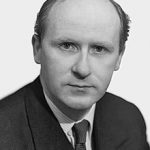
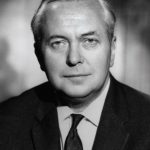
The speech made by Harold Wilson, the then Prime Minister, in the House of Commons on 19 July 1965.
This two-day debate, to which the Opposition and the Government have each contributed a day, can be expected to range pretty widely. In opening it, I feel that it may be more helpful to the House that I should not embark—as has sometimes been done in these debates in the past—on a comprehensive tour d’horizon, touching on all the issues of world affairs, but none of them, perhaps, very deeply. Rather I propose to single out three or four major issues which have dominated international relations in the past few weeks and months and which must be expected to dominate all our affairs for the rest of this year and perhaps much longer.
The issues which I think, the House would want me to deal with are Vietnam, Malaysia, the central problem of relations with the Middle East, the present situation in Europe, the prospects for disarmament, and measures to stop the spread of nuclear weapons.
To choose these subjects means that I shall not be dealing with a number of major issues which hon. and right hon. Members will wish to raise. It means excluding a discussion of the present situation in United Nations, although I know that my right hon. Friend the Foreign Secretary will hope to deal with that if he catches your eye, tomorrow, Mr. Speaker.
It leaves little time for discussing the wider problems of the Middle East, including South Arabia and the Gulf States, or the flare-up in Santo Domingo, the question of Spain, the Gibraltar issue, and many other issues which will be in the minds of hon. Members. But as three Foreign Office Ministers hope to take part in the debate if they catch your eye, Mr. Speaker, I trust that the Government will be able at some stage in the next two days to deal with any questions which are raised.
Before I turn to my main subject, I should like to say a word or two about some of the underlying themes of world affairs against which these three or four central issues have to be considered.
The first relates to the nature of the challenge that we are facing. I would be the last person to underrate or understate the grave dangers of the fighting in Vietnam escalating into a major land war in Asia, or even into a graver confrontation than that. Nor do I think that there is a sufficiently widespread realisation of the dangers that could occur by any intensification or extention of the confrontation between Malaysia and Indonesia. But, having said that, I should point out that it is clear that the past year has shown us, with growing clarity, how the nature of the world struggle is changing.
We must remain on our guard in Europe; we emphatically cannot afford the luxury of further strains within N.A.T.O. or the further development of nationalism within an alliance whose essence and inspiration are international collective defence. But the very nature of the thermo-nuclear balance in the world—the so-called balance of terror, based on a recognition that either of the two major nuclear Powers has within itself the capability to destroy utterly large areas of the other, and thus of itself and of the world—means that N.A.T.O. must maintain adequate conventional strength in Europe.
Having said that, I submit that the main danger in the world now is a more subtle form of challenge, of penetration, not capable of resistance by purely, or even mainly, military means. We must guard against the temptation to be so dominated by the undoubted challenge and danger that we were facing in the early 1950s that we put all our strength into defending our front door while the back door and the kitchen window are left unguarded. It was this theme which underlay the important speech of my right hon. Friend the Secretary of State for Defence at the last N.A.T.O. Defence Ministerial Meeting, and I believe that there was widespread recognition that his call for a fundamental reappraisal of the scale and nature of the challenge that N.A.T.O. was facing was timely—indeed, overdue.
We may look at this situation in rough periods of ten years since the war. If the problem of 1945–55—the first ten years after the war—was to come to terms with the new power situation which followed the defeat of Hitler, particularly the situation in Europe, and then to build up an effective situation of strength based on collective security; and if the dominant theme of the second post-war decade has been that of a world coming to terms with the facts of thermo-nuclear power—with Cuba, in 1962, providing the watershed—it is equally true that that second decade saw the emergence of new problems which I believe will dominate the third post-war decade from 1965 onwards, and, I believe, for many years after that.
This new problem is presented by the emergence of China as a world Power, by the ideological struggle between Russia and China, and by the growth of the so-called National Liberation Movements, not only in Asia, but in Africa and in Latin America. Just as there has been a growing recognition that the military, weapons appropriate to conventional land warfare are inappropriate, irrelevant and even dangerous in the jungle, so there is widespread recognition that political and economic infiltration cannot be dealt with mainly or even primarily by a military approach.
I say quite frankly to the House that this was one of the underlying themes of the recent and, I believe, successful Commonwealth Conference.
Behind all these specific issues which dominated that conference and which featured in the communiqué—such as the Vietnam Peace Mission, Rhodesia, disarmament, Commonwealth trade, the Commonwealth Secretariat and the rest—there was a deeper and more fundamental theme. I probably over-simplify it, but I do not think that I over-dramatise it when I say that what was at stake at that conference, and what is at stake in all the dealings of advanced industrial countries with the newly emerging nations, what was at stake in Algiers and Cairo and actually during the Commonwealth Conference, and what will be of growing importance as year succeeds year is the struggle for the soul of Africa. I hope that there can be no doubt in any of our minds who are the leading nations in that struggle. I hope that there can be no doubt either that Britain, through history, through geography, through the whole history of our Commonwealth development, cannot contract out of that struggle.
I refer to one other theme to which the right hon. Gentleman the Leader of the Opposition drew attention in opening the foreign affairs debate from this Box a year ago, namely, the rift which has developed between Russia and China. That was one of his main themes last year. I agreed with a great deal of what he said then, though I think that the passage of another year has underlined at any rate one warning which I gave him then. I said that, while I was not underrating the importance of this development, there was a danger in attitudes which might seem to suggest that because of disagreement between Russia and China we might automatically assume—as the right hon. Gentleman at one point last year almost seemed to assume—that Russia’s desire for coexistence would cause her to agree more readily with Western policies, the feeling that we could and should play on this rift in the Communist camp. I said then that I thought that this was dangerous, and I think that the whole course of world events since then has proved it.
I do not want to compete with the professional demonologists, be they Kremlinologists, Pekinologists or any other kind, in seeking to analyse the significance of the theoretical and ideological part of the argument. More important, perhaps, is the difference arising from the stage of development which the two countries have reached, the fact that the Soviet Union has vast achievements, vast developments, a vast capital structure—I am not saying a “capitalistic” structure—to defend and has, in consequence, developed a system of society which, making complete allowance for political differences, has become, not least in its functional structure and in its class structure, more and more assimilated to that of an advanced Western country, whereas China, at a much earlier stage of development, is, perhaps, inevitably, more militant and more—as their leaders would claim—revolutionary in her ideological doctrines and, much more important, more revolutionary in her attitude to world affairs.
I think that my warning of last year stands. The very fact that there is a struggle between Russia and China not only for power and influence amongst uncommitted nations, be they in Afro-Asia or Latin America, but, still more poignant in the minds of leaders of Moscow and Peking, a struggle for the leadership not only of the uncommitted world, but of the Communist world, means that, when the strains are at their greatest, as they have been over Vietnam, one cannot assume—as, perhaps, might have been assumed a year ago—that the Soviet Union will then be driven into accepting more and more Western positions.
It is precisely because of this struggle, precisely because of this difference, that we are faced with this great challenge to our diplomacy, and we have to see that we do not force the Soviet Union into positions of competitive militancy which may not be in her long-term interests and which certainly are not in the interests of world peace. I believe that this consideration is one of the central ones in the first main problem to which I now turn, the problem of Vietnam.
I do not intend to take up the time of the House with a long account of the development and history of the present situation in Vietnam, from the 1954 Geneva Agreement onwards. The House will recall that, in our last foreign affairs debate, my right hon. Friend the Foreign Secretary dealt with the whole ten or eleven years and, in his admirable Oxford speech which has been widely, and rightly, praised, he dealt with the history of this question with the utmost clarity. He explained, as I tried to do in that same debate last April and many times subsequently, why we have supported the actions of the United States in Vietnam. The American position, which we support, is this—that when conditions have been created in which the people of South Vietnam can determine their own future, free from external interference, the United States will be ready and eager to withdraw her forces from South Vietnam.
This is what they have said, and we support them. This is right, but it can only be as a result of a conference. We support that too. A unilateral withdrawal of the United States would have incalculable results, first in Vietnam. It would have incalculable results, too, over a much wider area than Vietnam, not least because it might carry with it the danger that friend and potential foe, throughout the world would begin to wonder whether the United States might be induced also to abandon other allies when the going got rough. One has only to look at the map of South-East Asia—rich, fertile, mouth-watering, not in current economic terms, but in terms of temptation to those seeking a wider sphere of exclusive influence.
Again, in terms of great power relationships, a unilateral withdrawal would be held as a humiliating defeat and would make not only countries such as Russia but—let us be frank—America herself, that much more intransigent and tough and determined to see that the experience was not repeated and that much less inclined to policies of co-existence. I think that there is now a growing recognition that the problem of South Vietnam cannot be solved by military means. Military means can prevent an imposed solution, but there can be no victory now. This war will end when that realisation penetrates those capitals which are at present intoxicated by hopes of an early military settlement.
However, if the South Vietnamese Government and people, with their American allies, may not be able to impose a settlement on the Vietcong and the North, equally, it is not within the power of the National Liberation Front, with whatever aid they get from North Vietnam, to bring South Vietnam and the Americans to their knees. Perhaps I am not going too far when I say that the only condition in which there could be a military solution of the struggle in Vietnam will be one which followed a major escalation, possibly a major world war. That would, on doubt, provide a military solution, but such a war might settle a lot of other things besides the position in Vietnam, not excluding the question of the future of human life on this planet.
If the House accepts this analysis, it is a question, by every means open to us, of getting men round the table to secure an honourable and lasting peace. This has been the central theme of Her Majesty’s Government’s policy for many months. The right hon. Gentleman the Leader of the Opposition, with whom I do not intend to pick any quarrels this afternoon—[An HON. MEMBER: “Why not?”]—in speeches in the North the weekend before last—Why not? Because I think that there were one or two passages there which he would, on reflection, prefer that he had not used. He said: I hope the Socialist Government will now recognise that peace is not furthered by opportunism, but by solid, secret work and preparation through diplomatic channels, leading to negotiation. I wonder what he thinks we have been doing all these months. Let us take, first, our relations with Washington. We have, throughout, been in the closest discussion with the United States Government, one of the main parties to this dispute and to any possible conference. I had long discussions myself, as the House knows, with President Johnson on this matter last December and again in April.
Nor are our discussions limited to the times when the President and I are sitting on the same side of the Atlantic. My right hon. Friend has had many discussions with the American Secretary of State, both in America and in Europe, and all of us have discussed the matter with the American Administration at all levels. While it is true that, in those dark months in February and March, when it was difficult for me to explain to the House what we were doing and what we were urging: at any rate we were able, by April, not only privately but publicly, to express our full support for the President’s Baltimore speech in which he called for discussions.
As the House knows, subsequently the President, other American leaders, the Secretary of State, Mr. Adlai Stevenson—with whom I was discussing this Vietnam problem for several hours only nine days ago—all the American leaders, have since April expressed their willingness without conditions to enter into negotiations. At one point they indicated their willingness to suspend bombing policies in order that discussions would take place. We played our part in trying to carry this message through to the North Vietnamese authorities through the channels open to us, but without success.
So much, then, for our diplomatic contacts with the United States. What about the other side? As the House knows, the Foreign Secretary is, with the Foreign Soviet Minister, a co-Chairman under the Geneva Agreement. In February we urged Mr. Gromyko to take joint action with my right hon. Friend for an approach to all the other Geneva powers as a first step towards a peaceful settlement. After some weeks, indeed on the eve of Mr. Gromyko’s visit to London, we were told that it was not acceptable for the Soviet Foreign Minister to join in this approach. Throughout the week of Mr. Gromyko’s visit to London my right hon. Friend day after day—supplemented by my own efforts at a two-hour meeting—tried to persuade Mr. Gromyko to join with us in an initiative on the lines we proposed. We failed.
Then, as the House will know, in April we took up the Soviet suggestion of a conference on Cambodia and expressed our willingness to join with them in calling such a conference. Even a Cambodia conference was bristling with complications, including the question of the attitude of certain other states directly affected in South-East Asia. When hon. Gentlemen sometimes express doubts about Mr. Gordon Walker’s visit, let me say that to him more than to anyone they lay the credit for getting a general acceptance of such a conference in South-East Asia but we have not so far been able to persuade the Soviet Government to carry out their original intention in joining us in calling it.
On more than one occasion we have tried to use the good offices of the Secretary-General of the United Nations. His proposed peace tour secured the same result as the unofficial visit of Mr. Gordon Walker. The Indian representative was rebuffed, the seventeen non-aligned nations were rebuffed, and France was rebuffed. More recently we secured the almost unanimous Commonwealth support for a Commonwealth Mission on Vietnam, and again Peking and Hanoi refused to accept the Mission.
When the right hon. Gentleman the Leader of the Opposition says that what he calls “opportunist proposals” such as the Commonwealth Peace Mission or the visit of my hon. Friend the Member for Leek (Mr. Harold Davies) to Hanoi are “inappropriate, even dangerous”, when, as he suggested, in a rather extravagant phrase that this was the Foreign Secretary falling into the Communist trap, I wonder just how he feels that the secret diplomacy for which he calls can operate in this situation. I hope we shall hear from him about this. Of course, he tells us how successful this was in the case of Laos, but I remind him that even though this took place at a time when Russia and China were both willing to see a conference take place, it took him almost two years to get agreement, including the time for getting the conference established. When we look at the situation in Laos today we can be forgiven for wondering whether it was the unqualified success it is sometimes suggested to have been.
Laos is not a parallel with the situation in Vietnam. The situation in regard to Vietnam is entirely different. It is in part, both in origin and character, a civil war, but it is equally a war that most of us feel would not be sustained and could not be intensified but for the participation of North Vietnam in the fighting both with troops and with supplies. Therefore, Hanoi is the key to this situation. I hope I carry hon. Members opposite with me in the statement that Hanoi is the key to this situation. What I want them to understand is that that key cannot be turned in Moscow. There is no direct line from the West through Moscow to Hanoi. If there were it would have been turned a long time ago, but I assure right hon. Members opposite that there is no possible means for diplomatic approaches in Moscow to get through to the authorities in Hanoi.
The Soviet position is that the Vietnam situation is one which must be settled between the parties to the fighting—listed by them as the United States and Vietnam, including, of course, North Vietnam and the National Liberation Front, the Vietcong. The Soviet position is that they are not involved in the fighting and, further, that they have not been asked by those whom they support and recognise as allies, namely North Vietnam, to intervene in a mediatory or any other rôle. When the Commonwealth ambassadors went to see Mr. Kosygin about the Commonwealth Peace Mission, he made these points clear to them and he told our representatives that they should go to Hanoi. So, in those circumstances, it is quite impossible for the normal workings of diplomacy to get through to Hanoi via Moscow.
I hope this will be agreed as one of the basic facts of the situation when we are asked to use diplomatic channels, that we cannot use Moscow diplomatic channels to get at Hanoi. Equally, there is the position of Her Majesty’s Consul General in Hanoi—perhaps here I may pay my tribute to him and to his predecessors for the faithful and devoted way in which they carry out their duties in most difficult conditions. Her Majesty’s Government—and this, of course, was true of right hon. Gentlemen opposite as well as of ourselves—do not recognise de jure or de facto the D.R.V. Our Consul General therefore exercises purely consular functions, although there have been occasions—nothing like universal—when he has been able to transmit messages, and indeed to get a reply. But there have been other times when, I must tell the House, the absence of diplomatic recognition has led to refusal to receive an important message. It was for this reason—however much we may regret it—that Mr. Ponsonby was not allowed to accompany my hon. Friend in his talks, although my hon. Friend had the valuable benefit of his advice in a whole series of meetings during his visit.
So the impeccable view of the right hon. Gentleman about using diplomatic channels, although I heartily agree with this as a principle, simply will not work as far as Hanoi is concerned. It will not work in this dangerous Vietnam crisis. Unless he is suggesting that we should accord diplomatic recognition to North Vietnam—if that is what he is suggesting, I hope he will make it plain to us, but I do not think he is suggesting it—then I think his criticism is entirely unfounded. What is worse, it might appear to carry with it the suggestion—I am sure he does not mean this—that if we cannot work towards peace by ordinary diplomatic methods, then we ought not to go on working towards peace.
So far I have been talking entirely in terms of the initiatives and approaches necessary to get a conference. This was one of the two declared objectives of the Commonwealth Peace Mission. We intended also, of course, to try to identify the conditions which would make a ceasefire possible. Here I draw a distinction between what might be called external action on the one hand and a cease-fire in the fighting within South Vietnam on the other. The Commonwealth Peace Mission, with the full support of the Commonwealth—this is in the memorandum for guidance to the Mission, endorsed by the conference and printed with the communiqué—called in terms for
“(a) a suspension of all U.S. air attacks on North Vietnam, and
(b) a North Vietnamese undertaking to prevent the movement of any military forces or assistance or material to South Vietnam.”
It was felt that bilateral restraint of this kind would help the Mission in the discharge of its duties. This was in a sense an expression of external intervention. To insist on a cease-fire inside South Vietnam is just as urgent, although to say that this must precede a conference and be a condition of the conference taking place might defer the time at which the conference began to meet. For one thing, to police and inspect a cease-fire in the conditions of fighting in South Vietnam is much harder than to police and inspect external intervention. It is possible, for example, to police, inspect or verify where external bombing is going on. That can be inspected. But, in the conditions of South Vietnam, it is very much more difficult, because incidents like throat cutting and hand grenade attacks on a dark night present different problems of policing. And if one cannot police them satisfactorily, it is always possible that isolated incidents might lead to an outbreak of fighting, mutual recrimination and accusations.
At various times suggestions have been put forward for the kind of settlement to which this conference might lead if we were able to get the conference established. Some have suggested an Austrian-type solution, with neutrality guaranteed by the major powers. Others have suggested a Korean-type solution, with the country divided for a time, with effective defence of the frontier—if that is possible in Vietnamese conditions—leading to an integrated country at a later stage.
Others have suggested—and I think that this is right—a straight return to the 1954 Agreement. I do not think it would be helpful for us to try to decide this question in detail today. This must be a matter for the conference. As I have said, the main objective of the Commonwealth Peace Mission is to establish the conditions in which such a conference can be held with any hope of success.
What I think is more immediately relevant is the type of conference which should be held. This is something which I hope lies sufficiently in the near future for us to be able to be discussing how it should be done. I do not think there is any difference of view on either side of the House about it. Her Majesty’s Government strongly take the view—and this was the view of our Commonwealth colleagues and, I think, of right hon. Gentlemen opposite—that we should be creating the conditions in which Mr. Gromyko and my right hon. Friend, as Geneva co-Chairmen, could convene a conference, whether at Geneva or elsewhere, under the aegis of the 1954 Agreement and under their co-chairmanship. This proposal has the support of the United States, and I think it right to remind the House that the United States Government are ready to accept the 1954 Agreement as a basis for the ultimate solution. The American Secretary of State said on 4th July: We would be glad to go to the conference table and take up these agreements of 1954 and 1962 to see where they went wrong and try and bring the situation back to those basic agreements. I am sure the House will agree with that approach. To sum up the Vietnam situation, I invite the agreement of the House to these propositions.
First, this is a war—and this is inevitable in conditions of modern war, even conventional war—which as long as it continues will bring death, destruction, tragedy and mutilation to thousands upon thousands of people whose only desire is to live in peace with their own people, and who in all conscience have seen enough fighting, fighting on their own homeland, fighting without respite, for almost a quarter of a century. I think that there will be no disagreement with proposition number one.
Secondly, this is a war which carries with it the gravest danger of escalation; of extension to the point where we might, within a very short period of time, see it extended to become a major land war on the Asian mainland. Nor is that the entire extent of the danger which it presents, because my third proposition is that this is a war the very fact of which is poisoning the whole of international relationships, is halting the hopeful progress towards co-existence on which Eastern and Western nations alike have pinned their hopes and which, if it is allowed to continue, may possibly lead to a reversal of the hopeful trend and a hardening of attitudes which it may take years to break down again. I do not think that there will be any disagreement on that.
Fourthly, a solution to this problem will not be found by military means alone. A decision to defer any hope of a political solution, to deny the means of a political solution, is a decision that the military measures may be intensified with all that that means. I do not think that there will be any disagreement with that proposition.
Fifthly, to get a political solution means getting men round a table. Every effort to do this—whether through the co-Chairmen, whether through the Secretary-General of the United Nations, whether through the French initiative, whether through my right hon. Friend’s message to the Heads of the Geneva Conference Governments, whether through the initiative of the 17 non-aligned countries, whether through the initiative of the Commonwealth Peace Mission and subsequent attempts to get acceptance of that Mission—has so far foundered on the unwillingness of Hanoi, and, to the extent to which China accepts responsibility of these matters, of Peking to agree to negotiations. I do not think that there will be any disagreement with that proposition.
Sixthly, all these attempts have established the willingness of the United States, the Government of South Vietnam and of the majority of the Geneva parties to have negotiations. No further diplomatic approaches are necessary with them. That is probably accepted by hon. Members.
Seventhly, the key to the situation is Hanoi, as I pointed out earlier. This is the view of Her Majesty’s Government. It is the view of the United States and of the Soviet Union. I hope that I carry hon. and right hon. Gentlemen opposite with me as well in saying that because, if they agree about this, it brings me to my eighth proposition, which is that there is no means open to Her Majesty’s Government and to the vast majority, whether of Western powers, Geneva powers, Commonwealth powers or of non-aligned powers, of influencing Hanoi by ordinary diplomatic means because diplomatic channels do not exist. I hope that I carry hon. Gentlemen opposite with me on this proposition as well.
My ninth proposition is that, in these circumstances, it was the duty of Her Majesty’s Government, and it remains their duty, to seek to get the message through to Hanoi in the hope of getting acceptance, first, for the Commonwealth Peace Mission and, secondly, of getting support for the conference. It is our duty, in these circumstances, to do this by any means open to us, orthodox or unorthodox, conventional or unconventional, regardless of whether we may have to suffer disappointments and what right hon. Gentlemen opposite like to call rebuffs. Again, I would like to hear from the right hon. Gentleman whether he agrees with this proposition, which seems to follow from those I have argued.
The outcome of my hon. Friend’s visit was a disappointment, due partly, in his view, to a high degree of confidence in North Vietnam—no doubt reflected in China—that time is on their side, that they are winning, that they have more to gain on the battlefield than in the conference room. I believe that this view is tragically wrong, and I think that my hon. Friend’s visit and his 16 hours of persistent argument about it may have done something to shake that confidence. I hope it has.
I hope that, in the cooler atmosphere of this debate, recognition will be given to the fact that, in these uniquely difficult circumstances, my hon. Friend’s visit represents the first occasion on which we in the West have been able to get a message through. That message was delivered with vigour, with conviction and with sincerity and fluency, if not directly at the North Vietnamese personalities we should have liked, and even if we had to accept Hanoi’s refusal to receive Foreign Office officials on the ground that we did not recognise North Vietnam. That was the reason we could not have them there.
Of one thing I am sure; that these arguments have by now got through to the political high command of North Vietnam in a way they have never got through to the leading Ministers there before. The danger we faced only a month ago when the Commonwealth initiative was announced was of rigidity, fixed positions, inability to communicate and unwillingness to consider fresh attitudes. One thing the Commonwealth Mission has done is to make every country involved think again.
I believe that my hon. Friend’s visit, while it has not melted the ice, has caused some cracks and shifting to take place in what seemed solid pack ice. Those who think that these two initiatives were wrong have a duty to explain what they would have done in these unique circumstances to stop the present conflict and the danger of a further drift to war.
Sir Alec Douglas-Home (Kinross and West Perthshire)
Can the Prime Minister say something about Dr. Nkrumah’s visit? Is it part of the Commonwealth initiative, or has it been arranged by the right hon. Gentleman, or has it been done solely on Dr. Nkrumah’s responsibility?
The Prime Minister
All I can say is that Dr. Nkrumah as well as Dr. Williams and, of course, Sir Abubakar, and I have been in the closest touch from the moment the Commonwealth Peace Mission was appointed and have consulted throughout on all messages, initiatives, and the rest. But until Dr. Nkrumah has given his own reply to the invitation which I learned from my hon. Friend North Vietnam was intending to give, I think that I had better not say anything more. But I would be glad to say something further when we have the reaction of Accra to the particular proposal. I think that within a few hours—probably before this debate ends—it may be possible to say something.
I hope that my hon. Friend will have brought home, not only to us in the outside world but to those in Hanoi, the danger of continuing in a position where they carry so much of the responsibility for the continuance of the war. In this country, and in every other country, there is a great desire for peace in Vietnam. That is a banner—the “Peace in Vietnam” banner—that I hope we could all carry, although it is becoming clear that some of those who shout loudest for it, both here and in other countries, are concerned not with peace in Vietnam but with victory in Vietnam.
There will be no quick or easy victory for anyone, and a refusal to negotiate now will mean an intensification of the war in which, in the end, inevitably after thousands more have lost their lives, after thousands more have been made homeless, and after innumerable children have been made fatherless, the realisation will slowly dawn that peace will come only at the conference table. If that is what occurs, as I believe it will occur ultimately, the responsibility will lie on those who refuse to come to the conference table. For let us be clear—the enemies of negotiation are the enemies of peace.
I have spent so much time on Vietnam because, as I have said, this utterly dominates world relationships; because it is the cloud overhanging every East-West dialogue. But, as the House knows, we are deeply concerned, deeply involved, in another Asian confrontation—that between Malaysia and Indonesia. Our full support is pledged to Malaysia in its struggle to maintain its integrity as a nation against a country which refused to recognise its very existence. This country, under the previous Government and under this Government, has been unstinting in providing military support, and I want the House to know that although actual fighting has been up to now on a relatively limited scale—and we thank God for that—we should be utterly wrong to dismiss the danger of a much more serious crisis over Malaysia if this issue is not quickly settled. I have said before now in this House why Britain cannot take the initiative in mediation here—I think that it is well understood—but other Asian countries, including Commonwealth countries, may well have a rôle to play as soon as there are signs of a willingness to talk.
Turning from that subject, since I understand that my right hon. Friend will be dealing with the Middle East tomorrow, if he catches Mr. Speaker’s eye, I will not go into the vast issues of that region today, save only to say this. Within hours of this Government taking office, the then Foreign Secretary, Mr. Gordon Walker, made clear his desire for improved relations with the United Arab Republic. He embarked on a series of discussions, the so-called dialogue, with the United Arab Republic Ambassador. For our part, we see no reason why the hostility and difficult relations of the years since Suez should be continued into the future, though in saying that we have certainly no intention, as we have made clear, and as I now repeat, in any way of deserting our traditional friends in the Middle East or in any way altering our relationship to the Arab-Israel dispute. As part of our contribution to civilising and improving relations in the Middle East, we envisaged at the earliest possible moment a visit by a senior Foreign Office Minister to Cairo.
This is still our intention and our hope—we want to see relations improved. But one major obstacle stands in the way; and this is the series of subversive and terrorist actions taking place in South Arabia in circumstances which make it impossible for us to acquit Egypt and her friends of connivance, even involvement. We have addressed the strongest protests to the U.A.R. on this question. Many of us in all parties took the opportunity of the entirely helpful and friendly visit of a U.A.R. parliamentary delegation to make this country’s position clear a week or two ago. I hope to have another opportunity of doing this tonight because, given an ending of this terrorist campaign, I believe that one of the greatest difficulties standing in the way of a speedy and mutually helpful improvement of relations between Britain and the U.A.R. will have been removed. If it is removed, I should like to pay my tribute to the visit of the U.A.R. parliamentary delegates and to the contribution which hon. Members of all parties in this House made to the success of that visit.
Before I sit down, the House will, I think, expect me to refer to the situation in Europe, and also to say something of our hopes in the forthcoming Geneva Disarmament Meeting. I do not think it necessary for me to add anything to what has been said in this House in foreign affairs and defence debates about Britain’s relations with the N.A.T.O. Alliance. We approach its problems in a radically reforming spirit designed to bring closer unity within the Alliance, to create a more effective defence, and to ensure that it responds to the changing nature of the challenge it is facing. Progress in this matter is slow, and will be slow. I know that the House understands the difficulties—particularly in regard to our own Atlantic Nuclear Force proposals—of advancing further until after the German elections.
But I must make reference to another aspect of European affairs, namely, the strains that have recently developed with the European Economic Community. I hope that we can all agree on this; that no one in Britain, and certainly not the Government, can find any cause for rejoicing in the situation that has developed within the E.E.C. in the past two or three weeks. We have had many debates in this House about whether Britain should join the E.E.C.—or, more precisely, about the terms on which Britain could join the E.E.C.—but, whatever the disagreements, and there have been disagreements within parties at least as much as between them, I think that we are all united in one belief, which is that the success of the Community itself is vitally important for the countries concerned and for Europe as a whole.
I have had occasion in the past to quote the Labour Party’s statement, endorsed by an overwhelming majority at the Brighton Conference three years ago. I think it right today, in this present set-up, to remind the House of the opening words of that statement, because they express the views of Her Majesty’s Government today as surely as they expressed our views as a Party in 1962. The statement opened: The Labour Party regards the European Community as a great and imaginative conception. It believes that the coming together of the six nations which have in the past so often been torn by war and economic rivalry is, in the context of Western Europe, a step of great significance. It is aware that the influence of this new Community on the world will grow and that it will be able to play—for good or for ill—a far larger part in the shaping of events in the 1960s and 1970s than its individual member states could hope to play alone. Our arguments were not about whether we wished to see the Community succeed, but about the question whether Britain could or could not join it on the particular terms open to us without perhaps fatally compromising our essential national and Commonwealth interests. We had those arguments, perhaps we shall have them again, but, at any rate, the fact that we have had these arguments about the conditions in which Britain could join, should not detract from our earnest hope that the present difficulties in Europe will be overcome on terms acceptable to the member countries. It is not for us to take sides or to express opinions, still less to exploit this serious difficulty which has arisen for advancing a particular conception or a particular doctrine about European unity or about British participation. I hope no one is going to start saying, “Ah, well, because there are five who hold one view and the others hold another view, we can take advantage of the split between the five and the one.” I hope no one will say that an assertion has been made that supranationality is unacceptable and that that fits in with our doctrines, which most of us hold, against a supranational solution in political and defence matters. I think we can be most helpful by not attempting to take sides but by using such influence as we have to make sure that our European friends settle this problem amongst themselves on terms acceptable to them, because by so doing they will not only be helping themselves but peace in Europe.
Our position remains, too, that means should be found as soon as possible to begin the dialogue between E.F.T.A. and the Common Market countries with a view to reducing and ultimately ending the economic and political damage which results from this costly and far from economic division of Europe.
There is no immediate issue of our being asked or being able to join the Common Market, and so we do not need to argue at this moment about the terms. What all of us agree about is the need to get a single trading market for the whole of Europe, first covering the countries of the Six and E.F.T.A., and, as political realities permit, capable of bringing about closer economic relations between Western Europe and Eastern Europe. Equally, we are anxious to play our full part in increasing political unity within Europe on the basis of a growing and more intimate inter-governmental co-operation. My right hon. Friend has repeatedly urged—indeed, we all have—the need for Britain to be in on the ground floor in any such political discussions.
This review of foreign affairs and the rôle of British policy in the present world scene that I have tried to give this afternoon is inevitably a sombre one. For reasons which I have explained and which are well understood by the House as a whole, we have gone through some very difficult months, not only in direct East-West relations, but in the wider expression of East-West relations in such fields as the United Nations and in disarmament.
My right hon. Friend will no doubt wish to deal in greater detail with some of these questions. But, while our attention in the House has been so highly concentrated on Vietnam in these months, I hope the House will have seen and, indeed, will recall its judgment on the leadership which Britain has been able to give in helping the United Nations to emerge from its difficulties stronger, more united and more effective. After years of doubts about the degree of support that this country was prepared to give the United Nations, when the chips were down, I believe that Britain’s acceptance of the U.N. as a cornerstone of our world policy is now recognised by every nation in the world.
If that is true, I believe no one is more responsible than our representative in the United Nations, a member of the Government, my noble and learned Friend, Lord Caradon. The hon. Gentlemen who laugh have identified themselves as the small group of men who do not begin to understand the nature of the world that we are living in. Not only have we taken action to act in accordance with resolutions of the United Nations, not only have we taken an unprecedented lead in pledging logistic support for world peace-keeping operations—the first step to the international police force we have all dreamed of—but, at the darkest moment in the United Nations financial crisis this summer, a crisis where finance was the symbol rather than the cause of the strains between nations, it was Britain who came out with the proposal for an unconditional contribution, and it is now for more nations to follow our lead.
We have played our full part in the Disarmament Commission, and now I think the House will be glad to welcome the fact that the 18 Nation Geneva Conference is to resume in a week’s time. We have a Minister—and I think this is unique in the world—charged with full-time responsibilities in the realm of disarmament. During the weeks and months when hope of renewed discussion seemed dim, he has been active, not only in Whitehall, but in almost constant discussion with our allies, our friends, and with anyone who had anything to contribute in the disarmament field. By setting up a highly authoritative advisory council in this country, including scientists, defence and international experts from the universities, from Parliament and elsewhere, the Government have been able to draw on a wide range of expert advice.
We have been hard at work on the general problems of comprehensive nuclear and conventional disarmament. But we believe that the first and most urgent task must be an agreement to prevent the further spread of nuclear weapons. In our approach to the disarmament conference, we are reinforced—and I know the House will welcome this—by the powerful and unanimous declaration of the entire Commonwealth, 21 countries, of further proposals and further steps for disarmament and non-proliferation which we issued from our meeting last month.
We have spent these months working on the draft of a non-dissemination treaty which we have been discussing and are still discussing with our Western Allies and which we hope to present to the Geneva Conference. This treaty is not based on any exclusive attempt to preserve nuclear privileges for a small group of powers. It is based on a realistic recognition of the consequences there would be if nuclear weapons were to pass into the hands of more and more states, with all the dangers that a nuclear war by mistake, miscalculation, accident or madness could bring.
We shall press on urgently to extend the plans for a partial test-ban treaty to cover the whole area of nuclear testing, including underground tests. We should like to see progress made towards President Johnson’s plan for a freeze of strategic nuclear delivery vehicles, on which both sides have agreed in the past. But we believe that we should go further with this and link with it a phased destruction of some of these weapons, as well as a freeze on their extension; because, pending a comprehensive and complete disarmament treaty, we believe that it is urgent to make a move towards limiting and reducing nuclear armouries, without destroying or upsetting the present overall military balance.
It is our hope, starting from this conference, to move forward within Europe, and not only within Europe but to achieve, within a maintained balance of military power, areas of controlled disarmament in which there could be agreed and balanced reductions of conventional forces and nuclear-free zones, provided, as I have made clear, they are genuinely nuclear-free, taking into account the missiles trained on an area as well as those sited within it.
A sombre scene, therefore, but one where there are hopes of advance. I believe that it is the duty of Britain to take initiatives in any and every field where they are needed today. I believe that we can claim that in only a few months we have not been backward in doing so—initiatives within the Western Alliance, initiatives to improve relations with France, initiatives towards bridge-building in Europe, initiatives that led to a cease-fire and easing of tension between India and Pakistan over the Rann of Kutch, and initiatives for peace in Vietnam. Wherever one looked last autumn—and I want to make it plain that this is a commentary on the international scene and not a reflection on our predecessors in office, who played their part in moves to ease tension—there seemed to be vast, apparently limitless areas of solid pack ice, rigid, immobile and to all appearances permanent and immovable. I believe that cracks are appearing in that cold front, a thaw here, signs of movement there, and I believe that we as a nation have contributed at least as much as any other nation to those cracks appearing.
I believe that this is a rôle for Britain. Our traditions, the skill of our Diplomatic Service at home and abroad, our pattern of alliances and our unique relationship with a great Commonwealth all fit us for what the world needs today, at least in relation to many of the world’s problems, and that is a phase of diplomacy by movement. If I may change my arctic metaphor, we have tended, in relation to problems not only of East-West tension but of European economics, to dig ourselves in deep in a system of diplomatic trench warfare. Patient preparation through diplomatic channels—yes, I agree with the right hon. Gentleman, where they exist they should be used; and intimate daily contact with our friends and allies in preparation for the next move, yes, that is our policy. But we must have the courage to recognise that some of the great battles in history have been won by recognising the right moment to break out.
What in the right circumstances can be true of a war of movement can be true of a diplomacy of movement. No one is better fitted than Britain to take advantage of open territory—nor to choose when the moment has arrived to embark on it. That, I am sure, has been the traditional rôle of Britain in world affairs throughout history. I am sure that it is the main lesson to be drawn from this serious but not entirely unhopeful review of the world position that I have tried to present to the House today.