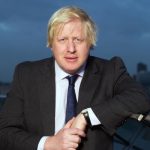
The speech made by Boris Johnson, the Prime Minister, on 19 February 2021.
There is a habit of turning up at occasions such as these and announcing portentously that the West is locked in terminal decline, the Atlantic alliance is fractured, and NATO is in peril, and everything we hold dear risks being cast into oblivion.
And that industry of pessimism has thrived recently, perhaps even in Munich.
So without wishing for a moment to downplay the challenges and dangers we face, in the teeth of a global pandemic, let me respectfully suggest that the gloom has been overdone and we are turning a corner, and the countries we call the “West” are drawing together and combining their formidable strengths and expertise once again, immensely to everybody’s benefit.
As you’ve seen and heard earlier, America is unreservedly back as leader of the free world and that is a fantastic thing.
And it’s vital for our American friends to know that their allies on this side of the Atlantic are willing and able to share the risks and the burdens of addressing the world’s toughest problems
That is why Global Britain is there and that is exactly what Global Britain is striving to achieve.
I’m delighted to report that I detected precisely that willingness among my fellow G7 leaders when I chaired a virtual meeting earlier today. The shared goals of the UK’s presidency of the G7 are to help the world to build back better and build back greener after the pandemic and minimise the risk of a catastrophe like this happening again.
We all have lessons to learn from an experience that none of us would want to repeat.
At the last UN General Assembly, I proposed a five-point plan to protect the world against future pandemics and today the G7 agreed to explore a Treaty on Pandemic Preparedness, working through the World Health Organization, which would enshrine the actions that countries need to take to safeguard everyone against another Covid.
I intend to bring together my fellow leaders, scientists and international organisations for collective defence against the next pathogen, just as we unite against military threats.
The heroic endeavours of the world’s scientists produced safe and effective vaccines against Covid in barely 300 days. In future we should aim to telescope that even more: by drawing together our resources, we should seek to develop vaccines against emerging diseases in 100 days.
Even in the early weeks of the pandemic, I hope that we in the UK resisted the temptations of a sauve qui peut approach and tried to keep the flame of global cooperation alive.
We helped to establish COVAX, the global alliance to bring Covid vaccines to developing countries, and today Britain ranks among COVAX’s biggest donors, with the aim of supplying a billion doses to 92 nations, and we will also share the majority of any surplus from our domestic vaccination programme.
When Oxford University and AstraZeneca began their momentous effort against Covid, their express aim was to design a vaccine that would be cheap to obtain and easy to store, so that it could be speedily administered by every country.
Protecting ourselves also means tracking the virus’s mutations, and nearly half of all the genome sequencing of possible Covid variants, anywhere in the world, has taken place in the UK.
Now we need to mobilise our shared expertise to create an early warning system for the next pathogen, enabled by a worldwide network of pandemic surveillance centres, and the UK intends work alongside the WHO and our friends to bring this about.
If anything good can possibly come from this tragedy, we have at least been given the chance to build a global recovery on new and green foundations, so that humanity can prosper without imperilling the planet.
To that end, as you’ve just been hearing from John Kerry, Britain will host COP-26 in Glasgow in November and I’m delighted that America under President Biden’s leadership has rejoined the Paris Agreement.
The UK’s aim will be to help to rally as many countries as possible behind the target of Net Zero by 2050.
We were the first industrialised nation to adopt this goal and we have made it legally binding and published our plan for a Green Industrial Revolution to show how we will get there, so I hope that other countries will follow the UK’s example.
But we can only address global problems alongside our friends, and extend Britain’s influence around the world, if the UK itself and our own citizens are safe, including from the terrorist threat we all face.
The starting point of our Integrated Review of foreign, defence and development policy – which will be published next month – is that the success of Global Britain depends on the security of our homeland and the stability of the Euro-Atlantic area.
If climate change and pandemics are silent and insidious threats, hostile states may seek to harm our people in direct and obvious ways, as the Russian state did with reckless abandon in Salisbury three years ago, only to collide with the immovable rock of trans-Atlantic solidarity, sanctions and coordinated diplomatic expulsions, an outstanding act of collective security, for which I once again thank our friends.
If we are to assure our safety, our democracies need to strengthen their capabilities to meet the rigours of an ever more competitive world.
And it is precisely for that reason, so that we can keep our people safe, by fulfilling our obligations to NATO and enhancing the UK’s global influence, that is the reason I have decided to bolster our armed forces with the biggest increase in our defence budget since the Cold War.
The UK’s defence spending will rise by £24 billion over the next four years, comfortably exceeding the NATO pledge to invest 2 percent of GDP, and ensuring that we retain the biggest defence budget in Europe and the second largest in NATO, after the United States.
We will focus our investment on the new technologies that will revolutionise warfare – artificial intelligence, unmanned aircraft, directed energy weapons and many others – so that we stand alongside our allies to deter any adversary and preserve the peace.
This year, the Royal Navy’s new aircraft carrier, HMS Queen Elizabeth, will embark on her maiden deployment, sailing 20,000 nautical miles to the Indo-Pacific and back.
On her flight deck will be a squadron of F35 jets from the US Marine Corps; among her escorts will be an American destroyer, showing how the British and American armed forces can operate hand-in-glove – or plane-on-flightdeck – anywhere in the world.
But investing in new capabilities is not an end in itself. The purpose of the military instrument is to strengthen diplomacy and therefore maximise the chances of success.
We do not wish to live in a world of unchecked rivalry or decoupling or obstacles to sensible cooperation and global economic growth. Nor are we concerned solely with trade: I hope the UK has shown by our actions that we will defend our values as well as our interests.
In leaving the European Union we restored sovereign control over vital levers of foreign policy.
For the first time in nearly 50 years, we now have the power to impose independent national sanctions, allowing the UK to act swiftly and robustly. Our first decision was to create a Magnitsky regime designed to punish human rights offenders. The UK then became the first European country to sanction senior figures in Belarus after the stolen election. We have now imposed sanctions on over 50 human rights violators, including from Russia, Myanmar and Zimbabwe.
We have consistently spoken out against China’s repression of the Uighur people in Xinjiang province – and we will continue to do so. We have introduced new measures to ensure that the supply chains of UK companies are not tainted by the violations in Xinjiang. After China broke a treaty and imposed a repressive national security law on Hong Kong, the UK offered nearly 3 million of the territory’s people a route to British citizenship. We acted quickly and willingly – with cross-party support at home – to keep faith with the people of Hong Kong.
Now that we have left the EU, Parliament has a greater say over foreign policy and this has only reinforced our national determination to be a Force for Good in the world.
Britain is working alongside France, Germany and the United States in a trans-Atlantic quad to address the most pressing security issues, including Iran.
And I sense a new resolve among our European friends and allies to come together and act again with unity and determination, and we witnessed that spirit after the attempted murder of Alexei Navalny, as he recovered in a hospital bed in Berlin.
While NATO was being written-off in some places, the supertanker of European defence spending was quietly beginning to turn, and while this delicate high seas manoeuvre is far from complete, and the vessel needs to alter course a good deal more, the fact is that NATO defence spending – excluding the United States – has risen by $190 billion since the Wales summit in 2014.
When our allies on the eastern flank sought reassurance about their security, NATO responded by deploying a multinational force in Poland and the Baltic states and the UK was proud to make the biggest single contribution, leading the battlegroup in Estonia, showing that we mean it when we say that our commitment to European security is unconditional and immoveable.
I believe that Europe increasingly recognises the necessity of joining our American friends to rediscover that far-sighted leadership and the spirit of adventure and trans-Atlantic unity, that made our two continents great in the first place.
A new world is rising up around us, patterns of trade and commerce are changing, the global centre of gravity is moving eastwards, the technological revolution proceeds with blistering speed. But none of us should fear or resent these changes.
Free societies are united by their faith in liberal democracy, the rule of law and free markets, which surely comprise the great trinity of human progress.
Free countries – many of them located far beyond the geographical “West”, by the way – possess a boundless and inherent ability to release the talents and enterprise of their people to master and adapt to change.
It is no coincidence that of the 10 most innovative nations in the world – as ranked by the Global Innovation Index in 2020 – all but one are liberal democracies.
There is no reason why our countries should not be stronger and safer in 2030 – or indeed 2050 – than today, provided we share the burdens, compete successfully and seek out friends and partners wherever they may be found. I have invited South Korea, and Australia and India to attend the next G7 summit as guests, alongside leading international organisations.
So let’s resist any temptation to bemoan the changes around us.
Let’s build a coalition for openness and innovation, reaching beyond established alliances and the confines of geography, proud of our history, but free of any temptation to turn back the clock, and harnessing the genius of open societies to flourish in an era of renewed competition.
Let’s respectfully dispel the air of pessimism that has sometimes attended our conferences.
America and Europe, side by side, have the ability to prove once again the innate advantages of free nations, and to succeed in forging our own destiny.