Category: Speeches

  • John Heddle – 1985 Speech on Public Telephone Boxes

    John Heddle – 1985 Speech on Public Telephone Boxes

    The speech made by John Heddle, the then Conservative MP for Mid-Staffordshire, on 15 November 1985.

    I am grateful for the opportunity to raise a subject which affects the constituencies of all hon. Members. The Order Paper gives the title of the debate as “public call box services”, but really I wish to discuss the condition and unworkability of public phone boxes.

    I am grateful to my hon. Friend the Under-Secretary of State for Trade and Industry for attending to hear what I have to say. He serves his west midlands constituency of Coventry, South-West as hard and effectively as I try to serve mine.

    Incidents of vandalism and unworkability of telephone boxes, even in rural Mid-Staffordshire, which encompasses a cathedral city and two small residential towns, are horrifyingly high. Between one in two and two in three public phone boxes on housing estates, in town centres and in villages do not work. The main causes are sheer, wanton vandalism and mindless, senseless hooliganism.

    Throughout the nation, there are 76,500 red telephone boxes. They are part of our national scene, yet, despite the fact that British Telecom provides a magnificent service to its customers and makes a welcome and healthy profit for its subscribers and shareholders, the public telephone service makes a loss of £77·4 million. Part of that loss must be attributable to the fact that the service is not adequately monitored.

    There are 10,600 public phone boxes in London. Last year, there were on average 5,000 acts of vandalism to public phone boxes each month and the cost of repairing phone boxes in London was £1 million. A survey carried out for the Daily Mail earlier this year showed that only 37 of 100 London phone boxes worked. In Newcastle, nine of 25 boxes worked, in Glasgow and Liverpool 10 of 25 boxes were in operation and even in Birmingham only 14 of the 25 phone boxes inspected—56 per cent.—were in operation.

    My anxiety is for people who live on housing estates and cannot afford private telephones. I think particularly of elderly people to whom the public phone box down the road may be a lifeline.

    When television came into our lives a few years ago, we used to see a picture of the mast at Sutton Coldfield round which we saw the sign:
    “Nation shall speak … unto nation.”

    For my elderly constituents, the public phone box enables family to speak unto family.

    How will an elderly person who wants to contact a doctor late at night be persuaded to go out and make an urgent call, perhaps even a 999 call? The chances are that such a person would not find a phone box that worked. Even if he or she did, the light would probably be smashed, the glass would probably be broken and the door would probably be off its hinges. If, by chance, the prospective caller does not know the number that he wants to dial, the chance of finding a directory in the phone box will be about one in a thousand.

    I know that British Telecom has done its best to encourage the public to take a responsible attitude. I shall quote from a magazine which Sir George Jefferson’s own office sent me today. It sets out the initiative which British Telecom has introduced, which is known as “Watch a box”. One passage reads:

    “The Chairman, Sir George Jefferson, took the initiative when he decided to check out a payphone on his way to work each day—now everyone wants to join in. The entire management board in BTL North West has elected to watch a box, while in BTL South West staff at all levels are taking part in a scheme run in conjunction with their area newspaper Connection.

    Whether they are walking the dog or travelling to and from work, staff have been asked, through the newspaper, to drop in and check out a payphone.

    If the payphone is not working, has been damaged or the notices or lighting are defective, then they can ring in on a special number to report the problem.”

    I do not think that that goes to the heart of the problem. There must be a partnership between local offices of British Telecom, local councils and local police forces. The telephone boxes should be inspected regularly and monitored at irregular times of the day and night with a view to trying to catch the vandals red-handed in the red telephone boxes. When caught, they should be brought to account in the courts. The fines meted out to them by the justices should be realistic and should dissuade them from ever embarking on a career of vandalism which might lead to worse crime in future.

    I ask my hon. Friend the Under-Secretary of State to use his influence with his ministerial colleagues. I suggest that he urges his ministerial colleagues in the Home Office to issue a directive to magistrates to ensure that when the vandals are caught the fines meted out to them by the magistrate bear a direct relationship to the cost of making good the wanton damage. The fine should be two, four or five times the cost of making good the damage. That will go some way to reducing the horrendous deficit of £77·4 million which the public part of British Telecom has to bear.

    It is no good British Telecom saying, “We have the problem under control.” I shall quote from an article which appeared in British Business on 2 August. Part of it read:

    “British Telecom claim that their new telephone kiosks will improve the situation. They point out that during 1984 there were more than 5,000 cases of damage to payphones every month in London alone, affecting almost half of London’s 10,650 payphone boxes, costing £1 million a year to repair. The new payphones are apparently much less vulnerable to vandalism. The extra degree of lighting will be a deterrent to vandals who are discouraged by high visibility.”

    I do not believe that to be so. A vandal will vandalise light or dark, day or night. The article continues:

    “The open-plan design and robust materials—stainless steel or anodised aluminium—will be difficult to damage.”

    If he is so minded, a vandal will damage. Even if he does not damage the telephone system itself, he will inflict damage on the casing or the red boxes.

    There is the idea that we should do away with the red boxes, which are so much part of our national life. Instead, we shall see installed a sort of Cape Canaveral cone into which my elderly constituents, for example, can make their calls after struggling down the street at the dead of night or in the heart of winter. The cones will not provide the shelter that the red boxes afford.

    I am grateful to my hon. Friend the Under-Secretary of State for being in his place to answer the debate. I hope that he will take on board some of my comments, which I hope also will be considered to be constructive. If he does, I believe that his constituents and mine will be eternally grateful.

  • Michael Howard – 1985 Statement on Merger of Scottish and Newcastle Breweries and Matthew Brown

    Michael Howard – 1985 Statement on Merger of Scottish and Newcastle Breweries and Matthew Brown

    The statement made by Michael Howard, the then Parliamentary Under-Secretary of State for Trade and Industry, in the House of Commons 13 November 1985.

    With permission, Mr. Speaker, I should like to make a statement on the report of the Monopolies and Mergers Commission on Scottish and Newcastle Breweries and Matthew Brown which was published on 12 November. The Commission has concluded that, while the merger could not be expected materially to benefit the public interest, there are not sufficient grounds for concluding that the proposed merger may be expected to operate against the public interest. In the absence of an adverse public interest finding by the Commission, my right hon. and learned Friend the Secretary of State has no powers under the Fair Trading Act 1973 to intervene to prevent that merger, or to impose any conditions on it.

    Following press reports at the end of last week, it has been suggested that there may have been a leak of confidential information in advance of the report’s publication. An investigation is under way to establish whether there has been a leak.

    My attention has been drawn to the existence of a letter from my right hon. Friend the Secretary of State for Scotland, about which he has written to the hon. Member for Blackburn (Mr. Straw). That, together with all other material which may be relevant, will be considered in the context of the investigation.

    Mr. John Smith (Monklands, East)

    Is the Minister aware that this is an extremely serious matter because it reflects on the capacity of the Government and agencies responsible to them to hold commercially confidential information until the appropriate time for a public announcement? In those circumstances should not the Secretary of State for Trade and Industry who is responsible for the whole Department have come to the House to make the statement, instead of a relatively recently appointed junior Minister?

    Is the Minister aware that it is a little more serious than information “perhaps” having been leaked? It is well known that on 8 November, some days before the public announcement was made, newspapers carried stories predicting, not what the result of the Commission might be, but the result in terms which showed clearly that they knew the contents of the report, particularly the recommendation to which reference has been made.

    Is the Minister further aware that there was a significant movement of shares, whereby the shares of the company in question moved from 478p to 520p—an increase of 42p—on the information being made available fairly widely through the press? As a result of that, is it not clear that an investigation in considerable depth should be held—I welcome the fact that an investigation is being undertaken—with a full disclosure of what it reveals? Will the Minister guarantee that that will be done?

    Furthermore, should not the Government consider whether Ministers and officials, whether of Departments or agencies responsible to them, fully understand the important rules which exist about commercial confidentiality, and should they not take urgent steps to ensure that if those rules are understood, they are also enforced? It is disgraceful that a Government are unable to hold commercially confidential information as they are expected to. If they cannot do so, they are breaching an important trust to the British people.

    Mr. Howard

    It is of course a serious matter, and a serious investigation will take place. Of course that investigation will be in depth, as the right hon. and learned Gentleman suggests. All the matters to which he has referred will be carefully and fully investigated in that inquiry. It has not, however, been the practice of this or previous Governments to publish reports of internal inquiries and I therefore cannot give him the guarantee of publication which he requests.

    Mr. D. N. Campbell-Savours (Workington)

    Is not the most remarkable aspect of this affair the letter which the Minister sent to me yesterday in which he said:

    “Although Matthew Brown have no present intention of closing the Carlisle and Workington breweries, the jobs there could not be regarded as totally secure in the longer term even if Matthew Brown were to remain independent.”

    Is the Minister aware that that is simply not true? I have correspondence in my possession from Matthew Brown giving me almost indefinite assurances about the future of the brewery in my constituency.

    Since Matthew Brown made £7 million profit last year, until the takeover was approved by the Monopolies and Mergers Commission, the brewery at Workington was as safe as the Bank of England and the hundreds of jobs directly and indirectly dependent on that industry were absolutely secure.

    Is it not clear that the Minister himself has given the green light to Scottish and Newcastle to close my brewery? He is encouraging Scottish and Newcastle to take that decision. Should he not resign because he has acted irresponsibly?

    Finally, may we have an assurance from the Secretary of State for Scotland who leaked—and it was his leak which led to speculation on the Stock Exchange and the rise of 50p in the price of these shares, whereby City slickers have lined their pockets? It is for him, too, to resign. He has offended the House, he has undermined the Monopolies and Mergers Commission and he has done a disservice to the company Matthew Brown which has made an honourable contribution historically to my constituency.

    Mr. David Maclean (Penrith and the Border)

    Mr. Speaker, on a more reasonable note may I ask my hon. and learned Friend—

    Mr. Campbell-Savours

    Answer.

    Mr. Speaker

    I must say to the hon. Gentleman that the question was a bit long so I was taken in myself. I apologise and call the Minister to answer.

    Mr. Howard

    In the letter which I wrote to the hon. Member for Workington, I did not express any personal views, but I recited the conclusions reached by the Monopolies and Mergers Commission. That report has been published and is available for all to see. I invite those who wish to test the hon. Gentleman’s wild allegations to refer to that report.

    Mr. Maclean

    May I say in all reasonableness that many of my constituents believe that the conclusions by the Monopolies and Mergers Commission are at variance with the evidence presented to it? In view of the inquiry that my hon. and learned Friend announced today, does he agree that it is better to put the whole matter on ice and to have a fresh submission to the Monopolies and Mergers Commission?

    Mr. Howard

    No, Sir. The commission’s report is available and I do not wish to make any further comment on it.

    Mr. Jack Straw (Blackburn)

    Will the Minister explain why he skated so gingerly over the letter which the Secretary of State for Scotland wrote to a member of the public in Leyland, Lancashire, last Friday, four days before the publication of the report, in which he disclosed the contents of the Commission’s report and the Government’s decision upon it? I do not impugn the integrity or the honour of the Secretary of State, but does not the fact that he sent that letter disclose a degree of incompetence and carelessness within the Scottish Office and the Department of Trade and Industry which is unacceptable when handling market-sensitive information?

    May I press the Minister on the nature of the investigation and its publication? There have been few examples of market-sensitive information being leaked, but when that has happened it has sometimes led to a full tribunal. Therefore, the precedents for the widest possible inquiry, including into share profiteering, are very good. I urge the hon. and learned Gentleman to ensure that the investigation is wide and that its results are published.

    Mr. Howard

    The letter to which the hon. Gentleman referred will be considered in the investigation. It will be a thorough one, and as wide as is necessary to discover the facts. Unlike the hon. Member for Blackburn (Mr. Straw), I would not wish today to prejudge or anticipate the results of that inquiry.

    Mr. Ron Lewis (Carlisle)

    Is the Minister aware that there is very strong opposition in Cumbria, among all the political groups, to the decision to allow a takeover? Cumbria’s unemployment problem is grim, and despite everything that the Minister has said today we expect that in less than two years the breweries will be closed. Will he stand on the sidelines and act as Pontius Pilate, or will he do something about it?

    Mr. Howard

    All those matters were drawn to the attention of the commission, which is an independent body. As I said at the outset, my right hon. and learned Friend the Secretary of State for Trade and Industry has no power to intervene to prevent a proposed merger under the Act in the light of the conclusion of the commission in its report.

    Mr. Nicholas Winterton (Macclesfield)

    While I warmly welcome the internal inquiry that will look into the unfortunate leak, may I support the request made by my hon. Friend the Member for Penrith and the Border (Mr. Maclean), bearing in mind the mass speculation from which many people—nothing to do with the brewery, but the city slickers described, quite rightly, by the hon. Member for Workington (Mr. Campbell-Savours)—have made a great deal of money?

    Will my hon. and learned Friend consider setting aside the conclusion in the report of the Monopolies and Mergers Commission, and ask it to consider the matter again? Will he bear in mind the fact that many Conservative Members are deeply unhappy about and strongly opposed to a decision that will undoubtedly wipe out an important private brewery in the north-west of England?

    Mr. Howard

    I recognise the unhappiness to which my hon. Friend referred. However, the legislation pursuant to which the commission operates has been in existence for some considerable time, under Government of all political complexions. In this instance, it has been operated in the usual scrupulous manner, with all the procedures being properly followed. The Secretary of State has no power to intervene, for the reasons that I have given.

    Mr. Robert Maclennan (Caithness and Sutherland)

    Does the Minister recognise that, now that the finger of suspicion has been pointed at a Cabinet Minister, a number of public authorities and civil servants, it would be wholly inappropriate merely to conduct an internal inquiry, however wide-ranging? Is it not now necessary to ensure that a completely objective inquiry is conducted, by someone outside the public service?

    Mr. Howard

    No, I do not accept for one moment that a thorough internal investigation will not be objective. It will identify and ascertain all relevant facts relating to the matter.

    Mr. Ivan Lawrence (Burton)

    Is my hon. and learned Friend aware that there is widespread concern that smaller breweries are being swallowed by larger breweries, a process which may not be in the public interest?

    If the Government do not have powers to overrule the decision of the Monopolies and Mergers Commission, will my hon. and learned Friend seriously consider taking powers to give the Government of the day some right to take action if, in the political of social interest, it is thought necessary to do so?

    Mr. Howard

    I do not think that it would be wise to consider that aspect of the matter in the light of one case. However, it is my right hon. and learned Friend’s intention to review competition policy generally next year. These matters will be taken into account in the context of that review.

    Mr. Dennis Skinner (Bolsover)

    Is the Minister aware that the mass of the public will view this matter as one where a Minister has managed to tip off certain favoured people with information to which the remainder of the population is not privy? [HON. MEMBERS: “Disgraceful.”] As a result, will not many people make a financial killing? The Minister then comes to the Dispatch Box and blithely says that, instead of a proper public inquiry, the matter will be dealt with either by self-regulation or an internal inquiry.

    I put it to the Minister that, if someone in a betting shop had managed to land a big coup on the basis of backing a string of winners after they had passed the post, that would be a matter for the Attorney-General, the fraud squad and all the rest. Why does that not apply also to people in the City?

    Mr. Howard

    The investigation into the facts of the matter will be thorough. I have nothing to add to what I have already said.

    Mr. Piers Merchant (Newcastle upon Tyne, Central)

    Is my hon. and learned Friend aware that, despite the views of some hon. Members, there are areas in which the findings of the Monopolies and Mergers Commission will be welcome? They include Newcastle, where people have wide experience of the Scottish and Newcastle operation and are aware that its reputation and expertise will enable it to run Matthew Brown efficiently and effectively.

    Mr. Howard

    I note what my hon. Friend said. No doubt many representations to that effect were put before the commission.

    Mr. John Ryman (Blyth Valley)

    I wonder whether I could ask the Minister to give a sensible reply to my question? Although it is true that the Secretary of State cannot interfere with the recommendation of the Monopolies and Mergers Commission, does the hon. and learned Gentleman agree that the Secretary of State is under no obligation to accept that recommendation? He can accept or reject it.

    Mr. Howard

    No, the hon. Gentleman has not accurately summarised the effect of the legislation or the powers of my right hon. and learned Friend. Where the commission concludes that a merger is not likely to be against the public interest, my right hon. and learned Friend has no power under the Act to prevent it from taking place.
  • Gavin Williamson – 2021 Comments on Schools Teaching Latin

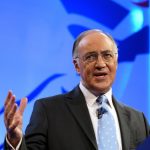
    Gavin Williamson – 2021 Comments on Schools Teaching Latin

    The comments made by Gavin Williamson, the Education Secretary, on 31 July 2021.

    We know Latin has a reputation as an elitist subject which is only reserved for the privileged few. But the subject can bring so many benefits to young people, so I want to put an end to that divide.

    There should be no difference in what pupils learn at state schools and independent schools, which is why we have a relentless focus on raising school standards and ensuring all pupils study a broad, ambitious curriculum.

    Latin can help pupils with learning modern foreign languages, and bring broader benefits to other subjects, including maths and English.

  • Boris Johnson – 2021 Speech at the Global Education Summit

    Boris Johnson – 2021 Speech at the Global Education Summit

    The speech made by Boris Johnson, the Prime Minister, on 29 July 2021.

    Well, good evening, good afternoon ladies and gentlemen, thank you. Thank you and congratulations to you all. Great to see you in person, by the way, isn’t it wonderful that the vaccines have liberated us to be able to come to this conference in London, a wonderful thing.

    Great to see you all, despite your masks, I see some familiar friends in spite of the masks, some of you have taken your masks off in a daring way, but that’s absolutely fine – you’re socially distanced.

    Now listen everybody I want to thank you all for raising your hands, raising your hands high and then thrusting them deep into your pockets in the way that you are, producing this staggering sum of $4 billion going on $5 billion. We often go to summits, we did before COVID struck, and we’d see very often a lot of men in suits, let’s be clear men in suits basically saying that there was a problem before humanity that was so big and so intractable that there was no silver bullet, no quick fix, no simplistic solution. Have you ever been in a meeting like that? Well, this is not that meeting. I want to say this GPE, this Global Partnership for Education, is completely different because this is the silver bullet, this is the magic potion, this is the panacea. This is the universal cure, this is the Swiss Army knife, complete with allen key and screwdriver and everything else that can solve virtually every problem that afflicts humanity.

    And I’m absolutely serious, if you educate the world properly and fairly then of course you end a great natural injustice. But also, if you end the injustice that nine out of ten 10 year olds cannot read a story around the country, 132 million kids aren’t in school or in many of the countries represented here, alas, there are too few girls in school, and there is a gross disparity, a gross disparity in the education of boys and girls. If you end that injustice and you give every girl in the world the same education as every boy, 12 years of quality education, then you perform the most fantastic benefits for humanity- you lift life expectancy, you lift per capita GDP, you deal with infant mortality, and if you educate proper people properly in the way that they deserve then of course you end or you help to end all kinds of ignorance and prejudice and by educating people you help to end all the things that ignorance and prejudice help to create so you deal with terrorism and with war and extremism, and you help people to tackle climate change.

    And so I’m immensely proud of the achievements of this GPE Summit today, I’m proud of what the UK has been able to contribute in spite of the difficult financial circumstances that we’re all going through. We have lashed out 430 million pounds, as Julia rightly pointed out, the biggest sum we’ve ever contributed and I’m proud of the work we do around the world helping to educate young people across our planet, giving lessons in Hauser on the radio in Nigeria, I think it’s amazing to see what we do in South Asia teaching young girls in schools. Now I know, as Uhuru has said, that this pandemic has made things more difficult and we’ve lost ground and we all know the risk that inequality will now be entrenched but now is the time to make up that ground.

    Necessity has been the mother of invention, we’ve all learned how to cope with Zoom, some of us better than others. I think the younger generation probably are getting the hang of this electronic technology perhaps even better than some of us here in this room and they understand how to impart and imbibe information through the internet and I think we’ve got to make sure that we support through our GP, we support Edtech, we support the technical progress that we can make through laptops, through devices of all kinds, we should support the creation of infrastructure of classrooms, of course that’s the right thing to do.

    But never forget fundamentally what this is all about, what is education? Education is the imparting of knowledge of instruction by one human being to another. The people we really need to thank and the people we really need to think about are the teachers across the world. Everybody in this room will probably have somebody that you can think of that was the teacher who made the difference to your life, who encouraged you, who gave you confidence, can you think of one Julia? Mr Crow, there you go, well Julia would not be here without Mr Crow, let’s hear it for Mr crow. Uhuru, I seem to remember that lesson, do you remember that lesson we did with your kids. I owe a lot to all my teachers but I think in particular have a guy called Mr Fox, when I was about, I think about 10 years old, and he took me into the library and I don’t know whether he thought I was in need of remedial help, or whether he thought I had potential, it was never clear to me but he said to me I want you to read these books and it made a fantastic difference and a lasting difference to my life.

    I just want to say the best thing about this summit here today is that we are supporting with huge injections of cash those amazing people across the world who are inspiring young people to think that they can succeed. And they can succeed. And by the way let me give you one idea, someone somewhere, some child somewhere who is being supported by the over 4bn dollars, [what is it? there’s some doubt about this, oh it’s over 4bn dollars but going to be 5bn over 5 years] but some child somewhere may well be the one who goes on to develop the next vaccine to deal with cancer or whatever other problem afflicts humanity. Some kid around the world will absolutely no doubt have their lives transformed, many many kids will have their lives transformed by these funds and that is the objective- to unleash potential across the planet.

    It’s a fantastic thing that you’ve done, I’m very very proud the UK has been able to be part of it and with Uhuru with Julia to offer leadership.

    Thank you for coming to London, thank you for supporting the GPE, thank you for digging into your pockets and thank you for investing in education and young people across our planet, it is the single best investment we can make in the future of humanity. Thank you all.

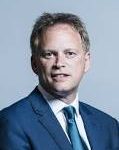
  • Grant Shapps – 2021 Comments on Walking and Cycling

    Grant Shapps – 2021 Comments on Walking and Cycling

    The comments made by Grant Shapps, the Secretary of State for Transport, on 30 July 2021.

    Millions of us have found over the past year how cycling and walking are great ways to stay fit, ease congestion on the roads and do your bit for the environment. As we build back greener from the pandemic, we’re determined to keep that trend going by making active travel easier and safer for everyone.

    This £338 million package marks the start of what promises to be a great summer of cycling and walking, enabling more people to make those sustainable travel choices that make our air cleaner and cities greener.

  • Jeremy Quin – 2021 Comments on UK Space Command

    Jeremy Quin – 2021 Comments on UK Space Command

    The comments made by Jeremy Quin, the Minister for Defence Procurement, on 30 July 2021.

    As our adversaries advance their space capabilities, it is vital we invest in space to ensure we maintain a battle-winning advantage across this fast-evolving operational domain.

    The stand-up of Space Command is an exciting and important step in our commitment to operate in space effectively.

  • Alok Sharma – 2021 Speech on Functioning Voluntary Carbon Markets

    Alok Sharma – 2021 Speech on Functioning Voluntary Carbon Markets

    The speech made by Alok Sharma, the COP26 President, on 29 July 2021.

    Friends, the clock is ticking down on the climate crisis.

    We are running out of time to protect our precious planet from its worst effects, and to keep the goals of the Paris Agreement within reach.

    To keep 1.5 degrees alive, as the UK COP26 Presidency is determined to do, we must halve global emissions by 2030.

    And that means everyone playing their part – governments, investors, civil society and business.

    Alongside companies setting science-based targets to cut emissions to net zero, and building resilience, voluntary carbon markets can play a vital role, enabling us to do more.

    A voluntary carbon market with integrity can incentivise emissions reductions, and it can encourage technology innovation, and promote reforestation.

    And it can raise finance, fast, getting funds to emerging markets and to nature-based solutions, including forest protection.

    This of course is invaluable.

    Because without finance, the task ahead is near impossible.

    But integrity is the watch word.

    With less than a decade to keep 1.5 alive, there is simply no room for greenwashing.

    The era of carbon offsetting delaying meaningful climate action is over.

    We need transparent, reliable markets playing a role in robust emissions reduction strategies, supporting companies to deliver, providing confidence to consumers and investors, and keeping 1.5 degrees alive.

    That is why the work of the Voluntary Carbon Markets Integrity Initiative, working alongside private sector initiatives, is so important.

    And why the UK Government is proud to support it.

    But it will only succeed with your help.

    So I urge all governments, businesses, civil society organisations and Indigenous Peoples listening to engage as fully as possible with the VCMI’s work.

    Help to establish the principles necessary for transparent, functioning voluntary carbon markets, for it to be presented at COP26.

    Together, let’s build our resilience, drive down global emissions, and keep 1.5 degrees alive.

  • Jeremy Quin – 2021 Speech at UK Space Command

    Jeremy Quin – 2021 Speech at UK Space Command

    The speech made by Jeremy Quin, the Defence Minister, at RAF High Wycombe on 29 July 2021.

    It’s great to be here and I was delighted to have the privilege of cutting the ribbon which formally and officially stands up our Space Command.

    And it’s not a moment too soon. Space is in the news like never before.

    As scientists test the limit of our abilities to conduct space travel and billionaire entrepreneurs explore the commercial potential of space tourism, our competitors are trying to assert their dominance by recklessly testing anti-satellite missiles.

    And this is why our dependence on space has never been greater. Satellite constellations in low-earth orbit link up almost every aspect of our daily lives, from mobile phones, the internet and television to transport networks, and even banking systems.

    Militarily, our Skynet satellite system is critical for communication and reconnaissance, weather tracking and navigation.

    But with dependency comes vulnerability.

    That’s why in our recent Integrated Review we recognise space as a major strategic challenge.

    And that’s also why our Defence Command Paper set out our determination to invest in space capabilities over the coming years, backed by around £1.4bn funding on top of the £5bn already being invested in Skynet.

    We’re using that money to set up a National Space Operations Centre, so that we can track activity and ensure our awareness.

    And we’re developing a UK-built Intelligence, Surveillance and Reconnaissance satellite constellation.
    We’ll shortly be handing out our first ever space badges to these pioneers.

    But the key part of the plan is our Space Command. It will allow us to do three things:

    First, it will strengthen the military’s command in space, helping to coordinate commercial space operations and leading to the development of new space-based capabilities.

    Second, as a corollary of that, it will open up exciting new opportunities for industry.

    Our nation has bold space ambitions that will require the most imaginative and innovative companies to come forward with cutting-edge solutions; solutions that enhance our reputation as a science superpower.

    Third, this Command will help us bolster our bonds with key partners like Australia, France and, especially, the US.

    I’m delighted Air Vice-Marshal Godfrey has already welcomed his US counterpart General Dickinson here to discuss joint operations.

    And we’re also delighted to welcome Lt Gen Shaw, Deputy Commander of US Space Command, here today, further emphasising our close cooperation in the Space Domain.

    I know they are acutely aware that, at a time when there is limited international agreement on how to regulate satellites and a lack of clarity on international standards to encourage their use, we have a joint responsibility to safeguard the space commons.

    That means properly understanding this complex domain, protecting our whole space enterprise – be that on Earth or in orbit – and stopping our upper atmosphere becoming a cosmic junkyard.

    In the coming months, we’ll be publishing a Space Strategy and alongside that will be a Defence Space Strategy, with both setting out our plans in more precise detail.

    But, before I hand over, perhaps there is another aspect to what we’re doing in the space domain.

    It is now 30 years since Helen Sharman became the first British person to go into space.

    After 18 months of intensive training, the then 27-year-old embarked on an eight-day mission to the Mir satellite.
    She inspired a generation, in the same way Tim Peake is doing so today.

    And so, I hope Space Command’s work will have a similarly inspiring effect of the next generation.

    Filling them not just with a sense of wonder and majesty for our universe but a sense of the boundless possibilities for their future, because the sky is literally no longer the limit.

    And the dawn of a new space age starts here.

  • Angela Rayner – 2021 Comments on Government Misusing Public Funds on Polling

    Angela Rayner – 2021 Comments on Government Misusing Public Funds on Polling

    The comments made by Angela Rayner, the Deputy Leader of the Labour Party, on 29 July 2021.

    This has the hallmarks of a racket, not a government acting in the national interest during a pandemic.

    Taxpayers’ money that has been abused in this way should be paid back by the Conservative Party. Taxpayers’ money is not the personal cashpoint of Conservative Ministers to dish out to their mates.

    We need a fully independent inquiry into the Government contracts that have been handed out over private email and WhatsApp so we can get to the bottom of this scandal.

  • Sarah Jones – 2021 Comments on Police Numbers

    Sarah Jones – 2021 Comments on Police Numbers

    The comments made by Sarah Jones, the Shadow Minister for Policing and the Fire Service, on 29 July 2021.

    The Tories have spent a decade cutting our police workforce, leaving communities across the country exposed.

    These figures expose the decimation the Tories have caused community policing. While cuts to police staff mean that even new police recruits will end up behind desks backfilling staff roles, instead of on the beat.

    The Government’s new crime plan is in reality a bunch of rehashed policies designed to distract from the damage they have caused. When coupled with an insulting police pay freeze and failure to consult them on the crime plan, it’s no wonder frontline police have lost confidence in the Home Secretary.