Category: Speeches

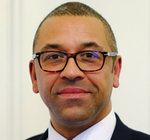
  • James Cleverly – 2021 Comments on Vaccinations

    James Cleverly – 2021 Comments on Vaccinations

    The comments made by James Cleverly, the Conservative MP for Braintree, on Twitter on 27 December 2021.

    Medics tell us that:

    60% of Covid patients in #Essex hospitals are unvaccinated.

    Up to 90% of Covid patients in #London ICUs are unvaccinated.

    Please get vaccinated.

  • Maggie Throup – 2021 Comments on Giving Up Smoking

    Maggie Throup – 2021 Comments on Giving Up Smoking

    The comments made by Maggie Throup, the Minister for Vaccines and Public Health, on 28 December 2021.

    We know that many people make a quit attempt in January, and while there are so many good reasons to stop smoking for yourself, we hope that this new campaign – by highlighting the inter-generational smoking link with parents influencing their children – will be the added motivation many need to ditch the cigarettes for good this year.

    With so much help and support available for parents, carers and anyone looking to quit – including the NHS Quit Smoking app, support on Facebook, daily emails and texts, and an online Personal Quit Plan – you won’t be alone in your New Year’s resolution.

  • Wes Streeting – 2021 Comments on Announcement of No Further Covid Restrictions

    Wes Streeting – 2021 Comments on Announcement of No Further Covid Restrictions

    The comments made by Wes Streeting, the Shadow Secretary of State for Health and Social Care, on 27 December 2021.

    After a difficult 2021, people will be relieved to see no new restrictions ahead of the new year. With infection rates so high, the government needs to come forward with a plan to enable schools and the NHS to run effectively through this latest wave.

    The Government should publish, as a matter of urgency, the very latest data on hospitalisations and NHS staff absence rates, as well as up to date advice from SAGE, so that the public can be reassured that they are genuinely following the data and scientific advice and that Boris Johnson is not simply capitulating to his own opponents in the Tory Party.

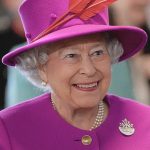
  • Queen Elizabeth II – Statement Following Death of Desmond Tutu

    Queen Elizabeth II – Statement Following Death of Desmond Tutu

    The statement made by Queen Elizabeth II on 26 December 2021.

    I am joined by the whole Royal Family in being deeply saddened by the news of the death of Archbishop Desmond Tutu, a man who tirelessly championed human rights in South Africa and across the world.

    I remember with fondness my meetings with him and his great warmth and humour.

    Archbishop Tutu’s loss will be felt by the people of South Africa, and by so many people in Great Britain, Northern Ireland and across the Commonwealth, where he was held in such high affection and esteem.

  • Priti Patel – 2021 Comments on Extension of Health and Care Visa

    Priti Patel – 2021 Comments on Extension of Health and Care Visa

    The comments made by Priti Patel, the Home Secretary, on 24 December 2021.

    The care sector is experiencing unprecedented challenges prompted by the pandemic and the changes we’ve made to the health and care visa will bolster the workforce and helping alleviate some of the pressures currently being experienced.

    This is our New Plan for Immigration in action, delivering our commitment to support the NHS and the wider health and care sector by making it easier for health professionals to live and work in the UK.

  • Nadine Dorries – 2021 Comments on Licensing Extension for Platinum Jubilee

    Nadine Dorries – 2021 Comments on Licensing Extension for Platinum Jubilee

    The comments made by Nadine Dorries, the Secretary of State for Digital, Culture, Media and Sport, on 26 December 2021.

    Next year we will celebrate an unprecedented milestone in our national life. No other British monarch has served for 70 years and it is fitting that, as part of the Platinum Jubilee celebrations in June, we toast Her Majesty for her dedication and service.

    2022 will be a year of pride, celebration and coming together with the Platinum Jubilee alongside our other blockbuster events including the Birmingham 2022 Commonwealth Games and Unboxed, championing creativity in the UK.

  • Priti Patel – 2021 Comments on Licensing Extension for Platinum Jubilee

    Priti Patel – 2021 Comments on Licensing Extension for Platinum Jubilee

    The comments made by Priti Patel, the Home Secretary, on 26 December 2021.

    Her Majesty The Queen is an example to us all – she has served the UK and the Commonwealth with the utmost dignity, steadfastness, and resolve throughout her remarkable reign.

    The Platinum Jubilee is a truly historic occasion, and it is right that the country should mark this celebration in a special way.

    This extension will enable families, friends and communities across England and Wales to raise a glass to toast Her Majesty The Queen and mark her incredible service to our country.

  • Vicky Ford – 2021 Statement on the Somali Elections

    Vicky Ford – 2021 Statement on the Somali Elections

    The statement made by Vicky Ford, the Minister for Africa, on 26 December 2021.

    The UK is deeply concerned by the political situation in Somalia. Somalia stands at a critical juncture. For the sake of Somalia’s stability and security, it is vital Somalia’s leaders conclude the electoral process as soon as possible in a way that ensures the confidence of the Somali people in its outcome.

    We underline the importance of an urgent meeting of the National Consultative Council (NCC) as the appropriate forum in which to resolve fundamental issues, address observed electoral shortcomings and accelerate the process. Greater transparency in the process will be particularly important. We reiterate that the NCC is established as the forum through which grievances with the process are addressed. At the technical level it is essential that the independence of the authority of the Electoral Bodies is respected.

    We urge all Somalia’s leaders to attend the NCC meeting and to engage constructively in these talks. We remain supportive of any process that respects the 17 September 2020 and 27 May 2021 agreements and leads to consensus on a way forward.

    This is a time for leadership and cooperation by all parties. It is vital Somalia’s leaders look beyond self-interest and refrain from any actions that could exacerbate the political tensions and risk violence, including through public statements, parallel processes or other provocative measures.

    As we stated earlier this year, in the absence of consensus leading to inclusive and credible elections being held without further delay, the international community’s relationship with Somalia’s leadership will change. The UK will work with its international partners on a common approach to re-evaluate our relationship and the nature of our assistance to Somalia.

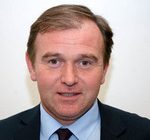
  • George Eustice – 2021 Comments on Investment in Fisheries

    George Eustice – 2021 Comments on Investment in Fisheries

    The comments made by George Eustice, the Environment Secretary, on 27 December 2021.

    A year on from the Trade and Cooperation Agreement, a positive picture is emerging for our fishing industry.

    Today, we are announcing a £65 million infrastructure scheme which will allow us to modernise ports and harbours and increase capacity and efficiency at processing facilities. A £10 million fund will encourage new entrants into the processing, catching and aquaculture sectors, and train and upskill those in the industry.

    We are committed to levelling up coastal communities across the UK, and this marks a period of rejuvenation for our fishing industry.

  • Boris Johnson – 2016 Speech on Leaving EU Creating More Money for NHS

    Boris Johnson – 2016 Speech on Leaving EU Creating More Money for NHS

    The speech made by Boris Johnson, Gisela Stuart and Boris Johnson on 3 June 2016.

    A STRONGER NHS AND MORE MONEY FOR THOSE IN NEED – WHY LEAVING THE EU HELPS PROTECT WORKING PEOPLE

    Our NHS is a precious asset. No other European country gives its citizens the guarantee of free healthcare, there when people need it, irrespective of ability to pay.

    The NHS is a great British institution and its core values – of solidarity, fairness and inclusivity – need to be protected and defended. The wealthy can always buy themselves top quality care and jump the queue for treatment. Working people don’t have that option. Working people need an NHS which is strong and well-funded to give them security at every stage in their lives.

    As our population grows, and as we all live for longer, so the pressures on the NHS are set to grow. We believe that one of the best ways to protect, and to strengthen, the NHS, for the people of this country is to use some money we currently spend on EU membership to invest in improving healthcare.

    The NHS leadership has said it needs an additional £30 billion each year by 2020 to meet future pressures. Eight billion pounds will come from spending increases, and £22 billion will need to come from efficiency savings. The Government rightly committed at the last election to meet that £8 billion target.

    But we don’t underestimate how difficult it will be to make the £22 billion worth of efficiency savings. Again, we are sure ministers, managers, doctors, nurses and everyone in the Health Service will do everything they can. However, trusted health experts such as the Nuffield Trust, the Health Foundation and the King’s Fund have all stressed how difficult it will be to achieve the planned net efficiency savings of 2% each year.

    This level of savings is far above what the NHS has achieved historically. And the demand for NHS services is only set to grow. NHS Improvement, the NHS regulator, has identified rising demand as one of the principal challenges for the NHS’s future funding.

    If we vote to leave the EU on 23 June, we will be able to do something about one of the main causes of higher demand – uncontrolled and unlimited migration from the EU into the UK.

    In 2015, 270,000 people came to the UK from Europe, a population movement equivalent to all the inhabitants of a city the size of Newcastle arriving in our country. Net migration was 184,000, a population increase equivalent to adding a city the size of Oxford to the UK population. Year after year, similar numbers arrive.

    On top of this, between 2005 and 2014, there were 475,000 live births to mothers who were EU citizens. This is the equivalent of adding a city the size of Manchester to the UK population. The cost of maternity services alone to these families is likely to exceed £1.3 billion.

    As we have set out before, it is government policy for five new countries to join the EU: Albania, Macedonia, Montenegro, Serbia and Turkey. We are paying billions to these countries to help them join. The EU is already opening visa-free travel to Turkey. That would create a borderless travel zone from the frontiers of Syria and Iraq to the English Channel. The EU’s plans for future growth will lead to demands being placed on the NHS far beyond what its funding can cope with.

    We have set out our plan to change the immigration system after we vote to leave. We will end the ‘free movement’ of people from the EU and take back control. We will introduce a points-based system under which migrants will be admitted to the UK on the basis of their skills, not their passport.

    But even after we take back control of our migration policy, the NHS will still face funding pressures. Restoring control over our borders is a necessary step, but there is more we should do to guarantee quality care for working people.

    We need to ensure the NHS has as much money as possible and after we vote to leave we will have the means to do so without damaging public finances.

    After we Vote Leave on 23 June, the Government should use some of the billions saved from leaving the EU to give at least a £100 million per week cash transfusion to the NHS.

    This money will be over and above the commitment that the Prime Minister rightly made at the last election to an £8 billion real terms increase.

    How can we pay for this additional spending? From the money we save from leaving the EU.

    The UK’s gross budget contribution is currently over £19 billion or £350 million per week. According to Treasury estimates, this will increase to nearly £400 million per week by 2020.

    We get some cash back through a negotiated rebate and some other money we hand over to the EU is spent here in the UK on areas like farm subsidies.

    But the rebate is not a fixed benefit anchored in the treaties. It is there only by the consent of other EU nations, it has to be negotiated, it has already been reduced, and if we vote to stay it can, and will, be whittled away.

    If we Vote Leave, we take back control of the whole sum. We will no longer be dependent on other countries to protect the money we get back in our rebate. And we will continue to support farming, science, universities and poorer areas of the UK with the money they currently receive from the EU.

    That would mean we would then be able to spend all of our net EU contribution of £10.6 billion on our priorities like the NHS and cutting VAT on fuel.

    Other money will also be liberated to spend on public services in the event of a vote to leave.

    We have already set out plans to amend the European Communities Act 1972 immediately after the referendum to stop multinationals using EU law to claim tax refunds in the UK. This will save taxpayers between £7 billion and £43 billion by 2021.

    It is wrong that big businesses have been using the European Court to starve public services of money they could never have recovered under English law.

    If we leave the EU we could also restore our system of taxation of offshore companies which was set aside by the European Court. The European Court’s judgment has cost UK taxpayers an estimated £840 million each year.

    We can also scrap the EU’s foolish rules on how Whitehall runs procurement processes which add billions to costs every year. The European Commission’s own conservative figures suggest that procurement rules cost at least £1.7 billion each year and delay projects by years.

    There are billions of savings that Government will be able to make after we vote leave and escape the control of the rogue European Court.

    A vote to leave is a vote for a fairer Britain. You only have to look at who funds the IN campaign to realise this: the undeserving rich, the investment banks that crashed the world economy in 2008 and who bankrupted the people of Greece, and the multinational corporations who spend millions on lobbying the corrupt Brussels system.

    This is the choice on 23 June.

    A Vote to Remain means that we keep handing over control of £350 million of our money to the EU every week. A Vote to Remain means we cannot control immigration. A Vote to Remain means greater pressure on the NHS, school places and housing.

    If we Vote Leave, we can take back control of our borders and our money. By 2020, we can give the NHS a £100 million per week cash injection, and we can ensure that the wealthy interests that have rigged the EU rules in their favour at last pay their fair share.

    That is why we believe a Vote to Leave is the right choice for social justice, safer for public services, jobs, and families and better for the next generation.