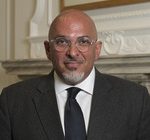
The speech made by Nadhim Zahawi, the Secretary of State for Education, on 11 March 2022.
Ladies and gentlemen, I am really pleased and honoured to be here for my first ASCL conference.
I have been looking forward to being with you.
As we gather today, the Ukrainian flag flies over the Department for Education. It does so because we stand shoulder to shoulder with all Ukrainians against the barbaric, criminal invasion of their sovereign, democratic country.
For us in our country, it is almost impossible to imagine the horror they are going through, because we know that more unites us than separates us, and we are lucky to live in a safe, secure country where we resolve our differences through debate, discussion and of course through and the ballot box.
We will continue to support Ukrainians in any way we can. I know schools and colleges are doing what they can to support their students make sense of what they are seeing on television.
And we have a team that’s already making plans for a capacity of 100,000 Ukrainian children that will come in and take their places in our schools.
To support schools’ efforts, I asked Oak National Academy to roll out an auto-translate function across all 10,000 of its online lessons. And I can share with you today that they have delivered on this, meaning Ukrainian children arriving in the UK can access education in their native language as they transition into life and safety here.
In that same spirit of unity and support, after the two years we’ve just been through, I’d like to thank you on such a well-chosen and positive theme.
I think all leaders should aim to be ambitious but there has never been a more critical time for leaders to make ambition really count.
Actually, ambition is what gets me racing to the office in the morning …
And before you say it, well there’s a surprise… he’s another politician…
My ambition isn’t for me, but for every child, every teenager, every adult learner to get the absolute best chance to succeed in life.
Which I know is exactly what you want for every child.
So, with that in mind, as I speak to you, I want us to ask ourselves, why are we here today?
Before I go any further, I just want to say thank you for the magnificent way you have responded to Covid – I know the past two years have been absolutely bruising.
Now, typically when you hear from an Education Secretary, you might expect to hear about accomplishments in the sector – and certainly, in this room, there are enough accomplishments to fill the entirety of my speech.
I will in a moment talk about what we have achieved together.
But before I do that, I want to tell you why this is so important to me personally.
I came here aged 11, unable to string a sentence of English together. I hid at the back of the class.
Even the thought of going to school was a scary one.
If my parents hadn’t had the wherewithal to push me to take advantage of the education this great country provides, I don’t know where I would have ended up.
And if my teacher Bob Hiller hadn’t reminded me to funnel my – how should I put it – creative, disruptive energy into something good, I certainly wouldn’t be here today. Bob, wherever you are, thank you.
Skills, schools, families. These are my priorities, and these are informed in many ways by my own life story.
They are what made the difference to me and what I think can make a real difference in the lives of children across our country.
Because there are children in our country, right now, who need the support that I needed.
And those children will achieve incredible things if given that chance.
Colleagues, we are going on a journey – I hope together – to do exactly that.
The next chapter of this journey is the Schools White Paper.
Since 2010 we have been on a mission to give every single child a great education, and I think we’ve made huge progress, but we have not yet achieved every goal that we need to.
Too many children still do not get the start in life that will enable them to go on and fulfil their potential.
Even before the Covid pandemic, about one in three primary school students did not reach expected standards in reading, writing and maths.
And we all know that children who are on free-school meals or who have special educational needs are less likely to achieve the standards we want for them, and that gap widens as children get older, making it harder and harder for them to catch up…
I know you’ll agree with me that this has to change. This is going to change.
I want us to really come together… work together… so that we can work out how we are going to achieve this.
The biggest asset we have in changing the lives of children for generations to come is the energy and expertise of our teachers, and of course the school and college leaders in this room and around the country.
You can’t have a great education if you don’t have a great teacher.
You will already know that I have set an ambitious target that 90% of children leaving primary school should meet the expected standards in literacy and numeracy, up from 65% today.
Every child must be able to read, write and do basic maths fluently.
They’re important in their own right, but also act as a door to other wonderful and joyful subjects that can inspire young minds as they make their way through school, college and beyond.
Let me be clear: these are ambitions for the whole system. They are about making sure that we are ambitious for every child across our country.
The White Paper sets out a plan to deliver on this strategy, and it is an achievable vision only because I know that in this room, we have the excellence and leadership to make it a reality.
I know that investing in teachers and leaders – in you and your staff – is the single most important way to improve pupil outcomes.
I am determined to make our system of training and support for teachers and school and college leaders world-class.
We will deliver our promised 500,000 teacher training opportunities to make sure that every teacher, in every corner of our country, benefits from evidence-based professional development at every stage of their career.
I am proud to be able to confirm today that more than 25,000 teachers and almost 23,000 mentors have taken part in our flagship Early Career Framework programmes this year.
This is beyond even my most optimistic estimate, and, I think, testament to the support you as leaders are providing.
But I also know that embedding this programme has been a huge undertaking for you and your colleagues, particularly mentors. We are listening to your feedback and we will be making improvements in areas that you have told us are causing real difficulties.
And I want to keep working with you now and in the future to make sure we take forward this shared priority and to ensure that we achieve our shared goal of giving every early career teacher their entitlement to a high-quality, structured induction to the teaching profession.
Building on this success, our golden thread of high-quality teacher development programmes includes a new Leading Literacy National Professional Qualification, available from this autumn.
This will mean every school can have a trained literacy expert, driving higher standards of literacy teaching, kick-starting our 90% literacy mission.
With this, as with the rest of the reformed suite of National Professional Qualifications, these will be freely available to all teachers and leaders in state-funded schools and colleges.
What I ask, for those here or watching this speech, is that every leader here today walk away from this with a commitment to enrol their staff on a National Professional Qualification from the autumn.
Alongside world-class training, we will also continue to invest in top graduates with generous bursaries and scholarships for those who choose to train to teach.
And we will deliver on our manifesto commitment to the £30,000 starting salary.
As an engineering graduate, I know the wonders of science and I want more children to be exposed to and inspired by science – not least to help save the planet.
I want them to be taught by well-trained science teachers, equipped to give future generations of scientists the knowledge they need to tackle climate change, develop new vaccines and maintain our place as a scientific superpower.
Through our Levelling Up Premium worth up to £3,000 tax-free for maths, physics, chemistry and computing teachers, we will retain more teachers in some of the most important subjects and of course in places where they are needed most.
And because teaching is an increasingly global profession, I want to attract the very best teachers from across the world.
That is why we will also introduce a new relocation premium to help with visas and other expenses for teachers and trainees moving here from abroad.
But even this is not enough: I want our country to be known around the world as the place to train and practise teaching, rivalling the likes of Shanghai, Canada and of course Finland.
But of course, great teachers need support.
I want to empower teachers to focus on delivering the best possible lessons, and support schools by giving them access to resources and approaches that have proved their effectiveness.
Oak National Academy has certainly been one of our great achievements.
It was created by teachers, for teachers, and showed brilliantly what the profession was capable of in the hour of need.
Over 500 teachers from over 50 schools, trusts and partners worked together, delivering over 140 million lessons during the pandemic.
Building on this success, we will now establish Oak as a new arms-length curriculum body, working independently of government and collaboratively with the sector.
Why is this important?
The data backs up what you all know anecdotally: a recent survey showed 46% of primary teachers plan lessons from scratch. This is a drain on teachers’ time and I want to help fix that.
Curriculum design is complex, and we want to share the very best practice so teachers can draw inspiration from examples of evidence based, carefully sequenced curriculum design.
Instead of each teacher reinventing the wheel, they will be able to access content, for free, that continuously evolves and gets better and better on the back of feedback from teachers across the country – saving time and of course improving lessons immeasurably.
Under the framework already provided by our excellent national curriculum, the curriculum body will lead the creation of curriculum maps and thousands of downloadable lessons and resources… and all freely available to all teachers, parents and children.
These will help schools in a variety of ways depending on their needs. They will be also entirely optional and of course these materials will not be mandated by Ofsted.
Teachers, who know their pupils best, can then adapt these, and the curriculum body will work closely with teachers to ensure it is meeting their needs, including those supporting children with additional needs.
And the body will continue work with the Education Endowment Foundation – the EEF – to ensure its work is informed by the best available evidence and aligns with best practice.
At the heart of this body will be collaboration and partnership, I am committed to building on the “by teachers, for teachers” approach that has been a key success factor for Oak National Academy.
And with the same motivation to use evidence wherever we can, we will permanently put evidence at the heart of the teaching profession by re-endowing the EEF.
As independent evidence guardians in the system, they will continue to generate and spread world-leading education evidence. The EEF will lead an ongoing cycle of reviews of the underpinning frameworks for teacher development at all levels to make sure they’re always based on “what works” to improve pupil outcomes.
They will keep these frameworks updated in line with the best available evidence from this country and of course from abroad, giving an independent badge of assurance to our teacher development programmes… and all the while making sure teachers in England get the cutting-edge training they need to drive up standards.
And we will continue to work with the EEF to scale up and spread effective teaching practice in literacy and numeracy to ensure pupils have the best chance of catching up following the pandemic.
Colleagues, we must be sky-high in our ambitions for every pupil. If we don’t aim for excellence, we’re not going to achieve it by chance.
I’ve listened to you, acted on your insight, and looked at the evidence across the whole educational landscape. And evidence shows that a family of schools that are tightly managed and well supported achieve the right outcomes for their students and deliver those important opportunities for staff.
How? There are three things I want to highlight.
A resilient profession… because high performing families of schools support leaders and give great opportunities to teachers for training and career progression.
Collaboration… because schools can benefit from working together, creating opportunities to share resources and reduce workload, while reinvesting back into frontline teaching.
And Freedom… because leaders spend less time worrying about managing facilities and more time making sure children learn and teachers teach.
I’ve been clear before that I see this future as involving all schools being part of a strong trust – and I will say more about this in my White Paper.
But I will say now that I underline the word strong because, and we mustn’t sugar coat this, some trusts are not high performing. The White Paper will set out how I plan to deal with that challenge as well.
You are the future my friends, and you are going to produce other leaders of the future. We need you – I need you – on this journey.
I know that everyone in this room will have an opinion on this – I’d expect nothing less, but I ask you to consider the data, the evidence, with an as open mind as possible.
What I will pledge to you is that I will be guided by the data and the evidence.
I want evidence to be our watchword, just as it was mine as vaccines Minister and continues to be now as Secretary of State for Education.
In fact, following what the data tells me has shaped the new Schools White Paper.
But that doesn’t mean I expect everyone to agree with me all the time. I am not afraid to disagree with you, and I know you – certainly Geoff – are not afraid to challenge me.
What is important is that we follow what the evidence says. If we have a divergence of views on the evidence, then we will have a healthy debate and I will make my case as I am sure you will make yours.
But no matter what, the priority must be working together.
Because we can’t level up, we can’t deliver for children, if we don’t work together.
Everything we are doing as a government comes back to one core mission and that is that we make life fairer for every child, in every school in our country.
One of the most effective tools we have at our disposal to meet our ambition is targeted support.
A huge part of that is tutoring, which I know will be going on in all of your schools right now.
It’s important to step back and look at what we’ve achieved with the National Tutoring Programme.
Tutoring used to be something only richer parents could afford.
Thanks to the NTP, today it’s benefitting all children who need it, from Bristol to Blackpool and Newquay to Newcastle, helping them realise their potential.
I am proud to be able to say that more than one million tutoring courses have been delivered since we rolled out this programme last year. ASCL, this is incredible.
But there are still children who need this targeted tuition, and I know that many of you have had challenges with the programme. I have listened and I have heard you, and we are making improvements as I speak to you today.
This includes the immediate transfer of up to £65 million into School Led Tutoring from the other two routes. It’s become clear to me that by far the most popular route is the one run by you – the school.
I hope you will agree with me that what we are doing together on tutoring is an invaluable addition to our education system, and I am continuing to look at how we can make sure it is having as big an impact as we can make it.
In addition to this, one of my priorities in the White Paper will be the schools and areas of the country most in need of support.
Areas including County Durham, Cornwall and Hartlepool will get extra investment, to build strong trusts, enabling them to retain and recruit the best teachers and tackle those problems that have stopped them achieving what they should be achieving.
I want to get this right, and I want you to have your say, so I will be announcing a consultation shortly on tackling school underperformance.
Ahead of that, we must build on what we have already accomplished.
We must make the most of the £7 billion increase in core spending 2024-25 – with an increase in real terms per pupil funding of 4% next year alone – really count.
And, we cannot say we care about children’s education if we ignore those most in need. So, we must protect the pupil premium to support schools in improving outcomes for disadvantaged students.
Because I have the same high ambitions for children with special educational needs and disabilities as I do for every child. And I know that they benefit from excellent teaching that allows them to fulfil their potential.
I also know that headteachers are doing an incredible job at supporting children with SEND, and worked tirelessly to support them throughout the pandemic.
So, before I come to a close, I want to say that the plans I am setting out today – for teacher development, for evidence-based practice, and for high quality curriculum – will all help to support children with SEND. But there is further to go.
The forthcoming SEND Review will set our ambitious proposals for how we will deliver a system that ensures every child and young person gets the right support in the right place and at the right time.
Geoff, I began by asking everyone why we are here today.
I am here today to deliver on the promise in this room.
I am here to embark on a journey together – one that means every single child and learner gets the start in life to be the best version of themselves….
I couldn’t hope to deliver this vision if it wasn’t for you…
Thank you.