Category: Speeches

  • Ben Wallace – 2022 Comments on Military Helping the NHS in London

    Ben Wallace – 2022 Comments on Military Helping the NHS in London

    The comments made by Ben Wallace, the Secretary of State for Defence, on 7 January 2022.

    The men and women of our Armed Forces are once again stepping up to support their dedicated colleagues in the NHS, as they work hand-in-hand to protect the nation from Covid-19.

    They have shown their worth time and again throughout this pandemic, whether driving ambulances, administering vaccines or supporting patients in hospital and they should be proud of their contribution to this truly national effort.

  • Angela Rayner – 2021 Comments on Serious Allegations Made About Conduct of Michelle Mone

    Angela Rayner – 2021 Comments on Serious Allegations Made About Conduct of Michelle Mone

    The comments made by Angela Rayner, the Deputy Leader of the Labour Party, on 24 November 2021.

    There are serious questions that Baroness Mone must answer about whether she was telling the truth when she said that she played no role in the awarding of £200m of taxpayers’ money to PPE Medpro. Boris Johnson and the Conservative party also have serious questions to answer about Baroness Mone’s position if she is found to have lied about her role in these contracts and the VIP fast-track lane.

    If Baroness Mone wasn’t telling the truth about her role in these contracts, then she has clearly failed to uphold the Nolan principles and there are further questions to answer about whether she has breached the House of Lords code of conduct. Baroness Mone should refer herself to the House of Lords commissioners for investigation if she is confident she has done nothing wrong and has nothing to hide.

  • Sajid Javid – 2022 Comments about the Flu Vaccine

    Sajid Javid – 2022 Comments about the Flu Vaccine

    The comments made by Sajid Javid, the Secretary of State for Health and Social Care, on 6 January 2022.

    It is incredible that more people aged 65 and over have received their flu vaccine this year than ever before. Getting your winter vaccines – whether that is your flu jab if eligible or your booster jab – is one of the most important things people can do this winter.

    Record numbers of people took up the offer of a free flu vaccine last year and the programme is expanding even further this year, with a record 35 million people in England eligible.

    Don’t delay – all those eligible should book their winter vaccines as soon as possible.

  • Pat McFadden – 2022 Comments on Rising Energy Bills

    Pat McFadden – 2022 Comments on Rising Energy Bills

    The comments made by Pat McFadden, the Shadow Chief Secretary to the Treasury, on 6 January 2022.

    The Government’s incompetence and failure has contributed to this crisis – destroying UK gas storage, regulation failures which customers will now have to pay for and more.

    Ministers could ease the burden on families right now by cutting VAT on energy bills.

  • Angela Rayner – 2022 Comments on Lord Brownlow’s Access to the Prime Minister

    Angela Rayner – 2022 Comments on Lord Brownlow’s Access to the Prime Minister

    The comments made by Angela Rayner, the Deputy Leader of the Labour Party, on 6 January 2022.

    It appears that Lord Brownlow had access to the Prime Minister and Culture Secretary because he was paying for his luxury flat renovations.

    It is pretty unbelievable that Boris Johnson didn’t know who was paying for his luxury flat renovations.

    If so, that is corruption plain and simple. No one should be able to buy access or exchange wallpaper for festivals. Boris Johnson has serious questions to answer.

  • Michelle Mone – 2018 Speech in the House of Lords on Child Obesity

    Michelle Mone – 2018 Speech in the House of Lords on Child Obesity

    The speech made by Michelle Mone in the House of Lords on 17 April 2017.

    My Lords, I too congratulate the noble Baroness, Lady Walmsley, on securing this timely debate. There is much to welcome in the Government’s plan to tackle childhood obesity. It is of grave concern to me that those most affected by the obesity epidemic are among the poorest in this country. I am sure I share the belief of all noble Lords that people should not be at a higher risk of obesity and cancer just because they are on low incomes.

    I grew up in the East End of Glasgow. I did not learn anything about food and nutrition until I started my business and my entrepreneurial career. I was eating really badly and put on lots of weight. My children too were eating unhealthily. Once I learned the basics of nutrition, I changed what I ate, lost tons of weight and started to work out. I became a lot happier and healthier and my children followed me. It is far too easy for people to point the finger at low-income parents and criticise them for not feeding their children properly, but I think we are putting the blame in the wrong place. When you are on the breadline, your focus is, “I just need to feed my kids”. You will reach for a tin of spaghetti hoops, pre-packed, convenient ready meals or fish fingers and oven chips, thinking that you are providing a decent meal for your kids. We put a lot of trust in manufacturers and supermarkets, believing that they are selling us food that is healthy and nutritious, but that trust is misplaced.

    The fact is that the food industry, both manufacturers of processed food and supermarkets, can make billions of pounds selling high-sugar, high-salt, low-nutrition foods at cheap prices, regardless of the impact it has on childhood health. Essentially, the Government are subsidising the food industry to the tune of £5 billion-plus per year—the cost to the NHS of the obesity health epidemic. These trends, unless stopped, will cost the NHS tens of billions in the coming years. Changing behaviour around food at childhood, teaching in schools and educating parents on the dangers of what they are eating will prevent lifelong problems. We can save billions of pounds and live healthier, more productive lives.

    We have been here before on many different matters of public health. We eventually banned lead from paint when we realised it was killing people—although 86 years after Australia. Wearing a seatbelt became the law when we realised that not wearing a seatbelt meant we were more likely to die in a car crash. And we put health warnings on cigarettes when we realised that smoking caused cancer, although it took 50 years to achieve this. How long do we wait to act on obesity? At what point do we accept that our food manufacturers and supermarkets are selling food that is slowly killing their customers? It must be made clearer to families that a diet of kebabs, chips, chocolate, burgers, sugary drinks and convenient ready meals does not constitute a healthy, balanced diet just because these products are sold in supermarkets and available at takeaways. We must act when less healthy foods are three times cheaper than healthy foods, and foods with red traffic light labels are 20% more likely to be on promotion.

    We can change food labelling once we are out of the EU. How should we do this? First, we must apply health warnings. As the Royal Society for Public Health has advised, high-fat, salty and sugary foods, which are linked to obesity and cancer, should carry a clear health warning, as cigarettes do.

    Secondly, food labelling must be simple and easy to understand. The “recycle” symbol is one of the most recognised in the world. In the same way, a positive food choice should be instantly recognisable at the supermarket. Australia’s Health Star system rates foods out of five stars. The more nutritious the food is, the more stars it gets. It is simple. If we can get a similar system, and do it right, this sort of labelling will help families make positive choices.

    Change is possible. The food industry has responded amazingly to the “Blue Planet” documentary, which shifted our attitudes and practices around plastic almost overnight. Iceland is working to reduce the use of plastics in its packaging to save dolphins. It is banning palm oil in its own products to save rainforests. But what are Iceland and the other supermarkets doing to end the supply of goods that fuel childhood obesity and illness? Let us work hard in this House to challenge the food industry to make it easier for hard-pressed families to make positive food choices, by getting real about the health risks of cheap, processed foods, adding health warnings to packaging, and devising simple labelling to help families make informed choices. Together, we can end the £5 billion-plus NHS grant to the food industry, and stop this obesity epidemic now.

  • George Galloway – 2022 Comments on the Personal Conduct of Michelle Mone

    George Galloway – 2022 Comments on the Personal Conduct of Michelle Mone

    The comments made by George Galloway, the former Respect and Labour MP, on Twitter on 6 January 2022.

    If true, there must be a prison sentence at the end of this:

    [Tory peer Michelle Mone secretly involved in PPE firm she referred to government | Coronavirus | The Guardian]


  • Metropolitan Police – 2022 Statement on the Personal Conduct of Michelle Mone

    Metropolitan Police – 2022 Statement on the Personal Conduct of Michelle Mone

    The statement made by the Metropolitan Police on 6 January 2022.

    In June 2021 police received an allegation of a racially aggravated malicious communication in relation to information posted on a messaging app.

    Police spoke to the complainant and advised that for the investigation to progress a statement would need to be taken; for this to be admissible in any future court proceedings, this would need to be done in person.

    In October, the complainant gave a statement to police and the investigation continues. A 50-year-old woman has been invited to attend for an interview under caution at a future date.

  • Michelle Mone – 2022 Comments Made by Mone’s Solicitors to the Guardian

    Michelle Mone – 2022 Comments Made by Mone’s Solicitors to the Guardian

    The comments alleged to have been made to the Guardian by Michelle Mone’s solicitors.

    “Contacted about the Guardian’s new findings, Mone’s lawyers said its reporting was “grounded entirely on supposition and speculation and not based on accuracy” and declined to provide direct responses to a series of detailed questions. “You also appear to misunderstand our client’s responsibilities to you,” they said. “She is under no obligation to say anything to you.””

  • Nick Thomas-Symonds – 2022 Speech on UK-Australia Free Trade Agreement

    Nick Thomas-Symonds – 2022 Speech on UK-Australia Free Trade Agreement

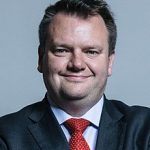
    The speech made by Nick Thomas-Symonds, the Shadow Secretary of State for International Trade, in the House of Commons on 5 January 2022.

    I am grateful to the Secretary of State for her statement and for advance sight of it.

    I would say at the outset that we on the Labour Benches are in favour of negotiating trade deals that benefit UK workers and businesses and promote our values around the world, and we will not hold the Government to impossible standards, but we will hold Ministers to what they have promised people they will deliver from the negotiations. Those promises make it even more important that Ministers show strength at the negotiating table and defend UK interests to the utmost. Other countries, in future negotiations, will look at what was conceded to the Australian negotiators and take it as a starting point.

    We already have a UK-Japan trade deal that benefits Japanese exporters five times as much as it does UK exporters. A worrying pattern is emerging of not standing up for UK interests. It is what makes the Government’s failure in so many aspects of this deal so costly for the United Kingdom. The Government’s own impact assessment shows a £94 million hit to our farming, forestry and fishing sectors and a £225 million hit to our semi-processed food industry.

    The Government claim that they are trying to mitigate that with tariff-free access being phased in over several years, but what is being done is totally inadequate. On beef and sheepmeat, the phasing-in period is 15 years, but the quotas being set by the Government for imports from Australia are far higher than the current level of imports. On beef imports, for example, when Japan negotiated a deal with Australia it limited the tariff-free increase in the first year to 10% on the previous year. South Korea achieved something similar and limited the increase to 7%. But this Government have negotiated a first-year tariff-free allowance of a 6,000% increase on the amount of beef the UK currently imports from Australia. On sheepmeat, in the first year of the deal, the Government have conceded a 67% increase in the tariff-free quota. Why did Ministers not achieve the same as Japan and South Korea?

    Why have Ministers failed to ensure that Australian agricultural corporations are not held to the same high standards as our farmers? The Secretary of State mentioned animal welfare standards in her statement, but what the Government have agreed is a non-regression clause. To be clear, that does not mean that the standards will be the same in both countries. That is not fair competition. What will actually happen is that meat produced to far lower animal welfare standards will get tariff-free access to the UK market. So much for the promise of the Secretary of State’s predecessor that the Government had no intention of striking a deal that did not benefit our farmers. Is it any wonder that Australia’s former negotiator at the WTO said:

    “I don’t think we have ever done as well as this”?

    On climate change, which the Secretary of State mentioned, the COP26 president said, on 1 December, that the deal would reaffirm

    “both parties’ commitments to upholding our obligations under the Paris agreement, including limiting global warming to 1.5°.”—[Official Report, 1 December 2021; Vol. 704, c. 903.]

    But an explicit commitment to limiting global warming to 1.5° is not in the deal. Perhaps the Secretary of State can tell us what went wrong in those final days. Does the Secretary of State also accept that the failure to include that explicitly in this important deal damages the UK’s ability to lead on climate change on the world stage—[Interruption.] Ministers shout at me, but they told the House on 1 December that it would be included. What went wrong?

    The Secretary of State has confirmed that she has asked the Trade and Agriculture Commission, as she is required to do, for advice on the impact of the deal on statutory protections for agriculture. Will she confirm when the Government’s own report will be available?

    On scrutiny, why are the Government promising a monitoring report approximately two years after the agreement comes into effect, and every two years thereafter? Why not every year? In addition, the Secretary of State spoke about the impact of trade deals on the whole of the United Kingdom. Can she confirm what steps she will take to address any concerns raised by the devolved Administrations, and how she will formally involve them in the ratification process?

    Tariff-free access to our UK market is a prize Ministers should not give away easily. However, looking at the concessions made by this Government, are people not right to worry that the Government are more interested in a quick press release announcing a completed deal than they are in standing up for UK jobs and livelihoods?