Category: Speeches

  • Mark Pawsey – 2022 Speech on the A5 in the Midlands

    Mark Pawsey – 2022 Speech on the A5 in the Midlands

    The speech made by Mark Pawsey, the Conservative MP in Rugby, in Westminster Hall on 23 March 2022.

    I beg to move,

    That this House has considered the matter of increasing capacity and other improvements to the A5 in the midlands.

    It is a pleasure to serve under your chairmanship, Mr Hosie, on an important day here in Westminster, and to be able to highlight a vital issue for residents and businesses in my constituency and in the broader west midlands region. By way of introduction, the A5 is one of the UK’s oldest roads and a strategic route operated by National Highways. It connects London to north Wales and runs through large parts of central England, and I wish to focus on that part of the road.

    For many years, various groups have been involved in campaigning about the state of the road, including colleagues from neighbouring constituencies, many of whom are present today; leaders of our local councils; businesses, both large and small, throughout the west midlands; and Midlands Connect, which researches, develops and progresses transport projects to provide the best social, economic and environmental benefits to the midlands. We also have an overarching group called the A5 Transport Partnership.

    In recent years, all those groups have been lobbying central Government for funding to improve the strategic 53-mile corridor of the A5 running from the M1 at junction 18 in Warwickshire—close to and then bordering my constituency—all the way through to the M5 at junction 12 in Staffordshire. That strategic corridor through the west midlands not only connects the M1 and the M6, but intersects the M42 and the M69.

    Those motorways in the centre of England are four of the country’s busiest motorways, and the A5 corridor is home to almost 3 million people, supporting 1.3 million jobs and serving several large cities and towns, such as Tamworth, Nuneaton, Cannock and Hinckley, as well as my constituency of Rugby. It also supports major employment sites including Magna Park and the MIRA enterprise zone.

    Given its strategic importance at the centre of England, this section of the A5 sits at the heart of what is known as the logistics golden triangle, around the districts of Rugby, Daventry, Harborough, Hinckley and Bosworth. With that golden triangle, the corridor creates £22 billion in gross value added annually, which is approximately 10% of the total GVA of the area covered by Midlands Connect, the organisation entrusted by central Government to help identify research on the most important transport investments.

    I intend to show that, with the improvements we all believe to be necessary, this corridor of the A5 has the potential to provide an alternative route to our existing congested motorways, while simultaneously supporting housing and employment growth.

    Theo Clarke (Stafford) (Con)

    I thank my hon. Friend for highlighting the importance of the A5 to residents and businesses in Staffordshire and across the midlands. Having campaigned with my neighbour, my right hon. Friend the Member for South Staffordshire (Sir Gavin Williamson), and with the Government against the building of the West Midlands Interchange, which is at the A5 roundabout near Gailey in Staffordshire, does my hon. Friend agree that it is important that we protect our environment and our green belt, as well as tackle congestion on the A5 and other Staffordshire roads?

    Mark Pawsey

    My hon. Friend is right. The environmental benefits are important, but I want to focus on the one that we would achieve by having less congestion, with car engines running for less time, and on the efficiencies and economies that can be provided to our local area as a consequence of a more efficient and effective A5.

    Let me turn to the growth that is forecast for the area around the A5. Local councils within the corridor anticipate that, over the next 15 to 20 years, their local plans will bring forward 103,00 new homes, 16,000 new jobs and a further 524 hectares of employment land, which need a road. By investing in the A5 and improving its performance and resilience, we believe that the central Government have the opportunity to unlock the growth aspirations and priorities of the region.

    Alberto Costa (South Leicestershire) (Con)

    I congratulate my hon. Friend and neighbouring MP on securing this important debate on the A5. He makes some salient points about the level of economic growth along the A5 by comparison with other parts of the country. Does he agree, however, that without sufficient investment, such as the long-awaited dualling of the A5, we risk missing out on a huge amount of economic growth?

    Mark Pawsey

    My hon. Friend anticipates my point. He is exactly right: we need to have an efficient road that enables growth to take place. One of the challenges of the A5 is that it is dualled in parts, but single carriageway in others. There currently appears to be no consistent approach to an upgrade, and we need that upgrade in order to achieve our local councils’ ambitious objectives for the area.

    As part of the wider strategic road network, the A5 currently carries 23,000 vehicles a day on its busiest section, so it is a pretty hefty road. Sadly, however, and despite its increasing importance and usage, the A5 in the midlands has not seen a proportionate increase in funding to provide resilience and capacity. As my hon. Friend the Member for South Leicestershire (Alberto Costa) points out, if that is provided, it will enable the A5 to spearhead and safeguard sustained growth in the region.

    The fear is that, if neglected, the A5 will act as a barrier to growth rather than an instrument of it. With investment, we believe the A5 can become a significant corridor for growth by enabling greater east-west connectivity, providing access to the M6 toll road, and supporting north-south movements through its strategic interchanges with other regionally important motorways, as I have already mentioned.

    In its November 2018 A5 strategy document, the A5 Transport Partnership outlined three key strategic interventions that it argued would be required to unlock the potential of the area served by the A5, and they are relevant today. The first priority is to make improvements between the M42 and M69—a combination of online and offline dualling to deliver the first phase of the A5 expressway, providing expansion of the MIRA site, which sits between Nuneaton and Hinckley, and works associated with the construction of HS2 at junction 10 of the M42. That is the first priority.

    The second priority is the part between the M69 to M1 and M42 to M6. Again, it would be a combination of online and offline dualling, but this time to deliver the second and third phases of the A5 expressway. A third objective is to make better use of the M6 toll road. Those of us who have used the M6 toll road will know that it is not to capacity. If we can improve the size, we can get more traffic off the M6 and on to the toll road. In addition to those key priorities, improvements are needed to enhance the A5’s connectivity to the wider strategic road network. I know there are proposals for a new junction 20A on the M1, to bring relief to junction 20 at Leicester, which is the junction between the M1 and M69. That will provide additional growth opportunities.

    Ministers are aware of the need for investment, given that one of the third road investment strategy pipeline projects is the upgrade between junction 1 on the M69 and junction 10 on the M42, and I hope that the debate will further press the case to bring that scheme forward. By securing this much-needed upgrade of the A5, we can help deliver growth around the corridor route, support network resilience, ensure greater sustainability and safety, and manage the impact of freight on the road.

    My hon. Friend the Member for South Leicestershire made some remarks about the economics, which I want to focus on. The 53-mile section between the M1 and the M6 plays a significant role in supporting the sub-regional economies of Warwickshire, Leicestershire, Coventry, Staffordshire and west Northamptonshire, and the economic performance of the A5 is strong when looked at in the light of the broader west midlands economy. As I mentioned, a number of important economic centres along that corridor will be subject to further expansion in coming years.

    The MIRA enterprise zone is expanding; Magna Park in Leicestershire, in my hon. Friend’s constituency, is expanding; DIRFT 3 in Northamptonshire, which sits on the border of my constituency, is currently the subject of substantial construction; and Kingswood Lakeside Employment Park in Staffordshire—which I believe is close to my hon. Friend the Member for Stafford (Theo Clarke)’s constituency—is coming forward. In my constituency, we have a substantial residential development at Houlton and the Rugby Gateway mixed-use development. I hope I am building a case for why it is imperative that the A5 is upgraded, to ensure that its present constraints do not curtail this planned growth or act as a barrier to continuing inward investment.

    It is worth pointing out that unemployment levels along this corridor of the A5 are currently lower than the UK average, and with the expansion of the economic hubs I have just referred to and the further employment opportunities that will bring, that situation will only improve. As well as supporting local economies, the road has a wider role in providing connectivity to other economic centres, such as the Oxford-Milton Keynes-Cambridge growth corridor. When we combine the housing growth with the economic growth and the increased employment opportunities, it is clear that the A5 will come under significant further pressure over the coming years.

    Dr Luke Evans (Bosworth) (Con)

    My hon. Friend is making a fantastic case for why the A5 is so important. Does he agree that one of the principal problems with the A5 are the boundaries of the districts, councils and administrations that it borders? That makes things hard, because people always see the A5 as a periphery. We have heard talk about the west midlands, the east midlands, Leicestershire and Northamptonshire, and that is part of the problem. It is so important that my hon. Friend has secured this debate to make sure the Government realise we can release this stricture across the centre of the UK between Wales, England and London, and that doing so would make a huge difference economically, but also to the daily lives of the people we represent.

    Mark Pawsey

    My hon. Friend is right. The road sits as the boundary—it is the boundary of my constituency, the boundary of Warwickshire, and a regional boundary—but the local authorities have come together pretty effectively to press this case. It would have been very easy for each authority to have tried to do its own thing, but as it is, a range of bodies, including those in the private sector, have come together to argue the case for improvement. The Government have been clear that they recognise investment in infrastructure is needed to improve productivity and economic growth. When it comes to the A5, I hope the Minister will be able to say positive words that will lead to action.

    I will also say a word or two about the importance of the logistics sector. As I have mentioned, Rugby is part of the golden triangle, and my constituency has certainly benefited from its geographical location at the centre of England. It contains several large logistics businesses, which has driven economic growth in Rugby, provided many employment opportunities, and helped my constituency become one of the fastest-growing towns in the country. Rugby is home to such household names in the logistics industry as DHL and Hermes, and just over two years ago, Amazon took the decision to invest in Rugby by building one of its fulfilment centres on the outskirts of the town, near the A5 and its junction with the M6.

    As well as the numerous employment sites in my constituency that benefit from the A5, there are numerous other large and strategic employment sites in B8 use, logistics and distribution along the route. I have already mentioned DIRFT, Magna Park and Kingswood Lake, but I will now also mention Sketchley Meadows in Hinckley and Birch Coppice in Tamworth. Previously, I have outlined the importance of the MIRA Technology Park, an enterprise zone that is of course vital to the resurgence of the automotive industry in the midlands; indeed, that manufacturing sector is synonymous with the west midlands.

    All the sites that I have referred to are of strategic importance, with many in line for expansion as our region continues to attract investors who are either keen to locate in the west midlands or keen to develop their businesses in the west midlands further. I regularly hear from developers keen to invest along the corridor.

    However, a real worry is that growth in investment will be inhibited unless we now take the decision to invest in our strategic transport network. We are fortunate in our location at the centre of England to have generally excellent access to the motorway network, but without further investment to build network capacity and resilience, there is a real danger that we will miss the opportunity to rev up the midlands engine in the way that we would all like.

    Alberto Costa

    My hon. Friend makes some excellent points about the importance of this trunk road, which provides an alternative route to already congested motorways, for example. Does he agree that the A5 must also have improved capacity to ensure that overflow traffic is taken out of the many rural villages around it?

    Mark Pawsey

    My hon. Friend no doubt has constituents who will have experience of that overflow traffic in exactly the same way that I do. I will talk a little later on about how the A5 acts as a relief valve for the M6, but if people cannot move along the A5 in the way that they need to, the danger is that they will seek alternative routes that take them off the trunk road network.

    I have already mentioned that the local councils are coming together, demonstrating their desire to grow and develop their employment and housing offer. By investing in this road, central Government can help those councils to meet their growth needs by facilitating a safe, reliable, efficient and resilient A5.

    With that bit of resilience in mind, I will talk about the importance of keeping the traffic moving, to which my hon. Friend just referred. We know that there are often many planned and unplanned incidents on the M6, and that when the M6 comes to a halt many vehicles turn to the A5. Indeed, over the last 36 hours, there have been a dozen or so different lane closures on the M6 due to either maintenance work or incidents on the road.

    In those circumstances, when traffic migrates from the M6, the A5 struggles to cope in certain situations and creaks under the weight of the additional traffic. That is often compounded by operational issues on the A5 itself, which in turn creates significant problems on local roads, as my hon. Friend has just referred to, with traffic dispersing because drivers seek alternative local routes.

    One of the reasons for the lack of resilience, and it is the core of our call to the Minister today, is the variation in the standard of the road along the corridor. It is, in parts, recently constructed dual carriageway, with a great road surface that enables the road to work well. However, in other parts it is a windy A road, a single carriageway with double yellow lines, where the traffic really slows down. It is that variability that is at the heart of the challenge facing the road’s users. That situation is aggravated, as the Minister may know, because the road is constrained by old canal and railway bridges. That creates congestion and slows down journey speeds, impacting businesses and commuters, and even impeding emergency vehicles. Along with my colleagues here today, I am arguing that what we really need is the complete dualling of the road between the M1 junction 18 and the M6. That is our long-term objective.

    On safety, one of the key objectives of National Highways is to reduce casualties on our roads. Sadly, the pressures on the A5, along with the development I mentioned, mean that the road has become a barrier to road users safely accessing economic hubs and other parts of the road network. I spoke about how that has impacted on congestion when incidents occur on other strategic roads but the safety of the road itself is impacted. Many of the junctions—be they roundabouts or road turnings—were not designed to cope with the levels of traffic that they are experiencing. We know that as congestion increases, so does the risk of collision. It can be caused by driver frustration or the limited safety provisions on the single carriageway sections of the road.

    Along the corridor, that is, the 53 miles between the M1 and the M6, about a quarter of collisions occur during evening peak hours. Significantly, data demonstrates that the nature of the road, which is of a mixed standard, moving from dual to single carriageway sections with a large number of roundabouts, contributes to the number of collisions. Indeed, across all sections of the road, approximately 40% of the accidents that lead to personal injuries occur at roundabouts, compared with a national average of 10%. That is based on data provided by the police.

    The historically fragmented nature of the A5, both through its construction and its inconsistency, can be seen as the heart of the issues with the road. Further or full dualling of the A5 will improve the overall capacity and resilience of the road while improving its safety and performance.

    Alberto Costa

    My hon. Friend is being generous in giving way. Given what he has said, does he agree that we need safety improvements on the A5 for the road to cope with greater capacity? In my constituency, for instance, High Cross and Smockington Hollow junctions are notorious accident blackspots, so I am grateful that he has mentioned the safety issues on the A5.

    Mark Pawsey

    I thank my hon. Friend for that contribution. We do want to make the road safer as it is a horrible road for drivers to negotiate.

    I also want to talk about sustainability. As part of the wider picture, improving the highways infrastructure should involving cycling and pedestrian routes and the use of public transport. In my constituency, both Rugby Borough Council and Warwickshire County Council are committed to investing in and further developing sustainable transport infrastructure with a view to reducing the congestion on our roads, encouraging healthy living and improving air quality. Those ambitions are shared by both central Government and local councils.

    Public transport along the A5 by bus remains extremely limited. I have spoken about the new housing and commercial developments on the road and they are not accessible by public transport. I cycle, and I certainly would not want to ride my bike along the A5. At no point along the part of the road that I am particularly concerned about are there any cycleways, creating further issues around access. All in all, that drives people to use their cars to access sites along the A5, adding to levels of traffic and congestion on the road. By looking at sustainability, we can move traffic from the road. We really ought to consider sustainability when the new developments take place.

    To conclude, I hope the debate has reinforced the message that I and my colleagues have been sending to Ministers over many years. Without an upgrade of the A5 in the midlands, economic growth will be restricted in our area. I hope that I have been able to show that in many ways the corridor has become a victim of the growth near it, with piecemeal improvements and developments made along it. It has not been considered in its entirety, which is what we would like to see. It should be treated as the strategic road that it is. Historically, any improvements have been fragmented in delivery and we now need an upgrade that looks at the A5 in its entirety—at the whole picture—and acts to unlock the potential throughout the corridor.

    Our role as midlands MPs is to make certain that the funding to upgrade the A5 provides us with a consistent standard of dual carriageway between the M1 and M6. I hope that I have shown that the road experiences significant peak-hour congestion and will support major growth over the next decades, based on plans that have already been adopted and are emerging from the local councils along the corridor route. Without that action, growth in the midlands will be inhibited and lost.

    The Minister will be aware that the midlands engine is revving up and is more than ready to play its part, but it needs the transport infrastructure to match that ambition and drive. I hope that in response to the debate the Minister will be able to reassure residents and businesses that the Government understand and recognise the necessity of an upgrade of the 53-mile corridor from the M1 junction 18 in Warwickshire to the M5 at junction 12 in Staffordshire, and that they are listening and will be ready to act.

  • Robert Halfon – 2022 Speech on the Education White Paper

    Robert Halfon – 2022 Speech on the Education White Paper

    The speech made by Robert Halfon, the Conservative MP for Harlow, in the House of Commons on 28 March 2022.

    I welcome the White Paper. I think that we are seeing the beginnings of a long-term plan for education, especially given tomorrow’s publication of the special needs review and the publication of the care review. The Government have begun to provide a washing line for all the clothes pegs of different educational initiatives. The parent pledge and the catch-up plan are also important.

    The White Paper refers to a knowledge-rich curriculum. I am thoroughly in favour of that, but what about a skills-rich curriculum to sit alongside it? I see that the skills Minister, my hon. Friend the Member for Brentwood and Ongar (Alex Burghart), is paying close attention. Such a curriculum would prioritise skills including oracy and financial, technical and vocational education, reverse the huge decline in design and technology skills, and prepare students better for the world of work.

    What does the White Paper do for children from care backgrounds, exclusion backgrounds and special needs backgrounds who underperform in GCSEs to such an extent in comparison with their peers? We know the grim statistics.

    How will this White Paper help them? How will the curriculum better prepare pupils for the world of work? Perhaps one of the most important priorities is the 124,000 Oliver Twist ghost children, who are possibly on our streets. What is he doing about those children who have not returned since schools reopened last year?

  • Bridget Phillipson – 2022 Speech on the Education White Paper

    Bridget Phillipson – 2022 Speech on the Education White Paper

    The speech made by Bridget Phillipson, the Shadow Education Secretary, in the House of Commons on 28 March 2022.

    I thank the right hon. Gentleman for advance sight of his statement today. It has been a little over two years since schools were closed to most pupils and almost 12 years since his party came to power, yet among the many reannouncements that we heard over the weekend, the big ideas were that three quarters of our schools should carry on as normal, teaching the hours that they already teach; that when children are falling behind, schools will be there to help; and that the national tutoring programme—described by providers as being at risk of catastrophic failure—is the answer to all our problems.

    Is that really it? Is that the limit of the Secretary of State’s ambition for our children and for our country? He rightly stresses the need to be evidence-led. Is that all he thinks the evidence supports? [Interruption.]

    Mr Speaker

    Order. I expected good order to be kept during the Secretary of State’s statement, which in fairness it was, and I certainly want the same for the shadow Secretary of State. If somebody does not want to keep good order, will they please leave now?

    Bridget Phillipson

    The Secretary of State rightly stresses the need to be evidence-led. Is that all he thinks the evidence supports, or is it all he could persuade the Chancellor to support?

    The attainment gap is widening. Performance at GCSE for our most disadvantaged kids was going into reverse even before the pandemic. After two years of ongoing disruption, it is clear enough where the focus should be. The Secretary of State says that he has ambitions, but they are hollow—hollow because they are wholly disconnected from any means of achieving them, hollow because there is no plan to deliver them, but also hollow because there is no vision for what education is for, what growing up in our country should involve and what priority we should give our children.

    We are two years into the pandemic. Two years is a long time, and an important time—half a lifetime for the children starting school in September. We can all see the impact that the years of disruption, botched exams, isolation and time spent at home has had on our children, yet time and again the Government fail to grasp the truth that time out of education for children and young people means more than time out in the rest of their lives. Instead, our children have been an afterthought for this Government—a Government who showed their priorities when they reopened pubs before they reopened schools, a Prime Minister whose own adviser on education recovery resigned in despair, a Department that closed schools to most children with little thought for how it would repair the damage or reopen them safely.

    Labour listened to parents and young people and set out the children’s recovery plan that our children need and our country deserves—breakfast clubs and new activities, quality mental health support in every school, small group tutoring for all who need it. Our children have waited long enough. When will they see a recovery plan that rises to the generational challenge staring us all in the face? Only today, the Department published research setting out that in reading in particular, pupils are falling further behind and the disadvantage gap is widening.

    It goes deeper than just the past two years. We see the value and worth of every child. We see them as ambitious and optimistic, with dreams for their future. We see the role of a Government as one of matching, not tempering, that ambition. Education is about opportunity; we want opportunity for every child, in every corner of our country, at every stage.

    We want childcare that is high-quality, affordable and available, not a cost that prices people out of parenting. We want every parent to be able to send their child to a great local state school, which is why we would launch the most ambitious school improvement plan for a generation, focusing on what happens inside the school, not the name above the door. We want teachers supported to succeed, not leaving the profession as they are doing, which is why we have set out plans for career development and for thousands of new teachers: because the success and professionalism of our teachers enables the success of our children.

    We want to see our children not just achieving, but thriving at school, with a rich and broad curriculum that enables them to flourish. We want to give children and young people real choices and see them succeed through strong colleges and apprenticeships. That is why we would deliver work experience, careers advice and digital skills for all our young people so that everyone leaves education ready for work and ready for life. That is why today’s White Paper represents such a missed opportunity.

    However, for all the disappointment that we feel on these Opposition Benches, echoed by school staff and school leaders across our country today—and the Secretary of State, in his heart, probably feels that disappointment himself—it is our children, whose voices are rarely heard in this place, who are the real losers today.

  • Nadhim Zahawi – 2022 Statement on the Education White Paper

    Nadhim Zahawi – 2022 Statement on the Education White Paper

    The statement made by Nadhim Zahawi, the Secretary of State for Education, in the House of Commons on 28 March 2022.

    With permission, Mr Speaker, I will make a statement on the publication of the schools White Paper.

    Since 2010, we have been on a mission to give every child a great education. We have made huge strides, but we know there is still further to go on that journey, which my predecessors began and I am proud to lead today. Too many children still do not get the start in life that will enable them to go on and make the best use of their talents and abilities. Sadly, disadvantaged pupils or those who have special educational needs are less likely to achieve the standards we expect for them. Since 2010, we have been rolling out many changes to our education system—changes that have driven up standards, lifted us up the league tables internationally and given us measurable evidence of what works. We will now put that evidence to use and scale up what we know will create a high-quality system for children, parents and teachers.

    We have an ambition that by 2030 we will expect 90% of primary school children to achieve the agreed standard in reading, writing and maths. In secondary schools, I want to see the national GCSE average grade in both English language and maths increase from 4.5 in 2019 to 5. By boosting the average grade, we show a real determination to see all children, whatever their level of attainment, do better. A child who goes from a grade 2 to a grade 3, or one who goes from a grade 8 to a grade 9, contributes to that ambition as much as a child on the borderline who may go up from a grade 4 to a grade 5. So every parent can rest assured that their child is going to get the attention they deserve, however well they are doing.

    It goes without saying that every child needs an excellent teacher. This White Paper continues our reforms to training and professional development, to give every child a world-class teacher. The quality of teaching is the single most important factor within a school for improving outcomes for children, especially for those from disadvantaged backgrounds. Our vision is for an excellent teacher for every child in our country, but if we are to do that, we need to make teaching even more of an attractive profession. To make sure that it is, we will deliver 500,000 teacher training and development opportunities by 2024, giving all teachers and school leaders access to world-class evidence-based training and professional development, at every stage of their career. We will also make a £180 million investment in the early years workforce. Teachers’ starting salaries are set to rise to £30,000, as we promised in our manifesto, and there will be extra incentives to work in schools with the most need.

    A world-class education also needs environments in which great teaching can have maximum impact. Therefore, we will improve standards across the curriculum, behaviour and attendance. Making sure that all children are in school and ready to learn in calm, safe, supportive classes is my priority. All children will be taught a broad, ambitious, knowledge-rich curriculum and have access to high-quality experiences. We will set up a new national curriculum body to support teachers, founded on the success of the Oak National Academy. This body will work with groups across the sector to identify best practice, deepen expertise in curriculum design and develop a set of optional resources for teachers that can be used either online or in the classroom. These resources will be available across the United Kingdom, levelling up education across our great country. We will continue to support leaders and teachers to create a classroom where all children can learn in a way that recognises individual needs and abilities. In addition, we are going to boost our ability to gather and share data on behaviour and attendance.

    We will move forward with a national behaviour survey to form an accurate picture of what really goes on in schools and classrooms and, of course, to modernise our systems to monitor attendance. We will introduce a minimum expectation for the length of the school week to the national average of 32-and-a-half hours for all mainstream state-funded schools from September 2023, at the latest. Thousands of schools already deliver that but a number do not and that needs to change.

    Too many children, especially those who are most vulnerable, routinely fall behind and never catch up with their peers. The awful covid pandemic has made that worse. Even though I am relieved to tell the House that the latest research on learning loss and recovery shows that pupils continue to make progress, there is still much more to do. That is why today’s White Paper sets out a really ambitious plan for scaling up that recovery, building on the nearly £5 billion of recovery funding that has already been announced.

    My children are the most important thing in the world to me and I know that I am not alone in saying that. All parents want their children to be happy and to grow up to a future that is full of promise, so I am today making a pledge to parents; it is a pledge from me and this Government via schools to all families. The parent pledge is that any child who falls behind in English or maths will receive timely support to enable them to reach their potential. A child’s school will let parents know how their child is doing and how the school is supporting them to catch up.

    Tutoring has been a great success and that is making a difference. It is here to stay and we want it to become mainstream and a fundamental pillar of every school’s approach to delivering the parent pledge. There will be up to 6 million tutoring packages by 2024.

    We know that the approaches that I have outlined make a huge difference to pupils, so I have asked myself this. We have 22,000 schools in England; how do we ensure that these happen systematically in every school for every child? How do we get that consistency across the system? It has become clear from my six months in the Department studying the evidence that well-managed, tightly managed families of schools are those that can consistently deliver a high-quality and inclusive education. It is one where expertise is shared for the benefit of all and where resources and support can help more teachers and leaders to deliver better outcomes for children.

    With that in mind, by 2030, we intend for every child to benefit from being taught in a family of schools, with their school in a strong—I underline the word “strong”—multi-academy trust or with plans to join or form one. That move towards a fully trust-led system, with a single regulatory approach, will drive up standards. We also want to encourage local authorities, if they think that they do well in running their schools, to establish their own strong trusts, and we will back them. There will be a clear role for every part of the school system, with local authorities given the power that they need to support children. We will set up a new collaborative standard requiring trusts to work constructively with other partners.

    I know from my experience in business and in rolling out the covid vaccine that the hardest thing for any complex system, whether it is health or education, is scaling up, but I have faith both in the brilliant leaderships that we already have in our school systems and in our educationalists to be able to deliver on this White Paper. We want to spread brilliance throughout our country, levelling up opportunity and creating a school system where there is a clear role for every part of the system, all working together and all focused on one thing: delivering outstanding outcomes for our children.

    Soon, everyone will see what we all know—that this Conservative Government are busy making our schools the very best in the world. We should be so proud of how far we have come and rightly hopeful about where we are going next. For that reason, I commend this statement to the House.

  • Gavin Newlands – 2022 Speech on P&O Ferries

    Gavin Newlands – 2022 Speech on P&O Ferries

    The speech made by Gavin Newlands, the SNP Transport Spokesperson, in the House of Commons on 28 March 2022.

    Can I, through the Minister, thank the Secretary of State for what he has said and the content of the letter that he and the Secretary of State for Business, Energy and Industrial Strategy sent to P&O today? These actions have been utterly reprehensible, but I do have to ask where the progressive zealot intent on protecting jobs was when British Airways threatened to fire and rehire 30,000 staff. If some action had been taken at that point, we might not have been in this position today with P&O. However, it is better that a sinner repenteth, and the Government are indeed on the right side of the road now, which I very much welcome, because the actions of P&O are abhorred by everyone not just in this House, but right across the country.

    The Minister said in his response to the shadow Secretary of State that he cannot give any details now, but can I please reiterate that the deadline is on Thursday and this place breaks for recess on Thursday? This is of the most urgent nature, and we need details on that as soon as possible.

    The Chairs of the Transport Committee and the Business, Energy and Industrial Strategy Committee—this is my final question, Mr Speaker—have written to the Secretary of State today with a number of points, including stating:

    “The Government should prosecute P&O Ferries and remove its licence to operate in the UK.”

    What consideration is the Minister giving to this action, and to showing P&O that it cannot operate where it does not abide by the law?

  • Louise Haigh – 2022 Speech on P&O Ferries

    Louise Haigh – 2022 Speech on P&O Ferries

    The speech made by Louise Haigh, the Shadow Transport Secretary, in the House of Commons on 28 March 2022.

    I thank the Minister for that response. As he said, on Thursday the chief executive of P&O Ferries made a mockery of the rule of law in this country. As a result, seven of P&O’s eight ferries are now stuck in port, and on Saturday the European Causeway—the only passenger ship in Europe to be prevented from sailing over safety concerns—was seized.

    P&O Ferries must face the most serious consequences for its misconduct. I know that the Minister and the Secretary of State feel the same way, and I appreciate the contact they have made with the Opposition and trade unions, but every available tool at the Government’s disposal must now be used to force P&O Ferries to reinstate workers on the previous terms and conditions.

    Will the Minister provide some urgent clarity? First, the Prime Minister said very clearly on Wednesday:

    “we are taking legal action…against the company concerned”.—[Official Report, 23 March 2022; Vol. 711, c. 326.]

    So has the Secretary of State given his direction to prosecute? If not, why not?

    Secondly, given that the chief executive has shown no respect for the law, will the Secretary of State seek his removal under the Company Directors Disqualification Act 1986, and the removal of all those who authorised this unlawful action?

    Thirdly, the Secretary of State has said he will review contracts, but livelihoods are on the line now, so will he suspend all contracts and licences of P&O and DP World today? Why is DP World still listed as a member of the Government’s trade advisory group?

    Finally, time is running out. The deadline set by P&O for this Thursday for workers to agree severance amounts to extortion and has no legal basis. What powers do the Government have to extend that unlawful deadline? As the Minister said, workers must be reinstated on the same terms as before. Many are paid above the minimum wage, so will he commit to working with the unions and all ferry companies to agree a binding framework that will prevent a race to the bottom to the lowest international standards?

    I know the House agrees that we must send a clear message that rogue employers cannot get away with trampling over the laws of this country. It is time to throw the book at P&O and save this loyal workforce.

  • Robert Courts – 2022 Speech on P&O Ferries

    Robert Courts – 2022 Speech on P&O Ferries

    The speech made by Robert Courts, the Parliamentary Under-Secretary of State for Transport, in the House of Commons on 28 March 2022.

    I know that the whole House has been left appalled and angered by the behaviour exhibited by P&O Ferries towards its workers over the last week. As a Government, we will not stand by and allow hard-working, dedicated British staff to be treated in such a manner.

    This morning, my right hon. Friend the Transport Secretary wrote to the chief executive of P&O asking him to pause and reconsider and to offer his workers their jobs back on their previous terms, conditions and wages, should they want them. That is because we will return to the House to announce a package of measures that will ensure that the outcomes that P&O Ferries is seeking to achieve through this disastrous move to pay less than the minimum wage cannot be seen through. As a result, it will have no reason left not to reconsider its move.

    As I said to the Transport Committee and the Business, Energy and Industrial Strategy Committee last week, as soon as the package of measures has been finalised, we intend to return to the House so that Members can rightly scrutinise it. In the meantime, we continue to review the contracts that P&O Ferries has with the Government, and the Insolvency Service continues to investigate the actions of Peter Hebblethwaite, who brazenly admitted to breaking the law before two Committees of this House last week.

    I am clear that P&O Ferries cannot and will not be allowed to get away with its actions. I hope the whole House will now support our efforts to ensure just that.

  • Volodymyr Zelenskyy – 2022 Statement on the Situation in Ukraine (26/03/2022)

    Volodymyr Zelenskyy – 2022 Statement on the Situation in Ukraine (26/03/2022)

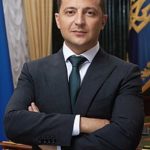
    The statement made by Volodymyr Zelenskyy, the President of Ukraine, on 26 March 2022.

    Free people of a free country!

    Free Slavutych who will not be conquered by the invaders!

    Today we were all with you – on your streets, in your protest. And all together we tell the occupiers one thing: go home while you can still walk.

    The Russian invaders entered Slavutych and faced the same reaction there as in the south of our state, as in the east of our country.

    Ukraine is united in its desire to live freely, to live independently and for the sake of its own dreams, not other people’s sick fantasies. Every day of our struggle for Ukraine, every manifestation of our resistance in all areas the occupiers have entered so far proves that Ukraine is a state full of life, which has historical roots and moral foundations throughout its territory.

    Nothing they do will help the occupiers in the Ukrainian territory they temporarily entered. Disconnection of our television and activation of passionate nonsense speeches by Moscow TV presenters, leaflets with propaganda, distribution of rubles. Rubles, which in Russia will soon be weighed instead of assessing them at face value.

    Bribing outcasts whom the occupiers are looking for in all the dumps to portray the allegedly pro-Russian government will not help as well.

    The answer to Russian troops will be one – hatred and contempt. And our Armed Forces of Ukraine will inevitably come.

    That is why ordinary Ukrainian peasants take captive the pilots of downed Russian planes that fall to our land. That is why our “tractor troops” – Ukrainian farmers take Russian equipment in the fields and give it to our Armed Forces of Ukraine. In particular, the latest models that Russia has tried to keep secret. And now the occupiers leave them on our land and just run away…

    Actually, they do the right thing. Because it is better for them to escape than to die. And there are not and will not be other alternatives.

    Everyone in Ukraine has united and has been devoting all their energy to the defense of our state for more than a month already. Together with the Armed Forces, together with all our defenders, together with our National Guard.

    I would like to once again congratulate the National Guard of Ukraine on its day with great respect. I am sincerely grateful for everything you do to protect the state, to protect Ukrainians! Thank you for all the steps to victory that will come and that were made possible thanks to you.

    Today I presented awards to soldiers of the National Guard who distinguished themselves in battles with the Russian occupiers. I also awarded the rank of brigadier general to five colonels of the National Guard of Ukraine.

    In total, during the full-scale war since February 24, 476 soldiers of the National Guard have been awarded state awards already.

    I also spoke today with Polish President Andrzej Duda. Twice. About our people who found protection in Poland. And the need to strengthen our common security. Security of our states. Security for all Europeans actually.

    What is the price of this security? This is very specific. These are planes for Ukraine. These are tanks for our state. This is anti-missile defense. This is anti-ship weaponry. This is what our partners have. This is what is covered with dust at their storage facilities. After all, this is all for freedom not only in Ukraine – this is for freedom in Europe.

    Because it cannot be acceptable for everyone on the continent if the Baltic states, Poland, Slovakia and the whole of Eastern Europe are at risk of a clash with the Russian invaders.

    At risk only because they left only one percent of all NATO aircraft and one percent of all NATO tanks somewhere in their hangars. One percent! We did not ask for more. And we do not ask for more. And we have already been waiting for 31 days!

    So who runs the Euro-Atlantic community? Is it still Moscow because of intimidation?

    Partners need to step up assistance to Ukraine. These are the words: partners need! Because this is the security of Europe. And this is exactly what we agreed on in Kyiv when the three prime ministers of Eastern European countries, as well as Mr. Kaczynski, arrived in our capital. It was in mid-March. Today, immediately after the conversation with the President of Poland, I contacted the defenders of Mariupol. I am in constant contact with them. Their determination, their heroism and resilience are impressive. I am grateful to each of them! I wish at least a percentage of their courage to those who have been thinking for 31 days how to transfer a dozen or two of planes or tanks…

    And, by the way, we talked today with our military in Mariupol, with our heroes who defend this city, in Russian.

    Because there is no language problem in Ukraine and there never was.

    But now you, the Russian occupiers, are creating this problem. You are doing everything to make our people stop speaking Russian themselves. Because the Russian language will be associated with you. Only with you. With these explosions and killings. With your crimes. You are deporting our people. You are bullying our teachers, forcing them to repeat everything after your propagandists. You are taking our mayors and Ukrainian activists hostage. You are placing billboards in the occupied territories with appeals (they appeared today) not to be afraid to speak Russian. Just think about what it means. Where Russian has always been a part of everyday life, like Ukrainian, in the east of our state, and where you are turning peaceful cities into ruins today. Russia itself is doing everything to ensure that de-russification takes place on the territory of our state. You are doing it. In one generation. And forever. This is another manifestation of your suicide policy.

    Our representatives – the Minister of Foreign Affairs and the Minister of Defense of Ukraine – met today in Poland with colleagues from the United States. They were joined by US President Joseph Biden. As I was informed, the negotiations concerned, in particular, these vital interests, which I mentioned above. Concerned what we really need while this ping-pong continues – who should give us planes and other protection tools and how. Ukraine cannot shoot down Russian missiles using shotguns, machine guns, which are too much in supplies.

    And it is impossible to unblock Mariupol without a sufficient number of tanks, other armored vehicles and, of course, aircraft. All defenders of Ukraine know that. All defenders of Mariupol know that. Thousands of people know that – citizens, civilians who are dying there in the blockade.

    The United States knows that. All European politicians know. We told everyone. And this should be known as soon as possible by as many people on earth as possible. So that everyone understands who and why was simply afraid to prevent this tragedy. Afraid to simply make a decision. Vital decision.

    Of course, we have already seized a number of Russian tanks, which the military command of this country keeps sending to be burned here.

    However, the nations of the world will not understand for sure if the battlefield in Ukraine will be a larger supplier of tanks to protect freedom in Europe than our partners.

    Ukraine’s position must be heard. I want to emphasize: this is not only our position.

    This is the position of the vast majority of Europe’s population, the majority of Europeans.

    If someone does not believe me, look at current public opinion polls in the world.

    And if you do not want to hear the opinion of the people, then hear the strikes of Russian missiles hitting right next to the Polish border. Are you waiting for the roar of Russian tanks?

    I also spoke with Prime Minister of Bulgaria Kiril Petkov. In particular, about the humanitarian catastrophe due to the actions of Russian troops and how to save our people.

    I spoke today at the Doha Forum in the capital of Qatar. This is a respectable meeting that is important not only for the Islamic world, but also for many other countries in Latin America and Africa. These are the regions where Russian propaganda still has great influence. But we are working against lies all over the world. Let Russia know that the truth will not remain silent. And let every nation in the world feel the depth of Russia’s injustice against Ukraine. Against everything that keeps the world within morality and humanity.

    The occupiers committed another crime against history. Against historical justice.

    Near Kharkiv, Russian troops in their branded inhuman style “denazified” the Holocaust Memorial in Drobytsky Yar.

    During World War II, the Nazis executed about 20,000 people there. 80 years later they are killed a second time. And Russia is doing it.

    The menorah in Drobytsky Yar destroyed by Russian projectiles today is another question to the entire Jewish community of the world: how many more crimes against our common memory of the Holocaust will be allowed to be committed by Russia on our Ukrainian land?

    Russian troops are deliberately killing civilians, destroying residential neighborhoods, targeting shelters and hospitals, schools and universities. Even churches, even Holocaust memorials!

    Russian troops receive just such orders: to destroy everything that makes our nation nation, our people – people, our culture – culture. This is exactly how the Nazis tried to capture Europe 80 years ago. This is exactly how the occupiers act in Ukraine. No one will forgive them. There will be responsibility. Just like 77 years ago. Most likely not in Nuremberg. But the meaning will be similar. You will see.

    Everyone will see. Everyone. We guarantee.

    Glory to all our heroes!

    Glory to Ukraine!

  • Boris Johnson – 2022 Statement at NATO Press Conference

    Boris Johnson – 2022 Statement at NATO Press Conference

    The statement made by Boris Johnson, the Prime Minister, in Brussels on 24 March 2022.

    It is scarcely believable as we stand here today that just a month ago, the Ukrainian people were living ordinary, peaceful lives. Now, they are locked in an extraordinary battle for survival against an unprovoked onslaught from their neighbours.

    Ukrainians have taken up the fight and taught the world the meaning of bravery. Against the odds, they have snarled up Russia’s invading army, inflicting defeat after defeat. The heroism of Ukraine has changed the geopolitics of Europe.

    Vladimir Putin has badly miscalculated in Ukraine, and I believe he knows it. But now that Putin’s Plan A has foundered, he is already escalating by intensifying his attacks on civilians.

    Maternity wards, schools and homes and have been bombed without any regard for civilian life. Families are being starved out in freezing basement shelters, and targeted as they flee.

    The United Kingdom – and our allies in NATO and the G7 here today – are clear: we will not stand by while Putin vents his fury on Ukraine.

    I have rarely seen our nations more united in recent years than we are now. Putin’s failure in Ukraine is vital for the peace and prosperity of all of us, and his barbaric invasion has galvanised the international community into collective action.

    We will work with likeminded allies to ramp up lethal aid to Ukraine at scale, providing kit to President Zelenskyy in the quantity and with the quality and quantity that he needs to defend his country from its bullying neighbour.

    Today, I have announced we in the UK will send an additional 6,000 missiles and provide £25 million in unrestricted funding for Ukraine’s armed forces, more than doubling the lethal aid we have provided to date.

    We are bolstering our support for the NATO countries on the frontline, sending a new deployment of UK troops to Bulgaria on top of the doubling our troops both in Poland and in Estonia.

    This is just the beginning. We must support a free and democratic Ukraine in the long term. This is a fellow European democracy fighting a war of national defence.

    NATO and G7 leaders were also united today in our determination to continue turning the screws on the Kremlin’s war machine, including by weaning ourselves off Russian oil and gas and reshaping global energy security.

    The UK has already hit over 1,000 Russian individuals and entities in our toughest-ever sanctions, and the Foreign Secretary has announced 65 new sanctions against Russian banks, weapons manufacturers and oligarchs just this morning.

    I also discussed the humanitarian response with our allies and partners today, as we continue to see huge numbers of Ukrainians flee their homes.

    And the message that President Putin can take from today’s extraordinary meeting of NATO and the G7 is this: Ukraine is not alone.

    We stand with the people of Kyiv, of Mairupol, of Lviv and Donetsk. And as President Zelenskyy has said himself – the people of Ukraine will prevail and Putin must fail and he will fail.

  • Dominic Raab – 2022 Comments on Victim Support

    Dominic Raab – 2022 Comments on Victim Support

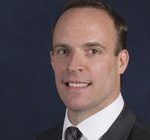
    The comments made by Dominic Raab, the Deputy Prime Minister, in the House of Commons on 25 March 2022.

    We want more victims to have the confidence to come forward, so that more criminals can be prosecuted and victims can get the justice they deserve.

    We’re increasing transparency through local scorecards, rolling out pre-recorded cross-examination for rape victims to more Crown Courts, and boosting funding for vital support services to £440 million over the next three years so that victims get the support they need.