Category: Speeches

  • Fiona Bruce – 2022 Speech on Digital Persecution

    Fiona Bruce – 2022 Speech on Digital Persecution

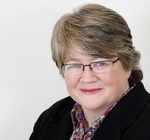
    The speech made by Fiona Bruce, the Conservative MP for Congleton, in the House of Commons on 21 April 2022.

    On 5 and 6 July in London, the largest international gathering hosted by the UK Government this year will take place—the 2022 international ministerial conference on freedom of religion or belief. Government representatives from over 50 countries have been invited, together with faith and civil society representatives, to discuss the concerning global trend of increasing restrictions on freedom of religion or belief, and also, it is hoped, to commit to practical steps to tackle that. A session including digital persecution should be at the cutting edge of that conference. My purpose in calling this debate is to highlight why.

    Each year, millions of people around the world are increasingly having their freedom of religion or belief restricted, and to devastating impact. A key reason is the increase in persecution by authoritarian regimes, including through the misuse of technology. Right across the world today, people are losing their jobs, education, homes, livelihoods, families, freedom, access to justice, and even life itself, simply on account of what they believe. People are being discriminated against, marginalised, beaten, threatened, tortured and killed, and too often by their own Governments—the very Governments with a duty to protect their freedom of religion or belief. The gross scale of this as a global issue is both under-recognised and under-addressed. One of the aims of this July’s conference in London is to change that.

    The Pew Research Centre indicates that 83% of the world’s population live in countries with high or very high restrictions on religion. The campaigning charity Open Doors, in its 2022 world watch list, states that the persecution of Christians has now reached the highest levels since the world watch list began nearly 30 years ago—that across 76 countries, more than 360 million Christians suffer high or very high levels of persecution and discrimination for their faith.

    Of course, persecution affects not only Christians but those of all faiths and none. In Nigeria last month, the humanist Mubarak Bala was sentenced to 24 years in prison, now on appeal. Recently, the plight of Jehovah’s Witnesses, Ahmadiyya Muslims and Baha’is across the world has been highlighted by the International Religious Freedom or Belief Alliance of 35 countries, which I have the privilege of chairing in 2022. Details can be found on the US State Department website.

    Why is freedom of religion or belief so important? We need to ask this question, and try to answer it, to set in context this debate on digital persecution and why addressing it is so critical. FORB is important for several reasons. It is important in itself, for us as individuals, because what we believe gives us a sense of worth, f purpose and meaning, and of dignity and identity. It goes to the heart of what makes us human.

    Respecting freedom of religion or belief is important because it is so closely connected to other human rights, such as free speech, the right to assemble, the right to work and even the right to life itself. When freedom of religion or belief is not respected by those in authority, all too often, other rights crumble, too. FORB is also important for communities, which are stronger, including economically, when they include everyone. Societies cannot fully develop when they oppress members of minorities.

    Freedom of religion or belief is one of the foundations of a stable and secure democratic society. Countries that respect FORB are less prone to violent extremism. Not to put too grand a point on it, promoting and defending freedom of religion or belief is an important element of promoting peace globally. Indeed, when President Franklin D. Roosevelt, one of the driving forces behind the establishment of the UN, envisioned a world of peaceful co-existence between nations, he stressed the importance of four freedoms: freedom of expression, freedom from want, freedom from fear and freedom of belief. How tragic it is that we reflect on this today as the very opposite is occurring less than a three-hour plane flight from here. Let us be under no illusions: freedom of religion or belief is very much a live issue in the plight of the Ukrainian people.

    Permit me to take a moment to refer to that. In Luhansk, a Russian rebel-held area of Ukraine taken by pro-Russian separatists in 2014, freedom of religion or belief is now severely restricted. Religious communities need to register to have permission to gather, following a restrictive law that makes it illegal for any religious community to congregate without such permission. As a result, all Baptists, Seventh Day Adventists, Pentecostals and other Protestant communities have been denied that permission. Such unregistered groups therefore meet to worship in a climate of fear. They are subject to surveillance and at risk of repeated raids, with their social welfare activities in their local communities banned and an increasing list of allegedly extremist books banned, including an edition of the gospel of John from the Bible.

    Jim Shannon (Strangford) (DUP)

    I congratulate the hon. Lady on all that she does in her role as the special envoy for freedom of religion or belief, and I express an interest as chair of the all-party parliamentary group for freedom of religion or belief. She is right to highlight the issues in Ukraine, which I am sorry to say also unfortunately include incidents of Baptist pastors who have disappeared and never been located—their whereabouts are unknown. Churches have been destroyed. People from my constituency are actively involved in Faith in Action Missions in eastern Ukraine. What they have expressed to me goes along with what she has said.

    We have to highlight these things in this House. It is not just the murder of innocents, but the persecution of Christians and those of other religious beliefs. Russia has to be held accountable in the highest court of the land for the genocidal campaign that it is carrying out against Ukrainians in Ukraine.

    Fiona Bruce

    The hon. Member, who is chair of the all-party parliamentary group for freedom of religion or belief, makes excellent points and I thank him for doing so. It is so important that we highlight that the Ukrainians’ right to freely practise their religions or beliefs, whatever they may be, is a key aspect of what the leadership of Ukraine and its people are fighting for today. We applaud and stand with them.

    Returning specifically to the subject of this debate, digital persecution, I want to put on record my appreciation and thanks to Open Doors for the recent conference it organised, partnered with the Universities of Birmingham and Roehampton, which invited papers on three core themes: surveillance, censorship and disinformation. I also want to thank many of those who contributed to that conference and to my speech today, and those who supplied papers. My speech is all too short to do justice to this issue, so I urge parliamentary colleagues and others listening to this debate to access the conference online—it was recorded by Open Doors—and to access the open source of papers by the contributors, including Professor Francis Davis of Birmingham University, Dr Ewelina Ochab, author Jeremy Peckham, Dr Pasquale Annicchino of the University of Foggia, Chung Ching Kwong of the University of Hamburg, Dr Daniel Aguirre of the University of Roehampton, Rahima Mahmut, UK director of the World Uyghur Congress, and others.

    Technology and its extensive communication capabilities can of course be used for good, as we all saw during the pandemic, but, as Open Doors states,

    “digital technology enhances state capacity for surveillance of religious minorities and censorship of their speech. It also greatly assists the spread of disinformation against religious minorities by state and non-state actors, which can have lethal consequences for those minorities.”

    Misuse of technology has played a crucial role in some of the most egregious atrocities perpetrated in recent years, including the persecution of the Uyghurs in Xinjiang, China, of the Rohingyas in Myanmar, and of the Yazidis in Iraq.

    Religious minorities are often subject to state surveillance, often because of their very status as minorities. This can be either targeted surveillance of specific individuals or groups, or mass surveillance of large groups of people. This may include CCTV, including facial and emotional recognition; device listening; spyware; state monitoring of social networks; tracking, proximity and location apps; and large-scale data harvesting. I shall explain some of that in a little more detail later.

    Examples of digital censorship include publication banning; disabling websites and applications; blocking websites, communications and social media posts, including state moderation and firewalls; punishing users who visit particular websites; hacking; cancelling of activities, platforms and public personae, often without reason or redress; and financial freezing.

    Disinformation is the communication of deliberately misleading or biased information, the manipulation of narrative or facts, and propaganda, which we are becoming increasingly aware of in Russia’s information war against Ukraine. Examples of disinformation include propaganda, including advertising; targeted fake news; discord bots strategically magnifying discord, including trolling algorithms; and network incitement of mob violence.

    During the last few minutes, I have given many examples of the misuse of technology and have used technical terms. Perhaps I have given too many examples for anyone to absorb unless they are already engaged in this subject, so I shall give just one example of how such misuse of technology works in practice—namely, the misuse of technology to oppress the Uyghurs in China, of whom an estimated 2 million, possibly even up to 3 million, are incarcerated in detention camps.

    At the conference, Rahima Mahmut’s evidence about the plight of the Uyghurs set a sombre and moving tone. She told us that the Chinese Government have invested huge sums of money in advanced surveillance technology, including facial recognition software, voice recognition software, DNA and data collection, constructing a huge network of cameras and physical checkpoints. All the information gathered on people is stored in what is called an integrated joint operations platform. The data is then used to classify Uyghurs by colour—blue, yellow or red—and therefore to classify their threat level. This has not only resulted in the mass criminalisation of the Uyghur population, but led them to question their own sense of self-worth and self-belief.

    How does this work? The integrated joint operations platform is used by police and officials. It is a mobile phone app used to collect data on individual Uyghurs for an assessment to be made about whether someone should be arrested. The extent and penetration of the personal data collected is deeply concerning. Data is collected on individuals as they move about in public places, including from CCTV, by voice recognition and even through their relationship with others who may have political or religious affiliations or convictions. The voice recognition software can not only monitor conversations from a mobile phone, but record a voice from 300 metres away while simultaneously blocking out the surrounding noise.

    The technology is now even used in schools to record what Uyghur children say in the classroom—even those as young as kindergarten children—so that, in effect, children are unwitting spies on their own parents. Key words are recorded and then detected by the app to flag concerns to the authorities and indicate dangerous or threatening tendencies. These include words such as “prayers” or “mosque”, or even “get together” or “gather”. As soon as a key word is picked up by the app, this will be fed into the integrated joint operations platform app as suspicious activity, together with all the other data being collected about an individual.

    Someone can also receive a colour for many reasons, such as simply eating in a restaurant where someone else with a red mark against their name is also eating. Once the information is gathered and reaches a certain level, an individual is flagged with a colour—red, yellow or blue—which indicates their threat level and how they will be treated, in particular as they move through the many checkpoints manned by police. Someone who is blue can pass through, though of course their colour can and may well change. If an individual is passing through a checkpoint with a yellow mark, an alarm goes off. If it is red, the police will automatically arrest the person immediately. In other words, the app—a computer—is triggering an arrest.

    Once arrested, individuals can then be interrogated by computer, too. Police can place an individual not in a normal chair for questioning, but in a tiger chair, in which the body is completely locked and highly stressed, resulting in inevitable physical responses. During questioning, a computer will then monitor heightened changes in heartbeat and muscle movement, and on that basis a computer can indicate that the person must be guilty. Imprisonment can then be meted out.

    An individual can be surveyed, detected, arrested, interrogated and imprisoned by technology, simply because the computer says so, and surveillance technology of this nature is being sold around the world. According to an Open Technology Fund report of 2019,

    “over 100 countries have purchased, imitated, or received training on information controls from China and Russia.”

    Andrew Lewer (Northampton South) (Con)

    I really want to thank my hon. Friend for bringing home the true horrific nature of this technology and the way it is being employed against the Uyghurs in China. Does she agree with me that it is important that the work she and the hon. Member for Strangford (Jim Shannon) do is constantly put at the forefront of the Government’s attention when we are discussing these issues, particularly when it comes to overseas development aid for countries that may be seeking to implement such measures themselves?

    Fiona Bruce

    I thank my hon. Friend for that point and for his active engagement with the all-party group for international freedom of religion or belief. It is heart-warming to note, particularly following the publication of the Truro review slightly more than two and a half years ago, how increasingly Government are engaging on this issue, and not just expressing concern, but taking practical steps.

    Let us look at a country other than China for a moment. Dr Daniel Aguirre of the University of Roehampton has explored the role of technologies in conflict and spoken about how in Myanmar, formerly Burma, the junta’s primary aim in the recent coup was to close or control digital communication, especially Facebook as the primary mode of internet communication for coup resistance. He has also detailed how the junta used misinformation to fuel ethnic tensions and violence.

    We hear from other sources that the military in Myanmar has used Facebook to spread propaganda against Muslims and the Rohingya ethnic minority and to justify attacks against their communities, and that disinformation has been used to discredit or malign Christians, rouse people’s anger against them, or force people to practise rituals against their beliefs. During the covid-19 pandemic, stories of religious minorities being the harbinger of the coronavirus were spread. In Myanmar, news of Christians directly receiving foreign aid was falsely perpetuated, encouraging the view that they should not receive Government aid.

    I referred previously to non-state actors—organisations other than Governments— misusing technology. An example is Daesh, the Islamic State terrorist organisation. It has used technology to recruit members and spread propaganda among minorities—in Iraq, for example, against the Yazidis, and in Africa to inflame and justify violence against communities there. It is deeply concerning that young people in particular can be attracted into terrorist groups in that way.

    A statement on “Use of Technology and Religious Freedom” made at the July 2019 Ministerial to Advance Religious Freedom—a precursor to the 2022 conference, which the UK is hosting this July—said that we need to

    “take seriously the need to counter the ability of terrorists to recruit and radicalise or inspire others to violence online while fully respecting freedom of expression.”

    Three years on, as the UK hosts this year’s Ministerial on Freedom of Religion or Belief, responding to this challenge remains at a concerning initial stage.

    Why is this? One reason is that the very complexity of the technicalities that I have endeavoured to describe has often inhibited human rights activists, including those who campaign on freedom of religion or belief—and I include myself in this—from tackling this subject. But we must do so because the implications of failing to do that are and, indeed, already have been, catastrophic.

    As Professor Francis Davis says,

    “digital persecution is a challenge to the FORB community specifically and the wider human rights community because it requires them to speak together and find a common language to engage with the new institutions of persecution…this…needs new analysis and new strategies of response.”

    Professor Davis adds that we need to develop new leaders who are both digitally native and freedom of religion or belief and human rights-savvy, representing a generational shift and meriting strategic investment by Government, foundations and tech companies’ corporate citizenship funds.

    I hope that the 2022 international ministerial conference on freedom of religion or belief in July will explore more deeply the concerns that I have only been able to touch on today and that we will commit to work together to address them. I hope that Governments, civil society activists, academics, members of the FORB community internationally and, even more importantly, technology experts and providers, including global social media companies, will work with us to address digital persecution.

    A comprehensive plan to address digital persecution must be developed in a systematic and structured way. Concerns about surveillance, censorship and disinformation must become a standard element of our response to persecution of freedom of religion or belief, rather than, as at present, an afterthought. As Ambassador Sam Brownback, my predecessor as chair of the International Religious Freedom or Belief Alliance, said:

    “We are entering a very serious time of digital authoritarianism. How we react to it will be key.”

    The Minister for Asia and the Middle East (Amanda Milling)

    I congratulate my hon. Friend the Member for Congleton (Fiona Bruce) on securing the debate, which, as she set out in her excellent speech, is an important one. I thank her for everything that she does as the Prime Minister’s special envoy for freedom of religion or belief.

    I make it absolutely clear that human rights must be protected both offline and online. New technologies and online communities provide a platform to strengthen democracies and human rights, but they also provide new tools for repression, persecution and censorship, which are putting open societies and democratic freedoms under pressure.

    The UK Government condemn all actions that violate human rights, whether offline or online. We share the concern of my hon. Friend and others about the growing use of digital technology to target human rights defenders and civil society. We are troubled to see the increasing levels of gender-based harassment and abuse online, and we are strongly opposed to Governments unlawfully shutting down or restricting access to the internet and social media.

    Everyone should be able to make the most of the positive opportunities that the online world offers. That is why the Government are pursuing a three-pronged approach to promote internet access and protect human rights online. First, we are pressing states to uphold their human rights obligations and working with them to spread digital access to excluded groups. Secondly, we are campaigning for media freedom and leading international efforts to promote digital democracy. Thirdly, we are working with international partners, including through the UN, to protect those whose rights are abused or violated online.

    On the first, we regularly raise issues of concern with other Governments, in public and in private. We have led international efforts to hold China to account for the human rights violations that we have heard about today.

    Mike Kane (Wythenshawe and Sale East) (Lab)

    I am very grateful to the Minister for giving way and I join her in congratulating the hon. Member for Congleton (Fiona Bruce) on securing the debate. Just before the pandemic, as part of the International Catholic Legislators Network, I had the great honour to meet Cardinal Zen, who has campaigned for religious freedom in China his whole life. We had to meet in secret, in a secret room, at a time we could not announce because we had to run the gauntlet of Chinese demonstrations and surveillance from a hotel across the road. This was in Portugal. That is the type of behaviour going on for people who want to practise their religion. It is not good enough and the Minister is right to set out the points she is making.

    Amanda Milling

    I am grateful for that intervention. As I will set out, we are leading efforts to hold China to account for human rights violations and I will set out some of the conversations that have been had.

    We were the first country to lead a joint statement on China’s human rights record at the UN. Last month, the Foreign Secretary expressed her deep concern, in an address to the UN Human Rights Council, about the violations occurring in Xinjiang and Tibet. We made clear our concerns about mass surveillance in Xinjiang, which my hon. Friend the Member for Congleton discussed, including in a joint statement alongside 42 other countries at the UN in October. We also raise our concerns directly with the Chinese authorities at the highest levels, and I personally raised these issues with the Chinese ambassador to London in December. Meanwhile, we continue to work with our international partners to address the human rights violations taking place across the People’s Republic of China. We have imposed sanctions on senior Chinese officials and introduced enhanced controls to block exports of technology that might facilitate human rights violations.

    The UK co-founded the Media Freedom Coalition in defence of journalists. The coalition has issued statements about the deteriorating media environments in Egypt, Belarus, Hong Kong, Myanmar and Russia, among others. We have committed £3 million over five years to the UNESCO global media defence fund, which has supported more than 1,700 journalists, including many of those who have received threats online. We also support media freedom through our development aid budget and have spent more than £400 million on that over the past five years. Last December, we joined the Freedom Online Coalition taskforce, which is committed to tackling the growing problem of internet exclusion and shutdowns. We also fund the #KeepltOn campaign, run by the digital advocacy non-governmental organisation Access Now. The campaign brings together a coalition of more than 240 organisations from 105 countries in a global effort to end internet restrictions and shutdowns.

    We also support projects that use the online world to foster open societies. Through our digital access programme, we are closing the gap for excluded groups, strengthening cyber security and spreading economic opportunities. Our most recent figures show that, in just one year, the programme benefited 2.3 million people in almost 300 communities in Indonesia, Brazil, Nigeria, Kenya and South Africa. Within the United Nations, we are working to build a coalition of states committed to promoting digital access, protecting human rights online and countering disinformation. We have co-sponsored UN resolutions to urge member states and social media companies to combat misinformation, antisemitism and all forms of hatred. We are also looking forward to hosting the freedom of religion or belief conference in July, which my hon. Friend mentioned. I thank her again for everything that she is doing to support the conference in her role as the special envoy. The impact of digital technologies on freedom of religion or belief and human rights more broadly will be on the agenda.

    In order to have influence abroad, we must set an example at home. We are committed to turning our Online Safety Bill into law to require tech companies to tackle illegal activity and content on their platforms, including hate crime, harassment and cyber-stalking.

    I am incredibly grateful to my hon. Friend for securing the debate. The online space and new digital technologies represent not only opportunities, but challenges for the protection of human rights. We have heard about some of the terrible abuses and violations perpetrated through digital means.

    Fiona Bruce

    The Minister speaks of terrible abuses and violations of human rights, including of freedom of religion or belief, and refers to a number of individuals who are being sanctioned. Will she be good enough to take back to the Foreign Office my concerns about the fact that Chen Quanguo in China—a man reportedly responsible for some of the most egregious infringements and violations of human rights against the Uyghurs there—has not yet been sanctioned by the UK?

  • Boris Johnson – 2022 Press Conference in India

    Boris Johnson – 2022 Press Conference in India

    The text of the press conference held by Boris Johnson, the Prime Minister, in India on 22 April 2022.

    My friend, Prime Minister Modi, Narendra, my khaas dost – is the phrase I wanted in Hindi

    We’ve had a fantastic two days in India

    And yesterday I became the first Conservative British Prime Minister to visit Gujarat, your birthplace of course, Narendra,

    but, as you just said, the ancestral home of around half of all British Indians.

    And I had an amazing reception – absolutely amazing– I felt like Sachin Tendulkar – my face was about as ubiquitous everywhere as Amitabh Bachchan.

    I was everywhere to be seen and it was fantastic.

    And this morning we’ve had wonderful talks and I think that they have strengthened our relationship in every way.

    In challenging times it is very important that we – the khaas dost – get closer together and I believe the partnership between Britain and India – one the oldest democracies – Britain is one of the oldest and India certainly the largest democracy is one of the defining friendships of our times.

    What we’re doing is taking forward an ambitious ten-year roadmap for British-Indian relations, that we agreed last year.

    It was great to see you at the G7.

    But since then, the threats of autocratic coercion have grown even further and it’s therefore vital that we deepen our co-operation,

    including our shared interest in keeping the Indo-Pacific open and free.

    So today we’ve agreed a new and expanded Defence and Security Partnership, a decades-long commitment that will not only forge tighter bonds between us, but support your goal, Narendra of “Make in India”.

    The UK is creating an India-specific Open General Export License, reducing bureaucracy and slashing delivering times for defence procurement.

    We’ve agreed to work together to meet new threats across land, sea, air, space and cyber, including partnering on new fighter jet technology, maritime technologies to detect and respond to threats in the oceans.

    We’re extending our partnership as science superpowers,

    And building on the collaboration between Oxford/Astra-Zeneca and the Serum Institute, which vaccinated more than a billion people against Covid, – including me – I have the Indian jab in my arm and the power of good it did me so thanks to India

    And that has helped India to become what Narendra has called the pharmacy to the world.

    Today we are embarking on joint initiatives on malaria vaccines,

    On antimicrobial resistance, and a digital partnership between the Indian National Health Authority and our NHS.

    We’re also taking big steps together on energy security, helping each other to reduce our dependence on imported hydrocarbons – and adopt cheaper, more sustainable home-grown alternatives.

    We have a new offer, a new plan to develop offshore wind from the Celtic Sea to Dhanushkodi we’ve got a new UK-India Hydrogen Science and Innovation Hub, and we’re taking forward the green grids solar power initiative that you and I began, Narendra, at COP26 in Glasgow, together with 80 other countries.

    It’s an incredible fact that the sun provides enough energy every day to power the world ten thousand times over, you have a lot of solar power here in India – the sun putting in a fantastic performance today and we have quite a lot in Britain as well.

    These partnerships form the superstructure of the Living Bridge that Narendra describes between our countries, and today that bridge is humming with goods and services and people and capital, whizzing back and forth east to west and sometimes it can be hard to tell whether something is British, or Indian or frankly Brindian.

    On Wednesday I went to the airport in a Range Rover – Indian-owned, but made in Britain.

    And when I arrived here on Thursday, I visited JCB,

    British-owned, but made in India. Exporting 60,000 every year around the word, 110 countries.

    Or take the example of the Norton Motorbike now being revived in Britain by an Indian company.

    I’m very pleased that this visit has not only deepened our economic partnership.

    We’ve agreed new deals worth £1 billion,

    and created more than 11,000 new jobs across the UK, in everything from electric buses to the robotic surgery of Smith and Nephew which I saw yesterday as well as in artificial intelligence, where India’s strengths are remarkable.

    And perhaps most significantly for the long term, we are making full use of the freedom that we now have to reach a Free Trade Agreement, a deal where you can lift those tariffs – you can, India, Narendra, on our machinery and apples – actually you’ve already done it on apples so thank you for the apples and we in turn, we can lift the tariffs on your rice and textiles.

    We’ve already closed four chapters, and today we’re announcing new measures to make it easier to export UK-made medical devices to India and ensure mutual recognition of UK higher education qualifications.

    And as the next round of talks begins here next week, we are telling our negotiators: get it done by Diwali in October. Get it done by Diwali.

    This could double our trade and investment by the end of the decade widening that living bridge into a multi-lane motorway – pulivating with beautiful jointly made electric vehicles and creating hundreds of thousands of new jobs in both our countries.

    So as India celebrates its 75th year of independence,

    I am filled with optimism about the years ahead and the depth of the friendship between our countries, and the security and prosperity that our partnership can deliver for our people for generations to come.

  • Rishi Sunak – 2022 Comments on Financial Support to Ukraine

    Rishi Sunak – 2022 Comments on Financial Support to Ukraine

    The comments made by Rishi Sunak, the Chancellor of the Exchequer, on 21 April 2022.

    The UK is unwavering in our support to the people of Ukraine and has committed to make over $2bn of financial, humanitarian and military assistance available to Ukraine.

    I urge all likeminded international colleagues to step up, deliver and go further and faster in their economic and humanitarian assistance to Ukraine.

    As finance Ministers we face common challenges – a global supply squeeze, rising prices, and the cost of Putin’s aggression.

    It’s more important than ever that we coordinate our efforts to minimise the impacts on ordinary people at home.

  • Volodymyr Zelenskyy – 2022 Speech to the Parliament of Portugal

    Volodymyr Zelenskyy – 2022 Speech to the Parliament of Portugal

    The speech made by Volodymyr Zelenskyy, the President of Ukraine, to the Parliament of Portugal on 21 April 2022.

    Dear Mr. President of the Assembly!

    Dear Mr. President!

    Dear Mr. Prime Minister!

    Dear ladies and gentlemen, deputies!

    The people of Portugal!

    I am grateful for the opportunity to address you at such a time, the darkest time for our state.

    Yesterday, in the town of Borodyanka near our capital, two more graves of civilians killed by the Russian occupiers were found. In one of these graves there are the bodies of two 35-year-old men and a 15-year-old girl. In the second grave there are six people: four men and two women. They were killed when Russian troops controlled Borodyanka. The bodies were buried in the middle of the town, near ordinary houses. Such burials are found in all communities now, in all the cities we liberate from the Russian occupiers.

    The world has already remembered the name of the Ukrainian city of Bucha, which is a 20-minute drive from Borodyanka. It remembered the horrible photos of the bodies of those killed just on the streets of Bucha. For weeks, the murdered people have laid on the road, on the sidewalks, near houses.

    Russian soldiers did not even try to remove these corpses. And they did not allow, by the way, local residents who remained in the city to bury them.

    I’m sure most of you have seen those photos. But in these photos it is far from everything the locals had to go through. The occupiers killed people even for fun and to loot their houses. People were thrown to die in the well. Tortured.

    Executed. Grenades were thrown into the basements where people were hiding from shelling. The Russian military killed refugees on the roads. They opened fire on cars with the word “Children” written on them. Hundreds of such riddled and burned cars remained on the roads…

    In the Kyiv region alone – and this is as of today, because not all burials have been found yet – the occupiers killed 1,126 Ukrainians. 40 of them are children.

    In the Chernihiv, Sumy, Kharkiv and other regions of Ukraine, where Russian troops entered, they caused the same hell as in Borodyanka or Bucha.

    Just one example. In the village of Yahidne in the Chernihiv region, the occupiers drove all the villagers into the basement of the school and kept them there for weeks. This is a small village school, a small basement in which about 10 people died of suffocation alone. The youngest child in the basement was 3 months old. Imagine a three month old baby! And the oldest person was 93 years old. And in total there were about 400 people in the basement!

    More than three weeks. Day and night they were forbidden to go out of the basement even to the toilet. And when people asked for clothes for children, the occupiers demanded that they sing the Russian national anthem.

    That’s how the Russian military had fun. This is the impunity they felt. This is what is happening in Ukraine now. In 2022.

    We are fighting against Russian troops not just for our state. Not just for independence. But literally for the survival of our people. So that Ukrainians are not executed. So that Ukrainians are not tortured. So that Ukrainians are not raped. And so that Ukrainians are not deported to Russia.

    The Russian occupiers have already deported at least 500,000 our citizens from the territory they have occupied. It’s like your two cities of Porto. Just imagine that. There were people – and now they are gone. 500 thousand people! This is deportation. This is what the worst totalitarian regimes of the past did.

    The deported Ukrainians are deprived of means of communication, everything is taken away from them, even documents. They are distributed to the remote regions of Russia. The occupiers set up special filtration camps to distribute people. Some of those who get there are simply killed. Girls are raped.

    Imagine what it’s like when a girl escapes from such a Russian filtration camp, and when asked how she did it, she says Russian soldiers simply didn’t like her. Because if they had liked her, she would have been raped and then killed, like many others.

    During the 57 days of the full-scale war, we liberated about a thousand settlements of Ukraine, which were captured by Russia, by the invaders. However, the number of occupied cities and communities is much bigger.

    Russian troops do not stop shelling and bombing our cities. They are destroying residential areas, any civilian infrastructure that allows cities to maintain normal life. Food warehouses, schools, universities, hospitals, even churches are being blown up.

    More than 10 million Ukrainians have been forced to flee their homes due to hostilities. Imagine this number. It’s as if the whole of Portugal was forced to flee!

    I do not want to call these 10 million Ukrainians refugees. We use the term “displaced persons” to refer to them, these people. We hope that they will all be able to return home when it is safe. But when will it be? And what will be left of their house?

    Today, the Russian Defense Minister reported to the Russian leader on the hostilities against our city of Mariupol. You have all heard about Mariupol. Before the war, it was a city comparable in size to Lisbon. It was a half-million seaside city. Now it is completely destroyed. There is not a single undamaged building in Mariupol. Literally scorched city.

    For more than a month, the Russian troops have kept Mariupol under siege. Even humanitarian goods were not allowed. Hundreds of thousands of civilians were there without food, without water, without medicine. Under constant shelling, under constant bombing. Russian troops used aircraft to destroy even shelters and they knew for sure that there was no one there but civilians.

    Some Mariupol residents managed to escape, and for most of them nothing and no one was left at all. There aren’t even photos of their pre-war life – everything was burned.

    Tens of thousands of Ukrainians died in the city during Russia’s hostilities against Mariupol. We do not even know the exact number of the dead. And we may not find it out. Because Russian troops brought to the city so-called mobile crematoria – special machines for the destruction of human bodies. The occupiers drew conclusions from how the world reacted to the massacre in Bucha. And now the Russians are trying to hide the traces of war crimes.

    Ladies and Gentlemen!

    Portuguese people!

    When we turn to the nations of the free world for help, we say simple and clear things. We need weapons to protect ourselves from the brutal Russian invasion, which brought to our people as much evil as the Nazi invasion did 80 years ago.

    Leopard tanks, armored personnel carriers, Harpoon anti-ship missiles – you have them and you can help protect the freedom and civilization of Europe with them. Therefore, I appeal to your state to provide us with this assistance.

    We need increased pressure of sanctions on Russia, because only sanctions can force Russia to seek peace and deprive the Russian military machine of resources.

    We need the principled stance of European companies, so that all of them leave the Russian market, because their taxes, their excise taxes, which they pay to the Russian budget, support this evil.

    Why did Russia start the war? The capture of Ukraine is its first step in gaining control of Eastern Europe to destroy democracy in our region.

    Ukraine has been and remains the mainstay of democratic processes in our region. The two revolutions of 2004 and 2014, which stopped the dictatorship in Ukraine, in fact defended democracy not only for our nation, but also for all the nations of our region who want to freely choose the future, without any coercion – internal and external.

    And your people who will soon celebrate the anniversary of the Carnation Revolution, which freed you from the dictatorship, clearly understand our feelings. Exactly understands the feelings of all other nations of our region who seek freedom.

    What does Russia bring to Ukraine? Death and dictatorship. And after Ukraine it will try to bring all this to Moldova, Poland, Georgia, the Baltic states, Kazakhstan and all other countries it can reach. Russia can be stopped. Mass killings, deportation and dictatorship can be stopped. Now, in Ukraine.

    I am grateful to your government and to all the Portuguese people for the assistance to Ukraine you have already provided.

    For supporting sanctions against Russia. And it is important now, when the European Union is preparing the sixth package of sanctions, that you show your leadership and defend the need for an oil embargo against Russia at the European level. It is also important that you, along with other EU countries, insist on a complete restriction of the Russian banking system.

    We need to close all EU ports, all Portuguese ports for Russian ships. In particular, for those that they are trying to hide under other countries’ flags.

    I am grateful to you for supporting our people, Ukrainian displaced persons. The Ukrainian and Portuguese people know each other well. They understand each other well. And it is important that you use your opportunities, both in Europe and in other macro-regions of the world, to protect the freedom and right to life of our people.

    You can tell the truth about this Russian invasion, about this war against the Ukrainian people, both in South America and in Africa. I ask you to fight Russian propaganda and Russian corrupt influence in the countries that are close to you.

    And I believe that the people of Portugal, and with them the Portuguese politicians, will support our state in its fundamental desire to be with you in the European Union. The free must support the free. The decent must support the decent. The conscientious must support the conscientious.

    And I believe that you will not betray us or yourself. Because Ukraine is already on its way to the European Union under an accelerated procedure. We hope that in the near future we will be able to obtain the status of a candidate for membership in the European Union.

    And when the decision is considered, I ask you to support full membership for Ukraine. Because you on the western edge of Europe and we on the eastern edge of Europe have the same values, the same view of what life should be like on our continent.

    Freedom, human rights, the rule of law, equality for every man, for every woman and the opportunity to live freely and without any dictatorship, so that everyone always has the time for happiness and for saudade.

    Thank you, Portugal!

    Glory to Ukraine!

  • Volodymyr Zelenskyy – 2022 Statement on the Situation in Ukraine (21/04/2022) – 57 days

    Volodymyr Zelenskyy – 2022 Statement on the Situation in Ukraine (21/04/2022) – 57 days

    The statement made by Volodymyr Zelenskyy, the President of Ukraine, on 21 April 2022.

    Ukrainians!

    Our defenders!

    Today was a very meaningful foreign policy day for Ukraine. First, the Prime Ministers of Spain and Denmark, two countries that have consistently supported Ukraine, have arrived in Kyiv. Thank you.

    The two leaders whose presence in Kyiv encourages other leaders of the democratic world to think about visits to Ukraine, about new gestures of support for our state, about concrete decisions that we need to win. I thanked them for helping our defense. For sanctions pressure on Russia.

    I called on Spain, Denmark and all other European democracies to further strengthen sanctions for this war. To finally impose an oil embargo, to disconnect the entire banking system of Russia from the global financial system.

    And to help us bring to justice all those guilty of war crimes against Ukrainians.

    The Prime Minister of Denmark stated readiness to support the program of post-war reconstruction of Ukraine, in particular the reconstruction and development of Mykolaiv and the shipbuilding industry of Ukraine. Let me remind you that this is the direction of reconstruction I proposed when addressing the Parliament and the people of Denmark in March.

    And today I addressed the Parliament and the people of Portugal. This was the 26th address to the parliaments of our partner states. I can say that each of these speeches really gives us additional support. Brings the decision to provide assistance to Ukraine, including defensive one, closer. And most importantly, each of these addresses helps establish a direct emotional connection between what we are experiencing in Ukraine and what the political class is experiencing in the partner countries.

    I also addressed the participants of the special spring session of the World Bank today. This is one of the most important events for the heads of international financial institutions and finance ministers of leading states. We are accumulating financial support for Ukraine.

    The United States has announced a new package of support for our state. We are grateful for that. This package contains very powerful defense tools for our military. In particular, it is artillery, shells, drones. This is what we expected.

    I am grateful to the partners for their help and call for further acceleration of the supply of weapons to Ukraine so that we can bring peace closer.

    In the south and east of our country, the occupiers continue to do everything to have a reason to talk about at least some victories. They are accumulating forces, driving new battalion tactical groups to our land. They are even trying to start the so-called mobilization in the occupied regions of Ukraine.

    None of these steps will help Russia in the war against our state. They can only delay the inevitable – the time when the invaders will have to leave our territory. In particular Mariupol. A city that continues to resist Russia. Despite everything the occupiers say.

    I urge the residents of the southern regions of Ukraine – Kherson and Zaporizhzhia regions – to be very careful about what information you provide to the invaders. And if they ask you to fill out some questionnaires, leave your passport data somewhere, you should know – this is not to help you. Not just to carry out a “census” of people who live in a certain area, as they say. No. And not to give you any humanitarian aid. This is aimed to falsify the so-called referendum on your land, if an order comes from Moscow to stage such a show. And this is the reality. Be careful.

    I want to say straight away: any “Kherson People’s Republics” are not going to fly. If someone wants a new annexation, it can only lead to new powerful sanctions strikes on Russia. You will make your country as poor as Russia hasn’t been since the 1917 civil war. So it is better to seek peace now.

    Unfortunately, Russia rejected the proposal to establish an Easter truce. This shows very well how the leaders of this state actually treat the Christian faith, one of the most joyful and important holidays.

    But we keep our hope. Hope for peace, hope that life will overcome death.

    Tomorrow is Good Friday for Eastern Christians. The most sorrowful day of the year. A day when everything you can do in life will weigh less than prayer. Except for one… defending the Homeland, defending brothers-in-arms in battle.

    A few minutes ago, before delivering this address, I signed another decree on awarding our heroes, our military. 202 defenders of Ukraine were awarded state awards. 194 servicemen of the Armed Forces and 8 servicemen of the State Service of Special Communication and Information Protection of Ukraine.

    I am grateful to everyone who defends the state!

    Eternal memory to all who died for Ukraine!

    Glory to Ukraine!

  • Volodymyr Zelenskyy – 2022 Statement on the Situation in Ukraine (20/04/2022) – 56 days

    Volodymyr Zelenskyy – 2022 Statement on the Situation in Ukraine (20/04/2022) – 56 days

    The statement made by Volodymyr Zelenskyy, the President of Ukraine, on 20 April 2022.

    Free people of the bravest country!

    The 56th day of our defense is coming to an end, and today we have definitely become one step closer to peace.

    I was glad to welcome in Kyiv a great friend of our state and all Ukrainians – President of the European Council Charles Michel. Each such visit only underscores how absurd Russia’s plans to seize our state were.

    Three days? Five days? In how many days the occupiers planned to take control of Ukraine? 56 days – and we are meeting our guests in our capital for the sake of our national interests.

    I held very thorough talks with Charles Michel on many aspects of relations between Ukraine and the European Union. The main thing is, of course, to protect our state and maintain the stable functioning of all state structures and all institutions. We discussed concrete steps of the European Union to help our country. In particular, defensive, financial and sanctions.

    The second major topic of the talks is our movement towards European integration. This is the historic moment when we can develop maximum speed in joining the European Union. We have already proved that the Ukrainian state and public institutions are effective enough to withstand even the test of war. We are already doing as much to protect freedom on the European continent as other nations have never done.

    And I see from all our friends in the European Union a willingness to help our movement as much as possible. I thanked Charles for that today.

    The third major topic of our talks is the preparation of the necessary steps for the reconstruction of Ukraine after the war. We also discussed what we can do together with the European Union to address the threats to food and energy security in Europe and around the world posed by Russia. Resuming exports of Ukrainian agricultural products and blocking Russia’s ability to blackmail Europe with energy resources are top priorities for everyone on the continent.

    Before meeting with me, President Charles Michel visited Borodyanka, Kyiv region. He came there not alone, but together with his team. They saw with their own eyes what the occupiers had done on our land. What destruction they had caused. And a correct conclusion was made by our friends: there can be no peace without justice. We will do everything we can to bring to justice every Russian military and commander guilty of war crimes. Modern technology allows you to clarify many details. Every surname, every home address, every bank account – we will find everything.

    A Plan to strengthen sanctions against the Russian Federation for the war against our state was published today. This Plan was developed by a team of Ukrainian and international experts led by Andriy Yermak and Michael McFaul.

    When all the key areas identified in this Plan are implemented, Russia will lose the opportunity to finance the military machine. In particular, the Plan provides for restrictions on Russia’s energy sector, banking sector, export-import operations, transport. The next steps should include an oil embargo and a complete restriction on oil supplies from Russia.

    We are also working to ensure that all – I emphasize – all Russian officials who support this shameful war receive a logical sanctions response from the democratic world.

    Russia must be recognized as a state – sponsor of terrorism, and the Russian Armed Forces must be recognized as a terrorist organization.

    The European Union is currently preparing a sixth package of sanctions. We discussed this today with Charles Michel. We are working to make it truly painful for the Russian military machine and the Russian state as a whole.

    I emphasize in all negotiations that sanctions are needed not as an end in themselves, but as a practical tool to motivate Russia to seek peace.

    It is important that the EU Delegation and the embassies of friendly countries resumed work in Kyiv. This is one of the signals needed to tell Russia that there is no alternative to peace. There is no alternative to ending the war and guaranteeing full security for Ukraine. The more diplomatic missions return to work in our capital, the stronger this important signal will be.

    Already 18 foreign missions are working in Kyiv in various formats. In particular, Italy, Iran, Kazakhstan, Latvia, Lithuania, Moldova, Poland, the Holy See, Slovenia, Tajikistan, Turkmenistan, Turkey, France, the Czech Republic, Estonia and others.

    The return to normal life of the liberated cities and communities of Ukraine continues. 934 settlements have already been liberated. Police resumed work in 435 settlements. Local self-government started working in 431 communities. The work of humanitarian headquarters was launched in 361 settlements. We are gradually restoring people’s access to medical and educational services, to social protection bodies. We are restoring road infrastructure, electricity, gas and water supply.

    The biggest threats are mines and tripwire mines planted by the occupiers and shells that did not explode. It takes a lot of time, a lot of effort to neutralize them all. And I am grateful to all the specialists, all the rescuers who perform this important task.

    Once again, I urge our citizens returning to liberated communities to be very careful. Do not enter the territory that has not yet been inspected. Do not go into the woods yet. If you see anything resembling a mine or a tripwire mine, report it to the police and rescuers immediately. Do not delay or attempt to remove hazardous items yourself.

    The situation in the east and south of our country remains as severe as possible. The occupiers do not give up trying to gain at least some victory for themselves through a new large-scale offensive. At least something they can “feed” their propagandists with.

    And I am sincerely grateful to each of our defenders, to all the Armed Forces of Ukraine, to all our cities, to all our communities that are resisting the invaders. To those who hold on and with their struggle, without exaggeration, save our state.

    Mariupol, Avdiivka, Maryinka, Krasnohorivka, Toretsk, Velyka Novosilka, Zolote, Popasna, Izyum, Kharkiv, Hulyaipole, Mykolaiv, Vysokopillya, Snihurivka and dozens, dozens of other cities, dozens of other communities of the east, communities of the south of Ukraine, in the struggle for which the fate of our people and our freedom is being decided.

    We are doing more than the maximum to ensure the supply of weapons to our army. Every day, all our diplomats, all our representatives and I personally work 24/7 through all possible channels – official and unofficial – to speed up the delivery of aid.

    And I am very pleased to say, with cautious optimism, that our partners started to understand our needs better. Understand what exactly we need. And when exactly we need all this. Not in weeks, not in a month, but immediately. Right now, as Russia is trying to intensify its attacks.

    Traditionally, before delivering the address, I signed a decree awarding our defenders. 203 servicemen of the Armed Forces of Ukraine were awarded state awards, 49 of them posthumously.

    Five of our servicemen were posthumously awarded the title of Hero of Ukraine.

    Eternal memory to everyone who gave life for Ukraine!

    Eternal gratitude to all who stood up for our state!

    Glory to Ukraine!

  • Volodymyr Zelenskyy – 2022 Statement on the Situation in Ukraine (19/04/2022) – 55 days

    Volodymyr Zelenskyy – 2022 Statement on the Situation in Ukraine (19/04/2022) – 55 days

    The statement made by Volodymyr Zelenskyy, the President of Ukraine, on 19 April 2022.

    Ukrainians!

    All our defenders!

    The 55th day of our defense against Russia’s full-scale aggression is coming to an end. At present, virtually the entire combat-ready part of the invaders’ army is concentrated on the territory of our state and in the border areas of Russia. They drove against Ukraine almost everyone and almost everything that can fight us.

    Therefore, in this confrontation, in this defense, before the eyes of the whole world, we are really opposing the army, which was considered the second or third in power. And the way our Armed Forces are holding on, the way our entire nation is boldly defending itself shows that the Ukrainian army has long deserved to be higher than the Russian one in global rankings.

    If we had access to all the weapons we need, which our partners have and which are comparable to the weapons used by the Russian Federation, we would have already ended this war. We would have already restored peace and liberated our territory from the occupiers. Because the superiority of the Ukrainian military in tactics and wisdom is quite obvious.

    That is why I emphasize the simple truth in literally every contact with the leaders of the democratic world, in all negotiations, in all interviews – it is unfair that Ukraine is still forced to ask for what its partners have been storing somewhere for years. If they have the weapons that Ukraine needs here, needs now, if they have the ammunition that we need here and now, it is their moral duty first of all to help protect freedom. Help save the lives of thousands of Ukrainians.

    If we had received what we are getting now in the first week of the war, the benefit for Ukraine and for freedom in Europe would be greater, I am sure. And if we get what some partners plan to hand over to Ukraine in the coming weeks right now, it will save the lives of thousands of people.

    I hope that the partners will hear this thesis and understand that every day matters. Any delay in helping Ukraine gives the occupiers an opportunity to kill more Ukrainians.

    The intensity of fire by Russian troops in the Kharkiv direction, in Donbas and in the Dnipropetrovsk region has increased significantly. They still consider ordinary housing infrastructure normal targets for them. In this war, the Russian army will forever inscribe itself in world history as perhaps the most barbaric and inhuman army in the world.

    Purposefully killing civilians, destroying residential neighborhoods, civilian infrastructure, using all kinds of weapons for this, including those prohibited by international conventions, is the signature of the Russian army. And this is vileness, which will mark the Russian state as a source of absolute evil for generations.

    And when a special tribunal is set up to convict all those guilty of war crimes, a Russian passport will mean only one thing in any country: unequivocal condemnation from all decent people, unequivocal unwillingness to cooperate.

    The situation in Mariupol remains unchanged – as severe as possible. The Russian army is blocking any efforts to organize humanitarian corridors and save our people. The occupiers are trying to carry out deportation or even mobilization of the local residents who have fallen into their hands. The fate of at least tens of thousands of Mariupol residents who were previously relocated to Russian-controlled territory is unknown.

    Unfortunately, we do not hear a response from Russia to the exchange offer, which could save the civilians and defenders of Mariupol. And this silence should be noted by all who have been or may be associated with Russia. When your fate is decided, Moscow will be silent. This is illustrative. And this is the best argument not to have contacts with the Russian Federation.

    In the south of our country, the occupiers are trying to demonstrate at least something that can be presented in Russia as the alleged readiness of Ukrainians to cooperate with Russian structures. It looks pathetic. After 55 days of war, the occupiers didn’t manage to attract anyone to their side except for some outcasts.

    The situation is quite clear – Ukrainians in all regions of our state support Ukrainian national unity. They support our national statehood.

    And I am grateful to all the residents of the temporarily occupied cities, temporarily occupied communities – Kherson, Kakhovka, Melitopol and all our other communities – for this clear position. No cooperation with the occupiers. No support for the collaborators. The more principled we are, the more principled you will be, the sooner normal life will return.

    I held a meeting with representatives of the Verkhovna Rada today. We discussed the plan of parliamentary work, agreed on important draft decisions for the state, which need to be adopted in the near future.

    In particular, the deputies were offered to support the technical decision to extend the martial law. This is necessary for the legal support of the defense of our state and the stable operation of all structures.

    We also discussed a bill on the procedure for deploying the capacities of the enterprises that were evacuated from the combat zone. A bill with amendments to the Criminal Procedure Code of Ukraine, which are necessary for cooperation with the International Criminal Court. A bill on the legal regime in the temporarily occupied territories.

    The conversation was substantive, and I hope that the deputies will work out these bills soon enough.

    I spoke today with Prime Minister of the Netherlands Mark Rutte. Informed him about the current situation in the areas of hostilities and especially in Donbas. Expressed gratitude for the strong support for Ukraine. We coordinated the next steps needed to protect our state and freedom in Europe. Agreed to increase the supply of heavy weapons, including armored vehicles.

    I also spoke with European Commission President Ursula von der Leyen. In particular, on the defensive, financial and humanitarian needs of Ukraine. We are accelerating procedures so that Ukraine can move forward in European integration as fast as possible. Now, during the war, this movement and its speed are also elements of protection of our state, preservation of freedom for our people.

    More and more global companies are announcing the shutdown in Russia. Today, the German company Henkel has joined hundreds of other such large companies.

    I want to emphasize that this is inevitable: any normal business will have to make such a decision and leave Russia. Now the Russian state is at a level where any association with it and any support for it means complicity in mass killings. Complicity in what will be called crimes against humanity and genocide.

    Before delivering this address, I signed the traditional decree on awarding our defenders. 286 servicemen of the Armed Forces of Ukraine were awarded state awards. 229 of them are servicemen of the 36th separate brigade of marines, which together with other units heroically defends Mariupol. Maximum gratitude from all the Ukrainian people to the 36th brigade, Azov, the 12th brigade of the National Guard of Ukraine, border guards, Right Sector volunteers, the 555th military hospital, police officers and territorial defense.

    Eternal glory to everyone who stood up for Mariupol, our entire state and the people of Ukraine!

    Eternal memory to everyone who died for Ukraine!

    Glory to Ukraine!

  • Volodymyr Zelenskyy – 2022 Statement on the Situation in Ukraine (18/04/2022) – 54 days

    Volodymyr Zelenskyy – 2022 Statement on the Situation in Ukraine (18/04/2022) – 54 days

    The statement made by Volodymyr Zelenskyy, the President of Ukraine, on 18 April 2022.

    Ukrainians!

    Our defenders!

    The 54th day of our defense against the Russian invasion is coming to an end. The Russian army is not slowing down the use of missiles against Ukraine. Although it should have realized that it will be extremely difficult for it to restore the missile arsenal given even already imposed sanctions. Without imports, they can’t even do that. And when all the loopholes used to circumvent sanctions are closed, and when even tougher sanctions are imposed, restoring Russia’s missile capabilities will be unrealistic. That is, Russian missile strikes lead to only one thing – missile self-demilitarization of the Russian Federation.

    A similar process is taking place with other Russian weapons. Producing new artillery, aircraft, new helicopters and cruisers under sanctions will be a daunting task for Russia.

    None of the missile strikes has changed the situation for Russia tangibly. And if you evaluate them all together, the conclusion will be – this is strategic nonsense.

    Today’s strikes at Lviv, at the Dnipropetrovsk region and any other Russian strikes mean only one thing: we, the world and history will take from Russia much more than Russian missiles will take from Ukraine. Every lost life is an argument for Ukrainians and other free nations to perceive Russia exclusively as a threat generation after generation. And any infrastructure can be restored. And we will definitely do it.

    In the east and south of our country, the occupiers are recently trying to attack in a little more thought-out manner than before. They are putting pressure, looking for a weak spot in the defense of our state to go there with the main forces…

    Apparently, Russian generals, accustomed to neglecting any losses, have already killed so many Russian servicemen that even they have to be more careful, as there will be no one left to attack.

    However, they should not hope this will help them. It is only a matter of time when the whole territory of our state will be liberated. It can now be stated that Russian troops have begun the battle for Donbas, for which they have been preparing for a long time. A very large part of the entire Russian army is now focused on this offensive.

    No matter how many Russian soldiers are driven there, we will fight. We will defend ourselves. We will do it daily. We will not give up anything Ukrainian, and we do not need what’s not ours.

    And I am grateful to all our fighters, to all our heroic cities in Donbas, to Mariupol, and also to the cities of the Kharkiv region which are holding on, defending the fate of the whole state, repelling the forces of invaders. Rubizhne, Popasna, Zolote, Lysychansk, Severodonetsk, Kramatorsk and all others that have been with Ukraine all these years and forever.

    I spoke with the President of the Republic of Lithuania and friend of our country Gitanas Nausėda. I informed him about the situation in the combat zones and especially about the situation in Mariupol. We are coordinating our actions to increase Russia’s liability for the war.

    I also spoke with the Prime Ministers of Bulgaria and Croatia. About the threats created by Russia to free navigation in the Black Sea, about our cooperation at the level of the European Union, about the effective support for Ukraine and the development of solutions for the restoration of peace.

    I held an important meeting today on the post-war reconstruction and development of Ukraine. We need to work out everything in detail already now to be fully prepared when the war is over.

    We are developing a comprehensive plan that provides for the reconstruction of what’s destroyed, the modernization of state structures and the maximum acceleration of Ukraine’s development. It is not just about the amount of physical work – to build housing, restore businesses, attract new businesses that will work to rebuild infrastructure and renew economic relations in our country. It is also about rethinking how our country will develop in the future. What industries can be the basis of growth after the war. What solutions and resources are needed to increase the level of processing in Ukraine and stop selling raw materials, as it was before. Which cities will become the locomotives of economic and technological growth, pulling up the surrounding areas.

    As of now – if you listen carefully to all the discussions that are taking place in our country at different levels about the post-war reconstruction – the main topic in them is actually about money. What financial package is needed to recover from the war? But I always emphasize that money is not the foundation for the country’s development. Ideas, people – that’s the foundation. And when there are ideas, when there are our people, you begin to see what money is needed for and in what amount.

    We need to have a clear vision of this or that branch of our economy, the direction of development we expect from this or that city, the benefits this or that institution can bring to the state as a whole.

    Of course, for small and medium-sized businesses we must provide the most comfortable and free environment. In terms of taxes and administrative relations. Of course, digitization is a top priority. Security is also a top priority for us. Defensive potential must be at a new level. Of course, judicial, anti-corruption and other important reforms need to be brought to fruition.

    But all this must work for a concrete vision of what Ukraine will be like. What it will be like a year after the war, 5 years after the war, 10, 20 years after. What exactly will be important for our people. What exactly will be important for global business. How many jobs and in what industries will be available to Ukrainians.

    Ukraine’s accession to the European Union is an integral part of this strategic vision. And in this context, today was a historic event – we are going through one of the stages before joining the EU. We provided answers to a questionnaire received from Ursula von der Leyen, President of the European Commission, and Josep Borrell, Head of European Diplomacy.

    Each country that joined the European Union went through the same procedure with the questionnaire. The only difference is that it took them years, and we completed it in a little more than a week. We will provide the second part of the answers shortly. And we hope that Europe’s decision in response will be quick.

    The status of a candidate for membership in the European Union will open for us unprecedented opportunities in our history for the restoration and modernization of Ukraine.

    We are negotiating with countries at the bilateral level and with international financial institutions to support our country’s reconstruction program. Of course, we will involve global business as much as possible. But we are primarily interested in creating jobs and added value in Ukraine. Therefore, localization will continue to be an important process for us.

    In the evening I signed a traditional decree on awarding our heroes. 192 servicemen of the Armed Forces of Ukraine were awarded state awards, 24 of them posthumously.

    Eternal memory to all who died for Ukraine!

    Eternal glory to each of our defenders!

    Glory to Ukraine!

  • Robin Walker – 2022 Statement on the Sustainability and Climate Change Strategy

    Robin Walker – 2022 Statement on the Sustainability and Climate Change Strategy

    The statement made by Robin Walker, the Minister for School Standards, in the House of Commons on 21 April 2022.

    As the House will be aware, at COP26 the Department for Education launched its draft sustainability and climate change strategy for the education and children’s services systems. Since then, we have engaged widely with young people, educators, academics, sector leaders, and governing bodies in developing the finalised version of this strategy. I am delighted to inform the House of this strategy today.

    The UK requires the education sector to play its role in positively responding to climate change and inspiring action on an international stage. The Department for Education and the education sector have a joint responsibility for preparing children and young people for the challenges and the opportunities they will face, with the appropriate knowledge and skills and opportunities to translate them into positive action and solutions. The vision in the strategy is that the United Kingdom is the world-leading education sector in sustainability and climate change by 2030. In England we will achieve this through the following strategic aims:

    Excellence in education and skills for a changing world: preparing all young people for a world impacted by climate change through learning and practical experience.

    Net zero: reducing direct and indirect emissions from education and care buildings, driving innovation to meet legislative targets and providing opportunities for children and young people to engage practically in the transition to net zero.

    Resilient to climate change: adapting our education and care buildings and system to prepare for the effects of climate change.

    A better environment for future generations: enhancing biodiversity, improving air quality and increasing access to, and connection with, nature in and around education and care settings.

    Several major initiatives bring together activity to drive our strategic aims to increase opportunities for climate education and access to nature and increase biodiversity and climate resilience, co-ordinating and leading a whole-setting approach to climate change and sustainability.

    First, by considering the physical education estate as one large entity, a virtual national education nature park, we have a unique opportunity to deliver improvements in biodiversity, contribute to the implementation of the nature recovery network, play our part in halting nature’s decline and drive greater climate resilience.

    The national education nature park will engage children and young people with the natural world, directly involve them in measuring and improving biodiversity in their nursery, school, college or university, helping reinforce their connection with nature.

    Secondly, a climate leaders award will complement classroom learning and allow us to celebrate and recognise education providers, children and young people for developing their connection with nature and establishing a sustainable future for us all. This award will provide a structured route through existing awards, and will be designed to support progression to employment and further study.

    Across five key action areas, the strategy commits to ambitious activity that responds to recommendations for education from the Committee for Climate Change, the Dasgupta review, the green jobs taskforce report, and supports the delivery of the Government’s 25-year environment plan and net zero strategy.

    The first of these action areas is climate education. In line with our wider commitments in the schools White Paper, we will support and empower teachers to provide excellent, knowledge-rich education about matters relating to climate change and sustainability. By 2025 we will aim to introduce a natural history GCSE, giving young people a further opportunity to engage with and develop a deeper knowledge and understanding of the natural world.

    To support excellent teaching, we will include climate change and sustainability in science teachers’ continuing professional development (CPD) to ensure all young people receive high-quality teaching on the scientific facts about climate change and environmental degradation. Furthermore, when DfE tenders new continuing professional development (CPD), we will include content on sustainability, where it is relevant to the subject area. We are also providing free climate education resources so that teachers of all levels feel confident in teaching this subject.

    The second area where we will take ambitious action is in green skills and careers. It is critical young people and adults have the green skills that will allow them to build careers and participate as Britain leads the world into the green industrial revolution and strives for nature’s recovery. In addition to the extensive skills reforms set out in the net zero strategy, the strategy sets out how we are increasing the opportunities for young people and adults to engage in wider green skills and jobs needed to deliver the Government’s 25-year environment plan. We will actively support young people and adults to understand the training and careers opportunities available to them and we will support existing organisations in their endeavours to promote green careers.

    The third area where we will drive change is in our education estate itself. A green, sustainable education estate that is resilient to the impacts of climate change will inspire young people to live sustainable lives, with impact felt widely in their families and communities. All new school buildings delivered by DfE (not already contracted) will be net zero in operation. The implementation of ultra-low carbon education buildings will be accelerated and by 2025 at least four schools and one college will have been built via the gen zero platform that we demonstrated at COP26.

    The strategy also sets out action to ensure our existing estate is resilient to the effects of climate change. A strategic approach to piloting new building technology will also be launched in order to support the future retrofit of the education estate and act as catalyst to the construction sector for implementing new technology. Our building technology pilots will support action to adapt the existing estate to protect against the current and future effects of climate change. Our approach will be to innovate, test and invest.

    Equally, we have set out action to ensure our operations and supply chains are sustainable.

    Here, we have a valuable opportunity to drive change by introducing children and young people to more sustainable practices such as the circular economy, waste prevention and resource efficiency. We will start rolling-out carbon literacy training for at least one person in every locally maintained nursery, school, college and university to build their knowledge of climate change, access to public funds, engagement with the nature park and climate leaders award, understand emissions reporting and how to development a climate action plan. By attending carbon literacy training, sustainability leads will be able to share learning and training within their own setting as appropriate—such as leaders, support staff, caretakers, cooks and teachers.

    The final area where we will make a difference is in the international strand of our strategy. We will work closely with multilateral institutions (UNESCO, UNEP, OECD and in the G7 and G20) and youth partners for exchange of good practice, through global discussions on climate education, learning and sustainable development. We will identify appropriate export opportunities for our climate learning programmes including the national education nature park and climate leaders award, sharing our expertise on flood resilience and flood risk assessments, and to export innovative sustainable products such as the gen zero platform and biophilic primary school.

    This strategy thus encompasses actions and initiatives that will put climate change and sustainability at the heart of education, and I commend it to the House.

    The attachment can be viewed online at: http://www.parliament.uk/business/publications/written-questions-answers-statements/written-statement/Commons/2022-04-21/HCWS777/.

  • Karl Turner – 2022 Speech on Referring Boris Johnson to the Committee of Privileges

    Karl Turner – 2022 Speech on Referring Boris Johnson to the Committee of Privileges

    The speech made by Karl Turner, the Labour MP for Kingston upon Hull East, in the House of Commons on 21 April 2022.

    I intend to speak for less than five minutes. This is probably the most unusual debate that I have had the privilege of speaking in since I was elected to this House in 2010. It is unusual because when I suggested on Tuesday that the electorate had already concluded that the Prime Minister was either a liar or an idiot, I was called to order by Mr Speaker, who was perhaps right to do so; but the truth is that we have good reason to suggest that we have been misled by the Prime Minister, because he repeatedly said that no rules were broken and that no parties had taken place. He then suggested that he did not understand the terribly complex rules that had been written by him and his Government, and that he could not get his head around them.

    Contemptuously, the spin men and women of Downing Street then suggested that the Prime Minister’s fine was a bit like a speeding offence. As the hon. Member for Bromley and Chislehurst (Sir Robert Neill) said, it is nothing like a speeding offence; it is a criminal sanction. In fact, if we want to talk about speeding offences, there is something called the totting-up procedure. If someone gets one speeding offence, they receive three penalty points. If they manage to end up with four offences in three years, they are disqualified from driving for a minimum of 12 months. If a newly qualified driver does not understand the rules and gets two speeding penalties, they are disqualified from driving. In fact, they have their driving licence revoked.

    I had rehearsed a speech that I was intending to make today, but I have binned it because my constituent Wendy Phillips contacted me while I was waiting to be called. She is watching the debate and said:

    “Your constituent Lily Camm, Tory voter for over 50 years, fell ill with Covid exactly 2 years ago—4 weeks later died in care home whilst PM partied. Family feel so guilty as she was only in care home for her safety for 5 months. We let her down.

    Am watching this in tears—I let her down, I was her voice & I persuaded her to enter this care home for her own good. I carry the guilt daily.”

    I pray in aid Conservative Members, who should think very carefully about the decision that they take on behalf of their constituencies. They should look in the mirror and see who is looking back. Is it someone who is honourable, and who is not prepared to put up with a Prime Minister misleading the country? If they do not, I am afraid to tell them that the electorate, who have already decided, will make their anger known at the next election.