Category: Speeches

  • Ray Carter – 1972 Speech on the Protection of Otters

    Ray Carter – 1972 Speech on the Protection of Otters

    The speech made by Ray Carter, the Labour MP for Birmingham Northfield, in the House of Commons on 29 February 1972.

    I beg to move,

    That leave be given to bring in a Bill to provide for the protection of otters.

    This is not the first occasion on which a Bill has been introduced for the protection of otters—[interruption.]

    Mr. Speaker

    Order. Will hon. Members please refrain from conversing with one another? Those who wish to talk beyond the Bar might withdraw.

    Mr. Carter

    A similar Bill was introduced in 1969 by Mr. Edwin Brooks, the then Member for Bebington, Unfortunately, it failed to obtain a Second Reading.

    When the first Bill was introduced about two years ago there had arisen a sudden awareness of the precarious existence of the British otter. Otter hunts which had existed for centuries on a plentiful supply of otters were finding on more and more occasions that a day’s hunting would conclude not only with no kills but with no sightings either. Between 1900 and 1957 hunts had on average for every hundred hunting days found between 65 and 72 otters, but by 1967 the figure had fallen to 43. The count at otter hunting, I am assured, is the only reliable method of determining the precise otter population. As a result of this dramatic decline in the otter population, many hunts voluntarily agreed to cease hunting.

    The reasons for the decline in the otter population are numerous. It is claimed that the very severe winter of 1962–63 destroyed a large percentage of the population, including many young and female otters. The increasing use of inland waterways for recreational purposes is also believed to have had a deleterious effect on the otter population. Yet again, the rise in use, and hence in residual levels, of pesticides and insecticides in our inland waterways affects the fertility of the otter to a point where reproduction has been seriously reduced.
    Quite apart from these hazards, the otter is one of those animals that have been pursued by man through the ages in the belief that it is a pest and a destroyer of fisheries. This constant harrying of the otter population must have had an effect on its number, for, unlike most mammals, it has no breeding season, and it is always possible that a female with a litter or about to breed will be killed, which has a disproportionate effect on the otter population.

    Of course, the need to protect the otter, like any other animal, hangs on the desire of the public to preserve our natural heritage, and whilst there are increasing signs that there is a growing volume of opinion in support of a policy of conservation, Governments of all persuasions have so far done precious little in terms of legislation. Yet the uniqueness and attractiveness of the otter, our largest water-based mammal, have been introduced to millions of people who have never even seen the animal through the books of the late Gavin Maxwell and Henry Williamson. Town dwellers who look for mournful hours into the polluted waters of urban rivers for some sign of life are at the very least able to draw encouragement from the fact that further up stream life does exist which one day may return to all our waterways. But even this upstream life is now threatened, largely for the reasons that I have given.

    So precarious is the otter’s existence that the World Wild Life Trust and other eminent bodies have put it on their list of animals in greatest danger of extinction. Just before I had the opportunity of introducing the Bill I received a visit from the R.S.P.C.A., which has added its support, with all other natural history bodies, to measures and efforts to help the otter and save it from extinction.

    Anglers who have for centuries regarded it as one of their natural enemies, to be routed out and destroyed at all costs, are now changing their minds and rallying to its aid. Mr. Ben Pond, a leading naturalist and river keeper on the Trent and Stour, was reported in the Angler as saying:

    “An otter takes what it needs and that is little enough. People don’t seem to realise the good they do in a fishery. I was keeper on the Trent and Stour for 24 years and assure you that apart from eels and other enemies of the fishery otters eat thousands of lampreys that would otherwise feed on fish spawn”.

    A similar view is adopted by the overwhelming number of river authorities in England and Wales. A questionnaire was recently sent to 29 such authorities, and not one considered the otter to be a pest. One fairly typical response from a river authority is as follows:

    “The general feeling is that the otter does little damage to our fisheries. Most bailiffs report that they have not seen otters for a long time and feel sure that they are becoming scarce in Cornwall”.

    Those are the views of the Cornwall River Authority.

    Another authority, the South-West Wales River Authority, said:

    “The authority’s attitude to the otter is that it is an animal which should be conserved.”

    So much for the long-held view that the otter is a pest to be equated with the rat or the grey squirrel and so much for the claim of the hunters of the otter that their actions are not just sport but a necessary pursuit of one of man’s natural enemies.

    It would be deceitful of me to try to obscure from the House an underlying motive in this Bill, which is the effective banning of otter hunting unless specifically allowed for the purposes of control. I believe from all that I have read of otter hunting that it is a thoroughly inhumane practice which, if allowed to go unchecked, could pursue the otter into extinction. I mentioned earlier the voluntary restraint of some hunts in response to a request from a master of otter hounds temporarily to discontinue hunting. Unfortunately, there is now ample evidence that this self-denial has broken down, and numerous reports have come in from anglers that hunts, instead of breaking off before the kill, are going through right to the brutal end.

    Like many other animals that have gone before it, therefore, the British otter is now in an extremely critical stage of existence. Unless immediate action is taken future generations might be deprived of the sight of an altogether indispensable part of our water life. No more timely reminder of the precarious nature of the otter’s existence could have occurred than the report in a Sunday newspaper that some otter hunts, for want of otters, had switched to hunting wild mink classified as pests.

    Two years have elapsed since the last attempt was made to classify the otter as a protected animal. Should this attempt fail, it is conceivable that the need for a third will have been removed, the otter having disappeared from rural and water life.

    Mr. R. T. Page (Northampton)

    I rise to oppose this Bill—[HON. MEMBERS: “Shame”]—not in the least because I am less anxious to preserve the otter than my hon. Friend the Member for Birmingham, Northfield (Mr. Carter).

    I believe that a balance of nature is deeply important in our country and that the otter plays that part. Certainly at the present level of the otter population I am completely convinced that what the otter does is vastly more for good than harm. If it became very plentiful maybe it would be a menace to fisheries, but it is not so now. The question is not whether it should be preserved but how. If we abolished otter hunting we would abolish the one wide-ranging organisation which has an interest in preserving the otter.

    Mr. Carter

    Rubbish.

    Mr. Paget

    To some of my hon. Friends this may not be apparent, but we have eliminated the wild deer in this country. Wild deer exist nowhere except where there is a pack of deerhounds. The farmer cannot be prevented from guarding his crops unless there is some organisation that will compensate him. So we have the wild deer surviving only when it is hunted. Very much the same applies to the game birds, the pheasant and the partridge. They are becoming rare. They approach extinction except where they are preserved, and they are preserved because of hunting. I think the objects of my hon. Friend and I are exactly the same, but I do not think that he will serve those objects which we both have in mind by eliminating the one organised and active group of otter preservers which exists in this country.

    Mr. Carter

    Rubbish.
     

  • Robert Cooke – 1972 Speech on Public Service Broadcasting

    Robert Cooke – 1972 Speech on Public Service Broadcasting

    The speech made by Robert Cooke, the Conservative MP for Bristol West, in the House of Commons on 23 February 1972.

    I beg to move.

    That leave be given to bring in a Bill to provide for the greater freedom of public service broadcasting; and for purposes connected therewith.
    At present, all broadcasting is just that, and until the spoken and televised word are as freely available as the printed word some element of public service will remain.

    I seek to provide for greater freedom within the existing framework and to modify that framework in such a manner as to pave the way to the ultimate freedom for broadcasting which the Press in Britain now enjoys.

    When the printing press was invented, the church was against it because it helped to disseminate knowledge and spread education beyond the closely guarded confines of church and court life. There are still some clergy today who are against local radio, though their reasons remain obscure. Radio has been a means of mass communication for half a century, yet it retains many of the shackles that it acquired at the outset due to public and parliamentary fear that it would be misused. I suspect that some of the heirs and successors of those timid and suspicious churchmen of centuries ago sit in this House, and I have noted the suspicion or caution with which some hon. Members approach any proposal for the extension of mass communications. They are not confined to one side of the House.

    That is why with the arrival of television, which is the ultimate in powerful and intrusive means of reaching every household, it was regarded as being too dangerous to be let out of the hands of those to whom radio was entrusted 50 years ago. Later we created the I.T.A. and the companies which work within its framework, in the affairs of one of the smallest of which I have some experience and interest. It is not they who are under attack today, but the massive and in some ways rather splendid bureaucracy that, alas, the B.B.C. has become.

    I recognise that the B.B.C. produces a vast quantity of first-rate material, and long may that continue, but the B.B.C. problem undoubtedly exists and must be tackled. One reads in this morning’s newspapers of a massive shake-up in its current affairs department. Resignations are talked of. There is a report of a savage attack by a union on administrative waste at the top. There is a report of a settlement of a libel case involving the B.B.C., and the number of public apologies made by the corporation for its actions have increased greatly in the last 18 months. It has set up a special complaints committee, but with a fanfare of publicity and somewhat narrow terms of reference.

    It is against this background of the B.B.C. problem and the need to reorganise independent television long before 1976, when the new pattern of contracts and, one hopes, two channels instead of one will emerge. It is time to set up a small group to report within a year on the future of broadcasting as a whole.

    My Bill provides for a review of broadcasting by a group of not more than seven nor fewer than three persons, at least one of whom shall be a woman and one of whom shall be under the age of 45, appointed by the Minister of Posts and Telecommunications, subject to the affirmative Resolution of this House so that the House will have absolute control of its composition. My Bill defines its terms of reference. It would seek to modify the existing framework in such a way as to give a greater number of separate originators of programmes greater freedom to express divergent views, and, broadly, to place broadcasting on the same footing as the national and local Press. The I.T.A. would be known as the Television Authority, with two channels served by separate competing companies preserving regional character, with ample opportunity for clash of view. Indeed, by extending the opportunities for coverage of controversy of a national or local character, public participation would be vastly increased.

    The television authority would continue to exert an influence over the programme companies. The companies would continue to be financed by advertising. The same disciplines over them would apply via the authority as applies at present. I would not preclude in my Bill the possibility of a company which did not comply with the reasonable wishes of the authority finding itself fined for its malpractices, which has not been happening recently but could, I believe, happen if the House would give my Bill the force of law in due course.

    In the case of the B.B.C., to some people even to suggest change is like advocating the demolition of West-minister Abbey. I am asking my review body to consider the possibility of a broadcasting corporation receiving licence fees as at present but augmented by clean sponsorship; that is, not allowing any sponsor to make a personal appearance or to advertise but merely to have the name of an organisation prepared to sponsor a programme attached to it, and only after the programme has been produced, so that there could be no collusion between the sponsor and the programme producers. The corporation would have responsibility for transmission, as the B.B.C. does now, but Channel 1 and Channel 2 Television, should replace B.B.C.1 and B.B.C.2 and they should be completely separate, each with its own policy and views on current affairs and matters of that kind. They could be relied upon then to produce a different but nevertheless balanced clash of views.

    I believe that the present situation gives the B.B.C. far too great an exclusive artistic patronage but that with two channels one could get divergence of view and much wider scope for artistic patronage. So many other benefits flow from having two quite separate channels that I need not detail them here.

    Lastly, I come to the question of overseas services, which would be replaced by a new corporation, Radio-Television Great Britain, which would broadcast into Europe and into the world at large with material drawn from all available sources—B.C.1, B.C.2, T.A.1 and T.A.2; and similarly with radio. I believe that in this way Britain’s voice abroad would be far more representative than it is at present. It is within this framework, and with the knowledge that many more channels of communications will shortly be possible by means of cable to every household, that the review should be conducted. There could be 60 channels via cable to each household, revolutionising the means of communication and taking some of the burden off the far-stretched postal services.

    I do not believe that a better future for broadcasting lies in councils, committees or commissions to control and confine the talents of those who work in radio or television. We talk a good deal in this House of the right of freedom of speech.

    This Bill is designed to help us find a way to confer that freedom upon those who broadcast, in the belief that freedom of speech and clash of view is where the real safeguard of the truth lies.

    Finally, my Bill is a kind of backbencher’s Green Paper, a basis for discussion. I do not imagine for a moment that the House will be unanimous about all its details, but the central theme, about which we must all agree, is that freedom of speech and communication is the greatest possible safeguard of the truth.

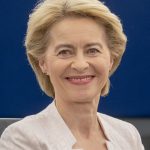
  • Ursula von der Leyen – 2022 Speech at the Munich Security Conference

    Ursula von der Leyen – 2022 Speech at the Munich Security Conference

    The speech made by Ursula von der Leyen, the President of the European Commission, on 19 February 2022.

    Ambassador Ischinger,

    Secretary-General, dear Jens,

    Ladies and Gentlemen,

    The very reason why our Union was created is to put an end to all European wars. Thus, the world has been watching in disbelief as we face the largest build-up of troops on European soil since the darkest days of the Cold War. Because the events of these days could reshape the entire international system. Ukraine has just celebrated 30 years of independence. There is an entire generation of Ukrainians born and bred in a free country. They are children of democracy. But now, they are confronted, on a daily basis, with external aggression and interference. Some of them have lost relatives or classmates in the Donbas war. They are faced again with the prospect of conscription, to fight a war that they do not want, but that Moscow might impose on them. This is what the Kremlin’s policies mean in practice: to instil fear, and call it security; to deny 44 million Ukrainians from deciding freely about their own future; to deny a free country’s right to independence and self-determination. And the consequences of this approach matter well beyond Ukraine.

    The Kremlin is not only trying to undermine the entire European security architecture, the Helsinki principles that have made all European countries safer, including Russia. It is also violating the UN Charter, where it states that countries ‘shall refrain from the threat or use of force against the territorial integrity or political independence of any state.’ We cannot let this stand.

    We are facing a blatant attempt to rewrite the rules of our international system. One only has to read the recent communiqué issued by Russian and Chinese leaders. They seek a ‘new era’, as they say, to replace the existing international order. They prefer the rule of the strongest to the rule of law, intimidation instead of self-determination, coercion instead of cooperation. We still hope that peace will prevail and that diplomacy will take us there.

    Allow me to address how Europe can support this work. First, we should be ready to respond. We – the EU and its transatlantic partners – have been preparing a robust package of financial and economic sanctions, including on energy and cutting-edge technology. If the Kremlin strikes, we can impose high costs and severe consequences on Moscow’s economic interests. The Kremlin’s dangerous thinking, which comes straight out of a dark past, may cost Russia a prosperous future.

    Second, diversification. A strong European Union cannot be so reliant on an energy supplier that threatens to start a war on our continent. Gazprom is deliberately trying to store and deliver as little as possible while prices and demand are skyrocketing. A strange behaviour for a company. We must diversify both our suppliers and our energy sources. This work is already underway. We have reached out to our partners and friends across the globe. And today, I can say that even in case of full disruption of gas supply by Russia we are on the safe side for this winter. And in the medium and long term, we are doubling-down on renewables. This will increase Europe’s strategic independence on energy.

    Third, supporting democracy in Ukraine. For seven years now, the Russian leadership has tried to destabilise Ukraine: Hybrid war, cyberattacks, disinformation – you name it. Yet, the country is now stronger than seven years ago. Because it has chosen the path of democracy and the friendship of other democracies. Think again about the youth of Ukraine, the post-Soviet generation. They know that their democracy is not perfect. But it is perfectible, and is getting stronger year after year. This is what makes it stand out from autocracy. Thriving democracies are the autocrats’ greatest fear. Because their propaganda fails, when citizens are empowered by the reporting of independent media and the free exchange of ideas. Because free citizens speak truth to power. Because trust and confidence are more sustainable than control and coercion. And this is exactly why Europe is supporting Ukraine’s path to democracy. It makes Ukraine a better place to live for its people and a better neighbour for both the European Union and Russia.

    My fourth and final point is about unity. Since the start of this Kremlin-made crisis, the European Union and the transatlantic community are fully aligned and united. We are supporting Ukraine to withstand the enormous pressure from Moscow. When the Russian government tried to divide us, over and over again, we have responded with one voice and a common message. This has been possible also thanks to you, dear Jens. You always pushed us to focus on what we have in common. You have shown that the European Union and NATO stand side by side. Not only because we share members and allies, but because we share values: freedom, democracy, independence. The very values that are at stake in this crisis.

    And this is why it makes me very proud and happy to announce that you are this year’s Kleist award winner. You have come a long way to reach this high office. When you were young, you were the head of the young socialists in Norway, an organisation that – at the time – was certainly not known as a supporter of NATO. Young Jens used his charm and leadership to turn the Young Norwegian Socialist around. As Prime Minister of Norway, you, Jens, had to deal with Russia on a regular basis. Actually, by then, Lavrov was already being Lavrov. And yet, you managed with skill to resolve a decades-long territorial dispute in the Barents Sea.

    Dear Jens,

    You have always been a man of dialogue and a believer in the transatlantic bond. In almost ten years at the helm of NATO, you always carried the flame of this unique alliance. Nobody worked harder than you for the transatlantic alliance. You have pushed relentlessly to strengthen our unity. This is why no one deserves this year´s Kleist award more than you do.

    Congratulations, dear Jens.

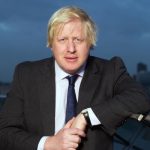
  • Boris Johnson – 2022 Speech at the Munich Security Conference

    Boris Johnson – 2022 Speech at the Munich Security Conference

    The speech made by Boris Johnson, the Prime Minister, on 19 February 2022.

    Ambassador Ischinger, Your Excellencies, Ladies and Gentlemen, it’s great to be here once again, after an absence of I think five years, at this very important security conference, which has helped to make this city a symbol of the unity of the West, of the strength of the Atlantic alliance and the vision of a Europe whole and free.

    And at this moment of extreme danger for the world, it has seldom been more vital to preserve our unity and resolve, and that was the theme of my discussion last night with fellow leaders, including President Biden, President Macron, Chancellor Scholz and Prime Minister Draghi, as well as the leaders of NATO and the EU.

    And as I said to President Putin during our last conversation, we in the UK still hope that diplomacy and dialogue may yet succeed.

    But we also have to be unflinchingly honest about the situation today.

    When over 130,000 Russian troops are gathering on the borders of Ukraine, and when more than 100 battalion tactical groups threaten that European country.

    We must be united against that threat because we should be in no doubt what is at stake here.

    If Ukraine is invaded and if Ukraine is overwhelmed, we will witness the destruction of a democratic state, a country that has been free for a generation, with a proud history of elections.

    And every time that Western ministers have visited Kyiv, we’ve assured the people of Ukraine and their leaders that we stand four-square behind their sovereignty and independence.

    How hollow, how meaningless, how insulting those words would seem if – at the very moment when their sovereignty and independence is imperilled – we simply look away.

    If Ukraine is invaded the shock will echo around the world and those echoes will be heard in East Asia and they will be heard in Taiwan.

    When I spoke to the Prime Ministers of Japan and Australia this week, they left me in no doubt that the economic and political shocks would be felt on the far side of the world.

    So let me be clear about the risk.

    The risk now is that people will draw the conclusion that aggression pays and that might is right.

    So we should not underestimate the gravity of this moment and what is at stake.

    As I speak to you today, we do not fully know what President Putin intends but the omens are grim and that is why we must stand strong together.

    The UK has worked with the European Union and the United States to put together the toughest and strongest package of sanctions, and I spoke recently to President Ursula von der Leyen to discuss the measures prepared by the EU, in the closest coordination with our own.

    And if Russia invades its neighbour, we will sanction Russian individuals and companies of strategic importance to the Russian state; and we will make it impossible for them to raise finance on the London capital markets; and we will open up the matryoshka dolls of Russian-owned companies and Russian-owned entities to find the ultimate beneficiaries within.

    And if President Putin believes that by these actions he can drive NATO back or intimidate NATO, he will find that the opposite is the case.

    Already the UK and our allies are strengthening the defences of the eastern flank of NATO.

    We are increasing the British contribution to Exercise COLD RESPONSE by sending our newest aircraft carrier, HMS Prince of Wales, and 3 Commando Brigade.

    We are doubling our presence in Estonia to nearly 2,000 troops; we have increased our presence in Poland to 600 troops by sending 350 Marines from 45 Commando; we have increased our presence in the skies over south-eastern Europe with another six Typhoons based in Cyprus; we are sending warships to the eastern Mediterranean and the Black Sea; and I have placed another 1,000 troops on stand-by to respond to any humanitarian emergency, which we all fear is increasingly likely.

    And while the most alarming and visible threat is the massing of Russian land forces on Ukraine’s borders, look at the naval build-up in the Black Sea, which threatens to blockade Ukraine; look at the massive cyber attacks and the incoming tide of disinformation.

    This crisis extends into every domain, which is why the UK is providing NATO with more land, sea and air forces, and it is because we feared a crisis like this, that we were already engaged in the biggest increase in defence investment for a generation, spread across conventional capabilities and the new technologies that are ever more important to our collective defence.

    And I’m proud to say that since Russia invaded Ukraine for the first time and annexed Crimea in 2014, we have been helping Ukraine, training 22,000 troops and, in recent months, in response to the threat, we have been among the nations to send defensive weaponry in the form of 2,000 anti-tank missiles.

    I’m glad that we have been joined in this by the United States, by Poland and by our Baltic allies, and that many other nations and the EU have, like the UK, helped to strengthen Ukraine’s economy.

    Britain will always stand up for freedom and democracy around the world, and when we say that our commitment to European security is immovable and unconditional, our deeds show that we mean our words.

    We are making the biggest contribution to NATO of any European ally because we understand the importance of collective security, and just as our European friends stood by us after the Russian state used a chemical weapon in Salisbury, so Britain will stand by you.

    But we must accept that even these measures by the UK and our allies: draconian sanctions, rinsing out dirty money, the intensification of NATO’s defences, fortifying our Ukrainian friends, they may not be enough to deter Russian aggression.

    It is therefore vital that we learn the lessons of 2014.

    Whatever happens in the next few days and weeks, we cannot allow European countries to be blackmailed by Russia, we cannot allow the threat of Russian aggression to change the security architecture of Europe, we cannot permit a new Yalta or a new division of our continent into spheres of influence.

    We must now wean ourselves off dependence on Putin’s oil and gas.

    I understand the costs and complexities of this effort and the fact this is easier said than done, so I am grateful for Chancellor Scholz’s assurances about Nord Stream 2, but the lessons of the last few years, and of Gazprom’s obvious manipulation of European gas supply, cannot be ignored.

    We must ensure that by making full use of alternative suppliers and technology, we make Russia’s threats redundant.

    That will be the work of the months and years to come, as well as the necessary and overdue steps that we in the UK must take to protect our own financial system.

    And now we need to prepare ourselves for the Russian playbook of deception that governs every operation of this kind.

    There will be a cascade of false claims about Ukraine, intended to spread confusion almost for its own sake,

    and even now there are plans being laid for staged events, spinning a web of falsehoods designed to present any Russian attack as a response to provocation.

    We’ve already witnessed a fake military withdrawal, combined with staged incidents that could provide a pretext for military action.

    We knew this was coming, we’ve seen it before – and no-one should be fooled.

    And we have to steel ourselves for the possibility of a protracted crisis, with Russia maintaining the pressure and searching for weaknesses over an extended period, and we must together refuse to be worn down.

    What Europe needs is strategic endurance, and we should focus our energies on preserving our unity and on deepening trans-Atlantic cooperation.

    But for that to work, we must also be prepared to devote the necessary resources to carry a greater share of the burden of preserving our continent’s security, and to demonstrate that we are in it for the long haul.

    For now, we should continue to do everything we can to pursue the path of peace and dialogue.

    There is a way forward, if President Putin is minded to take it: there is a discussion to be had about the threats that he claims to see because in reality as we all know, those threats are an illusion.

    They are the product of the Kremlin’s chronic but misguided view of NATO as a supposedly encircling and intimidating alliance.

    This is not NATO’s function: NATO is a peaceful and defensive alliance and we are willing to work with President Putin to demonstrate that point and to give him the reassurances that he may need.

    We could point out that until he invaded Ukraine for the first time in 2014, NATO did not permanently station any troops anywhere east of Germany and it was as recently as 2017 that the US, the UK and other NATO allies established the “enhanced forward presence” to protect Poland and the Baltic states.

    Even then, the total deployment of fewer than 5,000 troops posed no conceivable threat to Russia, and it is only in the last few weeks, in response to the current crisis, that we have dispatched reinforcements, though still in numbers that constitute no possible threat.

    Until 2014, European allies were cutting their defence budgets and shrinking their armed forces, perhaps faster than was safe or wise.

    And to the extent that this has changed it is because of the actions of President Putin and the tension he has created.

    If NATO forces are now closer to Russia’s border, it is in response to his decisions and the justified concerns they have provoked among our allies.

    And there are many things said about what may or may not have been said in the closed-door meetings of three decades ago, as the Berlin wall fell and Germany reunited.

    But there is no doubt that we all agreed legal obligations to protect the security of every country in Europe.

    And what happened in those amazing years was the dissolution of the Iron Curtain and the fulfilment of the vision of a Europe whole and free, it was one of the most incredible moments of my lifetime.

    As nations at the heart of our continent regained their liberty, and their sovereign right to control their own destiny and seek their own alliances.

    We will not abandon the hope and impulse of that era, made possible by the courage of millions of ordinary Europeans.

    That is why NATO opened its doors to 14 states after 1999, and we cannot allow our open door to be slammed shut.

    But if dialogue fails and if Russia chooses to use violence against an innocent and peaceful population in Ukraine, and to disregard the norms of civilised behaviour between states, and to disregard the Charter of the United Nations, then we at this conference should be in no doubt that it is in our collective interest that Russia should ultimately fail and be seen to fail.

    I believe that in preparing to invade Ukraine, a proud country whose armed forces now exceed 200,000 personnel, considerably more expert in combat today than in 2014, President Putin and his circle are gravely miscalculating.

    I fear that a lightning war would be followed by a long and hideous period of reprisals and revenge and insurgency, and Russian parents would mourn the loss of young Russian soldiers, who in their way are every bit as innocent as the Ukrainians now bracing themselves for attack.

    And if Ukraine is overrun by brute force, I fail to see how a country encompassing nearly a quarter of a million square miles – the biggest nation in Europe apart from Russia itself could then be held down and subjugated forever.

    After a generation of freedom, we’re now staring at a generation of bloodshed and misery.

    I believe that Russia would have absolutely nothing to gain from this catastrophic venture and everything to lose, and while there is still time, I urge the Kremlin to de-escalate, to disengage its forces from the frontier and to renew our dialogue.

    Every nation at this conference shares a vision of a secure and prosperous Europe of sovereign states, deciding their own destiny and living without fear or threat.

    And that vision of course extends to Russia, a nation whose cultural patrimony we revere, and whose sacrifice in the struggle against fascism was immeasurable.

    Russia has as much right as any other country to live in peace and security, and we should never cease to emphasise that Russia has nothing to fear from our vision, which threatens and marginalises no-one.

    And as we come together in unity and resolve, we must also show wisdom and moderation, because it is precisely by that unity that we show today that we have the best chance even now, at this 11th hour, of averting disaster and ensuring that good sense can still prevail.

    And it is that message of unity that we must send from this conference today.

  • Ursula von der Leyen – 2022 Speech on Ukraine and Threat from Russia

    Ursula von der Leyen – 2022 Speech on Ukraine and Threat from Russia

    The speech made by Ursula von der Leyen, the President of the European Commission, on 16 February 2022.

    Thank you Madam President,

    Honourable Members,

    The very reason why our Union was created is to put an end to all European wars. So it is particularly painful for me to address you today, as we face the largest build-up of troops on European soil since the darkest days of the Cold War. The people of Ukraine are bravely trying to get on with their lives. But many of them keep emergency bags by their front doors, with basic clothes and important documents, in case they have to rush away from home. Others have stockpiled food cans to prepare for the worst. Some have even set up shelters in their basements. These are not stories from the 1940s. This is Europe in 2022. And this is happening because of a deliberate policy of the Russian leadership. Ukraine is a sovereign country. It is making choices about its own future. But the Kremlin does not like this, and so it threatens war. This is the essence of the current escalation. And despite the signs of hope we saw yesterday, this it is something we simply cannot accept.

    In the last seven years, Ukraine has suffered from the Kremlin’s constant aggression. But despite that heavy burden, Ukraine has come such a long way. It has taken important steps to fight corruption, rebuilt its infrastructure, created new jobs for its talented youth. Our Union has accompanied them, putting together the largest support package in our history. Of course, the people of Ukraine know that their democracy still has some flaws and issues to deal with. But Ukraine today is a stronger, freer and more sovereign country than in 2014. And this is precisely why the Kremlin is threatening it again.

    We stand firm with Ukraine. The idea that the Kremlin should decide what Ukrainians can or cannot desire – we simply cannot accept. The idea of spheres of influence are ghosts of the last century. This crisis is about Ukraine – and more. It is about what it means to be a sovereign, independent and free country in the 21st century. It is about everyone’s right to live free from fear. It is about every country’s right to determine its own future. And this is the message that our Union is passing to the Kremlin.

    Like everyone in this room, I truly hope that the Kremlin will decide not to unleash further violence in Europe. Yesterday, Russia was certainly sending conflicting signals. On the one hand, authorities announce Russian troop pullbacks. On the other hand, the Duma votes for the formal recognition of Donetsk and Luhansk as independent republics. Diplomacy has not yet spoken its last words. It is good to hear yesterday’s commitment to the Minsk Agreement. President Macron and Chancellor Scholz have travelled to Kyiv and Moscow. Several others are also speaking to both sides. I am constantly exchanging with all of them, as well as with President Biden, Prime Minister Trudeau and Prime Minister Johnson. The Transatlantic Community has for a long time not been so united. Let me just mention one recent episode.

    Earlier this month, Russian Foreign Minister Lavrov wrote 36 letters to each and every Member State of the European Union and NATO Ally, with a series of demands. He received two letters in return: One from Josep Borrell on behalf of the European Union, and one from Jens Stoltenberg on behalf of NATO. Once again, the Russian government tried to divide us. But their attempt failed. The European Union and its transatlantic partners are united in this crisis. And our call on Russia is crystal clear: do not choose war. A path of cooperation between us and Russia is still possible. But let us stay vigilant. Despite yesterday’s news, NATO has not yet seen signs of any Russian troop reduction. And should the Kremlin choose violence against Ukraine, our response will be strong and united. The European Commission and the EEAS have been working closely with all Member States to prepare a robust and comprehensive package of potential sanctions. And we have worked in close coordination with our friends in the US, the UK and Canada. Let me say that in these weeks we have built a unity of purpose that is truly remarkable, both within the EU and with our partners. In case of a Russian aggression, Europe’s reaction will be swift and robust. We are not just talking about freezing assets and banning travel for Russian individuals. Russia’s strategic interest is to diversify its one-sided economy and to close its current gaps. But for this, they need technologies in which we have a global leadership. High-tech components for which Russia is almost entirely dependent on us. Our sanctions can bite very hard, and the Kremlin knows this well.

    We are also ready in case that the Russian leadership decides to weaponise the energy issue. At a time of high demand, Gazprom is restricting its gas supplies to Europe. A ten-year low in storage, no sales on the spot market. This behaviour has already damaged Russia’s credibility as a reliable energy supplier. We are currently in talks with a number of countries that are ready to step up their exports of liquefied natural gas to the EU. This resulted in January in record deliveries of LNG gas – more than 120 vessels and 10 bcm of LNG. On top, since the annexation of Crimea, we have increased the number of LNG terminals. We have reinforced our pan-European pipeline and electricity interconnector network. And the good part is that these investments in infrastructure will in future be the backbone of green hydrogen supply. During the last weeks, we have looked into all possible disruption scenarios in case Russia decides to partially or completely disrupt gas supplies to the EU. And I can say that our models show that we are now rather on the safe in this winter. On top of this, we have also developed with Member States a new set of emergency measures, which we could trigger in case of complete disruptions. But one of the lessons we can already draw from this crisis is that we must diversify our energy sources, to get rid of the dependency of Russian gas, and heavily invest in renewable energy sources. They are clean and good for the planet, and they are home-grown and good for our independence.

    Honourable Members,

    This is a crisis that has been created by Moscow. We have not chosen confrontation, but we are prepared for it. We now have two distinct futures ahead of us. In one, the Kremlin decides to wage war against Ukraine, with massive human costs – something we thought we had left behind after the tragedies of the twentieth century. Moscow’s relations with us would be severely damaged. Tough sanctions would kick in, with dire consequences on the Russian economy and its prospect of modernisation. But another future is possible. A future in which Russia and Europe cooperate on their shared interests. A future where free countries work together in peace. A future of prosperity, built on the respect of the fundamental principles enshrined in the UN Charter, and in the European security architecture since the Helsinki Final Act. This is my aspiration. And I am sure the Russian people share this aspiration, too. It is now up to the Kremlin to decide. Whatever path they decide to take, we will stand our ground. Europe will be united, on the side of Ukraine, on the side of peace, on the side of Europe’s people.

    Long live Europe.

  • Ursula von der Leyen – 2022 Speech on the Future of the European Union and Africa

    Ursula von der Leyen – 2022 Speech on the Future of the European Union and Africa

    The speech made by Ursula von der Leyen, the President of the European Commission, on 18 February 2022.

    We had a Summit, indeed, that was, I would say, packed and productive. It was a very good Summit. And we could see that, as Africa sets sail on the future, the European Union wants to be Africa’s partner of choice. This is basically the summary of this Summit. For this, indeed, we need a stronger partnership between us. What does it mean, concretely? It means remaining an economic partner you can trust. The European Union is the first trading partner and the first investor in Africa. And therefore, it is no coincidence that the first regional plan under our big investment strategy, Global Gateway, is the Africa-Europe plan, with more than EUR 150 billion of investment. And indeed, we have developed together very clear objectives we want to invest in. There is the big topic of the green transition, of course the renewables. I had several talks with partners, who immediately want to engage in the main topic of green hydrogen. There is transport networks, the connectivity within the continent is crucial for the Free Trade Area to function; digital connections, the satellite idea has been mentioned; but also sustainable agriculture; healthcare; and, most importantly, education. Now, what is important is: These priorities, we defined them together. And now, we want to work together on them, we want to deliver. And the first series of major projects have already been presented today.

    The second point that is important for me is to emphasise that a stronger partnership means stepping up our joint fight against climate change. We want to see green partnerships, like the ones we have with South Africa or Morocco, flourish across the continent. Because climate action is the challenge of our generation. It has been a big topic during this Summit. And yet, there lie also great opportunities for the next generation, if we act now. Africa is rich, rich in renewable power, if you look at hydropower, solar power, wind power. And Africa is rich in nature, with a quarter of the world’s biodiversity – one quarter! So to end climate change, the world needs Africa. Yet, the transition to clean energy will be a process for economies that rely heavily on coal, be it in Africa or be it in Europe. But we are both determined. And I am very much looking forward to Egypt hosting COP27 this year.

    And finally, from the health of our planet, to the health of our people. Europe is Africa’s number one partner in the fight against COVID-19. And we will do even more. We are on the right track to reach our goal to share at least 450 million vaccine doses by this summer. And indeed, together, we are building up mRNA manufacturing capacity across Africa. I will not go in detail because we have discussed that in the press conference this morning.

    But important is that we had a very good, intense, constructive discussion on the question of TRIPS waiver and compulsory licencing. We share the same goal. We have different ways to reach that goal. There must be a bridge between those two ways. And therefore, we have decided that the two Commissions – the African Union Commission and the European Union Commission – will work together. We will organise a College-to-College meeting here in Brussels, in spring. And at that time, at the latest, we have to deliver a solution. This will be accompanied by the WTO, Director-General Ngozi. And therefore, I always like it when a task is clear and defined. The task is set for the two Commissions. The frame is clear, the goal is clear, we have to deliver.

    So Europe wants to remain Africa’s first partner, a loyal partner. And we are moving – right now – from words to action.

    Thank you.

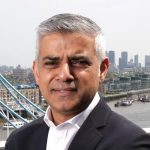
  • Sadiq Khan – 2022 Comments on the Clear Air Summit

    Sadiq Khan – 2022 Comments on the Clear Air Summit

    The comments made by Sadiq Khan, the Mayor of London, on 17 February 2022.

    We are facing a pivotal moment in our efforts to tackle the triple dangers of toxic air pollution, climate change and congestion and make London a green, fairer and safer city. Tackling air pollution has been a priority for me since I was first elected in 2016 and I’m more determined than ever to do everything I can to consign toxic air to the history books.

    However, the inquest into Ella Adoo-Kissi-Debrah’s death has underlined the need for us all to do much more to warn Londoners about the effects of air pollution. I’m delighted to be convening national and regional leaders and medical professionals to agree how we can best do this and ensure further action is taken to make sure no other child dies from London’s toxic air.

    We simply don’t have time to waste – deadly air pollution is permanently damaging the lungs of young Londoners and affecting older people who are more vulnerable to the impacts of poor air quality. This is also about social justice – we know pollution hits the poorest Londoners, who are least likely to own a car, the hardest, which is why I’m doing everything I can to improve air quality and protect the health of all Londoners.

  • Sadiq Khan – 2022 Comments on Storm Eunice

    Sadiq Khan – 2022 Comments on Storm Eunice

    The comments made by Sadiq Khan, the Mayor of London, on 18 February 2022.

    This Red Warning indicates a risk to life as extremely strong winds are now expected in the capital, providing the potential for flying debris and damage to buildings.

    I urge all Londoners to stay at home, do not take risks and do not travel unless it is absolutely essential.

    City Hall is in close contact with key agencies across the capital and our city is as prepared as possible for any potential impacts of Storm Eunice.

    However, it is vital that Londoners listen to the official advice today and stay at home until the storm has passed.

  • Liz Truss – 2022 Comments on Russian Cyber Attack on Ukraine

    Liz Truss – 2022 Comments on Russian Cyber Attack on Ukraine

    The comments made by Liz Truss, the Foreign Secretary, on 18 February 2022.

    The UK Government judges that the Russian Main Intelligence Directorate (GRU) were involved in this week’s distributed denial of service attacks against the financial sector in Ukraine.

    The attack showed a continued disregard for Ukrainian sovereignty. This activity is yet another example of Russia’s aggressive acts against Ukraine.

    This disruptive behaviour is unacceptable – Russia must stop this activity and respect Ukrainian sovereignty. We are steadfast in our support for Ukraine in the face of Russian aggression.

  • Liz Truss – 2022 Comments on Second OSCE Meeting Missed by Russia

    Liz Truss – 2022 Comments on Second OSCE Meeting Missed by Russia

    The comments made by Liz Truss, the Foreign Secretary, on 18 February 2022.

    Despite Russia’s claims to seek dialogue, all the evidence shows the opposite. This is the second OSCE meeting that Russia has boycotted. If Russia was serious about de-escalation, it would withdraw its troops and show up to these meetings. Instead we see contempt for the OSCE commitments to which it freely signed up.

    Russia has the opportunity to de-escalate, withdraw its troops, and engage in meaningful dialogue. It must do so.