Category: Speeches

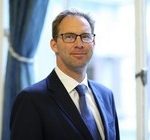
  • Tobias Ellwood – 2022 Speech on the Sue Gray Report

    Tobias Ellwood – 2022 Speech on the Sue Gray Report

    The speech made by Tobias Ellwood, the Conservative MP for Bournemouth East, in the House of Commons on 25 May 2022.

    This is a damning report about the absence of leadership, focus and discipline in No. 10, the one place where we expect to find those attributes in abundance. I have made my position very clear to the Prime Minister: he does not have my support. A question I humbly put to my colleagues is: are you willing, day in day out, to defend this behaviour publicly? Can we continue to govern without distraction, given the erosion of the trust of the British people? And can we win a general election on this trajectory?

    The question I place to the Prime Minister now—[Interruption.] I am being heckled by my own people. If we cannot work out what we are going to do, the broad church of the Conservative party will lose the next general election. My question to the Prime Minister is very clear: on the question of leadership, can he think of any other Prime Minister who would have allowed such a culture of indiscipline to take place on their watch? And if they did, would they not have resigned?

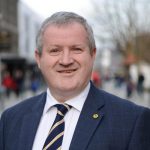
  • Ian Blackford – 2022 Speech on the Sue Gray Report

    Ian Blackford – 2022 Speech on the Sue Gray Report

    The speech made by Ian Blackford, the SNP MP for Ross, Skye and Lochaber, in the House of Commons on 25 May 2022.

    As I speak, the public are poring over the sordid detail of what went on—out of the public eye, behind the high gates and walls of the Prime Minister’s residence. The report is damning. It concludes that many gatherings and many individuals did not adhere to covid guidance; that

    “events…were attended by leaders in government”

    and

    “should not have been allowed to happen”;

    that

    “junior civil servants believed that their involvement…was permitted given the attendance of senior leaders”;

    that there was an “unacceptable”

    “lack of respect and poor treatment of security and cleaning staff”;

    and, crucially, that:

    “The senior leadership at the centre, both political and official, must bear responsibility for this culture.”

    That leadership came from the top, and the Prime Minister—in the words of the report—must bear responsibility for the culture. A fish rots from the head.

    The Prime Minister’s Dispatch Box denial of a party taking place on 13 November is now proven to be untrue. He was there on 13 November, photographed, raising a toast, surrounded by gin, wine, and other revellers. The charge of misleading Parliament is a resignation matter; will the Prime Minister now finally resign?

    This Prime Minister has adopted a systematic, concerted and sinister pattern of evasion. Truthfulness, honesty and transparency do not enter his vocabulary. That is just not part of his way of being, and it speaks for the type of man that he is. Credibility, truth and morality all matter, and the Prime Minister has been found lacking, time and again.

    The Prime Minister indicated dissent.

    Ian Blackford

    The Prime Minister can shake his head, but that is the reality. Ethics have to be part of our public life, and ethical behaviour has to be at the core of the demeanour and the response of any Prime Minister.

    The Prime Minister brings shame on the office, and has displayed contempt, not only to the Members of this House but to every single person who followed the rules—those who stayed away from family, those who missed funerals, those who lost someone they loved. So I hope that when Tory Members retire to the 1922 Committee this evening, they will bear in mind the now infamous Government advertisement featuring a desperately ill covid patient. It says:

    “Look her in the eyes and tell her you never bend the rules.”

    If those Tory Members do not submit a letter—if they do not remove this Prime Minister—how will they ever look their constituents in the eye again?

  • Keir Starmer – 2022 Speech on the Sue Gray Report

    Keir Starmer – 2022 Speech on the Sue Gray Report

    The speech made by Keir Starmer, the Leader of the Opposition, in the House of Commons on 25 May 2022.

    The door of No. 10 Downing Street is one of the great symbols of our democracy. Those who live behind it exercise great power, but they do so knowing that their stay is temporary. Long after they have gone, that door and the democracy it represents will remain firm and unyielding. But Britain’s constitution is fragile. It relies on Members of this House and the custodians of No. 10 behaving responsibly, honestly and in the interests of the British people. When our leaders fall short of those standards, this House has to act.

    For months, Conservative Members have asked the country to wait—first for the police investigation, which concluded that this Prime Minister is the first in our country’s history to have broken the law in office, and then for the Sue Gray report. They need wait no longer. That report lays bare the rot that, under this Prime Minister, has spread in No. 10, and it provides definitive proof of how those within the building treated the sacrifices of the British people with utter contempt. When the dust settles and the anger subsides, this report will stand as a monument to the hubris and arrogance of a Government who believed it was one rule for them, and another rule for everyone else.

    The details are stark. Five months ago, the Prime Minister told this House that all guidance was completely followed in No. 10, yet we now know he attended events on 17 December. At least one of those attending has received a fine for it, deeming it illegal. We know that on 18 December, an event was held in which staff “drank excessively”, which others in the building described as a “party”, and that cleaners were left to mop up the red wine the next day. On 20 May, as a covid press conference was taking place, one of the Prime Minister’s senior officials was told, “Be mindful; cameras are leaving. Don’t walk about waving bottles.”

    It is now impossible to defend the Prime Minister’s words to this House. This is about trust. During that 20 May press conference, the British public were told that normal life as we know it was a long way off, but that was not the case in No. 10. Even now, after 126 fines, they think it is everyone else’s fault but theirs. They expect others to take the blame while they cling on. They pretend that the Prime Minister has somehow been exonerated, as if the fact that he only broke the law once is worthy of praise. The truth is that they set the bar for his conduct lower than a snake’s belly, and now they expect the rest of us to congratulate him as he stumbles over it.

    No. 10 symbolises the principles of public life in this country: selflessness, integrity, objectivity, accountability, openness, honesty and leadership. But who could read this report and honestly believe that the Prime Minister has upheld those standards? The reason the British public have had to endure this farce was his refusal to admit the truth or do the decent thing when he was found to have broken the law. This report was necessary because of what Sue Gray describes as

    “failures of leadership and judgment”,

    for which senior political leadership “must bear responsibility”. It is that failure of leadership that has now left his Government paralysed in the middle of a cost of living crisis. The Prime Minister has turned the focus of his Government to saving his own skin. It is utterly shameful. It is precisely because he cannot lead that it falls to others to do so. I have been clear what leadership looks like. [Interruption.] I have not broken any rules, and any attempt—[Interruption.]

    Mr Speaker

    Order. Can I just calm it down? Quite rightly, I wanted to hear the Prime Minister; the same goes for the Leader of the Opposition. Those who do not wish to hear, please go and have a cup of tea or something.

    Keir Starmer

    I have been clear what leadership looks like. I have not broken any rules, and any attempt to compare a perfectly legal takeaway while working to this catalogue of criminality looks even more ridiculous today, but if the police decide otherwise, I will do the decent thing and step down. The public need to know that not all politicians are the same—that not all politicians put themselves above their country—and that honesty, integrity and accountability matter.

    Conservative Members now also need to show leadership. This Prime Minister is steering the country in the wrong direction. Conservative Members can hide in the back seat, eyes covered, praying for a miracle, or they can act to stop this out-of-touch, out-of-control Prime Minister driving Britain towards disaster. We waited for the Sue Gray report. The country cannot wait any longer. The values symbolised by the door of No. 10 must be restored. Conservative Members must finally do their bit. They must tell the current inhabitant, their leader, that this has gone on too long. The game is up. You cannot be a lawmaker and a lawbreaker, and it is time to pack his bags. Only then can the Government function again. Only then can the rot be carved out. Only then can we restore the dignity of that great office and the democracy that it represents.

  • Boris Johnson – 2022 Statement on the Sue Gray Report

    Boris Johnson – 2022 Statement on the Sue Gray Report

    The statement made by Boris Johnson, the Prime Minister, in the House of Commons, on 25 May 2022.

    With permission, I will make a statement, Mr Speaker. I am grateful to Sue Gray for her report today, and I want to thank her for the work that she has done. I also thank the Metropolitan police for completing its investigation.

    I want to begin today by renewing my apology to the House and to the whole country for the short lunchtime gathering on 19 June 2020 in the Cabinet Room, during which I stood at my place at the Cabinet table and for which I received a fixed penalty notice. I also want to say, above all, that I take full responsibility for everything that took place on my watch. Sue Gray’s report has emphasised that it is up to the political leadership in No. 10 to take ultimate responsibility, and, of course, I do. But since these investigations have now come to an end, this is my first opportunity to set out some of the context, and to explain both my understanding of what happened and what I have previously said to the House.

    It is important to set out that over a period of about 600 days, gatherings on a total of eight dates have been found to be in breach of the regulations in a building that is 5,300 metres square across five floors, excluding the flats—[Interruption.] Mr Speaker, I do think this is important, because it is the first chance I have had to set out the context.

    Hundreds of staff are entitled to work there, and the Cabinet Office, which has thousands of officials, is now the biggest that it has been at any point in its 100-year history. That is, in itself, one of the reasons why the Government are now looking for change and reform.

    Those staff working in Downing Street were permitted to continue attending their office for the purpose of work, and the exemption under the regulations applied to their work because of the nature of their jobs, reporting directly to the Prime Minister. These people were working extremely long hours, doing their best to give this country the ability to fight the pandemic during—[Interruption.] Mr Speaker, I appreciate that this is no mitigation, but it is important to set out the context.

    Mr Speaker

    Order. I appeal to the House: I expect the statement to be heard, and I want everybody to hear it. I want the same respect to be shown to the Leader of the Opposition afterwards. Please: this is a very important statement. The country wants to hear it as well.

    The Prime Minister

    Mr Speaker, I am trying to set out the context, not to mitigate or to absolve myself in any way.

    The exemption under which those staff were present in Downing Street includes circumstances where officials and advisers were leaving the Government, and it was appropriate to recognise them and to thank them for the work that they have done. [Interruption.] Let me come to that, Mr Speaker. I briefly attended such gatherings to thank them for their service—which I believe is one of the essential duties of leadership, and is particularly important when people need to feel that their contributions have been appreciated—and to keep morale as high as possible. [Interruption.] I am trying to explain the reasons why I was there, Mr Speaker.

    It is clear from what Sue Gray has had to say that some of these gatherings then went on far longer than was necessary. They were clearly in breach of the rules, and they fell foul of the rules. I have to tell the House, because the House will need to know this—again, this is not to mitigate or to extenuate—that I had no knowledge of subsequent proceedings, because I simply was not there, and I have been as surprised and disappointed as anyone else in this House as the revelations have unfolded. Frankly, I have been appalled by some of the behaviour, particularly in the treatment of the security and the cleaning staff. I would like to apologise to those members of staff, and I expect anyone who behaved in that way to apologise to them as well.

    I am happy to set on the record now that when I came to this House and said in all sincerity that the rules and guidance had been followed at all times, it was what I believed to be true. It was certainly the case when I was present at gatherings to wish staff farewell—the House will note that my attendance at these moments, brief as it was, has not been found to be outside the rules—but clearly this was not the case for some of those gatherings after I had left, and at other gatherings when I was not even in the building. So I would like to correct the record—to take this opportunity, not in any sense to absolve myself of responsibility, which I take and have always taken, but simply to explain why I spoke as I did in this House.

    In response to her interim report, Sue Gray acknowledges that very significant changes have already been enacted. She writes:

    “I am pleased progress is being made in addressing the issues I raised.”

    She adds:

    “Since my update there have been changes to the organisation and management of Downing Street and the Cabinet Office with the aim of creating clearer lines of leadership and accountability and now these need the chance and time to bed in.”

    No. 10 now has its own permanent secretary, charged with applying the highest standards of governance. There are now easier ways for staff to voice any worries, and Sue Gray welcomes the fact that

    “steps have since been taken to introduce more easily accessible means by which to raise concerns electronically, in person or online, including directly with the Permanent Secretary”.

    The entire senior management has changed. There is a new chief of staff, an elected Member of this House who commands the status of a Cabinet Minister. There is a new director of communications, a new principal private secretary and a number of other key appointments in my office. I am confident, with the changes and new structures that are now in place, that we are humbled by the experience and we have learned our lesson.

    I want to conclude by saying that I am humbled, and I have learned a lesson. Whatever the failings—[Interruption.] We will come to that. Whatever the failings of No. 10 and the Cabinet Office throughout this very difficult period—[Interruption.] And my own, for which I take full responsibility. I continue to believe that the civil servants and advisers in question—hundreds of them, thousands of them, some of whom are the very people who have received fines—are good, hard-working people, motivated by the highest calling to do the very best for our country. I will always be proud of what they achieved, including procuring essential life-saving personal protective equipment, creating the biggest testing programme in Europe and helping to enable the development and distribution of the vaccine that got this country through the worst pandemic of a century.

    Now we must get our country through the aftershocks of covid with every ounce of ingenuity, compassion and hard work. I hope that today, as well as learning the lessons from Sue Gray’s report, which I am glad I commissioned—I am grateful to her—we will be able to move on and focus on the priorities of the British people: standing firm against Russian aggression; easing the hardship caused by the rising costs that people are facing; and fulfilling our pledges to generate a high-wage, high-skill, high-employment economy that will unite and level up across the whole of our United Kingdom. That is my mission, that is our mission, that is the mission of the whole Government, and we will work day and night to deliver it. I commend this statement to the House.

  • Kit Malthouse – 2022 Speech on the Public Order Bill

    Kit Malthouse – 2022 Speech on the Public Order Bill

    The speech made by Kit Malthouse, the Minister for Crime and Policing, in the House of Commons on 23 May 2022.

    I have listened to others with pleasure, Madam Deputy Speaker. We have had a debate with a vigorous exchange of views, although I am afraid it was largely bifurcated. There was a group of speeches on the end of democracy: “Here we go, fascism is on its way,” or “We are about to become North Korea”—although I am sure the right hon. Member for Hayes and Harlington (John McDonnell) would not think that an entirely backward step. The speeches made by the right hon. Member for Hackney North and Stoke Newington (Ms Abbott) and the hon. Members for Bath (Wera Hobhouse), for Norwich South (Clive Lewis), for Streatham (Bell Ribeiro-Addy), for Middlesbrough (Andy McDonald), for Edmonton (Kate Osamor), for Brighton, Pavilion (Caroline Lucas), for Salford and Eccles (Rebecca Long Bailey), for Stockton North (Alex Cunningham) and for Battersea (Marsha De Cordova) were all of a kind, predicting the end of democracy as we know it. Among the froth of outrage and alarm, there were some nuggets of questions that need to be answered, particularly on why we chose to bring back the Bill after it was roundly rejected by the House of Lords. Well, their key criticism was that the Bill had not had enough scrutiny in this House, so we brought it back as soon as we could for the scrutiny of hon. Members.

    A number of hon. Members claimed that there is no public support for the Bill whereas, in fact, recent polling shows that a majority of the British public support it. There was a lot of focus on and concern about stop and search powers in the Bill. We should all take stop and search powers seriously, and look at them with care, but there seems to be a misapprehension among a number of Members about how the provision will operate, particularly regarding disproportionality and demographics. The notion is that the police will authorise an area for the equivalent of section 60 stop and search that will be where they believe the protest is likely to take place or where people will approach the protest. Therefore, the demographics of those searched are likely to reflect those attending the protest, rather than generally across the board as with other stop and search powers.

    Getting ahead of those who are likely to lock on or take other equipment with them to protest will give the police an important head start in stopping some of the prolonged and difficult protests with which they have to deal and which often put them in danger. A number of Members asked why key infrastructure, such as hospitals and NHS sites, are not covered in the Bill. There are already offences that cover those areas in other legislation, so we do not need to cover them here.

    I thought that two speeches in particular illustrated some of the issues. The hon. Member for Glasgow North East (Anne McLaughlin) was alarmist in her portrayal of the direction in which the Government are going on protest, but nevertheless was not seen throwing herself between Police Scotland and the oil protesters at Clydebank, when they were carted off and arrested. Then there was the conundrum faced by the hon. Member for Ealing Central and Acton (Dr Huq): she has happily accepted restrictions on protest outside abortion clinics and, in previous legislation, outside schools and vaccination centres—privileging them, quite rightly, as areas where protesters may come into conflict with those who are going to school or undergoing sensitive medical procedures, or indeed those denying vaccination—but I still cannot see the logic of then not applying some controls on protest outside other facilities or other people’s houses. [Interruption.]

    There were some thoughtful speeches that added to the debate, including that of my hon. Friend the Member for North East Bedfordshire (Richard Fuller), who posed some interesting questions that we will address in Committee. I am more than happy to engage with him as he ponders the Bill. The Chair of the Home Affairs Committee, the right hon. Member for Kingston upon Hull North (Dame Diana Johnson), also asked some probing questions to which we will give some thought as the Bill passes through the House.

    We heard two interesting speeches about the two sides of protest. The right hon. Member for Hayes and Harlington spoke about a community who have been using protest to further what they regard as their interest against, as he put it, the changing winds of political decision about Heathrow. My hon. Friend the Member for Cities of London and Westminster (Nickie Aiken) put the other side of the argument—about living with protest. Having lived in very central London for many years, I know the burden that protest can bring to residents and businesses in that part of town. The relentlessness of it—week in, week out, seemingly every weekend—can really prey upon people’s standard of living.

    Then we come to the frankly hilarious contortions of the shadow Home Secretary, the right hon. Member for Normanton, Pontefract and Castleford (Yvette Cooper), and the shadow Policing Minister, the hon. Member for Croydon Central (Sarah Jones), where we see in full the contradictions writ large in the body politic of the Labour party. First, the Front Benchers want a nationwide ban via injunctions, but not criminal sanctions. The right hon. Member for Normanton, Pontefract and Castleford condemns Just Stop Oil and XR but is unwilling to do anything about them, and she believes that injunctions, which sometimes take six weeks to bring people to justice, will be faster than a criminal offence.

    The truth is that the right hon. Lady’s objective this evening is not to fashion legislation that will deal with new tactics in public order. It is to get her party through the same Lobby in once piece, and at the same time to keep her head down, because we know that she has form; back in 2005, she was the Minister in a Government who voted to ban protest entirely within half a mile of this place. Famously, the first arrest was of a woman reading the names of the Iraq war dead at the Cenotaph. The right hon. Lady has form and Labour Members all know it—she is just trying to get them through the Lobby in one piece.

    My hon. Friend the Member for Devizes (Danny Kruger), who is my constituency neighbour, made a thoughtful speech in which he nailed fundamentally the issue with which we are wrestling. As I said in the debate that we had on protest in respect of the PCSC Bill, the job of a democratic Government is to balance competing rights in any scenario, but most importantly in respect of protest. How do we balance that most fundamental right to make our voices known, to protest about those things that are important to us and to try to bring about change? As my hon. Friend quite rightly said, this is about balancing moral force against physical force. The use of moral force is legitimate in a democratic society, but the use of physical force to bring about what one wants to see is less so.

    Yvette Cooper

    The Minister talks about the extension of the powers of stop and search in the Bill; will he confirm that the Bill will make it possible for the police to stop and search people to try to find something that makes noise—such as a boombox, because that could contribute to a protest offence—and will also allow the stopping and searching of peaceful passers-by who walk through Parliament Square?

    Kit Malthouse

    It would depend on which part of the Bill they used for their powers. In essence, they would be stopping and searching people to look for equipment that could be used in the commission of an offence. I know the right hon. Lady will not want to confuse colleagues, but she possibly confuses the conditions that can be placed on a protest with the criminal offences that may ensue from a protest. The police will use their stop-and-search powers to deal with those criminal offences.

    Let me return to my thread. As my hon. Friend the Member for Devizes said, we cannot allow our tradition of liberty to be used against us. Sadly, over the past few years we have seen, time and again, so-called protesters abuse our fundamental rights to make our views known to bring about their opinionated aggression, thereby impacting on people’s lives in a way that we feel is unwarranted. When I was a young politics student at university, I was taught by a member of the Labour party and great liberal thinker called Professor Hugh Berrington, who once said to me in a lecture I have never forgotten: “Being a liberal democracy doesn’t mean lying back and allowing yourself to be kicked in the stomach.” Sadly, too many of these so-called protesters—they masquerade as protesters but they are really criminals—bring about opinionated aggression that we believe is unacceptable.

    We know that we have the support of the majority of the British public. Opposition Members have lightly lain aside the rights of the British public, but they have been championed in this debate by my hon. Friends the Members for Ipswich (Tom Hunt), for Dudley North (Marco Longhi), for Runnymede and Weybridge (Dr Spencer), for Stockton South (Matt Vickers), for Peterborough (Paul Bristow) and for Ashfield (Lee Anderson). In particular, my hon. Friend the Member for Stoke-on-Trent North (Jonathan Gullis) yet again gave a bravura performance in defence of not only the ancient right of protest but the ancient British quality of proportion and moderation in everything.

    Paul Bristow

    Does my right hon. Friend remember recently visiting my Peterborough constituency? He saw it for himself when he met police officers, members of the public and many fine people in my constituency. Does he agree that the majority of the people in my constituency support this Bill and the powers in it?

    Kit Malthouse

    I do agree with my hon. Friend, but you do not have to take it from me, Madam Deputy Speaker. You can take it from any polling that has been done recently that shows that the majority of the British people support the measures that we are taking.

    My hon. Friend brings me to my final point, which was neatly illustrated when I visited Peterborough and looked at its work on knife crime. What the British people actually want is for their police officers—men and women—to spend their time fighting crime, not detaching protesters from fuel gantries, not unsticking them from the M25, and not having to surround fuel dumps in Essex so that the petrol can get out to the people who need it to go about their daily business. The British people want the police to be catching rapists and putting them behind bars, detecting paedophiles and making sure that they pay for their crimes, and stopping young people of all types being murdered on a regular basis. That is what we want our police officers to do. This Bill will release them to do that job, and I hope that the House will support it.

  • Sarah Jones – 2022 Speech on the Public Order Bill

    Sarah Jones – 2022 Speech on the Public Order Bill

    The speech made by Sarah Jones, the Labour MP for Croydon Central, in the House of Commons on 23 May 2022.

    It is a pleasure to follow all the contributions that have been made today.

    As you know, Madam Deputy Speaker, and as many of my hon. Friends have said, we were disappointed with this Queen’s Speech. It was a missed opportunity to tackle the cost of living crisis, to tackle climate change and to attack the very real problems of crime. The long-awaited victims Bill has yet to make its way to the Chamber but, if the Government were serious about governing in the interests of the people, that Bill might have been at the top of their agenda. There was nothing in the Queen’s Speech to turn around the collapse in prosecutions or the rise in crime, nothing to tackle violence against women and girls, and nothing to prevent neighbourhood crime.

    This is a Government with no guiding principle, searching for anything to show a sense of purpose where there is none. What are this Government for? What good have the last 12 years brought us? That is a question for another time, but the hotch-potch of Bills in this Queen’s Speech tells its own story.

    The Public Order Bill largely rehashes what we saw in the Police, Crime, Sentencing and Courts Act 2022, which—as my hon. Friend the Member for Coventry South (Zarah Sultana) and others have pointed out—was rejected by the other place. Moreover, it arrives before the protest clauses in that Act have come into effect, which in itself seems slightly peculiar. Perhaps introducing the statutory instruments to put those clauses into law would have made more sense, but I am not sure that sense is a guiding principle of this Government.

    The problem that the Bill seeks to solve is the need to ensure that vital public infrastructure is not seriously disrupted to the detriment of the community and our national life, while also ensuring that the rights of free speech and public protest are protected. The Opposition believe that it manages to deliver neither of those things. A starting point must be to ask: what are the basics that the police need to equip them with the tools that they need to manage protests in the minority of cases that lead to lawlessness or violence? Let me tell the House about the basic pillars.

    Paul Bristow

    Will the hon. Lady give way?

    Hon. Members

    No! Keep going.

    Sarah Jones

    I hear heckling. I will keep going for a minute. Perhaps the hon. Gentleman will listen to my pillars, and then see if he still wants to intervene.

    First, we need the police numbers to be able to deal with protests. The policy of the Conservative party, which was to cut more than 20,000 officers, thousands more police community support officers and thousands of police staff, did precisely the opposite. Specifically, there are not enough protester removal teams across the country, as the inspectorate pointed out in its report on policing protests. Why not do something about that? Secondly—this too was highlighted in the report—the police across the board need effective training in the law and in policing protests so that they can use existing legislative processes. The inspectorate said:

    “Non-specialist officers receive limited training in protest policing.”

    According to the Police Foundation, over the seven years up to 2017-18, 33 forces reduced their budgeted spending on training in real terms by a greater percentage than their overall reduction in spending. Forty per cent. of police officers say that they did not receive the necessary training to do their job. Why not do something about that?

    Thirdly, we need to give the specialist teams the tools that they need to be effective at prevention and de-escalation. I recently visited the brilliant mounted police branch team in the Met. The mounted police are an important part of the policing of protests and other events such as football matches, but they too have been cut across the country, not just in the Met. Why not do something about that?

    Finally, when the police do press charges, they want to be sure that those charges will be followed through. There is no deterrent in a system that never sees cases go to court, but we are told by the police and by the inspectorate that the Crown Prosecution Service often has to drop cases because of huge court delays. Why not do something about that?

    The Government have taken away the tools that the police need to manage protest. How can they claim to take this issue seriously?

    Paul Bristow

    I have been listening carefully to the hon. Member, and she is making an interesting speech, but would she agree with some of her own Back Benchers on this? For example, the hon. Member for Coventry South (Zarah Sultana) said that the Police, Crime, Sentencing and Courts Bill would marginalise Roma and Traveller communities out of existence, and the hon. Member for Cynon Valley (Beth Winter) said that this Public Order Bill was a threat to religious gatherings. Does the hon. Member agree with those two points?

    Sarah Jones

    The hon. Gentleman is talking about the Police, Crime, Sentencing and Courts Act 2022, which we on this side of the House opposed, in part because of its punitive measures against the Traveller community—so absolutely, yes.

    We think that this Bill does not strike the right balance on protests and that it is not the most effective way to stop significant disruption of our national infrastructure. The right to protest is a fundamental right and a hard-won democratic freedom that we are deeply proud of. We will always defend the right to speak, to protest and to gather, but there is a careful balance to be struck between those rights of protest and the rights of others to go about their daily lives. Much of the debate today has been about that balance.

    We heard from the hon. Member for Cities of London and Westminster (Nickie Aiken) about the disruption caused in her constituency. We heard from the hon. Member for Ashfield (Lee Anderson) about attending the miners’ strike. We heard from my right hon. Friend the Member for Hayes and Harlington (John McDonnell) about the expansion of Heathrow and the desperate plight of people in his constituency. We heard from the hon. Member for North East Bedfordshire (Richard Fuller) about how we can ensure that protest is not used as a cover for criminal activity. We heard from my hon. Friend the Member for Battersea (Marsha De Cordova) about the importance of protests in the context of rights for people with disabilities. This is a genuine debate, and it is the right one to have. We know that the Prime Minister values the right to protest, as he said that he would lie down in front of the bulldozers to stop a third runway at Heathrow airport.

    But some protests tip the balance in the wrong direction. Protest is not an unqualified right. Campaigners who block people from reaching relatives in hospital, marches that close down entire towns and oil protests that prevent people from crucial travel raise a valid concern, which is why we have tabled a reasoned amendment to the Bill. Our approach, rather than seeking to restrict people’s rights beyond the point of reasonableness, is to establish a swifter process for seeking an injunction to prevent disruption to vital national infrastructure. That would be a more effective prevention tool and, as my right hon. Friend the Member for Normanton, Pontefract and Castleford (Yvette Cooper) said earlier, it would have the advantage of giving judicial oversight, which would safeguard rights.

    If protesters are causing a huge amount of disruption to the supply of essential goods and services such as oil or medical supplies, an injunction is more likely to prevent further disruption than more offences to criminalise the conduct after the event. Injunctions are more straightforward for the police. They have more safeguards, as they are court-granted, and they are future-proofed for when protesters change tactics. We would include emergency health services in vital national infrastructure, and we would also ensure proper training, guidance and monitoring on the response to disruptive protests, in line with the inspectorate’s recommendations, so that we could use the existing legislation effectively.

    Lee Anderson

    The hon. Lady is making a powerful speech and some good points. She talks passionately about protesters, and sometimes there is a case and sometimes there is not. Will she cast her mind back to the Black Lives Matter riots on Whitehall over a year ago, during lockdown when those gatherings were illegal? At least two of her own MPs were there, encouraging those yobbos who were burning flags and attacking the police. Does she agree that that behaviour by her own MPs was wrong?

    Sarah Jones

    I am not sure that today is the right day to be talking about people who have broken lockdown rules. Perhaps the hon. Member has not seen some of the pictures that the rest of us have been looking at this afternoon.

    We believe that some of the provisions in this Bill effectively replicate laws already in place that the police can and already do use. There is already an offence of wilfully obstructing the highway. There is already an offence of criminal damage or conspiracy to cause criminal damage. There is already an offence of aggravated trespass. There is already an offence of public nuisance. More than 20 people were arrested for criminal damage and aggravated trespass at Just Stop Oil protests in Surrey. Injunctions were granted at Kingsbury oil terminal following more than 100 arrests, and there were arrests for breaching those injunctions, which are punishable by up to two years in prison—nine people were charged. When Extinction Rebellion dumped tonnes of fertiliser outside newspaper offices, five people were arrested. Earlier this year, six Extinction Rebellion activists were charged with criminal damage in Cambridge. In February this year, five Insulate Britain campaigners were jailed for breaching their injunctions. In November, we saw nine Insulate Britain activists jailed for breaching injunctions to prevent road blockades.

    Removing people who are locking on can take a long time and require specialist teams, but a new offence of locking on will not make the process of removing protesters any faster. The Government should look at the HMICFRS report and focus on improving training and guidance, and they should look to injunctions.

    I cannot but attack the issue of stop and search and SDPOs. This Bill gives the police wide-ranging powers to stop and search anyone in the vicinity of a protest, such as shoppers passing a protest against a library closure. The Home Secretary said the inspectorate supports these new powers, but the inspectorate’s comments were very qualified and talked of, for example, the powers’ potential “chilling effect”.

    Many of my hon. and right hon. Friends talked of the serious problem of disproportionality, as did the hon. Member for North East Bedfordshire, and talked of how these powers were initially rejected by the Home Office because of their impact. Members who have spent many years campaigning on these issues, like my right hon. Friend the Member for Hackney North and Stoke Newington (Ms Abbott), pointed to the risk of these deeply concerning provisions increasing disproportionality, bringing peaceful protesters unnecessarily into the criminal justice system and undermining public trust in the police who are trying to do their job.

    Our national infrastructure needs protecting. We hear the anger, irritation and upset when critical appointments are missed, when children cannot get to school and when laws are broken. As our reasoned amendment makes clear, we would support some amended aspects of the Bill, but we cannot accept the Bill as it currently stands. The proposals on suspicion-less stop and search, and applying similar orders to protesters as we do to terrorists and violent criminals, are unhelpful and will not work. The police already have an array of powers to deal with such protests, and injunctions would be a better tool to use. We will not and cannot stand by as the Government try to ram through yet another unthought-through Bill in search of a purpose.

    I urge all reasonable Members to support Labour’s reasoned amendment, and I urge the Government to focus instead on their woeful record on crime.
  • Mick Whitley – 2022 Speech on the Public Order Bill

    Mick Whitley – 2022 Speech on the Public Order Bill

    The speech made by Mick Whitley, the Labour MP for Birkenhead, in the House of Commons on 23 May 2022.

    It says everything we need to know about this Government’s priorities that their first Bill since the Queen’s Speech does not seek to address an out-of-control cost of living crisis, ensure that justice is done for the 1.3 million victims of crime who were forced out of the criminal justice system last year, or indeed deliver any of the people’s priorities. Instead, Conservative Members, who have so often styled themselves as the champions of individual liberty, have lined up today to defend this latest assault on our basic rights of peaceful protest and public assembly.

    The Home Secretary has resurrected and repackaged some of the most draconian provisions of the Police, Crime, Sentencing and Courts Bill, which were rightly thrown out by colleagues in the other place earlier this year, and has returned them to this House, but the issues remain the same. The Bill is unworkable, disproportionate and deeply illiberal. The Home Secretary wants to silence the voices of protesters outside this House, but we must ensure that they are heard loud and clear today. We must kill this Bill.

    It is not just about a single piece of legislation, but about the direction of this Government as a whole, and the creeping authoritarianism that increasingly characterises their every step. After years of being told that we had to free ourselves from the supposed despotism of the European Union, we now find ourselves subject to the whims of an Administration far more oppressive and contemptuous of dissent than any ever found in Brussels. From the Police, Crime, Sentencing and Courts Act and the Nationality and Borders Act to the Bill before us today, Ministers have come to this House month after month armed with legislation that seems more suited to Viktor Orbán’s Hungary than to a robust liberal democracy.

    The right to protest, the right to boycott and even the right to strike seem set for the Tory chopping block. We are forced to contemplate with horror a future in which the rights and freedoms for which earlier generations fought and died have been trampled underfoot. We must not allow that to happen. I plead with colleagues on the Government Benches—there are not many of them here, by the way—and especially with those hon. Members who bemoaned mask madness as a symptom of Government tyranny, but who remain conveniently silent on this issue of actual importance, to join me in the No Lobby today.

    Finally, I want to speak out about those environmental campaigners whose actions have repeatedly been invoked as justification for these draconian measures. I have no intention of justifying their tactics or some of their campaigns, which have caused significant disruption and even misery to working-class communities, but I find it interesting that a handful of activists blockading an oil refinery can set the wheels of Government spinning so quickly, while the imminent prospect of breaching the 1.5° global warming threshold musters, at best, empty rhetoric and unrealisable targets from those on the Government Benches.

    As the northern hemisphere approaches a summer that is likely to be characterised by record-breaking heatwaves and power outages, I wonder how history will judge a Government who prioritise criminalising climate protesters over tackling the unfolding climate catastrophe.

  • Zarah Sultana – 2022 Speech on the Public Order Bill

    Zarah Sultana – 2022 Speech on the Public Order Bill

    The speech made by Zarah Sultana, the Labour MP for Coventry South, in the House of Commons on 23 May 2022.

    When this Tory Government were elected in December 2019, pundits asked about their agenda. They wondered what their central driving force would be. Of course, the Government had their line: they spoke about being a “people’s Government” and about “levelling up”. Today, that shallow façade has been totally discredited, with the Government overseeing the biggest fall in living standards since records began, hitting the poorest hardest through policies such as the scrapping of the universal credit uplift and a real-terms cut to pensions and social security. This Bill demonstrates yet again what the Government are really about, because there has been a clear thread running through their legislation. It is not about “levelling up” or “building back better”, or whatever empty slogan they are using today; it is a growing and unmistakable authoritarianism. That is clearly seen in the Bill that we are debating.

    Government Members might complain but look at what they are doing, from the Overseas Operations (Service Personnel and Veterans) Act 2021 and its attempt to effectively decriminalise torture; to the spy cops Act—the Covert Human Intelligence Sources (Criminal Conduct) Act 2021—giving state agents the licence to torture and commit sexual violence; and the Elections Act 2022, with its attack on the independence of the Electoral Commission and the attempt to rig elections, with millions of disproportionately poor and marginalised people at risk of losing their vote.

    There is also the Judicial Review and Courts Act 2022, which human rights lawyers described as an “alarming” attack on our basic rights and which abolishes vital safeguards for our freedoms, and the Nationality and Borders Act 2022, which breaks Britain’s 71-year commitment to the refugee convention, deporting victims of war and torture to Rwanda.

    Paul Bristow

    Will the hon. Member give way?

    Zarah Sultana

    No. Many people have told you that, so please just stay sitting down.

    The Northern Ireland Troubles (Legacy and Reconciliation) Bill, which is set for its Second Reading in the House tomorrow, has been described by one human rights organisation as an “exercise in denying justice.” [Interruption.] Stop heckling me and just listen—how about that? Thank you very much.

    Madam Deputy Speaker (Dame Rosie Winterton)

    Order. It is important that hon. Members do not address one another directly in that way, but I do think that the hon. Lady has said that she is not going to take an intervention at this stage.

    Zarah Sultana

    Thank you, Madam Deputy Speaker.

    We also see this in the Police, Crime, Sentencing and Courts Act 2022 and today’s Bill. The first bans “noisy” protest and risks criminalising Gypsy, Roma and Traveller communities out of existence; and the Government are trying to push the second through before that Act is even put into effect, repackaging measures that have already been rejected by Members in the other place.

    The Bill will introduce so-called serious disruption prevention orders, which can be used to ban individuals protesting and can even apply to those who have never, ever committed a crime. As the human rights group Liberty states, it amounts to

    “a staggering escalation of the Government’s clampdown on dissent.”

    It will massively extend police powers to undertake stop and search at protests, including—as many hon. Members have mentioned—without suspicion of any wrongdoing. Police officers themselves seem quite alarmed about that. As one officer says,

    “a little inconvenience is more acceptable than a police state”.

    As we know, black people are already 14 times more likely to be stopped and searched without reasonable grounds. We can be sure that this new power will be disproportionately used against black and other ethnic minority citizens, including with the predictable effect of deterring people from raising their voice against injustice.

    It does not stop there. The Bill’s vague and ambiguous language means that anyone walking around with a bike lock, a roll of tape or any number of everyday objects could be found guilty of the new offence of an intention to lock on, and could face an unlimited fine. These are just some of the measures in the Bill that are clearly aimed at climate campaigners. No one will be happier than the fossil fuel industry and the companies that fund the Conservative party. The Government are attacking our freedoms in order to criminalise those who stand up for a liveable planet for us all.

    Conservative Members like to talk about freedom and liberty and make out that they are the champions of democracy and human rights, but a Government committed to freedom do not try to let their soldiers commit torture. They do not let state agents commit sexual violence. They do not deliberately make it harder for citizens to vote. They do not deport refugees to detention camps 4,000 miles away. They do not try to privatise a broadcaster just because of its rigorous coverage. A Government committed to freedom certainly do not crack down on protest and dissent, but that is exactly what this Government are trying to do. We have a name for a Government who do those kinds of things: an authoritarian Government. That is what this Tory Government are, and we all have a duty to oppose them.

  • Beth Winter – 2022 Speech on the Public Order Bill

    Beth Winter – 2022 Speech on the Public Order Bill

    The speech made by Beth Winter, the Labour MP for Cynon Valley, in the House of Commons on 23 May 2022.

    The Bill is a draconian piece of legislation that undermines our democracy. It is the sort of Bill I would expect from an extreme and authoritarian Administration anticipating opposition, and perhaps even fearing for their continued existence. As Members across the House have said, the provisions are not necessary. Existing laws are sufficient. The provisions would leave the UK in breach of international human rights law, would clearly restrict fundamental human rights, and severely compromise the UK’s ability to promote open societies and respect for human rights internationally. They have rightly been condemned by Members from across the House today.

    Paul Bristow

    Will the hon. Lady give way?

    Beth Winter

    No, I will not give way because of time. Causing obstruction at a site of key national infrastructure was something the Prime Minister proposed doing at Heathrow a few years ago, when he threatened to lie down in front of bulldozers. That was, of course, before he became Prime Minister. I wonder what his actions would be now. The offence of locking on, or being equipped for locking on, is far too broadly drafted and far too wide-ranging—purposefully so, I would argue, in order to restrict individuals’ willingness to protest. Those measures must be thrown out.

    The “stop and search without suspicion” measures are an over-extension of police powers. Given our knowledge of the racial bias in the application of stop and search, the measures are a green light from the Government to create further racial tensions in policing. Those measures must also be thrown out.

    The serious disruption prevention orders risk depriving people of the fundamental human rights of assembly and movement. As commentators and colleagues in the House have said, they are like the protest powers in Russia or Belarus, but even more extreme. They, too, must be thrown out.

    I take issue with some of the comments and approaches of Conservative Members. The Conservative Benches are empty now, unfortunately, which I think says a lot about the Conservatives’ position. Their comments have been very selective and subjective, and a lot of the language used has been extremely offensive. The measures in the Bill are extremely broad and far reaching. For example, the protest banning orders are extremely broad in scope and allow the police to put restrictions on processions and assemblies beyond those mentioned in recent debates. They can include religious festivals and activities, community gatherings, football matches, vigils, remembrance ceremonies, and trade union disputes and pickets. These are absolutely terrifying proposals.

    The powers in the Bill will be extended to Wales, but have the Welsh Government been consulted? I doubt it, given past experience. This is how the Government normally act towards our devolved, democratically elected Governments. They change the laws affecting Wales, but do not ask Wales its views. The Welsh Government were clearly opposed to the measures on protest in the Police, Crime, Sentencing and Courts Bill. I believe that they will make clear their opposition to this Bill. Furthermore, there is concrete evidence that the Welsh police are not supportive or likely to make use of such powers, given what was said by four constables at a recent session of the Welsh Affairs Committee.

    Paul Bristow

    Will the hon. Lady give way?

    Beth Winter

    No, I will not. I believe that Welsh MPs will reject the Bill tonight. I will wrap up with one final point. This Conservative legislation has been presented as a necessary measure to deal with climate protesters. We are facing a climate catastrophe, and the Government should be addressing its root causes now. The overwhelming majority of climate protesters are using democratic rights that we have fought over for many, many years. Among those protesters, I include myself, my parents and my children, as we have been on many a protest in our lives, locking arms, so we would probably be criminalised and called eco-hooligans, which is how the hon. Member for Ashfield (Lee Anderson) shamefully described protesters earlier.

    Paul Bristow

    Will the hon. Member give way?

    Beth Winter

    No, I will not. As I said at the outset, there are sufficient laws in existence to deal with protests.

    I believe that there is another reason for the Bill: the current cost of living crisis will drive such poverty and polarisation that the Government are concerned that their economic policies mean that public protest is increasingly likely. Rip-off energy bills—like the poll tax—pushing people into poverty and debt will lead to more protests on our streets. Is the Prime Minister readying himself for his Thatcher moment, confronting those on a low income in Trafalgar Square? How proportional will that be? I hope that we do not see such violence from this Government, but I fear that that is what the Bill is about.

    Hundreds of civil organisations, legal academics, cross-party parliamentarians and UN special rapporteurs condemned the Police, Crime, Sentencing and Courts Act 2022 and they will do the same with this Bill. I urge Members to listen to them and to us and to do the right thing today: vote against this absolutely rotten Bill on Second Reading. Throw it out.

  • Marsha De Cordova – 2022 Speech on the Public Order Bill

    Marsha De Cordova – 2022 Speech on the Public Order Bill

    The speech made by Marsha De Cordova, the Labour MP for Battersea, in the House of Commons on 23 May 2022.

    It is a pleasure to follow my hon. Friend the Member for Stockton North (Alex Cunningham) and to speak in this Second Reading debate. The provisions in this Bill pose a significant risk to the UK’s adherence to its domestic and international human rights obligations, and the Bill is unlikely to be compliant with the European convention on human rights, particularly article 10 on freedom of expression and article 11 on freedom of assembly and association.

    Equivalent measures to the protest-banning orders were previously roundly rejected by the police and Her Majesty’s inspectorate of constabulary and fire and rescue services on the basis that such measures would neither be compatible with human rights legislation nor create an effective deterrent. Many organisations, including Justice, have said that the Bill would give the police carte blanche to target protestors. Similar laws can be found in Russia and Belarus. Is this the country we have become?

    That is why I support the amendment in the name of my right hon. and learned Friend the Leader of the Opposition. It is disturbing that the Government have put forward this Bill as their first piece of legislation in the Queen’s Speech, and when the ink is not even dry on their Police, Crime, Sentencing and Courts Act 2022. We have not even been able to assess that Act’s impact on people and communities. It beggars belief that the Government have brought forward this Bill during a cost of living emergency, when they should be focusing on tackling the crisis facing so many of our constituents. Moreover, the Bill’s provisions are more egregious than those in the Government’s amendments to the Police, Crime, Sentencing and Courts Act 2022 that were flatly and rightly rejected in the other place.

    My speech will focus on the Bill’s equality impacts, especially in relation to protest. Before entering this House, I spent most of my life as an advocate and campaigner, and I know from first-hand experience the power that protest can have. My freedoms today are directly linked to the organising and protests that happened on our streets, from the suffragettes who chained themselves to Parliament to secure votes for women, to disabled people who locked their wheelchairs to traffic lights to fight the discriminatory cuts to social security, and the Black Lives Matter protests.

    Protesting is one of the most effective ways for people from underserved and under-represented groups to organise and deliver change for our communities. Such people often do not have access to the seats of powers. They face significant barriers to democratic and civic participation. Clamping down on protest will not only have an impact on the types of issues that our communities will be able to voice their concerns about but shut down key avenues of mobilising the public to support and preserve our rights.

    I urge Government Members, and the Policing Minister in particular, to watch “Then Barbara Met Alan”, which highlights the fight for civil rights for disabled people and the role that protests played in securing the imperfect Disability Discrimination Act 2005. But for those protests and disabled people protesting and making sacrifices, many of the rights that we fight to maintain today would not have been secured.

    This Bill will criminalise protest tactics and drag people into the criminal justice system, and we know that people from our communities will suffer the most. Our communities are already over-policed and targeted by the authorities. I am especially worried about the provision on protest-specific stop-and-search powers. Those powers are a form of structural oppression that will continue to hurt and harm our black, Asian and ethnic minority communities. Their expansion will only entrench racial disproportionality in the criminal justice system and further erode trust in public institutions.

    Last week, the Home Secretary announced that she was lifting restrictions placed on police stop-and-search powers in areas where police anticipate violent crimes by easing conditions on the use of section 60 orders under the Criminal Justice and Public Order Act 1994. The Bill will amend section 1 of the Police and Criminal Evidence Act 1984 to expand the types of offences that allow a police officer to stop and search a person or a vehicle. It will also extend suspicionless stop-and-search powers to the protest context; police officers will be able to stop and search a person or a vehicle without suspicion if they reasonably believe that certain protest-related offences will be committed in that area.

    Despite ongoing revelations regarding the misuse and racist application of stop-and-search powers, the Government decided to roll them out further. I therefore hope that when the Minister sums up, he will address disproportionality. I am sorry, but the equality impact assessment is flawed. It does not address the Bill’s disproportionate impact on our black and ethnic minority communities, and on black men in particular. Overwhelming evidence, including the Home Office’s own data, provided to human rights and civil liberty organisations, details the inherent disproportionality in the use of police stop and search. We know from the Independent Office for Police Conduct’s report that, in the year to March 2021, black people were seven times more likely to be stopped and searched than white people; Asian people were 2.5 times more likely to be stopped and searched.

    We know that stop and search powers are ineffective. According to the Home Affairs Committee, between March and May 2020, more than 80% of the 21,950 stop and searches resulted in no further action. That is counterproductive. The decision to ease section 60 and the new powers in the Bill do not consider the trauma that structural oppression causes to our black and ethnic minority communities, and in particular to our black boys.

    The Bill will also create the offence of intentional obstruction of a suspicionless, protest-specific stop and search. It might be used to target legal observers, or community-led protest marshals, who play a vital role in protecting the rights of groups by keeping them safe and explaining many complicated and technical laws. They are there in an observer or advisory capacity. The lack of that crucial function will impact many groups, and disabled people and people from ethnic minority backgrounds in particular.

    We do not need the Bill. It will not solve the problems that it seeks to address. All it will do is increase the criminalisation of people from our under-represented and under-served communities. The Government are not interested in protecting people or serving those who need them most; they want only to protect themselves, to hold on to power by playing with people’s lives, and to manipulate the public to deflect from their failures. They are doing that at people’s expense. If they cared, they would have brought forward the victims’ Bill and ensured justice for the 1.3 million victims who gave up on the justice system last year. I will stand up for the people and, along with Opposition colleagues, I will vote against the Bill.