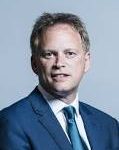
The speech made by Michael Heseltine, the then Secretary of State for the Environment, in the House of Commons on 19 February 1991.
I beg to move, to leave out from “House” to the end of the Question and to add instead thereof: ‘welcomes the Government’s thorough review of the functions, structure and finance of local government; notes that the Government has provided for a substantial increase in Aggregate External Finance for 1991–92; and welcomes the introduction of the Community Charge Reduction Scheme which will provide £1.7 billion extra help in England for those former rate payers, the elderly and the disabled who have faced the biggest increases in their contributions to the cost of local services.’. Perhaps the House will understand that the first task that fell to me as Secretary of State in conducting the review with which the Prime Minister entrusted me was to look at the issues that could be immediately addressed in the context of the settlement for the next financial year. The House will be all too familiar with the constraints that the need for primary legislation to change the existing framework imposed on any review. There were bound to be specific sectors of concern and I shall say a word or two about a number of them, particularly the liability of service men in the Gulf, in the light of recent legal decisions.
I know that many hon. Members are concerned about the service men and women in the Gulf and their treatment with regard to the community charge. In an earlier debate, I promised to provide further guidance on that subject. It is likely that last Thursday’s judgment in the Anderton case, dealing with the sole and main residence of a merchant seaman, has implications for the advice that we gave local authorities last November, and which we would have updated in the further guidance. We have yet to receive the final terms of the High Court judgment, and yet to consider the full implications.
In our view, service personnel and associated civilians posted to the Gulf should not have to pay the personal community charge during the period of their posting. If detailed study of the judgment shows it to be necessary, we shall take appropriate steps to ensure that they do not have to do so, either by legislation or by other means. I am grateful that the Opposition have already made it clear that if we do take such legislation, we shall receive their support.
Mr. Gould
I happily confirm our earlier assurance. Will the Secretary of State make it clear that the dispensation he mentioned will apply to all service men and women, irrespective of where they are based in the Gulf and will extend, particularly, to merchant seamen? Will he also make it clear that the Government will recompense local authorities for any loss of revenue that they suffer as a result?
Mr. Heseltine
The assurances that I have given apply to all those involved in the military endeavours in the Gulf, and I announced on an earlier occasion that it applies to auxiliaries as well as to the professional services. However, it does not apply to those who are engaged in the normal pursuit of their careers as merchant seamen. We are dealing with people who are involved in the Gulf endeavour and I must carefully ring-fence that particular arrangement.
Mr. Gould
It is important that we should try to make this point clear, because many thousands of merchant seamen and their families will want to know the answer to this question. Is the Secretary of State excluding merchant seamen as a category, or does he accept that some merchant seamen will be present in the Gulf in a supporting role to the military effort and they will be included in the scheme?
Mr. Heseltine
Of course, if they have been involved in the Gulf as a consequence of Gulf activities, they will come within the assurances that we have given. In what I said earlier, I was referring specifically to merchant seamen pursuing their normal activities. They would not come within the context of the announcement that I have made.
The second issue about which I am concerned—and this covers a point raised by the hon. Member for Dagenham (Mr. Gould)—relates to those local authorities where service men represent a significant proportion of their charge payers. Those authorities face a drop in their community charge income when troops are sent to the Gulf. My hon. Friend the Member for Aldershot (Mr. Critchley) has raised that issue with me extremely forcefully and he in particular made representations about the effect on the authority with which he is concerned. We have therefore announced this afternoon a scheme to provide grants for the authorities most affected to compensate them for loss of income. I know that that extra Government help will be warmly welcomed in the areas concerned.
Mr. Gould
I am sorry to bother the Secretary of State again on this point, but it is important that we get it as clear as possible. The phrase that the Secretary of State just used was a little opaque. He referred to grants to cover the authorities most affected. Is he not prepared to make it clear that, as a consequence of this scheme, he will recompense every authority for all loss of revenue suffered?
Mr. Heseltine
I do not believe that my statement was opaque. Some authorities have very limited numbers of service men within their areas and they would not be outwith normal movements that one would expect in normal circumstances. We have introduced a scheme to deal with authorities in which a significant number of local inhabitants have been moved as a result of troop dispositions. I have no doubt that once the details of the scheme have been examined, and in the light of consultation with the authorities concerned, the House will be satisfied that we have dealt with the matter effectively.
Mr. Julian Critchley (Aldershot)
My right hon. Friend will be aware of the sense of relief felt by service men who are serving in the Gulf and their families and by the electors in places like Rushmoor, which is Aldershot and Farnborough combined, who faced a notional additional charge of £14 a head. My right hon. Friend knows that he is always welcome in Aldershot and never more so than when he comes to speak to the local Tory party in May.
Mr. Heseltine
On that occasion I shall be able to explain to the electors in that constituency that, were it not for the persistent pleas of my hon. Friend, they might not have gained the benefits that I have announced this afternoon.
I announced the details of the community charge reduction scheme some time ago and I am the first to recognise that, as it must take into account the level of the community charge that is set for next year, it is not possible in advance of that to be precise about the exact quantification of benefit that will flow to individual charge payers in each local authority. However, it is possible to identify the indications, and examples can be given in general terms.
In gross terms, about £1.7 billion will go to more than 18 million people in England. When we turn that sum of money into individual cases, it will be clear to anyone who has made the calculations that a couple living in a previously averagely rated house in Lancaster, for example, could see a reduction of nearly £300 in their joint liability next April if their local authority sets its community charge at the same level as this year. We have a very important responsibility to bring home to large numbers of people precisely how much help will be available. I know that all my right hon. and hon. Friends will take it specifically on themselves to spell out locally exactly what that means.
Mr. D. N. Campbell-Savours (Workington)
Does the Secretary of State recognise that the nightmare of the poll tax has meant that hundreds of thousands of young people—some in my constituency—are refusing to pay? Does he recognise the implications of driving that number of young people into illegality? Should not some special concession be introduced? Are those people to remain in debt for many years to come? They form a sensitive age group.
Mr. Heseltine
The hon. Gentleman is fully aware that the provisions in legislation cover the age groups to which he has referred. There is no way in which they can be excluded in the absence of primary legislation to deal with the issue. All over the country, many young people recognise the force of the law and are paying their bills. Those who are not paying are, doubtless, fully aware that some Labour Members are encouraging others not to pay. There is no justification for individual hon. Members to assume that they are above the law of the land.
Several Hon. Members rose—
Mr. Heseltine
You have asked us to make progress, Mr. Speaker. This is a short debate and many hon. Members wish to speak.
Several Hon. Members rose—
Mr. Speaker
Order. I support what the right hon. Gentleman has said. Many hon. Members wish to participate. Some of them now seek to intervene. That will not help their chances to make speeches later.
Mr. Heseltine
The community charge reduction scheme does not, as I have said, apply only to many people in general. Specific additional relief has been give to those living in sheltered housing. That is additional to the scheme that we announced for poll tax payers generally. In addition, we were able to exclude certain people who were living in property that came within the definition of “charitable”. The scheme was the first response of the review. It is a comprehensive scheme which will bring significant benefits to many millions of people. It was, perhaps, in advance of the expectations of what we might do in such a short time. Perhaps the indignation of the hon. Member for Dagenham is a sign of his growing awareness of just how many people are likely to benefit from what we have already done.
The hon. Member for Dagenham also questioned me about the review. It has been under way for only a few weeks and it would have been wholly unrealistic to assume that we would come to conclusions about so complex a matter in so short a time. We have made significant progress in a wide range of detailed examinations into function, structure and finance. We have now reached a point where we are able to begin to decide those options with which we may not wish to proceed. As I said recently to the House, I hoped that by April, I should be able to narrow the focus of attention—[Interruption.] I find it extraordinary that I am urged by the Opposition Front Bench to speed up the review, yet the moment I agree to do so there is a baying of indignation from Labour Members. They are obviously frightened that we might do just that and that they will not be pleased with our conclusions. The Opposition will not deter us from moving on with the expedition that the matter requires.
Anyone who has the slightest doubt about the real views of the Opposition and about the timing involved in such a complex matter may have had the chance to listen to the hon. Member for Dagenham speaking on the “World This Weekend” last Sunday. When asked about the whole question of timing, he answered: what we propose is that we should deal with the problem in stages—that it’s futile to think that we can achieve all that is necessary overnight. However, when the hon. Gentleman comes to the House, he assumes that the Government can do precisely what he said could not be done. It is entrancing to note the speed with which the hon. Member for Dagenham has moved his position. I remind him of what he said about a year ago, when he was involved in this review—[Interruption.]
Mr. Campbell-Savours
What did the right hon. Gentleman say, at that time?
Mr. Heseltine
If the hon. Gentleman is not careful, I shall tell the House what Labour Members were saying a year earlier than that. That makes the position even more complicated. When the hon. Member for Dagenham was asked about this complex business, he said: we are making very good progress with the work that we have undertaken to prepare our alternative…We have every confidence that in the coming months we shall reach a conclusion that we shall be able to bring forward with confidence.”—[ Official Report, 18 January 1990; Vol. 165, c. 438–39.] Two months later he was asked who would pay under Labour’s new system, to which he replied: that’s the one issue we have yet to decide…We will reach a decision very shortly. He said that on 27 March 1990, but we still have no idea who will pay under Labour’s proposals.
Mr. Gould
The Secretary of State cannot be allowed to get away with that complete misstatement. I am disappointed—if it is the case, since the right hon. Gentleman has a reputation for not reading his papers—that, as we published a full statement of our proposals in a document entitled “Fair Rates,” which I passed across the Dispatch Box at the end of July, he has not yet read that statement. Not having read it, he will not necessarily have understood our proposals. I recommend him to read the paper because in it he will find the answers he seeks.
Mr. Heseltine
The hon. Gentleman is helpful in inviting me to go on giving what he must regard as uncomfortable quotations, for, although he tries to say what he would like us to believe, he gave a much clearer indication about a month after making the statement that I quoted last, when he said—
Mr. Campbell-Savours
What did the right hon. Gentleman say when he was on the Back Benches?
Mr. Heseltine
As the hon. Member for Dagenham interrupted me to say that I had misquoted him, I am surely in order in trying to put the record right. He said that people would be given plenty of information in good time so that they will have some idea of what the relative size of their bill will be. Labour’s “Fair Rates” document was published in July 1990. It outlined a range of proposals for a property tax, but it gave no indication of how much anybody would pay.
What I found most revealing about the remarks of the hon. Member for Dagenham this afternoon was that he criticised the Liberal party for being prepared to talk to me, when he was frightened that his proposals would be put through the computer and that the facts might emerge. So now we know that at least the Liberals have a policy in which they have confidence, that the Scottish Nationalists and Welsh Nationalists have policies in which they have confidence, but that the Labour party has a policy in which it has no confidence—[Interruption.]—and that has been revealed all too clearly.
Mr. Richard Tracey (Surbiton)
My right hon. Friend’s proposals for relief for those who have been hit by the community charge will be most welcome. Does he agree that the most important question now for the occupants of the Labour Front Bench is whether they will condemn those in the community who are refusing to pay the community charge, in particular Labour Members who are law-breakers?
Mr. Heseltine
My hon. Friend is of course—
Ms. Dawn Primarolo (Bristol, South)
On a point of order, Mr. Speaker.
Mr. Speaker
I shall call the hon. Lady to raise a point of order in view of a misunderstanding that occurred earlier.
Ms. Primarolo
During Prime Minister’s Question Time, I asked a question—[Interruption.] I urge Conservative Members to listen for a moment. They should calm down. I asked a question about the extension to other deserving cases of the poll tax exemptions. In the baying and braying that goes on during Question Time, the Prime Minister said that I had not paid my poll tax. Unfortunately for the right hon. Gentleman, he was wrong in that statement. For the future, may I urge all right hon. and hon. Members who utter such comments in the Chamber to check their facts?
Mr. Speaker
I allowed the hon. Lady to make that point of order to put the record straight because I believe that most of those in the Chamber at the time took her nod to be a negative, but it was evidently a positive.
Mr. Heseltine
Let me say at once how much I admire the hon. Lady for having complied with the law. Although I am not saying that she feels exactly as indignant as I do about the fact that so many of her right hon. and hon. Friends have not paid their poll tax, I must advise her that the only effect that that can have is that her constituents will be likely to find their costs rising because others do not pay.
I return to what has now been so clearly revealed about the difficulties of the Opposition in this matter. It should not be a great surprise to my hon. Friends because when the hon. Member for Birmingham, Perry Barr (Mr. Rooker) was responsible for the Labour party’s local government policies, he described his party’s dilemma with admirable clarity when he said: I’m saying to the NEC policy makers, I’m saying ‘Hang on a minute, what’s our policy on local government?…Putting it at its boldest, we haven’t got a policy, that’s the actual truth Time has marched on, but the policy making has not.
Mr. Jeff Rooker (Birmingham, Perry Barr) rose—
Mr. Heseltine
The hon. Gentleman has popped up, so I shall give way to him.
Mr. Rooker
The Secretary of State should make it clear that he is quoting from an article in The Independent of September 1987, which was true because our consultation process and policy formulation on local government had been interrupted during the general election. The article then stated—the Secretary of State will not have the guts to read this out—that my party was being the more honest about local government by admitting that we were going back to square one to look for a better way of funding local government.
Mr. Heseltine
The hon. Gentleman has made my point. There is a gap, a ravine, between us, but this process takes time. The difference between the Government and the Opposition is that we shall reach conclusions that people will understand, but, three years on, the Opposition still have not done so.
Mr. Campbell-Savours
On a point of order, Mr. Speaker—[Interruption.]
Mr. Speaker
Order. What is the point of order?
Mr. Campbell-Savours
May I ask you, Mr. Speaker, to read the motion and the amendment that are on the Order Paper? Will you ensure, as you normally do, that right hon. and hon. Members keep to the motion and the amendment? The Secretary of State is debating a matter that is not on the Order Paper.
Mr. Speaker
The Secretary of State is addressing himself to the Government amendment.
Mr. Heseltine
By this time, I am sure that the House is beginning to share my acute anxiety for the hon. Member for Dagenham as he finds himself—
Mr. Alistair Darling (Edinburgh, Central) rose—
Mr. Heseltine
No.
The hon. Member for Dagenham is now facing increasing difficulties defending the position of Labour authorities which consistently overcharge at local level. As the House knows—because I have read it into the record previously—we now have the clearest indication that in all classes of local authority—the London authorities, the metropolitan districts, the shire districts, and in England as a whole—the fact is that, when stripped of the safety net, Labour authorities consistently set higher poll tax charges than all other political parties. The evidence is not only a matter of history—the evidence is there for the coming year. This week’s Municipal Journal gives the figures for the counties. Only three of the 22 counties that are controlled outright by the Conservatives or by the Conservatives in conjunction with other parties have set their budgets above their SSA, whereas all but three of the 13 authorities where the Labour party is in charge or in joint control have exceeded the level of their SSA. Again, it is the old, old story—
Mr. Geoffrey Lofthouse (Pontefract and Castleford) rose—
Mr. Heseltine
No.
The next difficulty for the hon. Member for Dagenham is that, in order to justify his talks, he has to talk in terms of cuts when all hon. Members are fully aware that there are no cuts. The Government have been responsible for injecting an additional £4.25 billion of central support to keep down the level of charges this year. If the Labour party claims to be fit to be the Government of this country, it ought to tell the people just how much above £4.25 billion it believes that a national economy can stand in any one year. But it cannot do that.
The next argument with which we are all too familiar is that all the changes bring about dramatic cuts. There is an annual ritual of claiming that cuts will have to be made. Yet time and again the anticipated cuts that we hear about do not materialise when the budgets are set. Last year we were told that the Government’s proposals would have the most serious implications in many authorities; but charges broadly within acceptable levels were introduced and the cuts disappeared. Economies were found without great difficulties.
The hon. Member for Dagenham has now taken to suggesting that the assumptions on which we based the community charge reduction scheme were ill founded. He suggests that we are working on some notional calculation, as opposed to the actual calculations on which the scheme is based. He managed to put out a document which suggested that 26 authorities are in significant excess of the figures that we estimated. My right hon. Friend the Member for Bath (Mr. Patten) said that if local authorities set their charge in line with the Government’s assessment of what they needed to spend, the charge would be £380. The list published by the hon. Member for Dagenham included 26 authorities, 13 of which had set their charges at £380 or, indeed, less. The hon. Gentleman reveals clearly that he has not understood the essence of our announcement.
Dr. Lewis Moonie (Kirkcaldy)
On a point of order, Mr. Speaker. As the Secretary of State is speaking, three of his hon. Friends have fallen asleep. Will you ask the Serjeant at Arms to check the ventilation in the House to find out whether it is detrimental to the health of us all?
Mr. Speaker
That is one of the common accusations made in this place. Sometimes when there is some noise, hon. Members lean their head sideways towards the amplifiers.
Mr. Heseltine
The hon. Member for Dagenham failed to understand that we took as the basis of our assumptions the actual community charges for the current year but that we had to adjust them to take account of the safety net. It is obvious that we would not have established a community charge reduction scheme in which the safety net was included. So we adjusted the figure for the actual charge, net of the safety net. In some cases that meant that we increased the assumption on which the benefits are provided. It is apparent to anyone who examines them that the figures produced by the hon. Gentleman show that our assumptions are largely accurate. The figures for the list of authorities support everything that we have said, even on the hon. Gentleman’s calculations.
Mr. Kenneth Hind (Lancashire, West)
Does my right hon. Friend agree that one fundamental thing which the British public understand is that any fool can spend money but that it takes a lot more ability to spend it well and that that is what local authorities should do? If he takes the opportunity in his busy day to examine Lancashire county council, which is Labour controlled, he will find that the authority commissioned a report from the consultants P and A, who advised it that its social services were expensive and badly delivered and recommended a series of alterations to the service. The authority totally neglected those recommendations and a poor service to the public is continuing as a result. That authority continues to increase its spending well above the rate of inflation. Perhaps not only my right hon. Friend but the voters of Ribble Valley will take note of that.
Mr. Heseltine
I have not the slightest doubt that my hon. Friend is right in saying that well-managed Conservative local government is much more likely to give value for money to its electors and will continue to do so.
The last area of increasing embarrassment is the failure of the hon. Member for Dagenham to take part in the consultation process to which we have invited him. Undoubtedly there was a chance there for the Labour party to measure up to the responsibilities of a national party genuinely interested in a constructive debate. I could not have asked for greater evidence of its reasons for doubt than the speech by the hon. Member for Dagenham who said that he did not take part in consultations because he was frightened that we would put his figures through the computer. That is the greatest giveaway of all time. He will not put his figures through the computer because he does not know the implications of the scheme on which he is campaigning.
The hon. Gentleman blames us for taking our time in a thorough review to get these matters right. We will take what time is necessary for that comprehensive review and will come forward with policies which we believe are right and on which we can secure the support of the British people. We will not fall into the Labour party. trap of producing words without facts to underline them. It is quite apparent that the Opposition are more interested in raising the anxieties of the British people than in contributing to a constructive debate. That is why my right hon. and hon. Friends will vote against the motion.