Category: Speeches

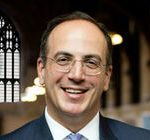
  • Michael Gove – 2022 Statement on Homes for Ukraine Update

    Michael Gove – 2022 Statement on Homes for Ukraine Update

    The statement made by Michael Gove, the Secretary of State for Levelling Up, Housing and Communities, in the House of Commons on 22 June 2022.

    The Homes for Ukraine scheme will allow eligible children and minors under the age of 18 who have already applied through the Homes for Ukraine Scheme to come to the UK without a parent or guardian, the Government announced today, 22 June 2022.

    This policy will initially apply to the 1,000 children who have already applied to the Home Office but are unable to travel as they are not travelling or reuniting with a parent or guardian.

    After working closely with the Ukrainian Government, the changes will enable a child to apply for a visa if they have proof of parental consent. This must be certified by an authority approved by the Ukrainian Government such as notary authorities or Ukrainian consul abroad.

    Extensive sponsor checks will also be carried out by local authorities ahead of any visa being granted, with councils able to veto any sponsor arrangements they deem unsuitable.

    The sponsor should also, except in exceptional circumstances, be someone who is personally known to the parents.

    The Government are working with the Ukrainian Government, devolved Administrations, local authorities and charities and voluntary groups.

  • Lucy Frazer – 2022 Speech on VAT on Defibrillators

    Lucy Frazer – 2022 Speech on VAT on Defibrillators

    The speech made by Lucy Frazer, the Financial Secretary to the Treasury, in the House of Commons on 22 June 2022.

    It is a privilege to respond to this Adjournment debate on behalf of the Government. I congratulate my hon. Friend the Member for Rushcliffe (Ruth Edwards) on securing this evening’s debate. As we have heard, this follows last year’s tragic death of her constituent, Dylan Rich, at the age of just 17. It is also terrible to hear of the tragic death of Danny, the son of Bill and Pam Shurmer.

    I commend my hon. Friends for the energy with which they are campaigning for a change in policy. As my hon. Friend the Member for Rushcliffe mentioned, she and I met the Prime Minister and the representatives from the West Bridgford Colts Football Club in March to discuss this issue. What she has said has touched all of us, and I wish to express again my condolences to Dylan’s family, who themselves have campaigned extremely hard on this issue, as well as to Pam and to Bill.

    I have heard my hon. Friend’s argument and those of others here this evening. In answering the debate, I will briefly outline the Government’s thinking and approach. Let me begin by saying that we appreciate the importance of this issue. Automated external defibrillators—or AEDs—save lives. Understanding that, we have sought to boost their provision in many different ways. The Government encourage organisations across England to consider purchasing a defibrillator as part of their first aid equipment.

    Many community defibrillators have been provided in public locations, including in shopping centres, through national lottery funding, community fundraising schemes, workplace funding or charities. The Government have also previously provided significant direct funding for the purchase of AEDs. In the 2015 Budget, the Government announced a £l million grant to support the purchase of public access AEDs. This was followed up by a further £1 million at the 2016 Budget. These schemes were operated by the British Heart Foundation. After the first round of funding in 2015, the foundation announced that more than 700 additional AEDs had been installed across the UK.

    In addition, from May 2020, the Government have required all contractors refurbishing schools, or building new ones, through centrally delivered programmes to provide at least one AED. As things stand, there are already more than 43,000 registered AEDs in England.

    The Government have also worked with the British Heart Foundation to develop “the circuit”, a national defibrillator network, which records information on unregistered AEDs, such as those in shops and restaurants. The circuit is now live in 13 of the 14 ambulance services across England, Scotland, Wales and Northern Ireland. This information is available in a centralised network for easy access in emergencies, meaning that ambulance services can find AEDs when they are most needed. The system also sends out reminders to make sure that AEDs are maintained and emergency-ready.

    Meanwhile, the NHS Long Term Plan, published in January 2019, includes a section on cardiovascular disease and AEDs. The NHS has committed to developing a national network of first responders and access to AEDs, which will save roughly 4,000 lives a year by 2028.

    Tax relief also has a part to play. VAT is not charged on AEDs donated, for example, to the NHS, rescue and first aid charities, and charities caring for disabled people. Local authorities and taxable businesses can also recover VAT on AEDs. The point of all of this is to say that there are existing reliefs, as well as historical funding and other initiatives, which are significantly improving access to AEDs up and down the country.

    My hon. Friend the Member for Rushcliffe made a point about extending VAT relief. As she said, we have examined the specific merits of zero-rating AEDs. We are conscious that pass-through of a VAT relief on AEDs to consumer prices is likely to be low. Evidence on pass-through of VAT reliefs generally suggests that where markets are concentrated—as they are for AEDs—pass-through tends to be significantly less than 50%. In other words, a new zero rate would not necessarily lead to a reduction in prices. Instead, businesses might choose to absorb the tax relief as profit. If we are to take this step, we need to be sure that zero-rating AEDs would represent genuine value for money and make a real difference in expanding public access to AEDs.

    As my hon. Friend recognised, we also have a wider responsibility, at a time of economic challenge, to minimise pressure on the public finances. However, I am grateful to her for all the work she has done, and continues to do, to bring this issue to public attention. I also recognise the campaigning work done by Pam and Bill, who are grieving the sad loss of their son, Danny. Therefore, notwithstanding the point I have made about VAT, I want to be clear to Members here today that, as we remember Dylan and Danny, we will continue to look at what more the Government can do to expand access to AEDs. The Prime Minister has therefore asked the Department of Health and Social Care to examine whether there are ways to further expand public access to defibrillators, and I have spoken to the Minister responsible—the Minister for patient safety—about this very issue. Like my hon. Friends the Members for Rushcliffe and for Hartlepool (Jill Mortimer), we know that AEDs save lives.

  • Ruth Edwards – 2022 Speech on VAT on Defibrillators

    Ruth Edwards – 2022 Speech on VAT on Defibrillators

    The speech made by Ruth Edwards, the Conservative MP for Rushcliffe, in the House of Commons on 22 June 2022.

    It must be every parent’s worst nightmare. Last September, Dylan Rich—a talented 17-year-old footballer from Rushcliffe—was playing in a FA youth cup game between his club, West Bridgford Colts, and Boston United at the Colts’ ground in Regatta Way. Out of nowhere a couple of minutes into the match, he suffered a cardiac arrest and collapsed. His brave mother Anna performed CPR on her own son. Dylan was treated with a defibrillator at the scene and an ambulance arrived within 10 minutes. He regained cardiac output and was stabilised in intensive care, but tragically he died three days later in hospital.

    Words cannot express the depth of sorrow that his death has caused—to his family, his friends, and the community at West Bridgford Colts. In their tribute to him, the Colts said:

    “Dylan was one of those players that team mates love for his commitment, coaches for his attitude and adaptability, and supporters for his reliability. A fantastic club player.”

    Tributes followed from Nottingham Forest and Notts County. Ahead of their World cup qualifier against Poland, the England players held up a shirt with “For Dylan” printed on it.

    But the tribute that his family and his club most want is to increase the number of defibrillators across the UK, to make them cheaper for communities to buy, and to increase people’s awareness and confidence in using them. Until Dylan’s death, I had never looked at the figures for the scale of cardiac arrests. Sudden cardiac arrest is one of the leading causes of death in young people, and almost never has any prior symptoms. Officially, about 32,000 sudden cardiac arrests occur in England every year. When combined with figures from across the UK, it is estimated that the true number is as high as 60,000. There is an important caveat to this figure: it only includes incidents where resuscitation was attempted. In the UK, only 8% of people survive an out-of-hospital cardiac arrest.

    Cardiac arrest can happen to anyone. This was brought home to us again in Nottinghamshire last month, when 13-year-old Samuel Akwasi collapsed from a cardiac arrest during a Young Elizabethan football league game and tragically later died in Queen’s Medical Centre. In fact, only yesterday, as I was writing this speech, I read of an assistant referee, Andrew Jarvis, who suffered a cardiac arrest while officiating at a game in Mansfield last August. Mercifully, he survived. He says he was saved by good-quality CPR, the football club’s defibrillator, and the quick arrival of the air ambulance team.

    On average, as I said, a person in the UK has an 8% chance of surviving a cardiac arrest if it happens out of hospital, but this is vastly increased to as high as 70% if a defibrillator is used within the first three to five minutes of the cardiac arrest occurring. Conversely, survival rates drop by 10% for every minute of delay after this time. This further highlights why it is essential to have a defibrillator on every sports pitch and street corner possible—because these machines save lives. Average survival rates for out-of-hospital cardiac arrests vary across the country, ranging from 0.6% to 25%. The Government are doing so much to address regional inequality across the country, but we must also address regional inequality in defibrillator access and survival rates.

    The main barriers to accessing defibrillators have been shown to be cost and awareness. In a survey by Vitreous World, 42% of people said that cost was the main barrier to owning a defibrillator, while 62% of people do not know how to use one and 27% are worried about how to do so. Defibrillators vary in cost, but the average unit is about £1,250. This is a considerable expense to many community groups, charities and sports clubs, especially considering that a sizeable portion of it, 20%, is VAT. Clearly, £1,250 is a lot of money for organisations raising funds through cake sales, individual donations and raffles. Some charities are exempt from paying VAT on defibrillators: not-for-profit hospitals, charitable institutions that provide care or medical or surgical treatment for disabled people, and rescue or first aid services. However, most sports clubs and community groups do not qualify.

    There are several options for reducing the cost of defibrillators. The first is to apply a zero rate of VAT to all defibrillators in line with that already applied to a range of medicines and medical products, including prescription medicines and drugs. A blanket rate would be a simple and straightforward solution to cover anyone and any organisation wanting to buy a defibrillator.

    Jim Shannon (Strangford) (DUP)

    I thank the hon. Lady for securing this debate. I declare an interest, as I presented the Automated External Defibrillators (Public Access) Bill on Monday, when you were in the Chair, Madam Deputy Speaker, and it will be heard on 9 September. I encourage the hon. Member for Rushcliffe (Ruth Edwards) to come along to support the Bill, if at all possible.

    I understand that children’s car seats, children’s travel systems and other safety protections have a reduced 5% rate of VAT. Should not this reduction, at least, be replicated for lifesaving defibrillators? As I know from my constituency, this would save lives.

    Ruth Edwards

    I congratulate the hon. Gentleman on his Bill, and I would be delighted to join him on 9 September. He has come up with an excellent option that is not on my list.

    I accept there are many good candidates for zero-rate or reduced-rate VAT, one of which the hon. Gentleman has just outlined, and I am sure the Minister will say that the Government have received £50 billion-worth of requests for VAT relief since the EU referendum, which is a valid point. Our tax base funds the public services on which we all rely, including NHS treatment for victims of cardiac arrest, but surely these lifesaving devices should be a higher priority than, say, e-books, of which I am a great fan but they cannot save a life in the event of cardiac arrest.

    There is a good argument that, as paper books already have a zero rate of VAT, extending it to e-books is a necessary tidying up of the system to avoid any legal challenges. That is not 100 miles away from the situation with defibrillators, where some charities benefit from zero-rate VAT but others do not. Surely, whatever the purpose of the charity, the purpose of using a defibrillator is the same.

    Another option is to widen the scope of organisations that can purchase a defibrillator without paying VAT. Instead of just covering charities with care, medical, rescue or first-aid missions, could not all charities, not-for-profits and community groups be allowed to purchase a defibrillator without paying VAT? After all, businesses can currently claim back VAT on defibrillators as part of their VAT return forms. Such an approach would direct savings to the people who need them most, while not setting a precedent for the blanket removal of VAT on a specific item. It also simplifies what is currently a confusing landscape in which people are not sure whether they are eligible for this VAT exemption.

    Or perhaps we can set up a fund for charities and community groups, either to claim back their VAT or to aid them in buying defibrillators. Maybe a pot of money could be announced in the Budget—I am getting my bid in early. I am sure the creative and clever minds at the Treasury can come up with all sorts of options, and I place on record my huge thanks to the Minister, who I know has asked her team to do just that.

    Whatever model we go for, the end we need to achieve is making community defibrillators more affordable, especially at a time when people’s finances are increasingly stretched. Whatever route we choose, we need to publicise it and use the opportunity to address the lack of knowledge and confidence in defibrillator use. I identify with this, as I did not know how to use one until Trent District Community First Responders and Nottinghamshire Fire and Rescue Service kindly offered to train me and my team. In fact they are training all sorts of groups across Rushcliffe, and it would be great if we could offer defibrillator and CPR training to Members and staff here in Parliament. When I asked, I was told there was no course I could do.

    Parliament provides many other courses. We have media training, diversity and inclusion training and courses on how to use the Library, and I am told I can be tutored in any foreign language that might be useful for my work. All these are important, but none would teach me how to resuscitate a constituent at my surgery whose life is hanging in the balance.

    Any of the proposed options I have discussed would be most effective alongside a big push to increase defibrillator training and a publicity campaign to raise awareness. Many people want to learn how to use a defibrillator and save a life, and many more can already use one and want to share this knowledge with others, so why do we not help to bring them together?

    I have one final thought on how to maximise the impact of such a campaign. At present, it is a legal requirement to have firefighting equipment in places of work, residences and public buildings—everywhere really. What people need to have depends on the type of premises, but fire alarms, extinguishers and exit signs are all pretty universal. However, there is no legal requirement to have a defibrillator kept at a place of work. Why not? Some 80% of people believe that defibrillators should be mandated in workplaces, but only 30% of people have a defibrillator in their workplace.

    Increasing access to defibrillators is not just the right thing to do; it also makes financial sense. Patients who have had early defibrillation have a significantly reduced stay in hospital and are far less likely to need treatment in intensive care. The average hospital stay is significantly less for survivors when a defibrillator is applied within the three-to-five-minute window and they spend less, if any, time in intensive care. Figures may differ from hospital to hospital, but on average an intensive care unit bed is about £2,300 more expensive per night.

    In addition, patients who have a defibrillator used on them quickly have fewer ongoing health problems due to lack of blood and oxygen circulation to vital organs such as the brain. This means they require far less ongoing treatment. In short, we estimate that reducing the cost of defibrillators and increasing the number available for people to use in the community will save the NHS tens of millions of pounds, which is much needed to reinvest as it deals with the elective backlogs brought on by the pandemic.

    In conclusion, I first raised this issue in Parliament at Prime Minister’s questions back in March, and I would like to thank both the Minister and the Prime Minister for the priority they have given to this issue since. They both met my constituents Peter Stanbury and Paul Wilson, who are respectively the chairman and the coach of West Bridgford Colts, and I know the Treasury has been working on a number of options to take this forward. I would also like to thank Peter and Paul for coming to see me in my surgery and making me aware of this issue, and for the incredible work the Colts have done to raise money to buy more defibrillators for their training ground.

    I would also like to thank Dylan’s family—his mum Anna, his dad Mike and his sister Lucy—for allowing us to tell Dylan’s story and for backing the Colts’ campaign at what must be the darkest time of their lives. Sudden cardiac arrest can tear through the life of any family with devastating results. I am delighted by the energy and commitment the Government have shown to working on this issue, and I hope we can now agree on the best way forward and give it the green light, so that we can get on with delivering these life-saving changes.

    I would just like to leave the House with a message from Dylan’s mum Anna, who wrote to me this morning to say:

    “I think it helps to emphasise the importance of community defibrillators, in the sense that we did get an output back on Dylan. Sadly, it was ultimately the time he was without adequately oxygenated blood to his brain that led to his death. Without the defibrillator, I don’t think we would have left the football pitch.”

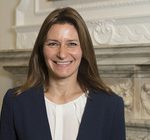
  • Kemi Badenoch – 2022 Comments on the Windrush Monument at London Waterloo

    Kemi Badenoch – 2022 Comments on the Windrush Monument at London Waterloo

    The comments made by Kemi Badenoch, the Communities Minister, on 22 June 2022.

    This is a special moment in our nation’s history and I am grateful to all those who worked tirelessly to bring it into being.

    Basil Watson’s sculpture perfectly captures the spirit of Windrush. In it we see the strength, hope and expectation of those who arrived with little and yet gave so much.

    As a first-generation immigrant myself, the Windrush story resonates with me and it is important we recognise the contribution of those who have so enriched our country.

  • Therese Coffey – 2022 Comments on the Cost of Living Payment

    Therese Coffey – 2022 Comments on the Cost of Living Payment

    The comments made by Therese Coffey, the Secretary of State for Work and Pensions, on 22 June 2022.

    With millions of the lowest-income households soon seeing the first of two cash instalments land into their bank accounts, we are taking action to directly help families with the cost of living.

    This one-off payment totalling £650 is part of our £37 billion cost of living support package that will put an extra £1,200 into the pockets of those most in need.

  • Ben Wallace – 2022 Speech at Permanent Joint Headquarters

    Ben Wallace – 2022 Speech at Permanent Joint Headquarters

    The speech made by Ben Wallace, the Secretary of State for Defence, at Permanent Joint Headquarters in London on 22 June 2022.

    Today we mark your amazing achievement in Op PITTING. We should also be grateful to some of the people who aren’t here or who have moved on in their posting, for example Admiral Ben Key. I had the privilege of working with him here when he was CJO. And General Charlie, who was back-up in Main Building.

    I think what we saw in Op PITTING last year made me incredibly proud as your Secretary of State. I also think the whole of the Armed Forces were incredibly proud of your effort.

    You went halfway around the world into a situation that no one knew how it was going to develop, day by day. The intelligence was patchy, to say the least, and friendly forces that many of you over the years had worked with had disappeared, dissipated, and some of them had tragically lost their lives in the previous months.

    Many of you would have been inundated with WhatsApps and emails. I spoke to the ops officer for one of the parachute regiments yesterday who, as he was doing his job, his emails were filling up with former colleagues asking: “Can you help get my friend out?”

    It’s not easy when you’ve got to be focused on another job, which is protecting the people you’ve deployed with, and indeed, getting people out. The achievement was significant.

    The amazing control that many of you showed outside the gate, recognising you can’t just hide behind the walls, but you have to get out there amongst it. The tolerance that you showed towards people who many of you knew weren’t coming back.

    But I think you did a tremendous job, something to be very, very proud of. I’m immensely proud as Defence Secretary that you are part of the team that I get to lead. And I think Britain’s reputation was stronger after the fact.

    I’m also immensely proud that from time to time, I meet some of the Afghans that we brought back and we’re still bringing back – over 2,000 since Op PITTING. And that number is continually growing every week, from countries who help us either publicly or privately, to get these people to safety, and back to this country.

    I think our next duty is to make sure that the links with these people are not broken, and that we continue to help them with their jobs and their future and becoming fully paid-up members of British society.

    You helped close the circle for many of our veteran communities who were scarred by their experiences, by bringing back and then standing by those Afghans. You helped some of them deal with the very difficult position of leaving Afghanistan after all those years. And for that, I’m truly grateful. Thanks very much.

  • Robert Courts – 2022 Comments on Funding to Support the Mental Wellbeing of Seafarers

    Robert Courts – 2022 Comments on Funding to Support the Mental Wellbeing of Seafarers

    The comments made by Robert Courts, the Maritime Minister, on 23 June 2022.

    Seafarer wellbeing is at the heart of our Maritime 2050 agenda and we know that mental health difficulties at sea affect thousands of seafarers. We are committed to tackling this and building a diverse, highly skilled and exciting sector across the board – from shipbuilders to bosuns.

    This funding will help us tackle this problem by supporting the excellent work being done by charities and social organisations and fostering new programmes.

    I am also pleased to be launching our recovery route map, which will help to build a resilient, innovative and future-facing maritime sector for generations to come.

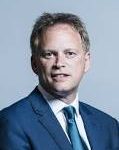
  • Grant Shapps – 2022 Comments on Legislation to Allow Temporary Staff During Strikes

    Grant Shapps – 2022 Comments on Legislation to Allow Temporary Staff During Strikes

    The comments made by Grant Shapps, the Secretary of State for Transport, on 23 June 2022.

    Despite the best efforts of militant union leaders to bring our country to a standstill, it’s clear this week’s strikes did not have the desired impact due to more people being able to work from home. However, far too many hard working families and businesses were unfairly affected by union’s refusal to modernise.

    Reforms such as this legislation are vital and will ensure any future strikes will cause even less disruption and allow adaptable, flexible, fully skilled staff to continue working throughout.

  • Kwasi Kwarteng – 2022 Comments on Legislation to Allow Temporary Staff During Strikes

    Kwasi Kwarteng – 2022 Comments on Legislation to Allow Temporary Staff During Strikes

    The comments made by Kwasi Kwarteng, the Business Secretary, on 23 June 2022.

    Once again trade unions are holding the country to ransom by grinding crucial public services and businesses to a halt. The situation we are in is not sustainable.

    Repealing these 1970s-era restrictions will give businesses freedom to access fully skilled staff at speed, all while allowing people to get on with their lives uninterrupted to help keep the economy ticking.

  • Michael Ellis – 2022 Speech on the Resignation of Lord Geidt

    Michael Ellis – 2022 Speech on the Resignation of Lord Geidt

    The speech made by Michael Ellis, the Paymaster General, in the House of Commons on 21 June 2022.

    With the leave of the House, I would like to close this debate.

    As set out by the right hon. Member for Ashton-under-Lyne (Angela Rayner) in her opening remarks, and for the reasons I explained to the House in my opening remarks, the Government will not be supporting the motion. The Labour party has called the debate to throw mud, but I would caution that those who throw mud often find that some of it sticks to themselves. I would also caution and place on record that the Government remain absolutely steadfast in their commitment to upholding the standards in public life that we all respect, to the critical role that the ministerial code plays in standards in public life and to supporting those standards. On account of that commitment, the Government cannot support today’s motion, which would, counterintuitively perhaps, by proxy, weaken the ministerial code. As I said earlier, it would at the same time change the British constitution by the back door, without consultation and without consideration.

    On the appointment of a new adviser, can I answer with this word: yes. The Prime Minister intends to appoint a new ethics adviser and we will announce how that is to be done and who is to do it in due course. But it does have to be done properly and in a way that will ensure that Parliament and the public have confidence in it. I think that I may be asked what “in due course” or “in good time” means. It means doing it right, and getting the right people to come forward, to be interviewed and to go through the process. It means actually getting it right, not just responding to the latest headline. It means making a process that might actually work in the longer term.

    David Linden

    Will the Minister give way?

    Michael Ellis

    I will give way to the hon. Gentleman, but he knows exactly what is meant by this.

    David Linden

    I am very grateful to the Paymaster General for putting on record that the Government do intend to appoint an adviser, but can I just push him a little further and ask him to say whether that appointment will take place before, say, the conference recess?

    Michael Ellis

    The answer is a very simple one: the process will be done properly. It will be done in a way that will give confidence to the system; it will be done in a way that the House, Ministers and everyone concerned will be confident in. So it is not possible to give a particular date for it. After all, it is only a matter of days since this situation came about. What is meant is clear: we are still considering this carefully, and we remain fully committed to making sure that all Ministers, including the Prime Minister, whose code it is, are held to account for maintaining high standards of behaviour and behaving in a way that upholds the highest standards of propriety, as the public rightly expect.

    Karin Smyth

    I think that what the Minister is trying to say is that what has gone wrong is either the process of appointing the last two advisers, or indeed the last two advisers—both of which seem to me to be dishonourable things to say, if I may say so—rather than the fact that both have resigned because of the behaviour, as they have admitted, of a Minister and the Prime Minister.

    Madam Deputy Speaker (Dame Rosie Winterton)

    Order. I do not think the hon. Lady was implying that something dishonourable had been said. If she was, I would want her to withdraw that.

    Karin Smyth

    I withdraw it.

    Michael Ellis

    I think the hon. Lady misunderstands the position, which I have made perfectly clear and will repeat. This is about getting the process henceforth right—a process that will have the confidence of this House, the Prime Minister, Ministers and everyone else. It is right to consider these things carefully and take time to reflect on them before taking a decision on how best to fulfil the Prime Minister’s commitment. It is the Prime Minister who has made a commitment to ensuring rigorous oversight and close scrutiny of ministerial interests. As I have said, we are looking at the best way to carry out this function, given some of the issues raised recently and set out in our plans. But I could not be clearer when I have given the single-word answer “yes” on the Prime Minister’s intention to appoint a new ethics adviser. We will announce how that will be done and who is to do it in due course. We will make sure it is done properly to ensure that Parliament and the public have confidence.

    In the meantime, the Labour party, when its rail strike is in progress, has chosen today of all days to discuss this matter. I suppose half its Members are on the picket lines at the moment, blocking hard-working people from going about their daily business. They debate this matter for the umpteenth time and the umpteenth hour—so much so that my right hon. Friend the Member for Ashton-under-Lyne (Angela Rayner) says that she sees more of me than of her friends. The feeling is mutual, although I think she has far more friends than me, except on the Government Benches, where I have a lot more friends, of course, because the Prime Minister wins elections. He does not talk about personalities; he talks about policies. On policies, this party and this Government win.

    Mr Carmichael

    I am grateful to the Minister for giving way eventually. I am sure that we all share his aspiration to have a process in future that commands public confidence, but he has not yet mentioned what it was about the previous system that did not command public confidence. What was it?

    Michael Ellis

    I will leave that to the right hon. Gentleman’s already active imagination, but I would say that not everything is a conspiracy. He should bear in mind the responsibility that he and his party have for ensuring that this country’s railway system is working correctly and is not subject to industrial action. Why not support the people of this country in doing that? The red herring that he focuses on is symptomatic of where we are with this debate.

    I have made it clear that Labour’s motion seeks to confuse the constitutional position of this country; it confuses the powers of the Executive with those of the legislature. We propose to move on and appoint an ethics adviser, as I have said. We will ensure that an announcement is made as to how it will be done and who will do it in due course, but I emphasise that it must be done properly. In the meantime, I respectfully caution the Opposition to get their Members off the picket lines and to support the people of this country, which is what this Conservative Government will continue to do.