Category: Speeches

  • Colm Gildernew – 2022 Comments on GP Availability Crisis in Northern Ireland

    Colm Gildernew – 2022 Comments on GP Availability Crisis in Northern Ireland

    The comments made by Colm Gildernew, the spokesperson for Sinn Fein on health, on 16 August 2022.

    It is concerning to hear how surgeries are struggling to cope in our growing health crisis.

    We have news of several GP practices in Belfast applying to close down access to new patients joining them.

    Too many patients are not getting the care they need while others struggle to get to see a doctor at all and urgent action is needed to address this.

    We need an Executive up and running now to invest an extra £1 billion in the health service to recruit more doctors and nurses, to help people who can’t get access to a GP and are stuck on waiting lists.

    The DUP should end its boycott of government now, form an Executive and stop blocking this money being put into our health service.

  • Boris Johnson – 2022 Comments on the Infected Blood Scandal

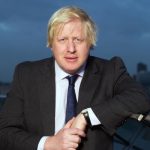
    Boris Johnson – 2022 Comments on the Infected Blood Scandal

    The comments made by Boris Johnson, the Prime Minister, on 17 August 2022.

    While nothing can make up for the pain and suffering endured by those affected by this tragic injustice, we are taking action to do right by victims and those who have tragically lost their partners by making sure they receive these interim payments as quickly as possible.

    We will continue to stand by all those impacted by this horrific tragedy, and I want to personally pay tribute to all those who have so determinedly fought for justice.

  • Kit Malthouse – 2022 Comments on the Infected Blood Scandal

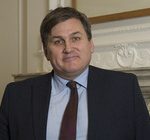
    Kit Malthouse – 2022 Comments on the Infected Blood Scandal

    The comments made by Kit Malthouse, the Chancellor of the Duchy of Lancaster, on 17 August 2022.

    Those affected by the infected blood scandal have suffered terribly over many years and that heart-breaking and unimaginable pain has been compounded by the financial uncertainty many have faced.

    These interim payments will start the process of securing that certainty. My priority is to get the money to those people as quickly as possible.

    I am grateful to Sir Brian Langstaff for the work he has done to date on the inquiry, and Sir Robert Francis, for his work on compensation. Of course, no amount of money will compensate for the turmoil victims and their loved ones have faced, but I hope these payments help to show that we are on their side and will do everything in our power to support them.

  • Steve Barclay – 2022 Comments on the Infected Blood Scandal

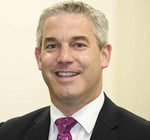
    Steve Barclay – 2022 Comments on the Infected Blood Scandal

    The comments made by Steve Barclay, the Secretary of State for Health and Social Care, on 17 August 2022.

    The infected blood scandal should never have happened. In accepting Sir Brian Langstaff’s recommendations, today we are taking an important step in righting this historic wrong for the thousands of people infected and bereaved partners left behind.

    Building on the ongoing support we are providing through the England Infected Blood Scheme, these new interim payments of £100,000 will ensure those impacted across the whole country by this injustice can access the compensation they need, right now.

    I’m grateful to those who have campaigned extensively in support of these changes – we have listened and work is underway to ensure those impacted by this tragedy receive the support they rightly deserve.

  • Kit Malthouse – 2022 Comments on Bolstering UK’s Resilience

    Kit Malthouse – 2022 Comments on Bolstering UK’s Resilience

    The comments made by Kit Malthouse, the Chancellor of the Duchy of Lancaster, on 16 August 2022.

    To make sure that government continues to offer the best possible prevention and protection against threats, we are shaking up how we prepare for and respond to emergencies, strengthening the effective resilience capability we already have in place.

    We will launch a new public emergency alerts system in the Autumn which will focus on extreme weather, revolutionising our ability to ‘warn and inform’ people who are in significant and immediate danger. These alerts will be sent direct to people’s mobiles giving details of the emergency – such as local flooding – explaining what to do and how to seek help.

    Our vital COBR unit – which leads the government’s response to acute domestic and international emergencies – will be bolstered by a dedicated team helping to future-proof us from harm. This National Resilience Framework Team will take a deeper look at our approach to risk and how we mitigate it and help us take huge leaps forward in terms of collecting, analysing and using live data.

  • Gerry Kelly – 2022 Comments on Bonfires in Derry

    Gerry Kelly – 2022 Comments on Bonfires in Derry

    The comments made by Gerry Kelly, the Sinn Fein MLA, on 15 August 2022.

    Scenes from bonfires in Derry tonight are absolutely disgraceful and wrong.

    The burning of flags, wreaths and posters which include politicians and other political figures is deeply offensive and is a hate crime.

    There is no place for these displays of hate anywhere in our society. It must stop now.

    It’s in stark contrast to the many excellent community festivals that are taking place across the city; celebrating art, culture, the future and everything that is good about Derry and the people who live in it.

  • Amanda Milling – 2022 Speech at the British High Commission in New Zealand

    Amanda Milling – 2022 Speech at the British High Commission in New Zealand

    The speech made by Amanda Milling, the Minister for Asia and the Middle East, at the British High Commission in New Zealand on 16 August 2022.

    Tēnā koutou katoa. It is wonderful to be here in New Zealand.

    I’ve spent the last week meeting people across Australia, Vanuatu and New Zealand, experiencing the incredible hospitality of the Pacific family. It’s been great to see first-hand how we’re working together on shared challenges and opportunities. And I’ve enjoyed meeting so many people, from Ministers to scientists, businesspeople and people of the land.

    Although we are half a world away from my home in Cannock Chase in the English Midlands, you might be interested to hear that my local area has a very meaningful link to New Zealand. As some of you may know, there was a large military base called Brocton camp at Cannock Chase during the First World War. It became a training centre for the New Zealand Rifle Brigade in 1917, getting soldiers ready for the horrors of battle on the Western Front. There’s an Anzac Day service there every year to honour those brave troops, and it’s my great privilege to attend it as the local Member of Parliament.

    Those New Zealanders fought shoulder-to-shoulder with the British to defend the freedom, democracy and human rights that our nations cherish. Those shared values, and the friendship between our countries, remain just as strong today. But today, once again, democracy is under attack. Autocrats and despots are trying to undermine the values that guide our way of life. And a trio of challenges – pandemic, conflict and climate change – are destroying lives and livelihoods.

    These challenges can only be addressed by countries working together. So the hand of friendship stretching across the oceans between our nations is as important today as it has ever been. I’d like to reflect on just a few aspects.

    Firstly, tackling climate change and biodiversity loss is a top priority for the United Kingdom and New Zealand. We have both pledged to reach net zero by 2050. We both demonstrated our leadership and ambition at COP26. And we stand united in our commitments to deliver on the Glasgow Pact and keep 1.5 alive.

    Along with mitigation efforts and net zero commitments, we know that adaptation finance is crucial to help people cope with the impacts of climate change. That’s why the UK has committed more than £11 billion over five years to support developing countries. And I look forward to seeing New Zealand’s new climate finance strategy published soon, following your $1.3bn commitment.

    I heard first-hand in Vanuatu about the impacts of climate change in the Pacific, and the importance of supporting Pacific Island Countries to build resilience. The UK is helping Pacific nations and others to protect the marine environment and reduce poverty through our £500m Blue Planet Fund.

    At COP 26, we announced £274 million for a new ‘Climate Action for a Resilient Asia’ programme across the Indo-Pacific. This will support up to 14 million people to adapt to global warming. We also pledged £40 million to help Small Island Developing States become more resilient, including in the Pacific.

    The UK and New Zealand are working with partners to ensure those States can access climate finance, and that Pacific Island voices are heard. This includes collaborating with Fiji to address concerns raised through the Taskforce on Access to Climate Finance.

    The UK and New Zealand are also united in our desire to boost the resilience of the Indo-Pacific region. This is a key focus of British foreign policy, on climate but also on trade, security, science and more.

    Together with New Zealand, we will work ever-more closely to support security and stability in the region, co-operating with our partners, including the Pacific Islands Forum. Our countries took a hugely positive step in June when we launched Partners in the Blue Pacific along with the United States, Japan and Australia. We also have a clear interest in peace and stability across the Taiwan Strait.

    Along with our G7 partners, the UK expressed concerns over recent threatening actions by China – in particular, live-fire exercises and economic coercion. These risk unnecessary escalation. We do not support any unilateral attempts to change the status quo, and we call on China to resolve cross-Strait differences by peaceful means.

    Meanwhile the historic ‘Research, Science and Innovation Arrangement’ that our prime ministers signed last month will strengthen collaboration between the UK and New Zealand. Together, we will share expertise and develop new technologies – including in the fields of agriculture and climate-change.

    The UK will welcome some of New Zealand’s most advanced agritech companies to our shores next month, to build new links. Some of our own leading firms will head here on a similar mission in November. This is just the first of many exchanges that, I am sure, will lead to some fantastic new initiatives.

    On trade, the UK is glad of New Zealand’s support as we seek to join the Comprehensive and Progressive Agreement for Trans-Pacific Partnership. This is a brilliant opportunity to deepen our access to the massive consumer markets of the Asia-Pacific region. And it’s a fantastic way to boost prosperity here, and at home, as we all seek to bounce back from the pandemic.

    We are also looking forward to our free trade agreement entering into force and watching our trade with New Zealand soar. But this is about so much more than business opportunities. It’s about the participation of indigenous people and women in trade. And it’s about a greener deal; bolstering commitments to the Paris agreement and Net Zero, while encouraging investment in low-carbon tech.

    Just as importantly, our countries are equally committed to promoting and protecting the international rule of law through the trading system. Together, we will support a global system that’s free from aggression and economic coercion, where the sovereignty of nations is protected, regardless of their size.

    On that note, I cannot end without talking about Putin’s unprovoked, illegal war in Ukraine. He’s thrown the international rules out of the window, shattered global stability and stamped on the principle of territorial sovereignty. The United Kingdom and New Zealand continue to stand with Ukraine. We must ensure that Putin loses, and that Russian aggression is never again allowed to shatter peace, freedom and democracy in Europe.

    So we will carry on co-ordinating on sanctions to raise the costs for Russia – targeting its economy as well as its elites to cripple Putin’s war machine. And we will stand firm in our security and defence collaboration.

    Our Five Eyes intelligence-sharing arrangement is a key part of this, to promote and defend our interests in cyber space, quantum computing, artificial intelligence and more.

    Early this year, UK and New Zealand defence forces worked together to assist Tonga following the volcanic eruption.

    In May, New Zealand deployed military personnel to the UK, to train Ukrainian soldiers to help defend their country. And I welcome yesterday’s announcement that this support will be extended, with additional New Zealand teams deploying over to the UK. And that brings me back to where I started – with New Zealand troops on British soil, standing up for freedom, democracy and sovereignty.

    More than a hundred years have passed since those New Zealand boots trod the paths of Cannock Chase, but our countries still stand together, just as we did then. Yes, we face a great many challenges. But there is also a great deal to be hopeful about, as we look to the future.

    I can’t wait to see what we achieve together.

    Tēnā koutou, tēnā koutou, tēnā koutou katoa.

  • Tessa Jowell – 2012 Comments on Sports in Schools

    Tessa Jowell – 2012 Comments on Sports in Schools

    The comments made by Tessa Jowell, the then Shadow Cabinet Minister for the Olympics, on 10 January 2012.

    There is much to welcome in the Government’s announcement today, not least the fact that they have woken up late in the day to the need to secure our legacy promise to inspire a generation of young people through the Olympics.

    We particularly welcome the focus on reversing the drop off in participation rates in sport among young people above the age of 14 and the steps which build on Labour’s legacy to encourage schools to open their sports facilities to the whole community.

    Ensuring that Sports Governing Bodies’ links with schools is important too; clubs on school sites are vital to prevent a drop off in sports participation post 16.

    However, retaining the School Sports Partnership Coordinators introduced by Labour to ensure young people are enthused about sport in school in the first place will be paramount if this strategy is to be delivered. It makes no sense to make one set of sports coordinators redundant just as it becomes imperative to develop new links between schools and Sports Governing Bodies.

    It is also not the case that there was a decrease in participation under Labour – the number of people participating in sport for half an hour three times a week rose each year from 2005 and only fell in 2010 when the Coalition came to power.

    This strategy from the Government will only yield results in the long run. We therefore invite the Government to continue this key part of our Olympic legacy commitments on a cross-party basis in order that sport has the security and certainty it needs going forwards.

  • Jack Dromey – 2012 Comments on Subletting Council Houses

    Jack Dromey – 2012 Comments on Subletting Council Houses

    The comments made by Jack Dromey, the Shadow Housing Minister, on 11 January 2012.

    The subletting of council homes for financial gain prevents those in real need from getting a home and should be stopped. Labour is committed to ending this abuse and before the 2010 election we set out plans to make the unlawful subletting of social homes a criminal offence.

    However, Grant Shapps has taken his eye off the ball and is looking for someone to blame for this Government’s failures. Labour councils have been cracking down on sub-letters for years. The vast majority of people living in council houses pay their taxes and play by the rules. The real problem is that this Tory-led Government’s failed economic policies led to a catastrophic 99% collapse in the building of affordable homes in the last six months.

    Since the Government launched its housing strategy in November, we have seen the effects of this out of touch Government’s failing housing and economic policies laid bare. Housebuilding is down, homelessness is up, we have a mortgage market where people can’t get mortgages and rents are soaring in the private rented sector. These are the fundamental issues the Government needs to address.

    With millions in need of a decent home at a price they can afford, the country is gripped by a growing housing crisis. We need an increase in house building now more than ever and the Government is failing to deliver.

  • Mary Creagh – 2012 Comments on Woodlands

    Mary Creagh – 2012 Comments on Woodlands

    The comments made by Mary Creagh, the then Shadow Environment Secretary, on 11 January 2012.

    This new report [Our Forests report into woodlands and the environment] is a welcome addition to the debate about the future of our forests. Our woodlands are a precious reflection of our national heritage, and will play a pivotal role in the green economy and our low carbon future.

    The forest sell-off debacle demonstrated just how out of touch the Tory-led Government is with anyone who cares about the environment. Labour has already called on Ministers to listen to public concern and drop their remaining plans to sell 15% of England’s forests.