

The letter sent by Boris Johnson, the Prime Minister, on 5 September 2022.
Category: Speeches
-
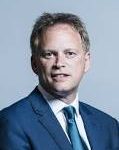
Grant Shapps – 2022 Statement on TFL Long Term Funding Settlement
The statement made by Grant Shapps, the Secretary of State for Transport, in the House of Commons on 5 September 2022.
Following my statement to the House on 13 July (2022), I am writing to update the House that today we have agreed a new longer-term funding settlement between Transport for London (TfL) and government. The final extraordinary funding settlement expired on 3 August and I have agreed with the Mayor of London a new settlement until 31 March 2024 or until Transport for London reaches financial sustainability, whichever is the sooner.
This longer-term settlement includes over £1.1 billion (bn) of additional grant funding until March 2024 for London transport, which will unlock almost £3.6bn worth of critical infrastructure investment, with a number of projects set to revolutionise travel across the capital.
As a result of our longer-term settlement, major upgrades will be delivered for Londoners, including new Piccadilly line trains and the modernisation of the District, Metropolitan, Hammersmith and City and Circle lines – maintaining the London Underground’s world-class status. Further benefits include: supporting the long-awaited repair of Hammersmith Bridge; vital improvement to Elephant and Castle station and a London Overground extension between Gospel Oak and Barking Riverside to service more than 10,000 new homes in east London.
As part of the settlement, the Mayor will be required to continue work on the introduction of driverless trains on London Underground, in use on the Dockland Light Railway for more than 35 years. At a time when strikes are crippling both the Underground and national rail systems, never has this work been more important.
Alongside all of this is government’s continued commitment to mitigate TfL’s loss of passenger revenue from the ongoing uncertainty of demand following changes to travel patterns since the COVID-19 pandemic. None of this would have been possible without government funding.
The settlement letter requires Transport for London to modernise and control its operating costs, to make it a modern, effective, efficient and financially stable operator. It is a settlement that is fair and proportionate to London whilst also taking into account funding provided elsewhere in the country and the cost to the national taxpayer, at a time of great pressure on national finances.
It comes on top of the over £5bn of funding support the government has already provided to TfL since the beginning of the pandemic and government’s commitment to over £1 billion per year until 2025 for London transport through business rates retention.
Through all of this, government is continuing to work with the Mayor and TfL to ensure London’s transport system delivers for the public and businesses and contributes to the country’s economy.
-
Grant Shapps – 2022 Statement on the £2 Bus Fare Cap
The speech made by Grant Shapps, the Secretary of State for Transport in the House of Commons on 5 September 2022.
On 3 September, we announced plans to invest up to £60 million to introduce a £2 bus fare cap on a single bus ticket on most services in England outside London. This will start no later than 1 January 2023 and will be in place for a period of 3 months until March 2023.
At a time when many are struggling with the rising cost of living, this is a significant investment that will result in millions of people across England saving on travel costs. This investment also makes clear our continued commitment to delivering on the bold vision for bus services set out in ‘Bus Back Better’, the government’s national bus strategy, and particularly our ambition to make bus services cheaper. The introduction of the £2 bus fare cap is a significant step forward to delivering this and continues the government’s track record of providing the largest investment in bus services in a generation, in England outside London.
This fare cap will not apply to bus services in London as transport is devolved to the Mayor of London, including fare setting. However, I know that colleagues across Parliament will be pleased that this announcement follows the agreement with Transport for London on a £1.2 billion multi-year settlement to secure the long-term future of London’s transport network, including bus services.
As well as supporting passengers by reducing the cost of bus fares, we have also continued to invest in bus services, in response to the unprecedented impacts caused by the COVID-19 pandemic but which would now be threatening the provision of services at a time when the public need bus services more than ever.
With nearly £2 billion provided so far, through the COVID-19 bus service support grant, the Bus Recovery Grant and most recently the local transport fund, we have mitigated the impacts of the pandemic on bus networks. This meant that buses were kept running over the course of the pandemic to ensure that those who had to travel for work, education or healthcare were able to access these vital services and help keep this country running.
As I announced to this House in March, this funding was originally due to end in April (2022), but at the time it was clear that the sector was still facing significant financial challenges as it sought to recover from the pandemic. That is why we announced we would provide a further £150 million, and extend recovery funding for the sector until October, to allow bus services the maximum amount of time to recover.
At the time of announcing this funding, we were clear that this would be the last such round of recovery funding. However, with the sector continuing to face significant challenges, and many people facing pressures due to the rising cost of living, we recognise that further government support is necessary to prevent significant cuts to bus services for the millions of people who use them every day.
That is why on 19 August we announced a six-month extension to the Bus Recovery Grant, worth up to £130 million, to continue supporting bus services in England outside London. This will be in effect for 6 months starting in October 2022 until the end of the financial year in March 2023. This funding will provide the sector and passengers with certainty in the short-term and ensure that these vital services will continue to serve those that rely on them to live, work and travel. Both of these further investments in England’s bus services demonstrate our commitment to supporting bus services. We will continue to work closely with the sector as we deliver the national bus strategy, and fulfil our ambition for everyone, everywhere to have access to great bus services.
-

Jonathan Hill – 2010 Speech to the Sixth Form Colleges Forum
The speech made by Jonathan Hill in Birmingham on 25 November 2010.
The Parliamentary Under-Secretary of State for Schools talks about the impact the Government’s educational reforms will have on sixth form colleges.
Introduction
My colleague, the Schools Minister Nick Gibb, spoke to you in June and set out the main principles of the Coalition’s education reforms:
- freedom from bureaucracy and central diktat
- tackling inequality and disadvantage
- trusting professionals
- fairer funding
- putting in place rigorous standards and accountability.
Since then we’ve started overhauling the 16-to-19 funding system, had the Spending Review in October, and published our White Paper yesterday.
So it seems a good time to come here today to bring up you to date on where we have got to.
But I want to start by paying tribute to all of you, for your hard work, commitment, passion and success in transforming young people’s lives.
You’ve long set the pace for the rest of the 16 to 19 sector – higher rates of students going on to university, more creative teaching, stronger leadership, and better targeting for support the most disadvantaged students.
You’ve rightly got a great reputation for exactly the sort of motivated and committed staff and students I met this morning – just up the road at Joseph Chamberlain College.
So today I want to reaffirm again our commitment to your future, to helping you meet the demands of students, parents, universities and employers.
And I want to set the wider challenges ahead and answer some of your concerns head-on:
- your place in post-16 education
- how we’re getting out of your hair so you can get on with what you do best – with less red-tape and more freedom
- how we plan to create a far more even playing field in funding terms, for you to compete fairly with schools and colleges
- and how now we think there are now opportunities for you, as our reform programme seeks to open up the system.
Challenges ahead
Our country faces a unique combination of challenges today.
We are having to face up to the demands of world economic fluctuations, while keeping pace with our international competitors – all with tighter reins on the public finances.
And they pose the toughest question for us in Government and for you in education.
Are we equipping young people with the skills, knowledge, motivation and aspirations that employers and universities are demanding?
And we’ve got to be honest about the answer.
The truth is that too many young people still don’t get the right skills and qualifications for work and further study.
Too many are staying on in education and training to get qualifications which aren’t valued by higher education and employers.
Too many, particularly from the poorest backgrounds, are turned off learning at an early age, fall back and then get left behind – we have almost a million young people under 24 still not in education, employment or training.
And overall, we have a growing gap in terms of academic achievement between rich and poor – with only 40 children of the 80,000 on free school meals going on to study at Oxbridge.
That’s why we’re keeping the commitment to raise the participation age to 18 by 2015 – so everyone gets the high-quality education and skills they need to thrive in university and the world of work.
And sixth form colleges are at the heart of this – making post-16 education as strong as possible and making sure we keep pace with the best systems in the world.
Reform = freedom
Nick said in June that sixth form colleges show why giving principals more autonomy led to better results.
He’s right. You show us how having freedoms over pay and conditions means you can the best out of your staff.
There has to be far more trust in the frontline. We’ve got no interest in constantly breathing down your neck – micromanaging every budget, every college and every class.
But the challenge is that these freedoms will come with stronger accountability – to the young people you teach and the communities you serve.
All the international evidence we have seen shows us that this combination of autonomy and accountability is the way that the best-performing educational systems are going. And it’s our approach at the heart of the White Paper.
We’ve made a start reforming and freeing up the system.
Firstly, strengthening qualifications.
Over the last two decades, vocational and academic qualifications have been forced to have some kind of uneasy equivalence when actually we should just be making sure that they are all high quality.
So our White Paper plans will give universities and employers more say over developing A Levels – to keep them robust and rigorous, and to keep pace with the best systems around the world. We have said to Ofqual that we want them to look at our exam qualifications and compare them to the best in the world.
We’ve asked Professor Alison Wolf to lead an independent review of vocational education, so colleges and schools have more freedom to offer qualifications that meet higher education’s and the labour market’s demands.
We want to cut the bureaucracy around qualifications, including removing the need to offer every single Diploma subject in all schools and colleges. And we want to work with you further, to make them even simpler to teach and award.
Secondly, I want to give you more freedom to get on with your job.
We’ve already ended Ofsted inspections for outstanding colleges, scrapped legal requirements to do learner surveys, and stopped in-year funding adjustments.
But we want to go further.
So today I can also confirm we will repeal a whole series of other overly prescriptive statutory duties which weigh you down:
- having regard to promoting economic and social wellbeing
- having regard to guidance about consultation with actual and potential students and employers
- cooperating with children’s trusts to improve children’s wellbeing, and
- principals being forced to go through prescriptive development programmes instead of leading their schools.
We’re not saying that consulting with students and working with other colleges is not important – but it’s down to you to call the shots. You run high-quality institutions. You directly engage with their pupils and their parents and play an active role in their local communities. I don’t think that you need to be told by central government how to run yourselves.
Spending review – hard choices
I know that you are concerned about the future of funding.
And we’ve had to take some difficult decisions.
The Coalition set itself the toughest of tasks in the Spending Review – balancing urgent action to cut the deficit and protecting education as far as possible.
And we secured the best possible deal in the wider economic and political climate – meaning we can commit to full participation to 18 and fund a record 1.6 million places for young people by 2015, including an increase in Apprenticeships.
But we’ve also had to be realistic. Some programmes would no longer be affordable in their previous form. That’s for example why we had to end Building Schools for the Future.
And it’s also why we’re replacing the EMA, with an increased and better targeted scheme of discretionary funding, where schools and colleges themselves judge how to spend it.
We didn’t take this decision lightly. But the evidence seems clear that around nine out of ten students would have gone to college or sixth form regardless of whether or not they got the EMA – leaving it unjustifiable and unsustainable in the current economic climate.
Our job now is to make sure we get the new fund right, working with you here today and others over the coming weeks on making sure it helps overcome the hardships faced by the poorest students – including extending its existing remit to cover transport costs.
And we’ve had to take other hard decisions.
It’s right to ask for even more efficient finances in colleges and schools, so we can afford to fund places young people need in post-16 education. The taxpayer is rightly looking at how every penny is spent.
Across the public sector, we all have to take responsibility for investing public funds wisely. We’ve all got to get the best deal possible from our procurement, our back office functions, our overheads, and how we work.
And in the face of a very tight capital settlement, we must target investment where it is most needed while cutting out wasteful design and procurement processes. That’s why we set up our independent review to get much better value for money out of all our building programmes, which will report to us shortly.
I know that you are anxious to hear about wider capital funding beyond March 2011. I intend to set out our longer-term building plans shortly but I want to reassure you that we have been listening very carefully to your arguments.
And I want to reassure you that your needs are being considered in detail and equally alongside all our building investment in Early Years and schools – to make sure there is funding available to meet refurbishment costs and pupil numbers.
Fairer and more transparent funding
I also know that one of the biggest concerns you have is to have a fairer funding system so you can compete on a level playing field with school sixth forms.
So ahead of the overall 16-to-19 settlement in December and your final allocations next year, I am today reiterating our commitment to end the sharp funding disparities you face.
The wider school funding system we’ve inherited is a mess. It is hideously complex, with little transparency or clarity and with historic, unresolved anomalies meaning there are huge disparities across the country for schools with similar intakes.
For colleges, the unfairness is particularly stark. You have suffered in comparison with school sixth forms for years – getting £280 per pupil less on average, meaning a difference of over half a million pounds for a medium-to-large college.
That’s why yesterday’s White Paper commits us in black-and-white to ending this inequity and bringing all funding into line with the most efficient providers – in other words, with sixth form and FE colleges.
It’s also why we have brought in a much clearer funding system, to allocate and target funding, since we got into power – meaning the money actually follows the students you recruit.
And it’s why we are giving you direct responsibility for securing your own borrowings, without it getting bogged down and holding up essential investment by having to be cleared with local authorities.
We will work with you to get these changes right and to introduce them as carefully as possible.
Playing a bigger role
And in return for cutting bureaucracy and helping you compete with schools and general FE colleges, we want you to play a bigger part in our reform programme.
Our reforms give you the chance to expand and secure your future.
All young people should have access to high-quality sixth forms wherever they live – so we want a far more responsive market.
That could mean new sixth form colleges opening where there is a clear demand – something we will always explore in detail.
But equally, it could mean you seizing the initiative by partnering or sponsoring new academies and Free Schools, working with the new generation of university technical colleges that Lord Baker is pioneering, or taking the lead in federations with existing schools.
You’ve got so much to give your communities. You are among the best, if not the best, providers of A Level education, so I welcome suggestions as to how you can put your experience to work to benefit even more children. Tell us what you think you can do and we will listen.
Conclusion
We are facing challenging times in the education sector.
Sixth form colleges will always have a central role to play – raising aspirations for all, driving up teaching standards, and making leadership stronger.
We’ve got a long way to go but we’ve got the basics right, giving you more of what you want: greater freedoms, stronger qualifications, and fairer funding.
And in return, I look forward to working with you over the coming months and years, to help us create a world-class education system and to keep sixth form colleges as the jewel in the 16-to-19 crown.
Thank you for your time.
-
Jonathan Hill – 2010 Speech to the National Governors’ Association Conference
The speech made by Jonathan Hill to the National Governors’ Association Conference in London on 6 November 2010.
Thank you, Clare, for that kind introduction and thank you for inviting me here today.
Your timing is impeccable – what with this conference today coming shortly after the Spending Review and shortly before we publish our first schools white paper.
I have to tell you that not much keeps me in London on a Saturday. In fact, I’m not sure that I’d have stayed here for anyone else other than the NGA.
I said yes for one very simple reason: I believe that school governors are the unsung heroes and heroines of our education system.
And I wanted to come here to say a huge thank you through you to all of the 300,000 school governors up and down the land who slog away, for hours on end, in their own time, often at the end of a long and busy day, to help their local schools improve, to give something back to their local communities, and to do their bit in the common endeavour in which we are all engaged – driving up standards so that all children have the chance to aim high, achieve their potential and get on in life. I cannot think of a better embodiment of volunteering and of civil society than the work that governors do, and I want you to have the recognition that I believe you deserve.
I know that the theme of your conference today is funding – and I will say a few words about that because it is obviously very important.
But I want to start by talking about some thing which I think is even more important – school governors.
Nature of school governance
Since I began doing this job and as a result of the discussions I’ve had with the NGA and others, I’ve been thinking about the nature of school governance and how we can make it easier for people like you to become governors and make a difference, which I know is what you all want to do.
I started by thinking about the broad principles that guide the Coalition Government’s approach to public services, as well as our approach to education more specifically.
What do I mean by that?
Well, we want to devolve more power and responsibility down to the lowest possible level – away from Whitehall, towards schools, hospitals and local communities.
We want to spread autonomy and trust professionals to get on with the job.
We want to bear down on needless bureaucracy, targets and paperwork.
In short, we want to get out of people’s hair – but provide support where they want support and encourage professionals to share good practice and learn from each other.
If those are the principles that guide our approach, how does the current system of school governance stack up against them?
The answer, I am afraid, is not terribly well.
We have a very prescriptive model of who can be a governor.
We have an approach which is applied regardless of individual need or circumstance.
We have a lot of central guidance, direction and legislative requirements.
Far too many governors tell me that they spend hours in meetings discussing what are, frankly, relatively trivial issues, when they could be concentrating on strategic leadership and making a difference. And the recent NGA report on bureaucracy raised a series of important issues that we need to address.
So it is a testament to the dedication of governors that despite these obstacles, Ofsted says that governance is good or better in 70 per cent of schools.
If those are the core principles, and if you share the analysis – which I hope you do – where does that leave us? What conclusions can we draw as we prepare our white paper?
First, it is absolutely clear to me that the most important decision-making group in any school is the governing body.
Second, governing bodies should set the overall strategic direction of a school, hold the headteacher to account and have a relentless focus on driving up standards – but not get dragged into micro-managing the school or the minutiae of its day-to-day activities.
Third, we need to ensure that governing bodies have the best possible people, with the right mix of skills and expertise, rather than just because they are there wearing a particular hat.
Fourth, all schools are different and need different things at different stages of their development – so school governance needs to be more flexible.
Fifth, we must mount an energetic and sustained attack on the culture of guidance and paperwork – a lot of it issued by my Department – that tells you how to do your job. I know it’s all meant to be helpful – and I am sure some of it is useful – but if you are serious about trusting people, you have to start trusting them.
And finally, we need – even in these straitened times – to find ways of supporting governors, especially chairs of governors, including by providing access to high-quality training and also making it easier to see a wide range of information and data about the performance of local schools.
In the white paper, I hope that we will provide a real boost to school governance by setting out how we will take forward a range of measures in each of those areas. There will be much more detail to come and we will, of course, work with the NGA and with all of you to help you perform your vital roles.
As well as strengthening school governance, the white paper will set out a comprehensive reform programme for this Parliament to raise the bar for every school, close the gap between rich and poor and ensure our education system can match the best in the world.
The global race for knowledge
In the last ten years, we’ve fallen well behind other countries in the international league tables of school performance – falling from fourth in the world for science to fourteenth, seventh in the world for literacy to seventeenth and eighth in the world for maths to twenty-fourth.
And at the same time, studies such as those undertaken by Unicef and the OECD underline that we have one of the most unequal educational systems in the world, coming near bottom out of 57 for educational equity with one of the biggest gulfs between independent and state schools of any developed nation.
Across the globe, other nations – including those with the best performing and fastest reforming education systems – are forging ahead much faster and much further when it comes to improving their education systems.
In America, President Obama is encouraging the creation of more charter schools – the equivalent of our free schools and academies – which are giving school leaders and governors more autonomy and transforming the life chances of the poorest pupils.
In Canada, specifically in Alberta, schools have been given more control over budgets and power to shape their own ethos and environment. Alberta now has the best performing state schools of any English-speaking region.
In Sweden, the system has opened up to allow new schools to be set up by a range of providers. Results have improved, with the biggest gains of all where schools have the greatest freedoms and parents the widest choice.
And in Singapore, often cited as an exemplar of centralism, dramatic leaps in attainment have been secured by schools where principals are exercising a progressively greater degree of operational autonomy.
These governments have deliberately encouraged greater diversity in the schools system and, as the scope for innovation has grown, so too have their competitive advantage over other nations.
We want to ensure that schools in our country can enjoy the same kind of autonomy that has served schools in America, Canada, Sweden and Singapore so well.
Academies
That’s why we’ve invited all schools – including primaries for the first time and special schools – to apply for academy freedoms – starting with those rated outstanding by Ofsted.
Since the start of the school year, more than one academy has opened for every working day of the term – that’s more than 80 in total – and they all now have the freedom to shape their own curriculum, pay staff more, extend school hours, and develop a personal approach to every pupil. We have got more coming down the track each month and I expect this to continue and spread.
Crucially, they’ve also committed to using their new-found powers and freedom to support weaker schools.
In the coming weeks, with the next stage of the expansion of the Academies programme, we will also explain how the next wave of schools – those that are good with outstanding features – will be able to apply for academy freedoms.
One of the exciting things that is emerging is the appetite for groups of schools to come together in clusters – clusters of primaries or groups of primaries and secondaries, so that we get the combination of freedom and partnership which hits at the heart of our reforms.
Some of you might already be governors of academies. Some of you might be governors of schools that have been amongst the first to convert this term. I hope the rest of you will talk to your leadership teams about whether academy freedoms will enable you to improve your schools.
I realise that many of you will have questions about finance, staff pensions, land transfer, premises, the model document and, of course, governance.
I’m determined to do all that I possibly can to answer those questions and to support you, which is why I’ve written to all chairs of governing bodies setting out the further help and advice available – including the guidance on our website, first-hand advice from many of the schools that have been amongst the first to convert and dedicated project leads within the Department to support you if you decide to move forward.
Of course, some of you might not want, ever, to go down the academy route. And that is also absolutely fine, because our approach overall is to be permissive and not coercive.
If that is the case, I fully respect that – and we will still do all we can to support you. That’s why we’ve already abolished the self-evaluation form, reduced the data collection burden and told Ofsted to slim down its inspection criteria. We will also be slimming down the National Curriculum and making financial management less onerous.
I wanted to talk about our white paper because it is so important, but my speech today was titled ‘Funding for schools over the next three years’ and funding is the theme of your conference, so let me now turn to that.
Funding
Since the Coalition Government was formed, we’ve set to work to restore our finances, reduce the massive deficit we inherited and put public services on a sustainable footing.
That has involved making tough choices – and I don’t for one second underestimate that there will also have to be equally tough choices made in every school in every part of the country.
The biggest part of our budget is spent on schools and I’m delighted that the schools budget will rise from £35 billion to £39 billion over the next four years. This means that all money allocated for grants, from the Every Child programmes to grants for specialisms, will still go to schools. The ring-fences and strings attached to that money will also be removed so that headteachers and governors have complete freedom over how to spend it.
Of course, schools have been finding – and continue to need to find – greater efficiencies. We believe that the best way to help you do that is by giving you freedom and allowing you to decide where the savings can best be made. But we do want to ensure you have all the information and tools you need to secure the best possible value for money.
To ensure you do, there is a range of materials available on our website that we’ll be updating and adding to over the next few weeks. One of the things that we’ll be adding are case studies of where schools have made efficiencies that we believe other schools might be able to follow, including in procurement.
Because procurement is an obvious area to try to find savings, we’ll help ensure that schools know more about the best deals on offer and, if needed, seek out new, cheaper deals for schools to take advantage of.
These efficiencies, combined with the real-terms overall increase in funding and the greater freedom, should enable that schools can meet the increasing basic need demand for places and still also deliver a £2.5 billion pupil premium to support the education of disadvantaged children.
The pupil premium is designed to tackle disadvantage at root by attaching extra money to young people from deprived backgrounds, which will be clearly identified to their parents.
Once again, schools that benefit from this additional cash will not be told exactly how to use it – but we will expect them to ensure that children struggling with the basics get the extra support they need so they don’t fall irretrievably behind their peers.
One further funding area that I know concerns you – and me – is the disparity that you often find between the amount schools receive even when they have similar costs, are achieving similar results and are located in areas of similar deprivation. That’s why one of the objectives of the white paper will be to move to a fairer, more transparent funding system.
The capital budget will also bear its share of the reductions. I realise this will be disappointing for many of you but we will still spend almost £16 billion over the next four years to meet demographic pressures and rebuild or refurbish 600 schools, which is more than each of the first eight years under the last Government.
Conclusion
I do not pretend that it is all going to be plain sailing. There will be difficult decisions ahead. But I think that there is also an opportunity to move to a system where schools are more autonomous, where professionals are trusted and given more respect, and where funding is fairer, more rational and more transparent.
Central to all of this will be the role played by governors, which is why I end how I started – by thanking you for all that you do and by saying that I will do all I can to support you in that role.
Thank you.
-

Tim Loughton – 2010 Speech to the Partnership in Action Conference
The speech made by Tim Loughton, the then Children’s Minister, on 16 September 2010.
Good morning and thank you Kevin. It really is a very genuine pleasure to be here today as a guest of the EESI project.
Now, Kevin has outlined some of the uncertainties facing the voluntary sector as we lead up to the spending review next month. And, of course, the difficulties that our own West Sussex EESI project has been dealing with as its Big Lottery funding comes to an end after Christmas.
It is, clearly, absolutely vital that that funding challenge is resolved, and resolved quickly. And I’m delighted that the CVS network has been coming together to help make sure that the project can continue to deliver its services to community groups in the constituency.
It’s patently obvious when you hear about the work that the project has been involved in, and about the quality of its advice, that it is a hugely valuable commodity for our local services and organisations. Helping, among others, the West Sussex fire service. Along with a vast range of our local charities, from drug addiction organisations through to heritage societies. And, of course, any number of community groups.
The question I wanted to ask today is whether we have done enough in the past to promote that kind of work and volunteering more generally? My own feeling is that we haven’t. Volunteering and community groups have always been valued, yes. But they’ve very rarely been trusted to lead change. Instead, they’ve been marginalised by the architecture of big government. With quangos, arm’s-length bodies, bureaucrats and goodness knows who else, often crushing the capacity of local communities to take power into their own hands, despite what have often been very well-intentioned Government interventions.
The problem, as I see it, is that that approach hasn’t really worked. Successive governments have desperately tried to patch over the effects of the changes we have seen in society over the last 40 or so years – frittering away billions of pounds in the process on x, y, z glitzy Whitehall initiatives. Unfortunately, like a used car salesman who promises a ‘nice little runner’, but delivers an old banger that conks out a few metres from the showroom, we have all too often been left feeling a little cheated, with a series of underperforming programmes rolling off the shelves that have never quite lived up to the marketing hype.
The fact is: society has changed hugely. Families have become more nuclear, and communities more fragmented, and the UK has had to face up to the consequences of that change, with some of the highest levels of alcohol and drug use amongst its young people in the developed world, the highest teenage pregnancy rates in Europe, and more than a million of our children suffering from some kind of mental health disorder.
Unfortunately, over the years, successive governments assumed that the best way of addressing those issues was to supplant local communities rather than support them, acting as a surrogate parent. A policy that makes the rather depressing assumption that in the modern world we don’t really care enough about each other to be trusted. But the simple reality is that although society has changed, our nature hasn’t. For as long as humans have stalked the earth, we have been distinguished by our altruism and sense of community.
And while scientists argue over why that is – with many of the most eminent claiming it must be an evolutionary mistake, and others like Richard Dawkins famously saying: ‘we have to teach generosity because we are born selfish’ – the rest of us are left to say that it is, perhaps, simply enough to know that altruism does indeed exist. And that its benefits to our communities are vast, as in fact are its psychological and practical benefits to individuals. We know, for instance, that volunteering stimulates the reward centres in our brains. It helps people access social networks, provides opportunities for learning and developing skills, and gives us the satisfaction of making a contribution.
I’ve seen, however, as I’m sure we all have, the somewhat disingenuous argument that volunteering is a way of providing public services through the back door. But that totally misses the point, I think. As Barack Obama said when calling for a new age of responsibility in the States, people who join together can ‘do amazing things’.
That’s not something Government can conjure up through the traditional mechanisms of Whitehall. That has been tried and it’s failed. It is, instead, something that is done by properly supporting our 22 million plus volunteers to address the things that are important to them.
Indeed, one of my old opponents, the former Home Secretary David Blunkett, once said: ‘People coming together on a voluntary basis to achieve common aims is a key feature of a dynamic democracy … Volunteering empowers people … it strengthens the bonds between individuals which are the bedrock of strong civil society.’
How right he was – and it is that understanding that goes to the heart of the Coalition’s Big Society plans. The idea that big communities are based on the altruism and expertise of great individuals – not on big government.
In essence, the Big Society is about turning less often to central government to provide all the answers, and instead supporting local communities and volunteers to build their own solutions, helping projects like EESI to carry on the great work they are doing.
It does, though, challenge everyone to think differently. It involves a new relationship and partnership between the voluntary, private and statutory sectors. One where social entrepreneurs, charities and others collaborate in the design and delivery of complementary services and initiatives.
We know it works because we can see it operating with our own eyes, from the smallest community projects in Worthing, to the biggest worldwide events. Just this week, for instance, London 2012 launched its campaign to recruit 70,000 volunteers for the Olympics. Huge numbers of people are expected to apply, despite the fact most of them know they are not going to be handing Usain Bolt his tracksuit top or marshalling the opening ceremony. Instead, they are doing it because they know that volunteering is something special.
And it’s not always just about helping others; it can be just as empowering to take individual responsibility for improving your own environment or circumstances rather than relying on others. I was at an event at Google in London the other day where the ‘Fix my Street’ website was mentioned. If you haven’t seen it, it basically gives people the opportunity to report anything and everything from broken street lights to potholes on their road. It’s proving so successful there’s even an iPhone app for it now, and an Australian spin-off called – in good old Aussie fashion – ‘It’s Buggered Mate’.
The point surely is that in an age where information flows more quickly than ever before, when people are in greater control of their lives than ever before, and where we are more sceptical than ever before of attempts at large-scale social engineering, communities want and expect to have greater say over their own local priorities.
This is why we want to make volunteering and community groups the cornerstone of villages, towns and cities across the country through the Big Society. Using what might be perceived as the ‘old-fashioned’ virtue of altruism, to effect a thoroughly modern type of government. And, at the same time, to make those ‘amazing things’ happen that Barack Obama talked about.
Does that mean Government wriggles out of its responsibilities? Does it mean Whitehall has no role to play in family and community life? The simple answer is no. Government still has a vitally important part to play, and will of course always have a duty to protect citizens and promote their welfare. But that role should always be to support, rather than supplant our local communities.
I see our job as one of making it easier for the voluntary and community sector to step in. To provide that help, part of which is making sure organisations have the advice and support they need to develop and grow, part of which is providing greater financial support and the policies to unlock volunteering and community action.
The Big Society bank, for instance, which formed one of the main compacts in the Coalition Agreement, will unlock hundreds of millions of pounds worth of new finance. Using unclaimed assets to finance and sustain the voluntary sector, whilst we are already giving neighbourhoods the ability to take greater ownership of local projects, whether that’s helping parents to open new schools so that they have greater control over their children’s education, or whether it’s giving communities the opportunity to take over local amenities such as parks and libraries that are under threat.
In addition:
We have committed to provide greater information to local communities on what is being spent by central government in their area, and they’ll be given the power to influence how this money is spent.
Communities will be provided with detailed, street-by-street, crime data, enabling residents to hold the police to account.
We will provide neighbourhood grants for the UK’s poorest areas. With that money going to charities and social enterprises to work with new and existing groups in the most deprived and broken communities.
We will establish ‘National Centres for Community Organising’ that will train thousands of independent community organisers who can then, in turn, help communities to tackle the individual social challenges they face. A project that has, I must add, already been hugely successful in US cities like Chicago.
And, finally, we’re introducing the National Citizen Service, which will provide a programme for 16-year-olds to give them a chance to develop the skills needed to be active and responsible citizens, to mix with people from different backgrounds, and to start getting involved in their communities.
The point is, this is a new type of government that can adapt to the changes in society we have seen over the years, but that takes as its starting point one of the most fundamental building blocks of human nature: altruism.
Our society was not made great by strong government and weak communities. It was made great by the strength of its communities. With people willing to share, trade, help, cooperate and support each other.
In Worthing and West Sussex, we have some of the most profound examples of how volunteering and community spirit can create strong networks of anywhere in the country. Much of that is down to the resilience and support of organisations like the EESI project. I can promise you today, both as a constituency MP and a Government minister, that the Coalition is determined to build on that success and place volunteering and social responsibility at the very heart of British society.
The Big Society should mean a very big future for EESI, and the partners it supports so brilliantly.
Thank you
-
Jonathan Hill – 2010 Speech to the CBI
The speech made by Jonathan Hill to the CBI on 2 September 2010.
Introduction
I was very keen to come along today first to congratulate you on your Report, but also to thank the CBI, you individually, and through you business more generally for what you are already doing to support the Government’s efforts to help raise educational standards and prepare young people for work.
The Report has lots of excellent case studies which reflect the very wide range of ways in which employers are making a major contribution, and for all of those a very big thank you.
It also looks at ways that business might be able to do even more in future, and I would like to say a few words about that. It is a huge area, so in the time I have, I would like to concentrate on just five areas where I think that business can help us raise educational standards.
The first way I think you can help is to run your businesses well, make profits, pay dividends and pay your taxes. To my mind, that is your most important task. Without a flourishing private sector, we cannot provide good public services. I know it sounds like a statement of the obvious, but I think it is a crucial and fundamental point of principle that merits restating.
I also believe that the most powerful reason for you to become involved in education is because it is in your business interest to do so, not because you think Government expects it of you.
Education debate
The second way business can help is by becoming more involved in the educational debate and speaking up – as you are doing in your Report.
I have heard employers say in the past that they don’t want to be too outspoken on education in case they come across as ‘too political’. Well, I think you should be outspoken. Of course education is about a lot more than giving young people skills for the workplace. If that was all that education was about, it would be a deeply depressing, impoverished vision of education.
I have always believed that education is a good in itself, not simply a means to an end. But that said, employers are the people in the front line, who see what our schools and universities are producing, and what those young people have learned. You know whether candidates can read and write fluently, turn up on time, and know what it is to work in a team or take instructions from a manager. You get particular insight into what children are learning at school.
So you should make your views known, tell us what you think about the curriculum, about STEM subjects, modern languages, our exams system, and so on. We may not always do what you want, but we want to make sure that we know what you think.
Academies
The third way in which I think business can play an even bigger role in education is, as your Report argues, through a greater engagement with academies and Free Schools. There have been some outstanding examples of individual businessmen (and women) doing wonderful things to transform the life chances of thousands of young people. I am thinking of figures like Phil Harris and his academies or the outstanding Ark Academies.
They have made an enormous contribution to improving people’s lives; but of course their example also acts as a spur to youngsters looking for role models beyond the usual footballers and TV celebrities.
When they first became involved with academies, I know there was a lot of suspicion, and indeed hostility, towards the notion that successful business people could possibly know anything about education. Some questioned their motives.
But today there are thousands of young people – students at academies – who have every reason to be grateful to them, as I am. The benefits to pupils can be measured by improved school results – three times faster this year at GCSE than maintained schools – and improved life chances. So yes, there is a big role that employers can play in becoming academy sponsors.
And here I want to pay tribute to the previous Government and to one of my predecessors, Lord Adonis, in particular for the work they did in establishing the Academies programme. I am happy to say that we are building on what they started – and Tony Blair’s autobiography is very interesting on academies by the way.
One part of the Academies Act is to do with converting outstanding schools to academies, and that is where a lot of media and political attention has been focused. We have got off to a good start with 140 schools already lined up to convert to academy status in a few short weeks. But the Act also made it easier for us to convert underperforming schools to academy status, and before long we will be setting out next steps on that. Those schools will provide a major new opportunity for business to become involved either as lead or co-sponsors. I would very much like to talk to the CBI and to individual businesses to discuss how you might become involved.
Some of you might like to think in particular about getting involved with the new University Technical Colleges being championed by Lord Baker and the Baker-Dearing Trust. UTCs will give 14- to 19-year-olds the opportunity to take a high-quality, rigorous technical course of study. The Secretary of State and I are great fans of the idea and I think it is the kind of marriage between business and education that I think we all want to see.
On the specific point in the Report about federations: yes, we welcome federations. Schools supporting each other and learning from each other in a federation is a thoroughly positive thing, as is the scope for economies of scale and the provision of central services. So I see a big opportunity there for business to become involved as I do in their becoming providers of educational services to new Free Schools, just as they are already major providers of services to maintained schools and LAs. The Academy Trust itself though must not be profit-making.
That brings me to the fourth way in which I believe the world of business can help the world of education, and that is by having your say on how we should allocate schools capital in the future. You are experienced at getting difficult jobs done quickly and cost effectively, which is one of the reasons why the world of business is well represented on the Capital Review team. If any of you have views on capital, please let us have them.
The end of Building Schools for the Future does not mean the end of school capital, although I hope it will mean the end of a process which was slow, bureaucratic and – I am afraid – wasteful.
Individual contribution
My fifth and final point relates to the way in which your staff individually can contribute – either by mentoring, by working directly with schools, or by becoming a school governor. I know how much individuals contribute already as mentors and governors, and how much they themselves feel enriched by the experience – quite apart from the good they do for children and schools.
And I am particularly keen to see what more we can do to attract people with business experience onto the governing bodies of local schools. What barriers are there are present? Are there changes we need to make so that becoming a governor seems more attractive or manageable? How can we help governors focus on the strategic issues of running a school and not get bogged down in too much detail or box-ticking? Answers please on a postcard to me.
Conclusion
The title of your Report, ‘Fulfilling Potential’, is a fair description of the business we are all in. Anyone involved in education knows that the most heartbreaking thing is seeing a child’s potential squandered. And I know that people in business spend every day trying to maximise the potential of their ideas, their products, and their workforce.
So we should work together, and I am very grateful for all the work the business community is already doing in education. Long may it continue.
There’s a great deal in this Report with which I wholeheartedly agree – and much food for thought on the subject of innovation, flexibility and continuous learning, among other things. I hope that in the coming months we will have many opportunities to talk about how we can work even more closely together, and please, let me have any suggestions as to how you think we could do better.
Thank you.
-

Sarah Teather – 2010 Speech to the Family and Parenting Institute’s Conference
The speech made by Sarah Teather, the then Children’s Minister, on 13 July 2010.
Thanks Mark for that introduction and thanks to the FPI for inviting me along this morning.
And thanks Mark for reminding us that families come in all shapes and sizes and Government absolutely has to take account of that.
And it’s wonderful to see this event so full, with so many people from across the sector.
I’d also like to say, that it was a pleasure to meet Dr Katherine [Rake] recently. While in opposition, I had great admiration for her in her time at the Fawcett Society, and she has brought the same energy to families.
And I’d also like to pay tribute to the Family and Parenting Institute. For ten years now, by spreading effective practice and through managing the Parenting Fund, you’ve supported hundreds of voluntary sector organisations and tens of thousands of practitioners. And you’ve enabled them to deliver help that’s made a real difference to parents and families across the country.
And of course, to all those other organisations here today – who provide vital support to our parents, grandparents, and children – to our babies, toddlers and teenagers – and to the most vulnerable in our society.
I am truly honoured to be able to work alongside all of you. And I hope that in the months and years ahead, we can make a positive difference for some of the great challenges this country faces.
And let me assure you, from the outset, that the renaming of our Department does not represent a shift in priority away from working with you and away from our children or families – in fact, in many ways, family policy has taken on greater priority in Government because of the Prime Minister’s Task Force, which I’ll speak more about later.
And it’s so important because we all know the scale of the challenge we face. Despite the best intentions of the previous Government, and despite all the hard work that you, and frontline staff up and down the country do every day, our society is still deeply unfair.
A fairer society
In this country, over two million children live in poor housing, in crowded rooms and squalid conditions.
Out of every five children, one is living in poverty.
Just 21 per cent of children in care achieve 5 or more A to C grades at GCSE – compared to an average of 70 per cent.
And, young people from poorer backgrounds are less than twice as likely to go to university than those from richer backgrounds.
I see it for myself in my own constituency, just a few tube stops away in North London, where the consequences of that inequality, with wealthy and poor families living in the same area.
I’ve seen how some families have struggled to cope with the recession, and the rising anxieties about young people and their future.
And it is absolutely unacceptable that a child from Harlesden, in my constituency, is expected to die more than ten years before one born in nearby Kensington.
Now these are shocking facts and statistics. And we have a moral duty to do our utmost to change this situation, to narrow the gaps between rich and poor and to work as hard as we can to make our society fairer.
But sadly, today we also have another moral duty, which has to be a priority for this Government.
We have a responsibility to all our families to deal with the deficit now, and not let our children shoulder the burden for past mistakes. So we need to reduce the deficit and return this country to a sound financial position.
But it makes no sense – economically, socially or morally – to abandon poorer children along the way. To abandon families in need. To abandon hope for a better future.
So as a government, we are committed to working with you to bring about sustained improvement and to make this country fairer.
That’s why we’ll be refocusing Sure Start, ring-fencing its budget for this year and introducing extra health visitors, dedicated to helping the most disadvantaged families.
That’s why we are introducing the Pupil Premium – money targeted specifically to disadvantaged school pupils, to offer them that little bit of extra help for them to fulfil their academic potential.
And that’s why we’ll be extending free child care for three- and four-year-olds to 15 hours a week and we’ll fund early learning for more than 20,000 of the most disadvantaged two-year-olds.
So we remain committed to improving the lot of those in need in our society and dedicated to a vision of a country that is fair, free from debt and family friendly.
Removing barriers for families
And we are doing this because we understand just how important families are. They are the bedrock of our society.
Evidence shows that the family setting has the biggest impact on children and their outcomes.
And we believe that families need the freedom to live their lives as they see fit. They don’t need Government to burden them with regulation after regulation, and restriction after restriction.
Government’s role, we believe, is to help foster the right environment in which families can thrive – to empower them and help reduce the pressures and stresses they may face.
And we know that families consistently say, that friends and neighbours are the essential support. We know that informal support, and informal networks are just as vital – and Mark, you mentioned intergenerational support, which is absolutely vital too.
And that’s why the Prime Minister and Deputy Prime Minister have set up a Childhood and Families Task Force. To tackle the barriers that prevent a happy childhood and a successful family life.
The Task Force will be meeting for the first time, this week, to agree its programme of work so I don’t want to pre-empt that. But to give you a flavour, the Deputy Prime Minister identified the sort of issues it could look at when he announced the Task Force a few weeks ago.
For example, parents often say that they don’t have enough time to spend together as a family. Many feel they still don’t have their preferred working arrangements, and some are concerned that asking to work flexibly may have an adverse impact on their career.
We’re already committed to looking at a system of shared parental leave and extending the right to flexible working to all.
We have work to do in terms of relationship support – helping families going through breakdown and supporting them in times of need. And also to support families with a disabled child. I know that the Prime Minister and Deputy Prime Minister have a strong commitment to look hard into these challenges.
So from the very top of Government, we are committed to tackling those barriers and restoring the culture of community and responsibility that is so crucial to the safety and success of our children and families.
Working with you
But of course, we know that Government alone cannot solve all of society’s ills.
And the Report Card published today, shows that clearly.
It shows the importance of the neighbourhood and of the experience families have in their area, and is an example of just how important voluntary sector organisations are in boosting family relationships in the community.
Because we cannot tell families how to lead their lives.
And in this time of financial strain, we need to find creative methods to achieve our ambitions.
So, we need to work even closer with our partners. We need to learn from your experience, your ideas and your expertise.
We need to make it easier for those local experts and voluntary organisations which already do such great work, to play a bigger role, to work together with statutory agencies and make even more of a difference to families around the country.
Because you here represent the very best of our vision for a Big Society – a society in which more people play their part and take responsibility for each other.
So we recognise the need to work with you and to really, honestly, listen to your experience and your ideas.
Conclusion
So I very much look forward to working with all of you in the months and years ahead, and I particularly look forward to reading the report FPI will produce as a result of this conference, and which they have promised to forward to me soon.
I hope that together, we can see some real change for the better and create a fairer, stronger, safer society. Where those gaps we all talk about are narrowing, not widening. And where our families can prosper, even in difficult times.
So in closing, let me say thank you for having me here today. Thank you once again for all the good work that you do for children and families in this country. And thank you for listening.
-

Michael Gove – 2010 Speech to the Local Government Association
The speech made by Michael Gove, the then Secretary of State for Education, in Bournemouth on 25 November 2010.
Thank you Councillor David for that kind introduction.
And thank you – not just for staying right until the very end of your conference for which I do owe you a special debt of gratitude, but also for the invaluable public service that you provide to your communities and the contribution that you make, in turn, to our country.
So many of the services on which our citizens rely depend on the vision, leadership and sheer hard work of people in local government. And yet far too often local councillors and officials aren’t recognised, thanked and applauded for their commitment to public service.
No one becomes a councillor for the money, and no one works in local government for the glamour but without you our country would be less safe, less just and less civilised. So thank you all.
Let me also thank the LGA for the leadership that it provides on your behalf.
Under the chairmanship of Dame Margaret Eaton and in particular through the Children and Young People’s Board led by Baroness Ritchie, the LGA has consistently campaigned for Whitehall to provide more support to councils to improve children’s services, and also to relinquish more control to councils over education issues.
The latest example is the excellent report, ‘Local freedom or central control’, which the LGA published on Tuesday. The examples of good practice it cites, and the evidence of great leadership you provide underline the crucial role you have to play in helping us all make opportunity more equal in our society.
A commitment to extending opportunity, and greater social justice, is at the heart of what our new Coalition Government wants to achieve.
And let me say that the confidence I have that our coalition can work successfully in the national interest stems from the proven success of the coalitions we have delivering for people in local Government. Whether in Birmingham or Leeds, coalitions – built on the principle of honest partnership – can bring real benefits. Policies can be explored and discussed more rigorously and a consensual style in town halls can generate a fruitful partnership beyond and across communities.
And because this coalition Government has partnership at its heart I want to ensure the partnership between central and local Government is stronger than ever. We need to listen, and learn, from your experience. We need to consult with you as the people who deliver and champion you as the generators of success. That is why my department will set up new, robust, arrangements to allow local authority leaders – elected members and officials – a central role in helping to shape the future.
And in that spirit of honest partnership, can I apologise to you as I apologised to the House of Commons yesterday for the confusion that arose following my statement about Building Schools for the Future on Monday?
One of the reasons I wanted to change the way in which capital was allocated is because I believe the old BSF way shut out local communities, was insufficiently respectful of the expertise you have, and was wasteful of the limited resources you have at your disposal. It required you to invest in procurement costs and consultancy rather than bricks and mortar, teachers and classroom assistants. And I was aware even before we entered Government of the desire to have a system of capital allocation which placed much more power in local hands. That is what I have asked my review team to deliver.
But in setting the direction of a new policy I believe is right and necessary I failed, and it was my failure, to provide totally accurate information on a school-by-school basis about which schools would be affected. I’m the person responsible, and accountable, for that and I do apologise. I wish in particular to apologise to people in those local authorities such as Sandwell, who are doing such a great job, where schools were wrongly informed their rebuilding would proceed under BSF when, sadly, it will not. I want to apologise to them unreservedly.
But I also want to stress that the end of this method of allocating capital does not mean the end of new school building. My department will work with you to identify how we can allocate capital more quickly and fairly in future, I have asked an experienced local Government chief executive, Barry Quirk, to help us and our thinking will be shaped by your needs. Many schools, including in areas where BSF has been halted, will receive capital in due course for refurbishment and rebuilding. Making sure that money was in your hands more effectively has always been my aim and that is the principle which will guide our policy-making.
Children’s services Whatever mistakes I may have made, or may make, one thing I’m certain of is that I have a great team of ministers who are all, individually and collectively, doing a great job.
Nick Gibb in the Commons and Jonathan Hill in the Lords lead for us on schools.
And my deputy in the Department – with explicit responsibility for Children and Families – is Sarah Teather. Many of you may know Sarah, as a former councillor, great campaigner and thoughtful, sensitive shaper of policy.
I count myself incredibly fortunate to have her dealing with some of the most sensitive, delicate and important issues with which our department deals.
And I am really glad that alongside her we have Tim Loughton, another MP who has benefited from time in local government, who has devoted his career in the House of Commons to children’s issues.
Both of them appreciate that there is no more important or sensitive role in local government than exercising responsibility for children’s services.
Sarah is deeply committed to improving our support for families and ensuring that children get off to the best start in life.
That is why she announced on Tuesday that Clare Tickell, the Chief Executive of Action for Children, will lead a review of the Early Years Foundation Stage that will aim to free up early years professionals in nurseries, children’s centres and playgroups to work with young children.
She has also announced that, this year, we will extend free childcare for three- and four year-olds to 15 hours a week year and announced that we will fund early learning and childcare for more than 20,000 of the most disadvantaged two-year-olds.
And we are determined to do more to target services at the poorest families, including by expanding the number of health visitors.
Tim is leading our work to improve transparency across children’s services and place greater trust in frontline professionals.
We want to learn the lessons of what has gone wrong in the past so we can keep children safer in the future.
That is why Tim has announced that Professor Eileen Munro will lead an independent review of children’s social work and frontline child protection practice. It will build on the work undertaken by the Social Work Task Force under the leadership of Moira Gibb and will look specifically at how we can strengthen frontline practice by removing the barriers and bureaucracy which prevent social workers spending valuable time with vulnerable children.
And while the safety of vulnerable children is, of course, paramount, we must take a measured approach that allows children to be protected but does not consider every person who comes into contact with them as a risk.
That is why we will end ContactPoint as soon as is practicable and have also halted registration for the existing Vetting and Barring Scheme. New solutions that better support practitioners and the public will be developed in their place.
In all of these areas, local authorities are playing the leading implementation role. Many are doing an excellent job, but it is also the case that some areas have been found wanting. While there are of course issues with the inspection framework that must be addressed, this is naturally concerning.
But I am clear that the knowledge and expertise that we need to drive further improvement can only be found in the sector itself and our job is to ensure that it can be properly harnessed, including by continuing to bear down on bureaucracy and by helping you to increase your capacity for improvement through organisations like C4EO and the National College.
Local vision
And just as I believe strong local government leaders are the best people to drive improvement in local government children’s services departments so I believe great leaders and teachers in our schools are the best people to lead the improvement drive we need in our education system. In the LGA report I mentioned earlier, Dame Margaret writes:
Councils don’t run schools and haven’t done for many years. What local government does is make sure there are enough school places for all the children who need them. It makes sure the admissions process operates fairly so that every child gets a chance to go to a good local school, and oversees the distribution of funding in a cost-effective way. Councils provide support for all children with special education needs and are also the champions of children in care.
And she is right.
Local councils must be champions for parents and children in the local area. After all, that is the right role for any democratically elected council and it is the one that they are best placed to play.
First, by ‘holding the ring’ on admissions and exclusions.
We believe that promoting greater parental choice helps to improve standards for all children and this means there needs to be sufficient school places.
As you know only too well, making sure there are enough school places for every child this year, next year and in the years ahead will be a challenge.
You have the primary role in ensuring that schools adhere to the admissions code and we want to do all that we can to ensure that you work closely with the Office of the Schools Adjudicator to ensure that fair admissions arrangements are in place in every area.
You are also responsible for ensuring that schools take their fair share of the hardest to place pupils and for commissioning suitable alternative provision.
Second, by being consistent local champions for social justice.
Our first priority must be raising the attainment of the poorest.
That is why I am proud that at the heart of our Coalition’s programme for Government is a commitment to spending more on the education of the poorest through our pupil premium.
Local government has the critical role in tackling disadvantage at root by advocating on behalf of children in care, supporting schools in strategies to make sure every child arrives to start the school day ready to learn, bringing together local partners and agencies to provide extra support and ensuring that the needs of pupils with special educational needs and their parents are met.
Third, by taking ownership of school improvement across your local areas.
The London Challenge and the Black Country Challenge drove improvement in education but some I know felt they were perhaps too prescriptively designed by the centre.
When the National Challenge was launched, it maintained the impetus for improvement but again the feeling was that the centre was driving too much, leaving local communities out of the picture.
I understand those concerns, although I also firmly believe that floor targets have helped to focus attention on driving improvement in the lowest achieving schools.
I now want to see more ambitious expectations set for achievement in our education system. And those are not expectations that I will set centrally.
You are the first in line to tackle failure where it exists. And we in the centre have a backstop power that means we will step in and take control of the worst-performing schools where there is no sign of improvement.
But I want you to have a vision for improvement across all schools in your area, including those schools whose results seem perfectly acceptable on the surface but which are coasting.
I would like to see Northamptonshire Challenges, or County Durham Challenges in which local communities agree the level and pace of improvement they want to see in the academic achievement of young people in their area.
My job is to provide you with the right incentives. I am particularly attracted to the kind of approach taken by President Obama in America through the Race to the Top programme, under which states come forward with proposals for improvement that might include bringing in outside providers, stronger collaboration between schools or imaginative proposals on CPD for teachers, and rewards are offered to the best ideas.
And we will look closely at how we can recreate this kind of competition in our country.
Dialogue
I know that the vision that I have set out raises questions. Questions about the powers that you need to fulfil your responsibilities. About funding. About the speed of travel, the inspection framework and how health services and other partners will support you.
I can’t answer all of these questions today. And nor is it right that I try to. None of them have easy answers and many of them have potentially serious implications for us, for you and for people around the country.
I would rather we work through all the issues and answer them together. And that is why I intend to ask the LGA, the ADCS and SOLACE to take part in a new ministerial advisory group on the role of local authorities.
In the coming months and, importantly, with input from elected members and officers, it will consider what further action should be taken to ensure that local government has the powers and support it needs to fulfil its strong, strategic role. And I hope you will take the chance to shape our thinking.
Conclusion
I won’t deny that we have an ambitious agenda, nor that we are trying to achieve it in the most difficult and testing of circumstances. But as you know, there’s no point being in politics, fighting elections and seeking office unless you’re ambitious to make a difference.
And I do believe that we have an opportunity to change our country, irreversibly, for the better. There is no task more urgent for government than securing the future of our country, whether that’s by restarting the economy or getting education right. And there is no doubt that the best way for us to do achieve both if through all parts of government, central and local working together, working together, in partnership.
-

Ben Wallace – 2022 Comments on Exercise Vigilant Knife
The comments made by Ben Wallace, the Secretary of State for Defence, on 4 September 2022.
Whilst there is war in Europe, it is more important than ever to strengthen our international partnerships. We welcome Finland and Sweden’s application to join NATO and will continue to exercise together so we are ready to face shared security challenges.
Exercise Vigilant Knife is an invaluable opportunity for UK personnel to develop their skills and experience of warfighting in cold weather conditions, enabling them to be effective on the battlefield alongside their Finnish and Swedish counterparts.