Category: Speeches

  • Alexander Scrymgeour – 2022 Tribute to HM Queen Elizabeth II (12th Earl of Dundee)

    Alexander Scrymgeour – 2022 Tribute to HM Queen Elizabeth II (12th Earl of Dundee)

    The tribute made by Alexander Scrymgeour, the 12th Earl of Dundee, in the House of Lords on 9 September 2022.

    My Lords, I pay tribute as Her Majesty’s hereditary banner-bearer for Scotland. Along with your Lordships, I send condolences to the Royal Family.

    As has been said, the Queen’s passing yesterday is already noted everywhere to have caused shock, uncertainty and even fear. Yet the corollary of that is the healing strength of what she achieved.

    Whether here in the United Kingdom, in the Commonwealth or elsewhere abroad, there are her priorities for how things should be.

    These may perhaps be summarised by her comments in London in 1969, at the 20th anniversary of Europe’s human rights institution, of which the United Kingdom remains a key member:

    “The Council of Europe provides us with a means to dismantle the barriers to communication, understanding and common effort between the European peoples. For the sake of future generations and for the peace and prosperity of our continent, we should grasp this opportunity with both hands.”

    The Queen’s humour, warm personality, astuteness and concern for others are well known across the world. The noble Baroness, Lady Finlay, referred to her corgis and love of animals—an attribute shared with St Francis. Certainly at all times, her wishes were to encourage the prescriptions of harmony within the famous prayer of St Francis.

    I join your Lordships in recognising the enormous benefits that her long reign brought to all of us, both nationally and internationally, with huge thanks; and with appreciation for her remarkable legacy that will endure.

  • Michael Farmer – 2022 Tribute to HM Queen Elizabeth II (Baron Farmer)

    Michael Farmer – 2022 Tribute to HM Queen Elizabeth II (Baron Farmer)

    The tribute made by Michael Farmer, Baron Farmer, in the House of Lords on 9 September 2022.

    My Lords, the noble and learned Lord, Lord Judge, is getting up and walking out, but I want to pick up on a point that he made in his speech earlier on, which struck a note with me. It was the point about constitutional monarchy, as we have heard from time to time during the speeches today, and how apt this place in particular is to make tributes to Her Majesty. This place, the House of Lords, is where Her Majesty sits on the Throne at the State Opening and calls in the Commons so that they can hear the Queen’s Speech. Here is the place where the constitutional monarchy is on display at its most effective, if you like, at the beginning of every parliamentary year. It struck me very much what the noble and learned Lord, Lord Judge, said, and it is certainly, for me, an honour and a privilege to be able to stand here and say what a wonderful Queen we have had.

    I want to start at the end, in a way, where many other Peers have started, with the photo, this week, leaning forwards and slightly stooped to shake the other Liz’s hand: a little old lady in a cardigan. The new Prime Minister’s dark suit was the epitome of power dressing and her height was accentuated in the foreground of the shot. Yet, despite the optics—and without any disrespect to our Prime Minister—I think, when we looked at the picture, we all knew where the real power lay in that handshake. I actually passed the photograph around our office and said, “Where is the real power?” And it was obvious.

    Soft power, which we have heard about today, was a phrase that could have been coined for the Queen—the ability to co-opt rather than coerce. She would say herself that it came primarily not from her constitutional position but from her utter dependence on God, his son Jesus Christ and the Holy Spirit, who so clearly worked through her. Interestingly, I hear that President Biden has today ordered all American flags worldwide to be flown at half-mast until after the funeral. What a display of power—for one British individual to have the American flag flying at half-mast for such a length of time.

    The Queen was a unique expression of God’s grace. In the final words of her last Christmas message, she described Jesus as

    “a man whose teachings have been handed down from generation to generation, and have been the bedrock of my faith.”

    Throughout her reign, in her Christmas messages in particular, she referred to him as her rock. In his Letter to the Galatians, St Paul lists the fruit of the Holy Spirit—a list of the essence of the character of God—as love, joy, peace, goodness, kindness, gentleness, patience, faithfulness and self-control.

    Let us think of those words. We have mentioned love today: love for her family, the people she served and the nation. We have heard anecdotes in every single speech in which she was so thoughtful and caring to those around her. As for joy, we have heard about her sense of humour—its infectiousness, her smile and her zest for life. As for peace, we have heard also of her work, her shaking that hand in Ireland. We have heard about the peaceful overtures we have seen her make publicly in her family difficulties.

    Then we have the kindness, goodness and gentleness that pervaded her. I will come back to faithfulness. As for patience and self-control, I often remember sitting in the middle of these Benches at State Opening, when the Table was removed. We were all waiting patiently; the Queen had come in and was sitting on the Throne as Black Rod had gone down to bang on the door. We were all looking at the Queen, as she looked over our heads down the Corridor, and you could hear shambling, laughing and casual chatting slowly ambling up towards us. As I looked at her, I thought “There is patience but also self-control.” There was a steeliness in her eyes which I think she was controlling.

    With all humility, coming back to faithfulness, I have made a recommendation that she should have the designation “Elizabeth the Faithful”. We have had Kings in the past, and there have been many Kings of other countries, who have had an adjective following their name to define them. This would be an epigram of her constancy, faithfulness and outworked sense of duty to God and man since she made those promises when she was so young, to make the uniqueness of her reign stand out in the sweep of history to come for future generations and in future centuries.

    Coming back to the present, I mentioned Biden earlier. Apparently Vladimir Putin has acknowledged:

    “For many decades Elizabeth II rightfully enjoyed her subjects’ love and respect as well as authority on the world stage.”

    Even those who rule in a contrary spirit recognise and respect the miracle that she was to us. Light has a habit of overcoming darkness. She is a miracle of the modern age.

    I should like to finish by talking about prayer. Noble Lords pray here at the start of every day. You could say we pray by rote, but we pray for our monarch—that God will direct and bless them, and give them wisdom, happiness and health. One must not forget all the congregations and church assemblies, in the villages and towns, that pray for the monarch. In all sorts of gatherings there are people praying for the monarch.

    I say to all who have been praying over the years that your prayers have been answered. Do believe in the power of prayer; it is heard and it does work. Look at the Queen’s life, which I have just described as a miracle. Where can the strength have come from to do what she did?

    I finish with the encouragement to carry on praying and to pray that our new King has a long and glorious life of service. As I say without any doubt, God hears and answers these prayers. We all know it would please her for us to say that we will now lift up those prayers for our gracious monarch King Charles III. May he be blessed bountifully in his reign. We will continue to be faithful in doing that.

  • James Cleverly – 2022 Comments on Latest Sanctions Against Russia

    James Cleverly – 2022 Comments on Latest Sanctions Against Russia

    The comments made by James Cleverly, the Foreign Secretary, on 30 September 2022.

    The UK utterly condemns Putin’s announcement of the illegal annexation of Ukrainian territory. We will never recognise the results of these sham referendums or any annexation of Ukrainian territory.

    The Russian regime must be held to account for this abhorrent violation of international law. That’s why we are working with our international partners to ramp up the economic pressure through new targeted services bans.

    What happens in Ukraine matters to us all, and the UK will do everything possible to assist their fight for freedom.

  • Jesse Norman – 2022 Speech at the Atlantic Future Forum

    Jesse Norman – 2022 Speech at the Atlantic Future Forum

    The speech made by Jesse Norman, the Minister of State at the Foreign Office, in New York on 29 September 2022.

    National and Economic Security Policy in a Geopolitical Age: the UK’s approach

    Thank you very much indeed, Samira, who can follow that extraordinary exchange we had just had between Eric Schmidt and General Sir Patrick Sanders. What an education that was in itself and what a delight it is to listen to and speak to you on this fascinating topic.

    I am responsible in the British government for the diplomatic interface with the technology of the kind we are talking about, it could be defence and security, or it could be other kinds and I will touch upon them a little bit later in my talk. Ladies and gentlemen, as you have heard and know this is not a world or a time for a grand strategy. We face a strained international order, characterised by state competition and mounting security threats as well as the kinds of non-state actors we have seen in recent years. As societies and economies have become more complex and more interconnected, new vulnerabilities have emerged and been exploited and they in turn damage the integrity of the open economic system which has underpinned our prosperity since the 1990s. We should think not in terms of two geographies, Europe and the Far East but also a third in the Middle East and that it going to impose new stresses and strains on that system.

    Russia’s invasion of Ukraine has brought that reality into the sharpest relief as we have just been hearing. This weaponisation of connectivity – whether grain or gas – has driven soaring global energy prices and plunged millions of the world’s most vulnerable into hunger and famine. Many miles from the theatre of war potentially into hunger and famine . As Eric said this is the first broadband war, this is not just in technologies but in mind-set and leadership. Technology has been central to the response. But this comes in both directions, but the unity and resolve in Great Britain and United States, European Allies and others in responding to such an act of aggression has been very striking. We have imposed major macro-economic cost on President Putin, frustrated his war machine and strengthened Ukrainian leverage and power. And we know it caught Russia off-guard: our sanctions have already seen Russia facing its first external debt default potentially for a century. Above all, it demonstrated that the ‘political west’ has the economic weight to defend global stability and promote the values we cherish – openness, sovereignty and freedom.

    Now this systematic competition that we have described is intensifying, and is growing in complexity. The geopolitical order is being superseded or placed within a wider new global order of opinion and connectivity and narrative. Our mission on economic security is clear and crystallising – at home and with partners, and I propose to touch on three aspects of that mission.

    The first is learning from our Russia/Ukraine experience in order to do more to resist aggression and coercion. That means for us focusing on deepening co-operation with G7 allies to build a new economic security mechanism; what the Prime Minster has called an ‘Economic NATO’ that will improve our collective ability to assess, deter, and respond to threats from aggressive powers, including economic coercion. In the simplest terms if the economy of one partner is being targeted by an aggressive regime we should be prepared and we will be prepared through this new mechanism to support them.
    Having such defensive economic measures alongside traditional measures of resistance in a state of readiness builds credible asymmetric deterrence to aggression including threats of military force. It underscores our commitment to a world in which respect for international rules and sovereignty is the bedrock of good relations, good business and healthy society.

    Secondly, we must build our own resilience to shocks – this has been a big theme of the last 24 hours – whether they are organic or come from outside. The most urgent part of this task is to build redundancies and to end our dependence on authoritarian states who would weaponise our very openness and integration and connectivity to hurt us. We have shown unprecedented resolve in this respect – divesting away from Russian energy supply is a signal of upmost importance in showing our willingness to bear short term economic costs in defending a sovereign free state from unprovoked aggression.

    We are also getting ahead in other possible areas of strategic dependence. Whether it is vital new technologies or the critical minerals that will power those technologies and support then. We are working to strengthen trusted supply chains that can be relied on whatever the geopolitical weather. Supply chains that can operate on a cost basis that allows them to be effective, wide spread and support our wider aims. That will mean helping allies pursue and consolidate strategic advantage – a practice of “friend shoring” across key sectors. And as we think to our friends, there is no closer or more trusted bond than that between our two countries the United Kingdom and United States of America. It is often said that democracies are slower to respond to threats but more resilient over time. We must change that, we must be quicker to respond and more resilient. We must be highly rapid in our response in a highly changing environment as Eric Schmit has pointed out.

    Finally, we must learn in this new world to “play offence” even better than we are at the moment. That means not to abandon but to practice and exemplify the values we are defending. That is to promote the liberal international trading order, whose transformative benefits we have seen for many decades across the world. And to be a dynamic, reliable and a trustworthy partner. This applies to the terms of trade. We are at a globally high standard. The free trade agreements we are developing are of the highest quality when it comes to transparency and trust. And our new independent trade policy allows us to do more for emerging economies including through the Developing Countries Trading Scheme – a scheme that will offer 65 developing countries greater opportunities from exporting to the UK.

    It also means extending our collective economic offer to the world – in the sectors that matter most to them, and without the strings of coercion we have seen our adversaries use. At the highest level, the G7 Partnership for Infrastructure and Investment (PGII) is an important leap forward. PGII will mobilise $600bn of reliable finance for infrastructure investment in low and middle-income countries over the next five years. What it shows is that combating future adversaries is not just liberties as a value itself but it is something we must turn our strength to and our capacity to innovate in support for the global good – in a whole range of sectors from vaccines to the next generation of energy production and many others. And these are sectors I will be focusing my team on within government in the coming months.

    Ladies and gentlemen, the war of the future is the war of hearts and minds as well as weapons. If it was ever thus, it is more so now than it ever before. But we need to build and maintain that trust. And we will. Thank you very much indeed.

  • Brandon Lewis – 2022 Speech at the Lord Chancellor Swearing-in Speech

    Brandon Lewis – 2022 Speech at the Lord Chancellor Swearing-in Speech

    The speech made by Brandon Lewis, the Lord Chancellor, at the Royal Courts of Justice on 29 September 2022.

    I would like to thank the Lord Chief Justice for that warm welcome. I look forward to working with yourself and other members of the Bench during my time in office. As I look forward to working in Cabinet with you, Mr Attorney – and I would like to congratulate you on your re-appointment.

    You bring with you not only your background as a respected barrister, but also your experience serving in the role during your predecessor’s time on maternity leave. I have no doubt that you will carry out your duties as a Law Officer with both the diligence and dedication that you are renowned for.

    And I’m also delighted to welcome my esteemed colleague, Michael Tomlinson, to his new role as Solicitor General.

    As the Lord Chief Justice has described, your role is historic and vital to our democracy – providing essential support to the Attorney and overseeing the work of our prosecuting authorities.

    I know you will bring the same commitment and enthusiasm to the role as you have throughout your parliamentary career.

    It is a huge honour to become Lord Chancellor and join such a long – if slightly daunting – list of names that includes Cardinal Wolsey, Sir Francis Bacon and Ken Clarke. The patron saint of statesmen and politicians himself goes before me – Sir Thomas More is also one of my predecessors.

    Like me, Sir Thomas was fortunate enough to be the Member of Parliament for the fantastic, stunning constituency of Great Yarmouth. He was famously beheaded for treason – so I’m hoping I cannot match that similarity!

    Today is, of course, the culmination of a years-long journey for me. From being called to the bar in 1997. To getting elected as a councillor in 1998 and leading Brentwood Borough Council. All the way through to the point where I entered Parliament in 2010, my first ministerial posting in 2012 and the four departments in which I’ve served since.

    I hope to bring all of that experience to this job, but I recognise that the English legal system does have about 900 years more experience than I do! Throughout that time it has evolved to offer a crucial mix of flexibility and reliability that guarantees citizens’ rights and allows businesses to thrive and grow as well.

    As we continue to pass it down through the generations, I hope to play my part in being both a good steward and a trustworthy custodian of English Law. That is why I take my responsibility to respect its enduring principle, the Rule of Law, so incredibly seriously.

    The idea that everyone is equal before the law and that public authorities must act lawfully is the foundation of our society. It guarantees freedom and fairness in a modern democracy like ours. And we must always be aware that it is not guaranteed and therefore must be protected.

    Judges are at the forefront of that work to safeguard the Rule of Law in our justice system, and I will do all I can to defend their judicial independence. I’m clear that the work of our judiciary matters…

    …As does the work of our world-leading legal professionals, who are also represented here today. Together they not only deliver justice, they each play a crucial role in the evolution of the law and making sure that it continues to meet the needs of our country.

    What this adds up to is a legal system that works. It is not just crucial to our success as a nation, it is one that is also recognised internationally, which is why the world looks to us to be its counsel and its courtroom.

    In fact, in 2019 English law was trusted to govern some £250 billion of global mergers and acquisitions, and in 2021, over half of the cases heard in our Commercial Court were international in nature.

    We lead Europe in legal services and globally we’re second only to the United States. In terms of what this means for UK plc, the figures speak for themselves.

    Our legal services sector contributes over £29 billion gross value added to our economy each year, employing some 350,000 people. I want to make sure that justice continues to drive our economic growth as we recover from the pandemic and rise to the cost-of-living challenges that we see ahead of us.

    We’ve maintained our world-leading position because of the flexibility of our system and our willingness to embrace change. I’m clear that if we want to remain an attractive legal centre then we must continue finding those new and better ways to provide legal services.

    As Lord Chancellor, I will do all I can to support legal innovation – so that our legal services can be transformed, not just for the benefit of businesses and the public, but for our legal profession too.

    I want to see a modern justice system that is built around the people who use it. One where we do more online, with the right guidance and support.

    Whether that’s through making a claim or resolving a dispute. So that we can save time, cost, and stress to people seeking justice and reduce the burden on those who work in the system.

    And we’ve got to be agile enough to ensure that English Law provides clarity for businesses through a period of constant change – in particular when it comes to digital and emerging technologies such as blockchain and smart contracts.

    These technologies offer the opportunity for us to transform how our businesses operate, with more transparent and efficient ways of working.

    I’m very much aware that we have already begun a process of modernising the courts to make sure that they are in good working order for the digital age.

    As part of my duty for the efficient and effective running of the courts and tribunals, I intend to see through this ambitious and innovative programme.

    I am also cognisant of the fact that COVID-19 was an extraordinarily difficult period and time for the justice system, the judiciary and our hardworking court staff who played a huge part in keeping things moving. I want to thank you for your hard work and determination to meet those challenges head on, including through innovation that was delivered at rapid pace.

    While the knock-on effects of COVID-19 continue to be felt today, it is thanks to your dedication that we drove down the Crown Court backlog by around 2,000 cases from its peak in June 2021. This is a huge achievement – but there is still substantial work to be done. The family court sat to its highest ever level in 2021, and in the immigration and employment tribunals we have reduced the caseload from its peak during the pandemic.

    As Lord Chancellor I am hopeful to see an end to the disruptive strike action that risks undoing the progress we have all worked so hard to achieve, and that is delaying justice for hundreds of victims – and causing the backlog to start to increase.

    I’m pleased to have reached agreement with the leadership of the Criminal Bar Association today. They will be re-balloting their members quickly following new proposals for further reforms to criminal legal aid. These are generous and I would encourage CBA members to consider them carefully and positively.

    I would like to say something about prisons and probation, for which I am also responsible as Secretary of State for Justice.

    Prison and probation officers – some of whom were involved in the State Funeral procession – play a huge role in our justice system and are so often the hidden heroes of our society.

    I want to also take the opportunity this morning to thank them for their immense efforts throughout the pandemic – and for their continuing hard work – to keep our prisons and the public safe.

    I will continue to prioritise the creation of secure and modern prison places – ones that champion rehabilitation by equipping offenders to become active in the jobs market. This in itself will keep the public safe by preventing reoffending, but it will also help us play our part to drive the government’s agenda for economic growth.

    I also want to explore options for reforming the Probation Service, which is vital in steering prison leavers towards better futures.

    And I am determined to make public protection the overriding factor in parole decisions – so that we can be assured of the confidence of both victims and the public.

    Mr Attorney, I want to finish by thanking you all for your warm welcome and reiterating my dedication to the oath I have sworn today. As I step into this ancient role, I am very, very much aware of my constitutional responsibilities, as well as my duty to the judiciary, the courts, tribunals and to justice more broadly.

    I look forward to working with all of you as we each play our part in the justice system – to cherish and protect the ideals on which it was built and to carry on building it around the people who are using it every day. Thank you.


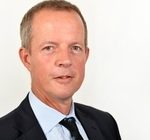
  • Nick Boles – 2022 Article on Now Supporting the Labour Party

    Nick Boles – 2022 Article on Now Supporting the Labour Party

    A section of the article in the Guardian newspaper on 29 September 2022. Nick Boles was the Conservative MP for Grantham and Stamford from 2010 to 2019.

    Liz Truss and Kwasi Kwarteng possess a level of intellectual self-confidence usually found among undergraduates. They always have. Since 2010, when all three of us were first elected as Conservative MPs, they have known what they believe – and have viewed those who didn’t agree with them, or didn’t share their unshakeable certainty, with amiable contempt.

    ….

    In the past few days, the values of sterling and government bonds have registered the alarm felt by international investors about the UK’s prospects. But the British economy is resilient and there is a limit to how much permanent damage even these two headstrong ideologues will be able to do.

    In two years’ time, voters will be given a choice. By then I expect that there will be millions of former Conservative voters who will have tired of being lab rats in Truss’s and Kwarteng’s ideological experiments. They will look for leaders who are prudent, responsible and steady. Who don’t think they know everything. Who listen, and are in touch with people’s everyday concerns. I predict that they will conclude, as I have done, that it is the Labour leader, Keir Starmer, and his shadow chancellor, Rachel Reeves, who best fit the bill.

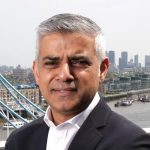
  • Sadiq Khan – 2022 Statement on the Government’s Fiscal Statement

    Sadiq Khan – 2022 Statement on the Government’s Fiscal Statement

    The statement made by Sadiq Khan, the Mayor of London, on 23 September 2022.

    The measures in this Budget are not only unfair, but will put public finances on an unsustainable footing, which risks harming our economy for years to come.

    As the country grapples with the worst cost of living crisis in decades, the Chancellor has today prioritised massive unfunded tax giveaways for the wealthy, rather than helping those households that are really struggling.

    There is not enough in today’s Fiscal Statement to help those families and businesses who need support the most.

    Today was a missed opportunity from the Chancellor who could have made a real difference to millions of Londoners by providing free school meals to all primary school children, uplifting Universal Credit and ensuring that the most vulnerable receive a basic amount of free energy. He should also have given me the power to freeze private rents in London, which would save people £3,000 over two years.

    Instead the Government has chosen to bring in an swathe of tax cuts that they admit will disproportionately benefit the most wealthy in society. Londoners who are struggling to make ends meet will be disappointed at the lack of immediate help today.

  • Sadiq Khan – 2022 Comments Following Disorder Outside Iranian Embassy

    Sadiq Khan – 2022 Comments Following Disorder Outside Iranian Embassy

    The comments made by Sadiq Khan, the Mayor of London, on 26 September 2022.

    The scenes that took place last night were completely unacceptable. The selfish minority who attempted to hijack a peaceful protest must be brought to justice.

    The right to protest is a cornerstone of our democracy, but violence and attacks on our police and communities will never be tolerated. I am in close contact with the Met Commissioner and the police have my full support in pursuing those behind the disorder.

    On behalf of all Londoners, I wish all the officers injured a swift recovery and urge anyone with information on those involved to call the police on 101 or Crimestoppers anonymously.

  • Sadiq Khan – 2022 Comments on Samson Kambalu Artwork on Fourth Plinth

    Sadiq Khan – 2022 Comments on Samson Kambalu Artwork on Fourth Plinth

    The comments made by Sadiq Khan, the Mayor of London, on 28 September 2022.

    I’m delighted that Samson Kambalu’s inspiring sculpture has become the latest to take its place on the Fourth Plinth. Our world-renowned sculpture prize entertains, educates and inspires. Samson is shining a light on an often overlooked part of our country’s history and I’m sure it will encourage discussion about the fight for freedom and equality. As we continue to fight against racism and stand-up for equality across our city and country, it is a message that remains just as important today.

  • Leo Docherty – 2022 Speech on the Russian Sham Referenda in Ukraine

    Leo Docherty – 2022 Speech on the Russian Sham Referenda in Ukraine

    The speech made by Leo Docherty, the Minister of State at the Foreign, Commonwealth & Development Office, in Vienna on 29 September 2022.

    Vladimir Putin’s sham referenda must be seen for what they are. A brazen and desperate attempt, to justify an unprovoked and illegal land grab, of sovereign Ukrainian territory.

    They are a clear violation of international law and the UN Charter. And wholly illegitimate.

    That is why the United Kingdom will never recognise the supposed results. Nor any Russian attempt to illegally annex Ukrainian territory.

    We have seen Vladimir Putin use this playbook before, in Crimea. As then, Russia will try to claim that these latest votes were free and fair.

    But no amount of Russian lies can hide what we all see plainly: A sham. A propaganda exercise. Without a shred of legitimacy. Conducted down the barrel of a gun, by soldiers accompanying ballots door-to-door, forcing Ukrainians to vote.

    For 7 months, in an attempt to destroy Ukrainian identity, Vladimir Putin’s forces have ruthlessly used violence and torture against civilians – and forced deportations – to exert control.

    Sham referenda held under such fear and harassment can never be free, nor fair.

    As highlighted by my Foreign Secretary last week, we know Vladimir Putin planned to rig the outcomes. Russia has no choice but to fabricate the results. These regions voted overwhelmingly to join an independent Ukraine in 1991, and for President Zelenskyy in 2019.

    Earlier this week, the United Kingdom announced sanctions against those behind these bogus votes, including 33 officials and collaborators deployed by Russia to conduct them.

    This latest Russian deception, and Putin’s decision to partially mobilise Russia’s population, only serve to highlight one thing: his invasion is failing.

    His war machine is depleted. His supply of volunteers willing to fight in Ukraine has been exhausted. Partial mobilisation will only send many more thousands of innocent Russians to die in Putin’s war-of-choice. A war which he could end right now.

    Vladimir Putin’s nuclear threats are irresponsible and will not work. Ukrainians are highly motivated. The international alliance is cast-iron strong. We and our allies are clear that any use of nuclear weapons by Russia would be met with severe consequences.

    The United Kingdom’s approach will not alter. We will be steadfast in support of Ukraine – and its right to defend its sovereign territory – for as long as it takes.

    We call on all participating States to join us in unequivocally rejecting the results of these illegitimate referenda, and any Russian attempts to illegally annex Ukrainian territory.

    If we allow Russia to change sovereign borders by force, then the core principles on which the OSCE was founded – of sovereign equality; the inviolability of frontiers; and respect for territorial integrity – lie in tatters.

    And all of our borders become less secure.

    This is about freedom and security for the people of Ukraine. But also about freedom and security across Europe and the World.