Category: Speeches

  • Volodymyr Zelenskyy – 2022 Speech to the General Assembly of the Organization of American States

    Volodymyr Zelenskyy – 2022 Speech to the General Assembly of the Organization of American States

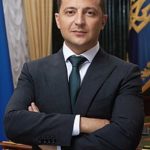
    The speech made by Volodymyr Zelenskyy, the President of Ukraine, on 6 October 2022.

    Dear Secretary-General!

    Dear representatives of the free nations of America!

    Dear friends!

    I am grateful for the opportunity to address you at this particular time when we have entered a defining phase of our war for independence – when our heroes drive the occupying army out of our land.

    Russia sent this army to our country to turn us into their colony. As it was, unfortunately, before – in the time of empires.

    But millions of Ukrainians stood up to defend our freedom and our country and will definitely not allow Russia to bring back that old unfair time.

    We have no doubts about winning this war and our ability to protect the independence of Ukraine. Daily victories at the front and dozens of liberated Ukrainian cities and villages prove it.

    There is only one question for us right now – how many of our people Russia will manage to kill before it admits a defeat. How much more will Russia manage to steal from Ukraine – grain; resources; industrial enterprises, which the occupiers simply disassemble and take out to Russia; as well as people. They are stealing people.

    More than one million and six hundred thousands of Ukrainians were forcibly deported to Russia. They are dispersed across the territory of this state, scattered throughout remote Russian regions.

    Many of them had their documents taken away, and many of them passed through terrible Russia’s filtration camps, where they were abused and intimidated.

    These are people. But for Russia, it is also a resource.

    We are doing everything to free our land as soon as possible, to save all our people from this invasion as fast as we can. We are doing everything to put an end to the long list of Ukrainian victims that Russia is creating.

    This is the reason I am addressing you.

    We need your support to bring back peace faster for our people.

    I will be honest – I know that in some member countries of your Organization, unfortunately, the Russian view of this war is dominant. And this is a false view.

    It is possible in your part of the world simply due to the fact that Russia spends billions of dollars annually on its propaganda media and other projects that create an illusory impression about it.

    But there are facts on the side of Ukraine. And I am asking you just to look at these facts.

    Look – from your point of view. In terms of what your great American continent has been through. From the point of view of the struggle for independence that your people led. In terms of simple human justice, which means so much to your countries and people. And in terms of what your national heroes fought for.

    I am turning to the pages of the history of the American continent and asking:

    On whose side would Simon Bolivar be in such a war that Russia unleashed against Ukraine? Who would Jose de San Martin support? Who would Miguel Hidalgo sympathize with?

    I think they would not help someone who is just looting a smaller country as a typical colonizer. I think they would not support someone who constantly lies and does not even call a war a war, hiding behind the definition of “special military operation”.

    I think they would not sympathize with someone who deliberately puts different countries on the brink of starvation – through an artificial food crisis. Who drives people into poverty – through price and energy crisis, both artificial. And who is so mean that he makes war against civilians, destroying all the foundations of normal social life using rockets and artillery against residential buildings, hospitals, schools, churches.

    I thank those of you who have already strongly supported Ukraine and condemned Russian war against our freedom and independence. I thank your Organization for suspending Russia’s observer status.

    But we need more for the sake of peace and for the Russian army to leave all captured Ukrainian land.

    So I am asking you to support us on several levels.

    The first level – international organizations, particularly the UN General Assembly. Please support us in voting to condemn Russia’s aggressive policy.

    It is of our common interest – so that no one in the world can start wars of aggression like the Russian war against Ukraine. And so that no one in the world thinks that he has right to illegally annex lands of other nations, as Russia thinks.

    The second level is national. We need integrity from your states.

    Do not allow your economies to be used to finance criminal war and war crimes. Do not associate yourself with those who will inevitably be condemned by the international community.

    The crime of Russia’s aggression against our country, the mass murders of civilians on Ukrainian soil, forced deportations, numerous cases of torture and rape – all this will certainly receive its verdicts.

    Please avoid your companies and countries to be connected with those individuals and legal entities in Russia through which it carries out its terror against Ukraine. Support sanctions against Russia. Limit your trade operations with Russia. Protect yourself from the risk of tarnishing your reputation with ties to a terrorist state and its companies, and limit its opportunities to continue this war of aggression against Ukraine.

    And the third level of support we need – is the level of ordinary people.

    I’m not asking for much. Just spread the truth about this war and the casualties caused by the Russian aggression. Just talk about it. Let your people know what evil Russia has brought to the absolutely peaceful Ukrainian people. A nation that has never started any wars of aggression.

    The greater the support for those who fight for freedom and independence – the stronger freedom will be in general in the world and the faster we will go all the way to freeing our land from the Russian invaders.

    I thank you for your attention! 

    Long live freedom! ¡Viva la Libertad!

    Слава Україні!
  • Sadiq Khan – 2022 Comments on Violence in London

    Sadiq Khan – 2022 Comments on Violence in London

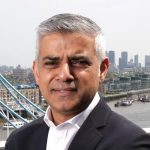
    The comments made by Sadiq Khan, the Mayor of London, on 7 October 2022.

    I am committed to tackling violence and building a safer city for all Londoners.

    My approach of being tough on violence through the hard work of our police and tough on the complex causes of violence, is showing signs of progress. Overall, crime continues to fall in London, bucking the national trend, with knife crime with injury for under 25s and gun crime both down. However, it’s clear more needs to be done in partnership to continue making progress.

    Partnership work from prevention to enforcement is vital to tackling violence and the work my VRU does alongside the NHS and its violence reduction programme is a fantastic example of working together to identify opportunities to intervene early to divert young people and help them access positive life opportunities.

  • Anne-Marie Trevelyan – 2022 Comments on Avanti West Coast

    Anne-Marie Trevelyan – 2022 Comments on Avanti West Coast

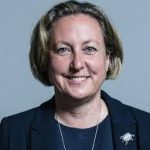
    The comments made by Anne-Marie Trevelyan, the Secretary of State for Transport, on 7 October 2022.

    We need train services which are reliable and resilient to modern day life. Services on Avanti have been unacceptable and while the company has taken positive steps to get more trains moving, it must do more to deliver certainty of service to its passengers.

    We have agreed a 6-month extension to Avanti to assess whether it is capable of running this crucial route to a standard passengers deserve and expect.

  • Janet Royall – 2022 Tribute to HM Queen Elizabeth II (Baroness Royall of Blaisdon)

    Janet Royall – 2022 Tribute to HM Queen Elizabeth II (Baroness Royall of Blaisdon)

    The tribute made by Janet Royall, Baroness Royall of Blaisdon, in the House of Lords on 10 September 2022.

    My Lords, I guess I am about two-thirds of the way between the most reverend Primate’s granddaughter and the right reverend Prelate’s mother, but I too wept. It was such a moment to hear that our wonderful Queen had died. The right reverend Prelate mentioned peace and reconciliation. Our country and our world are in great need of those now, and I have no doubt that they will be firmly on the agenda of our new King.

    I am proud to join in this celebration of the life of Her Majesty the Queen—an inspirational life, a life truly well lived and a life for which we are grateful. She was a remarkable woman, and the tributes made in your Lordships’ House both yesterday and today have also been remarkable. The tributes we have seen in the media have been quite exceptional, and I hope that continues with our new King.

    It is impossible to say anything new, but repetition does not detract from the fact that Queen Elizabeth was an extraordinary woman whose dedication to our country and its people was second to none. Hers was a life of service and steadfastness, leadership and love, dignity and integrity—a reassuring constant in a turbulent world. It is difficult to comprehend the breadth of the economic, social, political and technological changes that took place during the second Elizabethan age. She was the continuity Queen who embodied our nation. Hers was a life to be celebrated throughout the world.

    I was in Mumbai when news of the Queen’s death was announced. So many people came up to me late that evening and the following morning to give their condolences on the loss for our country and to express their sadness and respect. I did not know these people but clearly, I look like a Brit and therefore was somebody who should be concerned, as I was.

    I was privileged to be Lord President of the Council, Chancellor of the Duchy of Lancaster and Captain of the Gentlemen-at-Arms, and in those tasks I met the Queen quite often. I was certainly not the first woman captain, but it seemed to give the Queen pleasure to introduce a female captain—although together we lamented the fact that the women captains did not have the gorgeous uniforms of the men. We talked about that quite often.

    Much has been said about the Queen’s sense of humour. Once, when I was lunching at Windsor Castle with the Queen and Duke of Edinburgh, there was a conversation about the intrusion of mobile phones. We lamented the fact that people did not turn them off at mealtimes. Suddenly there was a loud ring beneath the table. Yes, it came from my handbag. I was mortified; they thought it was hilarious.

    Last year my college, Somerville, was privileged to receive a wonderful visit from the King, the then Prince of Wales. Delving into our history in preparation for the visit, I learned that the Queen visited Somerville in 1968, when we were a women’s college. We have a glorious photo of the beautiful young Queen and the heads of all five women’s colleges. Happily for me, all the heads had studied at Somerville. I have no doubt that that point was proudly made to the Queen. On that visit the Queen signed a birthday book given to the college by Ruskin. It was also signed by her grandmother, Queen Mary, and latterly by her son, King Charles.

    In our fragile world, we are embarking on a new era. The Queen will be greatly missed, but I know that the King, supported by the Queen Consort and his family, will also give extraordinary service to the country and the Commonwealth as we meet the great challenges of our time. Through all the work the King has done as the Prince of Wales, he is more aware of those challenges than many in our world.

  • Christopher Cocksworth – 2022 Tribute to HM Queen Elizabeth II (Bishop of Coventry)

    Christopher Cocksworth – 2022 Tribute to HM Queen Elizabeth II (Bishop of Coventry)

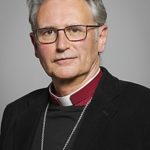
    The tribute made by Christopher Cocksworth, Bishop of Coventry, in the House of Lords on 10 September 2022.

    My Lords, it is a great honour to follow the noble Lord, Lord Triesman. I will offer some words of tribute on behalf of the people of Coventry and Warwickshire, especially to express our great thanks for the Queen’s part in the renewal of Coventry after its wartime destruction and its discovery of a new identity, aspiring to be a city of peace and reconciliation.

    A few days after the worst of the bombing of Coventry, the Queen’s father stood in the ruins of the cathedral and wept. In 1956 the young Queen laid the foundation stone of the new cathedral—a new cathedral for a new Queen, in an ancient city now being rebuilt for a modern age, in a nation finding its place on the international stage in a new Europe and a new world. In 1962, 60 years ago this year, the Queen—herself a consecrated monarch, of course—returned to Coventry for the consecration of the new cathedral. There was hope in the air, and Coventry became a national symbol of the traumas of war, with all its suffering still evident in the ruins, and the possibilities of peace built on reconciliation rising from the ashes of the past into the simple grandeur of the new cathedral. What better person than Queen Elizabeth to lay the foundation stone of a new future and to see a building, a people, a nation consecrated to serve the ways of peace?

    Serving the cause of reconciliation for which Coventry Cathedral and its city have become known was remarkably demonstrated through the Queen’s service to the nation and the world, as we have heard in many ways. The Queen helped the nation to celebrate its past and carry forward its great traditions and noblest values while, at the same time, reaching out to the future, accepting its challenges, welcoming its opportunities and easing its coming. Whether steering the nation from imperial power to shaper and sharer in a Commonwealth of Nations, or facing head-on the harm that peoples have inflicted on themselves in families, in communities and between nations, and showing them how we may live better together, the Queen well used the strength of her character and the powers of her office to create new conditions for co-operation.

    Among the many examples on the world stage, I pay particular tribute to the Queen’s part in Coventry’s and the country’s reconciliation with Dresden, that symbol of the brutality of war and its challenge to face our own past. Her visit in 1992 with one of my predecessors was a brave act and not without cost to her. It exposed emotions that were still raw in that city, but I know from my own many visits and close relationships that it was deeply healing, transformative even, on the long road to reconciliation.

    As we have heard powerfully from the noble Baroness, Lady Coussins, and the noble Lord, Lord Alderdice, the Queen’s words and gestures—the way she used the combination of her status and credibility of character to serve the good of the future—were breathtaking in their effect during her state visit to the Republic of Ireland in 2011 and then Belfast in 2012. Again, we saw something, as we have heard, of the risk and cost that walking the road of reconciliation involves. There are many other examples, of course, in her long years of service, as indeed there are in the untiring, unstinting work of her son, our King, in his now former life.

    As has been acknowledged, the Queen’s own foundation, the rock on which she built her life, is well known. The cause for which she felt and knew that she was consecrated—God’s kingdom, peace, justice and mercy—served her well. We know that it will also serve our King well. It makes me wonder whether all our foundations and all the causes to which we give ourselves will be as secure and enduring as hers.

    The most reverend Primate the Archbishop of York referred to his granddaughter crying when she heard the news. I cannot resist saying the same about my mother. She is 93 and frail. She wept for the Queen and, I think, all that great generation that is passing. She said, “She was always there”—we all feel that—but she also said something that got it for me: “The Queen had such a beautiful face. It was her smile.” That has been referred to already. I was blessed by that smile in the encounters I had with Her Majesty our late Queen. Genuine life-giving smiles can restore relationships that once looked irreparably damaged. Our world is a better place because of the smile of that gracious lady.

  • Liz Truss – 2022 Comments on European Leaders’ Meeting

    Liz Truss – 2022 Comments on European Leaders’ Meeting

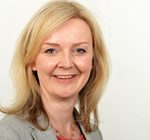
    The comments made by Liz Truss, the Prime Minister, on 6 October 2022.

    Leaders leave this summit with greater collective resolve to stand up to Russian aggression. What we have seen in Prague is a forceful show of solidarity with Ukraine, and for the principles of freedom and democracy.

    The UK will continue to work with our allies to deliver on the British people’s priorities, including ending our reliance on authoritarian regimes for energy and reducing costs for families, tackling people smuggling gangs, and standing up to tyrants.

  • David Triesman – 2022 Tribute to HM Queen Elizabeth II (Baron Triesman)

    David Triesman – 2022 Tribute to HM Queen Elizabeth II (Baron Triesman)

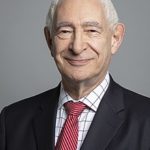
    The tribute made by David Triesman, Baron Triesman, in the House of Lords on 10 September 2022.

    My Lords, it is a real privilege to take part in this debate and to follow the noble and right reverend Lord, Lord Sentamu, and his inspiring words, and also the noble Lord, Lord Cormack, not least because I so strongly share his feelings about the first couple of short speeches by King Charles and the sentiments that they involved.

    I do not think it would be to any purpose to repeat the many things that have been said about Her late Majesty’s graciousness, kindness and ability to respond to people in such a personal way—a pleasure which I enjoyed on a number of occasions. Those things have been said. It may well be that what we should remember are her comments when she described her first speeches as having been “green” but that none the less she was delighted to have made the commitments that she made and to have seen them through. I sometimes think that the best one can expect of one’s children is that after their long experience, we hope, of you as a parent they will say that they thought you a good parent and that you have contributed in a significant way to their lives. That is certainly the way I think with affection and humility about the late Queen.

    A number of us have inevitably reached for anecdotes because they are not just expressions of the good luck and good chance of having met Her Majesty—in my case, a number of times—but illustrate things about her which, if you had not gone through those experiences, you would not necessarily know. When I first went as a Lord in Waiting, I had the great good luck of her inviting me to have lunch, and we sat, just the two of us, at a small table. She said, “I always have a light lunch”—I think I am allowed to say something about what she said—“I have ordered a ham salad but I thought you would not want a ham salad, so I have ordered a smoked salmon salad for you”. I thought how nice and good to have thought that, as it was absolutely true that, for various religious reasons, I would not have been able to eat a ham salad. It was a most enjoyable discussion and a very enjoyable lunch.

    The noble Lord, Lord Jay—we do not sit on the same Benches, but I think of him as a very good friend, as many people in the Foreign Office become very close to the Diplomatic Service—was in Buckingham Palace at the time. As noble Lords probably saw yesterday, he is a very tall man and, wearing a hat with plumes which stuck up about another two feet, he looked like a basketball player on day release. He was introducing ambassadors, as he described. Her Majesty commented on the fact that there were more ambassadors arriving in London than she had ever seen in the course of her reign and that many of them were from countries she had had to look up. Bosnia-Herzegovina was one that day, and there were one or two others. It created in me a very strange memory. My father gave me stamp album—it did not have many stamps in it—when I was a small child, and I would looked through it and see all these countries, such as Bosnia-Herzegovina, and wonder where on earth they were. There were all sorts of places. I kept that stamp album because it was such a strange moment in history. Her Majesty very graciously said that her grandfather had collected stamps and had some wonderful albums. She asked whether I would like to see them and said that perhaps they would compare with my stamp album. I thought that was extremely unlikely, but I was delighted to take up her offer.

    That was not the first time I met her. The first time was in the context of a football match. I have to say that I never thought of Her Majesty as being a very keen football person. There are no horses involved in the game and, try as we might to devise it, we could never find a way of involving horses in football. I had been told that she had a wonderful sense of humour and that she was at the match. She was indeed very gracious and, at the end, when I asked whether she thought anybody had played particularly well, she said, “The band of the Scots Guards”. I thought that was probably a pretty accurate reflection.

    Funnily enough, the Scots Guards come into another memory I have, of when President Lula of Brazil made his state visit. At the state banquet, one of the things that Her Majesty liked was to have the pipes of the Scots Guards walk round the outside of the banquet table playing, as only they can. This playing “as only they can” gave a profound shock to President Lula, who thought it was either a declaration of war or something which he had never come across before. He said, “Do you always do this?”, and before I could answer Her Majesty said, “Of course we always do it”.

    I have those memories and I couple them with affectionate memories of His Royal Highness Prince Philip, who was also so important on so many of those occasions and who also deserves great credit.

    It has been said in this House that, during the course of her long reign, a huge number of things changed. I want to focus briefly on one of them. The invention of atomic weapons took place earlier, and the first explosion of atomic weapons took place during the war. But when thinking about those 70-plus years it struck me that, in that time, we have created circumstances among humanity where we have a capability we did not have, and which was not really thought of when Her Majesty was in the forces, to destroy ourselves completely and wipe out everything we know about human existence. We have the capability not only to obliterate the whole of the past but to obliterate what would have been the accomplishments of the future. I think Her Majesty had a strong sense of the value of the accomplishments of the future as well as of the traditions of the past, and she was well able to talk about them and make you feel them. That is something that I feel at the moment.

    At the heart of it was a love of peace and democracy. She espoused both of those, though not in the sense that she would not wish to stand up to ruthless dictators who would try to interrupt peace or destroy democracy; quite the contrary, she would certainly always have wanted to do that, but in the cause of peace and democracy. I treasure having lived through a period in which a monarch felt so strongly about those things.

    Yesterday, the noble Lord, Lord Polak, said a little about Jewish tradition at the end of a person’s life, and with great respect to those who are going to shelter my faith under their umbrella—although it does not always seem to me to happen, but none the less I am very keen that they should—I want to do one other thing which is also from Jewish tradition. Many noble Lords may well know it: we wish the family and the people closest to the person who has died long life. It is not just because we wish for them a long life—though we do, of course—but because it is in the lives of the people who survive that memories survive to the greatest extent. We carry the memories. God bless the King. May he have long life and cherish those memories.

  • Liz Truss – 2022 Keynote Article on the Future of Europe

    Liz Truss – 2022 Keynote Article on the Future of Europe

    The article written by Liz Truss, the Prime Minister, published in The Times on 6 October 2022 and released as a press release by 10 Downing Street.

    Security, energy and migration are three of the most urgent priorities for the British people, so they are top of my agenda too. That’s why I am travelling to Prague for today’s European leaders’ meeting.

    These vital issues affect the whole of our continent, so it is right that we find common cause with our European friends and allies. It’s also why we want to see a strong voice for non-EU countries like Ukraine, Norway and Switzerland.

    Today’s meeting is not an EU construct or an EU alternative. I am very clear about that. It brings together governments from across Europe, around a third of whom are outside the EU. A post-Brexit Britain, as an independent country outside the EU, should be involved in discussions that affect the entire continent and all of us here at home. We are taking part as an independent sovereign nation, and we will act as one.

    Brexit was never about the UK stepping away from our proud and historic role as a leading nation in the region and beyond. We always believed we would find new ways of working that reflected our shared values and interests.

    Our actions in Ukraine have shown this to be true. No European country has done more than the UK to arm the Ukrainians in their fight for freedom and to lead the imposition of economic sanctions on Russia. Yet our actions are all the stronger because of the way that we collaborated with our European friends.

    We have worked with the EU through the G7 and helped Sweden and Finland with their accession to Nato, which remains the bedrock of our collective defence. We have co-operated militarily with European allies through the Joint Expeditionary Force. We are training Ukrainian soldiers together. And we are strengthening partnerships with other European friends, including Norway on energy security and Switzerland on science and research.

    So I welcome the opportunity to work with leaders from across the continent in this new forum. But this must not cut across the G7 and Nato, and it must not be a talking shop. I want to see concrete action and delivery on three key priorities.

    First, we must ensure that Putin is defeated. His attempts at mobilisation and annexation are a show of weakness. Ukraine’s counter offensive is succeeding, and Russia’s will is fracturing. This is the moment to redouble our resolve. The UK is sending £2.3 billion of military support to Ukraine this year — and we will match or exceed that next year.

    I will urge my European friends to continue to work with us in providing more weapons, imposing more sanctions, and backing Ukraine in pushing Russian forces out.

    Second, we must end our addiction to Russian hydrocarbons. Yesterday at the Conservative Party conference, I set out our plan for growth and the vital importance of becoming less reliant on authoritarians for our energy. It is right that we talk with our European allies about how we do that collectively. Putin is hoping he can divide us in a scramble for energy supplies. We must show him that he is wrong.

    The UK sends and receives both gas and electricity through the undersea cables and pipelines that link us with neighbours like France, Belgium and the Netherlands. Today we must all commit to keeping those connections open this winter so we keep the lights on across the continent.

    The UK will also play a leading role in protecting critical energy infrastructure. This week the Royal Navy deployed HMS Enterprise and HMS Somerset to work with Norway and our allies in the North and Norwegian Seas.

    Together, we will deter any threat to underwater pipelines.

    We must also act now to make sure we are never in this position again. We must usher in a new era of European energy independence, dramatically accelerating our own energy production. Today I will be discussing deeper bilateral nuclear co-operation with President Macron, including progress on Sizewell C. We are ready to work with our European friends to develop next-generation interconnectors in the North Sea. And I hope to make progress towards new partnerships on offshore wind, all of which will help to make the UK a net energy exporter by 2040.

    Third, we must use the opportunity of this forum to focus on migration. We are proud of the way that we have opened our homes to 130,000 Ukrainian refugees. But we need a stronger response to the crime gangs that exploit desperate people. Today we will be deepening our joint working with France, the Netherlands and other countries along the migration route to step up our collective response to this trans-national tragedy.

    I believe that with authoritarian states undermining stability and security around the world, democratic nations need to be bolder and more innovative in how they collaborate to ensure that our shared values prevail.

    It is in this spirit that I will join my fellow European leaders today and ensure that this new forum delivers for the British people.

  • Ursula von der Leyen – 2022 Speech on Russia’s Escalation of its War of Aggression Against Ukraine

    Ursula von der Leyen – 2022 Speech on Russia’s Escalation of its War of Aggression Against Ukraine

    The speech made by Ursula von der Leyen, the President of the European Commission, on 5 October 2022.

    Dear President Metsola, dear Roberta,

    Honourable Members,

    Since we last met to discuss the state of our Union, the Kremlin has escalated its aggression to a new level. Putin has launched Russia’s first mobilisation since World War II, treating hundreds of thousands of young Russians as cannon fodder. He uses sham referenda in an illegal attempt to change international borders by force. And since many months, he is using energy as a weapon. The Russian war causes economic and social hardship. It places a heavy burden on our citizens and on the economy in our Single Market. Rising energy costs in particular are leading to reduced purchasing power for citizens and loss of competitiveness for companies.

    Over the course of the last seven months, together with our Member States, we have already taken important steps. We have diminished our gas consumption by around 10%. Russian gas supplies have decreased from 40% to now down to 7.5% of pipeline gas. We have compensated this reduction by increased imports of LNG and pipeline gas, mainly from our reliable suppliers like the US and Norway. Gas storage in the EU is now at 90%. This is 15% higher than on the same day last year. In addition, three weeks ago in this hemicycle, I announced that we will skim the exceptional profits made by energy companies and use them to support vulnerable citizens and businesses. Last week, this has been enshrined in EU law. We achieved this in lightning speed, also thanks to the outstanding work of the Czech Presidency. And yesterday, the Council reached agreement on REPowerEU.

    So we have key instruments in place to make it through the winter – storage and savings; to jointly purchase gas – Platform; to get us out of the Russian grip ­­– agreement with US; to redistribute the windfall profits to support those in need – electricity emergency intervention; and to invest in the future – REPowerEU.

    The measures we have put in place provide us with a first buffer of protection. Thanks to these, we can and will now step up to the next level. I will lay out a roadmap in a letter to Leaders in view of our meeting in Prague later this week. It includes the following key components: We will step up our negotiations with trusted partners – for example with Norway – to dampen the price we pay for gas imports. As European Union, we have considerable market power. And many of our suppliers want to conclude deals with us, which are beneficial for both sides. We will also strengthen our Energy Platform. This is in our collective interest. We have to avoid a scenario where Member States are again outbidding each other on world markets and driving prices up for Europe.

    My next point is on gas prices. We use gas in three domains: industry, heating and electricity. Let me start with electricity. High gas prices are driving electricity prices. We have to limit this inflationary impact of gas on electricity – everywhere in Europe. This is why we are ready to discuss a cap on the price of gas that is used to generate electricity. This cap would also be a first step on the way to a structural reform of the electricity market.

    But we also have to look at gas prices beyond the electricity market. We will also work together with Member States to reduce gas prices and limit volatility and the impact of price manipulation by Russia. In March, we have already offered this as an option. We have said that it can give an important signal that the EU will not pay any price for gas. We qualified such a price cap as having an immediate impact on price levels. But that it entails drawbacks, in terms of security of supply of gas. The situation has critically evolved since then.

    Today, compared to March, more Member States are open for it and we are better prepared. Such a cap on gas prices must be designed properly to ensure security of supply. And it is a temporary solution to cater for the fact that the TTF – our main price benchmark – is no longer representative of our market that includes more LNG today. It is a temporary solution until a new EU price index ensuring a better functioning of the market is developed. The Commission has kick-started work on this.

    Honourable Members,

    These are far-reaching measures. I wholeheartedly agree with you when you say in the resolution you will adopt today that exceptional times require exceptional emergency measures, where the Union needs to act as jointly and united as ever. So, in pursuing our action, two things remain paramount: acting in unity and acting in solidarity. We need to protect the fundamentals of our economy, and in particular our Single Market. This is the strength of the European Union. That is where the wealth of the European Union comes from. Without a common European solution, we risk fragmentation. So it is paramount that we preserve a level playing field for all in the European Union.

    With REPowerEU, we have developed a crucial instrument to accelerate the transition to energy independence. It will allow to invest in infrastructure, like pipelines, interconnectors or renewables. And it allows to support businesses and households to invest in energy efficiency – like insulating houses or installing heat pumps. So I think we should further boost REPowerEU with additional funding. This way all European states can accelerate the necessary investments. We modernise the energy infrastructure. And we preserve the level playing field. And we secure our European competitiveness on global markets. And we have to do it as Europeans, together and jointly.

    Honourable Members,

    There is another pressing issue, which we have to address today. The acts of sabotage against Nord Stream pipelines have shown how vulnerable our energy infrastructure is. For the first time in recent history, it has become a target. Pipelines and underwater cables connect European citizens and companies to the world. They are the lifelines of data and energy. It is in the interest of all Europeans to better protect this critical infrastructure.

    For this, we will present a five-point plan. First, we must be better prepared. We have very recently agreed new legislation which will strengthen the resilience of critical EU entities. The responsible Parliament committee will be voting on it next week. And we can and should already now be working on this basis.

    Second, we need to stress test our infrastructure. We need to identify its weak points and prepare our reaction to sudden disruptions. We will work with Member States to ensure effective stress tests in the energy sector. This then should be followed by other high-risk sectors, such as offshore digital and electricity infrastructure.

    Third, we will increase our capacity to respond through our Union Civil Protection Mechanism already in place. With this, we can support Member States in addressing the disruption of critical infrastructure – for example, with fuel, generators or shelter capacity.

    Fourth, we will make best use of our satellite surveillance capacity to detect potential threats.

    And finally, we will strengthen cooperation with NATO and key partners like the US on this critical issue.

    Honourable Members,

    This war has entered a new phase. The Ukrainian army keeps reporting impressive successes in its fight against the aggressor. We all saw the images of deeply relieved people welcoming Ukrainian soldiers. And I could see with my own eyes, three weeks ago, that life has returned to Kyiv. Of course, it is the bravery of the Ukrainian people that made it possible. But Europe’s contribution has also made a huge difference. Our backing has helped Ukraine face down the invader. Only a strong and steadfast Europe will stop Putin. This is the moment to stay the course and support Ukraine as long as it takes.

    Long live Europe.

  • Colum Eastwood – 2022 Comments on the Conservative Party Conference

    Colum Eastwood – 2022 Comments on the Conservative Party Conference

    The comments made by Colum Eastwood, the SDLP MP for Foyle, on Twitter on 5 October 2022.

    Listening to arrogant Tory ministers defending this mess this morning is infuriating. I’d love them to spend one day in my constituency office in Derry listening to the devastation their policies are causing for families here.