Category: Speeches

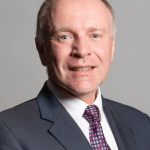
  • Mike Amesbury – 2022 Speech on the Government’s “Plan for Growth”

    Mike Amesbury – 2022 Speech on the Government’s “Plan for Growth”

    The speech made by Mike Amesbury, the Labour MP for Weaver Vale, in the House of Commons on 19 October 2022.

    This economic crisis has been manufactured in Downing Street and, as we approach Hallowe’en, the little shop of horrors on the Government Benches adds 10.1% inflation. That horrendous inflation figure brings more anxiety to my constituents in Weaver Vale and across Britain, as Members across the Chamber have documented today. This nightmare made in Downing Street is being experienced every day by ordinary people who are just trying to make ends meet during this economic crisis.

    Mortgages are up, energy bills are up, the weekly shop bill is up and rents are up, while wages, benefits and pensions are down. My God—the Bank of England had to intervene with £65 billion to save our pension funds. People on the Government Benches should be ashamed of themselves for supporting this, voting for it and inflicting on us the horror show that we saw in the summer. This has all been driven by Captain Chaos herself, the Prime Minister unchained as a free marketeer ultra.

    Who knew that unsuccessful trickle-down economics, unfunded tax cuts for the wealthiest and borrowing on the never, never would fail? The shadow Chancellor knew, the Bank of England knew, the Institute for Fiscal Studies knew, the Office for Budget Responsibility knew, the Financial Times knew and the hon. Member for Hazel Grove (Mr Wragg) knew, as he has eloquently set out in the Chamber today. In fact, a huge coalition of the economically sensible forewarned that the free marketeer ultras would ultimately fail and crash the economy off a cliff.

    The lady who is for U-turning by the hour is now trying to deflect the blame for the chaos to the former 38-day Chancellor, while appointing the former architect—let us not forget this—of NHS austerity mark one. She is a Tory Prime Minister in name only, chained to the passenger seat while Chancellor Hunt tries to swerve away from another cliff of chaos, but the damage is done. Who knows how much longer this Prime Minister in title only will have to attempt to deal with this utter mess of her own making? Almost certainly not as long as our constituents, who will be paying for years to come for this economic chaos. We will ensure that that is not forgotten.

    Some 4,800 households in Halton and 13,900 in Cheshire West and Chester will now be paying higher mortgage rates, thanks to the experimental mini-Budget that the Prime Minister and former Chancellor now admit caused interest rates to increase—a Budget that the Cabinet signed up to, although they are now in denial about that. That extra £500 a month on average will inevitably mean that homes are repossessed. The situation will be turbocharged by the new Chancellor of doom who has just decided to gift households with energy bills of up to £5,000 next April—complete and utter madness—while the oil and gas companies rake in £170 billion of excess profits. The answer is staring people in the face. It is those companies we need to tackle, and in fact the likes of Shell are expecting it and have built it into their business plans. It is crazy.

    On the long road to recovery that we face, a Conservative Government cannot remain in the driving seat, even if the Prime Minister is not at the wheel. We now have the fourth Chancellor in four months, and that is not going to provide confidence and stability. In fact, we have had 12 years of this Government and 12 years of austerity. The new Chancellor of doom has no strategy for growth, and he is set to outline austerity mark two in the Hallowe’en Budget. It is time to wake up from this nightmare. Step aside, and let us have a Labour Government.

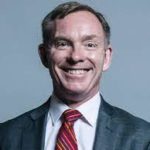
  • Jerome Mayhew – 2022 Speech on the Government’s “Plan for Growth”

    Jerome Mayhew – 2022 Speech on the Government’s “Plan for Growth”

    The speech made by Jerome Mayhew, the Conservative MP for Broadland, in the House of Commons on 19 October 2022.

    If we have learned one thing from the experience of the past few weeks, it is that there really is no magic money tree, and the Government really do have to pay their way. Some of us, including myself, had started to doubt that essential economic truth because of the Government’s heroic response to the covid crisis.

    I had intended to say that we had supported the families and businesses of this country to the tune of £400 billion. However, I listened to the Minister at the Dispatch Box, and when we add up all the unplanned borrowing very substantially as a result of covid, the total is actually £630 billion. It is because of that enormous intervention to support families and businesses by this Government that we did not have thousands of bankruptcies and millions of people cast out of work, as was the expectation. Right hon. and hon. Members will recall a forecast that we would have 12% unemployment, but because of the economic management by this Government the impact was cushioned and the economy protected from that enormous external shock.

    The Government were quite right to do that, but why were they able to? It was because of the decade of prudent economic management that repaired the enormous economic damage left by Labour in 2010—prudent decisions that Labour fought against tooth and nail. The Labour motion before us calls for a plan to make the economy work for working people, but Labour does not stand up for working people. Every Labour Government in history, without exception, have left office with more people out of work than before. Their policies, again and again, are not the policies for working people, but the policies of unemployment.

    Compare that record with that of this Government. Despite suffering the biggest economic shock to the world economy in a century or perhaps longer, unemployment has not gone up, as it always does under Labour. It has gone down, most recently to 3.5%, the lowest level since I was a tiny boy in 1974. In my Broadland constituency, the rate is even lower. That economic management is forcing employers to offer higher wages for staff—exactly the kind of economic conditions that help workers, particularly the lowest paid. It also serves to increase productivity, as local employers invest to limit the number of staff needed to produce. That is what will pay for the wage increases of the future, not Labour meddling.

    I recognise, as does the Prime Minister, that the mini Budget went too fast and too far, and she has rightly apologised for it, but this Government have the right economic policies for growth. As one of the few entrepreneurs in this place, having helped to create hundreds of worthwhile, well-rewarded jobs and careers, I know the truth of the business saying that time kills deals. Speeding up the ability of businesses to get projects up and running will have a huge impact on the future growth and prosperity of this country.

    The Government are right to launch investment zones. These zones do not just corral investment into a particular area; by speeding up the process of business, they will also grow the size of the pie. I hope that the results will be so striking that over time they will become a beacon for wider economic policy, showing the way for the rest of the economy.

    The Government are also right to accelerate productivity-enhancing infrastructure projects across Britain to help with levelling up, including the building of the western link road in my constituency, which will shorten ambulance times by 20 minutes, open up a swathe of Norfolk businesses to improved market access and relieve the residents of Weston Longville and others from terrible rat-running—all opposed by Labour, I might add. As for the local Lib Dems, literally half of them have said they want it and the other half have said they do not. That says it all about the approach of the Liberal Democrats: to say whatever they think will sound good to local constituents, with no consistency at all.

    Finally, the Government are right to speed up the review of EU-inspired regulations to make them bespoke for the United Kingdom economy. That will help British businesses and British workers. This Government have an economic record to be proud of, and I would back them to the hilt over Labour any day.

  • Paula Barker – 2022 Speech on the Government’s “Plan for Growth”

    Paula Barker – 2022 Speech on the Government’s “Plan for Growth”

    The speech made by Paula Barker, the Labour MP for Liverpool Wavertree, in the House of Commons on 19 October 2022.

    Government Members should not think for one second that the Opposition will relent from holding them to account for this dog’s dinner, which is entirely of their own making. Like a broken record, the lame duck Prime Minister cites global economic headwinds, refusing to take any responsibility for the decisions that brought the British economy to the edge of disaster.

    We have a Prime Minister in office but not in power, humiliated and bereft of ideas. Her manifesto drawn up by the libertarian right and the Institute of Economic Affairs has been cut to ribbons. The dogma espoused in “Britannia Unchained” must never again be allowed to reign supreme in Whitehall. In fact, the ideas must be consigned to the dustbin of history.

    Now the Prime Minister has brought back an old foe, who underfunded our NHS for years, to implement austerity 2.0, and once again it will be communities like mine in Liverpool, Wavertree who suffer. This is a Tory crisis, and the damage has been done: an estimated 14,344 people in Liverpool will be paying higher mortgage bills next year as a result of this Government’s irresponsible actions. The Prime Minister and the Chancellor now admit that the mini-Budget caused mortgage rates to go up and borrowing costs to surge—a Tory cost we will be living with for years.

    Working people have gone through enough. Now they are told that, to re-establish market stability, the responsibility is being shifted from the Government on to households, communities and working people. It all feels very 2011. Some are even saying that a previous Chancellor, the former Member for Tatton, is pulling the strings. The new Chancellor embodies a very different type of dogma from the Prime Minister’s, but it is dogma nevertheless—a school of economics that saw us enter the coronavirus pandemic with public services under-resourced and under-prepared.

    Feryal Clark

    Does my hon. Friend agree that it is not just public services, but local councils such as mine in Enfield, which faces a £100 million budget gap due to spiralling inflation, that are paying the price for this Government’s mismanagement of the economy?

    Paula Barker

    My hon. Friend makes a pivotal point. Local authorities have been cut to the bone. They provide valuable resources and frontline services out in our communities, but they are being decimated yet again by this Government. Our public sector workforce is demoralised after a decade of pay restraint and cuts to frontline services.

    If this Government think for one moment that our people will now put up with more of the same while bankers’ bonuses remain uncapped and millionaire bosses continue to rake in profits and dividends, they are sadly mistaken. The British people have woken up to the con. No longer does the promise ring true that each succeeding generation will have it better than the last. That promise, forged in the fire of the post-war consensus, is now in ruins after decades of short-termism and the dominance of capital over labour. We are not all in this together. Not once since 2010 have we all been in this together. Despite the empty rhetoric of a strong economy and levelling up, the Conservative party has always sought to look after its own class interests at the expense of the rest of us.

    Young people in my Liverpool, Wavertree constituency now face their lives being put on hold because of this Government’s incompetence. They have done the right thing: they have gone out, worked hard and saved, only to be cheated and denied the opportunity of home ownership. Working people are up against real-terms cuts to their pay and our elderly are anxious about heating their homes in the run-up to winter. There is even more uncertainty for small businesses and charities, such as the amazing Love Wavertree in my constituency, which does incredible work. It announced today that the increase in its energy bills means it must consider whether it can continue to run its community shop, a lifeline for many people in my constituency.

    History will not be kind to this Government, nor to anyone who has participated over the past 12 years. The Conservative party is lost. Thankfully, change is coming. As the Leader of the Opposition said so eloquently at Prime Minister’s questions today, we are the Government in waiting; the Conservative party are the Opposition in waiting. Frankly, that cannot come quickly enough.

  • Steve Double – 2022 Speech on the Government’s “Plan for Growth”

    Steve Double – 2022 Speech on the Government’s “Plan for Growth”

    The speech made by Steve Double, the Conservative MP for St Austell and Newquay, in the House of Commons on 19 October 2022.

    I think we all knew that whoever was Prime Minister or Chancellor and in government at this particular time were going to face some really tough decisions. The fall-out from the pandemic, the invasion of Ukraine and a number of other domestic and global factors were going to mean that some really difficult decisions would have to be made around our economy and our fiscal policy. None the less, the one thing that we should all be able to depend on is that, no matter how difficult times are, the Government will not make those decisions even harder. Sadly, that is what has happened as a result of the rushed mini-Budget. The fall-out has been a loss of confidence—a loss of confidence in the markets and, talking to many local businesses in my constituency in the two weeks immediately after the mini-Budget, a great loss of confidence in the business community.

    Growth is a hard-won thing. We do not achieve growth simply by saying as loudly and passionately as possible that we are going to get growth. Growth needs to be nurtured with the right policies that instil confidence in the business community. It is therefore incredibly welcome, and I am incredibly thankful, that the new Chancellor has stepped up and taken a grip on the situation. I am also delighted to see my very good friend in the position of Chief Secretary to the Treasury. Between the two of them, I have great confidence that they will bring the grip and the leadership to the Treasury that is necessary to create the stability we now need to address this difficult situation. As a result, many elements of the original mini-Budget have now been dropped, and we await further details in the near future of exactly how the Government will now balance the books and lay out their policy going forward.

    However, we really need to know what the Prime Minister’s policies are. She made a number of very bold statements in her leadership campaign to become Prime Minister, most of which have now been dropped. It is very important that we have confidence that No.10 and No.11 are in lockstep at this challenging time and that they have the same policies, so we need the Prime Minister to confirm exactly what her policies are.

    We are aware that some very difficult decisions lie ahead but, in making those decisions, it is vital that we protect the most vulnerable in our society from the damage that has been caused. Those who are least able to shoulder the burden should not be required to pay the price for it. Therefore, it was incredibly welcome that the Prime Minister gave a clear statement at the Dispatch Box that the triple lock will remain in place for pensions. Pensioners in my constituency and across the country will welcome the reassurance that that triple lock will be in place and that they will get a rise in their pension in line with prices.

    It is vital to do a similar thing with benefits. The Government have done a lot of work over many years in reforming benefits. Universal credit pays people to be in work, and I have heard at first hand how popular it is, but it is right that those benefits keep pace with the increase in prices and that those on benefits are not the ones who pay the price of balancing the books.

    One measure that has survived the cull from the mini-Budget is the cut in stamp duty. Naturally, I am someone who welcomes a cut in stamp duty. However, Cornwall is currently in the middle of a major housing crisis. Experience from the previous cut in stamp duty during the pandemic showed that it fuelled demand for second homes and investment properties. That inflated house prices in Cornwall way higher than the national increase, meaning that even more local people are unable to afford to buy a house. If the Government are to press ahead with the stamp duty cut, will they ensure that it applies only to primary residences and that those who seek to buy second homes and investment properties for holiday lets are not able to attract the proposed cut? If the cut goes ahead, all we will do is fuel second home and investment property purchases in tourist areas such as Cornwall, making our housing crisis even worse. We need the Government to help us address that so that local people can get the housing they need. I ask the Ministers on the Front Bench to take that particular point away and look at it. Yes, a stamp duty cut is welcome to help people buying a home, particularly their first home, but it should not go to those who are buying second and subsequent homes.

    All in all, after a very difficult time, I am in a much better place and am confident that the new team in the Treasury has a grip on the situation and will provide the stability and leadership that we need. I look forward to hearing more details in due course of exactly what policies will be put in place.

  • Edward Leigh – 2022 Comments on Limiting Migration

    Edward Leigh – 2022 Comments on Limiting Migration

    The comments made by Edward Leigh, the Conservative MP for Gainsborough, on Twitter on 20 October 2022.

    We must meet our manifesto commitment to stop mass migration. It’s no good replacing migration from the EU with migration from the rest of the world.

  • Yvette Cooper – 2022 Comments on the State of the Government

    Yvette Cooper – 2022 Comments on the State of the Government

    The comments made by Yvette Cooper, the Shadow Home Secretary, on Twitter on 20 October 2022.

    Cabinet appointed six weeks ago:

    Home Secretary sacked

    Chancellor sacked

    Chief Whip out then back

    Tory MPs fighting like rats in a sack

    Security, policing and borders are too important for this total chaos. Why should the country have to put up with this for a single day more?

  • Siobhan Baillie – 2022 Comments on the Fracking Vote

    Siobhan Baillie – 2022 Comments on the Fracking Vote

    The comments made by Siobhan Baillie, the Conservative MP for Stroud, on Twitter on 20 October 2022.

    Environmental issues are hugely important to my constituents. I abstained on the vote last night, knowing the potential consequences. For those asking whether I am still a Conservative MP – I don’t know but I hope so.

  • Nadine Dorries – 2022 Comments on Boris Johnson Returning as Prime Minister

    Nadine Dorries – 2022 Comments on Boris Johnson Returning as Prime Minister

    The comments made by Nadine Dorries, the Conservative MP for Mid Bedfordshire, on Twitter on 20 October 2022.

    One person was elected by the British public with a manifesto and a mandate until January 2025.

    If Liz Truss is no longer Prime Minister there can be no coronation of previously failed candidates.

    MPs must demand return of Boris Johnson – if not it has to be leadership election or a General Election.

  • Anneliese Dodds – 2022 Comments on LGBT Rights

    Anneliese Dodds – 2022 Comments on LGBT Rights

    The comments made by Anneliese Dodds, the Chair of the Labour Party, on Twitter on 19 October 2022.

    Labour will:

    ▪️ ban all forms of conversion therapy
    ▪️ appoint an envoy to promote LGBT+ rights globally
    ▪️ modernise the Gender Recognition Act and protect the Equality Act

    Labour leading on LGBT+ rights. The Tories paralysed by chaos.

  • Stephen Timms – 2022 Speech on the Government’s “Plan for Growth”

    Stephen Timms – 2022 Speech on the Government’s “Plan for Growth”

    The speech made by Sir Stephen Timms, the Labour MP for East Ham, in the House of Commons on 19 October 2022.

    I am very pleased to follow the hon. Member for Hazel Grove (Mr Wragg), and I pay tribute to him for the frankness of the personal remarks with which he opened his speech. I must say that the whole speech contained a great deal of good sense, which I hope his hon. Friends on his Front Bench will have heard and paid attention to.

    Christians on the Left organises a church service each year on the Sunday morning when the Labour party conference begins, and the preacher this year was the Archbishop of York. In the very fine address that he gave on that occasion, he said:

    “Increasingly, the safety net in our nation is a foodbank, where more and more people have to go to get what our economy itself fails to provide.”

    He is absolutely right: something fundamental has gone wrong in our economy. For many people, including those in employment, the economy does not work. More and more are turning to food banks to survive. Some 61,000 food parcels were distributed by the Trussell Trust’s food banks in 2010-11, whereas the number was 2.5 million in 2020-21—a fortyfold increase in a decade.

    In the leadership election campaign in the summer, the Prime Minister acknowledged her party’s failure on economic growth, and she was absolutely right to do so. The new Chancellor told us on Monday that the record on growth had been very good. That is one of many things that he and the Prime Minister seem to disagree about, but on this one, I am definitely with the Prime Minister. As my hon. Friend the Member for Leeds West (Rachel Reeves) often points out, we are a high-tax economy because we have been a low-growth economy.

    Last April social security benefits were raised by 3.1%, even though inflation was nearly 10%.

    That was justified on the basis that the regular formula for uprating benefits uses the figure for inflation from the previous September. That formula has, on several occasions, been disapplied since 2010, but never in the interests of the poorest families in the country—only ever to their disadvantage. This year, the formula was applied, piling on yet another real-terms cut in benefits, reducing them to the lowest real-terms level for more than 30 years. The then Chancellor and the then Prime Minister implicitly recognised that unfairness and promised to use the same formula next April, delivering, we have learned today, a 10.1% rise.

    The current Chancellor must now decide whether to keep that promise to the poorest families in the country during a cost of living crisis. The Minister, in his opening remarks, referred to protecting the vulnerable. I really hope that he meant that, because those families have so often had a kicking from this Government over the past 12 years. If that happens again, dependence on food banks will get yet another large boost as thousands more people have to turn to them to survive—on top of the 700,000 households who did so in 2019-20. The food banks themselves are struggling now because donors cannot afford to give as much. Mass food bank dependence is a potent symptom of the economic failure of the past 12 years.

    Yesterday, representatives from Muscular Dystrophy UK came to Parliament to spell out the hardship from rising prices facing the people they support, because, for example, those people depend on machinery—ventilators—that have to be permanently switched on and powered. On Monday, the Chancellor spoke of compassionate conservatism. If that is not just a vacuous slogan, those people’s needs must be recognised in the benefit uprating decision that could be announced on Monday week.

    The benefit cap was introduced 10 years ago and was supposed to reflect median earnings. It was changed once in 2016, when it was cut, and it has never been increased. This time, surely, it must be. If it is not, at a time when inflation is over 10%, thousands more people will crash into the cap next April and be forced to depend on food banks, heaping yet another economic failure on the catastrophic blunders, as the hon. Member for Hazel Grove rightly pointed out, of the past few weeks.