Category: Speeches

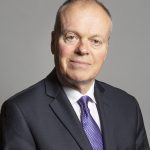
  • Dan Tomlinson – 2026 Statement on Agricultural Property Relief and Business Property Relief

    Dan Tomlinson – 2026 Statement on Agricultural Property Relief and Business Property Relief

    The statement made by Dan Tomlinson, the Exchequer Secretary to the Treasury, in the House of Commons on 5 January 2026.

    I thank the shadow Secretary of State for Environment, Food and Rural Affairs for asking this question. I wish a happy new year to her and to all Members of the House.

    The reforms announced in December go further to protect more farms and businesses while maintaining the core principle that more valuable agricultural and business assets should not receive unlimited relief.

    The allowance for the 100% rate of relief for agricultural property relief and business property relief will be increased from £1 million to £2.5 million when it is introduced in April. That means that a couple will now be able to pass on up to £5 million of agricultural or business assets tax-free between them, on top of the existing allowances such as the nil rate band. Taken together with the reform announced at the recent Budget, widows and widowers will benefit from up to £2.5 million of their spouse’s allowance, even if their spouse passed away many years ago.

    Our changes further reduce the number of estates forecast to pay more inheritance tax, and they further reduce the liability for many of the remaining estates. Compared with Budget 2025, the number of estates claiming APR—including those also claiming BPR—affected by the reforms in the coming tax year is expected to halve, from what would have been 375 estates to just 185 estates. That means that around 85% of estates claiming agricultural property relief in 2026-27 are forecast to pay no more inheritance tax on their estates under the changes.

    The Government have announced these changes after listening carefully to feedback from the farming community and family businesses, and I am pleased that the National Farmers’ Union and others have welcomed the changes. Even after the reforms, the Government expect to raise around £300 million in 2029-30 from our changes to these tax reliefs. We are making fair and responsible choices to support the farming community, with a record £11.8 billion investment in sustainable farming and food production over this Parliament, and to modernise our tax system for the future.

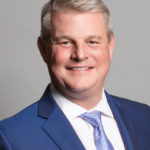
  • Jess Brown-Fuller – 2026 Speech on Offender Abscondments from HMP Leyhill

    Jess Brown-Fuller – 2026 Speech on Offender Abscondments from HMP Leyhill

    The speech made by Jess Brown-Fuller, the Liberal Democrat spokesperson for Criminal Justice, in the House of Commons on 5 January 2026.

    The news that offenders absconded from HMP Leyhill on new year’s day is yet another example of the glaring incompetence of the MOJ when it comes to maintaining control of the prison population. This situation has yet again placed the public at risk and lets down victims. It also raises serious questions about why some of these prisoners were placed in a category D prison. Matthew Armstrong, a convicted murderer, has a history of violent incidents in custody, including leading a riot and attacking prison guards. Given that record, why did the MOJ feel able to approve his transfer to an open prison? What steps are the Government taking to review the criteria for violent offenders being assessed for transfer to category D prisons when they could pose a risk to the public again? What additional resources are being provided to the victims of these individuals, including the prison officer assaulted by Armstrong who is no longer serving? I hope that lessons are being learned from the case of Lenny Scott.

    Does the Minister believe that poor transfer decisions are being made based on a lack of capacity in our closed prisons, or is she satisfied that the processes of the Parole Board and the Department are strong enough? Can she reassure the House now that we will not be coming back to have this same conversation again in 2027?

    Alex Davies-Jones

    I welcome the questions from the Liberal Democrat spokesperson. To reassure the House, offenders who are serving a life sentence or an IPP sentence for public protection will be approved for a transfer to open conditions only in response to a recommendation by the Parole Board. Before making that recommendation, the Parole Board conducts a thorough risk assessment of the offender’s risk of harm and risk of absconding, taking into account all those assessments provided by qualified HM Prison and Probation Service staff and other agencies. The Secretary of State does have the ability to reject a recommendation from the Parole Board, but to do so they would need evidence to dispute the board’s assessment of risk. Officials, on behalf of the Secretary of State, concluded that there were no grounds under the published policy to reject the board’s recommendations for any of these three individuals.

    On absconding more generally, it is important that I state categorically to the House that there were 57 absconds in the year ending March 2025, which is a 2% decrease from 58 the previous year. The number of absconds is falling year on year, and has fallen from 143 in the 12 months to March 2020. It is coming down substantially due to a sustained focus on this area. Open prisons work; they are a key part of the programme of rehabilitation and of reintegrating offenders into society. However, sometimes prisoners abscond and it is important that all steps are taken to bring them back into custody when that occurs.

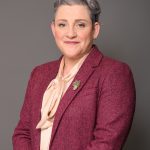
  • Andy Slaughter – 2026 Speech on Offender Abscondments from HMP Leyhill

    Andy Slaughter – 2026 Speech on Offender Abscondments from HMP Leyhill

    The speech made by Andy Slaughter, the Chair of the Justice Committee, in the House of Commons on 5 January 2026.

    In the light of these escapes from a class D prison, will the Government look again at the policy and process for moving prisoners to open prisons earlier in their sentence as a consequence of prison overcrowding? Does the legacy of the previous Government mean that prisoners may be located in prisons because of the space available, rather than their suitability for the type of offender?

    Alex Davies-Jones

    I thank the Chair of the Select Committee for his probing. He will be aware that to deal with the crisis in prison capacity that the Tories left us, this is what we had to do. The policy of moving prisoners to open prisons began under the Conservatives. Typically, they tried to keep quiet about it when they were in government. We have been open and transparent. We have looked at exactly how we have done this as part of our strategy to deal with overcrowding and, thankfully, through our Sentencing Bill—which the Tories are trying to wreck, by the way—we will ensure that our prisons never ever reach breaking point again. However, open prisons are part of the course to rehabilitation and part of ensuring that we make better citizens rather than better criminals, and they have worked and operated effectively under successive Governments.

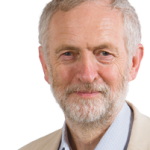
  • Robert Jenrick – 2026 Speech on Offender Abscondments from HMP Leyhill

    Robert Jenrick – 2026 Speech on Offender Abscondments from HMP Leyhill

    The speech made by Robert Jenrick, the Shadow Justice Secretary, in the House of Commons on 5 January 2026.

    So a murderer is on the loose—a murderer and a violent offender. Once again, the Justice Secretary’s strongest ever checks have been a resounding failure, and once again there is a manhunt under way. Precious police resources are being wasted to fix Calamity’s latest cock-up. And where is the Justice Secretary? The Ministry of Justice seems to lose its Secretary of State as much as it does its prisoners. Has his aunt taken him to the January sales to find him a new suit, just in case he gets let loose on Prime Minister’s questions again?

    Let me ask the Minister instead: why was someone who robbed and brutally killed a man by bashing him on the head with a brick—a man who led a prison riot and attacked prison officers repeatedly—deemed safe for open prison? Why, as we have just learned, did it take 48 hours for the police to raise the alarm? How many other murderers are there in open prisons? How many more mistaken releases have there been since the Justice Secretary last came clean? Once again, the safety of the public is being compromised by the breathtaking incompetence of his Department.

    What a Christmas it has been for the Justice Secretary. On Boxing day, he said he was delighted to welcome into Britain an extremist who hates our country. The following day, it was revealed that he had invited a disgraced ex-Labour politician convicted of spreading homophobic smears to his official swearing-in as Lord Chancellor. Days later, he paid an Islamist double murderer thousands in compensation, alongside hundreds of thousands in legal fees, much of it to the Justice Secretary’s own colleague’s spouse. Then the Prime Minister’s mentor, a leading KC who clapped him into Downing Street, slammed his shameful plan to slash jury trials. To top it all off, on new year’s day we learned that these prisoners had been let loose. Well, happy new year from the Justice Secretary. It is little wonder that in his first interview of 2026, he said that he was seeking divine retribution—sorry, he meant to say divine intervention. Well, with more of this, God help us all.

    Alex Davies-Jones

    I am afraid that it is a new year but the same sad, old Jenrick. The right hon. Gentleman clearly has not done his homework. He does not seem to know the difference between releases in error and absconds. This is a Member who wants to be the Lord Chancellor and the next Leader of the Opposition, and he is deliberately muddying the waters here to suit his own agenda.

    We are seeing the deep-rooted issues caused by years of chronic underfunding and mismanagement by the right hon. Gentleman’s Government play out. The crisis that our prisons face today was built up over 14 years and the Tories are the chief architects. This did not happen overnight, and it was not inevitable. It was the choice of the Conservatives, made again and again for 14 years. They abandoned their posts and put public safety at risk by allowing our prisons to reach bursting point. He talks about public safety, but they left our prisons at breaking point with not enough room to lock up any dangerous criminals. If it were not for the decisive action that this Government took, the police would have been unable to make any arrests, courts would have ceased to function, and there would have been a breakdown of law and order unlike anything we have seen in modern times.

    Those who abscond face serious consequences. We take our responsibilities very seriously, and that is one of the reasons why there has been a dramatic fall in the number of absconds over the last 20 years. It is one of the success stories that the Tories actually had in government, and the right hon. Gentleman should celebrate that because elsewhere their record is much less rosy.

    As the Tories were packing their bags to leave office, temporary release failures hit a 13-year high on their watch. The prison system was in chaos, and they presided over 17 releases in error a month in their last six months in office. They said that they were the Government of security and safety, yet they oversaw violent crime and crumbling courts and prisons. To cover up for their failures, they covertly let out 10,000 prisoners early as part of their chaotic early release scheme. The Tories claim to be the party of law and order; instead, their legacy was lawless disorder. Now they have the barefaced audacity to come to this House and make demands as if they had never been in government, as if they had never ever overseen a crisis in our criminal justice system.

    What is the right hon. Gentleman’s solution to this crisis? To do nothing—to ignore the evidence that places people in open conditions to help them prepare for life outside and reduce their risk of reoffending, and to turf people out of prison with no support and just hope that everything turns out okay. The Tories are not serious people. They are not serious or ready for Government. They have no solutions to the problems that they created.

  • Alex Davies-Jones – 2026 Statement on Offender Abscondments from HMP Leyhill

    Alex Davies-Jones – 2026 Statement on Offender Abscondments from HMP Leyhill

    The statement made by Alex Davies-Jones, the Parliamentary Under-Secretary of State for Justice, in the House of Commons on 5 January 2026.

    A happy new year to you and to all in the House, Madam Deputy Speaker.

    On 1 January 2026, three prisoners absconded from HMP Leyhill, an open prison: Mr Thomas, Mr Washbourne and Mr Armstrong. This was discovered during routine roll checks, and their absence was followed up immediately. On 3 January, the police issued a public appeal to assist with their recapture. As you have stated, Madam Deputy Speaker, one of the prisoners, Aaron Thomas, has since been arrested and is scheduled to appear before magistrates today. He will then be returned to closed conditions. The other individuals remain unlawfully at large, and police are actively pursuing them. The Government take every abscond seriously. In line with the prevention of abscond policy framework, the prison group director for HMP Leyhill has commissioned a review, which will be completed within 20 days.

    These individuals had been moved to open conditions at different points in 2025 after recommendations made by the independent Parole Board. There was no recent intelligence regarding a potential abscond by these prisoners. When it comes to an offender serving a life sentence or an indeterminate sentence for public protection, as these prisoners are, a transfer to open conditions will be approved only following a recommendation by the Parole Board, other than in exceptional circumstances. Before making a recommendation, the Parole Board conducts a thorough assessment of the offender’s risk of harm and risk of absconding. At the time these risk assessments were completed, the prisoners were deemed suitable for open conditions. We are continuing to work and engage with the victims and the victims’ families, either through the victim contact scheme or via the police where relevant. Currently, we have made contact with two victims through the victim contact scheme.

  • Tony Vaughan – 2026 Speech on Free Bus Travel for Over-60s

    Tony Vaughan – 2026 Speech on Free Bus Travel for Over-60s

    The speech made by Tony Vaughan, the Labour MP for Folkestone and Hythe, in the House of Commons on 5 January 2026.

    I beg to move,

    That this House has considered e-petition 702845 relating to free bus travel for people over 60.

    Happy new year, Mr Mundell. It is, as always, a privilege to serve under your chairship.

    I start by thanking the petition’s creator, Mrs Karen Hickman, and the 101,000 people who signed the petition—including 211 of my constituents in Folkestone, Hythe and Romney Marsh—for securing this debate on extending free bus travel to all over-60s across England. I also thank Transport for London, Age UK London, Independent Age and the Local Government Association, which were incredibly helpful in my preparation for this debate, which I am leading for the Petitions Committee.

    There are many areas of our country where there is free bus travel for the over-60s: London, Liverpool, Wales, Scotland and Northern Ireland. Bus services are a critical form of public transport. They are a public good: they get people to work and allow them to visit friends and family, travel to health appointments and participate in social activities. Bus services support active lifestyles, reduce social isolation, and reduce car use, lower air pollution and make our environment cleaner and safer. It was a pleasure to meet Mrs Hickman. She was particularly frustrated by the regional differences that we have in this country when it comes to bus services, and she would like to see greater investment in rural bus services in her area of Lincolnshire.

    In our country, there is a growing misperception that if someone is over 60, they are somehow financially blessed, with a house on which the mortgage has been paid off, and they have plenty of assets and capital washing around. Many people think that the over-60s do not need free bus travel. I challenge that narrative, as does Mrs Hickman. Based on households below average income data, 875,000 people aged 60 to 64 are living in poverty. A new report from Standard Life identifies a substantial rise in financial insecurity among people in their early 60s, after the increases in the state pension age since 2010, and highlights that there are a quarter of a million more people aged 60 to 64 in relative income poverty than there were in 2010.

    In the UK, carer prevalence is greatest among adults in their 50s and early 60s, with people in that age group twice as likely as those in a younger adult group to be carers. Due to the rising pension age, many people in their 60s are seeking work. The high level of redundancy in this age group during the pandemic is one factor that has led to increased unemployment among 60 to 64-year-olds. Many people in this group are key workers: health and social care—a sector that is growing in my constituency—and retail are among the sectors with the highest proportion of older workers. In addition, over-60s with a disability or long-term health condition are more likely to face financial hardship.

    There is already free bus travel for the over-60s in several parts of the UK, so this policy can work. The 60+ London Oyster photocard, operated and funded by TfL, is available to London residents over 60. There are 383,000 active users of that photocard, which I know makes a positive difference to the lives of the 24% of Londoners in that age group who live in poverty.

    Residents of the Liverpool city region are eligible from age 60 for free travel on buses, trains and ferries. That is funded by the transport levy that the Merseyside local authorities pay. Looking for a moment at a younger age group in Liverpool, I commend the Liverpool city region combined authority for its recent introduction of the care leavers travel pass, giving free local travel on buses, trains and ferries to young adults leaving the care system. That is a commercially funded offer.

    What most or all of these schemes have in common is that they were implemented as a result of local powers being used by local people for the benefit of local people. Is that not how our local communities should be run? In my view, it is. Local people know what the local needs are. I understand Mrs Hickman’s frustration at the regional differences that can occur when some local areas have powers that others do not, but thanks to the Bus Services Act 2025, passed by this Labour Government, all English local transport authorities now have the power to set routes and fares. In my view, it is right that each local authority now grasps the nettle and gets on with delivering the high standards of bus services that the public are entitled to.

    Steve Darling (Torbay) (LD)

    The issue that we face in Torbay is a significant shrinkage in the number of available commercial routes, whether for bus pass users or other bus users. Does the hon. and learned Gentleman agree that we need sustained investment in bus services to drive a better service for all our communities?

    Tony Vaughan

    I completely agree with the hon. Member. Central Government have to support local government in properly funding bus services. As I will come on to say, that is exactly what this Government have been doing, but the critical question will be whether those local authorities spend the money in a way that benefits passengers.

    Mrs Hickman’s view is that this policy should be centrally administered and nationwide. According to the Local Government Association, making the policy nationwide would cost central Government roughly an additional £250 million to £400 million a year. Without that money, evening and weekend services would likely collapse. Losing more bus routes would be damaging for over-60s who rely on buses to get to work.

    As the LGA suggests, many councils argue that £1 fares for apprentices and students offer a higher economic multiplier than free travel for the over-60s. That is especially important when we are desperately trying to raise our economy’s growth rate and reduce unemployment. There is also a strong argument for focusing more on getting apprentices and students to use buses, because that cohort of young people will develop the habit of getting on a bus, which will help to secure a more stable long-term revenue stream for bus operators.

    As I just said, what we need is ample central Government funding for local authorities so that they can decide how best to run the bus network. The Government are backing our bus network with a £3 billion multi-year bus funding settlement for 2025 to 2029, helping to create more certainty, stability and predictability for our bus system. The aim of the funding settlement is to deliver lower fares and more frequent and reliable bus services, and the national single bus fare cap was extended to run until March ’27. The Government’s Bus Services Act empowers local authorities to take greater control of bus services, and makes them more reliable, accessible and affordable by enabling franchises, lifting bans on municipal bus companies and mandating zero emission buses.

    In this debate we are rightly talking about the 60s, but it was the ’80s when it all started to go wrong for our bus network, with its reckless privatisation under the Transport Act 1985. The Bus Services Act takes a completely different approach by allowing local government to create locally and publicly operated and owned bus services.

    Local authorities across the country have received significant funding boosts to improve local bus services. For example, the petitioner’s council, Reform-run Lincolnshire county council, received a boost of £11.8 million to support better bus services. In my area, Reform-run Kent county council this year received a boost of £42 million to spend on better bus services. The Government are not being partisan with funding decisions; Reform-run councils are receiving cash boosts to improve bus services from now until 2029, and the public should expect Reform to deliver in places such as Kent and Lincolnshire. We must hold them to account in ensuring that they spend the money not on political advisers, or mad adventures such as the Elon Musk-inspired DOGE 2.0 cuts programme, but on making bus services work more accessibly, reliably and affordably.

    In December, I ran a bus survey to hear from my constituents how they would like the £42 million of extra bus funding to be spent. Many told me that bus services are not frequent enough and are often unreliable, with too many late and even cancelled services. Many highlighted the issue of affordability. They want Reform-run Kent county council to spend that £42 million of extra funding on protecting existing routes from private sector cuts, more frequent bus services, cheaper fares, improved evening and Sunday services, and better bus links to schools, colleges and hospitals.

    One constituent suggested extending free bus travel to the over-60s, but many of my constituents talked about wanting routes that had been cut under the failed experiment of privatisation to be reinstated. They asked for changes such as frequent, direct bus services from Folkestone to the William Harvey hospital, more evening and weekend bus services across Kent, and the reinstatement of routes such as the 73, 77, 78 and 111 services in Folkestone, Hythe and Romney Marsh.

    Tom Hayes (Bournemouth East) (Lab)

    Before I was elected, I ran mental health services, including for older adults, so I understand the importance of older people being able to access services in a way that means they do not lose their appointment. We have 47,226 over-60s in Bournemouth, and many decisions about bus routes have not been taken with their views in mind, particularly in Throop, where I am trying to reinstate a bus service, but also across Southbourne and Tuckton. It sounds like my hon. and learned Friend might agree, but does he also agree that we should be using our new bus legislation to make sure that those communities that have been disenfranchised, left behind and left out are considered by local councils when they are deciding on routes?

    Tony Vaughan

    The situation my hon. Friend describes is symptomatic of what I call the begging bowl approach of trying to reinstate routes, where a private company decides how it will run the service, it cuts the routes that are more difficult to make money on but which people really need, and we all go with our begging bowl, banging on the door and asking the company to sort it out for our constituents. The way that all local councils should be using the Government’s legislation, now they have the money, is by actually listening to what local people want and providing services that allow our communities to be joined up. What he describes is exactly what I have experienced in my constituency and why these changes are desperately needed.

    Rachael Maskell

    I am grateful for the speech that my hon. and learned Friend is making and I thank the 237 people in my constituency who signed the petition. At the root of this debate is the issue of inequality. There are many forms of inequality around bus use. The petition draws attention to the geographical inequality, but we also see socioeconomic inequality, particularly when we look at putting resources into enabling older people to access bus services so that, instead of paying £6 for a return journey, they can access things such as health appointments on time. Is it not worth looking at people living in deprivation and putting money into supporting people from those communities to use buses?

    Tony Vaughan

    I thank my hon. Friend for her intervention. That is exactly why the Government introduced the Bus Services Act: to allow local authorities to be held to account for the decisions they make about how to fund bus services. I completely agree that bus services are a fundamental public good and a public service. In my constituency, they are essential to allow people living in rural areas, often in rural poverty, to reach GP surgeries or hospital appointments many miles away. It is not as if they can walk or rely on somebody to give them a lift; often, that is not available. A reliable and affordable bus service is often the difference between someone being able to access the town, with its shops and chemists and all the things that are needed to make life work, and sitting for days in pain, entirely cut off. I completely agree with my hon. Friend.

    One survey response that stood out for a negative reason was this one:

    “Doubt Reform will take much notice frankly”.

    I totally understand that hard cynicism about Reform, given its bewildering incompetence in Kent. I implore Reform to spend the money wisely. I will take my bus survey responses and put them directly to the council, because we must see accountability and competence in the way our public services are delivered in Kent.

    While I am sympathetic to the arguments for extending free bus travel to all over-60s across England, I believe that our policy focus should be on encouraging and supporting more local authorities to set up municipal bus companies so that we can reverse bus privatisation, which has, like in the rail and water sectors, been a failure and meant that, all too often, the interests of the private company and the shareholder have been put above those of the passenger.

    Before closing, I have a couple of questions for the Minister. What action beyond what I have talked about are the Government taking to make bus travel more accessible and affordable for the over-60s? What are the Government doing to make rural bus services more accessible and reliable, especially for that age group? What measures will the Government put in place to hold to account councils such as Reform-run Kent county council and Lincolnshire county council to ensure that they spend their additional bus funding prudently and purposefully? How do the Government plan to use investment in our bus network to help to increase economic growth and lower unemployment? Finally, can the Minister explain how empowering local government can lead to improved bus services?

    The answers to all those questions would be gratefully received, because my constituents constantly press me on this issue. We are a long, coastal constituency, so it is very difficult to get around unless there is reliable public transport. That is what we have to achieve over the coming years with the funding and the new powers that Kent county council has.

  • Lindsay Hoyle – 2026 Statement on Sir Patrick Duffy

    Lindsay Hoyle – 2026 Statement on Sir Patrick Duffy

    The statement made by Lindsay Hoyle, the Speaker of the House of Commons, on 5 January 2026.

    I want to say a few words before we start our proceedings about our former colleague, Sir Patrick Duffy, who died aged 105 during the Christmas recess. Not only did Patrick have the claim to fame of being the oldest living former Member of Parliament, but he was also the last to have served in the second world war, having survived a terrible crash during a training exercise. Patrick was a northerner who was born in Wigan—a Lancastrian by birth—and his death is a blow to the many people who enjoyed his company and his tales from the past. A Labour MP for Sheffield Attercliffe from 1970 to 1992, and previously for Colne Valley, Patrick was a well-respected parliamentarian, an effective Navy Minister under the Labour Prime Minister Jim Callaghan and president of the NATO Parliamentary Assembly. He was a man of deep faith, which Pope John Paul II recognised when he bestowed upon him a papal knighthood. Our thoughts are with Patrick’s family, his friends and his allies across all political parties.

  • John Swinney – 2026 Comments on a Bank Holiday in Scotland for World Cup

    John Swinney – 2026 Comments on a Bank Holiday in Scotland for World Cup

    The comments made by John Swinney, the Scottish First Minister, on 5 January 2026.

    Scotland qualifying for the men’s World Cup was a remarkable achievement and a landmark moment, and the reaction to the dramatic win against Denmark reminded us all what football means to the country.

    This year, we want to make the most of this huge opportunity for Scotland and ensure as many people as possible have the opportunity to celebrate the team’s success.

    Not only is this an historic sporting event, it’s also a chance for Scotland to be on the world stage, to attract business development, create tourism interest within the country and to make cultural and sporting connections.

    That is why I am taking steps to ensure the Monday after our opening game should be national bank holiday, so that – no matter the outcome of the match – we can all come together to share the occasion.

  • Mette Frederiksen – 2026 Statement on US Aggression over Greenland

    Mette Frederiksen – 2026 Statement on US Aggression over Greenland

    The comments made by Mette Frederiksen, the Prime Minister of Denmark, on 5 January 2026.

    If the United States decides to militarily attack another NATO country, then everything would stop, that includes NATO and therefore post-Second World War security.

  • European Commission – 2026 Statement on Iran

    European Commission – 2026 Statement on Iran

    The statement made by the European Commission on 3 January 2026.

    We follow closely the unfolding situation across Iran, with demonstrations reflecting the demands of many Iranians. We are concerned by the reported deaths and injuries and urge Iran’s security forces to exercise maximum restraint in handling peaceful protests. Socio-economic challenges were acknowledged by authorities and should be addressed through inclusive dialogue, not through violence.

    We call on Iranian authorities to uphold the rights to freedom of expression, association and peaceful assembly and to enable the free flow of information and access to the internet. All individuals arrested for peacefully exercising their rights should be immediately released.